Overcoming Barriers to
Integrating Technology into the
Classroom
Final Group Project
GDIT 706
Introduction
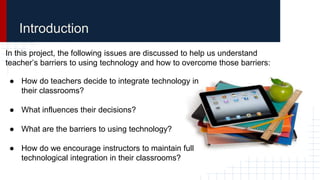
In this project, the following issues are discussed to help us understand
teacher’s barriers to using technology and how to overcome those barriers:
● How do teachers decide to integrate technology in
their classrooms?
● What influences their decisions?
● What are the barriers to using technology?
● How do we encourage instructors to maintain full
technological integration in their classrooms?
What are first-order barriers?
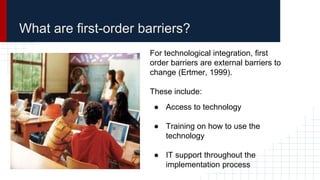
For technological integration, first
order barriers are external barriers to
change (Ertmer, 1999).
These include:
● Access to technology
● Training on how to use the
technology
● IT support throughout the
implementation process
Overcoming first-order barriers
● The desire to overcome the first-order
barriers (Ertmer, 1999)
“It is both ineffective and inefficient to
address first-order barriers if we do not
know what we want to do, first without, and
then with, technology” (Ertmer, 1999)
● Applying for grants and seek out funders
such as the Bill and Melinda Gates
foundation
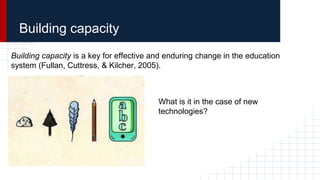
Building capacity
Building capacity is a key for effective and enduring change in the education
system (Fullan, Cuttress, & Kilcher, 2005).
What is it in the case of new
technologies?
Developing cultures
Developing cultures for learning as a principle for improving education
includes strategies designed for educators to learn from each other
(Fullan et al., 2005).
● How does this principle help to overcome
the first-order barriers?
Many instructors feel that there is not enough time for them to learn about
integrating new technology (Ertmer, 1999).
Suggestions
● Scheduling time for teachers
to become familiar technology
● Teachers’ varying levels of
computer experience and
learning styles
Developing Instructors with TPACK
What are second-order barriers?
Internal barriers to change (Ertmer, 1999):
● teachers’ own beliefs and ideas about
technology in the classroom and the
way that a classroom should be run
Though not every teacher may have
second-order barriers, their existence for
many teachers means that even when
removing first-order barriers, technology
integration may not occur.
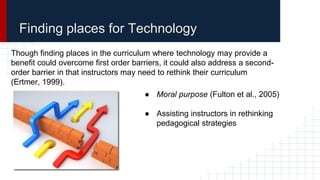
Finding places for Technology
Though finding places in the curriculum where technology may provide a
benefit could overcome first order barriers, it could also address a second-
order barrier in that instructors may need to rethink their curriculum
(Ertmer, 1999).
● Moral purpose (Fulton et al., 2005)
● Assisting instructors in rethinking
pedagogical strategies
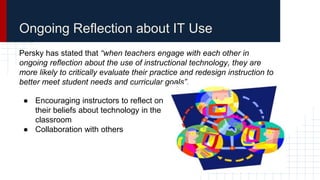
Ongoing Reflection about IT Use
Persky has stated that “when teachers engage with each other in
ongoing reflection about the use of instructional technology, they are
more likely to critically evaluate their practice and redesign instruction to
better meet student needs and curricular goals”.
● Encouraging instructors to reflect on
their beliefs about technology in the
classroom
● Collaboration with others
Developing a vision
Developing a vision:
● Helps teachers stay focused on the
ultimate goals and outcomes of
technology in the classroom.
● Support the motivation of teachers
even when unexpected setbacks
occur.
Modeled examples of effective technology
As Ertmer (1999) points out,
“Demonstrations by peers, mentors,
or seasoned practitioners can
illustrate effective ways to use
technology to teach existing and
expanded content.”
Modeling
Reflection
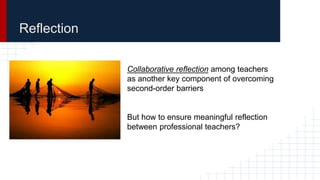
Collaborative reflection among teachers
as another key component of overcoming
second-order barriers
But how to ensure meaningful reflection
between professional teachers?
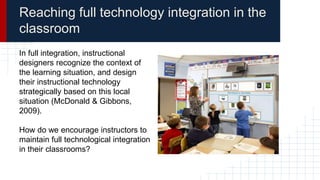
Reaching full technology integration in the
classroom
In full integration, instructional
designers recognize the context of
the learning situation, and design
their instructional technology
strategically based on this local
situation (McDonald & Gibbons,
2009).
How do we encourage instructors to
maintain full technological integration
in their classrooms?
Reaching full technology integration in the
classroom
Suggestions for reaching full technology integration:
● By engaging them in assessment of student
learning to ensure that outcomes are being met
(McDonald & Gibbons, 2009)
● “Culture of Evaluation” (Fullan, Cuttress, &
Kilcher, 2005)
● Having students participate in self-assessment
● Asking instructors to focus on their instructional
goals and beliefs (McDonald & Gibbons, 2009)
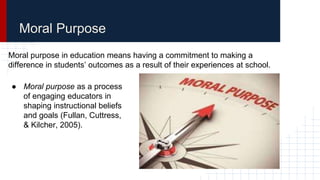
● Moral purpose as a process
of engaging educators in
shaping instructional beliefs
and goals (Fullan, Cuttress,
& Kilcher, 2005).
Moral Purpose
Moral purpose in education means having a commitment to making a
difference in students’ outcomes as a result of their experiences at school.
Final Suggestion
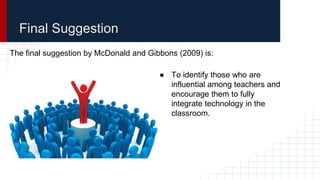
The final suggestion by McDonald and Gibbons (2009) is:
● To identify those who are
influential among teachers and
encourage them to fully
integrate technology in the
classroom.
Conclusion
Ertmer (1999, p. 59) states “by arming our current and future teachers with
knowledge of barriers, as well as effective strategies to overcome them, it is
expected that they will be prepared to both initiate and sustain effective technology
integration practices”.
Understanding teacher’s beliefs and perception
toward technology in the classroom could have
the potential to provide students with better
learning opportunities and to enhance their
experiences.
References
Ertmer, P. A. (1999). Addressing first- and second-order barriers to change:
Strategies for technology integration. Educational Technology, Research and
Development, 47(4), 47. Retrieved from
http://search.proquest.com/docview/218016186?accountid=10610<fullan_cuttress_kilcher.pdf>
Fullan, M., Cuttress, C., & Kilcher, A. (2005). 8 FORCES for LEADERS of CHANGE.
Journal of Staff Development, 26(4), 54-58,64. Retrieved from
http://search.proquest.com/docview/211518218?accountid=10610
McDonald, J. K., & Gibbons, A. S. (2007). Technology I, II, and III: criteria for understanding and
improving the practice of instructional technology. Educational Technology Research and
Development, 57(3), 377-392. doi:10.1007/s11423-007-9051-8
Thank You!

Gdit 706 overcoming barriers-final group project

  • 1.
    Overcoming Barriers to IntegratingTechnology into the Classroom Final Group Project GDIT 706
  • 2.
    Introduction In this project,the following issues are discussed to help us understand teacher’s barriers to using technology and how to overcome those barriers: ● How do teachers decide to integrate technology in their classrooms? ● What influences their decisions? ● What are the barriers to using technology? ● How do we encourage instructors to maintain full technological integration in their classrooms?
  • 3.
    What are first-orderbarriers? For technological integration, first order barriers are external barriers to change (Ertmer, 1999). These include: ● Access to technology ● Training on how to use the technology ● IT support throughout the implementation process
  • 4.
    Overcoming first-order barriers ●The desire to overcome the first-order barriers (Ertmer, 1999) “It is both ineffective and inefficient to address first-order barriers if we do not know what we want to do, first without, and then with, technology” (Ertmer, 1999) ● Applying for grants and seek out funders such as the Bill and Melinda Gates foundation
  • 5.
    Building capacity Building capacityis a key for effective and enduring change in the education system (Fullan, Cuttress, & Kilcher, 2005). What is it in the case of new technologies?
  • 6.
    Developing cultures Developing culturesfor learning as a principle for improving education includes strategies designed for educators to learn from each other (Fullan et al., 2005). ● How does this principle help to overcome the first-order barriers?
  • 7.
    Many instructors feelthat there is not enough time for them to learn about integrating new technology (Ertmer, 1999). Suggestions ● Scheduling time for teachers to become familiar technology ● Teachers’ varying levels of computer experience and learning styles Developing Instructors with TPACK
  • 8.
    What are second-orderbarriers? Internal barriers to change (Ertmer, 1999): ● teachers’ own beliefs and ideas about technology in the classroom and the way that a classroom should be run Though not every teacher may have second-order barriers, their existence for many teachers means that even when removing first-order barriers, technology integration may not occur.
  • 9.
    Finding places forTechnology Though finding places in the curriculum where technology may provide a benefit could overcome first order barriers, it could also address a second- order barrier in that instructors may need to rethink their curriculum (Ertmer, 1999). ● Moral purpose (Fulton et al., 2005) ● Assisting instructors in rethinking pedagogical strategies
  • 10.
    Ongoing Reflection aboutIT Use Persky has stated that “when teachers engage with each other in ongoing reflection about the use of instructional technology, they are more likely to critically evaluate their practice and redesign instruction to better meet student needs and curricular goals”. ● Encouraging instructors to reflect on their beliefs about technology in the classroom ● Collaboration with others
  • 11.
    Developing a vision Developinga vision: ● Helps teachers stay focused on the ultimate goals and outcomes of technology in the classroom. ● Support the motivation of teachers even when unexpected setbacks occur.
  • 12.
    Modeled examples ofeffective technology As Ertmer (1999) points out, “Demonstrations by peers, mentors, or seasoned practitioners can illustrate effective ways to use technology to teach existing and expanded content.” Modeling
  • 13.
    Reflection Collaborative reflection amongteachers as another key component of overcoming second-order barriers But how to ensure meaningful reflection between professional teachers?
  • 14.
    Reaching full technologyintegration in the classroom In full integration, instructional designers recognize the context of the learning situation, and design their instructional technology strategically based on this local situation (McDonald & Gibbons, 2009). How do we encourage instructors to maintain full technological integration in their classrooms?
  • 15.
    Reaching full technologyintegration in the classroom Suggestions for reaching full technology integration: ● By engaging them in assessment of student learning to ensure that outcomes are being met (McDonald & Gibbons, 2009) ● “Culture of Evaluation” (Fullan, Cuttress, & Kilcher, 2005) ● Having students participate in self-assessment ● Asking instructors to focus on their instructional goals and beliefs (McDonald & Gibbons, 2009)
  • 16.
    ● Moral purposeas a process of engaging educators in shaping instructional beliefs and goals (Fullan, Cuttress, & Kilcher, 2005). Moral Purpose Moral purpose in education means having a commitment to making a difference in students’ outcomes as a result of their experiences at school.
  • 17.
    Final Suggestion The finalsuggestion by McDonald and Gibbons (2009) is: ● To identify those who are influential among teachers and encourage them to fully integrate technology in the classroom.
  • 18.
    Conclusion Ertmer (1999, p.59) states “by arming our current and future teachers with knowledge of barriers, as well as effective strategies to overcome them, it is expected that they will be prepared to both initiate and sustain effective technology integration practices”. Understanding teacher’s beliefs and perception toward technology in the classroom could have the potential to provide students with better learning opportunities and to enhance their experiences.
  • 19.
    References Ertmer, P. A.(1999). Addressing first- and second-order barriers to change: Strategies for technology integration. Educational Technology, Research and Development, 47(4), 47. Retrieved from http://search.proquest.com/docview/218016186?accountid=10610<fullan_cuttress_kilcher.pdf> Fullan, M., Cuttress, C., & Kilcher, A. (2005). 8 FORCES for LEADERS of CHANGE. Journal of Staff Development, 26(4), 54-58,64. Retrieved from http://search.proquest.com/docview/211518218?accountid=10610 McDonald, J. K., & Gibbons, A. S. (2007). Technology I, II, and III: criteria for understanding and improving the practice of instructional technology. Educational Technology Research and Development, 57(3), 377-392. doi:10.1007/s11423-007-9051-8
  • 20.