“Good Country
People”
By: Flannery O’Connor
A Text that Teaches…
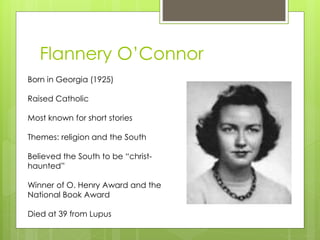
Flannery O’Connor
Born in Georgia (1925)
Raised Catholic
Most known for short stories
Themes: religion and the South
Believed the South to be “christ-
haunted”
Winner of O. Henry Award and the
National Book Award
Died at 39 from Lupus
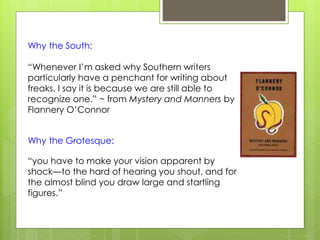
Why the South:
“Whenever I’m asked why Southern writers
particularly have a penchant for writing about
freaks, I say it is because we are still able to
recognize one.” ~ from Mystery and Manners by
Flannery O’Connor
Why the Grotesque:
“you have to make your vision apparent by
shock—to the hard of hearing you shout, and for
the almost blind you draw large and startling
figures.”
Bibliography
Novels:
 Wise Blood (1952)
 The Violent Bear it Away (1960)
Short Story Collections:
 A Good Man is Hard to Find (1955)
 Everything that Rises Must Converge
(1965)
Part One: Close Reading
The Title
What are some common stereotypes about
country people?
Based on the title alone, what did you think the
story would be about?
After reading the story, do you feel the phrase,
“good country people,” is a compliment or a
put down?
Do all the characters feel the same way about
this phrase? How can we tell?
Character Traits
 Who are the characters?
 What types of intelligence do the characters
possess?
 What types of intelligence are valued by the
characters?
 Is one type of intelligence valued more so
than another? How can we tell?
The Setting
 What is the setting?
 Why might the setting be important in
relation to the types of intelligence we just
discussed?
Subtext
 If this is a parable, who learns a lesson?
 What is the lesson?
Foreshadowing
 What are your first impressions of Mr. Pointer?
 Do your initial opinions change?
 When do you start to be suspicious of Mr.
Pointer? What passages provide clues to the
ending?
 Why is Joy-Hulga unaware of these warnings?
Movie
 Film clip
 Pay attention to Manley Pointer’s demeanor.
How can we tell he may not be all that he
seems?
The Ending
 What was your response to the ending?
Did you expect it?
What do you think will happen to Joy-Hulga?
O’Connor gives Mrs. Freeman the last word. Why is
this significant?
Do you think the characters will change their
opinions about country people? Why or why not?
Part two: Common Elements
 The Grotesque/ “Freaks”
 Who are the “Freaks” in this story? How can
we tell?
 What are they missing physically or
emotionally?
 What do they have in common?
Religion/Faith
 Do you see a connection between the
names of the characters and the Christian
faith?
 Do the characters believe in God? How do
we know?
 Is there a Christ-figure or a satanic-figure in
this text? If so, who?
 What sacrifice is made in this text either
literally or metaphorically?
 Is there a spiritual lesson to be learned?

Gcp powerpoint

  • 1.
    “Good Country People” By: FlanneryO’Connor A Text that Teaches…
  • 2.
    Flannery O’Connor Born inGeorgia (1925) Raised Catholic Most known for short stories Themes: religion and the South Believed the South to be “christ- haunted” Winner of O. Henry Award and the National Book Award Died at 39 from Lupus
  • 3.
    Why the South: “WheneverI’m asked why Southern writers particularly have a penchant for writing about freaks, I say it is because we are still able to recognize one.” ~ from Mystery and Manners by Flannery O’Connor Why the Grotesque: “you have to make your vision apparent by shock—to the hard of hearing you shout, and for the almost blind you draw large and startling figures.”
  • 4.
    Bibliography Novels:  Wise Blood(1952)  The Violent Bear it Away (1960) Short Story Collections:  A Good Man is Hard to Find (1955)  Everything that Rises Must Converge (1965)
  • 5.
    Part One: CloseReading The Title What are some common stereotypes about country people? Based on the title alone, what did you think the story would be about? After reading the story, do you feel the phrase, “good country people,” is a compliment or a put down? Do all the characters feel the same way about this phrase? How can we tell?
  • 6.
    Character Traits  Whoare the characters?  What types of intelligence do the characters possess?  What types of intelligence are valued by the characters?  Is one type of intelligence valued more so than another? How can we tell?
  • 7.
    The Setting  Whatis the setting?  Why might the setting be important in relation to the types of intelligence we just discussed?
  • 8.
    Subtext  If thisis a parable, who learns a lesson?  What is the lesson?
  • 9.
    Foreshadowing  What areyour first impressions of Mr. Pointer?  Do your initial opinions change?  When do you start to be suspicious of Mr. Pointer? What passages provide clues to the ending?  Why is Joy-Hulga unaware of these warnings?
  • 10.
    Movie  Film clip Pay attention to Manley Pointer’s demeanor. How can we tell he may not be all that he seems?
  • 11.
    The Ending  Whatwas your response to the ending? Did you expect it? What do you think will happen to Joy-Hulga? O’Connor gives Mrs. Freeman the last word. Why is this significant? Do you think the characters will change their opinions about country people? Why or why not?
  • 12.
    Part two: CommonElements  The Grotesque/ “Freaks”  Who are the “Freaks” in this story? How can we tell?  What are they missing physically or emotionally?  What do they have in common?
  • 13.
    Religion/Faith  Do yousee a connection between the names of the characters and the Christian faith?  Do the characters believe in God? How do we know?  Is there a Christ-figure or a satanic-figure in this text? If so, who?  What sacrifice is made in this text either literally or metaphorically?  Is there a spiritual lesson to be learned?