Vegetable Gardening 101
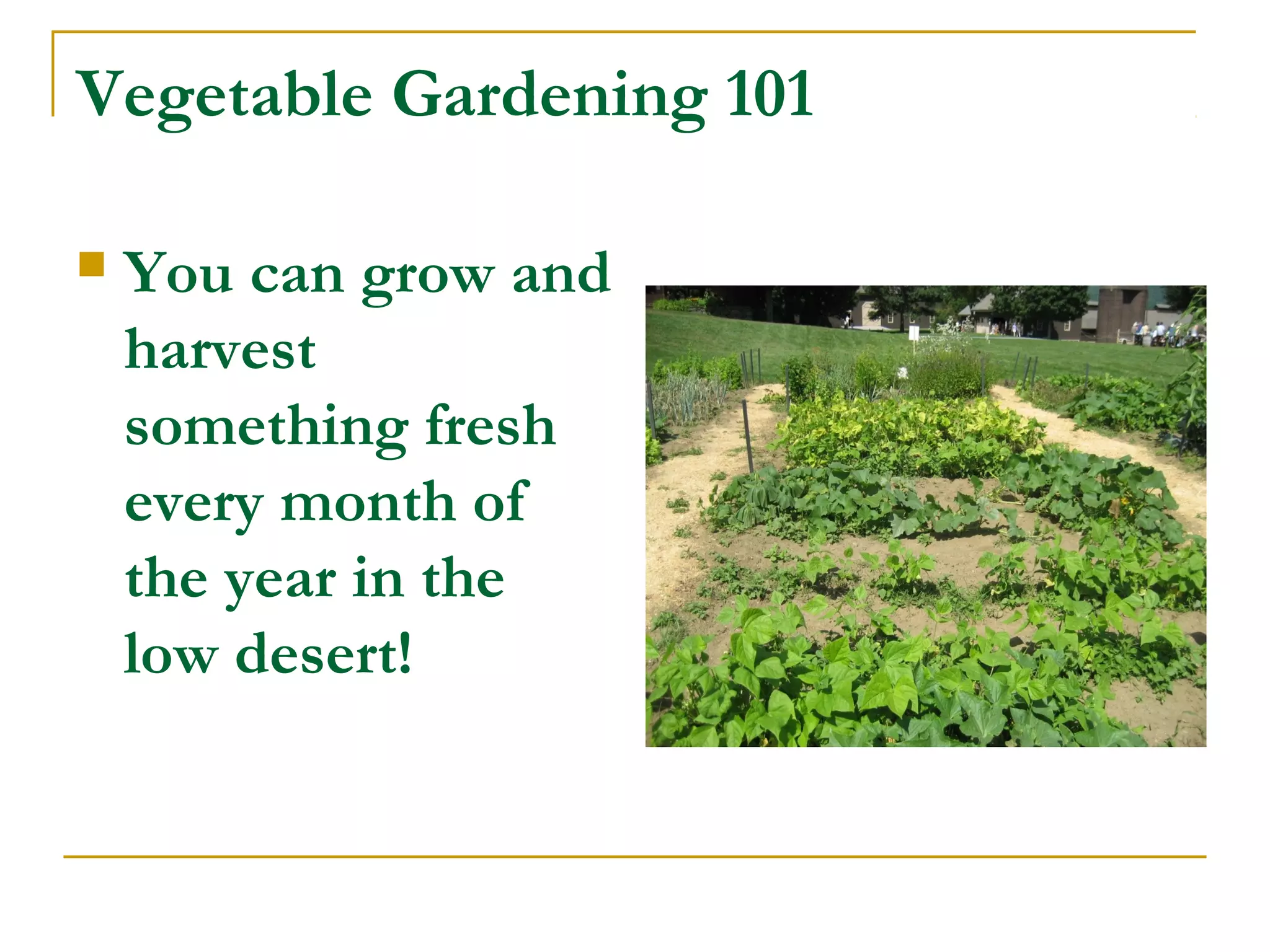
 You can grow and
harvest
something fresh
every month of
the year in the
low desert!
People have been gardening and
farming in the valley for more than
1000 years
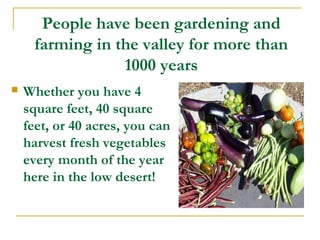
 Whether you have 4
square feet, 40 square
feet, or 40 acres, you can
harvest fresh vegetables
every month of the year
here in the low desert!
RESOURCES
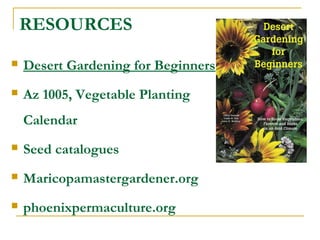
 Desert Gardening for Beginners
 Az 1005, Vegetable Planting
Calendar
 Seed catalogues
 Maricopamastergardener.org
 phoenixpermaculture.org
6 Steps to harvesting homegrown
fresh vegetables.
 1. Select site
 2. Decide how big to make the garden
 3. Prepare site
 4. Select, plant, or sow your crops
 5. Maintain the garden
 6. Harvest!!
1. Decide where to put your garden:
Vegetables need
 6-8 hours of sun each day
 A reliable source of irrigation
 Vegetables need soil tilled about 18 inches
deep
 The garden should be easy and inviting to
get to
 Allow space for paths between planting areas
 Plan to reach the beds from both sides
How big should it be?
 Should fit where the conditions are best
 Should not be so big and so much work you
get discouraged
 You can always add on !
 Should allow you to grow what you want to
grow and use!
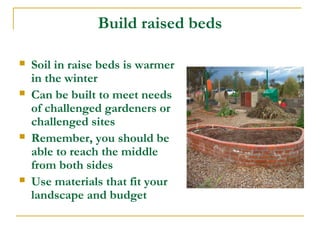
Build raised beds
 Soil in raise beds is warmer
in the winter
 Can be built to meet needs
of challenged gardeners or
challenged sites
 Remember, you should be
able to reach the middle
from both sides
 Use materials that fit your
landscape and budget
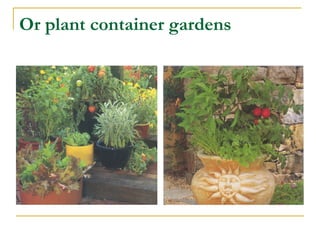
Or plant container gardens
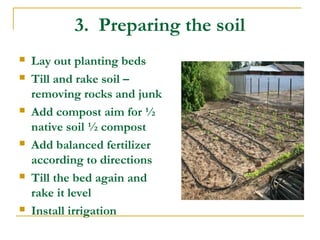
3. Preparing the soil
 Lay out planting beds
 Till and rake soil –
removing rocks and junk
 Add compost aim for ½
native soil ½ compost
 Add balanced fertilizer
according to directions
 Till the bed again and
rake it level
 Install irrigation
3. SELECTING YOUR CROPS: Choose
crops that will grow for each of our
seasons. We have 3!
 Refer to AZ 1005 for planting dates
ag.arizona.edu/pubs/garden/az1005.pdf
 Or urbanfarm.org/Planting_Calendar.pdf
 Fit the crops to the garden
 Plant things you like to eat!
 Rotate your crops
SOURCES OF SEEDS AND PLANTS
 Local independent nurseries
 Seed catalogues and internet sites
 Friends
 Plant sales, garden clubs
 Big box retailers
Shall I buy transplants or start seeds on
my own?
 Transplants
 No guesswork– you jump start the garden
 Give you a head start on plants that require
a longer season than we have to produce:
 Limited to what you can find
 Not all things should be transplanted-so
you may do both!
Plant these vegetables directly into the
garden.
 Plants that grow from tubers, crowns, or
cloves
 Potatoes, asparagus, garlic
 Plants that grow from big seeds
 Peas, beans, corn, squash, melons,
cucumbers, pumpkin
 Root crops:
 Beets, carrots, parsnips, radishes, turnips
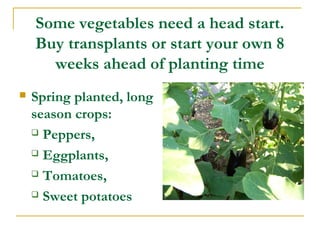
Some vegetables need a head start.
Buy transplants or start your own 8
weeks ahead of planting time
 Spring planted, long
season crops:
 Peppers,
 Eggplants,
 Tomatoes,
 Sweet potatoes
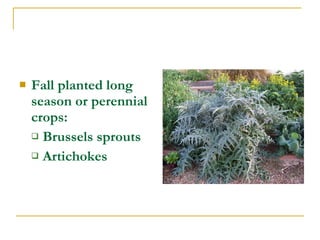
 Fall planted long
season or perennial
crops:
 Brussels sprouts
 Artichokes
Starting seeds in the garden.
 Work the soil, making it friable
 Soil should feel as moist as a wrung out sponge
 Use a string and sticks to layout straight rows
 Label each row!
 Make a shallow planting trench along string
 Plant seed according to package directions!
 Do not plant deeper than suggested
 Follow spacing instructions
 Firm soil gently over seed rows to insure good seed
soil contact
 When all rows are planted, water carefully with soft
pressure to insure enough moisture to initiate
growth
 Check daily and irrigate as necessary to keep soil
moist – a dry seed is a dead seed
Planting transplants
 Prepare soil: it should be moist and friable.
 Remove transplant gently from container, handling
by the crown and roots.
 Do not damage the stem, this is how the plant
transports the energy from photosynthesis to the
roots for storage and growth!
 Set the plant into soil so the transplant is at the same
depth as the garden soil, do not sink it into a well!
 Firm soil gently around the plant, water.
4. Maintaining your garden
 Irrigating
 Fertilizing
 Mulching
 Weeding
 Pest control
 Weather protections
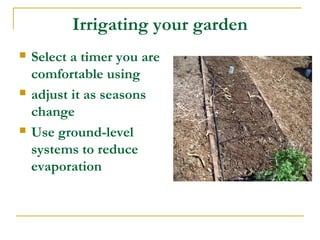
Irrigating your garden
 Select a timer you are
comfortable using
 adjust it as seasons
change
 Use ground-level
systems to reduce
evaporation
 Use temporary sprinklers to irrigate newly
seeded area or
 Hand water newly seeded areas and
transplants
 Keep a watering can handy for spot watering
Arizona has great soil for gardening!!!
 Our soils are rich in 19 of the 20 nutrients
necessary to grow vegetables
 Balanced fertilizer incorporated during soil
prep is often enough to go a season. This
can be achieved with good compost.
 Fertilize only when plants show reduced
vigor or nutrient deficiencies, or are
described as ‘heavy feeders’
Nitrogen, the missing link
 Arizona soils are consistently low in nitrogen
 Vegetables need only a little nitrogen to grow
and produce. Too much produces lush, too
healthy, non productive plants, but they are
beautiful plants!
 Nitrogen is very volatile—is in the air, adds to
rain, water dissolves the solid form, can leach it
away, left in open bags or exposed on the soil it
can evaporate
More garden maintenance
 Keep paths mulched to reduce weeds
 Pull weeds while small before they flower
and seed, add to compost pile
 Weeds are hosts for many unwelcome pests,
compete for water and nutrients
 Use mulch to reduce evaporation, maintain
even soil temperatures, reduce weeds and
protect crops from insects in garden beds,
especially in summer – aim for at least 6
inches in the summer
Pest control: know your enemy!
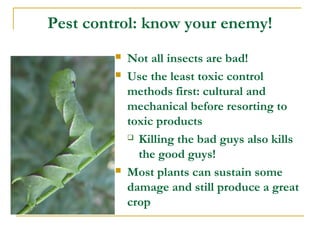
 Not all insects are bad!
 Use the least toxic control
methods first: cultural and
mechanical before resorting to
toxic products
 Killing the bad guys also kills
the good guys!
 Most plants can sustain some
damage and still produce a great
crop
 Learn to recognize the difference between
pest damage and disease [biotic]
 From other problems [a-biotic]. These
include
 Salt, wind-burn and sunscald
 Frost damage
 Over/under watering
 Nutritional deficiencies
 Make a compost pile, turn and irrigate it
 Plant flowers to invite pollinators to visit
 Visit the garden frequently
 Build fences, or cages to keep rodents out
 Use hardware cloth to line raised beds to
deter gophers
Season extenders
 Use frost cloth, remay, old sheets and light
blankets to protect plants from frost
 Make a structure from pvc, 2x2 or other
material to support the protection
 Never use sheet plastic, it does not work
 Use shade cloth to protect tomatoes from bugs,
and keep fruit from sun burning
 Use row covers to keep caterpillars and other
insects off crops
5. Harvesting your crops
 Pick produce young and often to keep new
ones growing
 Use the information on the seed packet to
project about when to expect to harvest
 Experiment with new recipes to use successful
harvests in new ways
 Thin and eat row crops like lettuce, and other
greens, radishes, mustards, carrots
 Use succession planting to extend harvest

Gardening101

  • 1.
    Vegetable Gardening 101 You can grow and harvest something fresh every month of the year in the low desert!
  • 2.
    People have beengardening and farming in the valley for more than 1000 years  Whether you have 4 square feet, 40 square feet, or 40 acres, you can harvest fresh vegetables every month of the year here in the low desert!
  • 3.
    RESOURCES  Desert Gardeningfor Beginners  Az 1005, Vegetable Planting Calendar  Seed catalogues  Maricopamastergardener.org  phoenixpermaculture.org
  • 4.
    6 Steps toharvesting homegrown fresh vegetables.  1. Select site  2. Decide how big to make the garden  3. Prepare site  4. Select, plant, or sow your crops  5. Maintain the garden  6. Harvest!!
  • 5.
    1. Decide whereto put your garden: Vegetables need  6-8 hours of sun each day  A reliable source of irrigation  Vegetables need soil tilled about 18 inches deep  The garden should be easy and inviting to get to  Allow space for paths between planting areas  Plan to reach the beds from both sides
  • 6.
    How big shouldit be?  Should fit where the conditions are best  Should not be so big and so much work you get discouraged  You can always add on !  Should allow you to grow what you want to grow and use!
  • 7.
    Build raised beds Soil in raise beds is warmer in the winter  Can be built to meet needs of challenged gardeners or challenged sites  Remember, you should be able to reach the middle from both sides  Use materials that fit your landscape and budget
  • 8.
  • 9.
    3. Preparing thesoil  Lay out planting beds  Till and rake soil – removing rocks and junk  Add compost aim for ½ native soil ½ compost  Add balanced fertilizer according to directions  Till the bed again and rake it level  Install irrigation
  • 10.
    3. SELECTING YOURCROPS: Choose crops that will grow for each of our seasons. We have 3!  Refer to AZ 1005 for planting dates ag.arizona.edu/pubs/garden/az1005.pdf  Or urbanfarm.org/Planting_Calendar.pdf  Fit the crops to the garden  Plant things you like to eat!  Rotate your crops
  • 11.
    SOURCES OF SEEDSAND PLANTS  Local independent nurseries  Seed catalogues and internet sites  Friends  Plant sales, garden clubs  Big box retailers
  • 12.
    Shall I buytransplants or start seeds on my own?  Transplants  No guesswork– you jump start the garden  Give you a head start on plants that require a longer season than we have to produce:  Limited to what you can find  Not all things should be transplanted-so you may do both!
  • 13.
    Plant these vegetablesdirectly into the garden.  Plants that grow from tubers, crowns, or cloves  Potatoes, asparagus, garlic  Plants that grow from big seeds  Peas, beans, corn, squash, melons, cucumbers, pumpkin  Root crops:  Beets, carrots, parsnips, radishes, turnips
  • 14.
    Some vegetables needa head start. Buy transplants or start your own 8 weeks ahead of planting time  Spring planted, long season crops:  Peppers,  Eggplants,  Tomatoes,  Sweet potatoes
  • 15.
     Fall plantedlong season or perennial crops:  Brussels sprouts  Artichokes
  • 16.
    Starting seeds inthe garden.  Work the soil, making it friable  Soil should feel as moist as a wrung out sponge  Use a string and sticks to layout straight rows  Label each row!  Make a shallow planting trench along string  Plant seed according to package directions!  Do not plant deeper than suggested  Follow spacing instructions
  • 17.
     Firm soilgently over seed rows to insure good seed soil contact  When all rows are planted, water carefully with soft pressure to insure enough moisture to initiate growth  Check daily and irrigate as necessary to keep soil moist – a dry seed is a dead seed
  • 18.
    Planting transplants  Preparesoil: it should be moist and friable.  Remove transplant gently from container, handling by the crown and roots.  Do not damage the stem, this is how the plant transports the energy from photosynthesis to the roots for storage and growth!  Set the plant into soil so the transplant is at the same depth as the garden soil, do not sink it into a well!  Firm soil gently around the plant, water.
  • 19.
    4. Maintaining yourgarden  Irrigating  Fertilizing  Mulching  Weeding  Pest control  Weather protections
  • 20.
    Irrigating your garden Select a timer you are comfortable using  adjust it as seasons change  Use ground-level systems to reduce evaporation
  • 21.
     Use temporarysprinklers to irrigate newly seeded area or  Hand water newly seeded areas and transplants  Keep a watering can handy for spot watering
  • 22.
    Arizona has greatsoil for gardening!!!  Our soils are rich in 19 of the 20 nutrients necessary to grow vegetables  Balanced fertilizer incorporated during soil prep is often enough to go a season. This can be achieved with good compost.  Fertilize only when plants show reduced vigor or nutrient deficiencies, or are described as ‘heavy feeders’
  • 23.
    Nitrogen, the missinglink  Arizona soils are consistently low in nitrogen  Vegetables need only a little nitrogen to grow and produce. Too much produces lush, too healthy, non productive plants, but they are beautiful plants!  Nitrogen is very volatile—is in the air, adds to rain, water dissolves the solid form, can leach it away, left in open bags or exposed on the soil it can evaporate
  • 24.
    More garden maintenance Keep paths mulched to reduce weeds  Pull weeds while small before they flower and seed, add to compost pile  Weeds are hosts for many unwelcome pests, compete for water and nutrients  Use mulch to reduce evaporation, maintain even soil temperatures, reduce weeds and protect crops from insects in garden beds, especially in summer – aim for at least 6 inches in the summer
  • 25.
    Pest control: knowyour enemy!  Not all insects are bad!  Use the least toxic control methods first: cultural and mechanical before resorting to toxic products  Killing the bad guys also kills the good guys!  Most plants can sustain some damage and still produce a great crop
  • 26.
     Learn torecognize the difference between pest damage and disease [biotic]  From other problems [a-biotic]. These include  Salt, wind-burn and sunscald  Frost damage  Over/under watering  Nutritional deficiencies
  • 27.
     Make acompost pile, turn and irrigate it  Plant flowers to invite pollinators to visit  Visit the garden frequently  Build fences, or cages to keep rodents out  Use hardware cloth to line raised beds to deter gophers
  • 28.
    Season extenders  Usefrost cloth, remay, old sheets and light blankets to protect plants from frost  Make a structure from pvc, 2x2 or other material to support the protection  Never use sheet plastic, it does not work  Use shade cloth to protect tomatoes from bugs, and keep fruit from sun burning  Use row covers to keep caterpillars and other insects off crops
  • 29.
    5. Harvesting yourcrops  Pick produce young and often to keep new ones growing  Use the information on the seed packet to project about when to expect to harvest  Experiment with new recipes to use successful harvests in new ways  Thin and eat row crops like lettuce, and other greens, radishes, mustards, carrots  Use succession planting to extend harvest