California Buttercup – Ranunculus californicus

(ra-NUN-kew-lus

ka-li-FOR-ni-kus)

Family: Ranunculaceae (Ranunculus Family)
Much of western coast from OR to Baja; Vernally moist slopes, meadows, valley
grasslands, southern oak woodlands, mixed evergreen forest.

Native to:

herbaceous perennial
mature height: 1-2 ft.
mature width: 1-2 ft.
Perennial with bright green leaves in basal rosette. Dies back to ground in summer. Stems erect
to spreading. Attractive foliage – looks like a typical garden plant. Colonies spread over time.

Growth characteristics:

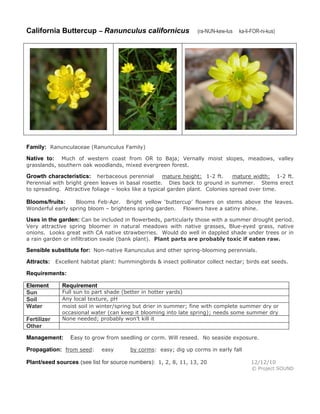
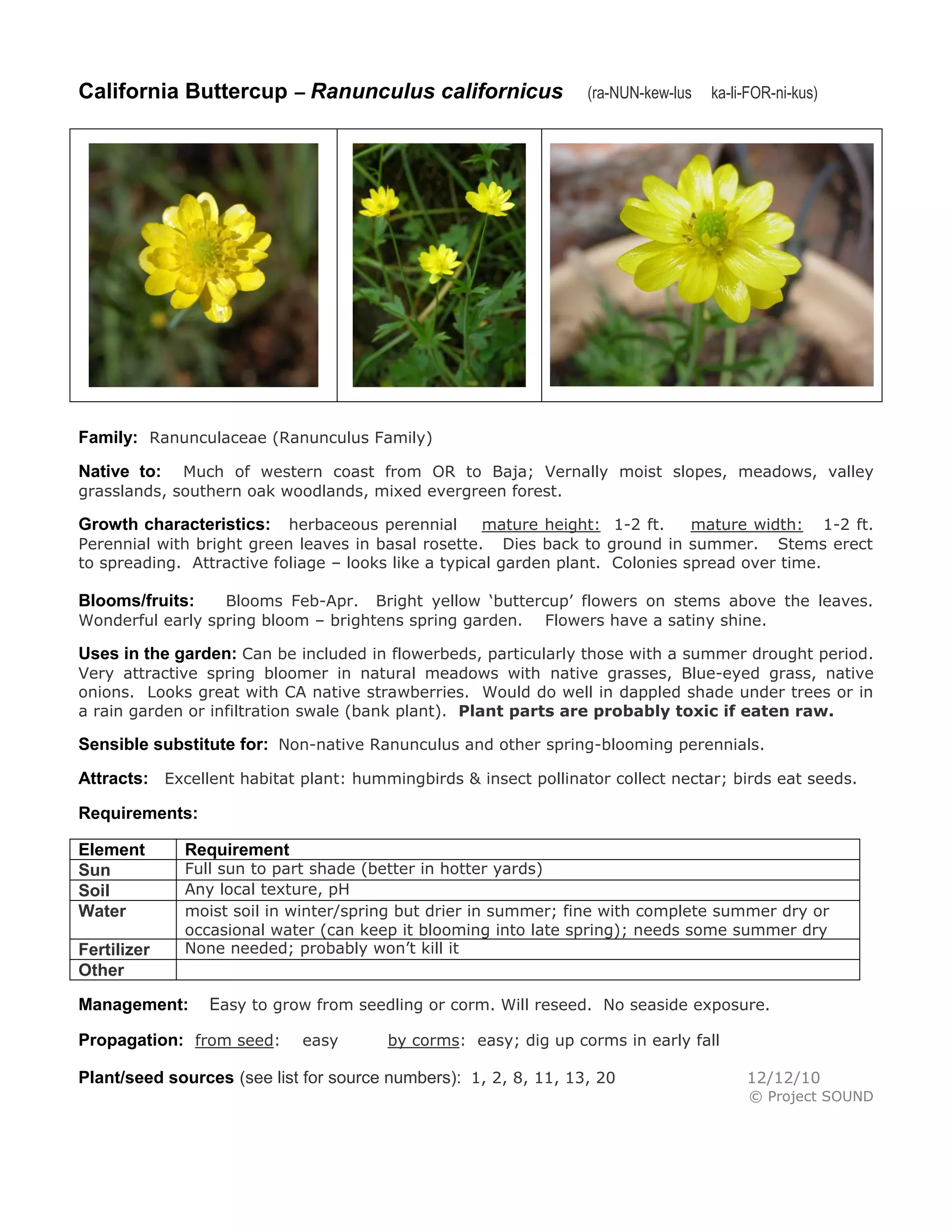
Blooms Feb-Apr. Bright yellow ‘buttercup’ flowers on stems above the leaves.
Wonderful early spring bloom – brightens spring garden. Flowers have a satiny shine.

Blooms/fruits:

Uses in the garden: Can be included in flowerbeds, particularly those with a summer drought period.
Very attractive spring bloomer in natural meadows with native grasses, Blue-eyed grass, native
onions. Looks great with CA native strawberries. Would do well in dappled shade under trees or in
a rain garden or infiltration swale (bank plant). Plant parts are probably toxic if eaten raw.

Sensible substitute for: Non-native Ranunculus and other spring-blooming perennials.
Attracts: Excellent habitat plant: hummingbirds & insect pollinator collect nectar; birds eat seeds.
Requirements:
Element
Sun
Soil
Water
Fertilizer
Other

Requirement

Full sun to part shade (better in hotter yards)
Any local texture, pH
moist soil in winter/spring but drier in summer; fine with complete summer dry or
occasional water (can keep it blooming into late spring); needs some summer dry
None needed; probably won’t kill it

Management:

Easy to grow from seedling or corm. Will reseed. No seaside exposure.

Propagation: from seed:

easy

by corms: easy; dig up corms in early fall

Plant/seed sources (see list for source numbers): 1, 2, 8, 11, 13, 20

12/12/10
© Project SOUND

Gardening sheet ranunculus californicus

  • 1.
    California Buttercup –Ranunculus californicus (ra-NUN-kew-lus ka-li-FOR-ni-kus) Family: Ranunculaceae (Ranunculus Family) Much of western coast from OR to Baja; Vernally moist slopes, meadows, valley grasslands, southern oak woodlands, mixed evergreen forest. Native to: herbaceous perennial mature height: 1-2 ft. mature width: 1-2 ft. Perennial with bright green leaves in basal rosette. Dies back to ground in summer. Stems erect to spreading. Attractive foliage – looks like a typical garden plant. Colonies spread over time. Growth characteristics: Blooms Feb-Apr. Bright yellow ‘buttercup’ flowers on stems above the leaves. Wonderful early spring bloom – brightens spring garden. Flowers have a satiny shine. Blooms/fruits: Uses in the garden: Can be included in flowerbeds, particularly those with a summer drought period. Very attractive spring bloomer in natural meadows with native grasses, Blue-eyed grass, native onions. Looks great with CA native strawberries. Would do well in dappled shade under trees or in a rain garden or infiltration swale (bank plant). Plant parts are probably toxic if eaten raw. Sensible substitute for: Non-native Ranunculus and other spring-blooming perennials. Attracts: Excellent habitat plant: hummingbirds & insect pollinator collect nectar; birds eat seeds. Requirements: Element Sun Soil Water Fertilizer Other Requirement Full sun to part shade (better in hotter yards) Any local texture, pH moist soil in winter/spring but drier in summer; fine with complete summer dry or occasional water (can keep it blooming into late spring); needs some summer dry None needed; probably won’t kill it Management: Easy to grow from seedling or corm. Will reseed. No seaside exposure. Propagation: from seed: easy by corms: easy; dig up corms in early fall Plant/seed sources (see list for source numbers): 1, 2, 8, 11, 13, 20 12/12/10 © Project SOUND