NORTHEAST REGION HABITATNORTHEAST REGION HABITAT
VULNERABILITY ASSESSMENTVULNERABILITY ASSESSMENT
Hector GalbraithHector Galbraith
National Wildlife FederationNational Wildlife Federation
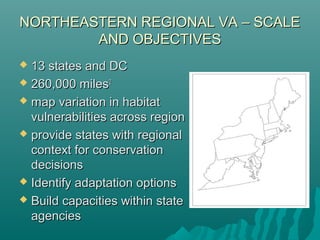
NORTHEASTERN REGIONAL VA – SCALENORTHEASTERN REGIONAL VA – SCALE
AND OBJECTIVESAND OBJECTIVES
 13 states and DC13 states and DC
 260,000 miles260,000 miles22
 map variation in habitatmap variation in habitat
vulnerabilities across regionvulnerabilities across region
 provide states with regionalprovide states with regional
context for conservationcontext for conservation
decisionsdecisions
 Identify adaptation optionsIdentify adaptation options
 Build capacities within stateBuild capacities within state
agenciesagencies
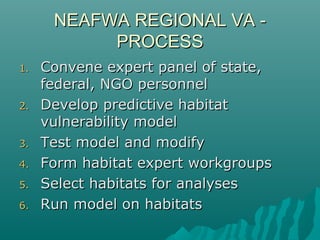
NEAFWA REGIONAL VA -NEAFWA REGIONAL VA -
PROCESSPROCESS
1.1. Convene expert panel of state,Convene expert panel of state,
federal, NGO personnelfederal, NGO personnel
2.2. Develop predictive habitatDevelop predictive habitat
vulnerability modelvulnerability model
3.3. Test model and modifyTest model and modify
4.4. Form habitat expert workgroupsForm habitat expert workgroups
5.5. Select habitats for analysesSelect habitats for analyses
6.6. Run model on habitatsRun model on habitats
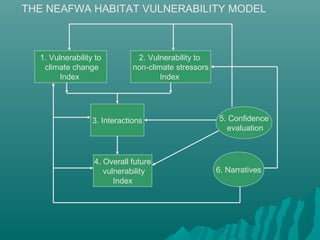
1. Vulnerability to
climate change
Index
2. Vulnerability to
non-climate stressors
Index
3. Interactions
4. Overall future
vulnerability
Index
5. Confidence
evaluation
6. Narratives
THE NEAFWA HABITAT VULNERABILITY MODEL
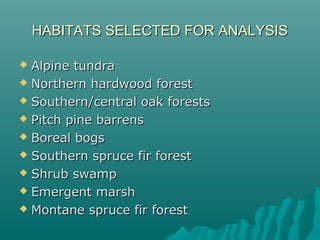
HABITATS SELECTED FOR ANALYSISHABITATS SELECTED FOR ANALYSIS
 Alpine tundraAlpine tundra
 Northern hardwood forestNorthern hardwood forest
 Southern/central oak forestsSouthern/central oak forests
 Pitch pine barrensPitch pine barrens
 Boreal bogsBoreal bogs
 Southern spruce fir forestSouthern spruce fir forest
 Shrub swampShrub swamp
 Emergent marshEmergent marsh
 Montane spruce fir forestMontane spruce fir forest
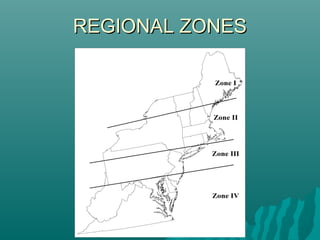
REGIONAL ZONESREGIONAL ZONES
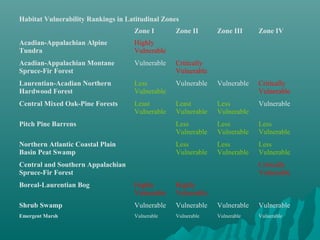
Habitat Vulnerability Rankings in Latitudinal Zones
Zone I Zone II Zone III Zone IV
Acadian-Appalachian Alpine
Tundra
Highly
Vulnerable
Acadian-Appalachian Montane
Spruce-Fir Forest
Vulnerable Critically
Vulnerable
Laurentian-Acadian Northern
Hardwood Forest
Less
Vulnerable
Vulnerable Vulnerable Critically
Vulnerable
Central Mixed Oak-Pine Forests Least
Vulnerable
Least
Vulnerable
Less
Vulnerable
Vulnerable
Pitch Pine Barrens Less
Vulnerable
Less
Vulnerable
Less
Vulnerable
Northern Atlantic Coastal Plain
Basin Peat Swamp
Less
Vulnerable
Less
Vulnerable
Less
Vulnerable
Central and Southern Appalachian
Spruce-Fir Forest
Critically
Vulnerable
Boreal-Laurentian Bog Highly
Vulnerable
Highly
Vulnerable
Shrub Swamp Vulnerable Vulnerable Vulnerable Vulnerable
Emergent Marsh Vulnerable Vulnerable Vulnerable Vulnerable
CLIMATE-SCHLIMATE!CLIMATE-SCHLIMATE!
 Some habitats likely to be mostSome habitats likely to be most
vulnerable to non-climate stressors:vulnerable to non-climate stressors:
– Pitch pine scrub oak forestsPitch pine scrub oak forests
– Atlantic white cedar forestsAtlantic white cedar forests
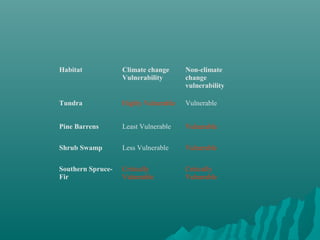
Habitat Climate change
Vulnerability
Non-climate
change
vulnerability
Tundra Highly Vulnerable Vulnerable
Pine Barrens Least Vulnerable Vulnerable
Shrub Swamp Less Vulnerable Vulnerable
Southern Spruce-
Fir
Critically
Vulnerable
Critically
Vulnerable
REPORTS ON NEAFWAREPORTS ON NEAFWA
WEBSITEWEBSITE
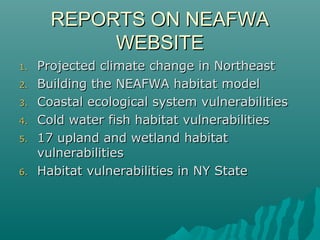
1.1. Projected climate change in NortheastProjected climate change in Northeast
2.2. Building the NEAFWA habitat modelBuilding the NEAFWA habitat model
3.3. Coastal ecological system vulnerabilitiesCoastal ecological system vulnerabilities
4.4. Cold water fish habitat vulnerabilitiesCold water fish habitat vulnerabilities
5.5. 17 upland and wetland habitat17 upland and wetland habitat
vulnerabilitiesvulnerabilities
6.6. Habitat vulnerabilities in NY StateHabitat vulnerabilities in NY State
NEXT STEPSNEXT STEPS
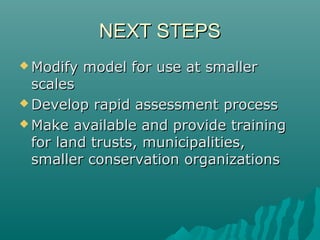
 Modify model for use at smallerModify model for use at smaller
scalesscales
 Develop rapid assessment processDevelop rapid assessment process
 Make available and provide trainingMake available and provide training
for land trusts, municipalities,for land trusts, municipalities,
smaller conservation organizationssmaller conservation organizations

Northeast Region Habitat Vulnerability Assessment, Hector Galbraith

  • 1.
    NORTHEAST REGION HABITATNORTHEASTREGION HABITAT VULNERABILITY ASSESSMENTVULNERABILITY ASSESSMENT Hector GalbraithHector Galbraith National Wildlife FederationNational Wildlife Federation
  • 2.
    NORTHEASTERN REGIONAL VA– SCALENORTHEASTERN REGIONAL VA – SCALE AND OBJECTIVESAND OBJECTIVES  13 states and DC13 states and DC  260,000 miles260,000 miles22  map variation in habitatmap variation in habitat vulnerabilities across regionvulnerabilities across region  provide states with regionalprovide states with regional context for conservationcontext for conservation decisionsdecisions  Identify adaptation optionsIdentify adaptation options  Build capacities within stateBuild capacities within state agenciesagencies
  • 3.
    NEAFWA REGIONAL VA-NEAFWA REGIONAL VA - PROCESSPROCESS 1.1. Convene expert panel of state,Convene expert panel of state, federal, NGO personnelfederal, NGO personnel 2.2. Develop predictive habitatDevelop predictive habitat vulnerability modelvulnerability model 3.3. Test model and modifyTest model and modify 4.4. Form habitat expert workgroupsForm habitat expert workgroups 5.5. Select habitats for analysesSelect habitats for analyses 6.6. Run model on habitatsRun model on habitats
  • 4.
    1. Vulnerability to climatechange Index 2. Vulnerability to non-climate stressors Index 3. Interactions 4. Overall future vulnerability Index 5. Confidence evaluation 6. Narratives THE NEAFWA HABITAT VULNERABILITY MODEL
  • 5.
    HABITATS SELECTED FORANALYSISHABITATS SELECTED FOR ANALYSIS  Alpine tundraAlpine tundra  Northern hardwood forestNorthern hardwood forest  Southern/central oak forestsSouthern/central oak forests  Pitch pine barrensPitch pine barrens  Boreal bogsBoreal bogs  Southern spruce fir forestSouthern spruce fir forest  Shrub swampShrub swamp  Emergent marshEmergent marsh  Montane spruce fir forestMontane spruce fir forest
  • 6.
  • 7.
    Habitat Vulnerability Rankingsin Latitudinal Zones Zone I Zone II Zone III Zone IV Acadian-Appalachian Alpine Tundra Highly Vulnerable Acadian-Appalachian Montane Spruce-Fir Forest Vulnerable Critically Vulnerable Laurentian-Acadian Northern Hardwood Forest Less Vulnerable Vulnerable Vulnerable Critically Vulnerable Central Mixed Oak-Pine Forests Least Vulnerable Least Vulnerable Less Vulnerable Vulnerable Pitch Pine Barrens Less Vulnerable Less Vulnerable Less Vulnerable Northern Atlantic Coastal Plain Basin Peat Swamp Less Vulnerable Less Vulnerable Less Vulnerable Central and Southern Appalachian Spruce-Fir Forest Critically Vulnerable Boreal-Laurentian Bog Highly Vulnerable Highly Vulnerable Shrub Swamp Vulnerable Vulnerable Vulnerable Vulnerable Emergent Marsh Vulnerable Vulnerable Vulnerable Vulnerable
  • 8.
    CLIMATE-SCHLIMATE!CLIMATE-SCHLIMATE!  Some habitatslikely to be mostSome habitats likely to be most vulnerable to non-climate stressors:vulnerable to non-climate stressors: – Pitch pine scrub oak forestsPitch pine scrub oak forests – Atlantic white cedar forestsAtlantic white cedar forests
  • 9.
    Habitat Climate change Vulnerability Non-climate change vulnerability TundraHighly Vulnerable Vulnerable Pine Barrens Least Vulnerable Vulnerable Shrub Swamp Less Vulnerable Vulnerable Southern Spruce- Fir Critically Vulnerable Critically Vulnerable
  • 10.
    REPORTS ON NEAFWAREPORTSON NEAFWA WEBSITEWEBSITE 1.1. Projected climate change in NortheastProjected climate change in Northeast 2.2. Building the NEAFWA habitat modelBuilding the NEAFWA habitat model 3.3. Coastal ecological system vulnerabilitiesCoastal ecological system vulnerabilities 4.4. Cold water fish habitat vulnerabilitiesCold water fish habitat vulnerabilities 5.5. 17 upland and wetland habitat17 upland and wetland habitat vulnerabilitiesvulnerabilities 6.6. Habitat vulnerabilities in NY StateHabitat vulnerabilities in NY State
  • 11.
    NEXT STEPSNEXT STEPS Modify model for use at smallerModify model for use at smaller scalesscales  Develop rapid assessment processDevelop rapid assessment process  Make available and provide trainingMake available and provide training for land trusts, municipalities,for land trusts, municipalities, smaller conservation organizationssmaller conservation organizations