Ryan Anderson
 Institutions are companies which provide
media content:
ï‚Ą Audio Visual
ï‚Ą Print based
ï‚Ą Internet based
ï‚Ą Interactive
Ryan Anderson
 Some media institutions are publically owned
whilst other are commercially owned.
Ryan Anderson
 This about how things join together
 In media there are two types of convergence
Ryan Anderson
 This is when products are produced and
distributed across two different platforms.
Ryan Anderson
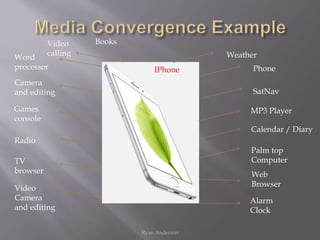
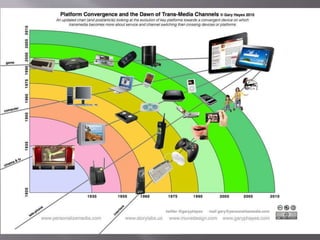
 When different technologies come together on
one device.
Ryan Anderson
 Shops and businesses are accountable to their
customers – if they don't give them what they
want, they wont buy products and make any
money.
 Audiences are exactly the same – they control
the flow of money
Ryan Anderson
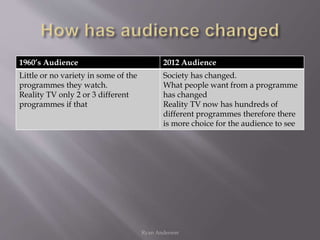
 Audiences have changed over time, and tracing
this change helps us to understand why a
modern-day audience is important.
Ryan Anderson
1960’s Audience 2012 Audience
Little or no variety in some of the
programmes they watch.
Reality TV only 2 or 3 different
programmes if that
Society has changed.
What people want from a programme
has changed
Reality TV now has hundreds of
different programmes therefore there
is more choice for the audience to see
Ryan Anderson
 Web 2.0 describes a new phase of the internet
which allows us to create material and
distribute it to one another.
Ryan Anderson
 Our ability to create our own media has
changed the way we, as audiences, behave.
 We don’t just soak up the media we’re
presented with, we create it ourselves.
Ryan Anderson
 We’re encouraged to make our own media
products online- upload videos to YouTube,
write on blogs and create our own news stories:
this is all part of web 2.0
Ryan Anderson
 Content is created and edited by user with
minimal control.
Ryan Anderson
 For both producers of media and their
audiences. There are several reasons for this.
ï‚Ą Development of technology
ï‚Ą Technology coming together (convergence)
ï‚Ą User-created content
ï‚Ą Social networking
 These influences have resulted in audience
fragmentation.
Ryan Anderson
 Audience groups are broken up due to things
like the internet, downloadable material, or
video-on-demand (VOD).
Ryan Anderson
Ryan Anderson
IPhone Phone
MP3 Player
Web
Browser
Camera
and editing
Games
console
Radio
Video
Camera
and editing
Palm top
ComputerTV
browser
SatNav
Word
processor
Calendar / Diary
Alarm
Clock
Weather
Video
calling
Books
Ryan Anderson
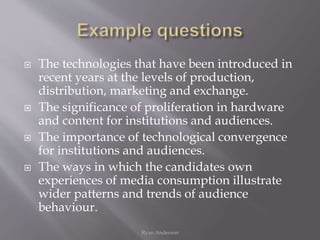
 The technologies that have been introduced in
recent years at the levels of production,
distribution, marketing and exchange.
 The significance of proliferation in hardware
and content for institutions and audiences.
 The importance of technological convergence
for institutions and audiences.
 The ways in which the candidates own
experiences of media consumption illustrate
wider patterns and trends of audience
behaviour.
Ryan Anderson
 Where an institution has shares or owns each
part of the production and distribution process
 Where an organization develops by buying up
competitors in the same section of the market
 Is the strategy of synchronizing and actively
forging connections between directly related
areas of entertainment .
 The development of products across different
mediums. Can help with synergy if companies
are wise enough to take advantage of the links
they have forged.

G322 exam notes

  • 1.
  • 2.
     Institutions arecompanies which provide media content: ï‚Ą Audio Visual ï‚Ą Print based ï‚Ą Internet based ï‚Ą Interactive Ryan Anderson
  • 3.
     Some mediainstitutions are publically owned whilst other are commercially owned. Ryan Anderson
  • 4.
     This abouthow things join together  In media there are two types of convergence Ryan Anderson
  • 5.
     This iswhen products are produced and distributed across two different platforms. Ryan Anderson
  • 6.
     When differenttechnologies come together on one device. Ryan Anderson
  • 7.
     Shops andbusinesses are accountable to their customers – if they don't give them what they want, they wont buy products and make any money.  Audiences are exactly the same – they control the flow of money Ryan Anderson
  • 8.
     Audiences havechanged over time, and tracing this change helps us to understand why a modern-day audience is important. Ryan Anderson
  • 9.
    1960’s Audience 2012Audience Little or no variety in some of the programmes they watch. Reality TV only 2 or 3 different programmes if that Society has changed. What people want from a programme has changed Reality TV now has hundreds of different programmes therefore there is more choice for the audience to see Ryan Anderson
  • 10.
     Web 2.0describes a new phase of the internet which allows us to create material and distribute it to one another. Ryan Anderson
  • 11.
     Our abilityto create our own media has changed the way we, as audiences, behave.  We don’t just soak up the media we’re presented with, we create it ourselves. Ryan Anderson
  • 12.
     We’re encouragedto make our own media products online- upload videos to YouTube, write on blogs and create our own news stories: this is all part of web 2.0 Ryan Anderson
  • 13.
     Content iscreated and edited by user with minimal control. Ryan Anderson
  • 14.
     For bothproducers of media and their audiences. There are several reasons for this. ï‚Ą Development of technology ï‚Ą Technology coming together (convergence) ï‚Ą User-created content ï‚Ą Social networking  These influences have resulted in audience fragmentation. Ryan Anderson
  • 15.
     Audience groupsare broken up due to things like the internet, downloadable material, or video-on-demand (VOD). Ryan Anderson
  • 16.
    Ryan Anderson IPhone Phone MP3Player Web Browser Camera and editing Games console Radio Video Camera and editing Palm top ComputerTV browser SatNav Word processor Calendar / Diary Alarm Clock Weather Video calling Books
  • 17.
  • 18.
     The technologiesthat have been introduced in recent years at the levels of production, distribution, marketing and exchange.  The significance of proliferation in hardware and content for institutions and audiences.  The importance of technological convergence for institutions and audiences.  The ways in which the candidates own experiences of media consumption illustrate wider patterns and trends of audience behaviour. Ryan Anderson
  • 20.
     Where aninstitution has shares or owns each part of the production and distribution process
  • 21.
     Where anorganization develops by buying up competitors in the same section of the market
  • 22.
     Is thestrategy of synchronizing and actively forging connections between directly related areas of entertainment .
  • 23.
     The developmentof products across different mediums. Can help with synergy if companies are wise enough to take advantage of the links they have forged.