EVALUATING MESSAGES
• Theimportance of evaluating the
effectiveness of our messages is
by developing and using
strategic questions to identify
strengths and weaknesses.
4.
4 MAIN QUALITIESFOR AN
EFFECTIVE MESSAGE
Simplicity
Specificity
Structure
Stickiness
5.
STRATEGIES FOR EVALUATINGA
MESSAGE “
• In order to evaluate whether a
message is effective, we can ask
ourselves a series of questions which
reflect a messages simplicity,
specificity, structure and stickiness.
6.
1. SIMPLICITY
-Is mypurpose evident?
-Is my core message clear?
2. SPECIFICITY
- Is my language specific?
- Is my language concrete, rather than abstract?
- Am I suing words which have additional
meanings and could perhaps be misconstrued?
7.
3. STRUCTURE
-Does mymessages have a
STRUCTURE?
-Is there a more effective way to
arrange my ideas?
4. STICKINESS
8.
EVALUATING IMAGES
• Itis important to critically evaluate images
you use for research, study and
presentation. Images should be evaluated
like any other source, such as journal
articles or books, to determine their
quality, reliability and appropriateness.
9.
EVALUATING IMAGES
• Visualanalysis is an important step in
evaluating an image and understanding its
meaning and also. there are three steps of
evaluating an image and these are:
1. Identifying Source
2. Interpret contextual information
3. Understand implications
10.
CONTENT ANALYSIS
• Whatdo you see?
• What is the image all about?
• Are their people in the image?
• What are they doing?
• How are they presented?
• Can the image be looked at different ways?
• How effective is the image as a visual
message?
11.
VISUAL ANALYSIS
• Howis the image composed?
• What’s in the Background and what is
in the foreground?
• What are the most important visual?
12.
IMAGE SOURCE
• Wheredid you find the image?
• What information does the source provide
about the origins of the image?
• Is the source reliable and trustworthy?
• Was the image found in an image database
or was it being use in another context to
convey meaning?
13.
TECHNICAL QUALITY
• Isthe image large enough to suit your
purposes?
• Are the color, light and balance, true?
• Is the image a quality digital image without
pixelation or distortion?
• Is the image in a file format you can use ?
14.
CONTEXTUAL INFO
• Whatinformation accompanies the image?
• Does the text change how you see the
image? How?
• Is the textual information intended to be
factual an inform or is to intended to
influence what and how you see?
• What kind of context does the information
provide?
• A textis not only limited to
something written down. A text can
be a film, an artifact, anything in a
language and culture that
conveys meaning.
TEXT
17.
• Are thoseobjects, actions, and
behaviors that reveal cultural
meanings. A photo is an image, but is
also a cultural text, a picture with
cultural information beyond just the
picture itself.
CULTURAL TEXT
18.
• NARRATIVE
-is away of presenting connected
events in order to tell a good
story.
Example: legend, fairytale, myth, or
fable.
DIFFERENT TYPES OF TEXT
19.
• DESCRIPTIVE
-is todescribe a person, place or
thing in such a way that a picture is
formed in the reader’s mind.
Example: a story about the places visited
on a family trip.
DIFFERENT TYPES OF TEXT
20.
• DIRECTIVE
-is anorder or direction issued
for other by an authority.
Example: Mayor’s EO.
DIFFERENT TYPES OF TEXT
21.
• EXPOSITORY
-presents readerswith important
research and information about a topic.
Example: news articles, informational
books, instruction manuals, or textbooks.
DIFFERENT TYPES OF TEXT
22.
• ARGUMENTATIVE
-is usuallydefined as a type of
discourse concerned with the
presentation and evaluation of
arguments.
Example: Chatgpt is a good invention. “No, it
is not”.
DIFFERENT TYPES OF TEXT
• refers tothe information or ideas that are
being conveyed from one person or entity
to another.
• is the content or meaning that is being
transmitted through various channels such
as speech, writing, gestures, or symbols.
• can be explicit, where the information is
clearly stated, or implicit, where it is
implied or inferred.
25.
• is essentialfor effective
communication that the message is
clear, concise, and properly
understood by the intended recipient.
• can be influenced by factors such as
culture, language, context, and the
sender's intentions.
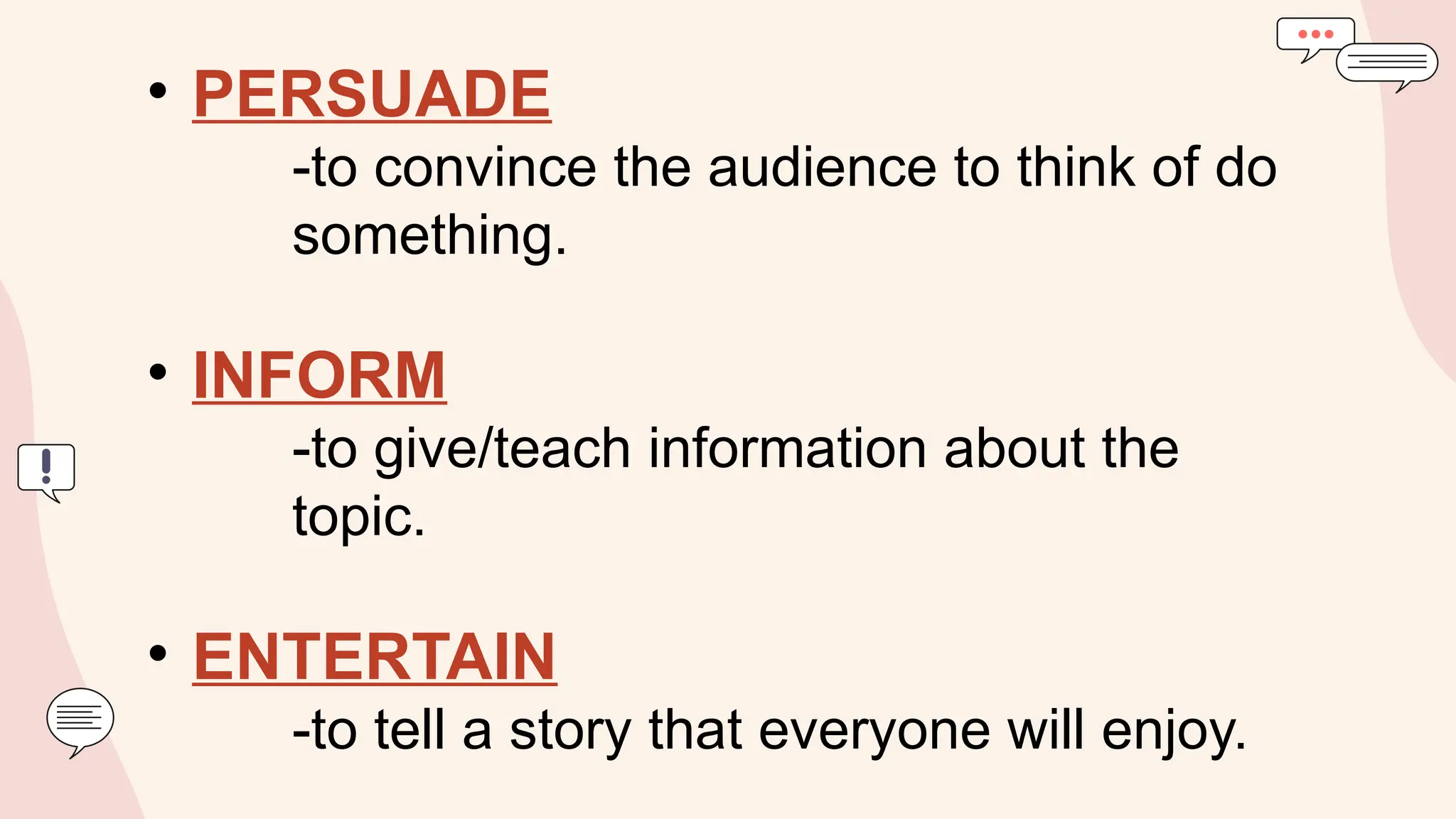
• PERSUADE
-to convincethe audience to think of do
something.
• INFORM
-to give/teach information about the
topic.
• ENTERTAIN
-to tell a story that everyone will enjoy.
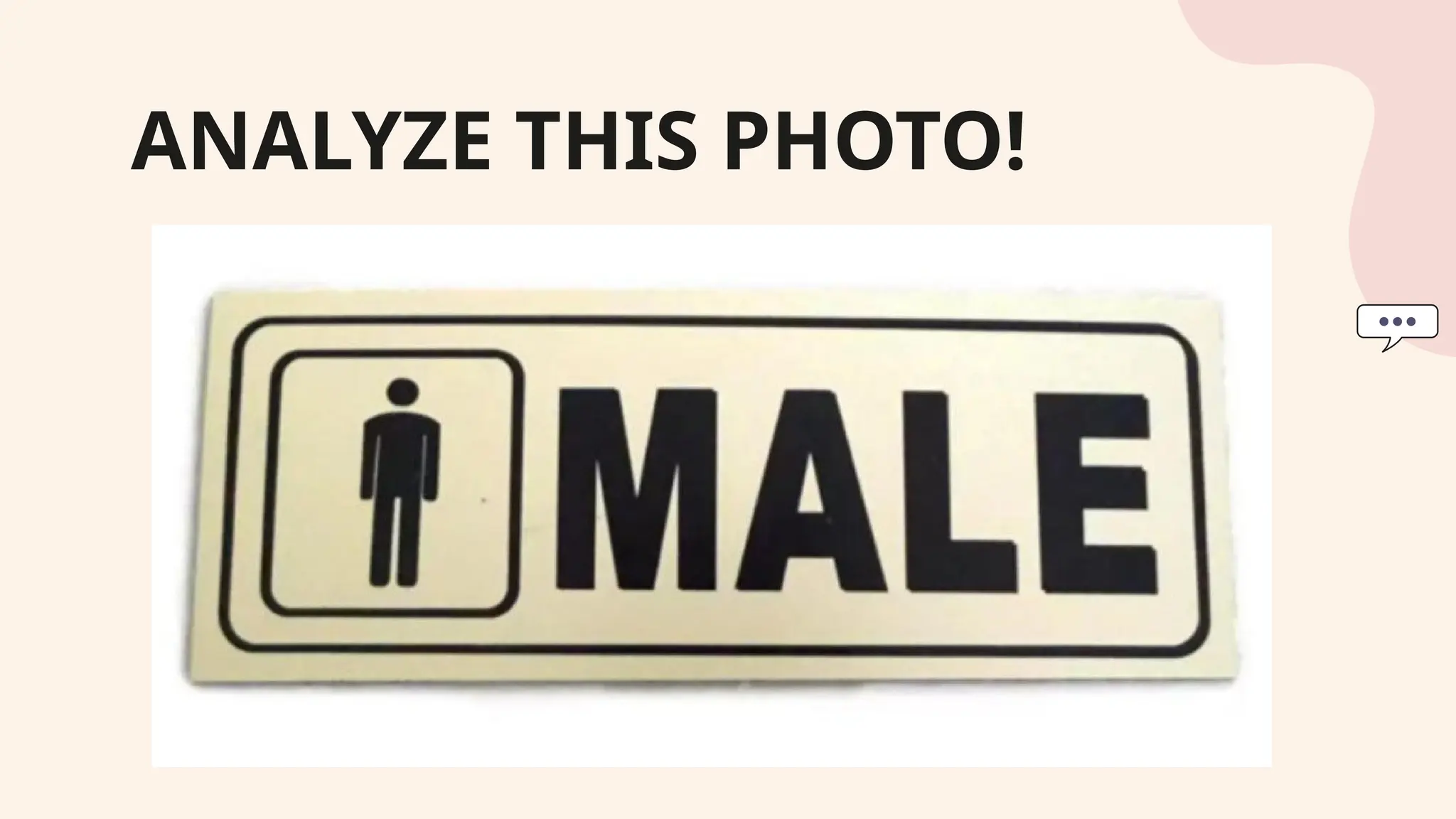
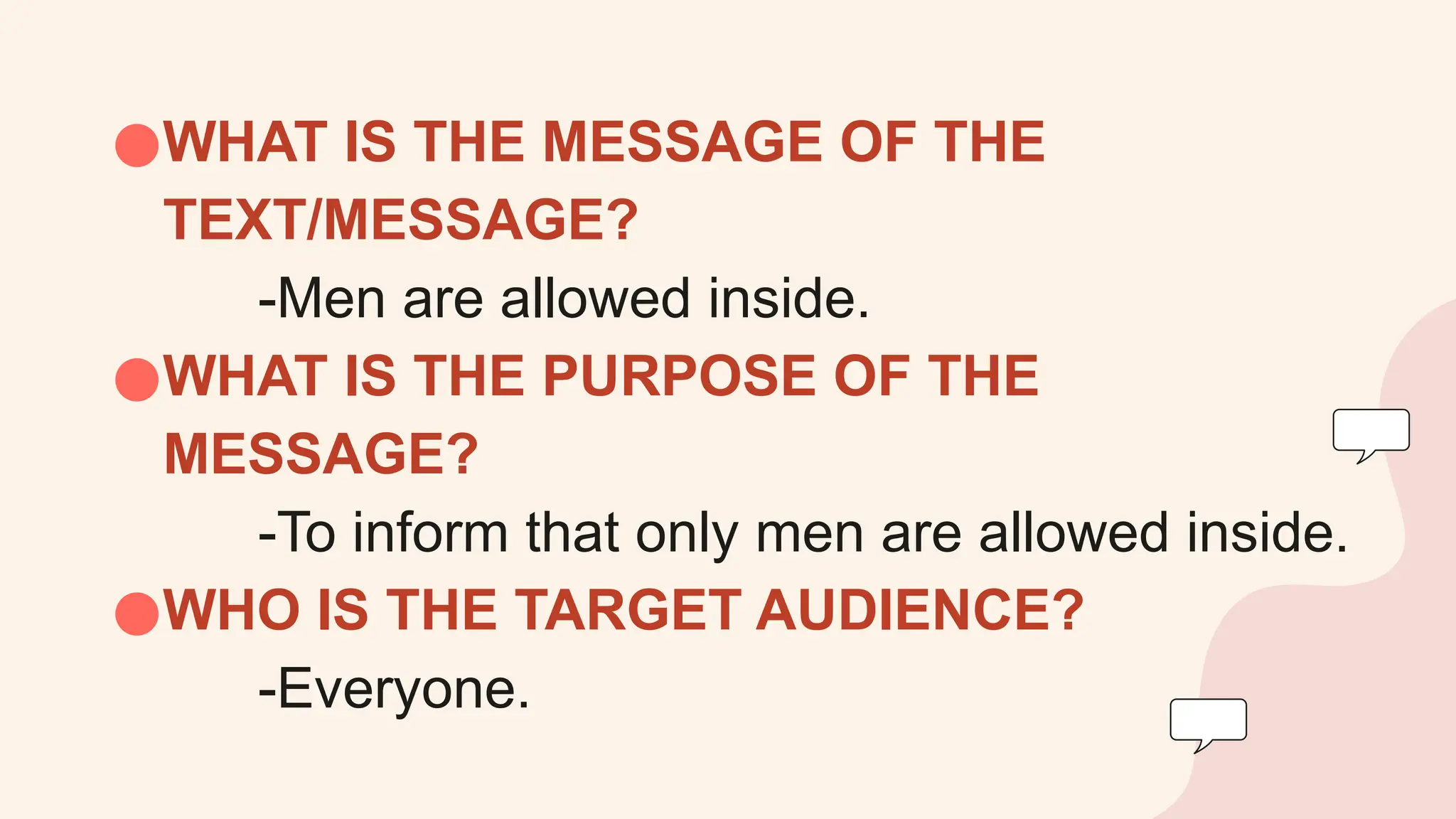
●WHAT IS THEMESSAGE OF THE
TEXT/MESSAGE?
-Men are allowed inside.
●WHAT IS THE PURPOSE OF THE
MESSAGE?
-To inform that only men are allowed inside.
●WHO IS THE TARGET AUDIENCE?
-Everyone.
• .
Text conveyscommunication by writing or
typing, allowing the expression of emotions,
tone, and information. On the other hand,
images and media are powerful
communication devices that convey concepts
and information, improving comprehension
and engaging attention.
• In media,the target audience refers to
the person or group for whom a message
is created.
• The target audience of a message is the
group of people that you would like to get
the message and act upon it.
• Some messages, like personal email or
thank-you notes, target just one person.
Others are meant for larger audience.
41.
• Example:
If yousell fitness supplements for
women, your target audience
could be women who are into
fitness, they’re probably aged 20 to
50 and live in urban areas.
42.
WAYS OF PRESENTING
THEMESSAGE
1. Clarity
2. Structure
3. Visual Aids
4. Relevance
5. Engage with your
audience
6. Non verbal cues
7. Practice
• Technology hastaken over the
world in these past decades. Its
rapid development has made a
huge impact on each aspect of
life and communication.
But how huge is its impact in
communication?
?
45.
COMMUNICATION AIDS
• Helpsan individual to communicate
more effectively with people around
them.
• Are also referred to as Augmentative
and Alternative Communication
(AAC) devices.
46.
COMMUNICATION AIDS
• AACis a huge range of techniques
which support or replace spoken
communication. These includes
gesture, signing, symbols, word
boards, and books.
47.
2 MAIN TYPESOF AAC
SYSTEM
• Unaided communication- it
does not use any additional
equipment.
• Aided communication- this one
uses equipment.
48.
COMMUNICATION STRATEGIES
• Communicationis the exchange of
information between a sender and a
receiver.
• Communication Strategies are the
blueprints for how this information will
be exchanged.
49.
TYPES OF COMMUNICATION
STRATEGIES
•Verbal Communication Strategies – uses
words to relay information.
• Two categories:
• Written Strategies (e-mails, text, and chat)
• Oral Strategies (phone calls, video chats,
face-to-face)
50.
TYPES OF COMMUNICATION
STRATEGIES
•Nonverbal Communication Strategies-
ways you communication without
speaking.
• Example: Facial expressions, hand
gestures, eye contact, etc…
52.
TYPES OF COMMUNICATION
STRATEGIES
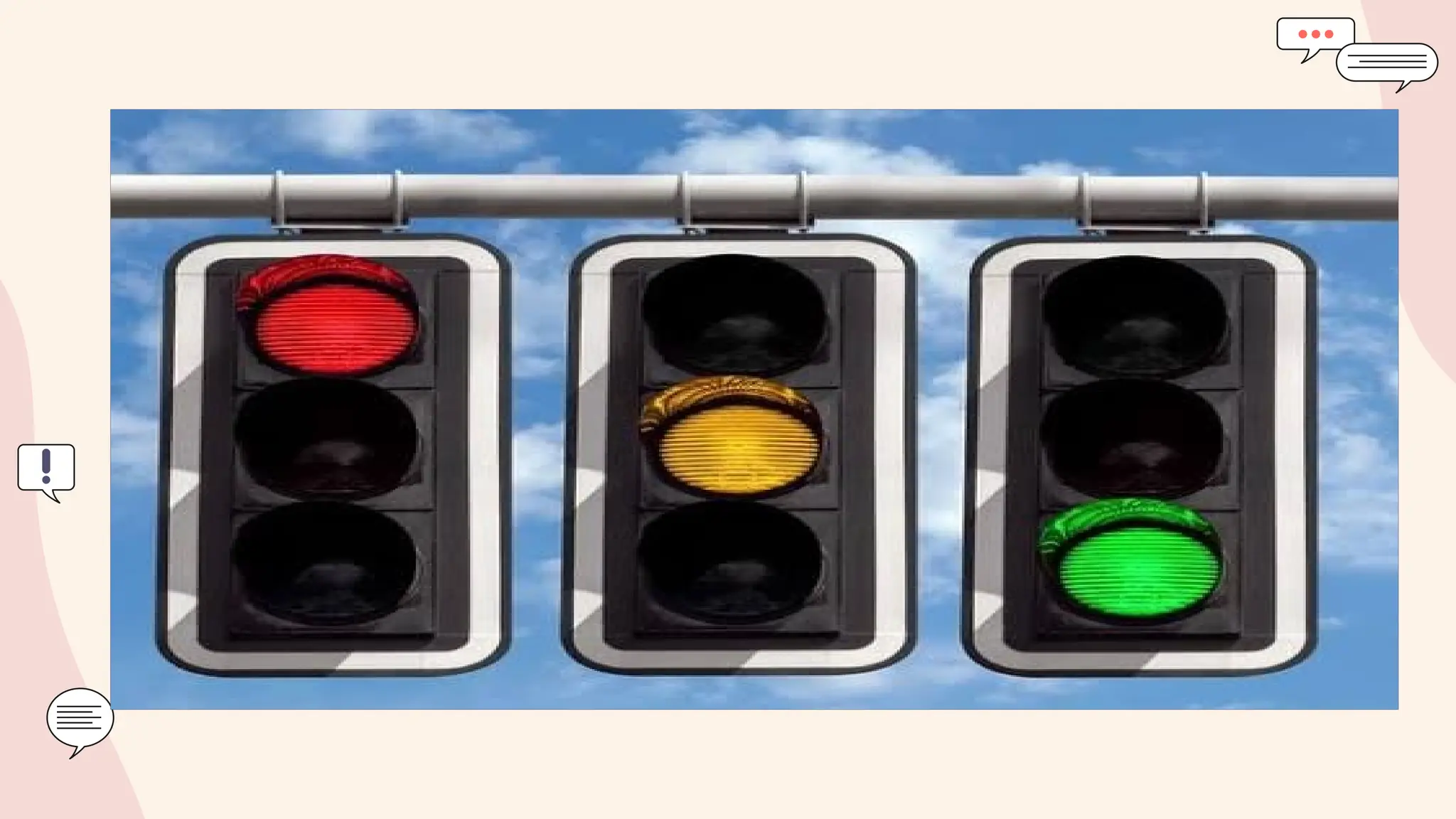
•Visual Communication Strategies-
process of delivering a message with
visuals alone.
• Example: Presentations, Image, Video,
Infographics, Signs…
• Public Speakingis the art of
effectively delivering a message
to a live audience .
• It's a key skill for persuasion
and influence.
WHAT IS PUBLIC
SPEAKING?
57.
• Improved CommunicationSkills.
• Increased Confidence.
• Critical thinking.
• Career advancement.
• Social connections.
• Persuasion skills.
• Leadership development.
BENEFITS OF PUBLIC
SPEAKING:
58.
1. Nervousness isnormal. Practice and prepare
to manage it.
2. Know your audience. Your speech is about
them, not you.
3. Organize your material in a logical sequence.
4. Stay in your zone of genius, only talk about
what you know.
HERE ARE SOME TIPS TO IMPROVE
YOUR PUBLIC SPEAKING SKILLS:
59.
5. Read booksor articles out loud to
improve your speech.
6. Strong oral communication skills
are essential for a successful career.
7. Study and discover new trends in
writing and delivering speeches.
HERE ARE SOME TIPS TO IMPROVE
YOUR PUBLIC SPEAKING SKILLS:
• The studyof public speaking began
about 2, 500 years ago in ancient
Athens.
• Men were required to give speeches
as part of their civic duties, which
included speaking in legislative
assembly and at court (sometimes to
defend themselves as there were no
lawyers for the average Athenian.)
62.
• Citizens wouldmeet in the
marketplace and debate issues
on war, economics and
politics.
• Good speaking skills were also
essential for a prominent social
life and mixing with the wealthy.
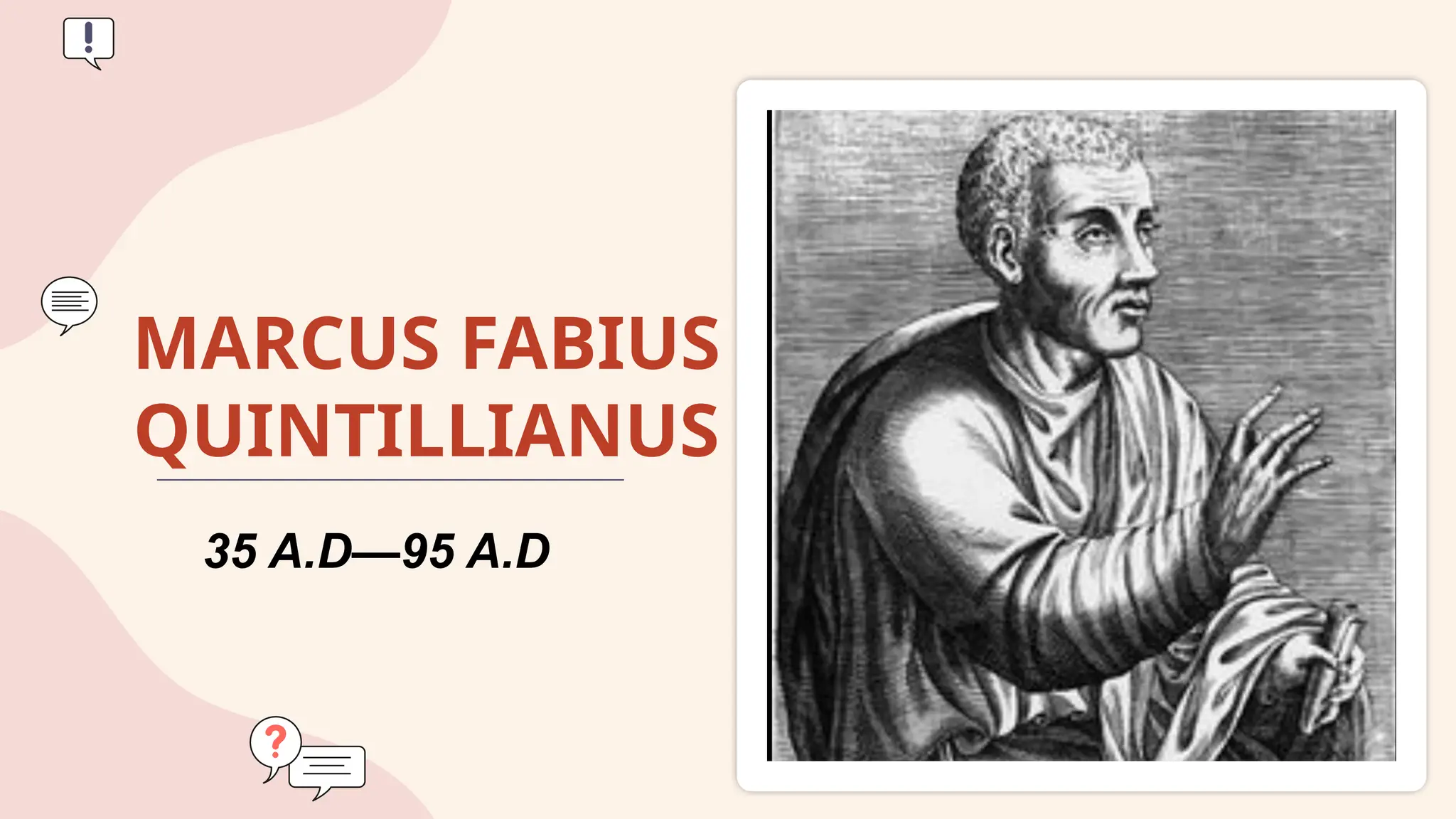
• Quintillianus publisheda twelve-
volume textbook on rhetoric and
many of these references are still
used today by politicians.
• He argued that public speaking
was inherently moral and stated
that the ideal orator is “a good
man speaking well”
67.
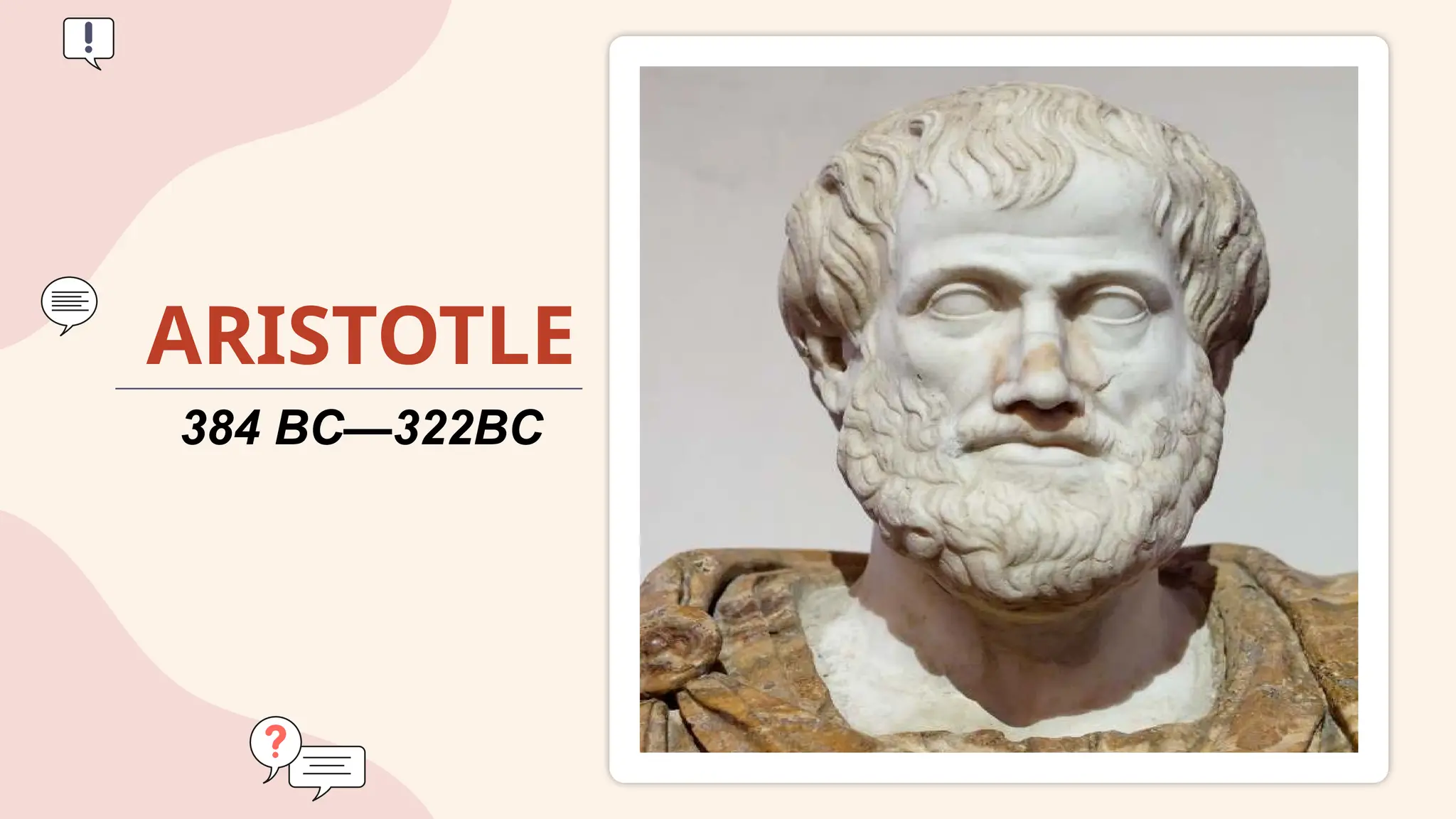
• Aristotle andQuintillianus
are among the most famous
ancient scholars to give
public speaking definitive
rules and models.
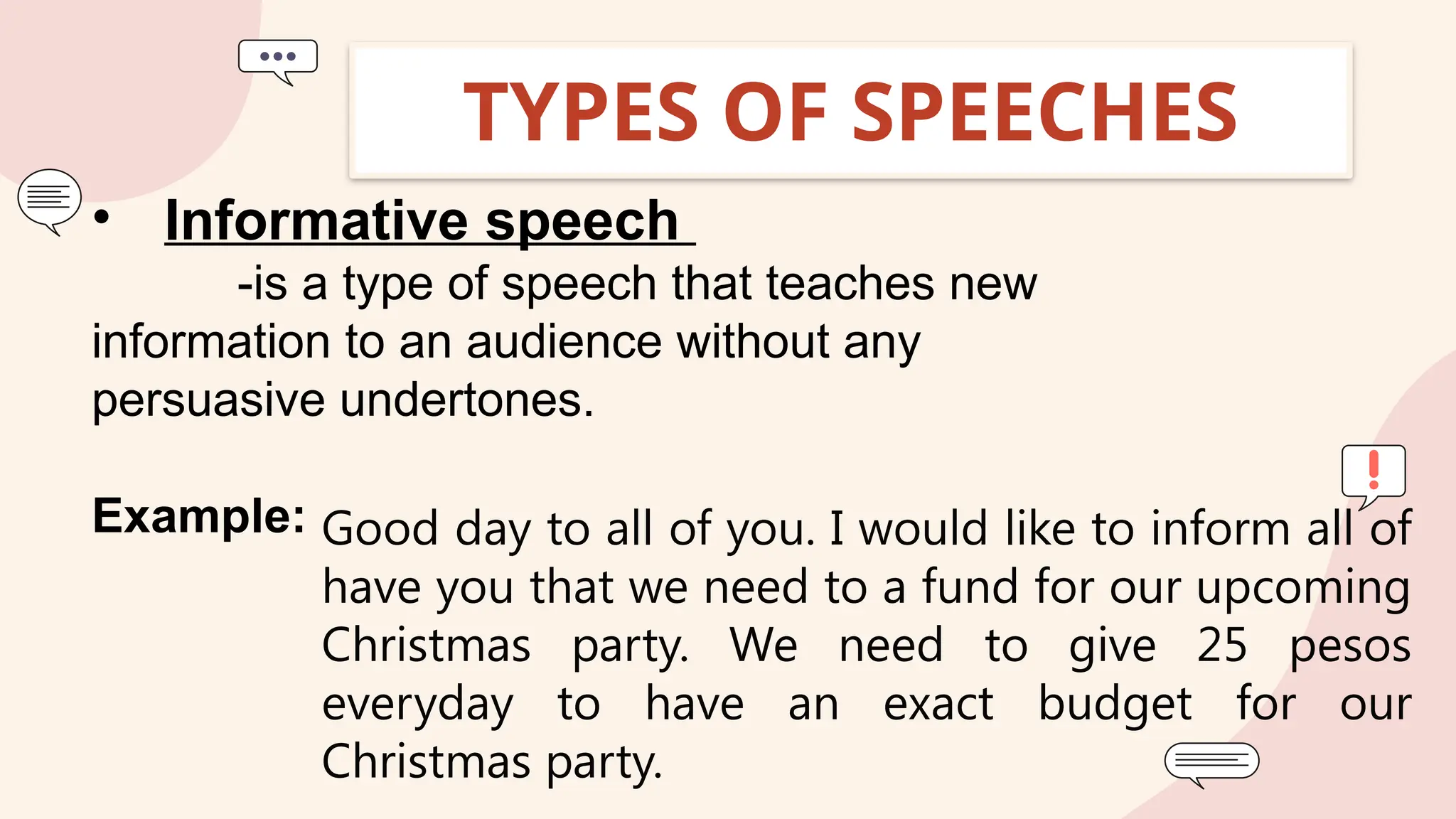
TYPES OF SPEECHES
•Informative speech
-is a type of speech that teaches new
information to an audience without any
persuasive undertones.
Example: Good day to all of you. I would like to inform all of
have you that we need to a fund for our upcoming
Christmas party. We need to give 25 pesos
everyday to have an exact budget for our
Christmas party.
70.
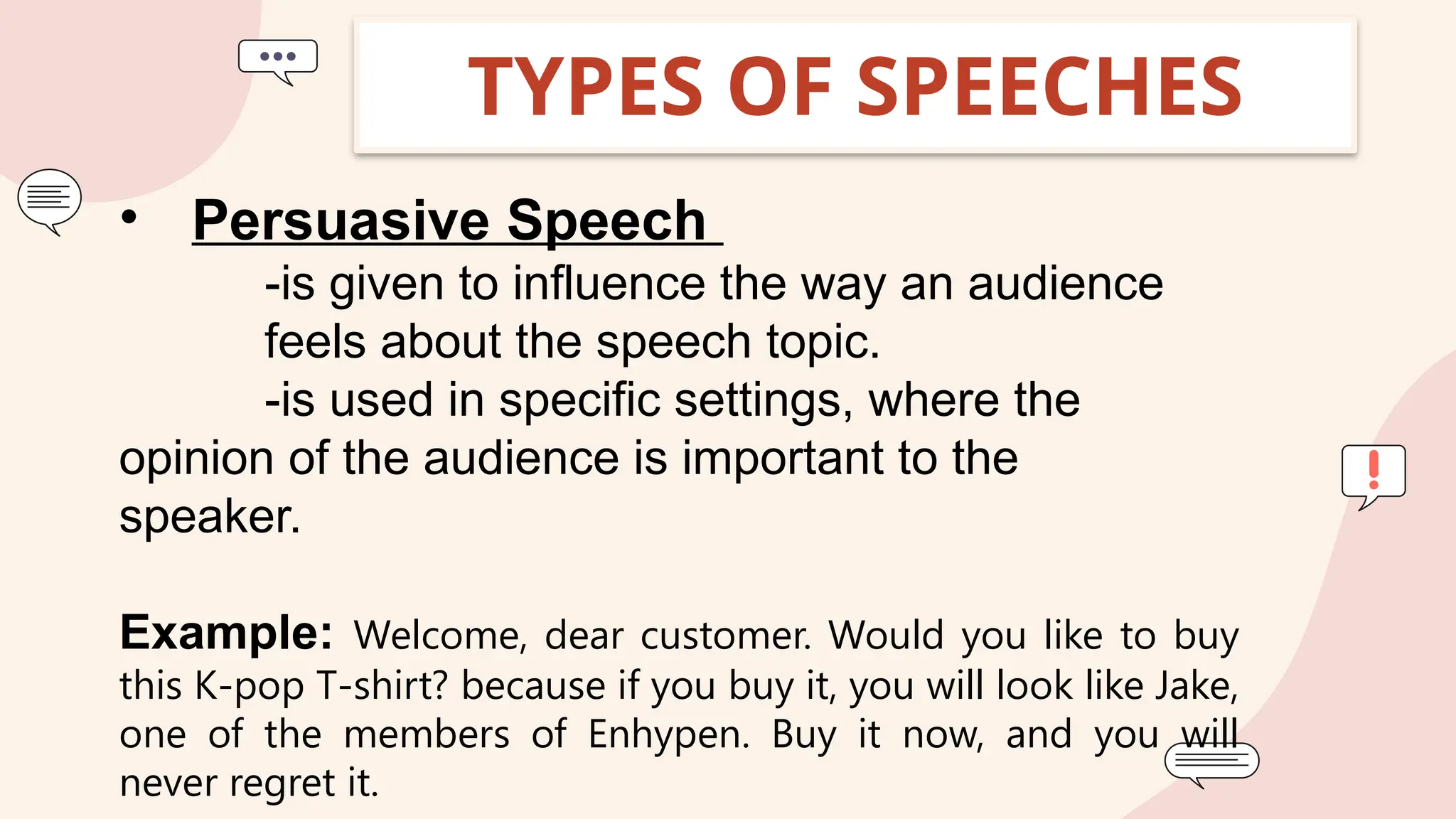
TYPES OF SPEECHES
•Persuasive Speech
-is given to influence the way an audience
feels about the speech topic.
-is used in specific settings, where the
opinion of the audience is important to the
speaker.
Example: Welcome, dear customer. Would you like to buy
this K-pop T-shirt? because if you buy it, you will look like Jake,
one of the members of Enhypen. Buy it now, and you will
never regret it.
71.
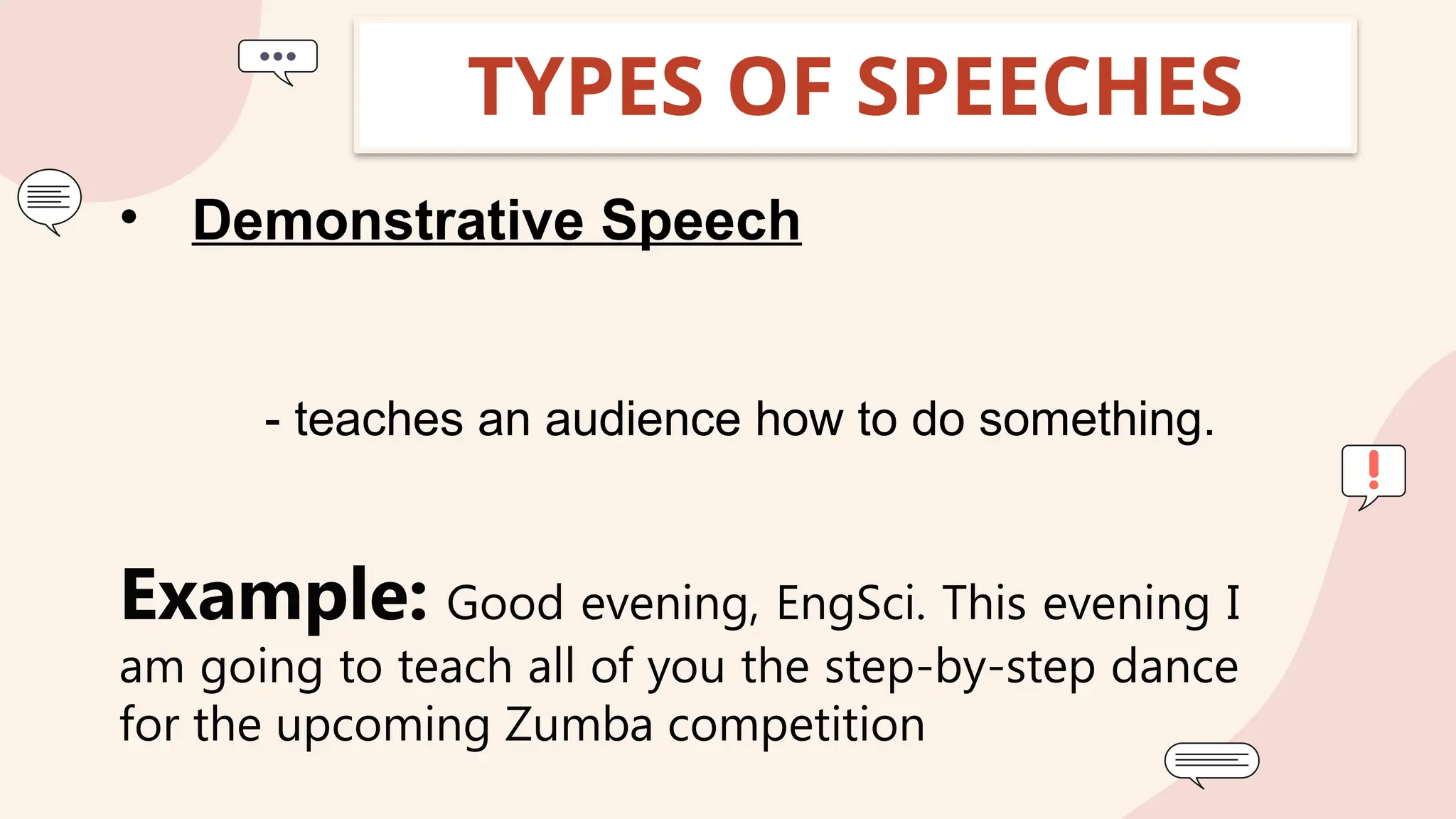
TYPES OF SPEECHES
•Demonstrative Speech
- teaches an audience how to do something.
Example: Good evening, EngSci. This evening I
am going to teach all of you the step-by-step dance
for the upcoming Zumba competition
72.
TYPES OF SPEECHES
•Entertaining Speech
- is designed to capture the attention of an
audience and amuse them while delivering a
message.
73.
Example: It isnow my great pleasure to welcome all
of you, distinguished guests, faculty colleagues, families,
friends, and members of the graduating class, to the
2013 Commencement Exercises of the Yale Law School.
• Special Occasion Speech
- are sometimes combined with
entertaining speeches, as they are often
light-hearted and aimed at making an
audience feel good.