Future energy
markets: how and
where?
Vaasa Energy Week
22.3.2017, Satu Viljainen
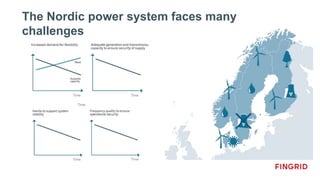
The Nordic power system faces many
challenges
n
Frequency is the heartbeat of the power system
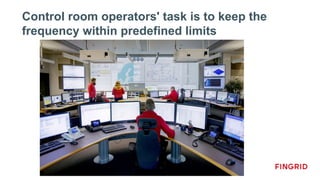
Control room operators' task is to keep the
frequency within predefined limits
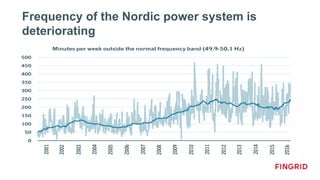
Frequency of the Nordic power system is
deteriorating
If frequency falls outside the limits, the risk of
system collapse increases
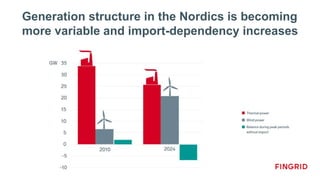
Generation structure in the Nordics is becoming
more variable and import-dependency increases
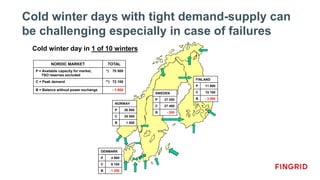
Cold winter days with tight demand-supply can
be challenging especially in case of failures
NORWAY
P 26 800
C 25 000
B 1 800
FINLAND
P 11 600
C 15 100
B - 3 500
SWEDEN
P 27 200
C 27 400
B - 200
DENMARK
P 4 900
C 6 100
B - 1 200
Cold winter day in 1 of 10 winters
NORDIC MARKET TOTAL
P = Available capacity for market,
TSO reserves excluded
*) 70 500
C = Peak demand **) 72 100
B = Balance without power exchange - 1 600
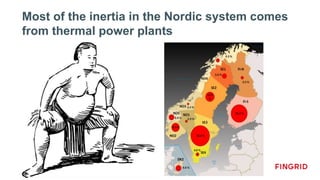
Most of the inertia in the Nordic system comes
from thermal power plants
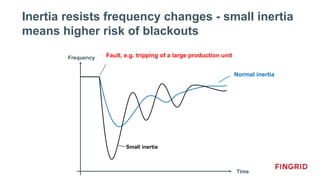
Inertia resists frequency changes - small inertia
means higher risk of blackouts
Small inertia
Normal inertia
Frequency
Time
Fault, e.g. tripping of a large production unit
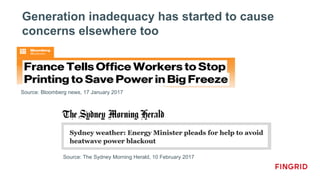
Generation inadequacy has started to cause
concerns elsewhere too
Source: Bloomberg news, 17 January 2017
Source: The Sydney Morning Herald, 10 February 2017
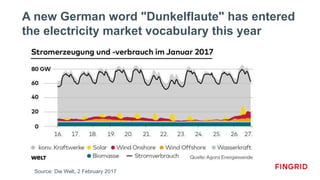
A new German word "Dunkelflaute" has entered
the electricity market vocabulary this year
Source: Die Welt, 2 February 2017
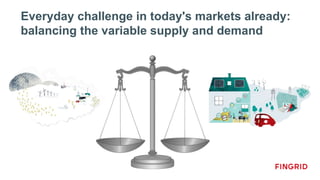
Everyday challenge in today's markets already:
balancing the variable supply and demand
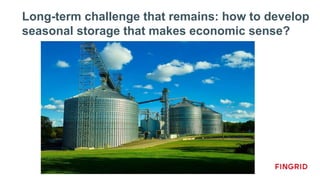
Long-term challenge that remains: how to develop
seasonal storage that makes economic sense?
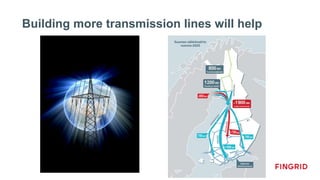
Building more transmission lines will help
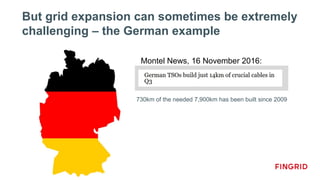
But grid expansion can sometimes be extremely
challenging – the German example
Montel News, 16 November 2016:
730km of the needed 7,900km has been built since 2009
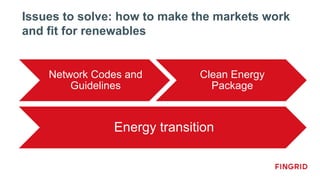
Issues to solve: how to make the markets work
and fit for renewables
Network Codes and
Guidelines
Clean Energy
Package
Energy transition
18
Ensuring non-distorted price-formation and
making use of decentralized knowledge
Increasing trade close to real-time creates
opportunities for balance service providers
Both generators and consumption are
active in the balancing and reserve power
markets in Finland
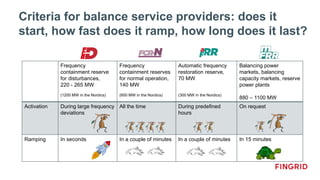
Criteria for balance service providers: does it
start, how fast does it ramp, how long does it last?
Frequency
containment reserve
for disturbances,
220 - 265 MW
(1200 MW in the Nordics)
Frequency
containment reserves
for normal operation,
140 MW
(600 MW in the Nordics)
Automatic frequency
restoration reserve,
70 MW
(300 MW in the Nordics)
Balancing power
markets, balancing
capacity markets, reserve
power plants
880 – 1100 MW
Activation During large frequency
deviations
All the time During predefined
hours
On request
Ramping In seconds In a couple of minutes In a couple of minutes In 15 minutes
Future electricity: cost-efficient, green and secure
Thank you for your interest!
Questions?

Future energy markets: how and where?

  • 1.
    Future energy markets: howand where? Vaasa Energy Week 22.3.2017, Satu Viljainen
  • 2.
    The Nordic powersystem faces many challenges n
  • 3.
    Frequency is theheartbeat of the power system
  • 4.
    Control room operators'task is to keep the frequency within predefined limits
  • 5.
    Frequency of theNordic power system is deteriorating
  • 6.
    If frequency fallsoutside the limits, the risk of system collapse increases
  • 7.
    Generation structure inthe Nordics is becoming more variable and import-dependency increases
  • 8.
    Cold winter dayswith tight demand-supply can be challenging especially in case of failures NORWAY P 26 800 C 25 000 B 1 800 FINLAND P 11 600 C 15 100 B - 3 500 SWEDEN P 27 200 C 27 400 B - 200 DENMARK P 4 900 C 6 100 B - 1 200 Cold winter day in 1 of 10 winters NORDIC MARKET TOTAL P = Available capacity for market, TSO reserves excluded *) 70 500 C = Peak demand **) 72 100 B = Balance without power exchange - 1 600
  • 9.
    Most of theinertia in the Nordic system comes from thermal power plants
  • 10.
    Inertia resists frequencychanges - small inertia means higher risk of blackouts Small inertia Normal inertia Frequency Time Fault, e.g. tripping of a large production unit
  • 11.
    Generation inadequacy hasstarted to cause concerns elsewhere too Source: Bloomberg news, 17 January 2017 Source: The Sydney Morning Herald, 10 February 2017
  • 12.
    A new Germanword "Dunkelflaute" has entered the electricity market vocabulary this year Source: Die Welt, 2 February 2017
  • 13.
    Everyday challenge intoday's markets already: balancing the variable supply and demand
  • 14.
    Long-term challenge thatremains: how to develop seasonal storage that makes economic sense?
  • 15.
  • 16.
    But grid expansioncan sometimes be extremely challenging – the German example Montel News, 16 November 2016: 730km of the needed 7,900km has been built since 2009
  • 17.
    Issues to solve:how to make the markets work and fit for renewables Network Codes and Guidelines Clean Energy Package Energy transition
  • 18.
    18 Ensuring non-distorted price-formationand making use of decentralized knowledge
  • 19.
    Increasing trade closeto real-time creates opportunities for balance service providers Both generators and consumption are active in the balancing and reserve power markets in Finland
  • 20.
    Criteria for balanceservice providers: does it start, how fast does it ramp, how long does it last? Frequency containment reserve for disturbances, 220 - 265 MW (1200 MW in the Nordics) Frequency containment reserves for normal operation, 140 MW (600 MW in the Nordics) Automatic frequency restoration reserve, 70 MW (300 MW in the Nordics) Balancing power markets, balancing capacity markets, reserve power plants 880 – 1100 MW Activation During large frequency deviations All the time During predefined hours On request Ramping In seconds In a couple of minutes In a couple of minutes In 15 minutes
  • 21.
    Future electricity: cost-efficient,green and secure Thank you for your interest! Questions?