Download to read offline
![Trends affecting the electricity market
0
10
20
30
2011 2012 2013 2014
Wind power generation
in Nordic countries
[TWh]• Long-term main trends
– More and more subsidized wind power
– Decommissioning of conventional production
– No significant increase in electricity demand
– Import from Russia has collapsed
• Summer and autumn 2015
– Extraordinarily high precipitation
– Lack and sudden outages of transmission
capacity have strong market impacts 15
25
35
45
55
Yearly average electricity
price per country [€/MWh]
Sweden Norway
Denmark Finland](https://image.slidesharecdn.com/bottleneckswhereandwhy-jussijyrinsalo-151118111603-lva1-app6891/85/Bottlenecks-where-and-why-2-320.jpg)
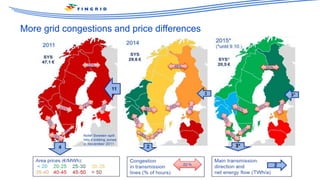
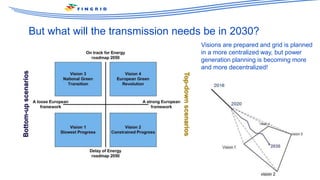

The document discusses the challenges and opportunities in the Nordic electricity market, highlighting trends such as the rise of subsidized wind power and the decline of conventional production. It notes significant impacts from recent weather events and issues with transmission capacity, leading to increased grid congestion and price differences. Looking towards 2030, it emphasizes the need for a more decentralized approach to power generation amidst centralized grid planning.


