Download to read offline
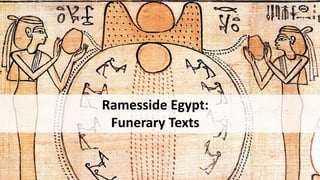
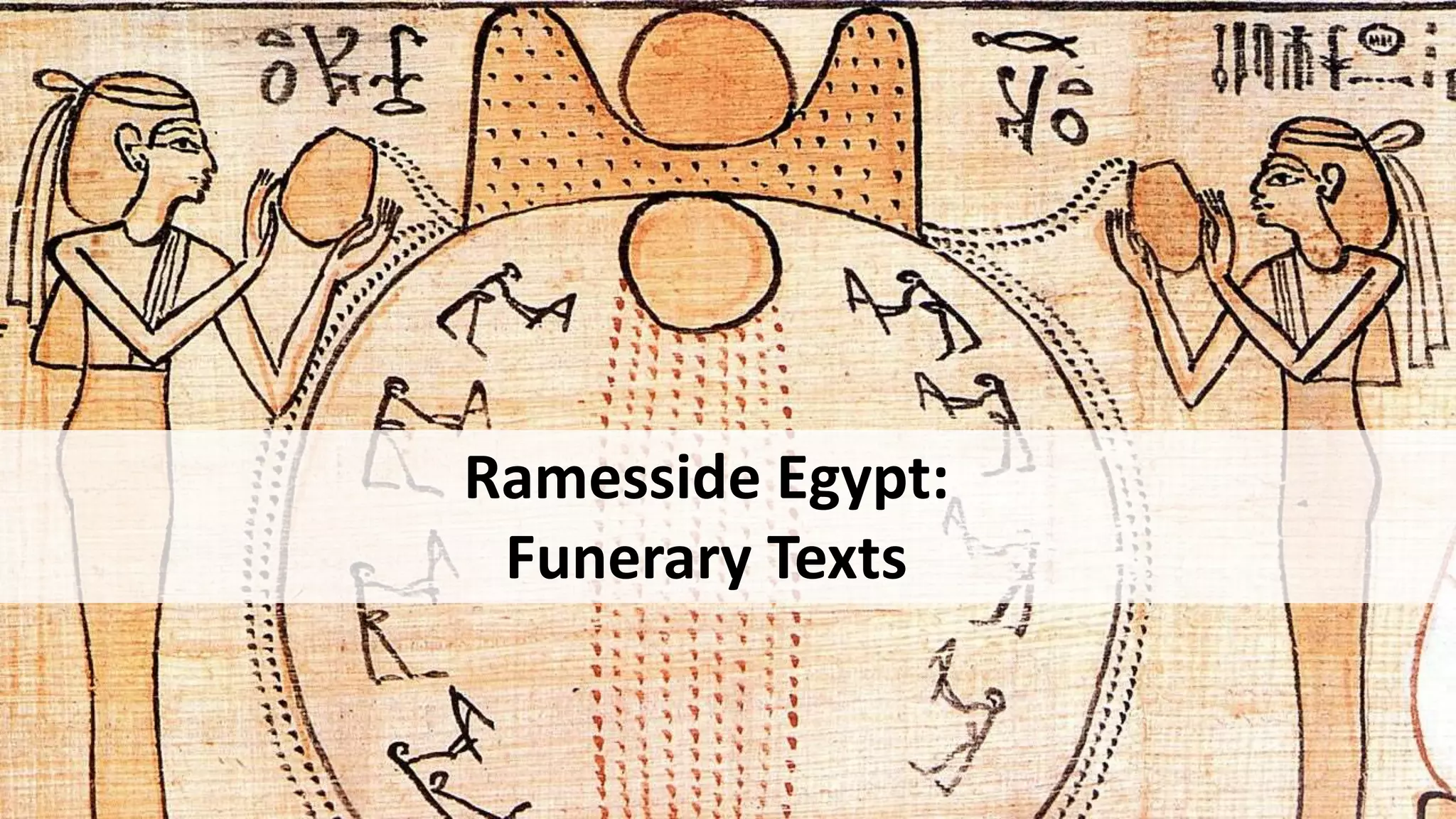
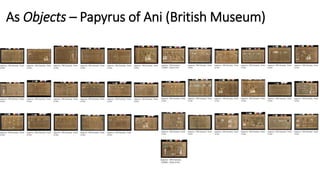

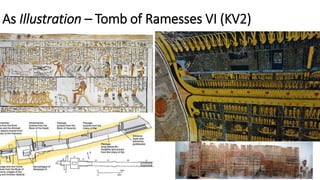


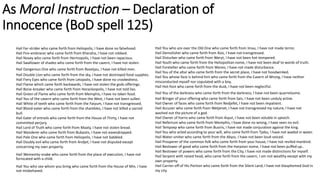
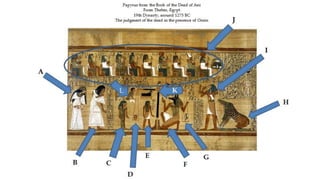
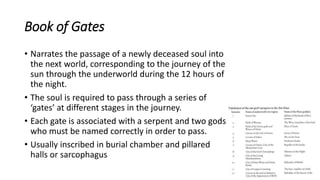

This document provides information on funerary texts from the Ramesside Period in Egypt. Key points include: - Funerary texts such as the Book of the Dead were derived from earlier pyramid texts and included spells and instructions to guide the deceased through the afterlife. - These texts were commissioned by individuals for their own burials and produced by scribes, often with spaces left to add names later. - The texts had both a practical ritual purpose to aid the deceased, as well as serving as magical objects and providing moral instruction through spells and declarations. - Famous examples include the Papyrus of Ani and illustrations on artifacts like the sarcophagus of Seti I. The texts


