Fundamentals of Risk Management Fifth Edition Paul Hopkin
Fundamentals of Risk Management Fifth Edition Paul Hopkin
Fundamentals of Risk Management Fifth Edition Paul Hopkin
Fundamentals of Risk Management Fifth Edition Paul Hopkin
Fundamentals of Risk Management Fifth Edition Paul Hopkin
1.
Fundamentals of RiskManagement Fifth Edition
Paul Hopkin download
https://textbookfull.com/product/fundamentals-of-risk-management-
fifth-edition-paul-hopkin/
Download more ebook from https://textbookfull.com
2.
We believe theseproducts will be a great fit for you. Click
the link to download now, or visit textbookfull.com
to discover even more!
Fundamentals of Risk Management Understanding
evaluating and implementing effective risk management
4th Edition Paul Hopkin
https://textbookfull.com/product/fundamentals-of-risk-management-
understanding-evaluating-and-implementing-effective-risk-
management-4th-edition-paul-hopkin/
Fundamentals of Software Engineering Fifth Edition Mall
https://textbookfull.com/product/fundamentals-of-software-
engineering-fifth-edition-mall/
Financial Cybersecurity Risk Management: Leadership
Perspectives and Guidance for Systems and Institutions
Paul Rohmeyer
https://textbookfull.com/product/financial-cybersecurity-risk-
management-leadership-perspectives-and-guidance-for-systems-and-
institutions-paul-rohmeyer/
Winning with Risk Management Financial Engineering and
Risk Management Volume 2 1st Edition Russell Walker
https://textbookfull.com/product/winning-with-risk-management-
financial-engineering-and-risk-management-volume-2-1st-edition-
russell-walker/
3.
Bank Risk Managementin Developing Economies Addressing
the Unique Challenges of Domestic Banks through Risk
Management 1st Edition Leonard Onyiriuba
https://textbookfull.com/product/bank-risk-management-in-
developing-economies-addressing-the-unique-challenges-of-
domestic-banks-through-risk-management-1st-edition-leonard-
onyiriuba/
The Fundamentals Of Political Science Research Third
Edition. Edition Paul M. Kellstedt
https://textbookfull.com/product/the-fundamentals-of-political-
science-research-third-edition-edition-paul-m-kellstedt/
Fundamentals of Management 8th Edition Ricky W. Griffin
https://textbookfull.com/product/fundamentals-of-management-8th-
edition-ricky-w-griffin/
Fundamentals of Medical Practice Management, Second
Edition Wagner
https://textbookfull.com/product/fundamentals-of-medical-
practice-management-second-edition-wagner/
Fundamentals of Business Process Management Marlon
Dumas
https://textbookfull.com/product/fundamentals-of-business-
process-management-marlon-dumas/
Fifth Edition
Fundamentals ofRisk
Management
Understanding, evaluating and
implementing effective risk
management
Paul Hopkin
8.
Publisher’s note
Every possibleeffort has been made to ensure that the
information contained in this book is accurate at the time of
going to press, and the publishers and authors cannot accept
responsibility for any errors or omissions, however caused. No
responsibility for loss or damage occasioned to any person
acting, or refraining from action, as a result of the material in
this publication can be accepted by the editor, the publisher
or any of the authors.
First published in Great Britain and the United States in 2010 by
Kogan Page Limited
Fifth edition 2018
Apart from any fair dealing for the purposes of research or
private study, or criticism or review, as permitted under the
Copyright, Designs and Patents Act 1988, this publication may
only be reproduced, stored or transmitted, in any form or by
any means, with the prior permission in writing of the
publishers, or in the case of reprographic reproduction in
accordance with the terms and licences issued by the CLA.
Enquiries concerning reproduction outside these terms should
be sent to the publishers at the undermentioned addresses:
2nd Floor, 45 Gee Street
London
EC1V 3RS
United Kingdom
c/o Martin P Hill Consulting
122 W 27th St, 10th Floor
New York, NY 10001
CONTENTS
Cover
Title Page
Copyright
Contents
List offigures
List of tables
Foreword
Acknowledgements
Introduction
Risk management in context
Nature of risk
Risk management
Risk management terminology
Benefits of risk management
Features of risk management
Book structure
Risk management in practice
Future for risk management
Changes for the fifth edition
PART ONE Introduction to risk management
Learning outcomes for Part One
Part One further reading
Part One case studies
11.
Rank Group: Howwe manage risk
ABIL: Risk management overview
BIS: Approach to risk
01 Approaches to defining risk
Definitions of risk
Types of risks
Risk description
Inherent level of risk
Risk classification systems
Risk likelihood and magnitude
02 Impact of risk on organizations
Level of risk
Impact of hazard risks
Attachment of risks
Risk and reward
Attitudes to risk
Risk and triggers
03 Types of risks
Timescale of risk impact
Four types of risk
Embrace opportunity risks
Manage uncertainty risks
Mitigate hazard risks
Minimize compliance risks
04 Scope of risk management
12.
Origins of riskmanagement
Development of risk management
Specialist areas of risk management
Simple representation of risk management
Enterprise risk management
Levels of risk management sophistication
05 Principles and aims of risk management
Principles of risk management
Importance of risk management
Risk management activities
Effective and efficient core processes
Implementing risk management
Achieving benefits
PART TWO Approaches to risk management
Learning outcomes for Part Two
Part Two further reading
Part Two case studies
United Utilities: Our risk management framework
Birmingham City Council: Scrutiny, accountability
and risk management
Tsogo Sun: Risk management process
06 Risk management standards
Scope of risk management standards
Risk management process
Risk management context
COSO ERM cube
13.
Revised ISO 31000(2018)
Updating of RM terminology
07 Establishing the context
Scope of the context
External context
Internal context
Risk management context
Designing a risk register
Using a risk register
08 Enterprise risk management
Enterprise-wide approach
Definitions of ERM
ERM in practice
ERM and business continuity
ERM in energy and finance
Integrating strategy and performance
09 Alternative approaches
Changing face of risk management
Managing emerging risks
Increasing importance of resilience
Different approaches
Structure of management standards
Future of risk management
PART THREE Risk assessment
Learning outcomes for Part Three
14.
Part Three furtherreading
Part Three case studies
AA: Risk governance
British Land: Our assessment of risk is a
cornerstone
Guide Dogs NSW/ACT: List of major residual risks
10 Risk assessment considerations
Importance of risk assessment
Approaches to risk assessment
Risk assessment techniques
Nature of the risk matrix
Risk perception
Attitude to risk
11 Risk classification systems
Short-, medium- and long-term risks
Nature of risk classification systems
Examples of risk classification systems
FIRM risk scorecard
PESTLE risk classification system
Compliance, hazard, control and opportunity
12 Risk analysis and evaluation
Application of a risk matrix
Inherent and current level of risk
Control confidence
4Ts of hazard risk response
Risk significance
15.
Risk capacity
13 Losscontrol
Risk likelihood
Risk magnitude
Hazard risks
Loss prevention
Damage limitation
Cost containment
14 Defining the upside of risk
Upside of risk
Opportunity assessment
Riskiness index
Upside in strategy
Upside in projects
Upside in operations
PART FOUR Risk response
Learning outcomes for Part Four
Part Four further reading
Part Four case studies
Intu Properties: Insurance renewal
The Walt Disney Company: Disclosures about
market risks
Australian Mines Limited: Risk assessment and
management
15 Tolerate, treat, transfer and terminate
16.
The 4Ts ofhazard response
Tolerate risk
Treat risk
Transfer risk
Terminate risk
Strategic risk response
16 Risk control techniques
Types of controls
Hazard risk zones
Preventive controls
Corrective controls
Directive controls
Detective controls
17 Insurance and risk transfer
Importance of insurance
History of insurance
Types of insurance cover
Evaluation of insurance needs
Purchase of insurance
Captive insurance companies
18 Business continuity
Business continuity management
Business continuity standards
Successful business continuity
Business impact analysis (BIA)
Business continuity and ERM
Civil emergencies
17.
PART FIVE Riskstrategy
Learning outcomes for Part Five
Part Five further reading
Part Five case studies
AMEC Foster Wheeler: Principal risks and
uncertainties
BBC: Internal controls assurance
Emperor Watch & Jewellery: Risk management
19 Core business processes
Dynamic business models
Types of business processes
Strategy and tactics
Effective and efficient operations
Ensuring compliance
Reporting performance
20 Reputation and the business model
Components of the business model
Risk management and the business model
Reputation and corporate governance
CSR and risk management
Supply chain and ethical trading
Importance of reputation
21 Risk management context
Architecture, strategy and protocols
Risk architecture
18.
Risk management strategy
Riskmanagement protocols
Risk management manual
Risk management documentation
22 Risk management responsibilities
Allocation of responsibilities
Range of responsibilities
Statutory responsibilities of management
Role of the risk manager
Risk architecture in practice
Risk committees
23 Control of selected hazard risks
Cost of risk controls
Learning from controls
Control of financial risks
Control of infrastructure risks
Control of reputational risks
Control of marketplace risks
PART SIX Risk culture
Learning outcomes for Part Six
Part Six further reading
Part Six case studies
Network Rail: Our approach to risk management
Ekurhuleni Metropolitan Municipality (EMM): Risk
management
Ericsson: Corporate governance report
19.
24 Risk-aware culture
Stylesof risk management
Steps to successful risk management
Defining risk culture
Measuring risk culture
Alignment of activities
Risk maturity models
25 Importance of risk appetite
Nature of risk appetite
Risk appetite and the risk matrix
Risk and uncertainty
Risk exposure and risk capacity
Risk appetite statements
Risk appetite and lifestyle decisions
26 Risk training and communication
Consistent response to risk
Risk training and risk culture
Risk information and communication
Shared risk vocabulary
Risk information on an intranet
Risk management information systems (RMIS)
27 Risk practitioner competencies
Competency frameworks
Range of skills
Communication skills
Relationship skills
20.
Analytical skills
Management skills
PARTSEVEN Risk governance
Learning outcomes for Part Seven
Part Seven further reading
Part Seven case studies
Severn Trent Water: Our approach to risk
Tim Hortons: Sustainability and responsibility
DCMS: Capacity to handle risk
28 Corporate governance model
Corporate governance
OECD principles of corporate governance
LSE corporate governance framework
Corporate governance for a bank
Corporate governance for a government agency
Evaluation of board performance
29 Stakeholder expectations
Range of stakeholders
Stakeholder dialogue
Stakeholders and core processes
Stakeholders and strategy
Stakeholders and tactics
Stakeholders and operations
30 Operational risk management
Operational risk
21.
Definition of operationalrisk
Basel II and Basel III
Measurement of operational risk
Difficulties of measurement
Developments in operational risk
31 Project risk management
Introduction to project risk management
Development of project risk management
Uncertainty in projects
Project lifecycle
Opportunity in projects
Project risk analysis and management
32 Supply chain management
Importance of the supply chain
Scope of the supply chain
Strategic partnerships
Joint ventures
Outsourcing of operations
Risk and contracts
PART EIGHT Risk assurance
Learning outcomes for Part Eight
Part Eight further reading
Part Eight case studies
Unilever: Our risk appetite and approach to risk
management
Colgate Palmolive: Damage to reputation
22.
Sainsbury’s and Tesco:Principal risks and
uncertainties
33 The control environment
Nature of internal control
Purpose of internal control
Control environment
Features of the control environment
CoCo framework of internal control
Good safety culture
34 Risk assurance techniques
Audit committees
Role of risk management
Risk assurance
Risk management outputs
Control risk self-assessment
Benefits of risk assurance
35 Internal audit activities
Scope of internal audit
Role of internal audit
Undertaking an internal audit
Risk management and internal audit
Management responsibilities
Five lines of assurance
36 Reporting on risk management
Risk reporting
23.
Sarbanes–Oxley Act of2002
Risk reports by US companies
Charities’ risk reporting
Public-sector risk reporting
Government report on national security
Appendix A: Abbreviations and acronyms
Appendix B: Glossary of terms
Appendix C: Implementation guide
Index
Backcover
24.
LIST OF FIGURES
FIGURE1.1 Risk likelihood and magnitude
FIGURE 2.1 Attachment of risks
FIGURE 2.2 Risk and reward
FIGURE 2.3 Disruptive events and the bow-tie
FIGURE 4.1 8Rs and 4Ts of (hazard) risk management
FIGURE 4.2 Risk management sophistication
FIGURE 6.1 IRM risk management process
FIGURE 6.2 Components of the RM context
FIGURE 6.3 COSO ERM cube
FIGURE 6.4 RM process from ISO 31000 (2018)
FIGURE 7.1 Three components of context
FIGURE 10.1 Risk attitude matrix
FIGURE 11.1 Bow-tie representation of risk management
FIGURE 11.2 Bow-tie and risks to premises
FIGURE 12.1 Personal risk matrix
FIGURE 12.2 Inherent, current and target levels of risk
25.
FIGURE 13.1 Losscontrol and the bow-tie
FIGURE 14.1 Risk matrix for opportunities and hazards
FIGURE 15.1 Risk matrix and the 4Ts of hazard management
FIGURE 15.2 Risk versus reward in strategy
FIGURE 15.3 Opportunity risks and risk appetite
FIGURE 16.1 Types of controls for hazard risks
FIGURE 16.2 Bow-tie and types of controls
Figure 16.3 Hazard risk zones
FIGURE 17.1 Role of captive insurance companies
FIGURE 18.1 Disaster recovery timeline and costs
FIGURE 18.2 Model for business continuity planning
FIGURE 19.1 Business development model
FIGURE 20.1 Components of the business model
FIGURE 20.2 Mapping the components of reputation
FIGURE 22.1 Risk architecture for a large corporation
FIGURE 22.2 Risk architecture for a charity
FIGURE 23.1 Illustration of control effect
FIGURE 23.2 Cost-effective controls
FIGURE 23.3 Learning from controls
26.
FIGURE 23.4 Riskand reward decisions
FIGURE 24.1 Risk maturity demonstrated on a matrix
FIGURE 25.1 Risk appetite, exposure and capacity (optimal)
FIGURE 25.2 Risk and uncertainty
FIGURE 25.3 Risk appetite, exposure and capacity (vulnerable)
FIGURE 28.1 LSE corporate governance framework
FIGURE 28.2 Corporate governance in a government agency
FIGURE 29.1 Importance of core processes
FIGURE 31.1 Risk matrix to represent project risks
FIGURE 31.2 Bow-tie to represent project risks
FIGURE 31.3 Project lifecycle
FIGURE 31.4 Decreasing uncertainty during the project
FIGURE 33.1 Criteria of Control (CoCo) framework
FIGURE 35.1 Role of internal audit in ERM
Figure 35.2 Governance, risk and compliance
FIGURE 36.1 Selected UK security threats
27.
List of Tables
TABLE1.1 Definitions of risk
TABLE 1.2 Risk description
TABLE 3.1 Risks associated with owning a car
TABLE 3.2 Categories of operational disruption
TABLE 4.1 Definitions of risk management
TABLE 4.2 Importance of risk management
TABLE 4.3 8Rs and 4Ts of (hazard) risk management
TABLE 5.1 Principles of risk management
TABLE 5.2 Risk management objectives
TABLE 6.1 Risk management standards
TABLE 6.2 COSO ERM cube
TABLE 7.1 Format for a basic risk register
TABLE 7.2 Risk register for a sports club
TABLE 7.3 Risk register for a hospital
TABLE 7.4 Project risk register
TABLE 7.5 Risk register attached to a business plan
28.
TABLE 8.1 Featuresof an enterprise-wide approach
TABLE 8.2 Definitions of enterprise risk management
TABLE 8.3 Benefits of enterprise risk management
TABLE 9.1 Selected risk practices from King IV
TABLE 10.1 Top-down risk assessment
TABLE 10.2 Bottom-up risk assessment
TABLE 10.3 Techniques for risk assessment
Table 10.4 Advantages and disadvantages of RA techniques
TABLE 10.5 Definitions of likelihood
TABLE 10.6 Definitions of impact
TABLE 11.1 Risk classification systems
TABLE 11.2 Attributes of the FIRM risk scorecard
TABLE 11.3 PESTLE classification system
TABLE 11.4 Personal issues grid
TABLE 12.1 Benchmark tests for risk significance
TABLE 13.1 Generic key dependencies
TABLE 14.1 Defining the upside of risk
TABLE 14.2 Riskiness index
TABLE 15.1 Description of the 4Ts of hazard response
29.
TABLE 15.2 Keydependencies and significant risks
TABLE 16.1 Description of types of hazard controls
TABLE 16.2 Examples of the hierarchy of hazard controls
TABLE 17.1 Different types of insurance
TABLE 17.2 Identifying the necessary insurance
TABLE 18.1 Key activities in business continuity planning
TABLE 20.1 Scope of issues covered by CSR
TABLE 20.2 Components of reputation
TABLE 20.3 Threats to reputation
TABLE 21.1 Risk management framework
TABLE 21.2 Types of RM documentation
TABLE 21.3 Risk management manual
TABLE 21.4 Risk management protocols
TABLE 22.1 Risk management responsibilities
Table 22.2 Historical role of the insurance risk manager
TABLE 22.3 Responsibilities of the RM committee
TABLE 24.1 Achieving successful enterprise risk management
TABLE 24.2 Implementation barriers and actions
TABLE 24.3 Risk-aware culture
30.
TABLE 24.4 Fourlevels of risk maturity
TABLE 25.1 Definitions of risk appetite
TABLE 25.2 Risk appetite statements
TABLE 25.3 Risk appetite for a manufacturing organization
TABLE 25.4 Controls for the risks of owning a car
TABLE 26.1 Risk management training
TABLE 26.2 Risk communication guidelines
TABLE 26.3 Risk management information system (RMIS)
TABLE 27.1 Risk management technical skills
TABLE 27.2 People skills for risk management practitioners
TABLE 27.3 Structure of training courses
TABLE 28.1 OECD principles of corporate governance
TABLE 28.2 Nolan principles of public life
TABLE 28.3 Evaluating the effectiveness of the board
TABLE 29.1 Data for shareholders
TABLE 29.2 Sports club: typical stakeholder expectations
TABLE 30.1 ORM principles (Basel II)
TABLE 30.2 Operational risk for a bank
TABLE 30.3 Operational risk in financial and industrial companies
31.
TABLE 31.1 PRAMmodel for project RM
Table 32.1 Risks associated with outsourcing
TABLE 32.2 Scope of outsourcing contracts
TABLE 33.1 Definitions of internal control
TABLE 33.2 Components of the CoCo framework
TABLE 34.1 Responsibilities of the audit committee
TABLE 34.2 Sources of risk assurance
TABLE 35.1 Undertaking an internal audit
TABLE 35.2 Allocation of responsibilities
TABLE 36.1 Risk management (RM) responsibilities of the board
TABLE 36.2 Risk report in a Form 20-F
TABLE 36.3 Government risk-reporting principles
32.
FOREWORD
Importance of enterpriserisk
management
Organizations face an increasingly challenging and complex
environment in which to undertake their activities. Since the fourth
edition of this textbook, the consequences of the global financial
crisis have continued to challenge public-, private- and third-sector
organizations. To add further complexity, the second decade of the
21st century has been marked by political instability in many parts of
the world and the recent decision of the United Kingdom to exit the
European Union has added further global uncertainty.
It is within this increasingly uncertain environment that
organizations are required to deliver higher stakeholder
expectations, whilst fulfilling greater corporate governance
requirements in relation to ethical and social responsibility. For
example, legislation has been introduced in many countries to
broaden the scope of requirements regarding management of
bribery risk and the avoidance of modern slavery.
Given all these developments, the updating of this textbook to
place greater emphasis on the importance of enterprise risk
management (ERM) to organizational success is very timely.
Successful ERM, including the protection of corporate reputation,
continues to be a business imperative for all organizations. A
successful ERM initiative enhances the ability of an organization to
achieve objectives and ensure sustainability, based on transparent
and ethical behaviours.
MOFFAT’S COURAGE.
The Griquasare a mixed race, of which there are several clans
vulgarly called “Bastards,” being the descendants of Dutch Boers and
their Hottentot slaves. They are a tall, athletic, good looking race, of
light olive complexion. They speak a debased patois of the Dutch
language, as do most of the colored inhabitants of South Africa.
About the year 1833 the Griquas began to collect and settle in the
country which bears their name, and to rally round a leader or chief
named Adam Kok, who displayed considerable tact and skill in
35.
governing the peoplewho acknowledged his chieftainship. Some
time after, a part of the clan separated themselves from the rest,
and gathered round a man named Waterboer, who became their
captain or chief. Both of these chiefs, for many years, received
annual grants from the Colonial Government on condition of their
loyalty and good conduct. They and their people were ultimately
removed by an arrangement with the government authorities to a
region known as “No Man’s Land;” and of late years have become
scattered. In all their locations they are generally now regarded as
British subjects, and they have gradually advanced to a pleasing
state of civilization and general knowledge. They are largely
indebted to the missionaries for the respectable position to which
they have attained among the native tribes. The honored
instruments in their moral and social elevation have chiefly been the
agents of the London Missionary Society who have labored among
them for many years with remarkable energy, zeal and success. The
Wesleyan Missionary Society have also some prosperous stations in
some of the Griqua settlements where no other agencies are at
work, and the results of their labors have been very encouraging.
In Namaqualand, under circumstances of peculiar trial and
privation the Wesleyan and Rhenish Societies have labored with
commendable zeal and diligence. Some time ago the Wesleyan
stations were by a mutual arrangement transferred to the German
missionaries.
In Damaraland missionaries have labored earnestly for many
years, but the results thus far have been meagre.
What has been the sum total accomplished by the missionary
societies in South Africa?
The Wesleyan Missionary Society began work there in 1814.
Extending its operations by degrees from the Cape Colony to
Kaffaria, Natal, and the Bechuana regions, it now numbers forty
stations, sixty missionaries, and more than 6,000 members. The
Rhenish Society which commenced operations in this field in 1829,
36.
now numbers morethan 10,000 members; and the Berlin, which
commenced in 1833 and has 8,000 members. The American Board
which entered the field in 1834, has grown into three missions, the
Zulu, the East African and the West African, and now numbers 30
stations, 48 laborers from America, more than 40 native assistants,
about 2,000 under instruction and 7,000 adherents. Besides these
the French Society is doing a great work among the Bechuana and
other tribes. The Norwegians are laboring among the Zulus, the
Scotch among the Kafirs, the Hanoverians and the Church of
England in Natal and Zululand.
These with a few other organizations make more than a dozen
societies at work in South Africa, occupying more than 200 stations,
and employing about 500 foreign laborers, besides a much larger
force of native helpers. Of the success and value of these labors we
get some idea when we find it estimated that not less than 40,000
souls have been brought in this way into Christ’s kingdom, 50,000
children gathered into Christian schools, and 100,000 men and
women blessed with the direct teaching of the Gospel.
EAST AFRICAN MISSIONS.
Leaving South Africa we will now consider briefly what has been
done by the missionaries in Eastern Africa and that part of Central
Africa reached by way of the east coast. Here there seemed to be
less opposition to the entrance of the Gospel than in some other
parts of Africa. Dominant superstitions do not stand so much in the
way of its reception. There is less idolatry or fetish worship, such as
is found on the western coast, and there are fewer barbarous or
unnatural rites. The greatest hindrance has been the Arab slave
trade, which, driven from the west coast had established itself on
the east coast. The unwise course of the Germans who established a
commercial enterprise there in 1889 has led to Arab hostilities that
appear disastrous in the extreme to missionary work for the present,
especially among the Ugandas.
37.
LARI AND MADINATIVES.
There are very extensive missionary interests in East Africa. No
less than thirteen societies are at work on the coast or in the interior.
It will be more convenient, in considering what has been
accomplished, to note the work done by each society separately,
rather than to follow our usual order of treatment by tribe or locality.
As the Church Missionary Society was first in the field we will
notice its efforts first.
The first missionary was Dr. Krapff, a zealous and devoted
German. He had previously labored for several years among the Lari
and Madi natives of the province of Shoa, and when the Abyssinian
government prohibited his longer residence there he removed to
Mombasa, where he laid the foundation of a new station under
promising circumstances. When the way appeared to open up for
usefulness among the Gallas and other important tribes, Dr. Krapff
was joined by four additional laborers who were sent out by the
society to aid him in his work. Their headquarters were at Kisulidini
and the mission had every promise of success. But death soon
38.
thinned the ranksand disappointed many hopes. Only one of the
missionary band, Mr. Rebmann, had strength to hold out against the
climate. He remained at his solitary post of duty several years after
the Doctor had been obliged to embark for Europe; but in 1856 he
was driven by the hostile incursions of savage native tribes to take
refuge in the island of Mombasa, and for two years the mission on
the mainland seemed to be at an end. Mr. Rebmann resolved not to
lose sight of its ruins, however, and employed his waiting time in
preparing a translation of the Bible into the language of the people
among whom he labored. At length the desire of the lonely
missionary was gratified by a cordial invitation to return to Kisulidini,
and the hearty welcome he received on going there proved that
there was further work for him to do among this people. For years
he labored single-handed among this people and managed to keep
alive the spark of light which Dr. Krapff had been the means of
kindling. After long and patient waiting relief came. The deep
interest called forth by Dr. Livingstone’s last despatches and death,
stirred up the church at home to fresh efforts on behalf of the
African race, and a much needed reinforcement was sent out to
strengthen the mission on the eastern coast, including Mr. Price and
Jacob Wainwright, Livingstone’s faithful negro servant. When they
arrived at Kisulidini they found Mr. Rebmann aged and feeble, and
almost blind, but still the centre of a little band of native converts at
the old mission premises. This mission now comprises eight stations
with Mombasa as its base. The constituency at these stations is
composed chiefly of liberated slaves, who are rescued by British
cruisers from slave dhows and handed over to the mission, now
living in comfort as free men, cultivating their own little plots of
ground, building their own little huts on the society’s land, enjoying
the rest of the Lord’s day, seeing their children taught to read and
write like the white man, and having access at all times for counsel
and guidance to patient and sympathizing Englishmen.
Recently, their former masters combined and threatened to
destroy the stations if their slaves were not given up. How this
catastrophy was averted by the tact and generosity of Mr. Mackenzie
39.
the following willtell: “At Mombasa, Frere Town and Rabai, on the
east coast of Africa, the English Church Missionary Society has for
some time been carrying on a work similar to that which has been
so greatly blessed at Sierra Leone and other places on the west
coast. The natives who have been rescued from the Arab slave
vessels by the British cruisers have been taken to the first-named
towns, where they have been cared for and instructed by the
missionaries of the society, and a large number of them have
become new creatures in Christ Jesus, and are now diligent in tilling
the soil or in following other industrial pursuits.
“For several years fugitive slaves from the adjoining country
have sought refuge at the mission stations from the oppressions of
their Mohammedan masters. Every effort has been made by the
missions to prevent mere runaways from settling around the
stations; but it has lately been found that many who came and
placed themselves under Christian teaching, and who were supposed
to be free natives, were really fugitive slaves. Many of them have
embraced Christianity, been baptized, and are leading ‘quiet and
peaceable lives in all godliness and honesty.’
“Suddenly the former Mohammedan masters of the fugitives
combined and threatened destruction to the missions unless they
were given up again to slavery. It has been a time of great anxiety
to the missionaries, and in this crisis they could only commit all to
the Lord. Happily the danger has been averted by the wise and
timely action of Mr. Mackenzie, the chief agent of the new Imperial
British East Africa Company, whose headquarters are at Mombasa.
Mr. Mackenzie saw that if the régime of this politico-commercial
company began with the restoration of a thousand escaped slaves to
the slave owners, its influence would be seriously injured. He has,
therefore, undertaken to compensate the Arab slave-owners, on
condition that the whole of this fugitive slave population, a large
portion of which is Christian, are declared free forever. This
arrangement has delighted all parties. A grand feast has been given
40.
by the Mohammedansto Mr. Mackenzie, while the slaves are set free
and the missions are saved.”
This society had also a line of stations stretching from Zanzibar
to Uganda. They were nine in number, beginning with Mambola and
Mpwapwa, nearly due west from Zanzibar, and including Usambiro,
Msalala and Nasa, south of Victoria Nyanza, and Rubaga, in Uganda,
north of the great lake. The origin of the mission in Uganda was on
this wise: “When Stanley went away from Uganda, Mtesa, the king,
said to him, ‘Stamee, say to the white people, when you write to
them, that I am like a man sitting in darkness, or born blind, and
that all I ask is that I may be taught how to see, then I shall
continue a Christian while I live.’ Mtesa’s appeal, through Stanley, to
English Christians, had its response. The Church Missionary Society
sent several missionaries, who were heartily welcomed by Mtesa,
and protected as long as he lived.”
As public attention has recently, and for different reasons, been
very generally directed to Uganda, it may not be amiss to give a
more detailed account of the situation and prospects there.
Near the shores of those majestic lakes—Albert and Victoria
Nyanza—which give rise to the Nile, are large tribes, akin to one
another in speech and habit, and quite advanced in civilization, as
things go in Africa. They are the Baganda, Luganda and Uganda, all
of which have been visited and described by Stanley and other well-
known travellers. Of these, the Uganda are the most numerous and
advanced. This region was for a long time looked upon as a fair field
for missionary enterprise, irrespective of the fact that it had been an
old and favorite stamping ground for Arab traders and slave dealers,
whose influence would naturally be against Christian intervention.
But in 1876, missionaries went out from England, and founded
several missions, mostly in the Uganda country. They proved to be
prosperous, and fast became the centres of Christian communities,
whose influence was felt from one lake to the other. But after over
ten years of prosperity, a civil war broke out, instigated by the Arabs,
which resulted in the enthronement of Mwanga, who was hostile to
41.
the missionaries andtheir Christian converts. He signalized the first
year of his reign by the murder of Bishop Hannington and the
massacre of many of his Christian subjects. By 1889, all but one of
this missionary band had perished either through disease or royal
cruelty, and their converts were forced to become refugees. The
survivor, Mr. Mackay, after being held as a hostage for months, was
finally released, and made his escape to Usambiro, where he took up
work with the hope that at no distant day he might be able to
extend it back into the abandoned lake regions.
In his “Emin Pasha in Central Africa,” Mr. R. W. Felkin thus
sketches the character of the two great Uganda kings, Mtesa and
Mwanga:
“Mtesa was first heard of in Europe from Speke and Grant, who
visited Uganda in 1862. He professed to trace back his descent to
Kintu (or Ham) the founder of the dynasty. When I visited him in
1879 he was about 45 years of age, a splendid man, some six feet
high, well formed and strongly built. He had an oval face, and his
features were well cut.
“He had large, mild eyes, but if roused by anger or mirth they
were lit up by a dangerous fire. He had lost the pure Mhuma
features through admixture of Negro blood, but still retained
sufficient characteristics of that tribe to prevent all doubt as to his
origin. All his movements were very graceful; his hands were
slender, well formed, and supple; he was generally dressed in a
simple white Arab kaftan. It is somewhat difficult to describe his
character; he was intensely proud, very egotistical, and, until near
the end of his life, he thought himself to be the greatest king on
earth. In his youth, and in fact until 1878, there is no doubt that he
was cruel, but an illness from which he suffered certainly softened
him.
“His chiefs often said to me, ‘Oh, if Mtesa were well, there
would be plenty of executions.’ It has been said that he was
extremely changeable and fickle, and to superficial observers he was
42.
so; that isto say, as far as his intercourse with Europeans went. If,
however, one looks a little deeper into his character, he finds that his
apparent vacillation was overruled by a fixed idea, which was to
benefit his people, increase his own importance, and to get as much
as possible out of the strangers who visited his court. This explains
his being one day a friend to the Arabs, on another to the
Protestants, and on a third to the Catholics. A newcomer, especially
if he had a large caravan, was always the favorite of the hour. It is
not difficult for any one to enter Uganda, but to get away again is no
easy task, unless he is going for a fresh supply of goods. Mtesa liked
Europeans and Arabs to be present at his court; it gave him
prestige, and he also wished his people to learn as much as they
could from the white men, for he well knew and appreciated their
superior knowledge. In manners he was courteous and gentlemanly,
and he could order any one off to execution with a smile on his
countenance. His mental capacity was of a very high order. He was
shrewd and intelligent; he could read and write Arabic, and could
speak several native languages. He had a splendid memory, and
enjoyed a good argument very keenly. If he could only get
Protestants, Catholics and Arabs to join in a discussion before him,
he was in his element, and although apparently siding with one or
other, who might happen to be at the time his especial favor, he took
care to maintain his own ground, and I do not believe that he ever
really gave up the least bit of belief in his old Pagan ideas. While too
shrewd and intelligent to believe in the grosser superstitions which
find credit among his people, he was yet so superstitious that if he
dreamt of any of the gods of his country he believed it to be an ill
omen, and offered human sacrifices to appease the anger of the
offended deity. Shortly after I left Uganda, he dreamt of his father,
and in consequence had 500 people put to death. He also believed
that if he dreamt of any living person it was a sign that they
meditated treachery, and he condemned them forthwith to death.
This supposed power of divination is said to be hereditary in the
royal race. In concluding my remarks about Mtesa, I may say that he
denied his Wahuma origin; not only, however, did his features betray
him, but many of the traditions he held regarding his ancestors,
43.
especially his descentfrom Ham, point conclusively to an origin in
the old Christianity of Abyssinia.
“When I was in Uganda, Mtesa had 200 or 300 women always
residing at his court. He did not know exactly how many wives he
had, but said that they certainly numbered 700. He had seventy
sons and eighty-eight daughters.
“Mwanga is the present king of Uganda, having been chosen by
the three hereditary chiefs at the death of his father, Mtesa, and it is
certainly to be attributed to the influence of the missionaries in
Uganda, that the usual bloodshed which attends the succession to
the throne in Uganda, did not take place. On ascending the throne
he was about 16 years of age, and up to that time had been a
simple, harmless youth, but his high position soon turned his head,
and he became suspicious, abominably cruel and really brutal. He
began to drink and to smoke bang, and up to the present time his
rule has been characterized by tyranny and bloodshed, far
surpassing anything that happened in his father’s time. Nor does he
appear to possess those good characteristics which certainly caused
his father to deserve some respect. A number of Christians,
Protestants and Catholics have been tortured and burned at the
stake by his orders, and Bishop Hannington was murdered by his
command at Lubwa, on the borders of Uganda.”
A writer in the N. Y. Evangelist observes further:
“Of course, Mwanga was a coward as well as a cruel and
bloodstained despot. Because he made Uganda impenetrable, no
direct news from Wadelai about the movements of Stanley or Emin
Pasha could reach Zanzibar. Very naturally he was obliged to face an
insurrection. To save his worthless life he fled from his kingdom, and
his older brother, Kiwewa, succeeded him. Because under his rule
the missionaries were again in favor, Kiwewa was soon forced to
abdicate before an insurrection incited by the Arabs, whom the
policy of his brother had brought into the kingdom, and in which
such of his own subjects who opposed the missionaries cheerfully
44.
participated. While abouta score of missionaries escaped unharmed,
all missionary property was destroyed, many native missionaries
were murdered, the Arabs became dominant in Uganda, and the
kingdom, it may be for several years, is closed against Christianity.
The living missionaries have quite recently been ransomed.
“What is to be the influence of this new Arab kingdom in Central
Africa? This, with many, is a pressing question. In answering it we
must remember that these so-called Arabs really have in their veins
no Arab blood. They are coast Arabs of the lowest classes, and the
proud and strong Uganda chiefs will not submit for any considerable
length of time to the rule of any such men. They may use such men;
they will never become their slaves. The country is more likely to be
broken up into hostile sections. These may wear themselves out in
wars against each other, and thus may be realized the hope that the
British East African Company, from their new territory between
Victoria Nyanza and the coast, would push its influence and its
operations over Uganda, and the whole lake region of Central Africa.
These Arab slave-traders are certainly not the men to construct or
reconstruct an empire. Those who know them best see no prospect
that they will be able by intrigue, which is their only agency, to
sustain themselves in Uganda.
“The character and habits of the Uganda people seem to forbid
their enslavement. They are the only people in Central Africa that
clothe themselves from head to foot. Besides their own ingenious
utensils for housekeeping, the chase and war, thousands of
European weapons and implements are found in their possession,
and being ready workers in iron, they immediately imitate what they
import. They are apt linguists, and their children have rapidly
acquired the French and English languages from the missionaries.
They have neither idols nor fetishes. They have no affiliations with
Mohammedanism, and are not likely to become its subjects for any
considerable time. There is still good reason to hope for a better
future for Uganda.”
45.
TINDER-BOX, FLINT ANDSTEEL.
The London Missionary Society has ever been forward to enter
new fields of labor. On Livingstone’s return to England, after his
great journey across the continent of Africa in 1856, he urged this
society, in whose service he had previously been engaged, to
establish a mission on the banks of the Zambesi, with a tribe of
natives known as the Makololo, with the view of reaching other
tribes in the interior through them. A mission was organized
accordingly, which was to start from the Cape of Good Hope direct
for the interior. This journey was to be made in the usual South
African style, namely, in wagons drawn by long teams of oxen.
Livingstone himself went round by the eastern coast, purposing to
meet the missionaries in the valley of the Zambesi, and to introduce
them to the chiefs with whom he was personally acquainted. The
missionaries selected for this purpose were Revs. Helmore and Price,
the first of whom was a middle-aged minister, with a wife and family,
and had labored in South Africa for several years previously, whilst
Mr. Price was a young man recently married, and was entering upon
46.
mission work forthe first time. The incidents of the journey, as well
as the issue of this mission were the most afflictive and distressing.
The mission wagons had scarcely passed the boundary of the Cape
Colony when water and grass for the oxen became scarce, and their
progress was accordingly slow and dreary. Many of their oxen died
and their places were supplied with difficulty by cattle purchased
from the natives. When they came to cross the outskirts of the
desert of Kalahara their sufferings were terrible. They at length
reached the valley of the Zambesi where they had an ample supply
of grass and water; but they soon found themselves in a low,
swampy, unhealthy country, and when they reached their destination
in the Makololo country, they did not meet with the cordial reception
from the chief and his people which they expected. Dr. Livingstone,
who was engaged in exploring the lower branches of the Zambesi
was moreover unable to meet them as he intended. They naturally
became discouraged; and before they got anything done of
consequence in the way of teaching the people, the chief still
withholding his consent to their movements, the country fever broke
out among them with fearful violence. Mr. Helmore’s four children,
who suffered so much from thirst in the desert, were smitten down
one after another and died. They were buried but a short time when
graves were made beside them for both their parents. Mr. and Mrs.
Price began to think of retracing their steps to the Cape Colony, and
at length with heavy hearts they yoked the oxen to the wagons and
started toward civilization. But in crossing the desert Mrs. Price also
died, so that Mr. Price was left to return alone.
47.
BOUND FOR THEINTERIOR DURING THE RAINY SEASON.
In 1877 in response to an application made by the son and
successor of the chief in Makololo, the Rev. J. D. Hepburn, of
Shoshong, and outpost of the Bechuana mission, commenced a
mission on Lake Ngami, two native evangelists who had completed
their studies at Kuruman were settled there and are doing good
work.
The London Society goes further west than any of the other
societies and plants two stations on Lake Tanganyika, and one at
Urambo in the Unyamwezi, south of the Victoria Nyanza and near
the stations of the Church Missionary Society.
The Universities’ Mission has twelve stations, one in Zanzibar,
four in the Usambara country north of Zanzibar, four on or near the
river Rovuma and three on the east shore of Lake Nyassa.
The mission of the Free Church of Scotland on the shores of
Lake Nyassa was founded in 1861 by Rev. Dr. James Stewart.
48.
Reinforcements were sentout in 1875. They took with them the
steam launch Llala to be used upon the waters of Lake Nyassa. In
1876 Dr. Wm. Black, an ordained medical missionary, an
agriculturist, an engineer, and a weaver, joined them. In 1879 Miss
Watterston joined the staff, as female medical missionary and
superintendent of the girls’ boarding and training school. In 1880
they met with a great loss in the death of their agriculturist, John
Gunn, who had proved himself helpful in every department of work.
The Free Church of Scotland has recently opened a new mission
at Malinda, on the high plain north of Lake Nyassa. The station is
surrounded by seventeen villages, embosomed in gardens of
magnificent bananas. At Karonga two services are held every
Sabbath, and the congregation numbers 600 natives. Dr. Cross
attempted to push his work into the highlands, but was driven back,
and compelled to rely on Capt. Lugard’s armed force of 150 natives.
These aggressive movements against the missions in Nyassaland, as
elsewhere, are attributable to Arab slave traders, who are the worst
enemies Christianity has to contend with in Africa. They now have
five stations on Lake Nyassa.
The Established Church of Scotland Mission was founded in
1875 by Mr. Henry Henderson. The staff comprised a medical
missionary, an agriculturist, a blacksmith, a carpenter, a joiner and a
seaman and boatbuilder. To Mr. Henderson belongs the credit of
having selected an incomparable site. It was originally intended that
the mission should be planted in the neighborhood of Lake Nyassa;
but he found a more suitable locality in the highlands above the
Shiré, east of the cataracts, and midway between Magomero and
Mount Soché. The ground rises from the river in a succession of
terraces. It is about 3,000 feet above the sea, and extends from
twelve to fifteen miles in breadth. Gushing springs and flowing
streams abound. The scenery is beautiful and picturesque. The soil
is fertile. There is abundance of good timber and iron ore. The chiefs
are friendly and the people are willing to receive instruction. And,
49.
what is anessential requisite, the climate is in a high degree
salubrious. In the words of Livingstone, “it needs no quinine.”
The settlement, which is named Blantyre, after Livingstone’s
birth-place, was planned and laid out under the superintendence of
Dr. Stewart and Mr. James Stewart. On the farm and gardens
surrounding, over 500 natives of both sexes are employed. Mr.
Henderson having returned, on the completion of the special work
for which he was appointed, Rev. Duff Macdonald and wife were
sent out in 1878. They were soon after recalled on account of
difficulties arising from the mission’s claim to exercise civil
jurisdiction over the settlement. Rev. David Clement Scott was
appointed to take their place.
One of the most important works in connection with
Livingstonia, the name of the Free Church of Scotland’s Mission, and
Blantyre Mission, was the formation of a road, projected by Dr.
Stewart and surveyed by Mr. J. Stewart. It varies from six to ten feet
in width, and extends from the Upper Shiré, at the head of the
cataracts, for a distance of about thirty-five miles to Blantyre, and
thence for nearly an equal distance through a steep and rugged
country to Ramakukan’s, at the foot of the cataract. Facilities are
thus afforded for communication with the coast. The expense of its
construction was borne equally by the two missions. A traveller who
has frequently visited this region writes as follows:
“The outlet for the waters of Lake Nyassa is the river Shiré
which flows into the Zambesi. Except for a short distance in one
part, this river is navigable throughout its course; and at about sixty
or seventy miles after it leaves the lake it takes a bend westward,
and here below Matope, a station of the African Lakes Company, it
becomes unnavigable by reason of the Murchison Cataracts. Below
these is another station of the African Lakes Company at Katunga’s,
and from here there is no further difficulty in navigating the river. All
goods, therefore, and passengers bound for Nyassa, are landed from
the African Lakes Company’s steamer at Katunga’s, and after a
journey of some seventy miles across a ridge of high ground are put
50.
on the riveragain at Matope. About half-way between Katunga’s and
Matope is the African Lakes Company’s store and settlement at
Mandala, and little more than a mile from it the flourishing mission
village of Blantyre of the Established Church of Scotland. It is
wonderful to see this village, with its gardens, schools, and houses,
in the midst of Africa. The writer has twice, within the last three
years, when visiting Nyassa, experienced the generous hospitality of
Mandala and Blantyre, and so can speak from his own personal
observation. Being situated on such high ground, the climate is
much more favorable to Europeans than at most mission stations in
that region. It is easier also, for the same reason, to grow fruits and
vegetables imported from Europe. It is difficult to overestimate the
effect of such a settlement as a civilizing agency in the country. Mr.
Hetherwick, who was in charge of the station for some time in Mr.
Scott’s absence, has mastered the language of the great Yao tribe,
and has lately published a translation of St. Matthew’s Gospel, which
shows a wonderful grasp of the genius of the language. Mr.
Hetherwick has now returned to his mission station, some fifty miles
to the northeast, under Mount Zomba. Mr. Scott is said to be equally
a master of Chinyanja, the language of the Nyassa tribes. The
English government have recognized the important influence these
settlements are likely to have by appointing a consul on Nyassa, who
has lately built a house close to the flourishing coffee and sugar
plantations of Mr. Buchanan under Mount Zomba, about forty miles
from Blantyre, and near Lake Kilwa or Shirwa. Mr. Buchanan is also a
good Yao scholar, and takes care to teach the people, who come to
him in considerable numbers for employment. Situated high up on
the slope of Mount Zomba, which rises precipitously above it, the
streams which rush down from its summit are diverted and
distributed so as to form a system of irrigation. Mr. Buchanan’s
plantation is a picture of beauty and prosperity, and offers every
prospect of health and permanence.
“When we come to Lake Nyassa, we find missions established
on each side of the lake. On the west side are the stations at Cape
Maclear and Bandawe, while connected with the latter are sub-
51.
stations, among whichis an important mission to the Angoni, a
marauding tribe of Zulu origin. Dr. Laws, at Bandawe, has been a
long time in the country, and has thoroughly won the confidence of
the people. On one occasion, when the writer visited him, some five
or six hundred people assembled in his schools, in which large
numbers of children are taught daily. The Universities’ Missions are
on the east side of the lake.”
The United Methodist Free Churches in 1863 began a mission at
Ribé, about eighteen miles north of Mombasa. The ministers
selected for this service were the Revs. New and Wakefield. For
several years they were engaged in preparatory work, erecting
buildings, cultivating garden grounds, exploring the country, learning
the native language, preparing translations, teaching school, and
preaching as they had opportunity. Their difficulties were numerous
and their progress slow. The unhealthy character of the climate
here, as on the western coast, is the greatest hindrance to the
progress of the work. Rev. C. New fell a sacrifice to its fatal influence
in 1876, and Mrs. Wakefield died later, but others have taken their
places. They now have two stations in the Mombasa District, Ribé
and Joursee and one in Gallaland.
Several German societies are also represented in East Africa.
The New Kirchen Society has had since 1887 a station at Ngao, on
the Tana in the Suabali country, with two missionaries. The
Evangelical Lutheran Missionary Society of Bavaria has stations at
Junba, and at Mbangu among the Wakamba, six hours inland, with
three missionaries. The Berlin Society have stations at Zanzibar and
Dar-es-Salam where one of the massacres took place.
The Roman Catholics—French and German—have several
stations in East Africa. The French have three stations on or near
Lake Victoria Nyanza, the most important of which is the one in
Uganda under Pere Lourdel; two at Lake Tanganyika; one at
Bagamoya, west of Zanzibar, and one or two others. The Jesuits
have also a few stations, and the German Catholics have one at Dar-
es-Salam. These are all the societies at work in East Africa. As we
52.
look at theirachievements, to human ken they do not appear
commensurate with what they have cost. We do not mean of course
in money, though that has been great, one society alone having
spent $500,000, but in the sacrifice of human health and human
lives. Four bishops, Mackenzie, Steere, Hannington, Parker, and a
great army of missionaries, some of them nobly and highly-gifted
men, have given up their lives for East Africa. We can but reverence
the heroism which has led them forth to die in a strange land. The
apparent results are meagre and even some of these seem likely to
be destroyed; but we dare not say their lives have been needlessly
wasted. In human warfare when a fortress has to be stormed, does
the knowledge of the fact that many of the flower of his army will
perish in the attempt, cause the general to hesitate? Do the soldiers
refuse to obey the command, because the undertaking is fraught
with danger? Were they to do so they would be branded as cowards.
East Africa is a part of the world and Christ’s command surely
includes the taking of such almost impregnable fortresses as frown
upon his soldiers in that dark region. Then, too, the time has been
short; great results may follow in the future the work that has
already been done.
We have not written anything concerning missionary work in the
Soudan simply because nothing has been done in that vast region.
Dr. Guinness says of it: “The Soudan is the true home of the negro,
a vaster region than the Congo, which is 4,000 miles across, with its
twelve nations, and not a mission station. It is the last region of any
magnitude unpenetrated by the Gospel.” Through Dr. Guinness’
influence a number of the most active workers in the Y. M. C. A., in
Kansas, Nebraska and Minnesota have decided to be pioneers in this
densely populated part of Africa. They propose to enter, by the way
of Liberia and the Kong mountains, the Soudan of the Niger and
Lake Tchad, where are nearly 100,000,000 of people without a
missionary. They mean to form a living tie between that region and
their associations and churches at home.
53.
We have followedthe footsteps of the missionaries over all the
Dark Continent only stopping to note the most important of their
achievements. Their sacrifices have been recorded and will not be
forgotten. Though their sufferings have been great, they have been
of short duration, for Africa seems to be the “short cut” to the skies.
We close our account of missionary work in Africa with the
following from Mr. Grant: “The successes of the past, the openings
of the present, and the demand for the future, should awaken a
redoubled devotion to the blessed work. In no age of the world, in
no history of continents, can anything be found so surprising as the
discoveries and developments made in Africa since the days of those
pioneer missionaries, Schmidt and Vanderkemp. It would take long
to tell how her bays have been sounded since their time, how her
plains have been spanned, her mountains scaled, her rivers
threaded, lakes discovered, diamonds found, and a goodly number
of grand highways projected into even the remotest parts of that, till
of late little known, yet most marvelous land of the sun; and all
under the gracious ordering of the Lord, that men freighted with the
blessings of the Gospel of God’s own dear Son might enter and
occupy. Ethiopia, all Africa, is on tiptoe of expectancy, only waiting to
know who God is, that she may stretch out her hands to Him, and
be lifted into His truth and grace.”
54.
AFRIC’S LIGHTS ANDSHADOWS.
ARNOT IN CENTRAL AFRICA.
“My idea of Africa had been that of a land very much desert, or
else marshy and almost uninhabitable. But here was a region rich,
fertile and beautiful, well watered, and, better still, with many people
living all along the banks of the rivers. Of course, we had varied
kinds of receptions. At one place, among the Bakuti, it was very
remarkable how the people seemed to open their ears and hearts
and gave their time. I spent ten days among them. The first five I
went among their villages, having large meetings. As I could speak a
dialect which many of them understood, I could explain myself quite
freely to them. They became very much interested in what they
heard me say, and they said among themselves: ‘We are only tiring
the white man out by coming day after day to our villages; we will
go to him.’ So, for the last five days they gathered together, and we
had all-day meetings—a most extraordinary time, I might say, for
Africa. They kept up the discussions among themselves, and before I
left at least two of the men stood up in the midst of their tribe and
declared for Jesus before all their friends, in their own simple
language.
“We had to leave these people, and went on traveling from day
to day. At one point we had rather a different reception. We had
pitched our camp in the midst of long grass. Toward evening, as we
were getting things in order, we found the grass round our camp
55.
was on fire.As soon as the men succeeded in extinguishing the
flames eight of them were missing. Then we understood an enemy
had surrounded us, set the grass on fire, and carried off all the
stragglers. There was nothing to do but to find their trail and follow
them up. After a ten-miles’ journey we reached a little village in the
forest where they were resting. They thought we had come to fight
with them, and they rushed out with their guns, bows and arrows,
and spears, to receive us. My men, thirty or forty in number, being
only Africans, got into fighting order and began to load their guns
for action. I was a little way behind, and did not take in the situation
at once. Seeing how things were going, I ran forward, seized a little
stool, and held it up in the air as a signal of peace. This arrested the
enemy, and at last two of them came forward to hear what I had to
say. After a little talk it turned out that the whole thing was a
mistake. They thought we had come to their country to rob and
plunder them, and quite naturally, in self-defense, they wished to
have the first hit at us. Next day we spent the time in receiving
presents and telling them of the things we had been speaking to the
people all along the road.
“At another point on the journey there was a chief who had
heard about the things of God. He was intensely interested in the
reports, and he came himself, to see me. Before we had time to
settle down to speak, he said: ‘All the huntsmen have been called in;
the women are in from the fields; we are all here, and we want you
at once to begin your conversation with us about the Great Spirit
and those things you have been talking of along the road.’ After
talking with them for some hours, the chief asked me to go with him
to their village. He said there were some old people there who could
not come down to hear me with the others, he wanted me very
much to go and see them. I went up to the village and conversed
with these poor old broken-down people, one after another, and it
was most touching. They shook hands with me and looked me in the
face with such a look! Some of them were too old to understand the
things I had been telling to the younger people; they could only look
wistfully at me and shake me by the hand. It reminded me of an old
56.
man I hadspoken with on the upper Zambesi. After leaving my hut
he came back to the door and said: ‘It is so strange for me to hear
these things for the first time, and I so old.’ Truly, it must strike them
strangely. There are many physical difficulties connected with travel
in Africa, and I would be the last to urge any particular individual to
go out there. But there are no difficulties in the preaching of the
Word. As soon as you learn a little of the language you can have all
the attention of the people and all their time. I may say, in going
among them, it is important to get some standing at their native
courts. I have always taken the place of an ambassador from
another country, and have demanded from them a hearing. This is
the surest way of getting the attention, not only of the chief, but of
all the people.”
KILLED BY AN ELEPHANT.
“A sad termination of an heroic defender of a righteous cause,
was the death of Mr. Deane, the recent chief of Stanley Falls Station,
Congo State. Capt. Coquilhat, one of Mr. Stanley’s faithful coadjutors
in founding the State of Congo, gives, in his official report, the
following statement: ‘In August last (1887), a female slave escaped
from the Arab camp at Stanley Falls, and sought refuge in the Congo
State Station there. Her surrender was demanded and refused. The
Arabs were very angry, and made threats of war, which Mr. Deane
disregarded. The slave-hunters had about 2,000 troops, while the
garrison of the station numbered about fifty. The steamer Stanley
then arrived, and the Arabs kept quiet till she left; but, the day after
her departure, they attacked the station without warning, and, in
course of three days, made four attacks, which were repulsed, the
garrison losing two men and the Arabs sixty. At the end of the third
day, the Haussa soldiers and the Bangalas refused to fight longer, as
their rifle ammunition was spent.’ [The Haussas are native soldiers
57.
hired by theCongo State. They come from near Acra, on the Gulf of
Guinea. The Bangalas belong to a desperate and warlike tribe, that
fought Stanley on his first trip down the Congo.] ‘So these native
soldiers took to their canoes at nightfall on the 26th of August, and
went down the river. Mr. Deane and Mr. Dubois, the only white men
in the garrison, remained behind with eight men to fire the buildings
and destroy the stores. This they did, blowing up the two cannon
and the remaining gunpowder, and then escaped themselves from
the island, on which the station was located, to the north bank of
the Congo, and made their way along its bank on foot, in the dark.
On their way, the banks being very steep, Dubois fell into the river.
Mr. Deane jumped in after him, and succeeded in getting him on to a
rock; but poor Dubois was drowned in attempting to get from the
rock to the mainland. Deane sought refuge among the natives, and
found them most friendly. They showed him great devotion, taking
him from one place of shelter to another, hiding him from the Arabs,
supplying him with food, and keeping him till he was rescued.’ The
Haussas and Bangalas arrived in their canoes at Bangala Station,
where Capt. Coquilhat was stationed as Commander-in-Chief of that
department, on September 7th. The captain at once went up in the
steamer Henry Reed, then in the service of the Congo Government,
and, finding the Stanley Falls Station in ruins and in the hands of the
Arabs, he went in search of Mr. Deane, and after three days of
diligent inquiry, found him, and rescued him from the fury of the
Arabs.
“It is sad to relate, as I learn from Bradley L. Burr, our chief
missionary at Kimpoko, Stanley Pool, that recently Mr. Deane, in an
elephant hunt, was charged and killed by an Upper Congo elephant.
“Those who brave the perils of Africa ought always to be
prepared to die. The destruction of the Arab slave trade, and the
redemption of Africa, will cost the lives of more than 1,000
missionary heroes and heroines. People who want to run home from
Africa before they see the elephant had better go to Barnum’s show
and stay at home.” Wm. Taylor.
58.
THE AFRICAN PUFFADDER.
“It is essentially a forest animal, its true habitat being among
the fallen leaves in the deep shade of the trees by the banks of
streams. Now, in such a position, at the distance of a foot or two, its
appearance so exactly resembling the forest bed as to be almost
indistinguishable from it. I was once just throwing myself under a
tree to rest, when stooping to clear the spot, I noticed a peculiar
pattern among the leaves. I started back in horror to find a puff
adder of the largest size, its thick back only visible and its fangs only
a few inches from my face as I stooped. It was lying concealed
among fallen leaves so like itself that but for the exceptional caution
which in African travel becomes a habit, I should certainly have sat
down on it, and to sit down on a puff adder is to sit down for the
last time. I think this semi-somnolent attitude is not always the mere
attitude of repose. This reptile lay lengthwise concealed, all but a
few inches, among the withered leaves. Now, the peculiarity of the
puff adder is that he strikes backward. Lying on the ground,
therefore, it commands as it were, its whole rear, and the moment
any part is touched the head doubles backward with inconceivable
swiftness, and the poison fangs close on their victim. The puff adder
in this way forms a sort of horrid trap set in the woods, which may
be altogether unperceived till it shuts with a sudden spring on its
prey.” Henry Drummond.
THE KASAI REGION.
“I have been here a month, and I am far from regretting my
new residence. Luluaburg resembles none of the other State
stations. This is the country of plantations, of cattle, of large
59.
undulated hills coveredwith short grass. We lead here rather the life
of the Boers (farmers) than that of the Congo.
“We break bulls to ride, and they are as valuable as horses.
They are sometimes vicious enough, but one becomes accustomed
to that. Nevertheless, a horse could never do what a bull does: swim
the rivers, climb the most rugged hills, and descend the steepest
slopes with an admirable surety of foot and peerless vigor.
“I have broken for my service a huge chestnut bull; he travels
very well, and you would be astonished to see me on that beast
overleap obstacle at a gallop, as easily as the best horse of the
course.
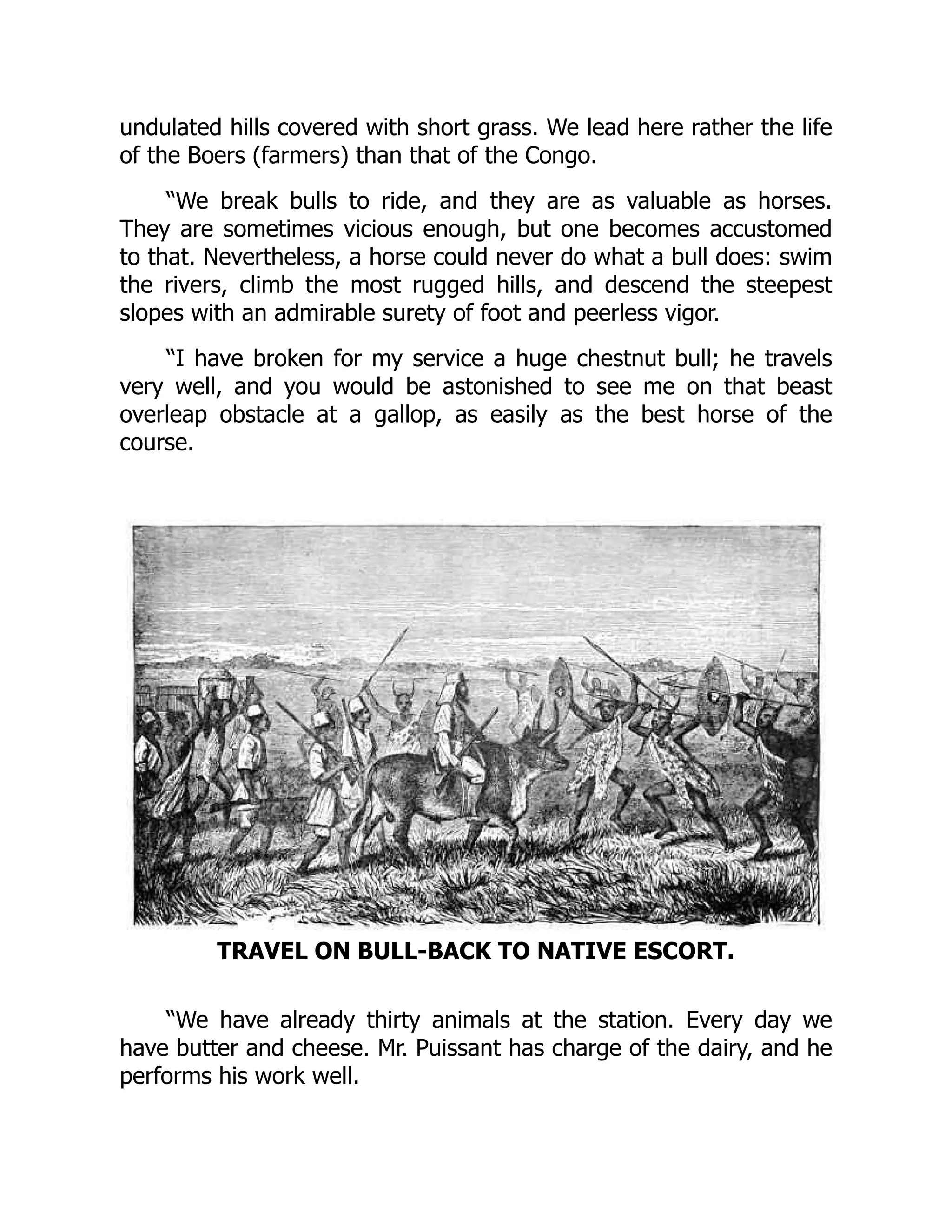
TRAVEL ON BULL-BACK TO NATIVE ESCORT.
“We have already thirty animals at the station. Every day we
have butter and cheese. Mr. Puissant has charge of the dairy, and he
performs his work well.
60.
“As to thenatives of the region, they are much the best negroes
I know. In short, I am greatly pleased here, and am never sick.”
Mr. Legat, who sends this news, is the veteran of the Congo
State agents. He was of the party of 1881, and has not left the
country since that epoch.
A LITTLE CONGO HERO.
On the Congo, near the equator, live the Bengala, with whom
the explorer, Stanley, had his hardest battle when he floated down
the great river. They are the most powerful and intelligent of the
Upper Congo natives, and since Capt. Coquilhat, four years ago,
established a station in their country they have become good friends
of the whites. A while ago an exciting event occurred in one of their
many villages, and Essalaka, the chief, went to Capt. Coquilhat to tell
him about it.
“You know the big island near my town,” he said. “Well,
yesterday, soon after the sun came up, one of my women and our
little boy started for the island in a canoe. The boy is some dozen of
moons old. (Capt. Coquilhat says about twelve years old.) He said
that while his mother was paddling she saw something in the water,
and leaned over to look at it. Then he saw a crocodile seize his
mother and drag her out of the canoe. Then the crocodile and the
woman sank out of sight.
“The paddle was lying in the canoe. The boy picked it up to
paddle back to the village. Then he thought, ‘Oh, if I could only
scare the crocodile and get mother back!’ He could tell by the
moving water where the crocodile was. He was swimming under the
surface toward the island. Then the boy followed the crocodile just
as fast as he could paddle. Very soon the crocodile reached the
61.
island and wentout on land. He laid the woman’s body on the
ground. Then he went back into the river and swam away. You know
why he did this. He wanted his mate and started out to find her.
“Then the little boy paddled fast to where his mother was lying.
He jumped out of the boat and ran to her. There was a big wound in
her breast. Her eyes were shut. He felt sure she was dead. He is
strong, but he could not lift her. He dragged her to the canoe. He
knew the crocodile might come back at any moment and kill him,
too. He used all his strength. Little by little he got his mother’s body
into the canoe. Then he pushed away from the shore and started
home.
“We had not seen the boy and his mother at all. Suddenly we
heard shouting on the river, and we saw the boy paddling as hard as
he could. Every two or three strokes he would look behind. Then we
saw a crocodile swimming fast toward the canoe. If he reached it
you know what he would do. He would upset it with a blow, and
both the boy and his mother would be lost.
“Eight or nine of us jumped into canoes and started for the boy.
The crocodile had nearly overtaken the canoe, but we reached it in
time. We scared the crocodile away, and brought the canoe to the
shore. The boy stepped out on the ground and fell down. He was so
frightened and tired. We carried him into one of my huts, and took
his mother’s body in there, too. We thought she was dead.
“But after a little while she opened her eyes. She could whisper
only two or three words. She asked for the boy. We laid him beside
her on her arm. She stroked him two or three times with her hand.
But she was hurt so badly. Then she shut her eyes and did not open
them or speak again. Oh! how the little boy cried. But he had saved
his mother’s body from the crocodile.”
As Essalake told this story the tears coursed down his cheek. “I
have seen in this savage tribe,” writes Capt. Coquilhat, “men and
their wives who really love each other, and veritable honeymoons
62.
among young couples.The child feels for his father the fear and
respect which his authority inspires, but he truly loves his mother
and has a tender interest in her even after he becomes a man.”
FORMER OBSTACLES REMOVED.
“Missionaries who go to Africa now, may think they have a hard
time, but they can know but little of the obstacles in the way of the
pioneers, and it will be profitable to notice a few of the things which
hindered the marked success of missionaries fifty years ago, that are
now largely removed.
“(1) The terrible slave trade prevailed all along the western
coast, from the Gambia to Loanda. These foreign traders hated the
missionary and did all they could to keep him out, well knowing that
the two could not dwell together. They said to the kings where I
labored, respecting my predecessor who began the mission in a nest
of slave traders: ‘If you do not drive that man from the country, we
will have to leave,’
“They prejudiced the natives against the missionary, by lies and
misrepresentation; they demoralized them by the rum, guns and
powder, which they paid for slaves. They induced and encouraged
internal wars for the purpose of securing prisoners to be sold as
slaves.
“By these means, large districts of the country were devastated
(as I have seen), a disregard of human rights and life fostered, and
a prevailing desire for rum and self-indulgence generally created.
“Thus, when the missionaries came they did not appreciate
them, or their work. They only cared for what slave-traders brought
them.
63.
“And as theyheld the coasts, the missionaries could not reach
the interior. They must begin on the low, sickly coasts, amid such
unfavorable surroundings, or do nothing. My predecessor desired
and planned to locate in the interior, but the way was thus
blockaded. And so all along the coast.
“But now that obstacle is removed; the country is open, and
missionaries can go where they chose a field, and find a people
ready to receive them.
“(2) The ignorance of the people was a bar to progress. They
did not understand the objects of the missionary, nor the difference
between missionaries and traders. So, when missionaries went to
Ujiji, the people began to bring them slaves to sell, knowing of no
other motive they could have in coming to their country.
“And, in other places, they have welcomed a mission because it
brought trade to their country. And, looking upon missionaries as
traders, they once had to pay rent for the privilege of living in the
country as traders. Thus my predecessor had to agree to pay $100 a
year (in gold) that he might have a place to preach and teach their
children. And he had to feed, clothe and provide everything for the
children. And this I did for six years after him. We were willing to do
this till they learned the value of education and the Gospel, and that
we might prepare native teachers. And, besides, we had to make
many presents, because we had their children!
“So it was forty years ago; but not now. They have learned that
the missionaries bring only blessings to their country, and they are
anxious to have their children ‘learn books,’ and be ‘taught white
man’s way.’ They also wish to learn about God and how to be saved.
And to obtain these blessings they are willing to give something—
willing to give land for missionaries to build school-houses, and help
the missionary build his house, and pay tuition for the children, and
help the preacher.
64.
“In very manyplaces they are begging for a missionary. At a
point on the Niger, where the steamers landed, the people ran to the
wharf to meet every boat, saying, ‘Has the teacher come?’ (No one
had promised a teacher.) ‘If the teacher will come, and teach us
white man’s book, we will give him plenty to eat and take good care
of him!’
“Another king said: ‘I do not wish to die till I can see a school
house built, where my children can be taught; and a church, where
my people may learn about God.’
“Another king came from the country to Liberia to obtain a
missionary for his people.
“I have had chiefs come from the interior to beg for a mission,
and after giving them one, I have seen them become followers of
Jesus.
“Thus from many places they cry: ‘Come over and help us!’ Very
different from fifty years ago!
“(3) The lack of written languages and books was a great
obstacle. While the nations had regular languages (nearly 700 in
Africa), they were all unwritten, and, of course, they had no books
and no knowledge of the world or the way of salvation through
Christ. This universal ignorance was the mother of gross superstition
and horrible cruelties.
“To learn the language and prepare school books, and translate
the Bible, was a slow process.
“To-day, over fifty of these languages are reduced to writing.
The Bible is printed in ten of them, and portions of it in over thirty
more. And many of them have school books, papers, and some
literature.
“Here is a great advance, the benefit of which modern laborers
can take advantage.
65.
“And this samework is widely and continually going on. Light is
spreading and desire increasing.
“Along the western coast, English is extensively taught, as also
the French, German and Portuguese, where these nations have
colonies and trading posts.
“(4) Lack of native help, at first, made progress slow. The white
man was alone amid millions. His ways were all strange and
inimitable. He was dressed, while they were naked. He read books,
while they had none. He worshiped God, while they trusted in idols
and charms. He seemed far above them and the idea of reaching his
plane, hopeless.
“But, with great patience and unwearied perseverance, the
pioneers toiled on, teaching, preaching, learning languages, writing
elementary books, instructing children and youth, to prepare native
helpers.
“To-day, there are about 8,000 ordained and unordained native
preachers, and thousands of teachers and hundreds of thousands of
pupils who are being prepared for future helpers—an army of native
workers—and many are running to and fro and knowledge is being
increased.
“Modern missionaries can now obtain interpreters for almost all
parts of Africa, and this is a great help, which calls for heartfelt
thanksgiving and praise to God who has wrought these favorable
changes.
“I will mention but one more obstacle: (5) The sickly climate.
During the first fifty years of missionary life in West and East Africa,
the mortality was fearful. Probably 500 missionaries have died in the
missions on the west coast. Nearly twenty died in the Mendi Mission
where I labored. The Church Missionary Society lost fifty-three in the
first twenty years. Three English Bishops died within eight years.
66.
“In the BasleMission, on the Gold Coast, in fifty-eight years,
ninety-one missionaries died. And so it has been in Liberia, in Lagos,
Gaboon, and in many other places. All societies have lost many, so
that a book written by an Englishman was entitled “The White Man’s
Grave.” The last three years I was in Africa I buried four white
missionaries.
“But, thank God, it is different now. They have better houses
and more comforts and have learned better how to take care of their
health, so that the mortality in these same places is not half so
much as it used to be.
“And missionaries can now reach the healthy high lands where
they can live as well as here. So we will ‘Thank God and take
courage.’
“In the same line more might be mentioned, but enough has
been noted to show that there is no good cause for discouragement
in the glorious work of saving Africa, to whom we owe such an
unspeakable debt.
“With so many obstacles removed, and so many helps now
prepared to our hand, while vast fields are opening and loud calls
are wafted to us on every breeze, we may well be encouraged to put
forth more vigorous efforts to give the Gospel to that people in this
generation.” Rev. Geo. Thompson.
STANLEY ON THE GOMBE.
On his way to Ujiji to rescue Livingstone, Stanley passed
through the lands of the Manyara, which are plains stretching for a
distance of 135 miles, well cultivated, thickly strewn with villages,
and abounding in game, which finds a haunt amid the tall grasses.
He had never seen such a hunter’s paradise as that on the river
67.
Gombe, which watersthe country. Buffaloes, zebras, giraffes and
antelope, roamed through the magnificent parks of the section,
affording excellent sport for the natives, and inviting the traveler to
halt for a time in order to enjoy the thrill of a hunt.
The antelope of this section is large and powerful. It goes by
name of “springbock,” because it takes tremendous leaps of ten to
twelve feet when running. When pursued, it is pleasing and curious
to see the whole herd leaping over each other’s heads, and looking
back while they are in the air. They are exceedingly swift, and
cannot be overtaken by a horse. They migrate annually from the
interior toward the coast, and after remaining in the lowlands for
two to three months, begin a gradual journey toward the interior.
During these inward journeys their gregarious instincts are in full
sway, and herds of hundreds may be seen on the grassy plains.
When travelling thus in large herds, they are the victims of
beasts of prey, as lions, leopards and hyenas, which attack them at
every favorable opportunity and seldom fail to secure rich feasts.
Their flesh is excellent eating, and the springbock, together with
other varieties of the antelope species, furnishes the venison of the
African continent.
As he continued his way along the course of the Gombe,
feasting his vision upon the beautiful scenes before him, he came
suddenly upon a scene which he says “delighted the innermost
recesses” of his soul. Just before him were “ten zebras switching
their beautiful striped bodies, and biting one another.” Of these he
succeeded in killing one, and then, content with the result of the
hunt, he retired to camp. Before doing so, however, he thought he
would take a bath in the placid waters of the river. He says: “I
sought out the most shady spot under a wide-spreading mimosa,
from which the ground sloped, smooth as a lawn, to the still, clear
water. I ventured to undress, and had already stepped to my ankles
in the water and had brought my hands together for a glorious dive,
when my attention was attracted by an enormously long body which
shot into view, occupying the spot beneath the surface which I was
68.
Welcome to ourwebsite – the ideal destination for book lovers and
knowledge seekers. With a mission to inspire endlessly, we offer a
vast collection of books, ranging from classic literary works to
specialized publications, self-development books, and children's
literature. Each book is a new journey of discovery, expanding
knowledge and enriching the soul of the reade
Our website is not just a platform for buying books, but a bridge
connecting readers to the timeless values of culture and wisdom. With
an elegant, user-friendly interface and an intelligent search system,
we are committed to providing a quick and convenient shopping
experience. Additionally, our special promotions and home delivery
services ensure that you save time and fully enjoy the joy of reading.
Let us accompany you on the journey of exploring knowledge and
personal growth!
textbookfull.com






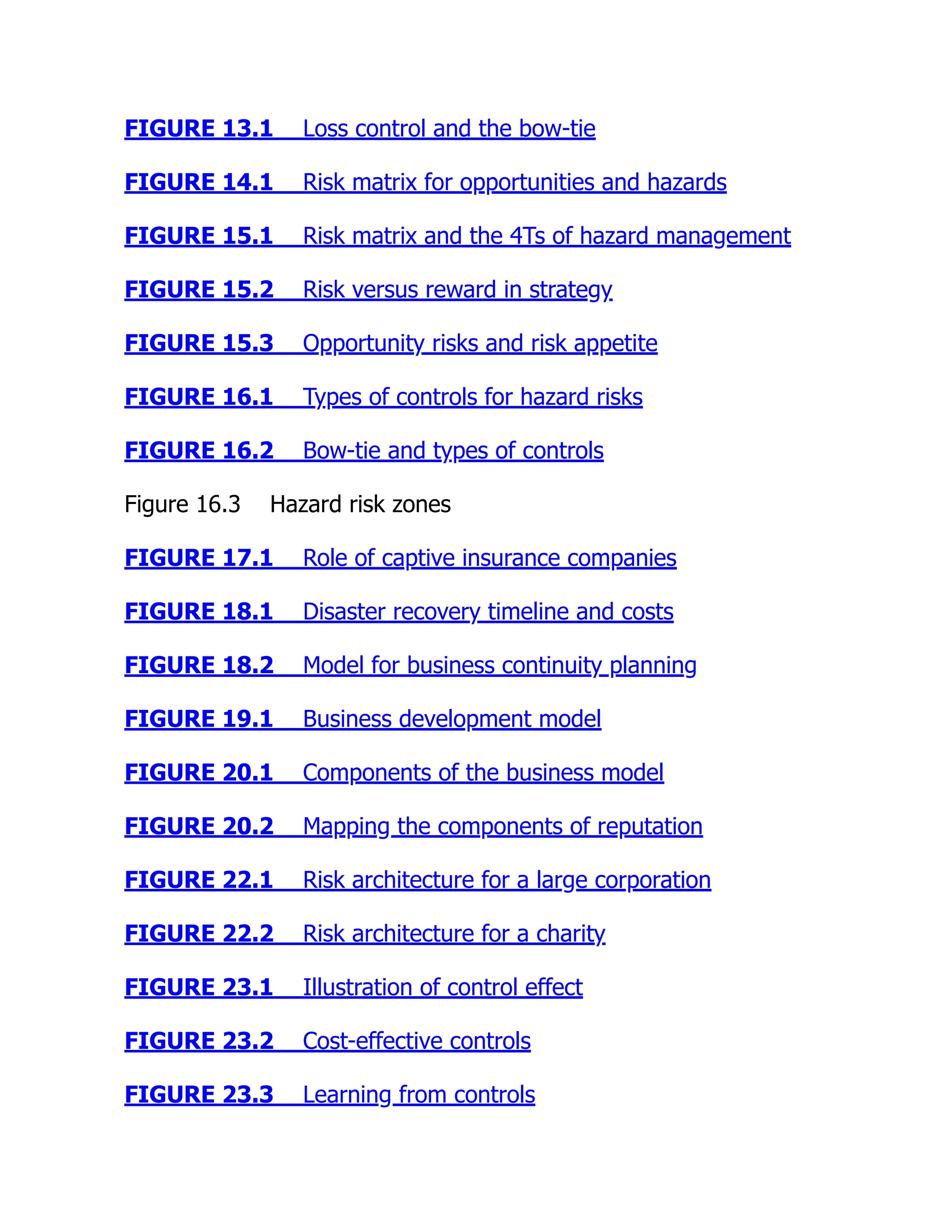
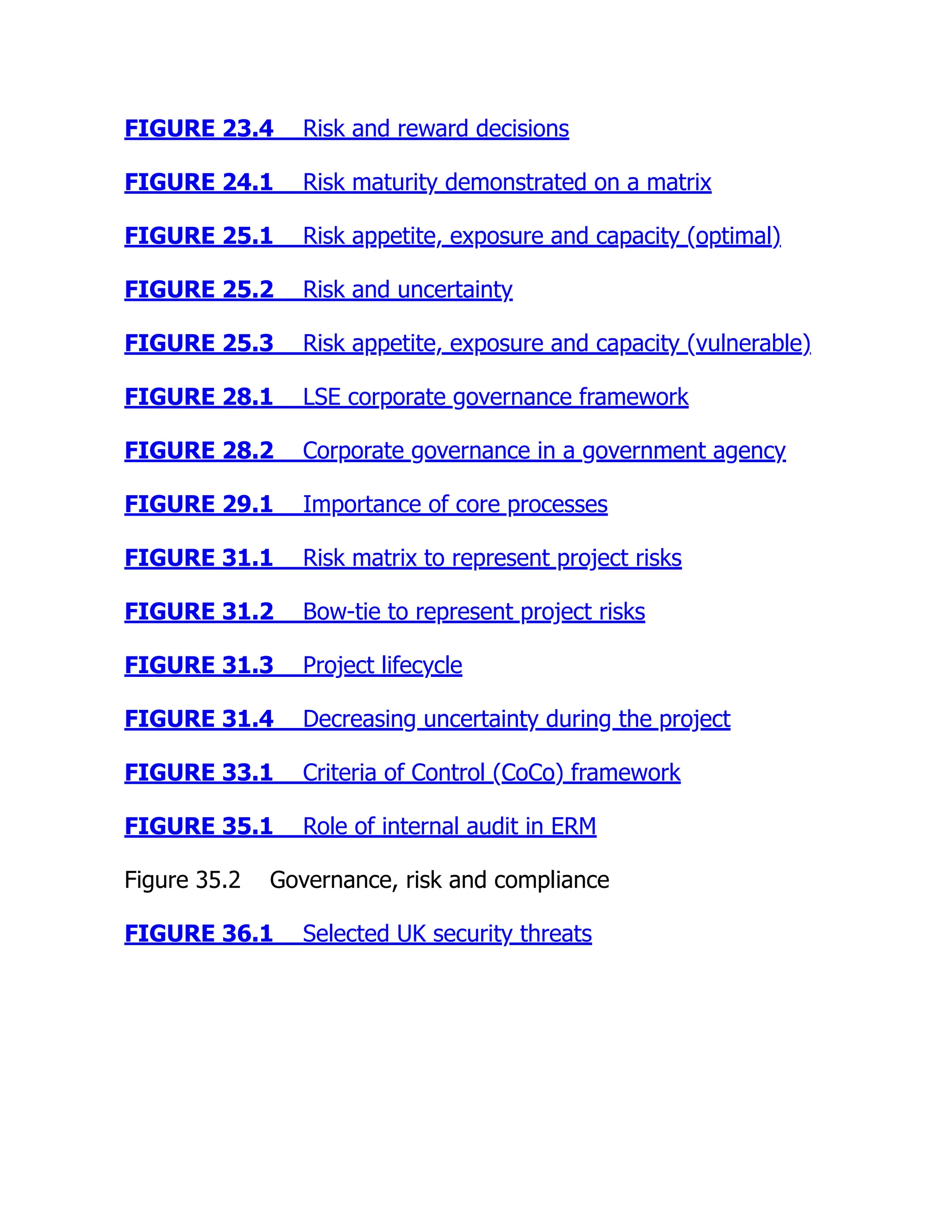
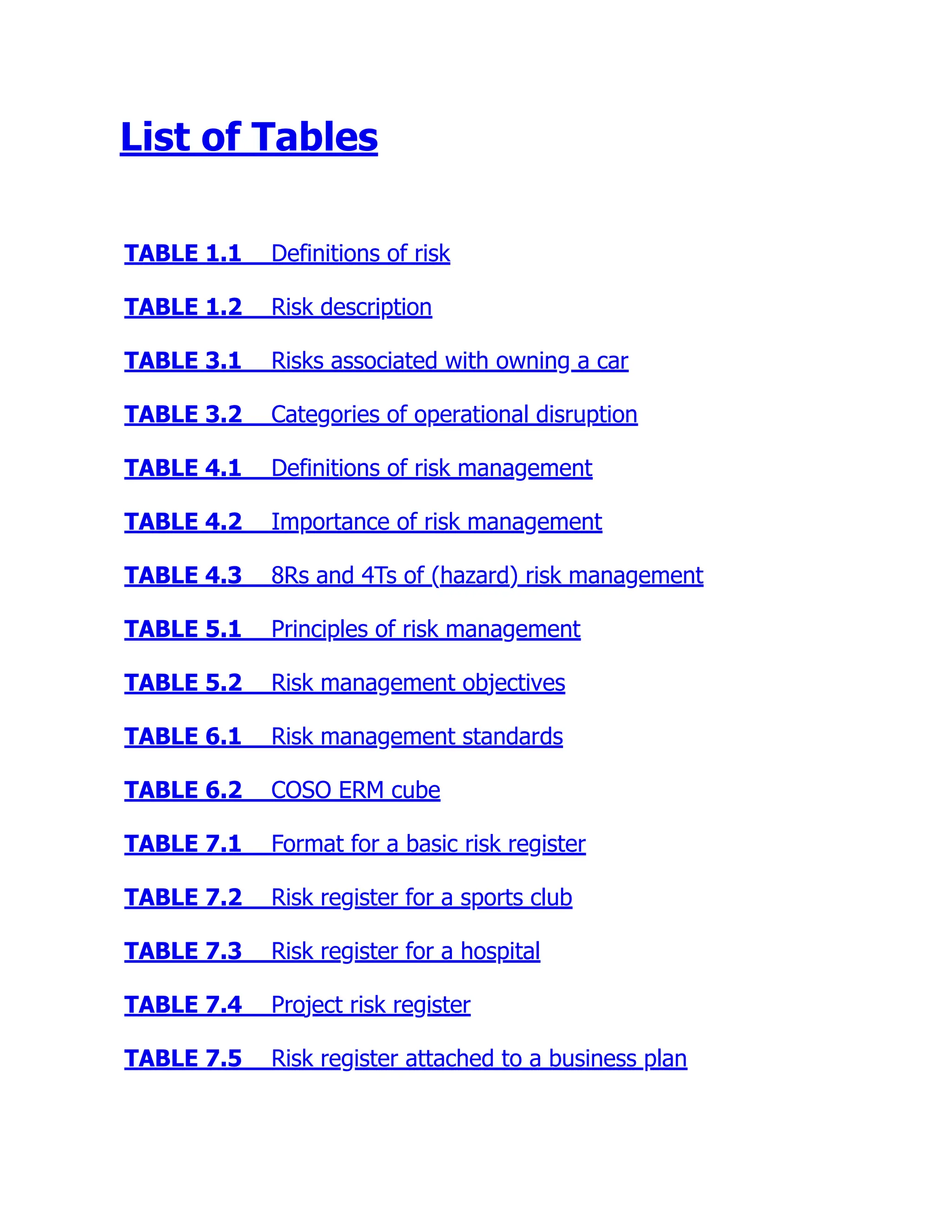
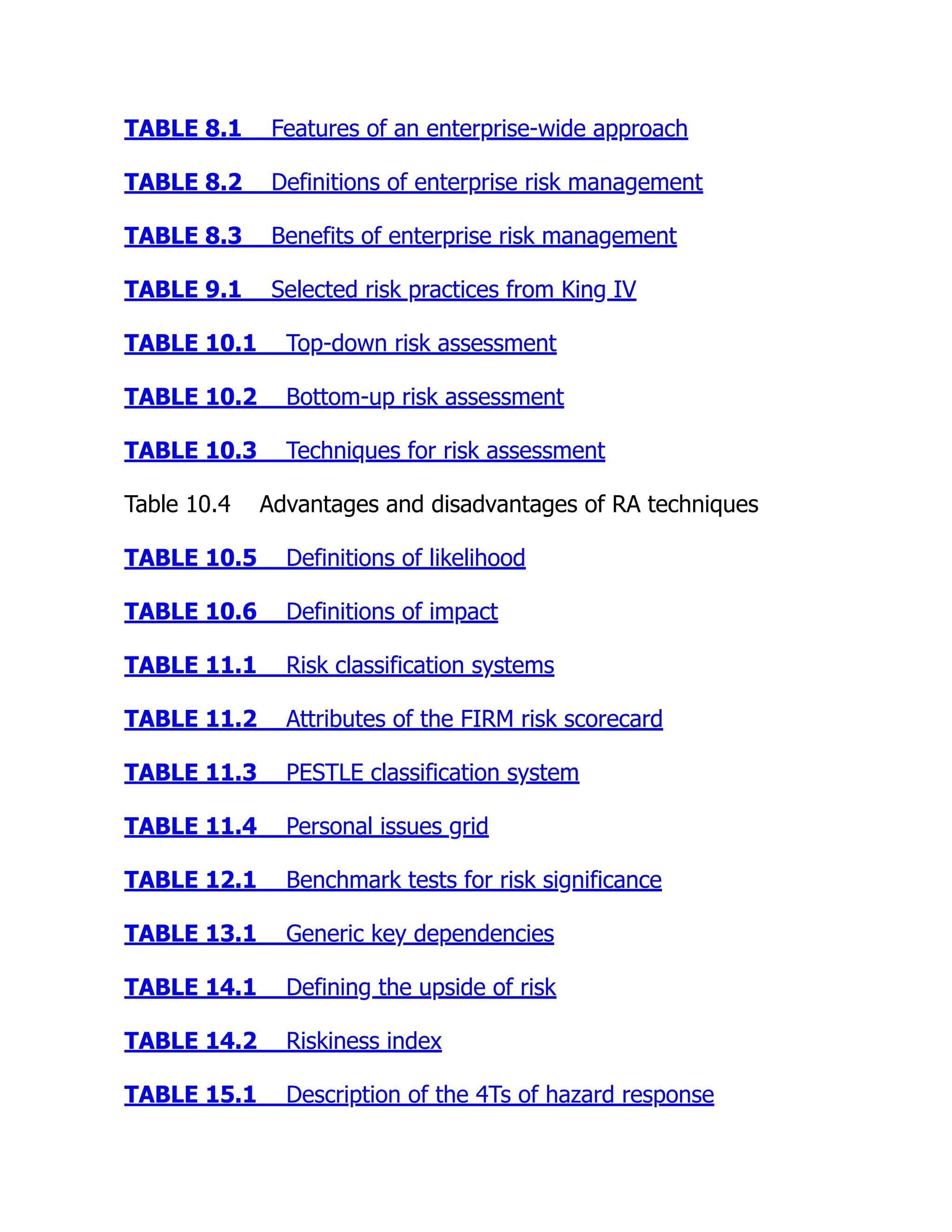
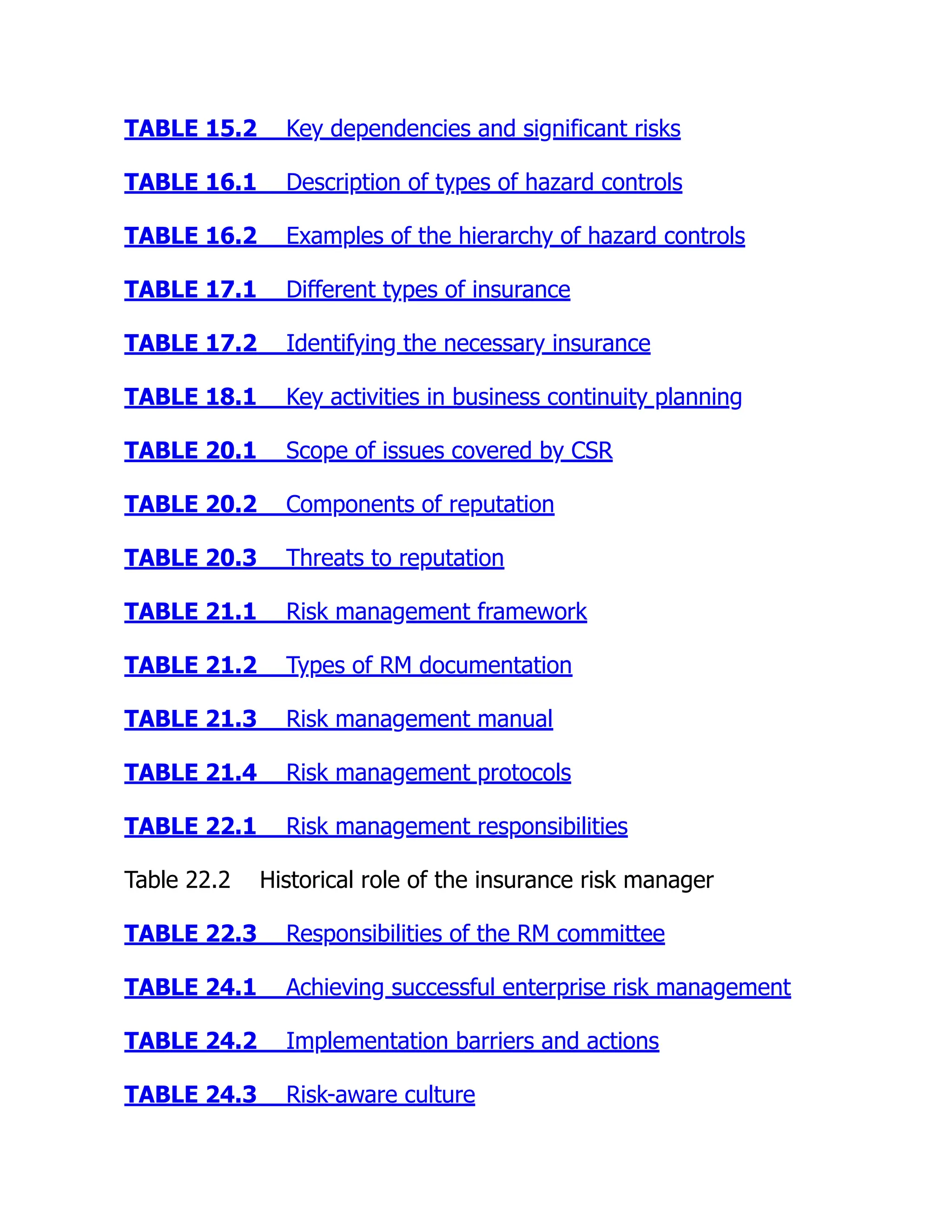
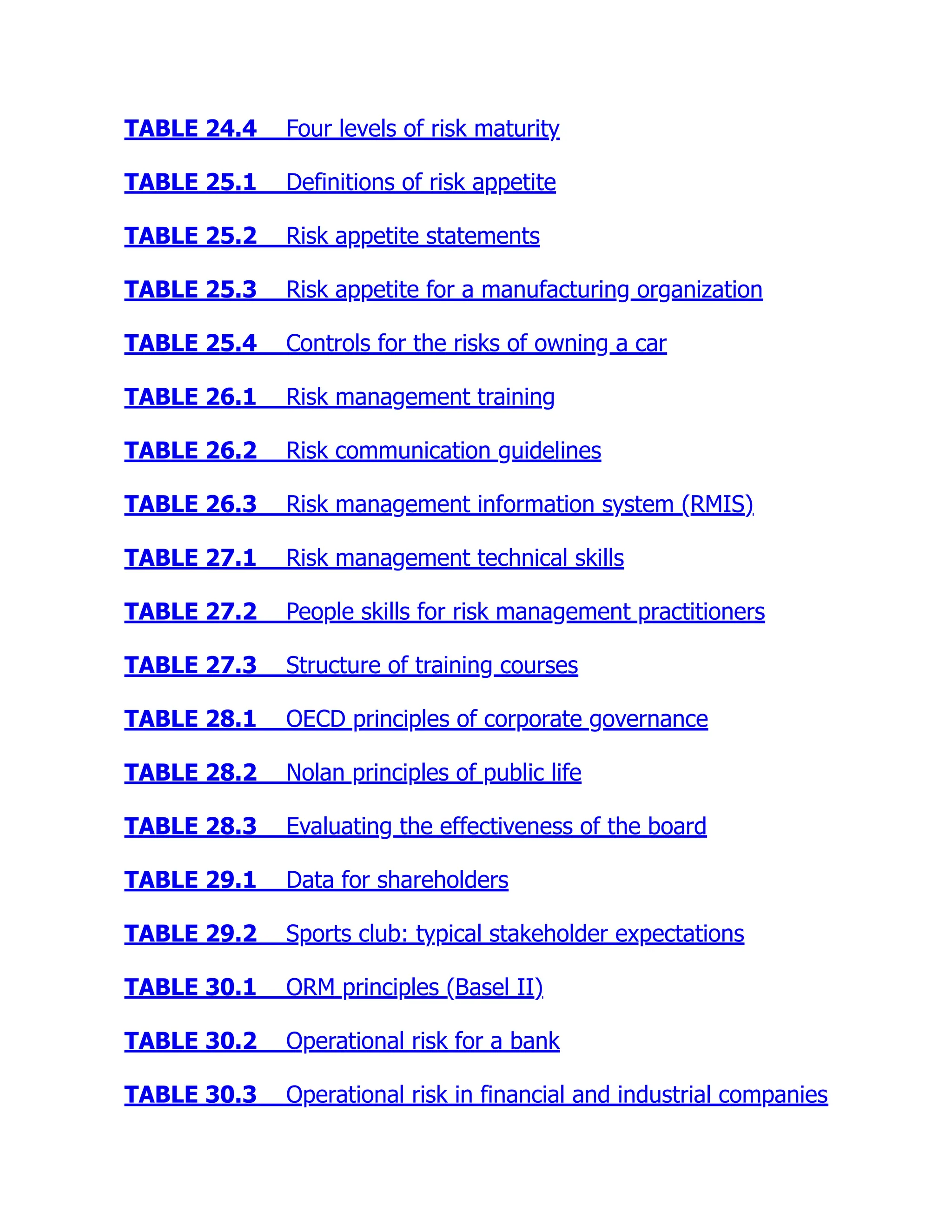
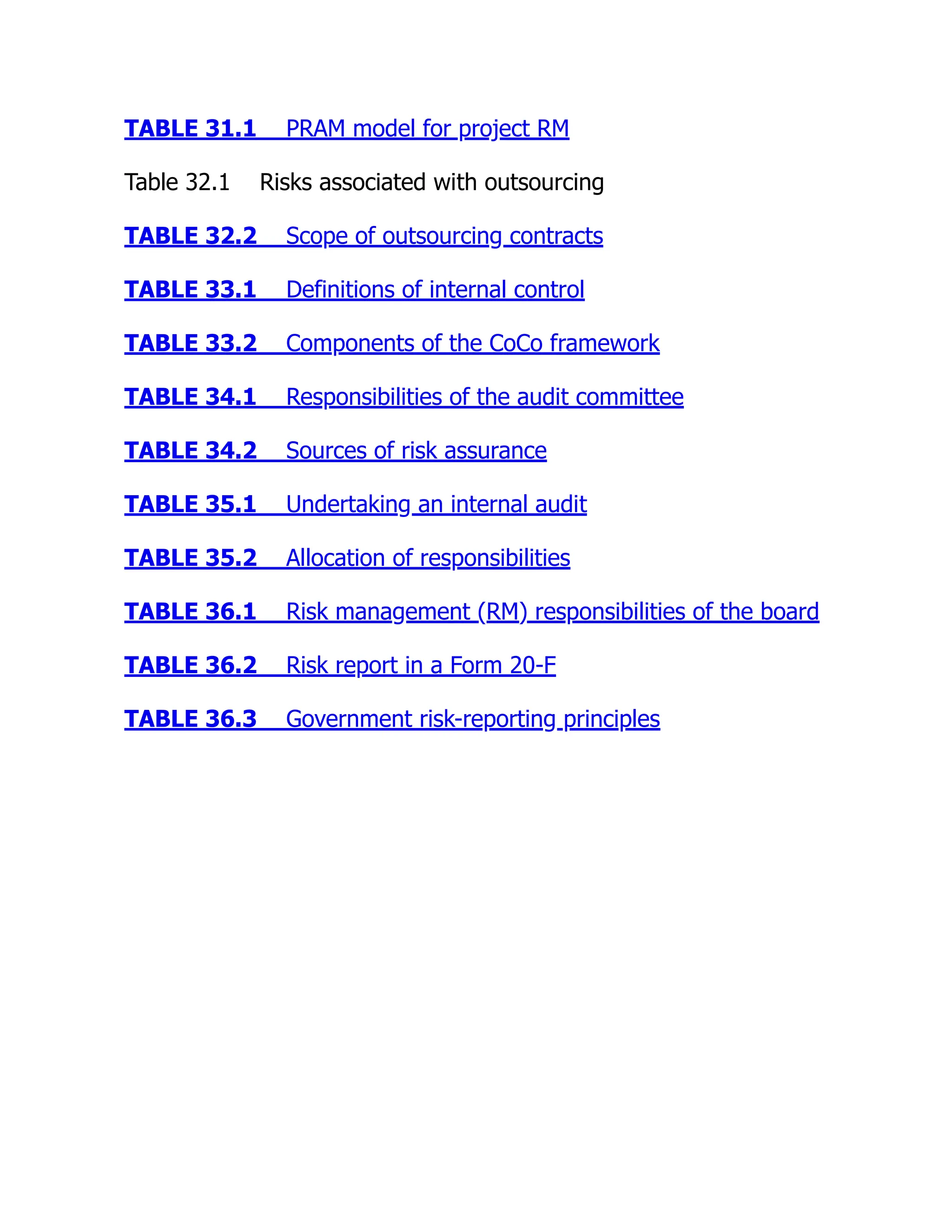
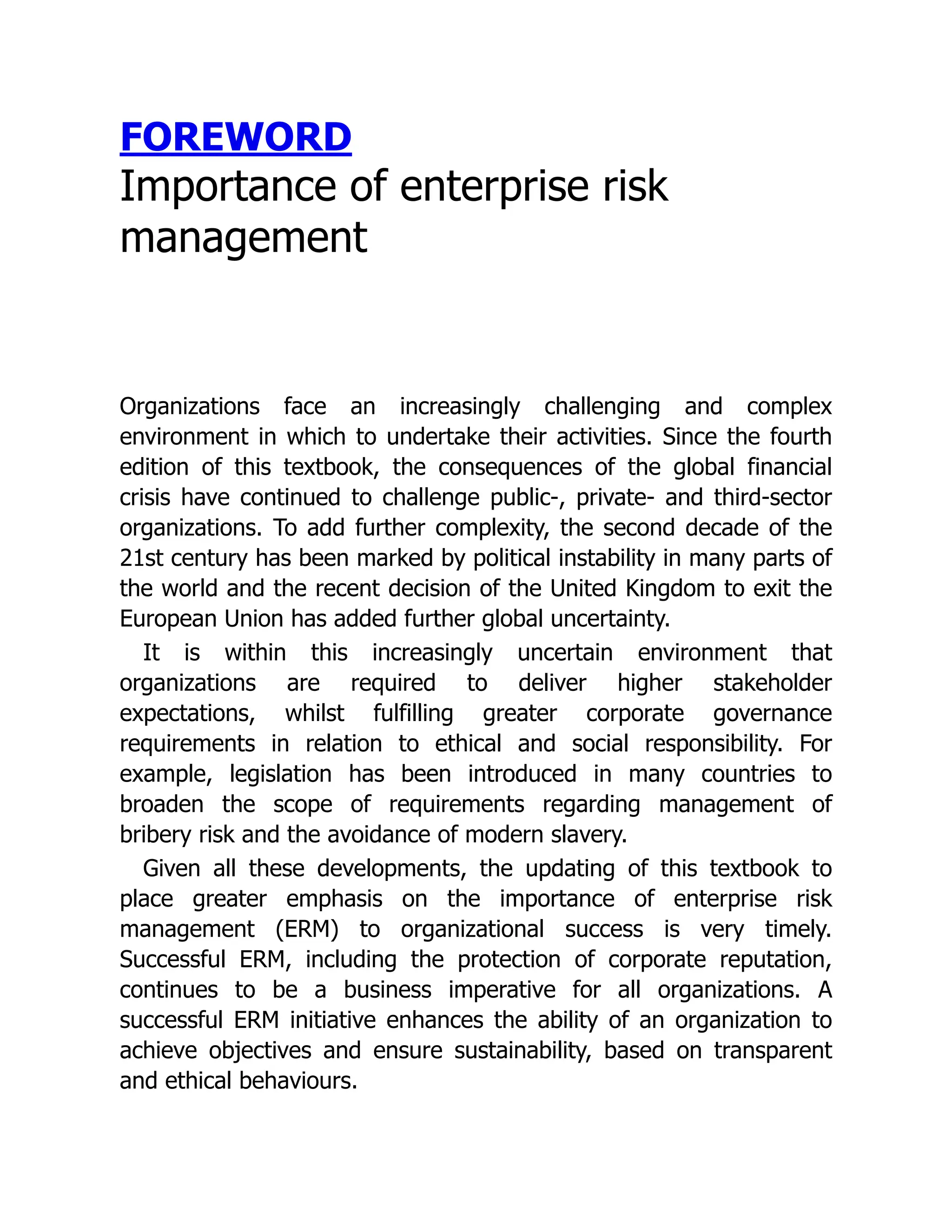

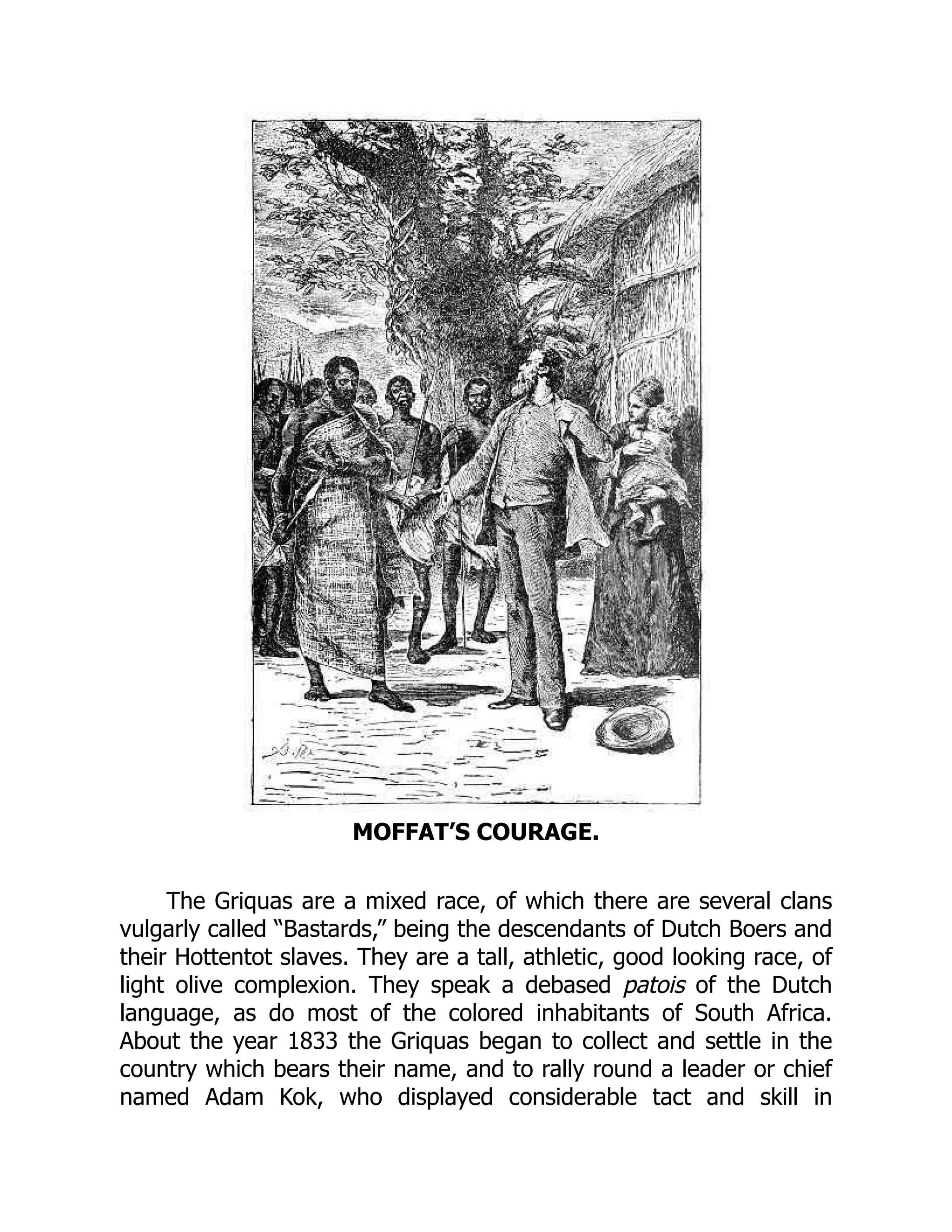
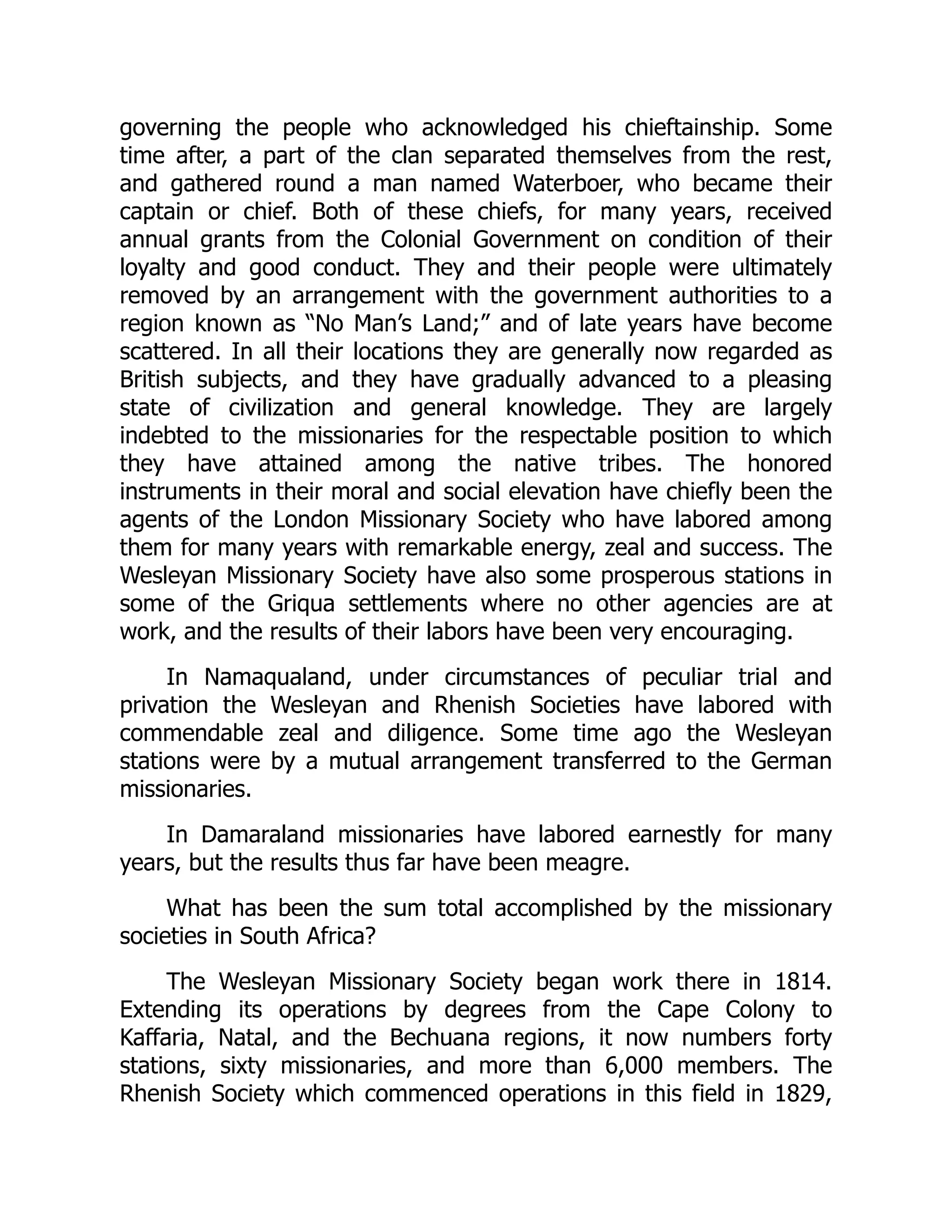
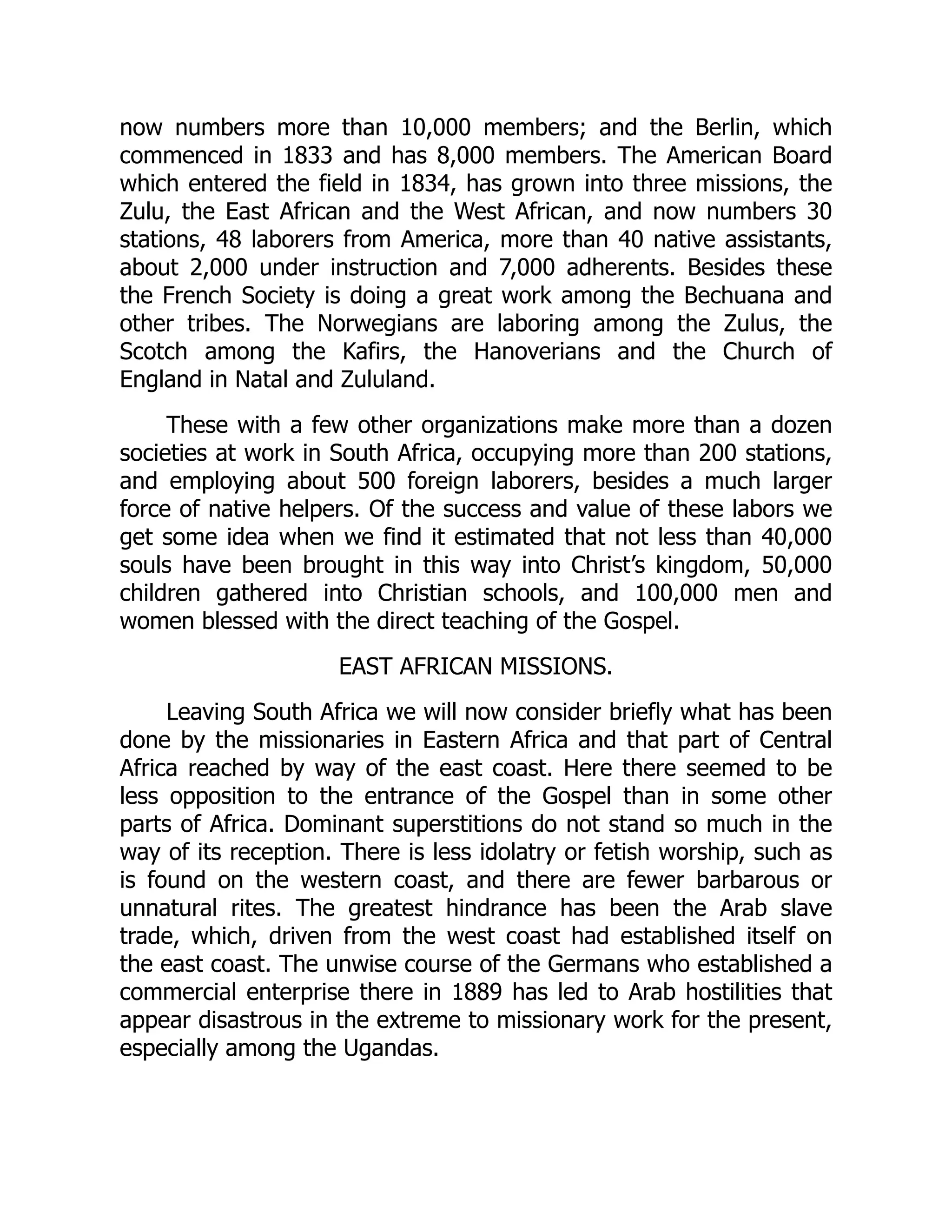
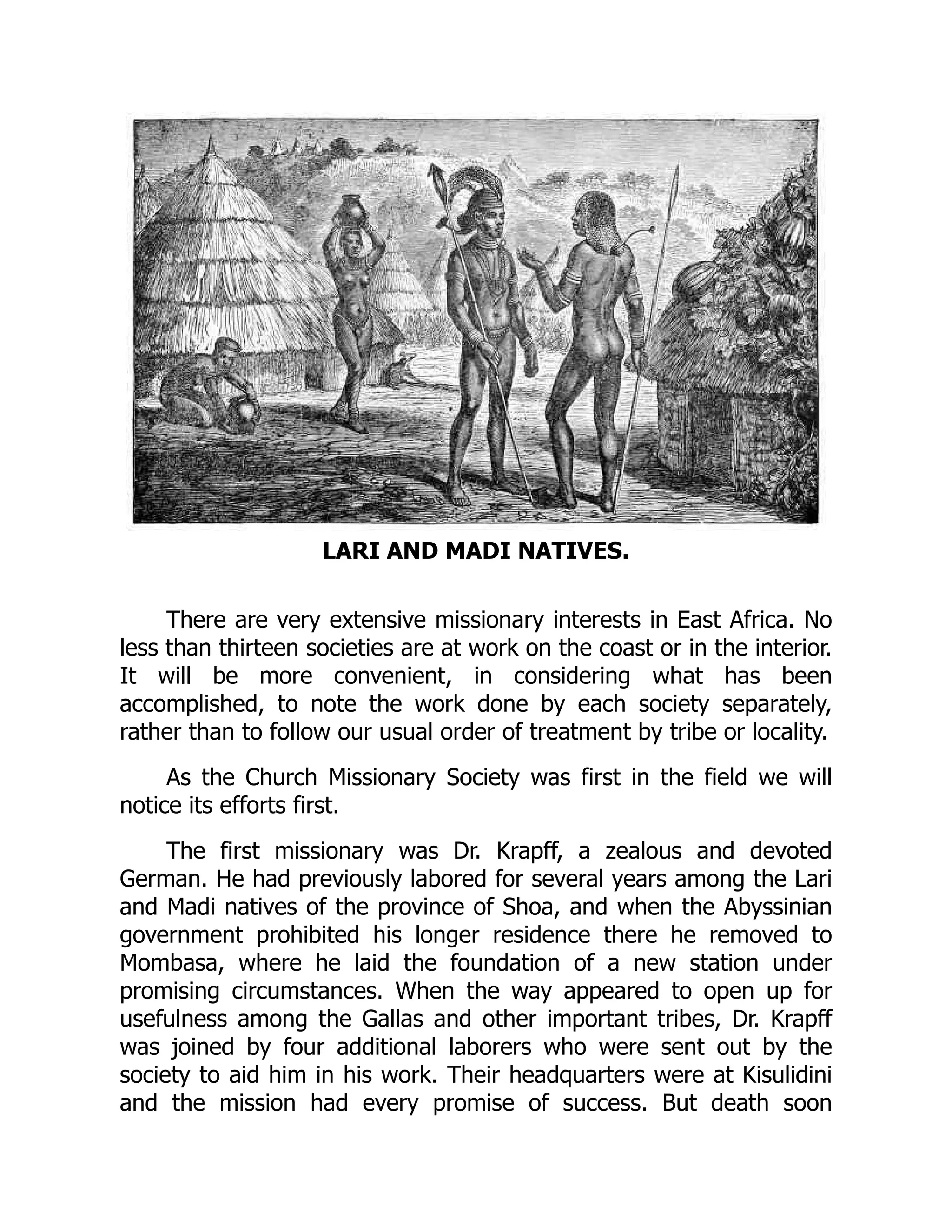
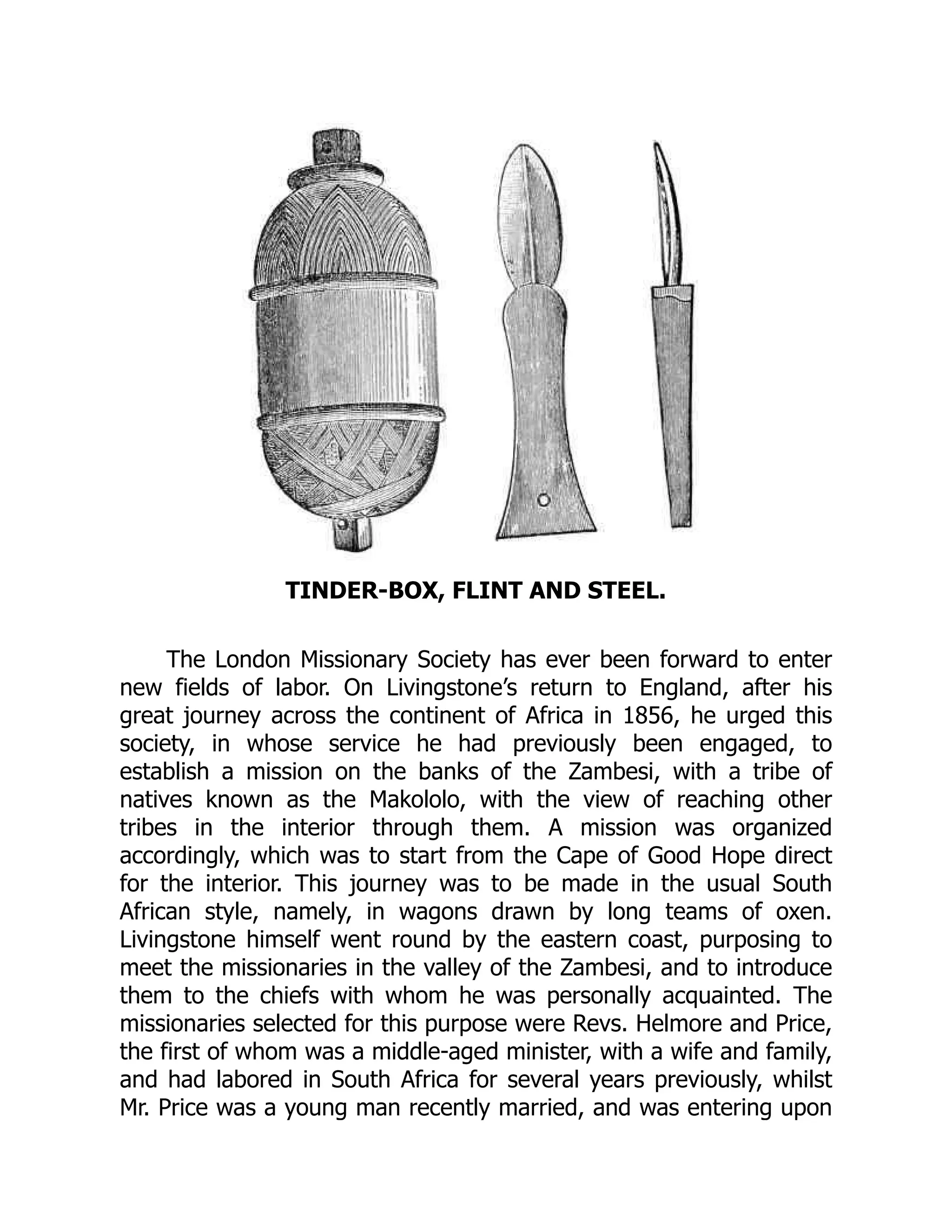
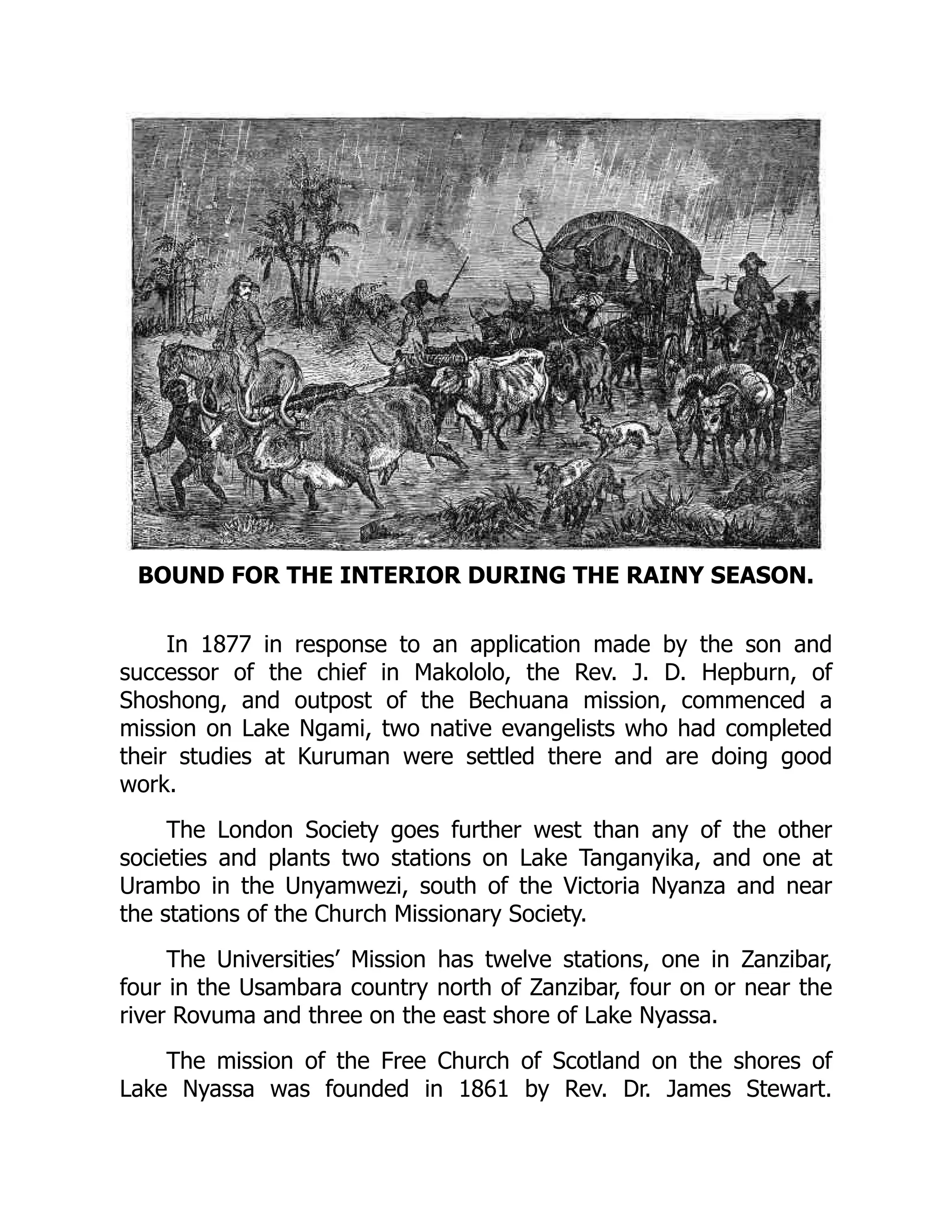
![hired by the Congo State. They come from near Acra, on the Gulf of
Guinea. The Bangalas belong to a desperate and warlike tribe, that
fought Stanley on his first trip down the Congo.] ‘So these native
soldiers took to their canoes at nightfall on the 26th of August, and
went down the river. Mr. Deane and Mr. Dubois, the only white men
in the garrison, remained behind with eight men to fire the buildings
and destroy the stores. This they did, blowing up the two cannon
and the remaining gunpowder, and then escaped themselves from
the island, on which the station was located, to the north bank of
the Congo, and made their way along its bank on foot, in the dark.
On their way, the banks being very steep, Dubois fell into the river.
Mr. Deane jumped in after him, and succeeded in getting him on to a
rock; but poor Dubois was drowned in attempting to get from the
rock to the mainland. Deane sought refuge among the natives, and
found them most friendly. They showed him great devotion, taking
him from one place of shelter to another, hiding him from the Arabs,
supplying him with food, and keeping him till he was rescued.’ The
Haussas and Bangalas arrived in their canoes at Bangala Station,
where Capt. Coquilhat was stationed as Commander-in-Chief of that
department, on September 7th. The captain at once went up in the
steamer Henry Reed, then in the service of the Congo Government,
and, finding the Stanley Falls Station in ruins and in the hands of the
Arabs, he went in search of Mr. Deane, and after three days of
diligent inquiry, found him, and rescued him from the fury of the
Arabs.
“It is sad to relate, as I learn from Bradley L. Burr, our chief
missionary at Kimpoko, Stanley Pool, that recently Mr. Deane, in an
elephant hunt, was charged and killed by an Upper Congo elephant.
“Those who brave the perils of Africa ought always to be
prepared to die. The destruction of the Arab slave trade, and the
redemption of Africa, will cost the lives of more than 1,000
missionary heroes and heroines. People who want to run home from
Africa before they see the elephant had better go to Barnum’s show
and stay at home.” Wm. Taylor.](https://image.slidesharecdn.com/36345-250423175314-b28d5edd/75/Fundamentals-of-Risk-Management-Fifth-Edition-Paul-Hopkin-57-2048.jpg)