Mathematics:
Geometry
Covers Fundamental Geometry Principles
Geometry: Fundamental Principles
Volume and Surface Area
Equations
Trigonometry
Lines and Angles
Pythagorean Theorem
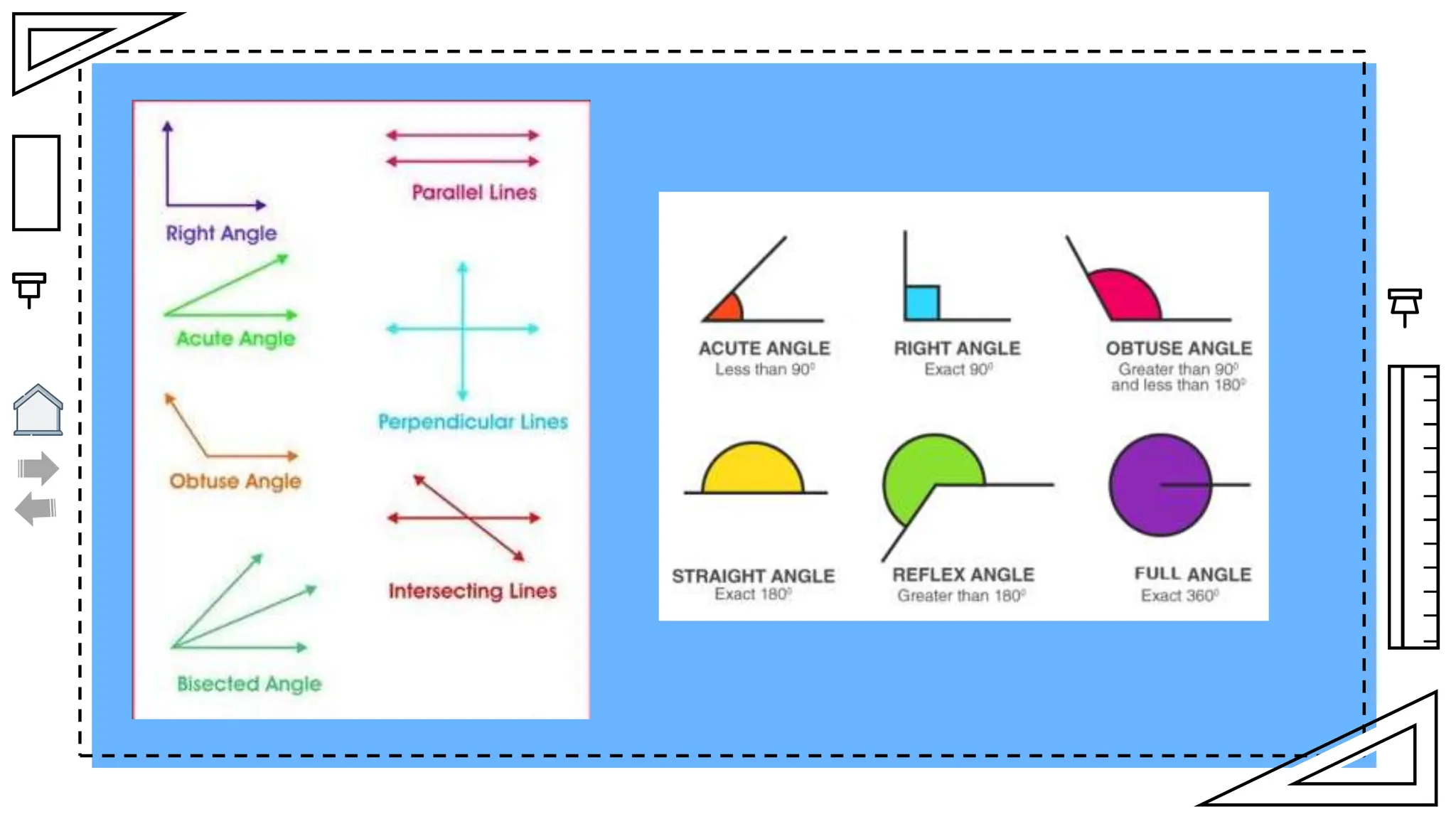
Lines and Angles
- Involve the study of straight lines
and the relationships between them.
- Identifies different types of angles and
understanding angle measures, as well as
exploring concepts like complementary and
supplementary angles, and perpendicular lines.
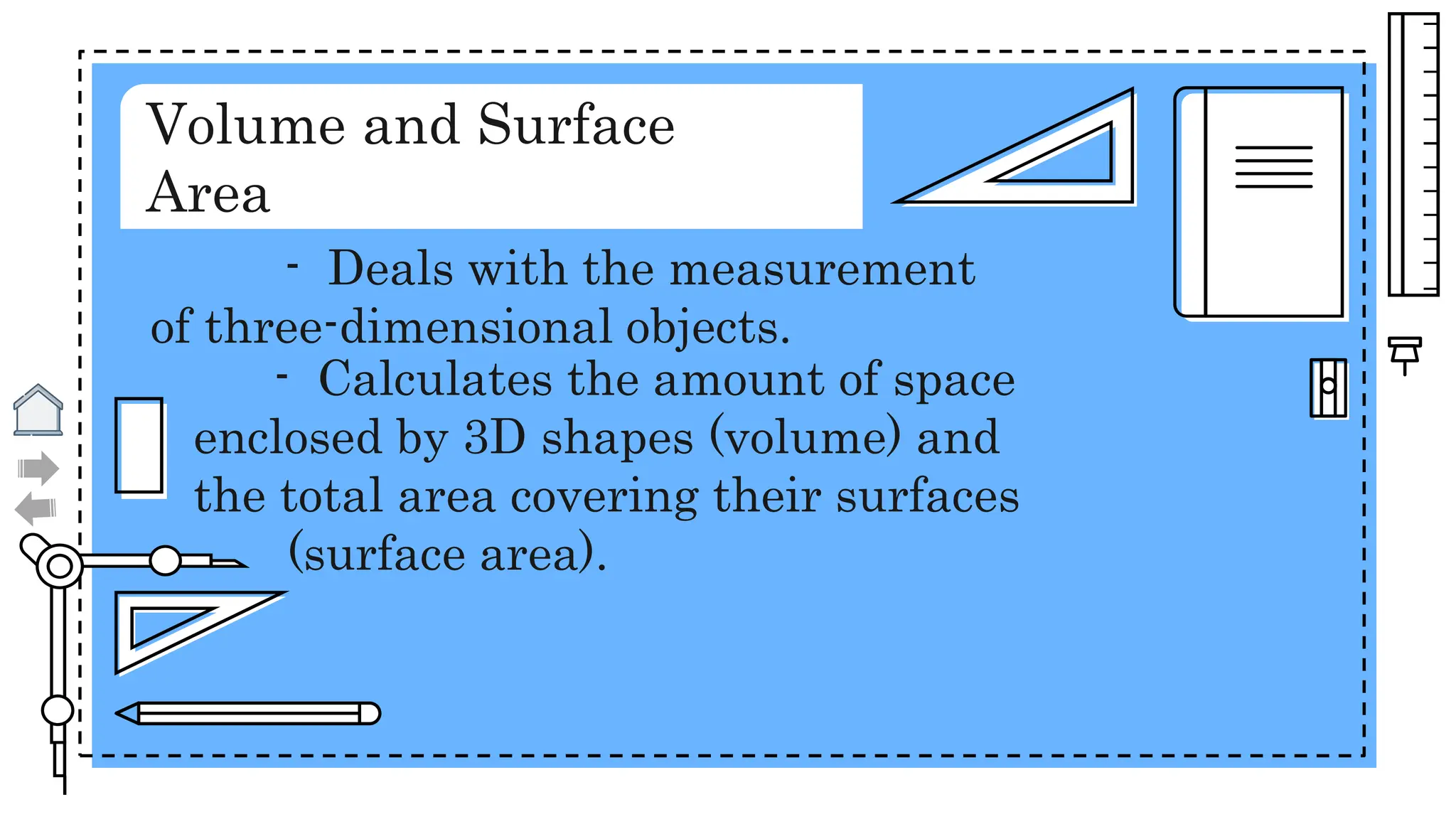
Volume and Surface
Area
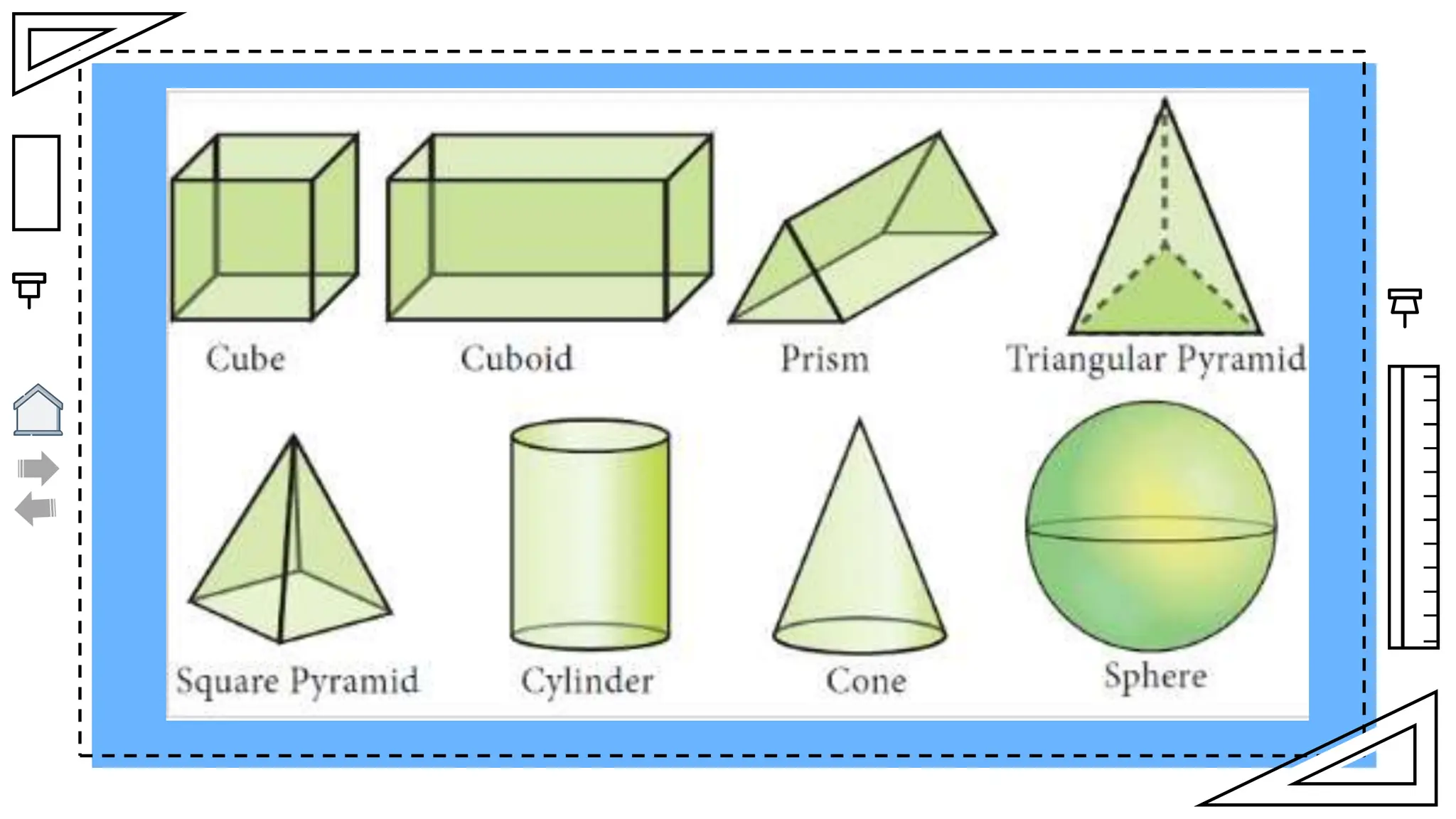
- Deals with the measurement
of three-dimensional objects.
- Calculates the amount of space
enclosed by 3D shapes (volume) and
the total area covering their surfaces
(surface area).
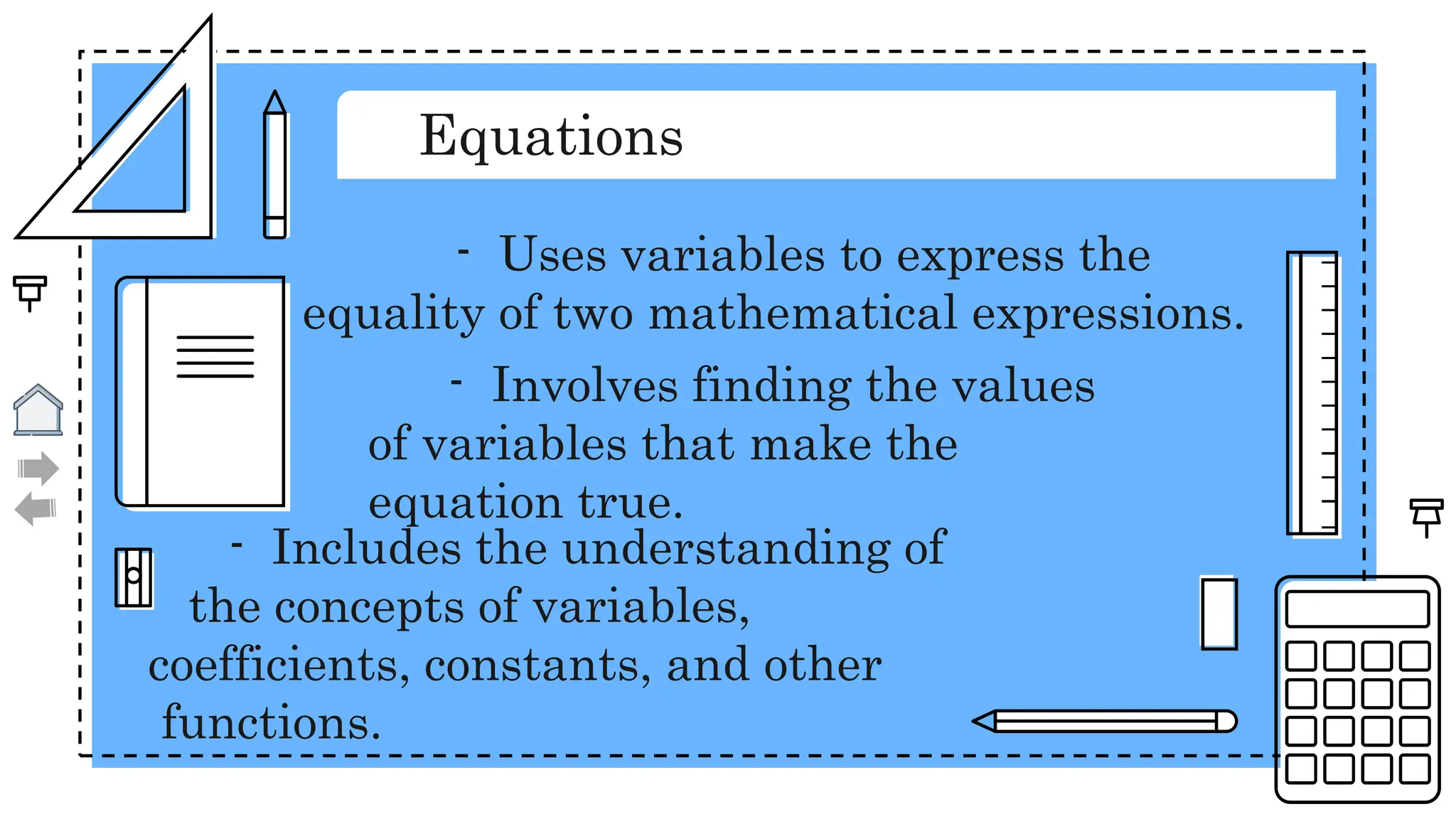
Equations
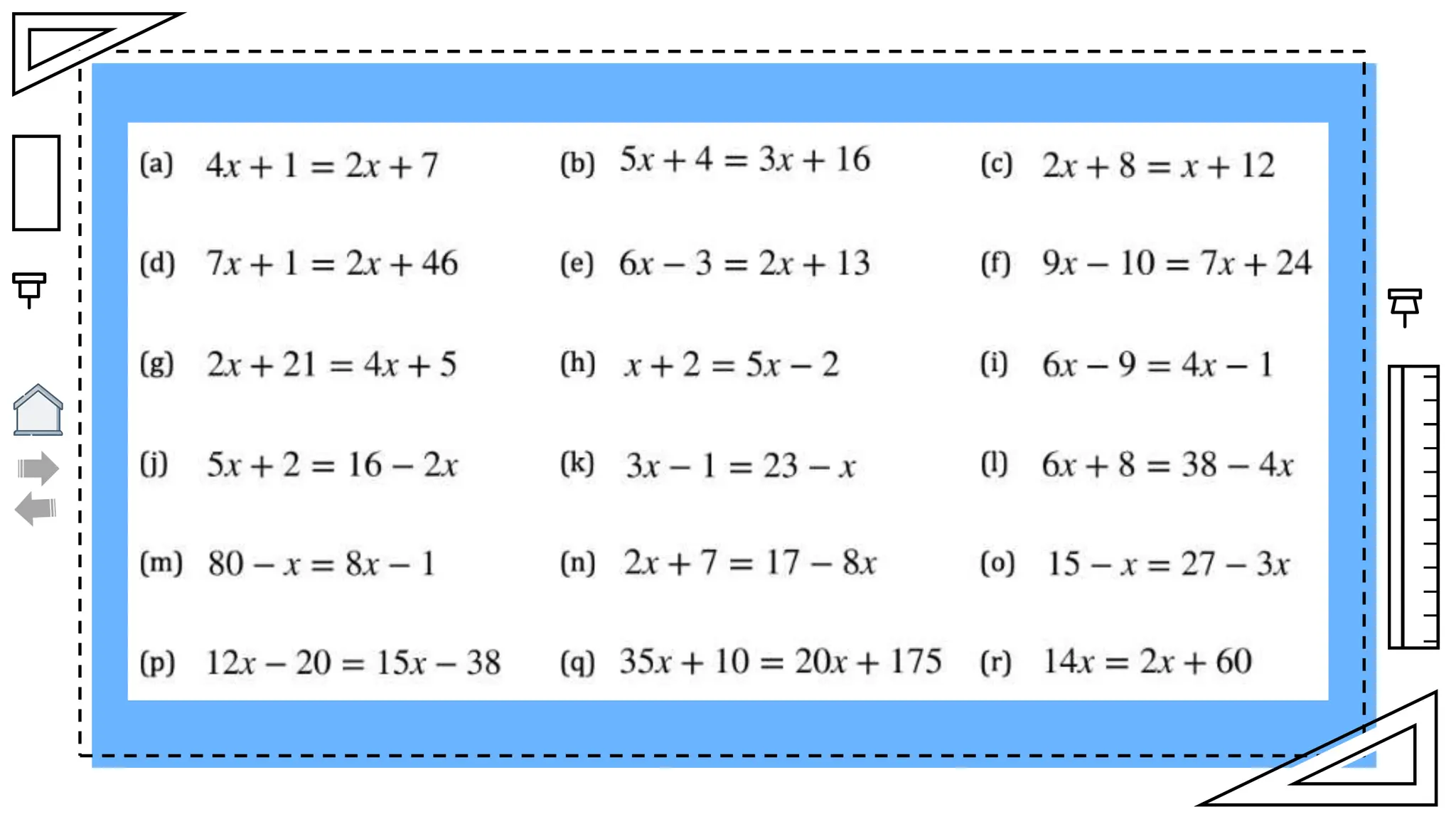
- Uses variables to express the
equality of two mathematical expressions.
- Involves finding the values
of variables that make the
equation true.
- Includes the understanding of
the concepts of variables,
coefficients, constants, and other
functions.
Pythagorean Theorem
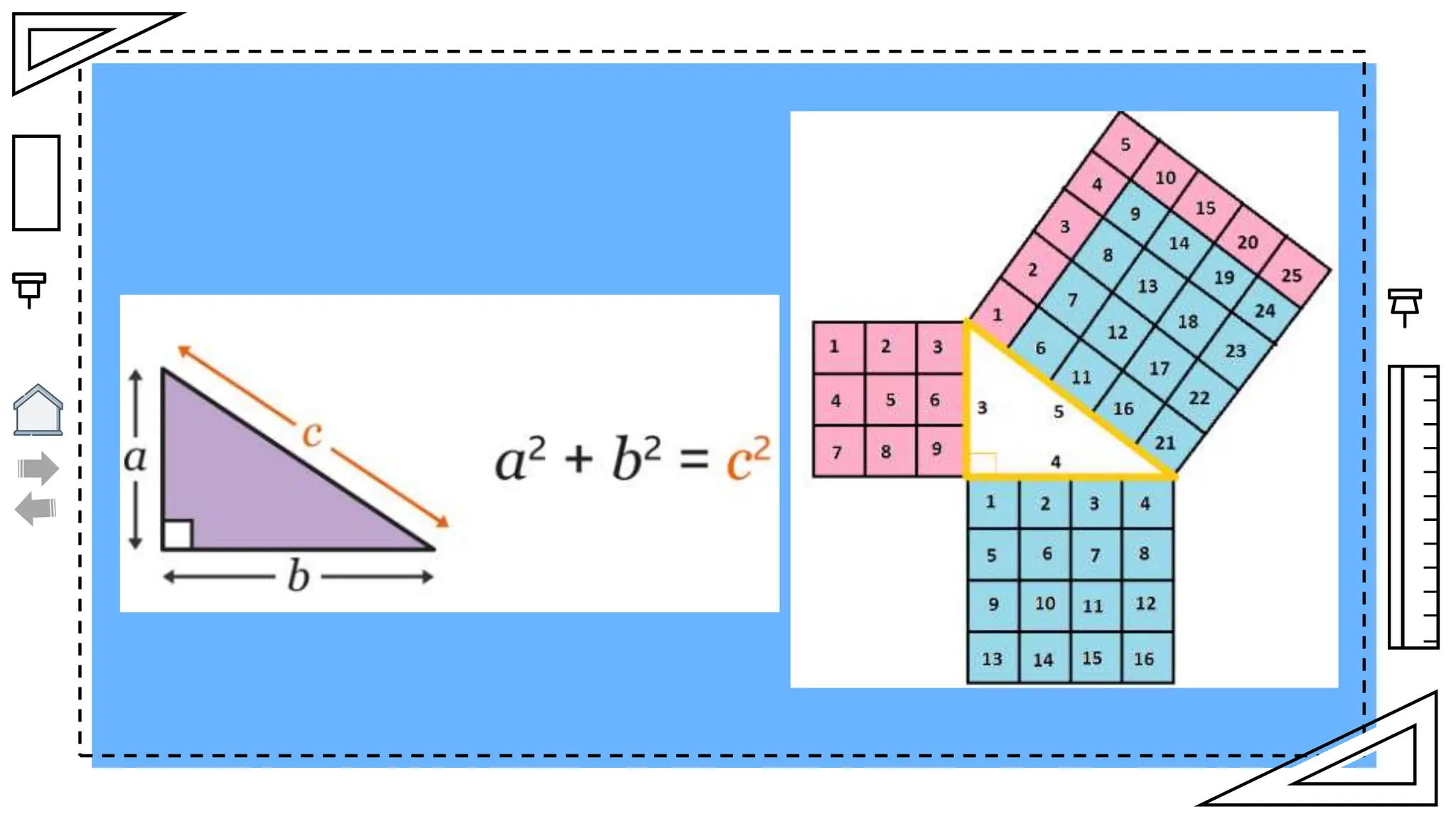
- States that in a right
triangle, the square of the length
of the hypotenuse is equal to the
sum of the squares of the lengths
of the other two sides.
- Used to find missing side
lengths in right triangles and solve
various geometric problems
involving distances and lengths.
Trigonometry
- Focuses on the relationships between the
angles and sides of
triangles.
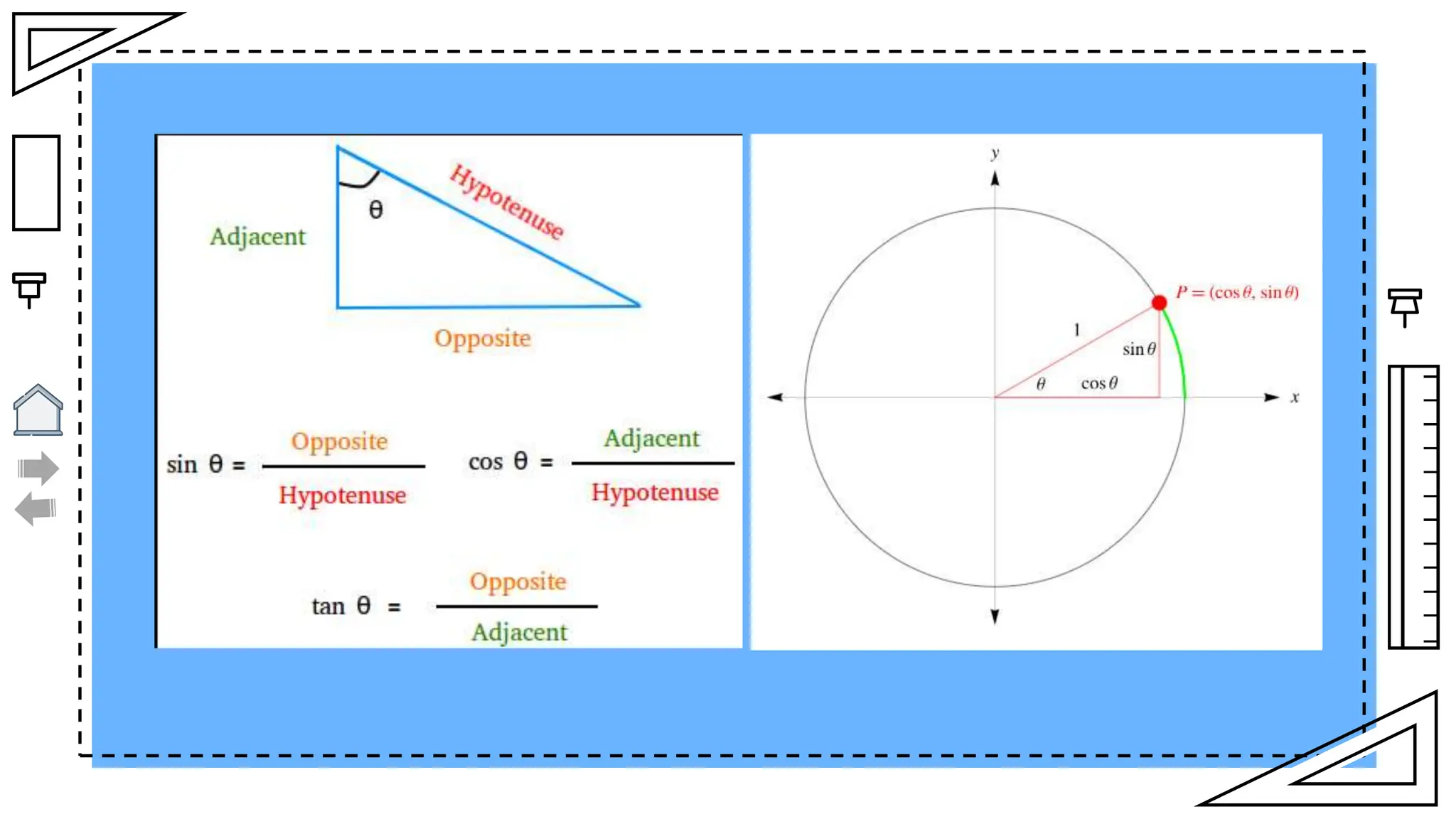
- Includes the study of the trigonometric
functions such as sine, cosine, and tangent.
- Covers the unit circle,
trigonometric identities, and
applications in areas such as
navigation, engineering, and physics.
Mathematics:
Geometry
Covers Fundamental Geometry Principles
Credits: THIS PRESENTATION TEMPLATE WAS CREATED BY SLIDESGO, AND
INCLUDES ICONS BY FLATICON, INFOGRAPHICS AND IMAGES BY FREEPIK, AND
INFORMATION BY WIKIPEDIA
Thanks

Fundamental Geometry Principles - MATHEMATICS 8th Grade

  • 1.
  • 2.
    Geometry: Fundamental Principles Volumeand Surface Area Equations Trigonometry Lines and Angles Pythagorean Theorem
  • 3.
    Lines and Angles -Involve the study of straight lines and the relationships between them. - Identifies different types of angles and understanding angle measures, as well as exploring concepts like complementary and supplementary angles, and perpendicular lines.
  • 5.
    Volume and Surface Area -Deals with the measurement of three-dimensional objects. - Calculates the amount of space enclosed by 3D shapes (volume) and the total area covering their surfaces (surface area).
  • 7.
    Equations - Uses variablesto express the equality of two mathematical expressions. - Involves finding the values of variables that make the equation true. - Includes the understanding of the concepts of variables, coefficients, constants, and other functions.
  • 9.
    Pythagorean Theorem - Statesthat in a right triangle, the square of the length of the hypotenuse is equal to the sum of the squares of the lengths of the other two sides. - Used to find missing side lengths in right triangles and solve various geometric problems involving distances and lengths.
  • 11.
    Trigonometry - Focuses onthe relationships between the angles and sides of triangles. - Includes the study of the trigonometric functions such as sine, cosine, and tangent. - Covers the unit circle, trigonometric identities, and applications in areas such as navigation, engineering, and physics.
  • 13.
    Mathematics: Geometry Covers Fundamental GeometryPrinciples Credits: THIS PRESENTATION TEMPLATE WAS CREATED BY SLIDESGO, AND INCLUDES ICONS BY FLATICON, INFOGRAPHICS AND IMAGES BY FREEPIK, AND INFORMATION BY WIKIPEDIA Thanks