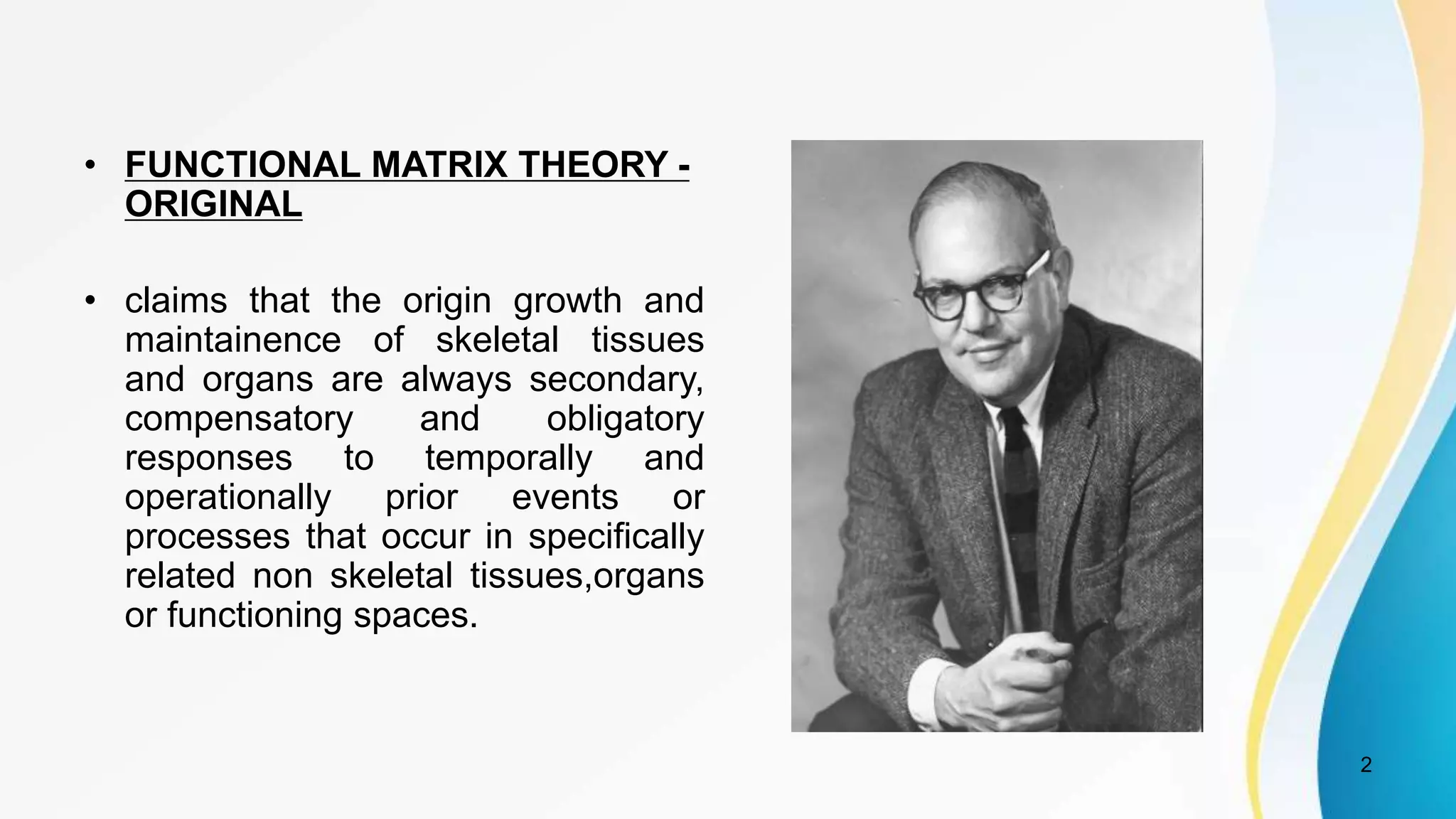
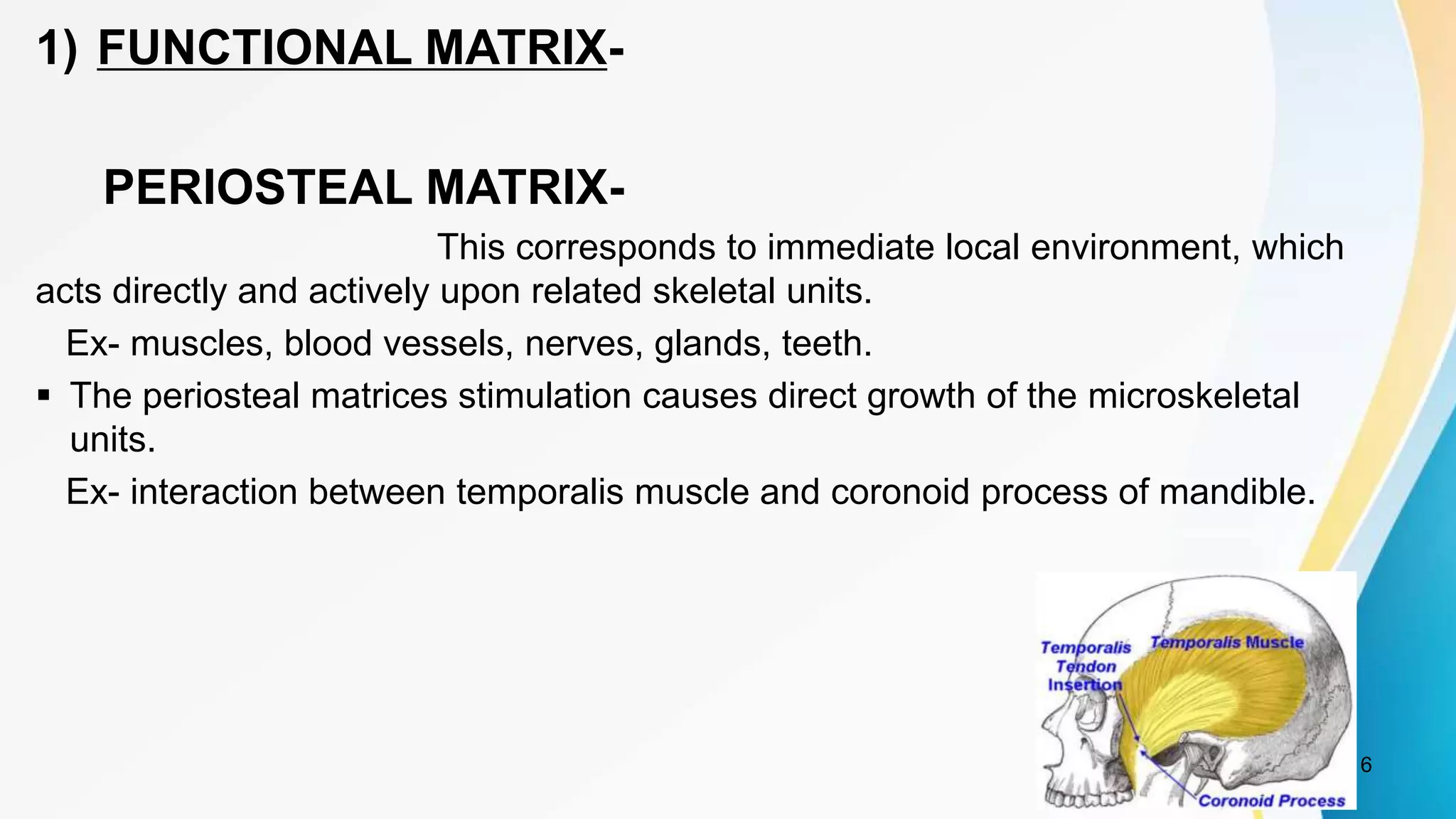
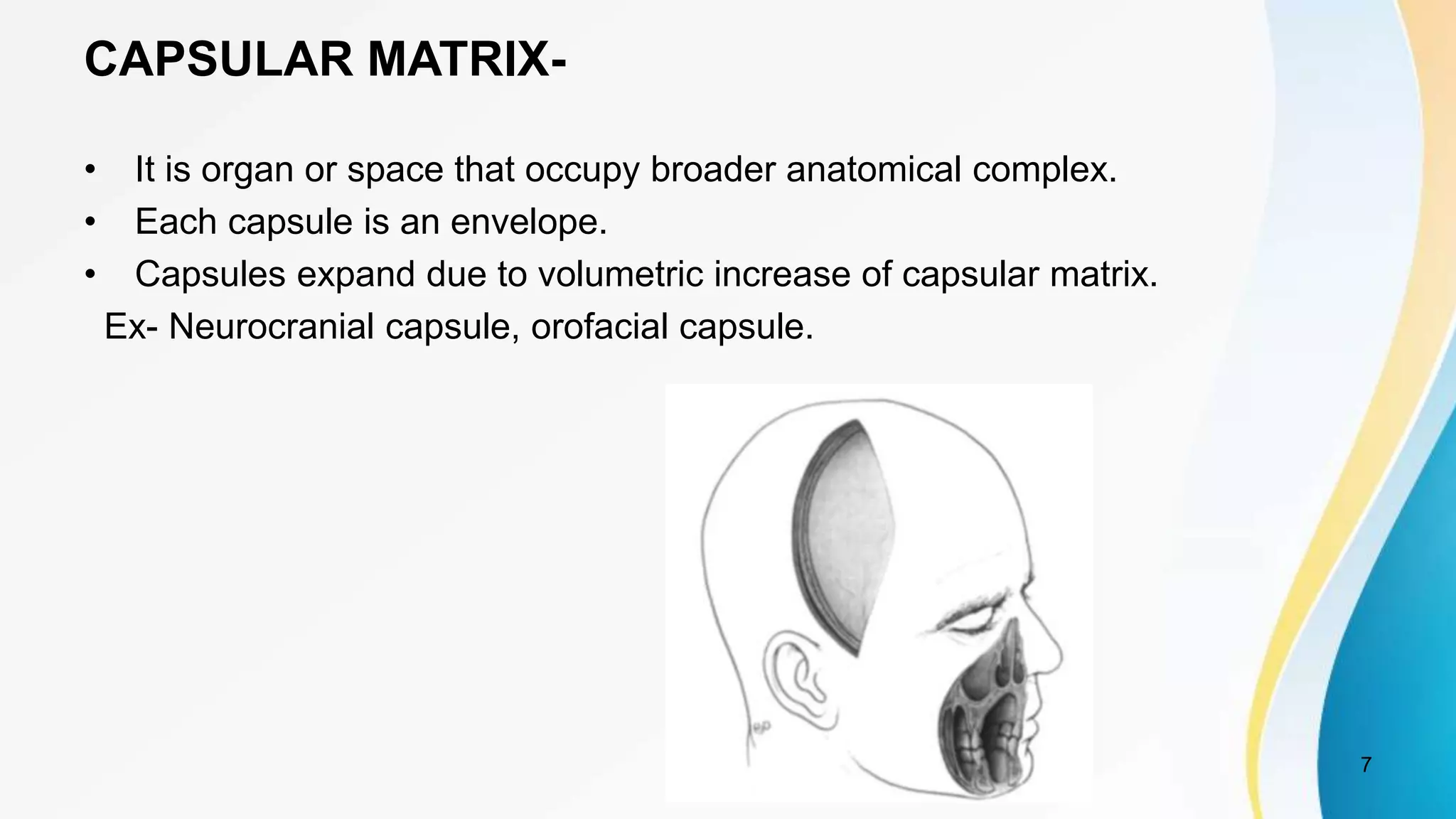
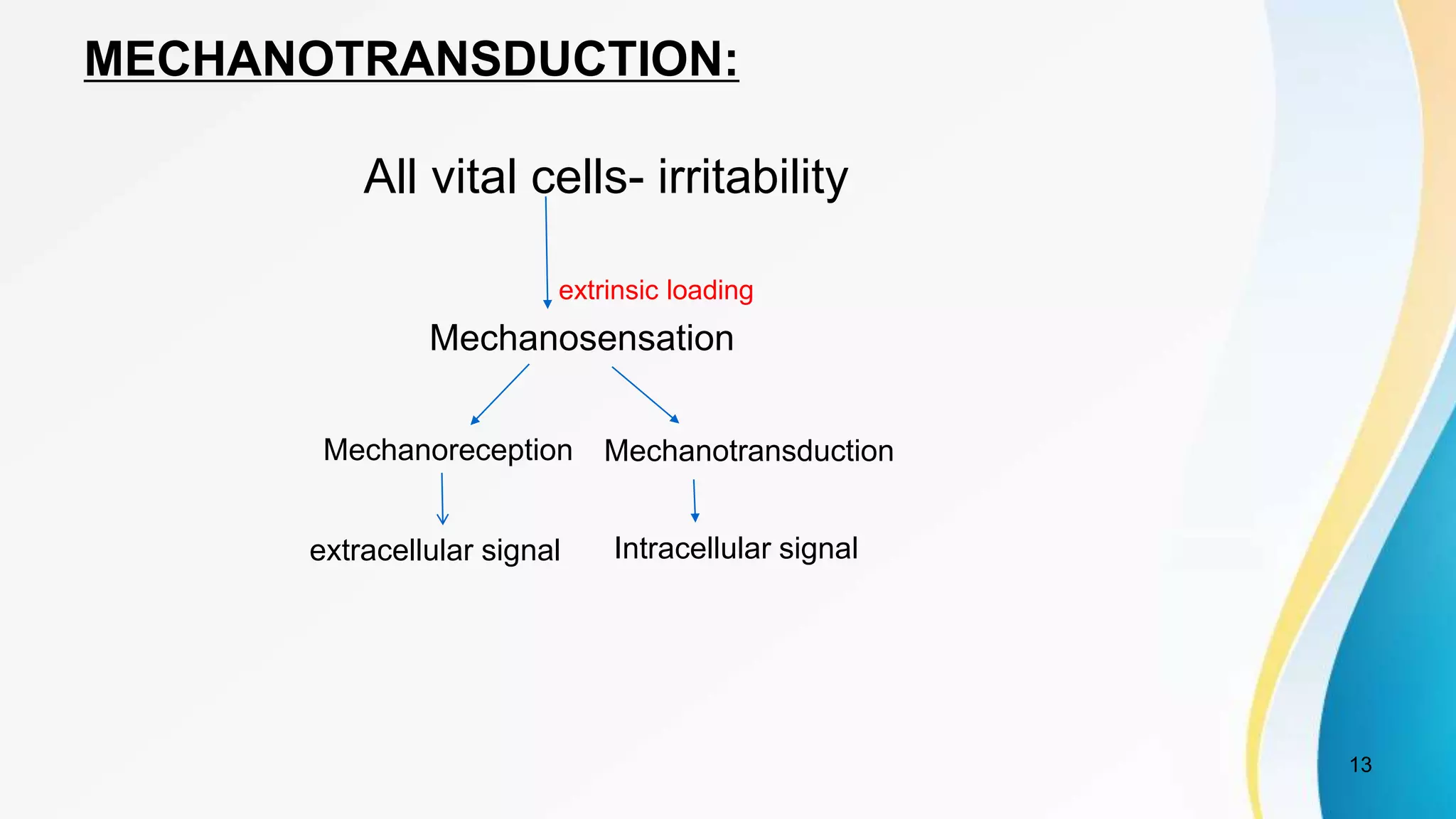
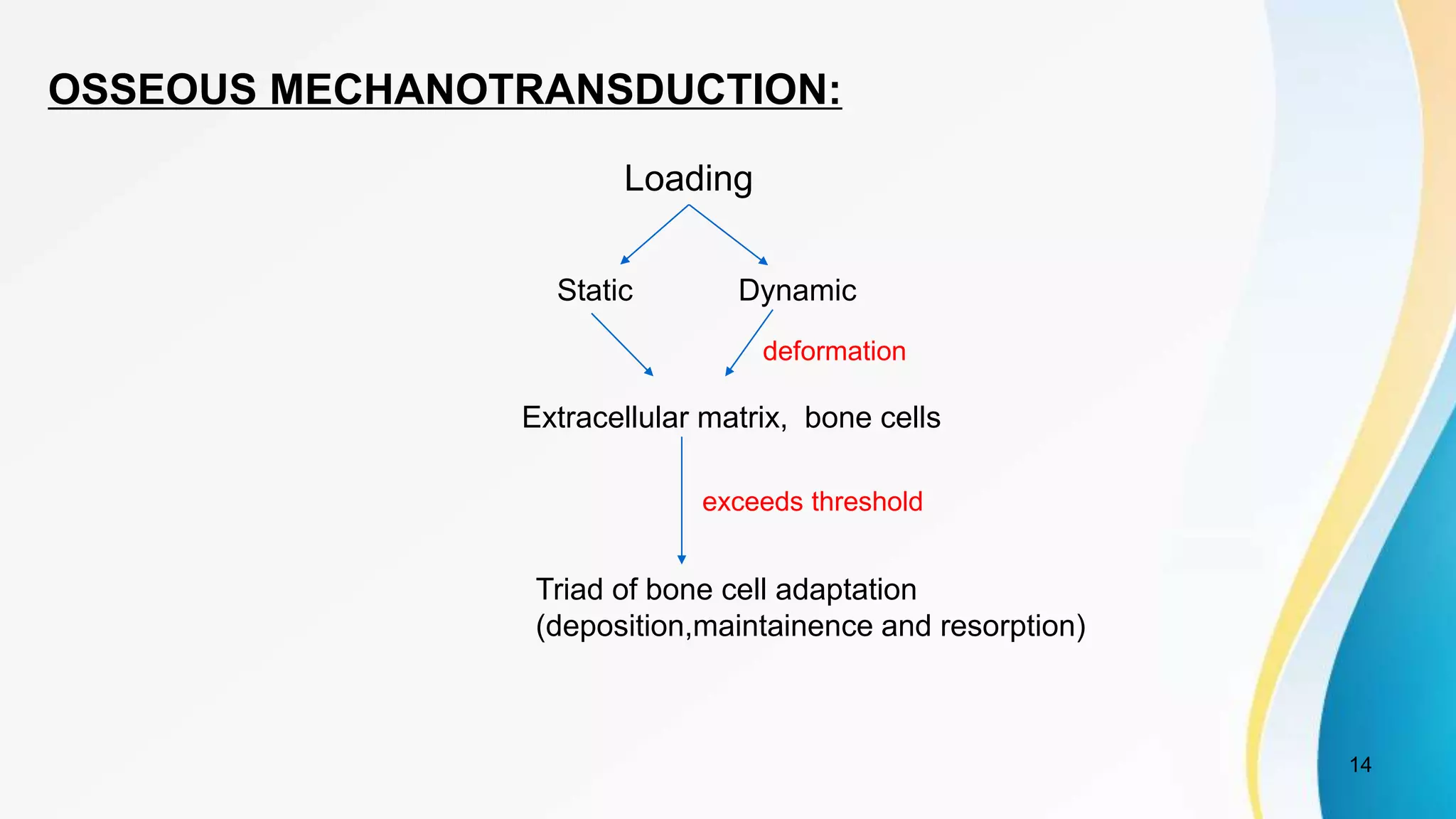
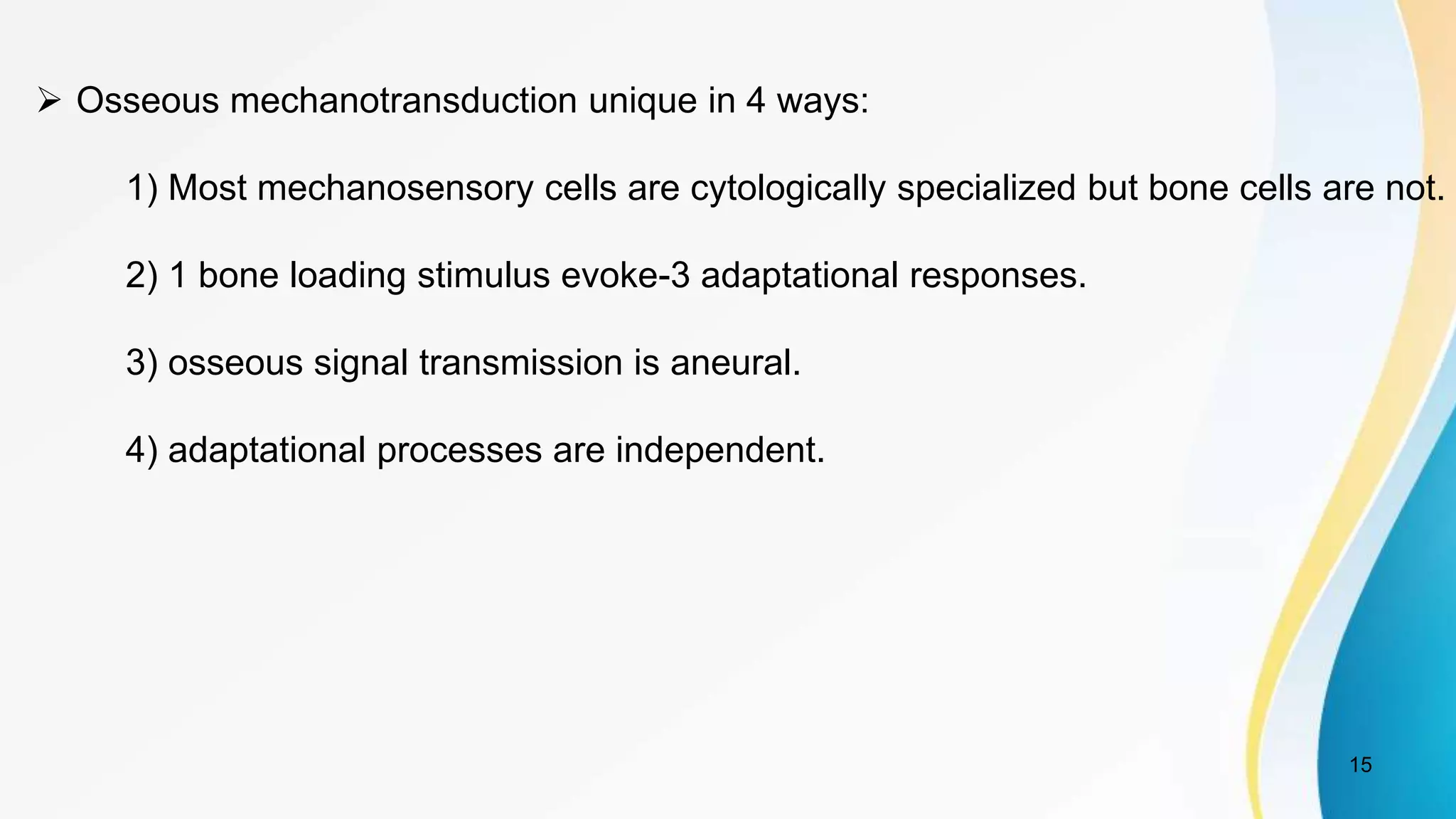
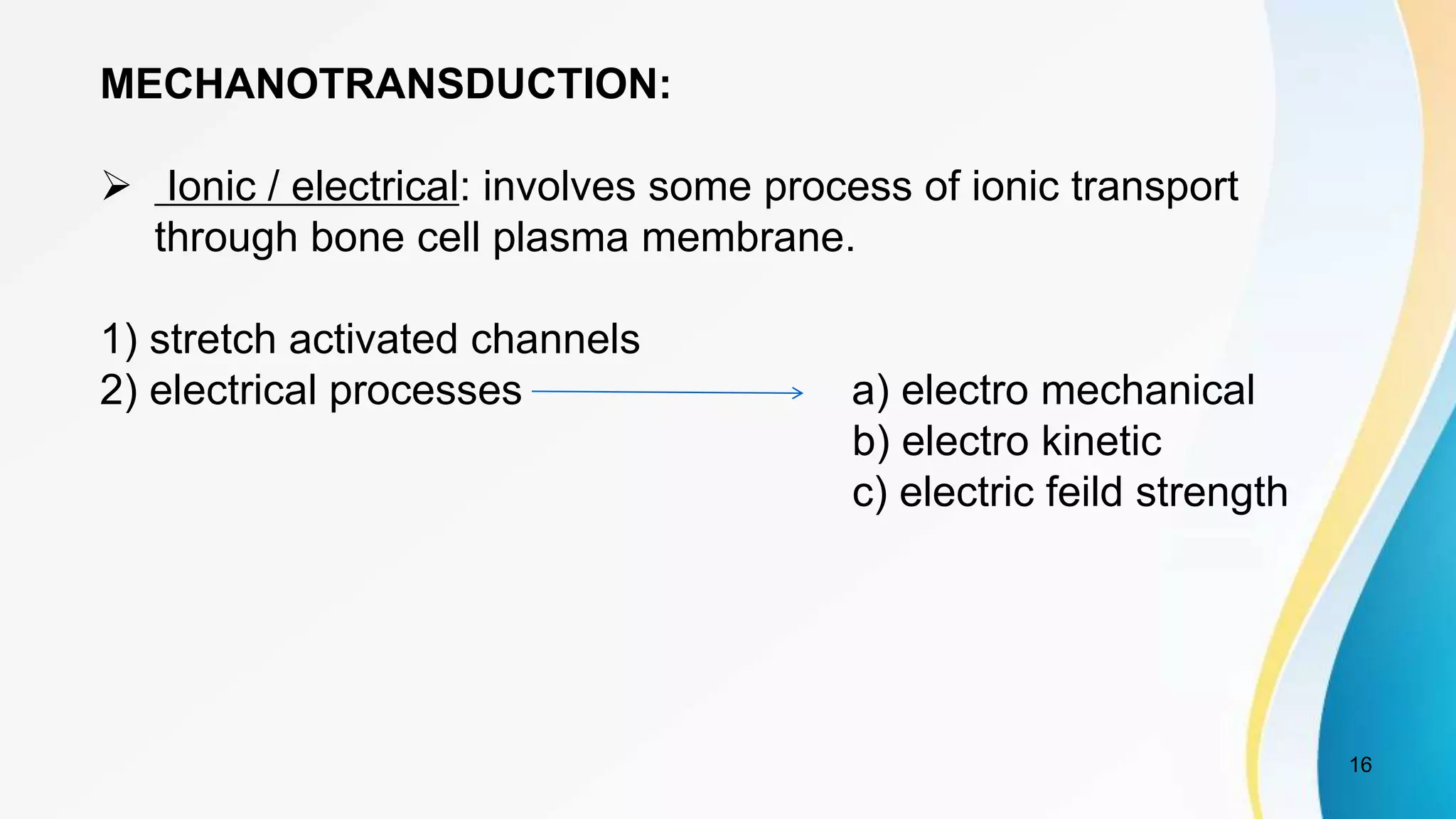
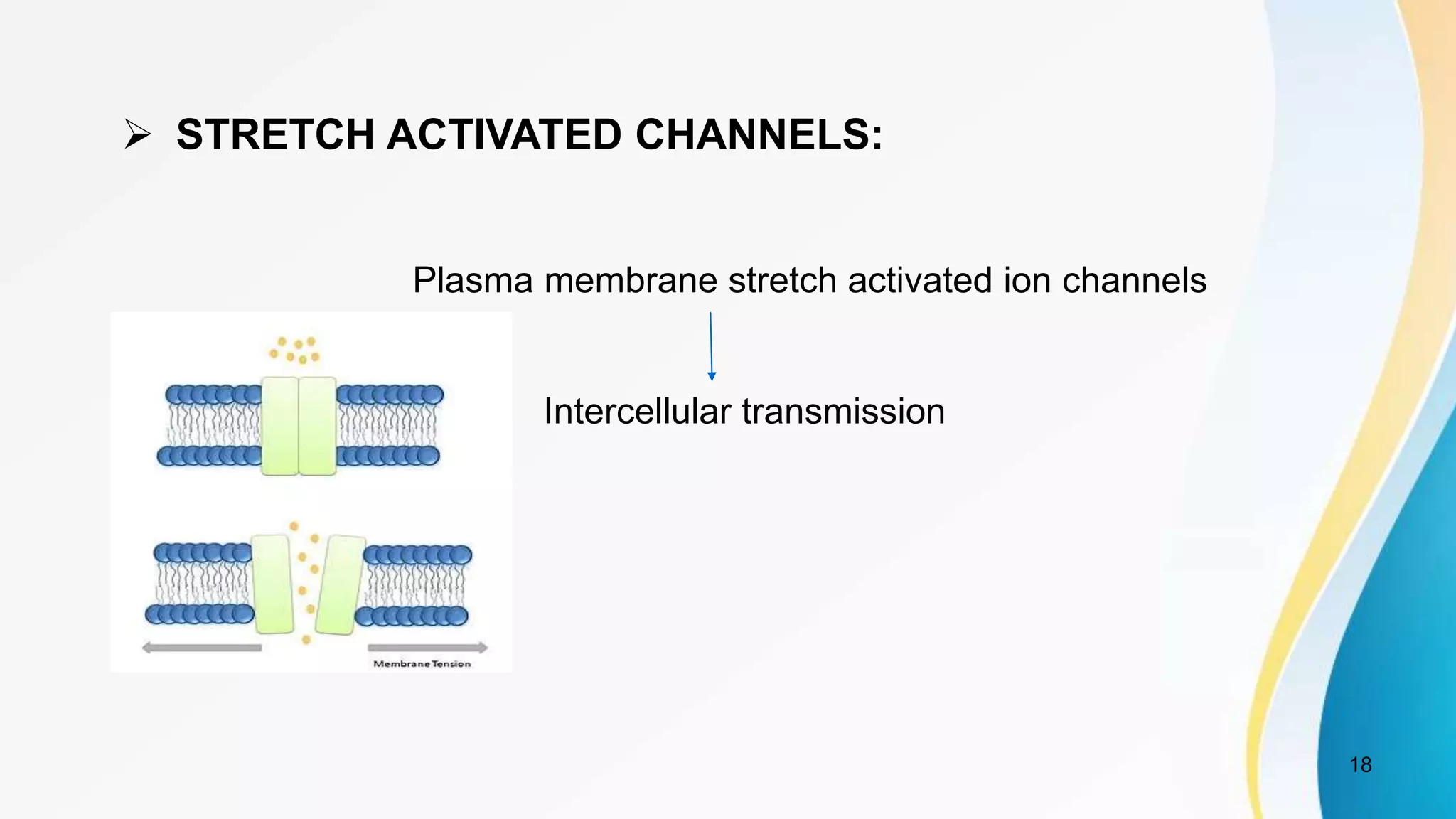
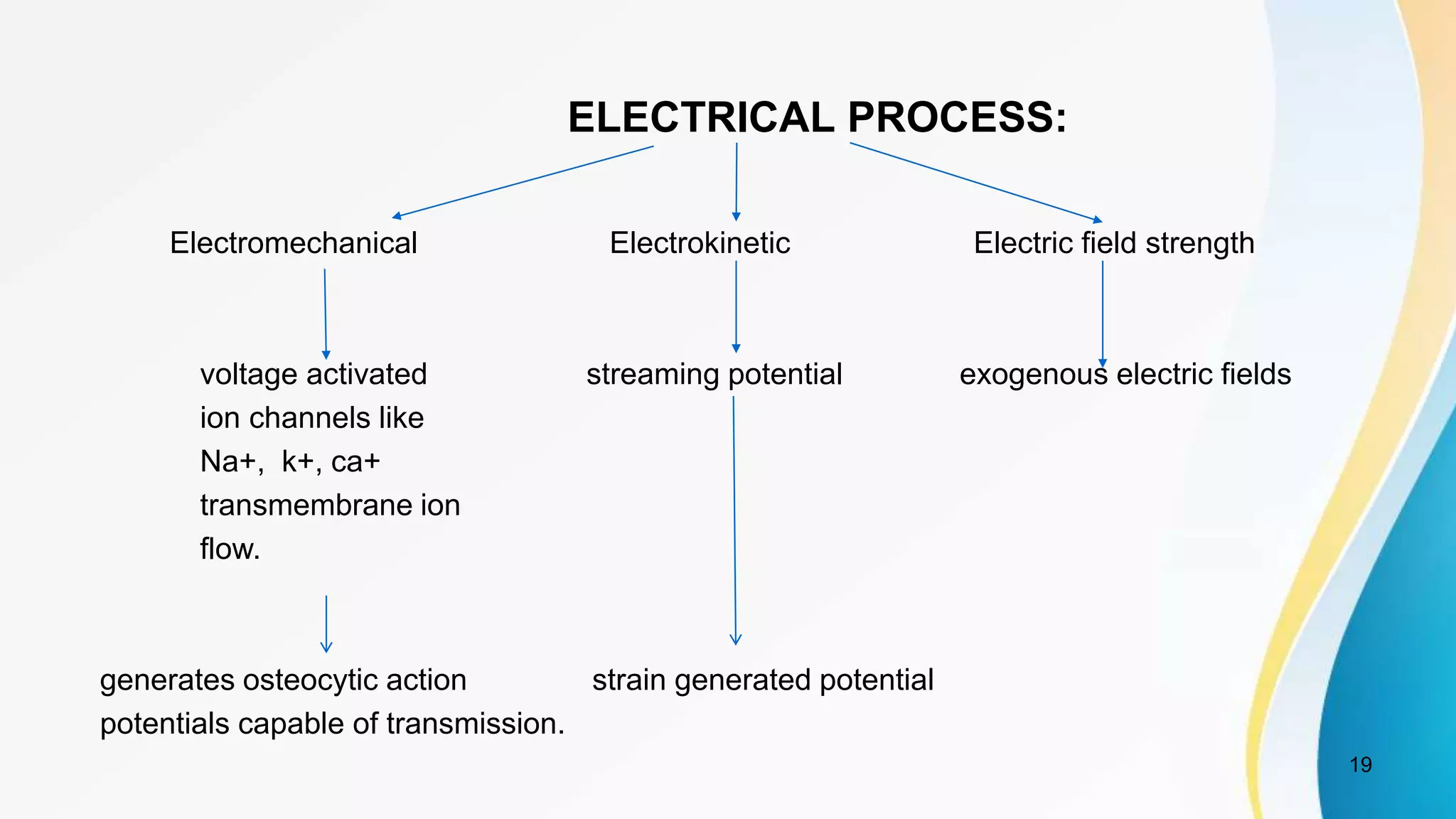
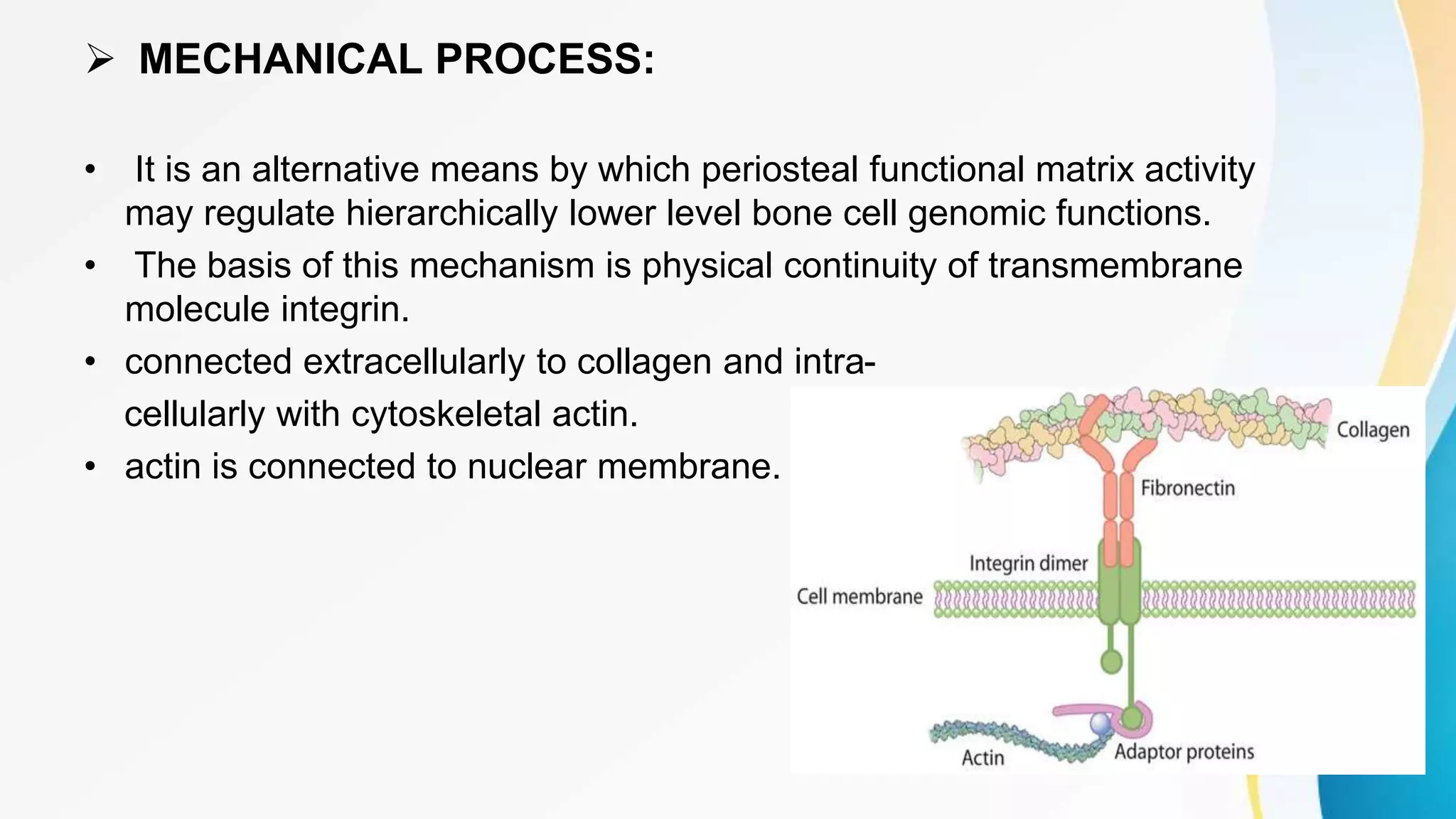
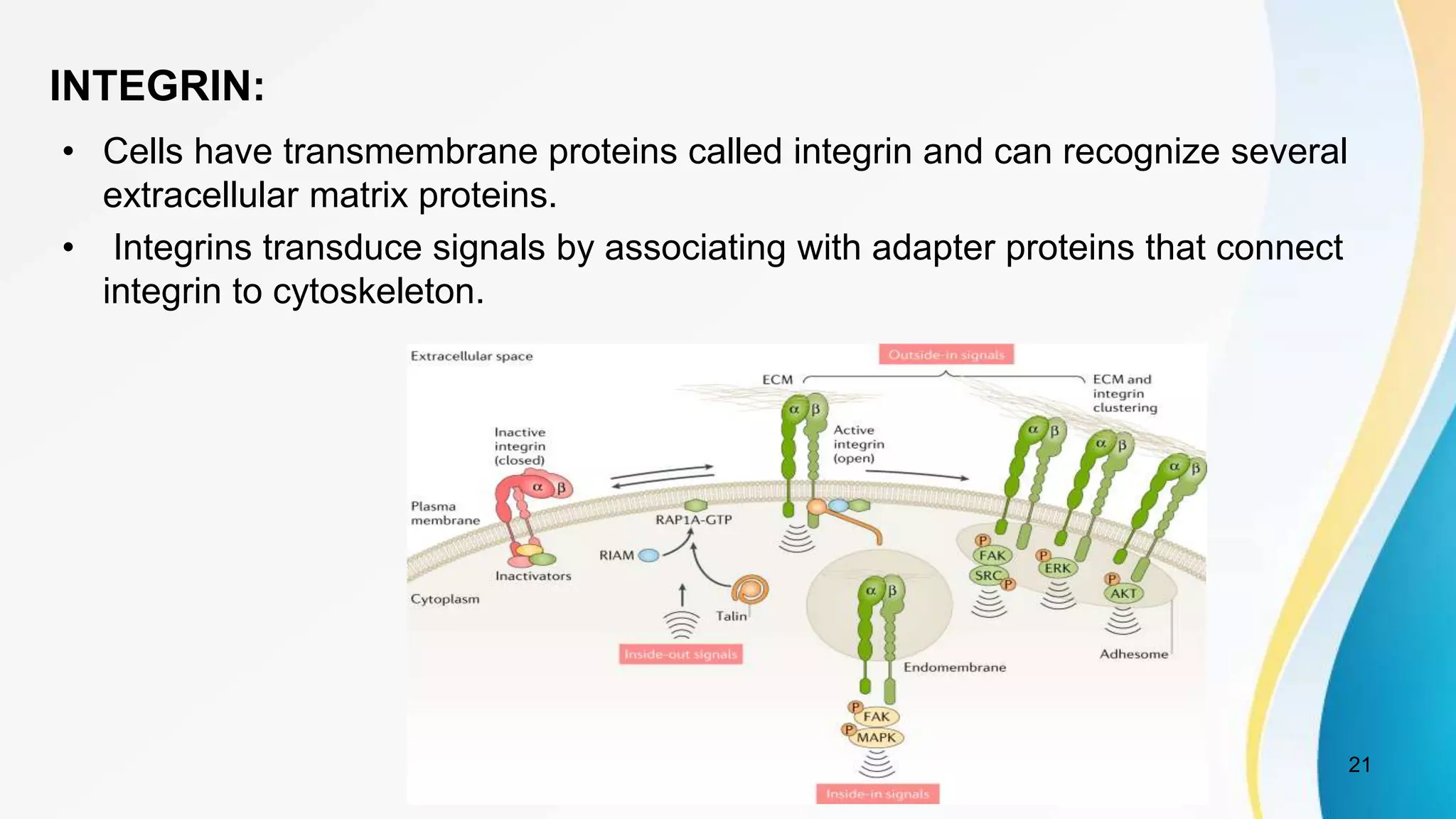
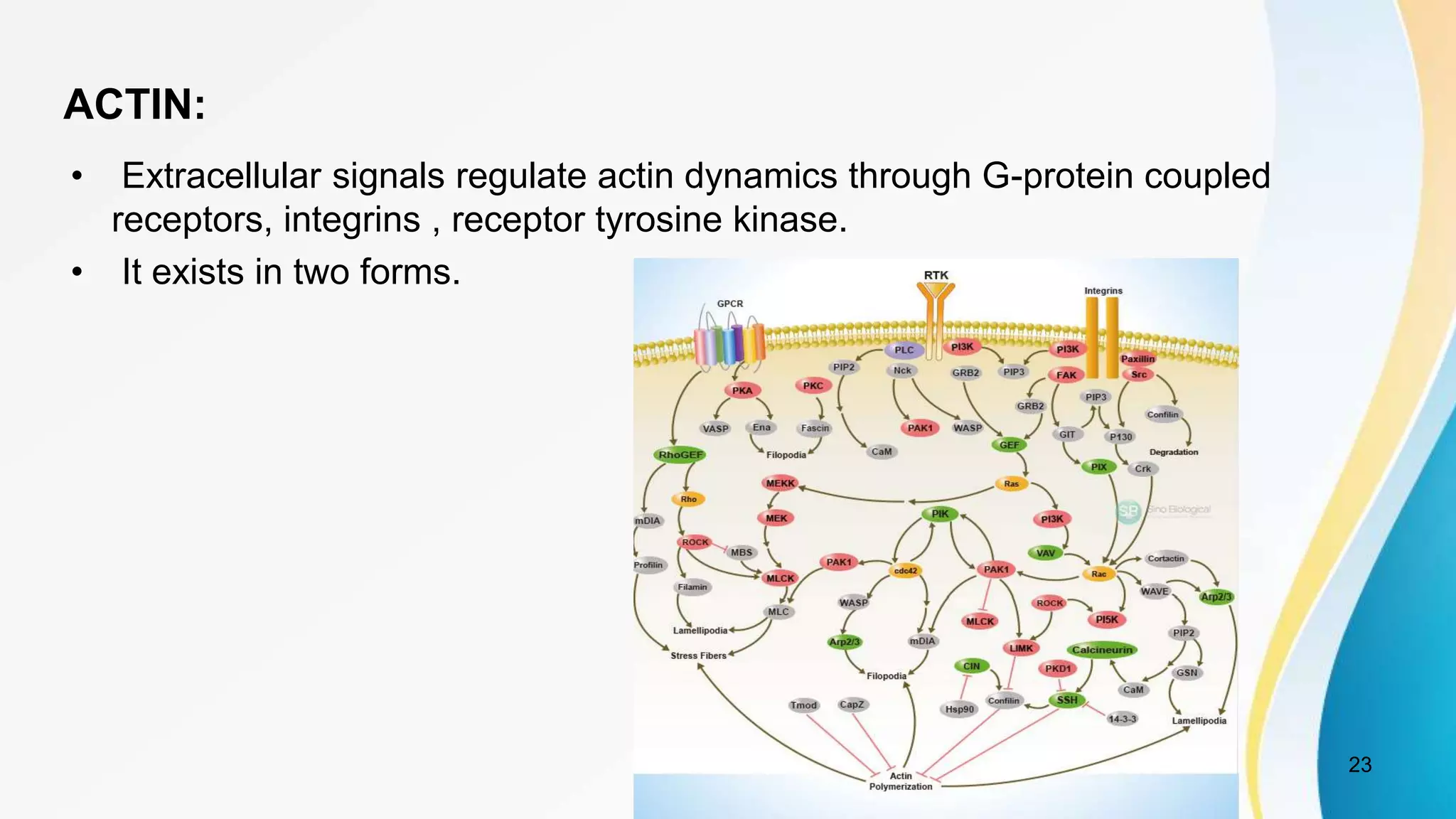
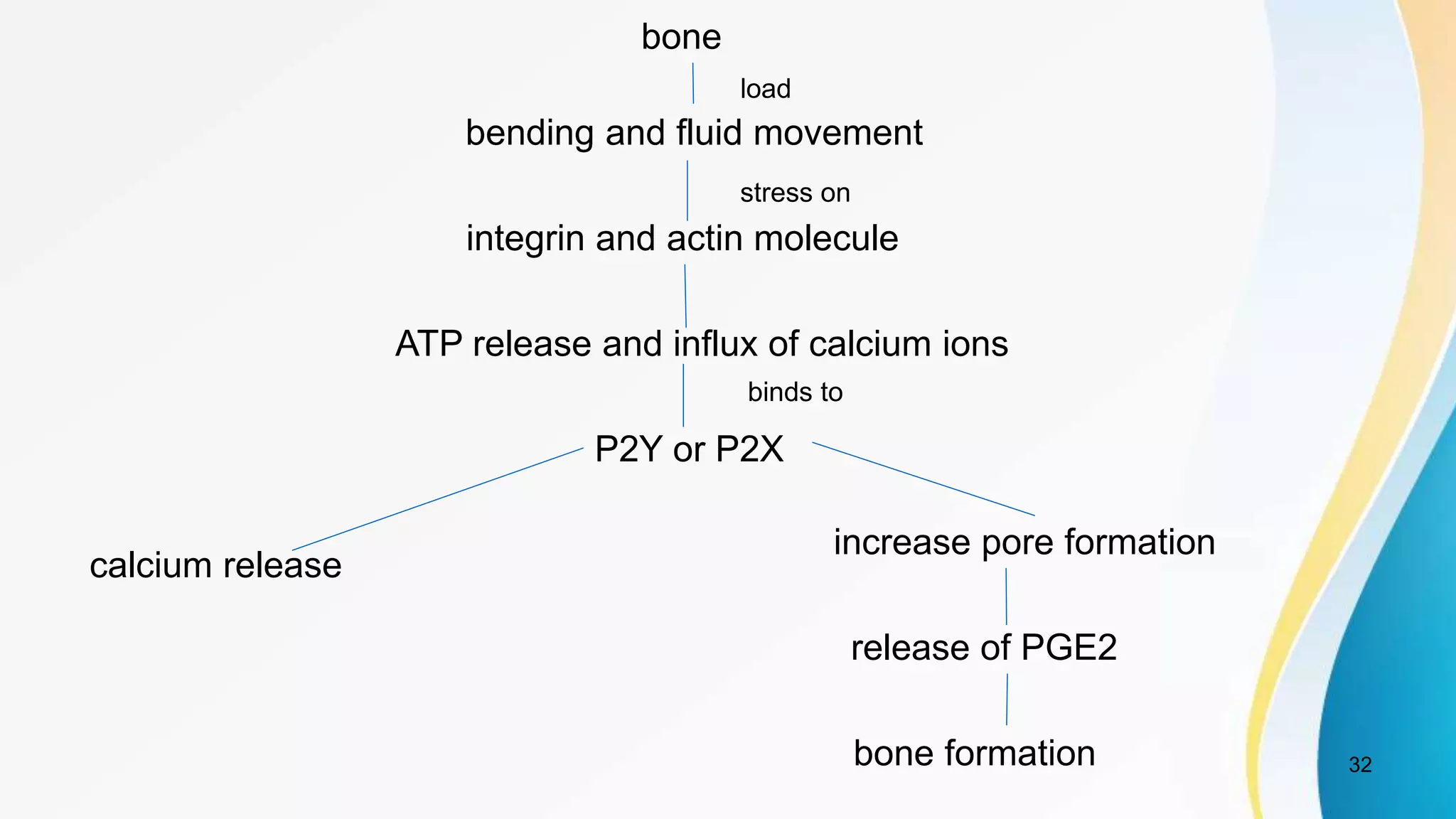
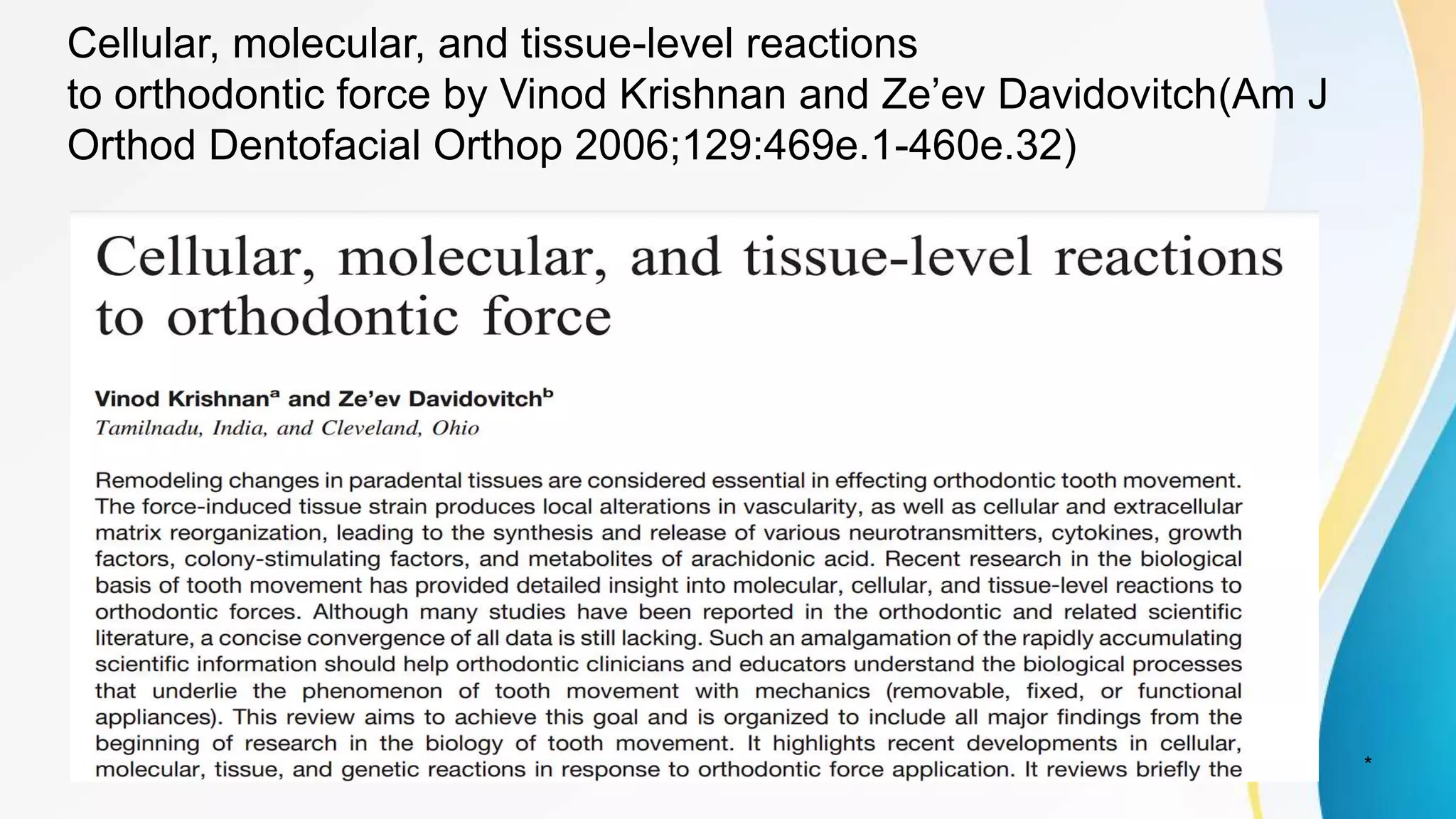
The document discusses revisions to the Functional Matrix Theory (FMT). FMT originally claimed that skeletal growth is a secondary response to prior functional events in related non-skeletal tissues. Revisions address constraints including lack of explanation for cellular/molecular processes. The revised FMT incorporates concepts of mechanotransduction whereby mechanical loading is transduced into cellular signals via ion channels and integrins. This triggers intracellular signaling cascades and cytoskeletal changes that regulate gene expression and adaptive bone formation/resorption responses. The revised FMT provides a more comprehensive explanatory framework linking functional inputs to epigenetic and genomic responses in bone.