FTC Disclosures
In the United States, the Federal Trade Commission (FTC)
requires that you disclose to the public (1) if you participate in
affiliate marketing or endorse something for compensation.
(1) Link to https://www.ftc.gov/tips-advice/business-center/guidance/ftcs-endorsement-guides-what-people-are-asking#affiliate
Affiliate marketing is when a company pays compensation to a third
party that generates traffic, leads or sales to the company’s products.
Compensation can be in the form of payment or other
benefit including:
Free products, samples or trials
Special discounts or store credits
Anything of value
Simply put, if you endorse something for any type of
compensation, you need to disclose it according to the FTC.
This disclosure requirement aims to present consumers
with as much information as possible when they’re making
decisions about purchases.
If the compensation factor may change someone’s opinion
of the endorsement, he/she has a right to know.
Checklist for FTC Disclosures
1 Do you need a disclosure?
If you received any form of benefit
from your endorsement, YES.
2 When do you need to disclose?
Every single time you post an endorsement where
you receive a benefit.
Each blog post, individual tweet, Instagram post,
etc. must have its own disclosure within it.
2
3 What do you need to disclose?
Let people know you receive some sort of
compensation in exchange for your endorsement.
3
4 How do you need to disclose?
Your disclosure needs to be:
Noticeable, and
Understandable
4
Noticeable
The FTC requires that disclosures be clear and conspicuous.
They need to be placed close to your endorsement and be
unavoidable by your users.
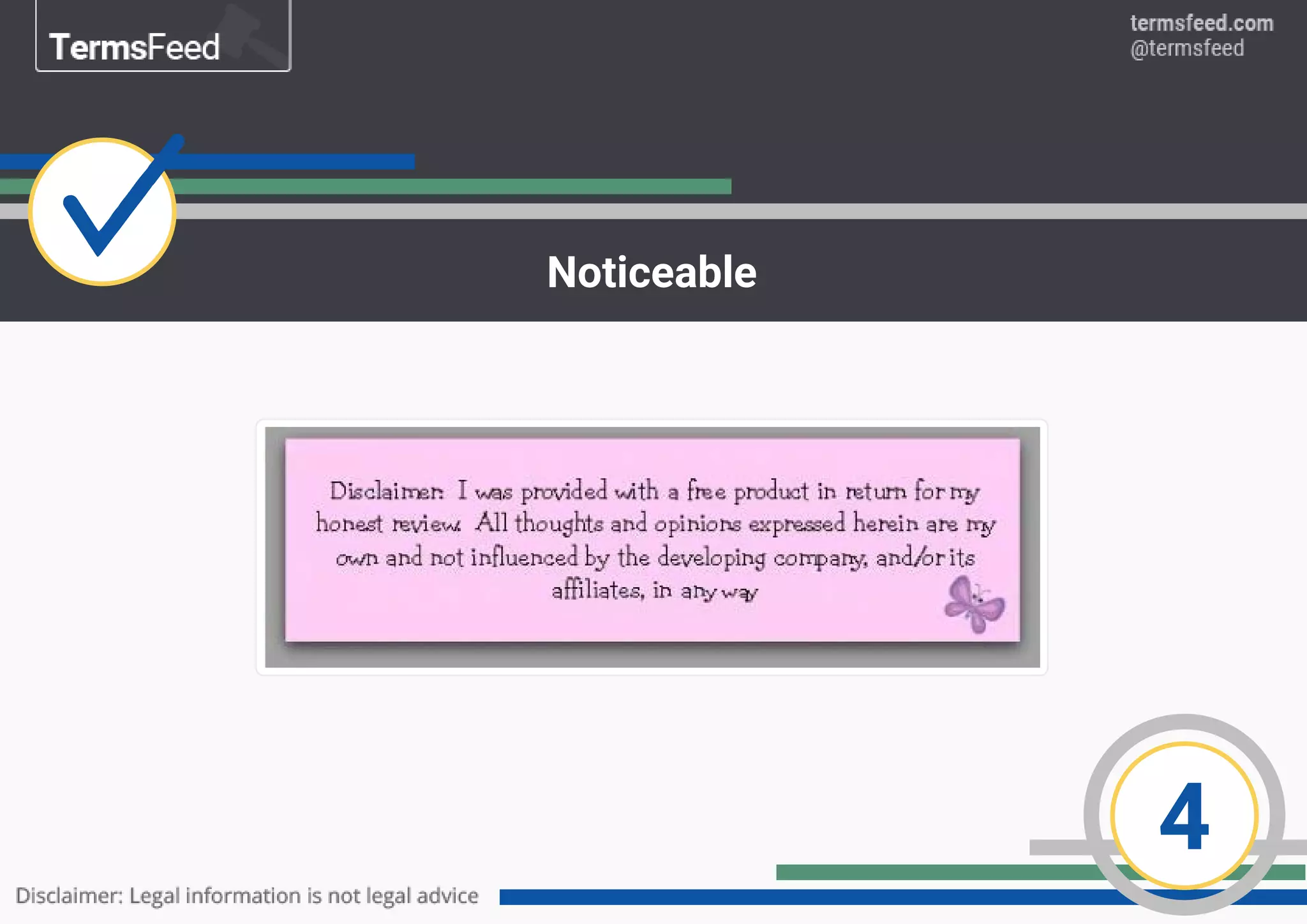
Using logos, bright colors and fonts isn’t necessary but can
help your disclosure stand out.
Noticeable
4
Noticeable
4
Noticeable
The beginning of a blog post is good placement.
Don’t require a user to have to scroll to find your disclosure.
A user could click on your links without having a chance to
notice your disclosure.
4
4
Noticeable
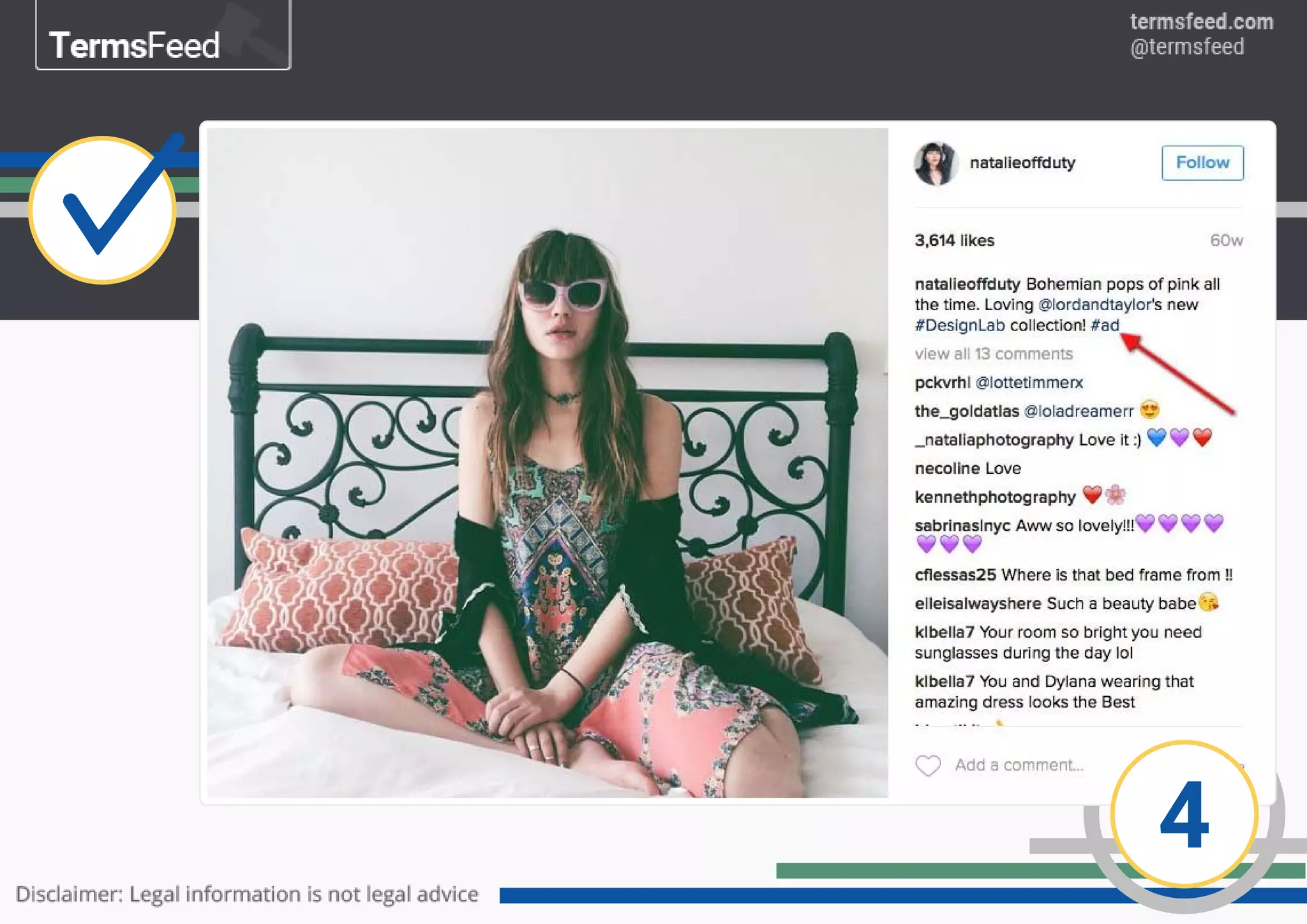
Platforms like Twitter and Instagram can have
disclosures at the end since the posts are
shorter and easy to see in one shot.
4
4
Understandable
Write your disclosure in clear and
easy-to-understand language.
Understandable
4
Examples of FTC Disclosures
For blogs and websites
For social media
It’s common to see small icon-style disclosures at the top
of blogs and websites that let users know that there are
affiliate links in the post or on the page.
These small disclosures then link to a full, more
thorough disclosure page.
Blogs and Websites
Having either just a small icon disclosure or a separate
long disclosure by itself isn’t adequate.
The small disclosure isn’t informative enough, and
the long disclosure will be on a separate page, thus
not noticeable enough.
Use a combination of both.
Blogs and Websites
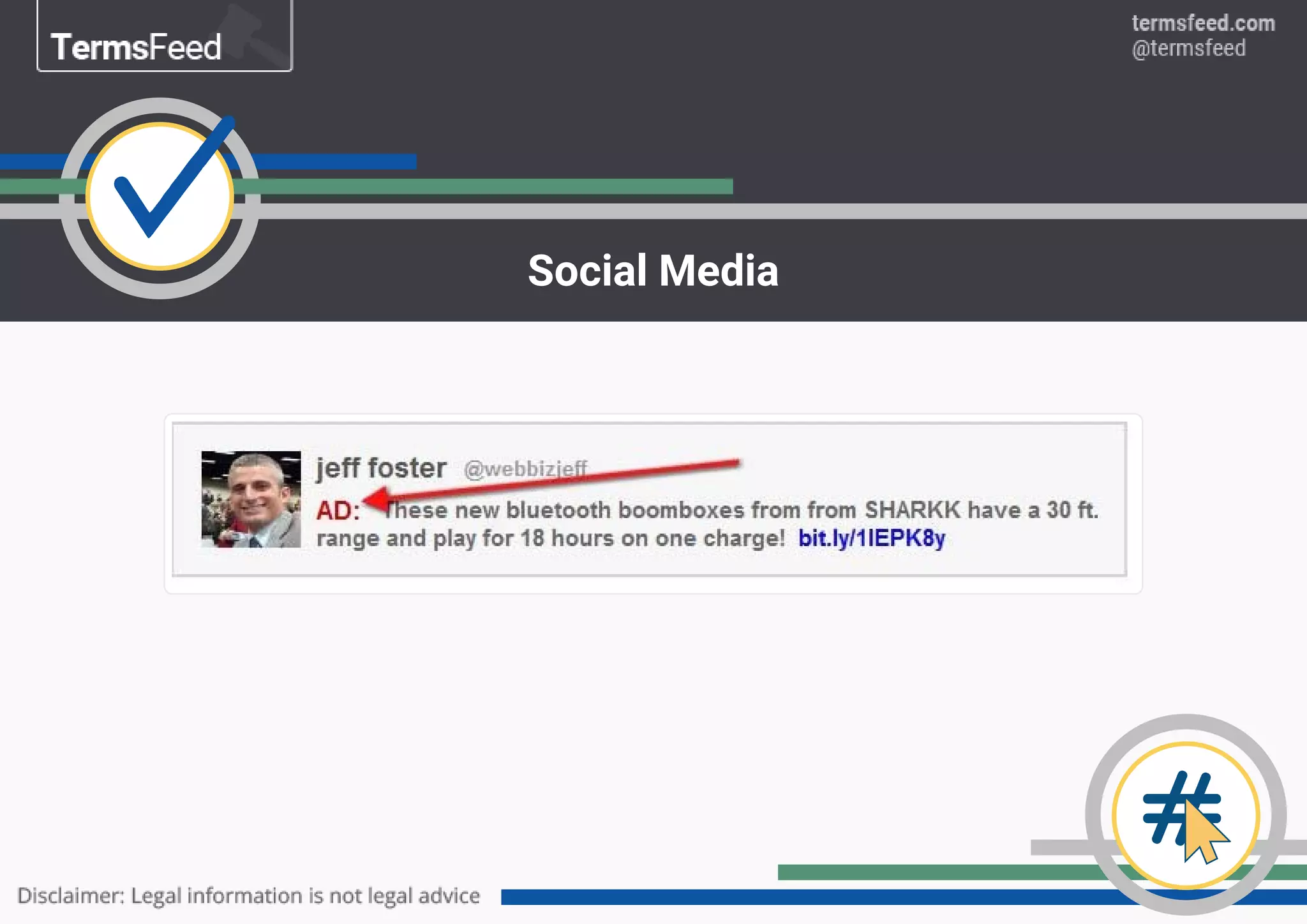
Use hashtags to disclose on social media.
A simple “#ad” hashtag or mention of the word “Ad”
keeps your posts compliant.
You can also include a disclosure statement.
Social Media
Social Media
To properly disclose affiliate marketing and compensated
endorsements, make sure your disclosure is:
Clearly and conspicuously placed,
Easily understood by your average consumer, and
Included on every single endorsement post you make
where you may earn compensation
FTC Disclosures

FTC Disclosures

  • 1.
  • 2.
    In the UnitedStates, the Federal Trade Commission (FTC) requires that you disclose to the public (1) if you participate in affiliate marketing or endorse something for compensation. (1) Link to https://www.ftc.gov/tips-advice/business-center/guidance/ftcs-endorsement-guides-what-people-are-asking#affiliate
  • 3.
    Affiliate marketing iswhen a company pays compensation to a third party that generates traffic, leads or sales to the company’s products. Compensation can be in the form of payment or other benefit including: Free products, samples or trials Special discounts or store credits Anything of value
  • 4.
    Simply put, ifyou endorse something for any type of compensation, you need to disclose it according to the FTC.
  • 5.
    This disclosure requirementaims to present consumers with as much information as possible when they’re making decisions about purchases. If the compensation factor may change someone’s opinion of the endorsement, he/she has a right to know.
  • 6.
    Checklist for FTCDisclosures
  • 7.
    1 Do youneed a disclosure? If you received any form of benefit from your endorsement, YES.
  • 8.
    2 When doyou need to disclose? Every single time you post an endorsement where you receive a benefit. Each blog post, individual tweet, Instagram post, etc. must have its own disclosure within it.
  • 9.
  • 10.
    3 What doyou need to disclose? Let people know you receive some sort of compensation in exchange for your endorsement.
  • 11.
  • 12.
    4 How doyou need to disclose? Your disclosure needs to be: Noticeable, and Understandable
  • 13.
    4 Noticeable The FTC requiresthat disclosures be clear and conspicuous. They need to be placed close to your endorsement and be unavoidable by your users. Using logos, bright colors and fonts isn’t necessary but can help your disclosure stand out. Noticeable
  • 14.
  • 15.
    4 Noticeable The beginning ofa blog post is good placement. Don’t require a user to have to scroll to find your disclosure. A user could click on your links without having a chance to notice your disclosure.
  • 16.
  • 17.
    4 Noticeable Platforms like Twitterand Instagram can have disclosures at the end since the posts are shorter and easy to see in one shot.
  • 18.
  • 19.
    4 Understandable Write your disclosurein clear and easy-to-understand language.
  • 20.
  • 21.
    Examples of FTCDisclosures For blogs and websites For social media
  • 22.
    It’s common tosee small icon-style disclosures at the top of blogs and websites that let users know that there are affiliate links in the post or on the page. These small disclosures then link to a full, more thorough disclosure page. Blogs and Websites
  • 25.
    Having either justa small icon disclosure or a separate long disclosure by itself isn’t adequate. The small disclosure isn’t informative enough, and the long disclosure will be on a separate page, thus not noticeable enough. Use a combination of both. Blogs and Websites
  • 26.
    Use hashtags todisclose on social media. A simple “#ad” hashtag or mention of the word “Ad” keeps your posts compliant. You can also include a disclosure statement. Social Media
  • 27.
  • 29.
    To properly discloseaffiliate marketing and compensated endorsements, make sure your disclosure is: Clearly and conspicuously placed, Easily understood by your average consumer, and Included on every single endorsement post you make where you may earn compensation