Microtransactions
Microtransactions spawned around the era of
the rise of mobile gaming in 2007, these
models prepare the user for a dynamic
experience that is ‘free’.
This freemium model pulls the user into a
fun experience and allows them to wait,
grind and collect rewards or they can
instantly bypass this mode of play by paying
money.
Games such as Clash of Clans, Game of War,
Simpsons Tapped Out, Dungeon Keeper
follow this mode of play and will show
adverts to generate ‘gold’ for the user and
allow the conglomerate to reap the benefits
of PPC.
Social Advertising
Facebook and Instagram have become
popular platforms over the past 5-7 years,
over their course of time they have
developed algorithms to target key
demographics and entice you to buy certain
products.
What I would like to explore today is how
social media platforms market their
advertising towards a younger audience.
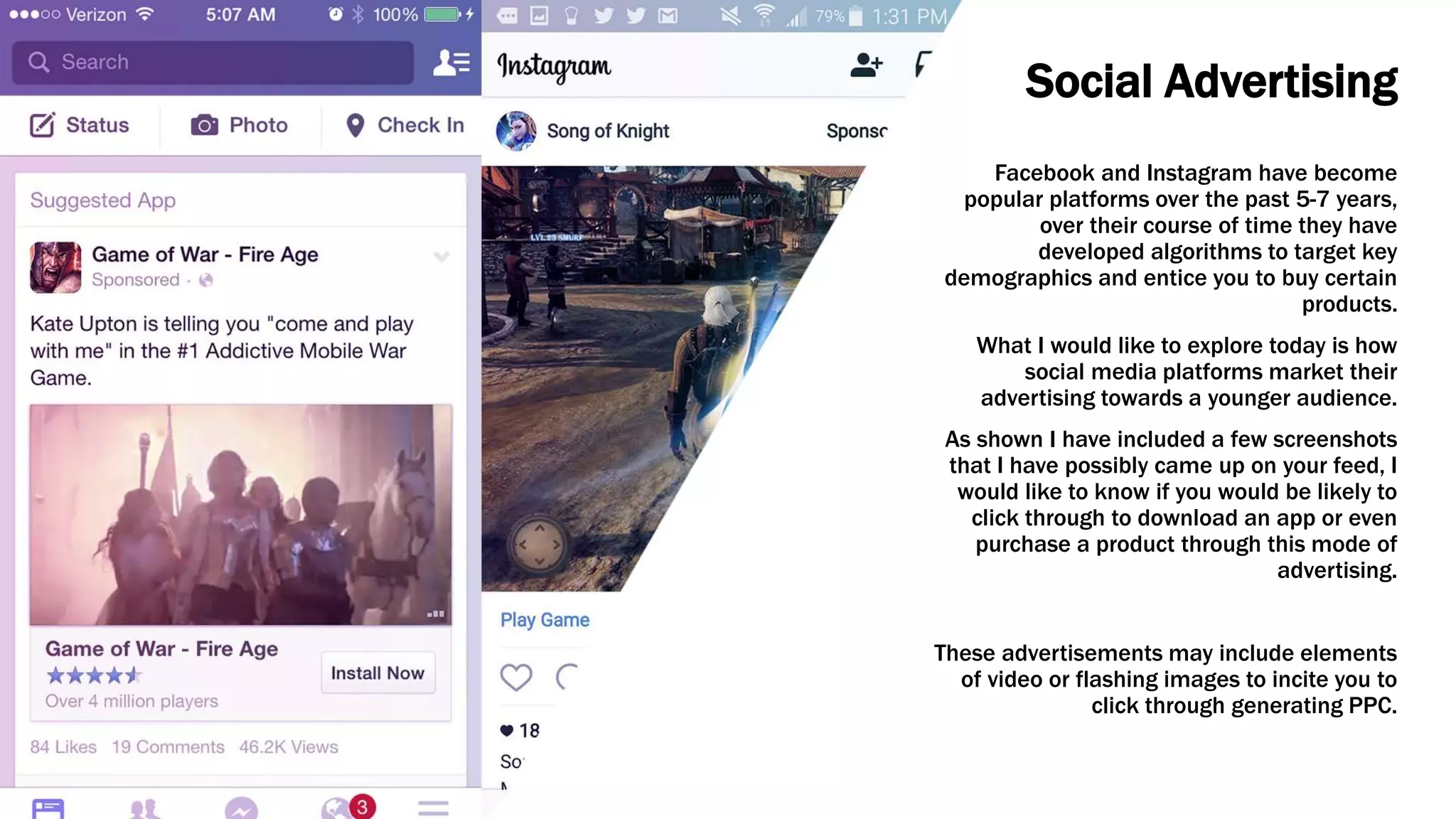
As shown I have included a few screenshots
that I have possibly came up on your feed, I
would like to know if you would be likely to
click through to download an app or even
purchase a product through this mode of
advertising.
These advertisements may include elements
of video or flashing images to incite you to
click through generating PPC.
Promotional Blogging
New media has formed the platform of
building an online audience through
platforms such as Youtube.
I would like to explore how much of an
influence these social media bloggers have
over your interests and how they form new
forms of cultural media.
Bloggers such as, Pewdiepie, JackSepticEye,
Prosyndicate etc have been promoting
games such as Shadow of Mordor, CS:GO
and The Legend of the Bro fist to generate
revenue for their own entity but also
conglomerates like Warner Bros.
Character Models
We can expand our character model through
these modes of play by either grinding to
collect new items or buying them from an in
game online store with money.
By buying items this will expand the user’s
inventory and allow them to have a stronger
character compared to somebody who would
have to grind and collect lower level items.
These items include, swords, hats, armour,
shields etc all of these have functional
benefits to the player and allow them to get
the higher ground.
This formula of play signifies the importance
to the user of dedication to the game
compared to somebody who has to balance
time mechanics and work/life balance.
The Grind
The grind is a technical term that spawned
around the creation of World of Warcraft in
2006 and expanded the pay to play model.
This model perpetuates the culture of
grinding for a certain item for six hours
compared to paying £5, £10 etc to buy this
new item instead.
This grinding mechanic usually involves the
user killing 100 orcs, repeatedly over the
course of days.
Item Wealth
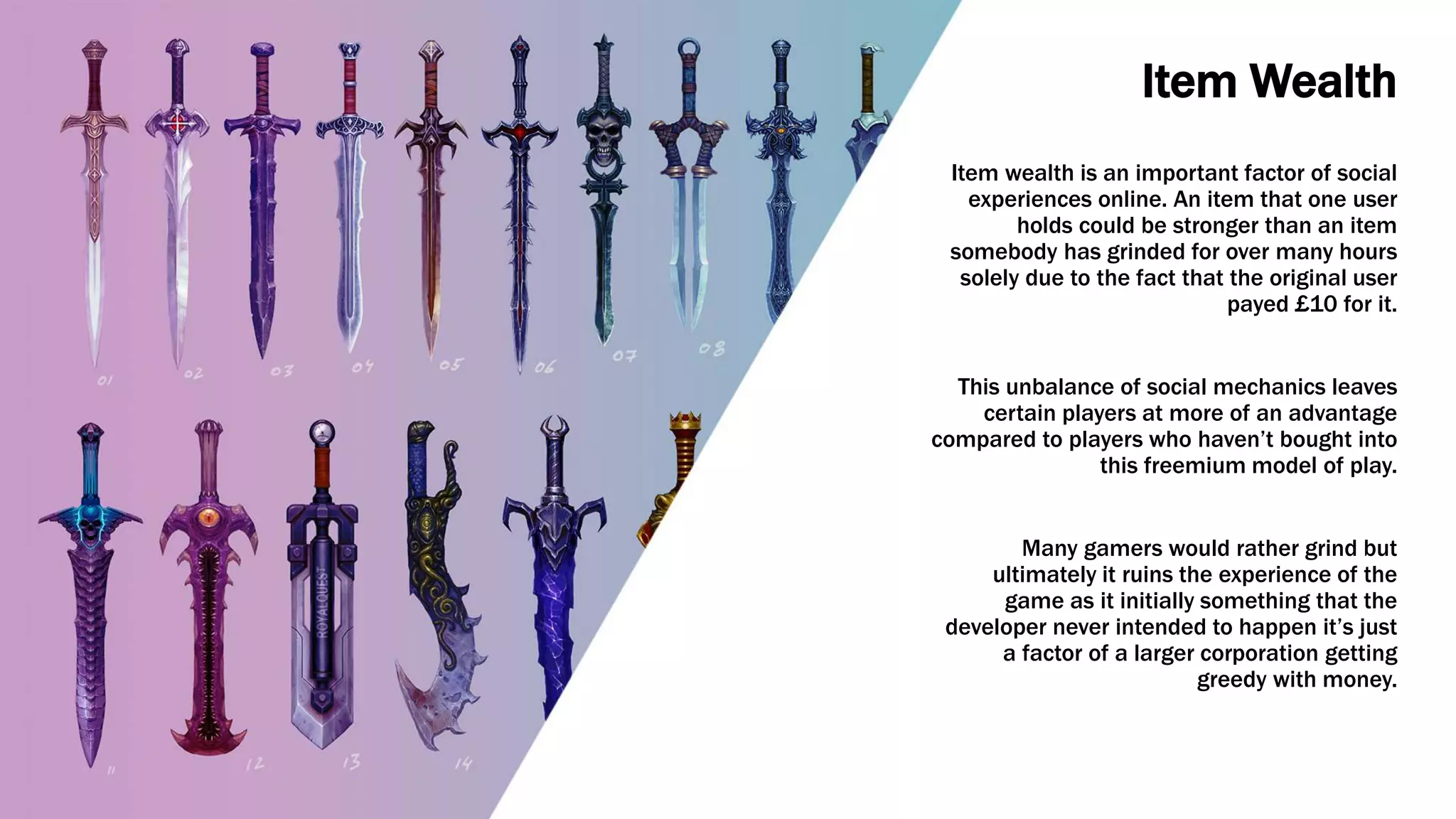
Item wealth is an important factor of social
experiences online. An item that one user
holds could be stronger than an item
somebody has grinded for over many hours
solely due to the fact that the original user
payed £10 for it.
This unbalance of social mechanics leaves
certain players at more of an advantage
compared to players who haven’t bought into
this freemium model of play.
Many gamers would rather grind but
ultimately it ruins the experience of the
game as it initially something that the
developer never intended to happen it’s just
a factor of a larger corporation getting
greedy with money.
1 2
Trading Systems
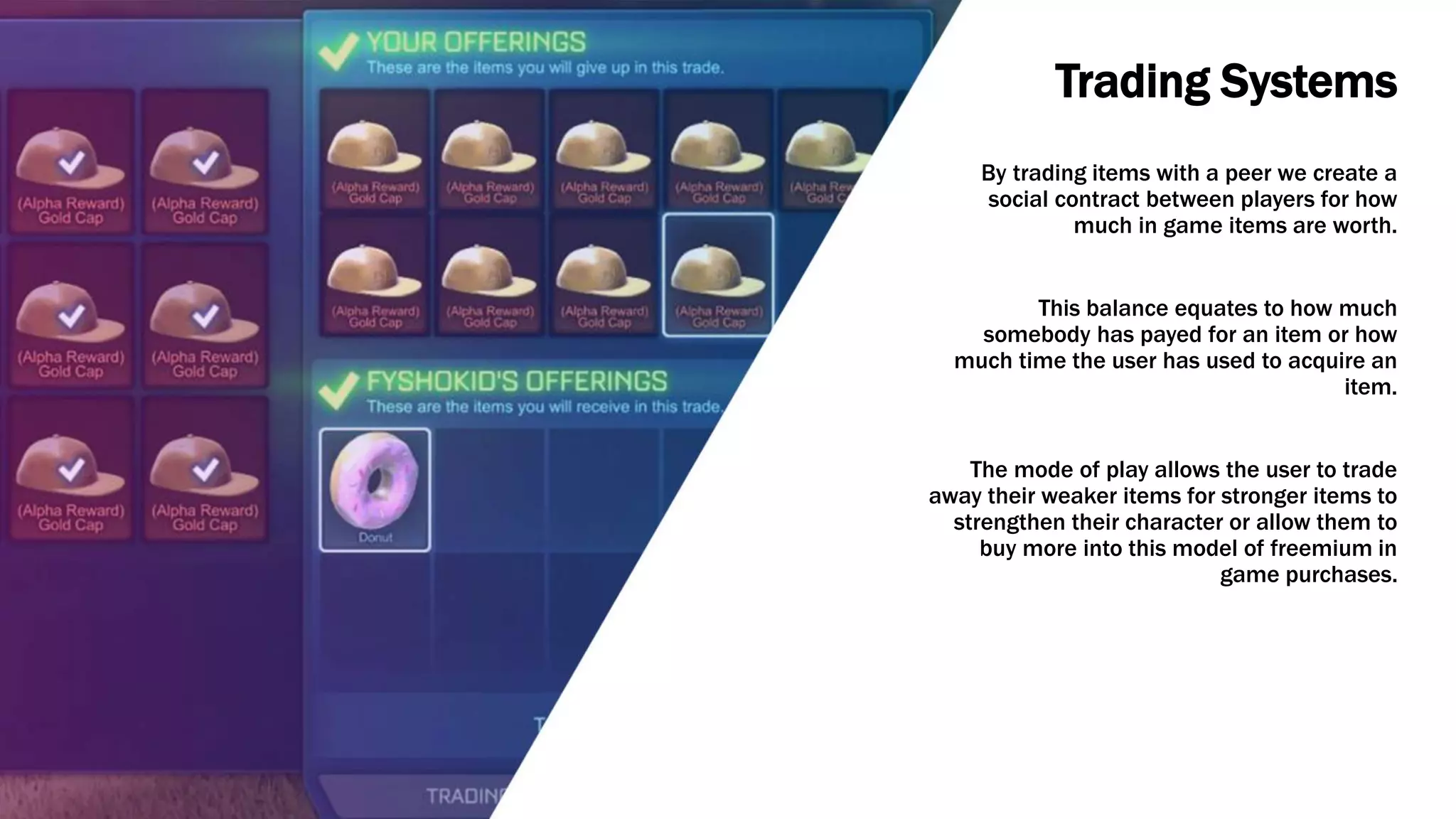
By trading items with a peer we create a
social contract between players for how
much in game items are worth.
This balance equates to how much
somebody has payed for an item or how
much time the user has used to acquire an
item.
The mode of play allows the user to trade
away their weaker items for stronger items to
strengthen their character or allow them to
buy more into this model of freemium in
game purchases.
Gambling
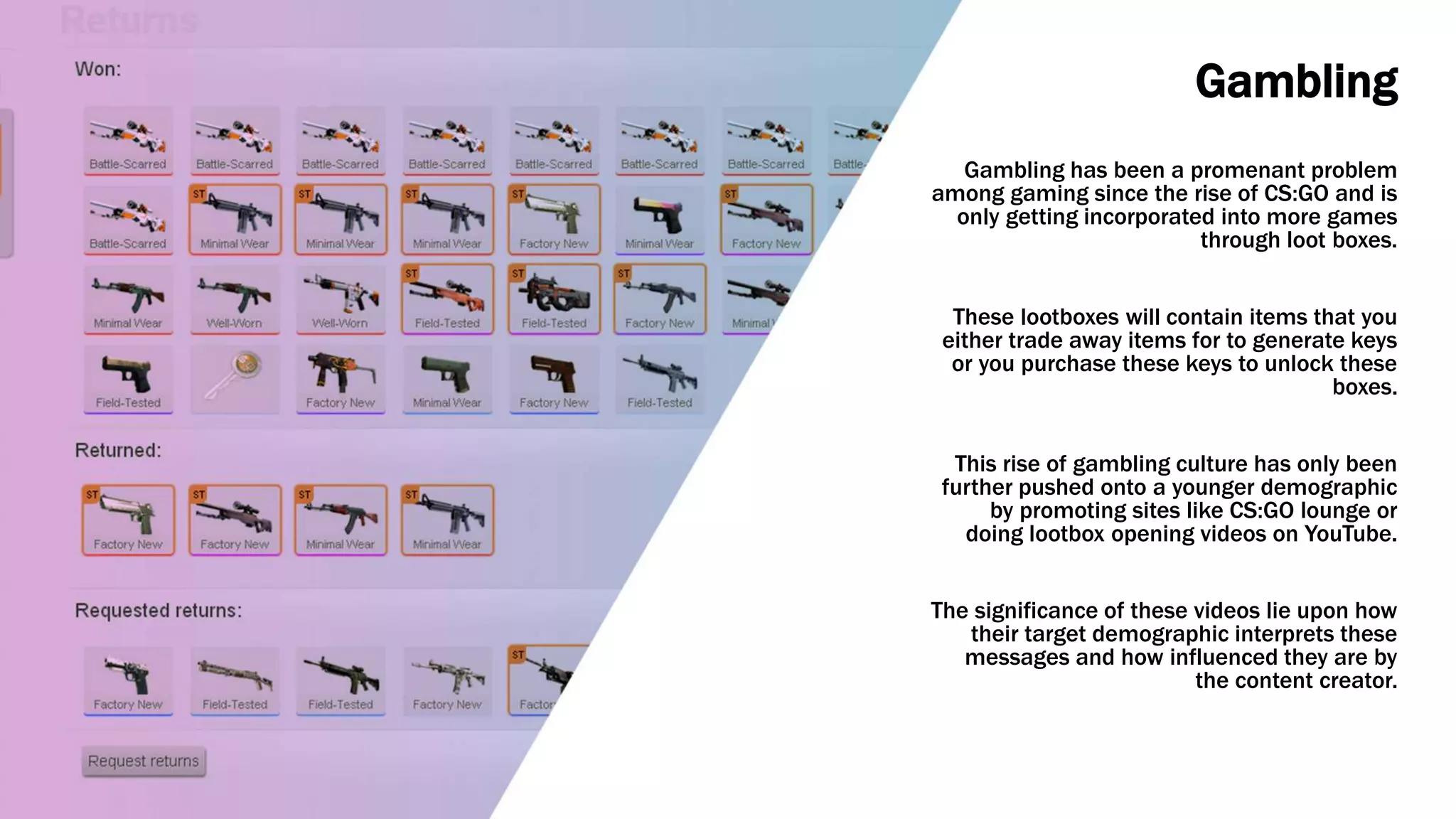
Gambling has been a promenant problem
among gaming since the rise of CS:GO and is
only getting incorporated into more games
through loot boxes.
These lootboxes will contain items that you
either trade away items for to generate keys
or you purchase these keys to unlock these
boxes.
This rise of gambling culture has only been
further pushed onto a younger demographic
by promoting sites like CS:GO lounge or
doing lootbox opening videos on YouTube.
The significance of these videos lie upon how
their target demographic interprets these
messages and how influenced they are by
the content creator.
Modes of interaction
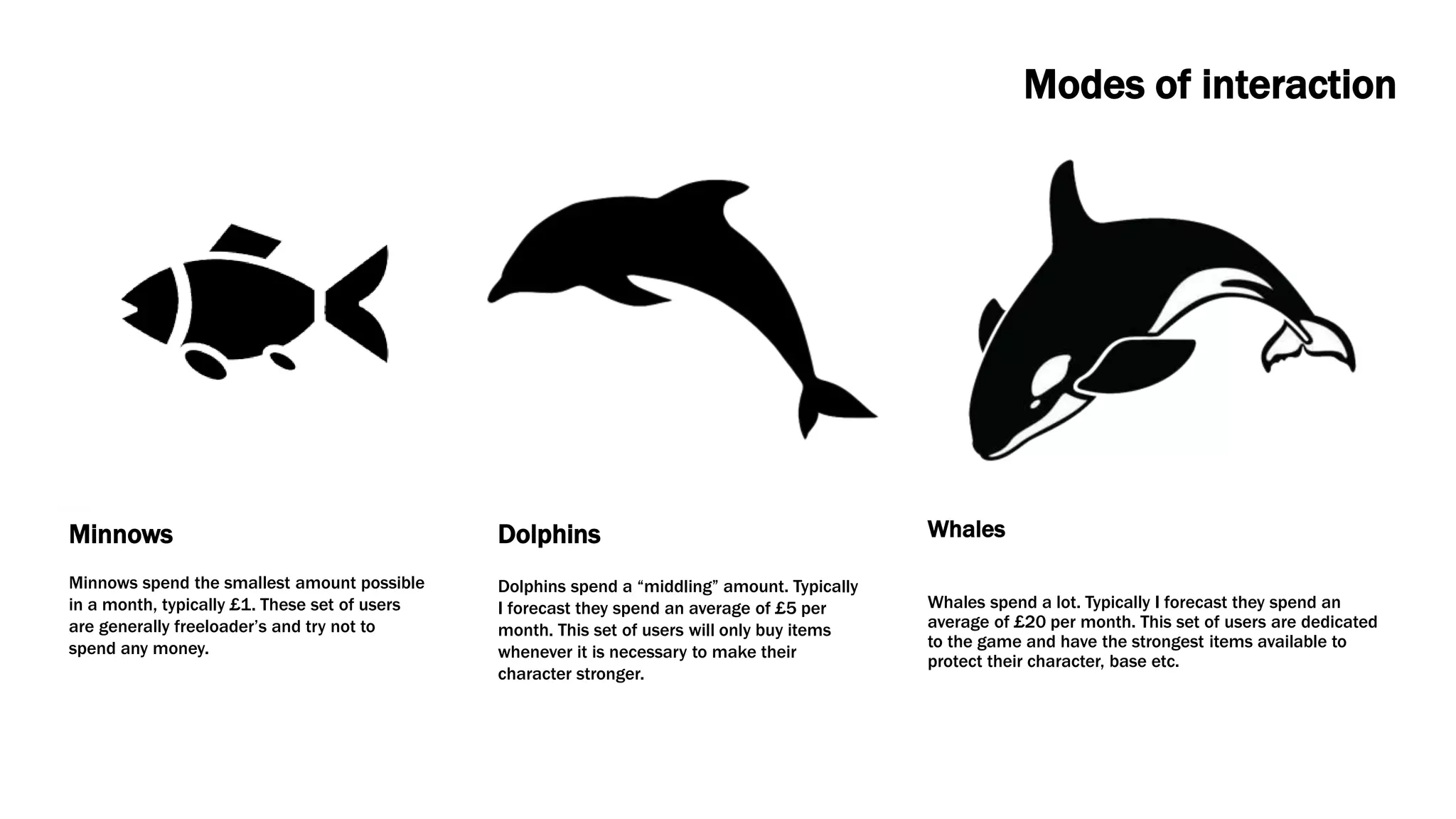
Whales
Whales spend a lot. Typically I forecast they spend an
average of £20 per month. This set of users are dedicated
to the game and have the strongest items available to
protect their character, base etc.
Dolphins
Dolphins spend a “middling” amount. Typically
I forecast they spend an average of £5 per
month. This set of users will only buy items
whenever it is necessary to make their
character stronger.
Minnows
Minnows spend the smallest amount possible
in a month, typically £1. These set of users
are generally freeloader’s and try not to
spend any money.

Freemium Questionaire

  • 1.
    Microtransactions Microtransactions spawned aroundthe era of the rise of mobile gaming in 2007, these models prepare the user for a dynamic experience that is ‘free’. This freemium model pulls the user into a fun experience and allows them to wait, grind and collect rewards or they can instantly bypass this mode of play by paying money. Games such as Clash of Clans, Game of War, Simpsons Tapped Out, Dungeon Keeper follow this mode of play and will show adverts to generate ‘gold’ for the user and allow the conglomerate to reap the benefits of PPC.
  • 2.
    Social Advertising Facebook andInstagram have become popular platforms over the past 5-7 years, over their course of time they have developed algorithms to target key demographics and entice you to buy certain products. What I would like to explore today is how social media platforms market their advertising towards a younger audience. As shown I have included a few screenshots that I have possibly came up on your feed, I would like to know if you would be likely to click through to download an app or even purchase a product through this mode of advertising. These advertisements may include elements of video or flashing images to incite you to click through generating PPC.
  • 3.
    Promotional Blogging New mediahas formed the platform of building an online audience through platforms such as Youtube. I would like to explore how much of an influence these social media bloggers have over your interests and how they form new forms of cultural media. Bloggers such as, Pewdiepie, JackSepticEye, Prosyndicate etc have been promoting games such as Shadow of Mordor, CS:GO and The Legend of the Bro fist to generate revenue for their own entity but also conglomerates like Warner Bros.
  • 5.
    Character Models We canexpand our character model through these modes of play by either grinding to collect new items or buying them from an in game online store with money. By buying items this will expand the user’s inventory and allow them to have a stronger character compared to somebody who would have to grind and collect lower level items. These items include, swords, hats, armour, shields etc all of these have functional benefits to the player and allow them to get the higher ground. This formula of play signifies the importance to the user of dedication to the game compared to somebody who has to balance time mechanics and work/life balance.
  • 6.
    The Grind The grindis a technical term that spawned around the creation of World of Warcraft in 2006 and expanded the pay to play model. This model perpetuates the culture of grinding for a certain item for six hours compared to paying £5, £10 etc to buy this new item instead. This grinding mechanic usually involves the user killing 100 orcs, repeatedly over the course of days.
  • 7.
    Item Wealth Item wealthis an important factor of social experiences online. An item that one user holds could be stronger than an item somebody has grinded for over many hours solely due to the fact that the original user payed £10 for it. This unbalance of social mechanics leaves certain players at more of an advantage compared to players who haven’t bought into this freemium model of play. Many gamers would rather grind but ultimately it ruins the experience of the game as it initially something that the developer never intended to happen it’s just a factor of a larger corporation getting greedy with money.
  • 8.
  • 9.
    Trading Systems By tradingitems with a peer we create a social contract between players for how much in game items are worth. This balance equates to how much somebody has payed for an item or how much time the user has used to acquire an item. The mode of play allows the user to trade away their weaker items for stronger items to strengthen their character or allow them to buy more into this model of freemium in game purchases.
  • 10.
    Gambling Gambling has beena promenant problem among gaming since the rise of CS:GO and is only getting incorporated into more games through loot boxes. These lootboxes will contain items that you either trade away items for to generate keys or you purchase these keys to unlock these boxes. This rise of gambling culture has only been further pushed onto a younger demographic by promoting sites like CS:GO lounge or doing lootbox opening videos on YouTube. The significance of these videos lie upon how their target demographic interprets these messages and how influenced they are by the content creator.
  • 11.
    Modes of interaction Whales Whalesspend a lot. Typically I forecast they spend an average of £20 per month. This set of users are dedicated to the game and have the strongest items available to protect their character, base etc. Dolphins Dolphins spend a “middling” amount. Typically I forecast they spend an average of £5 per month. This set of users will only buy items whenever it is necessary to make their character stronger. Minnows Minnows spend the smallest amount possible in a month, typically £1. These set of users are generally freeloader’s and try not to spend any money.