Framework for Managing
Organizational Change
@SONNETmustafiz
Change is necessary for organizations to INNOVATE, EVOLVE &
GROW. The three-stage framework that leaders can use to
simplify the process and ensure successful change
management.
@SONNETmustafiz
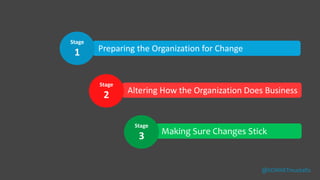
Preparing the Organization for Change
Altering How the Organization Does Business
Making Sure Changes Stick
Stage
2
Stage
3
Stage
1
@SONNETmustafiz
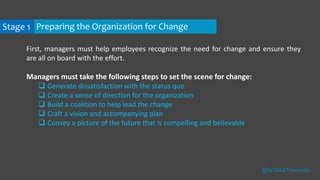
First, managers must help employees recognize the need for change and ensure they
are all on board with the effort.
Managers must take the following steps to set the scene for change:
 Generate dissatisfaction with the status quo
 Create a sense of direction for the organization
 Build a coalition to help lead the change
 Craft a vision and accompanying plan
 Convey a picture of the future that is compelling and believable
Stage 1 Preparing the Organization for Change
@SONNETmustafiz
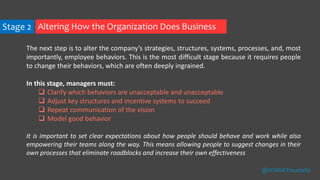
The next step is to alter the company’s strategies, structures, systems, processes, and, most
importantly, employee behaviors. This is the most difficult stage because it requires people
to change their behaviors, which are often deeply ingrained.
In this stage, managers must:
 Clarify which behaviors are unacceptable and unacceptable
 Adjust key structures and incentive systems to succeed
 Repeat communication of the vision
 Model good behavior
It is important to set clear expectations about how people should behave and work while also
empowering their teams along the way. This means allowing people to suggest changes in their
own processes that eliminate roadblocks and increase their own effectiveness
Stage 2 Altering How the Organization Does Business
@SONNETmustafiz
We can think of this as the 'refreezing' stage. To make sure new changes stick, managers
must make sure it is firmly anchored in the organization's culture. This means paying
close attention to structures, controls, systems, and rewards to ensure that teams don’t
revert back to old ways of doing business.
Leaders must focus on:
 Embedding changes fully into a culture
 Preventing backsliding
 Institutionalizing the new ways of working
 Reviewing progress
Stage 3 Making Sure Changes Stick
@SONNETmustafiz
To implement change across an organization, it's critical to be
thoughtful and deliberate about the process. This framework will
simplify the process and increase chances of success.
Source:
-HBX/Becoming a Better Manager
@SONNETmustafiz
Contact:
Md. Mustafizur Rahman Sonnet
Email: mustafiz.snt@gmail.com

Framework for Managing Organizational Change

  • 1.
  • 2.
    Change is necessaryfor organizations to INNOVATE, EVOLVE & GROW. The three-stage framework that leaders can use to simplify the process and ensure successful change management. @SONNETmustafiz
  • 3.
    Preparing the Organizationfor Change Altering How the Organization Does Business Making Sure Changes Stick Stage 2 Stage 3 Stage 1 @SONNETmustafiz
  • 4.
    First, managers musthelp employees recognize the need for change and ensure they are all on board with the effort. Managers must take the following steps to set the scene for change:  Generate dissatisfaction with the status quo  Create a sense of direction for the organization  Build a coalition to help lead the change  Craft a vision and accompanying plan  Convey a picture of the future that is compelling and believable Stage 1 Preparing the Organization for Change @SONNETmustafiz
  • 5.
    The next stepis to alter the company’s strategies, structures, systems, processes, and, most importantly, employee behaviors. This is the most difficult stage because it requires people to change their behaviors, which are often deeply ingrained. In this stage, managers must:  Clarify which behaviors are unacceptable and unacceptable  Adjust key structures and incentive systems to succeed  Repeat communication of the vision  Model good behavior It is important to set clear expectations about how people should behave and work while also empowering their teams along the way. This means allowing people to suggest changes in their own processes that eliminate roadblocks and increase their own effectiveness Stage 2 Altering How the Organization Does Business @SONNETmustafiz
  • 6.
    We can thinkof this as the 'refreezing' stage. To make sure new changes stick, managers must make sure it is firmly anchored in the organization's culture. This means paying close attention to structures, controls, systems, and rewards to ensure that teams don’t revert back to old ways of doing business. Leaders must focus on:  Embedding changes fully into a culture  Preventing backsliding  Institutionalizing the new ways of working  Reviewing progress Stage 3 Making Sure Changes Stick @SONNETmustafiz
  • 7.
    To implement changeacross an organization, it's critical to be thoughtful and deliberate about the process. This framework will simplify the process and increase chances of success. Source: -HBX/Becoming a Better Manager @SONNETmustafiz Contact: Md. Mustafizur Rahman Sonnet Email: mustafiz.snt@gmail.com