Developing Information Literacy,
                                         Writing, and Speaking Skills


© 2013 Wadsworth, Cengage Learning
You’re About to
                                                         You’re About to
                                                           Discover…
                                                           Discover…
                                   • What
                                            Informa
                                      why it is       tion Lite
                                                importa          racy is a
                                  • The 5                 nt.              nd
                                            steps to
                                     Literacy          Informa
                                                                 tion
                                 • How
                                          having g
                                    contribu        ood rese
                                              tes to yo         arch ski
                                   success              ur colleg        lls
                                             .                      e
                                • Stud
                                        ent rese
                                  College.        arch at M
                                                              aryville


© 2013 Wadsworth, Cengage Learning
Dario Jones


                                     p. 140-141
© 2013 Wadsworth, Cengage Learning
Information Literacy Defined
                        Information Literacy Defined
       • Information Literacy is the set of skills needed to find,
             retrieve, analyze, and use information.
             (ALA definition on Information Literacy)

       • The ability to know when there is a need for information,
             to be able to identify, locate, evaluate, and effectively
             use that information for the issue or problem at hand.
             (National Forum on Information Literacy)


© 2013 Wadsworth, Cengage Learning
Why Is This Important?
                                Why Is This Important?
       • Ever hear of Data Smog?

       • Author David Shenk coined this term. It refers to the
             idea that too much information can create a barrier in
             our lives. This data smog is produced by the amount of
             information, the speed at which it comes to us from all
             directions, the need to make fast decisions, and the
             feeling of anxiety that we are making decisions without
             having ALL the information that is available or that we
             need.


© 2013 Wadsworth, Cengage Learning
The Solution to Data Smog
                            The Solution to Data Smog
       • Information literacy is the solution to Data Smog. It
             allows us to cope by giving us the skills to know when
             we need information and where to locate it effectively
             and efficiently. It includes the technological skills needed
             to use the modern library as a gateway to information. It
             enables us to analyze and evaluate the information we
             find, thus giving us confidence in using that information
             to make a decision or create a product.


© 2013 Wadsworth, Cengage Learning
Who needs this?
                                     Who needs this?
       • Why should students learn about information literacy?

       • According to ALA, “We want to remove the obstacles to
             creativity which are caused by lack of understanding of
             the research process. We want to introduce students to
             those skills which will allow them to succeed in their
             future chosen paths.”


© 2013 Wadsworth, Cengage Learning
Who needs this?
                                     Who needs this?
       This is not just for college students but all of us, as
       professionals, in the workplace and in our personal lives.
       Being information literate ultimately improves our quality of
       life as we make informed decisions when buying a house,
       choosing a school, hiring staff, making an investment,
       voting for our representatives, and so much more.
       Information Literacy is, in fact, the basis of a sound
       democracy.


© 2013 Wadsworth, Cengage Learning
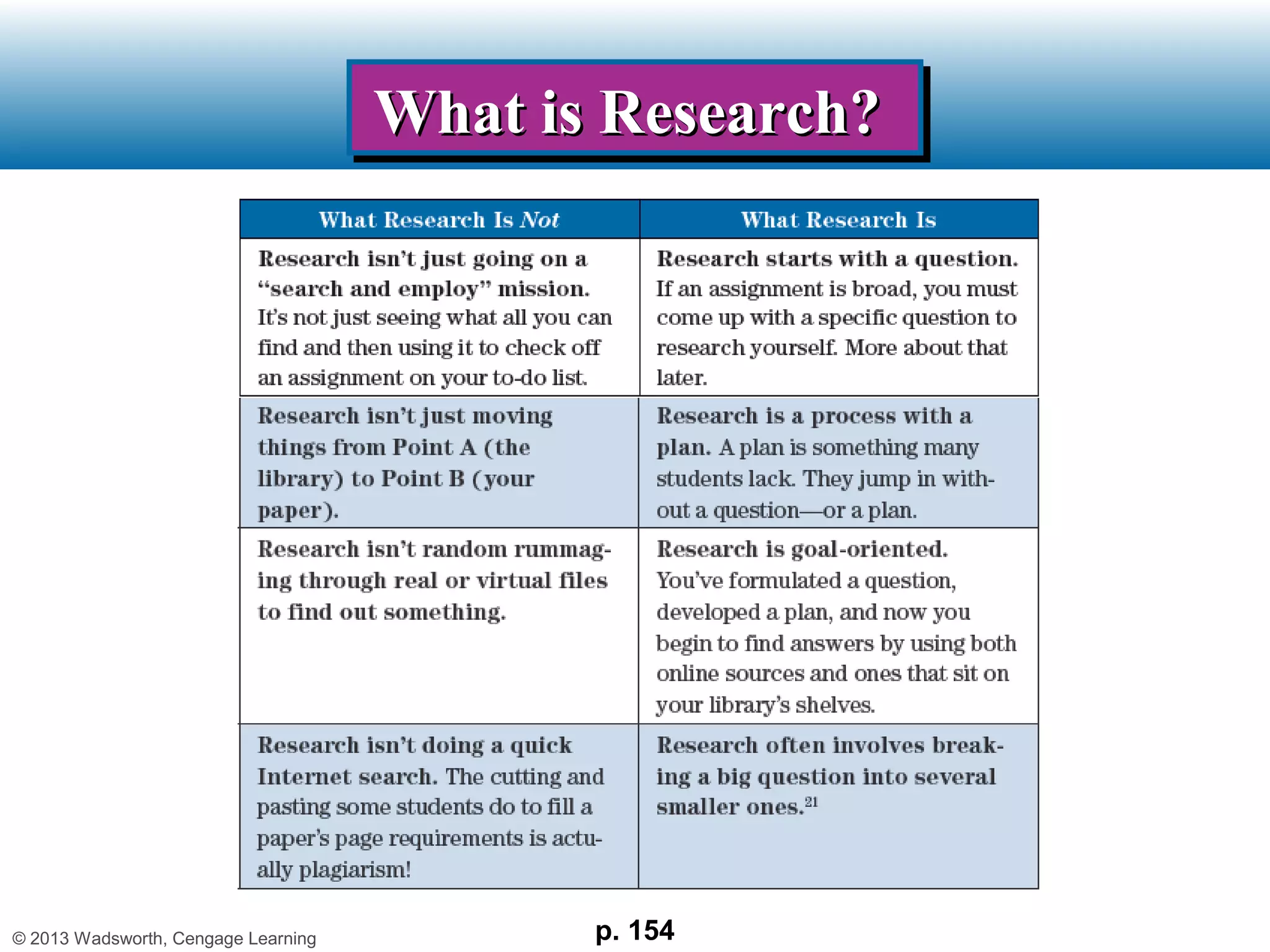
What is Research?
                                     What is Research?


© 2013 Wadsworth, Cengage Learning          p. 154
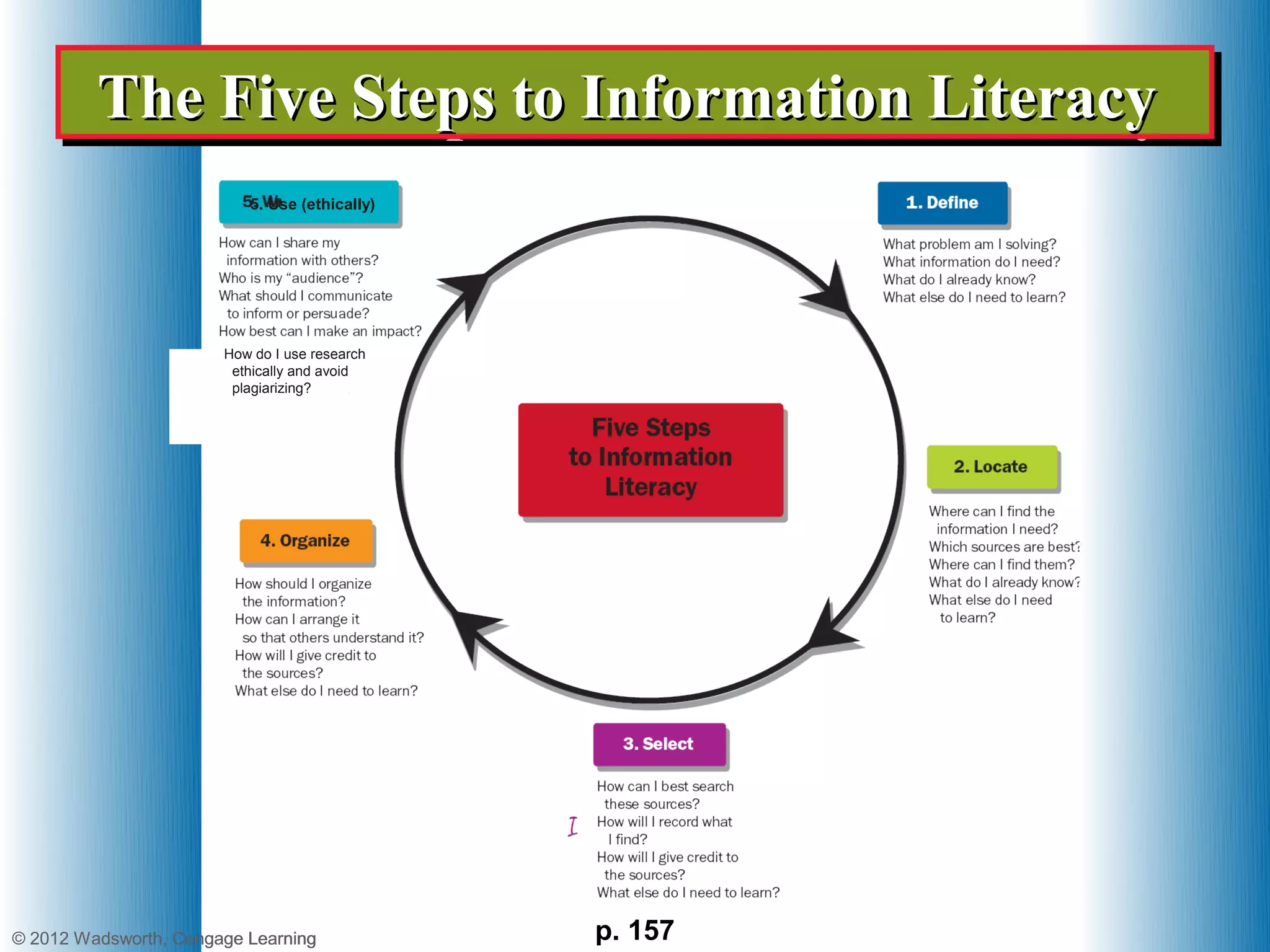
The Five Steps to Information Literacy
         The Five Steps to Information Literacy
                          5. Use (ethically)


                       How do I use research
                        ethically and avoid
                        plagiarizing?


© 2012 Wadsworth, Cengage Learning
  2013                                         p. 157
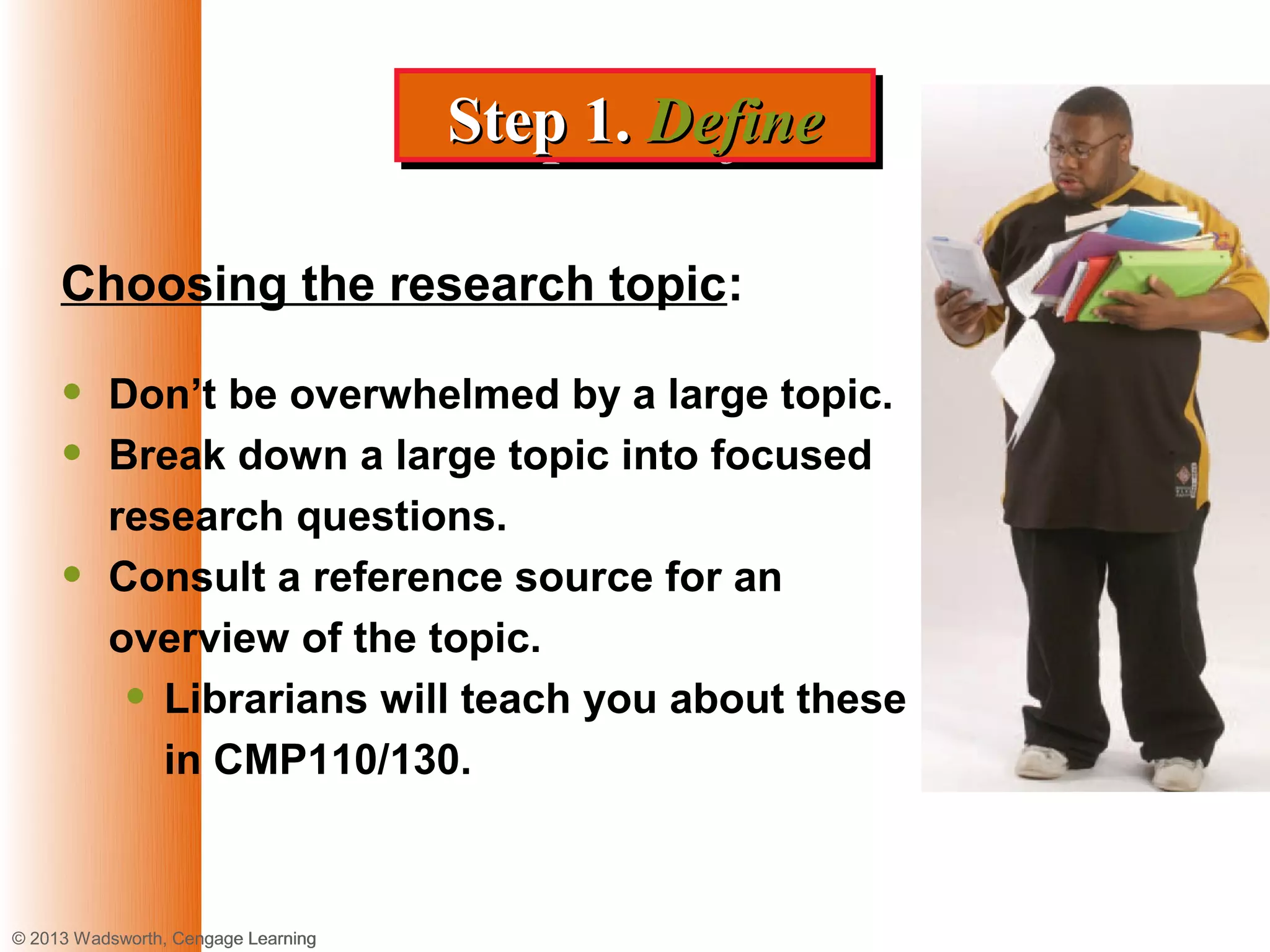
Step 1. Define
                                     Step 1. Define

     Choosing the research topic:

     •    Don’t be overwhelmed by a large topic.
     •    Break down a large topic into focused
          research questions.
     •    Consult a reference source for an
          overview of the topic.
           • Librarians will teach you about these
             in CMP110/130.


© 2013 Wadsworth, Cengage Learning
Step 2: Locate
                                     Step 2: Locate
       • Choose keywords and phrases
       • Search MC Quest for books, eBooks,
         articles, and other sources
       • Search discipline specific databases
       • Use scholarly search engines like Google
         Scholar.
       • Other resources


© 2013 Wadsworth, Cengage Learning
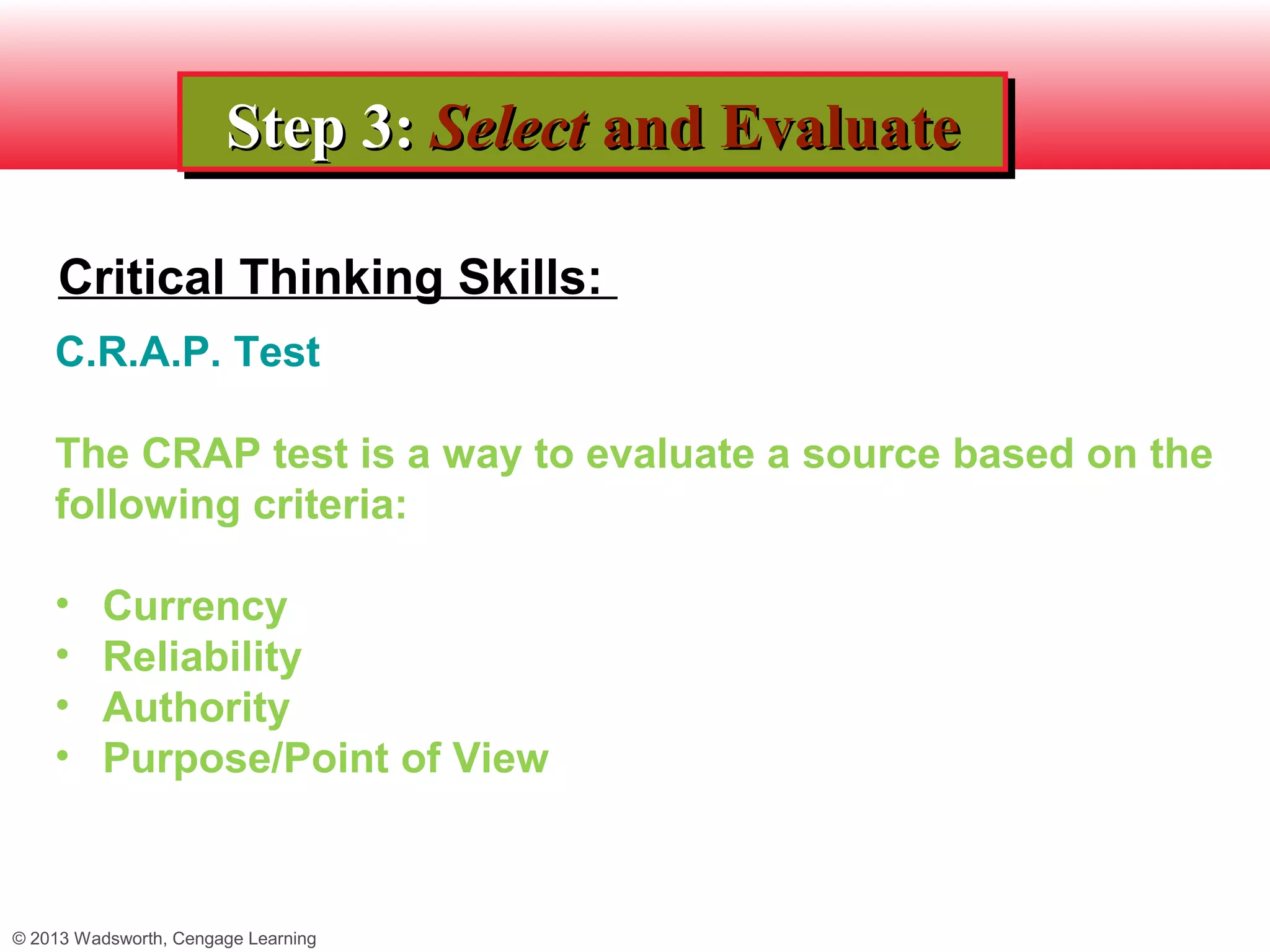
Step 3: Select and Evaluate
                       Step 3: Select and Evaluate

     Critical Thinking Skills:
    C.R.A.P. Test

    The CRAP test is a way to evaluate a source based on the
    following criteria:

    •     Currency
    •     Reliability
    •     Authority
    •     Purpose/Point of View


© 2013 Wadsworth, Cengage Learning
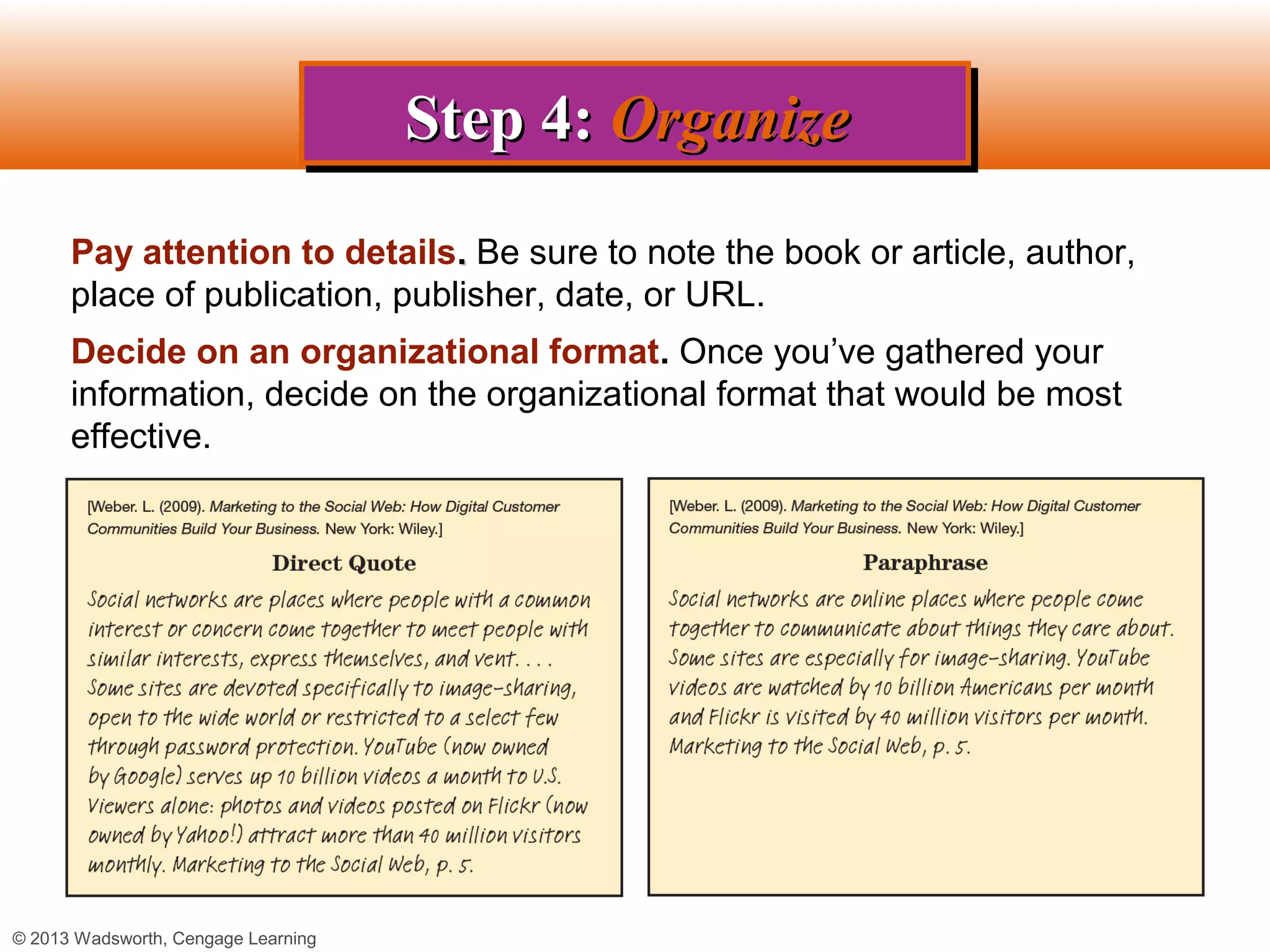
Step 4: Organize
                                     Step 4: Organize
      Pay attention to details. Be sure to note the book or article, author,
      place of publication, publisher, date, or URL.
      Decide on an organizational format. Once you’ve gathered your
      information, decide on the organizational format that would be most
      effective.


© 2013 Wadsworth, Cengage Learning
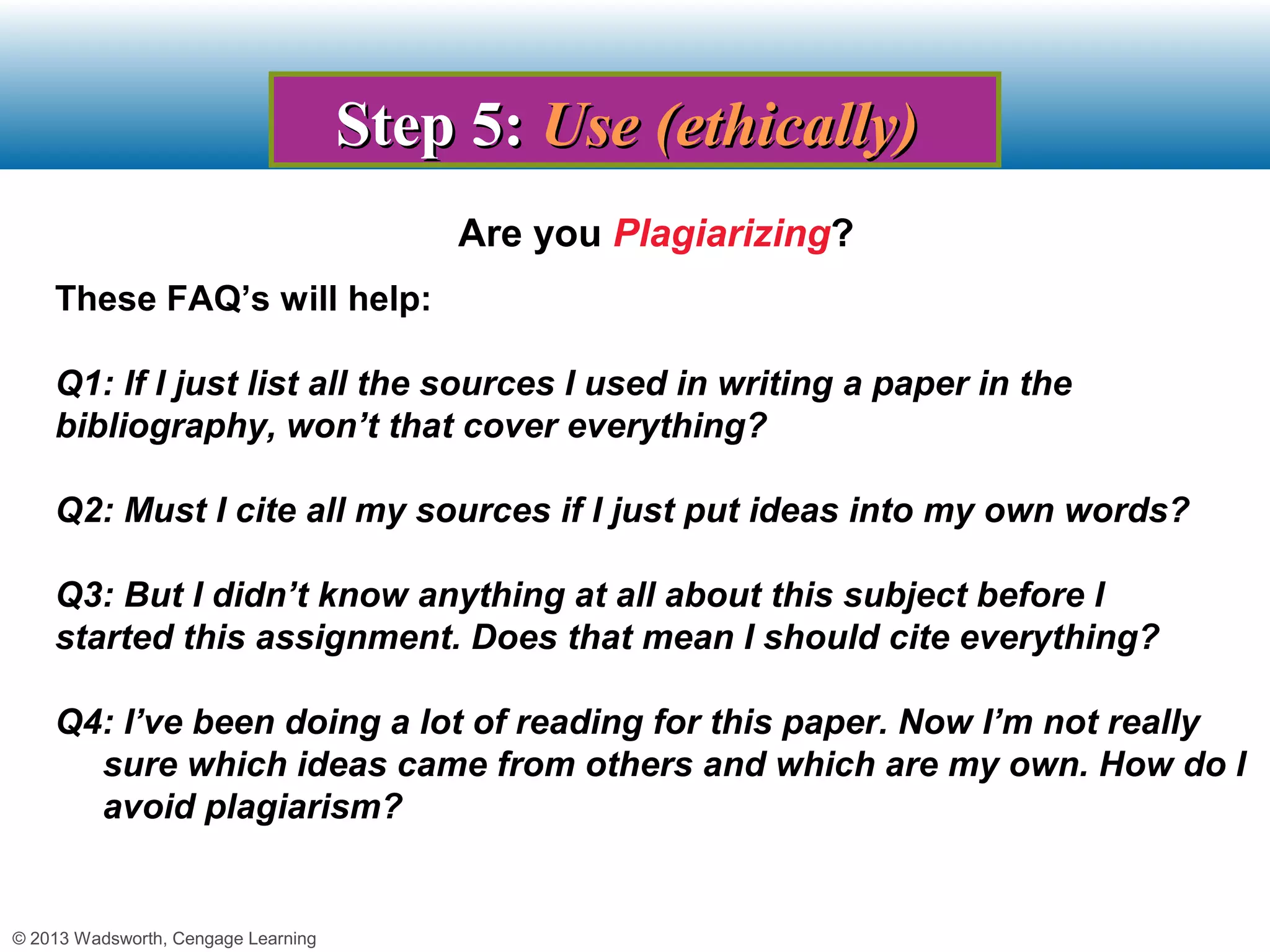
Step 5: Use (ethically)
                                         Are you Plagiarizing?
    These FAQ’s will help:

    Q1: If I just list all the sources I used in writing a paper in the
    bibliography, won’t that cover everything?

    Q2: Must I cite all my sources if I just put ideas into my own words?

    Q3: But I didn’t know anything at all about this subject before I
    started this assignment. Does that mean I should cite everything?

    Q4: I’ve been doing a lot of reading for this paper. Now I’m not really
      sure which ideas came from others and which are my own. How do I
      avoid plagiarism?


© 2013 Wadsworth, Cengage Learning
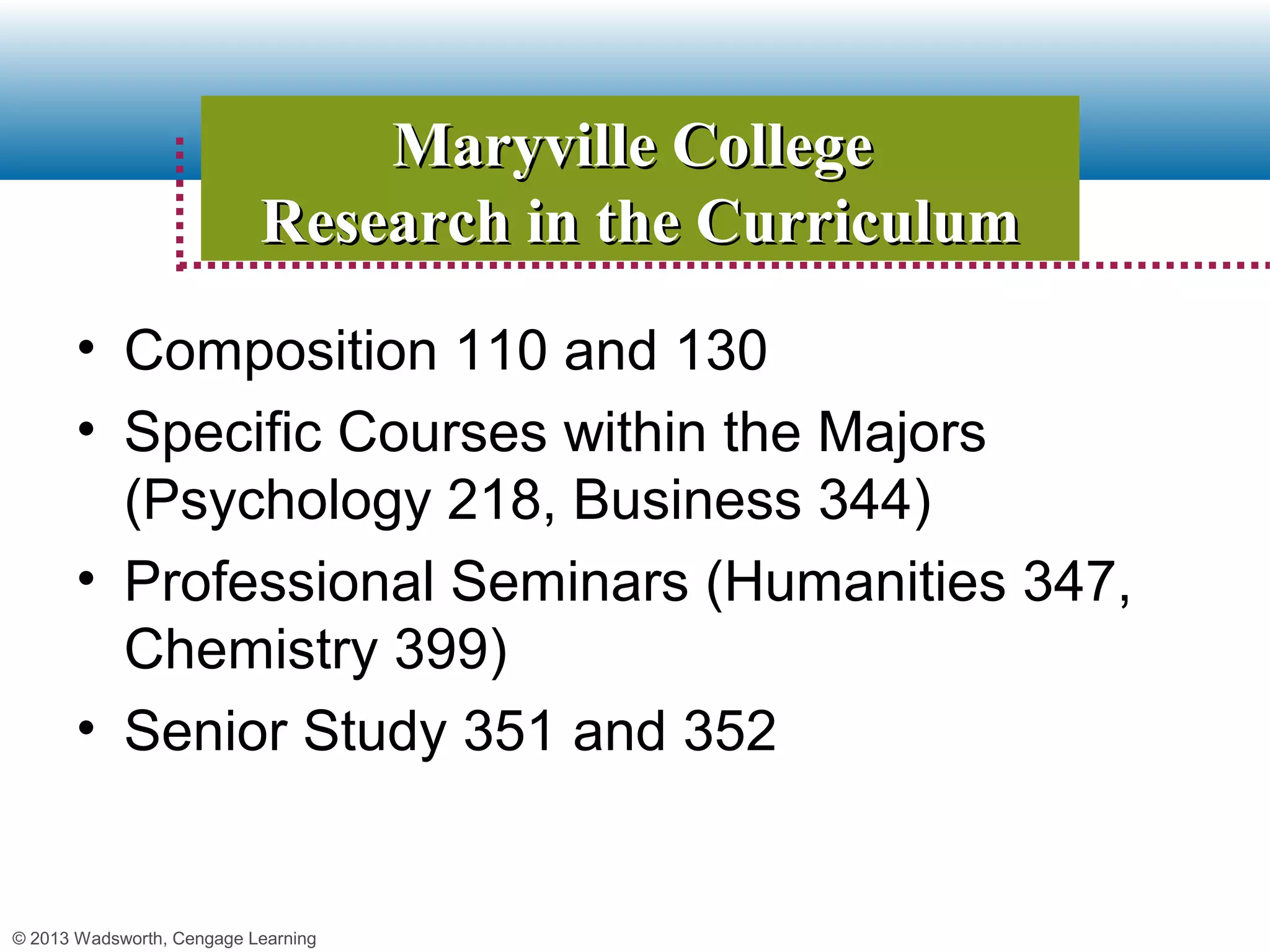
Maryville College
                           Research in the Curriculum
       • Composition 110 and 130
       • Specific Courses within the Majors
         (Psychology 218, Business 344)
       • Professional Seminars (Humanities 347,
         Chemistry 399)
       • Senior Study 351 and 352


© 2013 Wadsworth, Cengage Learning

Fp chapter5 library-sessionslides

  • 1.
    Developing Information Literacy, Writing, and Speaking Skills © 2013 Wadsworth, Cengage Learning
  • 2.
    You’re About to You’re About to Discover… Discover… • What Informa why it is tion Lite importa racy is a • The 5 nt. nd steps to Literacy Informa tion • How having g contribu ood rese tes to yo arch ski success ur colleg lls . e • Stud ent rese College. arch at M aryville © 2013 Wadsworth, Cengage Learning
  • 3.
    Dario Jones p. 140-141 © 2013 Wadsworth, Cengage Learning
  • 4.
    Information Literacy Defined Information Literacy Defined • Information Literacy is the set of skills needed to find, retrieve, analyze, and use information. (ALA definition on Information Literacy) • The ability to know when there is a need for information, to be able to identify, locate, evaluate, and effectively use that information for the issue or problem at hand. (National Forum on Information Literacy) © 2013 Wadsworth, Cengage Learning
  • 5.
    Why Is ThisImportant? Why Is This Important? • Ever hear of Data Smog? • Author David Shenk coined this term. It refers to the idea that too much information can create a barrier in our lives. This data smog is produced by the amount of information, the speed at which it comes to us from all directions, the need to make fast decisions, and the feeling of anxiety that we are making decisions without having ALL the information that is available or that we need. © 2013 Wadsworth, Cengage Learning
  • 6.
    The Solution toData Smog The Solution to Data Smog • Information literacy is the solution to Data Smog. It allows us to cope by giving us the skills to know when we need information and where to locate it effectively and efficiently. It includes the technological skills needed to use the modern library as a gateway to information. It enables us to analyze and evaluate the information we find, thus giving us confidence in using that information to make a decision or create a product. © 2013 Wadsworth, Cengage Learning
  • 7.
    Who needs this? Who needs this? • Why should students learn about information literacy? • According to ALA, “We want to remove the obstacles to creativity which are caused by lack of understanding of the research process. We want to introduce students to those skills which will allow them to succeed in their future chosen paths.” © 2013 Wadsworth, Cengage Learning
  • 8.
    Who needs this? Who needs this? This is not just for college students but all of us, as professionals, in the workplace and in our personal lives. Being information literate ultimately improves our quality of life as we make informed decisions when buying a house, choosing a school, hiring staff, making an investment, voting for our representatives, and so much more. Information Literacy is, in fact, the basis of a sound democracy. © 2013 Wadsworth, Cengage Learning
  • 9.
    What is Research? What is Research? © 2013 Wadsworth, Cengage Learning p. 154
  • 10.
    The Five Stepsto Information Literacy The Five Steps to Information Literacy 5. Use (ethically) How do I use research ethically and avoid plagiarizing? © 2012 Wadsworth, Cengage Learning 2013 p. 157
  • 11.
    Step 1. Define Step 1. Define Choosing the research topic: • Don’t be overwhelmed by a large topic. • Break down a large topic into focused research questions. • Consult a reference source for an overview of the topic. • Librarians will teach you about these in CMP110/130. © 2013 Wadsworth, Cengage Learning
  • 12.
    Step 2: Locate Step 2: Locate • Choose keywords and phrases • Search MC Quest for books, eBooks, articles, and other sources • Search discipline specific databases • Use scholarly search engines like Google Scholar. • Other resources © 2013 Wadsworth, Cengage Learning
  • 13.
    Step 3: Selectand Evaluate Step 3: Select and Evaluate Critical Thinking Skills: C.R.A.P. Test The CRAP test is a way to evaluate a source based on the following criteria: • Currency • Reliability • Authority • Purpose/Point of View © 2013 Wadsworth, Cengage Learning
  • 14.
    Step 4: Organize Step 4: Organize Pay attention to details. Be sure to note the book or article, author, place of publication, publisher, date, or URL. Decide on an organizational format. Once you’ve gathered your information, decide on the organizational format that would be most effective. © 2013 Wadsworth, Cengage Learning
  • 15.
    Step 5: Use(ethically) Are you Plagiarizing? These FAQ’s will help: Q1: If I just list all the sources I used in writing a paper in the bibliography, won’t that cover everything? Q2: Must I cite all my sources if I just put ideas into my own words? Q3: But I didn’t know anything at all about this subject before I started this assignment. Does that mean I should cite everything? Q4: I’ve been doing a lot of reading for this paper. Now I’m not really sure which ideas came from others and which are my own. How do I avoid plagiarism? © 2013 Wadsworth, Cengage Learning
  • 16.
    Maryville College Research in the Curriculum • Composition 110 and 130 • Specific Courses within the Majors (Psychology 218, Business 344) • Professional Seminars (Humanities 347, Chemistry 399) • Senior Study 351 and 352 © 2013 Wadsworth, Cengage Learning