Machine Learning
Personal website:
http://intranet.daiict.ac.in/~mv_joshi/
AI
 Artificial intelligence refers to theory and
development of computer systems to
perform tasks of human beings: such as
visual perception, speech recognition,
decision making, translation between
languages etc.
Traditional Computer Science
Slides:Kilian Weinberger
 Explicitly programmed rules and logic
 Deterministic and predictable outputs
 Data is used as input to pre-defined
algorithms
 Complexity: In algorithmic logic and data
structures.
Machine Leaning
 ML Model learns patterns from given data
 Prediction: Probabilistic and depends on
data
 Focus on data collection, model training,
validation, and tuning
 Data is central to the learning process,
used to train models
 Complexity often lies in model selection,
training, and evaluation.
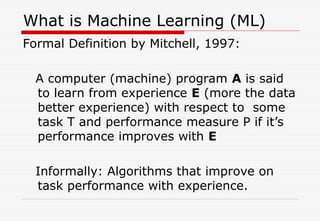
What is Machine Learning (ML)
Formal Definition by Mitchell, 1997:
A computer (machine) program A is said
to learn from experience E (more the data
better experience) with respect to some
task T and performance measure P if it’s
performance improves with E
Informally: Algorithms that improve on
task performance with experience.
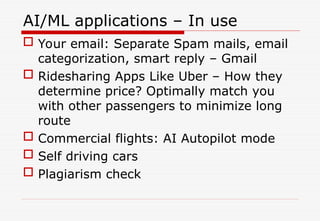
AI/ML applications – In use
 Your email: Separate Spam mails, email
categorization, smart reply – Gmail
 Ridesharing Apps Like Uber – How they
determine price? Optimally match you
with other passengers to minimize long
route
 Commercial flights: AI Autopilot mode
 Self driving cars
 Plagiarism check
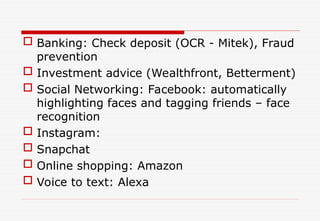
 Banking: Check deposit (OCR - Mitek), Fraud
prevention
 Investment advice (Wealthfront, Betterment)
 Social Networking: Facebook: automatically
highlighting faces and tagging friends – face
recognition
 Instagram:
 Snapchat
 Online shopping: Amazon
 Voice to text: Alexa
Deep learning
 Deep Learning is a new area of
Machine Learning research, which
has been introduced with the
objective of moving Machine
Learning closer to one of its
original goals: Artificial
Intelligence.”
Readings
 1. Andrew Ng Notes
 2. Lectures by Ali Ghodsi, University of
Watrloo
 3. Lectures by Kilian Weinberger, Cornell
University
 Books on Machine learning
1. Kevin Murphy Machiine Learning A Probabilistic Perspective, MIT
2. Hastie, Tibshirani, Friedman The Elements of Statistical Learning,
Springer.
Visit to see the inspirational applications!
 http://machinelearningmastery.com/
inspirational-applications-deep-learning/
Jason Brownlee on July 14, 2016 in Deep Learning
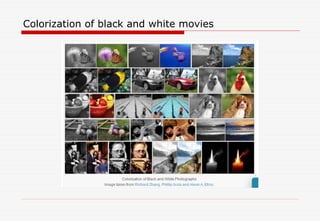
Colorization of black and white movies
Adding sounds to silent movies
 System must synthesize sounds to match
a silent video.
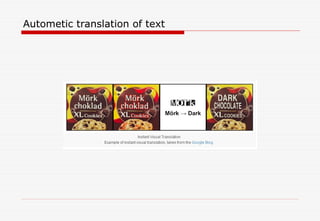
Autometic translation of text
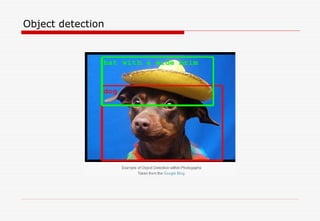
Object detection
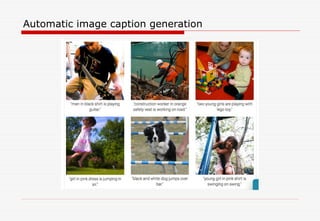
Automatic image caption generation
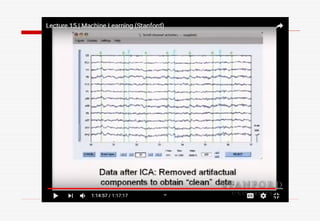
ICA (Demo) Andrew Ng Slides
https://cnl.salk.edu/~tewon/Blind/
blind_audio.html
Foundations of Machine Learning_DAIICT_24.ppt

Foundations of Machine Learning_DAIICT_24.ppt

  • 1.
  • 2.
    AI  Artificial intelligencerefers to theory and development of computer systems to perform tasks of human beings: such as visual perception, speech recognition, decision making, translation between languages etc.
  • 3.
    Traditional Computer Science Slides:KilianWeinberger  Explicitly programmed rules and logic  Deterministic and predictable outputs  Data is used as input to pre-defined algorithms  Complexity: In algorithmic logic and data structures.
  • 4.
    Machine Leaning  MLModel learns patterns from given data  Prediction: Probabilistic and depends on data  Focus on data collection, model training, validation, and tuning  Data is central to the learning process, used to train models  Complexity often lies in model selection, training, and evaluation.
  • 6.
    What is MachineLearning (ML) Formal Definition by Mitchell, 1997: A computer (machine) program A is said to learn from experience E (more the data better experience) with respect to some task T and performance measure P if it’s performance improves with E Informally: Algorithms that improve on task performance with experience.
  • 7.
    AI/ML applications –In use  Your email: Separate Spam mails, email categorization, smart reply – Gmail  Ridesharing Apps Like Uber – How they determine price? Optimally match you with other passengers to minimize long route  Commercial flights: AI Autopilot mode  Self driving cars  Plagiarism check
  • 8.
     Banking: Checkdeposit (OCR - Mitek), Fraud prevention  Investment advice (Wealthfront, Betterment)  Social Networking: Facebook: automatically highlighting faces and tagging friends – face recognition  Instagram:  Snapchat  Online shopping: Amazon  Voice to text: Alexa
  • 9.
    Deep learning  DeepLearning is a new area of Machine Learning research, which has been introduced with the objective of moving Machine Learning closer to one of its original goals: Artificial Intelligence.”
  • 10.
    Readings  1. AndrewNg Notes  2. Lectures by Ali Ghodsi, University of Watrloo  3. Lectures by Kilian Weinberger, Cornell University  Books on Machine learning 1. Kevin Murphy Machiine Learning A Probabilistic Perspective, MIT 2. Hastie, Tibshirani, Friedman The Elements of Statistical Learning, Springer.
  • 11.
    Visit to seethe inspirational applications!  http://machinelearningmastery.com/ inspirational-applications-deep-learning/ Jason Brownlee on July 14, 2016 in Deep Learning
  • 12.
    Colorization of blackand white movies
  • 13.
    Adding sounds tosilent movies  System must synthesize sounds to match a silent video.
  • 14.
  • 15.
  • 16.
  • 18.
    ICA (Demo) AndrewNg Slides https://cnl.salk.edu/~tewon/Blind/ blind_audio.html