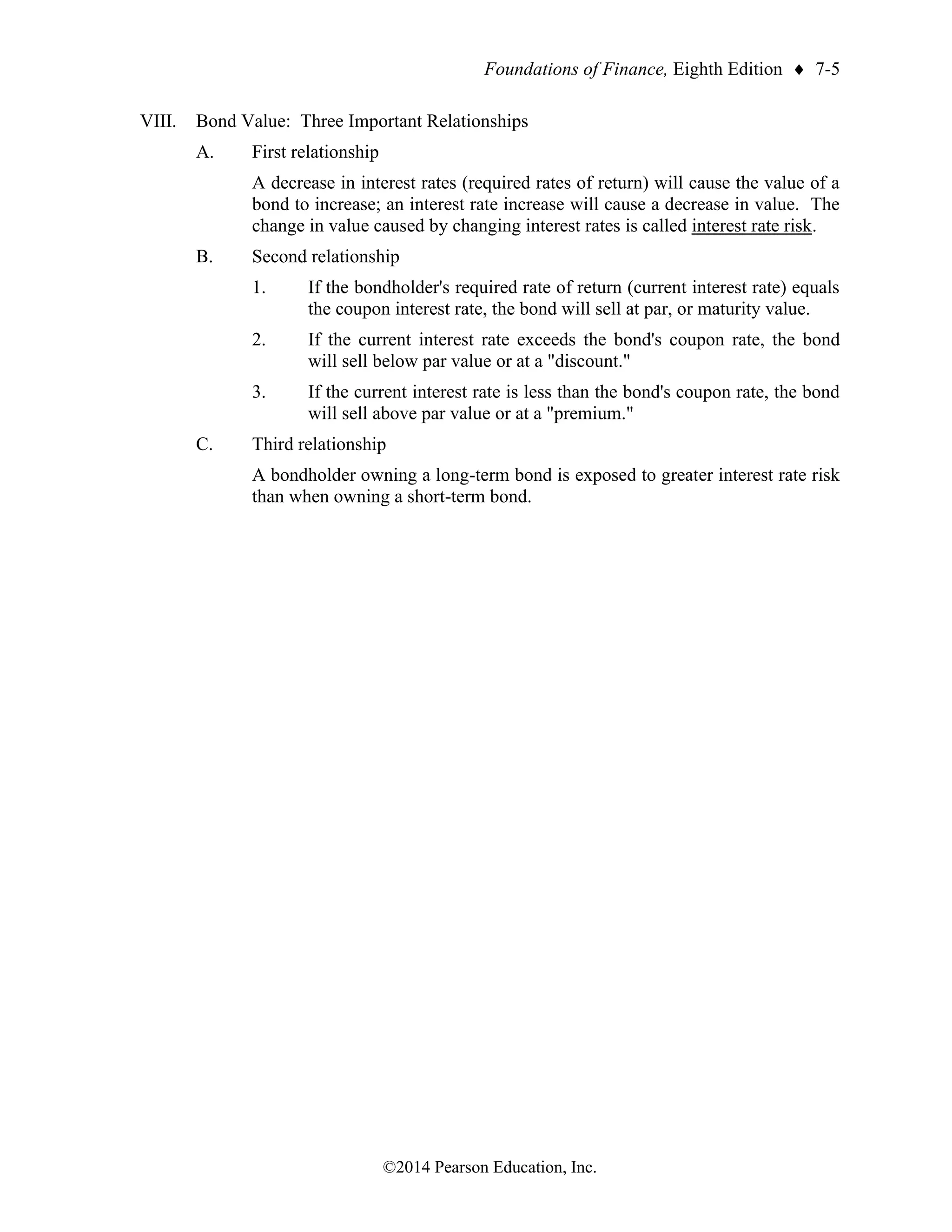
Foundations of Finance 8th Edition Keown Solutions Manual
1.
Foundations of Finance8th Edition Keown
Solutions Manual download pdf
https://testbankfan.com/product/foundations-of-finance-8th-edition-
keown-solutions-manual/
Visit testbankfan.com to explore and download the complete
collection of test banks or solution manuals!
2.
We believe theseproducts will be a great fit for you. Click
the link to download now, or visit testbankfan.com
to discover even more!
Foundations of Finance 8th Edition Keown Test Bank
https://testbankfan.com/product/foundations-of-finance-8th-edition-
keown-test-bank/
Foundations of Finance 9th Edition Keown Solutions Manual
https://testbankfan.com/product/foundations-of-finance-9th-edition-
keown-solutions-manual/
Foundations of Finance Global 9th Edition Keown Solutions
Manual
https://testbankfan.com/product/foundations-of-finance-global-9th-
edition-keown-solutions-manual/
Marriages Families and Intimate Relationships 4th Edition
Williams Solutions Manual
https://testbankfan.com/product/marriages-families-and-intimate-
relationships-4th-edition-williams-solutions-manual/
3.
Social Psychology SociologicalPerspectives 3rd Edition
Rohall Test Bank
https://testbankfan.com/product/social-psychology-sociological-
perspectives-3rd-edition-rohall-test-bank/
Explorations Introduction to Astronomy 8th Edition Arny
Solutions Manual
https://testbankfan.com/product/explorations-introduction-to-
astronomy-8th-edition-arny-solutions-manual/
Statistics Concepts and Controversies 9th Edition Moore
Test Bank
https://testbankfan.com/product/statistics-concepts-and-
controversies-9th-edition-moore-test-bank/
Information Technology Project Management Providing
Measurable Organizational Value 5th Edition Marchewka
Solutions Manual
https://testbankfan.com/product/information-technology-project-
management-providing-measurable-organizational-value-5th-edition-
marchewka-solutions-manual/
Understanding Basic Statistics 6th Edition Brase Test Bank
https://testbankfan.com/product/understanding-basic-statistics-6th-
edition-brase-test-bank/
4.
Life Span HumanDevelopment 7th Edition Sigelman Test Bank
https://testbankfan.com/product/life-span-human-development-7th-
edition-sigelman-test-bank/
"I've been chasingyou for the last three days!"
Guillaumin took possession of our bundle, and, mounted on a heap
of flints, began the distribution.
A sea of humans surrounded him, faces stretched forward feverishly,
arms raised tirelessly—De Valpic in the front row between Bouillon
and Humel.
I had been pushed forward. What did I expect? A line from my
father when he heard the terrible news? Hm! He would hardly have
got mine. No. I expected nothing. One by one the names escaped:
Gaudéreaux, Descroix, Lieutenant Henriot. Comrades answered to a
certain number of them.
"Missing! Killed!"
Brief words which froze.
I suddenly felt as if I'd had a blow on the head.
"Dreher!" shouted Guillaumin, looking round for me.
Lamalou handed me a letter. My eyes dimmed, my head swam. That
writing.... I freed myself from the crush round me. I fled, half
demented. I pinched, and weighed the envelope. How light and yet
how heavy it was! I just missed charging into the captain who was
also hanging about waiting.... I went twenty, fifty, yards, then threw
myself down in a field, at the foot of an apple-tree.
My heart was still beating a mad measure, and I could hardly get my
breath. I hesitated for a long time before tearing the thin envelope,
then slowly and cautiously pulled out the double sheet which I
fingered and turned over.... That stamp too.... Yes, yes, I knew it!
But I was impatient to revel in the happy certainty: I flew to the
signature.
Jeannine! Jeannine! I shouted the name aloud in a transport of
delight. Then I hurriedly glanced through the first page.... And
instantly I understood that Happiness was descending upon me....
34.
As if afraidof so much joy, I hid myself, so to speak, from my
ecstasy for a few seconds behind such reflections as: "The post
hasn't lost much time!" or "That's what you might call a real letter!"
As lovers at their meetings cloak the emotion of the first moments
with trivial remarks.
Eight pages! She had written eight pages! I began to read them with
tender deliberation. One long, dear harmonious poem! Each line held
a joy in store for me; at each page I turned I was torn betwixt my
regret at seeing it finished and my rapture that the next was
beginning. I could repeat those sentences to-day without hesitating
over a single syllable.
She was writing, she said, on the evening of August 16th. She had
just received my letter, and was answering it immediately. She
wanted to be the first to send me a word of consolation in my
sorrow. My sorrow? I did not quite understand. It seemed to me that
there was no reason now for anything but envy. Then I reddened.
Had I not told her of my brother's death, on that card? Ah yes,
whether consciously or unconsciously, I had calculated on arousing
her pity, her tenderness, and I had succeeded. She professed herself
overcome with emotion. My only brother! Why—she reproached me
gently—had I spoken of him so rarely? She could see from the tone
of my letter how much I loved him. It was natural—the only being in
the world fashioned after my likeness, hardly any older than myself,
the playmate of my childhood, the confidant of my adolescence. The
same profound and simple reasons which my rejuvenated heart had
suggested to me. I held Victor more dear, I regretted him more
poignantly. I blessed Jeannine for having guessed my brotherly
affection. In my card, I had made some passing allusion to the two
little orphans. Here again her thoughts ran hand-in-hand with mine;
she tactfully confirmed me in the idea of my duties.
Oh! with what sublime trust, with what exquisite and ingenuous
sympathy these lines overflowed. This language, so new between
us, seemed to me usual and necessary. Jeannine made some
reference to the footing we had been on at Ballaigues, when the
35.
tone of ourtrifling had merely been one of playful courtesy. She
appeared to apologise for the disguise adopted then. Now we might
see each other face to face. She professed her friendship for me.
She did not hesitate to make use of that word, so delicious and
pure, in which I read another, essentially the same, but more
magnificent illuminating the entire universe!
I had not a shadow of doubt; she cannot have had either. It was the
letter of a fiancée. What surprised me was that we had delayed so
long, before seeing into our hearts. Ever since my departure, and
every day more surely, was not the vision of this child the only one
which at the approach of danger consoled me with a hope, towards
whom, in the hour of safety, my mirth rose up like incense. This
hearth had ceased long since to smoulder under cinders; powerful
and generous, it flung its ardent flames towards the sky. And had I
doubted, Jeannine, lest my passion should not be reciprocated.
Could I not summon up a certain look of yours, or an inflection of
your voice which already bore witness to the chaste avowal. How
fervently your fingers had lingered in mine at parting. We had been
consecrated to each other ever since that time. The present was less
surprising—child of the wondrous past! I seemed already to have
spelt out these pages, upon which I was feasting, in the course of
some dream. Their enchantment, as adored memories, was doubled
for me!...
The end of the missive breathed a tenderness no less proud or
strong. Jeannine knew through the communiqués, of the brilliant
affair at Mangiennes. She guessed that I had taken part in it, that I
was not wounded—(No! My good fortune lent me too great a halo!)
By some mysterious intuition she ended up by counselling me to
bear the ill-fortune, which might be near at hand, courageously.
What did she know of it? What presentiment had she? I caught a
glimpse of the fate of returning troops, the ruin of our first hopes.
Still distant hypotheses! And then it would have needed greater
misfortunes than that to damp me. I was filled with enthusiasm.
36.
Guillaumin had notlied. What rapture to consecrate myself to thee,
to thy defence, my noble France, incarnate in a young face!...
I turned my steps towards my section; I was coming down to earth,
returning to grim reality....
What a sight met my eyes!
The piles of arms had been broken everywhere; yonder, the
neighbouring battalion was dispersing in the greatest disorder; our
lot, disbanded too, were jostling each other on the road. A regular
panic! Guillaumin, bareheaded, and haggard....
"I was looking for you!" he shouted. "What do you say to this?"
"What? What do you mean?"
"They're firing on us!"
"Who?"
Dragging me along, he gasped:
"I've got your rifle and your things. Come along. Come along!"
We rushed down.
"Do you hear?"
The echoes of explosions.
"The 'Taube'?"
"That was the beggar that marked us! But ... they talked of our
going back.... I don't think! They're close on our heels...! Their
artillery, the 'coal boxes'!"
He pinched my arm till it bled:
"And we've been flying all night!"
37.
I buckled onmy pack, in a dazed way as we ran along, and took my
rifle from his. Henriot caught us up:
"They're coming up from the south too. We're surrounded!"
He was choking.
Playoust stopped in front of us and chucked down his pack
exclaiming:
"Wot's the use o' goin' on? We're goners!"
Some of the men followed his example.
"You thundering lunatic!" I shouted to him.
Guillaumin shook his fist at him. I shouted:
"Keep your rifles, lads! The war's beginning in earnest now, when
you've got to fight for your crops and homes, for everything that's
dear to you!"
Two or three men who had dropped their arms picked them up. We
reached a cross-road.
Our poilus were grouped round us.
"Fall in, No. 3 section."
"Nicely in the soup, we are!" someone exclaimed.
"Possibly! But we'll get out of it somehow. Where there's a will,
there's a way!"
They looked at each other blankly. Then Judsi smacked the barrel of
his rifle with a swagger.
"So the blighters think they're going to give us a doin'? We'll show
'em wot's wot!"
I could have hugged him!
38.
PART III
BOOK VII
August25th-September 2nd
CHAPTER I
IN RETREAT
What memories I have of those days of retreat and disaster. Days
when not only Victory, but Hope, also, hid her face! Chance and
destiny and logic were so many forces crushing us. Everything was
giving way. We suffered in every kind of way, from hunger, cold,
heat, exhaustion, moral anguish, lack of news. Virile busy days,
when the plan of salvation germinated in the brain of our leaders,
when the work of redemption was accomplished in silence in the
heart of each man and the nation at large. Days, I should weep not
to have spent where I ought, as I ought!...
That afternoon, first of all, which we spent wandering in a forest.
Surrounded? We were not far from it. The men were well aware of
the sentries posted everywhere, and the patrol parties sent out to
investigate in every direction.
One scene stands out particularly clearly in my memory. Those staff-
officers we passed as I was going with my section to inspect a
certain issue. The general seated on the edge of a slope with his
head between his hands, his subordinates standing motionless a few
steps away, respecting his meditation. A little farther on were the
orderlies, holding their horses by their halters. An hour later as we
39.
were returning, wefound them at the same place, and in the same
attitudes, the general with his head still sunk in his hands, his aides-
de-camp silently fixing their eyes on him.
A petrified tableau. So all these people expected nothing better than
to have to give up their swords. I thought we were done for, but
forced myself to distract the attention of my companions.
We afterwards learnt that during the twenty-four hours there, we
had, in high places, been looked upon as taken, and coldly struck off
the lists. We owed our escape solely to a company sergeant-major, a
native of that part of the country, who, having made careful inquiries
about the limits of the hostile advance, went, that evening, to find
the general in charge of the division, and offered himself as guide.
It was our last chance. We followed him. The march lasted for three
hours. Only a small number of us discerned the tragic element
floating about us. The men complained of the absence of halts. The
strictest silence had been imposed upon us, we even had to hold the
sheaths of our bayonets in our hands. At the most dangerous point
some palavering in undertones, and obstreperous horse-play went
on, a practical joke. The Bosches no doubt were tired out; their
sentries dead tired! A few shots cracked on our flanks. We reached
Cremilly. That apparently meant that we were saved.
For one day!
That was only the mild beginning of our trials. After a morning's rest
we started again, with a charitable warning that we should have to
keep at it until nightfall. We had to keep at it all night too, and the
next day.... A forced march of thirty hours, the stiffest in the
campaign! I may mention further that we had not slept or had a bite
of food since two days before.... A miracle of human endurance.
As long as it was light I vaguely noticed the road we covered. The
noise of the firing was growing weaker. We were falling back on the
Meuse, as De Valpic had predicted.
Back there already! I lamented so much lost territory. This thought
pained me. I looked with the aching heart with which one salutes
40.
abandoned patrimony, atthese fields and valleys, these woods,
which I examined with such a cold and detached gaze a few weeks
ago. Lorraine was actually becoming dear to me! I began to realise
that each part of the world has its own particular character.... The
tender green of these pastures which not even the ardour of a torrid
summer had been able to alter! The calm and haughty harmony of
this billowing ground.... I was seized with affection for this pensive
and laborious race by whose property the whole of the French
lineage is enriched. The names recurred to me of authors born in
these parts, who wove their noble blossoms for our literary crown, of
painters who had grown up and erected their easels here, attracted
by the enchantment of the mist. And all that belonged there of our
history: Varennes, the flight of Louis XVI., the romantic episode on
the threshold of a troubled and magnificent epopee!... Valmy, Sedan
close at hand! We were, as I have said, drawing near to the Meuse.
Fifteen or twenty miles up-stream lay Domrémy and Vaucouleurs.
Were these hamlets full of sacred memories destined to crumble
within a few days beneath the Teuton howitzers?
And if we had to retreat still farther! My gaze took in the hills, and
the expanse of pale sky. Fortin's brutal warning recurred to my mind.
"What they needed first was what remained to us of Lorraine,
Champagne, and the Franche-Comté...."
My heart contracted. I murmured, "No, no!"
Hours and hours passed by. The evening fell. There were no halts,
or almost none. The night came down. We went on mechanically,
hour after hour, bowed beneath our packs. No one stayed behind.
Guillaumin had spread the report that the Uhlans, pushing on behind
us, butchered all the stragglers—a superfluous intimidation. After
three weeks of active service, those who had already fallen out
eliminated, these classes of reserves contained nothing but
unusually good soldiers ... no more sentiment or thought ...
41.
admirable beasts ofburden. Shall I say that we slept standing up?
But I mean it quite literally. Many of them I swear were snoring.
Every other minute one got one's neighbour's rifle in the shoulder or
in the face: not that it woke one up for very long. It was astonishing
that there were no serious accidents. Had we crossed the Meuse?
Were we continuing to skirt it? Guillaumin was talking in his sleep. At
one point he said to me:
"We're going through Verdun, you see?"
I raised my heavy eyes and said:
"Are you sure?"
He made a movement with his head:
"Look at these two-storied houses."
They were the trees bordering the road. I had not even the strength
to smile. At dawn an artillery officer galloped along the column. He
slowed down on a level with us and asked:
"Have you seen him? My orderly! He must have fallen off his horse
on to the road."
The men nudged and questioned each other. Nobody, no. Nobody
had seen anything. We learnt, ten minutes later, that the man had
just been picked up gasping and on the point of death, a kilometre
behind us. The whole regiment had gone over his body without
noticing it.
Farther on—the longing to sleep had left me since it had grown light
again—I witnessed a touching scene.
Henriot looked me up and whispered:
"I say, we shall pass my home!"
I was interested.
"At Génicourt?"
"Yes, the village after this one."
42.
We had justentered Dieu. The lieutenant stayed beside me. When,
on leaving the village, he saw that we were turning to the right, his
face clouded over:
"What in the world are we going to do over there!"
We were crossing the river; we should leave Génicourt on the left!
"Do you think, do you think," he said, "that I might ask the
captain...?"
Ask what? For permission to go and kiss his mother.
"Of course!" I said.
I never dreamt that it would be refused.
He left me, but soon came back:
"The captain didn't want me to. He's quite right. Quite right!"
But the most terrible misery was depicted on his face. He continued:
"And do you know. He assures me that it would have been no good,
that the village must be evacuated because ... because it's on ... the
right bank!"
He stopped at the side of the road.
"Oh! Dreher! I should never have thought that they would have left
it, that they would...."
Génicourt, his birthplace, devoted to ruin, to the worst ravages, to
the fate of those wretched villages whose funeral pyres had blazed
like beacons on the horizon, yesterday.
"Come along, sir."
He followed me like a child, adding:
"You, you understand, don't you? You who are a Lorrain too. The
captain told me that over there in your direction, towards Lunéville,
we have had to retire too, and let them penetrate into our
territory...."
43.
It was astriking coincidence—that fact that he told me. I had had a
presentiment of it. All night I had confusedly turned this
apprehension over in my mind. Eberménil. Eberménil.
How often had I not repeated to myself that I felt no particular
attachment to this hamlet where chance, and chance alone, had
decreed that I was to be born! I had not set foot in it since I was ten
years old. We only kept the estate out of affection for the past. Why
did I suddenly have a strikingly clear vision of the white house with
green shutters, the big fir beneath whose shade the table was often
laid? I called to mind other scenes. The little pond where we always
tried to catch the gold fish—I had fallen in twice—the nursery where
we fought with Euréka pistols, the croquet lawn, where mother used
to play with me against father and Victor—Victor! Mother! O dear
shades! Yonder lay my childhood dead, with the vanished beings.
This part of the world was for me a unique centre of emotions. I
made a vow to go back there and soak myself with its melancholy
and charm. But a cloud intervened. What if the old place had been
sacked? Perhaps the old fir-tree had fallen! Revolted at the thought,
I felt the shock of an individual rancour. My heart contracted. We
should see!
CHAPTER II
DARK DAYS
That march without halt or respite had led us to the neighbourhood
of St. Mihiel. There was some talk of our being told off for the active
defence of Toul. But the next day found us reascending toward the
north-east. All the same ground to cover again. We made the best of
a bad job.
We passed close to Génicourt for the second time. Henriot made no
more requests, but his gaze lingered sadly on those roofs separated
44.
from us bythe river; and from that day a secret spring seemed to
have snapped in him.
After another hard day's march we again reached the Meuse which
we had left behind the day before, in order to cut south of Verdun.
The river was not very broad at this point, only twenty yards or so,
nor very deep, and there were numerous fords. The night was
falling. The liquid sheet seemed heavier and darker than usual.
Guillaumin who was the first to go down to the bank shouted to me:
"I say, the water's red!"
I was loath to believe it; and yet ... I joined him and plunged my
hand into it, and then drew it out. These dark stains—must be a
bloody deposit! How horrible! I hurriedly wiped my hand on the
grass. The rushes washed by the current were soiled in a like
manner. Those shapeless masses floating below the surface, if one
looked hard, turned out to be corpses!
Had there been fighting on these banks? No, up-stream, we learnt.
Furious attempts on the part of the Germans to force this important
piece of line. They had sustained terrible losses. Their bodies, we
were told, obstructed the course of the river; it could be crossed dry-
shod.
We stayed there that night and the next morning—a repulsive
halting place. An acrid odour rose from this charnel stream.
We luckily had a tale of victory to lull us to sleep: the enemy
shattering themselves against the obstacle; artillerymen filing off
mad with joy caressing their guns. One of their captains boasted
that he had demolished more than six thousand Bosches with his
four batteries. How could we question such feats of prowess while a
never-ending stream of human relics floated past on the stream at
our feet? The best proof of our success arrived in the shape of an
order to recross the Meuse and advance again.
A few miles recovered! I greeted with a friendly glance the lovely
hills and valleys that saw us again so soon, as victors.
45.
We entered avillage named Hazaumont, which the Teuton flood had
submerged barely for an instant; and stayed there all day. We had to
be on the alert as the guns were thundering in the neighbourhood,
but it was a rest for mind and body nevertheless.
The few inhabitants who had stayed behind exploited the situation. I
still laugh when I think of the old woman who was selling her bad
wine at four francs a bottle.
Judsi, when he learnt the price, gaped with astonishment, opened
his hands, and dropped two bottles which he had seized. There was
a resounding crash! And he retired, politely saying:
"Too dear, madam!"
The old woman uttered piercing shrieks and lodged a complaint. A
lot of good it did her. The captain requisitioned the entire contents of
her cellar, at tenpence a bottle, indiscriminately!
We might once more have been at manœuvres. We ate and drank,
and got a good afternoon's nap; what could we wish for more! One
of Guillaumin's corporals found a way of hiring himself out to give a
hand to the publican in the village. He had his work cut out for him,
dashing out from the tap-room to the tables in the garden, but he
was richly rewarded for his pains, in the evening, by the great pailful
of wine which he brought back in triumph.
He was hailed with delight. There were some abuses, of course.
Lamalou was heard to ask:
"Any one got an empty haversack?"
He disappeared and came back with a rabbit, and a chicken.
The Bosches had not pillaged much, only a few houses. I won't
swear to it that certain others did not suffer by our doing. There
were complaints by the mayor, and an inquiry; they spoke of a thief
caught in the act.
46.
The officers incommand, on the contrary, closed their eyes to the
orgies and drinking parties. Discipline was relaxed, in fact. I was a
little disquieted about it, in spite of the fact that, in our lot at all
events, the men kept within certain limits. It is certain that they
were feverishly anxious and eager to make the most of all the
material benefits, which they might not enjoy for very much longer.
And surely the thought that a lot of these fine lads would be under
the ground to-morrow was a good enough excuse.
The place stank of spies. During our short stay, several were
discovered, and had summary justice dealt out to them, which gave
rise to a tendency to see them everywhere. Every civilian fell under
suspicion; there were repeated disputes between soldiers and
villagers—ill usage and reprisals. We will draw a veil over it! It was
sickening!
As to the general situation, the large majority never gave it a
thought, and we others still knew nothing.
General Pau was supposed to be striking a knock-down blow in
Belgium while Castelnau on the other wing was pushing on the
invasion of Alsace. A superb enveloping movement! All that our army
group in the centre, which served as a pivot, had to do, was to hold
out, to avoid being broken through. This slight retirement, on our
part, had been of small importance.
But matters were to be precipitated.
The same evening we leave Béthain to march northwards towards
the firing. We do not get very far. The moment our advance
companies enter a village, a hail of "Black Marias" begins—there are
heavy losses—we retire in disorder—an accomplice in the steeple is
signalling to the enemy. We have orders to shoot him; he escapes. A
deadly halt in a field.
And suddenly on the road close by a hullabaloo, a rout. That stream
of fugitives, runaways, and wounded. We know all about that!
Spincourt over again! An infallible sign of defeat! Surprise and
bitterness—once more!
47.
Some battalions marchedpast in comparatively good order, troops
from the south, who had fought as well as any of the others, but
their accents and black beards tickled our sense of humour, and a
stupid tale got about that they gave way without fighting.
Terrible tidings were passed along, spread by the captain, a native of
Tarascon, I imagine, who ran up to one of our officers:
"Where are you going?"
"To occupy that village."
"Impossible, my dear fellow!"
"How's that?"
"We've just come from there! It's raining bommmbs!"
Our halt lasts an eternity. The firing is drawing nearer. A moonless
night. We hate the feeling of passing on to the front, without having
heard ourselves shout to any one, to get out of the way—one of the
rare occasions when one wishes instinctively to retire. Not far behind
us, we felt, was the Meuse. Yes, there we could make a stand!
The village we entered a few hours ago is on fire. The stream on the
road is becoming less dense. The report once more spreads that we
are cut off, or at all events forgotten, it appears.
Or sacrificed? The colonel warns us that our division has orders to
protect the retreat, to hold out to the last extremity. That revives our
courage! But I consider. A division to form a rear-guard? How many
corps were there crowded there!
They at last decided to take us back. The wan dawn—the "coal-
boxes" beginning again. At one point their crash passes so low
above our heads that we should like to bend right down to the
ground. We are surrounded on all sides by the terrible detonations.
A hundred yards from us a platoon of the 23rd battalion is pounded
to pieces—an abominable sight!
We have the strength to make our way.... But the lowlands and
ditches and woods are running over with wounded; and men who
48.
have come tothe end of their strength succumbing to over-work and
hunger. Mounted police scour the roads, in increasing numbers, and
beat the bushes, shaking men by the collars who seem to be asleep,
but sometimes turn out to be dead.
Our instructions were explicit. By midday not one of our men was to
be on the right bank of the Meuse.
At this point my recollections of places and dates become rather
involved. Three, four days.... What happened? We march and march,
and we fight. But there are no long engagements.
We expect to hold each prepared and organised position. No! we are
turned and overwhelmed. We have to break up, pursued by hostile
projectiles. And what a nightmare the Taubes are. They harry you
hour after hour, dropping grenades and bombs, and also messages
which we have neither the time nor the inclination to read.
Incredibly daring pilots descend to within fifty yards! We fire on
them in a fury, with "Archibalds" and rifles and revolvers. All in vain!
Nothing touches them. The bird flies off.... I've seen some of the
lads exasperated to such a pitch that they began to throw stones.
The line of the Meuse? Far from it! We could not hold it for an hour.
The Germans had just crossed it at Consenvoye and elsewhere.
An insane circuit began. Souilly, Montfaucon, Exermont, Tailly—I
won't be answerable for the order in which they came.
The most striking episode occurred at Beauclair.
Some Uhlans were said to be resting in the village. We were ordered
to chase them out of it. For once in a way our artillery prepared the
way for us, by peppering it for a good hour. Then a whistle was
blown—we were hanging about on the outskirts—"Fix bayonets!
Charge!"
49.
We rushed thevillage, marvelling, in spite of the preparation, at
such an easy success. Then we saw that the enemy had been
warned and had evacuated it just before the bombardment had
begun. The horrible part was that we had destroyed this village for
nothing, nothing at all. Not a house was left standing, not a strip of
wall spared. Some of the inhabitants, some women, came out of the
smoking remains. They had taken refuge in the cellars during the
devastating cyclone,—many of them had been killed there. Mad with
rancour, among the ruins, they hurled taunts at us:
"Ah. It's you! It's your work, is it! Even the Bosches are better than
you!"
That evening, we retired again after severe fighting. A night march,
in zigzag formation, and in the morning bewilderment. We had
retired too quickly, it seemed, leaving all our artillery unsupported,
and in the greatest danger.
We ourselves were surrounded, so it was said. This time it was really
serious! We were assured that the situation was as desperate as it
could be.
Our colonel, the one like Dumény, had got a splinter in his thigh. The
new one collected his officers and pointed out that no choice was
left but to surrender or perish. His had been made he added,
tapping his revolver. (Henriot was my authority for these details.)
Someone or other, he said, had gone as far as to suggest cutting up
the colours to prevent them being left in the hands of the enemy.
Each N.C.O. and each private should carry away a shred.
They had got as far as that! And then a young staff-captain dropped
into the middle of them shouting;
"For Heaven's sake, sir, send someone to relieve the guns!"
He energetically took the direction of the operations into his own
hands. A certain battalion was to play a certain part! Such-and-such
a company as flankers. And there was not a minute to be lost!
50.
He was aborn leader! We would have followed him wherever he
chose.
Our counter-attack was successful, and enabled the gunners to bring
their batteries and ammunition waggons back.
There was talk, the same day, of an extensive advantage obtained in
our neighbourhood. We triumphantly thought we had done with
these retrograde marches.
No such luck! At night, orders came as usual to beat a retreat. We
were entering on another stage of our fantastic itinerary. A flight—as
we were being pursued. The hamlets of Argonne again burst into
flame behind us. One evening twelve torches could be counted
blazing beneath the lowering sky....
Astounding rumours began to spread. The most persistent, but also
the one which found the least credence, was this:
"Laon and La Fère invested!"
CHAPTER III
STRENGTH OF MIND
Would it be a surprise to hear that not for one instant during that
time did I experience the faintest shadow of discouragement? And
yet I did not shut my eyes to the truth. I did not in the least
disregard the desperately critical element in our position. My
steadfastness arose, I believe, from the deep-rooted conviction that
if, in such circumstances, the nation abandoned the least iota of her
self-confidence, all would be up with her and with us. I was
conscious of being a molecule participating in the whole. The
slightest faltering on my part would have diminished the strength of
my platoon, of my company, of the whole regiment. In the same
way, I thought, my energy must raise it and reinforce it. And
51.
besides, my willdid not need stiffening, I was steeped in serene
faith, infinitely more convinced of our final success, all through this
retreat, which resembled a disaster, than I had been a few days
before, when I kept watch at the outposts of a victorious army. "Just
wait a little," I repeated to myself obstinately. Our adversary was
gaining an advantage, driving us in front of him. Very well! We were
suffering, and we should suffer endless ills,—especially when
autumn came on,—desertions, partial mutinies might occur.
Everyone counted on some terrible epidemic. There would be
nothing surprising in new and still more serious defeats. Yes, but
afterwards, afterwards? Afterwards, I conceived a limit to our
misfortunes, but not to our resources. I discerned in myself, in us, a
capacity for resistance against which the effort of the enemy would
spend itself in vain however tenacious it might be.
To what must I attribute the expansion of my strength of mind? I
asked myself then, and have considered it since.
To the boon, first of all, of being descended from that sturdy stock. I
remembered the vitality my mother had always shown. Had she not
nursed me at night during my long illnesses for three weeks at a
time, without neglecting one of her duties during the day? And my
father, and his behaviour from one end to the other of the preceding
war! Taken prisoner once, wounded twice, he considered the
armistice shamefully premature after six months of incessant
fighting.
On searching my memory, I did not fail to find indication of the force
latent in me, which had had no opportunity of increasing owing to
the paltry conditions of my life as a young well-to-do bourgeois. That
Rugby semi-final for the inter-school championship, played between
my college and the "Lilies of the Valley" from Bourdeaux. Our
opponents, favoured by the wind and sun, had kept the game in our
"twenty-five" nearly all the first half, and had scored four tries and
two goals. That meant a beating for us; despair in our team. I can
see myself at half-time, ceasing to suck my lemon in order to make a
manly speech to my fourteen comrades. In the second half, we
52.
kicked off, gotthe play into their "twenty-five," and in our turn,
scored two tries, the second of which was converted. We could not
have gained more satisfaction by beating them, than we did by
avoiding a humiliating defeat.
Does the comparison make you smile?
But I belonged to a generation which had already profited by the
proud lesson of sport. I had pursued all the most violent athletics,
less on rational than on passionate grounds, and for the delights of
self-love which bear such a wonderful attraction for youthful hearts.
I had run, boxed, and swum. I had been broken into the games
where the individual learns to collaborate unselfishly with his
partners. I bear witness to the nobility of that school. Without
suspecting it I had gained a moral education there. One comes out
tempered for any struggle, after having tried conclusions with rival
energies over and over again in friendly meetings.
And even if I had gained nothing but the bodily benefit!
The play of my muscles and organs was free and healthy and
unhampered. Well fed as we were, except on one or two occasions,
I could have gone to the world's end. As I became hardened, I no
longer got as tired as I had on the first days. I lay down to sleep,
never mind where, and I slept. On waking up all I felt was a
suspicion of stiffness, nothing more. The first advance! How often I
was lucky enough to be able to give a helping hand to some man, by
carrying his rifle or his load for him for an hour or two. My own pack
sat lightly on me, seemed to have become part of me. I remember
how distracted I was one day—I must have left it on the bank just
now, I exclaimed, during the long halt...!
Guillaumin saw that I was not laughing, it was he who exploded: My
pack? It had been plastered on to my shoulders the whole blessed
time!
Another motive for my strength of mind, the chief one, was my
correspondence.
53.
There were manycomplaints during those weeks, about the delay in
the postal service. With us—I can only state the fact—it worked
adequately, no, admirably. I have described how the baggage-
master caught us up, the day after "Spincourt." By some knack, or
lucky chance, we saw him arrive twice more during the week,
trotting cheerily along behind his lean mare. He was a good sort,
and related his adventures, which others might have called feats of
prowess. How many times had he just missed being killed, wounded,
or taken prisoner! These were reliable accounts: his cart had been
riddled, and the splinter of a shell had pulverised one of his post-
bags one day. Neither he nor his beast had ever been touched.
The second mail brought me a letter from my father. He knew at
last; he had had official information. It was a grave and sorrowful
missive. His affection and hope were centred entirely upon me, he
assured me. In his manlike way of expressing himself, where there
was not one unnecessary word, I discovered traces of an attachment
which I had formerly refused to recognise.
And this added page—was from the poor little widow. After leaving
St. Mihiel, which was threatened, she reached Paris just in time to
be greeted by the abominable news. She was bearing up in the face
of the terrible shock. I had dreaded collapse and prostration for her.
And now no one could help admiring her, shining with resolute
determination in her affliction—two little children to bring up—the
sense of her duties! How I should have liked to go to her and take
her hands and say: "I mourn with you, my sister. If I live, dispose of
me as you will!"
What a transport of delight I was thrown into by these appearances
of the baggage-master. Jeannine, with divine consideration, had
written to me again without waiting for my reply, which might be
delayed, she said, by so many chances. In future she intended to
write me a line almost every day. A line! That meant long,
54.
affectionate epistles. Tworeached me at once, then three together,
the second time.
With a modesty to which I mutely paid homage, Jeannine avoided all
allusions to the new state of affairs which had actually risen between
us. But I read her passionate infatuation between the lines, in the
burning contents of these letters. Scraps of them still float in my
memory. She spoke of herself and of me, of my people and her
people—our people. She touched lightly upon every subject, which
at that time affected us like so many millions of our brothers. Did
she not recall as if by chance various of those high problems which
had formed the subject of our smiling discussions at Ballaigues—self-
sacrifice, abnegation, disinterested attachment to such and such an
idea or being? Did I deign now to bow before this sublime
foolishness, she wondered? She did not insist upon it. She knew that
she had easily carried her point. I developed our motives of
inspiration, and returned them to her. They were all secretly
contained—and she felt it, the sweet creature—in this one, we loved
each other.
Love! I dared to look this prodigious word in the face. The vision of
promised joy kept me up. When once the war was over, the country
saved,—in her eyes and in mine, everything else must give way to
that—I pictured our reunion, our brief betrothal, and the day, oh
God, the day when we should kneel side by side—What could it
matter whatever separated me from that time? Toil and suffering,
the spilling of my blood, what was it all? A moderate advance when
such wondrous radiance filled the horizon.
I had not given up my habit of analysis. An attitude of mind which
stays with one, I believe, till death, when once adopted. I sometimes
wondered at my youthful enthusiasm. Was I a captive? Caught up in
the whirlwind? I who had thought myself safely in shelter. I asked
myself whether this ardour were not partially fictitious or at all
events ephemeral? How unlike me it was—I, who was so much
imbued with the idea of my cold-bloodedness and stoicism—to
become infatuated about this child, and that too when I was no
55.
longer in herpresence, when I had been able to live beside her for
weeks without being in the least perturbed or inflamed. Such
reflections drew me as the bushes on the river-bank draw an
abandoned boat drifting with the current. It was only a brief
fluctuation. I gave one or two powerful strokes with the oars, and
regained the open river, where the rapid stream carried me away.
It was true, I admitted, that a month or two ago, when I had been
face to face with her, I was incapable of love, or of any exalted
feelings. But was I alive at that time? No. No. A secret affliction
robbed my destiny of all true zest. Let me revel to-day in the
supreme instinct which was reviving in me! Was this instinct folly? It
was quite possible. Especially this passion which had suddenly
blossomed in such abnormal circumstances? But what was there
more beautiful than a beautiful folly? If, after having been hurled, by
the brutality of circumstances, from my quietude into the sphere
where the fate of primitive beings was under discussion—what more
natural than that I should be born anew to their fire and rapture.
What delight there was in recurring to an artless frame of mind,
what pride at the same time in retaining a certain elevation of
thought. Love could no longer mean for me mere desire. I
magnificently mingled metaphysical reveries with it. I flattered
myself on having attained perfect poise—on being philosopher
enough to give my fever an august flavour—man enough to quiver
at it.
In my replies to Jeannine I was as reserved as she was as regarded
our deepest feelings. Like her I poured myself out in passionate
meditations on the present circumstances. Any treatment seemed to
suit them, from arch frivolity to lyricism. I, who formerly used to be
so particular about each letter being written in an accurate, and
indeed elegant style, now scribbled away at page after page, just as
they occurred to me. I did not even read them over! A soldier to his
fiancée! The slips must take care of themselves. And I took a kind of
pride in baring my soul, which no longer hid any evil recesses....
56.
CHAPTER IV
OH, MYFRIENDS!
In whom should I confide the secret which made my heart leap?
Could I hesitate when Guillaumin was beside me!
Lively, hearty, and full of go, he was an incomparable companion. He
fought as if he had been born to it.... He was in for it, and would
stick to it. He had thought it would only be a short business. He
realised that it would be a long one. Couldn't be helped! Why grouse
about it? He preferred to save his breath. Not for an instant did he
dream that we could negotiate for peace as losers. One felt that he
would march on patiently counting always on revenge, sooner or
later, as long as he had the legs to march on; that he would fight as
long as he had the arms to fight with.
How fond I was of him! How worthy he was of my confidence!
I hesitated, all the same, for a long time. It was the effect of my
rooted suspicion of my fellow-beings—I swear that I lacked the
courage. One day, however, when we were marching—he was
talking to me about his sister who was a musician—I made some
allusion to Jeannine, also a musician. He looked at me, and I made
up my mind to it, I so much wanted him to know. But my tone
played me false in the most bizarre manner, cloaking itself in false
irony. I seemed to be giving an account of a casual flirtation. What
would this unimportant intrigue end in? I pretended to have no idea
of it. And the word, the delicious word, which was ready to blossom
on my lips, was never pronounced.
Hypocritical trifling! How I cursed it, on looking back at it. How
thankful I was to Claude for not adopting the same frivolous tone in
his turn. If he had done so, that would have been the end of it. I
should have retired within myself, embittered by the idea that I had
been misunderstood or, worse still, we should have continued to
make meaningless remarks on the subject, which would have done
violence to my love. Instead of which Guillaumin guessed that I was,
57.
in spite ofmyself, the victim of an absurd timidity; it was he who, by
insensible degrees directed our conversation into a more cordial and
sincere channel. He made his interest clear to me. My confidence
touched him, he refused to treat it as an insignificant sentiment.
Then I took the final step, and knew the sweetness of self-
abandonment.
Without a blush, since I was sure that no chaffing threatened me, I
was able to describe to him in detail the progress of the sweet
seduction right up to the glorious ecstasy. He listened to me
unwearyingly, encouraging me by a strange word or nod. The next
day he gave me an opening, which I had vaguely desired, to return
to my subject. He smiled at me, when my next letters came, and his
eyes shone. His friendship performed the miracle of making him
happy because I was.
De Valpic had stayed with us. I had pressed him in vain to report
sick. Guillaumin, and the captain too had urged him to.
Circumstances robbed our exhortation of all efficacy. He said
repeatedly that it was a time when the country claimed the
determined effort of all her sons. If I insisted, he cut me short with:
"Dreher, you wouldn't desert us!..."
So he went on, and refused to give in. He valiantly accomplished the
terrible marches, and bore the sleepless nights, and the days
without rest. We sometimes found him sitting down panting, during
the halts, without even the strength to wipe his forehead. His
appearance then would terrify us, his hollow eyes, and flaming
cheek-bones. In a few days his features had become peaked, his
face emaciated; his poor shoulders were bowed. One would never
have expected him to go down hill so rapidly. His cough was growing
more rasping. He expectorated freely, but always—with touching
consideration—into a little spittoon, concealed until then in his pack.
58.
We hardly daredto ask him how he was. He had asked me lightly
not to refer to the subject again.
"I am better, I assure you, since I've given up thinking about it!"
"But what about your temperature?"
"I'm not feverish now. I've thrown away my thermometer. I ought to
have begun by doing that!"
He did not let a day go by without writing, any more than I did. He
was always on the lookout for ways of despatching his letters, and
was usually obliging enough to allow me to profit by them.
I was totally ignorant of anything concerning the object of his love,
her name and age and everything. The one question he had
pronounced had been enough to make me understand his devotion
for her. She too, I guessed, must love him, if she was willing to wait
till he recovered.
I used to wonder about this girl—a stranger to me. I imagined her
as the bearer of a great name, endowed with beauty and every
fascination. What a couple they would make! Alas, and that would
never be! Would she recognise her fiancé, when the war gave him
back to her, battered, and at the end of his strength, destined to
fade away? I pictured him on a long chair shivering and pulling his
rug over his knees. The idea obsessed me. Like imaginations must
harry him ceaselessly. With a vague eye, and a far-away look he
must often be thinking of her, whom he would see again—if things
were looked at in their best light—only for a moment.
The closest intimacy had sprung up between him and Guillaumin and
me.
De Valpic was in the first platoon with Humel, Descroix and Playoust,
and suffered more than we did from contact with that "lot." They
disliked him, and reproached him with being stuck up, and sly,—he
who was so simple, and straightforward! They did him bad turns,
and arranged once or twice—we messed in platoons now—to
defraud him of his share, on the pretext that he was late. Playoust
59.
who had wormedhis way into the sergeant-major's good graces got
the "viscount" warned for several tiring fatigues. At Béthaincourt, for
instance, the unfortunate creature was left behind to wait for the
certificate of good conduct. The Mayor, having finally refused, after
long disputes, he caught us up in the middle of the night, after a
forced march. We did not get wind of this bullying at once. We did
not see much of the Humel-Playoust set, and De Valpic hated
making complaints; he would have preferred to see peace
established, even if it were to his own detriment.
Everyday, however, we monopolised him more and more. He joined
our mess which Gaufrèteau had agreed to manage, ever since
Spincourt, and which aroused everyone's envy, so savory were the
fumes which rose from it, even in the most tragic hours, and amid
the dearth of all resources.
We three lost no time in finding each other during long halts, and at
the end of the day's marching. When we were not too much worn
out we had long confabs. The strange thing was that at those times
De Valpic was the one of us who was always the most animated. He
no longer slipped away! We wanted him to spare himself, but he,
apologising for his fits of coughing, led us on in spite of ourselves,
lavishly displaying the riches of his unusual mind. Was it with a view
to diverting his thoughts, or did he realise that his enthusiasm was a
source of inspiration to us? What a marvellous conversationalist he
was! I was dumbfounded by the extent of his knowledge, the region
of his curiosity. Our discussions often turned upon the issue of the
present campaign. How great was his optimism based on facts, not
on illusions! There was no pretension about it, by the way; it was all
said in a playful friendly tone, which did not recoil on occasion
before a crude or, shall we say, military expression emphasised by
his rare smile.
We expressed our opinions, flattering, or the reverse, on everyone
about us: poilus, N.C.O.'s, and our leaders. What intuition and
penetration De Valpic showed. How shrewdly he judged poor
Henriot, for instance, who was completely demoralised, and,
60.
because he wasashamed of it, retired into his shell, and shunned all
society.
"A Lorrain, and an elementary school-master!"
He developed his idea, showing us that these frontier people were
more chauvinistic than us, apparently, more warlike, and more
nervous. It was they who had suffered most from the invasion in
1870, so that there was nothing more natural than that they should
flag quickly at the arrival of a second disaster. They were always the
first to suffer. And how easy it was to get into the habit of thinking
of the enemy as insatiable and invincible, everlastingly stretching out
its claws over their territory. And again he made game of our classic
education which assuredly must temper the character by the obscure
recollection it propagates of so many traits of heroism, of so many
noble passions! But he interrupted himself, fearing to be too
sweeping:
"For that matter, there are heaps of first-rate fellows among these
schoolmasters!"
We knew some, but not as many as he did! He quoted various
names. Hermeline in the 18th had died heroically the other day,
defending the bridge at Cléry.
One evening our intercourse assumed a philosophic complexion. I
amused myself by inveigling Guillaumin into insidious discussions. He
fought hard, and appealed several times to De Valpic whose
courteous decisions struck me by their perspicuity; and also to the
highmindedness they seemed to bear witness to. And yet they must
necessarily be inspired by some moral philosophy—Which? It will be
remembered that the very sound of the word used to importunate
me. Once started, I sketched the outline of my late doctrines. I was
curious to see with what dialectics my companions would oppose
those I had so often proved irrefutable. I pressed them. I showed
the logic of integral egoism, the impossibility for man to create any
duty other than his happiness.
"What do you think about it, De Valpic?"
61.
He quietly remarkedthat moral philosophy in his eyes was one with
religion.
"Which religion?"
"I only know of one!"
This steadfastness did not displease me. I was not ignorant of his
principles. I had seen him, the very day before, during our stay at
Hazaumont, leave us to go and see a priest and communicate. Was
his belief irrational—foolish? But at these fateful junctures, were not
certain sublime follies our only stays?
CHAPTER V
A SHADOW ON THE PICTURE
It was fortunate that we were three friends, three brothers, each
less devoted to himself than to the others. How lonely it would have
been otherwise! In billets we sometimes happened to come across
friends from other companies: Laraque, Ladmirault, or Holveck.
There would be a handshake, and a few words, no more, and then
we separated. They on their side lived for themselves. The breach
between us and the other N.C.O.'s was widening.
I except Breton, the quartermaster-sergeant, who, on the contrary,
sided with us. We must needs do him justice for the care and
cleverness with which he accomplished his task of commanding No.
4 platoon where Hourcade seconded him badly, and keeping the
books of the whole company under the captain's supervision. Sturdy
and square-shouldered, it was good to see him going off with the
camp material towards the end of a long halt. He nearly always
succeeded in hunting out suitable sites. His responsibility and the
country life suited him. He no doubt looked forward to the military
medal, and the sergeant-major's stripe, at the end of this venture.
Plucky under fire, and as much on the spot there as elsewhere, he
62.
always had hismen well in hand. He had been won over by our
conduct under fire. During his rare leisure moments, he would
willingly come and joke in our little group, which he dubbed "The
Bachelors' Club." The only trouble was that with him you had to
drink, drink, drink, the whole time. No drunkenness, but good hard
drinking! We refused to join him for the first few days, but he called
us molly-coddles, and almost took offence. De Valpic advised us to
accept. We took turns to treat each other, here a pint, there a glass.
After that it was a case of friendship till death, between him and us.
But the Humel-Playoust "lot"! Ravelli might rightly be classed with
them now. I have spoken of the complete transformation which had
been effected in him. It was doubtful whether the poilus ever heard
the sound of his voice. Playoust had taken possession of him, getting
hold of him through his weaknesses, flattering his Corsican vanity,
but making a laughing-stock of him, though he was too stupid to see
it. They never left each other, and were on the most familiar terms.
These days, so fertile in surprises, had completely deranged the
sergeant-major who had always been rather shaky in the upper
storey. He saw spies everywhere—in all the old women, and priests,
disguises which had as a matter of fact been made use of. Playoust
spurred him on, for the amusement of the onlookers. The game was
assuming alarming proportions. Ravelli, at Hazaumont, went to find
the commanding officer, and handed over a list of suspects to him,
which had been drawn slyly, by the other—all the parish priests in
the neighbourhood! The captain was good-natured; he merely shook
the poor sergeant-major:
"I shall keep my eye on you, my lad!"
Later on, on the evening of "Beauclair," Ravelli only just missed
throwing the whole division into a panic by yelling "The Uhlans!"
Trouble might have come of it. There was some question of reducing
him to the ranks. His last chance of obtaining officer's rank was lost
then.
63.
But in spiteof it he still continued to pin all his faith to Playoust. His
ears buzzed, and he was continually asking:
"Is that firing, that we hear?"
"Exactly."
And the wretch pointed out some fleecy clouds in the sky.
"Look there. Shells bursting!"
"Good heavens! Marked again!"
But one thing that was not so funny was that since the sergeant-
major continued to arrange the rounds of duty, Playoust made use of
his power over him to get him to bully or favour certain men. De
Valpic as has been seen was their principal victim. But directly we
got wind of the matter, Breton warned Ravelli that we had decided
to report it to the captain. The threat was sufficient, the normal
time-table was immediately reverted to. All he gained by it was that
Guillaumin, who was sickened by it, called him and his set, Brutus!
and Blackguards! and refused point-blank to have anything to do
with them in future.
Yes, that's what it came to in the end.
The N.C.O.'s of each company stuck together and had nothing to do
with the others. In the sinister hours of that retreat! I blush to have
to report it!
Hourcade was simply an unpleasant nincompoop. His only
outstanding feature was his greed. If he had thrown in his lot with
the Humel-Playoust set, it was because he considered that he was
more likely to pick up titbits there than anywhere else—a folly which
prevented him from tasting Gaufrèteau's cooking! He stuffed into his
haversack miscellaneous provisions, most of which he had
shamefully gleaned from his men's rations. His mouth was always
full. In billets, replete, not to say crammed, he quickly fell asleep and
snored.
64.
As for thetwo elementary schoolmasters, that was a simple matter:
they hated us. Not starting from to-day or yesterday, but from
several years ago, and before that—from birth. They were envious,
embittered fellows, suffering, so De Valpic considered, from their
semi-educated state. An ambiguous caste, despising the peasant
and detesting the bourgeois, though we had nevertheless met and
appreciated some lads belonging to the same class at the "Peloton,"
who were hard-working, intelligent, and ambitious, and had taken
top places at the end of the year. But these were vulgar and envious
on a level with most of them. Their physique was poor too. Even
Descroix's strength, heavy and squat though he was, did not come
near to ours; one felt that his blood had been impoverished and his
muscles weakened by a studious youth, infrequent exercise, and
poor nourishment. I considered him really repulsive with his
flattened head, his stuck-out ears, his gaping mouth. I disliked him
for all these signs of degeneration, and above all because of his
deliberate cruelty towards the "viscount," and the brutal laugh with
which he greeted Playoust's spiteful tricks. Humel, who was small
and weakly, with a thin neck and bowed shoulders, and was always
exhausted at the end of a day's march, inspired me with more
indulgence. Was he not the youngest of us since Frémont had
disappeared? Once or twice I thought I saw a look of gentleness flit
across his face, an expression which always attracts me. I had
occasionally made certain advances. In vain. A fanatical disciple of
his companions, he was not the least quick of them in administering
offensive rebuffs.
Playoust had them all under his thumb. He was certainly smart, the
rascal! I had been finely taken in at first by his look of a Paris street-
urchin. He worked his open-handed, happy-go-lucky appearance,
which makes the type so attractive, for all it was worth. And all the
time he was as slippery and vicious as he could be. He hardly ever
risked anything more than a casual piece of insolence on us, and he
was the only one of the lot who continued to say good-day to us or
to shake our hands, while, privately, he never ceased to stir up his
acolytes against us. It must be noted too that he made game of
65.
Welcome to ourwebsite – the perfect destination for book lovers and
knowledge seekers. We believe that every book holds a new world,
offering opportunities for learning, discovery, and personal growth.
That’s why we are dedicated to bringing you a diverse collection of
books, ranging from classic literature and specialized publications to
self-development guides and children's books.
More than just a book-buying platform, we strive to be a bridge
connecting you with timeless cultural and intellectual values. With an
elegant, user-friendly interface and a smart search system, you can
quickly find the books that best suit your interests. Additionally,
our special promotions and home delivery services help you save time
and fully enjoy the joy of reading.
Join us on a journey of knowledge exploration, passion nurturing, and
personal growth every day!
testbankfan.com