 Meetings
 Conference calls
 Telephone calls
 Presentations
 Video or audio recordings
 Giving Directions
 Other forms of oral communication
 Used slideshow
created in
Foundation Skills
section of CTAERN
Resource cd for Oral
Communications.
 PowerPoint
slideshow and Oral
Communication Test
are available.
 The following 15
slides are the
Foundation Skills
Oral
Communications
slide show.
Georgia CTAE Resource Network
Instructional Resource Office
To accompany curriculum for the Georgia Peach
State Career Pathways
April 2009, Kayla Calhoun & Dr. Frank Flanders
 Recall the key concepts of oral communication
 Define the three elements of oral
communication
 List the steps for planning a successful oral
presentation
 Design a presentation outline using the 9 steps
of oral communication
 Describe the strengths and weaknesses of a
presentation
 Expressing ideas and information as well as
influencing others through the spoken word
 Can also include nonverbal communication
 Important for any career, whether you use it in
informal conversations or business presentations
 Key Concepts: speaker, message, channel,
receiver, feedback, noise, context
 Content: information conveyed in presentation
 Organization: structure of presentation
 Delivery: means of communication
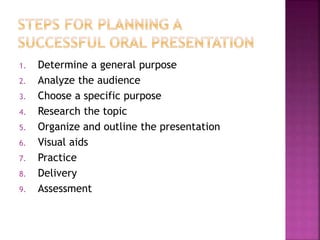
1. Determine a general purpose
2. Analyze the audience
3. Choose a specific purpose
4. Research the topic
5. Organize and outline the presentation
6. Visual aids
7. Practice
8. Delivery
9. Assessment
 Purposes:
 Inform
 Persuade
 Entertain/move
 Relate your message to your audience’s
knowledge, beliefs, and interests
 Study demographic data
 Consider size, setting, and prior disposition
toward the topic and yourself
 Important to present the most relevant
information while avoiding offense
 Narrow your topic
 Ex:
 General purpose: inform
 Specific purpose: Provide information about the
current issues affecting Georgia agriculture
 Should be explicitly stated in introduction
 Gathering facts, figures, testimony, and
examples
 Establishes credibility
 Competence: speaker’s knowledge of subject
 Character: speaker’s trustworthiness
 Introduction
 Attention-getter
 Thesis
 Preview statement
 Body: 2-5 main points
 Conclusion
 Summary of main points
 Strong concluding statement
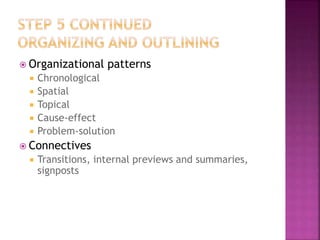
 Organizational patterns
 Chronological
 Spatial
 Topical
 Cause-effect
 Problem-solution
 Connectives
 Transitions, internal previews and summaries,
signposts
 Should add to the presentation
 Visible to audience
 Talk to audience, not visual aid
 Explain visual aids to audience
 Can be PowerPoint, graph, chart, DVD,
transparency, people, etc.
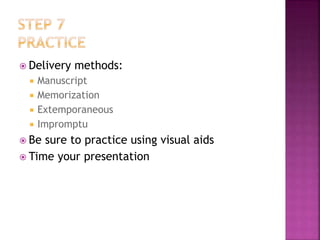
 Delivery methods:
 Manuscript
 Memorization
 Extemporaneous
 Impromptu
 Be sure to practice using visual aids
 Time your presentation
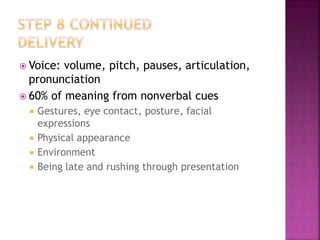
 Voice: volume, pitch, pauses, articulation,
pronunciation
 60% of meaning from nonverbal cues
 Gestures, eye contact, posture, facial
expressions
 Physical appearance
 Environment
 Being late and rushing through presentation
 Ask for feedback from the audience
 Identify strengths and weaknesses of your
presentation
Slides 4-18 were used from CTAE Resource Foundation Skills lesson plans
 Developing Listening Skills Activity
 Developing Listening Skills Handout
 Developing Skills for Understanding Handout
 Following Directions Handouts
 Students complete three activities about
following directions.
 Telephone Etiquette Project
 Prepare an oral presentation based on the
handouts given – Informative Oral
Presentation, Grading Rubric, and Self
Reflection.
 Each student will present their topic to the
class
 Classmates will evaluate each presenter and
observe and record nonverbal communication
gestures used during the presentation.
 Literal Writing Activity
 Use literal (precise) writing for accurate
information in giving directions
 Make a Peanut Butter and Jelly Sandwich
or
 Wrap a Gift

Forms of Communication.ppt

  • 2.
     Meetings  Conferencecalls  Telephone calls  Presentations  Video or audio recordings  Giving Directions  Other forms of oral communication
  • 3.
     Used slideshow createdin Foundation Skills section of CTAERN Resource cd for Oral Communications.  PowerPoint slideshow and Oral Communication Test are available.  The following 15 slides are the Foundation Skills Oral Communications slide show.
  • 4.
    Georgia CTAE ResourceNetwork Instructional Resource Office To accompany curriculum for the Georgia Peach State Career Pathways April 2009, Kayla Calhoun & Dr. Frank Flanders
  • 5.
     Recall thekey concepts of oral communication  Define the three elements of oral communication  List the steps for planning a successful oral presentation  Design a presentation outline using the 9 steps of oral communication  Describe the strengths and weaknesses of a presentation
  • 6.
     Expressing ideasand information as well as influencing others through the spoken word  Can also include nonverbal communication  Important for any career, whether you use it in informal conversations or business presentations  Key Concepts: speaker, message, channel, receiver, feedback, noise, context
  • 7.
     Content: informationconveyed in presentation  Organization: structure of presentation  Delivery: means of communication
  • 8.
    1. Determine ageneral purpose 2. Analyze the audience 3. Choose a specific purpose 4. Research the topic 5. Organize and outline the presentation 6. Visual aids 7. Practice 8. Delivery 9. Assessment
  • 9.
     Purposes:  Inform Persuade  Entertain/move
  • 10.
     Relate yourmessage to your audience’s knowledge, beliefs, and interests  Study demographic data  Consider size, setting, and prior disposition toward the topic and yourself  Important to present the most relevant information while avoiding offense
  • 11.
     Narrow yourtopic  Ex:  General purpose: inform  Specific purpose: Provide information about the current issues affecting Georgia agriculture  Should be explicitly stated in introduction
  • 12.
     Gathering facts,figures, testimony, and examples  Establishes credibility  Competence: speaker’s knowledge of subject  Character: speaker’s trustworthiness
  • 13.
     Introduction  Attention-getter Thesis  Preview statement  Body: 2-5 main points  Conclusion  Summary of main points  Strong concluding statement
  • 14.
     Organizational patterns Chronological  Spatial  Topical  Cause-effect  Problem-solution  Connectives  Transitions, internal previews and summaries, signposts
  • 15.
     Should addto the presentation  Visible to audience  Talk to audience, not visual aid  Explain visual aids to audience  Can be PowerPoint, graph, chart, DVD, transparency, people, etc.
  • 16.
     Delivery methods: Manuscript  Memorization  Extemporaneous  Impromptu  Be sure to practice using visual aids  Time your presentation
  • 17.
     Voice: volume,pitch, pauses, articulation, pronunciation  60% of meaning from nonverbal cues  Gestures, eye contact, posture, facial expressions  Physical appearance  Environment  Being late and rushing through presentation
  • 18.
     Ask forfeedback from the audience  Identify strengths and weaknesses of your presentation Slides 4-18 were used from CTAE Resource Foundation Skills lesson plans
  • 19.
     Developing ListeningSkills Activity  Developing Listening Skills Handout  Developing Skills for Understanding Handout  Following Directions Handouts  Students complete three activities about following directions.  Telephone Etiquette Project
  • 20.
     Prepare anoral presentation based on the handouts given – Informative Oral Presentation, Grading Rubric, and Self Reflection.  Each student will present their topic to the class  Classmates will evaluate each presenter and observe and record nonverbal communication gestures used during the presentation.
  • 21.
  • 22.
     Use literal(precise) writing for accurate information in giving directions  Make a Peanut Butter and Jelly Sandwich or  Wrap a Gift