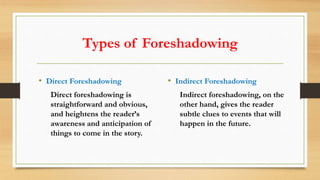
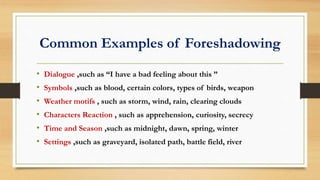
The document defines foreshadowing as a literary device that provides subtle hints about future plot developments. There are two main types: direct foreshadowing clearly foretells the future, while indirect foreshadowing provides more subtle clues. Common examples of foreshadowing include dialogue, symbols, weather, character reactions, time/season, and settings. Foreshadowing adds tension and expectations, prepares readers for shocks or twists, and subtly shifts a work's mood. The document provides examples from Romeo and Juliet and Macbeth to illustrate foreshadowing.