Keith Warren   828-230-1729   [email_address] President
Forced Air Composting VS. Traditional Static Pile Composting
The Problem  (continued) Farmers have tried static pile composting in the past but with little success Reasons why it didn’t work Mostly an anaerobic process Difficult and time consuming to manage Powerful unpleasant odor Takes to long to achieve final product
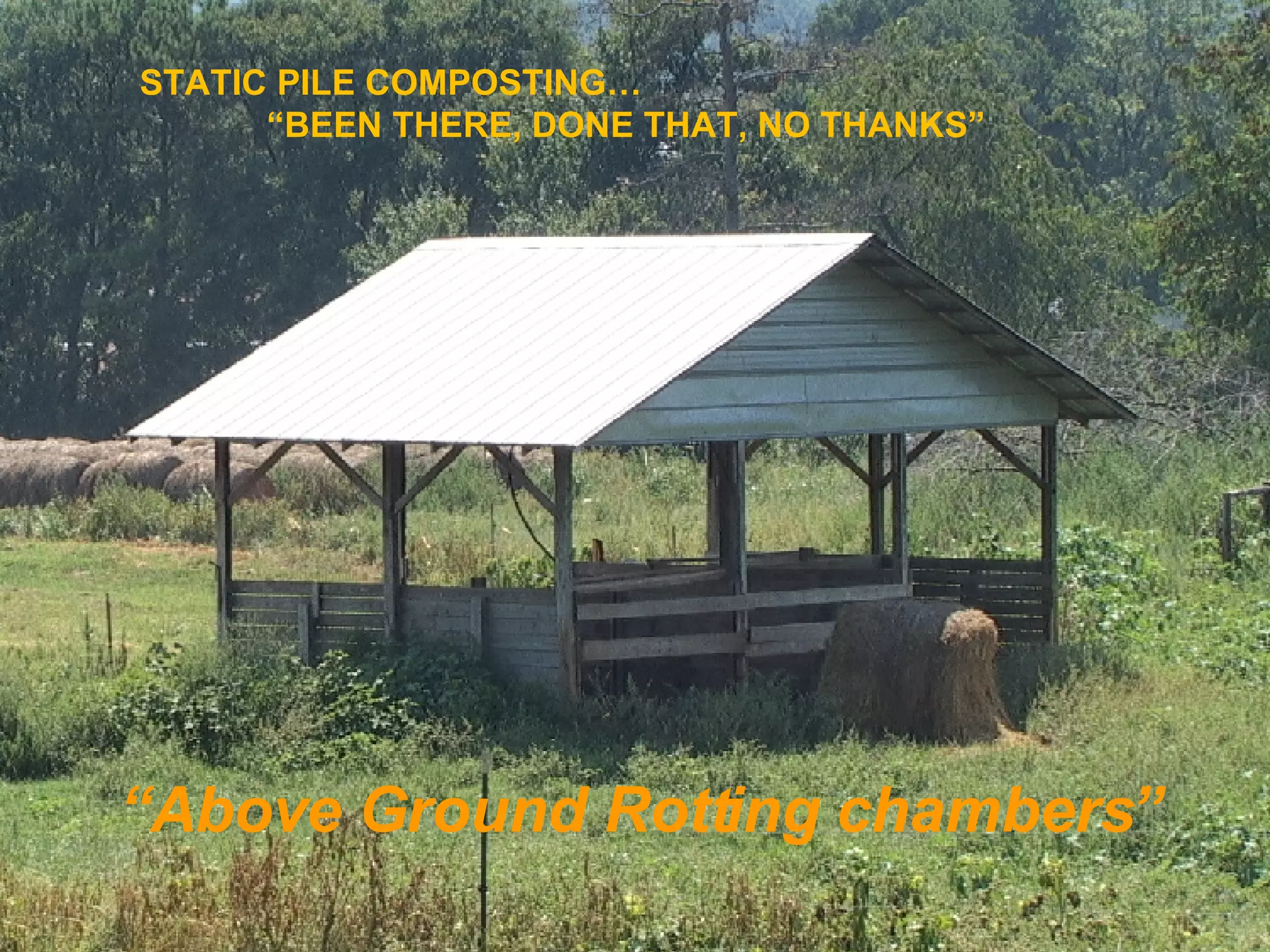
STATIC PILE COMPOSTING… “ BEEN THERE, DONE THAT, NO THANKS” “ Above Ground Rotting chambers”
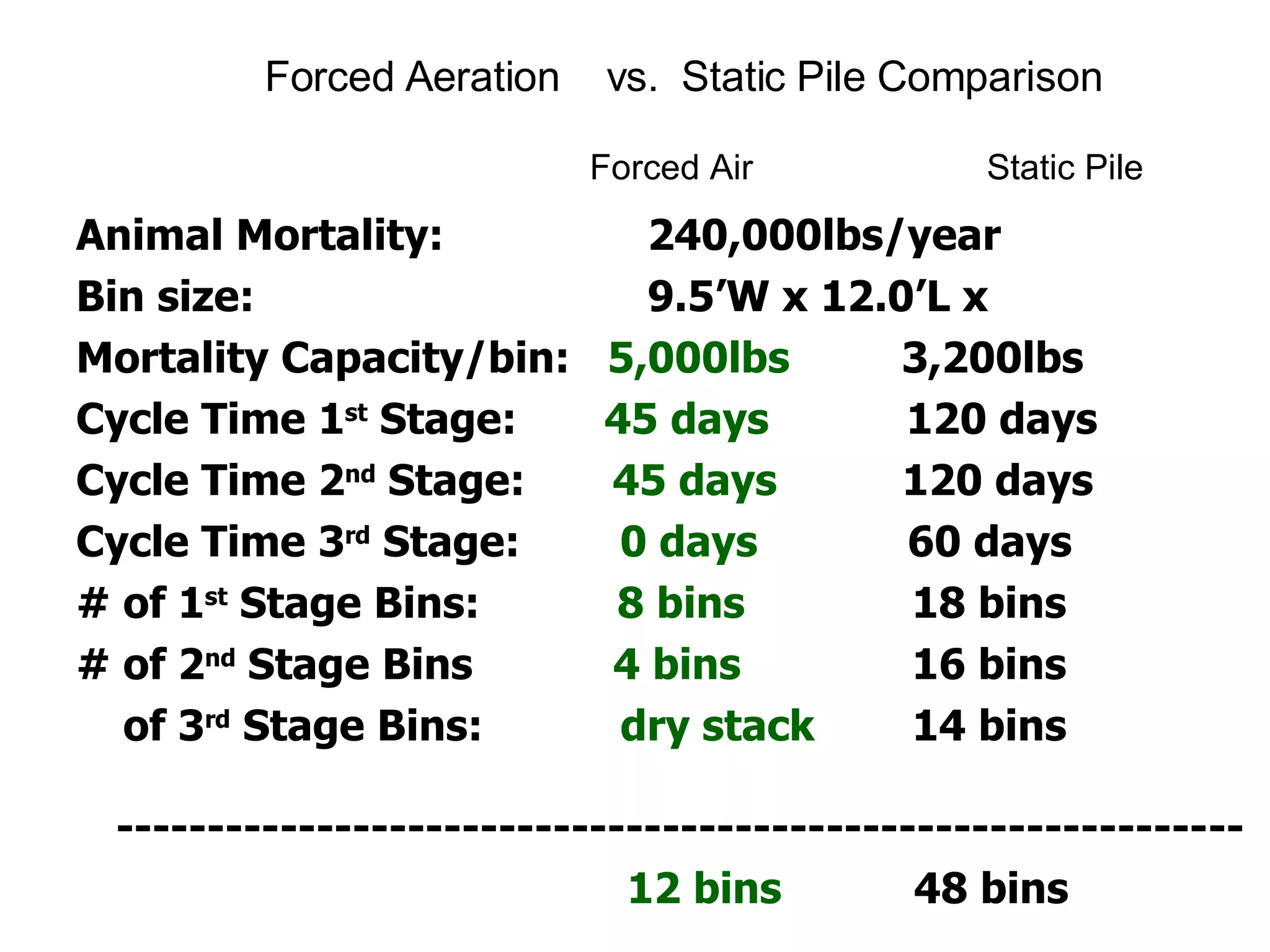
Forced Aeration  vs.  Static Pile Comparison Animal Mortality: 240,000lbs/year Bin size: 9.5’W x 12.0’L x  5.5’H Mortality Capacity/bin:  5,000lbs  3,200lbs  Cycle Time 1 st  Stage:  45 days   120 days Cycle Time 2 nd  Stage:  45 days   120 days Cycle Time 3 rd  Stage:   0 days   60 days # of 1 st  Stage Bins:   8 bins     18 bins # of 2 nd  Stage Bins :  4 bins     16 bins #  of 3 rd  Stage Bins:   dry stack   +  14 bins   -------------------------------------------------------------- Total Number of Bins:  12 bins   48 bins Forced Air  Static Pile
ADVANTAGES OF    FORCED AERATION OVER   STATIC PILE NO FUEL EVER NEEDED CONTINUOUS AERATION  NO TURNING REQUIRED TO AERATE LEACHATE CAPTURED & RECYCLED TEMPS ABOVE 150 °F for 10+ DAYS SUPERIOR PATHOGEN KILL HALF THE STRUCTURE REQUIRED HALF THE PROCESS TIME REQUIRED CONCRETE BIN DESIGN FOR DURABILITY NONE OF THE MESS, SMELL, DREAD…
Advantages (Continued) Very Little Odor Viable Product Produced Composting process accelerated with forced aeration (75% after 3 wks.) Employee satisfaction Utilizes Coastal Bermuda grass, corn and soy bean stubble $150.00 Utility costs/month
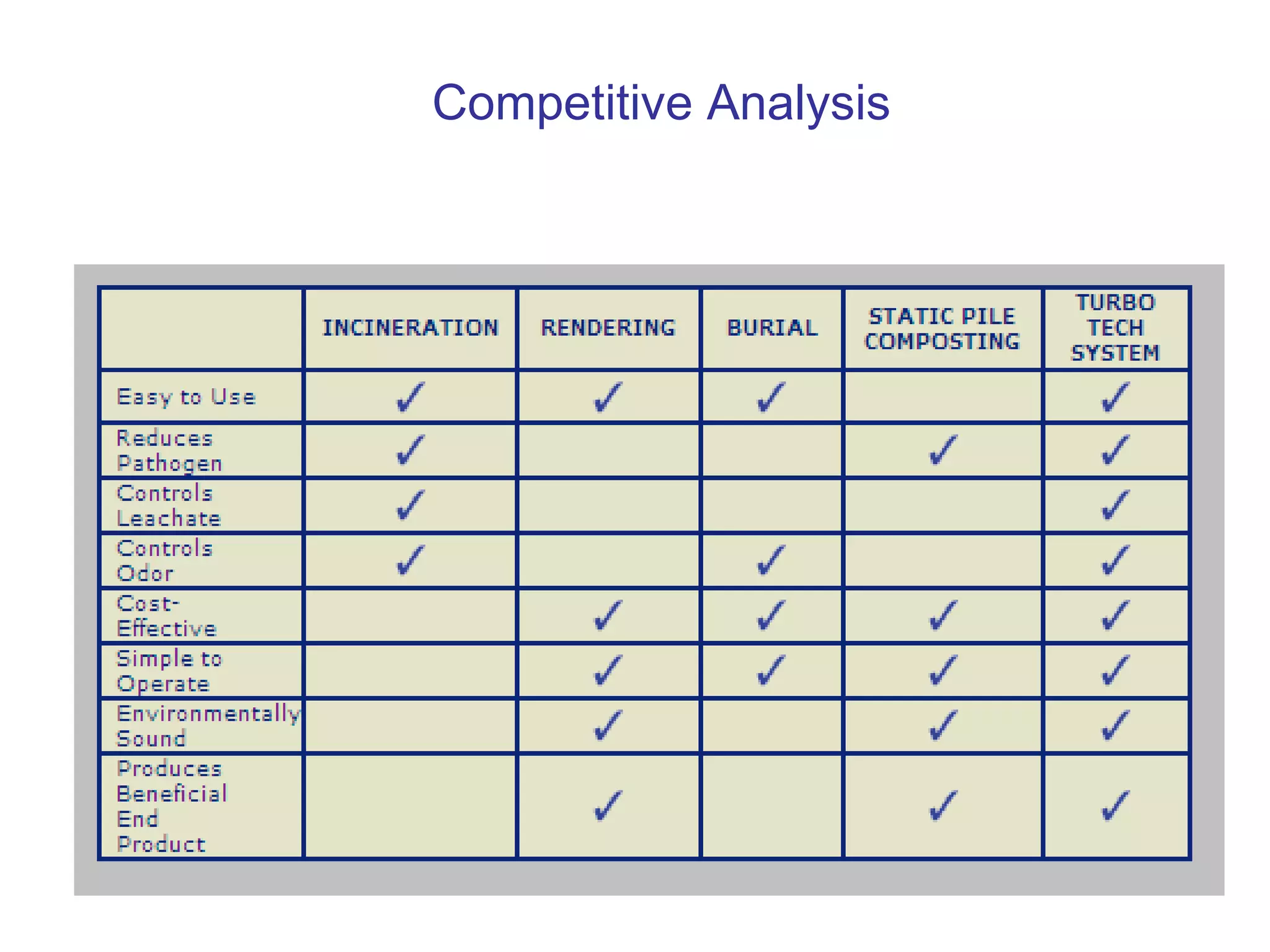
Competitive Analysis
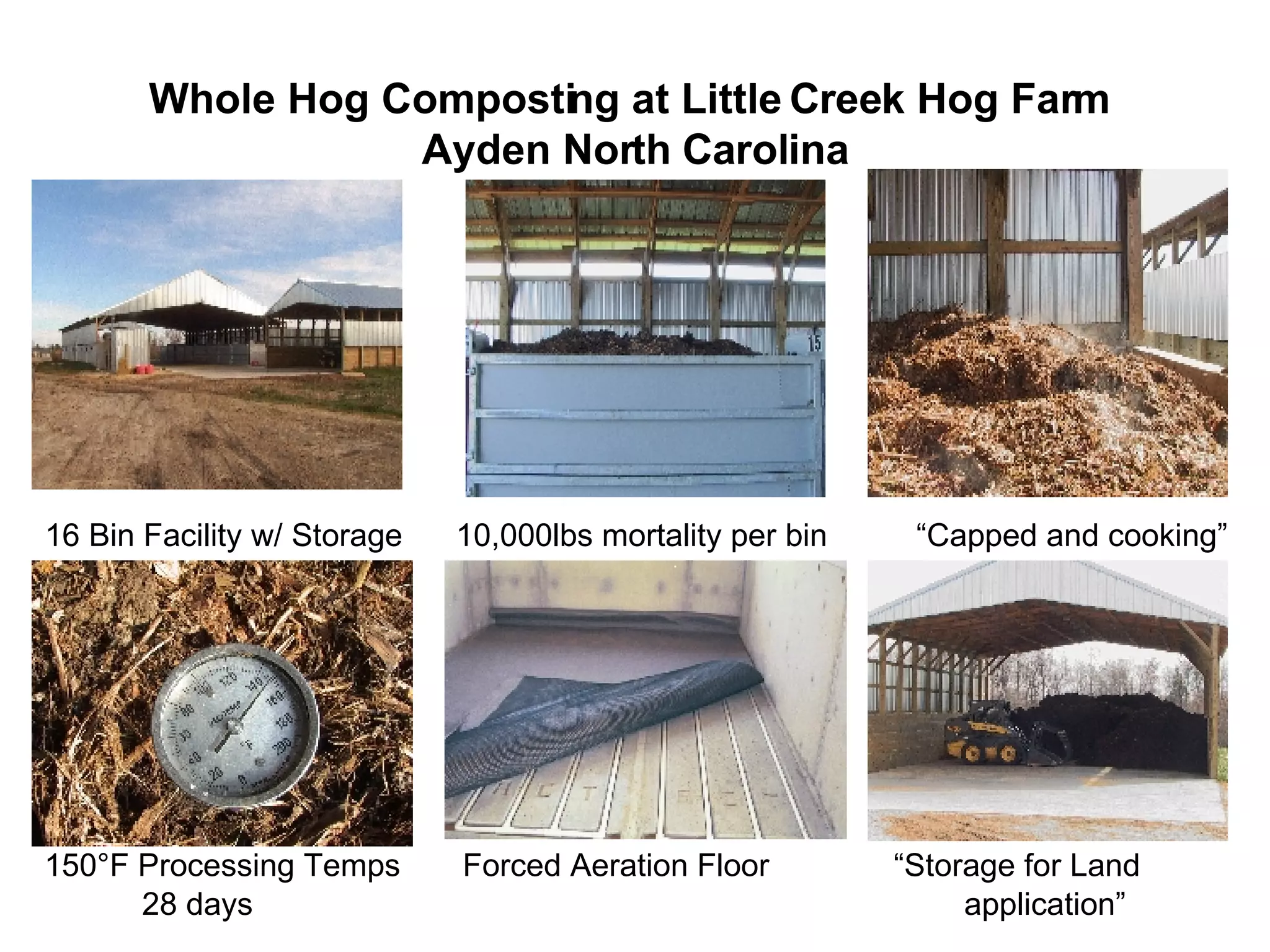
Whole Hog Composting at Little Creek Hog Farm  Ayden North Carolina 16 Bin Facility w/ Storage  10,000lbs mortality per bin  “Capped and cooking” 150°F Processing Temps  Forced Aeration Floor  “Storage for Land 28 days  application”

Forced Air Vs. Static Pile

  • 1.
    KeithWarren 828-230-1729 [email_address] President
  • 2.
    Forced Air CompostingVS. Traditional Static Pile Composting
  • 3.
    The Problem (continued) Farmers have tried static pile composting in the past but with little success Reasons why it didn’t work Mostly an anaerobic process Difficult and time consuming to manage Powerful unpleasant odor Takes to long to achieve final product
  • 4.
    STATIC PILE COMPOSTING…“ BEEN THERE, DONE THAT, NO THANKS” “ Above Ground Rotting chambers”
  • 5.
    Forced Aeration vs. Static Pile Comparison Animal Mortality: 240,000lbs/year Bin size: 9.5’W x 12.0’L x 5.5’H Mortality Capacity/bin: 5,000lbs 3,200lbs Cycle Time 1 st Stage: 45 days 120 days Cycle Time 2 nd Stage: 45 days 120 days Cycle Time 3 rd Stage: 0 days 60 days # of 1 st Stage Bins: 8 bins 18 bins # of 2 nd Stage Bins : 4 bins 16 bins # of 3 rd Stage Bins: dry stack + 14 bins -------------------------------------------------------------- Total Number of Bins: 12 bins 48 bins Forced Air Static Pile
  • 6.
    ADVANTAGES OF FORCED AERATION OVER STATIC PILE NO FUEL EVER NEEDED CONTINUOUS AERATION NO TURNING REQUIRED TO AERATE LEACHATE CAPTURED & RECYCLED TEMPS ABOVE 150 °F for 10+ DAYS SUPERIOR PATHOGEN KILL HALF THE STRUCTURE REQUIRED HALF THE PROCESS TIME REQUIRED CONCRETE BIN DESIGN FOR DURABILITY NONE OF THE MESS, SMELL, DREAD…
  • 7.
    Advantages (Continued) VeryLittle Odor Viable Product Produced Composting process accelerated with forced aeration (75% after 3 wks.) Employee satisfaction Utilizes Coastal Bermuda grass, corn and soy bean stubble $150.00 Utility costs/month
  • 8.
  • 9.
    Whole Hog Compostingat Little Creek Hog Farm Ayden North Carolina 16 Bin Facility w/ Storage 10,000lbs mortality per bin “Capped and cooking” 150°F Processing Temps Forced Aeration Floor “Storage for Land 28 days application”