F O O D F U E L S
I N T R O D U C T I O N T O
F O O D F U E L S
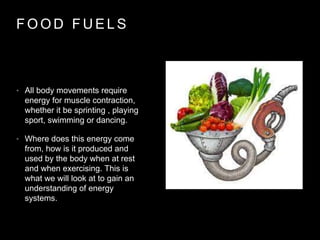
• All body movements require
energy for muscle contraction,
whether it be sprinting , playing
sport, swimming or dancing.
• Where does this energy come
from, how is it produced and
used by the body when at rest
and when exercising. This is
what we will look at to gain an
understanding of energy
systems.
F O O D T O E N E R G Y
• Food is the main source of energy, however it cannot
be used directly. Our bodies must digest food, breaking
it down into nutrients which are absorbed by the
body.These nutrients are carried via the bloodstream to
the cells of our bodies.
• Some of this fuel is used immediately for energy
production. The remaining energy is stored in various
forms in different sites within our bodies.
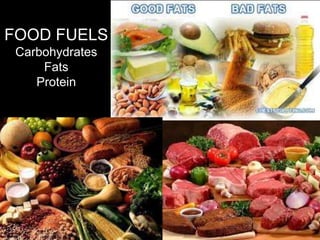
FOOD FUELS
Carbohydrates
Fats
Protein
C A R B O H Y D R A T E
S
• We need carbohydrates to fuel
physical activity.
• They are the body’s preferred
source of fuel, particularly during
exercise.
• Carbohydrates play a key role in
exercise lasting an hour or
more. Therefore, carb intake
before, during and after exercise
is vital.
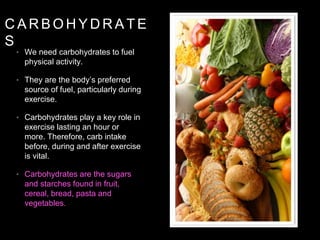
• Carbohydrates are the sugars
and starches found in fruit,
cereal, bread, pasta and
vegetables.
• Carbohydrates serve as major food fuels for the production of
ATP.
• There are two forms of carbohydrates -muscle and liver glycogen
and blood glucose.
• These play key roles during intense exercise, with the body’s
glycogen stores playing an important role in sustained aerobic
activity e.g. distance running.
• We don’t eat glucose or glycogen directly- carbohydrates in the
foods we eat are converted to glucose for immediate energy and
to glycogen to be stored in muscle.
C A R B O H Y D R A T E
S
G L O S S A R Y
Add the following words to your glossary:
• Glucose- Form of sugar that is found in blood. Used as a form of
energy for everyday activities - used immediately by the body
• Glycogen- The form which carbohydrates are stored in he muscle
and liver - glucose which is not used immediately is stored in the
body as glycogen
• Insulin- A hormone that regulates the level of glucose in the blood
• Pancreas- A gland that secretes insulin in response to the increase
in blood glucose
F A T S
Fats are essential in our diet
and perform many important
roles. Fats are involved in the
following ways in our bodies:
• Maintaining body
temperature
• Protection for body organs
• Energy stores
• Hormone production
F A T S
• Not all fats are the same, some are better for you than others.
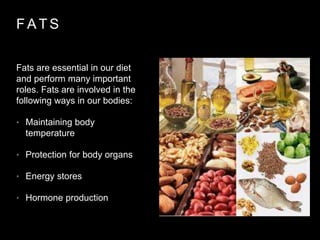
• There are many sources of fats these include: oil, eggs, butter,
margarine and nuts.
• Fats are found in the body in the form of triglycerides, these are stored
in the fat cells and known as adipose tissue throughout the body.
• Fats are the bodies preferred food fuel at rest and are also used during
prolonged exercise. However a greater amount of oxygen is required to
break down fats than carbohydrates to produce ATP.
• This means that fats are capable of producing more ATP than
carbohydrates however the conversion of these is less efficient as more
oxygen is required to produce the same amount of ATP.
G L O S S A R Y
Add the following words with your own definition to your
glossary:
• Adipose Tissue-
• Triglycerides-
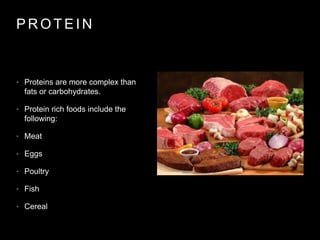
P R O T E I N
• Proteins are more complex than
fats or carbohydrates.
• Protein rich foods include the
following:
• Meat
• Eggs
• Poultry
• Fish
• Cereal
P R O T E I N
• The main role of protein in the body is for the growth
and repair of body tissue.
• Protein like carbohydrates and fats plays a vital role in
energy production, however protein is the body’s least
preferred food fuel and only used in long duration
endurance exercise.
F O O D F O R R E S T A N D E X E R C I S E
• The type of food used for energy production depends
on the intensity and duration of exercise being
completed.
• This is the same with the amount or usage of food fuels
when a person is at rest or exercising.
• At rest, the aerobic energy system is the main system
with fats contributing about two-thirds of the food fuel
and carbohydrates about one-third.
• This is because the body is not working maximally and
the cardiorespiratory system is working to supply the
body with enough oxygen for the production of ATP.
F O O D F O R R E S T A N D E X E R C I S E
• When exercising both the anaerobic and aerobic energy systems contribute to
ATP resynthesis. The duration and intensity of exercise determine the energy
system which is predominate. For example:
• A long jumper who may only take a few seconds to complete their event from take
off to landing, a food fuel is not used as they need immediate energy in the form of
ATP from the body.
• A 400m runner, predominantly a high-intensity activity, the anaerobic system will
be the dominant system with carbohydrates being the preferred fuel.
• A marathon runner who runs for 2 hours plus will be using the aerobic systems,
with carbohydrates being the preferred fuel. The longer the runner runs the more
their glycogen stores will diminish and fats will become the more dominate fuel.
The exact time when fats become the main fuel depends on the athlete, their
training, diet and glycogen stores.

foodfuels-150309005944-conversion-gate01.pdf

  • 1.
    F O OD F U E L S I N T R O D U C T I O N T O
  • 2.
    F O OD F U E L S • All body movements require energy for muscle contraction, whether it be sprinting , playing sport, swimming or dancing. • Where does this energy come from, how is it produced and used by the body when at rest and when exercising. This is what we will look at to gain an understanding of energy systems.
  • 3.
    F O OD T O E N E R G Y • Food is the main source of energy, however it cannot be used directly. Our bodies must digest food, breaking it down into nutrients which are absorbed by the body.These nutrients are carried via the bloodstream to the cells of our bodies. • Some of this fuel is used immediately for energy production. The remaining energy is stored in various forms in different sites within our bodies.
  • 4.
  • 5.
    C A RB O H Y D R A T E S • We need carbohydrates to fuel physical activity. • They are the body’s preferred source of fuel, particularly during exercise. • Carbohydrates play a key role in exercise lasting an hour or more. Therefore, carb intake before, during and after exercise is vital. • Carbohydrates are the sugars and starches found in fruit, cereal, bread, pasta and vegetables.
  • 6.
    • Carbohydrates serveas major food fuels for the production of ATP. • There are two forms of carbohydrates -muscle and liver glycogen and blood glucose. • These play key roles during intense exercise, with the body’s glycogen stores playing an important role in sustained aerobic activity e.g. distance running. • We don’t eat glucose or glycogen directly- carbohydrates in the foods we eat are converted to glucose for immediate energy and to glycogen to be stored in muscle. C A R B O H Y D R A T E S
  • 7.
    G L OS S A R Y Add the following words to your glossary: • Glucose- Form of sugar that is found in blood. Used as a form of energy for everyday activities - used immediately by the body • Glycogen- The form which carbohydrates are stored in he muscle and liver - glucose which is not used immediately is stored in the body as glycogen • Insulin- A hormone that regulates the level of glucose in the blood • Pancreas- A gland that secretes insulin in response to the increase in blood glucose
  • 8.
    F A TS Fats are essential in our diet and perform many important roles. Fats are involved in the following ways in our bodies: • Maintaining body temperature • Protection for body organs • Energy stores • Hormone production
  • 9.
    F A TS • Not all fats are the same, some are better for you than others. • There are many sources of fats these include: oil, eggs, butter, margarine and nuts. • Fats are found in the body in the form of triglycerides, these are stored in the fat cells and known as adipose tissue throughout the body. • Fats are the bodies preferred food fuel at rest and are also used during prolonged exercise. However a greater amount of oxygen is required to break down fats than carbohydrates to produce ATP. • This means that fats are capable of producing more ATP than carbohydrates however the conversion of these is less efficient as more oxygen is required to produce the same amount of ATP.
  • 10.
    G L OS S A R Y Add the following words with your own definition to your glossary: • Adipose Tissue- • Triglycerides-
  • 11.
    P R OT E I N • Proteins are more complex than fats or carbohydrates. • Protein rich foods include the following: • Meat • Eggs • Poultry • Fish • Cereal
  • 12.
    P R OT E I N • The main role of protein in the body is for the growth and repair of body tissue. • Protein like carbohydrates and fats plays a vital role in energy production, however protein is the body’s least preferred food fuel and only used in long duration endurance exercise.
  • 13.
    F O OD F O R R E S T A N D E X E R C I S E • The type of food used for energy production depends on the intensity and duration of exercise being completed. • This is the same with the amount or usage of food fuels when a person is at rest or exercising.
  • 14.
    • At rest,the aerobic energy system is the main system with fats contributing about two-thirds of the food fuel and carbohydrates about one-third. • This is because the body is not working maximally and the cardiorespiratory system is working to supply the body with enough oxygen for the production of ATP. F O O D F O R R E S T A N D E X E R C I S E
  • 15.
    F O OD F O R R E S T A N D E X E R C I S E • When exercising both the anaerobic and aerobic energy systems contribute to ATP resynthesis. The duration and intensity of exercise determine the energy system which is predominate. For example: • A long jumper who may only take a few seconds to complete their event from take off to landing, a food fuel is not used as they need immediate energy in the form of ATP from the body. • A 400m runner, predominantly a high-intensity activity, the anaerobic system will be the dominant system with carbohydrates being the preferred fuel. • A marathon runner who runs for 2 hours plus will be using the aerobic systems, with carbohydrates being the preferred fuel. The longer the runner runs the more their glycogen stores will diminish and fats will become the more dominate fuel. The exact time when fats become the main fuel depends on the athlete, their training, diet and glycogen stores.