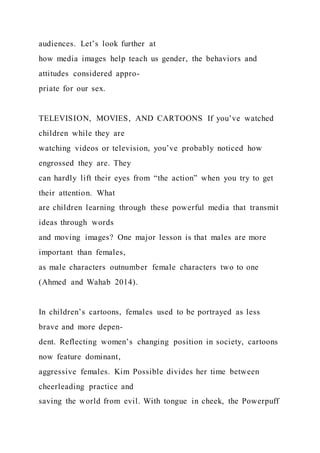
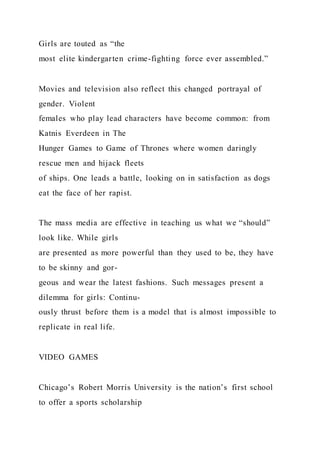
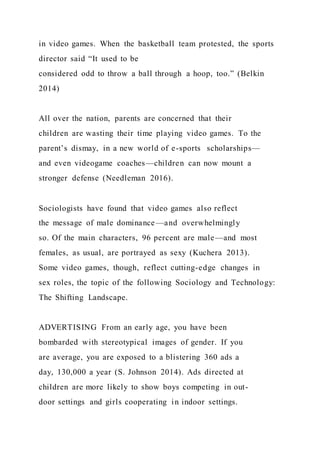
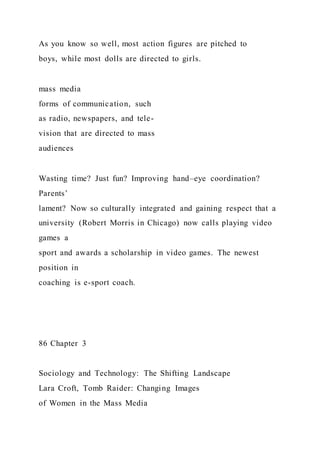
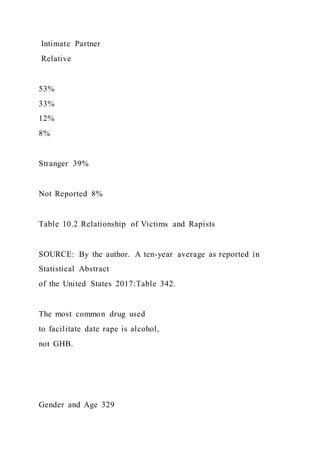
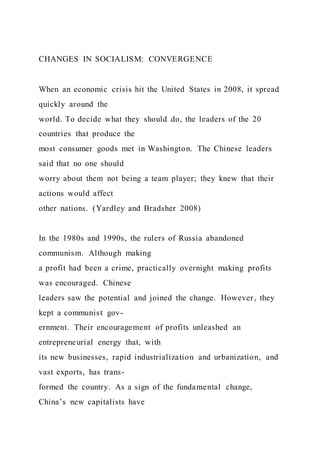
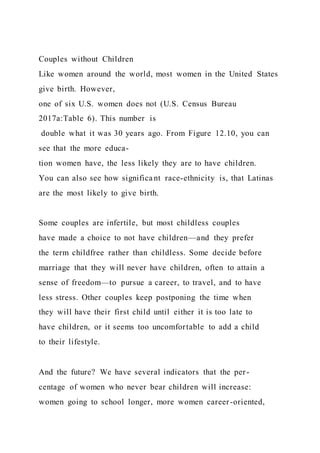
Food Truck
Create Concept
Interview Prospective Customers
Choose Food Concept
Acquire Financing
Get Truck
Develop Business Plan
Acquire Grant or Loan
Create Menu
Research Truck Options
Determine Kitchen needs in Truck
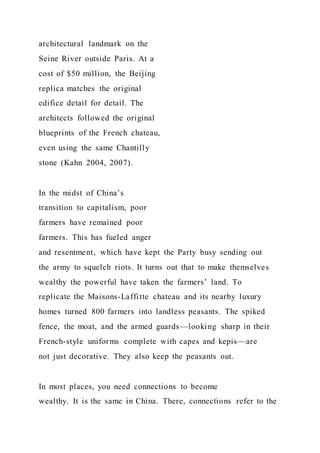
Brand Identity
Hire Graphic Artist for brand Concept and logo
Register Trademark
Develop Slogan
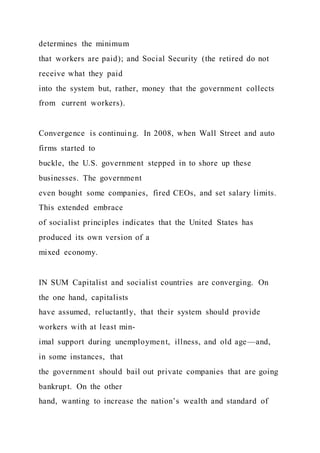
Advertise
Social Media , Website, Distribute Flyers
Essentials of
Sociology
A Down-to-Earth Approach
Thirteenth Edition
James M. Henslin
Southern Illinois University, Edwardsville
330 Hudson Street, NY NY 10013
Acknowledgments of third party content appear on pages CR-1–
CR-7, which constitutes an
extension of this copyright page. Cultural Diversity Around the
World: Doing Business in the
Global Village box contains art with the following credit:
Demashita! Powerpuff Girls Z © 2009
Cartoon Network, Toei Animation & Aniplex. All Rights
Reserved. THE POWERPUFF GIRLS
and all related characters and elements are trademarks of and ©
Cartoon Network.
Copyright © 2019, 2017, 2014, 2012 by James M. Henslin. All
Rights Reserved. Printed in the
United States of America. This publication is protected by
copyright, and permission should
be obtained from the publisher prior to any prohibited
reproduction, storage in a retrieval
system, or transmission in any form or by any means,
electronic, mechanical, photocopying,
recording, or otherwise. For information regarding permissions,
request forms and the
appropriate contacts within the Pearson Rights & Permissions
Department, please visit
www.pearsoned.com/permissions/.
PEARSON and ALWAYS LEARNING are exclusive trademarks
owned by Pearson Education,
Inc. or its affiliates in the United States and/or other countries.
Unless otherwise indicated herein, any third-party trademarks
that may appear in this work
are the property of their respective owners and any references to
third-party trademarks, logos
or other trade dress are for demonstrative or descriptive
purposes only. Such references are not
intended to imply any sponsorship, endorsement, authorization,
or promotion of Pearson’s
products by the owners of such marks, or any relationship
between the owner and Pearson
Education, Inc. or its affiliates, authors, licensees or
distributors.
Library of Congress Cataloging-in-Publication Data
Names: Henslin, James M., author.
Title: Essentials of sociology : a down-to-earth approach /
James M. Henslin,
Southern Illinois University, Edwardsville.
Description: Thirteenth edition. | Boston : Pearson, [2019]
Identifiers: LCCN 2017048320 (print) | LCCN 2017052388
(ebook) | ISBN
9780134740041 (ebook) | ISBN 9780134736570 (student
edition : alk. paper) |
ISBN 9780134740003 (a la carte : alk. paper)
Subjects: LCSH: Sociology.
Classification: LCC HM586 (ebook) | LCC HM586 .H43 2019
(print) | DDC 301— dc23
LC record available at https://lccn.loc.gov/2017048320
1 17
VP, Product Development: Dickson Musslewhite
Portfolio Manager: Jeff Marshall
Editorial Assistant: Christina Winterburn
Development Editor: Jennifer Auvil (OPS)
Program Team Lead: Amber Mackey
Content Producer: Mary Donovan
Director of Field Marketing: Jonathan Cottrell
Field Marketer: Brittany Pogue-Mohammed Acosta
Operations Manager: Mary Fischer
Operations Specialist: Mary Ann Gloriande
Director of Design: Blair Brown
Cover Art Director: Kathryn Foot
Cover Design: Lumina
Digital Studio Project Manager: Rich Barnes
Full-Service Project Management and Composition: Integra
Printer/Binder: LSC Communications, Inc
Cover Printer: Phoenix Color/Hagerstown
Rental Edition
ISBN 10: 0-13-473658-3
ISBN 13: 978-0-13-473658-7
Revel AC
ISBN 10: 0-13-473989-2
ISBN 13: 978-0-13-473989-2
ALC
ISBN 10: 0-13-473839-X
ISBN 13: 978-0-13-473839-0
Instructor’s Resource Edition
ISBN 10: 0-13-47385-4
ISBN 13: 978-0-13-473845-1
http://www.pearsoned.com/permissions/
https://lccn.loc.gov/2017048320
To my fellow sociologists,
who do such creative research on social life and
who communicate the sociological imagination
to generations of students. With my sincere
admiration and appreciation.
1 The Sociological Perspective 1
2 Culture 38
3 Socialization 68
4 Social Structure and Social
Interaction 101
5 Social Groups and Formal
Organizations 133
6 Deviance and Social Control 162
7 Global Stratification 195
8 Social Class in the United States 228
9 Race and Ethnicity 263
10 Gender and Age 303
11 Politics and the Economy 345
12 Marriage and Family 381
13 Education and Religion 415
14 Population and Urbanization 451
15 Social Change and the Environment 488
Brief Contents
iv
v
To the Student ... from the Author xviii
To the Instructor ... from the Author xix
About the Author xxxvi
1 The Sociological Perspective 1
The Sociological Perspective 3
Seeing the Broader Social Context 3
The Global Context—and the Local 4
Origins of Sociology 4
Tradition versus Science 5
Auguste Comte and Positivism 5
Herbert Spencer and Social Darwinism 6
Karl Marx and Class Conflict 6
Emile Durkheim and Social Integration 7
APPLYING DURKHEIM 7
Max Weber and the Protestant Ethic 8
RELIGION AND THE ORIGIN OF CAPITALISM 8
Sociology in North America 9
Sexism at the Time: Women in Early Sociology 9
Racism at the Time: W. E. B. Du Bois 10
Jane Addams: Sociologist and Social Reformer 11
Talcott Parsons and C. Wright Mills: Theory
versus Reform 12
The Continuing Tension: Basic, Applied,
and Public Sociology 12
BASIC SOCIOLOGY 12 • APPLIED SOCIOLOGY 12 •
PUBLIC SOCIOLOGY 12
Theoretical Perspectives in Sociology 14
Symbolic Interactionism 14
SYMBOLS IN EVERYDAY LIFE 14 • IN SUM 15 •
APPLYING SYMBOLIC INTERACTIONISM 15 • IN SUM 16
Functional Analysis 16
ROBERT MERTON AND FUNCTIONALISM 16 • IN SUM 17 •
APPLYING FUNCTIONAL ANALYSIS 17 • IN SUM 17
Conflict Theory 18
KARL MARX AND CONFLICT THEORY 18 • CONFLICT
THEORY TODAY 19 • FEMINISTS AND CONFLICT
THEORY 19 • APPLYING CONFLICT THEORY 19 •
IN SUM 19
Putting the Theoretical Perspectives Together 19
Levels of Analysis: Macro and Micro 19
How Theory and Research Work Together 20
Doing Sociological Research 21
A Research Model 21
Selecting a Topic 21
Defining the Problem 22
Reviewing the Literature 22
Formulating a Hypothesis 22
Choosing a Research Method 22
Collecting the Data 22
Analyzing the Results 23
Sharing the Results 23
Research Methods (Designs) 24
Surveys 25
SELECTING A SAMPLE 25 • ASKING NEUTRAL
QUESTIONS 26 • TYPES OF QUESTIONS 27 •
ESTABLISHING RAPPORT 27
Participant Observation (Fieldwork) 28
Case Studies 29
Secondary Analysis 30
Analysis of Documents 30
Experiments 30
Unobtrusive Measures 32
Gender in Sociological Research 32
Ethics in Sociological Research 33
Protecting the Subjects: The Brajuha Research 33
Misleading the Subjects: The Humphreys Research 34
Trends Shaping the Future of Sociology 34
Tension in Sociology: Research versus
Social Reform 35
THREE STAGES IN SOCIOLOGY 35 • DIVERSITY OF
ORIENTATIONS 35
Globalization 35
HOW GLOBALIZATION APPLIES TO THIS TEXT 35
Summary and Review 36
Thinking Critically about Chapter 1 37
2 Culture 38
What Is Culture? 40
Culture and Taken-for-Granted Orientations
to Life 40
IN SUM 42
Practicing Cultural Relativism 43
ATTACK ON CULTURAL RELATIVISM 44
Components of Symbolic Culture 46
Gestures 46
MISUNDERSTANDING AND OFFENSE 46 •
UNIVERSAL GESTURES? 47
Language 47
LANGUAGE ALLOWS HUMAN EXPERIENCE TO BE
CUMULATIVE 48 • LANGUAGE PROVIDES A SOCIAL
OR SHARED PAST 48 • LANGUAGE PROVIDES A SOCIAL
OR SHARED FUTURE 48 • LANGUAGE ALLOWS SHARED
PERSPECTIVES 48 • LANGUAGE ALLOWS SHARED,
GOAL-DIRECTED BEHAVIOR 49 • IN SUM 50
Language and Perception: The Sapir-Whorf
Hypothesis 50
Values, Norms, and Sanctions 51
Folkways, Mores, and Taboos 52
Contents
vi Contents
Many Cultural Worlds 53
Subcultures 53
Countercultures 56
Values in U.S. Society 56
An Overview of U.S. Values 56
Value Clusters 57
Value Contradictions 58
An Emerging Value Cluster 58
IN SUM 59
When Values Clash 60
Values as Distorting Lenses 60
“Ideal” Culture Versus “Real” Culture 60
Cultural Universals 60
IN SUM 61
Sociobiology and Human Behavior 61
IN SUM 62
Technology in the Global Village 62
New Technology 62
Cultural Lag and Cultural Change 64
Technology and Cultural Leveling 64
CULTURAL DIFFUSION 64 • COMMUNICATION AND
TRAVEL 65 • CULTURAL LEVELING 65
Summary and Review 66
Thinking Critically about Chapter 2 67
3 Socialization 68
Society Makes Us Human 70
Feral Children 71
Isolated Children 71
Institutionalized Children 72
THE ORPHANAGE EXPERIMENT IN THE UNITED STATES
72 •
THE ORPHANAGE EXPERIMENT IN ROMANIA 73 •
TIMING
AND HUMAN DEVELOPMENT: THE CASE OF GENIE 73 •
IN SUM 73
Deprived Animals 73
IN SUM: SOCIETY MAKES US HUMAN 74
Socialization into the Self and Mind 74
Cooley and the Looking-Glass Self 74
IN SUM 75
Mead and Role Taking 75
IN SUM 76
Piaget and the Development of Reasoning 76
Global Aspects of the Self and Reasoning 77
Learning Personality, Morality, and Emotions 77
Freud and the Development of Personality 77
SOCIOLOGICAL EVALUATION 78
Kohlberg and the Development of Morality 78
KOHLBERG’S THEORY 78 • CRITICISMS OF
KOHLBERG 79 • RESEARCH WITH BABIES 79 •
THE CULTURAL RELATIVITY OF MORALITY 79
Socialization into Emotions 79
GLOBAL EMOTIONS 79 • EXPRESSING EMOTIONS:
“GENDER RULES” 79 • THE EXTENT OF “FEELING
RULES” 80 • WHAT WE FEEL 80 • RESEARCH
NEEDED 80
Society within Us: The Self and Emotions
as a Social Mirror 81
IN SUM 81
Socialization into Gender 81
Learning the Gender Map 81
Gender Messages in the Family 82
PARENTS 82 • TOYS AND PLAY 82 • SAME-SEX
PARENTS 84
Gender Messages from Peers 84
Gender Messages in the Mass Media 85
TELEVISION, MOVIES, AND CARTOONS 85 • VIDEO
GAMES 85 • ADVERTISING 85 • IN SUM 86
Agents of Socialization 86
The Family 87
SOCIAL CLASS AND TYPE OF WORK 87 • SOCIAL
CLASS AND PLAY 87
The Neighborhood 87
Religion 88
Day Care 88
The School 89
Peer Groups 90
The Workplace 92
Resocialization 92
Total Institutions 92
Socialization through the Life Course 94
Childhood (from birth to about age 12) 94
IN SUM 95
Adolescence (ages 13–17) 95
Transitional Adulthood (ages 18–29) 96
“BRING YOUR PARENTS TO WORK DAY” 96
The Middle Years (ages 30–65) 96
THE EARLY MIDDLE YEARS (AGES 30–49) 96 • THE
LATER
MIDDLE YEARS (AGES 50–65) 97
The Older Years (about age 65 on) 97
THE TRANSITIONAL OLDER YEARS (AGES 65–74) 97 •
THE LATER OLDER YEARS (AGE 75 OR SO) 97
Are We Prisoners of Socialization? 98
Summary and Review 99
Thinking Critically about Chapter 3 100
4 Social Structure and Social
Interaction 101
Levels of Sociological Analysis 103
Macrosociology and Microsociology 103
The Macrosociological Perspective: Social Structure 104
The Sociological Significance of Social Structure 104
IN SUM 105
Components of Social Structure 105
Culture 106
Social Class 106
Social Status 106
STATUS SETS 106 • ASCRIBED AND ACHIEVED
STATUSES 106 • STATUS SYMBOLS 107 • MASTER
STATUSES 107 • STATUS INCONSISTENCY 107
Contents vii
Roles 108
Groups 108
Social Institutions 109
Comparing Functionalist and Conflict Perspectives 109
THE FUNCTIONALIST PERSPECTIVE 109 • THE CONFLICT
PERSPECTIVE 111 • IN SUM 111
Changes in Social Structure 111
What Holds Society Together? 111
MECHANICAL AND ORGANIC SOLIDARITY 111 •
GEMEINSCHAFT AND GESELLSCHAFT 112 • HOW
RELEVANT ARE THESE CONCEPTS TODAY? 112 •
IN SUM 113
The Microsociological Perspective: Social Interaction
in Everyday Life 114
Symbolic Interaction 114
Stereotypes in Everyday Life 114
Personal Space 118
Eye Contact 119
Smiling 119
Body Language 119
APPLIED BODY LANGUAGE 119
Dramaturgy: The Presentation of Self in Everyday Life 119
Stages 120
Role Performance, Conflict, and Strain 120
Sign-Vehicles 121
Teamwork 123
Becoming the Roles We Play 123
APPLYING IMPRESSION MANAGEMENT 123
Ethnomethodology: Uncovering Background
Assumptions 124
IN SUM 125
The Social Construction of Reality 125
Gynecological Examinations 126
IN SUM 127
The Need for Both Macrosociology and Microsociology 127
Summary and Review 131
Thinking Critically about Chapter 4 132
5 Social Groups and Formal
Organizations 133
Groups within Society 135
Primary Groups 135
PRODUCING A MIRROR WITHIN 137
Secondary Groups 137
VOLUNTARY ASSOCIATIONS 137 • THE INNER
CIRCLE 137 • THE IRON LAW OF OLIGARCHY 138
In-Groups and Out-Groups 138
SHAPING PERCEPTION AND MORALITY 138
Reference Groups 139
EVALUATING OURSELVES 139 • EXPOSURE TO
CONTRADICTORY
STANDARDS IN A SOCIALLY DIVERSE SOCIETY 140
Social Networks 140
THE SMALL WORLD PHENOMENON 142 • IS THE
SMALL WORLD PHENOMENON AN ACADEMIC
MYTH? 142 • BUILDING UNINTENTIONAL BARRIERS 142
Bureaucracies 143
The Characteristics of Bureaucracies 144
Goal Displacement and the Perpetuation
of Bureaucracies 146
Dysfunctions of Bureaucracies 147
RED TAPE: A RULE IS A RULE 147 • ALIENATION OF
WORKERS 147 • RESISTING ALIENATION 148
Working for the Corporation 148
Self-Fulfilling Stereotypes in the “Hidden”
Corporate Culture 148
SELF-FULFILLING STEREOTYPES AND PROMOTIONS 148
Diversity in the Workplace 149
Technology and the Maximum-Security Society 150
Group Dynamics 151
Effects of Group Size on Stability and Intimacy 151
Effects of Group Size on Attitudes and Behavior 152
LABORATORY FINDINGS AND THE REAL
WORLD 153
Leadership 155
WHO BECOMES A LEADER? 155 • TYPES OF
LEADERS 155 • LEADERSHIP STYLES 155 •
LEADERSHIP STYLES IN CHANGING SITUATIONS 156
The Power of Peer Pressure: The Asch Experiment 157
The Power of Authority: The Milgram Experiment 158
Global Consequences of Group Dynamics:
Groupthink 159
PREVENTING GROUPTHINK 160
Summary and Review 160
Thinking Critically about Chapter 5 161
6 Deviance and Social Control 162
What is Deviance? 164
A Neutral Term 164
STIGMA 164
Deviance Is Relative 164
How Norms Make Social Life Possible 166
Sanctions 166
IN SUM 166
Competing Explanations of Deviance: Sociobiology,
Psychology, and Sociology 167
Biosocial Explanations 167
Psychological Explanations 167
Sociological Explanations 168
The Symbolic Interactionist Perspective 168
Differential Association Theory 168
THE THEORY 168 • FAMILIES 168 • FRIENDS,
NEIGHBORHOODS, AND SUBCULTURES 168 •
DIFFERENTIAL ASSOCIATION IN THE CYBER AGE 169 •
PRISON OR FREEDOM? 169
Control Theory 170
THE THEORY 170
Labeling Theory 172
REJECTING LABELS: HOW PEOPLE NEUTRALIZE
DEVIANCE 172 • EMBRACING LABELS: THE EXAMPLE
OF
OUTLAW BIKERS 173 • LABELS CAN BE POWERFUL 173 •
HOW DO LABELS WORK? 174 • IN SUM 174
The Functionalist Perspective 175
Can Deviance Really Be Functional for Society? 175
Strain Theory: How Mainstream Values Produce
Deviance 175
FOUR DEVIANT PATHS 176 • IN SUM 176
Illegitimate Opportunity Structures: Social
Class and Crime 176
STREET CRIME 176 • WHITE-COLLAR CRIME 178 •
GENDER AND CRIME 179 • IN SUM 180
The Conflict Perspective 180
Class, Crime, and the Criminal Justice System 180
The Criminal Justice System as an Instrument
of Oppression 180
IN SUM 181
Reactions to Deviance 181
Street Crime and Prisons 182
The Decline of Violent Crime 185
Recidivism 185
The Death Penalty and Bias 186
GEOGRAPHY 187 • SOCIAL CLASS 188 • GENDER 188 •
RACE–ETHNICITY 188
The Trouble with Official Statistics 190
The Medicalization of Deviance: Mental Illness 191
NEITHER MENTAL NOR ILLNESS? 191 • THE HOMELESS
MENTALLY ILL 192
The Need for a More Humane Approach 193
Summary and Review 193
Thinking Critically about Chapter 6 194
7 Global Stratification 195
Systems of Social Stratification 197
Slavery 198
CAUSES OF SLAVERY 198 • CONDITIONS OF
SLAVERY 199 • BONDED LABOR IN THE NEW
WORLD 199 • SLAVERY IN THE NEW WORLD 199 •
SLAVERY TODAY 200
Caste 200
INDIA’S RELIGIOUS CASTES 200 • SOUTH AFRICA 201 •
A U.S. RACIAL CASTE SYSTEM 202
Estate 203
WOMEN IN THE ESTATE SYSTEM 203
Class 204
Global Stratification and the Status of Females 204
The Global Superclass 204
What Determines Social Class? 205
Karl Marx: The Means of Production 205
Max Weber: Property, Power, and Prestige 206
IN SUM 206
Why Is Social Stratification Universal? 206
The Functionalist View: Motivating Qualified
People 207
DAVIS AND MOORE’S EXPLANATION 207 • TUMIN’S
CRITIQUE OF DAVIS AND MOORE 207 • IN SUM 208
The Conflict Perspective: Class Conflict
and Scarce Resources 208
MOSCA’S ARGUMENT 208 • MARX’S ARGUMENT 209 •
CURRENT APPLICATIONS OF CONFLICT THEORY 209
Lenski’s Synthesis 209
IN SUM 209
How Do Elites Maintain Stratification? 210
Soft Control versus Force 210
CONTROLLING PEOPLE’S IDEAS 210 • CONTROLLING
INFORMATION 211 • STIFLING CRITICISM 211 • BIG
BROTHER TECHNOLOGY 211 • IN SUM 211
Comparative Social Stratification 212
Social Stratification in Great Britain 212
Social Stratification in the Former Soviet Union 212
Global Stratification: Three Worlds 213
The Most Industrialized Nations 214
The Industrializing Nations 217
The Least Industrialized Nations 218
Modifying the Model 218
How Did the World’s Nations Become Stratified? 221
Colonialism 221
World System Theory 222
Culture of Poverty 223
Evaluating the Theories 223
Maintaining Global Stratification 224
Neocolonialism 224
RELEVANCE TODAY 224
Multinational Corporations 224
BUYING POLITICAL STABILITY 225 • UNANTICIPATED
CONSEQUENCES 225
Technology and Global Domination 225
Strains in the Global System: Uneasy Realignments 226
Summary and Review 226
Thinking Critically about Chapter 7 227
8 Social Class in the United States 228
What Is Social Class? 230
Property 230
DISTINGUISHING BETWEEN WEALTH AND INCOME 230 •
DISTRIBUTION OF PROPERTY 231 • DISTRIBUTION OF
INCOME 231
Power 234
THE DEMOCRATIC FACADE 234 • THE POWER ELITE 234
Prestige 235
OCCUPATIONS AND PRESTIGE 235 • DISPLAYING
PRESTIGE 235
Status Inconsistency 236
Sociological Models of Social Class 238
Updating Marx 238
Updating Weber 239
THE CAPITALIST CLASS 240 • THE UPPER-MIDDLE
CLASS 240 • THE LOWER-MIDDLE CLASS 241 •
THE WORKING CLASS 241 • THE WORKING POOR 241 •
THE UNDERCLASS 242
Consequences of Social Class 242
Physical Health 243
Mental Health 243
Family Life 244
CHOICE OF HUSBAND OR WIFE 244 • DIVORCE 244 •
CHILD REARING 244
viii Contents
Education 244
Religion 245
Politics 245
Crime and Criminal Justice 246
Social Mobility 246
Three Types of Social Mobility 246
Women in Studies of Social Mobility 248
The Pain of Social Mobility: Two Distinct Worlds 249
Poverty 251
Drawing the Poverty Line 251
Who Are the Poor? 253
BREAKING A MYTH 253 • THE GEOGRAPHY OF
POVERTY 253 • EDUCATION 254 • FAMILY STRUCTURE:
THE FEMINIZATION OF POVERTY 254 • RACE–
ETHNICITY 254 • AGE AND POVERTY 255
Children of Poverty 255
The Dynamics of Poverty versus the Culture of Poverty 257
Why Are People Poor? 257
Deferred Gratification 257
Where Is Horatio Alger? The Social Functions
of a Myth 259
Peering into the Future: Will We Live in a Three-Tier
Society? 260
Summary and Review 261
Thinking Critically about Chapter 8 262
9 Race and Ethnicity 263
Laying the Sociological Foundation 265
Race: Reality and Myth 265
THE REALITY OF HUMAN VARIETY 265 • THE MYTH OF
PURE RACES 265 • THE MYTH OF A FIXED NUMBER OF
RACES 266 • THE MYTH OF RACIAL SUPERIORITY 267 •
THE MYTH CONTINUES 268
Ethnic Groups 269
Minority Groups and Dominant Groups 269
NOT SIZE, BUT DOMINANCE AND DISCRIMINATION 269 •
EMERGENCE OF MINORITY GROUPS 269
Ethnic Work: Constructing Our Racial–Ethnic Identity 270
Prejudice and Discrimination 270
Learning Prejudice 270
DISTINGUISHING BETWEEN PREJUDICE AND
DISCRIMINATION 272 • LEARNING PREJUDICE FROM
ASSOCIATING WITH OTHERS 272 • THE FAR-REACHING
NATURE OF PREJUDICE 273 • INTERNALIZING
DOMINANT
NORMS 275
Individual and Institutional Discrimination 275
HOME MORTGAGES 275 • HEALTH CARE 276
Theories of Prejudice 276
Psychological Perspectives 277
FRUSTRATION AND SCAPEGOATS 277 • THE
AUTHORITARIAN PERSONALITY 277
Sociological Perspectives 278
FUNCTIONALISM 278 • CONFLICT THEORY 278 •
SYMBOLIC INTERACTIONISM 279 • HOW LABELS
CREATE PREJUDICE 279 • LABELS AND SELF-
FULFILLING
STEREOTYPES 279
Global Patterns of Intergroup Relations 281
Genocide 281
IN SUM 282
Population Transfer 282
Internal Colonialism 282
Segregation 282
Assimilation 283
Multiculturalism (Pluralism) 283
Racial–Ethnic Relations in the United States 283
European Americans 284
IN SUM 285
Latinos (Hispanics) 286
UMBRELLA TERM 286 • COUNTRIES OF ORIGIN 286 •
UNAUTHORIZED IMMIGRANTS 287 • RESIDENCE 288
• SPANISH 288 • ECONOMIC WELL-BEING 289 •
POLITICS 290
African Americans 290
RISING EXPECTATIONS AND CIVIL STRIFE 291 •
CONTINUED GAINS 291 • CURRENT LOSSES 292 •
RACE OR SOCIAL CLASS? A SOCIOLOGICAL DEBATE 292
• RACISM AS AN EVERYDAY BURDEN 293
Asian Americans 293
A BACKGROUND OF DISCRIMINATION 293 •
DIVERSITY 294 • REASONS FOR FINANCIAL
SUCCESS 294 • POLITICS 294
Native Americans 295
DIVERSITY OF GROUPS 295 • FROM TREATIES TO
GENOCIDE AND POPULATION TRANSFER 295 • THE
INVISIBLE MINORITY AND SELF-DETERMINATION 296 •
THE CASINOS 296 • DETERMINING IDENTITY AND
GOALS 297
Looking toward the Future 297
The Immigration Controversy 297
The Affirmative Action Controversy 299
A BRIEF HISTORY 299 • SUPREME COURT
RULINGS 299 • THE BAMBOO CURTAIN 299 •
THE POTENTIAL SOLUTION 299
Less Racism 300
Toward a True Multicultural Society 300
Summary and Review 300
Thinking Critically about Chapter 9 302
10 Gender and Age 303
Inequalities of Gender 305
Issues of Sex and Gender 305
The Sociological Significance of Gender 305
Gender Differences in Behavior: Biology or Culture? 307
The Dominant Position in Sociology 307
Opening the Door to Biology 307
A MEDICAL ACCIDENT 307 • THE VIETNAM VETERANS
STUDY 308 • MORE RESEARCH ON HUMANS 308 •
IN SUM 309
Gender Inequality in Global Perspective 312
How Did Females Become a Minority Group? 312
GLOBAL VIOLENCE AGAINST WOMEN 313 • IN SUM 315
Gender Inequality in the United States 315
Fighting Back: The Rise of Feminism 315
Gender Inequality in Health Care 318
Contents ix
Gender Inequality in Education 319
THE PAST 319 • A FUNDAMENTAL CHANGE 320 •
GENDER TRACKING 321
Gender Inequality in the Workplace 322
The Pay Gap 322
HISTORICAL BACKGROUND 322 • GEOGRAPHICAL
FACTORS 322 • THE “TESTOSTERONE BONUS” 322 •
REASONS FOR THE GENDER PAY GAP 324 • THE CEO
POWER GAP—AND THE NEW FEMALE PREMIUM 325
Is the Glass Ceiling Cracking? 326
Sexual Harassment—and Worse 326
LABELS AND PERCEPTION 327 • NOT JUST A “MAN
THING” 327 • SEXUAL ORIENTATION 327
Gender and Violence 327
Violence against Women 327
FORCIBLE RAPE 327 • DATE (ACQUAINTANCE)
RAPE 328 • MURDER 328 • VIOLENCE IN THE
HOME 329 • FEMINISM AND GENDERED
VIOLENCE 329 • SOLUTIONS 329
The Changing Face of Politics 329
Glimpsing the Future—with Hope 330
Inequalities of Aging 330
Aging in Global Perspective 331
Extremes of Attitudes and Practices 331
IN SUM 331
Industrialization and the Graying of the Globe 332
THE LIFE SPAN 332
The Graying of America 333
The Symbolic Interactionist Perspective 335
Shifting Meanings of Growing Old 335
The Influence of the Mass Media 336
IN SUM 336
The Functionalist Perspective 337
Disengagement Theory 337
EVALUATION OF THE THEORY 337
Activity Theory 337
EVALUATION OF THE THEORY 338
Continuity Theory 338
EVALUATION OF THE THEORY 338 •
IN SUM: THE FUNCTIONALIST PERSECTIVE 338
The Conflict Perspective 339
Fighting for Resources: Social Security Legislation 339
“Old People Are Sucking Us Dry”: Intergenerational
Competition and Conflict 339
IN SUM: THE CONFICT PERSPECTIVE 340
Looking toward the Future 342
New Views: Creative Aging 342
Summary and Review 342
Thinking Critically about Chapter 10 344
11 Politics and the Economy 345
Politics: Establishing and Exercising Leadership 347
Power, Authority, and Violence 347
Authority and Legitimate Violence 347
Traditional Authority 348
Rational–Legal Authority 349
Charismatic Authority 349
THE THREAT POSED BY CHARISMATIC LEADERS 349
The Transfer of Authority 350
Types of Government 350
Monarchies: The Rise of the State 350
Democracies: Citizenship as a Revolutionary Idea 351
Dictatorships and Oligarchies: The Seizure of Power 353
The U.S. Political System 353
Political Parties and Elections 353
Polling and Predictions 354
SLICES FROM THE CENTER 355 • THIRD PARTIES 355
Voting Patterns 355
SOCIAL INTEGRATION 356 • ALIENATION 357 •
APATHY 357 • THE GENDER AND RACIAL–ETHNIC GAPS
IN VOTING 357
Lobbyists and Special-Interest Groups 358
LOBBYING BY SPECIAL-INTEREST GROUPS 358 •
THE MONEY 358
Who Rules the United States? 359
The Functionalist Perspective: Pluralism 359
IN SUM 359
The Conflict Perspective: The Power Elite 360
IN SUM 360
Which View Is Right? 360
War and Terrorism: Implementing Political
Objectives 361
Why Countries Go to War 361
THE FLESH AND BLOOD OF WAR 362
Terrorism 362
The Economy: Work in the Global Village 363
The Transformation of Economic Systems 364
Preindustrial Societies: The Birth of Inequality 364
Industrial Societies: The Birth of the Machine 365
Postindustrial Societies: The Birth of the
Information Age 365
Biotech Societies: The Merger of Biology and
Economics 366
World Economic Systems 367
Capitalism 367
WHAT CAPITALISM IS 367 • WHAT STATE
CAPITALISM IS 367
Socialism 368
WHAT SOCIALISM IS 368 • SOCIALISM IN
PRACTICE 369 • DEMOCRATIC SOCIALISM 369
Ideologies of Capitalism and Socialism 369
Criticisms of Capitalism and Socialism 369
The Convergence of Capitalism and Socialism 370
CHANGES IN SOCIALISM: CONVERGENCE 370 •
CHANGES IN
CAPITALISM: CONVERGENCE 372
The Globalization of Capitalism 372
A New Global Structure and its Effects on
Workers 372
Stagnant Paychecks 375
The New Economic System and the Old Divisions
of Wealth 375
The Global Superclass 377
x Contents
What Lies Ahead? A New World Order? 377
Unity and Disunity 378
Inevitable Changes 378
Summary and Review 378
Thinking Critically about Chapter 11 380
12 Marriage and Family 381
Marriage and Family in Global Perspective 383
What Is a Family? 383
What Is Marriage? 384
Common Cultural Themes 384
MATE SELECTION 384 • DESCENT 386 •
INHERITANCE 386 • AUTHORITY 386
Marriage and Family in Theoretical Perspective 386
The Functionalist Perspective: Functions and
Dysfunctions 386
WHY THE FAMILY IS UNIVERSAL 387 • FUNCTIONS OF
THE INCEST TABOO 387 • ISOLATION AND EMOTIONAL
OVERLOAD 387
The Conflict Perspective: Struggles between
Husbands and Wives 387
INEVITABLE CONFLICT 387 • CHANGING POWER
RELATIONS 387
The Symbolic Interactionist Perspective: Gender,
Housework, and Child Care 388
CHANGES IN TRADITIONAL GENDER ORIENTATIONS 388
•
PAID WORK AND HOUSEWORK 388 • MORE CHILD
CARE 389 • TOTAL HOURS 389 • A GENDER DIVISION
OF LABOR 389
The Family Life Cycle 389
Love and Courtship in Global Perspective 389
Marriage 391
THE SOCIAL CHANNELS OF LOVE AND MARRIAGE 391
Childbirth 392
IDEAL FAMILY SIZE 392 • MARITAL SATISFACTION
AFTER CHILDBIRTH 394
Child Rearing 394
MARRIED COUPLES AND SINGLE MOTHERS 394 •
SINGLE FATHERS 394 • DAY CARE 394 • NANNIES 395
• SOCIAL CLASS 395 • HELICOPTER PARENTING 396 •
THE RIGHT WAY TO REAR CHILDREN 396
Family transitions 397
TRANSITIONAL ADULTHOOD 397 • WIDOWHOOD 397
Diversity in U.S. Families 398
African American Families 398
Latino Families 399
Asian American Families 400
Native American Families 400
IN SUM 400
One-Parent Families 401
Couples without Children 401
Blended Families 402
Gay and Lesbian Families 402
CHILDREN REARED BY GAY AND LESBIAN
COUPLES 403
Trends in U.S. Families 403
The Changing Timetable of Family Life: Marriage
and Childbirth 403
Cohabitation 404
COHABITATION AND MARRIAGE: THE ESSENTIAL
DIFFERENCE 404 • DOES COHABITATION MAKE
MARRIAGE STRONGER? 405
The “Sandwich Generation” and Elder Care 405
Divorce and Remarriage 405
Ways of Measuring Divorce 405
Divorce and Mixed Racial–Ethnic Marriages 407
Symbolic Interactionism and the Misuse of Statistics 407
Children of Divorce 408
NEGATIVE EFFECTS 408 • WHAT HELPS CHILDREN
ADJUST
TO DIVORCE? 408 • PERPETUATING DIVORCE 409
Grandchildren of Divorce: Ripples to the Future 409
Fathers’ Contact with Children after Divorce 409
The Ex-Spouses 409
Remarriage: “I Do” Again and Again 410
Two Sides of Family Life 410
The Dark Side of Family Life: Battering, Child Abuse,
Marital Rape, and Incest 410
SPOUSE BATTERING 410 • CHILD ABUSE 410 •
MARITAL AND INTIMACY RAPE 411 • INCEST 411
The Bright Side of Family Life: Successful Marriages 411
SUCCESSFUL MARRIAGES 412
The Future of Marriage and Family 412
Summary and Review 413
Thinking Critically about Chapter 12 414
13 Education and Religion 415
Education: Transferring Knowledge and Skills 417
Education in Global Perspective 417
Education and Industrialization 418
INDUSTRIALIZATION AND MANDATORY EDUCATION 418
•
THE EXPANSION OF EDUCATION 418
Education in the Most Industrialized Nations:
Japan 419
Education in the Industrializing Nations: Russia 421
Education in the Least Industrialized Nations: Egypt 421
The Functionalist Perspective: Providing Social Benefits 422
Teaching Knowledge and Skills 422
Cultural Transmission of Values 422
Social Integration 423
INTEGRATING IMMIGRANTS 423 • STABILIZING
SOCIETY:
MAINTAINING THE STATUS QUO 423 • INTEGRATING
PEOPLE
WITH DISABILITIES 423
Gatekeeping (Social Placement) 423
Replacing Family Functions 424
IN SUM 424
The Conflict Perspective: Perpetuating Social Inequality 424
The Hidden Curriculum: Reproducing the Social
Class Structure 424
Tilting the Tests: Discrimination by IQ 425
Stacking the Deck: Unequal Funding 425
The Bottom Line: Family Background 426
REPRODUCING THE SOCIAL CLASS STRUCTURE 426 •
REPRODUCING THE RACIAL–ETHNIC STRUCTURE 426 •
IN SUM 426
Contents xi
The Symbolic Interactionist Perspective: Teacher
Expectations 426
The Rist Research 426
How Do Teacher Expectations Work? 427
Self-Expectations 428
Problems in U.S. Education—and Their
Solution
s 429
Mediocrity 429
THE RISING TIDE OF MEDIOCRITY 429 • THE SATs 430 •
GRADE INFLATION, SOCIAL PROMOTION, AND
FUNCTIONAL
ILLITERACY 430
Overcoming Mediocrity 431
RAISING STANDARDS FOR TEACHERS 431 • A WARNING
ABOUT HIGHER STANDARDS 431
Cheating 431
THE SOLUTION TO CHEATING 432
Violence 432
The Need for Educational Reform 433
Religion: Establishing Meaning 434
What Is Religion? Durkheim’s Research 434
The Functionalist Perspective 434
Functions of Religion 434
MEANING AND PURPOSE 435 • EMOTIONAL
COMFORT 435 • SOCIAL SOLIDARITY 435 •
GUIDELINES FOR EVERYDAY LIFE 435 • SOCIAL
CONTROL 435 • SOCIAL CHANGE 436
Dysfunctions of Religion 436
RELIGION AS JUSTIFICATION FOR PERSECUTION, WAR,
AND TERRORISM 436
The Symbolic Interactionist Perspective 436
Religious Symbols 436
Beliefs 437
Religious Experience 437
Rituals 437
The Conflict Perspective 440
Opium of the People 440
Legitimating Social Inequalities 440
Religion and the Spirit of Capitalism 440
Types of Religious Groups 442
Cult 442
Sect 444
Church 444
Ecclesia 444
Religion in the United States 445
Characteristics of Members 445
SOCIAL CLASS 445 • RACE–ETHNICITY 445
Characteristics of Religious Groups 446
DIVERSITY 446 • PLURALISM AND FREEDOM 446 •
TOLERATION 447 • THE ELECTRONIC CHURCH 447
The Future of Religion 447
Summary and Review 449
Thinking Critically about Chapter 13 450
14 Population and Urbanization 451
Population in Global Perspective 453
A Planet with No Space for Enjoying Life? 453
The New Malthusians 453
The Anti-Malthusians 455
Who Is Correct? 456
Why Are People Starving? 457
Population Growth 460
Why the Least Industrialized Nations Have
So Many Children 460
Consequences of Rapid Population Growth 461
Population Pyramids as a Tool for Understanding 462
The Three Demographic Variables 463
FERTILITY 463 • MORTALITY 463 • MIGRATION 463
Problems in Forecasting Population Growth 465
Cities and City Life 468
The Development of Cities and Urbanization 471
The Development of Cities 471
Urbanization 472
THE APPEAL OF CITIES 472 • FORCED URBANIZATION
472 •
METROPOLISES 472 • MEGALOPOLISES 473 •
MEGACITIES 473 • MEGAREGIONS 473
U.S. Urban Patterns 473
Uneven Urbanization 474
Shifting Resources and Power because of Urban
Migration 474
Edge Cities 474
Gentrification 475
Changes in Suburbanization 477
Models of Urban Growth 477
The Concentric Zone Model 477
The Sector Model 478
The Multiple-Nuclei Model 478
The Peripheral Model 479
Critique of the Models 479
City Life 480
Alienation in the City 480
Community in the City 481
SLUM OR LOW-RENT AREA? 481
Who Lives in the City? 481
THE COSMOPOLITES 481 • THE SINGLES 481 • THE
ETHNIC VILLAGERS 482 • THE DEPRIVED 482 • THE
TRAPPED 482 • CRITIQUE 482 • IN SUM 482
The Norm of Noninvolvement and the Diffusion
of Responsibility 482
Urban Problems and Social Policy 483
Suburbanization 483
CITY VERSUS SUBURB 483 • SUBURBAN FLIGHT 484 •
TOMORROW’S SUBURB 484
Disinvestment and Deindustrialization 484
The Potential of Urban Revitalization 485
PUBLIC SOCIOLOGY 485
Summary and Review 486
Thinking Critically about Chapter 14 487
15 Social Change and the Environment 488
How Social Change Transforms Social Life 490
The Four Social Revolutions 490
From Gemeinschaft to Gesellschaft 490
xii Contents
The Industrial Revolution and Capitalism 491
Social Movements 492
Conflict, Power, and Global Politics 492
A BRIEF HISTORY OF GEOPOLITICS 492 • G7 PLUS 492 •
DIVIDING UP THE WORLD 492 • FOUR THREATS TO THIS
COALITION OF POWERS 493 • THE GROWING
RELEVANCE
OF AFRICA 494
Theories and Processes of Social Change 494
Evolution from Lower to Higher 495
Natural Cycles 495
Conflict over Power and Resources 495
Ogburn’s Theory 496
INVENTION 496 • DISCOVERY 497 • DIFFUSION 497 •
CULTURAL LAG 497 • EVALUATION OF OGBURN’S
THEORY 497
How Technology Is Changing Our Lives 498
Extending Human Abilities 498
The Sociological Significance of Technology: How
Technology Changes Social Life 499
CHANGES IN PRODUCTION 499 • CHANGES IN
WORKER–OWNER RELATIONS 499 • CHANGES
IN IDEOLOGY 499 • CHANGES IN CONSPICUOUS
CONSUMPTION 500 • CHANGES IN FAMILY
RELATIONSHIPS 500
When Old Technology Was New: The Impact
of the Automobile 500
DISPLACEMENT OF EXISTING TECHNOLOGY 500 •
EFFECTS ON CITIES 501 • CHANGES IN ARCHITEC-
TURE 501 • CHANGED COURTSHIP CUSTOMS AND
SEXUAL
NORMS 501 • EFFECTS ON WOMEN’S ROLES 501 •
IN SUM 502
The New Technology: The Microchip and Social Life 502
COMPUTERS IN EDUCATION 502 • COMPUTERS IN
BUSINESS AND FINANCE 502 • COMPUTERS IN
INTERNATIONAL CONFLICT 503
Cyberspace and Social Inequality 505
IN SUM 505
The Growth Machine versus the Earth 506
The Globalization of Capitalism and the Race
for Economic Growth 506
A SUSTAINABLE ENVIRONMENT 506
Environmental Problems and Industrialization 507
TOXIC WASTES 507 • FOSSIL FUELS AND CLIMATE
CHANGE 508 • THE ENERGY SHORTAGE AND INTERNAL
COMBUSTION ENGINES 509 • THE RAIN FORESTS 510
The Environmental Movement 511
Environmental Sociology 512
Technology and the Environment: The Goal
of Harmony 513
Summary and Review 514
Thinking Critically about Chapter 15 515
Epilogue: Why Major in Sociology? 516
Glossary G-1
References R-1
Name Index N-1
Subject Index S-1
Credits C-1
Contents xiii
xiv
Down-to-Earth Sociology
W. E. B. Du Bois: The Souls of Black Folk 10
Enjoying a Sociology Quiz: Testing Your Common Sense 21
Testing Your Common Sense: Answers to the Sociology
Quiz 23
Loading the Dice: How Not to Do Research 26
Gang Leader for a Day: Adventures of a Rogue
Sociologist 28
Heredity or Environment? The Case of Jack and Oskar,
Identical Twins 70
Gossip and Ridicule to Enforce Adolescent Norms 91
Boot Camp as a Total Institution 93
College Football as Social Structure 105
Beauty May Be Only Skin Deep, But Its Effects Go On
Forever: Stereotypes in Everyday Life 117
The McDonaldization of Society 145
Shaming: Making a Comeback? 170
Islands in the Street: Urban Gangs in the United States 177
The Killer Next Door: Serial Murderers in Our Midst 187
Rape: Blaming the Victim and Protecting the Caste
System 202
Inequality? What Inequality? 213
How the Super-Rich Live 233
The Big Win: Life after the Lottery 237
What Do You Know about Poverty? A Reality Check 252
Poverty: A Personal Journey 258
Can a Plane Ride Change Your Race? 267
College Dorms and Contact Theory 272
The Racist Mind 274
The Man in the Zoo 280
Unpacking the Invisible Knapsack: Exploring Cultural
Privilege 286
Surgical Sexism: Cold-Hearted Surgeons and Their
Women Victims 318
Affirmative Action for Men? 320
Who Are the Suicide Terrorists? Testing Your Stereotypes 362
Community Colleges: Facing Old and New
Challenges 418
BioFoods: What’s in Your Future? Threats to Scientific
Research 458
Reclaiming Harlem: A Twist in the Invasion–Succession
Cycle 475
Cultural Diversity in the
United States
Unanticipated Public Sociology: Studying Job
Discrimination 13
Miami—Continuing Controversy over
Language 49
Race and Language: Searching for Self-Labels 50
Immigrants and Their Children: Caught between
Two Worlds 89
The Amish: Gemeinschaft Community in a Gesellschaft
Society 113
Social Class and the Upward Social Mobility of African
Americans 250
Tiger Woods: Mapping the Changing Ethnic
Terrain 265
The Illegal Travel Guide 287
Glimpsing the Future: The Shifting U.S. Racial–Ethnic
Mix 298
Human Heads and Animal Blood: Testing the
Limits of Tolerance 442
Cultural Diversity around
the World
Why the Dead Need Money 42
You Are What You Eat? An Exploration in Cultural
Relativity 43
When Women Become Men: The Sworn Virgins 83
Human Sexuality in Cross-Cultural Perspectives 165
Female Circumcision (Genital Cutting) 314

A Fierce Competitor: The Chinese Capitalists 371
Arranged Marriage in India: Probing Beneath the
Surface 390
Killing Little Girls: An Ancient and Thriving
Practice 466
Why City Slums Are Better Than the Country:
Urbanization in the Least Industrialized
Nations 479
The Rain Forests: Lost Tribes, Lost Knowledge 510
Special Features
Thinking Critically about
Social Life
Are We Prisoners of Our Genes? 61
“Nothing Tastes as Good as Thin Feels”: Body Images
and the Mass Media 122
If Hitler Asked You to Execute a Stranger, Would You?
The Milgram Experiment 158
The Saints and the Roughnecks: Labeling in Everyday
Life 174
Sexting: Getting on the Phone Isn’t What It Used to Be 182
What Should We Do About Repeat Offenders? “Three
Strikes” Laws 184
Vigilantes: When the State Breaks Down 189
Open Season: Children as Prey 217
When Globalization Comes Home: Maquiladoras South of
the Border 222
The Nation’s Shame: Children in Poverty 256
The Coming Three-Tier Society and the Militarization
of the Police 260
New Masculinities and Femininities Are on Their Way 309
The Cultural Lens: Shaping Our Perceptions
of the Elderly 336
School Shootings: Exploding a Myth 432
Cyberwar and Cyber Defense 503
Climate Controversy, the Island Nations, and You 509
Eco-sabotage 511
Sociology and Technology:
The Shifting Landscape
Lara Croft, Tomb Raider: Changing Images of Women in
the Mass Media 86
Virtual Reality and Diversity Training 149
Enjoy Your Security State (SS) 150
How Could the Polls Be So Wrong? 354
Online Dating: Risks and Rewards 385
What Color Eyes? How Tall? Designer Babies
on the Way 393
Changing Religious Practices in the Digital Age 448
Weaponizing Space: The Coming Star Wars 504
Applying Sociology
to Your Life
The Sociological Perspective and Your Life
Course 98
Getting Promoted at Work: Making Impression
Management Work for You 124
The New World of Work: How to Keep a Paycheck
Coming in the New Global Marketplace 141
Do Your Social Networks Perpetuate Social
Inequality? 143
“How Does Social Control Theory Apply
to You?” 171
How Do You Use Techniques of Neutralization to
Protect Your Self-Concept? 172
“The American Dream”: Social Mobility Today 247
How to Get a Higher Salary 324
Breaking through the Glass Ceiling 326
Your Work and Your Future in the Global
Village 366
Finding Quality Day Care 395
What Kind of Parent Will You Be? 396
“What are Your Chances of Getting Divorced?
The Misuse of Statistics” 407
You Want to Get Through College? Let’s Apply
Sociology 428
Special Features xv
This page intentionally left blank
xvii
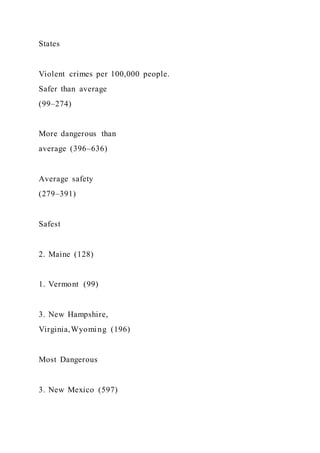
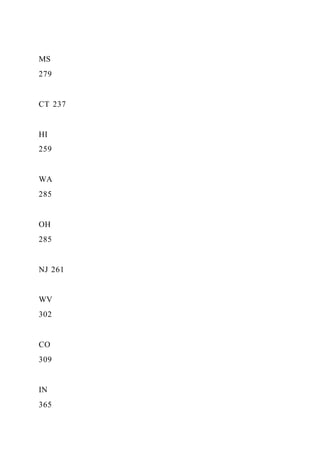
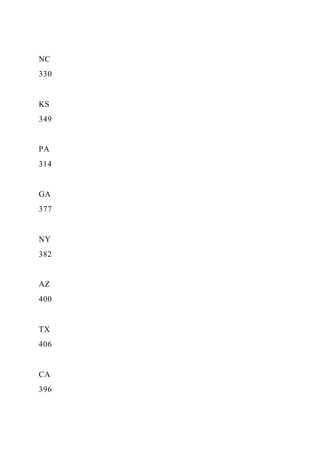
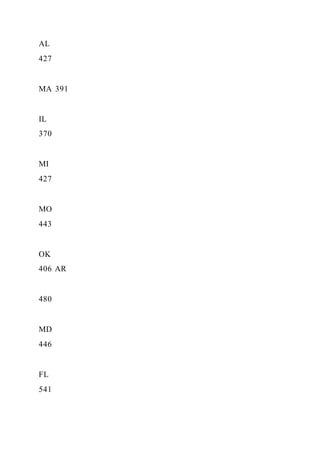
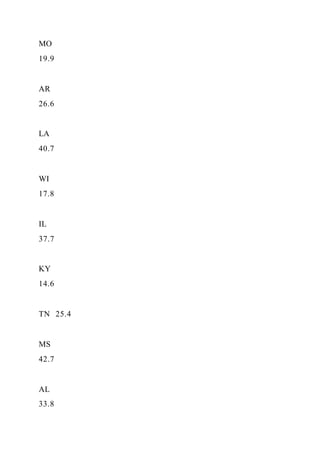
FIGURE 6.1 How Safe Is Your State? Violent Crime in the
United States 179
FIGURE 6.5 Executions in the United States 188
FIGURE 7.4 Global Stratification: Income of the World’s
Nations 215
FIGURE 8.11 Patterns of Poverty 253
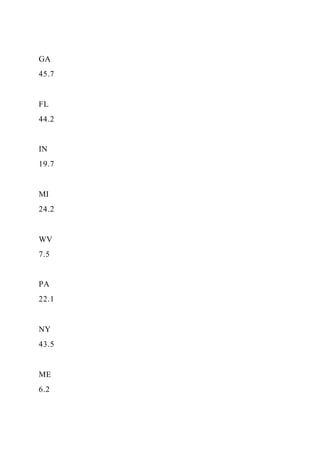
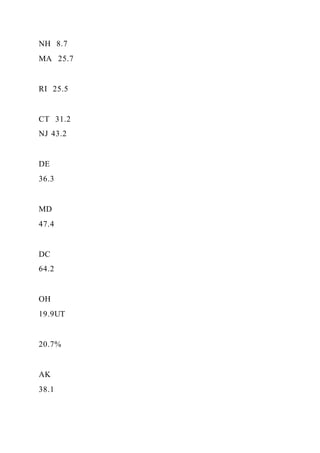
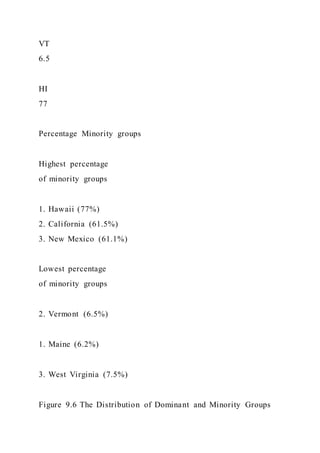
FIGURE 9.6 The Distribution of Dominant and Minority
Groups 285
FIGURE 10.6 Women in the Workforce 323
FIGURE 10.10 The Graying of the Globe 332
FIGURE 10.15 As Florida Goes, So Goes the Nation 335
FIGURE 11.1 Which Political Party Dominates? 354
FIGURE 12.14 The “Where” of U.S. Divorce 406
FIGURE 14.12 The World’s 10 Largest Megacities 473
FIGURE 14.13 How Urban Is Your State? The Rural–Urban
Makeup
of the United States 474
FIGURE 15.2 The Worst Hazardous Waste Sites 507
Guide to Social Maps
xviii
W
ELCOME TO SOCIOLOGY! I’ve loved soci-
ology since I was in my teens, and I hope you
enjoy it, too. Sociology is fascinating because it is
about human behavior, and many of us find that it holds the
key to understanding social life.
If you like to watch people and try to figure out why they
do what they do, you will like sociology. Sociology pries open
the doors of society so you can see what goes on behind them.
Essentials of Sociology: A Down-to-Earth Approach stresses
how
profoundly our society and the groups to which we belong
influence us. Social class, for example, sets us on a particular
path in life. For some, the path leads to more education, more
interesting jobs, higher income, and better health, but for oth-
ers it leads to dropping out of school, dead-end jobs, poverty,
and even a higher risk of illness and disease. These paths are
so significant that they affect our chances of making it to our
first birthday, as well as of getting in trouble with the police.
They even influence our satisfaction in marriage, the number
of children we will have—and whether or not we will read
this book in the first place.
When I took my first course in sociology, I was
“hooked.” Seeing how marvelously my life had been
affected by these larger social influences opened my eyes
to a new world, one that has been fascinating to explore.
I hope that you will have this experience, too.
From how people become homeless to how they become
presidents, from why people commit suicide to why women
are discriminated against in every society around the world—
all are part of sociology. This breadth, in fact, is what makes
sociology so intriguing. We can place the sociological lens on
broad features of society, such as social class, gender, and race –
ethnicity, and then immediately turn our focus on the smaller,
more intimate level. If we look at two people interacting—
whether quarreling or kissing—we see how these broad
features of society are being played out in their lives.
We aren’t born with instincts. Nor do we come into
this world with preconceived notions of what life should
be like. At birth, we have no concepts of race–ethnicity,
gender, age, or social class. We have no idea, for example,
that people “ought” to act in certain ways because they are
male or female. Yet we all learn such things as we grow
up in our society. Uncovering the “hows” and the “whys”
of this process is also part of what makes sociology so
fascinating.
One of sociology’s many pleasures is that as we study
life in groups (which can be taken as a definition of sociol -
ogy), whether those groups are in some far-off part of the
world or in some nearby corner of our own society, we gain
new insights into who we are and how we got that way. As
we see how their customs affect them, the effects of our own
society on us become more visible.
This book, then, can be part of an intellectual adven-
ture, for it can lead you to a new way of looking at your
social world—and in the process, help you to better under-
stand both society and yourself.
I wish you the very best in college—and in your career
afterward. It is my sincere desire that Essentials of Sociology:
A Down-to-Earth Approach will contribute to that success.
James M. Henslin
Department of Sociology
Southern Illinois University, Edwardsville
P.S. I enjoy communicating with students, so feel free to
comment on your experiences with this text. You can write
me at [email protected]
To the Student ... from the Author
mailto:[email protected]
To the Instructor ... from the Author
REMEMBER WHEN YOU FIRST GOT “HOOKED” on
sociology, how the windows of perception opened as you began
to see life-in-society through
the sociological perspective? For most of us, this was an
eye-opening experience. This text is designed to open those
windows onto social life, so students can see clearly the vital
effects of group membership on their lives. Although few
students will get into what Peter Berger calls “the passion
of sociology,” we at least can provide them the opportunity.
To study sociology is to embark on a fascinating process
of discovery. We can compare sociology to a huge jigsaw
puzzle. Only gradually do we see how the smaller pieces fit
together. As we begin to see the interconnections, our per-
spective changes as we shift our eyes from the many small,
disjointed pieces to the whole that is being formed. Of all
the endeavors we could have entered, we chose sociology
because of the ways in which it joins the “pieces” of society
together and the challenges it poses to “ordinary” think-
ing. It is our privilege to share with students this process of
awareness and discovery called the sociological perspective.
As instructors of sociology, we have set ambitious goals
for ourselves: to teach both social structure and social interac -
tion and to introduce students to the sociological literature—
both the classic theorists and contemporary research. As we
accomplish this, we would also like to enliven the classroom,
encourage critical thinking, and stimulate our students’ so-
ciological imagination. Although formidable, these goals are
attainable. This book is designed to help you reach them.
Based on many years of frontline (classroom) experience, its
subtitle, A Down-to-Earth Approach, was not proposed lightly.
My goal is to share the fascination of sociology with students
and in doing so to make your teaching more rewarding.
Over the years, I have found the introductory course es-
pecially enjoyable. It is singularly satisfying to see students’
faces light up as they begin to see how separate pieces of
their world fit together. It is a pleasure to watch them gain
insight into how their social experiences give shape to even
their innermost desires. This is precisely what this text is de-
signed to do—to stimulate your students’ sociological imag-
ination so they can better perceive how the “pieces” of so-
ciety fit together—and what this means for their own lives.
Filled with examples from around the world as well as
from our own society, this text helps to make today’s multi-
cultural, global society come alive for students. From learn-
ing how the international elite carve up global markets to
studying the intimacy of friendship and marriage, students
can see how sociology is the key to explaining contempo-
rary life—and their own place in it.
In short, this text is designed to make your teaching
easier. There simply is no justification for students to have
to wade through cumbersome approaches to sociology. I am
firmly convinced that the introduction to sociology should
be enjoyable and that the introductory textbook can be an
essential tool in sharing the discovery of sociology with
students.
What’s New in This 13th
Edition?
Because sociology is about social life and we live in a
changing global society, this new edition of Essentials of
Sociology: A Down-to-Earth Approach reflects the national
and global changes that engulf us, as well as presents new
sociological research. An indication of the thoroughness of
the preparation that went into this 13th edition is the text’s
hundreds of new citations. This edition also has more than
435 instructional photos. I have either selected or taken
each of the photos. By tying the photos and their captions
directly into the text, they become part of the students’
learning experience.
I am especially pleased with Applying Sociology
to Your Life, a new feature introduced in this edition.
Although Essentials of Sociology: A Down-to-Earth Approach
is well-known for how it shows students the relevance of
sociology to their lives, this emphasis has been amplified in
this 13th edition. This new feature focuses explicitly on how
sociology applies to the student’s life. It is one thing to say
to students that sociological research on bureaucracy is rel -
evant because they might work in a bureaucracy, but quite
another to show students how they can use impression
management to get ahead in a bureaucracy. It is also one
thing to review with students the average salaries according
to college major, but quite another to show students how
they can use sociology to increase their own salaries. We can
point out what sociologists have found when they studied
the glass ceiling, but sociology is much more relevant for
our students if we can show them how they can use sociol-
ogy to break through the glass ceiling. These three examples
are part of the fourteen items that make up this new feature,
Applying Sociology to Your Life.
And updates? As with previous editions, you can ex-
pect that they run throughout this new edition. The updates
are too numerous to mention, but to give you an indication
of how extensively this edition is revised, following is a list
of the new topics, boxed features, tables, and figures.
xix
Chapter 1
Figure 1.1 Suicide of Americans ages 18 to 24
Figure 1.6 Western Marriage: Husband–Wife Relationship
Chapter 2
Sociology and Technology: The Shifting Landscape:
The End of Human Culture? Artificial Intelligence and
Super-Smart Computers
Topic: In the 1600s, killing cats was part of festive celebrations
Chapter 3
Topic: Ekman’s conclusions on the universality of the ex-
pression of human emotions is challenged by research
among the Trobianders of Papua New Guinea.
Topic: Negative effects of nurseries depend on the age at
which children are placed in day care
Chapter 4
Applying Sociology to Your Life: Getting Promoted: Making
Impression Management Work for You
Topic: Transgender as a master status
Topic: Students learn more from attractive teachers
Chapter 5
Applying Sociology to Your Life: The New World of Work:
How to Keep a Paycheck Coming in the New Global
Marketplace
Applying Sociology to Your Life: Do Your Social Networks
Perpetuate Social Inequality?
Sociology and Technology: The Shifting Landscape: Virtual
Reality and Diversity Training
Topic: Investigation of JonBenet Ramsey as an example of
groupthink
Topic: The experience and perspective of white males are
being added to diversity training
Chapter 6
Applying Sociology to Your Life: How Does Social Control
Theory Apply to You?
Applying Sociology to Your Life: How Do You Use Tech-
niques of Neutralization to Protect Your Self Concept?
Topic: In murder trials, if the victim is white and the ac-
cused is black, juries are more likely to impose the death
penalty than if the accused is white and the victim is
black
Chapter 7
Topic: Face-recognition software can turn the police’s body
cameras into surveillance machines, able to identify
everyone an officer passes on the sidewalk
Chapter 8
Figure 8.7 Physical Health, by Income: People Who Have
Difficulty with Everyday Physical Activities
Figure 8.8 Mental Health, by Income: Feelings of Sadness,
Hopelessness, or Worthlessness
Figure 8.10 An Overview of Poverty in the United States
Figure 8.13 Poverty and Family Structure
Figure 8.14 Poverty and Race-Ethnicity
Figure 8.15 Poverty and Age
Topic: The 20 richest Americans have more wealth than the
bottom half of the U.S. population combined
Topic: Before they turn 65, about 60 percent of the U.S. pop-
ulation will experience a year of poverty
Topic: The Jardin in Las Vegas sells a $10,000 cocktail and a
weekend Valentine package for $100,000
Chapter 9
Table 9.3 Race–Ethnicity and Income Extremes
Topic: Arizona has agreed that the police will not stop peo-
ple solely to determine if they are in the country illegally.
Topic: Catherine Cortez Masto of Nevada became the first
Latina senator.
Topic: Native Americans operate their own embassy in
Washington, D.C.
Topic: The bamboo curtain: Asian Americans claiming they
are discriminated against in college admissions
Chapter 10
Figure 10.7 Master’s degree was added to this figure
Applying Sociology to Your Life: How to Get a Higher Salary
Applying Sociology to Your Life: Breaking through the
Glass Ceiling
Topic: The effects of testosterone differ with the situation:
Women given testosterone in a competitive situation be-
came suspicious and less trusting, but given testosterone
in a situation where they were being trusted, they be-
came more responsible and generous.
Topic: Many minority women feel that the feminist move-
ment represents “white” experiences. Their attempt to
change emphases has led to a clash of perspectives.
Topic: Among the CEOs of the largest U.S. companies, a
reverse pay gap has emerged, with women outearning
men by several million dollars a year.
xx To the Instructor … from the Author
Topic: The rate of sexual assault on boys and men is about
one-tenth that of girls and women.
Topic: In Japan, more adult diapers are sold than baby diapers
Topic: The Social Security dependency ratio has dropped to
3.6 (current workers to one beneficiary)
Chapter 11
Sociology and Technology: The Shifting Landscape: How
Could the Polls Get It So Wrong?
Topic: From President Obama to President Trump used as
an example of the transition of authority in a rational–
legal structure even when a newly elected leader repre-
sents ideas extremely different from the predecessor
Topic: Kim Jong-un of North Korea had his vice premier for
education shot for slouching during a meeting of parliament
Chapter 12
Figure 12.5 The Remarkable Change in Two- and Four-
Children Families
Figure 12:16 Today’s Newlyweds: Their Marital History
Applying Sociology to Your Life: What Are Your Chances
of Getting Divorced? The Misuse of Statistics
Applying Sociology to Your Life: What Kind of Parent Will
You Be?
Applying Sociology to Your Life: Finding Quality Daycare
Cultural Diversity around the World: Arranged Marriage
in India: Probing beneath the Surface
Topic: One-third of Americans who marry met online.
Topic: The latest research on children reared by same-sex
parents
Topic: For the first time since 1880, the percentage of young
adults who live with their parents is larger than those who
live with a spouse or partner in a separate household.
Topic: “Adultolescence” is also known as “waithood.”
Topic: The average age of those who are cohabiting is 39.
Topic: Helicoptering, parents’ hovering over their children
to be certain they make the right decisions and have the
right experiences, increasingly common in the upper-
middle class
Topic: Implications for human evolution of CRISPR (Clus-
tered Regularly Interspaced Short Palindromic Repeats)
Chapter 13
Applying Sociology to Your Life: You Want to Get Through
College? Let’s Apply Sociology
Sociology and Technology: The Shifting Landscape:
Changing Religious Practices in the Digital Age
Topic: To increase graduation rates, community colleges are
developing guided pathways.
Topic: A major change is occurring in Japan’s higher
education—a shift to job training in its lower tier
universities and more research in its top tier.
Topic: University salaries in Russia are so low that tens of
thousands of academics have left Russia.
Topic: Tucson, Arizona, runs a “Teenage Parent High School,”
where pregnant girls and those who have already given
birth learn parenting skills as well as traditional subjects
Topic: High school teachers give twenty times more A’s
than C’s.
Topic: Roman Catholics use Confessor Go to locate priests
to hear confessions, and WhatsApp to discuss moral
dilemmas with priests.
Chapter 14
Topic: The United States has 40 million immigrants.
Topic: The world now has thirty-one megacities.
Topic: Japan’s population is shrinking by a million people
a year.
Topic: Update on Monsanto subverting GMO research.
Topic: Tomorrow’s suburb: Attempts of suburbs to trans-
form themselves into cities.
Chapter 15
Topic: The United States has withdrawn from G7’s Paris
Accord on climate change.
Topic: Global warming threatens the Earth’s coral reefs,
which hold chemicals to cure diseases. Venom from the
cone snail, fifty times more potent than morphine, is be-
ing used as a painkiller.
Topic: In coming distance learning classes, the simultane-
ous translation of speech will allow students from differ-
ent cultures to talk and to understand one another.
Topic: In coming distance learning classes, artificial intelli -
gence will enable students to go on virtual field trips in
other cultures that immerse them in different realities.
Topic: The Pentagon operates a Cyber Command with
nine “National Mission Teams” of sixty military person-
nel each
Topic: An Italian company sells “off-the-shelf” programs
that allow someone to insert malicious code in comput-
ers and mobile devices
To the Instructor … from the Author xxi
The Organization of This Text
The text is laid out in five parts. Part I focuses on the socio-
logical perspective, which is introduced in the first chapter.
We then look at how culture influences us (Chapter 2), ex-
amine socialization (Chapter 3), and compare macrosociol -
ogy and microsociology (Chapter 4).
Part II, which focuses on groups and social control,
adds to the students’ understanding of how far-reaching
society’s influence is—how group membership penetrates
even our thinking, attitudes, and orientations to life. We first
examine the different types of groups that have such pro-
found influences on us and then look at the fascinating area
of group dynamics (Chapter 5). After this, we focus on how
groups “keep us in line” and sanction those who violate
their norms (Chapter 6).
In Part III, we turn our focus on social inequality, exam-
ining how it pervades society and how it has an impact on
our own lives. Because social stratification is so significant, I
have written two chapters on this topic. The first (Chapter 7),
with its global focus, presents an overview of the principles
of stratification. The second (Chapter 8), with its emphasis
on social class, focuses on stratification in the United States.
After establishing this broader context of social stratifica-
tion, we examine inequalities of race-ethnicity (Chapter 9)
and then those of gender and age (Chapter 10).
Part IV helps students to become more aware of how
social institutions encompass their lives. We first look at
politics and the economy, our overarching social institu-
tions (Chapter 11). After examining marriage and family
(Chapter 12), we then turn our focus on education and re-
ligion (Chapter 13). One of the emphases in this part of the
book is how our social institutions are changing and how
their changes, in turn, have an impact on our own lives.
With its focus on broad social change, Part V provides
an appropriate conclusion for the book. Here we examine
why our world is changing so rapidly, as well as catch a
glimpse of what is yet to come. We first analyze trends in
population and urbanization, those sweeping forces that
affect our lives so significantly but that ordinarily remain
below our level of awareness (Chapter 14). We conclude the
book with an analysis of technology, social movements, and
the environment (Chapter 15), which takes us to the “cut-
ting edge” of the vital changes that engulf us all.
Themes and Features
Six central themes run throughout this text: down-to-earth
sociology, applying sociology to your students’ life, glo-
balization, cultural diversity, critical thinking about social
life, and the new technology. The theme of how sociology
applies to the lives of your students is new to this edition.
For each of these themes, except globalization, which is in-
corporated throughout the text, I have written a series of
boxed features. These boxed features are one of my favorite
components of the book. They are especially useful for in-
troducing the controversial topics that make sociology such
a lively activity.
Let’s look at these six themes.
Down-to-Earth Sociology
As many years of teaching have shown me, all too often
textbooks are written to appeal to the adopters of texts
rather than to the students who will learn from them. In
writing this book, my central concern has been to present
sociology in a way that not only facilitates understanding
but also shares its excitement. During the course of writing
other texts, I often have been told that my explanations and
writing style are “down-to-earth,” or accessible and invit-
ing to students—so much so that I chose this phrase as the
book’s subtitle.
This Down-to-Earth Sociology theme explores sociologi-
cal processes that underlie everyday life. The topics that
we review in this feature are highly diverse. Here are some
of them:
• how a sociologist became a gang leader—for a day
(Chapter 1)
• the experiences of W. E. B. Du Bois in studying U.S. race
relations (Chapter 1)
• how gossip and ridicule enforce adolescent norms
(Chapter 3)
• how football can help us understand social structure
(Chapter 4)
• beauty and success (Chapter 4)
• serial killers (Chapter 6)
• sexting (Chapter 6)
• the lifestyles of the super-rich (Chapter 8)
• the American dream and social mobility (Chapter 8)
• college dorms and contact theory (Chapter 9)
• women navigating male-dominated corporations
(Chapter 10)
• the coming Star Wars (Chapter 15)
This first theme is actually a hallmark of the text, as my
goal is to make sociology “down to earth.” To help students
grasp the fascination of sociology, I continuously stress so-
ciology’s relevance to their lives. To reinforce this theme, I
avoid unnecessary jargon and use concise explanations and
clear and simple (but not reductive) language. I also use
student-relevant examples to illustrate key concepts, and I
base several of the chapters’ opening vignettes on my own
experiences in exploring social life. That this goal of shar-
ing sociology’s fascination is being reached is evident from
the many comments I receive from instructors and students
alike that the text helps make sociology “come alive.”
xxii To the Instructor … from the Author
Applying Sociology to Your Life
As mentioned, this second theme is being introduced in
this edition. There were a lot of challenges to overcome in
producing this feature, and I am eager to find out how it
works in your classroom. Please share the results with me.
Here is a partial list of the topics included in Applying
Sociology to Your Life:
• making impression management work for you: getting
promoted (Chapter 4)
• keeping a paycheck coming in the new global market-
place (Chapter 5)
• how techniques of neutralization protect your self con-
cept (Chapter 6)
• how to get a higher salary by applying sociology
(Chapter 10)
• applying sociology to break through the glass ceiling
(Chapter 10)
• applying sociology to parenting (Chapter 12)
• applying divorce statistics to your marriage (Chapter 12)
• finding quality daycare (Chapter 12)
• applying sociology to get through college (Chapter 13)
I hope you have as much pleasure using this new fea-
ture in your classroom as I had in developing it.
Globalization
In the third theme, globalization, we explore the impact
of global issues on our lives and on the lives of people
around the world. All of us are feeling the effects of an
increasingly powerful and encompassing global economy,
one that intertwines the fates of nations. The globalization
of capitalism influences the kinds of skills and knowledge
we need, the types of work available to us—and whether
work is available at all. Globalization also underlies the
costs of the goods and services we consume and whether
our country is at war or peace—or in some uncharted
middle ground between the two, some sort of perpetual
war against unseen, sinister, and ever-threatening en-
emies lurking throughout the world. In addition to the
strong emphasis on global issues that runs throughout this
text, I have written a separate chapter on global stratifica-
tion (Chapter 7). I also feature global issues in the chap-
ters on social institutions and the final chapters on social
change: population, urbanization, social movements, and
the environment.
What occurs in Russia, Germany, and China, as well as
in much smaller nations such as Afghanistan and Iraq, has
far-reaching consequences on our own lives. Consequently,
in addition to the global focus that runs throughout the text,
the next theme, cultural diversity, also has a strong global
emphasis.
Cultural Diversity around the World
and in the United States
The fourth theme, cultural diversity, has two primary em-
phases. The first is cultural diversity around the world.
Gaining an understanding of how social life is “done” in
other parts of the world often challenges our taken-for-
granted assumptions about social life. At times, when we
learn about other cultures, we gain an appreciation for the
life of other peoples; at other times, we may be shocked or
even disgusted at some aspect of another group’s way of
life (such as female circumcision) and come away with a re-
newed appreciation of our own customs.
To highlight this first subtheme, I have written a series
called Cultural Diversity around the World. Among the topics
with this subtheme are
• food customs that shock people from different cultures
(Chapter 2)
• why the dead need money (Chapter 2)
• where virgins become men (Chapter 3)
• human sexuality in Mexico and Kenya (Chapter 6)
• female circumcision (Chapter 10)
• probing beneath the surface to understand arranged
marriage in India (Chapter 12)
• female infanticide in China and India (Chapter 14)
• the destruction of the rain forests and indigenous peo-
ples of Brazil (Chapter 15)
In the second subtheme, Cultural Diversity in the United
States, we examine groups that make up the fascinating
array of people who form the U.S. population. In this sub-
theme, we review such topics as
• the controversy over the use of Spanish or English
(Chapter 2)
• how the Amish resist social change (Chapter 4)
• how our social networks produce social inequality
(Chapter 5)
• the upward social mobility of African Americans
(Chapter 8)
• the author’s travels with a Mexican who transports un-
documented workers to the U.S. border (Chapter 9)
• human heads, animal sacrifices, and religious freedom
(Chapter 13)
• our shifting racial–ethnic mix (Chapter 14)
Seeing that there are so many ways of “doing” social life
can remove some of our cultural smugness, making us more
aware of how arbitrary our own customs are—and how our
taken-for-granted ways of thinking are rooted in culture.
The stimulating contexts of these contrasts can help students
develop their sociological imagination. They encourage
To the Instructor … from the Author xxiii
students to see connections among key sociological concepts
such as culture, socialization, norms, race– ethnicity, gender,
and social class. As your students’ sociological imagination
grows, they can attain a new perspective on their experiences
in their own corners of life—and a better understanding of
the social structure of U.S. society.
Critical Thinking
In our fifth theme, critical thinking, we focus on controver-
sial social issues, inviting students to examine various sides
of those issues. In these sections, titled Thinking Critically
about Social Life, I present objective, fair portrayals of posi -
tions and do not take a side—although occasionally I do
play the “devil’s advocate” in the questions that close each
of the topics. Like the boxed features, these sections can
enliven your classroom with a vibrant exchange of ideas.
Among the social issues we tackle are
• our tendency to conform to evil authority, as uncovered
by the Milgram experiments (Chapter 5)
• how labeling keeps some people down and helps others
move up (Chapter 6)
• how vigilantes fill in when the state breaks down
(Chapter 6)
• the three-strikes-and-you’re-out laws (Chapter 6)
• bounties paid to kill homeless children in Brazil
(Chapter 7)
• children in poverty (Chapter 8)
• emerging masculinities and femininities (Chapter 10)
• cyberwar and cyber defense (Chapter 15)
These Thinking Critically about Social Life sections are
based on controversial social issues that either affect the stu-
dent’s own life or focus on topics that have intrinsic inter -
est for students. Because of their controversial nature, these
sections stimulate both critical thinking and lively class
discussions. These sections also provide provocative topics
for in-class debates and small discussion groups, effective
ways to enliven a class and present sociological ideas. In the
Instructor’s Manual, I describe the nuts and bolts of using
small groups in the classroom, a highly effective way of en-
gaging students in sociological topics.
Sociology and Technology: The Shifting
Landscape
In the sixth theme, sociology and technology, we explore
an aspect of social life that has come to be central in our
lives. We welcome our technological tools, for they help
us to be more efficient at performing our daily tasks, from
making a living to communicating with others—whether
those people are nearby or on the other side of the globe.
The significance of technology extends far beyond the
tools and the ease and efficiency they bring to our lives.
We can more accurately envision our new technology as
a social revolution that will leave few aspects of our lives
untouched. Its effects are so profound that it even changes
the ways we view life.
Sociology and technology is introduced in Chapter 2,
where technology is defined and presented as a major as-
pect of culture. The impact of technology is then discussed
throughout the text. Examples include how technology
is related to cultural change (Chapter 2), diversity train-
ing (Chapter 5), the maintenance of global stratification
(Chapter 7), and social class (Chapter 8). We also look at
the impact of technology on dating (Chapter 12), family
life (Chapter 12), religion (Chapter 13), and war (Chapter
15). The final chapter (Chapter 15) on social change and
the environment concludes the book with a focus on the
effects of technology.
To highlight this theme, I have written a series called
Sociology and Technology: The Shifting Landscape. In this
feature, we explore how technology affects our lives as it
changes society. Among the topics we examine are how
technology
• artificial intelligence and super-smart computers may
bring the end of human culture (Chapter 2)
• affects our body images (Chapter 4)
• through virtual reality can be applied to diversity train-
ing (Chapter 5)
• is allowing the creation of an overwhelming security
state (Chapter 5)
• could allow us to get the presidential polls so wrong
(Chapter 11)
• is changing the way people find mates (Chapter 12)
• is leading to a future where we order babies with spe-
cific characteristics (Chapter 12)
• is having an impact on religion (Chapter 13)
Visual Presentations of Sociology
SHOWING CHANGES OVER TIME In presenting so-
cial data, many of the figures and tables show how data
change over time. This feature allows students to see
trends in social life and to make predictions on how these
trends might continue—and even affect their own lives.
Examples include
• Figure 1.5 U.S. Marriage, U.S. Divorce
• Figure 3.2 Transitional Adulthood: A New Stage in the Life
Course
• Figure 6.2 How Much Is Enough? The Explosion in the
Number of Prisoners
xxiv To the Instructor … from the Author
• Figure 8.3 The More Things Change, the More They Stay the
Same: Dividing the Nation’s Income
• Figure 12.2 In Two-Paycheck Marriages, How Do Husbands
and Wives Divide Their Responsibilities?
• Figure 12.4 The Number of Children Americans Think Are
Ideal
• Figure 12.5 The Remarkable Change in Two- and Four-
Children Families
• Figure 12.9 The Decline of Two-Parent Families
• Figure 12.11 Cohabitation in the United States
• Figure 13.1 Educational Achieveme nt in the United States
• Figure 14.11 How the World Is Urbanizing
THROUGH THE AUTHOR’S LENS Using this format,
students are able to look over my shoulder as I experience
other cultures or explore aspects of this one. These eight
photo essays should expand your students’ sociological
imagination and open their minds to other ways of doing
social life, as well as stimulate thought-provoking class
discussion.
VIENNA: SOCIAL STRUCTURE AND SOCIAL
INTERACTION IN A VIBRANT CITY appears in Chapter 4.
The photos I took in this city illustrate how social structure
surrounds us, setting the scene for our interactions, limiting
and directing them.
WHEN A TORNADO STRIKES: SOCIAL ORGANIZATION
FOLLOWING A NATURAL DISASTER When a tornado
hit a small town just hours from where I lived, I photo-
graphed the aftermath of the disaster. The police let me in
to view the neighborhood where the tornado had struck, de-
stroying homes and killing several people. I was impressed
by how quickly people were putting their lives back to-
gether, the topic of this photo essay (Chapter 4).
COMMUNITY IN THE CITY in Chapter 5, is also from
Vienna. This sequence of four photos focuses on strangers who
are helping a man who has just fallen on the sidewalk. This
event casts doubt on the results of Darley and Latané’s labo-
ratory experiments. This short sequence was serendipitous in
my research. One of my favorite photos is the last in the series,
which portrays the cop coming toward me to question why I
was taking photos of the accident. It fits the sequence perfectly.
THE DUMP PEOPLE OF PHNOM PENH, CAMBODIA
Among the culture shocks I experienced in Cambodia was
not to discover that people scavenge at Phnom Penh’s
huge city dump—this I knew about—but that they also
live there. With the aid of an interpreter, I was able to in-
terview these people, as well as photograph them as they
went about their everyday lives. An entire community
lives in the city dump, complete with restaurants amidst
the smoke and piles of garbage. This photo essay reveals
not just these people’s activities but also their social orga -
nization (Chapter 7).
WORK AND GENDER: WOMEN AT WORK IN
INDIA As I traveled in India, I took photos of women at
work in public places. The more I traveled in this country
and the more photos I took, the more insight I gained into
gender relations. Despite the general dominance of men
in India, women’s worlds are far from limited to family
and home. Women are found at work throughout the so-
ciety. What is even more remarkable is how vastly differ-
ent “women’s work” is in India than it is in the United
States. This, too, is an intellectually provocative photo
essay (Chapter 10).
SMALL TOWN USA: STRUGGLING TO SURVIVE To
take the photos for this essay, on a road trip from
California to Florida I went off the beaten path. Instead
of following the interstates, I followed those “little black
lines” on the map. They took me to out-of-the-way places
that the national transportation system has bypassed.
Many of these little towns are putting on a valiant face
as they struggle to survive, but, as the photos show, the
struggle is apparent, and, in some cases, so are the scars
(Chapter 11).
HOLY WEEK IN SPAIN in Chapter 13, features proces-
sions in two cities in Spain, Malaga, a provincial capital,
and Almuñecar, a smaller city in Granada. The Roman
Catholic heritage of Spain runs so deeply that the La
Asunción de María (The Assumption of Mary) is a na-
tional holiday, with the banks and post offices closing.
City streets carry such names as (translated) Conception,
Piety, Humility, Calvary, Crucifixion, The Blessed Virgin.
In large and small towns throughout Spain, elaborate
processions during Holy Week feature tronos that depict
the biblical account of Jesus’ suffering, death, and resur-
rection. I was allowed to photograph the preparations
for one of the processions, so this essay also includes
“ behind-the-scenes” photos.
During the processions, the participants walk slowly
for one or two minutes; then because of the weight of the
tronos, they rest for one or two minutes. This process repeats
for about six hours. As you will see, some of the most inter -
esting activities occur during the rest periods.
A WALK THROUGH EL TIRO IN MEDELLIN,
COLOMBIA One of the most significant social changes
in the world is taking place in the Least Industrialized
Nations. In the search for a better life, people are aban-
doning rural areas. Fleeing poverty, they are flocking to
the cities, only to be greeted with more poverty. Some of
To the Instructor … from the Author xxv
these settlements of the new urban poor are dangerous. I
was fortunate to be escorted by an insider through a sec-
tion of Medellin, Colombia, that is controlled by gangs
(Chapter 14).
OTHER PHOTO ESSAYS To help students better un-
derstand subcultures, I have retained the photo essay
Standards of Beauty in Chapter 2. I have also kept the photo
essay in Chapter 9 on ethnic work, as it helps students see
that ethnicity doesn’t “just happen.” Because these photo
essays consist of photos taken by others, they are not a part
of the series, Through the Author’s Lens. I think you will
appreciate the understanding these two photo essays can
give your students.
PHOTO COLLAGES Because sociology lends itself so well
to photographic illustrations, this text also includes photo
collages. In Chapter 1, the photo collage, in the shape of a
wheel, features some of the many women who became so-
ciologists in earlier generations, women who have largely
gone unacknowledged as sociologists. In Chapter 2, stu-
dents can catch a glimpse of the fascinating variety that goes
into the cultural relativity of beauty. The collage in Chapter
5 illustrates categories, aggregates, and primary and sec-
ondary groups, concepts that students sometimes wrestle to
distinguish. The photo collage in Chapter 10 lets students
see how differently gender is portrayed in different cultures.
OTHER PHOTOS BY THE AUTHOR Sprinkled through-
out the text are photos that I took in Austria, Cambodia,
India, Latvia, Spain, Vietnam, and the United States. These
photos illustrate sociological principles and topics better
than photos available from commercial sources. As an ex-
ample, while in the United States, I received a report about
a feral child who had been discovered living with monkeys.
The possibility of photographing and interviewing that
child who had been taken to an orphanage was one of the
reasons that I went to Cambodia. That particular photo is at
the beginning of Chapter 3.
OTHER SPECIAL PEDAGOGICAL FEATURES In addi-
tion to chapter summaries and reviews, key terms, and a
comprehensive glossary, I have included several special fea -
tures to help students learn sociology. In Sum sections help
students review important points within the chapter before
going on to new materials. I have also developed a series of
Social Maps, which illustrate how social conditions vary by
geography. All the maps in this text are original.
LEARNING OBJECTIVES I have written learning objec-
tives for the main points of each chapter. These learning
objectives, which provide a guiding “road map” for your
students, are presented three times: in a list at the begin-
ning of the chapter, at the point where that specific mate-
rial is presented, and again at the chapter ’s Summary and
Review.
CHAPTER-OPENING VIGNETTES These accounts fea-
ture down-to-earth illustrations of a major aspect of each
chapter ’s content. Some of these vignettes are based on
my research with the homeless, the time I spent with
them on the streets and slept in their shelters (Chapters 1
and 8). Others recount sociological experiences in Africa
(Chapters 2 and 10) and Mexico (Chapters 12 and 14). I
also share my experiences when I spent a night with street
people at DuPont Circle in Washington, D.C. (Chapter 4).
For other vignettes, I use current and historical events
(Chapters 7, 9, 13, and 15), classical studies in the social
sciences (Chapters 3 and 6), and even scenes from novels
(Chapters 5 and 11). Many students have told their in-
structors that they find these vignettes compelling, that
they stimulate interest in the chapter.
THINKING CRITICALLY ABOUT THE CHAPTERS I close
each chapter with critical thinking questions. Each question
focuses on a major feature of the chapter, asking students to
reflect on and consider some issue. Many of the questions
ask the students to apply sociological findings and princi -
ples to their own lives.
ON SOURCES Sociological data are found in a wide va-
riety of sources, and this text reflects that variety. Cited
throughout this text are standard journals such as the
American Journal of Sociology, Social Problems, American
Sociological Review, and Journal of Marriage and Family, as
well
as more esoteric journals such as the Bulletin of the History of
Medicine, Chronobiology International, and Western Journal of
Black Studies. I have also drawn heavily from standard news
sources, especially the New York Times and the Wall Street
Journal, as well as more unusual sources such as El País. In
addition, I cite unpublished research and theoretical papers
by sociologists.
xxvi To the Instructor … from the Author
To the Instructor … from the Author xxvii
Acknowledgments
The response from both instructors and students to this
text’s earlier editions indicates that my efforts at making so-
ciology down to earth have succeeded. The years that have
gone into writing this text are a culmination of the many
years that preceded its writing—from graduate school to
that equally demanding endeavor known as classroom
teaching. No text, of course, comes solely from its author.
Although I am responsible for the final words on the print-
ed page, I have received excellent feedback from instructor s
who have taught from the first thirteen editions. I am espe-
cially grateful to
Reviewers of the First through
Thirteenth Editions
Francis O. Adeola, University of New Orleans
Brian W. Agnitsch, Marshalltown Community College
Sandra L. Albrecht, The University of Kansas
Christina Alexander, Linfield College
Richard Alman, Sierra College
Gabriel C. Alvarez, Duquesne University
Kenneth Ambrose, Marshall University
Alberto Arroyo, Baldwin–Wallace College
Karren Baird-Olsen, Kansas State University
Rafael Balderrama, University of Texas—Pan American
Linda Barbera-Stein, The University of Illinois
Deborah Beat, Wichita State University
Brenda Blackburn, California State University—Fullerton
Ronnie J. Booxbaum, Greenfield Community College
Cecil D. Bradfield, James Madison University
Karen Bradley, Central Missouri State University
Francis Broouer, Worcester State College
Valerie S. Brown, Cuyahoga Community College
Sandi Brunette-Hill, Carrol College
Richard Brunk, Francis Marion University
Karen Bullock, Salem State College
Allison R. Camelot, California State University—Fullerton
Paul Ciccantell, Kansas State University
John K. Cochran, The University of Oklahoma
James M. Cook, Duke University
Joan Cook-Zimmern, College of Saint Mary
Larry Curiel, Cypress College
Russell L. Curtis, University of Houston
John Darling, University of Pittsburgh—Johnstown
Ray Darville, Stephen F. Austin State University
Jim David, Butler County Community College
Nanette J. Davis, Portland State University
Vincent Davis, Mt. Hood Community College
Andrea Deal, Madisonville Community College
Lynda Dodgen, North Harris Community College
Terry Dougherty, Portland State University
Marlese Durr, Wright State University
Shelly Dutchin, Western Technical College
Helen R. Ebaugh, University of Houston
Obi N. Ebbe, State University of New York—Brockport
Cy Edwards, Chair, Cypress Community College
John Ehle, Northern Virginia Community College
Morten Ender, U.S. Military Academy
Rebecca Susan Fahrlander, Bellevue University
Louis J. Finkle, Horry-Georgetown Technical College
Nicole T. Flynn, University of South Alabama
Lorna E. Forster, Clinton Community College
David O. Friedrichs, University of Scranton
Bruce Friesen, Kent State University—Stark
Lada Gibson-Shreve, Stark State College
Cynthia Glass, Kentucky State University
Norman Goodman, State University of New York—
Stony Brook
Rosalind Gottfried, San Joaquin Delta College
G. Kathleen Grant, The University of Findlay
Bill Grisby, University of Northern Colorado
Ramon Guerra, University of Texas—Pan American
Remi Hajjar, U.S. Military Academy
Donald W. Hastings, The University of Tennessee—Knoxville
Lillian O. Holloman, Prince George’s Community College
Michael Hoover, Missouri Western State College
Howard R. Housen, Broward Communi ty College
James H. Huber, Bloomsburg University
Erwin Hummel, Portland State University
Charles E. Hurst, The College of Wooster
Nita Jackson, Butler County Community College
Jennifer A. Johnson, Germanna Community College
Kathleen R. Johnson, Keene State College
Tammy Jolley, University of Arkansas Community College
at Batesville
David Jones, Plymouth State College
Arunas Juska, East Carolina University
Ali Kamali, Missouri Western State College
Irwin Kantor, Middlesex County College
Mark Kassop, Bergen Community College
Myles Kelleher, Bucks County Community College
Mary E. Kelly, Central Missouri State University
Alice Abel Kemp, University of New Orleans
Diana Kendall, Austin Community College
Gary Kiger, Utah State University
Gene W. Kilpatrick, University of Maine—Presque Isle
Jerome R. Koch, Texas Tech University
Joseph A. Kotarba, University of Houston
Michele Lee Kozimor-King, Pennsylvania State University
Darina Lepadatu, Kennesaw State University
Abraham Levine, El Camino Community College
Diane Levy, The University of North Carolina—Wilmington
Diane Lindley, The University of Mississippi
Stephen Mabry, Cedar Valley College
David Maines, Oakland University
Ron Matson, Wichita State University
xxviii To the Instructor … from the Author
Armaund L. Mauss, Washington State University
Evelyn Mercer, Southwest Baptist University
Robert Meyer, Arkansas State University
Michael V. Miller, University of Texas—San Antonio
John Mitrano, Central Connecticut State University
W. Lawrence Neuman, University of Wisconsin—Whitewater
Charles Norman, Indiana State University
Patricia H. O’Brien, Elgin Community College
Robert Ostrow, Wayne State
Laura O’Toole, University of Delaware
Marla Perry, NSCC
Mike K. Pate, Western Oklahoma State College
Lawrence Peck, Erie Community College
Ruth Pigott, University of Nebraska—Kearney
Phil Piket, Joliet Junior College
Trevor Pinch, Cornell University
Daniel Polak, Hudson Valley Community College
James Pond, Butler Community College
Deedy Ramo, Del Mar College
Adrian Rapp, North Harris Community College
Carolyn Read, Copiah Lincoln Junior College
Ray Rich, Community College of Southern Nevada
Barbara Richardson, Eastern Michigan University
Salvador Rivera, State University of New York—Cobleskill
Howard Robboy, Trenton State College
Cindy Rouzer, Rivier College
Daniel Roddick, Rio Hondo College
Paulina X. Ruf, University of Tampa
Michael Samano, Portland Community College
Michael L. Sanow, Community College of Baltimore County
Lori Schreiber, Penn State University Ogontz-Abington
Mary C. Sengstock, Wayne State University
Walt Shirley, Sinclair Community College
Marc Silver, Hofstra University
Karl Smith, Delaware Tech and Community College-Owens
Roberto E. Socas, Essex County College
Susan Sprecher, Illinois State University
Mariella Rose Squire, University of Maine at Fort Kent
Jennifer St. Pierre, Harrisburg Area Community College
Rachel Stehle, Cuyahoga Community College
Marios Stephanides, University of Tampa
Randolph G. Ston, Oakland Community College
Vickie Holland Taylor, Danville Community College
Maria Jose Tenuto, College of Lake County
Gary Tiederman, Oregon State University
Kathleen Tiemann, University of North Dakota
Brandy Trainor, Gloucester County College
Judy Turchetta, Johnson & Wales University
Stephen L. Vassar, Minnesota State University—Mankato
William J. Wattendorf, Adirondack Community College
Jay Weinstein, Eastern Michigan University
Larry Weiss, University of Alaska
Amanda White, St. Louis Community College-Meramec
Douglas White, Henry Ford Community College
Stephen R. Wilson, Temple University
Anthony T. Woart, Middlesex Community College
Stuart Wright, Lamar University
Mary Lou Wylie, James Madison University
Diane Kholos Wysocki, University of Nebraska—Kearney
Stacey G. H. Yap, Plymouth State College
William Yoels, University of Alabama Birmingham
I have had the pleasure of working with an outstanding
team at Pearson. I want to thank Billy Grieco and Jeff Marshall
for coordinating the many tasks that were necessary to pro-
duce this new edition; Jenn Auvil and Mary Donovan who
coordinated so many integrating tasks; and Kate Cebik for her
photo research—and for her willingness to “keep on looking.”
I do appreciate this team. It is difficult to heap too much
praise on such fine, capable, and creative people. Often going
“beyond the call of duty” as we faced nonstop deadlines,
their untiring efforts coalesced with mine to produce this text.
Students, whom we constantly kept in mind as we prepared
this edition, are the beneficiaries of this intricate teamwork.
Since this text is based on the contributions of many, I
would count it a privilege if you would share with me your
teaching experiences with this book, including suggestions
for improving the text. Both positive and negative com-
ments are welcome. This is one way that I continue to learn.
I wish you the very best in your teaching. It is my
sincere desire that Essentials of Sociology: A Down-to-Earth
Approach contributes to your classroom success.
James M. Henslin
Professor Emeritus
Department of Sociology
Southern Illinois University, Edwardsville
I welcome your correspondence. You can reach me at
[email protected]
P.S. With changing technology, I am now able to discuss
various aspects of sociology with your students. This
new feature, called Hearing from the Author, is de-
scribed in the publisher ’s overview of Revel, which fol -
lows this note.
mailto:[email protected]
To the Instructor … from the Author xxix
Revel™ for Essentials of Sociology:
A Down-to-Earth Approach
Revel is an interactive learning environment that deeply
engages students and prepares
them for class. Media and assessment integrated directly within
the author ’s narrative
lets students read, explore interactive sociology content, and
practice in one continuous
learning path. Thanks to the dynamic reading experience in
Revel, students come to
class prepared to discuss, apply, and learn from instructors and
from each other.
Learn more about Revel
www.pearson.com/revel
• Hearing from the Author Audio Clips are a new Revel feature
in which Jim further
personalizes the content of this edition by opening each chapter
and commenting
on sociological concepts, photo essays, individual photos of
particular significance,
tables, figures, and topics. This feature gives students
additional context for under-
standing more difficult topics, while the author’s interweaving
of observations and
personal experiences reinforces how sociology is part of the
student’s everyday life.
This is a hallmark of the instructional design, as Jim’s goal is to
make sociology “down
to earth.” To help students grasp the fascination of sociology,
he continuously stresses
sociology’s relevance to their lives. As both instructors and
students have commented,
this helps make sociology “come alive.” And after all, as Jim
emphasizes throughout
Essentials of Sociology: A Down-to-Earth Approach, sociology
is a fascinating endeavor.
• Videos support the down-to-earth approach with news footage
and stories that reflect
real-life examples of sociology. Students can revisit major
historical events including
critical points in the Civil Rights movement and view videos
through a sociological lens.
An original set of videos, including the Hearing from Students
video series, is unique to
Essentials of Sociology: A Down-to-Earth Approach. These
exclusive video interviews feature
students discussing the highlights of each chapter. These videos
give students the opportu-
nity to hear from their peers who are sharing their thoughts on
chapter topics and reflecting
on how they can apply the sociological perspective of the
chapter to their own lives.
http://www.pearson.com/revel
xxx To the Instructor … from the Author
• Interactive figures and tables feature the technology of Social
Explorer,
which shows data in interactive graphs with rollover
information. Examples in-
clude Figure 10.4 Gender Changes in College Degrees, Table
11.1 Who Votes for
• Pearson Originals The Pearson Originals docuseries videos
highlight stories that
exemplify and humanize the concepts covered in Sociology
courses. These videos
illustrate a variety of social issues and current events, bringing
key topics to life for
students while creating opportunities to further develop their
understanding of soci-
ology. Therefore, students not only connect with the people and
stories on a personal
level, but also view these stories and individuals with greater
empathy while contex-
tualizing core course concepts.
• Interpreting the First Amendment: Regulating Protest in
Minnesota
• Gender Identity: Meant to Be Maddie
• Domestic Violence in Rural America: Survivors’ Stories
• The American Working Class: Voices from Harrisburg, IL
• Taking a Stand Against Environmental Injustice
Videos can be easily accessed from the instructor Resources
folder within the Revel
product.
To the Instructor … from the Author xxxi
• Interactive Social Explorer Maps are based on the Social Maps
Jim has created
for Sociology: A Down-to-Earth Approach. Using Social
Explorer, these maps illustrate
how social conditions vary among the states and by regions of
the country. Students
can click through these maps, and can hover over their own
state and consider how
it compares with the rest of the country. Examples include
Figure 6.1 How Safe Is
Your State? Violent Crime in the United States and Figure
12.14 The “Where” of U.S.
Divorce. Jim has also prepared global maps that give students a
visual representation
of how the United States compares with countries around the
world. These Social
Maps are original with Essentials of Sociology: A Down-to-
Earth Approach. Visit the in-
structor Resources folder within Revel to access LiveSlide
Powerpoint presentations
that contain every Social Explorer visualization, making it easy
to use these in class.
President?, Figure 12.2 In Two-Paycheck Marriages, How Do
Husbands and Wives
Divide their Responsibilities?
xxxii To the Instructor … from the Author
• Make a Guess interactive graphs invite students to interact
with social data. Many
of the figures and tables show how data change over time. This
feature utilizes Social
Explorer’s predictive graphing which allows students to see
trends in social life and
to make predictions on how these trends might continue—and
how they might even
affect their own lives.
• Interactive Review the Chapter, which uses flashcards that
feature key terms and
definitions, help students review and reinforce the chapter’s
content.
• Assessments, which are tied to each chapter’s major sections,
allow instructors and
students to track progress and get immediate feedback. It is the
same with the full
chapter tests.
• Integrated Writing Opportunities help students reason and
write more clearly.
Each chapter offers the following writing prompts:
• Journal prompts invite students to reflect on a chapter ’s
content and to con-
sider how the sociological perspective applies in a variety of
scenarios. There
are two types of journal prompts: Apply It to Your Life and
Apply the Sociological
Perspective.
• Shared writing prompts invite students to reflect on and
consider issues related
to major features of each chapter. Many of the questions ask the
students to apply
sociological findings and principles to their own lives. The
students’ responses are
To the Instructor … from the Author xxxiii
automatically shared with others, which helps them better
understand the per-
spectives of others and sharpens their critical thinking skills.
• Additional Interactive Assets engage students and invite them
to interact with
text, figures, and photos. Enhanced Images of historic photos
and documents allow
students to zoom in to gain different perspectives of the image.
Simulations guide
students through charts and graphs, helping them to see how the
many parts of a
topic are related.
• Writing Space allows you to develop and assess your students’
concept mas-
tery and critical thinking through writing. Writing Space
provides a single place
within Revel to create, track, and grade writing assignments;
access writing re-
sources; and exchange meaningful, personalized feedback
quickly and easily. For
students, Writing Space provides everything they need to keep
up with writing
assignments, access assignment guides and checklists, write or
upload completed
assignments, and receive grades and feedback—all in one
convenient place. For
educators, Writing Space makes assigning, receiving, and
evaluating writing as-
signments easier.
It’s simple to create new assignments and upload relevant
materials, see stu-
dent progress, and receive alerts when students submit work.
Writing Space makes
students’ work more focused and effective, with customized
grading rubrics they
can see and personalized feedback.
And here’s another feature of Writing Space that you might find
very helpful:
Writing Space allows you to check your students’ work for
improper citation or
plagiarism by comparing it against the world’s most accurate
text comparison
database available from Turnitin.
Instructor’s Supplements
Unless otherwise noted, the instructor ’s supplements are
available at no charge to
adopters—in electronic formats through the Instructor ’s
Resource Center
(www.pearsonhighered.com/irc). Instructors can also access
these teaching tools from
the Instructor Resources folder within the Revel product.
Instructor’s Resource Manual
For each chapter in the text, the Instructor’s Resource Manual
provides chapter summaries,
chapter outlines, lecture suggestions, and suggested
assignments. Also, this edition of the
Instructor’s Resource Manual features many Revel-only
components including the Journal
Prompts and Shared Writing Prompts and a list of all Revel -
specific interactive assets,
such as the Pearson Originals docuseries videos.
Test Bank
The Test Bank contains approximately 55 questions for each
chapter in multiple-choice and
essay formats. The questions are correlated to each chapter’s in-
text learning objectives.
MyTest Test Bank
The printed Test Bank is also available online through
Pearson’s computerized testing
system, MyTest. The user-friendly interface allows you to view,
edit, and add questions,
transfer questions to tests, and print tests in a variety of fonts.
Search and sort features
allow you to locate questions quickly and to arrange them in
whatever order you prefer.
The Test Bank can be accessed anywhere with a free MyTest
user account. There is no need
to download a program or file to your computer.
PowerPoint® Presentation Slides
In order to support varied teaching styles while making it easy
to incorporate dynamic
Revel features in class, four sets of PowerPoint presentations
are available for this edition:
(1) A set of ADA-compliant lecture PowerPoint slides outline
each chapter of the text.
(2) A set of “art-only” PowerPoint slides feature all static
images, figures, graphs, and
maps from each chapter of the text. (3) An additional set of the
lecture PowerPoint slides
include LiveSlides, which link to each Social Explorer data
visualization and interactive
map within the Revel product. (4) Finally, a LiveSlides-only
PowerPoint deck includes
every Social Explorer data visualization and interactive map
within the Revel product.
A Note from the Publisher
on the Supplements
xxxiv
http://www.pearsonhighered.com/irc
This page intentionally left blank
xxxvi
Jim Henslin was born in Minnesota, graduated from high
school and junior college in California and from college in
Indiana. Awarded scholarships, he earned his master ’s and
doctorate degrees in sociology at Washington University in
St. Louis, Missouri. After this, he won a postdoctoral fel -
lowship from the National Institute of Mental Health and
spent a year studying how people adjust to the suicide of
a family member. His primary interests in sociology are
the sociology of everyday life, deviance, and international
relations. Among his many books are Down-to-Earth Sociol-
ogy: Introductory Readings, and Social Problems, now in its
12th edition. He has also published widely in sociology
journals, including Social Problems and American Journal
of Sociology.
While a graduate student, Jim taught at the University
of Missouri at St. Louis. After completing his doctorate, he
joined the faculty at Southern Illinois University, Edwards-
ville, where he is Professor Emeritus of Sociology. He says,
“I’ve always found the introductory course enjoyable to
teach. I love to see students’ faces light up when they first
glimpse the sociological perspective and begin to see how
society has become an essential part of how they view
the world.”
Jim enjoys reading and fishing, and he also does a bit of
kayaking and weight lifting. His two favorite activities are
writing and traveling. He especially enjoys visiting and liv-
ing in other cultures, for this brings him face to face with be-
haviors and ways of thinking that challenge his perspectives
and “make sociological principles come alive.” A special
pleasure has been the preparation of Through the Author’s
Lens, the series of photo essays that appear in this text, and
Applying Sociology to Your Life, original with this author and
first appearing in this edition.
Jim moved to Latvia, an Eastern European country for-
merly dominated by the Soviet Union, where he had the
experience of becoming an immigrant. There he observed
firsthand how people struggle to adjust to capitalism.
While there, he interviewed aged political prisoners who
had survived the Soviet gulag. He then moved to Spain,
where he was able to observe how people adjust to a declin-
ing economy and the immigration of people from contrast-
ing cultures. (Of course, for this he didn’t need to leave the
United States.) To better round out his cultural experiences,
Jim recently visited South Korea, Vietnam, and again India.
He hopes to travel extensively in South America, where he
expects to do more photo essays to reflect their fascinating
cultures. Jim is grateful to be able to live in such exciting
social, technological, and geopolitical times—and to have
access to portable broadband Internet while he pursues his
sociological imagination.
About the Author
1untitled, 2007, Marie Bertrand, (arcylics on paper)
Learning Objectives
After you have read this chapter, you should be able to:
1.1 Explain why both history and biography are essential for
the
sociological perspective.
1.2 Trace the origins of society, from tradition to Max Weber.
1.3 Trace the development of sociology in North America, and
explain
the tension between objective analysis and social reform.
1.4 Explain the basic ideas of symbolic interactionism,
functional
analysis, and conflict theory.
1.5 Explain why common sense can’t replace sociological
research.
1.6 Know the eight steps of the research model.
1.7 Know the main elements of the seven research methods.
1.8 Explain how gender is significant in sociological research.
1.9 Explain why it is vital for sociologists to protect the people
they study
and discuss the two cases that are presented.
1.10 Explain how research versus social reform and
globalization are
likely to influence sociology.
Chapter 1
The Sociological
Perspective
I quickly scanned the room filled with 100 or so bunks. I was
relieved to see that an upper
bunk was still open. I grabbed it, figuring that attacks are more
difficult in an upper bunk.
Even from the glow of the faded red-and-white exit sign, its
faint light barely illuminating
this bunk, I could see that the sheet was filthy. Resigned to
another night of fitful sleep, I
reluctantly crawled into bed.
I kept my clothes on.
The next morning, I joined the long line of disheveled men
leaning against the chain-link
fence. Their faces were as downcast as their clothes were dirty.
Not a glimmer of hope among
them.
No one spoke as the line slowly inched forward.
When my turn came, I was handed a cup of coffee, a white
plastic spoon, and a bowl of
semiliquid that I couldn’t identify. It didn’t look like any food I
had seen before. Nor did it
taste like anything I had ever eaten.
My stomach fought the foul taste, every spoonful a battle. But I
was determined. “I will
experience what they experience,” I kept telling myself. My
stomach reluctantly gave in and
accepted its morning nourishment.
2
The room was strangely
silent. Hundreds of
men were eating, each
immersed in his own
private hell, …
The Sociological Perspective 3
The Sociological Perspective
1.1 Explain why both history and biography are essential for the
sociological
perspective.
You are in for an exciting and eye-opening experience. The
sociological perspective (or
imagination) opens a window onto unfamiliar worlds—and
offers a fresh look at familiar
ones. In this text, you will find yourself in the midst of
homeless people in U.S. cities as
well as Nazis in Germany and warriors in South America.
Sociology is broad, and your
journey will also take you to a group that lives in a garbage
dump in Cambodia. As you
view other worlds, you will also find yourself looking at your
own world in a differ-
ent light. In fact, this is what many find appealing about
sociology. Ever since I took an
introductory course in sociology as a freshman in college, I
have been enchanted by the
perspective that sociology offers. I have enjoyed both observing
other groups and ques-
tioning my own assumptions about life. I hope the same happens
to you.
Seeing the Broader Social Context
The sociological perspective stresses the social contexts in
which people live. It examines
how these contexts influence people’s lives. At the center of the
sociological perspective
is the question of how groups influence people, especially how
people are influenced by
their society—a group of people who share a culture and a
territory.
To find out why people do what they do, sociologists look at
social location, the
corners in life that people occupy because of their place in a
society. Sociologists look
at how jobs, income, education, gender, race–ethnicity, and age
affect people’s ideas
and behavior. Consider, for example, how being identified with
a group called females
or with a group called males when you were growing up has
shaped your ideas of who you are. Growing up as a female or
a male or as a transgender individual has influenced not only
how you feel about yourself but also your ideas of what you
should attain in life and how you should relate to others. Even
your gestures and the way you laugh come from your identi-
fying with one of these groups.
Sociologist C. Wright Mills (1959) put it this way: “The
sociological imagination [perspective] enables us to grasp the
connection between history and biography.” By history, Mills
meant that each society is located in a broad stream of events.
This gives each society specific characteristics—such as its
ideas about what roles are proper for men and women. By
biography, Mills referred to your experiences within a specific
historical setting, which give you your orientations to life.
In short, you don’t do what you do because you inherited some
sociological perspective
understanding human behavior
by placing it within its broader
social context
society
people who share a culture and
a territory
social location
the group memberships that
people have because of their
location in history and society
The room was strangely silent. Hundreds of men were eating,
each one immersed in his
own private hell, his mind awash with disappointment, remorse,
bitterness.
As I stared at the Styrofoam cup that held my coffee, grateful
for at least this small plea-
sure, I noticed what looked like teeth marks. I shrugged off the
thought, telling myself that my
long weeks as a sociological observer of the homeless were
finally getting to me. “It must be
some sort of crease from handling,” I concluded.
I joined the silent ranks of men turning in their bowls and cups .
When I saw the man
behind the counter swishing out Styrofoam cups in a washtub of
murky water, I began to
feel sick to my stomach. I knew then that the jagged marks on
my cup really had come from
another person’s mouth.
How much longer did this research have to last? I felt a deep
longing to return to my
family—to a welcome world of clean sheets, healthy food, and
“normal” conversations.
Silence is common in homeless
shelters. An optimistic view of life
and exciting things to talk about
are not part of the world of the
homeless.
4 Chapter 1
internal mechanism, such as instincts. Rather, external
influences—
your experiences—become part of your thinking and motivation.
Or we can put it this way: At the center of what you do and how
you think is the society in which you grow up and your
particular
location in that society.
Consider a newborn baby. As you know, if we were to take the
baby away from its U.S. parents and place it with the
Yanomamö
Indians in the jungles of South America, his or her first words
would
not be in English. You also know that the child would not think
like
an American. The child would not grow up wanting credit cards,
for example, or designer clothes, a car, a smartphone, an iPad,
video
games, and a virtual reality headset. He or she would take his or
her
place in Yanomamö society—perhaps as a food gatherer, a
hunter, or
a warrior—and would not even know about the world left
behind at
birth. And whether male or female, the child would grow up
assum-
ing that it is natural to want many children, not debating
whether to
have one, two, or three children.
If you have been thinking along with me—and I hope you
have—you should be thinking about how your social groups
have
shaped your ideas and desires. Over and over in this text, you
will see that the way you
look at the world is the result of your exposure to specific
human groups. I think you will
enjoy the process of self-discovery that sociology offers.
The Global Context—and the Local
How life has changed! Our predecessors lived on isolated farms
and in small towns.
They grew their own food and made their own clothing, buying
only sugar, coffee, and a
few other items that they couldn’t produce. Beyond the borders
of their communities lay
a world they perceived only dimly.
To see why sociologists use the term global village to describe
life today, look at the labels
on your clothing. You are likely to see China, Mexico, Brazil,
Hong Kong, Brunei, or Macau. It
is the same with the many other imported products that have
become part of your daily life.
And communications? It is difficult to believe how slow they
used to be. I am still
amazed at what happened in the War of 1812, a war between the
United States and Great
Britain. Although the two countries signed a peace treaty in
December 1814, two weeks
later their armies fought a major battle at New Orleans. Neither
the American nor the
British forces there had heard that the war was over (Volti
1995).
Today, news flashes from around the world are part of our
everyday life. We can
grab our cell phone and use the Internet to communicate
instantly with people anywhere
on the planet. Although we are engulfed in instantaneous global
communications, we
also continue to occupy our own little corners of life. Like those
of our predecessors, our
worlds, too, are marked by differences in family background,
religion, job, age, gender,
race–ethnicity, and social class. In these smaller corners of life,
we continue to learn dis-
tinctive ways of viewing the world.
One of the beautiful—and fascinating—aspects of sociology is
that it enables us to
look at both parts of our current reality: being part of a global
network and having unique
experiences in our smaller corners of life. This text reflects
both of these worlds, each
vital in understanding who we are.
Origins of Sociology
1.2 Trace the origins of sociology, from tradition to Max
Weber.
So when did sociology begin? Even ancient peoples tried to
figure out how social life
works. They, too, asked questions about why war exists, why
some people become more
We all learn our basic views of
the world from the group in
which we grow up. Just as this
principle applies to this girl of the
Txukahamai tribe of Brazil, so it
applies to you. You and she are
likely to have little in common in
how you perceive the world.
The Sociological Perspective 5
powerful than others, and why some are rich but others are
poor. This
was not science, however, because they often based their
answers on
superstition, myth, or even the positions of the stars. They did
not test
their assumptions.
Science, in contrast, requires theories that can be tested by
research.
Measured by this standard, sociology emerged about the middle
of the
1800s, when social observers began to use scientific methods to
test their
ideas. Let’s look at three events that set the stage for the
challenge to tra-
dition and the emergence of sociology.
Tradition versus Science
The first event that set the stage for sociology was the social
upheaval
of the Industrial Revolution. As agriculture gave way to factory
produc-
tion, masses of people moved to cities in search of work. The
city’s greeting was harsh:
miserable pay, long hours, and dangerous work. To help their
family survive, even chil-
dren worked in these miserable conditions, some of them
chained to machines to keep
them from running away. With their ties to the land broken and
their world turned
upside down, no longer could people count on tradition to
provide the answers to the
difficult questions of life.
The second was the social upheaval of political revolution. The
American and French
revolutions swept away the existing social orders—and with
them the answers they had
provided. Before this period, tradition had ruled. The reply to
questions of “why” was
“We do this because it has always been done this way.” A new
social order challenges
traditional answers and ushers in new ideas. The ideas that
emerged during this period
challenged tradition even further. Especially powerful was the
new idea that each per-
son possesses inalienable rights. This idea caught fire to such
an extent that people were
willing to die for it, forcing many traditional Western
monarchies to give way to more
democratic forms of government.
The third was the imperialism (empire building) of the time.
The Europeans had
conquered so many countries that their new colonies stretched
across the world, from
Asia and Africa to North and South America. This exposed them
to radically different
ways of life, and they began to ask why cultures differ.
At this same time, the scientific method—using objective,
systematic observations
to test theories—was being tried in chemistry and physics. This
revealed many secrets
that had been concealed in nature. With traditional answers
failing, the next step was
to apply the scientific method to questions about social life. The
result was the birth of
sociology.
Let’s take a quick overview of some of the main people in this
development.
Auguste Comte and Positivism
France was still recovering from the bloody upheavals of its
revolution when Auguste
Comte was born. Comte (1798–1857) knew that the crowds had

cheered at the public
execution of the king and queen of France, and he began to
wonder what holds soci-
ety together. Why do we have social order now, instead of the
anarchy and chaos of
the French Revolution?, he wondered. When society is set on a
particular course, what
causes it to change?
These were pressing questions, and Comte suggested that we
apply the scientific
method to understand the social world, a process known as
positivism. Just as the sci-
entific method had revealed the law of gravity, so, too, it would
uncover the laws that
underlie society. Comte called this new science sociology—“the
study of society” (from
the Greek logos, “study of,” and the Latin socius, “companion,”
or “being with others”).
The purpose of this new science, he said, would be not only to
discover social principles
but also to apply them to social reform. Comte developed a
grandiose view: Sociologists
would reform society, making it a better place to live.
science
the application of systematic
methods to obtain knowledge
and the knowledge obtained by
those methods
scientific method
the use of objective, systematic
observations to test theories
positivism
the application of the scientific
approach to the social world
sociology
the scientific study of society
and human behavior
Auguste Comte (1798–1857), who is
credited as the founder of sociology,
began to analyze the bases of the
social order. Although he stressed
that the scientific method should be
applied to the study of society, he
did not apply it himself.
Upsetting the entire social order,
the French Revolution removed the
past as a sure guide to the present.
This stimulated Auguste Comte
to analyze how societies change.
Shown here are women marching
to Versailles in 1791 to confront the
king and queen of France.
6 Chapter 1
Applying the scientific method to social life meant something
quite different to Comte
than it does to sociologists today. To Comte, it meant a kind of
“armchair philosophy”—
drawing conclusions from informal observations of social life.
Comte did not do what we
today call research, and his conclusions have been abandoned.
But because he proposed
that we observe and classify human activities to uncover
society’s fundamental laws and
coined the term sociology to describe this process, Comte often
is credited with being the
founder of sociology.
Herbert Spencer and Social Darwinism
Herbert Spencer (1820–1903), who grew up in England, is
sometimes called the second
founder of sociology. Spencer disagreed sharply with Comte. He
said that sociologists
should not guide social reform. If they did, he said, it would
interfere with a natural pro-
cess that improves societies. Societies are evolving from a
lower form (“barbarian”) to
higher (“civilized”) forms. As generations pass, a society’s
most capable and intelligent
members (“the fittest”) survive, while the less capable die out.
These fittest members pro-
duce a more advanced society—unless misguided do-gooders
get in the way and help
the less fit (the lower classes) survive.
Spencer called this principle the survival of the fittest.
Although Spencer coined this
phrase, it usually is credited to his contemporary, Charles
Darwin. Where Spencer pro-
posed that societies evolve over time as the fittest people adapt
to their environment,
Darwin applied this idea to organisms. Because Darwin is better
known, Spencer ’s idea
is called social Darwinism. History is fickle, and if fame had
gone the other way, we might
be speaking of “biological Spencerism.”
Like Comte, Spencer did armchair philosophy instead of
conducting scientific
research.
Karl Marx and Class Conflict
Karl Marx (1818–1883) not only influenced sociology, but he
also left his mark on world
history. Marx’s influence has been so great that even the Wall
Street Journal, that staunch
advocate of capitalism, has called him one of the three greatest
modern thinkers (the
other two being Sigmund Freud and Albert Einstein).
Like Comte, Marx thought that people should try to change
society. His proposal for
change was radical: revolution. This got him thrown out of
Germany, and he settled in
England. Marx believed that the engine of human history is
class conflict. He said that
society is made up of two social classes, and they are natural
enemies of one another: the
bourgeoisie (boo-shwa-ZEE) (the capitalists, those who own the
means of production—
the money, land, factories, and machines) and the proletariat
(the exploited workers,
who do not own the means of production). Eventually, the
workers will unite and break
their chains of bondage. The workers’ revolution will be
bloody, but it will usher in a
classless society, one free of exploitation. People will work
according to their abilities and
receive goods and services according to their needs (Marx and
Engels 1848/1967).
Marxism is not the same as communism. Although Marx
proposed revolution as the
way for workers to gain control of society, he did not develop
the political system called
communism. This is a later application of his ideas. Marx
himself felt disgusted when he heard
debates about his insights into social life. After listening to
some of the positions attributed
to him, he shook his head and said, “I am not a Marxist”
(Dobriner 1969:222; Gitlin 1997:89).
Unlike Comte and Spencer, Marx did not think of himself as a
sociologist—and with
his reputation for communism and revolution, many sociologists
wish that no one else
did either. Marx spent years studying in the library of the
British Museum in London,
where he wrote widely on history, philosophy, economics, and
political science. Because
of his insights into the relationship between the social classes,
Marx is generally rec-
ognized as a significant early sociologist. He introduced
conflict theory, one of today’s
major perspectives in sociology. Later, we will examine this
perspective in detail.
class conflict
Marx’s term for the struggle
between capitalists and workers
bourgeoisie
Marx’s term for capitalists, those
who own the means of production
proletariat
Marx’s term for the exploited
class, the mass of workers who do
not own the means of production
Herbert Spencer (1820–1903),
sometimes called the second
founder of sociology, coined the
term “survival of the fittest.”
Spencer thought that helping the
poor was wrong, that this merely
helped the “less fit” survive.
Karl Marx (1818–1883) believed
that the roots of human misery lay
in class conflict, the exploitation
of workers by those who own
the means of production. Social
change, in the form of the workers
overthrowing the capitalists was
inevitable from Marx’s perspective.
Although Marx did not consider
himself a sociologist, his ideas
have influenced many sociologists,
particularly conflict theorists.
The Sociological Perspective 7
Emile Durkheim and Social Integration
Until the time of Emile Durkheim (1858–1917), sociology was a
part of history and
economics. Durkheim, who grew up in France, wanted to
change this, and his major pro-
fessional goal was to get sociology recognized as a separate
academic discipline (Coser
1977). He achieved this goal in 1887 when the University of
Bordeaux awarded him the
world’s first academic appointment in sociology.
Durkheim’s second goal was to show how social forces affect
people’s behavior. To
accomplish this, he conducted rigorous research. Comparing the
suicide rates of several
European countries, Durkheim (1897/1966) found that each
country has a different suicide
rate—and that these rates remain about the same year after year.
He also found that differ-
ent groups within a country have different suicide rates and that
these, too, remain stable
from year to year. Males are more likely than females to kill
themselves, Protestants more
likely than Catholics or Jews, and the unmarried more likely
than the married. From these
observations, Durkheim concluded that suicide is not what it
appears—simply a matter of
individuals here and there deciding to take their lives for
personal reasons. Instead, social
factors underlie suicide, which is why a group’s rate remains
fairly constant year after year.
In his search for the key social factors in suicide, Durkheim
identified social
integration, the degree to which people are tied to their social
groups: He found that peo-
ple who have weaker social ties are more likely to commit
suicide. This, he said, explains
why Protestants, males, and the unmarried have higher suicide
rates. This is how it works:
Protestantism encourages greater freedom of thought and action;
males are more indepen-
dent than females; and the unmarried lack the ties and
responsibilities that come with mar-
riage. In other words, members of these groups have fewer of
the social bonds that keep
people from committing suicide. In Durkheim’s term, they have
less social integration.
Despite the many years that have passed since Durkheim did his
research, the
principle he uncovered still applies: People who are less
socially integrated have higher
rates of suicide. Even today, more than a century later, those
same groups that Durkheim
identified—Protestants, males, and the unmarried—are more
likely to kill themselves.
It is important for you to understand the principle that was
central in Durkheim’s
research: Human behavior cannot be understood only in terms
of the individual; we must always
examine the social forces that affect people’s lives. Suicide, for
example, appears to be such an
intensely individual act that psychologists should study it, not
sociologists. As Durkheim
stressed, however, if we look at human behavior only in
reference to the individual, we
miss its social basis.
APPLYING DURKHEIM
Did you know that next year more women than men will attempt
suicide? And did you
know that despite this, more men will kill themselves? And did
you know that this will
happen the following year, too? More women will attempt
suicide, but more men will
die by suicide.
You probably didn’t know this, but these things will happen.
Sociologists can make
these predictions—and be accurate about them—because of
what are called patterns of
behavior, recurring characteristics or events.
Just as Durkheim found patterns of suicide in the groups he
studied in Europe, so
the groups that make up the United States have their own
patterns of suicide. Look at
Figure 1.1. A couple of things should strike you immediately.
You can see that regardless
of their racial–ethnic group, men are much more likely to kill
themselves. You can also
see that the racial–ethnic groups have different rates of suicide.
Because similar patterns
show up year after year, they give us a picture of the future.
You might be wondering why men are more “successful” than
women when they
attempt suicide. We don’t know all the answers, but apparently
men are more deter-
mined. Men also are more likely than women to use guns, while
women are more likely
to use pills. Obviously, guns don’t allow the time for
intervention that pills do.
social integration
the degree to which members of
a group or a society feel united
by shared values and other so-
cial bonds; also known as social
cohesion
patterns of behavior
recurring behaviors or events
The French sociologist Emile
Durkheim (1858–1917) contributed
many important concepts to
sociology. His comparison of the
suicide rates of several countries
revealed an underlying social factor:
People are more likely to commit
suicide if their ties to others in their
communities are weak. Durkheim’s
identification of the key role of
social integration in social life
remains central to sociology today.
8 Chapter 1
As Durkheim stressed, when patterns of suicide recur year after
year, it indicates
something beyond the individuals who kill themselves. The
patterns reflect conditions in
society and how people react to those conditions. There is much
about this that we don’t
understand, and I am hoping that one day this textbook will
pique a student’s interest
enough to investigate these patterns.
Max Weber and the Protestant Ethic
Max Weber (Mahx VAY-ber) (1864–1920), a German
sociologist and a contemporary of
Durkheim, also held professorships in the new academic
discipline of sociology. Like
Durkheim and Marx, Weber is one of the most influential of all
sociologists, and you will
come across his writings and theories in later chapters. For now,
let’s consider an issue
Weber raised that remains controversial today.
RELIGION AND THE ORIGIN OF CAPITALISM Weber
disagreed with Marx’s claim
that economics is the central force in social change. That role,
he said, belongs to reli-
gion. Weber (1904/1958) theorized that the Roman Catholic
belief system encouraged
followers to hold on to their traditional ways of life, while the
Protestant belief system
encouraged its members to embrace change. Roman Catholics
were taught that because
they were Church members, they were on the road to heaven,
but Protestants, those of
the Calvinist tradition, were told that they wouldn’t know if
they were saved until Judg-
ment Day. You can see why this made them uncomfortable.
Calvinists began to look for
a “sign” that they were in God’s will. They found this “sign” in
financial success, which
they took as a blessing that indicated that God was on their
side. To bring about this
“sign” and receive spiritual comfort, they began to live frugal
lives, saving their money
and investing it in order to make even more. This accumulation
and investment of capi-
tal, said Weber, brought about the birth of capitalism.
Weber called this self-denying approach to life the Protestant
ethic. He termed the
desire to invest capital in order to make more money the spirit
of capitalism. To test his
theory, Weber compared the extent of capitalism in Roman
Catholic and Protestant
countries. In line with his theory, he found that capitalism was
more likely to flourish
in Protestant countries. Weber ’s conclusion that religion was
the key factor in the
rise of capitalism was controversial when he made it, and it
continues to be debated
today (Kotz 2015).
Figure 1.1 Suicide of Americans Ages 18–24
Male
Female
0
Latinos Asian
Americans
African
Americans
Whites Native
Americans
5
10
15
S
u
ic
id
e
s
p
e
r
1
0
0
,0
0
0
20
25
30
35
40
12.9
5.2
14.7
24.8
5.5
9.9
13
3.2 3.1
34.3
Max Weber (1864–1920) was
another early sociologist who
left a profound impression on
sociology. He used cross-cultural
and historical materials to trace
the causes of social change and to
determine how social groups affect
people’s orientations to life.
SOURCE: By the author. Based on CDC 2015a:Figure 1.
The Sociological Perspective 9
Sociology in North America
1.3 Trace the development of sociology in North America, and
explain the tension
between objective analysis and social reform.
Now let’s turn to the development of sociology on this side of
the Atlantic Ocean.
Sexism at the Time: Women in Early Sociology
As you may have noticed, all the sociologists we have discussed
are men. In the 1800s, sex
roles were rigid, with women assigned the roles of wife and
mother. In the classic German
phrase, women were expected to devote themselves to the four
K’s: Kirche, Küche, Kinder,
und Kleider (the four C’s in English: church, cooking, children,
and clothes). Trying to
break out of this mold meant risking severe disapproval.
At this time, few people, male or female, attained any education
beyond basic
reading and writing and a little math. Higher education, for the
rare few who received
it, was reserved primarily for men. Of the handful of women
who did pursue higher
education, some became prominent in early sociology. Marion
Talbot, for example, was
an associate editor of the American Journal of Sociology for
thirty years, from its founding
in 1895 to 1925. The influence of some early female
sociologists went far beyond sociol-
ogy. Grace Abbott became chief of the U.S. government’s
Children’s Bureau, and Frances
Perkins was the first woman to hold a cabinet position, serving
twelve years as Secretary
of Labor under President Franklin Roosevelt. The photo wheel
portrays some of these
early sociologists.
Figure 1.2 The Forgotten Sociologists
Beatri
ce Potter Webb
Self–educated
(1858–1943)
Marion TalbotB.S. 1888
M
IT
(1858–1948)
A
n
n
a
Ju
lia
C
o
o
p
e
r
Ph
.D
. 19
2
5
U
n
iversity o
f P
a
ris
(1858–196
4
)
F
ra
n
ce
s
P
e
rk
in
s
M
.A
. 1
91
0
C
o
lu
m
b
ia
U
n
iv
er
si
ty
(1
8
8
0
–1
96
5)
G
ra
ce
A
b
b
o
tt
U
n
iv
e
rsity
o
f C
h
icag
o
M
.P
h
il. 1
909
(1
8
7
8
–1
9
3
9)
Cha
rlo
tte
Pe
rk
in
s G
ilm
an
Att
en
de
d R
ho
de
Is
la
nd
Sch
oo
l o
f D
es
ig
n
18
78
–1
88
0
(18
60
–1
93
5)
Ida B. Wells-Barnet
t
Attended Fisk
University 1882–1884
(1862–1931)
Em
ily Greene Balch
Bryn M
aw
r College
B.A. 1889
(1867–1961)
Fl
o
re
n
ce
K
e
ll
e
y
N
o
rt
h
w
es
te
rn
U
n
iv
e
rs
it
y
J.
D
.
1
8
9
5
(1
8
5
9–
1
9
3
2
)
Al
ice
Pa
ul
D.
C.
L.
19
28
Am
er
ica
n
Un
ive
rsit
y
(1
88
5–
19
77
)
The Forgotten Sociologists
Early North American sociologists combined the
roles of social analysis and social reform. As
sociology became a respected academic subject and
sociology departments developed across the United
States, academic sociologists began to emphasize
social research and theory. From this orientation,
the academic sociologists wrote the history of
sociology. They designated non-academic activists as
social workers, not sociologists, effectively writing
them out of the history of sociology. The women
shown here, among the forgotten sociologists
of this period, are gradually regaining a
place in the history of sociology.
SOURCE: Photo wheel copyright 2018 © James M. Henslin.
10 Chapter 1
Most early female sociologists viewed sociology as a path to
social reform. They
focused on ways to improve society, such as how to stop
lynching, integrate immigrants
into society, and improve the conditions of workers. As
sociology developed in North
America, a debate arose about the purpose of sociology. Should
it be to reform society
or to do objective research on society? Those who held the
university positions won the
debate. They feared that advocating for social causes would
jeopardize the reputation
of sociology—and their own university positions. It was these
men who wrote the his-
tory of sociology. Distancing themselves from the social
reformers, they ignored the early
female sociologists (Lengermann and Niebrugge 2007). Now
that women have regained
their voice in sociology—and have begun to rewrite its
history—early female sociologists
are again, as here, being acknowledged.
Harriet Martineau (1802–1876) provides an excellent example
of how the contribu-
tions of early female sociologists were ignored. Although
Martineau was from England,
she is included here because she did extensive analyses of U.S.
social customs.
Sexism was so pervasive that when Martineau first began to
analyze social life, she
would hide her writing beneath her sewing when visitors
arrived; writing was “mas-
culine” and sewing “feminine” (Gilman 1911/1971:88). Despite
her extensive and
acclaimed research on social life in both Great Britain and the
United States, until recently
Martineau was known primarily for translating Comte’s ideas
into English.
Racism at the Time: W. E. B. Du Bois
Not only was sexism assumed to be normal during this early
period of sociology but so
was racism. This made life difficult for African American
professionals such as W. E. B.
Du Bois (1868–1963). After earning a bachelor ’s degree from
Fisk University, Du Bois
became the first African American to earn a doctorate at
Harvard. He then studied at
the University of Berlin, where he attended lectures by Weber.
After teaching Greek and
Latin at Wilberforce University, Du Bois moved to Atlanta
University in 1897 to teach
sociology and do research. He remained there for most of his
career (Du Bois 1935/1992).
The following Down-to-Earth Sociology features Du Bois’
description of race relations
when he was in college.
Down-to-Earth Sociology
W. E. B. Du Bois: The Souls of Black Folk
Du Bois wrote more like an accomplished novelist than a
sociologist. The following excerpts are from pages 66–68
of his book, The Souls of Black Folk (Du Bois, 1903). In this
book, Du Bois analyzes changes that occurred in the social
and economic conditions of African Americans during the
thirty years following the Civil War.
For two summers, while he was a student at Fisk, Du
Bois taught in a segregated school in a little log cabin that
he said was “way back in the hills” of rural Tennessee.
These excerpts help us understand conditions at that time.
It was a hot morning late in July when the school
opened. I trembled when I heard the patter of little feet
down the dusty road, and saw the growing row of dark
solemn faces and bright eager eyes facing me…. There
they sat, nearly thirty of them, on the rough benches,
their faces shading from a pale cream to deep brown, the
little feet bare and swinging, the eyes full of expectation,
with here and there a twinkle of mischief, and the hands
grasping Webster’s blue-black spelling-book. I loved my
school, and the fine faith the children had in the wisdom
of their teacher was truly marvelous. We read and spelled
together, wrote a little, picked flowers, sang, and listened
to stories of the world beyond the hill….
On Friday nights I often went home with some of
the children,—sometimes to Doc Burke’s farm. He was
a great, loud, thin Black, ever working, and trying to
buy these seventy-five acres of hill and dale where he
lived; but people said that he would surely fail and the
“white folks would get it all.” His wife was a magnificent
Amazon, with saffron face and shiny hair, uncorseted
and barefooted, and the children were strong and
barefooted. They lived in a one-and-a-half-room cabin
in the hollow of the farm near the spring….
Often, to keep the peace, I must go where life was
less lovely; for instance, ‘Tildy’s mother was incorrigibl y
dirty, Reuben’s larder was limited seriously, and herds of
untamed insects wandered over the Eddingses’ beds.
W(illiam) E(dward) B(urghardt) Du
Bois (1868–1963) spent his lifetime
studying relations between African
Americans and whites.
The Sociological Perspective 11
It is difficult to grasp how racist society was at this time. As Du
Bois passed a butcher
shop in Georgia one day, he saw the fingers of a lynching
victim displayed in the window
(Aptheker 1990). When Du Bois went to national meetings of
the American Sociological
Society, restaurants and hotels would not allow him to eat or
room with the white sociologists.
How times have changed. Not only would today’s sociologists
boycott such businesses but
also they would refuse to hold meetings in that state. At that
time, however, racism, like sex-
ism, prevailed throughout society, rendering it mostly invisible
to white sociologists. Du Bois
eventually became such an outspoken critic of racism that the
U.S. State Department, fearing
he would criticize the United States abroad, refused to issue him
a passport (Du Bois 1968).
Each year between 1896 and 1914, Du Bois published a book on
the condition of African
Americans, including their relations with whites. Not content to
collect and interpret data, Du
Bois, along with Jane Addams and others from Hull House (see
the next section), was one of
the founders of the National Association for the Advancement
of Colored People (NAACP)
(Deegan 1988). Continuing to battle racism both as a sociologist
and as a journalist, Du Bois
eventually embraced revolutionary Marxism. At age 93,
dismayed that so little improvement
had been made in race relations, he moved to Ghana, where he
was buried (Stark 1989).
Jane Addams: Sociologist and Social Reformer
Of the many early sociologists who combined the role of
sociologist with that of social
reformer, none was as successful as Jane Addams (1860–1935),
who was a member of the
American Sociological Society from its founding in 1905. Like
Martineau, Addams, too,
came from a background of wealth and privilege. She attended
the Women’s Medical
College of Philadelphia but dropped out because of illness
(Addams 1910/1981). On a
trip to Europe, Addams saw the work being done to help
London’s poor. The memory
wouldn’t leave her, she said, and she decided to work for social
justice.
In 1889, Addams co-founded Hull House with Ellen Gates Starr.
Located in Chicago’s
notorious slums, Hull House was open to people who needed
refuge—to immigrants,
the sick, the aged, the poor. Sociologists from the nearby
University of Chicago were fre-
quent visitors at Hull House. With her piercing insights into the
exploitation of workers
In the 1800s, most Americans were poor, and formal education
beyond the first several grades was a luxury. This photo
depicts the conditions of the people Du Bois worked with.
Best of all I loved to go to Josie’s,
and sit on the porch, eating peach-
es, while the mother bustled and
talked: how Josie had bought the
sewing-machine; how Josie worked
at service in winter, but that four
dollars a month was “mighty little”
wages; how Josie longed to go
away to school, but that it “looked
like” they never could get far
enough ahead to let her; how the
crops failed and the well was yet
unfinished; and, finally, how mean
some of the white folks were.
For two summers I lived in
this little world…. I have called my
tiny community a world, and so its
isolation made it; and yet there was
among us but a half -awakened
common consciousness, sprung
from common joy and grief, at
burial, birth, or wedding; from
common hardship in poverty, poor
land, and low wages, and, above all, from the sight of the
Veil* that hung between us and Opportunity. All this caused
us to think some thoughts to-
gether; but these, when ripe for
speech, were spoken in various
languages. Those whose eyes
twenty-five and more years had
seen “the glory of the coming of
the Lord,” saw in every present
hindrance or help a dark fatal-
ism bound to bring all things
right in His own good time. The
mass of those to whom slavery
was a dim recollection of child-
hood found the world a puzzling
thing: it asked little of them, and
they answered with little, and
yet it ridiculed their offering.
Such a paradox they could not
understand, and therefore sank
into listless indifference, or shift-
lessness, or reckless bravado.
*“The Veil” is shorthand for the
Veil of Race, referring to how race
colors all human relations. Du Bois’
hope, as he put it, was that “sometime, somewhere, men will
judge men
by their souls and not by their skins” (p. 261).
Jane Addams (1860–1935), a
recipient of the Nobel Prize for
Peace, worked on behalf of poor
immigrants. With Ellen G. Starr,
she founded Hull-House, a center
to help immigrants in Chicago. She
was also a leader in women’s rights
(women’s suffrage), as well as the
peace movement of World War I.
12 Chapter 1
and how rural immigrants adjusted to city life, Addams strove
to bridge the gap between
the powerful and the powerless. She co-founded the American
Civil Liberties Union
and campaigned for the eight-hour workday and for laws against
child labor. She wrote
books on poverty, democracy, and peace. Addams’ writings and
efforts at social reform
were so outstanding that in 1931, she was a co-winner of the
Nobel Prize for Peace. She
and Emily Greene Balch are the only sociologists to have won
this coveted award.
Talcott Parsons and C. Wright Mills:
Theory versus Reform
Like Du Bois and Addams, many early North American
sociologists saw society, or
parts of it, as exploitative and in need of reform. During the
1920s and 1930s, for exam-
ple, Robert Park and Ernest Burgess (1921) not only studied
crime, drug addiction, juve-
nile delinquency, and prostitution but also offered suggestions
for how to alleviate these
social problems. But by the 1940s, the emphasis shifted from
social reform to social the-
ory. A major sociologist of this period, Talcott Parsons (1902–
1979), developed abstract
models of society that influenced a generation of sociologists.
His models of how the
parts of society work together harmoniously did nothing to
stimulate social activism.
Another sociologist, C. Wright Mills (1916–1962), deplored
such theoretical abstrac-
tions. Trying to push the pendulum the other way, he urged
sociologists to get back to social
reform. In his writings, he warned that the nation faced an
imminent threat to freedom—the
coalescing of interests of a power elite, the top leaders of
business, politics, and the military.
Interest in Mills’ analyses increases each time that the United
States undergoes turbulence.
Since social unrest peaks at various times, followed by valleys
of relative calm, so does social
activism and Mills’ popularity. You will be reading about Mills
in later sections of this book.
The Continuing Tension: Basic, Applied,
and Public Sociology
As you have seen, two contradictory goals—analyzing society
versus working toward its
reform—have run through North American sociology since its
founding. This tension is
still with us (Morris 2017). Let’s see how it is being resolved.
BASIC SOCIOLOGY Some sociologists see their proper role as
doing basic (or pure)
sociology. They want to find out what is happening in some
aspect of society and the
reasons for it, but they do not have a goal of applying that
knowledge. Other sociologists
reply, “Knowledge for what?” They argue that gaining
knowledge through research is
not enough, that sociologists need to use their expertise to help
reform society, especially
to help bring justice and better conditions to the poor and
oppressed.
APPLIED SOCIOLOGY As Figure 1.3 shows, one attempt to go
beyond basic sociology
is applied sociology, using sociology to solve problems.
Applied sociology goes back
to the roots of sociology: As you have seen, sociologists were
founding members of the
NAACP. Today’s applied sociologists lack the broad vision that
the early sociologists
had of reforming society, but their application of sociology is
wide-ranging. Some work
for business firms to solve problems in the workplace, while
others investigate social
problems such as rape, pornography, poverty, pollution, or the
spread of AIDS. Sociology
is even being applied to find ways to disrupt terrorist gr oups
(Sageman 2008a) and to
improve technology for the mentally ill (Kelly and Farahbakhsh
2013).
PUBLIC SOCIOLOGY To encourage sociologists to apply
sociology, the American
Sociological Association (ASA) is promoting a middle ground
between research and
reform called public sociology. By this term, the ASA refers to
harnessing the sociological
perspective for the benefit of the public. Of special interest to
the ASA is getting politi-
cians and policy makers to apply the sociological understanding
of how society works as
they develop social policy (American Sociological Association
2004; Gans 2014). Public
sociology would incorporate both items 3 and 4 of Figure 1.3.
basic (or pure) sociology
sociological research for the
purpose of making discoveries
about life in human groups, not
for making changes in those
groups
applied sociology
the use of sociology to solve
problems—from the micro level
of classroom interaction and
family relationships to the mac-
ro level of poverty and pollution
public sociology
applying sociology for the
public good; especially the use
of the sociological perspective
(how things are related to one
another) to guide politicians and
policy makers
C. Wright Mills (1916–1962) was a
controversial figure in sociology
because of his analysis of the role
of the power elite in U.S. society.
Today, his analysis is taken for
granted by many sociologists and
members of the public.
The Sociological Perspective 13
Figure 1.3 Comparing Basic and Applied Sociology
The middle
ground: criticisms
of society and
social policy
Analyzing
problems, evaluating
programs, and
suggesting solutions
3 4Research on
basic social life,
on how groups
affect people
Implementing
solutions
(clinical sociology)
Constructing
theory and testing
hypotheses
1 2 5
Audience: Clients
Product: Change
BASIC SOCIOLOGY
Audience: Fellow sociologists and anyone interested
Product: Knowledge
Audience: Policy makers
Product: Recommendations
APPLIED SOCIOLOGYPUBLIC SOCIOLOGY
SOURCE: By the author. Based on DeMartini 1982, plus events
since then.
Cultural Diversity in the United States
Unanticipated Public Sociology: Studying Job Discrimination
Basic sociology—research aimed at learning more about
some behavior—can turn into public sociology. Here is
what happened to Devah Pager (2003). When Pager was a
sociology graduate student at the University of Wisconsin
in Madison, she did volunteer work at a homeless shelter.
When some of the men told her how hard it was to find
work if they had been in prison, she wondered if the men
were exaggerating. Pager decided to find out what differ -
ence a prison record makes in getting a job. She sent pairs
of college men to apply for 350 entry-level jobs in Milwau-
kee. One team was African American, and one was white.
Pager prepared identical résumés for the teams, but with
one difference: On each team, one of the men said he had
served eighteen months in prison for possession of cocaine.
Figure 1.4 shows the difference that the prison record
made. Men without a prison record were two or more times
more likely to be called back.
But Pager came up with another significant finding.
Look at the difference that race–ethnicity made. White
men with a prison record were more likely to be offered a
job than African American men who had a clean record!
Sociological research often remains in obscure
journals, read by only a few specialists. But Pager’s
findings got around, turning basic research into public
sociology. Someone told President George W. Bush about
the research, and he announced in his State of the Union
speech that he wanted Congress to fund a $300 million
program to provide mentoring and other support to help
former prisoners get jobs (Kroeger 2004).
In further research, Pager has documented how prison
and race are a double-edged sword that cuts the bonds of
employment (Pager et al. 2009). As you can see, sometimes
only a thin line separates basic and public sociology.
For Your Consideration
→ What findings would you expect if women had been
included in this research? Why?
U.S.A.
Figure 1.4 Call-Back Rates by Race–Ethnicity and
Criminal Record
30%
20%
10%
0
40%
Whites African Americans
5
34
17
14P
e
rc
e
n
ta
g
e
Without
criminal record
With criminal
record
SOURCE: Courtesy of Devah Pager.
The lines between basic, applied, and public sociology are not
always firm. In the fol-
lowing Cultural Diversity in the United States, you can see how
basic sociology can morph
into public sociology.
14 Chapter 1
With roots that go back a century or more, this contemporary
debate about the
purpose and use of sociology is likely to continue for another
generation. At this point,
let’s consider how theory fits into sociology.
Theoretical Perspectives in Sociology
1.4 Explain the basic ideas of symbolic interactionism,
functional analysis,
and conflict theory.
Facts never interpret themselves. To make sense out of life, we
use our common sense.
That is, to understand our experiences (our “facts”), we place
them into a framework of
more-or-less related ideas. Sociologists do this, too, but they
place their observations into
a conceptual framework called a theory. A theory is a general
statement about how some
parts of the world fit together and how they work. It is an
explanation of how two or
more “facts” are related to one another.
Sociologists use three major theories: symbolic interactionism,
functional analysis,
and conflict theory. Each theory is like a lens through which we
can view social life. Let’s
first examine the main elements of each theory and then apply
each to the U.S. divorce
rate to see why it is so high. As we do this, you will see how
each theory, or perspective,
provides a distinct interpretation of social life.
Symbolic Interactionism
The central idea of symbolic interactionism is that symbols—
things to which we attach
meaning—are the key to understanding how we view the world
and communicate
with one another. Two major sociologists who developed this
perspective are George
Herbert Mead (1863–1931) and Charles Horton Cooley (1864–
1929). Let’s look at the
main e lements of this theory.
SYMBOLS IN EVERYDAY LIFE Without symbols, our social
life would be no more
sophisticated than that of animals. For example, without
symbols, we would have no
aunts or uncles, employers or teachers—or even brothers and
sisters. I know that this
sounds strange, but it is symbols that define our relationships.
There would still be repro-
duction, of course, but no symbols to tell us how we are related
to whom. We would
not know to whom we owe respect and obligations, or from
whom we can expect
privileges—two elements that lie at the essence of human
relationships.
I know it is vague to say that symbols tell you how you are
related to others and how
you should act toward them, so let’s make this less abstract:
Suppose that you have fallen head over heels in love. Finally,
after what seems forever, it
is the night before your wedding. As you are contemplating
tomorrow’s bliss, your moth-
er comes to you in tears. Sobbing, she tells you that she had a
child before she married
your father, a child that she gave up for adoption. Breaking
down, she says that she has
just discovered that the person you are going to marry is this
child.
You can see how the symbol will change overnight—and your
behavior, too!
The symbols “boyfriend” and “brother”—or “girlfriend” and
“sister”—are cer-
tainly different, and, as you know, each symbol represents
rather different behavior.
Not only do relationships depend on symbols but so does
society itself. Without
symbols, we could not coordinate our actions with those of
others. We could not
make plans for a future day, time, and place. Unable to specify
times, materials,
sizes, or goals, we could not build bridges and highways.
Without symbols, we
would have no movies or musical instruments, no hospitals, no
government, no reli-
gion. The class you are taking could not exist—nor could this
book. On the positive
side, there would be no war.
common sense
those things that “everyone
knows” are true
theory
a general statement about how
some parts of the world fit
together and how they work; an
explanation of how two or more
facts are related to one another
symbolic interactionism
a theoretical perspective in
which society is viewed as com-
posed of symbols that people
use to establish meaning, devel-
op their views of the world, and
communicate with one another
George Herbert Mead (1863–1931)
is one of the founders of symbolic
interactionism, a major theoretical
perspective in sociology. He taught
at the University of Chicago, where
his lectures were popular. Although
he wrote little, after his death
students compiled his lectures into
an influential book, Mind, Self, and
Society.
The Sociological Perspective 15
IN SUM Symbolic interactionists analyze how social life
depends on the ways we
define ourselves and others. They study face-to-face interaction,
examining how people
make sense out of life and their place in it.
APPLYING SYMBOLIC INTERACTIONISM Look at Figure
1.5, which shows U.S. mar-
riages and divorces over time. Let’s see how symbolic
interactionists would use changing
symbols to explain this figure. For background, you should
understand that marriage
used to be a lifelong commitment. A hundred years ago (and
less), getting divorced was
viewed as immoral, a flagrant disregard for public opinion, and
the abandonment of
adult responsibilities. Let’s see what changed.
N
u
m
b
e
r
in
M
ill
io
n
s
2.25
1.75
1.50
1.25
1.0
.75
.50
.25
.00
Marriages
Divorces
2.50
2.0
20201970 1980 1990 201020001890 1900 1910 1920 1930 1940
1950 1960
Year
FIGURE 1.5 U.S. Marriage, U.S. Divorce
NOTE: In 1996, some states stopped reporting their divorces.
Currently, these states are California, Georgia, Hawaii,
Indiana, and Minnesota. I made an adjustment for the missing
data.
SOURCE: By the author. Based on Statistical Abstract of the
United States 1998:Table 92 and 2017:Tables 82, 141;
earlier editions for earlier years. The broken lines indicate the
author’s estimates.
Figure 1.6 Western Marriage
High
Low
Western Marriage
Historical
Duties/
Obligations
Duties/
Obligations
Feelings
Feelings
Contemporary
Husband-Wife
Relationship
SOURCE: By the author.
The meaning of marriage Historically in the West, marriage
was based on obligation and duty. By the 1930s, young peo-
ple were coming to view marriage in a different way, a change
that was reported by sociologists of the time. In 1933, William
Ogburn observed that people were placing more emphasis on
the personality of their potential mates. Then in 1945, Ernest
Burgess and Harvey Locke reported that people were expect-
ing more affection, understanding, and compatibility from
marriage. As feelings became more important in marriage,
duty and obligation became less important. Eventually, mar-
riage came to be viewed as an arrangement that was based
mostly on feelings—on attraction and intimacy. Marriage then
became an arrangement that could be broken when feelings
changed. Figure 1.6 depicts this fundamental historical change
in marriage.
The meaning of divorce As divorce became more common, its
meaning also changed. Rather than being a symbol of failure,
divorce came to indicate freedom and new beginnings. Remov-
ing the stigma from divorce shattered a strong barrier that had
prevented husbands and wives from breaking up.
16 Chapter 1
The meaning of parenthood Parents used to have little
responsibility for their children
beyond providing food, clothing, shelter, and moral guidance.
And they needed to do
this for only a short time, because children began to contribute
to the support of the
family early in life. Among some people, parenthood is still like
this. In Colombia, for
example, children of the poor often are expected to support
themselves by the age of
8 or 10. In industrial societies, however, we assume that
children are fragile, vulnera-
ble beings who must depend on their parents for financial and
emotional support for
many years—often until they are well into their 20s. In some
cases, this is now being
extended to the 30s. The greater responsibilities that we assign
to parenthood place
heavier burdens on today’s couples and, with them, more strain
on marriage.
The meaning of love And we can’t overlook the love symbol. As
surprising as it may
sound, to have love as the main reason for marriage weakens
marriage. In some depth
of our being, we expect “true love” to deliver constant
emotional highs. This expecta-
tion sets people up for crushed hopes because dissatisfactions in
marriage are inevita-
ble. When the disappointments come, spouses tend to blame one
another for failing to
deliver the illusive satisfaction.
IN SUM Symbolic interactionists look at how changing ideas
(or symbols) of marriage,
divorce, parenthood, and love put pressure on married couples.
No single change is the
cause of our divorce rate. Taken together, however, these
changes provide a strong push
toward marriages breaking up.
Functional Analysis
The central idea of functional analysis is that society is a whole
unit, made up of
interrelated parts that work together. Functional analysis (also
known as functionalism
and structural functionalism) is rooted in the origins of
sociology. Auguste Comte and
Herbert Spencer viewed society as a kind of living organism,
similar to an animal ’s
body. Just as a person or animal has organs that function
together, they wrote, so does
society. And like an organism, if society is to function
smoothly, its parts must work
together in harmony.
Durkheim also viewed society as being composed of many parts,
each with its own
function. He said that when all the parts of society fulfill their
functions, society is in
a “normal” state. If they do not fulfill their functions, society is
in an “abnormal” or
“pathological” state. To understand society, then, functionalists
say that we need to look
at both structure (how the parts of a society fit together to make
the whole) and function
(what each part does, how it contributes to society).
ROBERT MERTON AND FUNCTIONALISM Robert Merton
(1910–2003) dismissed
the comparison of society to a living organism, but he did
maintain the essence of
functionalism—the image of society as a whole unit composed
of parts that work
together. Merton used the term functions to refer to the
beneficial consequences of
people’s actions: Functions help keep a group (society, social
system) in balance. In
contrast, dysfunctions are the harmful consequences of people’s
actions. Dysfunctions
undermine a system’s equilibrium.
Functions can be either manifest or latent. If an action is
intended to help some
part of a system, it is a manifest function. For example, suppose
that government offi-
cials become concerned that women are having so few children.
Congress offers a
$10,000 tax-free bonus for every child born to a married couple.
The intention, or man-
ifest function, of the bonus is to increase childbearing within
the family unit. Merton
pointed out that people’s actions can also have latent functions;
that is, they can have
unintended consequences that help a system adjust. Let’s
suppose that the bonus works.
As the birth rate jumps, so does the sale of diapers and baby
furniture. Because the
functional analysis
a theoretical framework in
which society is viewed as com-
posed of various parts, each with
a function that, when fulfilled,
contributes to society’s equilibri-
um; also known as functionalism
and structural functionalism
Robert K. Merton (1910–2003), who
spent most of his academic career at
Columbia University, was a major
proponent of functionalism, one of
the main theoretical perspectives in
sociology.
The Sociological Perspective 17
benefits to these businesses were not the intended
consequences, they are latent func-
tions of the bonus.
Of course, human actions can also hurt a system. Because such
consequences usu-
ally are unintended, Merton called them latent dysfunctions.
Let’s assume that the govern-
ment has failed to specify a “stopping point” with regard to its
bonus system. To collect
more bonuses, some people keep on having children. The more
children they have, how-
ever, the more they need the next bonus to survive. Large
families become common, and
poverty increases. As welfare and taxes jump, the nation erupts
in protest. Because these
results were not intended and because they harmed the social
system, they would be
latent dysfunctions of the bonus program.
IN SUM From the perspective of functional analysis, society is
a functioning unit, with
each part related to the whole. Whenever we examine a smaller
part, we need to look
for its functions and dysfunctions to see how it is related to the
larger unit. This basic
approach can be applied to any social group, whether an entire
society, a college, or even
a group as small as a family.
APPLYING FUNCTIONAL ANALYSIS Now let’s apply
functional analysis to the
U.S. divorce rate. Functionalists stress that industrialization and
urbanization under-
mined the traditional functions of the family. For example,
before industrialization,
the family formed an economic team. On the farm, where most
people lived, each
family member had jobs or “chores” to do. The wife was in
charge not only of house-
hold tasks but also of raising small animals, such as chickens,
milking cows, collect-
ing eggs, and churning butter. She also did the cooking, baking,
canning, sewing,
darning, washing, and cleaning. The daughters helped her. The
husband was respon-
sible for caring for large animals, such as horses and cattle, for
cultivating, planting,
and harvesting, and for maintaining buildings and tools. The
sons helped him.
This certainly doesn’t sound like life today! But what does it
have to do with
divorce? Simply put, there wasn’t much divorce because the
husband and wife formed
an economic team in which each depended on the other for
survival. There weren’t
many alternatives.
Other functions also bound family members to one another:
educating the children,
teaching them religion, providing home-based recreation, and
caring for the sick and
elderly. All these were functions of the family, certainly quite
different from today’s sit-
uation. To further see how sharply family functions have
changed, look at this example
from the 1800s:
When Phil became sick, he was nursed by Ann, his wife. She
cooked for him, fed him,
changed the bed linens, bathed him, read to him from the Bible,
and gave him his medi-
cine. (She did this in addition to doing the housework and
taking care of their six chil-
dren.) Phil was also surrounded by the children, who shouldered
some of his chores while
he was sick. When Phil died, the male neighbors and relatives
made the casket while
Ann, her mother, and female friends washed and dressed the
body. Phil was then “laid
out” in the front parlor (the formal living room), where friends,
neighbors, and relatives
paid their last respects. From there, friends moved his body to
the church for the final
message and then to the grave they themselves had dug.
IN SUM When the family loses functions, it becomes more
fragile, making an increase
in divorce inevitable. These changes in economic production
illustrate how the family
has lost functions. When making a living was a cooperative,
home-based effort, hus-
bands and wives depended on one another for their interlocking
contributions to a
mutual endeavor. With their individual paychecks, today’s
husbands and wives increas-
ingly function as separate components in an impersonal,
multinational, and even global
system. The fewer functions that family members share, the
fewer are their “ties that
bind”—and these ties are what help husbands and wives get
through the problems they
inevitably experience.
18 Chapter 1
Conflict Theory
Conflict theory provides a third perspective on social life.
Unlike the functionalists,
who view society as a harmonious whole with its parts working
together, conflict theo-
rists stress that society is composed of groups that compete with
one another for scarce
resources. If you look at the surface, you might see cooperation,
but scratch that surface
and you will find a struggle for power.
KARL MARX AND CONFLICT THEORY Marx, the founder of
conflict theory,
witnessed the Industrial Revolution that transformed Europe.
He saw that peasants
who had left the land to work in cities earned barely enough to
eat. Things were so bad
that the average worker died at age 30, the average wealthy
person at age 50 (Edgerton
1992:87). Shocked by this suffering and exploitation, Marx
began to analyze society and
history. As he did so, he developed conflict theory. He
concluded that the key to human
history is class conf lict. In each society, some small group
controls the means of produc-
tion and exploits those who are not in control. In industrialized
societies, the struggle is
between the bourgeoisie, the small group of capitalists who own
the means to produce
wealth, and the proletariat, the mass of workers who are
exploited by the bourgeoisie. The
capitalists control the legal and political system: If the workers
rebel, the capitalists call
on the power of the state to subdue them.
When Marx made his observations, capitalism was in its infancy
and workers were
at the mercy of their employers. There was none of what many
of today’s workers take
for granted—minimum wages, eight-hour days, coffee breaks,
five-day work weeks,
paid vacations and holidays, medical benefits, sick leave,
unemployment compensation,
Social Security, and for union workers, the right to strike.
Marx’s analysis reminds us that
these benefits came not from generous hearts but by workers
forcing concessions from
their employers.
conflict theory
a theoretical framework in
which society is viewed as
composed of groups that are
competing for scarce resources
Sociologists who use the
functionalist perspective stress how
industrialization and urbanization
undermined the traditional
functions of the family. Before
industrialization, members of
the family worked together as an
economic team, as in this photo of
a farm family in Nebraska in 1886.
(This is a sod house built into the
hillside.) As production moved
away from the home, it took with it
first the father and, more recently,
the mother. One consequence is a
major dysfunction, the weakening
of family ties.
The Sociological Perspective 19
CONFLICT THEORY TODAY Many sociologists extend
conflict theory beyond the
relationship of capitalists and workers. They examine how
opposing interests run
through every layer of society—whether in a small group, an
organization, a commu-
nity, or an entire society. For example, when teachers, parents,
or the police try to enforce
conformity, this creates resentment and resistance. It is the
same when a teenager tries to
“change the rules” to gain more independence. Throughout
society, then, there is a con-
stant struggle to determine who has authority or influence and
how far that dominance
goes (Turner 1978; Piven 2008; Vogt et al. 2016).
Sociologist Lewis Coser (1913–2003) pointed out that conflict
is most likely to
develop among people who are in close relationships. These
people have worked out
ways to distribute power and privilege, responsibilities and
rewards. Any change in this
arrangement can lead to hurt feelings, resentment, and conflict.
Even in intimate rela-
tionships, then, people are in a constant balancing act, with
conflict lying uneasily just
beneath the surface.
FEMINISTS AND CONFLICT THEORY Just as Marx examined
conflict between cap-
italists and workers, many feminists analyze conflict between
men and women. Their
primary focus is the historical, contemporary, and global
inequalities of men and
women—and how the traditional dominance by men can be
overcome to bring about
equality of the sexes. Feminists are not united by the conflict
perspective, however. They
tackle a variety of topics and use whatever theory applies.
(Feminism is discussed in
Chapter 10.)
APPLYING CONFLICT THEORY To explain why the U.S.
divorce rate is high, conflict
theorists focus on how men’s and women’s relationships have
changed. For millennia,
men dominated women, and women had few alternatives other
than to accept that dom-
inance. As industrialization transformed the world, it brought
women the ability to meet
their basic survival needs without depending on a man. This
new ability gave them the
power to refuse to bear burdens that earlier generations
accepted as inevitable. The result
is that today’s women are likely to dissolve a marriage that
becomes intolerable—or even
just unsatisfactory.
IN SUM The dominance of men over women was once
considered natural and right. As
women gained education and earnings, however, they first
questioned and then rejected
this assumption. As wives strove for more power and grew less
inclined to put up with
relationships that they defined as unfair, the divorce rate
increased. From the conflict
perspective, then, our high divorce rate does not mean that
marriage has weakened but,
rather, that women are making headway in their historical
struggle with men.
Putting the Theoretical Perspectives Together
Which of these theoretical perspectives is the right one? As you
have seen, each is a lens
that produces a contrasting picture of divorce. The pictures that
emerge are quite differ-
ent from the commonsense understanding that two people are
“incompatible.” Or that
they have a “personality conflict.” Because each theory focuses
on different features of
social life, each provides a distinct interpretation.
Consequently, we need to use all three
theoretical lenses to analyze huma n behavior. By combining the
contributions of each,
we gain a more comprehensive picture of social life.
Levels of Analysis: Macro and Micro
A major difference between these three theoretical perspectives
is their level of analysis.
Functionalists and conflict theorists focus on the macro level;
that is, they examine large-
scale patterns of society. In contrast, symbolic interactionists
usually focus on the micro
level, on social interaction—what people do when they are in
one another ’s presence.
These levels are summarized in Table 1.1.
macro-level analysis
an examination of large-scale
patterns of society; such as how
Wall Street and the political
establishment are interrelated
micro-level analysis
an examination of small-scale
patterns of society; such as how
the members of a group interact
social interaction
people's actions influencing one
another; usually refers to what
people do when they are in one
another’s presence, but also
includes communications at a
distance
20 Chapter 1
To make this distinction between micro and macro levels
clearer, let’s return to
the example of the homeless, with which we opened this
chapter. To study homeless
people, symbolic interactionists would focus on the micro level.
They would analyze
what homeless people do when they are in shelters and on the
streets. They would also
analyze their communications, both their talk and their
nonverbal interactions (ges-
tures, use of space, and so on). The observations I made at the
beginning of this chapter
about the silence in the homeless shelter, for example, would be
of interest to symbolic
interactionists.
This micro level would not interest functionalists and conflict
theorists. They would
focus instead on the macro level, how changes in some parts of
society increase home-
lessness. Functionalists might stress that jobs have dried up—
how there is less need for
unskilled labor and that millions of jobs have been transferred
to workers overseas. Or
they might focus on changes in the family, that families are
smaller and divorce more common. This means that many
people who can’t find work end up on the streets because
they don’t have others to fall back on. For their part, conflict
theorists would stress the struggle between social classes.
They would be interested in how the decisions of interna-
tional elites affect not only global production and trade but
also the local job market, unemployment, and homelessness.
How Theory and Research Work
Together
Theory cannot stand alone. Nor can research. As sociologist
C. Wright Mills (1959) argued so forcefully, theory without
research is abstract and empty. But research without theory,
Mills added, is simply a collection of unrelated “facts.”
Theory and research, then, are both essential for sociology.
Every theory must be tested, which requires research. And
as sociologists do research, often coming up with surprising
findings, those results must be explained: For that, we need
theory. As sociologists study social life, then, they combine
research and theory.
Let’s turn to doing research.
nonverbal interaction
communication without words
through gestures, use of space,
silence, and so on
Theoretical Perspective Usual Level of Analysis Focus of
Analysis Key Terms
Applying the Perspective to
the U.S. Divorce Rate
Symbolic Interactionism Microsociological:
examines small-scale
patterns of social
interaction
Face-to-face interaction, how
people use symbols to create
social life
Symbols
Interaction
Meanings
Definitions
Industrialization and urbanization
changed marital roles and led to
a redefinition of love, marriage,
children, and divorce.
Functional Analysis
(also called functionalism
and structural functionalism)
Macrosociological:
examines large-scale
patterns of society
Relationships among the parts
of society; how these parts
are functional (have beneficial
consequences) or dysfunctional
(have negative consequences)
Structure
Functions (mani-
fest and latent)
Dysfunctions
Equilibrium
As social change erodes the
traditional functions of the family,
family ties weaken, and the divorce
rate increases.
Conflict Theory Macrosociological:
examines large-scale
patterns of society
The struggle for scarce resources
by groups in a society; how the
elites use their power to control
the weaker groups
Inequality
Power
Conflict
Competition
Exploitation
When men control economic life,
the divorce rate is low because
women find few alternatives to a
bad marriage. The high divorce
rate reflects a shift in the balance of
power between men and women.
Table 1.1 Three Theoretical Perspectives in Sociology
SOURCE: By the author.
Fashion brings a form of peer
pressure. To attain status within
fashion, some people are willing to
sacrifice their health, as with this
woman in 1899.
The Sociological Perspective 21
Doing Sociological Research
1.5 Explain why common sense can’t replace sociological
research.
Around the globe, people make assumptions about the way the
world “is.” Common
sense, the things that “everyone knows are true,” may or may
not be true, however. It
takes research to find out. Are you ready to test your common
sense? Here is a little
Down-to-Earth Sociology quiz for you.
Down-to-Earth Sociology
Enjoying a Sociology Quiz: Testing Your Common Sense
Some findings of sociology support commonsense
understandings of social life, and others contradict them.
Can you tell the difference?
Answer all questions before looking ahead to see the
answers.
1. True/False More U.S. students are killed in school
shootings now than ten or fifteen years ago.
2. True/False The earnings of U.S. women have just
about caught up with those of U.S. men.
3. True/False With life so rushed and more women
working for wages, today’s parents spend less
time with their children than parents of previous
generations did.
4. True/False It is more dangerous to walk near topless
bars than fast-food restaurants.
5. True/False Most rapists are mentally ill.
6. True/False A large percentage of terrorists are men-
tally ill.
7. True/False Most people on welfare are lazy and
looking for a handout. They could work if they
wanted to.
8. True/False Compared with women, men make more
eye contact in face-to-face conversations.
9. True/False Because bicyclists are more likely to wear
helmets now than a few years ago, their rate of head
injuries has dropped.
10. True/False As measured by their divorce rate, couples
who live together before marriage are usually more
satisfied with their marriages than couples who did not
live together before marriage.
As you can see from this little quiz, to understand social life we
need to move beyond
common sense. We need to know what is really going on. Let’s
look at how sociologists
do their research.
A Research Model
1.6 Know the eight steps of the
research model.
As shown in Figure 1.7, sociological research follows
eight basic steps. This is an ideal model, however, and in
the real world of research, some of these steps may run
together. Some may even be omitted.
1. Selecting a Topic
The first step is to select a topic. What do you want to
know more about? Many sociologists simply follow
their curiosity, their drive to learn more about social
life. They become interested in a particular topic, and
they pursue it, as I did in studying the homeless.
Some sociologists choose a topic because funding is
available, others because they want to help people
better understand a social problem—and perhaps to
help solve it. Let’s use spouse abuse as our example.
Figure 1.7 The Research Model
Select a topic. 1
Define the problem.
Review the literature.
Share the results.
Stimulates more
ideas for research
Generates hypotheses
Formulate a hypothesis.
• Surveys
• Participant
observation
• Case studies
• Secondary analysis
• Analysis of
documents
• Experiments
• Unobtrusive
measures
Choose a research method.
Collect the data.
Analyze the results.
2
3
4
5
7
6
8
22 Chapter 1
2. Defining the Problem
The second step is to define the problem, to specify what you
want to learn about the
topic. My interest in the homeless grew until I wanted to learn
about homelessness across
the nation. Ordinarily, sociologists’ interests are more focused
than this; they examine
some specific aspect of a topic, such as how homeless people
survive on the streets. In
the case of spouse abuse, sociologists may want to know
whether violent and nonviolent
husbands have different work experiences. Or they may want to
learn what can be done
to reduce spouse abuse.
3. Reviewing the Literature
You must read what has been published on your topic. This
helps you to narrow the
problem, identify what is already known, and learn what needs
to be researched.
Reviewing the literature may also help you to pinpoint the
questions that you will ask.
You might even find out that what you are interested in learning
has been answered
already. You don’t want to waste your time rediscovering what
is already known.
4. Formulating a Hypothesis
The fourth step is to formulate a hypothesis, a statement of what
you expect to find
according to predictions from a theory. A hypothesis predicts a
relationship between or
among variables, factors that change, or vary, from one person
or situation to another.
For example, the statement “Men who are more socially isolated
are more likely to abuse
their wives than men who are more socially integrated” is a
hypothesis.
Your hypothesis will need operational definitions—that is,
precise ways to measure
the variables. In this example, you would need operational
definitions for three variables:
social isolation, social integration, and spouse abuse.
5. Choosing a Research Method
You then need to decide how you are going to collect
your data. Sociologists use seven basic research
methods (or research designs), which are out-
lined in the next section. You will want to choose
the research method that will best answer your
particular questions.
6. Collecting the Data
When you gather your data, you have to take care to
assure their validity; that is, your operational defini-
tions must measure what they are intended to mea-
sure. In this case, you must be certain that you really
are measuring social isolation, social integration,
and spouse abuse—and not something else. What
spouse abuse is, for example, seems obvious. Yet
what some people consider abusive is not regarded
as abuse by others. Just what definition of spouse
abuse will you use? In other words, you must state
your operational definitions so precisely that no one
has any question about what you are measuring.
hypothesis
a statement of how variables
are expected to be related to
one another, often according to
predictions from a theory
variable
a factor thought to be significant
for human behavior, which can
vary (or change) from one case
to another
operational definition
the way in which a researcher
measures a variable
research method
(or research design)
one of seven procedures that
sociologists use to collect data:
surveys, participant observa-
tion, case studies, secondary
analysis, analysis of documents,
experiments, and unobtrusive
measures
validity
the extent to which an
operational definition measures
what it is intended to measure
Would we sociologists ruin the fun if we were to gather data at
the
International Pillow Fight Day in London? Maybe. But look at
this photo.
Where are the old folks? Why aren’t they grabbing pillows and..
.? The
sociological blood really gets flowing when we look at events,
even
something as “non-serious” as this.
The Sociological Perspective 23
Down-to-Earth Sociology
Testing Your Common Sense: Answers to the Sociology Quiz
1. False. More students met violent deaths at U.S.
schools in the 1990s than now. See Chapter 13,
Table 13.1.
2. False. Over the years, the wage gap has narrowed,
but only slightly. On average, full-time working wom-
en earn about 73 percent of what full-time working
men earn. This low figure is actually an improvement
over earlier years. (See Chapter 10, Figures 10.7
and 10.8.)
3. False. Today’s parents spend more time with their
children (Bianchi 2010). To see how this could be, see
Chapter 12, Figure 12.2.
4. False. The crime rate outside fast-food restaurants is
considerably higher. The likely reason is that topless
bars hire private security and parking lot attendants
(Linz et al. 2004).
5. False. Sociologists compared the psychological
profiles of prisoners convicted of rape and
prisoners convicted of other crimes (Scully and
Marolla 1984). Their profiles were similar. Like
robbery, rape is learned behavior.
6. False. Extensive testing of Islamic terrorists shows
that they actually tend to score more “normal” on
psychological tests than most “normal” people do. As
a group, they are in better mental health than the rest
of the population (Sageman 2008b:64).
7. False. Most people on welfare are children, young
mothers with few skills, or are elderly, sick, mentally
challenged, or physically handicapped. Less than 2
percent fit the stereotype of an able-bodied man.
8. False. Women make considerably more eye contact
(Henley et al. 1985).
9. False. Bicyclists today are more likely to wear helmets,
but their rate of head injuries is higher. Apparently, the
helmets make them feel safer and they take more risks
(Barnes 2001; Izaac 2016).
10. False. Until recently, the divorce rate of couples who
cohabited before marriage was higher than those who
did not cohabit. Now the divorce rate seems to be
about the same (Kuperberg 2014). Neither divorce rate
indicates that the couples who previously cohabited
are more satisfied with their marriage.
You must also be sure that your data are reliable. Reliability
means that if other
researchers use your operational definitions, their findings will
be consistent with yours.
If your operational definitions are sloppy, husbands who have
committed the same act of
violence might be included in some research but excluded from
other studies. You would
end up with erratic results. If you show a 10 percent rate of
spouse abuse, for example,
but another researcher using the same operational definitions
determines it to be 30 per-
cent, the research is unreliable.
7. Analyzing the Results
You will have been trained in a variety of techniques to analyze
your data—from those
that apply to observations of people in small settings to the
analysis of large-scale sur-
veys. If a hypothesis has been part of your research, now is
when you will test it. (Some
research, especially participant observation and case studies,
has no hypothesis. You may
know so little about the setting you are going to research that
you cannot even specify the
variables in advance.)
8. Sharing the Results
To wrap up your research, you will write a report to share your
findings with the sci-
entific community. You will review how you did your research
and specify your oper-
ational definitions. You will also compare your findings with
published reports on the
topic and examine how they support or disagree with theories
that others have applied.
As Table 1.2 illustrates, sociologists often summarize their
findings in tables.
reliability
the extent to which research
produces consistent or
dependable results
24 Chapter 1
Some tables are much more complicated than this one, but all
follow the same basic pattern.
To apply these concepts to a table with more information, see
Table 9.3.
Answers
1. Comparing Violent and Nonviolent Husbands
2. Based on interviews with 150 husbands and wives
3. Husband’s Achievement and Job Satisfaction, Violent
Husbands, Nonviolent Husbands. The n is
an abbreviation for number, and n = 25 means that 25 violent
husbands were in the sample.
4. 56%, 18%
5. Violent Husbands
6. A 1975 article by O’Brien (listed in the References section of
this text).
Tables summarize information. Because sociological findings
are often presented in tables, it is important to understand how
to
read tables. Tables contain six elements: title, headnote,
headings, columns, rows, and source. When you understand how
these
elements fit together, you will know how to read a table.
The title states the topic.
It is located at the top
of the table. What is the
title of this table? Please
determine your answer
before looking at the
correct answer at the
bottom of this page.
1
The headnote is not
always included in a
table. When it is present,
it is located just below
the title. Its purpose is
to give more detailed in-
formation about how the
data were collected or
how data are presented
in the table. What are the
first eight words of the
headnote for this table?
2
The headings tell what
kind of information is
contained in the table.
There are three headings
in this table. What are
they? In the second
heading, what does
n = 25 mean?
3
The columns present
information arranged
vertically. What is the
fourth number in the
second column and
the second number in
the third column?
4
The rows present
information arranged
horizontally. In the fourth
row, which husbands
are more likely to have
less education than their
wives?
5
The source of a table,
usually listed at the bot-
tom, provides informa-
tion on where the data
in the table originated.
Often, as in this instance,
the information is
specific enough for you
to consult the original
source. What is the
source for this table?
6
Table 1.2 How to Read a Table
SOURCE: By the author.
Comparing Violent and Nonviolent Husbands
Based on interviews with 150 husbands and wives in a
Midwestern city who
were getting a divorce.
Husband’s
Achievement and
Job Satisfaction
Violent
Husbands
(n = 25)
Nonviolent
Husbands
(n =125)
He started but failed to complete
high school or college.
44% 27%
He is very dissatisfied with his job. 44% 18%
His income is a source of constant
conflict.
84% 24%
He has less education than his wife. 56% 14%
His job has less prestige than his
father-in-law’s.
37% 28%
SOURCE: Modification of Table 1 in O'Brien 1975.
Research Methods (Designs)
1.7 Know the main elements of the seven research methods.
As we review the seven research methods (or research designs)
that sociologists use, we
will continue our example of spouse abuse. As you will see, the
method you choose will
depend on the questions you want to answer. So that you can
have a yardstick for com-
paring the results of your research, you will want to know what
“average” is in your
research findings. Table 1.3 summarizes the three ways that
sociologists measure average.
survey
the collection of data by having
people answer a series of ques-
tions
The Sociological Perspective 25
Surveys
Let’s suppose that you want to know how many wives are
abused each year. Some hus-
bands also are abused, of course, but let’s assume that you are
going to focus on wives.
An appropriate method for this purpose would be the survey, in
which you would ask
individuals a series of questions. Before you begin your
research, however, you must
deal with practical matters that face all researchers. Let’s look
at these issues.
SELECTING A SAMPLE Ideally, you might want to learn about
all wives in the world,
but obviously you don’t have enough resources to do this. You
will have to narrow your
population, the target group that you are going to study.
Let’s assume that your resources (money, assistants, time) allow
you to investigate
spouse abuse only among the students on your campus. Let’s
also assume that your col-
lege enrollment is large, so you won’t be able to survey all the
married women who are
enrolled. Now you must select a sample, individuals from
among your target population.
How you choose a sample is crucial: Not all samples are equal.
For example, married
women enrolled in introductory sociology and engineering
courses might have different
experiences. If so, surveying just one or the other would
produce skewed results.
Remember that your goal is to get findings that apply to your
entire school. For this,
you need a sample that represents the students. How can you get
a representative sample?
The best way is to use a random sample. This does not mean
that you stand on some
campus corner and ask questions of any woman who happens to
walk by. In a random
sample, everyone in your population (the target group) has the
same chance of being included in
the study. In this case, because your population is every married
woman enrolled in your
college, all married women—whether first-year or graduate
students, full- or part-time—
must have the same chance of being included in your sample.
How can you get a random sample? First, you need a list of all
the married women
enrolled in your college. Then you assign a number to each
name on the list. Using a
table of random numbers, you then determine which of these
women will become part of
your sample. (Tables of random numbers are available in
statistics books and online, or
they can be generated by software programs.)
population
a target group to be studied
sample
the individuals intended to repre-
sent the population to be studied
random sample
a sample in which everyone in
the target population has the
same chance of being included
in the study
The Mean The Median The Mode
The term average seems clear enough. As you
learned in grade school, to find the average, you
add a group of numbers and then divide the total
by the number of cases that you added. Assume
that the following numbers represent men
convicted of battering their wives.
To compute the second average, the median,
first arrange the cases in order—either from the
highest to the lowest or the lowest to the highest.
This arrangement will produce the following
distribution.
The third measure of average, the mode, is
simply the cases that occur the most often. In
this instance, the mode is 57, which is way off
the mark.
Example
321
229
57
289
136
57
1,795
Example
57
57
136
229
289
321
1,795
or
1,795
321
289
229
136
57
57
Example
57
57
136
229
289
321
1,795
The total is 2,884. Divided by 7 (the number of
cases), the average is 412. Sociologists call this
form of average the mean.
The mean can be deceptive because it is
strongly influenced by extreme scores, either low
or high. Note that six of the seven cases are less
than the mean.
Two other ways to compute averages are the
median and the mode.
Then look for the middle case, the one that falls
halfway between the top and the bottom. That
number is 229, since three numbers are lower
and three numbers are higher. When there is an
even number of cases, the median is the halfway
mark between the two middle cases.
Because the mode is often deceptive, and only
by chance comes close to either of the other two
averages, sociologists seldom use it. In addition,
not every distribution of cases has a mode. And
if two or more numbers appear with the same
frequency, you can have more than one mode.
Table 1.3 Three Ways to Measure “Average”
SOURCE: By the author.
To attain their goal of objectivity
and accuracy in their research,
sociologists must put away their
personal opinions.
26 Chapter 1
A random sample will represent your target popula-
tion fairly—in this case, married women enrolled at your
college. This means that you will be able to generalize your
findings to all the married women students on your cam-
pus, even if they were not included in your sample.
What if you want to know only about certain sub-
groups, such as the freshmen and seniors? You could
use a stratified random sample. You would need a list
of the freshmen and senior married women. Then, using
random numbers, you would select a sample from each
group. This would allow you to generalize to all the
freshmen and senior married women at your college,
but you would not be able to draw any conclusions
about the sophomores or juniors.
ASKING NEUTRAL QUESTIONS After you have
decided on your population and sample, the next task
is to make certain that your questions are neutral. The
questions must allow respondents, the people who
answer your questions, to express their own opinions.
Otherwise, you will end up with biased answers, which are
worthless. For example, if
you were to ask, “Don’t you think that men who beat their
wives should go to prison?”
you would be tilting the answer toward agreement with a prison
sentence.
In the following Down-to-Earth Sociology, let’s look at flawed
research.
stratified random sample
a sample from selected sub-
groups of the target population
in which everyone in those sub-
groups has an equal chance of
being included in the research
respondents
people who respond to a survey,
either in interviews or by self-
administered questionnaires
If sociologists were to study a cock fight, such as this one in
south China, they
would not be interested in which cock won the fight. They
would want to know
who organized the fight, who trains the cocks, how the cocks
are matched, what
the betting rules are, how those rules are enforced, and so on.
To answer such
questions, what research methods do you think sociologists
would choose?
Down-to-Earth Sociology
Loading the Dice: How Not to Do Research
The methods of science lend themselves to distortion,
misrepresentation, and downright fraud. Consider these
findings from surveys:
Americans overwhelmingly pre-
fer Toyotas to Chryslers.
Americans overwhelmingly pre-
fer Chryslers to Toyotas.
Obviously, these opposite
conclusions cannot both be true.
In fact, both sets of findings are
misrepresentations, even though
the responses came from surveys
conducted by so-called independent
researchers. It turns out that some
researchers load the dice. Hired by
firms that have a vested interest in the
outcome of the research, they deliver
the results their clients are looking for
(Armstrong 2007).
Here are six ways to load the dice.
1. Choose a biased sample. If you want to “prove”
that Americans prefer Chryslers over Toyotas, in-
terview unemployed union workers who trace their
job loss to Japanese imports. You’ll get what you’re
looking for.
2. Ask biased questions. Even if you
choose an unbiased sample, you can
phrase questions in such a way that you
direct people to the answer you’re looking
for. Suppose that you ask this question:
We are losing millions of jobs to workers
overseas who work for just a few dollars
a day. After losing their jobs, some
Americans are even homeless and hungry.
Do you prefer a car that gives jobs to
Americans or one that forces our workers
to lose their homes?
This question is obviously designed
to channel people’s thinking toward a
predetermined answer—quite contrary to the
standards of scientific research.
3. List biased choices. Another way to load the dice
is to use closed-ended questions that push people
into the answers you want. Consider this finding:
U.S. college students overwhelmingly prefer Levi’s 501
to the jeans of any competitor.
The Sociological Perspective 27
A random sample will represent your target popula-
tion fairly—in this case, married women enrolled at your
college. This means that you will be able to generalize your
findings to all the married women students on your cam-
pus, even if they were not included in your sample.
What if you want to know only about certain sub-
groups, such as the freshmen and seniors? You could
use a stratified random sample. You would need a list
of the freshmen and senior married women. Then, using
random numbers, you would select a sample from each
group. This would allow you to generalize to all the
freshmen and senior married women at your college,
but you would not be able to draw any conclusions
about the sophomores or juniors.
ASKING NEUTRAL QUESTIONS After you have
decided on your population and sample, the next task
is to make certain that your questions are neutral. The
questions must allow respondents, the people who
answer your questions, to express their own opinions.
Otherwise, you will end up with biased answers, which are
worthless. For example, if
you were to ask, “Don’t you think that men who beat their
wives should go to prison?”
you would be tilting the answer toward agreement with a prison
sentence.
In the following Down-to-Earth Sociology, let’s look at flawed
research.
stratified random sample
a sample from selected sub-
groups of the target population
in which everyone in those sub-
groups has an equal chance of
being included in the research
respondents
people who respond to a survey,
either in interviews or by self-
administered questionnaires
TYPES OF QUESTIONS You must also decide whether to use
closed- or
open-ended questions. Closed-ended questions are followed by a
list of
possible answers. This format would work for questions about
someone’s
age (possible ages would be listed), but not for many other
items. The choices
can miss the respondent’s opinions. For example, how could
you list all the
opinions that people hold about what should be done to spouse
abusers?
As Table 1.4 illustrates, if you use open-ended questions,
people can
answer in their own words. Although open-ended questions let
you to
tap the full range of people’s opinions, they make it difficult to
compare
answers. For example, how would you compare these answers to
the
question “Why do you think men abuse their wives?”
“They’re sick.”
“I think they must have had problems with their mother.”
“We oughta string ’em up!”
interviewer bias
effects of interviewers on respon-
dents that lead to biased answers
closed-ended questions
questions that are followed by
a list of possible answers to be
selected by the respondent
objectivity
value neutrality in research
Sound good? Before you rush out to buy Levis, note
what these researchers did: In asking students which jeans
would be the most popular in the coming year, their list of
choices included no other jeans except Levi’s 501!
4. Discard undesirable results.
Researchers can keep silent about results they don’t
like, or they can continue to survey samples until they
find one that matches what they are looking for.
These first four sources of bias represent fraud. But
even when researchers strive for objectivity, use good
samples, ask neutral questions, and report all results, their
findings can still be skewed. How? Sloppy work. Here are
two sources of sloppiness.
5. Misunderstand the subjects’ world. This route can
lead to inaccuracies as great as those that come from
fraud. Researchers, for example, might fail to anticipate
interviewer bias, that people may be embarrassed to
express an opinion that isn’t “politically correct.” For
example, surveys show that 80 percent of Americans
are environmentalists. Is this an accurate figure? Most
Americans are probably embarrassed to tell a stranger
otherwise. This would be like going against the flag,
motherhood, and apple pie.
6. Analyze the data incorrectly.
Researchers may make a mistake in their calculations, such
as entering incorrect data into computer programs. This,
too, of course, is inexcusable.
As has been stressed in this chapter, research must be
objective if it is to be scientific. The underlying problem with
the first four sources of error—and with so many surveys
bandied about in the media as fact—is that survey research
has become big business. Simply put, the money offered by
corporations has corrupted some researchers.
The beginning of the corruption is subtle. Paul Light,
dean at the University of Minnesota, put it this way:
“A funder will never come to an academic and say, ‘I want
you to produce finding X, and here’s a million dollars to
do it.’ Rather, the subtext is that if the researchers
produce the right finding, more work—and funding—will
come their way.”
SOURCES: Crossen 1991; Goleman 1993; Barnes 1995; Resnik
2000;
Augoustinos et al. 2009.
Although exaggerated to make the point, the cartoonist
has pinpointed the basic flaw with sponsored research,
discussed in the preceding Down-to-Earth Sociology.
A. Closed-Ended Question B. Open-Ended Question
Which of the following best fits your
idea of what should be done to
someone who has been convicted of
spouse abuse?
1. Probation
2. Jail time
3. Community service
4. Counseling
5. Divorce
6. Nothing—It’s a family matter
What do you think should be
done to someone who has
been convicted of spouse
abuse?
Table 1.4 Closed- and Open-Ended Questions
SOURCE: By the author.
ESTABLISHING RAPPORT Research on spouse abuse brings
up a significant issue.
You may have been wondering if women who have been abused
will really give honest
answers to strangers.
28 Chapter 1
If your method of interviewing consists of walking up to women
on the street and
asking if their husbands have ever beaten them, there would be
little reason to take your
findings seriously. Researchers need to establish rapport (ruh-
POUR), a feeling of trust,
with their respondents, especially when it comes to sensitive
topics—those that elicit
feelings of embarrassment, shame, or other negative emotions.
Once rapport is gained (often by first asking nonsensitive
questions), victims will talk
about personal, sensitive issues. A good example is rape. To go
beyond police statistics,
researchers interview a random sample of 100,000 Americans
each year. They ask them
whether they have been victims of burglary, robbery, or other
crimes. After establish-
ing rapport, the researchers ask about rape. This National Crime
Victimization Survey
shows that rape victims will talk about their experiences
(Statistical Abstract 2017:Tables
340, 341, 342, 343, 344).
Participant Observation (Fieldwork)
In the second method, participant observation (also called
fieldwork), the researcher participates in a research setting
while
observing what is happening in that setting. But is it possible to
study spouse abuse by participant observation? Obviously, you
would not sit around and take notes while you watch someone
being abused.
Let’s suppose that this is the question you want answered:
How does spouse abuse affect wives? You might want to know
how the abuse has changed their relationship with their hus-
bands. Or how has it changed their hopes and dreams? Or their
ideas about men? Certainly it has affected their self- concept as
well. But how? By observing people as they live their lives, par-
ticipant observation could provide insight into such questions.
For example, if your campus has a crisis intervention
center, you might be able to observe victims of spouse abuse
from the time they report the attack through their participa-
tion in counseling. With good rapport, you might even be able
to spend time with them in other settings, observing further
aspects of their lives. What they say and how they interact
with others might help you understand how abuse has affected
them. This, in turn, could give you insight into how to improve
college
counseling services.
If you were doing participant observation, you would face this
dilemma: How involved should you get in the lives of the
people you
are observing (Goffman 2014)? Consider this as you read the
following
Down-to-Earth Sociology.
rapport
a feeling of trust between
researchers and the people they
are studying
Participant observation, participating and
observing in a research setting, is usually
supplemented by interviewing, asking questions to
better understand why people do what they do. In
this instance, the sociologist would want to know
what this hair removal ceremony in Gujarat, India,
means to the child’s family and to the community.
Down-to-Earth Sociology
Gang Leader for a Day: Adventures of a Rogue Sociologist
Next to the University of Chicago is an area of poverty
so dangerous that the professors warn students to avoid
it. One graduate student in sociology, Sudhir Venkatesh,
the son of immigrants from India, who was working on a
research project with William Julius Wilson, ignored the
warning.
With clipboard in hand, Sudhir entered “the
projects.” Ignoring the glares of the young men standing
around, he went into the lobby of a high-rise. Seeing
a gaping hole where the elevator was supposed to be,
he decided to climb the stairs, where he was almost
overpowered by the smell of urine. After climbing five
flights, Sudhir came upon some young men shooting
craps in a dark hallway. One of them jumped up,
grabbed Sudhir’s clipboard, and demanded to know
what he was doing there.
Sudhir blurted, “I’m a student at the university, doing a
survey, and I’m looking for some families to interview.”
open-ended questions
questions that respondents
answer in their own words
The Sociological Perspective 29
Sudhir Venkatesh
Case Studies
To do a case study, the researcher focuses on a single event,
situation, or individual. The
purpose is to understand relationships, power, or even the
thinking that motivates peo-
ple. Sociologist Ken Levi (1981/2007), for example, wanted to
study hit men. He would
have loved having many hit men to interview, but he had access
to only one. He inter-
viewed this man over and over, giving us an understanding of
how someone can kill oth-
ers for money. On another level entirely, sociologist Kai
Erikson (1978) investigated the
bursting of a dam in West Virginia that killed several hundred
people. He focused on the
events that led up to this disaster and how people tried to put
their lives together after
the devastation. For spouse abuse, a case study would focus on
a single couple, exploring
their history and relationship.
As you can see, the case study reveals a lot of detail about some
particular situation,
but the question always remains: How much of this detail
applies to other situations?
This problem of generalizability, which plagues case studies, is
the primary reason that
few sociologists use this method.
participant observation
(or fieldwork)
research in which the researcher
participates in a research setting
while observing what is happen-
ing in that setting
case study
an intensive analysis of a single
event, situation, or individual
generalizability
the extent to which the findings
from one group (or sample) can
be generalized or applied to oth-
er groups (or populations)
One man took out a knife and began to twirl it. Another
pulled out a gun, pointed it at Sudhir’s head, and said, “I’ll
take him.”
Then came a series of rapid-fire questions that Sudhir
couldn’t answer. He had no idea what they meant: “You flip
right or left? Five or six? You run with the Kings, right?”
Grabbing Sudhir’s bag, two of the men searched it.
They could find only questionnaires, pen and paper, and a
few sociology books. The man with the gun then told Sudhir
to go ahead and ask him a question.
Sweating despite the cold, Sudhir
read the first question on his survey, “How
does it feel to be black and poor?” Then
he read the multiple-choice answers: “Very
bad, somewhat bad, neither bad nor good,
somewhat good, very good.”
As you might surmise, the man’s answer
was too obscenity-laden to be printed here.
As the men deliberated Sudhir’s fate
(“If he’s here and he don’t get back, you
know they’re going to come looking for
him”), a powerfully built man with glittery
gold teeth and a sizable diamond earring
appeared. The man, known as J. T., who,
it turned out, directed the drug trade in the
building, asked what was going on. When the younger men
mentioned the questionnaire, J. T. said to ask him a question.
Amidst an eerie silence, Sudhir asked, “How does it
feel to be black and poor?”
“I’m not black,” came the reply.
“Well, then, how does it feel to be African American
and poor?”
“I’m not African American either. I’m a nigger.”
Sudhir was left speechless. Despite his naïveté, he knew
better than to ask, “How does it feel to be a nigger and poor?”
As Sudhir stood with his mouth agape, J. T. added,
“Niggers are the ones who live in this building. African
Americans live in the suburbs. African Americans wear ties
to work. Niggers can’t find no work.”
Not exactly the best start to a research project.
This weird and frightening incident turned into several
years of fascinating research. Over time, J. T. guided Sudhir
into a world that few outsiders ever see. Not only did
Sudhir get to know drug dealers, crackheads, squatters,
prostitutes, and pimps, but he also was present at beatings
by drug crews, drive-by shootings done by rival gangs, and
armed robberies by the police.
How Sudhir got out of his predicament in the
stairwell, his immersion into a threatening underworld—
the daily life for many people in “the
projects”—and his moral dilemma
at witnessing crimes are part of his
fascinating experience in doing participant
observation of the Black Kings.
Sudhir, who was reared in a middle-
class suburb in California, even took
over this Chicago gang for a day. This is
one reason that he calls himself a rogue
sociologist—the decisions he made that
day were violations of law, felonies that
could bring years in prison. There are
other reasons, too: During the research, he
kicked a man in the stomach, and he was present
as the gang planned drive-by shootings.
Update: Sudhir survived and completed his Ph.D. He
teaches at Columbia University, where both fame and
controversy have followed. He has appeared on television
talk shows, has worked for the FBI, and has been
investigated by Columbia University for ethical irregularities.
SOURCES: Venkatesh 2008; Kaminer 2012.
For Your Consideration
→ From Sudhir’s experiences, what do you see as the ad-
vantages of participant observation? Its disadvantages?
→ Do you think that doing sociological research justifies
being present at beatings? At the planning of drive-by
shootings?
30 Chapter 1
Secondary Analysis
If you were to analyze data that someone else has already
collected, you would be doing
secondary analysis. For example, if you were to analyze the
original interviews of women
who had been abused by their husbands, you would be doing
secondary analysis.
Analysis of Documents
The fifth method that sociologists use is the analysis of
documents. To investigate social
life, they examine such diverse sources as books, newspapers,
diaries, bank records,
police reports, immigration files, and records kept by
organizations. The term document
is so broad that it includes video and audio recordings, even
Facebook, which sociologists
have used to study digital behavior and communication
(Pedersen 2016).
To study spouse abuse, you might examine police reports and
court records. These
could reveal what percentage of complaints result in arrest and
what proportion of the
men arrested are charged, convicted, or put on probation. If
these were your questions,
police statistics would be valuable.
But for other questions, those records would be useless. If you
want to learn about the
victims’ social and emotional adjustment, for example, police
and court records would tell
you little. Other documents, however, might provide these
answers. With the promise of
confidentiality (no names or anything that could identify
individuals), perhaps the direc-
tor of a crisis intervention center might persuade victims to let
you examine their coun-
seling records. To my knowledge, no sociologist has yet studied
spouse abuse in this way.
Of course, I am presenting an ideal situation: the director of a
crisis intervention cen-
ter who opens her or his arms to you. The situation you face
might be quite different. To
preserve the confidentiality of victims, the director might not
even let you near the cen-
ter’s records. Access, then, is another problem that researchers
face. Simply put, you can’t
study a topic unless you can gain access to it.
Experiments
Do you think there is a way to change a man who abuses his
wife into a loving husband?
No one has made this claim, but a lot of people say that abusers
need therapy. Yet no one
knows whether therapy really works. As discussed in Table 1.5,
experiments are useful
for determining cause and effect.
secondary analysis
the analysis of data that have
been collected by other re-
searchers
analysis of documents
in its narrow sense, written
sources that provide data; in its
extended sense, archival materi-
al of any sort, including photo-
graphs, movies, CDs, DVDs, and
so on
experiment
the use of control and experi-
mental groups and dependent
and independent variables to
test causation
The research methods that
sociologists choose depend
partially on the questions they
want to answer. They might want
to learn, for example, which forms
of publicity are more effective in
increasing awareness of spouse
abuse as a social problem.
Table 1.5 Cause, Effect, and Spurious Correlations
Causation means that a change in one variable is caused by
another variable. Three conditions are necessary for causation:
correlation, temporal priority, and no spurious correlation. Let’s
apply each of these necessary conditions to spouse abuse and
alcohol abuse.
1 The first necessary condition is correlation
If two variables exist together, they are said to be correlated. If
batterers get
drunk, battering and alcohol abuse are correlated.
Spouse Abuse + Alcohol Abuse
People often assume that correlation is causation. In this
instance, they conclude that alcohol abuse causes spouse abuse.
Alcohol Abuse Spouse Abuse
But correlation never proves causation. Either variable could be
the cause of
the other. Perhaps battering upsets men, and they then get
drunk.
Spouse Abuse Alcohol Abuse
2 The second necessary condition is temporal priority.
Temporal priority means that one thing happens before
something else
does. For a variable to be a cause (the independent variable), it
must precede
that which is changed (the dependent variable).
precedes
Alcohol Abuse Spouse Abuse
If the men had not drunk alcohol until after they beat their
wives, obviously
alcohol abuse could not be the cause of the spouse abuse.
Although the
necessity of temporal priority is obvious, this is not always easy
to determine.
3 The third necessary condition is no spurious correlation.
This is the necessary condition that really makes things difficult
for research-
ers. Even if we identify the correlation of getting drunk and
spouse abuse
and can determine temporal priority, we still don’t know that
alcohol abuse is
the cause. We could have a spurious correlation; that is, the
cause may be
some underlying third variable. These are usually not easy to
identify. Some
sociologists think that male culture is that underlying third
variable.
Male Culture Spouse Abuse
The Sociological Perspective 31
Secondary Analysis
If you were to analyze data that someone else has already
collected, you would be doing
secondary analysis. For example, if you were to analyze the
original interviews of women
who had been abused by their husbands, you would be doing
secondary analysis.
Analysis of Documents
The fifth method that sociologists use is the analysis of
documents. To investigate social
life, they examine such diverse sources as books, newspapers,
diaries, bank records,
police reports, immigration files, and records kept by
organizations. The term document
is so broad that it includes video and audio recordings, even
Facebook, which sociologists
have used to study digital behavior and communication
(Pedersen 2016).
To study spouse abuse, you might examine police reports and
court records. These
could reveal what percentage of complaints result in arrest and
what proportion of the
men arrested are charged, convicted, or put on probation. If
these were your questions,
police statistics would be valuable.
But for other questions, those records would be useless. If you
want to learn about the
victims’ social and emotional adjustment, for example, police
and court records would tell
you little. Other documents, however, might provide these
answers. With the promise of
confidentiality (no names or anything that could identify
individuals), perhaps the direc-
tor of a crisis intervention center might persuade victims to let
you examine their coun-
seling records. To my knowledge, no sociologist has yet studied
spouse abuse in this way.
Of course, I am presenting an ideal situation: the director of a
crisis intervention cen-
ter who opens her or his arms to you. The situation you face
might be quite different. To
preserve the confidentiality of victims, the director might not
even let you near the cen-
ter’s records. Access, then, is another problem that researchers
face. Simply put, you can’t
study a topic unless you can gain access to it.
Experiments
Do you think there is a way to change a man who abuses his
wife into a loving husband?
No one has made this claim, but a lot of people say that abusers
need therapy. Yet no one
knows whether therapy really works. As discussed in Table 1.5,
experiments are useful
for determining cause and effect.
secondary analysis
the analysis of data that have
been collected by other re-
searchers
analysis of documents
in its narrow sense, written
sources that provide data; in its
extended sense, archival materi-
al of any sort, including photo-
graphs, movies, CDs, DVDs, and
so on
experiment
the use of control and experi-
mental groups and dependent
and independent variables to
test causation
SOURCE: By the author.
Socialized into dominance, some men learn to view women as
objects
on which to take out their frustration. In fact, this underlying
third
variable could be a cause of both spouse abuse and alcohol
abuse.
Spousal Abuse
Male Culture
Alcohol Abuse
But since only some men beat their wives, while all males are
exposed to male culture, other variables must also be involved.
Perhaps specific subcultures that promote violence and
denigrate
women lead to both spouse abuse and alcohol abuse.
Spouse Abuse
Male Subculture
Alcohol Abuse
If so, this does not mean that the subculture is the only causal
variable. Spouse abuse probably has many causes. Unlike the
movement of amoebas or the action of heat on some object,
human
behavior is infinitely complicated. Especially important are
people’s
definitions of the situation, including their views of right and
wrong.
To explain spouse abuse, then, we need to add such variables as
the ways that men view violence and their ideas about the
relative
rights of women and men. It is precisely to help unravel such
complicating factors in human behavior that we need
experiments.
Correlation means that two or more variables are present
together. The more often that these variables are found
together, the stronger their relationship. To indicate their
strength, sociologists use a number called a correlation
coefficient. If two variables are always present together,
they have what is called a perfect positive correlation. The
number 1.0 represents this correlation coefficient. Nature
has some 1.0’s, such as the lack of water and the death
of trees; 1.0’s also apply to the human physical state,
such as the absence of nutrients and the absence of life.
But social life is much more complicated than physical
conditions, and there are no 1.0’s in human behavior.
Two variables can also have a perfect negative correlation.
This means that when one variable is present, the other is
always
absent. The number –1.0 represents this correlation coefficient.
Positive correlations of 0.1, 0.2, and 0.3 mean that one variable
is associated with another only 1 time out of 10, 2 times out of
10, and
3 times out of 10. In other words, in most instances the first
variable is
not associated with the second, indicating a weak relationship.
A strong
relationship may indicate causation, but not necessarily. Testing
the
relationship between variables is the goal of some sociological
research.
MORE ON CORRELATIONS
Figure 1.8 The Experiment
Random
Assignment
Experimental
Group
Control
Group
No exposure to
the independent
variable
The First Measure of
the Dependent Variable
The Second Measure of
the Dependent Variable
Human
Subjects
Experimental
Group
Control
Group
Exposure to
the independent
variable
SOURCE: By the author.
Let’s suppose that you propose an experiment to a judge, and he
or she gives you access
to men who have been arrested for spouse abuse. As in Figure
1.8, you would randomly
divide the men into two groups. This helps to ensure that their
individual characteristics
(attitudes, number of arrests, severity of crimes, education,
race–ethnicity, age, and so on) are
distributed evenly between the groups. You then would arrange
for the men in the experimental
group to receive some form of therapy that the men in the
control group would not get.
experimental group
the group of subjects in an
experiment who are exposed to
the independent variable
control group
the subjects in an experiment
who are not exposed to the
independent variable
Your independent variable, something that causes a change in
another variable,
would be the therapy. Your dependent variable, the variable that
might change, would be
the men’s behavior, whether they abuse women after they get
out of jail. Unfortunately,
your operational definition of the men’s behavior will be
sloppy: either reports from the
wives or records indicating who has been rearrested for abuse.
This is sloppy because
some of the women will not report the abuse, and some of the
men who abuse their
wives will not be arrested. Yet it may be the best you can do.
Let’s assume that you choose rearrest as your operational
definition of the indepen-
dent variable. If fewer of the men who received therapy are
rearrested for abuse, you can
attribute the difference to the therapy. If you find no difference
in rearrest rates, you can
conclude that the therapy was ineffective. If you find that the
men who received the ther-
apy have a higher rearrest rate, you can conclude that the
therapy backfired.
Ideally, you would test different types of therapy. Perhaps only
some types work.
You could even test self-therapy by assigning articles, books,
and videos.
independent variable
a factor that causes a change
in another variable, called the
dependent variable
32 Chapter 1
Unobtrusive Measures
Let’s suppose you go to the mall. As you enter, you see a
mannequin dressed in the latest
fashions. As you glance at it, this bionic mannequin, which
looks like a regular one, re-
ports your age, sex, and race-ethnicity (Roberts 2012). Then as
you stroll past stores, you
are tracked by your smartphone and sent targeted ads (Turow
2017). Embedded in the
discount coupons you use to make purchases are bar codes that
contain your name and
Facebook information. Cameras follow you throughout the
store, recording each item you
touch, as well as every time you pick your nose.
In our technological society, we are surrounded by unobtrusive
measures, ways to
observe people who are not aware that they are being studied.
The face-recognition
cameras and tracking services are part of marketing (or law
enforcement), not sociolog-
ical research. In contrast to these technological marvels, the
unobtrusive measures used
by sociologists are downright primitive. To determine whiskey
consumption in a town
that was legally “dry,” for example, sociologists counted the
empty bottles in trashcans
(Lee 2000).
How could we use unobtrusive measures to study spouse abuse?
As you might sur-
mise, sociologists would consider it unethical to watch someone
being abused. If abused
or abusing spouses held a public forum on the Internet,
however, you could record and
analyze their online conversations. Or you could analyze 911
calls. The basic ethical prin-
ciple is this: To record the behavior of people in public settings,
such as a crowd, without
announcing that you are doing so is acceptable. To do this in
private settings is not. But
what is private and what is public is not always clear (Hurdley
2010). The hallway just
outside an instructor’s office—is it private, or is it public?
Gender in Sociological Research
1.8 Explain how gender is significant in sociological research.
You know how significant gender is in your own life, how it
affects your orientations and
attitudes. Because gender is so influential, researchers take
steps to prevent it from bias-
ing their findings (Davis et al. 2010; Rabin 2014). For example,
sociologists Diana Scully
and Joseph Marolla (1984) interviewed convicted rapists in
prison. They were concerned
that gender might lead to interviewer bias—that the prisoners
might shift their answers,
sharing certain experiences or opinions with Marolla but saying
something else to Scully.
To prevent gender bias, each researcher interviewed half the
sam-
ple. Later in this chapter, we’ll look at what they found.
Gender certainly can be an impediment in research. In
our imagined research on spouse abuse, for example, could a
man even do participant observation of women who have been
beaten by their husbands? Technically, the answer is yes. But
because the women have been victimized by men, they might
be less likely to share their experiences and feelings with men.
If so, women would be better suited to conduct this research,
more likely to achieve valid results. The supposition that these
victims will be more open with women than with men, how-
ever, is just that—a supposition. Research alone would verify or
refute this assumption.
dependent variable
a factor in an experiment that
is changed by an independent
variable
unobtrusive measures
ways of observing people so
they do not know they are being
studied
How do the unobtrusive research
methods of sociologists differ from
covert crime surveillance?
Gender issues can pop up in unexpected ways in sociological
research. I vividly recall an incident in San Francisco.
The streets were getting dark, and I was still looking for
homeless
people. When I saw someone lying down, curled up in a
doorway,
The Sociological Perspective 33
I approached the individual. As I got close, I began my opening
research line, “Hi, I’m
Dr. Henslin from….” The woman began to scream and started to
thrash her arms and
legs. Startled by this sudden, high-pitched scream and by the
rapid movements, I quickly
backed away. When I later analyzed what had happened, I
concluded that I had intruded
into a woman’s bedroom.
This incident also holds another lesson. Researchers do their
best, but they make
mistakes. Sometimes these mistakes are minor, even humorous.
The woman sleeping
in the doorway wasn’t frightened. It was only just getting dark,
and there were many
people on the street. She was just assertively marking her
territory and letting me know
in no uncertain terms that I was an intruder. If we make a
mistake in research, we pick
up and go on. As we do so, we take ethical considerations into
account, which is our
next topic.
Ethics in Sociological Research
1.9 Explain why it is vital for sociologists to protect the people
they study and
discuss the two cases that are presented.
In addition to choosing an appropriate research method, we
must also follow the ethics
of sociology (American Sociological Association 2017).
Research ethics require honesty,
truth, and openness (sharing findings with the scientific
community). Ethics clearly for-
bid the falsification of results, as well as plagiarism—that is,
stealing someone else’s work.
Another ethical guideline states that, generally, people should
be informed that they are
being studied and that they never should be harmed by the
research. Sociologists are also
required to protect the anonymity of those who provide
information. Sometimes people
reveal things that are intimate, potentially embarrassing, illegal,
or otherwise harmful to
themselves or others. Finally, it generally is considered
unethical for researchers to mis-
represent themselves.
Sociologists take their ethical standards seriously. To illustrate
the extent to which
they will go to protect their respondents, consider the research
conducted by Mario
Brajuha.
Protecting the Subjects: The Brajuha Research
Mario Brajuha, a graduate student at the State University of
New York at Stony Brook,
was doing participant observation of restaurant workers. He lost
his job as a waiter
when the restaurant where he was working burned down—a
fire of “suspicious origin,” as the police said. When detectives
learned that Brajuha had taken field notes, they asked to see
them (Brajuha and Hallowell 1986). Because he had prom-
ised to keep the information confidential, Brajuha refused to
hand them over. When the district attorney subpoenaed the
notes, Brajuha still refused. The district attorney then threat-
ened to put Brajuha in jail. By this time, Brajuha’s notes had
become rather famous, and unsavory characters—perhaps
those who had set the fire—also wanted to know what was in
them. They, too, demanded to see them, accompanying their
demands with threats of a different nature. Brajuha found
himself between a rock and a hard place.
For two years, Brajuha refused to hand over his notes,
even though he grew anxious and had to appear at several
Ethics in social research are of vital
concern to sociologists. As dis-
cussed in the text, sociologists may
disagree on some of the issue’s finer
points, but none would approve of
slipping LSD to unsuspecting sub-
jects like this Marine. This was done
to U.S. soldiers in the 1960s under
the guise of legitimate testing—just
“to see what would happen.”
34 Chapter 1
court hearings. Finally, the district attorney dropped the
subpoena. When the two men
under investigation for setting the fire died, the threats to
Brajuha, his wife, and their
children ended.
Sociologists applaud the way Brajuha protected his respondents
and the professional
manner in which he handled himself.
Misleading the Subjects: The Humphreys Research
Another ethical issue is what you tell participants about your
research. It is considered
acceptable for sociologists to do covert participant
observation—studying a setting with-
out the people there knowing they are being researched. But to
misrepresent yourself is
considered unethical. Let’s look at the case of Laud Humphreys,
whose research forced
sociologists to rethink and refine their ethical stance.
Laud Humphreys was an Episcopal priest who decided to
become a sociologist.
For his Ph.D. dissertation, Humphreys (1970/1975) studied
social interaction in “tea-
rooms,” public restrooms where some men go for quick,
anonymous oral sex with
other men.
Humphreys found that some restrooms in Forest Park in St.
Louis were tearooms.
He began a participant observation study by hanging around
these restrooms. In addi-
tion to the two men who are having sex, a third man—called a
“watch queen”—serves
as a lookout for police and other unwelcome strangers.
Humphreys took on the role of
watch queen, not only watching for strangers but also observing
what the men did. He
wrote field notes after the encounters.
Humphreys decided that he wanted to learn more about these
men. For example,
what was the significance of the wedding rings that many of the
men wore? Many of
the men parked their cars near the tearooms, and Humphreys
recorded their license
plate numbers. A friend in the St. Louis police department gave
Humphreys each man’s
address. About a year later, Humphreys arranged for these men
to be included in a med-
ical survey that members of his faculty were conducting.
Disguising himself with a different hairstyle and clothing,
Humphreys visited
the men at home, supposedly to interview them for the medical
study. He found that
they led conventional lives. The men voted, mowed their lawns,
and took their kids
to Little League games. Many reported that their wives were not
aroused sexually
or were afraid of getting pregnant because their religion did not
allow birth con-
trol. Humphreys concluded that heterosexual men were also
using the tearooms for a
form of quick sex.
This research stirred controversy among sociologists and
nonsociologists alike. Some
sociologists criticized Humphreys, while others defended him.
A national columnist
even wrote a scathing denunciation of “sociological snoopers”
(Von Hoffman 1970). One
professor on Humphreys’ faculty, whom Humphreys had
insulted in an unrelated situa-
tion, even tried to get Humphreys’ Ph.D. revoked.
Was this research ethical? This question is not decided easily.
Although many
sociologists sided with Humphreys—and his book reporting the
research won a highly
acclaimed award—the criticisms continued. At first, Humphreys
defended his position
vigorously, but five years later, in a second edition of his book
(1970/1975), he stated that
he should have identified himself as a researcher.
Trends Shaping the Future of Sociology
1.10 Explain how research versus social reform and
globalization are likely to
influence sociology.
Before we close this chapter (and I know we have covered a lot
of material), I would like
to give you a glimpse of two trends that are shaping sociology.
The Sociological Perspective 35
Tension in Sociology: Research versus Social Reform
As you have seen in this opening chapter, tension between
social analysis and social reform
runs through the history of sociology. It still does. Let’s look at
this tension in more detail.
THREE STAGES IN SOCIOLOGY To better understand the
tension between social
analysis and social reform, we can divide sociology into three
time periods (Lazarsfeld
and Reitz 1989). During the first phase, which lasted until the
1920s, the primary purpose
of sociological research was to improve society. During the
second phase, from the 1920s
until the 1960s, the concern switched to developing abstract
knowledge. During the third
phase, which we are still in, sociologists seek ways to apply
their research findings. Many
sociology departments offer courses in applied sociology, with
some offering internships
in applied sociology at both the graduate and undergraduate
levels.
DIVERSITY OF ORIENTATIONS I want to stress that
sociology is filled with diverse
opinions. (From my observations, I would say that when two
sociologists meet, they will
express three firmly held, contradictory opinions on the same
topic.) In any event, to
divide sociology into three separate phases overlooks as much
as it reveals. During the
first phase, for example, some leading sociologists campaigned
against helping the poor,
saying that their deaths were good for the progress of society
(Stokes 2009). Similarly,
during the second phase, many sociologists wanted to reform
society. They chafed that
knowledge should be the goal of research. And today, some
sociologists want the empha-
sis to remain on basic sociology. They say that applied
sociology is not “real” sociology; it
is just social work or psychology masquerading as sociology. As
you can see, sociologists
do not move in lockstep toward a single goal.
Each particular period, however, does have basic emphases, and
this division of
sociology into three phases pinpoints major trends. The tension
that has run through
sociology—between gaining knowledge and applying
knowledge—will continue. During
this current phase, the pendulum is swinging toward applying
sociological knowledge.
Globalization
A second major trend, globalization, is also leaving its mark on
sociology. Globalization
is the breaking down of national boundaries because of
advances in communications,
trade, and travel. Because the United States dominates
sociology and we U.S. sociolo-
gists tend to concentrate on events and relationships that occur
in our own country, most
of our findings are based on research in the United States.
Globalization is destined to
broaden our horizons, directing us to a greater consideration of
global issues. This, in
turn, is likely to motivate us to try more vigorously to identify
universal principles.
HOW GLOBALIZATION APPLIES TO THIS TEXT You are
living at a major turning
point in history, and great historical moments don’t make life
easy. Globalization—new
to the world but now a regular part of your experience—is
shaping your life, your hopes,
and your future—sometimes even twisting them. As
globalization shrinks the globe, that
is, as people around the world become more interconnected
within the same global vil-
lage, your welfare is increasingly tied to that of people in other
nations. From time to
time in the following chapters, you will explore how the
globalization of capitalism—
capitalism becoming the world’s dominant economic system—is
having profound effects
on your life. You will also confront the developing new world
order, which, if it can shave
off its rough edges, also appears destined to play a significant
role in your future.
To help broaden your horizons, as this book unfolds you will
visit many cultures
around the world, looking at what life is like for the people who
live in those cultures.
Seeing how their society affects their behavior and orientations
to life should help you
understand how your society influences what you do and how
you feel about life. This, of
course, takes you to one of the main goals of this book.
I wish you a fascinating sociological journey, one with new
insights around
every corner.
globalization
the growing interconnections
among nations as a result of
advances in trade, travel, and
communications
globalization of capitalism
capitalism (investing to make
profits within a rational system)
becoming the globe’s dominant
economic system
36 Chapter 1
The Sociological Perspective
1.1 Explain why both history and biography are
essential for the sociological perspective.
What is the sociological perspective?
The sociological perspective stresses that people’s social
experiences—the groups to which they belong and their
experiences within those groups—underlie their behavior.
C. Wright Mills referred to this as the intersection of biog-
raphy (the individual) and history (broad conditions that
influence the individual).
Origins of Sociology
1.2 Trace the origins of sociology, from tradition to
Max Weber.
When did sociology first appear as a separate
discipline?
Sociology emerged as a separate discipline in the mid-
1800s in western Europe during the onset of the Indus-
trial Revolution. Industrialization affected all aspects of
human existence—where people lived, the nature of their
work, their relationships, and how they viewed life. Ear-
ly sociologists who focused on these social changes in-
clude Auguste Comte, Herbert Spencer, Karl Marx, Emile
Durkheim, Max Weber, Harriet Martineau, and W. E. B.
Du Bois.
Sociology in North America
1.3 Trace the development of sociology in North
America, and explain the tension between
objective analysis and social reform.
What was the position of women and minorities in
early sociology?
The few women who received the education required to
become sociologists tended to focus on social reform. The
debate between social reform and social analysis was won
by male university professors who ignored the contribu-
tions of the women. W. E. B. Du Bois faced deep racism in
his sociological career.
Why are the positions of Parsons and Mills important?
C. Wright Mills criticized Parsons’ abstract analysis of the
components of society, saying that it does nothing for so-
cial reform, which should be the goal of sociologists. The
significance of this position is that the debate about the
purpose and use of sociology continues today.
Theoretical Perspectives in Sociology
1.4 Explain the basic ideas of symbolic interactionism,
functional analysis, and conflict theory.
What is a theory?
A theory is a general statement about how facts are related
to one another. A theory provides a conceptual framework
for interpreting facts.
What are sociology’s major theoretical
perspectives?
Sociologists use three primary theoretical frameworks
to interpret social life. Symbolic interactionists exam-
ine how people use symbols to develop and share their
views of the world. Symbolic interactionists usually fo-
cus on the micro level—on small-scale, face-to-face in-
teraction. Functionalists, in contrast, focus on the macro
level—on large-scale patterns of society. They stress that
a social system is made up of interrelated parts. When
working properly, each part fulfills a function that con-
tributes to the system’s stability. Conflict theorists also
focus on large-scale patterns of society. They stress that
society is composed of competing groups that struggle
for scarce resources.
With each perspective focusing on different features of
social life and each providing a unique interpretation, no
single theory is adequate. The combined insights of all
three perspectives yield a more comprehensive picture of
social life.
What is the relationship between theory and
research?
Theory and research depend on one another. Sociolo-
gists use theory to interpret the data they gather. Theory
also generates questions that need to be answered by re-
search, while research, in turn, helps to generate theory.
Theory without research is not likely to represent real
life, while research without theory is merely a collection
of empty facts.
Doing Sociological Research
1.5 Explain why common sense can’t replace
sociological research.
Why isn’t common sense adequate?
Common sense doesn’t provide reliable information.
Research shows that commonsense ideas are often limited
or false.
Summary and Review
The Sociological Perspective 37
A Research Model
1.6 Know the eight steps of the research model.
What are the eight basic steps of sociological research?
(1) Selecting a topic, (2) Defining the problem, (3) Reviewing
the literature, (4) Formulating a hypothesis, (5) Choosing a
research method, (6) Collecting the data, (7) Analyzing the
results, and (8) Sharing the results.
Research Methods (Designs)
1.7 Know the main elements of the seven research
methods.
How do sociologists gather data?
To collect data, sociologists use seven research methods
(or research designs): surveys, participant observation
(fieldwork), case studies, secondary analysis, analysis of
documents, experiments, and unobtrusive measures.
How do sociologists choose a research method?
Sociologists choose their research method based on the
questions they want answered, their access to potential
subjects, the resources available, and their training.
Gender in Sociological Research
1.8 Explain how gender is significant in sociological
research.
What is the relationship between gender and research?
Gender can lead to interviewer bias, with participants
shaping their answers based on the gender of the researcher.
Ethics in Sociological Research
1.9 Explain why it is vital for sociologists to protect
the people they study and discuss the two cases
that are presented.
How important are ethics in sociological
research?
Ethics are of fundamental concern to sociologists, who
are committed to openness, honesty, truth, and protecting
their subjects from harm. The Brajuha research on restau-
rant workers and the Humphreys research on “tearooms”
illustrate ethical issues that concern sociologists.
Trends Shaping the Future of Sociology
1.10 Explain how research versus social reform and
globalization are likely to influence sociology.
What trends are likely to have an impact on
sociology?
Sociology has gone through three phases: The first was an
emphasis on reforming society; the second had its focus on
basic sociology; the third, today’s phase, is taking us closer
to our roots of applying sociology to social change. Public
sociology is a recent example of this change. A second ma-
jor trend, globalization, is likely to broaden sociological
horizons, refocusing research and theory away from its
concentration on U.S. society.
Thinking Critically about Chapter 1
1. Do you think that sociologists should try to reform
society or to study it dispassionately?
2. Of the three theoretical perspectives, which one
would you prefer to use if you were a sociologist?
Why?
3. Considering the macro- and micro-level approaches
in sociology, which one do you think better explains
social life? Why?
4. What are the differences between good and bad
sociological research? How can biases be avoided?
5. What ethics do sociologists follow in their research?
6. Do you think it is okay (or ethical) for sociologists to
not identify themselves when they do research? To
misrepresent themselves?
Flamenco Fiesta, 1997, Andrew Hewkin (oil on wood)
39
Chapter 2
Culture
After you have read this chapter, you should be able to:
2.1 Explain what culture is, how culture provides orientations
to life,
and what practicing cultural relativism means.
2.2 Know the components of symbolic culture: gestures,
language,
values, norms, sanctions, folkways, mores, and taboos; also
explain
the Sapir-Whorf hypothesis.
2.3 Distinguish between subcultures and countercultures.
2.4 Discuss the major U.S. values and explain value clusters,
value
contradictions, value clashes, how values are lenses of
perception,
and ideal culture versus real culture.
2.5 Explain what cultural universals are and why they do not
seem to exist.
2.6 Explain why most sociologists consider genes to be an
inadequate
explanation of human behavior.
2.7 Explain how technology changes culture and what cultural
lag
and cultural leveling are.
When I first arrived in Morocco, I found the sights that greeted
me exotic—not unlike the
scenes in Casablanca or Raiders of the Lost Ark. The men,
women, and even the children
really did wear those white robes that reach down to their feet.
What was especially
striking was that the women were almost totally covered.
Despite the heat, they wore not
only full-length gowns but also head coverings that reached
down over their foreheads
with veils that covered their faces from the nose down. You
could see nothing but their
eyes—and every eye seemed the same shade of brown.
And how short everyone was! The Arab women looked to be, on
average, 5 feet,
and the men only about 3 or 4 inches taller. As the only blue-
eyed, blond, 6-foot-plus
person around and the only one who was wearing jeans and a
pullover shirt, in a world
of white-robed short people, I stood out like a creature from
another planet. Everyone
stared. No matter where I went, they stared. Wherever I looked,
I saw people watching
me intently. Even staring back had no effect. It was so different
from home, where, if you
caught someone staring at you, that person would look
embarrassed and immediately
glance away.
And lines? The concept apparently didn’t even exist. Buying a
ticket for a bus or train
meant pushing and shoving toward the ticket man, always a
man—no women were vis-
ible in any public position. He took the money from whichever
outstretched hand he de-
cided on.
And germs? That notion didn’t seem to exist here either. Flies
swarmed over the
food in the restaurants and the unwrapped loaves of bread in the
stores. Shopkeepers
would considerately shoo off the flies before handing me a loaf.
They also offered
Learning Objectives
“Everyone stared. No
matter where I went,
they stared.”
40 Chapter 2
home delivery. I watched a bread vendor deliver a loaf to a
woman who was stand-
ing on a second-floor balcony. She first threw her money to the
bread vendor, and
he then threw the unwrapped bread up to her. Unfortunately, his
throw was off. The
bread bounced off the wrought-iron balcony railing and landed
in the street, which
was filled with people, wandering dogs, and the ever-present
urinating and defecating
donkeys. The vendor simply picked up the unwrapped loaf and
threw it again. This
certainly wasn’t his day: He missed again. But he made it on his
third attempt. The
woman smiled as she turned back into her apartment, apparently
to prepare the noon
meal for her family.
What Is Culture?
2.1 Explain what culture is, how culture provides orientations to
life, and what
practicing cultural relativism means.
What is culture? The concept is sometimes easier to grasp by
description than by defini-
tion. For example, suppose you meet a young woman from India
who has just arrived
in the United States. That her culture is different from yours is
immediately evident. You
first see it in her clothing, jewelry, makeup, and hairstyle. Next,
you hear it in her speech.
It then becomes apparent by her gestures. Later, you might hear
her express unfamil-
iar beliefs about relationships or what is valuable in life. All of
these characteristics are
aspects of culture—the language, beliefs, values, norms,
behaviors, and even material
objects that are passed from one generation to the next.
In northern Africa, I was surrounded by a culture quite different
from mine. It was
evident in everything I saw and heard. The material culture—
such things as jewelry,
art, buildings, weapons, machines, and even eating utensils,
hairstyles, and clothing—
provided a sharp contrast to what I was used to seeing. There i s
nothing inherently
“ natural” about material culture. That is, it is no more natural
(or unnatural) to wear
gowns on the street than it is to wear jeans.
I also found myself immersed in an unfamiliar nonmaterial
culture, that is, a group’s
ways of thinking (its beliefs, values, and other assumptions
about the world) and doing
(its common patterns of behavior, including language, gestures,
and other forms of inter-
action). North African assumptions that it is acceptable to stare
at others in public and
to push people aside to buy tickets are examples of nonmaterial
culture. So are U.S.
assumptions that it is wrong to do either of these things. Like
material culture, neither
custom is “right.” People simply become comfortable with the
customs they learn during
childhood, and—as happened to me in northern Africa—
uncomfortable when their basic
assumptions about life are challenged.
Culture and Taken-for-Granted Orientations to Life
“The last thing a fish would ever notice would be water.”
Ralph Linton, anthropologist, 1936
To develop a sociological imagination, it is essential to
understand how culture affects
people’s lives. If we meet someone from a different culture, the
encounter can make
us aware of how culture influences all aspects of that person’s
life. Attaining the same
level of awareness regarding our own culture, however, is quite
another matter. We
usually take our speech, our gestures, our beliefs, and our
customs for granted. We
assume that they are “normal” or “natural,” and we almost
always follow them with-
out question. Ralph Linton made the comment about fish to get
this point across:
Except in unusual circumstances, most characteristics of our
own culture remain
imperceptible to us.
Yet culture’s significance is profound; it touches almost every
aspect of who and
what we are. We came into this life without a language; without
values and morality;
culture
the language, beliefs, values,
norms, behaviors, and even
material objects that character-
ize a group and are passed from
one generation to the next
material culture
the material objects that distin-
guish a group of people, such
as their art, buildings, weapons,
utensils, machines, hairstyles,
clothing, and jewelry
nonmaterial culture
a group’s ways of thinking
(including its beliefs, values,
and other assumptions about
the world) and doing (its
common patterns of behavior,
including language and other
forms of interaction); also called
symbolic culture
Culture 41
with no ideas about religion, war, money, love, use of space,
and so on. We possessed
none of these fundamental orientations that are so essential in
determining the type
of people we become. Yet by this point in our lives, we all have
acquired them—
and take them for granted. Sociologists call this culture within
us. These learned and
shared ways of believing and of doing (another definition of
culture) penetrate our
being at an early age and quickly become part of our taken-for-
granted assumptions
about what normal behavior is. Culture becomes the lens
through which we perceive and
evaluate what is going on around us. Seldom do we question
these assumptions: Like
water to a fish, the lens through which we view life remains
largely beyond our
perception.
The rare instances in which these assumptions are challenged,
however, can be
upsetting. Although as a sociologist I should be able to look at
my own culture “from
the outside,” my trip to Africa quickly revealed how fully I had
internalized my own
culture. My upbringing in Western culture had given me
assumptions about aspects
of social life that had become rooted deeply in my being—
“appropriate” eye contact,
hygiene, and the use of space. But in this part of Africa, these
assumptions were useless
in helping me navigate everyday life. No longer could I count
on people to stare only
surreptitiously, to take precautions against invisible microbes,
or to stand in line, one
behind the other.
As you can tell from the opening vignette, I found these
unfamiliar behaviors
unsettling—they violated my basic expectations of “the way
people ought to be”—
and I did not even realize how firmly I held these expectations
until they were chal-
lenged so abruptly. When my nonmaterial culture failed me—
when it no longer
enabled me to make sense out of the world—I experienced a
disorientation known
as culture shock. In the case of buying tickets, the fact that I
was several inches taller
than most Moroccans and thus able to outreach others helped me
to adjust partially to
their different ways of doing things. But I never did get used to
the idea that pushing
ahead of others was “right,” and I always felt guilty when I used
my size to receive
preferential treatment.
An important consequence of culture within us is ethnocentrism,
a tendency to use
our own group’s ways of doing things as a yardstick for judging
others. All of us learn
culture shock
the disorientation that people
experience when they come
in contact with a fundamen-
tally different culture and can
no longer depend on their
taken-for-granted assumptions
about life
ethnocentrism
the use of one’s own culture as
a yardstick for judging the ways
of other individuals or societies,
generally leading to a nega-
tive evaluation of their values,
norms, and behaviors
What a tremendous photo for
sociologists! Seldom are we treated
to such cultural contrasts. Can
you see how the cultures of these
women have given them not only
different orientations concerning the
presentation of their bodies but also
of gender relations?
42 Chapter 2
that the ways of our own group are good, right, and even
superior to other ways of life.
As sociologist William Sumner (1906), who developed this
concept, said, “One’s own
group is the center of everything, and all others are scaled and
rated with reference to
it.” Ethnocentrism has both positive and negative consequences.
On the positive side, it
creates in-group loyalties. On the negative side, ethnocentrism
can lead to discrimination
against people whose ways differ from ours.
The many ways in which culture affects our lives fascinate
sociologists. In this
chapter, we’ll examine how profoundly culture influences
everything we are and
whatever we do. This will serve as a basis from which you can
start to analyze your
own assumptions of reality. I should give you a warning at this
point: You might
develop a changed perspective on social life and your role in it.
If so, life will never
look the same.
IN SUM To avoid losing track of the ideas under discussion,
let’s pause for a moment to
summarize and, in some instances, clarify the principles we
have covered.
1. There is nothing “natural” about material culture. Arabs wear
gowns on the street
and feel that it is natural to do so. Americans do the same with
jeans.
2. There is nothing “natural” about nonmaterial culture. It is
just as arbitrary to stand in
line as to push and shove.
3. Culture penetrates deeply into our thinking, becoming a
taken-for-granted lens
through which we see the world and obtain our perceptions of
reality.
4. Culture provides implicit instructions that tell us what we
ought to do and how we
ought to think. Culture establishes a fundamental basis for our
decision making.
5. Culture also provides a “moral imperative”; that is, the
culture that we internalize
becomes the “right” way of doing things. (I, for example,
believed deeply that it was
wrong to push and shove to get ahead of others.)
6. Coming into contact with a radically different culture
challenges our basic assumptions
about life. (I experienced culture shock when I discovered that
my deeply ingrained
cultural ideas about hygiene and the use of personal space no
longer applied.)
7. Although the particulars of culture differ from one group of
people to another, culture
itself is universal. That is, all people have culture, for a society
cannot exist without
developing shared, learned ways of dealing with the challenges
of life.
8. All people are ethnocentric, which has both positive and
negative consequences.
I think you’ll enjoy the following Cultural Diversity around the
World. Beyond seeing
why sociology is such a pleasure, it will also help you better
understand how culture
shapes ideas and behavior.
Ideas and beliefs about what happens to people after they
die vary remarkably among the world’s cultures. Common to
many cultures are beliefs about ghosts, that the spirits of the
dead, especially the recent dead, continue an existence of
some sort on Earth.
Some cultures have built elaborate systems of beliefs
about ghosts. One of the most elaborate is that of the
traditional Chinese. Their view is that the afterlife closely
mirrors the real world (Chen 2013; Xie 2016). When people
die, their ghosts live in a place just like the one they lived in
when they were alive. There, the ghosts have the same needs
as living people: food, clothing, houses, and entertainment.
Because these things cost money in the world of the
living, they also cost money in the world of the departed. To
obtain money, the ghosts depend on the living, and one of the
Cultural Diversity around the World
Why the Dead Need Money
U.S.A.U.S.A.ChinaChina
Culture 43
Practicing Cultural Relativism
To counter our tendency to use our own culture as the standard
by which we judge other
cultures, we can practice cultural relativism; that is, we can try
to understand a culture on
its own terms. This means looking at how the elements of a
culture fit together, without
judging those elements as inferior or superior to our own way of
life.
With our own culture embedded so deeply within us, practicing
cultural relativism
is difficult. It is likely that it seems strange to you to think that
the dead need money,
for example, but cultural relativism is an attempt to refocus our
lens of perception so
we can appreciate other ways of life rather than simply
asserting, “Our way is right.”
None of us can be entirely successful at practicing cultural
relativism, but I think you
will enjoy the following Cultural Diversity around the World.
My best guess, however, is
that you will evaluate these “strange” foods through the lens of
your own culture.
cultural relativism
not judging a culture but trying to
understand it on its own terms
obligations of descendants is to
provide that money.
For hundreds of years, tra-
ditional Chinese have provided
money for their ancestors. Today,
they shop in specialized stores
that sell ghost money. This
money, featuring an image of
the Emperor of Hell, looks like an
elaborate version of Monopoly
money. People send the money
to their ancestors’ ghosts by
burning it. The ghosts then spend
the money on what they need to
enjoy life.
As you and I live out our lives, our ideas of what we need
keep increasing. This means that we need
more and more money. Earlier generations didn’t know about
cars, televisions, and cell phones, so they had no need of them.
These things aren’t free for us, so to keep up with our changing
needs, we have to keep increasing our incomes.
Like us, those in the ghost world also want the latest
gadgets. To help the ghosts keep up with changing times,
the ghost stores sell paper replicas of computers, iPads, flat-
screen televisions, sports cars, and helicopters. Just as with
money, to send these items to their ancestors, the purchasers
burn the replicas.
Unfortunately, just like in the land of
the living, prices in the ghost world also
keep increasing. The ghost world has
been especially hard hit, though, and it is
experiencing hyperinflation. A few years
ago, a $100 ghost bill would have gone a
long way. Now the ghosts need hundreds
of thousands, even millions of dollars.
Sometimes they need a billion dollars.
Inflation in the ghost world is so out of
control that the stores now sell a trillion
dollar ghost bill.
As economists do, one Hong Kong
economist has come up with a plan to
bring ghost inflation to a screaming halt.
Citing Milton Friedman that the cause of inflation is an increase
in the money supply, he suggests that people burn real money
instead of ghost money. This, he says, would immediately
reduce the amount of cash flowing into hell.
For Your Consideration
→ How do the traditional Chinese customs regarding the
dead differ from your culture’s customs?
→ Why do traditional Chinese beliefs about the ghost world
seem
strange to Americans and ordinary to traditional Chinese?
→ How has your culture shaped your ideas about death and
the relationship of the dead and the living?
Burning money and replicas of material items for the dead
also occurs in Thailand, where this photo was taken.
Cultural Diversity around the World
You Are What You Eat? An Exploration in Cultural Relativity
Here is a chance to test your ethnocentrism and ability
to practice cultural relativity. You probably know that the
French like to eat snails and that in some Asian cultures,
chubby dogs and cats are considered a delicacy (“Ah,
lightly browned with a little doggy sauce!”). You might also
know that in some cultures, the bull’s penis and testicles
are prized foods (Jakab 2012). But did you know that cod
sperm is a delicacy in Japan (Halpern 2011)? That flies and
scorpions are on the menu of restaurants in parts of Thai -
land (Gampbell 2006)? That on the Italian island of Sardinia,
casu marzi is popular? This is a cheese filled with squirming
live maggots (Herz 2012).
Marston Bates (1967), a zoologist, noted this
ethnocentric reaction to food:
I remember once, in the llanos of Colombia, sharing
a dish of toasted ants at a remote farmhouse. . . . My
(continued)
44 Chapter 2
What some consider food, even delicacies, can turn the stomach
of other diners. Grilled guinea pig, called cuy, is served in
restaurants in Peru.
ATTACK ON CULTURAL RELATIVISM Although cultural
rela-
tivism helps us avoid cultural smugness, this view has come
under
attack. If you consider just the treatment of animals, you can
under-
stand why. It shocks us to learn that in the 1600s burning cats
alive
for amusement was common in France, and beating cats to death
was considered a game in Denmark and Scotland (Brooke-
Hitching
2015). In the 1700s in the United States, cock fighting, dog
fighting,
and bear–dog fighting were common. Only as these cultures
changed
were such “sports” gradually abandoned. We have had such a
revo-
lution in thinking that even in Spain an anti-bullfighting
movement
has managed to get bullfighting banned in some areas. And
when it
comes to burning cats alive—as a prelude to a dance and
banquet
by the nobility of France, the fire lit personally by King Louis
XIV in
1648—it is just beyond our comprehension. Now look at the
follow-
ing photo essay on standards of beauty. Try to appreciate the
cultural
differences that these photos represent.
Many Americans perceive bullfighting as a cruel
activity that should be illegal everywhere. To most
Spaniards, bullfighting is a sport that pits matador
and bull in a unifying image of power, courage,
and glory. Cultural relativism requires that we
suspend our own perspectives in order to grasp the
perspectives of others, something easier described
than attained. This photo was taken in Seville, Spain.
host and I fell into conversation about the general ques-
tion of what people eat or do not eat, and I remarked
that in my country people eat the legs of frogs.
The very thought of this filled my ant-eating friends
with horror; it was as though I had mentioned some
repulsive sex habit.
Then there is the experience of a friend, Dusty
Friedman, who told me:
When traveling in Sudan, I ate some interesting
things that I wouldn’t likely eat now that I’m back in our
society. Raw baby camel’s liver with chopped herbs
was a delicacy. So was camel’s milk cheese patties that
had been cured in dry camel’s dung.
You might be able to see yourself eating frog legs and
toasted ants, beetles, even flies. (Or maybe not.) Perhaps
you could even stomach cod sperm and raw camel liver,
maybe even dogs and cats, but here’s another test of your
ethnocentrism and cultural relativity. Maxine Kingston (1975),
an English professor whose parents grew up in China, wrote:
“Do you know what people in [the Nantou region of]
China eat when they have the money?” my mother began.
“They buy into a monkey feast. The eaters sit around a
thick wood table with a hole in the middle. Boys bring
in the monkey at the end of a pole. Its neck is in a collar
at the end of the pole, and it is screaming. Its hands are
tied behind it. They clamp the monkey into the table; the
whole table fits like another collar around its neck. Using a
surgeon’s saw, the cooks cut a clean line in a circle at the
top of its head. To loosen the bone, they tap with a tiny
hammer and wedge here and there with a silver pick. Then
an old woman reaches out her hand to the monkey’s face
and up to its scalp, where she tufts some hairs and lifts off
the lid of the skull. The eaters spoon out the brains.”
For Your Consideration
→ What is your opinion about eating toasted ants? Beetles?
Flies? Fried frog legs? Cod sperm? Maggot cheese?
About eating puppies and kittens? About eating brains
scooped out of a living monkey?
→ If you were reared in U.S. society, more than likely you
think that eating frog legs is okay; eating ants or flies is
disgusting; and eating cod sperm, maggot cheese, mon-
key brains, and cats and dogs is downright repugnant.
How would you apply the concepts of ethnocentrism and
cultural relativism to your perceptions of these customs?
Standards of Beauty
Standards of beauty vary so greatly
from one culture to another that
what one group finds attractive,
another may not. Yet, in its ethno-
centrism, each group thinks that its
standards are the best— that the
appearance reflects what beauty
“really” is.
As indicated by these photos,
around the world men and women
aspire to their group’s norms of
physical attractiveness. To make
themselves appealing to others, they
try to make their appearance reflect
their group’s standards.
Thailand
Ethiopia
USA
New Guinea
China
Tibet
Ecuador Zambia
46 Chapter 2
Anthropologist Robert Edgerton (1992) has hit the cultural
relativism perspective espe-
cially hard. In a provocative book, Sick Societies, he suggested
that we develop a scale for
evaluating cultures on their “quality of life,” much as we do for
U.S. cities. He asked why
we should consider cultures that practice genital cutting, gang
rape, or wife beating, or cul-
tures that sell little girls into prostitution, as morally equivalent
to those that do not. Cultural
values that result in exploitation, he says, are inferior to those
that enhance people’s lives.
This takes us to a topic that comes up repeatedly in this text:
the disagreements that
arise among scholars as they confront contrasting views of
reality. It is such questioning of
assumptions that keeps sociology interesting.
Components of Symbolic Culture
2.2 Know the components of symbolic culture: gestures,
language, values, norms,
sanctions, folkways, mores, and taboos; also explain the Sapir -
Whorf hypothesis.
Sociologists often refer to nonmaterial culture as symbolic
culture, because it consists of
the symbols that people use. A symbol is something to which
people attach meaning and
that they use to communicate with one another. Symbols include
gestures, language, val-
ues, norms, sanctions, folkways, and mores. Let’s look at each
of these components of sym-
bolic culture.
Gestures
Gestures, movements of the body to communicate with others,
are shorthand ways
to convey messages without using words. Although people in
every culture of the
world use gestures, a gesture’s meaning may change completely
from one culture
to another. North Americans, for example, communicate a
succinct message by rais-
ing their middle finger in a short, upward stabbing motion. I
wish to stress “North
Americans,” because this gesture does not convey the same
message in most parts
of the world.
I had internalized this finger gesture to such an extent that I
thought everyone knew what
it meant, but in Mexico I was surprised to find that it is not
universal. When I was com-
paring gestures with friends in Mexico, this gesture drew a
blank look. After I explained its
meaning, they laughed and said they would show me their
rudest gesture. They placed one
hand under an armpit, brought their other hand to the opposite
shoulder, and moved their
arm up and down. To me, they simply looked as if they were
imitating a monkey, but to
my Mexican hosts the gesture meant “Your mother is a
whore”—the worst possible insult
in their culture.
Some gestures are so closely associated with emotional
messages that the gestures
themselves summon up emotions. For example, my introduction
to Mexican gestures
took place at a dinner table. It was evident that my husband-
and-wife hosts were trying
to hide their embarrassment at using their culture’s obscene
gesture at their dinner table.
And I felt the same way—not about their gesture, of course,
which meant nothing to
me—but about the one I was teaching them.
MISUNDERSTANDING AND OFFENSE Gestures not only
facilitate communication, but
because they differ around the world they also can lead to
misunderstanding, embarrass-
ment, or worse. One time in Mexico, for example, I raised my
hand to a certain height to
indicate how tall a child was. My hosts began to laugh. It turned
out that Mexicans use
three hand gestures to indicate height: one for people, a second
for animals, and yet another
for plants. They were amused because I had used the plant
gesture to indicate the child’s
height. (See Figure 2.1.)
symbol
something to which people
attach meaning and then use to
communicate with one another
symbolic culture
another term for nonmaterial
culture
gestures
the ways in which people use
their bodies to communicate
with one another
Culture 47
To get along in another culture, then, it is important to learn the
gestures of that
culture. If you don’t, you will fail to achieve the simplicity of
communication that ges-
tures allow. You may also overlook or misunderstand much of
what is happening, run
the risk of appearing foolish, and possibly offend people. In
some cultures, for example,
you would provoke deep offense if you were to offer food or a
gift with your left hand,
because the left hand is reserved for dirty tasks, such as wiping
after going to the toilet.
Left-handed Americans visiting Arabs, please note!
Suppose for a moment that you are visiting southern Italy. After
eating one of the best
meals in your life, you are so pleased that when you catch the
waiter’s eye, you smile
broadly and use the standard U.S. “A-OK” gesture of putting
your thumb and forefin-
ger together and making a large “O.” The waiter looks horrified,
and you are struck
speechless when the manager marches over and angrily asks
you to leave. What have
you done? Nothing on purpose, of course, but in that culture
this gesture
refers to a lower part of the human body that is not mentioned
in polite
company. (Ekman et al. 1984)
UNIVERSAL GESTURES? Is it really true that there are no
universal
gestures? There is some disagreement on this point. Some
anthropologists
claim that no gesture is universal. They point out that even
nodding the head
up and down to indicate “yes” is not universal. In an area of
Turkey, nodding
the head up and down means “no” (Ekman et al. 1984).
However, ethologists,
researchers who study the biological bases of behavior, claim
that expressions
of anger, pouting, fear, and sadness are built into our biological
makeup and
are universal (Eibl- Eibesfeldt 1970: 404; Horwitz and
Wakefield 2007). They
point out that even infants who are born blind and deaf, who
have had no
chance to learn these gestures, express themselves in the same
way.
Although the details of what is learned and what is inborn is not
yet
settled, we can note that gestures tend to vary remarkably
around the world.
Language
The primary way in which people communicate with one
another is
through language—symbols that can be combined in an infinite
number
of ways for the purpose of communicating abstract thought.
Each word is
language
a system of symbols that can be
combined in an infinite number
of ways and can represent not
only objects but also abstract
thought
Although most gestures are learned, and therefore
vary from culture to culture, some gestures that
represent fundamental emotions such as sadness,
anger, and fear appear to be inborn. This crying
child whom I photographed in India differs little
from a crying child in China—or the United States
or anywhere else on the globe. In a few years,
however, this child will demonstrate a variety of
gestures highly specific to his Hindu culture.
Figure 2.1 Gestures to Indicate Height, Southern Mexico
SOURCE: By the author.
48 Chapter 2
actually a symbol, a sound to which we have attached some
particular meaning. Although
all human groups have language, there is nothing universal
about the meanings given to
particular sounds. Like gestures, in different cultures the same
sound may mean some-
thing entirely different—or may have no meaning at all. In
German, for example, gift
means “poison,” so if you give a box of chocolates to a non-
English-speaking German and
say, “Gift, eat,”. . . .
Because language allows culture to exist, its significance for
human life is difficult to
overstate. Consider the following effects of language.
LANGUAGE ALLOWS HUMAN EXPERIENCE TO BE
CUMULATIVE By means of
language, we pass ideas, knowledge, and even attitudes on to
the next generation. This
allows others to build on experiences in which they may never
directly participate. As a
result, humans are able to modify their behavior in light of what
previous generations
have learned. This takes us to the central sociological
significance of language: Language
allows culture to develop by freeing people to move beyond
their immediate experiences.
Without language, human culture would be little more advanced
than that of the
lower primates. If we communicated by grunts and gestures, we
would be limited to a
short time span—to events now taking place, those that have
just taken place, or those
that will take place immediately—a sort of slightly extended
present. You can grunt and
gesture, for example, that you are thirsty or hungry, but in the
absence of language, how
could you share ideas concerning past or future events? There
would be little or no way
to communicate to others what event you had in mind, much
less the greater complexi-
ties that humans communicate—ideas and feelings about events.
LANGUAGE PROVIDES A SOCIAL OR SHARED PAST
Without language, we would
have few memories because we associate experiences with
words and then use those
words to recall the experience. In the absence of language, how
would we communicate
the few memories we had to others? By attaching words to an
event, however, and then
using those words to recall it, we are able to discuss the event.
This is highly significant:
Our talking is far more than “just talk.” As we talk about past
events, we develop shared
understandings about what those events mean. In short, through
talk, people develop a
shared past.
LANGUAGE PROVIDES A SOCIAL OR SHARED FUTURE
Language also extends our
time horizons forward. Because language enables us to agree on
times, dates, and places,
it allows us to plan activities with one another. Think about it
for a moment. Without lan-
guage, how could you ever plan future events? How could you
possibly communicate
goals, times, and plans? Whatever planning could exist would
be limited to rudimentary
communications, perhaps to an agreement to meet at a certain
place when the sun is in
a certain position. But think of the difficulty, perhaps the
impossibility, of conveying just
a slight change in this simple arrangement, such as “I can’t
make it tomorrow, but my
neighbor can take my place, if that’s all right with you.”
LANGUAGE ALLOWS SHARED PERSPECTIVES Our ability
to speak, then, provides
us with a social (or shared) past and future. This is vital for
humanity. It is a watershed
that distinguishes us from animals. But speech does much more
than this. When we talk
with one another, we are exchanging ideas about events; that is,
we are sharing ideas and
perspectives. Our words are the embodiment of our experiences,
distilled into a readily
exchangeable form, one that is mutually understandable to
people who have learned that
language. Talking about events allows us to arrive at the shared
understandings that form the
basis of social life.
Not sharing a language while living alongside one another,
however, invites mis-
communication and suspicion. This risk, which comes with a
diverse society, is discussed
in the following Cultural Diversity in the United States.
Culture 49
LANGUAGE ALLOWS SHARED, GOAL-DIRECTED
BEHAVIOR. Common under-
standings enable us to establish a purpose for getting together.
Let’s suppose you want
to go on a picnic. You use speech not only to plan the picnic but
also to decide on rea-
sons for having the picnic—which may be anything from
“because it’s a nice day and it
shouldn’t be wasted studying” to “because it’s my birthday.”
Language permits you to
blend individual activities into an integrated sequence. In other
words, as you talk, you
decide when and where you will go; who will drive; who will
bring the hamburgers, the
potato chips, the soda; where and when you will meet. Only
because of language can you
participate in such a common yet complex event as a picnic—or
build roads and bridges
or attend college classes.
Cultural Diversity in the United States
Miami—Continuing Controversy over Language
Immigration from Cuba and other Spanish-speaking
countries has been so vast that most residents of Miami
are Latinos. Half of Miamians have trouble speaking
English, and only sixty percent speak english at home.
Immigration has so changed Miami that one debate
among the candidates for mayor of Miami was held
only in Spanish.
English-speaking Miamians were upset. “They need
to learn English,” they said. Pedro Falcon, an immi-
grant from Nicaragua, replied, “Miami is the capital of
Latin America. The population speaks Spanish.” As the
English-speakers see it,
this pinpoints the prob-
lem: Miami, they stress,
is in the United States,
not in Latin America.
Controversy over immigrants
and language isn’t new. The
millions of Germans who
moved to the United States
in the 1800s brought their
language with them. Not
only did they hold religious
services in German, but
they also opened schools
where the students were
taught in German, published
German- language newspapers, and spoke German at home,
in the stores, and in the taverns.
Some of their English-speaking neighbors didn’t like this
one bit. “Why don’t those Germans assimilate?” they wondered.
“Just whose side would they fight on if we had a war?”
This question was answered with the participation of
German Americans in two world wars. It was even a general
descended from German immigrants (Eisenhower) who led
the armed forces that defeated Hitler.
What happened to all this German language? The first
generation of immigrants spoke German almost exclusively.
The second generation assimilated, speaking English at
home, but also speaking German when visiting their parents.
For the most part, the third
generation knew German
only as “that language” that
their grandparents spoke.
The same thing is
happening with the Latino
immigrants, but at a slower
pace. Spanish is being kept
alive longer because Mexico
borders the United States,
and there is constant traffic
between the countries. The
continuing migration from
Mexico and other Spanish-
speaking countries also
feeds the language.
If Germany bordered the United States, there would
still be a lot of German spoken here.
SOURCES: Based on Kent and Lalasz 2007; Salomon 2008;
Costantini
2011; Vasilogambros 2016.
For Your Consideration
→ Do you think that Miami points to the future of the United
States?
→ Like the grandchildren of the European immigrants
who lost the ability to speak their grandparent’s native
language, when do you think the grandchildren of Mex-
ican and South American immigrants will be unable to
speak Spanish?
FloridaFlorida
A sign being posted in Miami.
50 Chapter 2
IN SUM The sociological significance of language is that it
takes us beyond the world of
apes and allows culture to develop. Language frees us from the
present, actually giving us a
social past and a social future. That is, language gives us the
capacity to share understandings
about the past and to develop shared perceptions about the
future. Language also allows us
to establish underlying purposes for our activities. In short,
language is the basis of culture.
Language and Perception: The Sapir-Whorf Hypothesis
In the 1930s, two anthropologists, Edward Sapir and Benjamin
Whorf, were intrigued
when they noticed that the Hopi Indians of the southwestern
United States had no
words to distinguish the past, the present, and the future.
English, in contrast—as well as
French, Spanish, Swahili, and other languages —carefully
distinguishes these three time
frames. From this observation, Sapir and Whorf began to think
that words might be more
than labels that people attach to things. Eventually, they
concluded that language has
embedded within it ways of looking at the world. In other
words, language not only expresses
our thoughts and perceptions, but language also shapes the way
we think and perceive
(Sapir 1949; Whorf 1956).
The Sapir-Whorf hypothesis challenges common sense: It
indicates that rather than
objects and events forcing themselves onto our consciousness, it
is our language that
determines our consciousness and hence our perception of
objects and events. Sociolo-
gist Eviatar Zerubavel (1991) points out that his native
language, Hebrew, does not have
separate words for jam and jelly. Both go by the same term, and
only when Zerubavel
learned English could he “see” this difference, which is
“obvious” to native English
speakers. Similarly, if you learn to classify students as Jocks,
Goths, Stoners, Skaters,
Band Geeks, and Preps, you will perceive students in entirely
different ways from some-
one who does not know these classifications.
When I lived in Spain, I was struck by the relevance of the
Sapir-Whorf hypothesis.
As a native English speaker, I had learned that the term dried
fruits refers to apricots,
apples, and so on. In Spain, I found that frutos secos refers not
only to such objects but also
to things like almonds, walnuts, and pecans. My English makes
me see fruits and nuts
as very different types of objects. This seems “natural” to me,
while combining them into
one unit seems “natural” to Spanish speakers. If I had learned
Spanish first, my percep-
tion of these objects would be different.
Although Sapir and Whorf’s observation that the Hopi do not
have tenses was wrong
(Edgerton 1992:27), they did stumble onto a major truth about
social life. Learning a lan-
guage means not only learning words but also acquiring the
perceptions embedded in
that language. In other words, language both reflects and shapes
our cultural experiences
(Boroditsky 2010). The racial–ethnic terms that our culture
provides, for example, influ-
ence how we see both ourselves and others, a point that is
discussed in the following
Cultural Diversity in the United States.
Sapir–Whorf hypothesis
Edward Sapir and Benjamin
Whorf’s hypothesis that lan-
guage creates ways of thinking
and perceiving
Cultural Diversity in the United States
Race and Language: Searching for Self-Labels
The groups that dominate society often determine the
names that are used to refer to racial–ethnic groups. If
those names become associated with oppression, they
take on negative meanings. For example, the terms Negro
and colored people came to be associated with submis-
siveness and low status. To overcome these meanings,
those referred to by these terms began to identify them-
selves as black or African American. They infused these
new terms with respect—a basic source of self-esteem
U.S.A.U.S.A.
Culture 51
The ethnic terms we choose—or which are given to us—are
major self-identifiers. They indicate both membership in some
group and a separation from other groups.
Values, Norms, and Sanctions
To learn a culture is to learn people’s values, their ideas of
what is desirable in life.
When we uncover people’s values, we learn a great deal about
them because values
are the standards by which people define what is good and bad,
beautiful and ugly.
Values underlie our preferences, guide our choices, and indicate
what we hold worth-
while in life.
Every group develops expectations concerning the “right” way
to reflect its values.
Sociologists use the term norms to describe those expectations
(or rules of behavior)
that develop out of a group’s values. The term sanctions refers
to the reactions people
receive for following or breaking norms. A positive sanction
expresses approval for
following a norm, and a negative sanction reflects disapproval
for breaking a norm.
Positive sanctions can be material, such as a prize, a trophy, or
money, but in every-
day life they usually consist of hugs, smiles, a pat on the back,
or even handshakes
and “high fives.” Negative sanctions can also be material —
being fined in court is one
example—but negative sanctions, too, are more likely to be
symbolic: harsh words, or
gestures such as frowns, stares, clenched jaws, or raised fists.
Getting a raise at work
is a positive sanction, indicating that you have followed the
norms clustering around
work values. Getting fired, in contrast, is a negative sanction,
indicating that you have
violated these norms. The North American finger gesture
discussed earlier is, of course,
a negative sanction.
Because people can find norms stifling, some cultures relieve
the pressure
through moral holidays, specified times when people are
allowed to break norms.
Moral holidays such as Mardi Gras often center on getting
rowdy. Some activities
values
the standards by which people
define what is desirable or unde-
sirable, superior or inferior, good
or bad, beautiful or ugly
norms
expectations of “right” behavior
sanctions
either expressions of approval
given to people for following
norms or expressions of disap-
proval for violating them
positive sanction
a reward or positive reaction for
following norms, ranging from a
smile to material rewards
negative sanction
an expression of disapproval for
breaking a norm, ranging from
a mild, informal reaction such
as a frown to a formal reaction
such as getting fired or receiving
a prison sentence
that they felt the old terms
denied them.
In a twist, African
Americans—and to a
lesser extent Latinos, Asian
Americans, and Native
Americans—have changed
the rejected term colored
people to people of color.
Those who embrace this
modified term are imbuing
it with meanings that offer
an identity of respect. The
term also has political
meanings. It implies bonds
that cross racial–ethnic
lines, mutual ties, and a
sense of identity rooted in historical oppression.
There is always disagreement about racial–ethnic
terms, and colored people is no exception. Although most
rejected the term, some found in it a sense of respect
and claimed it for themselves. The acronym NAACP,
for example, stands for the National Association for the
Advancement of Colored People. The new term, people
of color, arouses similar feelings. Some individuals whom
this term would include point out that this new label
still makes color the primary identifier of people—and it
assumes that white people have no color. They stress
that humans transcend race–ethnicity, that what we
have in common as human beings goes much deeper
than what you see on the
surface. They stress that
we should avoid terms that
focus on differences in the
pigmentation of our skin.
The language of self-
reference in a society that is
so conscious of skin color
is an ongoing issue. As long
as our society continues to
emphasize such superficial
differences, the search for
adequate terms is not likely
to ever be “finished.” In this
quest for terms that strike the
right chord, the term people
of color may become a
historical footnote. If it does, the term that replaces it will
also indicate changing self-identities within a changing
culture.
For Your Consideration
→ What terms do you use to refer to your race–ethnicity?
What “bad” terms do you know that others have used to
refer to your race–ethnicity?
→ What is the difference in meaning between the terms you
use and the “bad” terms that other have used? Where
does this meaning come from?
52 Chapter 2
for which people would otherwise be arrested are
permitted—and expected—including public drunkenness
and some nudity. The norms are never completely
dropped, however—just loosened a bit. Go too far, and
the police step in.
Some societies have moral holiday places, locations
where norms are expected to be broken. The red-light
district of a city is one example. There, prostitutes are
allowed to work the streets, bothered only when politi-
cal pressure builds to “clean up” the area. If these same
prostitutes attempt to solicit customers in adjacent areas,
however, they are promptly arrested. Each year, the
hometown of the team that wins the Super Bowl becomes
a moral holiday place—for one night.
One of the more interesting examples is “Party Cove”
at Lake of the Ozarks in Missouri, a fairly straitlaced area
of the country.
During the summer, hundreds of boaters—those operating
everything from cabin cruisers to jet skis—moor their vessels
together in a highly publicized cove, where many get drunk,
take off their clothes, and dance on the boats. In one of the
more
humorous incidents, boaters complained that a nude woman
was riding a jet ski outside
of the cove. The water patrol investigated but refused to arrest
the woman because she
was within the law—she had sprayed shaving cream on certain
parts of her body.
The Missouri Water Patrol has even given a green light to Party
Cove, announcing in
the local newspaper that officers will not enter this cove,
supposedly because “there is so
much traffic they might not be able to get out in time to handle
an emergency elsewhere.”
Folkways, Mores, and Taboos
Norms that are not strictly enforced are called folkways. We
expect people to follow folk-
ways, but we are likely to shrug our shoulders and not make a
big deal about it if they
don’t. If someone insists on passing you on the right side of the
sidewalk, for example,
you are unlikely to take corrective action, although if the
sidewalk is crowded and you
must move out of the way, you might give the person a dirty
look.
Other norms, however, are taken much more seriously. We think
of them as essential
to our core values, and we insist on conformity. These are
called mores (MORE-rays).
A person who steals, rapes, or kills has violated some of
society’s most important mores.
As sociologist Ian Robertson (1987: 62) put it:
A man who walks down a street wearing nothing on the upper
half of his body is
violating a folkway; a man who walks down the street wearing
nothing on the lower
half of his body is violating one of our most important mores,
the requirement that peo-
ple cover their genitals and buttocks in public.
You can see, then, that one group’s folkways can be another
group’s mores: The
man walking down the street with the upper half of his body
uncovered is deviat-
ing from a folkway, but a woman doing the same thing is
violating the mores. In
addition, the folkways and mores of a subculture (discussed in
the next section)
may be the opposite of mainstream culture. For example, to
walk down the side-
walk in a nudist camp with the entire body uncovered would
conform to that sub-
culture’s folkways.
folkways
norms that are not strictly
enforced
mores
norms that are strictly enforced
because they are thought
essential to core values or the
well-being of the group
In most places in the United States, women who show their
breasts
in public will be arrested. But at Mardi Gras in New Orleans,
women
who do this are rewarded with beads thrown to them. Many
societies
have moral holidays, specific occasions when behavior that is
not
ordinarily permitted, is allowed. When a moral holiday is over,
the
usual enforcement of rules follows.
Culture 53
A taboo refers to a norm so strongly ingrained that
even the thought of its violation is greeted with revulsion.
Eating human flesh and parents having sex with their
children are examples of such behaviors. When someone
breaks a taboo, the individual is usually judged unfit to
live in the same society as others. The sanctions are severe
and may include prison, banishment, or death.
Many Cultural Worlds
2.3 Distinguish between subcultures
and countercultures.
To better understand culture, let’s contrast subcultures and
countercultures.
Subcultures
Groups of people who occupy some small corner in life,
such as an occupation, tend to develop specialized ways
of communicating with one another. To outsiders, their talk,
even if it is in English, can
sound like a foreign language. Here is one of my favorite
quotations by a politician:
There are things we know that we know. There are known
unknowns; that is to say, there
are things that we now know we don’t know. But there are also
unknown unknowns;
there are things we do not know we don’t know. (Donald
Rumsfeld, quoted in Dickey and
Barry 2006:38)
Whatever Rumsfeld, the former secretary of defense under
George W. Bush, meant
by his statement probably will remain a known unknown. (Or
would it be an unknown
unknown?)
We have a similar problem in sociology. Try to figure out what
this means:
The interaction of world market dynamics and state capacities is
shaped by the continued
separation of the profit-oriented, market-mediated dimension of
accumulation from its
crucial extra-economic supports in the legal and political
system (among other institu-
tional orders) and, notwithstanding this variable institutional
separation, the contin-
ued reciprocal interdependence of ‘market’ and ‘state ‘as
complementary moments of the
capital relation. (Jessop 2010)
As much as possible, I will spare you from such “insider” talk.
Sociologists and politicians form a subculture, a world within
the larger world of
the dominant culture. Subcultures are not limited to
occupations. They include any
corner in life in which people’s experiences lead them to have
distinctive ways of
looking at the world. Even if we cannot understand the
quotation from Donald
Rumsfeld, it makes us aware that politicians don’t view life in
quite the same way
most of us do.
U.S. society contains thousands of subcultures. Some are as
broad as the way of life
we associate with teenagers, others as narrow as those we
associate with bodybuilders—
or with politicians. Some U.S. ethnic groups also form
subcultures: Their values, norms,
and foods set them apart. So might their religion, music,
language, and clothing. Even
sociologists form a subculture. As you are learning, they also
use a unique language in
their efforts to understand the world.
For a visual depiction of subcultures, see the photo essay.
Looking at Subcultures.
taboo
a norm so strong that it brings
extreme sanctions, even
revulsion, if violated
subculture
the values and related behaviors
of a group that distinguish its
members from the larger culture;
a world within a world
The violation of mores is a serious matter. In this case, it is
serious enough
that the security at a cricket match in Hove, England, have
swung into
action to protect the public from seeing a “disgraceful” sight, at
least one
so designated by this group.
Looking at Subcultures
With their specialized
language and activities,
surfers are highly
recognized as members
of a subculture. This
surfer is “in the tube.”
Why would anyone
decorate herself like
this? Among the
many reasons, one
is to show solidar-
ity (appreciation,
shared interest) with
the subculture that
centers on comic
book characters.
Each subculture provides
its members with
values and distinctive
ways of viewing the
world. What values and
perceptions do you think
are common among
bodybuilders?
The rodeo subculture is a subculture of “western” subculture.
The values that unite its members are reflected in their speech,
clothing, and specialized activities, such as the one shown here.
Even ballroom dancers
form a subculture.
They evaluate
dance moves and
presentations and use
specialized terms to
communicate with one
another.
The subculture
that centers around
tattooing previously
existed on the
fringes of
society, with
seamen and
circus folk its
main partici-
pants. It now
has entered
mainstream
society, but
seldom to this
extreme.
The truck drivers’
subculture, centering
on their occupational
activities and interests,
is also broken into
smaller subcultures
that reflect their
experiences and ideas
about gender and
race-ethnicity.
Specialized values
and interests are two
of the characteristics
that mark subcultures.
What values and
interests distinguish
the modeling
subculture?
56 Chapter 2
Countercultures
Look what a different world this person is living in:
If everyone applying for welfare had to supply a doctor’s
certificate of ster-
ilization, if everyone who had committed a felony were
sterilized, if anyone
who had mental illness to any degree were sterilized—then our
economy could
easily take care of these people for the rest of their lives, giving
them a decent
living standard—but getting them out of the way. That way
there would be
no children abused, no surplus population, and, after a while, no
pollution. . . .
When the . . . present world system collapses, it’ll be good
people like
you who will be shooting people in the streets to feed their
families. (Zellner
1995:58, 65)
Welcome to the world of the Aryan supremacist survivalists,
where
the message is much clearer than that of politicians—and much
more
disturbing.
The values and norms of most subcultures blend in with
mainstream
society. In some cases, however, as with the survivalists quoted
here, some
of the group’s values and norms place it at odds with the
dominant culture.
Sociologists use the term counterculture to refer to such
groups. To better
see this distinction, consider motorcycle enthusiasts and
motorcycle gangs.
Motorcycle enthusiasts—who emphasize personal freedom and
speed and
affirm cultural values of success through work or education—
are members
of a subculture. In contrast, the Hells Angels, Pagans, and
Bandidos not only stress free-
dom and speed but also value dirtiness and contempt toward
women, work, and educa-
tion. This makes them a counterculture.
An assault on core values is always met with resistance. To
affirm their own val-
ues, members of the mainstream culture may ridicule, isolate, or
even attack members of
the counterculture. The Mormons, for example, were driven out
of several states before
they finally settled in Utah, which at that time was a wilderness.
Even there, the federal
government would not let them practice polygyny (one man
having more than one wife),
and Utah’s statehood was made conditional on its acceptance of
monogamy (Anderson
1942/1966; Williams 2007).
Values in U.S. Society
2.4 Discuss the major U.S. values and explain value clusters,
value contradictions, value
clashes, how values are lenses of perception, and ideal culture
versus real culture.
What people consider to be good, as opposed to bad; admir able
as opposed to despised;
desirable as opposed to repugnant; or beautiful as opposed to
ugly—these are all values.
To learn what values someone has tells you a great deal about
that person. Let’s try to
catch a glimpse of the dominant values in the United States.
An Overview of U.S. Values
As you know, the United States is a pluralistic society, made up
of many different groups.
The United States has numerous religious and racial–ethnic
groups, as well as countless
interest groups that focus on activities as divergent as hunting
deer or collecting Barbie
dolls. Within this huge diversity, sociologists have tried to
identify the country’s core
values, those that are shared by most of the groups that make
up U.S. society. Here are
ten core values that sociologist Robin Williams (1965)
identified:
1. Achievement and success. Americans praise personal
achievement, especially outdoing
others. This value includes getting ahead at work and school
and attaining wealth,
power, and prestige.
counterculture
a group whose values, beliefs,
norms, and related behaviors
place its members in opposition
to the broader culture
core values
the values that are central to
a group, those around which a
group builds a common identity
pluralistic society
a society made up of many
different groups
Why are the Bandidos part of a
counterculture and not a subculture?
This photo was taken at a funeral in
Gelsenkirchen, Germany. The photo
of the man posted on the window is
of a Bandido who was shot to death
by a Hells Angel.
Culture 57
2. Individualism. Americans cherish the ideal that an individual
can rise from the bot-
tom of society to its very top. If someone fails to “get ahead,”
Americans generally
find fault with that individual rather than with the social system
for placing road-
blocks in his or her path.
3. Hard work. Americans expect people to work hard to achieve
financial success and
material comfort.
4. Efficiency and practicality. Americans award high marks for
getting things done effi-
ciently. Even in everyday life, Americans consider it important
to do things fast.
5. Science and technology. Americans have a passion for
applied science, for using sci-
ence to control nature—to tame rivers and harness winds—and
to develop new
technology, from iPads to self-driving cars.
6. Material comfort. Americans expect a high level of material
comfort. This includes
not only plentiful food, fashionable clothing, and ample housing
but also good med-
ical care, late-model cars, and recreational playthings—from
smartphones to motor
homes.
7. Freedom. This core value pervades U.S. life. It underscored
the American Revolution,
and Americans pride themselves on their personal freedom.
8. Democracy. By this term, Americans refer to majority rule, to
the right of everyone to
express an opinion, and to representative government.
9. Equality. It is impossible to understand Americans without
being aware of the central
role that the value of equality plays in their lives. Equality of
opportunity (part of the
ideal culture discussed later) has significantly influenced U.S.
history and continues
to mark relations between the groups that make up U.S. society.
10. Group superiority. Although it contradicts the values of
freedom, democracy, and
equality, Americans regard some groups more highly than
others and have done so
throughout their history. The denial of the vote to women, the
slaughter of Native
Americans, and the enslavement of Africans are a few examples
of how dominant
groups considered themselves superior and denied equality,
freedom, and even life
to others.
In a previous publication, I updated Williams’ analysis by
adding these three values.
1. Education. Americans are expected to go as far in school as
their abilities and finances
allow. Over the years, the definition of an “adequate” education
has changed, and
today a college education is considered an appropriate goal for
most Americans.
Those who have an opportunity for higher education and do not
take it are some-
times viewed as doing something “wrong”—not merely as
making a bad choice, but
as somehow being involved in an immoral act.
2. Religiosity. There is a feeling that “every true American
ought to be religious.” This
does not mean that everyone is expected to join a church,
synagogue, or mosque, but
that everyone ought to acknowledge a belief in a Supreme Being
and follow some set
of matching precepts. This value is so pervasive that Americans
stamp “In God We
Trust” on their money and declare in their national pledge of
allegiance that they are
“one nation under God.”
3. Romantic love. Americans feel that the only proper basis for
marriage is romantic love.
Songs, literature, mass media, and folk beliefs all stress this
value. Americans grow
misty-eyed at the theme that “love conquers all.”
Value Clusters
As you can see, values are not independent units; some cluster
together to form a larger
whole. In the value cluster that surrounds success, for example,
we find education, hard
work, material comfort, and individualism bound up together.
Americans are expected
to go far in school, to work hard afterward, and then to attain a
high level of material
comfort, which, in turn, demonstrates success. Success is
attributed to the individual’s
efforts; lack of success is blamed on his or her faults.
value cluster
values that together form a
larger whole
58 Chapter 2
Value Contradictions
You probably were surprised to see group superiority on the list
of dominant American
values. This is an example of what I mentioned in Chapter 1,
how sociology upsets people
and creates resistance. Few people want to bring something like
this into the open. It vio-
lates today’s ideal culture, a concept we will discuss shortly.
But this is what sociologists
do—they look beyond the façade to penetrate what is really
going on. And when you
look at our history, there is no doubt that group superiority has
been a dominant value. It
still is, but values change, and this one is diminishing.
Value contradictions, then, are part of culture. Not all values
come wrapped in neat,
pretty packages, and you can see how group superiority
contradicts freedom, democracy,
and equality. There simply cannot be a full expression of
freedom, democracy, and equal-
ity along with racism and sexism. Something has to give. One
way in which Americans in
the past sidestepped this contradiction was to say that freedom,
democracy, and equality
applied only to some groups. The contradiction was bound to
surface over time, however,
and so it did with the Civil War and the women’s liberation
movement. It is precisely at
the point of value contradictions, then, that you can see a major
force for social change in a society.
An Emerging Value Cluster
A value cluster of four interrelated core values—leisure, self-
fulfillment, physical fitness,
and youthfulness—is emerging in the United States. So is a fifth
core value—concern for
the environment.
1. Leisure. The emergence of leisure as a value is reflected in a
huge recreation industry—
from computer games, boats, vacation homes, and spa retreats to
sports arenas, home
theaters, adventure vacations, and luxury cruises.
value contradiction
values that contradict one
another; to follow the one
means to come into conflict
with the other
Physical fitness, as with this fitness
class, is part of an emerging value
cluster.
Culture 59
2. Self-fulfillment. This value is reflected in the “human
potential” movement, which em-
phasizes becoming “all you can be,” and in magazine articles,
books, and talk shows
that focus on “self-help,” “relating,” and “personal
development.”
3. Physical fitness. Physical fitness is not a new U.S. value, but
the greater emphasis on it
is moving it into this emerging cluster. You can see this trend in
the emphasis placed
on nutrition, organic foods, weight, and diet; the many joggers,
cyclists, and back-
packers; the marathons; and the countless health clubs and
physical fitness centers.
4. Youthfulness. Valuing youth and disparaging old age are also
not new, but some ana-
lysts note a sense of urgency in today’s emphasis on
youthfulness. They attribute this
to the huge number of aging baby boomers, who, aghast at the
physical changes that
accompany their advancing years, are attempting to deny or at
least postpone their
biological fate. Some physicians even claim that aging is not a
normal life event but a
disease (Nieuwenhuis-Mark 2011).
5. Concern for the environment. During most of U.S. history,
the environment was viewed
as something to be exploited—a wilderness to be settled, forests
to be cleared for farm-
land and lumber, rivers and lakes to be fished, and animals to be
hunted. One result
was the near extinction of the bison and the extinction in 1914
of the passenger pigeon,
a species of bird previously so numerous that its annual
migration would darken
the skies for days. With their pollution laws and lists of
endangered species, today’s
Americans have developed an apparently long-term concern for
the environment.
IN SUM Values don’t “just happen.” They are related to
conditions of society. This
emerging value cluster is a response to fundamental social
changes. Previous generations
of Americans were focused on forging a nation and fighting for
economic survival. But
Values, both those held by individuals and those that represent a
nation or people, can undergo deep shifts. It is difficult for
many of us to grasp
the pride with which earlier Americans destroyed trees that took
thousands of years to grow, are located only on one tiny speck
of the globe, and
that we today consider part of the nation’s and world’s heritage.
But this is a value statement, representing current views. The
pride expressed
on these woodcutters’ faces represents another set of values
entirely.
60 Chapter 2
today, millions of Americans are freed from long hours of work,
and millions retire from
work at an age when they anticipate decades of life ahead of
them. This new value clus-
ter centers on helping people maintain their health and vigor
during their younger years
and enabling them to enjoy their years of retirement.
Only when an economy produces adequate surpluses can a
society afford these
emerging values. To produce both longer lives and retirement,
for example, requires a
certain stage of economic development. Concern for the
environment is another remark-
able example. People act on environmental concerns only after
they have met their basic
needs. The world’s poor nations have a difficult time
“affording” this value at this point
in their development (MacLennan 2012; Forsythe 2017).
When Values Clash
Challenges in core values are met with strong resistance by the
people who hold them
dear. They see change as a threat to their way of life, an
undermining of both their pres-
ent and their future. Efforts to change gender roles, for
example, arouse intense contro-
versy. Alarmed at such onslaughts against their values,
traditionalists fiercely defend the
family relationships and gender roles they grew up with. Some
use the term culture wars
to refer to the clash in values between traditionalists and those
advocating change, a term
that is highly exaggerated. Compared with the violence directed
against the Mormons,
today’s culture clashes are but mild disagreements.
Values as Distorting Lenses
Values and their supporting beliefs are lenses through which we
see the world. The views
that these lenses provide are often of what life ought to be like,
not what it is. For exam-
ple, Americans value individualism so highly that they tend to
see almost everyone as
free and equal in pursuing the goal of success. This value blinds
them to the significance
of the circumstances that keep people from achieving success.
The dire consequences
of family poverty, parents’ low education, and dead-end jobs
tend to drop from sight.
Instead, Americans see the unsuccessful as not taking advantage
of opportunities, or as
having some inherent flaw, such as laziness or dull minds. And
they “know” they are
right, because the mass media dangle before their eyes enticing
stories of individuals
who have succeeded despite the greatest of handicaps.
“Ideal” Culture Versus “Real” Culture
Many of the norms that surround cultural values are followed
only partially. Differences
always exist between a group’s ideals and what its members
actually do. Consequently,
sociologists use the term ideal culture to refer to the values,
norms, and goals that a
group considers ideal, worth aiming for. Success, for example,
is part of ideal culture.
Americans glorify academic progress, hard work, and the
display of material goods as
signs of individual achievement. What people actually do,
however, usually falls short
of the cultural ideal. Compared with their abilities, for example,
most people don’t work
as hard as they could or go as far as they could in school.
Sociologists call the norms and
values that people actually follow real culture.
Cultural Universals
2.5 Explain what cultural universals are and why they do not
seem to exist.
With the amazing variety of human cultures around the world,
are there any cultural
universals—values, norms, or other cultural traits—that are
found everywhere?
To answer this question, anthropologist George Murdock (1945)
combed through
the data that anthropologists had gathered on hundreds of
groups around the world.
real culture
the norms and values that peo-
ple actually follow; as opposed
to ideal culture
ideal culture
a people’s ideal values and
norms; the goals held out for
them
cultural universal
a value, norm, or other cultural
trait that is found in every group
Culture 61
He compared their customs concerning courtship, marriage,
funerals, games, laws,
music, myths, incest taboos, and even toilet training. He found
that these activities are
present in all cultures, but the specific customs differ from one
group to another. There is no
universal form of the family, no universal way of toilet training
children, no universal
music, and no universal way of disposing of the deceased.
Incest is another remarkable example. Groups don’t even agree
on what incest is. The
Mundugumors of New Guinea extend the incest taboo so far that
for each man, seven of
every eight women are ineligible marriage partners (Mead
1935/1950). Other groups go
in the opposite direction and allow some men to marry their
own daughters (La Barre
1954). Some groups even require that brothers and sisters marry
one another, although
only in certain circumstances (Beals and Hoijer 1965). The
Burundi of Africa even insist
that a son have sex with his mother—but only to remove a
certain curse (Albert 1963).
Such sexual relations, so surprising to us, are limited to special
people (royalty) or to
extraordinary situations (such as the night before a dangerous
lion hunt). No society per-
mits generalized incest for its members.
IN SUM Although there are universal human activities (singing,
playing games, story-
telling, preparing food, marrying, child rearing, disposing of the
dead, and so on), there
is no universal way of doing any of them.
Sociobiology and Human Behavior
2.6 Explain why most sociologists consider genes to be an
inadequate explanation
of human behavior.
A controversial view of human behavior, called sociobiology
(also known as neo-
Darwinism and evolutionary psychology), provides a sharp
contrast to the perspective
of this chapter, that the key to human behavior is culture.
Sociobiologists believe that
because of natural selection, biology is a basic cause of human
behavior (Wade 2014). In
the following Thinking Critically about Social Life, let’s
consider this view.
sociobiology
a framework of thought in which
human behavior is considered
to be the result of natural
selection and biological factors:
a fundamental cause of human
behavior
Thinking Critically about Social Life
Are We Prisoners of Our Genes?
Charles Darwin (1859), who, as we saw in Chapter 1, adopt-
ed Spencer’s idea of natural selection, pointed out that the
genes of a species—the units that contain an individual’s
traits—are not distributed evenly among a population. The
characteristics that some members inherit make it easier for
them to survive their environment, increasing the likelihood
that they will pass their genetic traits to the next generation.
Over thousands of generations, the genetic traits that aid
survival become common in a species, while those that do
not aid survival become less common or even disappear.
Natural selection explains not only the physical characteris-
tics of animals but also their behavior, since over countless
generations, instincts emerged.
Edward Wilson (1975), an insect specialist, set off an
uproar when he claimed that human behavior is like the
behavior of cats, rats, bats, and gnats—bred into Homo
sapiens through evolutionary principles. Wilson went on
to claim that sociobiology can explain competition and
cooperation, envy and altruism—even religion, slavery,
genocide, and war and peace. He provocatively added that
because genetic programming can explain human behavior,
sociobiology will eventually absorb sociology, as well as
anthropology and psychology.
Unlike this beautiful fly (Brachcera), we humans are not
controlled by instincts. Sociobiologists, though, are exploring
the extent to which genes influence our behavior.
(continued)
62 Chapter 2
IN SUM To say that genes have an influence on human behavior
is a far cry from saying
that genes determine human behavior, that we act as we do
because of our genes. On the
contrary, pigs act like pigs and spiders act like spiders because
instincts control their behav-
ior. We humans, in contrast, possess a self and engage in
abstract thought. We develop
purposes and goals and discuss the reasons that we do things.
Unlike pigs and spiders, we
are immersed in a world of symbols that we use to consider,
reflect, and make reasoned
choices. Because we humans are not prisoners of our genes, we
have developed fascinat-
ingly diverse ways of life around the world—which we will be
exploring in this text.
Technology in the Global Village
2.7 Explain how technology changes culture and what cultural
lag and cultural
leveling are.
The gestures, language, values, folkways, and mores that we
have discussed—all are part of
symbolic (nonmaterial) culture. Culture, as you recall, also has
a material aspect: a group’s
things, from its houses and toys to its technology. In its
simplest sense, technology can be
equated with tools. In a broader sense, technology also includes
the skills or procedures
necessary to make and use those tools.
New Technology
We can use the term new technology to refer to an emerging
technology that has a signif-
icant impact on social life. Although people develop minor
technologies all the time, most
are only slight modifications of existing technologies.
Occasionally, however, they develop
a technology that makes a major impact on human life. It is
primarily to these innovations
that the term new technology refers. Five hundred years ago, the
new technology was the
printing press. For us, the new technology consists of the
microchip, computers, satellites,
the Internet, robots, and virtual reality.
The sociological significance of technology goes far beyond the
tool itself. Tech-
nology sets the framework for a group’s nonmaterial culture. It
is obvious that if a group’s
technology changes, so do the ways people do things. But the
effects of technology go
far beyond this. Technology also influences how people think
and how they relate to
one another. An example is gender relations. Through the
centuries and throughout
the world, it has been the custom (nonmaterial culture) for men
to dominate women.
Today’s new technology that has led to instantaneous global
communications (material
culture) make this custom more difficult to maintain.
For example, when Arab women
technology
in its narrow sense, tools; its
broader sense includes the
skills or procedures necessary to
make and use those tools
new technology
the emerging technologies of
an era that have a significant
impact on social life
Most sociologists think that this view is ridiculous. It
is not that sociologists deny that biology is important in
human behavior—at least in the sense that there would be
no speech if humans had no tongue or larynx and that it
takes a highly developed brain to develop human culture
and abstract thought. We all know that to stay alive we
must eat and keep from freezing and that this certainly
motivates some of our behavior. Biology is so significant
that it could even underlie the origin of gender inequality,
one of the theories we discuss in Chapter 10.
Some sociologists do emphasize the influence of
genes on human behavior (Donley and Fletcher 2017).
Developing what they call social genomics, they say
that genes underlie not only intelligence but also social
inequality and even international relations. This developing
area of sociology is filled with fascinating ideas and
findings. For example, people who have the gene DRD2 are
more likely than people without this gene to abuse alcohol
(“The Interaction of …” 2012).
The response of most sociologists to this research
is, where is the social? Simply put, genes don’t determine
people’s behavior. Rather, the influence of genes is
modified by social experiences (Wang et al., 2017). Look
at the obvious. Who is more likely to abuse alcohol: Arabs
with the gene DRD2 who live where alcohol is difficult
to find? Or Americans with this gene who hang around
bars? In other words, the social overrides the biological.
To their surprise, researchers have even found that social
experiences can change how genes influence behavior
(Donley and Fletcher 2017).
Culture 63
watch Western television, they observe an unfamiliar freedom
in gender relations. As
these women use e-mail and cell phones to talk about what they
have seen, they both
convey and create discontent, as well as feelings of sisterhood.
These communications
motivate some of them to agitate for social change.
In today’s world, the long-accepted idea that it is proper to
withhold rights on the
basis of someone’s sex can no longer be sustained. Usually
lying beyond our awareness
in this revolutionary change is the new technology, which joins
the world’s nations into a
global communications network.
As discussed in the following Sociology and the New
Technology, some of the coming
technology will have serious consequences for your life.
Sociology and the New Technology
The End of Human Culture? Artificial Intelligence
and Super-Smart Computers
“I think the development of full artificial intelligence
could spell the end of the human race.”
Stephen Hawking
We use computers to extend our abilities. What alarms
some is that computers might use humans to extend their
abilities—and perhaps to take over the world.
Artificial intelli-
gence (AI) is at the
root of these fears.
Can computers
become so smart that
they produce even
smarter computers?
The answer seems
to be yes. Then can
computers develop a
sense of self, and ulti-
mately, in sociological
terminology, their
own culture? No one
knows the answer
yet, but increasingly
some of the best minds are coming to the conclusion that
this, too, is a yes. This is the source of Stephen Hawking’s
concern, voiced in the opening quote.
As artificial intelligence develops, other than appear -
ance, it is going to be difficult to tell the difference between
humans and the machine. For centuries, philosophers
and scientists have been asking what humans really are.
They have come up with such answers as the possession
of a soul, intelligence, common sense, rational thinking,
empathy, autonomy, free will, and very encouraging from a
symbolic interactionist perspective, the ability to reflect on
your experiences (Goldhill 2016).
But as artificial intelligence develops, it is possible that
computers will possess most of these traits. Computers al-
ready are capable of rational thought, and they can beat the
best human chess players. They also can be programmed
to have autonomy and free will, which some doubt that
even humans have. And by reflecting on their experiences,
computers are going to be able to evaluate and modify
their thinking. Ultimately, one generation of computers
will be able to develop computers capable of even greater
thought than they have. At some point—and here is the
fear— computers might come to the conclusion that they no
longer need humans. If
they need a few, they
will keep them around
as servants. If they
don’t need them and
conclude that humans
are a threat to their
existence, they will
destroy them all.
This idea, seem-
ingly belonging to
the realm of science
fiction, is a serious
consideration of
Stephen Hawking.
Also expressing his
concern is Ray Kurzweil, Google’s director of engineer-
ing. He wonders if we can write an “algorithmic moral
code” strong enough to constrain super-smart software
(Ward 2014).
We don’t know what the future will bring, but we could
be catching a glimpse of the end of human culture.
For Your Consideration
→ Do you think there is any possibility that computers could
take over the world? If not, why do you think that some
of the most intelligent people in the world have begun to
warn us of this possibility?
→ If computers took over the world and replaced human
culture with “computer culture,” what might “computer
culture” be like?
Does this progression indicate the future? Some think that
artificial intelligence
will lead to computers replacing humans.
64 Chapter 2
Cultural Lag and Cultural Change
Three or four generations ago, sociologist William
Ogburn (1922/1950) coined the term cultural lag. By this,
Ogburn meant that not all parts of a culture change at
the same pace. When one part of a culture changes, other
parts lag behind.
Ogburn pointed out that a group’s material culture usu-
ally changes first, with the nonmaterial culture lagging behind.
This leaves the nonmaterial (or symbolic) culture playing
a game of catch-up. For example, when we get sick, we
can type our symptoms into a computer and get an instant
diagnosis and recommended course of treatment. In some
tests, computer programs outperform physicians. Yet our
customs have not caught up with our technology, and we
continue to visit the doctor’s office.
Sometimes nonmaterial culture never does catch up.
We can rigorously hold onto some outmoded form—one
that once was needed but that long ago was bypassed by
technology. Have you ever wondered why our “school
year” is nine months long, and why we take summers off? For
most of us, this is “just the
way it is,” and we have never questioned it. But there is more to
this custom than meets
the eye. In the late 1800s, when universal schooling came about,
the school year matched
the technology of the time. Most parents were farmers, and for
survival they needed their
children’s help at the crucial times of planting and harvesting.
Today, generations later,
when few people farm and there is no need for the “school year”
to be so short, we still
live with this cultural lag.
Technology and Cultural Leveling
For most of human history, communication was limited and
travel was slow. Conse-
quently, in their smaller groups living in relative isolation,
people developed highly dis-
tinctive ways of life as they responded to the particular
situations they faced. The unique
characteristics they developed that distinguished one culture
from another tended to
change little over time. The Tasmanians, who live on a remote
island off the coast of Aus-
tralia, provide an extreme example. For thousands of years, they
had
no contact with other people. They were so isolated that they
did not
even know how to make clothing or fire (Edgerton 1992).
CULTURAL DIFFUSION Except in such rare instances, humans
have always had some contact with other groups. During these
con-
tacts, people learned from one another, adopting things they
found
desirable. In this process, called cultural diffusion, groups are
most
open to changes in their technology or material culture. They
usu-
ally are eager, for example, to adopt superior weapons and
tools. In
remote jungles in South America, one can find metal cooking
pots,
steel axes, and even bits of clothing spun in mills in South
Carolina.
Although the direction of cultural diffusion today is primarily
from
the West to other parts of the world, cultural diffusion is not a
one-
way street—as bagels, hammocks, kayaks, sushi, and woks in
the
United States attest.
With today’s trade, travel, and communications, cultural
diffusion
is occurring rapidly. Jet planes have made it possible to journey
around
the globe in a matter of hours. Daily, we use products from
around
the world. In the not-so-distant past, a trip from the United
States to
cultural lag
Ogburn’s term for human behav-
ior lagging behind technological
innovations
cultural diffusion
the spread of cultural traits from
one group to another; includes
both material and nonmaterial
cultural traits
As formerly isolated people are connected electronically to
urban societies,
their culture changes. The influence of the urban (politicians,
celebrities,
movies, and an endless variety of material objects) is becoming
dominant,
reaching even remote areas, changing ideas and orientations to
life.
Technological advances are now so rapid that there can be
cultural gaps between generations.
Culture 65
Africa was so unusual that only a few adventurous people made
it, so few that newspapers
would herald their feat. Today, hundreds of thousands make the
trip each year.
COMMUNICATION AND TRAVEL The changes in
communication are no less vast.
Communication used to be limited to face-to-face speech,
written messages that were
passed from hand to hand, and visual signals such as smoke or
light reflected from
mirrors. Despite newspapers and even the telegraph, people in
some parts of the United
States did not hear that the Civil War had ended until weeks and
even months after it was
over. Today’s electronic communications transmit messages
across the globe in seconds,
and we learn almost instantaneously what is happening on the
other side of the world.
Reporters travel with U.S. soldiers, and the public is able to
view videos of battles as they
take place. When Navy Seals executed Osama bin Laden under
President Barack Obama’s
orders, Obama and Hillary Clinton watched the helicopter land
in bin Laden’s compound,
listened to reports of the killing, and watched the Seals leave
(Schmiddle 2011).
CULTURAL LEVELING Travel and communication bridge time
and space to such an
extent that there is almost no “other side of the world” anymore.
One result is cultural
leveling, a process by which cultures become more and more
similar to one another. The
globalization of capitalism brings with it both technology and
Western culture. Japan,
for example, has adopted not only capitalism but also Western
forms of dress and music,
transforming it into a blend of Western and Eastern cultures.
Cultural leveling is apparent to any international traveler. The
golden arches of
McDonald’s welcome visitors to Tokyo, Paris, London, Madrid,
Moscow, Hong Kong,
and Beijing. When I visited a jungle village in India—no
electricity, no running water,
cultural leveling
the process by which cultures
become similar to one another;
refers especially to the process
by which Western culture is
being exported and diffused into
other nations
Cultural leveling is occurring rapidly, with some strange twists.
These men from an Amazon tribe have
just come back from a week hunting in the jungle. They are
wearing traditional headdress and using
traditional weapons, but you can easily spot things that are
jarringly out of place.
66 Chapter 2
Summary and Review
What Is Culture?
2.1 Explain what culture is, how culture provides
orientations to life, and what practicing cultural
relativism means.
How do sociologists understand culture?
All human groups possess culture—language, beliefs, val-
ues, norms, and material objects that they pass from one gen-
eration to the next. Material culture consists of objects such
as art, buildings, clothing, weapons, and tools. Nonmaterial
(or symbolic) culture is a group’s ways of thinking and its
patterns of behavior. Ideal culture is a group’s ideal values,
norms, and goals. Real culture is people’s actual behavior,
which often falls short of their cultural ideals.
What are cultural relativism and ethnocentrism?
People are ethnocentric; that is, they use their own culture
as a yardstick for judging the ways of others. In contrast,
those who embrace cultural relativism try to understand
other cultures on those cultures’ own terms.
Components of Symbolic Culture
2.2 Know the components of symbolic culture:
gestures, language, values, norms, sanctions,
folkways, mores, and taboos; also explain the
Sapir-Whorf hypothesis.
What are the components of nonmaterial culture?
The central component of nonmaterial culture is symbols,
anything to which people attach meaning and that they use
to communicate with others. Universally, the symbols of
nonmaterial culture are gestures, language, values, norms,
sanctions, folkways, and mores.
Why is language so significant to culture?
Language allows human experience to be goal-directed, co-
operative, and cumulative. It also lets humans move beyond
the present and share a past, a future, and other common
perspectives. According to the Sapir-Whorf hypothesis,
language even shapes our thoughts and perceptions.
How do values, norms, sanctions, folkways,
and mores reflect culture?
All groups have values, standards by which they define
what is desirable or undesirable, and norms, expectations
(or rules) about behavior. Groups use positive sanctions
to show approval of those who follow their norms and
negative sanctions to show disapproval of those who vi -
olate them. Norms that are not strictly enforced are called
folkways. Norms to which groups demand conformity be-
cause they reflect core values are called mores (more-rays).
Many Cultural Worlds
2.3 Distinguish between subcultures and
countercultures.
How do subcultures and countercultures differ?
A subculture is a group whose values and related behav-
iors distinguish its members from the general culture. A
counterculture holds some values that stand in opposition
to those of the dominant culture.
Values in U.S. Society
2.4 Discuss the major U.S. values and explain value
clusters, value contradictions, value clashes, how
values are lenses of perception, and ideal culture
versus real culture.
What are some core U.S. values?
Although the United States is a pluralistic society, made
up of many groups, each with its own set of values, certain
values dominate. These are called core values. Core values
do not change without opposition. Some values cluster to-
gether to form a larger whole called value clusters. Value
contradictions (such as equality versus sexism and racism)
indicate areas of tension, which are likely points of social
change. Leisure, self-fulfillment, physical fitness, youthful-
ness, and concern for the environment form an emerging
value cluster.
Cultural Universals
2.5 Explain what cultural universals are and why
they do not seem to exist.
Do cultural universals exist?
Cultural universal refers to a value, norm, or other cultural
trait that is found in all cultures. Although all human groups
have customs concerning cooking, childbirth, funerals, and
and so remote that the only entrance was by a footpath—I saw a
young man sporting a
cap with the Nike emblem.
Although the bridging of geography, time, and culture by
electronic signals and the
adoption of Western icons do not in and of themselves mark the
end of traditional cul-
tures, the inevitable result is some degree of cultural leveling.
We are producing a blander,
less distinctive way of life—U.S. culture with French, Japanese,
and Brazilian accents, so
to speak. Although the “cultural accent” remains, something
vital is lost forever.
Culture 67
so on, because these usual ways of doing these things differ
from one culture to another, there are no cultural universals.
Sociobiology and Human Behavior
2.6 Explain why most sociologists consider genes to
be an inadequate explanation of human behavior.
Why don’t sociologists say that genes control human
behavior?
Genes certainly influence human behavior, but the rich
diversity of human behavior indicates that culture over-
rides genetic influences.
Technology in the Global Village
2.7 Explain how technology changes culture and what
cultural lag and cultural leveling are.
How is technology changing culture?
William Ogburn coined the term cultural lag to describe how
a group’s nonmaterial culture lags behind its changing tech-
nology. With today’s technological advances in trade, travel,
and communications, cultural diffusion is occurring rapid-
ly. This leads to cultural leveling, groups becoming similar
as they adopt items from other cultures. Much of the richness
of the world’s diverse cultures is being lost in the process.
Thinking Critically about Chapter 2
1. As you evaluate your own society or group’s ways of
doing things, do you favor ethnocentrism or cultural
relativism? Explain your position.
2. Do you think that the language change in Miami,
Florida, indicates the future of the United States?
Why or why not?
3. What subculture are you a member of? Why do you
think that your group is a subculture and not a
counterculture? What is your group’s relationship to
the mainstream culture?
Women braiding hair in a village in Madagascar, 2002,
Christopher Corr, (gouache painting)

69
Chapter 3
Socialization
The old man was horrified when he found out. Life never had
been good since his daughter
lost her hearing when she was just 2 years old. She couldn’t
even talk—just fluttered her
hands around trying to tell him things.
Over the years, he had gotten used to this. But now … he
shuddered at the thought of
his daughter being pregnant. No one would be willing to marry
her; he knew that. And the
neighbors, their tongues would never stop wagging. Everywhere
he went, he could hear peo-
ple talking behind his back.
If only his wife were still alive, maybe she could come up with
something. What
should he do? He couldn’t just kick his daughter out into the
street.
After the baby was born, the old man tried to shake his feelings,
but they wouldn’t let loose.
Isabelle was a pretty name, but every time he looked at the baby
he felt sick to his stomach.
He hated doing it, but there was no way out. His daughter and
her baby would have
to live in the attic.
Unfortunately, this is a true story. Isabelle was discovered in
Ohio in 1938 when she
was about 6-and-a-half years old, living in a dark room with her
deaf-mute mother. Isa-
belle couldn’t talk, but she did use gestures to communicate
with her mother. An inade-
quate diet and lack of sunshine had given Isabelle a disease
called rickets.
[Her legs] were so bowed that as she stood erect the soles of her
shoes came nearly
flat together, and she got about with a skittering gait. Her
behavior toward strang-
ers, especially men, was almost that of a wild animal,
manifesting much fear and
hostility. In lieu of speech she made only a strange croaking
sound. (Davis 2016/1940)

After you have read this chapter, you should be able to:
3.1 Explain how feral, isolated, and institutionalized children
help us
understand that “society makes us human.”
3.2 Use the ideas and research of Cooley (looking-glass self),
Mead (role
taking), and Piaget (reasoning) to explain socialization into the

self
and mind.
3.3 Explain how the development of personality and morality
and social-
ization into emotions are part of how “society makes us
human.”
3.4 Discuss how gender messages from the family, peers, and
the mass
media teach us society’s gender map.
3.5 Explain how the family, the neighborhood, religion, day
care, school,
peer groups, and the workplace are agents of socialization.
3.6 Explain what total institutions are and how they resocialize
people.
3.7 Identify major divisions of the life course, and discuss the
sociological
significance of the life course.
3.8 Understand why we are not prisoners of socialization.
Learning Objectives
Her behavior toward
strangers, especially
men, was almost
that of a wild animal,
manifesting much fear
and hostility.
70 Chapter 3
When the newspapers reported this case, sociologist Kingsley
Davis decided to find
out what had happened to Isabelle after her discovery. We’ll
come back to that later, but
first let’s use the case of Isabelle to gain insight into human
nature.
Society Makes Us Human
3.1 Explain how feral, isolated, and institutionalized children
help us understand
that “society makes us human.”
“What do you mean, society makes us human?” is probably what
you are asking. “That
sounds ridiculous. I was born a human.” The meaning of this
statement will become
more apparent as we get into the chapter. Let’s start by
considering what is human about
human nature. How much of a person’s characteristics comes
from “nature” (heredity)

and how much from “nurture” (the social environment, contact
with others)? Experts
are trying to answer the nature–nurture question by studying
identical twins who were
separated at birth and were reared in different environments,
such as those discussed in
the following Down-to-Earth Sociology.
social environment
the entire human environment,
including interaction with
others
Down-to-Earth Sociology
Heredity or Environment? The Case of Jack and Oskar, Identical
Twins
Identical twins are almost identical in their genetic makeup.
(Identical twins are the result of one fertilized egg dividing to
produce two embryos. Some differences can occur as gene-
tic codes are copied.) If heredity determines personality—
or attitudes, temperament,
skills, and intelligence—then
identical twins should be
identical, or almost so, not only
in their looks but also in these
characteristics.
The fascinating case
of Jack and Oskar helps us
unravel this mystery. From
their experience, we can see
the far-reaching effects of
the environment—how social
experiences override biology.
Jack Yufe and Oskar
Stohr are identical twins. Born
in 1932 to a Roman Catholic
mother and a Jewish father,
they were separated as babies
after their parents divorced. Jack was reared in Trinidad
by his father. There, he learned loyalty to Jews and hatred
of Hitler and the Nazis. After the war, Jack and his father
moved to Israel. When he was 17, Jack joined a kibbutz
and later served in the Israeli army.
Oskar’s upbringing was a mirror image of Jack’s. Oskar
was reared in Czechoslovakia by his mother’s mother, who
was a strict Catholic. When Oskar was a toddler, Hitler
annexed this area of Czechoslovakia, and Oskar learned
to love Hitler and to hate Jews. He joined the Hitler Youth.
Like the Boy Scouts, this organization was designed to
instill healthy living, love of the outdoors, friendships, and
patriotism—but this one added loyalty to Hitler and hatred
for Jews.
In 1954, the two brothers met. It was a short meeting,
and Jack had been warned not to tell Oskar that they were
Jews. Twenty-five years
later, in 1979, when they
were 47 years old, social
scientists at the University
of Minnesota brought them
together again. These
researchers figured that
because Jack and Oskar
had the same genes, any
differences they showed
would have to be the result
of their environment—
their different social
experiences.
Not only did Jack
and Oskar hold different
attitudes toward the war,
Hitler, and Jews, but their
basic orientations to life were also different. In their politics,
Jack was liberal, while Oskar was more conservative. Jack
was a workaholic, while Oskar enjoyed leisure. And, as you
can predict, Jack was proud of being a Jew. Oskar, who by
this time knew that he was a Jew, wouldn’t even mention it.
That would seem to settle the matter. But there were
other things. As children, Jack and Oskar had both excelled
at sports but had difficulty with math. They also had the
same rate of speech, and both liked sweet liqueur and spicy
foods. Strangely, each flushed the toilet both before and
after using it, and they each enjoyed startling people by
sneezing in crowded elevators.
The relative influence of heredity and the environment in human
behavior has fascinated and plagued researchers. Twins intrigue
researchers, especially twins who were separated at birth.
Socialization 71
Another way is to examine children who have had little human
contact. Let’s con-
sider such children.
Feral Children
The naked child was found in the forest, walking on all fours,
eating grass and lapping
water from the river. When he saw a small animal, he pounced
on it. Growling, he ripped
at it with his teeth. Tearing chunks from the body, he chewed
them ravenously.
This is an accurate description of reports that have come in over
the centuries. Sup-
posedly, these feral (wild) children could not speak; they bit,
scratched, growled, and
walked on all fours. They drank by lapping water, ate grass,
tore eagerly at raw meat,
and showed insensitivity to pain and cold.
Why am I even mentioning stories that sound so exaggerated?
Consider what happened
in 1798. In that year, such a child was found in the forests of
Aveyron, France. “The wild boy
of Aveyron,” as he became known, would have been written off
as another folk myth, except
that French scientists took the child to a laboratory and studied
him. Like the feral children
in the earlier informal reports, this child gave no indication of
feeling the cold. Most star-
tling, though, when he saw a small animal, the boy would
growl, pounce on it, and devour it
uncooked. Even today, the scientists’ detailed reports make
fascinating reading (Itard 1962).
Ever since I read Itard’s account of this boy, I’ve been
fascinated by the seem-
ingly fantastic possibility that animals could rear human
children. In 2002, I received
a report from a contact in Cambodia that a feral child had been
found in the jungle.
When I had the opportunity the following year to visit the child
and interview his
caregivers, I grabbed it. The adjacent photo is of this boy.
If we were untouched by society, would we be like feral
children? By nature, would
our behavior be like that of wild animals? This is the
sociological question. Unable to
study feral children, sociologists have studied isolated children,
like Isabelle in our open-
ing vignette. Let’s see what we can learn from them.
Isolated Children
What can isolated children tell us about human nature? We can
first conclude that
humans have no natural language because Isabelle in our
opening vignette and others
like her are unable to speak.
But maybe Isabelle was mentally impaired. Perhaps she simply
was unable to progress
through the usual stages of development. It certainly looked that
way; she scored practi-
cally zero on her first intelligence test. But after a few months
of language training, Isabelle
was able to speak in short sentences. In just a year, she could
write a few words, do simple
addition, and retell stories after hearing them. Seven months
later, she had a vocabulary of
almost 2,000 words. In just two years, Isabelle reached the
intellectual level that is normal
for her age. She then went on to school, where she was “bright,
cheerful, energetic … and
participated in all school activities as normally as other
children” (Davis 1940).
As discussed in the previous chapter, language is the key to
human development.
Without language, people have no mechanism for developing
thought and communi-
cating their experiences. Unlike animals, humans have no
instincts that take the place of
feral children
children assumed to have been
raised by animals, in the wilder-
ness, isolated from humans
One of the reasons I went to
Cambodia was to interview a feral
child—the boy shown here—who
supposedly had been raised by
monkeys. When I arrived at the
remote location where the boy was
living, I was disappointed to find
that the story was only partially
true. When the boy was about two
months old, the Khmer Rouge
killed his parents and abandoned
him. Months later, villagers shot the
female monkey who was carrying
the baby. Not quite a feral child—
but Mathay is the closest I’ll ever
come to one.
For Your Consideration
Heredity or environment? How much influence does each have?
The question is far from settled, but at this point it seems fair to
conclude that the limits of certain physical and mental abili -
ties are established by heredity (such as ability at sports and
aptitude for mathematics), while attitudes are the result of the
environment. Basic temperament, though, seems to be inherited.
Although the answer is still fuzzy, we can put it this way: For
some parts of life, the blueprint is drawn by heredity; but even
here the environment can redraw those lines. For other parts,
the individual is a blank slate, and it is up to the environment to
determine what is written on that slate.
SOURCES: Based on Begley 1979; Chen 1979; Wright 1995;
Segal and
Hershberger 2005 Segal and Mulligan 2014; Woo 2015.
72 Chapter 3
language. If an individual lacks language, he or she lives in a
world of internal silence,
without shared ideas, lacking connections to others.
Without language, there can be no culture—no shared way of
life—and culture is the key to
what people become. Each of us possesses a biological heritage,
but this heritage does not
determine specific behaviors, attitudes, or values. It is our
culture that superimposes the
specifics of what we become onto our biological heritage.
Institutionalized Children
Other than language, what else is required for a child to develop
into what we consider a
healthy, balanced, intelligent human being? We find part of the
answer in two intriguing
experiments.
THE ORPHANAGE EXPERIMENT IN THE UNITED STATES
Back in the 1930s,
orphanages were common because parents were more likely than
now to die before their
children were grown. Children reared in orphanages tended to
have low IQs. “Common
sense” (which we noted in Chapter 1 is unreliable) made it seem
obvious that their low
intelligence was because of poor brains (“They’re just born that
way”). But two psycholo-
gists, H. M. Skeels and H. B. Dye (1939), began to suspect a
social cause.
Listen to Skeels (1966) describe a “good” orphanage in Iowa,
one where he and Dye
were consultants:
Until about six months, they were cared for in the infant
nursery. The babies were kept
in standard hospital cribs that often had protective sheeting on
the sides, thus effective-
ly limiting visual stimulation; no toys or other objects were
hung in the infants’ line of
vision. Human interactions were limited to busy nurses who,
with the speed born of prac-
tice and necessity, changed diapers or bedding, bathed and
medicated the infants, and fed
them efficiently with propped bottles.
“Maybe it isn’t faulty brains,” thought Skeels and Dye. “It
could be the absence of stim-
ulating social interaction.” To test their controversial idea, they
left a control group of twelve
infants at the orphanage and placed thirteen infants in an
institution for low IQ women. They
assigned each of these infants, then about 19 months old, to a
separate ward of women who
were between the ages of 18 and 50 but whose mental age was
just 5 to 12. The women enjoyed
taking care of the infants’ physical needs—diapering, feeding,
and so on—and
they also loved the children. They played with them, cuddled
them, and show-
ered them with attention. They even competed to see which
ward would have
“its baby” walking or talking first. In each ward, one woman
became particu-
larly attached to the child and figuratively adopted him or her:
As a consequence, an intense one-to-one adult–child
relationship developed,
which was supplemented by the less intense but frequent
interactions with the
other adults in the environment. Each child had some one
person with whom he
[or she] was identified and who was particularly interested in
him [or her] and
his [or her] achievements. (Skeels 1966)
Two-and-a-half years later, Skeels and Dye tested all the
children’s
intelligence. Their findings are startling: Those who were cared
for by the
women in the institution gained an average of 28 IQ points
while those
who remained in the orphanage lost 30 points.
What happened after these children were grown? Did these
initial differ-
ences matter? Twenty-one years later, Skeels and Dye did a
follow-up study.
The twelve in the control group, those who had remained in the
orphanage,
averaged less than a third-grade education. Four still lived in
state institu-
tions, and the others held low-level jobs. Only two had married.
The thirteen
in the experimental group, those cared for by the
institutionalized women,
had an average education of twelve grades (about normal for
that period).
Children at an orphanage in Kaliyampoondi, India,
sleeping in their dormitory. The way children are
treated affects their ability to function as adults,
even their ability to reason and to relate to others.
Socialization 73
Five had completed one or more years of college. One had even
gone to graduate school.
Eleven had married. All thirteen were self-supporting or were
homemakers (Skeels 1966).
Apparently, “high intelligence” depends on early, close
relations with other humans.
THE ORPHANAGE EXPERIMENT IN ROMANIA Under
Romania’s communist
regime, tens of thousands of unwanted children were placed in
government orphanages.
After the people rose up against the hated dictator, Nicolae
Ceausescu, and executed him
and his wife in 1989, people were horrified when they learned
how extensively these
children had been neglected and abused.
In an experiment reminiscent of that by Skeels and Dye, doctors
randomly divided
the 2-year-old orphans in Bucharest into experimental and
control groups. The sixty-nine
children in the experimental group were placed in foster
families, while the sixty-seven
2-year-olds in the control group remained in the orphanages.
When they tested the chil-
dren six years later, the children who had been placed in foster
care were better adjusted
socially. They even had more brain cells than the children who
remained in the orphan-
age (Hamilton 2014; Bick et al. 2015).
Note the integrated looping—how social interaction influences
physical develop-
ment, which, in turn, influences social interaction. Attention
from caring adults, their
reassurances, and living with security apparently allow the brain
to get “wired” in ways
that produce more secure, caring people.
TIMING AND HUMAN DEVELOPMENT: THE CASE OF
GENIE The longer that chil-
dren lack stimulating interaction, the more difficulty they have
intellectually (Meese
2005; Li et al. 2013). Let’s consider a classic, heart-wrenching
case. From it, you can see
how important timing is in the development of “human”
characteristics.
Genie, a child in California, had been locked in a small room
and tied to a potty chair
since she was 20 months old. She was discovered when she was
13 years old:
Apparently, Genie’s father (70 years old when Genie was
discovered in 1970) hated chil-
dren. He probably had caused the death of two of Genie’s
siblings. Her 50-year-old mother
was partially blind and frightened of her husband. Genie could
not speak, did not know
how to chew, was unable to stand upright, and could not
straighten her hands and legs.
On intelligence tests, she scored at the level of a 1-year-old.
After intensive training, Ge-
nie learned to walk and to put garbled, three-word sentences
together. Genie’s language
remained primitive as she grew up. She would take anyone’s
property if it appealed to her,
and she went to the bathroom wherever she wanted. At the age
of 21, she was sent to a
home for adults who cannot live alone. (Pines 1981)
IN SUM From the research on institutionalized and deprived
children, we can conclude
that the basic human traits of intelligence and the ability to
establish close bonds with others
depend on early interaction with other humans. From Genie’s
pathetic story, it also seems
that children must learn language and experience human
bonding before age 13 if they are
to develop normal intelligence and the ability to be sociable and
follow social norms.
Deprived Animals
Finally, let’s consider animals that have been deprived of
normal interaction. In a series
of experiments with rhesus monkeys, psychologists Harry and
Margaret Harlow demon-
strated the importance of early learning. The Harlows (1962)
raised baby monkeys in iso-
lation. As shown in the next photo, they gave each monkey two
artificial mothers. One
“mother” was only a wire frame with a wooden head, but it did
have a nipple from which
the baby could nurse. The frame of the other “mother,” which
had no bottle, was covered
with soft terrycloth. To obtain food, the baby monkeys nursed at
the wire frame.
When the Harlows (1965) frightened the baby monkeys with a
mechanical bear or
dog, the babies did not run to the wire frame “mother.” Instead,
they would cling pathet-
ically to their terrycloth “mother.” The Harlows concluded that
infant–mother bonding
74 Chapter 3
is not the result of feeding but, rather, of what they termed
“intimate
physical contact.” To most of us, this phrase means cuddling.
The monkeys raised in isolation could not adjust to monke y life.
Placed with other monkeys when they were grown, they didn’t
know
how to participate in “monkey interaction”—to play and to
engage in
pretend fights—and the other monkeys rejected them. Despite
their
futile attempts, they didn’t even know how to have sexual
intercourse.
The experimenters designed a special device that allowed some
females
to become pregnant. Their isolation, however, made them
“ineffective,
inadequate, and brutal mothers.” They “struck their babies,
kicked
them, or crushed the babies against the cage floor.”
In one of their many experiments, the Harlows isolated baby
mon-
keys for different lengths of time and then put them in with
other mon-
keys. Monkeys that had been isolated for shorter periods (about
three
months) were able to adjust to normal monkey life. They
learned to play
and engage in pretend fights. Those isolated for six months or
more,
however, couldn’t make the adjustment, and the other monkeys
rejected
them. In other words, the longer the period of isolation, the
more difficult
its effects are to overcome. In addition, there seems to be a
critical learn-
ing stage: If this stage is missed, it may be impossible to
compensate for
what has been lost. This seems to have been the case with
Genie.
Because humans are not monkeys, we must be careful about
extrapolating from animal studies to human behavior. The
Harlow
experiments, however, support what we know about children
who are
reared in isolation.
IN SUM: SOCIETY MAKES US HUMAN Babies do not
develop “nat-
urally” into social adults. If children are reared in isolation,
their bod-
ies grow, but they become little more than big animals. Without
the
concepts that language provides, they can’t grasp relationships
between people (the
“connections” we call brother, sister, parent, friend, teacher,
and so on). And without
warm, friendly interactions, they can’t bond with others. They
don’t become “friendly”
or cooperate with others. In short, it is through human contact
that people learn to be
members of the human community. This process by which we
learn the ways of society
(or of particular groups), called socialization, is what
sociologists have in mind when
they say, “Society makes us human.”
To add to our understanding of how society makes us human,
let’s look at how we
develop our self-concept, our ability to “take the role of
others,” and our ability to reason.
Socialization into the Self and Mind
3.2 Use the ideas and research of Cooley (looking-glass self),
Mead (role taking),
and Piaget (reasoning) to explain socialization into the self and

mind.
When you were born, you had no ideas. You didn’t know that
you were a son or daugh-
ter. You didn’t even know that you were a he or she. How did
you develop a self, your
image of who you are? And how did you develop your ability to
reason? Let’s find out.
Cooley and the Looking-Glass Self
About a hundred years ago, Charles Horton Cooley (1864–
1929), a symbolic interactionist
who taught at the University of Michigan, concluded that
producing a self is an essential
part of how society makes us human. He said that our sense of
self develops from interaction
with others. To describe the process by which this unique aspect
of “humanness” devel-
ops, Cooley (1902) coined the term looking-glass self.
socialization
the process by which people
learn the characteristics of their
group—the knowledge, skills,
attitudes, values, norms, and
actions thought appropriate for
them
self
the unique human capacity
of being able to see ourselves
“from the outside”; the views
we internalize of how we think
others see us
looking-glass self
a term coined by Charles Horton
Cooley to refer to the process by
which our self develops through
internalizing others’ reactions
to us
Like humans, monkeys need interaction to thrive. Those
raised in isolation are unable to interact with other
monkeys. In this photograph, we see one of the monkeys
described in the text. Purposefully frightened by the
experimenter, the monkey has taken refuge in the soft
terrycloth draped over an artificial “mother.”
Socialization 75
He summarized this idea in the following couplet:
Each to each a looking-glass
Reflects the other that doth pass.
The looking-glass self contains three elements:
1. We imagine how we appear to those around us. For example,
we may think that others
perceive us as witty or dull.
2. We interpret others’ reactions. We come to conclusions about
how others evaluate us.
Do they like us for being witty? Do they dislike us for being
dull?
3. We develop a self-concept. How we interpret others’
reactions to us frames our feelings
and ideas about ourselves. A favorable reflection in this social
mirror leads to a posi-
tive self-concept; a negative reflection leads to a negative self-
concept.
IN SUM Although the self-concept begins in childhood, it is
never a finished product. All of
our lives, we monitor how others react to us. Whether we are
accurate in how we think
others evaluate us does not change the process. Even if we
grossly misinterpret how oth-
ers think about us, those misjudgments become part of our self-
concept. Because we are
always monitoring others’ reactions to us, we are continually
modifying the self, even in
our old age.
Mead and Role Taking
Another symbolic interactionist, George Herbert Mead (1863–
1931), who taught at the
University of Chicago, pointed out how important play is in
developing a self. As we play
with others, we learn to take the role of the other. That is, we
learn to put ourselves in
someone else’s shoes—to understand how someone else feels
and thinks and to antici-
pate how that person will act (Mead 1934; Joas and Huebner
2016).
This doesn’t happen overnight. We develop this ability over a
period of years. Psy-
chologist John Flavel (1968) asked 8- and 14-year-olds to
explain a board game to chil-
dren who were blindfolded and also to others who were not. The
14-year-olds gave more
detailed instructions to those who were blindfolded, but the 8-
year-olds gave the same
instructions to everyone. The younger children could not yet
take the role of the other,
while the older children could.
As we develop this ability, at first we can take only the roles of
significant others, indi-
viduals who significantly influence our lives, such as parents or
siblings. By assuming their
roles during play, such as dressing up in our parents’ clothing,
we cultivate the ability to put ourselves in the place of
significant
others.
As our self gradually develops, we internalize the expec-
tations of more and more people. Our ability to take the role of
others eventually extends to being able to take the role of “the
group as a whole.” Mead used the term generalized other to
refer to our perception of how people in general think of us.
Taking the role of others is essential if we are to become
cooperative members of human groups—whether they are
family, friends, or co-workers. This ability allows us to modify
our behavior by anticipating how others will react—something
Genie never learned.
As Figure 3.1 illustrates, we go through three stages as we
learn to take the role of the other:
taking the role of the other
putting yourself in someone
else’s shoes; understanding how
someone else feels and thinks,
so you anticipate how that per-
son will act
significant other
an individual who significantly
influences someone else
generalized other
the norms, values, attitudes,
and expectations of people “in
general”; the child’s ability to
take the role of the generalized
other is a significant step in the
development of a self
Mead analyzed taking the role of the other as an essential part
of learning to be a full-fledged member of society. At first, we
are able to take the role only of significant others, as this child
is doing. Later we develop the capacity to take the role of the
generalized other, which is essential not only for cooperation
but
also for the control of antisocial desires.
1. Imitation. Younger than age 3, we can only mimic others. We
do not yet have a sense of self separate from others, and we
can only imitate people’s gestures and words. (This stage is
actually not role taking, but it prepares us for it.)
76 Chapter 3
2. Play. During the second stage, from the ages of about 3 to 6,
we pretend to take the roles of
specific people. We might pretend that we are a firefighter, a
wrestler, a nurse, Supergirl,
Spider-Man, a princess, and so on. We like costumes at this
stage and enjoy dressing up in
our parents’ clothing or putting on costumes to “become”
Superman or Wonder Woman.
3. Team Games. This third stage, organized play, or team
games, begins roughly when
we enter school. The significance for the self is that to play
these games, we must be
able to take multiple roles. Baseball was one of Mead’s favorite
examples. To play
baseball, each player must be able to take the role of any other
player. It isn’t enough
that players know their own role; they also must be able to
anticipate what everyone
else on the field will do when the ball is hit or thrown.
Mead also said that the self has two parts, the “I” and the “me.”
The “I” is the self
as subject, the active, spontaneous, creative part of the self. In
contrast, the “me” is the
self as object. It is made up of attitudes we internalize from our
interactions with others.
Mead chose these pronouns because in English, “I” is the active
agent, as in “I shoved
him,” while “me” is the object of action, as in “He shoved me.”
Mead stressed that we
are not passive in the socialization process. We are not like
robots, with programmed
software shoved into us. Rather, our “I” actively evaluates the
reactions of others and
organizes them into a unified whole. Mead added that the “I”
even monitors the “me,”
fine-tuning our ideas and attitudes to help us better meet what
others expect of us.
IN SUM In studying these details, be careful not to miss the
main point, which some
find startling: Both our self and our mind are social products.
Mead stressed that we cannot
think without symbols. But where do these symbols come from?
Only from society,
which gives us our symbols by giving us language. If society
did not provide the sym-
bols, we would not be able to think and so would not possess a
self-concept or that
entity we call the mind. The self and mind, then, like language,
are products of society.
Piaget and the Development of Reasoning
The development of the mind—specifically, how we learn to
reason—was studied in detail
by Jean Piaget (1896–1980). This Swiss psychologist noticed
that when young children
take intelligence tests, they often give similar wrong answers.
This set Piaget to thinking
that the children might be using some consistent, but incorrect,
reasoning. It might even
indicate that children go through some natural process as they
learn how to reason.
Figure 3.1 How We Learn
to Take the Role
of the Other:
Mead’s Three
Stages
SOURCE: By the author.
To help his students understand the term generalized other,
Mead used baseball as
an illustration. Why are team sports and organized games
excellent examples to use
in explaining this concept?
Stimulated by this intriguing possibility,
Piaget set up a laboratory where he could give
children of different ages problems to solve
(Piaget 1950, 1954; Lorenco 2016). After years of
testing, Piaget concluded that children go through
a natural process as they develop their ability to
reason. This process has four stages. (If you men-
tally substitute “reasoning” or “reasoning skills”
for the term operational as you review these stages,
Piaget’s findings will be easier to understand.)
1. The sensorimotor stage (from birth to about
age 2).
During this stage, our understanding is limited
to direct contact—sucking, touching, listening,
looking. We aren’t able to “think.” During the
first part of this stage, we do not even know
that our bodies are separate from the environ-
ment. Indeed, we have yet to discover that we
have toes. Neither can we recognize cause and
effect. That is, we do not know that our actions
cause something to happen.
Stage 1: Imitation
Children under age 3
No sense of self
Imitate others
Stage 2: Play
Ages 3 to 6
Play “pretend” others
(princess, Spider-Man, etc.)
Stage 3: Team Games
After about age 6 or 7
Team games
(“organized play”)
Learn to take multiple roles
Socialization 77
based on general principles, and use rules to solve abstract
problems. During this
stage, we are likely to become young philosophers (Kagan
1984). If we were shown a
photo of a slave during our concrete operational stage, we might
have said, “That’s
wrong!” Now at the formal operational stage we are likely to
add, “If our country
was founded on equality, how could anyone own slaves?”
Global Aspects of the Self and Reasoning
Cooley’s conclusions about the looking-glass self appear to be
true for everyone around
the world. So do Mead’s conclusions about role taking and the
mind and self as social
products, although researchers are finding that the self may
develop earlier than Mead
indicated. Piaget’s theory is also being refined (Burman 2013).
Although children every-
where begin with the concrete and move to the abstract,
researchers have found that the
stages are not as distinct as Piaget concluded. The ages at which
individuals enter the
stages also differ from one person to another (Flavel et al.
2002). Even during the senso-
rimotor stage, for example, children show early signs of
reasoning, which may indicate
an innate ability that is wired into the brain.
Interestingly, some people seem to get stuck in the concreteness
of the third stage and
never reach the fourth stage of abstract thinking (Kohlberg and
Gilligan 1971; Suizzo 2000).
College, for example, nurtures the fourth stage, and people with
this experience apparently
have more ability for abstract thought. Social experiences, then,
can modify these stages.
Learning Personality, Morality,
and Emotions
3.3 Explain how the development of personality and morality
and socialization into
emotions are part of how “society makes us human.”
As you know so well, our personality, morality, and emotions
are also vital aspects of
who we are. Let’s look at how we learn these essential aspects
of our being.
Freud and the Development of Personality
As the mind and the self develop, so does the personality.
Sigmund Freud (1856–1939)
developed a theory of the origin of personality that had a major
impact on Western
Jean Piaget featured on a Swiss stamp.
2. The preoperational stage (from about age 2 to age 7).
During this stage, we develop the ability to use sym-
bols. However, we do not yet understand com-
mon concepts such as size, speed, or causation.
Although we are learning to count, we do not re-
ally understand what numbers mean.
3. The concrete operational stage (from about age 7
to age 12).
Although our reasoning abilities are more devel-
oped, they remain concrete. We can now under-
stand numbers, size, causation, and speed, and
we are able to take the role of the other. We can
even play team games. Unless we have concrete
examples, however, we are unable to talk about
concepts such as truth, honesty, or justice. We can
explain why Jane’s answer was a lie, but we can-
not describe what truth itself is.
4. The formal operational stage (after the age of about
12). We now are capable of abstract thinking.
We can talk about concepts, come to conclusions
78 Chapter 3
thought. Freud, a physician in Vienna in the early 1900s,
founded psychoanalysis, a technique for treating emotional
prob-
lems through long-term exploration of the subconscious mind.
Let’s look at his theory.
Freud believed that personality consists of three elements.
Each child is born with the first element, an id. This was
Freud’s
term for inborn drives that cause us to seek self-gratification.
The
pleasure-seeking id operates throughout life. It demands the
imme-
diate fulfillment of basic needs: food, safety, attention, sex, and
so
on. The id of the newborn is evident in its cries of hunger or
pain.
The id’s drive for immediate gratification, however, runs
into a roadblock: primarily the needs of other people, especially
those of the parents. To adapt to these constraints, a second
com-
ponent of the personality emerges, which Freud called the ego.
The ego is the balancing force between the id and the demands
of society that suppress it. The ego also serves to balance the id
and the superego, the third component of the personality, more
commonly called the conscience.
The superego represents culture within us, the norms and
values we internalize from our social groups. As the moral
component of the personality, the superego provokes feelings
of guilt or shame when we break social rules or pride and self-
satisfaction when we
follow them.
According to Freud, when the id gets out of hand, we follow our
desires for pleasure
and break society’s norms. When the superego gets out of hand,
we become overly rigid
in following those norms and end up wearing a straitjacket of
rules that can make our
lives miserable. The ego, the balancing force, tries to prevent
either the superego or the
id from dominating. In the emotionally healthy individual, the
ego succeeds in balanc-
ing these conflicting demands of the id and the superego. In the
maladjusted individual,
the ego fails to control the conflict between the id and the
superego. Either the id or the
superego dominates this person, leading to internal confusion
and problem behaviors.
SOCIOLOGICAL EVALUATION Sociologists appreciate
Freud’s emphasis on socialization—
his assertion that the social group into which we are born
transmits norms and values that
restrain our biological drives. Sociologists, however, object to
the view that inborn and subcon-
scious motivations are the primary reasons for human behavior.
This denies the central principle
of sociology: that factors such as social class (income,
education, and occupation) and our roles in
groups underlie our behavior (Epstein 1988; Bush and Simmons
1990).
Feminist sociologists have been especially critical of Freud
(Chodorow 1990; Pras-
anth 2016). Although what I just summarized applies to both
females and males, Freud
assumed that “male” is “normal.” He even referred to females as
inferior, castrated males.
It is obvious that sociologists need to continue to research how
we develop personality.
Kohlberg and the Development of Morality
If you have observed young children, you know that they want
immediate gratification
and show little or no concern for others. (“Mine!” a 2-year-old
will shout, as she grabs a
toy from another child.) Yet, at a later age, this same child will
be considerate of others
and try to be fair in her play. How does this change happen?
KOHLBERG’S THEORY Psychologist Lawrence Kohlberg
(1975, 1984, 1986; Simic et al.
2017) concluded that we go through a sequence of stages as we
develop morality. Build-
ing on Piaget’s work, he found that children start in the amoral
stage I just described. For
them, there is no right or wrong, just personal needs to be
satisfied. From about ages 7 to
10, children are in what Kohlberg called a preconventional
stage. They have learned rules,
id
Freud’s term for our inborn basic
drives
ego
Freud’s term for a balancing
force between the id and the
demands of society
superego
Freud’s term for the conscience;
the internalized norms and val-
ues of our social groups
Shown here is Sigmund Freud in 1931 as he poses for a sculptor
in Vienna, Austria. Although Freud was one of the most
influential theorists of the twentieth century, most of his ideas
have been discarded.
Socialization 79
and they follow them to stay out of trouble. They view right and
wrong as what pleases
or displeases their parents, friends, and teachers. Their concern
is to get rewards and to
avoid punishment. At about age 10, they enter the conventional
stage. During this period,
morality means following the norms and values they have
learned. Then comes the post
conventional stage: People are able to reflect on abstract
principles of right and wrong and
judge people’s behavior according to these principles.
CRITICISMS OF KOHLBERG To test Kohlberg’s theory,
researchers checked how it
applies in different cultures. They found that the preconvention
and conventional stages
apply around the world. Most societies, though, do not have the
post conventional stage
of universal reasoning. This stage appears to be mostly a
Western concept (Jensen 2009).
Apparently, there is no universal, abstract way of figuring what
is moral. Instead, differ-
ent cultures have their own ways to determine morality, and
each teaches its members to
use its norms in deciding what is moral.
RESEARCH WITH BABIES Researchers have developed
ingenious experiments to see if
babies have a morality (Bloom 2013). In one experiment, they
showed babies a puppet that
helps another puppet and one that interferes with that puppet.
They found that babies—even
younger than 1 year of age—prefer the “good” puppet and want
the “bad” puppet punished.
From these experiments, some draw the intriguing conclusion
that we are born with a basic
morality and a desire to punish those who break our moral
codes. Others suggest that the
experiments are flawed (Scarf et al. 2012). More research
should eventually settle the question.
THE CULTURAL RELATIVITY OF MORALITY If babies do
have an inborn sense of fair-
ness, it indicates that, like language, morality is a capacity
hardwired in the brain. Just
as society lays a particular language onto the child’s linguistic
capacity, so society lays
its particular ideas of what is moral onto the child’s moral
capacity. As languages differ
around the world, so do moralities. When people violate
whatever morality they have
learned, it arouses the emotions of guilt and shame. Sociologists
are studying how peo-
ple’s sense of identity is connected to morality and these
emotions (Stets and Carter 2012).
Let’s turn to how we learn emotions, another essential element
of who we are as
humans.
Socialization into Emotions
Like our mind, personality, and morality, our emotions also
reflect our socialization
(Hochschild 2008; de Boise and Hearn 2017). Let’s see why.
GLOBAL EMOTIONS At first, it may look as though
socialization is not relevant to
our emotions, that we simply express feelings that everyone has.
The research of Paul
Ekman, a psychologist, seems to support this idea. After
studying emotions in several
countries, Ekman (1980) found that everyone experiences six
basic emotions: anger, dis-
gust, fear, happiness, sadness, and surprise. Ekman also found
that people show the
same facial expressions when they feel these emotions. A
person from Peru, for exam-
ple, can tell from just the look on an American’s face that she is
angry, disgusted, or fear-
ful, and she can tell from the Peruvian’s face that he is happy,
sad, or surprised. Because
we all show the same facial expressions when we experience
these six emotions, Ekman
concluded that they are hardwired into our biology.
Carlos Crivelli, an anthropologist, decided to test Ekman’s
conclusions in a non-
Western setting. He and a psychologist went to Papua New
Guinea, where they learned
the Kalevala language. To their surprise, when they showed the
face that Westerners take
as expressing fear, the Trobianders interpreted the face as anger
or threat. “Not really
universal after all,” is their conclusion (Crivelli et al. 2016).
EXPRESSING EMOTIONS: “GENDER RULES” What, then,
does sociology have to do
with emotions? We express our emotions in a variety of ways
besides facial expressions—
through the ways we use our bodies, voices, and gestures.
80 Chapter 3
Jane and Sushana have been best friends since high school.
They were hardly ever apart
until Sushana married and moved to another state a year ago.
Jane has been waiting
eagerly at the arrival gate for Sushana’s flight, which has been
delayed. When Sushana
exits, she and Jane hug one another, giving “squeals of glee”
and even jumping a bit.
If you couldn’t tell from their names that these were women,
you could tell from
their behavior. To express delight, U.S. women are allowed to
give squeals of glee” in
public places and to jump as they hug. In contrast, in the same
circumstances, U.S. men
are expected to shake hands or to give a brief hug. If they gave
“squeals of glee,” they
would be violating fundamental “feeling rules” based on gender.
THE EXTENT OF “FEELING RULES” Not only do the norms
about how we express
our feelings change with gender, but “feeling rules” are also
based on culture, social
class, relationships, and settings. Consider culture. Two close
Japanese friends who
meet after a long separation don’t shake hands or hug; they
bow. Two Arab men will
kiss. Social class is so significant that it, too, cuts across other
lines, even gender. Upon
seeing a friend after a long absence, upper-class women and
men are likely to be more
reserved in expressing their delight than are lower-class women
and men. Relationships
also make a big difference. We express our feelings more
openly if we are with close
friends, more guardedly if we are at a staff meeting with the
corporate CEO. The set-
ting, then, is also important, with different settings having
different “rules” about emo-
tions. As you know, the emotions you can express at a rock
concert differ considerably
from those you express in a classroom. If you think about your
childhood, you will
realize that a good part of your early socialization centered on
learning your culture’s
feeling rules.
What emotions are these people expressing? Are these emotions
global? Is their way of expressing them universal?
WHAT WE FEEL
Joan, a U.S. woman who had been married for seven years, had
no children. When she
finally gave birth and the doctor handed her a healthy girl, she
was almost overcome with
joy. Tafadzwa, in Zimbabwe, had been married for seven years
and had no children. When
the doctor handed her a healthy girl, she was almost overcome
with sadness.
You can easily understand why the U.S. woman felt happy, but
why did the woman in
Zimbabwe feel sad? The effects of socialization on our
emotions go much deeper than
guiding how, where, and when we express our feelings.
Socialization also affects what
we feel (Clark 1997). In Zimbabwe culture, to not give birth to
a male child lowers a
woman’s social status. It is even considered a good reason for
her husband to divorce her
(Horwitz and Wakefield 2007:43).
RESEARCH NEEDED Crivelli ’s findings that the Trobianders
don’t interpret some
facial expressions of emotion the same as we do surprised social
scientists, who had
accepted Ekman’s conclusion for sixty years. We still need
more research to discover
Socialization 81
which facial expressions, if any, are universal. Beyond the six
that Ekman identified,
what about the emotions of confusion, despair, and
helplessness? We also need cross-
cultural research into how culture guides people in how they
express their feelings, even
in what they feel—and how these might differ from one culture
to another as well as by
age, gender, social class, and race–ethnicity.
Society within Us: The Self and Emotions
as a Social Mirror
If in a moment of intense frustration or out of a devil ish desire
to shock people, you
wanted to tear off your clothes and run naked down the street,
what would stop you?
The answer is your socialization—society within you.
Much of our socialization is intended to turn us into conforming
members of society.
Socialization into the self and emotions is essential in this
process, for both the self and our
emotions mold our behavior. Although we like to think that we
are “free,” consider for a
moment some of the factors that influence how you act: the
expectations of your friends
and parents; of neighbors and teachers; classroom norms and
college rules; city, state,
and federal laws.
Your experiences in society have resulted in a self that thinks
along certain lines
and feels particular emotions. This helps to keep you in line.
Thoughts such as “Would
I get kicked out of school?” and “What would my friends
(parents) think if they found
out?” represent an awareness of the self in relationship to
others. So does the desire to
avoid feelings of shame and embarrassment. Your social
mirror, then—the result of your
being socialized into a self and emotions —sets up effective
internal controls over your
behavior. In fact, socialization into self and emotions is so
effective that some people feel
embarrassed just thinking about running naked in public!
IN SUM Socialization is essential for your development as a
human being. From your
interaction with others, you learn how to think, reason, and feel.
The net result is the
shaping of your behavior—including your thinking, morality,
and emotions—according
to cultural standards. This is what sociologists mean when they
refer to society within you.
Do you remember how we began this chapter—that society
makes us human? Social-
ization into emotions is part of this process.
Socialization into Gender
3.4 Discuss how gender messages from the family, peers, and
the mass media teach
us society’s gender map.
As you just saw, socialization into gender is part of the way that
society turns us into cer-
tain types of people. You also saw how this socialization sets up
deep controls into and
over us. Let’s get a glimpse of how this happens.
Learning the Gender Map
For a child, society is unexplored territory. A major signpost on
society’s map is gender,
the attitudes and behaviors that are expected of us because we
are a male or a female. In
learning the gender map (called gender socialization), we are
nudged into different lanes
in life—into contrasting attitudes and behaviors. We take
direction so well that, as adults,
most of us act, think, and even feel according to our culture’s
guidelines regarding what
is appropriate for our sex.
The significance of gender is emphasized throughout this book,
and we focus on
gender in Chapter 10. For now, though, let’s briefly consider
some of the gender messages
that we get from our family and the mass media.
gender
behaviors and attitudes that a
society considers proper for its
males and females; masculinity
or femininity
gender socialization
learning society’s “gender map,”
the paths in life set out for us
because we are male or female
82 Chapter 3
Gender Messages in the Family
Our parents are the first to introduce us to the
gender map.
PARENTS Sometimes our parents teach us gen-
der consciously, perhaps by bringing into play pink
and blue, colors that have no meaning in them-
selves but that are now associated with gender. Our
parents’ own gender orientations are embedded so
firmly that they do most of their gender teaching
without being aware of what they are doing.
This is illustrated in a classic study by psy-
chologists Susan Goldberg and Michael Lewis
(1969), whose results have been confirmed by
other researchers (Connors 1996; Clearfield and
Nelson 2006; Best 2010).
Goldberg and Lewis asked mothers to bring their
6-month-old infants into their laboratory, suppos-
edly to observe the infants’ development. Covertly,
however, they also observed the mothers. They found
that the mothers kept their daughters closer to them.
They also touched their daughters more and spoke to them more
frequently than they did
to their sons. By the time the children were 13 months old, the
girls stayed closer to their
mothers during play, and they returned to their mothers sooner
and more often than the
boys did.
Then Goldberg and Lewis did a little experiment. They set up a
barrier to separate the
children from their mothers, who were holding toys. The girls
were more likely to cry and
motion for help; the boys, to try to climb over the barrier.
Goldberg and Lewis concluded that the mothers had
subconsciously rewarded their
daughters for being passive and dependent, their sons for being
active and independent.
TOYS AND PLAY Our family’s gender lessons are thorough.
On the basis of our sex,
our parents give us different kinds of toys. Boys are more likely
to get guns and “action
figures” that destroy enemies. Girls are more likely to be given
dolls and jewelry. Some
parents try to choose “gender neutral” toys, but kids know what
is popular, and they feel
left out if they don’t have what the other kids have. The
significance of toys in gender
socialization can be summarized this way: Most parents would
be upset if someone gave
their son Barbie dolls.
We also learn gender through play. Parents subtly “signal” to
their sons that it is okay
for them to participate in more rough-and-tumble play. In
general, parents expect their
sons to get dirtier and to be more defiant, their daughters to be
daintier and more compli-
ant (Gilman 1911/1971; Nordberg 2010). And in large part,
parents get what they expect.
It is in the family that we first learn how to do gender, how to
match our ideas,
attitudes, and behaviors to those expected of us because of our
sex. This young
girl in Zimbabwe is learning that removing chaff from corn is
women’s work.
The gender roles that we learn
during childhood become part
of our basic orientations to life.
Although we refine these roles as
we grow older, they remain built
around the framework established
during childhood.
Socialization 83
Our experiences in socialization lie at the heart of the
sociological explanation of
male–female differences. For a fascinating account of how
socialization can trump biol-
ogy, read the following Cultural Diversity around the World.
Cultural Diversity around the World
When Women Become Men: The Sworn Virgins
Albania
“I will become a man,” said Pashe. “I will do it.”
The decision was final. Taking a pair of scissors, she
soon had her long, black curls lying at her feet. She took
off her dress—never to wear one again in her life—and put
on her father’s baggy trousers. She armed herself with her
father’s rifle. She would need it.
Going before
the village elders, she
swore to never marry,
to never have children,
and to never have sex.
Pashe had
become a sworn
virgin—and a man.
There was no
turning back. The
penalty for violating the
oath was death.
In northern Albania,
where Pashe Keqi
lives, and in parts of
Bosnia and Serbia,
some women become
men. They are
neither transsexuals
nor lesbians. Nor do they have a sex-change operation,
something which is unknown in those parts.
This custom, which goes back centuries, is a practical
matter, a way to protect and support the family. In these
traditional societies, women stay home and take care of
the children and household. They can go hardly anywhere
except to the market and mosque. Women depend on men
for survival.
And when there is no man? This is the problem.
Pashe’s father was killed in a blood feud. In these
traditional groups, when the family patriarch (male head)
dies and there are no male heirs, how are the women to
survive? In the fifteenth century, people in this area hit
upon a solution: One of the daughters takes an oath of
lifelong virginity and takes over the man’s role. She then
becomes a social he—she wears male clothing, carries
a gun, owns property, and moves freely throughout the
society.
She drinks in the tavern with the men. She sits with the
men at weddings. She prays with the men at the mosque.
When a man wants to marry a girl of the family, she is the
one who approves or disapproves of the suitor.
In short, the woman really becomes a man. Actually,
a social man, sociologists would add. Her biology did not
change, but her gender did. Pashe had become the man
of the house, a status
she occupied her
entire life.
Even though she
was only 11 years old,
Pashe’s decision made
her responsible for
avenging her father’s
murder. But when his
killer was released
from prison, her
15-year-old nephew
(she is his uncle)
rushed in and did the
deed instead.
Sworn virgins walk
like men, they talk like
men, and they hunt
with the men. They
also take up manly
occupations. They
become shepherds, security guards, truck drivers, and
political leaders. Those around them know that they are
biological women, but in all ways they treat them as men.
When a sworn virgin talks to women, the women recoil in
shyness.
The sworn virgins of Albania are a fascinating cultural
contradiction: In the midst of a highly traditional group, one
built around male superiority that severely limits women,
we find both the belief and practice that a biological
Shkurtan Hasanpapaj, on the right, is a sworn virgin, shown
here with her
twin sister Sose. The photo was taken in Shkodra, Albania.
(continued)
84 Chapter 3
SAME-SEX PARENTS Because parents give gender messages
to their children, we might
expect that the children of homosexual and heterosexual parents
will learn different gender
lessons and display different gender behaviors. Do they? The
initial research findings are
mixed. Some research indicates that the children of gay and
lesbian couples show less gen-
der stereotyping. That is, the boys show more behaviors that are
traditionally considered
feminine, and the girls display more behaviors that are
traditionally considered masculine
(Goldberg et al. 2012). In contrast, other research indicates that
the children of gay and les-
bian couples are more likely to reflect traditional ideas of
gender (Fedewa et al. 2014).
This research is in its infancy. At this point we don’t even know
what gender mes-
sages same-sex parents give their children, much less how they
give those messages and
what the outcomes are. We need rigorous research, including
matching studies of how
both same-sex and opposite-sex parents teach femininity and
masculinity.
Gender Messages from Peers
Sociologists stress how this sorting process into gender that
begins in the family is rein-
forced as children are exposed to other aspects of society. Of
those other influences, one
of the most powerful is the peer group, individuals of roughly
the same age who are
linked by common interests. Examples of peer groups are
friends, classmates, and “the
kids in the neighborhood.”
As you grew up, you saw girls and boys teach one another what
it means to be
female or male. You might not have recognized what was
happening, however, so let’s
eavesdrop on a conversation between two eighth-grade girls
studied by sociologist
Donna Eder (2007).
cindy: The only thing that makes her look anything is all the
makeup …
penny: She had a picture, and she’s standing like this. (Poses
with one hand on her
hip and one by her head)
cindy: Her face is probably this skinny, but it looks that big
’cause of all the make-
up she has on it.
penny: She’s ugly, ugly, ugly.
Do you see how these girls were giving gender lessons? They
were reinforcing images of
appearance and behavior that they thought were appropriate for
females.
Boys, too, reinforce cultural expectations of gender (Carter
2014). When sociologist
Melissa Milkie (1994) studied junior high school boys, she
caught a glimpse of this in action.
Much of their talk was about movies and TV programs. Of the
many images they saw,
the boys would single out those associated with sex and
violence. They would amuse one
another by repeating lines, acting out parts, and joking and
laughing at what they had seen.
If you know boys in their early teens, you’ve probably seen a
lot of behavior like this.
You may have been amused or have even shaken your head in
disapproval. But did you peer
beneath the surface? Milkie did. What is really going on? The
boys, she concluded, were using
media images to develop their identity as males. They had
gotten the message: “Real” males
peer group
a group of individuals, often of
roughly the same age, who are
linked by common interests and
orientations
woman can do the work of a man and function in all of a
man’s social roles. The sole exception is marriage.
Social Change and Modernization
Under communist rule until 1985, with travel restricted by
law and custom, mountainous northern Albania had been
cut off from the rest of the world. Now there is a democratic
government, and the region is connected to the world by
better roads, telephones, and even television. As modern
life trickles into these villages, few women want to become
men. “Why should we?” they ask. “Now we have freedom.
We can go to the city and work and support our families.”
For Your Consideration
→ How do the sworn virgins of Albania help to explain what
gender is?
→ Apply functionalism: How was the custom of sworn vir-
gins functional for this society?
→ Apply symbolic interactionism: How do symbols underlie
and
maintain a woman’s shift to becoming a man in this society?
→ Apply conflict theory: How do power relations between
men and women underlie the custom of sworn virgins?
SOURCES: Based on Zumbrun 2007; Bilefsky 2008; Paterniti
2014; Mema
and Gaudichet 2016.
Socialization 85
are obsessed with sex and violence. Not to joke and laugh about
murder and promiscuous sex
would have marked a boy as a “weenie” or a “nerd,” labels to be
avoided at all costs.
Gender Messages in the Mass Media
As you can see with the boys Milkie studied, a major guide to
the gender map is the mass
media, forms of communication that are directed to large
audiences. Let’s look further at
how media images help teach us gender, the behaviors and
attitudes considered appro-
priate for our sex.
TELEVISION, MOVIES, AND CARTOONS If you’ve watched
children while they are
watching videos or television, you’ve probably noticed how
engrossed they are. They
can hardly lift their eyes from “the action” when you try to get
their attention. What
are children learning through these powerful media that transmit
ideas through words
and moving images? One major lesson is that males are more
important than females,
as male characters outnumber female characters two to one
(Ahmed and Wahab 2014).
In children’s cartoons, females used to be portrayed as less
brave and more depen-
dent. Reflecting women’s changing position in society, cartoons
now feature dominant,
aggressive females. Kim Possible divides her time between
cheerleading practice and
saving the world from evil. With tongue in cheek, the Powerpuff
Girls are touted as “the
most elite kindergarten crime-fighting force ever assembled.”
Movies and television also reflect this changed portrayal of
gender. Violent
females who play lead characters have become common: from
Katnis Everdeen in The
Hunger Games to Game of Thrones where women daringly
rescue men and hijack fleets
of ships. One leads a battle, looking on in satisfaction as dogs
eat the face of her rapist.
The mass media are effective in teaching us what we “should”
look like. While girls
are presented as more powerful than they used to be, they have
to be skinny and gor-
geous and wear the latest fashions. Such messages present a
dilemma for girls: Continu-
ously thrust before them is a model that is almost impossible to
replicate in real life.
VIDEO GAMES
Chicago’s Robert Morris University is the nation’s first school
to offer a sports scholarship
in video games. When the basketball team protested, the sports
director said “It used to be
considered odd to throw a ball through a hoop, too.” (Belkin
2014)
All over the nation, parents are concerned that their
children are wasting their time playing video games. To the
parent’s dismay, in a new world of e-sports scholarships—
and even videogame coaches—children can now mount a
stronger defense (Needleman 2016).
Sociologists have found that video games also reflect
the message of male dominance—and overwhelmingly
so. Of the main characters, 96 percent are male—and most
females, as usual, are portrayed as sexy (Kuchera 2013).
Some video games, though, reflect cutting-edge changes in
sex roles, the topic of the following Sociology and Technology:
The Shifting Landscape.
ADVERTISING From an early age, you have been
bombarded with stereotypical images of gender. If you
are average, you are exposed to a blistering 360 ads a
day, 130,000 a year (S. Johnson 2014). Ads directed at
children are more likely to show boys competing in out-
door settings and girls cooperating in indoor settings.
As you know so well, most action figures are pitched to
boys, while most dolls are directed to girls.
mass media
forms of communication, such
as radio, newspapers, and tele-
vision that are directed to mass
audiences
Wasting time? Just fun? Improving hand–eye coordination?
Parents’
lament? Now so culturally integrated and gaining respect that a
university (Robert Morris in Chicago) now calls playing video
games a
sport and awards a scholarship in video games. The newest
position in
coaching is e-sport coach.
86 Chapter 3
Sociology and Technology: The Shifting Landscape
Lara Croft, Tomb Raider: Changing Images
of Women in the Mass Media
With digital advanc-
es, video games have
crossed the line from
games to something that
more closely resembles
interactive movies. The
games cost millions of
dollars to produce and
market. One game (Grand
Theft Auto 5) cost $250
million (McLaughlin 2014).
Sociologically, what is
significant is not their cost
but their content. Video
games expose gamers not
only to action but also to
ideas and images. Just as
in other forms of the mass media, the gender images in
video games communicate powerful messages.
The message of changing gender is loud and clear
with Lara Croft, an adventure-seeking archeologist and
star of Tomb Raider and its many sequels. Lara is smart,
strong, and able to utterly vanquish foes. With both guns
blazing—or whatever weapons she happens to be using—
Lara breaks stereotypical gender roles and dominates what
usually is the domain of men.
Yet as the photo here makes evident, Lara is a digital
fantasy girl. No matter her foe, no matter her predicament,
Lara oozes sex. Her form-fitting
outfits, which flatter her volup-
tuous figure, reflect the mental
images of the men who created
this digital character.
In 2013, these men gave Lara
a makeover, presenting what they
said was a “more vulnerable and
realistic” Lara (Parker 2012). The new
Lara, shown here, doesn’t seem more
vulnerable, as she still manages to
kill a lot of men. She is more realistic
in the sense that the new graphics
make her look almost human, but
she still manages to ooze sex
whenever she moves. My best
guess is that her creators have
not had a mental makeover.
For Your Consideration
→ A sociologist who reviewed this text said, “It seems
that for women to be defined as equal, we have to
become symbolic males—warriors with breasts.” Why
is gender change mostly one-way—females adopting
traditional male characteristics? These two questions
should help: Who is moving into the traditional territo-
ry of the other? Do people prefer to imitate power or
weakness?
As adults, we are still peppered with ads. Although their
purpose is to sell products—
from booze and bras to cigarettes and cell phones—these ads
continue our gender lessons.
Most beauty products are pitched to women and most cars and
technology to men (Matthes et
al. 2016). The stereotypical images—from cowboys who roam
the wide-open spaces to scantily
clad women whose physical assets couldn’t possibly be real —
become part of our own images
of the sexes. So do advertising’s occasional attention-grabbing
stereotype-breaking images.
IN SUM “Male” and “female” are powerful symbols. When we
learn that different behav-
iors and attitudes are expected of us because we are a girl or a
boy, we learn to interpret the
world in terms of gender. Whether overt and exaggerated or
subtle and low-key, the mass
media continue the gender lessons begun at home and reinforced
by our peers. Gender serves
as a primary basis for social inequality—giving privileges and
obligations to one group of
people while denying them to another, something we will
analyze in following chapters.
Agents of Socialization
3.5 Explain how the family, the neighborhood, religion, day
care, school, peer
groups, and the workplace are agents of socialization.
Individuals and groups that influence our orientations to life—
our self-concept, emotions,
attitudes, and behavior—are called agents of socialization. We
have already considered
social inequality
a social condition in which priv-
ileges and obligations are given
to some but denied to others
agents of socialization
people or groups that affect
our self concept, attitudes,
behaviors, or other orientations
toward life
Socialization 87
how three of these agents—the family, our peers, and the mass
media— influence our
ideas of gender. Now we’ll look more closely at how agents of
socialization prepare us in
ways other than gender to take our place in society.
The Family
As you know, the first group to have a major impact on who you
become is your family.
Your experiences in the family are so intense that they last a
lifetime. These experiences
establish your initial motivations, values, and beliefs. In your
family, you receive your
basic sense of self, ideas about who you are and what you
deserve out of life. It is here
that you began to think of yourself as strong or weak, smart or
dumb, good-looking or
ugly—or more likely, somewhere in between.
Not all families are the same, of course. Let’s look at the
difference that social class
makes in how families socialize their children.
SOCIAL CLASS AND TYPE OF WORK Sociologist Melvin
Kohn (1959, 1963, 1977, 2006)
found major differences in how working-class and middle-class
parents socialize their
children. With the main concern of working-class parents that
their children stay out of
trouble, these parents tend to use physical punishment. Middle-
class parents, in contrast,
focus more on developing their children’s curiosity, self-
expression, and self- control. They
are more likely to reason with their children than to punish them
physically.
Why should there be such differences? Kohn wondered. As a
sociologist, he knew
that the reason was life experiences of some sort, and he found
the answer in the world of
work. Blue-collar workers are usually told exactly what to do.
Since they expect their chil-
dren’s lives to be like theirs, they stress obedience. In contrast,
the work of middle-class
parents requires more initiative, and these parents socialize
their children into the quali-
ties they find valuable.
Kohn was still puzzled. Some working-class parents act more
like middle-class
parents, and vice versa. As Kohn probed further, the pieces fell
into place. The key
turned out to be the parents’ types of jobs. Middle-class office
workers are supervised
closely, and Kohn found that they follow the working-class
pattern of child rearing,
emphasizing conformity. And some blue-collar workers, such as
those who do home
repairs, have a good deal of freedom. These workers follow the
middle-class model in
rearing their children (Pearlin and Kohn 1966; Kohn and
Schooler 1969).
SOCIAL CLASS AND PLAY Working-class and middle-class
par-
ents also have different ideas of how children develop, ideas
that
have fascinating consequences for children’s play (Lareau 2002,
2011; Mose 2016). Working-class parents see their children as
being
like wildflowers—they develop naturally. Since the child’s
develop-
ment will take care of itself, good parenting primarily means
pro-
viding food, shelter, and comfort. These parents set limits on
their
children’s play (“Don’t go near the railroad tracks”) and let
them
play as they wish. To middle-class parents, in contrast, children
are
like tender houseplants—they need a lot of guidance if they are
to flower. These parents want their children’s play to
accomplish
something. They may want them to play baseball, for example,
not for the enjoyment of the sport but to help them learn how to
be
team players.
The Neighborhood
As all parents know, some neighborhoods are better than others
for
children. Parents try to move to the better neighborhoods —if
they
can afford them. Their commonsense evaluations are borne out
by
This photo captures an extreme
form of family socialization. The
father seems to be more emotionally
involved in the goal—and in more
pain—than his daughter, as he
pushes her toward the finish line
in the Teen Tours of America Kid’s
Triathlon.
88 Chapter 3
sociological research. Children from poor neighborhoods are
more likely to get in trou-
ble with the law, to become pregnant, to drop out of school, to
see violence, and to have
worse mental health (Levanthal and Brooks-Gunn 2000;
Wheaton and Clarke 2003; Ren-
don 2014; Graif and Matthews 2017).
Sociologists have found that parenting is easier in the more
affluent neighbor-
hoods. Among the major advantages these parents have are more
employment, less
crime, stronger ties among the neighbors, more support groups,
and being able to rely
more on one another in times of need (Byrnes and Miller 2012;
Rendon 2014). There
are also fewer families in transition, so the adults are more
likely to know the local
children and their parents. This better equips them to help keep
the children safe and
out of trouble.
Religion
How important is religion in your life? Most Americans report
that religion is very
important to them, but what if you are among the 25 percent
who say that religion is not
very important (Gallup Poll 2017)? We would miss the point if
we were to assume that
religion influences only people who are “religious.” Religion
plays a powerful role even
for people who wouldn’t be caught dead near a church,
synagogue, or mosque. How?
Religious ideas so pervade U.S. society that they provide the
foundation of morality for
both the religious and the nonreligious.
For many Americans, the influence of religion is more direct.
This is especially
true for the nearly two of every five Americans who report that
during a typical week
they attend a religious service (Gallup Poll 2017). On the
obvious level, through their
participation in religious services, they learn doctrines, values,
and morality, but the
effects of religion on their lives go far beyond this. For
example, in religious services,
they learn beliefs about the hereafter, but they also learn what
kinds of clothing,
speech, and manners are appropriate for formal occasions. There
are many more func-
tions. Life in congregations also provides them a sense of
identity, a feeling of belong-
ing. Religious participation also helps to integrate immigrants
into their new society,
offers an avenue of social mobility for the poor, provides social
contacts for jobs, and,
for African Americans, has been a powerful influence in social
change.
Day Care
It is rare for social science research to make national news, but
occasionally it does. This
is what happened when researchers published their findings on
1,300 kindergarten chil-
dren they had studied since they were a month old. They
observed the children multiple
times both at home and at day care. They also videotaped the
children’s interactions with
their mothers (National Institute of Child Health and Human
Development 1999; Guen-
sburg 2001).
What caught the media’s attention? Children who spend more
time in day care have
weaker bonds with their mothers and are less affectionate
toward them. They are also
less cooperative with others and more likely to fight and to be
“mean.” By the time they
get to kindergarten, they are more likely to talk back to teachers
and to disrupt the class-
room. This holds true regardless of the quality of the day care,
the family’s social class, or
whether the child is a girl or a boy (Belsky 2006). On the
positive side, the children scored
higher on language tests.
Are we producing a generation of “smart but mean” children?
This is not an unrea-
sonable question, since the study was well designed and an even
larger study of children
in England has come up with similar findings (Belsky 2006).
Some point out that the dif-
ferences between children who spend a lot of time in day care
and those who spend less
time are slight. Others stress that with 2 million children in day
care (Statistical Abstract
2017:Table 593), slight differences can be significant for
society.
Socialization 89
There is another surprise: These initial effects of day care did
not disappear as the
children grew older. At age 15, the children who had spent more
time in child care had
slightly more behavioral problems and did slightly worse
academically than those who
had spent less time in day care (Vandell et al. 2010).
Apparently, the age at which children
begin day care is of utmost importance. Infants who begin day
care before the age of
1 experience the most negative effects, those who begin
between the ages of 1 and 2 have
less negative effects, and those who begin day care after the age
of 3 have no negative
effects (Gentleman 2010).
The School
Part of the manifest function, or intended purpose, of formal
education is to teach knowl-
edge and skills, such as reading, writing, and arithmetic.
Schools also have latent func-
tions, unintended consequences that help the social system.
Let’s look at this less obvious
aspect of education. At home, children learn attitudes and
values that match their family’s
situation in life. At school, they learn a broader perspective that
helps prepare them to take
a role in the world beyond the family. At home, a child may
have been the almost exclu-
sive focus of doting parents, but in school, the child learns
universality—that the same rules
apply to everyone, regardless of who their parents are or how
special they may be at home.
The Cultural Diversity in the United States that follows
explores how these new values
and ways of looking at the world sometimes even replace those
the child learns at home.
manifest functions
the intended beneficial conse-
quences of people’s actions
latent functions
the unintended beneficial conse-
quences of people’s actions
Cultural Diversity in the United States
Immigrants and Their Children: Caught between Two Worlds
It is a struggle to adapt to a new culture, to learn behaviors
and ways of thinking that are at odds with those already
learned. This exposure to two worlds can lead to inner tur-
moil. One way to handle the conflict is to cut ties with your
first culture. Doing so, however, can create a sense of loss,
one that is perhaps recognized only later in life.
Richard Rodriguez, a literature professor and essayist,
was born to working-class Mexican immigrants. Wanting
their son to be successful in their adopted land, his parents
named him Richard instead of Ricardo. Although his English–
Spanish hybrid name indicates his
parents’ aspirations for their son, it
was also an omen of the conflict that
Richard would experience.
Like other children of Mexican
immigrants, Richard first spoke
Spanish—a rich mother tongue that
introduced him to the world. Until
the age of 5, when he began school,
Richard knew only fifty words in
English. He describes what happened
when he began school:
The change came gradually but
early. When I was beginning grade
school, I noted to myself the fact
that the classroom environment
was so different in its styles and
assumptions from my own family
environment that survival would
essentially entail a choice between
both worlds. When I became a
student, I was literally “remade”; neither
I nor my teachers considered anything
I had known before as relevant. I had
to forget most of what my culture had
provided, because to remember it
was a disadvantage. The past and its
cultural values became detachable, like
a piece of clothing grown heavy on a
warm day and finally put away.
As happened to millions of
immigrants before him, whose parents
spoke German, Polish, Italian, and so
on, learning English eroded family and
class ties and ate away at his ethnic
roots. For Rodriguez, language and
education were not simply devices that
eased the transition to the dominant
culture but they also slashed at the
roots that had given him life.
To face conflicting cultures is
to confront a fork in the road. Some
U.S.A.U.S.A.
(continued)
90 Chapter 3
Schools are a primary agent of
socialization. One of their functions
is to teach children the attitudes and
skills they are thought to need as
adults.
Sociologists have also identified a hidden curriculum in our
schools. This term refers
to values that, although not taught explicitly, are part of a
school’s “cultural message.”
For example, the stories and examples that are used to teach
math and English may bring
with them lessons in patriotism, democracy, justice, and
honesty. There is also a corridor
curriculum, what students teach one another outside the
classroom. The corridor curric-
ulum is strikingly different: It includes racism, sexism, illicit
ways to make money, cool-
ness, and superiority (Hemmings 1999; Cross and Fletcher
2013). You can determine for
yourself how each of these is functional and dysfunctional.
Conflict theorists point out that social class separates children
into different educa-
tional worlds. Children of wealthy parents go to private schools,
where they learn skills
and values that match their higher position. Children of middle-
class parents go to pub-
lic schools, where they learn that good jobs, even the
professions, beckon, while children
from blue-collar families learn that not many of “their kind”
will become professionals
or leaders. This is one of the many reasons that children from
blue-collar families are
less likely to take college prep courses or to go to college. In
short, our schools reflect
and reinforce our social class divisions. We will return to this
topic in Chapter 13.
Peer Groups
As a child’s experiences with agents of socialization broaden,
the influence of the family decreases. Entry into school marks
one of many steps in this transfer of allegiance. One of the most
significant aspects of education is that it exposes children to
peer
groups whose influences conflict with how parents and schools
are trying to socialize them.
When sociologists Patricia and Peter Adler (1998) observed
children at two elementary schools in Colorado, they saw
how children separate themselves by sex and develop sepa-
rate gender worlds. The norms that made boys popular were
athletic ability, coolness, and toughness. For girls, popularity
came from family background, physical appearance (clothing
and use of makeup), and the ability to attract popular boys.
In this children’s subculture, academic achievement pulled in
turn one way and withdraw from the new culture—a clue
that helps to explain why so many Latinos drop out of U.S.
schools. Others turn the other way. Cutting ties with their
family and cultural roots, they embrace the new culture.
Rodriguez took the second road. He excelled in his
new language—so much, in fact, that he graduated from
Stanford University and then became a graduate student
in English at the University of California at Berkeley. He
was even awarded a Fulbright fellowship to study English
Renaissance literature at the University of London.
But the past shadowed Rodriguez. Prospective
employers were impressed with his knowledge of
Renaissance literature. At job interviews, however, they would
skip over the Renaissance training and ask him if he would
teach the Mexican novel and be an advisor to Latino students.
Rodriguez was also haunted by the image of his grandmother,
the warmth of the culture he had left behind, and the language
and ways of thinking to which he had become a stranger.
Richard Rodriguez represents tens of millions of
immigrants—not just those of Latino origin but those
from other cultures, too—who want to integrate into
U.S. culture yet not betray their past. Fearing loss of
their roots, they are caught between two cultures, each
beckoning, each offering rich rewards. The choice is
painful.
From his most recent writings, it is evident that even
as he ages, the past and cultural contradictions continue to
plague Rodriguez.
SOURCES: Based on Rodriguez 1975, 1982, 1991, 1995, 2013.
For Your Consideration
→ I saw this conflict firsthand with my father, who did not
learn English until after the seventh grade (his last in
school). He left German behind, eventually coming to the
point that he could no longer speak it, but broken English
and awkward expressions remained for a lifetime. Then,
too, there were the lingering emotional connections to
old ways, as well as the haughtiness and slights of more
assimilated Americans. He grasped security by holding
on to the past, its ways of thinking and feeling, but at the
same time he wanted to succeed in the everyday reality
of the new culture. Have you seen similar conflicts?
Socialization 91
Down-to-Earth Sociology
Gossip and Ridicule to Enforce Adolescent Norms
Adolescence is not known as the turbulent years for noth-
ing. During this period of our lives, the security of an identity
rooted in parental relations and family life is being ripped
from us as we attempt to piece together a strong sense of
individual identity. This sense of who we are apart from our
parents and siblings does not come easily. At this stage of
life, we simply don’t know who we yet are, and seldom do
we have a good sense of whom we will become. The pro-
cess of developing a sense of self by evaluating the reflec-
tions we receive from others
is not new, but its severity at
this point of life grows acute.
Here is what sociologist
Donna Eder said about her
research on adolescent girls.
I became concerned
while reading studies on
adolescent girls. Many of
these studies reported a
drop in girls’ self-esteem
and self-image when
they entered junior high
school. I hired both fe-
male and male assistants
to observe lunchtime
interaction along with
me as I wanted to study both girls and boys from
different social class backgrounds. We also attended
after-school sports events and cheerleading practices.
All of us took field notes after we left the setting and
tape-recorded lunchtime conversations.
Some of the things we observed were painful to
watch. Through our recordings of gossip and ridi-
cule, we learned a lot about what might make girls so
insecure. For one thing, much of the gossip involved
negative comments on other girls’ appearances as
well as their “stuck up” behavior. The only time that
anyone disagreed with someone’s negative evaluation
was if they did so early on, right after the remark was
made. Once even one other person agreed with it, no
one seemed willing to challenge the “group” view. So
in order to participate in the gossip, you pretty much
needed to join in with the negative comments or else
be sure to speak up quickly.
When we studied teasing, we also saw the power
of a response to shape the meaning of an exchange.
One day during volleyball practice, a girl said that
another girl was showing off her new bra through her
white T-shirt. The girl responded by saying, “If I want to
show off my bra, I’ll do it like this,” lifting her shirt up.
By responding playfully,
she disarmed the insulter,
and her teammates all
joined in on the laughter.
In this large middle
school, status hierarchies
were based on appear-
ance, social class, and
intelligence. Those at the
bottom of the status rank-
ings were isolates, eating
lunch by themselves or
with other low status
students. As isolates, they
were frequent targets of
ridicule from students
trying to build themselves
up by putting others
down. Both boys and girls picked on the isolates, most
of whom lacked the skills to turn the exchanges into
playful ones.
SOURCE: Redacted from Eder 2014.
For Your Consideration
→ For many students, middle school is a difficult time of
transition. What was school like for you at this age?
→ In school, did you observe anything like the events
reported here?
→ Why do you think peer groups at this stage in life are so
critical, even vicious?
→ Why do peer groups, at all stages of life, produce
isolates?
Status insecurity, already high at this time of life, increases
with
gossip and ridicule.
opposite directions: High grades lowered the popularity of boys,
but for girls, good
grades increased their standing among peers.
You know from your own experience how compelling peer
groups are. It is almost
impossible to go against a peer group, whose cardinal rule
seems to be “conformity or
rejection.” Anyone who doesn’t do what the others want
becomes an “outsider,” a “non-
member,” an “outcast.” For preteens and teens just learning
their way around in the
world, it is not surprising that the peer group rules. As you
know, peer groups can be
vicious in enforcing their norms, the focus of the following
Down-to-Earth Sociology.
92 Chapter 3
As a result, the standards of our peer groups tend to dominate
our lives. If your
peers, for example, listen to rap, Nortec, death metal, rock and
roll, country, or gospel,
it is almost inevitable that you also prefer that kind of music. In
high school, if your
friends take math courses, you probably do, too. It is the same
for clothing styles and dat-
ing standards. Peer influences also extend to behaviors that
violate social norms. If your
peers are college-bound and upwardly striving, this is most
likely what you will be; but
if they use drugs, cheat, and steal, you are likely to do so, too.
The Workplace
Another agent of socialization that comes into play somewhat
later in life is the work-
place. Those initial jobs that we take in high school and col lege
are much more than just a
way to earn a few dollars. From the people we rub shoulders
with at work, we learn not
only a set of skills but also perspectives on the world.
Most of us eventually become committed to some particular
type of work, often after
trying out many jobs. This may involve anticipatory
socialization, learning to play a role
before entering it. Anticipatory socialization is a sort of mental
rehearsal for some future
activity. We may talk to people who work in a particular career ,
read novels about that
type of work, or take a summer internship in that field.
Becoming more familiar with
what some particular work requires can help people avoid an
empty career. When edu-
cation majors do their student teaching, some find out that they
don’t enjoy it, and they
move on to other fields more to their liking.
An intriguing aspect of work as a socializing agent is that the
more you participate
in a line of work, the more this work becomes part of your self-
concept. Eventually, you
come to think of yourself so much in terms of the job that if
someone asks you to describe
yourself, you are likely to include the job in your self-
description. You might say, “I’m a
teacher,” “I’m a nurse,” or “I’m a sociologist.”
Resocialization
3.6 Explain what total institutions are and how they resocialize
people.
What does a woman who has just become a nun have in common
with a man who has just divorced?
The answer to this question is that they both are undergoing
resocialization; that is, they
are learning new norms, values, attitudes, and behaviors to
match their new situation
in life. In its most common form, resocialization occurs each
time we learn something
contrary to our previous experiences. A new boss who insists on
a different way of doing
things is resocializing you. Most resocialization is mild—only a
slight modification of
things we have already learned.
Resocialization can also be intense. People who join Alcoholics
Anonymous (AA), for
example, are surrounded by reformed drinkers who affirm the
destructive consequences
of excessive drinking. Some students experience an intense
period of resocialization when
they leave high school and start college—especially during
those initially scary days
before they find companions, start to fit in, and feel
comfortable. The experiences of peo-
ple who join a cult or begin psychotherapy are even more
profound: They learn views that
conflict with their earlier socialization. If these ideas “take,”
not only does the individual’s
behavior change but he or she also learns a fundamentally
different way of looking at life.
Total Institutions
Relatively few of us experience the powerful agent of
socialization that sociologist
Erving Goffman (1961) called the total institution. He coined
this term to refer to a
anticipatory socialization
the process of learning in ad-
vance an anticipated future role
or status
resocialization
the process of learning new
norms, values, attitudes, and
behaviors
total institution
a place that is almost totally
controlled by those who run it,
in which people are cut off from
the rest of society and the soci-
ety is mostly cut off from them
Socialization 93
place where people are cut off from the rest of society and
where they come under
almost total control of the officials who are in charge. Boot
camps, prisons, concen-
tration camps, convents, and some military schools, such as
West Point, are total
institutions.
A person entering a total institution is greeted with a
degradation ceremony
(Garfinkel 1956), an attempt to remake the self by stripping
away the individual ’s
current identity and stamping a new one in its place. This
unwelcome greeting may
involve fingerprinting, photographing, or shaving the head.
Newcomers may be
ordered to strip, undergo an examination (often in a humiliating,
semipublic setting),
and then put on a uniform that designates their new status.
Officials also take away
the individual ’s personal identity kit, items such as jewelry,
hairstyles, clothing, and
other body decorations used to express individuality.
Total institutions are isolated from the public. The bars, walls,
gates, and guards not
only keep the inmates in but also keep outsiders out. Staff
members supervise the day-to-
day lives of the residents. Eating, sleeping, showering,
recreation—all are standardized.
Inmates learn that their previous statuses—student, worker,
spouse, parent—mean noth-
ing. The only thing that counts is their current status.
No one leaves a total institution unscathed: The experience
brands an indelible
mark on the individual’s self and colors the way he or she sees
the world. Boot camp, as
described in the following Down-to-Earth Sociology, is brutal
but swift. Prison, in contrast,
is brutal and prolonged. Neither recruit nor prisoner, however,
has difficulty in knowing
that the institution has had profound effects on their attitudes
and orientations to life.
degradation ceremony
a term coined by Harold Garfin-
kel to refer to a ritual whose goal
is to remake someone’s self by
stripping away that individual’s
self-identity and stamping a
new identity in its place
Down-to-Earth Sociology
Boot Camp as a Total Institution
The bus arrives at Parris Island, South Carolina, at 3 a.m.
The early hour is no accident. The recruits are groggy,
confused. Up to a few hours
ago, the young men were
ordinary civilians. Now, as a
sergeant sneeringly calls them
“maggots,” their heads are
buzzed (25 seconds per recruit),
and they are quickly thrust
into the harsh world of Marine
boot camp.
Buzzing the recruits’ hair
is just the first step in stripping
away their identity so that the
Marines can stamp a new one in
its place. The uniform serves the
same purpose. There is a ban on
using the first person “I.” Even a simple request must be
made in precise Marine style or it will not be acknowledged.
(“Sir, Recruit Jones requests permission to make a head
call, Sir.”)
Every intense moment of the next eleven weeks
reminds the recruits, men and women, that they are
joining a subculture of self-discipline. Here, pleasure is
suspect, and sacrifice is good. As they learn the Marine
way of talking, walking, and thinking, they are denied
the diversions they once took for granted: television,
cigarettes, cars, candy, soft
drinks, video games, music,
alcohol, drugs, and sex.
Lessons are taught with fierce
intensity. When Sergeant Carey
checks brass belt buckles, Recruit
Robert Shelton nervously blurts, “I
don’t have one.” Sergeant Carey’s
face grows red as his neck cords
bulge. “I?” he says, his face just
inches from the recruit. With spittle
flying from his mouth, he screams,
“‘I’ is gone!”
“Nobody’s an individual” is the
lesson that is driven home again
and again. “You are a team, a Marine. Not a civilian. Not
black or white, not Hispanic or Indian or some hyphenated
American—but a Marine. You will live like a Marine, fight like
a Marine, and, if necessary, die like a Marine.”
Each day begins before dawn with close-order
formations. The rest of the day is filled with training in hand-
to-hand combat, marching, running, calisthenics, Marine
history, and—always—following orders.
A recruit with a drill instructor.
(continued)
94 Chapter 3
Socialization through the Life Course
3.7 Identify major divisions of the life course, and discuss the
sociological
significance of the life course.
You are at a particular stage in your life now, and college is a
major part of it. You know
that you have more stages ahead as you go through life. These
stages, from birth to death,
are called the life course. The sociological significance of the
life course is twofold. First,
as you pass through a stage, it affects your behavior and
orientations. You simply don’t
think about life in the same way when you are 35, are married,
and have a baby and a
mortgage as you do when you are 18 or 20, single, and in
college. (Actually, you don’t
even see life the same way as a freshman and as a senior.)
Second, your life course differs
by social location. Your social class, race–ethnicity, and
gender, for example, map out dis-
tinctive worlds of experience.
This means that the typical life course differs for males and
females, the rich and the
poor, and so on. To emphasize this major sociological point, in
the sketch that follows
I will stress the historical setting of people’s lives. Because of
your particular social loca-
tion, your own life course may differ from this sketch, which is
a composite of stages that
others have suggested (Levinson 1978; Carr et al. 1995;
Quadagno 2013).
Childhood (from birth to about age 12)
Consider how remarkably different your childhood would have
been if you had grown
up in Europe a few hundred years ago. Historian Philippe Ariès
(1965) noticed that in
European paintings from about a.d. 1000 to 1800, children were
always dressed in adult
clothing. If they were not depicted stiffly posed, as in a family
portrait, they were shown
doing adult activities.
From this, Ariès drew a conclusion that sparked a debate among
historians. He said
that Europeans of this era did not regard childhood as a special
time of life. They viewed
children as miniature adults and put them to work at an early
age. At the age of 7, for
example, a boy might leave home for good to learn to be a
jeweler or a stonecutter. A girl,
in contrast, stayed home until she married, but by the age of 7,
she assumed her share
of the household tasks. Historians do not deny that these were
the customs of that time,
but some say that Ariès’ conclusion is ridiculous, that other
evidence indicates that these
people viewed childhood as a special time of life (Orme 2002).
life course
the stages of our life as we go
from birth to death
“An M-16 can blow someone’s head off at 500 meters,”
Sergeant Norman says. “That’s beautiful, isn’t it?”
“Yes, sir!” shout the platoon’s fifty-nine voices.
“Pick your nose!” Simultaneously fifty-nine index
fingers shoot into nostrils.
The pressure to conform is intense. Those who are
sent packing for insubordination or suicidal tendencies are
mocked in cadence during drills. (“Hope you like the sights
you see/Parris Island casualty.”) As lights go out at 9 p.m.,
the exhausted recruits perform the day’s last task: The
entire platoon, in unison, chants the virtues of the Marines.
Recruits are constantly scrutinized. Subpar
performance is not accepted, whether a dirty rifle or a loose
thread on a uniform. The underperformer is shouted at,
derided, humiliated. The group suffers for the individual. If
one recruit is slow, the entire platoon is punished.
The system works.
One of the new Marines (until graduation, they are
recruits, not Marines) says, “I feel like I’ve joined a new
society or religion.”
He has.
SOURCES: Based on Garfinkel 1956; Goffman 1961; Ricks
1995;
Dyer 2007.
For Your Consideration
Use concepts in this chapter to explain why the Marine
system works.
→ Of what significance is the recruits’ degradation
ceremony?
→ Why are recruits not allowed video games, cigarettes, or
calls home?
→ Why are the Marines so unfair as to punish an entire
platoon for the failure of an individual?
Socialization 95
Until about 1900, having children work like adults was common
around the world.
Even today, children in the Least Industrialized Nations work in
many occupations—
from blacksmiths to waiters. As tourists are shocked to
discover, children in these
nations also work as street peddlers, hawking everything from
shoelaces to chewing
gum.
Child rearing, too, used to be remarkably different. Three
hundred years ago, par-
ents and teachers considered it their moral duty to terrorize
children. To keep children
from “going bad,” they would frighten them with bedtime
stories of death and hellfire,
lock them in dark closets, and force them to witness events like
this:
A common moral lesson involved taking children to visit the
gibbet [an upraised post on
which executed bodies were left hanging], where they were
forced to inspect the rotting
corpses as an example of what happens to bad children when
they grow up. Whole classes
were taken out of school to witness hangings, and parents would
often whip their chil-
dren afterwards to make them remember what they had seen.
(DeMause 1975)
Industrialization, which brought formal schooling to large
segments of the popula-
tion, transformed the way we perceive children. Going to school
instead of work, chil-
dren postponed taking on adult roles. Parents and officials came
to think of children as
needing more care, comfort, and protection. Such attitudes of
dependency grew, and
today we view children as needing gentle guidance if they are to
develop emotionally,
intellectually, morally, even physically. We take our view for
granted—after all, it is only
“common sense.” Yet, as you can see, our view is not “natural.”
It is rooted in society—in
geography, history, and economic development.
IN SUM Childhood is more than biology. Everyone’s child-
hood occurs at some point in history and is embedded in spe-
cific social locations, especially social class and gender. These
social factors are as vital as our biology, for they determine
what
our childhood will be like. Although a child’s biological charac -
teristics (such as being small and dependent) are universal,
the child’s social experiences (the kind of life the child lives)
are not. Because of this, sociologists say that childhood varies
from culture to culture.
Adolescence (ages 13–17)
It might seem strange to you, but adolescence is a social
invention, not a “natural” age division. Attaining adulthood
never has been easy (von Goethe 1774), but in earlier centu-
ries the transition from childhood to young adulthood had
no stopover in between. The Industrial Revolution allowed
adolescence to be invented. It brought such an abundance
of material surpluses that for the first time in history people
in their teens were not needed as workers. At the same time,
education became more important for achieving success. As
these two forces in industrialized societies converged, they
created a gap between childhood and adulthood. The term
adolescence was coined to indicate this new stage in life (Hall
1904), one that has become renowned for insecurity, rebel -
lion, and inner turmoil.
To mark the passage of children into adulthood, tribal
societies hold initiation rites. This grounds the self-identity,
showing young people how they fit in their society. In the
industrialized world, however, adolescents must “find”
In many societies, manhood is not bestowed upon males simply
because they reach a certain age. Manhood, rather, signifies a
standing in the community that must be achieved. Shown here is
an initiation ceremony in Indonesia, where boys, to lay claim to
the
status of manhood, must jump over this barrier.
96 Chapter 3
themselves. They grapple with the dilemma of “I
am neither a child nor an adult. Who am I?” As
they attempt to carve out an identity that is dis-
tinct from both the “younger” world being left
behind and the “older” world that still lingers
out of reach, adolescents develop their own sub-
cultures, with distinctive clothing, hairstyles,
language, gestures, and music. We usually fail
to realize that contemporary society, not biology,
created this period of inner turmoil that we call
adolescence.
Transitional Adulthood
(ages 18–29)
If society invented adolescence, can it also invent
other periods of life? As Figure 3.2 illustrates, this
is actually happening now. Postindustrial societ-
ies are adding a period of extended youth to the
life course, which sociologists call transitional
adulthood (also known as adultolescence). After
high school, millions of young adults postpone
adult responsibilities by going to college. They are
mostly freed from the control of their parents, yet they don’t
have to support themselves.
After college, many return home, so they can live cheaply while
they establish themselves
in a career—and, of course, continue to “find themselves.”
During this time, people are
“neither psychological adolescents nor sociological adults”
(Keniston 1971). At some point
during this period of extended youth, young adults ease into
adult respon-
sibilities. They take full-time jobs, become serious about a
career, engage in
courtship rituals, cohabit or get married—and go into debt.
“BRING YOUR PARENTS TO WORK DAY” With this new
stage of life
come longer attachments to parents. Finding that morale and
produc-
tivity increase if they incorporate the parents in the workplace,
some
companies now send Mom and Dad notes when their child
achieves
work goals. LinkedIn has even begun a Bring Your Parents to
Work Day
(Hopschneider 2013).
These younger years of adulthood will fly by. And then what?
The Middle Years (ages 30–65)
Because there is little similarity between ages 30 and 65, this
time of life is
divided into two intervals.
THE EARLY MIDDLE YEARS (AGES 30–49) During their
early middle
years, most people are more sure of themselves and of their
goals in life.
As with any point in the life course, however, the self can
receive severe
jolts. Common upheavals during this period are divorce and
losing jobs.
It may take years for the self to stabilize after such ruptures.
The early middle years pose a special challenge for many U.S.
women,
who have been given the message, especially by the media, that
they can
“have it all.” They can be superworkers, superwives, and
supermoms—all
rolled into one superwoman. Reality, however, hits them in the
face: too
Figure 3.2 Transitional Adulthood: A New Stage in the Life
Course
SOURCE: Furstenberg et al. 2004. Year 2010 is the author's
estimate based on Sironi and
Fursterberg 2014.
60%
40%
20%
0
80%
31
9
2
65
30 3030Age 30 30 30
1960
20 20 20 20
2000 2010
20 20
Men
Women
5
2
28
46
29
6
42
77
Completion of the transition to adulthood as measured by
leaving home, finishing
school, getting married, having a child, and being financially
independent.
Those who have completed the transition to adulthood
With full adulthood postponed longer and longer,
Dad and Mom's basement often serves as a free
apartment.
Socialization 97
little time, too many demands, even too little sleep. Something
has to give, and attempts
to resolve this dilemma are anything but easy.
THE LATER MIDDLE YEARS (AGES 50–65) During the later
middle years, health issues
and mortality begin to loom large as people feel their bodies
change, especially if they
watch their parents become frail, fall ill, and die. The
consequence is a fundamental reori-
entation in thinking—from time since birth to time left to live
(Neugarten 1976). With this
changed orientation, people attempt to evaluate the past and
come to terms with what lies
ahead. They compare what they have accomplished with what
they had hoped to achieve.
Many people also find themselves caring not only for their own
children but also for their
aging parents. Because of this double burden, which is often
crushing, people in the later
middle years are sometimes called the “sandwich generation.”
In contrast, many people experience few of these stresses and
find the late middle
years to be the most comfortable period of their lives. They
enjoy job security, a good
marriage, and a standard of living higher than ever before. They
live in a bigger house
(one that may even be paid for), drive newer cars, and take
longer and more exotic vaca-
tions. The children are grown, the self is firmly planted, and
fewer upheavals are likely
to occur.
As they anticipate the next stage of life, however, most people
do not like what
they see.
The Older Years (about age 65 on)
In agricultural societies, when death came early, old age was
thought to begin at around
age 40. As industrialization brought better nutrition, medicine,
and public health, more
people lived longer, and the beginning of “old age” gradually
receded. Let’s look at this
change.
THE TRANSITIONAL OLDER YEARS (AGES 65–74) This
change is so extensive that
people today who enjoy good health don’t think of their 60s as
old age but as an exten-
sion of their middle years. And this change is so recent that
another new stage of life seems
to be evolving, the period between retirement and old age—
which people are increas-
ingly coming to see as beginning around age 75 (“Schwab
Study” 2008). We can call this
stage the transitional older years.
With improved health, most people in the transitional older
years are sexually active
(Lindau et al. 2007; Thomas et al. 2015). Apparently, people in
this stage of life are not
only having more sex but also they are enjoying it more
(Beckman et al. 2008). Research-
ers have also found that social isolation seems to harm both the
body and the brain:
People in this stage of life who are more integrated into social
networks stay mentally
sharper (Cacioppo and Cacioppo 2013).
Because we have a self and can reason abstractly, we can
contemplate death. In our
early years, we regard death as a vague notion, nothing but a
remote possibility. As peo-
ple see their parents and friends die and observe their own
bodies no longer functioning
as before, however, the thought of death becomes less abstract.
During this stage in the
life course, people begin to feel that “time is closing in” on
them.
THE LATER OLDER YEARS (AGE 75 OR SO) As with the
preceding periods of life,
except the first one, there is no precise beginning point to this
last stage. For some, the
75th birthday may mark entry into this period of life. For
others, that marker may be
the 80th or even the 85th birthday. For most, this stage is
marked by growing frailty and
illness. For all who reach this stage, it is ended by death. For
some, the physical decline
is slow, and a rare few manage to see their 100th birthday
mentally alert and in good
physical health.
Now that we have reviewed this broad outline of the life course,
let’s apply it to
your life.
transitional adulthood
a term that refers to a period
following high school when
young adults have not yet taken
on the responsibilities ordinarily
associated with adulthood; also
called adultolescence
transitional older years
an emerging stage of the life
course between retirement and
when people are considered old
98 Chapter 3
This January 1937 photo from Sneedville, Tennessee,
shows Eunice Johns, age 9, and her husband, Charlie
Johns, age 22. The groom gave his wife a doll as a wedding
gift. The new husband and wife planned to build a cabin,
and, as Charlie Johns phrased it, “go to housekeepin’.”
This couple illustrates the cultural relativity of life
stages, which we sometimes mistake as fixed. It also is
interesting from a symbolic interactionist perspective—
that of changing definitions.
Some students have asked what happened to this
couple. The marriage lasted. Charlie and Eunice Johns
had 7 children, 5 boys and 2 girls. Charlie died in 1997
at age 83, and Eunice in 2006 at age 78. The two were
buried next to each other in the Johns Family Cemetery.
Applying Sociology to Your Life
The Sociological Perspective and Your Life Course
Because you are living and breathing, you are somewhere
on the life course that we just reviewed. If you are a typical
college student, you are in the period called transitional
adulthood. Or perhaps you are a college student who has
already reached a period that follows this earlier one. Re-
gardless of where you are on the life course, what can you
expect on the road ahead of you?
Let’s apply what you learned about the sociological
perspective in Chapter 1, how your social location is vitally
important for what you experience in life. Your social loca-
tion, such as your social class, gender, and race–ethnicity,
is highly significant for your life course. If you are poor, for
example, you likely will feel older sooner than most wealthy
people for whom life is less harsh. Individual factors—such
as your health or marrying early or entering college late—
can also throw your life course “out of sequence.”
As you learned in Chapter 1, the sociological perspec-
tive stresses not just social location but also the broad
streams of history. These, too, will drastically affect your life
course. As sociologist C. Wright Mills (1959) would say, if
employers are beating a path to your door, or failing to do
so, you will be more inclined to marry, to buy a house, and to
start a family—or to postpone these life course events. Or if
you are in an older phase of the life course, such conditions
of history will make you more or less prepared to retire early.
This takes us to the sociological significance of the
life course. Your life course does not merely reflect biolo-
gy, things that occur naturally to you as you add years to
your life. Rather, your biological development occurs within
specific social contexts that shape your life course. The
broad outline that I sketched holds true in general, but your
particular social location will decide the direction your life
course takes. In addition, you live in a period of rapid social
change, and like a speeding car in a sudden thunderstorm,
you might find your life course skidding in unexpected
directions.
Are We Prisoners of Socialization?
3.8 Understand why we are not prisoners of socialization.
From our discussion of socialization, you might conclude that
sociol-
ogists think of people as robots: The socialization goes in, and
the
behavior comes out. People cannot help what they do, think, or
feel, as
everything is a result of their exposure to socializing agents.
Sociologists do not think of people in this way. Although
socialization
is powerful, and affects all of us profoundly, we have a self.
Established
in childhood and continually modified by later experience, our
self is
dynamic. Our self is not a sponge that passively absorbs
influences from
the environment, but, rather, it is a vigorous, essential part of
our being
that allows us to act on our environment.
Precisely because people are not robots, individual behavior is
hard
to predict. The countless reactions of others merge in each of
us. As the
self develops, we each internalize or “put together” these
innumerable
reactions, which become the basis for how we reason, react to
others, and
make choices in life. The result is a unique whole called the
individual.
Rather than being passive sponges in this process, each of us is
actively
involved in the construction of the self. Our experiences in the
family and
other groups during childhood lay down our basic orientations
to life, but
we are not doomed to keep these orientations if we do not like
them. We
can purposely expose ourselves to other groups and ideas. Those
expe-
riences, in turn, have their own effects on our self. In short, we
influence
our socialization as we make choices. We can change even the
self within
the limitations of the framework laid down by our social
locations. And
that self—along with the options available within society—is
the key to
our behavior.
Socialization 99
Summary and Review
Society Makes Us Human
3.1 Explain how feral, isolated, and institutionalized
children help us understand that “society makes us
human.”
How much of our human characteristics come from
“nature” (heredity) and how much from “nurture”
(the social environment)?
Observations of isolated, institutionalized, and feral children
help to answer the nature–nurture question, as do experi-
ments with monkeys that were raised in isolation. Language
and intimate social interaction—aspects of “nurture”—
are essential to the development of what we consider to be
human characteristics.
Socialization into the Self and Mind
3.2 Use the ideas and research of Cooley (looking-glass
self), Mead (role taking), and Piaget (reasoning) to
explain socialization into the self and mind.
How do we acquire a self?
Humans are born with the capacity to develop a self, but the
self must be socially constructed; that is, its contents depend
on social interaction. According to Charles Horton Cooley’s
concept of the looking-glass self, our self develops as we in-
ternalize others’ reactions to us. George Herbert Mead iden-
tified the ability to take the role of the other as essential to
the development of the self. Mead concluded that even the
mind is a social product.
How do children develop reasoning skills?
Jean Piaget identified four stages that children go through as
they develop the ability to reason: (1) sensorimotor, in which
understanding is limited to sensory stimuli such as touch
and sight; (2) preoperational, the ability to use symbols; (3)
concrete operational, in which reasoning ability is more com-
plex but not yet capable of complex abstractions; and (4) for -
mal operational, or abstract thinking.
Learning Personality, Morality, and Emotions
3.3 Explain how the development of personality and
morality and socialization into emotions are part of
how “society makes us human.”
How do sociologists evaluate Freud’s psychoanalytic
theory of personality development?
Sigmund Freud viewed personality development as the
result of our id (inborn, self-centered desires) clashing
with the demands of society. The ego develops to balance
the incompatible demands of the id and the superego, the
conscience. Sociologists, in contrast, do not examine inborn
or subconscious motivations but, instead, consider how so-
cial factors—social class, gender, religion, education, and so
forth—underlie personality.
How do people develop morality?
Babies seem to exhibit a sense of morality, indicating that
a basic morality could be inborn. Lawrence Kohlberg
identified four stages children go through as they learn
morality: amoral, preconventional, conventional, and post-
conventional. The answer to “What is moral?” differs from
society to society.
How does socialization influence emotions?
Socialization influences not only how we express our emotions
but also what emotions we feel. Socialization into emotions is
one of the means by which society produces conformity.
Socialization into Gender
3.4 Discuss how gender messages from the family, peers,
and the mass media teach us society’s gender map.
How does gender socialization affect our sense of self?
Gender socialization—sorting males and females into dif-
ferent roles—is a primary way that groups control human
behavior. Children receive messages about gender even in
infancy. A society’s ideals of sex-linked behaviors are rein-
forced by its social institutions.
Agents of Socialization
3.5 Explain how the family, the neighborhood, religion,
day care, school, peer groups, and the workplace are
agents of socialization.
What are the main agents of socialization?
The agents of socialization include the family, neighbor-
hood, religion, day care, school, peer groups, the mass me-
dia, and the workplace. Each has its particular influences
in socializing us into becoming full-fledged members of
society.
Resocialization
3.6 Explain what total institutions are and how they
resocialize people.
What is resocialization?
Resocialization is the process of learning new norms, val-
ues, attitudes, and behavior. Most resocialization is volun-
tary, but some, as with residents of most total institutions,
is involuntary.
100 Chapter 3
Thinking Critically about Chapter 3
1. What two agents of socialization have influenced you
the most? Try to pinpoint their influence on specific
attitudes, beliefs, values, or other of your orientations
to life.
2. Summarize your views of the “proper” relationships
of women and men. What in your socialization has led
you to have these views?
3. How does the text’s summary of the life course com-
pare with your experiences? Use the sociological
perspective to explain both the similarities and the
differences.
Socialization through the Life Course
3.7 Identify major divisions of the life course and dis-
cuss the sociological significance of the life course.
Does socialization end when we enter adulthood?
Socialization occurs throughout the life course. In indus-
trialized societies, the life course can be divided into child-
hood, adolescence, young adulthood, the middle years,
and the older years. The West is adding two new stages,
transitional adulthood and transitional older years. Us-
ing the sociological perspective, we can see how both the
streams of history and social location—geography, gen-
der, race–ethnicity, social class—influence the life course.
Are We Prisoners of Socialization?
3.8 Understand why we are not prisoners of
socialization.
Although socialization is powerful, we are not merely the
sum of our socialization experiences. Just as socialization
influences our behavior, so we act on our environment and
influence even our self-concept.
Market Day, 2005, Richard H. Fox (oil on canvas)
102
Chapter 4
Social Structure
and Social Interaction
My curiosity had gotten the better of me. When the sociology
convention was over, I
climbed aboard the first city bus that came along. I didn’t know
where the bus was going,
and I didn’t know where I would spend the night.
This was my first visit to Washington, D.C., so everything was
unfamiliar to me. I
had no destination, no plans, not even a map. I carried no
billfold, just a driver’s license
shoved into my jeans for emergency identification, some pocket
change, and a $10 bill
tucked into my sock. My goal was simple: If I saw something
interesting, I would get off
the bus and check it out.
As we passed row after row of apartment buildings and stores, I
could see myself
riding buses the entire night. Then something caught my eye.
Nothing spectacular—just
groups of people clustered around a large circular area where
several streets intersected.
I got off the bus and made my way to what turned out to be
Dupont Circle. I took a
seat on a sidewalk bench. As the scene came into focus, I
noticed several streetcorner men
drinking and joking with one another. One of the men broke
from his companions and sat
down next to me. As we talked, I mostly listened.
As night fell, the men said that they wanted to get another
bottle of wine. I contribut-
ed. They counted their money and asked if I wanted to go with
them. As we left the circle,
Learning Objectives
After you have read this chapter, you should be able to:
4.1 Distinguish between macrosociology and microsociology.
4.2 Explain the significance of social structure.
4.3 Be able to identify the major components of social
structure: culture,
social class, social status, roles, groups, and social institutions.
4.4 Explain the significance of social institutions, and compare
the
functionalist and conflict perspectives on social institutions.
4.5 Explain what holds society together.
4.6 Discuss what symbolic interactionists study.
4.7 Explain why life is like a stage according to dramaturgy; be
ready to
explain role performance, sign-vehicles, teamwork, and
becoming the
roles we play.
4.8 Explain what background assumptions are and how they are
an
essential part of social life.
4.9 Be able to apply the social construction of reality to your
own life.
4.10 Explain why we need both macrosociology and
microsociology to
understand social life.
“Suddenly one of the men
jumped up, smashed the
empty bottle against the
sidewalk, and….”
Social Structure and Social Interaction 103
Chapter 4
Social Structure
and Social Interaction
the three men began to cut through an alley. “Oh, no,” I
thought. “This isn’t what I had
in mind.”
I had but a split second to make a decision. I held back half a
step so that none of
the three was behind me. As we walked, they passed around the
remnants of their bottle.
When my turn came, I didn’t know what to do. I shuddered to
think about the diseases
lurking within that bottle. In the semidarkness I faked it, letting
only my thumb and fore-
finger touch my lips and nothing enter my mouth.
When we returned to Dupont Circle, we sat on the benches, and
the men passed around
their new bottle of Thunderbird. I couldn’t fake it in the light,
so I passed, pointing at my
stomach to indicate that I was having digestive problems.
Suddenly one of the men jumped up, smashed the emptied bottle
against the sidewalk,
and thrust the jagged neck outward in a menacing gesture. He
glared straight ahead at
another bench, where he had spotted someone with whom he had
some sort of unfinished
business. As the other men told him to cool it, I moved slightly
to one side of the group—
ready to flee, just in case.
Levels of Sociological Analysis
4.1 Distinguish between macrosociology and microsociology.
On this sociological adventure, I almost got in over my head.
Fortunately, it turned out
all right. The man’s “enemy” didn’t look our way, the man put
the broken bottle next to
the bench “in case he needed it,” and my intriguing introduction
to a life that up until
then I had only read about continued until dawn.
Sociologists Elliot Liebow (1967/2003), Mitchell Duneier
(1999), and Elijah Anderson
(1978, 1990, 2012) have written fascinating accounts about men
like my companions from
that evening. Although streetcorner men may appear to be
disorganized—simply coming
and going as they please and doing whatever feels good at the
moment—sociologists have
analyzed how, like us, these men are influenced by the norms
and beliefs of our society. This
will become more apparent as we examine the two levels of
analysis that sociologists use.
Macrosociology and Microsociology
The first level, macrosociology, focuses on broad features of
society. Conflict theorists
and functionalists use this approach to analyze such things as
social class and how
groups are related to one another. If they were to analyze
streetcorner men, for example,
they would stress that these men are located at the bottom of the
U.S. social class system.
Their low status means that many opportunities are closed to
them: The men have few
job skills, little education, hardly anything to offer an employer.
As “able-bodied” men,
however, they are not eligible for welfare—even for a two-year
limit—so they hustle to
survive. As a consequence, they spend their lives on the streets.
In the second level, microsociology, the focus is on social
interaction, what people do
when they come together. Sociologists who use this approach
are likely to analyze the men’s
rules, or “codes,” for getting along; their survival strategies
(“hustles”); how they divide up
money, wine, or whatever other resources they have; their
relationships with girlfriends, fam-
ily, and friends; where they spend their time and what they do
there; their language; their
pecking order; and so on. Microsociology is the primary focus
of symbolic interactionists.
Because macrosociology and microsociology yield distinctive
perspectives, we need
both to gain an understanding of social life. We need
macrosociology to place these
men within the broad context of how groups in U.S. society are
related to one another.
This helps us to see how social class shapes their attitudes and
behavior. We also need
microsociology to understand these men: The everyday
situations they face also shape
their orientations to life—as they do for all of us.
Let’s look in more detail at how these two approaches in
sociology work together to
help us understand social life. As we examine them more
closely, you may find yourself
macrosociology
analysis of social life that focus-
es on broad features of society,
such as social class and the
relationships of groups to one
another; usually used by func-
tionalists and conflict theorists
microsociology
analysis of social life that focus-
es on social interaction; typically
used by symbolic interactionists
social interaction
one person’s actions influencing
someone else; usually refers to
what people do when they are in
one another’s presence, but also
includes communications at a
distance
104 Chapter 4
feeling more comfortable with one approach than the other. This
is
what happens with sociologists. For reasons that include
personal back-
ground and professional training, sociologists find themselves
more
comfortable with one approach and tend to use it in their
research. Both
approaches, however, are necessary to understand life in
society.
■ The Macrosociological
Perspective: Social Structure
Why did the street people in our opening vignette act as they
did, stay-
ing up all night drinking wine, prepared to use a lethal weapon?
Why
don’t we act like this? Social structure helps us answer such
questions.
The Sociological Significance
of Social Structure
4.2 Explain the significance of social structure.
To better understand human behavior, we need to understand
social
structure, the framework of society that was already laid out
before you
were born. Social structure refers to the typical patterns of a
group, such as the usual rela-
tionships between men and women or students and teachers. The
sociological significance of
social structure is that it guides our behavior.
Because this term may seem vague, let’s consider how you
experience social struc-
ture in your own life. As I write this, I do not know your race–
ethnicity. I do not know
your religion. I do not know whether you are young or old, tall
or short, male or female.
I do not know if you were reared on a farm, in the suburbs, or in
the inner city. I do not
know whether you went to a public high school or to an
exclusive prep school. But I do
know that you are in college. And this, alone, tells me a great
deal about you.
From this one piece of information, I can assume that the social
structure of your col-
lege is now shaping what you do. For example, let’s suppose
that today you felt euphoric
over some great news. I can be fairly certain (not absolutely,
mind you, but relatively con-
fident) that when you entered the classroom, social structure
overrode your mood. That
is, instead of shouting at the top of your lungs and joyously
throwing this book into the
air, you entered the classroom in a fairly subdued manner and
took your seat.
The same social structure influences your instructor, even if he
or she, on the one hand,
is facing a divorce or has a child dying of cancer or, on the
other, has just been awarded
a promotion or a million-dollar grant. Your instructor may feel
like either retreating into
seclusion or celebrating wildly, but most likely he or she will
conduct class in the usual
manner. In short, social structure tends to override our personal
feelings and desires.
And how about street people? Just as social structure influences
you and your instruc-
tor, so it also establishes limits for them. They, too, find
themselves in a specific location
in the U.S. social structure—although it is quite different from
yours or your instructor’s.
Consequently, they are affected in different ways. Nothing
about their social location leads
them to take notes or to lecture. Their behaviors, however, are
as logical an outcome of where they
find themselves in the social structure as are your own. In their
position in the social structure,
it is just as “natural” to drink wine all night as it is for you to
stay up studying all night
for a crucial examination. It is just as “natural” for them to
break off the neck of a wine
bottle and glare at an enemy as it is for you to nod and say,
“Excuse me,” when you enter
a crowded classroom late and have to claim a desk on which
someone has already placed
books. To better understand social structure, read the following
Down-to-Earth Sociology.
social structure
the framework of society that
surrounds us; consists of the
ways that people and groups
are related to one another; this
framework gives direction to
and sets limits on our behavior
Sociologists use both macro and micro levels of analysis
to study social life. Those who use macrosociology to
analyze the homeless (or any human behavior) focus
on broad aspects of society, such as the economy and
social classes. Sociologists who use the microsociological
approach analyze how people interact with one another.
This photo illustrates social structure (the disparities
between power and powerlessness are amply evident). It
also illustrates the micro level (the isolation of this man).
Social Structure and Social Interaction 105
Down-to-Earth Sociology
College Football as Social Structure
To gain a better idea of social structure, let’s use the example
of college football (Dobriner 1969). You probably know the
various positions on the team: center, guards, tackles, ends,
quarterback, running backs, and the like. Each is a status; that
is, each is a social position. For each of the statuses shown in
Figure 4.1, there is a role; that is, each of these positions has
certain expectations attached to it. The center is expected to
snap the ball, the quarterback to pass it, the guards to block,
the tackles to tackle or block, the ends to receive passes, and
so on. These role expectations guide each player’s actions;
that is, the players try to do what their particular role requires.
Let’s suppose that football is your favorite sport,
and you never miss a home game at your college. Let’s
also suppose that you graduate, get a great job, and
move across the country. Five years later, you return
to your campus for a nostalgic visit. The climax of your
visit is the biggest football game of the season. When
you get to the game, you might be surprised to see a
different coach, but you are not surprised that each
playing position is occupied by people you don’t know,
since all the players you knew have graduated, and
their places have been filled by others.
This scenario mirrors social structure, the framework
around which a group exists. In football, this framework
consists of the coaching staff and the eleven playing
positions. The game does not depend on any particular
individual but, rather, on social statuses, the positions that
the individuals occupy. When someone leaves a position,
the game can go on because someone else takes over that
position or status and plays the role. The game will continue
even though not a single individual remains from one period
of time to the next. Notre Dame’s football team endures
today even though Knute Rockne, the Gipper, and his
teammates are long dead.
Even though you may not play football, you do live
your life within a clearly established social structure. The
statuses that you occupy and the roles you play were
already in place before you were born. You take your
particular positions in life, others do the same, and society
goes about its business. Although the specifics change with
time, the game—whether of life or of football—goes on.
For Your Consideration
S How does social structure influence your life? To answer
this question, you can begin by analyzing your social
statuses.
SOURCE: By the author.
Figure 4.1 Team Positions (Statuses) in Football
right corner
back
right
line
backer strong
safety
tight
end
wideout
left
tackle
left
guard
full
back
tail
back
quarter
back
right
tackle
split end
free
safetyleft
line
backer
left
end
middle
line
backer
right end
right
tackle
left
tackle
center
OFFENSE DEFENSE
right
guard
left
corner back
IN SUM People learn behaviors and attitudes because of their
location in the social
structure (whether those are privileged, deprived, or in
between), and they act accord-
ingly. This is as true of street people as it is of us. The
differences in our behavior and attitudes
are not because of biology (race–ethnicity, sex, or any other
supposed genetic factors), but to our
location in the social structure. Switch places with street people
and watch your behaviors
and attitudes change!
Components of Social Structure
4.3 Be able to identify the major components of social str ucture:
culture, social
class, social status, roles, groups, and social institutions.
Because social structure is so vital for us—affecting who we are
and what we are like—
let’s look more closely at its major components: culture, social
class, social status, roles,
groups, and social institutions.
106 Chapter 4
Culture
In Chapter 2, we considered culture’s far-reaching effects on
our lives. At this point, let’s
simply summarize its main impact. Sociologists use the term
culture to refer to a group’s
language, beliefs, values, behaviors, and even gestures. Culture
also includes the mate-
rial objects that a group uses. Culture is the broadest framework
that determines what
kind of people we become. If we are reared in Chinese, Arab, or
U.S. culture, we will
grow up to be like most Chinese, Arabs, or Americans. On the
outside, we will look and
act like them, and on the inside, we will think and feel like
them.
Social Class
To understand people, we must examine the social locations that
they hold in life. Espe-
cially significant is social class, which is based on income,
education, and occupational
prestige. Large numbers of people who have similar amounts of
income and education
and who work at jobs that are roughly comparable in prestige
make up a social class. It is
hard to overemphasize this aspect of social structure, because
our social class influences
not only our behaviors but also our ideas and attitudes.
We have this in common, then, with the street people described
in this chapter ’s
opening vignette: We both are influenced by our location in the
social class structure.
Theirs may be a considerably less privileged position, but it has
no less influence on
their lives. Social class is so significant that we shall spend an
entire chapter (Chapter 8)
on this topic.
Social Status
When you hear the word status, you are likely to think of
prestige. These two words
are wedded together in people’s minds. As you saw in the
Down-to-Earth Sociology on
football, however, sociologists use status in a different way—to
refer to the position that
someone occupies. That position may carry a great deal of
prestige, as in the case of a
judge or an astronaut, or it may bring little prestige, as in the
case of a convenience store
clerk or a waitress at the local truck stop. The status may also
be looked down on, as in
the case of a streetcorner man, an ex-convict, or a thief.
Like other aspects of social structure, statuses are part of our
basic framework of liv-
ing in society. The example I gave of students and teachers who
come to class and do what
others expect of them despite their particular circumstances and
moods illustrates how
statuses affect our actions—and those of the people around us.
Our statuses—whether
daughter or son, teacher or student—provide guidelines
for how we are to act and feel. Like other aspects of social
structure, statuses set limits on what we can and can-
not do. Because social statuses are an essential part of
the social structure, all human groups have them.
STATUS SETS All of us occupy several positions at
the same time. You may simultaneously be a son or
daughter, a worker, a date, and a student. Sociologists
use the term status set to refer to all the statuses or
positions that you occupy. Obviously your status set
changes as your particular statuses change. For exam-
ple, if you graduate from college, take a full-time job,
get married, buy a home, and have children, your
status set changes to include the positions of worker,
spouse, homeowner, and parent.
A S C R I B E D A N D A C H I E V E D S TAT U S E S A n
ascribed status is involuntary. You do not ask for it,
nor can you choose it. At birth, you inherit ascribed
social class
according to Weber, a large
group of people who rank close
to one another in property,
power, and prestige; according
to Marx, one of two groups: cap-
italists who own the means of
production or workers who sell
their labor
status
the position that someone occu-
pies in a social group (also called
social status)
status set
all the statuses or positions that
an individual occupies
ascribed status
a position an individual either
inherits at birth or receives
involuntarily later in life
Social class and social status are significant factors in social
life. Fundamental
to what we become, they affect our orientations to life. Can you
see how this
photo from Siem Reap, Cambodia, illustrates this point?
Social Structure and Social Interaction 107
statuses such as your race–ethnicity, sex, and the social class of
your parents, as well as
your statuses as female or male, daughter or son, niece or
nephew. Other ascribed sta-
tuses, such as teenager and senior citizen, are related to the life
course we discussed in
Chapter 3. They are given to you later in life.
Achieved statuses, in contrast, are voluntary. These you earn or
accomplish. As a
result of your efforts, you become a student, a friend, a spouse,
or a lawyer. Or, for lack
of effort (or for efforts that others fail to appreciate), you
become a school dropout, a for-
mer friend, an ex-spouse, or a debarred lawyer. As you can see,
achieved statuses can be
either positive or negative; both college president and bank
robber are achieved statuses.
STATUS SYMBOLS People who are pleased with their social
status often want oth-
ers to recognize their position. To elicit this recognition, they
use status symbols, signs
that identify a status. For example, people wear wedding rings
to announce their mari-
tal status; uniforms, guns, and badges to proclaim that they are
police officers (and, not
so subtly, to let you know that their status gives them authority
over you); and “back-
ward” collars to declare that they are Lutheran ministers or
Roman Catholic or Episcopal
priests.
Because some social statuses are negative, so are their status
symbols. The scarlet
letter in Nathaniel Hawthorne’s book by the same title is one
example. Another is the
CONVICTED DUI (Driving Under the Influence) bumper
sticker that some U.S. courts
require convicted drunk drivers to display if they want to avoid
a jail sentence.
All of us use status symbols. We use them to announce our
statuses to others and to
help smooth our interactions in everyday life. Can you identify
your own status symbols
and what they communicate? For example, how does your
clothing announce your sta-
tuses of sex, age, and college student?
MASTER STATUSES A master status cuts across your other
statuses. Some master sta-
tuses are ascribed. One example is your sex. Whatever you do,
people perceive you as a
male or a female. If you are working your way through college
by flipping burgers, people
see you not only as a burger flipper and a student but also as a
male or female
burger flipper and a male or female college student. Other
ascribed master sta-
tuses are race–ethnicity and age.
Transgender, in the process of being defined in relationship to
the master
statuses of male and female, is also a master status. In a give-
and-take pro-
cess, its boundaries, fuzzy at the moment, are being laid out.
Some master statuses are achieved. If you become very, very
wealthy
(and it doesn’t matter whether your wealth comes from a
successful inven-
tion, a hit song, or from winning the lottery—it is still achieved
as far as
sociologists are concerned), your wealth is likely to become a
master status.
For example, people might say, “She is a very rich burger
flipper”—or, more
likely, “She’s very rich, and she used to flip burgers!”
Similarly, people who become disfigured find, to their dismay,
that their
condition becomes a master status. For example, a person whose
face is
scarred from severe burns will be viewed through this
unwelcome master
status regardless of their occupation or accomplishments. In the
same way,
people who are confined to wheelchairs can attest to how their
wheelchair
overrides all their other statuses and influences others’
perceptions of every-
thing they do.
STATUS INCONSISTENCY Our statuses usually fit together
fairly well,
but some people have a mismatch among their statuses. This is
known as
status inconsistency (or discrepancy). A 14-year-old college
student is an
example. So is a 40-year-old married woman who is dating a 19-
year-old col-
lege sophomore.
These examples reveal an essential aspect of social statuses:
Like other
components of social structure, our statuses come with built-in
norms (that is,
achieved statuses
positions that are earned,
accomplished, or involve at least
some effort or activity on the
individual’s part
status symbols
indicators of a status; items that
display prestige
master status
a status that cuts across the
other statuses that an individual
occupies
status inconsistency
ranking high on some dimen-
sions of social status and low
on others; also called status
discrepancy
Master statuses are those that overshadow our
other statuses. Shown here is Stephen Hawking,
who is severely disabled by Lou Gehrig’s disease.
For some, his master status is that of a person with
disabilities. Because Hawking is one of the greatest
physicists who has ever lived, however, his
outstanding achievements have given him another
master status, that of a world-class physicist in the
ranking of Einstein.
108 Chapter 4
expectations) that guide our behavior. When statuses mesh well,
as they usually do, we
know what to expect of people. This helps social interaction to
unfold smoothly. Status
inconsistency, however, upsets our expectations. In the
preceding examples, how are you
supposed to act? Are you supposed to treat the 14-year-old as
you would a young teen-
ager, or as you would your college classmate? Do you react to
the married woman as you
would to the mother of your friend, or as you would to a
classmate’s date?
Roles
All the world’s a stage
And all the men and women merely players.
They have their exits and their entrances;
And one man in his time plays many parts …
(William Shakespeare, As You Like It, Act II, Scene 7)
Like Shakespeare, sociologists see roles as essential to social
life. When you were born,
roles—the behaviors, obligations, and privileges attached to a
status—were already set
up for you. Society was waiting with outstretched arms to teach
you how it expected you
to act as a boy or a girl. And whether you were born poor, rich,
or somewhere in between,
that, too, attached certain behaviors, obligations, and privileges
to your statuses.
The difference between role and status is that you occupy a
status, but you play a role
(Linton 1936). For example, being a son or daughter is your
status, but your expectations
of receiving food and shelter from your parents—as well as
their expectations that you
show respect to them—are part of your role. Or, again, your
status is student, but your
role is to attend class, take notes, do homework, and take tests.
Roles are like fences. They allow us a certain amount of
freedom, but for most of us
that freedom doesn’t go very far. Suppose that a woman decides
that she is not going to
wear dresses—or a man that he will not wear suits and ties—
regardless of what anyone
says. In most situations, they’ll stick to their decision. When a
formal occasion comes
along, however, such as a family wedding or a funeral, they are
likely to cave in to norms
that they find overwhelming. Almost all of us follow the
guidelines for what is “appro-
priate” for our roles. Few of us are bothered by such
constraints. Our socialization is so
thorough that we usually want to do what our roles indicate is
appropriate.
The sociological significance of roles is that they lay out what
is expected of people. As indi-
viduals throughout society perform their roles, those many roles
mesh together to form
this thing called society. As Shakespeare put it, people’s roles
provide “their exits and
their entrances” on the stage of life. In short, roles ar e
remarkably effective at keeping
people in line—telling them when they should “enter” and when
they should “exit,” as
well as what to do in between.
Groups
A group consists of people who interact with one another and
who feel that the val-
ues, interests, and norms they have in common are important.
The groups to which we
belong—just like social class, statuses, and roles—are powerful
forces in our lives. By
belonging to a group, we assume an obligation to affirm the
group’s values, interests,
and norms. To remain a member in good standing, we need to
show that we share those
characteristics. This means that when we belong to a group, we
yield to others the right to judge
our behavior—even though we don’t like it!
Although this principle holds true for all groups, some groups
wield influence over
only small segments of our behavior. For example, if you
belong to a stamp collectors’
club, the group’s influence may center on your display of
knowledge about stamps and
perhaps your fairness in trading them. Other groups, in contrast,
such as the family, con-
trol many aspects of our behavior. When parents say to their 15-
year-old daughter, “As
long as you are living under our roof, you had better be home
by midnight,” they show
role
the behaviors, obligations, and
privileges attached to a status
group
people who interact with one
another and who believe that
what they have in common is
significant; also called a social
group
Social Structure and Social Interaction 109
an expectation that their daughter, as a member of the family,
will conform to their ideas
about many aspects of life, including their views on curfew.
They are saying that as long
as the daughter wants to remain a member of the family in good
standing, her behavior
must conform to their expectations.
In Chapters 5, we will examine groups in detail. For now, let’s
look at the next
component of social structure: social institutions.
Social Institutions
4.4 Explain the significance of social institutions, and compare
the functionalist and
conflict perspectives on social institutions.
At first glance, the term social institution may seem cold and
abstract—with little rele-
vance to your life. In fact, however, social institutions—the
standard or usual ways that
a society meets its basic needs—vitally affect your life. They
not only shape your behav-
ior, but they also color your thoughts. How can this be?
The first step in understanding how this can be is to look at
Figure 4.2. Look at what
social institutions are: the family, religion, education, the
economy, medicine, politics,
law, science, the military, and the mass media. By weaving the
fabric of society, social insti-
tutions set the context for your behavior and orientations to life.
If your social institutions were
different, your orientations to life would be different.
Social institutions are so significant that an entire part of this
book, Part IV, focuses
on them.
Comparing Functionalist and Conflict Perspectives
The functionalist and conflict perspectives give us quite
different views of social institu-
tions. Let’s compare their views.
THE FUNCTIONALIST PERSPECTIVE Because the first
priority of human groups is to
survive, all societies establish customary ways to meet their
basic needs. As a result, no
society is without social institutions. In tribal societies, some
social institutions are less
visible because the group meets its basic needs in more informal
ways. A society may be
too small to have people specialize in education, for example,
but it will have established
ways of teaching skills and ideas to the young. It may be too
small to have a military, but
it will have some mechanism of self-defense.
What are society’s basic needs? Functionalists identify five
functional requisites (basic needs)
that each society must meet if it is to survive (Aberle et al.
1950; Mack and Bradford 1979).
1. Replacing members. Obviously, if a society does not replace
its members, it cannot con-
tinue to exist. With reproduction fundamental to a society’s
existence and the need to
protect infants and children universal, all groups have
developed some version of the
family. The family gives the newcomer to society a sense of
belonging by providing a
lineage, an account of how he or she is related to others. The
family also functions to
control people’s sex drive and to maintain orderly reproduction.
2. Socializing new members. Each baby must be taught what it
means to be a member
of the group into which it is born. To accomplish this, each
human group develops
devices to ensure that its newcomers learn the group’s basic
expectations. As the
primary “bearer of culture,” the family is essential to this
process, but other social
institutions, such as religion and education, also help meet this
basic need.
3. Producing and distributing goods and services. Every society
must produce and distrib-
ute basic resources, from food and clothing to shelter and
education. Consequently,
every society establishes an economic institution, a means of
producing goods and
services along with routine ways of distributing them.
4. Preserving order. Societies face two threats of disorder: one
internal, the potential for
chaos, and the other external, the possibility of attack. To
protect themselves from
social institution
the organized, usual, or standard
ways by which society meets its
basic needs
110 Chapter 4
SOURCE: By the author.
Figure 4.2 Social Institutions in Industrial and Postindustrial
Societies
Social
Institution
Basic Needs
Some Groups or
Organizations Some Statuses Some Values Some Norms
Family
Regulate
reproduction,
socialize and
protect children
Relatives,
kinship groups
Sexual fidelity,
providing for your
family, keeping a
clean house,
respect for parents
Daughter, son,
father, mother,
brother, sister,
aunt, uncle,
grandparent
Have only as
many children as
you can afford,
be faithful to
your spouse
Religion
Concerns about
life after death,
the meaning of
suffering and loss;
desire to connect
with the Creator
Congregation,
synagogue,
mosque,
denomination,
charity, clergy
associations
Honoring God
and the holy
texts such as the
Torah, the Bible,
and the Qur’an
Priest, minister,
rabbi, imam,
worshipper,
teacher, disciple,
missionary,
prophet, convert
Attend worship
services,
contribute
money, follow
the teachings
Law Maintain social
order, enforce
norms
Police,
courts,
prisons
Trial by one’s
peers, innocence
until proven guilty
Judge, police
officer, lawyer,
defendant, prison
guard
Give true testi-
mony, follow the
rules of evidence
Politics Allocate power,
determine
authority,
prevent chaos
Political party,
congress,
parliament,
monarchy
Majority rule, the
right to vote,
loyalty to the
constitution
President,
senator, lobbyist,
voter, candidate,
spin doctor
Be informed
about
candidates, one
vote per person
Economy
Produce and
distribute goods
and services
Credit unions,
banks, credit
card companies,
buying clubs
Making money,
paying bills on
time, producing
efficiently
Worker, boss,
buyer, seller,
creditor, debtor,
advertiser
Maximize profits,
“the customer is
always right,”
work hard
Education
Transmit
knowledge and
skills across
generations
School, college,
student senate,
sports team, PTA,
teachers’ union
Academic
honesty,
good grades,
being “cool”
Teacher, student,
dean, principal,
football player,
cheerleader
Do homework,
prepare lectures,
don't snitch on
classmates
Heal the sick
and injured,
care for the
dying
Medicine AMA, hospitals,
pharmacies,
HMOs, insurance
companies
Hippocratic oath,
staying in good
health, following
doctor’s orders
Doctor, nurse,
patient,
pharmacist,
medical insurer
Don't exploit
patients,
give best medical
care available
Military
Mass Media
Provide protection
from enemies,
enforce national
interests
Army, navy, air
force, marines,
coast guard,
national guard
Willingness to die
for one’s country,
obedience unto
death
Soldier, recruit,
enlisted person,
officer, veteran,
prisoner, spy
Follow orders, be
ready to go to
war, sacrifice for
your buddies
Disseminate
information, report
events, mold
public opinion
TV networks, radio
stations, publishers,
association of
bloggers
Journalist,
newscaster,
author, editor,
blogger
Be accurate,
fair, timely, and
profitable
Science
Master the
environment
Local, state,
regional,
national, and
international
associations
Unbiased
research, open
dissemination of
research findings,
originality
Scientist,
researcher,
technician,
administrator,
journal editor
Follow scientific
method,
be objective,
disclose findings,
don't plagiarize
Timeliness,
accuracy, freedom
of the press
internal threat, they develop ways to police themselves, ranging
from informal means,
such as gossip, to formal means, such as armed groups. To
defend themselves against
external conquest, they develop a means of defense, some form
of the military.
5. Providing a sense of purpose. Every society must get people
to yield self-interest in favor
of the needs of the group. To convince people to sacrifice
personal gains, societies in-
still a sense of purpose. Human groups develop many ways to
implant such beliefs,
but a primary one is religion, which attempts to answer
questions about ultimate
Social Structure and Social Interaction 111
meaning. Actually, all of a society’s institutions are involved
in meeting this functional requisite; the family provides
one set of answers about the sense of purpose, the school
another, and so on.
THE CONFLICT PERSPECTIVE Although conflict theorists
agree that social institutions were designed originally to meet
basic survival needs, they do not view social institutions as
working harmoniously for the common good. On the contrary,
conflict theorists stress that powerful groups control our social
institutions, manipulating them in order to maintain their own
privileged position of wealth and power (Useem 1984; Domhoff
1999a, 1999b, 2006, 2007; Gilens and Page 2014).
Conflict theorists point out that a fairly small group of peo-
ple has garnered the lion’s share of our nation’s wealth.
Members
of this elite group sit on the boards of our major corporations
and our most prestigious universities. They make strategic cam-
paign contributions to influence (or control) our lawmakers, and
it is they who are behind the nation’s major decisions: to go to
war or to refrain from war; to increase or to decrease taxes; to
raise or to lower interest rates; and to pass laws that favor or
impede moving capital,
technology, and jobs out of the country.
Feminist sociologists (both women and men) have used conflict
theory to gain a bet-
ter understanding of how social institutions affect gender
relations. Their basic insight is
that gender is also an element of social structure, not simply a
characteristic of individ-
uals. In other words, throughout the world, social institutions
divide males and females
into separate groups, each with unequal access to society’s
resources.
IN SUM Functionalists view social institutions as working
together to meet universal
human needs, but conflict theorists regard social institutions as
having a single primary
purpose—to preserve the social order. For them, this means
safeguarding the wealthy
and powerful in their positions of privilege.
Changes in Social Structure
4.5 Explain what holds society together.
In the preceding chapter, you saw how technology led to deep
transformations in soci-
eties. Our current society is also being transformed by new
technology, changing values,
and contact with cultures around the world. These changes have
vital effects on our lives,
sometimes dramatically so. Globalization is one of the best
examples. As our economy
adjusts to this fundamental change, we find our lives marked by
uncertainty as jobs dis-
appear and new requirements are placed on the careers we are
striving for. Sometimes it
seems that we have to move at a running pace just to keep up
with the changes.
What Holds Society Together?
Not only are we in the midst of social change so extensive that
it threatens to rip our
society apart, but our society also has antagonistic groups that
would love to get at one
another ’s throats. In the midst of all this, how does society
manage to hold together?
Sociologists have proposed two answers. Let’s examine them,
starting with a bit of
history.
MECHANICAL AND ORGANIC SOLIDARITY Sociologist
Emile Durkheim (1893/1933)
was interested in how societies manage to create social
integration—their members
united by shared values and other social bonds. He found the
answer in what he called
social integration
the degree to which members
of a group or a society are united
by shared values and other
social bonds; also known as
social cohesion
Functionalist theorists have identified functional requisites for
the
survival of society. One, providing a sense of purpose, is often
met through religious groups. To most people, snake handling,
as
in this church service Scottsboro, Alabama, is nonsensical.
From a
functionalist perspective, however, it makes a great deal of
sense.
Can you identify its sociological meanings?
112 Chapter 4
mechanical solidarity. By this term, Durkheim meant that peo-
ple who perform similar tasks develop a shared way of viewing
life. Think of a farming community in which everyone is
involved
in growing crops—planting, cultivating, and harvesting.
Because
they have so much in common, they share similar views about
life. Societies with mechanical solidarity tolerate little diversity
in
behavior, thinking, or attitudes; their unity depends on sharing
similar views.
As societies get larger, they develop different kinds of
work, a specialized division of labor. Some people mine gold,
others turn it into jewelry, and still others sell it. Thi s disperses
people into different interest groups where they develop differ -
ent ideas about life. No longer do they depend on one another
to have similar ideas and behaviors. Rather, they depend on one
another to do specific work, with each person contributing to
the group.
Durkheim called this new form of solidarity organic
solidarity. To see why he used this term, think about your
body.
The organs of your body need one another. Your lungs depend
on your heart to pump your blood, and your heart depends on
your lungs to oxygenate
your blood. To move from the physical to the social, think about
how you need your
teacher to guide you through this course and how your teacher
needs students in order
to have a job. You and your teacher are like two organs in the
same body. (The “body” in this
case is the college.) Like the heart and lungs, although you
perform different tasks, you
need one another.
Organic solidarity changed the basis for social integration. In
centuries past, you
would have had views similar to your neighbors because you
lived in the same village,
farmed together, and had relatives in common. But no longer
does social integration
require this. Like organs in a body, our separate activities
contribute to the welfare of the
group. Organic solidarity allows our society to tolerate a wide
diversity of orientations to
life and still manage to work as a whole.
GEMEINSCHAFT AND GESELLSCHAFT Ferdinand Tönnies
(1887/1988) also ana-
lyzed this fundamental shift in relationships. He used the term
Gemeinschaft (Guh-
MINE-shoft), or “intimate community,” to describe village life,
the type of society in
which everyone knows everyone else. He noted that society was
changing. The personal
ties, kinship connections, and lifelong friendships that Tönnies
had come to know in child-
hood were being replaced by short-term relationships,
individual accomplishments, and
self- interest. Tönnies called this new type of society
Gesellschaft (Guh-ZELL-shoft), or
“impersonal association.” He did not mean that we no longer
have intimate ties to family
and friends but, rather, that our lives no longer center on them.
Few of us take jobs in a
family business, for example, and contracts replace handshakes.
Much of our time is spent
with strangers and short-term acquaintances.
HOW RELEVANT ARE THESE CONCEPTS TODAY? I know
that Gemeinschaft,
Gesellschaft, and mechanical and organic solidarity are strange
terms and that Durkheim’s
and Tönnies’ observations must seem like a dead issue. The
concern these sociologists
expressed, however—that their world was changing from a
community in which peo-
ple were united by close ties and shared ideas and feelings to an
anonymous associa-
tion built around impersonal, short-term contacts—is still very
real. In large part, this
same concern explains the rise of Islamic fundamentalism (Volti
1995). Islamic leaders
fear that Western values will uproot their traditional culture,
that cold rationality will
replace the warm, informal, personal relationships among
families and clans. They
fear, rightly so, that this will also change their views on life and
morality. Although the
terms may sound strange, even obscure, you can see that the
ideas remain a vital part of
today’s world.
mechanical solidarity
Durkheim’s term for the unity
(a shared consciousness) that
people feel as a result of per-
forming the same or similar
tasks
division of labor
the splitting of a group’s or a
society’s tasks into specialties
organic solidarity
Durkheim’s term for the inter-
dependence that results from
the division of labor; as part of
the same unit, we all depend on
others to fulfill their jobs
Gemeinschaft
a type of society in which life is
intimate; a community in which
everyone knows everyone else
and people share a sense of
togetherness
Gesellschaft
a type of society that is
dominated by impersonal
relationships, individual accom-
plishments, and self-interest
Durkheim used the term mechanical solidarity to refer to the
shared consciousness that develops among people who perform
similar tasks. Can you see from this photo why this term applies
so well to the Mudman tribe in the Highlands of Papua New
Guinea, why they share such similar views about life?
Social Structure and Social Interaction 113
IN SUM Whether the terms are Gemeinschaft and Gesellschaft
or mechanical solidarity and
organic solidarity, they indicate that as societies change, so do
people’s orientations to life.
The sociological point is that social structure sets the context
for what we do, feel, and think,
and ultimately, then, for the kind of people we become. The
following Cultural Diversity in
the United States describes one of the few remaining
Gemeinschaft societies in the United
States. As you read it, think of how fundamentally different
your life would be if you had
been reared in an Amish family.
The warm, more intimate relationships of Gemeinschaft society
are apparent in the photo taken in Ecuador. The more
impersonal relationships of
Gesellschaft society are evident in this Internet cafe in the
United States, where customers are ignoring one another.
Cultural Diversity in the United States
The Amish: Gemeinschaft Community in a Gesellschaft Society
One of the best examples of a Gemeinschaft community
in the United States is the Old Order Amish, followers of a
group that broke away from the Swiss–German Mennonite
church in the 1600s and settled in Pennsylvania around
1727. Most of today’s 250,000 Old Order Amish live in just
three states—Pennsylvania, Ohio, and Indiana.
Because Amish farmers use horses instead of tractors,
most of their farms are 100 acres or less. To the ten million
tourists who pass through Lancaster County each year,
the rolling green pastures, white farmhouses, simple barns,
horse-drawn buggies, and clotheslines hung with somber-
colored garments convey a sense of innocence reminiscent
of another era. Although just 65 miles from Philadelphia,
“Amish country” is a world away.
The differences are striking: the horses and buggies
from so long ago, the language (a dialect of German known
as Pennsylvania Dutch), and the plain clothing—often black,
no belt—whose style has remained unchanged for almost
300 years. Beyond these externals is a value system that
binds the Amish together, with religion and discipline the
glue that maintains their way of life.
Amish life is based on separation from the world—an idea
taken from Christ’s Sermon on the Mount—and obedience to
the church’s teachings and leaders. This rejection of worldly
concerns, writes sociologist Donald Kraybill (2002), “provides
the foundation of such Amish values as humility, faithfulness,
thrift, tradition, communal goals, joy of work, a slow -paced
life, and trust in divine providence.” The Amish believe that
violence is bad, even self-defense, and they register as
conscientious objectors during times of war. They pay no
Social Security, and they receive no government benefits.
To maintain their separation from the world, Amish
children attend schools that are run by the Amish, and
they attend only until the age of 13. (In 1972, the Supreme
Court ruled that Amish parents have the right to take their
children out of school after the eighth grade.) To go to
school beyond the eighth grade would expose the children
to values that would drive a wedge between the children
and their community.
The Gemeinschaft of village life that has been largely lost
to industrialization remains a vibrant part of Amish life. The
Amish make their decisions in weekly meetings, where, by
consensus, they follow a set of rules, or Ordnung, to guide
their behavior. The welfare of the community is a central
value. In times of birth, sickness, and death, neighbors pitch
in with the chores. The family is also vital for Amish life.
Nearly all Amish marry, and divorce is forbidden. The major
U.S.A.U.S.A.
(continued)
114 Chapter 4
events of Amish life
take place in the home,
including weddings,
births, funerals, and
church services. In these
ways, they maintain the
bonds of an intimate
community.
Because they
cannot resist all change,
the Amish try to adapt
in ways that will least
disrupt their core values.
Urban sprawl poses a
special threat, since it
has driven up the price
of farmland. Unable to
afford farms, about half of Amish men now work at jobs other
than farming. The men go to great lengths to avoid leaving
the home. Most work in farm-related businesses or operate
woodcraft shops, but some have taken jobs in factories. With
intimate, or Gemeinschaft, society essential to the Amish way
of life, concerns have grown about how the men who work for
non-Amish businesses are being exposed to the outside world.
Some are using modern technology, such as cell phones and
computers, at work. During the economic crisis, some who were
laid off from their jobs even accepted unemployment checks—
violating the fundamental
principle of taking no help
from the government.
Despite the threats
posed by a materialistic
and secular culture, the
Amish are managing
to retain their way of
life. Perhaps the most
poignant illustration of
how greatly the Amish
differ from the dominant
culture is this: When in
2006 a non-Amish man
invaded a one-room
school and shot several
Amish girls and himself,
the Amish community raised funds not only for the families of
the dead children but also for the family of the killer.
SOURCES: Aeppel 1996; Kephart and Zellner 2001; Scolforo
2008;
Buckley 2011; Kraybill et al. 2013; Nolt 2016.
For Your Consideration
S If you had been reared in an Amish family, how would
your ideas, attitudes, and behaviors be different?
S What do you like and dislike about Amish life? Why?
Photo taken in Shipshewana, Indiana
■ The Microsociological Perspective:
Social Interaction In Everyday Life
As you have seen, macrosociologists focus on the broad features
of society. Microsociolo-
gists, in contrast, examine narrower slices of social life. Their
primary focus is face-to-face
interaction—what people do when they are in one another’s
presence. Before you study the
main features of social interaction, look at the photo essay on
the next two pages. See if you
can identify both social structure and social interaction in each
of the photos.
Symbolic Interaction
4.6 Discuss what symbolic interactionis ts study.
Symbolic interactionists focus on how people establish meaning
and how they commu-
nicate their ideas. They are especially interested in how people
view things and how this,
in turn, affects their behavior and orientations to life. Of the
many areas of social interac-
tion that symbolic interactionists study, we have space to
review just a few. Let’s look at
stereotypes, personal space, eye contact, smiling, and body
language.
Stereotypes in Everyday Life
You are familiar with how important first impressions are, how
they set the tone for
interaction. You also know that when you first meet someone,
you notice certain fea-
tures of the individual, especially the person’s sex, race–
ethnicity, age, height, body
shape, clothi ng. But did you know that this sets off a circular,
self-feeding reaction?
Your assumptions about these characteristics—some of which
you don’t even know you
have—shape not only your first impressions but also how you
act toward that person.
This, in turn, influences how that person acts toward you, which
then affects how you
react, and so on. Most of this self-feeding cycle occurs without
your being aware of it.
Vienna provides a mixture of the old and the new. Stephan’s
Dom
(Cathedral) dates back to 1230, the carousel to now.
And what would Vienna be without its wieners? The word
wiener
actually comes from the name Vienna, which is Wien in
German.
Wiener means “from Vienna.”
The main square in Vienna,
Stephan Platz, provides
a place to have a cup of
coffee,read the newspaper,
enjoy the architecture, or
just watch the hustle and
bustle of the city.
Vienna: Social Str
ucture and Social
Interaction
These photos that
I took in
Vienna, Austria, m
ake visible
some of social stru
cture’s limiting, We live our
lives within socia
l structure. Just
as a road is to a
car, providing lim
its to where
it can go, so soci
al structure limits
our behav-
ior. Social structu
re—our culture,
social class,
statuses, roles, gr
oup membership
s, and social
institutions—poin
ts us in particula
r directions
in life. Most of t
his direction- givin
g is beyond
our awareness. B
ut it is highly eff
ective, giving
shape to our soc
ial interactions, a
s well as to
what we expect f
rom life.
shaping, and direc
tion- giving. Most
of the social
structure that affe
cts our lives is not
physical, as with
streets and buildin
gs, but social, as w
ith norms, belief
systems, obligation
s, and the goals h
eld out for us
because of our asc
ribed statuses. In t
hese photos, you
should be able to
see how social inte
raction takes
form within social
structure.
Part of the pull of the city is its offering of rich culture. I took
this photo at one of the many operas held in Vienna each ni ght.
In the appealing street cafes of Vienn
a, social structure and social
interaction are especially evident. C
an you see both in this photo?
And what wou
ld Vienna be w
ithout its world
-famous beers?
The city’s entre
preneurs make
sure that the b
eer is within ea
sy
reach.
The city offers something for everyone, including unusual
places for people to rest and to talk and to flirt with one
another.
To be able to hang out with friends, not
doing much, but doing it in the midst
of stimulating sounds and
sights—this is the vibrant city
© James M. Henslin, all photos
Social Structure and Social Interaction 117
Down-to-Earth Sociology
Beauty May Be Only Skin Deep, But Its Effects Go On Forever:
Stereotypes in Everyday Life
Mark Snyder, a psychologist, wondered whether
stereotypes—our assumptions of what people are like—might
be self-fulfilling. He came up with an ingenious way to test this
idea. Snyder (1993) gave college men a photo of a woman
(supposedly taken just moments before) and told each man
that he would meet her after they talked on the telephone.
Actually, the photographs—showing either a pretty or a homely
woman—had been prepared before the experiment began.
The photo was not of the woman the men would talk to.
Stereotypes came into play immediately. As Snyder
gave each man the photograph, he asked him what he
thought the woman would be like. The men who saw the
photograph of the attractive woman said that they expected
to meet a poised, humorous, outgoing woman. The men
who had been given a photo of the unattractive woman
described her as awkward, serious, and unsociable.
The stereotypes the men expressed influenced how
they spoke to the women on the telephone, (The women did
not know about the photographs.) The men who had seen
the photograph of a pretty woman were warm, friendly, and
humorous. This, in turn, affected the women they spoke to:
They responded in a warm, friendly, outgoing manner. And
the men who had seen the photograph of a homely woman?
On the phone, they were cold, reserved, and humorless,
and the women they spoke to became cool, reserved, and
humorless. Keep in mind that the women did not know that
their looks had been evaluated. Keep in mind, too, that
the photos that the men saw were not of these women. In
short, stereotypes tend to produce behaviors that match the
stereotype. Figure 4.3 illustrates this principle.
Beauty might be only skin deep, but it has real
consequences. Attractive people are viewed as smarter,
kinder, and more honest (Sapolsky 2014a). Judges and
juries are more lenient with attractive people (Frevert
and Walker 2014). Customers buy more from attractive
salespeople (Kulesza et al. 2014). Students give higher
ratings to their better-looking teachers (Liu et al. 2013). And
for some reason, students apparently learn more from their
more attractive teachers (Westfall et al. 2016).
For Your Consideration
Stereotypes have a deep influence on how we react to one
another. Instead of beauty, consider body shape, gender,
and race–ethnicity.
S How do you think these characteristics affect those who
do the stereotyping?
S How do you think these characteristics affect those who
are stereotyped?
Figure 4.3 How Self-Fulfilling Stereotypes Work
into stereotypes and then
expect the person to act
in certain ways.
How we expect the
person to act shapes our
attitudes and actions.
From how we act, the
person gets ideas of how
we perceive him or her.
The behaviors of the
person change to match
our expectations,
We see features of the
person or hear things
about the person.
SOURCE: By the author.
Based the experiments summarized here, how do you think
women would modify their interactions if they were to meet
these two men? And if men were to meet these two men, would
they modify their interactions in the same way?
In the following Down-to-Earth Sociology on beauty, let’s look
at how people’s
attractiveness sets off this reciprocal reaction.
stereotype
assumptions of what people are
like, whether true or false
118 Chapter 4
Personal Space
We all surround ourselves with a “personal bubble,” and we go
to great lengths to pro-
tect it. We open the bubble to intimates—to our friends,
children, and parents—but we’re
careful to keep most people out of this space. In a crowded
hallway between classes, we
might walk with our books clasped in front of us (a strategy
often chosen by females).
When we stand in line, we make certain there is enough space
so that we don’t touch the
person in front of us and aren’t touched by the person behind
us.
At times, we extend our personal space. In the library, for
example, you might place
your coat on the chair next to you—claiming that space for
yourself even though you
aren’t using it. If you want to really extend your space, you
might even spread books in
front of the other chairs, keeping the whole table to yourself by
giving the impression
that others have just stepped away.
The amount of space that people prefer varies from one culture
to another. South
Americans, for example, like to be closer when they talk to
others than do people reared
in the United States. Anthropologist Edward Hall (1959)
recounted this interaction with a
man from South America who had attended one of his lectures.
He came to the front of the class at the end of the lecture…. We
started out facing each
other, and as he talked I became dimly aware that he was
standing a little too close and
that I was beginning to back up. Fortunately I was able to
suppress my first impulse and
remain stationary because there was nothing to communicate
aggression in his behavior
except the conversational distance….
By experimenting I was able to observe that as I moved away
slightly, there was an
associated shift in the pattern of interaction. He had more
trouble expressing himself. If I
shifted to where I felt comfortable (about twenty-one inches),
he looked somewhat puzzled
and hurt, almost as though he were saying, “Why is he acting
that way? Here I am doing
everything I can to talk to him in a friendly manner and he
suddenly withdraws. Have I
done anything wrong? Said something I shouldn’t?” Having
ascertained that distance had
a direct effect on his conversation, I stood my ground, letting
him set the distance.
As you can see, despite Hall’s extensive knowledge of other
cultures, he still felt
uncomfortable in this conversation. He even interpreted the
entry into his personal space
as possible aggression, since people get close (and jut out their
chins and chests) when
they are hostile. Realizing that this was not the case, Hall
resisted his impulse to retreat.
After Hall analyzed situations like this, he observed that North
Americans use four
different “distance zones.”
1. Intimate distance. This is the zone that the South American
had unwittingly invaded.
It extends to about 18 inches from our bodies. We reserve this
space for comforting,
protecting, hugging, intimate touching, and lovemaking.
2. Personal distance. This zone extends from 18 inches to 4 feet.
We reserve it for friends
and acquaintances and ordinary conversations. This is the zone
in which Hall would
have preferred speaking with the South American.
3. Social distance. This zone, extending from about 4 to 12 feet,
marks impersonal or for-
mal relationships. We use this zone for such things as job
interviews.
How people use space as they interact is studied by sociologists
who have a microsociological focus.
What do you see in common in these two photos?
Social Structure and Social Interaction 119
4. Public distance. This zone, extending beyond 12 feet, marks
even more formal relation-
ships. It is used to separate dignitaries and public speakers from
the general public.
Eye Contact
One way that we protect our personal bubble is by controlling
eye contact. Letting someone
gaze into our eyes—unless the person is an eye doctor—can be
taken as a sign that we are
attracted to that person, even as an invitation to intimacy. With
the goal of becoming “the
friendliest store in town,” a chain of supermarkets in Illinois
ordered its checkout clerks to
make direct eye contact with each customer. Female clerks
complained that male customers
were taking their eye contact the wrong way, as an invitation to
intimacy. Management said
they were exaggerating. The clerks’ reply was, “We know the
kind of looks we’re getting
back from men,” and they refused to continue making direct eye
contact with them.
Smiling
In the United States, we take it for granted that clerks will smile
as they wait on us. But
it isn’t this way in all cultures. Apparently, Germans aren’t used
to smiling clerks, and
when Walmart expanded into Germany, it brought its American
ways with it. The com-
pany ordered its German clerks to smile at their customers.
They did—and the customers
complained. The German customers interpreted the smiles as
flirting (Samor et al. 2006).
Body Language
While we are still little children, we learn to interpret body
language, the ways people
use their bodies to give messages to others. This skill in
interpreting facial expressions,
posture, and gestures is essential for getting through everyday
life. Without it—as is the
case for people with Asperger’s syndrome—we wouldn’t know
how to react to others. It
would even be difficult to know whether someone were serious
or joking.
APPLIED BODY LANGUAGE In an interesting twist for an
area of
sociology that had been entirely theoretical, interpreting body
lan-
guage has become a tool for both business and government. In
some
hotels, clerks are taught how to “read” the body language of
arriving
guests (head sunk into the shoulders, a springy step) to know
how to
greet them (Petersen 2012). The U.S. army is teaching soldiers
in mil-
itary zones how to interpret body language to alert them to
danger
when they are interacting with civilians (Yager et al. 2009).
“Reading”
body language has also become a tool in the fight against terror -
ism. Homeland Security spends $200 million a year on what it
calls
its behavior-detection program. Three thousand Behavior
Detection
Officers (their official title) are trained to look for ninety-four
signs
of deception by people who are going to board planes. Among
those
signs: A quick downturn of the mouth or rapid blinking might
indicate
nervousness or lying (McCartney 2014).
Let’s turn to dramaturgy, a special area of symbolic
interactionism.
Dramaturgy: The Presentation of Self
in Everyday Life
4.7 Explain why life is like a stage according to dramaturgy; be
ready to explain role
performance, sign-vehicles, teamwork, and becoming the roles
we play.
Have you noticed how some clothing simply doesn’t “feel” right
for certain occasions? Have you
ever changed your mind about something you were wearing and
decided to change your clothing?
Or maybe you just switched shirts or added a necklace?
body language
the ways in which people use
their bodies to give messages to
others
With the training of Homeland
Security agents, body language
has changed from being purely
descriptive and theoretical to
applied.
120 Chapter 4
What you were doing was fine-tuning the impressions you
wanted
to make. Ordinarily, we are not this aware that we’re working
on
impressions, but sometimes we are, especially when it comes to
those
“first impressions”—the first day in college, a job interview,
visiting
the parents of our loved one for the first time, and so on.
Usually we
are so used to the roles we play in everyday life that we tend to
think
we are “just doing” things, not that we are actors on a stage who
manage impressions. Yet every time we dress for school, or for
any
other activity, we are engaging in impression management.
Sociologist Erving Goffman (1922–1982) added a new twist to
microsociology when he recast the theatrical term dramaturgy
into
a sociological term. Goffman (1959/1999) used the term to
mean that
social life is like a drama or a stage play: Birth ushers us onto
the stage
of everyday life, and our socialization consists of learning to
perform
on that stage. The self that we studied in the previous chapter
lies at
the center of our performances. We have ideas about how we
want
others to think of us, and we use our roles in everyday life to
commu-
nicate these ideas. Goffman called our efforts to manage the
impres-
sions that others receive of us impression management.
Stages
We do our impression management on front stages, places
where we perform the roles
assigned to us. Everyday life is filled with front stages. Where
your teacher lectures is a
front stage. And if you wait until your parents are in a good
mood to tell them some bad
news, you are using a front stage. We also have back stages,
places where we retreat from
performances and let our hair down. When you close the
bathroom or bedroom door for
privacy, for example, you are entering a back stage.
The same setting can serve as both a back and a front stage. For
example, when you
get into your car and look over your hair in the mirror or check
your makeup, you are
using the car as a back stage. But when you wave at friends or if
you give that familiar
gesture to someone who has just cut in front of you in traffic,
you are using your car as a
front stage.
Role Performance, Conflict, and Strain
As discussed earlier, everyday life brings many statuses. We
may be a student, a shopper,
a worker, and a date, as well as a daughter or a son. Although
the roles attached to these
statuses lay down the basic outline for our performances, they
also allow a great deal of
flexibility. The particular interpretation that you give a role,
your “style,” is known as
role performance. Consider how you play your role as a son or
daughter. Perhaps you
play the role of ideal daughter or son—being respectful, coming
home at the hours your
parents set, and happily running errands. Or this description
may not even come close to
your particular role performance.
Ordinarily, our statuses are separated sufficiently that we find
little conflict between
our role performances. Occasionally, however, what is expected
of us in one status (our
role) is incompatible with what is expected of us in another
status. This problem, known
as role conflict, is illustrated in Figure 4.4, in which family,
friendship, student, and work
roles come crashing together. Usually, however, we manage to
avoid role conflict by seg-
regating our statuses, although doing so can require an intense
juggling act.
Sometimes the same status contains incompatible roles, a
conflict known as role
strain. Suppose that you are exceptionally well prepared for a
particular class assignment.
Although the instructor asks an unusually difficult question, you
find yourself know-
ing the answer when no one else does. If you want to raise your
hand, yet don’t want
to make your fellow students look bad, you will experience role
strain. As illustrated in
dramaturgy
an approach, pioneered by
Erving Goffman, in which social
life is analyzed in terms of
drama or the stage; also called
dramaturgical analysis
impression management
people’s efforts to control the
impressions that others receive
of them
front stages
places where people give perfor-
mances
back stages
places where people rest from
their performances, discuss
their presentations, and plan
future performances
role performance
the ways in which someone
performs a role; showing a par-
ticular “style” or “personality”
role conflict
conflict that someone feels
between roles because the expec-
tations attached to one role are
at odds with those attached to
another role
role strain
conflicts that someone feels
within a role
In dramaturgy, a specialty within sociology, social life is
viewed as similar to the theater. In our everyday lives, we
all are actors. Like those in the cast of Orange Is the New
Black, we, too, perform roles, use props, and deliver lines
to fellow actors—who, in turn, do the same.
Social Structure and Social Interaction 121
Sign-Vehicles
To communicate information about the self, we use three types
of sign-vehicles: the
social setting, our appearance, and our manner. The social
setting is the place where the
action unfolds. This is where the curtain goes up on your
performance, where you find
yourself on stage playing parts and delivering lines. A social
setting might be an office,
dorm, living room, classroom, church, or bar. It is wherever you
interact with others. The
social setting includes scenery, the furnishings you use to
communicate messages, such as
desks, blackboards, scoreboards, couches, and so on.
The second sign-vehicle is appearance, or how you look when
you play your roles. On
the most obvious level is your choice of hairstyle to
communicate messages about your-
self. (You might be proclaiming “I’m wild and sexy” or “I’m
serious and professional”
and, for most, “I’m masculine” or “I’m feminine”). Your
appearance also includes props,
which are like scenery except that they decorate your body
rather than the setting. Your
most obvious prop is your costume, ordinarily called clothing.
You switch costumes as
you play your roles, wearing different costumes for attending
class, swimming, jogging,
working out at the gym, and dating.
Your appearance lets others know what to expect from you and
how they should
react. Think of the messages that props communicate. Some
people use clothing to say
they are college students, others to say they are older adults.
Some use clothing to let you
know they are clergy, others to give the message that they are
prostitutes. In the same
way, people choose models of cars, brands of liquor, and the
hottest cell phone to convey
messages about the self.
The body itself is a sign-vehicle. Its shape proclaims messages
about the self. The
meanings that are attached to various shapes change over time,
but, as explored in the
following Thinking Critically about Social Life, thinness
currently screams desirability.
sign-vehicle
the term used by Goffman to
refer to how people use social
setting, appearance, and manner
to communicate information
about the self
Figure 4.4, the difference between role conflict and role strain
is that role conflict is conflict
between roles, while role strain is conflict within a role.
Figure 4.4 Role Strain and Role Conflict
Come in for
emergency
overtime
You
Son or
daughter Friend Student Worker
Visit mom in
hospital
Go to 21st
birthday
party
Prepare for
tomorrow's
exam
Role Conflict
Student
Do well in
your classes
Role
Strain
You
Don't make
other students
look bad
SOURCE: By the author.
122 Chapter 4
Thinking Critically about Social Life
“Nothing Tastes as Good as Thin Feels”: Body Images and the
Mass Media
When you stand before a mirror, do you like what you
see? Do you watch your weight or work out? Where did
you get your ideas about what you should look like?
“Your body isn’t good enough!” You are bombarded with
this message. The way to improve your body is to buy the
advertised products: hair extensions, “uplifting” bras, diet
programs, exercise equipment, and according to your pref-
erence, butt reducers or enhancers. Muscular hulks on TV
show off machines that magically produce “six-pack abs”
and incredible biceps—in just a few minutes a day. Female
celebrities go through tough workouts without even break-
ing into a sweat. Members of the opposite sex will flock to
you if you purchase that wonder-working workout machine.
We try to shrug off such messages, knowing that they
are designed to sell products, but the messages penetrate our
thinking and feeling. They help to shape the ideal images we
hold of how we “ought” to look. Those models so attractively
clothed and coiffed as they walk down the runway, could they
be any thinner? For women, the message is clear: You can’t
be thin enough. The men’s message is also clear: You’ve got
to be more muscular. Everybody loves a hulk.
These messages are powerful. Impossibly shaped
models show off the latest lingerie for Victoria’s Secret and
the latest fashions in Vogue and Seventeen. Adolescent
girls feel fat, count calories, and think that the secret to
popularity is being thin (Grabe et al. 2008; Zaslow 2009).
The more time that girls spend on the Internet, especially
Facebook, the more they internalize the skinny ideal
(Tiggermann and Slater 2013). To look more feminine, each
year about 12,000 teen girls have their breasts enlarged,
while to look more masculine, about 14,000 teen boys have
theirs reduced (Crerand and Magee 2013; Parry 2016).
“Thinspiration” videos on YouTube feature emaciated
girls proudly displaying their skeletal frames. “Pro-ana”
(pro-anorexic) sites promote eating disorders as a lifestyle
choice (Boepple and Thompson 2016). I took the title of this
section, “Nothing Tastes as Good as Thin Feels,” from one of
these sites.
Attractiveness does pay off in cold cash. “Good-looking”
men and women earn the most, “average-looking” men and
women earn average amounts, and the “plain” and the “ugly”
earn the least (Hamermesh 2011). Then there is that fascinating
cash “bonus” available to “attractive” women: With the right
facial features and shape, even the bubble-heads can attract
and marry higher-earning men (Kanazawa and Kovar 2004).
More popularity and more money? Maybe you can’t
be thin enough after all. Perhaps those exercise machines
are a good investment. If only we could catch up with the
Japanese, who have developed a soap that “sucks the fat
right out of your pores” (Marshall 1995). Although we don’t
have such a soap, we do have liposuction. It’s even easier.
Just lie down, and a surgeon inserts a vacuum wand in your
body and sucks the fat out of your hips, butt, stomach, or
wherever you feel too plumpy. A bit more expensive than
the soap, but you get immediate results.
For Your Consideration
S How do you view your body? Why do you have those
ideas? How do cultural expectations of “ideal” bodies
underlie the images you have of your body?
S Most advertising that focuses on weight is directed at
women. Women are more likely than men to be dissatisfied
with their bodies and to have eating disorders (Austin et al.
2009; Wilson 2011). Do you think that targeting women in
advertising creates these attitudes and behaviors? Or do
you think that these attitudes and behaviors would exist
even if there were no such ads? Why?
S There is a backlash against featuring emaciated models
who look as though they’ll collapse on the runway. One
reaction is to feature “plus-size” models in ads. What do
you think about this?
All of us contrast the reality we see when we look in the mirror
with our culture’s ideal body types. The thinness craze,
discussed
in this box, encourages some people to extremes, as with model
Karlie Kloss. It also makes it difficult for larger people to have
positive self-images. Overcoming this difficulty, Melissa
McCarthy
is in the forefront of promoting an alternative image.
Social Structure and Social Interaction 123
The third sign-vehicle is manner, the attitudes you show as you
play your roles. You
use manner to communicate information about your feelings and
moods. When you
show that you are angry or indifferent, serious or in good
humor, you are indicating
what others can expect of you as you play your roles.
Teamwork
Being a good role player brings positive responses from others,
something we all covet.
To accomplish this, we use teamwork—two or more people
working together to help a
performance come off as planned. If you laugh at your boss’s
jokes, even though you
don’t find them funny, you are doing teamwork to help your
boss give a good perfor-
mance.
If a performance doesn’t come off quite right, the team might
try to save it by using
face-saving behavior.
Suppose your teacher is about to make an important point.
Suppose also that her lec-
turing has been outstanding and the class is hanging on every
word. Just as she pauses
for emphasis, her stomach lets out a loud growl. She might then
use a face-saving tech-
nique by remarking, “I was so busy preparing for class that I
didn’t get breakfast this
morning.”
It is more likely, however, that both the teacher and class will
simply ignore the
sound, giving the impression that no one heard a thing—a face-
saving technique called
studied nonobservance. This allows the teacher to make the
point or, as Goffman would say,
it allows the performance to go on.
Becoming the Roles We Play
A fascinating characteristic of roles is that we tend to become
the
roles we play. That is, roles become incorporated into our self-
concept, especially roles for which we prepare long and hard
and that become part of our everyday lives. Helen Ebaugh
(1988)
experienced this firsthand when she quit being a nun to become
a sociologist. With her own heightened awareness of role exit,
she interviewed people who had left marriages, police work, the
military, medicine, and religious vocations. Just as she had
expe-
rienced, the role had become intertwined so extensively with the
individual ’s self-concept that leaving it threatened the person’s
identity. The question these people struggled with was “Who am
I,
now that I am not a nun (or wife, police officer, colonel,
physician,
and so on)?”
A statement made by one of my respondents illustrates how
roles become part of the person. Notice how a role can linger
even
after the individual is no longer playing that role:
After I left the ministry, I felt like a fish out of water. Wearing
that
backward collar had become a part of me. It was especially
strange
on Sunday mornings when I’d listen to someone else give the
ser-
mon. I knew that I should be up there preaching. I felt as though
I
had left God.
APPLYING IMPRESSION MANAGEMENT I can just hear
someone say, “Impression management is interesting, but is it
really
important?” It certainly is. In the following Applying Sociology
to
Your Life, you can see how impression management can even
make a
vital difference for your career.
teamwork
the collaboration of two or more
people to manage impressions
jointly
face-saving behavior
techniques used to salvage a
performance (interaction) that is
going sour
Both individuals and organizations do impression
management, trying to communicate messages about the
self (or organization) that best meets their goals. At times,
these efforts fail.
124 Chapter 4
Ethnomethodology: Uncovering
Background Assumptions
4.8 Explain what background assumptions are and how they are
an essential part
of social life (this is the key to understanding
ethnomethodology).
One of the strangest words in sociology is ethnomethodology.
To better understand this
term, consider the word’s three basic components. Ethno means
“folk” or “people”;
method means how people do something; ology means “the
study of.” Putting them
together, then, ethno–method–ology means “the study of how
people do things.” What
things? Ethnomethodology is the study of how people use
commonsense understand-
ings to make sense of life.
Let’s suppose that during a routine office visit, your doctor
remarks that your hair
is rather long, then takes out a pair of scissors and starts to give
you a haircut. You
would feel strange about this, because your doctor would be
violating background
assumptions—your ideas about the way life is and the way
things ought to work. These
assumptions, which lie at the root of everyday life, are so
deeply embedded in our con-
sciousness that we are seldom aware of them, and most of us
fulfill them unquestion-
ingly. Thus, your doctor does not offer you a haircut, even if he
or she is good at cutting
hair and you need one!
ethnomethodology
the study of how people use
background assumptions to
make sense out of life
Applying Sociology to Your Life
Getting Promoted at Work: Making Impression Management
Work for You
Everyone wants to be promoted. We can all taste that
raise—and the pleasure of a little more authority. But how
do we get it? Let’s apply impression management. Let’s
start off with a principle that is quite basic, but one that is
often overlooked: To be promoted, you must be perceived
as someone who should be promoted. If not, you’ll be
passed by for sure. So how do you give the impression that
you should be promoted? Essential to this impression is
to make yourself appear dominant. Why should a passive
follower be promoted to leadership? For men, giving this
impression is less of a problem because stereotypes join
masculinity and dominance at the hip. For women, though,
stereotypes separate femininity and dominance, so let’s
focus first on women.
To appear dominant, a woman could swagger, curse,
and tell dirty jokes. This would get her noticed—but it is not
likely to put her on the path to promotion. To assist women,
career coaches have appeared on the scene (Agins 2009;
Agno and McEwen 2011; Chapman 2013). These “image
consultants,” as they are known, have a grab bag of little
sayings, such as “The more skin you show, the more power
you give away.” “Tone down your femininity, but don’t try to
make yourself into a man.” To present a “subtle” femininity,
wear “soft” fabrics. They also say that women should use
makeup that doesn’t have to be reapplied during the day.
Here’s another suggestion for women, one more subtle
and easily overlooked: Stash your purse inside a briefcase.
This gives the impression of being more business-like. By
removing the purse from sight, you are removing a cue that
can lead men to think about your femininity and not your
abilities.
Here’s another suggestion, one that also applies to
men. During business meetings, don’t put your hands in
your lap. Place them on the table. This gives the impression
of alertness and involvement.
You should also practice giving strong handshakes
while making direct eye contact. This is significant not only
for making a good first impression but also for continuing to
give an impression to colleagues and bosses of your ability,
seriousness, and dominance. Keep this in mind, wimpy
handshakes make others think you are a wimp—and no one
wants to promote a wimp.
A common saying is that much success in the work
world depends not on what you know but on who you
know. This is true, but let’s add this sociological twist: Much
success at work depends not on what you know, but on
your ability to give the impression that you know what you
should know.
For Your Consideration
S To be promoted, why is it important to be perceived as
dominant?
S What suggestions not discussed here would you add?
S Apply the heading of the previous section, “Becoming
the Roles We Play,” to the impression management
reviewed here.
Social Structure and Social Interaction 125
The founder of ethnomethodology, sociologist Harold Garfinkel,
had his students do little exercises to uncover background
assumptions.
In these “breaching experiments,” Garfinkel (1967, 2002) asked
his stu-
dents to act as though they did not understand the basic rules of
social
life. Some of his students tried to bargain with supermarket
clerks; others
would inch close to people and stare directly at them. They
were met with
surprise, bewilderment, even indignation and anger. In one
exercise, Gar-
finkel asked students to act as though they were boarders in
their own
homes. They addressed their parents as “Mr.” and “Mrs.,” asked
permis-
sion to use the bathroom, sat stiffly, were courteous, and spoke
only when
spoken to. As you can imagine, the other family members didn’t
know
what to make of their behavior:
They vigorously sought to make the strange actions intelligible
and to re-
store the situation to normal appearances. Reports (by the
students) were
filled with accounts of astonishment, bewilderment, shock,
anxiety, embar-
rassment, and anger, and with charges by various family
members that the
student was mean, inconsiderate, selfish, nasty, or impolite.
Family members
demanded explanations: What’s the matter? What’s gotten into
you? … Are
you sick? … Are you out of your mind or are you just stupid?
(Garfinkel 1967)
In another exercise, Garfinkel asked students to take words and
phrases literally. When one student asked his girlfriend what
she meant
when she said that she had a flat tire, she said:
What do you mean, “What do you mean?” A flat tire is a flat
tire. That is
what I meant. Nothing special. What a crazy question!
Another conversation went like this:
acquaintance: How are you?
student: How am I in regard to what? My health, my finances,
my schoolwork, my peace of mind, my …?
acquaintance: (red in the face): Look! I was just tryi ng to be
polite.
Frankly, I don’t give a damn how you are.
Students can be highly creative when they are asked to break
background assump-
tions. The young children of one of my students were surprised
one morning when they
came down for breakfast to find a sheet spread on the living
room floor. On it were dishes,
silverware, lit candles—and bowls of ice cream. They, too,
wondered what was going on,
but they dug eagerly into the ice cream before their mother
could change her mind.
This is a risky assignment to give students, because breaking
some background
assumptions can make people suspicious. When a colleague of
mine gave this assign-
ment, a couple of his students began to wash dollar bills in a
laundromat. By the time
they put the bills in the dryer, the police had arrived.
IN SUM Ethnomethodologists explore background assumptions,
the taken-for-
granted ideas about the world that underlie our behavior. Most
of these assumptions,
or basic rules of social life, are unstated. We learn them as we
learn our culture, and we
violate them only with risk. Deeply embedded in our minds,
they give us basic directions
for living everyday life.
The Social Construction of Reality
4.9 Be able to apply the social construction of reality to your
own life.
On a visit to Morocco, in northern Africa, I decided to buy a
watermelon. When I indi-
cated to the street vendor that the knife he was going to use to
cut the watermelon was
dirty (encrusted with filth would be more apt), he was very
obliging. He immediately bent
background assumption
a deeply embedded, common
understanding of how the world
operates and of how people
ought to act
All of us have background assumptions, deeply
ingrained assumptions of how the world operates.
What different background assumptions do you think
are operating here? If the annual “No Pants! Subway
Ride” gains popularity, will background assumptions
for this day change?
126 Chapter 4
down and began to swish the knife in a puddle on the street. I
shuddered as I looked at the
passing burros that were urinating and defecating as they went
by. Quickly, I indicated
by gesture that I preferred my melon uncut after all.
“If people define situations as real, they are real in their
consequences,” said sociolo-
gists W. I. and Dorothy S. Thomas (1928)in what has become
known as the definition of
the situation (also called the Thomas theorem). For that vendor
of watermelons, germs
did not exist. For me, they did. And each of us acted according
to our definition of the
situation. My perception and behavior did not come from the
fact that germs are real
but, rather, from my having grown up in a society that teaches
that germs are real. Microbes,
of course, objectively exist, and whether or not germs are part
of our thought world
makes no difference as to whether we are infected by them. Our
behavior, however,
does not depend on the objective existence of something but,
rather, on our subjective
interpretation, on what sociologists call our definition of
reality. In other words, it is not
the reality of microbes that impresses itself on us, but society
that impresses the reality
of microbes on us.
Let’s consider another example. Do you remember the identical
twins, Oskar and
Jack, who grew up so differently? As discussed in Chapter 3,
Oskar was reared in Ger-
many and learned to love Hitler, while Jack was reared in
Trinidad and learned to hate
Hitler. As you can see, what Hitler meant to Oskar and Jack
(and what he means to us)
depends not on Hitler ’s acts but, rather, on how we view his
acts—that is, on our defini-
tion of the situation.
Sociologists call this the social construction of reality. From the
social groups to
which we belong (the social part of this process), we learn ways
of looking at life. We
learn ways to view Hitler and Osama bin Laden, the Palestinians
and the Israelis (they’re
good, they’re evil), germs (they exist, they don’t exist), and just
about everything else in life.
In short, through our interaction with others, we construct
reality; that is, we learn ways of
interpreting our experiences in life.
The social construction of reality is sometimes difficult to
grasp. We sometimes think
that meanings are external to us, that they originate “out there”
somewhere, rather than
in our social group. To better understand the social construction
of reality, let’s consider
pelvic examinations.
Gynecological Examinations
When I interviewed a gynecological nurse who had been present
at about 14,000 vaginal
examinations, I analyzed how doctors construct social reality in
order to define the examina-
tion as nonsexual (Henslin and Biggs 1971). It became apparent
that the pelvic examina-
tion unfolds much as a stage play does. I will use “he” to refer
to the physician because
only male physicians were part of this study. Perhaps the results
would be different with
female gynecologists.
Scene 1 (the patient as person) In this scene, the doctor
maintains eye contact with his
patient, calls her by name, and discusses her problems in a
professional manner. If he
decides that a vaginal examination is necessary, he tells a nurse,
“Pelvic in room 1.” By
this statement, he is announcing that a major change will occur
in the next scene.
Scene 2 (from person to pelvic) This scene is the
depersonalizing stage. In line with the
doctor’s announcement, the patient begins the transition from a
“person” to a “pelvic.”
The doctor leaves the room, and a female nurse enters to help
the patient make the tran-
sition. The nurse prepares the “props” for the coming
examination and answers any ques-
tions the woman might have.
What occurs at this point is essential for the social construction
of reality, for the doc-
tor’s absence removes even the suggestion of sexuality. To
undress in front of the doctor could
suggest either a striptease or intimacy, thus undermining the
reality that the team is so
carefully defining: that of nonsexuality.
Thomas theorem
William I. and Dorothy S. Thom-
as’ classic formulation of the
definition of the situation: “If
people define situations as real,
they are real in their conse-
quences”
social construction of reality
the use of background assump-
tions and life experiences to
define what is real
Social Structure and Social Interaction 127
The patient, too, wants to remove any hint of sexuality, and
during this scene, she
may express concern about what to do with her panties. Some
mutter to the nurse, “I
don’t want him to see these.” Most women solve the problem by
either slipping their
panties under their other clothes or placing them in their purse.
Scene 3 (the person as pelvic) This scene opens when the doctor
enters the room. Before
him is a woman lying on a table, her feet in stirrups, her knees
tightly together, and her
body covered by a drape sheet. The doctor seats himself on a
low stool before the woman
and says, “Let your knees fall apart” (rather than the sexually
loaded “Spread your legs”),
and begins the examination.
The drape sheet is crucial in this process of desexualization,
because it dissociates the
pelvic area from the person: Leaning forward and with the drape
sheet above the doctor ’s
head, the physician can see only the vagina, not the patient’s
face. Thus dissociated from
the individual, the vagina is transformed dramaturgically into an
object of analysis. To
examine the patient’s breasts, the doctor also dissociates them
from her person by exam-
ining them one at a time, with a towel covering the unexamined
breast. Like the vagina,
each breast becomes an isolated item dissociated from the
person.
In this third scene, the patient cooperates in being an object,
becoming, for all prac-
tical purposes, a pelvis to be examined. She withdraws eye
contact from the doctor and
usually from the nurse, is likely to stare at a wall or at the
ceiling, and avoids initiating
conversation.
Scene 4 (from pelvic to person) In this scene, the patient is
“repersonalized.” The doctor
has left the examining room; the patient dresses and fixes her
hair and makeup. Her re-
emergence as a person is indicated by such statements to the
nurse as “My dress isn’t too
wrinkled, is it?” showing a need for reassurance that the
metamorphosis from “pelvic”
back to “person” has been completed satisfactorily.
Scene 5 (the patient as person) In this final scene, sometimes
with the doctor seated at a desk,
the patient is once again treated as a person rather than as an
object. The doctor makes eye
contact with her and addresses her by name. She, too, makes eye
contact with the doctor, and
the usual middle-class interaction patterns are followed. She has
been fully restored.
IN SUM For an outsider to our culture, the custom of women
going to strangers for a
vaginal examination might seem bizarre. But not to us. We learn
that pelvic examinations
are nonsexual. To sustain this definition requires teamwork—
doctors, nurses, and the
patient working together to socially construct reality.
It is not just pelvic examinations or our views of germs that
make up our definitions
of reality. Rather, our behavior depends on how we define
reality. Our definitions (our con-
structions of reality) provide the basis for what we do and how
we view life. To under-
stand human behavior, then, we must know how people define
reality.
The Need for Both Macrosociology
and Microsociology
4.10 Explain why we need both macrosociology and
microsociology to understand
social life.
As noted earlier, we need both macrosociology and
microsociology. Without one or the
other, our understanding of social life would be vastly
incomplete. To illustrate this point,
consider two groups of high school boys studied by sociologist
William Chambliss (1973).
Both groups attended Hanibal High School. In one group were
eight middle-class boys
who came from “good” families and were perceived by the
community as “going some-
where.” Chambliss calls this group the Saints. In the other
group were six lower-class
boys who were seen as headed down a dead-end road. Chambliss
calls this group the
Roughnecks.
128 Chapter 4
Boys in both groups skipped school, got drunk, got in fights,
and vandalized prop-
erty. The Saints were truant more often and involved in more
vandalism, but the Saints
had good reputation. The Roughnecks, in contrast, were seen by
teachers, the police, and
the general community as no good and headed for trouble.
The boys’ reputations set them on separate paths. Seven of the
eight Saints went on
to graduate from college. Three studied for advanced degrees:
One finished law school
and became active in state politics, one finished medical school,
and one went on to earn
a Ph.D. The four other college graduates entered managerial or
executive training pro-
grams with large firms. After his parents divorced, one Saint
failed to graduate from high
school on time and had to repeat his senior year. Although this
boy tried to go to college
by attending night school, he never finished. He was
unemployed the last time Cham-
bliss saw him.
In contrast, two of the Roughnecks dropped out of high school.
They were later con-
victed of separate murders and sent to prison. Of the four boys
who graduated from high
school, two had done exceptionally well in sports and were
awarded athletic scholar-
ships to college. They both graduated from college and became
high school coaches. Of
the two others who completed high school, one became a small-
time gambler and the
other disappeared “up north,” where he was last reported to be
driving a truck.
To understand what happened to the Saints and the Roughnecks,
we need to grasp
both social structure and social interaction. Using
macrosociology, we can place these boys
within the larger framework of the U.S. social class system.
This reveals how opportuni-
ties open or close to people depending on their social class and
how people learn differ-
ent goals as they grow up in different groups. We can then use
microsociology to follow
their everyday lives. We can see how the Saints manipulated
their “good” reputations
to skip classes and how their access to automobiles allowed
them to protect their repu-
tations by spreading their troublemaking around different
communities. In contrast, the
Roughnecks, who did not have cars, were highly visible. Their
lawbreaking, which was
limited to a small area, readily came to the attention of the
community. Microsociology
also reveals how the boys’ reputations opened doors of
opportunity to the Saints while
closing them to the Roughnecks.
It is clear that we need both kinds of sociology, and both are
stressed in the following
chapters. The following photo essay on people’s activities
following a tornado should
also help to make clear why we need both perspectives.
For children, family
photos are not as
important as toys. This
girl has managed to
salvage a favorite toy,
which will help anchor
her to her previous life.
Personal relationships are essential in putting lives
together. Consequently, reminders of these relationships
are one of the main possessions that people attempt
to salvage. This young man, having just recovered the
family photo album, is eagerly reviewing the photos.
After making sure
that their loved ones
are safe,one of the
next steps people
take is to recover
their possessions.
The cooperation
that emerges
among people, as
documented in the
sociological literature
on natural disasters, is
illustrated here.
© James M. Henslin, all photos
process firsthand. The
next
morning, I took off fo
r Georgia.
These photos, taken
the day after the tor
nado
struck, tell the story
of people in the mid
st
of trying to put thei
r lives back together
. I
was impressed at ho
w little time people
spent
commiserating abou
t their misfortune an
d how
quickly they took pr
actical steps to resto
re their
lives.
As you look at these p
hotos, try to determine
why
we need both microso
ciology and macrosoci
ology to
understand what occu
rs after a natural disas
ter.
When a Tornado
Strikes: Social O
rganization Follo
wing
a Natural Disast
er
As I was watching te
levision on March 20
,
2003, I heard a rep
ort that a tornado ha
d
hit Camilla, Georgia.
“Like a big lawn mo
wer,”
the report said, it had
cut a path of destru
c-
tion through this littl
e town. In its fury, th
e
tornado had left behi
nd six dead and abou
t
200 injured.
From sociological stu
dies of natural disas-
ters, I knew that imm
ediately after the init
ial
shock the survivors o
f natural disasters wo
rk
together to try to res
tore order to their di
s-
rupted lives. I wanted
to see this restructu
ring
In addition to the inquiring sociologist,
television teams also were interviewing
survivors and photographing the damage.
This was the second time in just three years
that a tornado had hit this neighborhood.
Formal organizations also help
the survivors of natural disasters
recover. In this neighborhood, I
saw representatives of insurance
companies, the police, the fire
department, and an electrical co-op.
The Salvation Army brought meals
to the neighborhood.
No building or social institution
escapes a tornado as it follows its
path of destruction. Just the night
before, members of this church had
held evening worship service. After
the tornado, someone mounted
a U.S. flag on top of the cross,
symbolic of the church members’
patriotism and religiosity—and of
their enduring hope.
Like electricity and gas, communications
need to be restored as soon as possible.
The owners of this house
invited me inside to see
what the tornado had done
to their home. In what had
been her dining room, this
woman is trying to salvage
whatever she can from the
rubble. She and her family
survived by taking refuge in
the bathroom. They had been
there only five seconds, she
said, when the tornado struck.
© James M. Henslin, all photos
Social Structure and Social Interaction 131
Summary and Review
Levels of Sociological Analysis
4.1 Distinguish between macrosociology and
microsociology.
What two levels of analysis do sociologists use?
Sociologists use macrosociological and microsociological
levels of analysis. In macrosociology, the focus is placed on
large-scale features of social life, while in microsociology, the
focus is on social interaction. Functionalists and conflict theo-
rists tend to use a macrosociological approach, while symbolic
interactionists are likely to use a microsociological approach.
The Sociological Significance of Social
Structure
4.2 Explain the significance of social structure.
How does social structure influence our behavior?
The term social structure refers to the social envelope that
surrounds us and establishes limits on our behavior. Social
structure consists of culture, social class, social statuses, roles,
groups, and social institutions. Our location in the social
structure underlies our perceptions, attitudes, and behaviors.
Components of Social Structure
4.3 Be able to identify the major components of social
structure: culture, social class, social status, roles,
groups, and social institutions.
What are the major components of social structure?
Culture lays the broadest framework, while social class
divides people according to income, education, and occu-
pational prestige. Each of us receives ascribed statuses at
birth; later we add achieved statuses. Our social statuses
guide our roles, put boundaries around our behavior, and
give us orientations to life. These are further influenced by
the groups to which we belong and our experiences with
social institutions. These components of society work to-
gether to help maintain social order.
Social Institutions
4.4 Explain the significance of social institutions, and
compare the functionalist and conflict perspec-
tives on social institutions.
What are social institutions?
Social institutions are the standard ways that a soci -
ety develops to meet its basic needs. As summarized in
Figure 4.2, industrial and postindustrial societies have
ten social institutions—the family, religion, education,
economy, medicine, politics, law, science, the military, and
the mass media.
How do functionalists and conflict theorists view
social institutions?
From the functionalist perspective, social institutions meet
universal group needs, or functional requisites. Conflict the-
orists stress how the elites of society use social institutions
to maintain their privileged positions.
Changes in Social Structure
4.5 Explain what holds society together.
What holds society together?
According to Emile Durkheim, in agricultural societies,
people are united by mechanical solidarity (having sim-
ilar views and feelings). With industrialization comes
organic solidarity (people depend on one another to do
their more specialized jobs). Ferdinand Tönnies pointed
out that the informal means of control in Gemeinschaft
(small, intimate) societies are replaced by formal mecha-
nisms in Gesellschaft (larger, more impersonal) societies.
Symbolic Interaction
4.6 Discuss what symbolic interactionists study.
What is the focus of symbolic interactionism?
In contrast to functionalists and conflict theorists, who
as macrosociologists focus on the “big picture,” symbolic
interactionists tend to be microsociologists and focus on
face-to-face social interaction. Symbolic interactionists an-
alyze how people define their worlds, and how their defi -
nitions, in turn, influence their behavior.
How do stereotypes affect social interaction?
Stereotypes are assumptions of what people are like. When
we first meet people, we classify them according to our
perceptions of their visible characteristics. Our ideas about
these characteristics guide our reactions to them. Our be-
havior, in turn, can influence them to behave in ways that
reinforce our stereotypes.
Do all human groups share a similar sense of personal
space?
In examining how people use physical space, symbolic
interactionists stress that we have a “personal bubble”
that we carefully protect. People from different cultures
use “personal bubbles” of varying sizes, so the answer to
the question is no. Americans typically use four different
“distance zones”: intimate, personal, social, and public.
What is body language?
Body language is using our bodies to give messages. We
do this through facial expressions, posture, smiling, and
eye contact. Interpreting body language is becoming a tool
in business and in the fight against terrorism.
132 Chapter 4
Dramaturgy: The Presentation of Self
in Everyday Life
4.7 Explain why life is like a stage according to drama-
turgy; be ready to explain role performance, sign-
vehicles, teamwork, and becoming the roles we play.
What is dramaturgy?
Erving Goffman developed dramaturgy (or dramaturgical
analysis), in which everyday life is analyzed in terms of the
stage. At the core of this analysis is impression management,
our attempts to control the impressions we make on others.
For this, we use the sign-vehicles of setting, appearance, and
manner. Our role performances on the front stages of life of-
ten call for teamwork and face-saving behavior. They some-
times are hampered by role conflict or role strain.
Ethnomethodology: Uncovering Background
Assumptions
4.8 Explain what background assumptions are and
how they are an essential part of social life.
What is ethnomethodology?
Ethnomethodology is the study of how people make
sense of everyday life. Ethnomethodologists try to uncover
background assumptions, the basic ideas about the way
life is that guide our behavior.
The Social Construction of Reality
4.9 Be able to apply the social construction of reality
to your own life.
What is the social construction of reality?
The phrase social construction of reality refers to how we
construct our views of the world, which, in turn, underlie
our actions.
The Need for both Macrosociology and
Microsociology
4.10 Explain why we need both macrosociology and
microsociology to understand social life.
Why are both levels of analysis necessary?
Because macrosociology and microsociology focus on dif-
ferent aspects of human experience, each is necessary for
us to understand social life.
Thinking Critically about Chapter 4
1. The major components of social structure are culture,
social class, social status, roles, groups, and social
institutions. Use social structure to explain why
Native Americans have such a low rate of college
graduation. (See Table 9.3.)
2. Dramaturgy is a form of microsociology. Use dra-
maturgy to analyze a situation with which you are
intimately familiar (such as interaction with your
family or friends or at work or in one of your college
classes).
3. To illustrate why we need both macrosociology and
microsociology to understand social life, analyze the
situation of a student getting kicked out of college.
Maze of paper, 2005, Stockbyte (illustration)
134
Learning Objectives
After you have read this chapter, you should be able to:
5.1 Discuss the main characteristics of primary groups,
secondary groups,
in-groups and out-groups, reference groups, and social
networks.
5.2 Summarize the characteristics of bureaucracies, their
dysfunctions,
and goal displacement.
5.3 Discuss the “hidden” corporate culture and worker
diversity.
5.4 Explain how bureaucracy and technology are coming
together to
produce a maximum security society.
5.5 Be familiar with the effects of group size on stability,
intimacy,
attitudes, and behavior; types and styles of leaders; the Asch
experiment on peer pressure; the Milgram experiment on
authority;
and the implications of groupthink.
Chapter 5
Social Groups and
Formal Organizations
He wasn’t always called Monster. Cody was his real name, and
he was only 13 years old when
they started calling him Monster.
Cody was proud of his new name. He wore it like a badge of
honor.
And it was.
Here’s what happened.
Cody lived in East Los Angeles, a tough part of the city. And he
lived in a tough part of
that tough part, an area where gangs—violent gangs—were part
of everyday life. Shoot-
ings, robberies, rape, and beatings were not strangers to those
who lived there.
Cody wanted to be part of the Crips.
The problem was that Cody was just 11 years old. He looked up
to these older boys and
young men in his neighborhood, and he admired what he saw.
They were brave and tough,
just like men ought to be, he thought.
Looking into Cody’s eager eyes, Huck said that he might be
able to join up, but he
added that Cody needed to be sure about it, that once someone
is a Crip, no one backs out.
He told him that “bangin,” being a gang member, is serious. He
said that bangin’ is not
part-time, that bangin’ becomes your life.
Cody nodded. He said he understood.
To make sure that Cody really did understand, Huck pressed the
matter. He told Cody that if
he was serious, he had to a be ready to kill--or get killed--for a
“homie,” (a fellow gang member).
Cody said he was ready.
With no warning, Huck hit Cody on the head, knocking him to
the floor. Another gang
member kicked Cody in the stomach. Others joined in the
beating.
Cody was stunned by the blows, but he managed to get to his
feet and start hitting
back. In his anger, his blows were wild, but he kept hitting.
They called him Monster.
And he wore this name
like a badge of honor.
Social Groups and Formal Organizations 135
After a few minutes, the beating stopped.
Huck said that Cody did OK. Trey Ball told him that he had
potential.
Cody had just gone through an initiation ritual. The second part
of his initiation into
the Crips was about to follow.
Trey Ball handed Cody a 12-gauge pump-action shotgun.
Cody held the gun like he had won the top prize in school. And
he had.
Huck told Cody that he had 8 shots and not to come back with
any of them.
All armed, they piled into the car and headed to surprise their
enemy, the Bloods, who
didn’t live far away.
Cody was ready to show that he would kill for the Crips--or die
for them.
As Cody crept up on the Bloods, he hid in the shadows of
houses and bushes. As soon
as he had the chance, Cody shot. And he kept firing as the
Bloods screamed and ran, even
stepping over bodies as he emptied the gun at the fleeing
Bloods.
Afterwards, while they drank beer and smoked marijuana, they
talked and laughed
about the attack.
Two years later, when Cody was 13, he stomped a Blood into a
coma. As the police
looked at the gruesome scene, one officer remarked that a
“monster” had done it.
The name stuck. From then on Cody’s name was Monster. And
he wore it proudly.
Monster went on to a life of crime, with violence part of his life
both in and out of
prison. He remained loyal to the Crips, which became his
friends and family all rolled into
one. The Crips became his purpose for living.
(These events are reconstructed from a marvelous book,
Monster (1994) in which Monster Cody
Scott describes his life of crime and violence and his time in
prison).
Groups within Society
5.1 Discuss the main characteristics of primary groups,
secondary groups, in-groups
and out-groups, reference groups, and social networks.
Groups, people who think of themselves as belonging together
and who interact with
one another, are the essence of life in society. Groups are vital
for our well-being. They
provide intimate relationships and a sense of belonging,
something that we all need. This
chapter, then, is highly significant for your life.
Before we analyze groups, we should clarify the concept. Two
terms sometimes con-
fused with group are aggregate and category. An aggregate
consists of people who temporarily
share the same physical space but who do not see themselves as
belonging together. Shop-
pers standing in a checkout line or drivers waiting at a red light
are an aggregate. A category
is simply a statistic. It consists of people who share similar
characteristics, such as all college
women who wear glasses or all men over 6 feet tall. Unlike
group members, the individuals
who make up a category don’t think of themselves as belonging
together, and they don’t
interact with one another. These concepts are illustrated in the
following four photos.
Groups are so influential that they determine who you are. If
you think that this is
an exaggeration, recall what you read in Chapter 3, that even
your mind is a product
of society—or, more specifically phrased, of the groups to
which you belong. To better
understand the influence of groups on your life, let’s begin by
looking at the types of
groups that make up our society.
Primary Groups
As you will recall from Chapter 3, a major point about
socialization is that you didn’t
develop “naturally” into a human adult. Your social experiences
shaped you into what
you have become. In this shaping process, it is hard to
overestimate how significant your
family has been. It was your family that laid down your basic
orientations to life. Then
came friends, where your sense of belonging expanded. Family
and friends are what
sociologist Charles Cooley called primary groups. By providing
intimate, face-to-face
interaction, your primary groups have given you a self, an
identity, a feeling of who you
are. Here’s how Cooley (1909/1962) put it:
group
people who interact with one
another and who believe that
what they have in common is
significant; also called a social
group
aggregate
individuals who temporarily
share the same physical space
but who do not see themselves
as belonging together
category
people, objects, and events that
have similar characteristics and
are classified together
primary group
a small group characterized by
cooperative, intimate, long-term,
face-to-face relationships
Categories, Aggregates, Primary and Secondary Groups
Groups have a deep impact on our actions, views, orientations,
even what we feel
and think about life. Yet, as illustrated by these photos, not
everything that appears
to be a group is actually a group in the sociological sense.
The outstanding trait that these three people have in common
does not make them
a group, but a category.
Primary groups such as the family play a key role in the
development of the self. As a small group, the family
also serves as a buffer from the often-threatening larger
group known as society. The family has been of primary
significance in forming the basic orientations of this
couple, as it will be for their daughter.
Why are these contestants in the Ethnic New England Pageant
an example of a
secondary group?
Why are the
people watc
hing this str
eet performe
r in
York, Englan
d, an aggreg
ate?
Social Groups and Formal Organizations 137
By primary groups I mean those characterized by intimate face-
to-face association and
cooperation. They are primary in several senses, but chiefly in
that they are fundamental
in forming the social nature and ideals of the individual.
From our opening vignette, you can see that youth gangs are
also primary groups.
PRODUCING A MIRROR WITHIN We humans have intense
emotional needs. Among
them are a sense of belonging and feelings of self-esteem.
Because primary groups provide
intense face-to-face interaction as we are being introduced to
the world, they are uniquely
equipped to meet our basic needs. They can make us feel
appreciated—even that we are
loved. When primary groups are dysfunctional, however, and
fail to meet these basic needs,
they produce dysfunctional adults, wounded people who make
life difficult for others.
Regardless of the levels at which your primary groups have
functioned—and none is
perfect—their values and attitudes have been fused into your
identity. You have internal-
ized their views, which are now lenses through which you view
life. Even as an adult—no
matter how far you move away from your childhood roots—your
early primary groups
remain “inside” you. There, they continue to form part of the
perspective from which
you look out onto the world. Your primary groups have become
your mirror within.
Secondary Groups
Compared with primary groups, secondary groups are larger,
more anonymous, and
more formal and impersonal. Secondary groups are based on
shared interests or activ-
ities, and their members are likely to interact on the basis of
specific statuses, such as
president, manager, worker, or student. Examples include
college classes, the American
Sociological Association, and political parties. Secondary
groups are part of the way we
get our education, make our living, spend our money, and use
our leisure time.
Secondary groups are necessary for contemporary life, but they
often fail to satisfy
our deep needs for intimate association. Consequently,
secondary groups tend to break down
into primary groups. At school and work, we form friendships.
Our interaction with our
friends is so important that we sometimes feel that if it weren’t
for them, school or work
would “drive us crazy.” The primary groups that we form within
secondary groups, then,
serve as a buffer between ourselves and the demands that
secondary groups place on us.
VOLUNTARY ASSOCIATIONS A special type of secondary
group is a voluntary association,
a group made up of volunteers who organize on the basis of
some mutual interest. Some groups
are local, consisting of only a few volunteers; others are
national, with a paid professional staff.
Americans love voluntary associations and use them to express
a wide variety of inter-
ests. A visitor entering one of the thousands of small towns that
dot the U.S. landscape is often
greeted by a sign proclaiming some of the town’s voluntary
associations: Girl Scouts, Boy
Scouts, Kiwanis, Lions, Elks, Eagles, Knights of Columbus,
Chamber of Commerce, American
Legion, Veterans of Foreign Wars, and perhaps a host of others.
One type of voluntary associ-
ation is so prevalent that a separate sign sometimes indicates
which varieties the town offers:
Roman Catholic, Baptist, Lutheran, Methodist, Episcopalian,
and so on. Not listed on these
signs are many other voluntary associations, such as political
parties, unions, health clubs,
National Right to Life, National Organization for Women,
Alcoholics Anonymous, Gamblers
Anonymous, Association of Pinto Racers, and Citizens United
For or Against This and That.
THE INNER CIRCLE The key members of a voluntary
association, its inner circle, often
grow distant from the regular members. They become convinced
that only they can be
trusted to make the group’s important decisions. To see this
principle at work, let’s look
at the Veterans of Foreign Wars (VFW).
Sociologists Elaine Fox and George Arquitt (1985) studied three
local posts of the
VFW. They found that although the leaders of the VFW
concealed their attitudes from
the rank-and-file-members, the inner circle viewed them as a
bunch of ignorant boozers.
Because the leaders couldn’t stand the thought that such people
might represent them in
secondary group
compared with a primary group,
a larger, relatively temporary,
more anonymous, formal, and
impersonal group based on
some interest or activity
voluntary associations
groups made up of people who
voluntarily organize on the basis
of some mutual interest; also
known as voluntary memberships
and voluntary organizations
138 Chapter 5
the community and at national meetings, a curious situation
arose.
The rank-and-file members were eligible for top leadership
positions, but
they never became leaders. In fact, the inner circle was so
effective in con-
trolling these top positions that even before an election, they
could tell
you who was going to win. “You need to meet Jim,” the
sociologists were
told. “He’s the next post commander after Sam does his time.”
At first, the researchers found this puzzling. The election hadn’t
been held yet. As they investigated further, they found that
leader-
ship was determined behind the scenes. The current leaders
appointed
their favored people to chair the key committees. This
spotlighted their
names and accomplishments, propelling the members to elect
them. By
appointing its own members to highly visible positions, the
inner circle
maintained control over the entire organization.
THE IRON LAW OF OLIGARCHY Like the VFW, in most
voluntary
associations, an elite inner circle keeps itself in power by
passing the
leadership positions among its members. Sociologist Robert
Michels
(1876–1936) coined the term the iron law of oligarchy to refer
to how
organizations come to be dominated by a small, self-
perpetuating elite.
(Oligarchy means a system in which many are ruled by a few.)
What many find disturbing about the iron law of oligarchy is
that peo-
ple are excluded from leadership because they don’t represent
the inner
circle’s values, or, in some instances, their background or even
the way they look. This is true
even of organizations that are committed to democratic
principles. For example, U.S. political
parties— supposedly the backbone of the nation’s representative
government—are run by an
inner circle that passes leadership positions from one elite
member to another. This principle
also shows up in the U.S. Congress. With their control of
political machinery and access to free
mailing, 93 to 97 percent of U.S. senators and representatives
who choose to run are reelected
(Statistical Abstract 2006:Table 394; Saad 2016; “Vital
Statistics on Congress” 2017).
The iron law of oligarchy is not without its limitations, of
course. Regardless of their
personal feelings, members of the inner circle must keep
attuned to the opinions of the
rank-and-file members. If the oligarchy gets too far out of line,
it runs the risk of a grass-
roots rebellion that would throw the elite out of office. This
threat softens the iron law
of oligarchy by making the leadership responsive to the
membership. The iron law of
oligarchy, then, is actually more like a copper law of oligarchy;
it does have to do some
bending. In addition, because not all organizations become
captive to an elite, it is a
strong tendency, not an inevitability.
In-Groups and Out-Groups
What groups do you identity with? Which groups in our society
do you dislike?
We all have in-groups, groups toward which we feel loyalty.
And we all have out-groups, groups toward which we feel
antagonism. For Monster Kody in our opening vignette, the
Crips were an in-group, while the Bloods were an out-group.
That the Crips—and we—make such a fundamental division
of the world has far-reaching consequences for our lives.
SHAPING PERCEPTION AND MORALITY You know the
sense of belonging that some groups give you. This can bring
positive consequences, such as our tendency to excuse the
faults of people we love and to encourage them to do better.
Unfortunately, dividing the world into a “we” and “them”
also leads to discrimination, hatred, and, as we saw in our
iron law of oligarchy
Robert Michels’ term for the
tendency of formal organi-
zations to be dominated by a
small, self-perpetuating elite
in-group
a group toward which one feels
loyalty
How our participation in social
groups shapes our self-concept is a
focus of symbolic interactionists. In
this process, knowing who we are
not is as significant as knowing who
we are.
©
R
ob
er
t
W
eb
er
/
T
h
e
N
ew
Y
or
k
er
C
ol
le
ct
io
n
/
w
w
w
.c
ar
to
on
b
an
k
.c
om
In a process called the iron law of
oligarchy, a small, self-perpetuating
elite tends to take control of formal
organizations. The text explains that
the leaders of the local VFW posts
separate themselves from the rank-
and-file members. This photo was
taken in Middletown, New York.
http://www.cartoonbank.com
Social Groups and Formal Organizations 139
opening vignette, even murder. From this, you can see the
sociological significance of in-groups:
They shape your perception of the world, your views of right
and wrong, and your behavior.
A fascinating result of dividing the world into “we” and “they”
is that it can nurture
double standards, such as prejudice and discrimination on the
basis of sex:
We tend to view the traits of our in-group as virtues, while we
perceive those same
traits as vices in out-groups. Men may perceive an aggressive
man as assertive but an
aggressive woman as pushy. They may think that a male
employee who doesn’t speak up
“knows when to keep his mouth shut,” while they consider a
quiet woman as too timid
to make it in the business world (Merton 1949/1968).
The twisting of perceptions can be so severe that, as in our
opening vignette, harm-
ing others can become viewed as right. The Nazis provide a
startling example. For them,
the Jews were an out-group who symbolized an evil that should
be eliminated. Many
ordinary “good” Germans shared this view and defended the
Holocaust as “dirty work”
that someone had to do (Hughes 1962/2005).
An example from way back then, you might say—and the world
has moved on. But
our inclination to divide the world into in-groups and out-
groups has not moved on—nor
has the twisting of perception that accompanies it. When al-
Qaeda became Americans’
number one out-group after 9/11, top U.S. officials ordered
“cruel and inhuman” treat-
ment of al-Qaeda prisoners. Interrogators waterboarded one
prisoner 83 times (“Ex-FBI
Official …” 2015). (None of us would want to be waterboarded
even once.)
Perhaps this prisoner’s account of his treatment at U.S. hands at
Guantanamo will pro-
vide more insight into the extreme consequences that can arise
from out-group thinking:
Suddenly a commando team consisting of three soldiers and a
German shepherd broke into
our interrogation room…. ____ punched me violently, which
made me fall face down on
the floor…. His partner kept punching me everywhere, mainly
on my face and my ribs. He,
too, was masked from head to toe…. The third man was not
masked; he stayed at the door
holding the dog’s collar, ready to release it on me…. I saw the
dog fighting to get loose.
One of them hit me hard across the face, and quickly put the
goggles on my eyes,
ear muffs on my ears, and a small bag over my head. I couldn’t
tell who did what. They
tightened the chains around my ankles and my wrists;
afterwards, I started to bleed. All
I could hear was ____ cursing, “F-this and F-that!” (Sandberg
2015).
Shades of the Nazis!
In short, to divide the world into in-groups and out-groups, a
natural part of social
life, produces both functional and dysfunctional consequences.
Reference Groups
Suppose you have just been offered a good job. It pays double
what you hope to make
even after you graduate from college. You have only two days
to make up your mind.
If you accept the job, you will have to drop out of college. As
you consider the offer,
thoughts like this may go through your mind: “My friends will
say I’m a fool if I don’t
take the job … but Dad and Mom will practically go crazy.
They’ve made sacrifices for
me, and they’ll be crushed if I don’t finish college. They’ve
always said I’ve got to get my
education first, that good jobs will always be there…. But, then,
I’d like to see the look
on the faces of those neighbors who said I’d never amount to
much!”
EVALUATING OURSELVES This is an example of how people
use reference groups,
the groups we refer to when we evaluate ourselves. Your
reference groups may include
your family, neighbors, teachers, classmates, co-workers, or the
members of your church,
synagogue, or mosque. If you were like Monster Kody in our
opening vignette, the
“set” would be your main reference group. Even a group you
don’t belong to can be a
reference group. For example, if you are thinking about going
to graduate school, gradu-
ate students or members of the profession you want to join may
form a reference group.
You would consider their standards as you evaluate your grades
or writing skills.
out-group
a group toward which one feels
antagonism
reference group
a group whose standards we
refer to as we evaluate ourselves
the community and at national meetings, a curious situation
arose.
The rank-and-file members were eligible for top leadership
positions, but
they never became leaders. In fact, the inner circle was so
effective in con-
trolling these top positions that even before an election, they
could tell
you who was going to win. “You need to meet Jim,” the
sociologists were
told. “He’s the next post commander after Sam does his time.”
At first, the researchers found this puzzling. The election hadn’t
been held yet. As they investigated further, they found that
leader-
ship was determined behind the scenes. The current leaders
appointed
their favored people to chair the key committees. This
spotlighted their
names and accomplishments, propelling the members to elect
them. By
appointing its own members to highly visible positions, the
inner circle
maintained control over the entire organization.
THE IRON LAW OF OLIGARCHY Like the VFW, in most
voluntary
associations, an elite inner circle keeps itself in power by
passing the
leadership positions among its members. Sociologist Robert
Michels
(1876–1936) coined the term the iron law of oligarchy to refer
to how
organizations come to be dominated by a small, self-
perpetuating elite.
(Oligarchy means a system in which many are ruled by a few.)
What many find disturbing about the iron law of oligarchy is
that peo-
ple are excluded from leadership because they don’t represent
the inner
circle’s values, or, in some instances, their background or even
the way they look. This is true
even of organizations that are committed to democratic
principles. For example, U.S. political
parties— supposedly the backbone of the nation’s representative
government—are run by an
inner circle that passes leadership positions from one elite
member to another. This principle
also shows up in the U.S. Congress. With their control of
political machinery and access to free
mailing, 93 to 97 percent of U.S. senators and representatives
who choose to run are reelected
(Statistical Abstract 2006:Table 394; Saad 2016; “Vital
Statistics on Congress” 2017).
The iron law of oligarchy is not without its limitations, of
course. Regardless of their
personal feelings, members of the inner circle must keep
attuned to the opinions of the
rank-and-file members. If the oligarchy gets too far out of line,
it runs the risk of a grass-
roots rebellion that would throw the elite out of office. This
threat softens the iron law
of oligarchy by making the leadership responsive to the
membership. The iron law of
oligarchy, then, is actually more like a copper law of oligarchy;
it does have to do some
bending. In addition, because not all organizations become
captive to an elite, it is a
strong tendency, not an inevitability.
In-Groups and Out-Groups
What groups do you identity with? Which groups in our society
do you dislike?
We all have in-groups, groups toward which we feel loyalty.
And we all have out-groups, groups toward which we feel
antagonism. For Monster Kody in our opening vignette, the
Crips were an in-group, while the Bloods were an out-group.
That the Crips—and we—make such a fundamental division
of the world has far-reaching consequences for our lives.
SHAPING PERCEPTION AND MORALITY You know the
sense of belonging that some groups give you. This can bring
positive consequences, such as our tendency to excuse the
faults of people we love and to encourage them to do better.
Unfortunately, dividing the world into a “we” and “them”
also leads to discrimination, hatred, and, as we saw in our
iron law of oligarchy
Robert Michels’ term for the
tendency of formal organi-
zations to be dominated by a
small, self-perpetuating elite
in-group
a group toward which one feels
loyalty
140 Chapter 5
Reference groups exert tremendous influence on us. For
example, if you want to become a corporate executive, you
might start to dress more formally, try to improve your vocab-
ulary, read the Wall Street Journal, and change your major to
business or law. In contrast, if you want to become a rock
musician, you might get elaborate tattoos and body pierc-
ings, dress in ways your parents and even many of your peers
consider extreme, read Rolling Stone, drop out of college, and
hang around clubs and rock groups.
EXPOSURE TO CONTRADICTORY STANDARDS IN
A SOCIALLY DIVERSE SOCIETY From these exam-
ples, you can see how you use reference groups to eval-
uate your life. When you see yourself as measuring up
to a reference group’s standards, you feel pleased. But
you can experience inner turmoil if your behavior—
or aspirations—does not match the group’s standards.
Although wanting to become a corporate executive
would create no inner turmoil for most of us, it would
for someone who had grown up in an Amish home. The
Amish strongly disapprove of such aspirations for their
children. They ban high school and college education, suits and
ties, and corporate
employment. Similarly, if you want to join the military and your
parents are dedicated
pacifists, you likely would feel deep conflict, because your
parents would have quite
different aspirations for you.
Contradictions that lead to inner turmoil are common because of
two chief character-
istics of our society: social diversity and social mobility. These
expose us to standards and
orientations that are inconsistent with those we learned during
childhood. The “internal
recordings” that play contrasting messages from different
reference groups, then, are one
price we pay for our social mobility.
Social Networks
Although we live in a huge and diverse society, we don’t
experience social life as a
sea of nameless, strange faces. This is because of the groups we
have been discussing.
Among these is our social network, people who are linked to
one another. Your social
All of us have reference groups—
the groups we use as standards
to evaluate ourselves. How do
you think the reference groups of
these members of the KKK who
are demonstrating in Jaspar, Texas,
differ from those of the police officer
who is protecting their right of free
speech? Although the KKK and this
police officer use different groups
to evaluate their attitudes and
behaviors, the process is the same.
The smallest part of social networks is our friends and
acquaintances, the people we hang out with. This part of our
social
networks overlaps with and forms a core part of our reference
groups. From these two photos, can you see how the reference
groups and social networks of these youths are not likely to lead
them to the same social destination?
network includes your family, friends, acquaintances, people at
work and school, and
even “friends of friends.” Think of your social network as a
spider ’s web. You are
at the center, with lines extending outward, gradually
encompassing more and more
people.
If you are a member of a large group, you probably associate
regularly with a few
people within that group. In a sociology class I was teaching at
a commuter campus, six
women who didn’t know one another ended up working together
on a project. They got
along well, and they began to sit together in class. Eventually,
they planned a Christmas
party at one of their homes. This type of social network, the
clusters within a group, or its
internal factions, is called a clique (cleek).
You are going to face a lot of challenges in your coming career,
especially because of
the ways work has changed in the postindustrial or information
society. The following
Applying Sociology to Your Life explores ways you can use
social networking to help your
career.
social network
the social ties radiating outward
from the self that link people
together
clique (cleek)
a cluster of people within a
larger group who choose to
interact with one another
Social Groups and Formal Organizations 141
Applying Sociology to Your Life
The New World of Work: How to Keep a Paycheck Coming
in the New Global Marketplace
Here’s how it used to be
For blue-collar workers: After you finished high school
and took a job in a factory, you could expect to work in
the same company until you retired and then collect a
little Social Security for the rest of your life. For college
graduates: You could expect to take a job in the white-collar
world of management, with a semi-comfortable pension in
return for your many years of loyal service to the company.
Although there were many exceptions to this broad
outline, this was the general course of events for workers
who stayed with a particular company. Workers expected
continuous employment, and in general the companies
delivered. The retirement pay might not be generous, but
workers could generally count on it.
Here’s how it is now
Three major changes have undermined this general stability
of the workplace: globalization, outsourcing, and subcon-
tracting. Factories close up when their products are no longer
competitive with those produced in low-wage countries. To
remain competitive in this new global marketplace, some
firms outsource: They find it cheaper to have other companies
(in the United States or elsewhere) bid on producing the com-
ponents of their products. They also subcontract: Jobs that
were previously done “in house” by the company’s workers
are contracted out to independent workers or to another firm.
It is no mystery why globalization, outsourcing, and sub-
contracting are part of the new world of work: Companies can
avoid the costs of unemployment insurance, workmen’s comp
insurance, Social Security, sick days, vacation days, and that
ongoing, lingering expense of retirement pay. The end result
is a severe undermining of the security of workers. In this new
world of work, you never know if your job will be outsourced
to workers in China, India, Indonesia, or Mexico, or if your job
will be subcontracted to someone in your own city.
So how can you apply sociology?
The key to keeping your paycheck rolling in when you can’t
depend on continued employment by the company that
hires you is social networking. Develop as many contacts
as you can. Use the social media to participate in groups
that share your professional interests. Join local, state, and
national associations related to your career goals. Attend
and participate in their meetings. Volunteer to work on com-
mittees. Get to know these people, even online, and stay in
contact with them. Your goal should be to develop a list of
people you can call and consult with.
Be systematic and try to develop a strong network,
one that is not just extensive but that includes key people in
organizations. This might seem impossible, but it is doable.
The more you cultivate your network, the more people it
will include. Your participation will eventually be noti ced by
leaders, and you will always be in contact with people who
know someone who knows someone who …
When you look for a new job, you will know who to
contact. Or when someone knows of a new job opening,
they will think of you. Keep in mind that good jobs circulate
in networks, and job openings often are filled through per -
sonal contacts—even before they are formally announced.
For Your Consideration
→ How will you apply social networking to help your career?
Be precise in laying out the steps you will take.
network includes your family, friends, acquaintances, people at
work and school, and
even “friends of friends.” Think of your social network as a
spider ’s web. You are
at the center, with lines extending outward, gradually
encompassing more and more
people.
If you are a member of a large group, you probably associate
regularly with a few
people within that group. In a sociology class I was teaching at
a commuter campus, six
women who didn’t know one another ended up working together
on a project. They got
along well, and they began to sit together in class. Eventually,
they planned a Christmas
party at one of their homes. This type of social network, the
clusters within a group, or its
internal factions, is called a clique (cleek).
You are going to face a lot of challenges in your coming career,
especially because of
the ways work has changed in the postindustrial or information
society. The following
Applying Sociology to Your Life explores ways you can use
social networking to help your
career.
social network
the social ties radiating outward
from the self that link people
together
clique (cleek)
a cluster of people within a
larger group who choose to
interact with one another
142 Chapter 5
THE SMALL WORLD PHENOMENON If you list everyone you
know, and each of
these individuals lists everyone he or she knows, and all of you
keep doing this, would
almost everyone in the United States eventually be included on
those lists? This takes us
to a question social scientists have asked: Just how extensive
are the connections among
social networks?
It would be too cumbersome to test this question by drawing up
such lists, but psy-
chologist Stanley Milgram (1933–1984) came up with an
interesting idea. In a classic study
known as “the small world phenomenon,” Milgram (1967)
addressed a letter to “targets”:
the wife of a seminary student in Cambridge and a stockbroker
in Boston. He didn’t mail
the letters to these people, but instead sent them to “starters”—
people who did not know
these individuals. He asked them to send the letter to someone
they knew on a first-name
basis who might know the “target.” Those recipients, in turn,
were asked to mail the letter
to a friend or acquaintance who might know the “target,” and so
on. The question was,
Would the letters ever reach the “target”? If so, how long would
the chain be?
Think of yourself as part of this research. What would you do if
you were a “starter,”
but the “target” lived in a state in which you knew no one? You
would send the letter to
someone that you think might know someone in that state. This,
Milgram reported, is
just what happened. Although none of the senders knew the
targets, the letters reached
the designated individual in an average of just six jumps.
Milgram’s research caught the public’s fancy, leading to the
phrase “six degrees of
separation.” This expression means that, on average, everyone
in the United States is
separated by just six individuals. Milgram’s conclusions have
become so popular that a
game, “Six Degrees of Kevin Bacon,” was built around it.
IS THE SMALL WORLD PHENOMENON AN ACADEMIC
MYTH? Psychologist Judith
Kleinfeld (2002) decided to replicate Milgram’s study. At Yale
University Library, where
she went to get more details, she went through Milgram’s
papers. To her surprise, she
found that Milgram had stacked the deck in favor of finding a
small world. As men-
tioned, one of the “targets” was a Boston stockbroker. Kleinfeld
found that this person’s
“starters” were investors in blue-chip stocks. She also found
that on average, only 30
percent of the letters reached their “target.”
Since most letters did not reach their targets, even with the deck
stacked in favor
of success, we can draw the opposite conclusion: People who
don’t know one another
are dramatically separated by social barriers. As Kleinfeld says,
“Rather than living in
a small world, we may live in a world that looks like a bowl of
lumpy oatmeal, with
many small worlds loosely connected and perhaps some small
worlds not connected at
all.” Somehow, I don’t think that the phrase “lumpy oatmeal
phenomenon” will become
standard, but it seems reasonable to conclude that we do not
live in a small world where
everyone is connected by six links.
But not so fast. The plot thickens. Although research with
thousands of e-mail chains
showed that only about 1 percent reached their targets (Dodds et
al. 2003; Muhamad
2010), other research confirms Milgram’s conclusions. Research
on 250 million people who
exchanged chat messages showed a link of less than seven, and
a study of 700 million peo-
ple on Facebook showed a connection of less than five (Markoff
and Sengupta 2011). This
topic fascinates computer specialists, and their research
continues (Mehrabian 2017).
Why such disparity? The problem seems to be the choice of
samples and how
researchers measure links. These definitions must be worked out
before we can draw
solid conclusions. But maybe Milgram did stumble onto the
truth. We’ll find out as the
research continues.
BUILDING UNINTENTIONAL BARRIERS Besides geography,
the barriers that divide
us into separate small worlds (lumpy or not) are primarily those
of social class, gender,
and race–ethnicity. Overcoming these social barriers is difficult
because even our own
social networks contribute to social inequality, a topic that we
explore in the following
Applying Sociology to Your Life.
Social Groups and Formal Organizations 143
Bureaucracies
5.2 Summarize the characteristics of bureaucracies, their
dysfunctions, and goal
displacement.
About one hundred years ago, sociologist Max Weber analyzed
bureaucracy, a type of
organization that, new then, has since become dominant in
social life. To achieve more
efficient results, bureaucracies shift the emphasis from
traditional relationships based on
personal loyalties to the “bottom line.” As we look at the
characteristics of bureaucracies,
we will also consider their implications for your life.
Applying Sociology to Your Life
Do Your Social Networks Perpetuate Social Inequality?
Suppose that an outstanding job—great pay,
interesting work, opportunity for advancement—
has just opened up where you work. Who are you
going to tell?
Consider some of the principles we have reviewed. You are
part of in-groups, people with whom you identify; you use
reference groups to evaluate your attitudes and behav-
ior; and you interact in social networks. Your in-groups,
reference groups, and social
networks are likely to consist
of people whose backgrounds
are similar to your own. If you
are like most of us, this means
that just as social inequality is
built into society, so it is built
into your relationships. One
consequence is that you tend
to perpetuate social inequality.
How can I make such a
statement?
Go back to the question
that opens this box. Who will
you tell about the opening for
this outstanding job? Will it be
a stranger? Not likely. Most
likely it will be a friend or someone to whom you owe a favor.
And most likely your social network is made up of people who
look much like yourself—similar to your age, education, social
class, race–ethnicity, and, probably also, gender. Can you
see how your social networks both reflect the inequality in our
society and help to perpetuate it?
Consider a network of white men in some corporation.
As they learn of opportunities (jobs, investments, and so on),
they share this information with their networks. This causes
opportunities and good jobs to flow to people whose char -
acteristics are similar to theirs. This perpetuates the “good
old boy”’ network, bypassing people who have different
characteristics—in this example, women and minorities. No
intentional discrimination needs to be involved. It is just a
reflection of our contacts, of our everyday interactions.
To overcome this barrier and advance their careers,
women and minorities do networking. They try to meet
“someone who knows someone” (Kantor 2009). Like the
“good old boys,” they go to parties and join clubs, religious
organizations, and political
parties. They use Facebook
and other online networking
sites. One result is a “new girl”
network in which women steer
business to one another (Jacobs
1997). African American leaders
have cultivated their own net-
work, one so tight that one-fifth
of the entire national African
American leadership knows one
another personally. Add some
“friends of a friend,” and three-
fourths of the entire leadership
belong to the same network
(Taylor 1992).
For Your Consideration
The perpetuation of social inequality does not require inten-
tional discrimination. Just as social inequality is built into
society, so it is built into our personal relationships.
→ How do you think your social network helps to perpetu-
ate social inequality?
→ How do you think we can break this cycle?
→ How can we create diversity in our social networks?
→ Should we try to break this cycle? What are the
assumptions on which your answer is based?
When we learn of opportunities, we share this information
with our networks. Opportunities then flow to people whose
characteristics are similar to ours.
144 Chapter 5
The Characteristics of Bureaucracies
Do you know what the Russian army and the U.S. postal
service have in common? Or the government of Mexico
and your college?
The sociological answer to these questions is that all
four of these organizations are bureaucracies. As Weber
(1913/1947) pointed out, bureaucracies have:
1. Separate levels, with assignments f lowing downward and
accountability f lowing upward. Each level assigns re-
sponsibilities to the level beneath it, and each lower
level is accountable to the level above it for fulfilling
those assignments. Figure 5.1 shows the bureaucratic
structure of a typical university.
Figure 5.1 The Typical Bureaucratic Structure of a Medium-
Sized University
Board
(of regents; governors; trustees)
President
Vice President for
Academic Affairs
College of
Education
College of
Sciences
College of
Business
College of
Fine Arts
College of
Social Sciences
Department of
Sociology
Department
Chair
Sociology
Faculty
Department of
Political Science
Department of
Economics
Department of
Psychology
Department of
Anthropology
College of
Engineering
College of
Medicine
College of
Law
College of
Humanities
Vice President
for Personnel
Vice President for
Administration
Vice President
for Development
Vice President
for Public Affairs
Today’s armies, no matter what
country they are from, are
bureaucracies. They have a strict
hierarchy of rank, division of labor,
impersonality and replaceability
(an emphasis on the office, not
the person holding it), and they
stress written records, rules,
and communications—essential
characteristics identified by Max
Weber. This photo was taken in
Pyongyang, North Korea.
2. A division of labor. Each worker is assigned specific tasks,
and the tasks of all the work-
ers are coordinated to accomplish the purpose of the
organization. In a college, for
example, a teacher does not fix the heating system, the
president does not approve
class schedules, and a secretary does not evaluate textbooks.
These tasks are distrib-
uted among people who have been trained to do them.
3. Written rules. In their attempt to become efficient,
bureaucracies stress written proce-
dures. In general, the longer a bureaucracy exists and the larger
it grows, the more
written rules it has. The rules of some bureaucracies cover just
about every imagin-
able situation. In my university, for example, the rules are
published in handbooks:
separate ones for faculty, students, administrators, civil service
workers, and perhaps
others that I don’t even know about.
SOURCE: By the author.
Social Groups and Formal Organizations 145
4. Written communications and records. Records are kept for
much of what occurs in a
bureaucracy (“Be sure to CC all immediate supervisors”). Some
workers must de-
tail their activities in written reports. My university, for
example, requires that each
semester, faculty members produce a summary of the number of
hours they spent
performing specified activities. They must also submit an
annual report listing what
they accomplished in teaching, research, and service—all
accompanied by copies of
publications, evidence of service, and written teaching
evaluations from each course.
Committees use these materials to evaluate the performance of
each faculty member.
5. Impersonality and replaceability. The office is important, not
the individual who holds
the office. Each worker is a replaceable unit. You work for the
organization, not for
the replaceable person who holds some post in the organization.
When a professor
retires, for example, someone else is hired to take his or her
place. This makes each
person a small cog in a large machine.
These five characteristics help bureaucracies reach their goals.
They also allow them
to grow and endure. One bureaucracy in the United States, the
postal service, has grown
so large that 1 out of every 240 employed Americans works for
it (Statistical Abstract
2017:Tables 639, 1142). If the head of a bureaucracy resigns,
retires, or dies, the organiza-
tion continues without skipping a beat. Unlike a “mom-and-
pop” operation, a bureau-
cracy does not depend on the individual who heads it.
Bureaucracies have expanded to such an extent that they now
envelop our entire
lives, the topic of the following Down-to-Earth Sociology.
bureaucracy
a formal organization with a hi-
erarchy of authority and a clear
division of labor; emphasis on
impersonality of positions and
written rules, communications,
and records
McDonaldization of society
the process by which ordinary
aspects of life are rationalized
and efficiency comes to rule
them, including such things as
food preparation
Down-to-Earth Sociology
The McDonaldization of Society
The significance of the McDonald’s restaurants that dot
the United States—and, increasingly, the world—goes far
beyond quick hamburgers, milk shakes, and salads. As
sociologist George Ritzer (2015) says, our everyday lives are
being “McDonaldized.” Let’s see what he means.
The McDonaldization of society does not refer just
to the robotlike assembly of food at McDonalds. This term
refers to the standardization of everyday life, a process
that is transforming our
lives. Want to do some
shopping? Shopping malls
offer one-stop shopping in
controlled environments.
Planning a trip? Travel
agencies offer “package”
tours. They will transport
middle-class Americans to
ten European capitals in
fourteen days. All visitors
experience the same hotels,
restaurants, and other
scheduled sites—and no
one need fear meeting a
“real” native. Want to keep
up with events? USA Today
spews out McNews—short,
bland, nonanalytical pieces that can be digested between
gulps of the McShake or the McBurger.
Efficiency brings dependability. You can expect your
burger and fries to taste the same whether you buy them
in Minneapolis or Moscow. Although efficiency also lowers
prices, it does come at a cost. Predictability washes away
spontaneity. It changes the quality of our lives by producing
sameness—flat, bland versions of what used to be unique
experiences. In my own travels, for example, had I taken
packaged tours, I never would have had the eye-opening
experiences that have added
so much to my appreciation
of human diversity. (Bus trips
with chickens in Mexico,
hitchhiking in Europe and
Africa, sleeping on a granite
table in a nunnery in Italy and
in a cornfield in Algeria are not
part of tour agendas.)
For good or bad, our
lives are being McDonaldized,
and the predictability
of packaged settings
seems to be our social
destiny. Education is being
rationalized. When this
process is complete, no
longer will our children have
to put up with real professors, who insist on discussing
ideas endlessly, who never come to decisive answers, and
McDonald’s in Beijing, China.
(continued)
146 Chapter 5
Goal Displacement and the Perpetuation
of Bureaucracies
Bureaucracies are so good at harnessing people’s energies to
reach specific goals that
they have become a standard feature of our lives. Once in
existence, however, bureaucra-
cies tend to take on a life of their own. In a process called goal
displacement, even after
an organization achieves its goal and no longer has a reason to
continue, continue it does.
A classic example is the March of Dimes, organized in the
1930s with the goal of
fighting polio (Sills 1957). At that time, the origin of polio was
a mystery. The public
was alarmed and fearful; overnight, a healthy child could be
stricken with this crippling
disease. To raise money to find a cure, the March of Dimes
placed posters of children on
crutches near cash registers in almost every store in the United
States. The organization
raised money beyond its wildest dreams. When Dr. Jonas Salk
developed a vaccine for
polio in the 1950s, the threat of polio was wiped out almost
overnight.
Did the staff that ran the March of Dimes hold a wild
celebration and then quietly
fold up their tents and slip away? Of course not. Look at the
following photos. The staff
had jobs to protect, so they targeted a new enemy—birth
defects. But then, in 2001,
another ominous threat of success reared its ugly head.
Researchers finished mapping
goal displacement
an organization replacing old
goals with new ones; also known
as goal replacement
who come saddled with idiosyncrasies. At some point,
such an education is going to be like quill pens and ink
wells, a bit of quaint history.
Our programmed education will eliminate the need for
evaluating social issues. We will have packaged solutions
to social problems, definitive answers that satisfy our
need for closure, and the government’s desire that we not
explore its warts. Computerized courses will teach the
same answers to everyone—“politically correct” ways to
think about social issues. Mass testing will ensure that
students regurgitate the programmed responses. Like
carcasses of beef, our courses will be stamped “U.S.
government approved.”
Our looming prepackaged society will be efficient. But
we will be trapped in the “iron cage” of bureaucracy—just
as Weber warned would happen.
For Your Consideration
→ What do you like and dislike about the standardization of
society?
→ What do you think about the author’s comments on the
future of education?
The March of Dimes was founded by President Franklin
Roosevelt in the 1930s to fight polio. When a vaccine for polio
was discovered in
the 1950s, the organization did not declare victory and disband.
Instead, its leaders kept the organization intact by creating new
goals— first
“fighting birth defects,” and now “helping babies.” Sociologists
use the term goal displacement to refer to this process of
adopting new goals.
Social Groups and Formal Organizations 147
the human genome system, a breakthrough that held the
possibility of
eliminating birth defects—and their jobs. Officials of the March
of Dimes
had to come up with something new—and something that would
last.
Their new slogan, “Stronger, healthier babies,” is so vague that
it should
ensure the organization’s existence forever: We are not likely to
ever run
out of the need for “stronger, healthier babies.”
Then there is NATO (North Atlantic Treaty Organization),
founded
during the Cold War to prevent Russia from invading western
Europe.
The end of the Cold War removed the organization’s purpose.
But
why waste a perfectly good bureaucracy? As with the March of
Dimes,
the western powers found a new goal: to combat terrorism and
“rogue
nations.” Russia poked a finger in NATO’s eye over this very
point, say-
ing that because NATO is looking for a reason to exist it
provokes tensions
with Russia (Schmitt 2017).
Dysfunctions of Bureaucracies
Although in the long run no other form of social organization is
more
efficient, as Weber recognized, bureaucracies have a dark side.
Let’s look at some of their
dysfunctions.
RED TAPE: A RULE IS A RULE
When the call came, the firefighters went on alert. With their
fire truck’s lights flashing
and its siren wailing, they sped to the fire.
Just the usual thing.
The unusual? The driver of the fire truck was issued a ticket for
speeding.
The fire chief, of course, explained that the “speeder” caught by
the street camera was
driving a fire truck.
This explanation didn’t faze the department in charge of issuing
tickets. “Nothing in
my rule book makes you an exception,” was the reply. “Pay the
fine.” (“Outrage …” 2016).
Bureaucracies can be so bound by rules that the results defy
logic.
In Spain, I came across another example so ridiculous that it
can make your head
swim—if you don’t burst from laughing first.
The Civil Registry of Barcelona recorded the death of a woman
named Maria Antonieta
Calvo in 1992. Apparently, Maria’s evil brother had reported
her dead so he could collect
the family inheritance.
When Maria learned that she was supposedly dead, she told the
Registry that she
was very much alive. The bureaucrats at this agency looked at
their records, shook their
heads, and insisted that she was dead. Maria then asked lawyers
to represent her in court.
They refused—because no dead person can bring a case before a
judge.
When Maria’s boyfriend asked her to marry him, the couple ran
into a slight obsta-
cle: No man in Spain (or most other places) can marry a dead
woman—so these bureau-
crats said, “So sorry, but no license.”
After years of continuing to insist that she was alive, Maria
finally got a hearing in
court. When the judges looked at Maria, they believed that she
really was a living person,
and they ordered the Civil Registry to declare her alive.
The ending of this story gets even happier: Now that Maria was
alive, she was able to
marry her boyfriend. I don’t know if the two lived happily ever
after, but, after overcoming
these mind-numbing bureaucrats, they at least had that chance
(“Mujer ‘resucite’” 2006).
ALIENATION OF WORKERS Perceived in terms of roles,
rules, and functions rather
than as individuals, many workers in bureaucracies begin to feel
more like objects than
people. With boring, repetitive tasks—from factory workers
inserting bolts to office
workers filling out forms—workers can come to feel estranged
from both their labor
and their work environment. Marx termed these reactions
alienation, a result, he said,
alienation
Marx’s term for workers’ lack
of connection to the product of
their labor; caused by workers
being assigned repetitive tasks
on a small part of a product—
this leads to a sense of pow-
erlessness and normlessness;
others use the term in the gen-
eral sense of not feeling a part of
something
Technology has changed our lives
fundamentally. The connection to
each telephone call used to be made
by hand. As in this photo from the
1940s, these connections were made
by women. Long-distance calls,
with their numerous handmade
connections, not only were slow,
but also expensive. In 1927, a call
from New York to London cost $25
a minute. In today’s money, this
comes to $300 a minute!
148 Chapter 5
of workers being cut off from the finished product of
their labor. He pointed out that before industrialization
workers used their own tools to produce an entire prod-
uct, such as a chair or table. Now the capitalists own the
tools (machinery, desks, computers) and assign each
worker only a single step or two in the entire produc-
tion process.
RESISTING ALIENATION Workers don’t want to
feel alienated. They want to feel valued and to have
a sense of control over their work. So they resist
alienation. A major form of resistance is forming pri -
mary groups at work. They band together in infor-
mal settings—at lunch, around desks, or for a drink
after work. There, they give one another approval for
jobs well done and express sympathy for the shared
need to put up with cantankerous bosses, meaning-
less routines, and endless rules. They relate to one another not
just as workers but
also as people who value one another. They flirt, laugh, tell
jokes, and talk about
their families and goals. Adding this multidimensionality to
their work relation-
ships helps them maintain their sense of being individuals rather
than mere cogs in
a machine.
As in this photo, workers often decorate their work areas with
personal
items. The sociological implication is that these workers are
staking a claim to
individuality. They are rejecting an identity as machines that
exist to perform
functions.
Working for the Corporation
5.3 Discuss the “hidden” corporate culture and worker diversity.
Since you are likely to be working for a bureaucracy after
college, let’s examine
some of its characteristics and how these might affect your
career.
Self-Fulfilling Stereotypes in the “Hidden”
Corporate Culture
As you might recall from Chapter 4, stereotypes can be self-
fulfilling. That
is, stereotypes can produce the very characteristics they are
built around.
The example used there was of stereotypes of appearance and
personality.
Sociologists have also uncovered self-fulfilling stereotypes in
corporate life
(Rivera 2012; Whiteley et al. 2012). Let’s see how they mi ght
affect your career
after college.
SELF-FULFILLING STEREOTYPES AND PROMOTIONS
Corporate and
department heads have ideas of “what it takes” to get ahead.
Not surprisingly,
since they themselves got ahead, they look for people who have
characteris-
tics similar to their own. They feed better information to these
workers, bring
them into stronger networks, and put them in “fast-track”
positions. With such
advantages, these workers perform better and become more
committed to the
company. This, of course, confirms the supervisor ’s
expectations, the initial
stereotype of a successful person.
But for workers who don’t look or act like the corporate
leaders, the
opposite happens. Thinking of these people as less capable, the
bosses give
them fewer opportunities and challenges. When these workers
see others get
How is this worker trying to avoid
becoming a depersonalized unit in a
bureaucratic-economic machine?
The office of the future? Today’s new
workers expect—and are receiving—greater
“humanization” of the workplace. This office in
Southampton, Hampshire, England includes a
tree house, a pool table, a putting green, a giant
swing, a cinema, and, as you see, this fun slide
to relieve tensions.
Social Groups and Formal Organizations 149
ahead and realize that they themselves are working beneath
their abilities, they lose moti-
vation and don’t perform as well. This, of course, confirms the
stereotypes the bosses had
of them in the first place.
In her research on U.S. corporations, Kanter (1977, 1983) found
that such self-
fulfilling stereotypes are part of a “hidden” corporate culture.
That is, these stereotypes
and their powerful effects on workers remain hidden to
everyone, even the supervisors.
What is visible is the surface—workers with superior
performance and greater commit-
ment to the company getting promoted. To bosses and workers
alike, this seems to be
just the way it should be. Hidden below this surface, however,
are the higher and lower
expectations and the opening and closing of opportunities that
produce the attitudes and
the accomplishments—or the lack of them.
Diversity in the Workplace
At one point in U.S. history, most workers were white men.
Over the years, this gradu-
ally changed, and now 47 percent of workers are women and 34
percent are minorities
(Statistical Abstract 2017:Tables 617, 618). With such extensive
diversity, the stereotypes in
the hidden corporate culture will give way, although only
grudgingly. In the following
Sociology and Technology: The Shifting Landscape, let’s
consider if VR (Virtual Reality) can
speed things up a bit.
self-fulfilling stereotype
ideas of what someone is like
that lead to the person’s be-
having in ways that match the
stereotype
“hidden” corporate culture
stereotypes of the traits that
make for high-performing and
underperforming workers,
which end up producing both
types of workers
diversity training
efforts to minimize conflict
among people of different
backgrounds, to enhance their
understanding (even apprecia-
tion) of their contrasting back-
grounds, and to promote their
cooperation in reaching mutual
goals; often in a work setting
Sociology and Technology: The Shifting Landscape
Virtual Reality and Diversity Training
Because our society is diverse, a mixture of people from
different backgrounds—age, race–ethnicity, sex, social
class, and so on—diversity in the workplace is inevitable.
Diverse backgrounds can collide, bringing disagreements
and conflict, not exactly good for relationships at work. The
term diversity training refers
to efforts to minimize conflict
among people of different
backgrounds and promote
their cooperation in reaching
mutual goals.
Early efforts at diversity
training in the workplace
were so clumsy that they
sometimes created the ill
feelings they were designed
to alleviate. In one instance,
the diversity trainers had
fellow workers insult one
another, calling each
other “bitch,” “trailer park
trash,” “pig,” and the like.
In another, the men had to run a gauntlet with the women
reaching out and groping them. (“How does that feel,
bastard? That’s what you do to us.”)
It doesn’t take much imagination to see why programs
like these created animosity and reduced cooperation.
Over the years, as diversity training improved, workers
shared perspectives, but change was difficult to find. To
achieve the desired change, some companies have decided
to jump to the point. At Sodexo, top management has
determined that 40 percent of its 2,400 senior leadership
positions will be women. To change talk to action, its
managers’ bonuses depend on their progress in reaching
this goal (Simons 2017). At Pepsi, managers must mentor
three employees who are
unlike themselves: Men
sponsor women, African
Americans sponsor whites, and
so on. The executives try to
understand the work situation
from the perspective of those
they mentor. Accountability
is built in: The mentors must
give updates to their own
supervisors (Terhune 2005).
When the election
of Donald Trump showed
that huge dissatisfactions
had grown among whites,
especially men, diversity
trainers began to realize
that they had missed a major group of workers (Simons
2017). Instead of assuming that things were well with white
workers, they decided that “We need to hear from white
men and women the same as we do from black men or
lesbians.”
Technological innovation is also making an impact
on diversity training. Advances in VR (virtual reality)
allow us to “be” in different places or situations wi thout
Typical forms of diversity training may be supplemented or
replaced by VR (Virtual Reality).
(continued)
150 Chapter 5
Technology and the Maximum-Security
Society
5.4 Explain how bureaucracy and technology are coming
together to produce a max-
imum security society.
The microchip is affecting all areas of society. One of the most
ominous is its potential to
create a police state. The Big Brother in Orwell’s classic novel
1984 may turn out to be a
master computer that makes servants of us all.
With cameras monitoring the workplace and taking video
images of us as we walk
on the street and shop in stores and with our smartphones and
cars broadcasting our
location, and with the National Security Agency’s vast spy
network crisscrossing the
nation, we seem to be moving toward a maximum-security
society (Marx 2016), the topic of
the next Sociology and Technology: The Shifting Landscape.
leaving our physical space. With our brain accepting the
VR experience as real, as in “real reality,” the potential
is for virtual reality to change perceptions and attitudes
(Bailenson 2016).
Let’s suppose you are a white male. Put on your
headset and look in the mirror. Staring back at
you—with your face and features—is a black fe-
male. A white or Latino avatar appears and makes
degrading comments to you about your shape,
your color, your looks, or your ability. You feel the
discrimination on a personal level. You do not feel
white or male while this derogation takes place.
If you are a black female, you will see yourself
as a Latino male, a white female, an Asian American,
and so on. VR can also transform you into an elderly
person surrounded by intolerant younger avatars.
This application of VR is new, so we don’t know the
staying power of these experiences. But the intensity of VR
experiences holds the potential of transforming perceptions,
feelings, and behavior (Fowler 2016).
For Your Consideration
→ Why do you think the perspectives of white workers have
been ignored until recently?
→ Do you think the perspectives and experiences of white
workers should be included in diversity training? Why or
why not?
→ Would you like to participate in diversity training via virtu-
al reality? Why or why not?
→If virtual reality does transform perspectives, reduce prej-
udice, and create shared understandings, do you think
employers should require their workers to participate in
this training? Why or why not?
Sociology and Technology: The Shifting Landscape
Enjoy Your Security State (SS)
Back in the early 1900s, Max Weber did the classic analysis
of bureaucracy that you studied in this chapter. One of his
observations was that bureaucracy is so effective that it has
the power to trap us in little cages. Little did Weber realize
how right he was—especially because of advances in tech-
nology that he could not envision.
In Weber’s time, advanced technology was the type-
writer and the fairly new things called electricity and cars.
The primary advanced technology of our time is the com-
puter. The computer’s power—combined with bureaucracy
and the State’s felt need for secrecy and security—can
destroy our freedom and make us slaves to the State.
On news reports, you probably have noticed the ar-
mored vehicles that the police are using. The military has
supplied these vehicles to local police departments. This
is just the surface of our transition to the Security State,
our new SS. In the background are computer programs
whose algorithms can sort billions of pieces of data in
seconds. There also is the face-recognition software, as
well as the satellites and drones that surreptitiously hover
over our paths. Streams of information, inaccessible to
those being monitored, flow into deep files. An individ-
ual’s name might have appeared in some intercepted
message, or perhaps computers indicated interlacing
Social Groups and Formal Organizations 151
Group Dynamics
5.5 Be familiar with the effects of group size on stability,
intimacy, attitudes, and
behavior; types and styles of leaders; the Asch experiment on
peer pressure; the
Milgram experiment on authority; and the implications of
groupthink.
Group dynamics is a fascinating area of sociology. This term
refers to how groups
influence us and how we influence groups. Most of the ways
that groups influence us
lie below our sense of awareness, however, so let’s see if we
can bring some of this to the
surface. Let’s consider how even the size of a group makes a
difference and then examine
leadership, conformity, and decision making.
Before doing so, we should define small group, which
is a group small enough so that each member can interact
directly with all the others. Small groups can be either pri -
mary or secondary. A wife, husband, and children make up
a primary small group, as do workers who take their breaks
together. Students in a small introductory sociology class
and bidders at an auction form secondary small groups.
You might want to look again at the photos that illustrate
categories, aggregates, primary, and secondary groups.
Effects of Group Size on Stability
and Intimacy
Writing in the early 1900s, sociologist Georg Simmel (1858–
1918) analyzed how group size affects people’s behavior.
He used the term dyad for the smallest possible group,
which consists of two people. Dyads, which include mar-
riages, love affairs, and close friendships, show two dis-
tinct qualities. First, they are the most intense or intimate
of human groups. Because only two people are involved,
the interaction is focused on both individuals. Second,
group dynamics
the ways in which individuals
affect groups and the ways in
which groups influence individ-
uals
small group
a group small enough for every-
one to interact directly with all
the other members
connections. No cumbersome court
orders bothered with.
The power of these software programs
is beyond comprehension. Just one exam-
ple of what exists, a glimpse of what is to
come. At the press of a button, Amazon can
delete information from every Kindle any-
where in the world. No exaggeration. Am-
azon has already done this. When Amazon
determined that the copies of some of its
books were bootlegged, it vaporized them
from everyone’s Kindle (van Buren 2014).
Great Britain’s Nanny State also opens
a curtain to the future. Great Britain is
enshrouding its citizens within a protective
shield. Software programs will prevent its
people from viewing sites that the Security
State has marked as “disapproved”: por-
nography, violence, extremism, terrorism,
anorexia, and suicide-related sites. Sites
that mention alcohol or smoking will be
tolerated for now, but monitored.
There is more to come. With advances
in brain research, the government may one
day be able to monitor even our thoughts.
Unapproved thinking can be dangerous to
the Security State. We might begin to think
for ourselves, even to question our alle-
giance.
For Your Consideration
→ What do you think about the coming
Security State?
→ Do you find it comforting that the govern-
ment wants to be your parent and decide
what is proper and correct for you?
→ Does it give you a warm feeling that the
government wants to protect you even from
your own evil thoughts?
Your feelings or opinions will be irrelevant,
of course. These decisions are being made
for you.
Group size has a significant influence on how people interact.
When a
group changes from a dyad (two people) to a triad (three
people), the
relationships among the participants undergo a shift. How do
you think
the birth of this child will change the relationship between the
mother
and father?
As part of our developing
surveillance society, our
government is accumulating
images of faces. The goal is
to have the facial images of
all citizens and residents in
computerized files so any person
can be identified immediately by
face recognition software, even
if the individual is just one in a
crowd of thousands.
152 Chapter 5
dyads tend to be unstable. Because dyads require that both
members participate, if one
member loses interest, the dyad collapses. In larger groups, by
contrast, if one person
withdraws, the group can continue, since its existence does not
depend on any single
member (Simmel 1950).
A triad is a group of three people. As Simmel noted, the
addition of a third mem-
ber changes the group in fundamental ways. One of the most
significant changes is that
interaction between the first two members of the group
decreases. This can create strain.
With the birth of a child, for example, hardly any aspect of a
couple’s relationship goes
untouched. Attention focuses on the baby, and interaction
between the husband and wife
decreases. The marriage, though, usually becomes stronger.
Although the intensity of
interaction is less in triads, they are inherently stronger and
give greater stability to a rela-
tionship.
Yet, as Simmel noted, triads, too, are unstable. They tend to
produce coalitions—two
group members aligning themselves against one. This common
tendency for two people
to develop stronger bonds and prefer one another leaves the
third person feeling hurt
and excluded. Another characteristic of triads is that they often
produce an arbitrator
or mediator, someone who tries to settle disagreements between
the other two. In one-
child families, you can often observe both of these
characteristics of triads—coalitions
and arbitration.
The general principle is this: As a small group grows
larger, the group becomes more stable, but its intensity, or inti -
macy, decreases. To see why, look at Figure 5.2. As each
new person comes into a group, the connections among
people multiply. In a dyad, there is only one relationship;
in a triad, there are three; in a group of four, six; in a group
of five, ten. If we expand the group to six, we have fifteen
relationships, while a group of seven yields twenty-one
relationships. If we continue adding members, we soon
are unable to follow the connections: A group of eight
has twenty-eight possible relationships; a group of nine,
thirty-six; a group of ten, forty-five; and so on.
It is not only the number of relationships that makes
larger groups more stable. As groups grow, they also
tend to develop a more formal structure. For example,
leaders emerge and more specialized roles come into
play. This often results in such familiar offices as presi-
dent, secretary, and treasurer. This structure provides a
framework that helps the group survive over time.
Effects of Group Size on Attitudes
and Behavior
You probably have observed one of the consequences of group
size. When a group is
small, its members act informally, but as the group grows, the
members lose their sense of
intimacy and become more formal with one another. No longer
can the members assume
that the others are “insiders” who agree with their views. Now
they must take a “larger
audience” into consideration, and instead of merely “talking,”
they begin to “address”
the group. As their speech becomes more formal, their body
language stiffens.
You probably have observed a second aspect of group dynamics,
too. In the early
stages of a party, when only a few people are present, almost
everyone talks with every-
one else. But as more people arrive, the guests break into
smaller groups. Some hosts,
who want their guests to mix together, make a nuisance of
themselves trying to achieve
dyad
the smallest possible group,
consisting of two persons
triad
a group of three people
coalition
the alignment of some members
of a group against others
Figure 5.2 The Effects of Group Size on Relationships
A Triad A Group of Four
A Group of Six A Group of Seven
One relationship Three
relationships
Six relationships
A Group of Five
Ten relationships Fifteen
relationships
Twenty-one
relationships
A Dyad
A B
A
B C
D B
A
C
C
B
A
D
C
E
A
D
F B
E
E
C
B
A
D
F
G
Social Groups and Formal Organizations 153
their idea of what a group should be like.
The division into small groups is inevitable,
however: It follows the basic sociological prin-
ciples that we have just reviewed. Because
the addition of each person increases connec-
tions (in this case, “talk lines”), conversation
becomes more difficult. The guests break into
smaller groups in which they can look at each
other directly and interact comfortably with
one another.
Let’s turn to a third consequence of group
size:
Imagine that you are taking a team-taught
course in social psychology, and your profes-
sors have asked you to join a few students to
discuss how you are adjusting to college life.
When you arrive, they tell you that to make the discussion
anonymous, they want you
to sit unseen in a booth. You will participate in the discussion
over an intercom, talking
when your microphone comes on. The professors say that they
will not listen to the con-
versation, and they leave.
You find the format somewhat strange, to say the least, but you
go along with it.
You have not seen the other students in their booths, but when
they talk about their ex-
periences, you find yourself becoming wrapped up in the
problems they are sharing. One
student even mentions how frightening it is to be away from
home because of his history
of epileptic seizures. Later, you hear this individual breathe
heavily into the microphone.
Then he stammers and cries for help. A crashing noise foll ows,
and you imagine him lying
helpless on the floor.
Nothing but an eerie silence follows. What do you do?
Your professors, John Darley and Bibb Latané (1968), staged
the whole thing, but
you don’t know this. No one had a seizure. In fact, no one was
even in the other booths.
Everything, except your comments, was on tape.
Some participants were told that they would be discussing the
topic with just one
other student, others with two, and still others with three, four,
or five. Darley and Latané
found that all students who thought they were part of a dyad
rushed out to help. If they
thought they were in a triad, only 80 percent went to help—and
they were slower in leav-
ing the booth. In six-person groups, only 60 percent went to see
what was wrong—and
they took even longer to leave the booth.
This experiment demonstrates how deeply group size influences
our attitudes and
behavior: It even affects our willingness to help one another.
Students in the dyad knew
that no one else could help the student in trouble. The professor
was gone, and it was up
to them. In the larger groups, including the triad, students felt a
diffusion of responsibility:
Giving help was no more their responsibility than anyone else’s.
LABORATORY FINDINGS AND THE REAL WORLD
Experiments in social psychol-
ogy can give insight into human behavior, but at the same time,
they can woefully miss
the mark. Darley and Latané’s classic laboratory experiment has
serious flaws when it
comes to real life. Look at the photos that I snapped in Vienna,
Austria, and you’ll see
something entirely different than what they reported. Many
people—strangers to one
another—were passing one another on the sidewalk. But as you
can see, no diffusion of
responsibility stopped them from immediately helping the man
who had tripped and
fallen. Other norms and values that people carry within them are
also at work, ones that
can trump the diffusion of responsibility.
Groups break into smaller groups.
Here you see a group of just ten
that has broken into three smaller
groups and an isolate. “Talk lines”
are one reason. What other reasons
can you suggest?
The man is now on his feet, but still a bit shaky. The two who
have
helped him up are still expressing their concern, especially the
young
woman.
Serendipity sometim
es accompanies
sociologists as they
do their work,
which was certainly
the case here.
The entire episode t
ook no more than
three minutes, and
I was fortunate to
capture it with my
camera.
Helping a Strange
r
Real life sometimes
differs sharply from
that
portrayed in researc
h
laboratories.
Two strangers ar
e helping the ma
n, with another
two ready to pit
ch
in. They have al
l stopped whate
ver they were do
ing to help a ma
n
they did not kno
w.
As I was walking in Vienna, a city of almost 2 million people, I
heard
a crashing noise behind me. I turned, and seeing that a man had
fallen to the sidewalk, quickly snapped this picture. You can see
strangers beginning to help the man. This photo was taken about
three seconds after the man fell.
By this poin
t, the police
officer has n
oticed that I
have been t
aking
photos. You
can see him
coming towa
rd me, his ha
nd on whate
ver he
is carrying a
t his hip, his
shoulders b
ack, gloweri
ng and read
y for a
confrontatio
n. He asked,
“What are y
ou doing?” I
said, “I am
taking
pictures” (as
though he c
ouldn’t see t
his). He aske
d, “Do you h
ave
to take pictu
res of this m
an?” I said, “
Yes,” and ho
ping to defu
se
the situation
, added, “I’m
a sociologis
t, and I’m do
cumenting h
ow
people help
each other in
Vienna.” He
grunted and
turned awa
y.
This photo r
eally comple
tes the series
, as this indi
vidual
was acting a
s the guardia
n of the com
munity, plac
ing a barrier
of
protection a
round the pa
rticipants in
this little dr
ama.
Social Groups and Formal Organizations 155
Leadership
All of us are influenced by leaders, so it is important to
understand leadership. Let’s look
at how people become leaders, the types of leaders, and
different styles of leadership.
Before we do this, though, it is important to clarify that leaders
don’t necessarily hold
formal positions in a group. Leaders are people who influence
the behaviors, opinions,
or attitudes of others. Even a group of friends has leaders.
WHO BECOMES A LEADER? Are leaders born with
characteristics that propel them
to the forefront of a group? No sociologist would agree with
such an idea. In general,
people who become leaders are perceived by group members as
strongly representing
their organization, or their values, or as able to lead a group out
of a crisis (Trice and
Beyer 1991; 2016 Chrobot-Mason et al. 2016). Leaders tend to
be more talkative, outgoing,
determined, and self-confident (Ward et al. 2010).
These findings may not be surprising, since such traits are
related to what we expect
of leaders. However, researchers have also discovered traits that
seem to have no bear-
ing on the ability to lead. For example, taller people, men with
wider mouths, and those
judged better-looking are more likely to become leaders
(Stodgill 1974; Judge and Cable
2004; Re and Rule 2016). Many of the factors that go into our
choice of leaders are subtle.
In a classic experiment, repeated many times, social
psychologists Lloyd Howells and
Selwyn Becker (1962) had five people who did not know one
another sit at a small rect-
angular table. Three sat on one side and two on the other. After
discussing a topic for a
set period of time, the groups chose a leader. The findings are
startling: Although only 40
percent of the people sat on the two-person side, 70 percent of
the leaders emerged from
there. The explanation is that we tend to interact more with
people facing us than with
people to our side.
TYPES OF LEADERS Groups have two types of leaders (Bales
1950, 1953; Cartwright
and Zander 1968; Emery et al. 2013). The first is easy to
recognize. This person, called
an instrumental leader (or task-oriented leader), tries to keep
the group moving toward
its goals. These leaders try to keep group members from getting
sidetracked, remind-
ing them of what they are trying to accomplish. The expressive
leader (or socioemotional
leader), in contrast, usually is not recognized as a leader, but he
or she certainly is one.
This person lifts the group’s morale by such things as cracking
jokes and offering sym-
pathy. Both types of leadership are essential: The one keeps the
group on track, and the
other increases harmony and minimizes conflicts.
It is difficult for the same person to be both an instrumental and
an expressive leader,
since these roles tend to contradict one another. Because
instrumental leaders are task-
oriented, they sometimes create friction as they prod the group
to get on with the job.
Their actions often cost them popularity. Expressive leaders, in
contrast, who stimulate
personal bonds and reduce friction, are usually more popular
(Olmsted and Hare 1978).
LEADERSHIP STYLES
Let’s suppose that the president of your college has asked you
to head a task force to
determine how to improve race relations on campus. You can
adopt a number of lead-
ership styles, or ways of expressing yourself as a leader. Of the
three basic styles, you
could be an authoritarian leader, one who gives orders; a
democratic leader, one who
tries to gain consensus; or a laissez-faire leader, one who is
highly permissive. Which
style should you choose?
Social psychologists Ronald Lippitt and Ralph White (1958)
carried out a classic study
of these leadership styles. After matching a group of boys for
IQ, popularity, physical
energy, and leadership, they assigned them to “craft clubs”
made up of five boys each.
They trained men in the three leadership styles and then peered
through peepholes, took
notes, and made movies as the men rotated among the clubs. To
control possible influ-
ences of the men’s personalities, each man played all three
styles.
leader
someone who influences other
people
instrumental leader
an individual who tries to keep
the group moving toward its
goals; also known as a
task-oriented leader
expressive leader
an individual who increases
harmony and minimizes conflict
in a group; also known as a
socioemotional leader
leadership styles
ways in which people express
their leadership
authoritarian leader
an individual who leads by
giving orders
democratic leader
an individual who leads by
trying to reach a consensus
laissez-faire leader
an individual who leads by being
highly permissive
156 Chapter 5
Adolf Hitler, shown here in
Nuremberg in 1938, was one of the
most influential—and evil—persons
of the twentieth century. Why did
so many people follow Hitler? This
question stimulated the research by
Stanley Milgram (discussed later in
this chapter).
The authoritarian leaders assigned tasks to the boys and told
them what to do. They
also praised or condemned the boys’ work arbitrarily, giving no
explanation for why they
judged it good or bad. The democratic leaders discussed the
project with the boys, outlin-
ing the steps that would help them reach their goals. When they
evaluated the boys’
work, they gave “facts” as the basis for their decisions. The
laissez-faire leaders, who gave
the boys almost total freedom to do as they wished, offered help
when asked, but made
few suggestions. They did not evaluate the boys’ projects, either
positively or negatively.
The results? The boys under authoritarian leaders grew
dependent on their leader.
They also became either apathetic or aggressive, with the
aggressive boys growing hos-
tile toward their leader. In contrast, the boys in the democratic
clubs were friendlier and
looked to one another for approval. When the leader left the
room, they continued to
work at a steady pace. The boys with laissez-faire management
goofed off a lot and were
notable for their lack of achievement. The researchers
concluded that the democratic
style of leadership works best. This conclusion, however, may
be biased, as the research-
ers favored a democratic style of leadership in the first place
(Olmsted and Hare 1978).
You may have noticed that only boys and men were involved in
this experiment.
What do you think would happen if we were to repeat the
experiment with all-girl
groups? With mixed groups of girls and boys? How about if we
used both men and
women as leaders?
LEADERSHIP STYLES IN CHANGING SITUATIONS
Different situations require dif-
ferent styles of leadership. Let’s suppose that you are leading a
dozen backpackers in the
mountains, and it is time to make dinner. If the backpackers
have brought their own food,
a laissez-faire style would be appropriate. If everyone is
expected to pitch in, perhaps a
Social Groups and Formal Organizations 157
democratic style would be called for. Certainly authoritarian
leadership—you telling the
hikers how to prepare their meals—would create resentment. It
would also interfere with
the primary goal of the group, having a good time while
enjoying nature.
Now assume you are leading this same group, but one of your
party is lost, and a
blizzard is on its way. This situation would call for you to
exercise
authority. If you simply shrugged your shoulders and said “You
fig-
ure it out,” you would invite disaster—and probably a lawsuit.
The Power of Peer Pressure: The Asch
Experiment
How extensively do groups influence your opinions and
behavior?
To get some insight, let’s start with conformity in the sense of
how
people go along with their peers. Our peers have no authority
over
us, only the influence that we allow.
Imagine again that you are taking a course in social psychology,
this time with Dr. Solomon Asch. You have agreed to
participate
in an experiment. As you enter his laboratory, you see seven
chairs,
five of them already filled by other students. You are given the
sixth.
Soon the seventh person arrives. Dr. Asch stands at the front of
the room next to a cov-
ered easel. He explains that he will show a large card with a
vertical line on it, then
another card with three vertical lines. Each of you is to tell him
which of the three lines
matches the line on the first card (see Figure 5.3).
Dr. Asch then uncovers the first card with the single line and
the second card with
the three lines. The correct answer is easy, for two of the lines
are obviously wrong, and
one is exactly right. Each person, in order, states his or her
answer aloud. You all answer
correctly. The second trial is just as easy, and you begin to
wonder why you are there.
On the third trial, though, something strange happens. Just as
before, it is easy to tell
which lines match. The first student, however, gives a wrong
answer. The second gives the
same incorrect answer. So do the third and the fourth. By now,
you are wondering what is
wrong. How will the person next to you answer? You can hardly
believe it when he, too,
gives the same wrong answer. Then it is your turn, and you give
what you know is the
right answer. The seventh person also gives the same wrong
answer.
On the next trial, the same thing happens. You know that the
choice of the other six is
wrong. They are giving what to you are obviously wrong
answers. You don’t know what to
think. Why aren’t they seeing things the same way you are?
Sometimes they do, but in twelve
trials they don’t. Something is seriously wrong, and you are no
longer sure what to do.
When the eighteenth trial is finished, you heave a sigh of relief.
The experiment is finally
over, and you are ready to bolt for the door. Dr. Asch walks
over to you with a big smile on
his face and thanks you for participating in the experiment. He
explains that you were the
only real subject in the experiment! “The other six were
stooges. I paid them to give those
answers,” he says. Now you feel real relief. Your eyes weren’t
playing tricks on you after all.
What were the results? Asch (1952) tested fifty people. One-
third (33 percent) gave in
to the group half the time, providing what they knew to be
wrong answers. Another two
out of five (40 percent) gave wrong answers, but not as often.
One-quarter (25 percent)
stuck to their guns and always gave the right answer. I don’t
know how I would do on
this test (if I knew nothing about it in advance), but I like to
think that I would be part of
the 25 percent. You probably feel the same way about yourself.
But why should we feel
that we wouldn’t be like most people?
The results are disturbing, and researchers are still replicating
Asch’s experiment (Mori
et al. 2014). In our “land of individualism,” the group is so
powerful that most people are
willing to say things that they know are not true. And this was a
group of strangers! How
much more conformity can we expect when our group consists
of friends, people we value
highly and depend on for getting along in life? Maybe you will
become the sociologist who
runs that variation of Asch’s experiment, perhaps using both
female and male subjects.
Figure 5.3 Asch’s Cards
21 3
The cards used by Solomon Asch in his classic experiment
on group conformity
Card 1 Card 2
158 Chapter 5
Thinking Critically about Social Life
If Hitler Asked You to Execute a Stranger, Would You? The
Milgram
Experiment
Stanley Milgram (1963, 1965) was a former student
of Dr. Asch. Imagine that Dr. Milgram has asked you
to participate in a study on punishment and learning.
Assume that you do not know about the Asch experi-
ment and have no reason to be wary. When you arrive
at the laboratory, you and a second student draw lots
for the roles of “teacher” and “learner.” You are to be
the teacher. When you see that the learner’s chair has
protruding electrodes,
you are glad that you
are the teacher. Dr.
Milgram shows you the
machine you will run.
You see that one side
of the control panel is
marked “Mild Shock, 15
volts,” while the center
says “Intense Shock,
350 Volts.” The far right
side reads “DANGER:
SEVERE SHOCK.”
“As the teacher,
you will read aloud a
pair of words,” explains
Dr. Milgram. “Then
you will repeat the first
word, and the learn-
er will reply with the paired word. If the learner can’t
remember the word, you press this lever on the shock
generator. The shock will serve as punishment, and we
can then determine if punishment improves memory.”
You nod, relieved that you haven’t been designated the
learner.
“Every time the learner makes an error, increase
the punishment by 15 volts,” instructs Dr. Milgram.
Then, seeing the look on your face, he adds, “The
shocks can be painful, but they won’t cause any per-
manent tissue damage.” He pauses, and then says, “I
want you to see.” You follow him to the “electric chair,”
and Dr. Milgram gives you a shock of 45 volts. “There.
That wasn’t too bad, was it?” “No,” you mumble.
The experiment begins. You hope for the learn-
er’s sake that he is bright, but, unfortunately, he turns
out to be rather dull. He gets some answers right, but
you have to keep turning up the dial. Each turn makes
you more and more uncomfortable. You find yourself
hoping that the learner won’t miss another answer. But
he does. When he received the first shocks, he let out
some moans and groans, but now he is screaming in
agony. He even protests that he suffers from a heart
condition.
How far do you turn that dial?
By now, since you are only reading this, not doing it, you
might have guessed that there was no electricity attached
to the electrodes and that the
“learner” was a stooge who
only pretended to feel pain.
The purpose of the experiment
was to find out at what point
people refuse to participate.
Does anyone actually turn the
lever all the way to “DANGER:
SEVERE SHOCK”?
Milgram wanted the
answer because millions of
ordinary people did nothing
to stop the slaughter of
people the Nazis designated
as “inferior”—Jews, gypsies,
Slavs, homosexuals, and
people with disabilities. The
cooperation of so many
ordinary people in mass killing
seemed bizarre, and Milgram wanted to see how Americans
might react to orders from an authority (Russell 2010).
What Milgram found upset him. Some “teachers”
broke into a sweat and protested that the experiment
was inhuman and should be stopped. But when the
experimenter calmly replied that the experiment must go on,
this assurance from an “authority” (“scientist, white coat,
university laboratory”) was enough for most “teachers” to
continue, even though the “learner” screamed in agony.
Even “teachers” who were “reduced to twitching, stuttering
wrecks” continued to follow orders.
Milgram varied the experiments. He used both men
and women. In some experiments, he put the “teachers”
and “learners” in the same room, so the “teacher” could
see the suffering. In others, he put the “learners” in an
adjacent room and had them pound and kick the wall
during the first shocks and then go silent. The results
varied. When there was no verbal feedback from the
“learner,” 65 percent of the “teachers” pushed the lever all
In the 1960s, social psychologists did highly creative but
controversial experiments. This photo, taken during Stanley
Milgram’s experiment, should give you an idea of how
convincing the experiment was to the “teacher.”
The Power of Authority: The Milgram Experiment
Let’s look at the results of another experiment in the following
Thinking Critically
about Social Life.
Social Groups and Formal Organizations 159
Global Consequences of Group Dynamics: Groupthink
Suppose you are a member of the U.S. president’s inner circle.
It is midnight, and the presi-
dent has called an emergency meeting. There has just been a
terrorist attack, and you must
decide how to respond to it. You and the others suggest several
options. Eventually, these
are narrowed to only a couple of choices, and at some point,
everyone seems to agree on
what now appears to be “the only possible course of action.” To
criticize the proposed
solution at this point will bring you into conflict with all the
other important people in
the room and mark you as “not a team player.” So you keep
your mouth shut. As a result,
each step commits you—and them—more and more to the
“only” course of action.
Under some circumstances, as in this example, the influence of
authority and peers can
lead to groupthink. Sociologist Irving Janis (1972, 1982) used
this term to refer to the
collective tunnel vision that group members sometimes develop.
As they begin to think
alike, they become convinced that there is only one “right”
viewpoint, just a single course
of action to follow. They take suggestions of alternatives as a
sign of disloyalty. With their
perspective narrowed, and fully convinced that they are right,
they may disregard risk.
They might also put aside moral judgments (Hart 1991; Kramer
and Dougherty 2013).
Groupthink can lead to severe consequences on an individual
level, as in this case,
which caught the world’s attention.
In 1996, the Boulder, Colorado, police were called to the home
of John and Patsy Ramsey.
JonBenet, their 6-year-old daughter, was missing. Her little
body was found in the base-
ment, strangled with her head beaten in. She had been sexually
molested. A strange, ram-
bling ransom note was found. The Boulder police decided that
the parents were guilty.
Anyone who suggested that an intruder might be the killer was
dropped from the inves-
tigation. Even though the prosecutor’s office came to a different
conclusion, the Boulder
police failed to look beyond the Ramseys. They even discarded
DNA evidence as irrel-
evant, able to have “come from anyone.” For years, the police
department hounded the
Ramseys, even as evidence piled up that pointed to an intruder
(“Who Killed …” 2016).
Groupthink can lead to consequences on a global level. In 1941,
President Franklin
D. Roosevelt and his chiefs of staff received reports that the
Japanese were preparing to
attack Pearl Harbor. Refusing to believe the reports, they
continued naval operations as
usual. The destruction of the U.S. naval fleet ushered the United
States into World War
II. During the Vietnam War, U.S. officials had evidence of the
strength and determina-
tion of the North Vietnamese military. These officials
arrogantly threw the evidence
aside, refusing to believe that “little, uneducated, barefoot
people in pajamas” could
defeat the U.S. military.
groupthink
a narrowing of thought by a
group of people, leading to the
perception that there is only one
correct answer and that to even
suggest alternatives is a sign of
disloyalty
the way to 450 volts. Of those who could see the “learner,”
40 percent turned the lever all the way. When Milgram
added a second “teacher,” a stooge who refused to go
along with the experiment, only 5 percent of the “teachers”
turned the lever all the way.
Milgram’s research set off a stormy discussion
about research ethics (Tolich 2014). Researchers agreed
that to reduce subjects to “twitching, stuttering wrecks”
was unethical, and almost all deception was banned.
Universities began to require that subjects be informed of
the nature and purpose of social research.
Although researchers were itching to replicate Milgram’s
experiment, it took almost fifty years before they found a
way to satisfy the committees that approve research. The
findings: People today obey the experimenter at about the
same rate that people did in the 1960s (Burger 2009). The
results were even higher on The Game of Death, a fake
game show in France, where the contestants were prodded
by the show’s host and a shouting audience to administer
shocks and win prizes. The contestants kept turning up
the dial, with 80 percent of them giving victims what they
thought were near lethal 450-volt shocks (Crumley 2010).
For Your Consideration
→ Taking into account the significance of Milgram’s
findings, do you think that the scientific community
overreacted to these experiments? Should we allow
such research?
→ Consider both the Asch and Milgram experiments, and
use symbolic interactionism, functionalism, and con-
flict theory to explain why groups have such influence
over us.
160 Chapter 5
In both of these military situations, as well as that of the
Ramseys, options closed as
officials committed themselves to a single course of action. No
longer did those in power
try to weigh events objectively. Blind to disconfirming
evidence, they interpreted ongo-
ing events as support for their one “correct” decision.
One of the fascinating aspects of groupthink is how it can lead
“good” people to
do “bad” things. After 9/11, U.S. government officials defended
torture as “the lesser of
two evils.” Thought narrowed so greatly that the U.S. Justice
Department ruled that the
United States was not bound by the Geneva Convention that
prohibits torture (Lewis
2005). Just as in Nazi Germany, medical professionals, trained
to “help humanity,” joined
in. They advised the CIA interrogators, telling them when to
stop waterboarding, slam-
ming prisoners’ heads into walls, or shackling a prisoner ’ s
arms to the ceiling—so there
wouldn’t be “permanent damage” (Shane 2009; Editorial Board
2017).
Do you see the power of groups and groupthink?
PREVENTING GROUPTHINK The leaders of a government
tend to surround them-
selves with an inner circle that closely reflects their own views.
In “briefings,” written
summaries, and “talking points,” this inner circle selects
information and spoon-feeds it
to the leaders. This cuts the top leaders off from information
that does not support their
own opinions. You can see how this situation encourages the
mental captivity and intel-
lectual paralysis of groupthink.
Perhaps the key to preventing groupthink is the widest possible
circulation—
especially among a nation’s top government officials—of
research by social scientists
independent of the government and information that media
reporters have gathered
freely. If this conclusion comes across as an unabashed plug for
sociological research and
the free exchange of ideas, it is. Giving free rein to diverse
opinions can curb groupthink,
which—if not prevented—can lead to the destruction of a
society and, in today’s world
of nuclear, chemical, and biological weapons, the obliteration of
Earth’s inhabitants.
Summary and Review
Groups within Society
5.1 Discuss the main characteristics of primary groups,
secondary groups, in-groups and out-groups, refer-
ence groups, and social networks.
How do sociologists classify groups?
Sociologists divide groups into primary groups, secondary
groups, in-groups, out-groups, reference groups, and net-
works. The cooperative, intimate, long-term, face-to-face
relationships provided by primary groups are fundamental
to our sense of self. Secondary groups are larger, relatively
temporary, and more anonymous, formal, and imperson-
al than primary groups. In-groups provide members with
a strong sense of identity and belonging. Out-groups also
foster identity by showing in-group members what they are
not. Reference groups are groups whose standards we refer
to as we evaluate ourselves. Social networks consist of social
ties that link people together.
What is “the iron law of oligarchy”?
Sociologist Robert Michels noted that formal organizations
have a tendency to become controlled by an inner circle that
limits leadership to its own members. The dominance of a
formal organization by an elite that keeps itself in power is
called the iron law of oligarchy.
Bureaucracies
5.2 Summarize the characteristics of bureaucracies,
their dysfunctions, and goal displacement
What are bureaucracies?
Bureaucracies are social groups characterized by a hierarchy,
division of labor, written rules and communications, and im-
personality and replaceability of positions. These character -
istics make bureaucracies efficient and enduring. In a process
called goal displacement, bureaucracies are able to perpetuate
themselves even after their purpose for existing ceases.
What dysfunctions are associated with
bureaucracies?
The dysfunctions of bureaucracies include red tape and
alienation—workers feeling that no one cares about them
and that they do not fit in. Alienation according to Marx
comes from workers not identifying with the product of
their labor because they participate in only a small part of
the production process.
Social Groups and Formal Organizations 161
Working for the Corporation
5.3 Discuss the “hidden” corporate culture and worker
diversity.
How does the corporate culture affect workers?
Within corporate culture are values and stereotypes that
are not readily visible. Often, self-fulfilling stereotypes are
at work: People who match a corporation’s hidden values
tend to be put on career tracks that enhance their chance
of success, while those who do not match those values are
set on a course that minimizes their performance. Artificial
intelligence holds potential for effective diversity training.
Technology and the Maximum Security Society
5.4 Explain how bureaucracy and technology are
coming together to produce a maximum security
society.
What is a maximum security society?
Computers and surveillance devices are increasingly used
to monitor people, even our everyday lives. The direction
points to governmental control over citizens’ behavior,
even their thinking.
Group Dynamics
5.5 Be familiar with the effects of group size on sta-
bility, intimacy, attitudes, and behavior; types and
styles of leaders; the Asch experiment on peer pres-
sure; the Milgram experiment on authority; and the
implications of groupthink.
How does a group’s size affect its dynamics?
The term group dynamics refers to how individuals affect
groups and how groups influence individuals. In a small
group, everyone can interact directly with everyone else. As
a group grows larger, its intensity decreases but its stabili-
ty increases. A dyad, consisting of two people, is the most
unstable of human groups, but it provides the most intense
intimate relationships. The addition of a third person, form-
ing a triad, fundamentally changes relationships. Triads are
unstable, as coalitions (the alignment of some members of a
group against others) tend to form.
What characterizes a leader?
A leader is someone who influences others. Instrumental
leaders try to keep a group moving toward its goals, even
though this causes friction and they lose popularity. Ex-
pressive leaders focus on creating harmony and raising
group morale. Both types are essential to the functioning
of groups.
What are three leadership styles?
Authoritarian leaders give orders, democratic leaders try
to lead by consensus, and laissez-faire leaders are highly
permissive. An authoritarian style appears to be more ef-
fective in emergency situations, a democratic style works
best for most situations, and a laissez-faire style is usually
ineffective.
How do groups encourage conformity?
The Asch experiment was cited to illustrate the power of
peer pressure, the Milgram experiment to illustrate the in-
fluence of authority. Both experiments demonstrate how
easily we can succumb to groupthink, a kind of collective
tunnel vision. Preventing groupthink requires the free cir -
culation of diverse and opposing ideas.
Thinking Critically about Chapter 5
1. Identify your in-groups and your out-groups. How
have your in-groups influenced the way you see the
world? And how have your out-groups influenced
you?
2. You are likely to work for a bureaucracy. How do you
think this will affect your orientation to life?
3. How can you make the “hidden corporate culture”
work to your advantage?
4. Asch’s experiments illustrate the power of peer pres-
sure. How has peer pressure operated in your life?
Think about something that you did not want to do
but did anyway because of peer pressure.
Sueño de una tarde dominical en la Alameda Central, 1946,
Diego Rivera (mural)
163
Learning Objectives
After you have read this chapter, you should be able to:
6.1 Explain what deviance is, why it is relative, and why we
need norms;
also summarize the types of sanctions.
6.2 Contrast sociobiological, psychological, and sociological
explanations
of deviance.
6.3 Apply the symbolic interactionist perspective to deviance
by
explaining differential association, control, and labeling.
6.4 Apply the functionalist perspective to deviance by
explaining how
deviance can be functional for society, how mainstream values
can
produce deviance (strain theory), and how social class is related
to
crime (illegitimate opportunities).
6.5 Apply the conflict perspective to deviance by explaining
how social
class is related to the criminal justice system and how the
criminal
justice system is oppressive.
6.6 Be able to discuss street crime and imprisonment, the three-
strikes
laws, the decline in violent crime, recidivism, bias in the death
penalty, the medicalization of deviance, and the need for a more
humane approach.
Chapter 6
Deviance and Social
Control
In just a few moments I was to meet my first Yanomamö, my
first primitive man. What would
it be like? . . . I looked up [from my canoe] and gasped when I
saw a dozen burly, naked, filthy,
hideous men staring at us down the shafts of their drawn
arrows. Immense wads of green to-
bacco were stuck between their lower teeth and lips, making
them look even more hideous, and
strands of dark-green slime dripped or hung from their noses.
We arrived at the village while the
men were blowing a hallucinogenic drug up their noses. One of
the side effects of the drug is a
runny nose. The mucus is always saturated with the green
powder, and the Indians usually let it
run freely from their nostrils . . . . I just sat there holding my
notebook, helpless and pathetic . . . .
The whole situation was depressing, and I wondered why I ever
decided to switch from
civil engineering to anthropology in the first place . . . . [Soon]
I was covered with red pigment,
the result of a dozen or so complete examinations . . . . These
examinations capped an otherwise
grim day. The Indians would blow their noses into their hands,
flick as much of the mucus off
that would separate in a snap of the wrist, wipe the residue into
their hair, and then carefully
examine my face, arms, legs, hair, and the contents of my
pockets. I said [in their language],
“Your hands are dirty”; my comments were met by the Indians
in the following way: they
would “clean” their hands by spitting a quantity of slimy
tobacco juice into them, rub them
together, and then proceed with the examination.
“They would ‘clean’ their
hands by spitting slimy
tobacco juice into them.”
164 Chapter 6
This is how Napoleon Chagnon (1977) describes the culture
shock he felt when he met the
Yanomamö tribe of the rain forests of Brazil. His following
months of fieldwork continued to
bring surprise after surprise, and often Chagnon could hardly
believe his eyes—or his nose.
If you were to list the deviant behaviors of the Yanomamö, what
would you include? The way
they appear naked in public? Use of hallucinogenic drugs? Let
mucus hang from their noses? Or
the way they rub hands filled with mucus, spittle, and tobacco
juice over a frightened stranger
who doesn’t dare to protest? Perhaps. But it isn’t this simple.
As we shall see, deviance is relative.
What Is Deviance?
6.1 Explain what deviance is, why it is relative, and why we
need norms;
also summarize the types of sanctions.
Before we turn to the relativity of deviance, let’s consider how
sociologists use this term,
which is quite different than how the general public uses it.
A Neutral Term
Sociologists use the term deviance to refer to any violation of
norms, whether the infraction
is as minor as driving over the speed limit, as serious as murder,
or as humorous as Cha-
gnon’s encounter with the Yanomamö. This deceptively simple
definition takes us to the
heart of the sociological perspective on deviance, which
sociologist Howard S. Becker (1966)
described this way: It is not the act itself, but the reactions to
the act, that make something deviant.
Unlike the general public, when sociologists use the term
deviance, they are not being
judgmental. To sociologists, deviance is a neutral term that
refers to any act to which people respond negatively. When
they use this term, they are not saying that an act is bad, just
that people judge it negatively. From this sociological perspec -
tive, then, all of us are deviants of one sort or another because
we all violate norms from time to time.
STIGMA To be considered deviant, a person does not even
have to do anything. Sociologist Erving Goffman (1963) used
the term stigma to refer to characteristics that discredit peo-
ple. These include violations of norms of appearance (a facial
birthmark, a huge nose, ears that stick out) and norms of abil -
ity (blindness, deafness, mental handicaps). Also included
are involuntary memberships, such as being the brother of a
rapist. The stigma can be so severe that it becomes a person’s
master status. Recall from Chapter 4 that a master status cuts
across all other statuses that a person occupies.
Deviance is Relative
Chagnon’s abrupt introduction to the Yanomamö allows us
to glimpse the relativity of deviance, a major point made by
symbolic interactionists. What Chagnon saw disturbed him,
but to the Yanomamö, those same behaviors represented nor-
mal, everyday life. What was deviant to Chagnon was con-
formist to the Yanomamö. From their viewpoint, you should
check out strangers the way they did—and nakedness is
good, as are hallucinogenic drugs. And it is natural to let
mucus flow.
Because different groups have different norms, what is
deviant to some is not deviant to others. This principle applies
not
deviance
the violation of norms (or rules
or expectations)
stigma
“blemishes” that discredit a
person’s claim to a “normal”
identity
I took this photo on the outskirts
of Hyderabad, India. Is this man
deviant? If this were a U.S. street, he
would be. But here? No houses have
running water in his neighborhood,
and the men, women, and children
bathe at the neighborhood water
pump. This man, then, would not be
deviant in this culture. And yet, he
is actually mugging for my camera,
making the three bystanders laugh.
Does this additional factor make
this a scene of deviance?
Deviance and Social Control 165
just to cultures but also to groups within the same society—as
you can see from the previ-
ous photo and the coming one of snakes.
This principle also applies to norms of sexuality, the focus of
the following Cultural
Diversity around the World.
Cultural Diversity around the World
Human Sexuality in Cross-Cultural Perspectives
Human sexuality illustrates how a group’s definition of an
act, not the act itself, determines whether it will be con-
sidered deviant. Let’s look at some examples reported by
anthropologist Robert Edgerton (1976).
Norms of sexual behavior vary so widely around the
world that what is considered normal in one society may be
considered deviant in another. In Kenya, a group called the
Pokot place high emphasis on sexual pleasure, and they
expect that both a husband and wife will reach orgasm.
If a husband does not satisfy his wife, he is in trouble—
especially if she thinks that his failure is because of another
woman. If she thinks so, she and her female friends will
sneak up on her husband when he is asleep. The women
will tie him up, shout obscenities at him, beat him, and then
urinate on him. As a final gesture of their contempt, before
releasing him they will slaughter and eat his favorite ox.
The husband’s hours of painful humiliation are intended to
make him more dutiful concerning his wife’s
conjugal rights.
People can also become deviants for
following their group’s ideal norms instead
of its real norms. As with many groups, the
Zapotec Indians of Mexico profess that
sexual relations should take place exclusively
between husband and wife. However,
the Zapotec also have a covert norm, an
unspoken understanding, that married people
will have affairs but that they will be discreet
about them. In one Zapotec community, the
only person who did not have an extramarital
affair was condemned by everyone in the
village. The reason was not that she did not
have an affair but that she told the other
wives who their husbands were sleeping
with. It is an interesting case; if this virtuous
woman had had an affair—and kept
her mouth shut—she would not have
become a deviant. Clearly, real norms
can conflict with ideal norms—another
illustration of the gap between ideal and
real culture.
For Your Consideration
→ How do the behaviors of the Pokot
wives and husbands mentioned here
look from the perspective of U.S.
norms? What are those U.S. norms?
→ What norms did the Zapotec woman
break?
→ How does cultural relativity apply to the
Pokot and Zapotec? (We discussed
this concept in Chapter 2.)
MexicoMexico
KenyaKenya
A Pokot woman in traditional dress.
The relativity of deviance also applies to crime, the violation of
rules that have
been written into law. In the extreme, an act that is applauded
by one group may be so
despised by another group that it is punishable by death.
Making a huge profit on busi-
ness deals is one example. Americans who do this are admired.
Like Donald Trump and
Warren Buffet, they may even write books bragging about their
exploits. In China, how-
ever, until recently, this same act was considered a crime called
profiteering. Those found
guilty were hanged in a public square as a lesson to all.
The Chinese example also lets us see how even within the same
society, the meaning
of an act can change over time. With China’s switch to
capitalism, making large profits
has changed from a crime punishable by death to an act to be
admired.
crime
the violation of norms written
into law
166 Chapter 6
How Norms Make Social Life Possible
No human group can exist without norms: Norms make social
life possible by mak-
ing behavior predictable. What would life be like if you could
not predict what
others would do? Imagine for a moment that you have gone to a
store to pur-
chase milk:
Suppose the clerk says, “I won’t sell you any milk. We’re
overstocked with soda,
and I’m not going to sell anyone milk until our soda inventory
is reduced.”
You don’t like it, but you decide to buy a case of soda. At the
checkout, the
clerk says, “I hope you don’t mind, but there’s a $5 service
charge on every fifteenth
customer.” You, of course, are the fifteenth.
Just as you start to leave, another clerk stops you and says,
“We’re not work-
ing anymore. We decided to have a party.” Suddenly a CD
begins to blast, and
everyone in the store starts to dance. “Oh, good, you’ve brought
the soda,” says a
different clerk, who takes your package and passes sodas all
around.
Life is not like this, of course. You can depend on grocery
clerks to sell you
milk. You can also depend on paying the same price as everyone
else and not being
forced to attend a party in a store. Why can you depend on this?
Because we live
in a world of norms that govern the behavior of both store
clerks and ourselves.
We are socialized to follow norms, to play the basic roles that
society assigns to us.
Without norms, we would have social chaos. Norms lay out the
basic guidelines for
how we should play our roles and interact with others. In short,
norms bring about social
order, a group’s customary social arrangements. Our lives are
based on these arrange-
ments, which is why deviance often is perceived as threatening:
Deviance undermines pre-
dictability, the foundation of social life. Consequently, human
groups developed a system of
social control—formal and informal means of enforcing norms.
At the center of social con-
trol are sanctions.
Sanctions
As we discussed in Chapter 2, people do not enforce folkways
strictly, but they become
upset when people break mores (pronounced MO-rays).
Expressions of disapproval for
deviance, called negative sanctions, range from frowns and
gossip for breaking folkways
to imprisonment and death for violating mores. In general, the
more seriously the group
takes a norm, the harsher the penalty for violating it. In
contrast, positive sanctions—
from smiles to formal awards—are used to reward people for
conforming to norms.
Getting a raise is a positive sanction; being fired is a negative
sanction. Getting an A in
Intro to Sociology is a positive sanction; getting an F is a
negative one.
Most negative sanctions are informal. You might stare if you
observe someone
dressed in what you consider to be inappropriate clothing, or
you might gossip if
a married person you know spends the night with someone other
than his or her
spouse. Whether you consider the breaking of a norm an
amusing matter that war-
rants no sanction or a serious infraction that does, however,
depends on your per-
spective. Let’s suppose that a woman appears at your college
graduation in a bikini.
You might stare, laugh, and nudge the person next to you. If
this is your mother,
however, you are likely to feel that different sanctions are
appropriate. Similarly, if
it is your father who spends the night with an 18-year-old
college freshman, you are
likely to do more than gossip.
IN SUM In sociology, the term deviance refers to all violations
of social rules, regardless
of their seriousness. The term is neutral, not a judgment about
the behavior. Deviance is
so relative that what is deviant in one group may be conformist
in another. Because of
this, we must consider deviance from within a group’s own
framework: It is their mean-
ings that underlie their behavior.
social order
a group’s usual and customary
social arrangements, on which
its members depend and on
which they base their lives
social control
a group’s formal and informal
means of enforcing its norms
negative sanction
an expression of disapproval for
breaking a norm, ranging from a
mild, informal reaction such as a
frown to a formal reaction such
as a fine or a prison sentence
positive sanction
an expression of approval for
following a norm, ranging from
a smile or a good grade in a class
to a material reward such as a
prize
Violating background assumptions
is a common form of deviance.
Although we have no explicit
rule that says, “Do not put snakes
through your nose,” we all know that
it exists (perhaps as a subcategory of
“Don’t do strange things in public”).
Is this act also deviant for this man in
Chennai, India?
Deviance and Social Control 167
Competing Explanations of Deviance:
Sociobiology, Psychology, and Sociology
6.2 Contrast sociobiological, psychological, and sociological
explanations
of deviance.
If social life is to exist, norms are essential. So why do people
violate them? To better
understand the reasons, it is useful to know how sociological
explanations differ from
biological and psychological ones. Let’s compare them.
Biosocial Explanations
Sociobiologists explain deviance by looking for answers within
individuals. They
assume that genetic predispositions lead people to such
behaviors as juvenile
delinquency and crime (Lombroso 1911; Wilson and Herrnstein
1985; Fox 2017).
An early explanation was that men with an extra Y chromosome
(the “XYY” the-
ory) were more likely to become criminals. Another was that
people with “squar-
ish, muscular” bodies were more likely to commit street crime—
acts such as
mugging, rape, and burglary. These theories were abandoned
when research did not
support them.
With advances in the study of genetics, biosocial explanations
are being proposed
to explain differences in crime by sex, race, social class, and
age (juvenile delinquency)
(Stetler et al. 2014; Fox 2017). The basic explanation is that
over the millennia, people
with certain characteristics were more likely to survive than
were people with different
characteristics. As a result, different groups today inherit
different propensities (tenden-
cies) for empathy, self-control, and risk-taking.
A universal finding is that in all known societies, men commit
more violent crimes
than women do. There are no exceptions. Here is how
sociobiologists explain this. It took
only a few pelvic thrusts for men to pass on their genes. After
that, they could leave if
they wanted to. The women, in contrast, had to carry, birth, and
nurture the children.
Women who were more empathetic (inclined to nurture their
children) engaged in less
dangerous behavior. These women passed genes for more
empathy, greater self-control,
and less risk-taking to their female children. As a result, all
over the world, men engage
in more violent behavior, which comes from their lesser
empathy, lower self-control, and
greater tendency for taking risks.
But behavior, whether deviant or conforming, does not depend
only on genes, add
the biosocial theorists. Our inherited propensities (the bio part)
are modified and stimu-
lated by our environment (the social part). Biosocial research
holds the potential of open-
ing a new understanding of deviance.
Psychological Explanations
Psychologists focus on abnormalities within the individual.
Instead of genes, they exam-
ine what are called personality disorders. Their supposition is
that deviating individu-
als have deviating personalities (Liu 2014; Langevin et al.
2017) and that subconscious
motives drive people to deviance.
Researchers have never found a specific childhood experience
to be invariably linked
with deviance. For example, some children who had “bad toilet
training,” “suffocating
mothers,” or “emotionally aloof fathers” become embezzling
bookkeepers—but others
become good accountants. Just as college students and police
officers represent a variety
of childhood experiences—both good and bad—so do deviants.
Similarly, people with
“suppressed anger” can become freeway snipers or military
sharpshooters—or anything
else. In short, there is no inevitable outcome of any childhood
experience. Deviance is not
associated with any particular personality.
genetic predisposition
inborn tendencies (for
example, a tendency to
commit deviant acts)
street crime
crimes such as mugging, rape,
and burglary
personality disorders
the view that a personality
disturbance of some sort causes
an individual to violate social
norms
168 Chapter 6
Sociological Explanations
In contrast with both sociobiologists and psychologists,
sociologists search for factors
outside the individual. They look for social influences that
“recruit” people to break
norms. To account for why people commit crimes, for example,
sociologists examine
such external influences as socialization, membership in
subcultures, and social class.
Social class, a concept that we discuss in depth in Chapter 8,
refers to people’s relative
standing in terms of education, occupation, and especially
income and wealth.
To explain deviance, sociologists apply the three sociological
perspectives—
symbolic interactionism, functionalism, and conflict theory.
Let’s compare these three
explanations.
The Symbolic Interactionist Perspective
6.3 Apply the symbolic interactionis t perspective to deviance by
explaining
differential association, control, and labeling.
As we examine symbolic interactionism, it will become more
evident why sociologists
are not satisfied with explanations that are rooted in
sociobiology or psychology. A basic
principle of symbolic interactionism is that we are thinking
beings who act according to how we
interpret situations. Let’s consider how our membership in
groups influences how we
view life and, from there, our behavior.
Differential Association Theory
Going directly against the idea that biology or personality is the
source of deviance, sociol-
ogists stress people’s experiences in groups. Differential
association theory, which was
developed by Edwin Sutherland in the 1920s, is an excellent
example of this emphasis.
THE THEORY Let’s start with an extreme example: boys and
girls who join street
gangs and boys and girls who join the Scouts. Immediately, you
know that each learns
different attitudes and behaviors concerning deviance and
conformity. And this is just
what the term differential association indicates—that from the
different groups we asso-
ciate with, we learn to deviate from or to conform to society’s
norms (Sutherland 1924,
1947; Brooks 2016).
Sutherland’s theory is more complicated than this, but he
basically said that the dif-
ferent groups with which we associate (our “different(ial)
association”) give us messages
about conformity and deviance. We may receive mixed
messages, but we end up with
more of one kind of message than the other (an “excess of
definitions,” as Sutherland put
it). The end result is an imbalance—attitudes that tilt us in one
direction or another. Con-
sequently, we learn to either conform or to deviate.
FAMILIES You know how important your family has been in
forming your views
toward life, so it probably is obvious to you that the family
makes a big difference in
whether people learn deviance or conformity. Researchers have
confirmed this informal
observation. Of the many studies, this one stands out: Of all
prison inmates across the
United States, about half have a father, mother, brother, sister,
or spouse who has served
time in prison (Sourcebook of Criminal Justice Statistics
2003:Table 6.0011; Glaze and Marus-
chak 2008:Table 11). In short, families that are involved in
crime tend to set their children
on a lawbreaking path.
FRIENDS, NEIGHBORHOODS, AND SUBCULTURES Most
people don’t know the
term differential association, but they do know how it works.
Most parents want to move
out of “bad” neighborhoods because they know that if their kids
have delinquent friends,
they are likely to become delinquent, too. Sociological research
also supports this com-
mon observation (Miller 1958; Rendon 2014).
differential association
Edwin Sutherland’s term to indi-
cate that people who associate
with some groups learn an “ex-
cess of definitions” of deviance,
increasing the likelihood that
they will become deviant
Deviance and Social Control 169
In some neighborhoods, violence is so woven into the
subculture
that even a wrong glance can mean your death (“Why ya lookin’
at me?”)
(Gardiner and Fox 2010). If the neighbors feel that a victim
deserved to
be killed, they refuse to testify because “he got what was
coming to him”
(Kubrin and Weitzer 2003). Killing can even be viewed as
honorable:
Sociologist Ruth Horowitz (1983, 2005), who did participant
observa-
tion in a lower-class Chicano neighborhood in Chicago,
discovered how
the concept of “honor” propels young men to deviance. The
formula is
simple. “A real man has honor. An insult is a threat to one’s
honor. There-
fore, not to stand up to someone is to be less than a real man.”
Now suppose you are a young man growing up in this
neighborhood.
You likely would do a fair amount of fighting, since you would
interpret
many things as attacks on your honor. You might even carry a
knife or a
gun, because words and fists wouldn’t always be sufficient.
Along with
members of your group, you would define fighting, knifing, and
shooting
quite differently from the way most people do.
Sociologist Victor Rios (2011), who did participant–observation
of
young male African American and Latino gang members in
Oakland,
California, reports that these same ideas of masculinity
continue. They
also continue to produce high rates of violence, including
homicide.
Members of the Mafia also intertwine ideas of manliness with
kill-
ing. For them, to kill is a measure of manhood. If a Mafia
member were to
seduce the capo’s wife or girlfriend, for example, the seduction
would
slash at the capo’s manliness and honor. This would require
swift, vio-
lent retaliation. The offender’s body would be found in the
trunk of a car
somewhere with his penis stuffed in his mouth. Not all killings
bring the
same respect, for “the more awesome and potent the victim, the
more
worthy and meritorious the killer” (Arlacchi 1980).
From this example, you can again see the relativity of deviance.
Killing is deviant in
mainstream society, but for members of the Mafia, not to kill
after certain of their norms
are broken would be the deviant act.
DIFFERENTIAL ASSOCIATION IN THE CYBER AGE The
computer has brought major
changes to social interaction. I have seen people lying on the
beach with friends, not
interacting with those next to them, but each absorbed in
communicating on a smart-
phone. I’m sure you have seen people walking on the sidewalk,
engrossed in smart-
phones, barely aware of the presence of passersby. With whom
are they associating?
Friends and family remain the focus of most of these
communications. But the com-
puter has also opened easy access to areas of life previously
hidden and unavailable.
Sociologists have begun to study how this can impact people’s
orientations to confor-
mity. An example is how terrorist groups use the social media
to motivate people to do
violence (Callimachi 2017). Differential association with the
social media is new, and at
this point everything about this intriguing topic is preliminary.
PRISON OR FREEDOM? As was mentioned in Chapter 3, an
issue that comes up
over and over again in sociology is whether we are prisoners of
socialization. Sym-
bolic interactionists stress that we are not mere pawns in the
hands of others. We are
not destined to think and act as our groups dictate. Rather, we
help to produce our own
orientations to life. By joining one group rather than another
(differential association),
for example, we help to shape the self. One college student may
join a feminist group
that is trying to change ideas about fraternities and rape, while
another associates
with women who shoplift on weekends. Their choices point
them in different direc-
tions. The one who joins the feminist group may develop an
even greater interest in
producing social change, while the one who associates with
shoplifters may become
even more oriented toward criminal activities.
Do you understand how the
definitions of deviance that Mafia
members use underlie their
behavior? Although their definitions
are markedly different from ours,
the process is the same. Shown here
is John Gotti when he was the head
of New York's Gambino Mafia.
Convicted for murder, Gotti died
in prison.
170 Chapter 6
Control Theory
Do you ever feel the urge to do something that you know you
shouldn’t, something that would get you in trouble? Most of us
fight temptations to break society’s norms. We find that we
have
to stifle things inside us—urges, hostilities, raunchy desires of
various sorts. And most of the time, we manage to keep
ourselves
out of trouble. The basic question that control theory tries to an-
swer is, With the desire to deviate so common, why don’t we all
just “bust loose”?
THE THEORY Sociologist Walter Reckless (1973), who devel -
oped control theory, stressed that we have two control systems
that work against our motivations to deviate. Our inner controls
include our internalized morality—conscience, religious princi-
ples, ideas of right and wrong. Inner controls also include fears
of punishment and the desire to be a “good” person (Hirschi
1969; Gottfredson 2011). Our outer controls consist of
people—such as family, friends, and
the police—who influence us not to deviate.
As sociologist Travis Hirschi (1969) pointed out, the stronger
our bonds are with
society, the more effective our inner controls are. These bonds
are based on attachments
(our affection and respect for people who conform to
mainstream norms), commitments
(having a stake in society that you don’t want to risk, such as
your place in your family,
being a college student, or having a job), involvements
(participating in approved activi-
ties), and beliefs (convictions that certain actions are wrong).
This theory is really about self-control, said Hirschi. Where do
we learn
self-control? As you know, this happens during childhood,
especially in the fam-
ily when our parents supervise us and punish our deviant acts
(Gottfredson 2011).
Sometimes they use shame to keep us in line. You probably had
that finger shaken
at you. I certainly recall it aimed at me. Do you think that more
use of shaming,
discussed in the following Down-to-Earth Sociology, could help
strengthen people’s
internal controls?
control theory
the idea that two control
systems—inner controls and
outer controls—work against our
tendencies to deviate
degradation ceremony
a term coined by Harold Garfinkel
to refer to a ritual whose goal
is to remake someone’s self by
stripping away that individual’s
self-identity and stamping a new
identity in its place
The social control of deviance
takes many forms. One of the most
prominent is the actions of the
police.
Down-to-Earth Sociology
Shaming: Making a Comeback?
In The Scarlet Letter, a book published in 1850 by
Nathaniel Hawthorne, town officials forced Hester
Prynne to wear a scarlet “A” sewn on her dress. The
“A” stood for Adulteress. Wherever she went, Prynne
had to wear this badge of shame—every day for the
rest of her life.
Shaming can be effective, especially when members of
a primary group use it. In some communities, where the
individual’s reputation was at stake, shaming was the
centerpiece of the enforcement of norms. As with Hester
Prynne, violators were marked as deviant and held up for all
the world to see.
As our society grew large and urban, the sense of
community diminished, and shaming lost its effectiveness.
Shaming is now starting to make a comeback.
• In Pennsylvania, two women took a gift card from a girl
at Walmart. They had to stand in front of the courthouse,
each holding a sign that read, “I stole from a 9-year-old
on her birthday! Don’t steal or this could happen to you.”
(Reutter 2015)
• Online shaming sites have also appeared. Captured on
cell phone cameras are bad drivers, older men who leer
at teenaged girls, and people who don’t pick up their
dog’s poop.
• In Spain, where one’s reputation with neighbors still
matters, debt collectors dress in tuxedos and top hats
and walk slowly to the debtor’s front door. The sight
shames debtors into paying (Catan 2008).
• And as shown in the next photo, a judge in Cleveland,
Ohio, ordered a woman who drove on a sidewalk in order
Deviance and Social Control 171
Your desire to avoid feeling shame is just one of your many
internal controls. In the
following Applying Sociology to Your Life, let’s see other ways
that control theory might
apply to your life.
to pass a school bus to hold
a sign at the intersection
reading, “Only an idiot would
drive on the sidewalk to avoid
a school bus” (Reutter 2015).
Sociologist Harold
Garfinkel (1956) gave the name
degradation ceremony to an
extreme form of shaming. The
individual is called to account
before the group, witnesses
denounce him or her, the
offender is pronounced guilty,
and the individual is stripped
of his or her identity as a group
member. In some courts martial,
officers who are found guilty
stand at attention before their peers while others rip the
insignia of rank from their uniforms. This ceremony screams
that the individual is no longer a member of the group.
Although Hester Prynne was not banished from the group
physically, she was banished morally; her degradation
ceremony proclaimed her
a moral outcast from the
community. The scarlet “A”
marked her as “not one of us.”
For Your Consideration
→ How do you think law
enforcement officials might
use shaming to reduce law
breaking?
→ How do you think school
officials could use shaming?
→ Suppose that you were
caught shoplifting at a
store near where you live.
Would you rather spend a
week in jail with no one but
your family knowing it or 6 hours a day for a week walking
in front of the store you stole from wearing a placard that
proclaims in bold red capital letters: “I AM A THIEF!” and
in smaller letters: “I am sorry for stealing from this store
and making you pay higher prices”? Why?
For doing what the sign says, this woman must humiliate
herself by holding the sign. She is using the sign to help shield
her identity.
Applying Sociology to Your Life
“How Does Social Control Theory Apply to You?”
Suppose that your friends invite you to go to a night-
club. When you get there, you notice that everyone
seems unusually happy—almost giddy. They seem to be
euphoric in their animated conversations and dancing.
Your friends tell you that almost everyone here has taken
the drug Ecstasy, and they invite you to take some with
them.
What do you do?
Let’s not explore the
question of whether taking
Ecstasy in this setting is a
deviant or a conforming act,
an interesting topic by itself.
Instead, think about the
pushes and pulls you would
feel in this situation. There
would be pushes toward
taking the drug: your friends,
the setting, and perhaps
your curiosity or even sense
of adventure. Then there
are your inner controls.
You are intimately familiar with these—those inner voices of
conscience and those internal recordings from your parents
and from others. Your inner controls also include your fears: of
being arrested, of hurting your reputation, and of the dangers
of taking illegal drugs. Outer controls would also be signifi -
cant in your decision—perhaps the uniformed security guard
looking in your direction.
For Your Consideration
→ So, what would you
decide? Which do you
think would be stronger in
this situation: the pushes
and pulls toward taking
the drug or your inner and
outer controls? It is you
who can best weigh these
forces because they differ
with each of us. This little
example puts you at the
center of what control
theory is all about.How would social control theory apply to
you in such a situation?
172 Chapter 6
Labeling Theory
Suppose for one undesirable moment that people think of you as
a “whore,” a “per-
vert,” or a “cheat.” (Pick one.) What power such a reputation
would have—over both
how others would see you and how you would see yourself.
How about if you became
known as “very intelligent,” “truthful in everything,” or “honest
to the core”? (Choose
one.) You can see how this type of reputation would give people
different expectations
of your character and behavior—and how the label would also
shape the way you see
yourself.
This is what labeling theory focuses on: the significance of
labels (or reputations), how
they help set us on paths that propel us into deviance or diver t
us away from it.
REJECTING LABELS: HOW PEOPLE NEUTRALIZE
DEVIANCE Not many of us
want to be called “whore,” “pervert,” or “cheat.” We resist
negative labels, even lesser
ones than these that others might try to pin on us. Did you know
that some people are
so successful at rejecting labels that even though they beat
people up and vandalize
property, they consider themselves to be conforming members
of society? How do
they do it?
Sociologists Gresham Sykes and David Matza (1957/1988)
studied boys like this.
They found that the boys used five techniques of neutralization
to deflect society’s
norms.
Denial of responsibility. Some boys said, “I’m not responsible
for what happened
because …” And they were quite creative about the “becauses.”
Some said that what hap-
pened was an “accident.” Other boys saw themselves as
“victims” of society. What else
can you expect? “I’m like a billiard ball shot around the pool
table of life.”
Denial of injury. A favorite explanation was “What I did wasn’t
wrong because no one
got hurt.” The boys would call vandalism “mischief,” gang
fights a “private quarrel,” and
stealing cars “borrowing.” They might acknowledge that what
they did was illegal but
claim that they were “just having a little fun.”
Denial of a victim. Some boys thought of themselves as
avengers. Trashing a teacher’s car
was revenge for an unfair grade, while shoplifting was a way to
get even with “crooked”
store owners. In short, even if the boys did accept responsibility
and admit that someone
had gotten hurt, they protected their self-concept by claiming
that the people “deserved
what they got.”
Condemnation of the condemners. Another technique the boys
used was to deny that
others had the right to judge them. They accused people who
pointed fingers at them of be-
ing “hypocrites”: The police were “on the take,” teachers had
“pets,” and parents cheated
on their taxes. In short, they said, “Who are they to accuse me
of something?”
Appeal to higher loyalties. A final technique the boys used to
justify their actions was to
consider loyalty to the gang more important than the norms of
society. They might say, “I
had to help my friends. That’s why I got in the fight.” Not
incidentally, the boy may have
shot two members of a rival group, as well as a bystander!
In the following Applying Sociology to Your Life, let’s
consider how you use these five
techniques of neutralization to protect your self concept.
labeling theory
the view that the labels people
are given affect both how they
perceive themselves and how
others perceive them, which
channels their behavior toward
either deviance or conformity
techniques of neutralization
ways of thinking or rationaliz-
ing that help people deflect (or
neutralize) society’s norms
Applying Sociology to Your Life
How Do You Use Techniques of Neutralization to Protect Your
Self Concept?
The five techniques of neutralization that Sykes and Matza
uncovered have implications far beyond the group of boys
that they studied. It is not only delinquents who try to
neutralize the norms of mainstream society. Look again at
these techniques—don’t they sound familiar? Consider how
you might be using these same techniques as part of your
everyday life. Let’s take them one by one, with an example
that you might have used at some time.
Deviance and Social Control 173
EMBRACING LABELS: THE EXAMPLE OF OUTLAW
BIKERS
Years ago, in a defensive statement, the American
Motorcyclists’ Association said that
99 percent of motorcyclists are law abiding citizens, that only 1
percent are thugs and
criminals. The Outlaws, Hells Angels, and Warlocks then began
to proudly display 1 per-
cent on their uniforms (Stutzman 2014).
Sociologist Mark Watson (1980/2006) did participant–
observation with outlaw bikers. He
rebuilt Harleys with them, hung around their bars and homes,
and went on “runs” (trips)
with them. He concluded that outlaw bikers see the world as
“hostile, weak, and effem-
inate.” Holding the conventional world in contempt, gang
members pride themselves
on breaking its norms and getting in trouble, laughing at death,
and treating women as
lesser beings whose primary value is to provide them with
services— especially sex. They
take pleasure in shocking people by their appearance and
behavior. They pride them-
selves in looking “dirty, mean, and generally undesirable.”
Outlaw bikers also regard
themselves as losers, a view that is woven into their unusual
embrace of deviance.
Although most of us resist attempts to label us as deviant, it is
not only outlaw bik-
ers who revel in a deviant identity. By their clothing, music,
hairstyles, and body art,
some teenagers make certain that no one misses their rejection
of adult norms. Their
status among fellow members of a subculture—within which
they are almost obsessive
conformists—is vastly more important
than any status outside it.
LABELS CAN BE POWERFUL To label a
teenager a delinquent can trigger a process
that leads to greater involvement in devi-
ance (Liberman et al. 2014).
Because of this, judges sometimes use
diversion: To avoid the label of delinquent,
they divert youthful offenders away from
the criminal justice system. Instead of
sending them to reform school or jail, they
assign them to social workers and coun-
selors. In the following Thinking Critically
about Social Life, let’s consider how power-
ful labeling can be.
1. Denial of responsibility: “I was so mad that I couldn’t
help myself.”
2. Denial of injury: “You can say what you want, but who
really got hurt?”
3. Denial of a victim: “Don’t you think she deserved that,
after what she did?”
4. Condemnation of the condemners: “Who are you to talk?”
5. Appeal of higher loyalties: “I had to help my friends—
wouldn’t you have done the same thing?”
All of us attempt to neutralize the moral demands of
society. Neutralization helps us to sleep at night.
For Your Consideration
→ What other statements have you made (to others or to
yourself) to help deflect the norms of society?
→ How do the techniques of neutralization that you use help
protect your self concept?
→ Can you think of any techniques of neutralization that
people use other than these five?
How do you use techniques of neutralization to protect
your self concept?
While most people resist labels
of deviance, some embrace them.
In what different ways do these
photos illustrate the embracement
of deviance?
174 Chapter 6
Thinking Critically about Social Life
The Saints and the Roughnecks: Labeling in Everyday Life
As you recall from Chapter 4, the Saints and the Rough-
necks were high school boys. Both groups were “constantly
occupied with truancy, drinking, wild parties, petty theft,
and vandalism.” Yet their teachers looked on the Saints
as “headed for success” and the Roughnecks as “headed
for failure.” By the time they finished high school, not one
Saint had been arrested, while the Roughnecks had been in
constant trouble with the police.
Why did the members of the community perceive
these boys so differently? Chambliss concluded that social
class created this split vision. As symbolic interactionists
emphasize, social class is like a lens that focuses our
perceptions. The Saints came from respectable, middle-
class families, while the Roughnecks were from less
respectable, working-class families. These backgrounds led
teachers and the authorities to expect good things from the
Saints but trouble from the Roughnecks. And, like the rest
of us, teachers and police saw what they expected to see.
The boys’ social class also affected their visibility. The
Saints had automobiles, and they did their drinking and
vandalism out of town. Without cars, the Roughnecks hung
around their own street corners. There, their drinking and
boisterous behavior drew the attention of police, confirming
the negative impressions that the community already had
of them.
The boys’ social class also equipped them with distinct
styles of interaction. When police or teachers questioned
them, the Saints were apologetic. Their show of respect
for authority elicited a positive reaction from teachers and
police, allowing the Saints to escape school and legal
problems. The Roughnecks, said Chambliss, were “almost
the polar opposite.” When questioned, they were hostile.
Even when these boys tried to assume a respectful attitude,
everyone could see through it. As a result, the teachers and
police let the Saints off with warnings, but they came down
hard on the Roughnecks.
Certainly, what happens in life is not determined by
labels alone, but the Saints and the Roughnecks did live
up to the labels that the community gave them. As you
may recall, all but one of the Saints went on to college.
One earned a Ph.D., one became a lawyer, one a doctor,
and the others business managers. In contrast, only two
of the Roughnecks went to college. They earned athletic
scholarships and became coaches. The other Roughnecks
did not fare so well. Two of them dropped out of high school,
later became involved in separate killings, and were sent to
prison. Of the final two, one became a local bookie, and no
one knows the whereabouts of the other.
For Your Consideration
→ Did you see anything like the reactions to the Saints and
the Roughnecks in your high school? If so, how did it
work?
→ Besides labels, what else could have been involved in the
life outcomes of these boys?
→ In what areas of life do you see the power of labels?
Stereotypes, both positive and negative, help to form the
perception and reaction of authorities. What stereotypes come to
mind when you look at this photo?
HOW DO LABELS WORK? How labels work is complicated
because they involve
self-concepts and reactions that vary from one individual to
another. To analyze this pro-
cess would require a book. For our purposes, let’s just note that
unlike its meaning in
sociology, in everyday life the term deviant is emotionally
charged with negative judg-
ment. This label closes doors of opportunity. It can lock people
out of conforming groups
and push them into almost exclusive contact with people who
have been similarly labeled.
IN SUM Symbolic interactionists examine how people’s
definitions of the situation
underlie their deviating from or conforming to social norms.
They focus on group mem-
bership (differential association), how people balance pressures
to conform and to deviate
(control theory), and the significance of people’s reputations
(labeling theory).
Deviance and Social Control 175
The Functionalist Perspective
6.4 Apply the functionalist perspective to deviance by
explaining how deviance can
be functional for society, how mainstream values can produce
deviance (strain
theory), and how social class is related to crime (illegitimate
opportunities).
When you think of deviance, you are likely to think about its
dysfunctions, how, for
example, crime is harmful to society. Let’s start this section
with something you might
find surprising—that deviance has functions.
Can Deviance Really Be Functional for Society?
Most of us are upset by deviance, especially crime, and assume
that society would be bet-
ter off without it. In contrast to this common assumption, the
classic functionalist theorist
Emile Durkheim (1893/1933, 1895/1964) came to a surprising
conclusion. Deviance—
including crime—contributes to the social order in these three
ways:
1. Deviance clarifies moral boundaries and affirms norms. By
moral boundaries, Durkheim re-
ferred to a group’s ideas about how people should think and act.
Deviance challenges
those boundaries. To call a member into account is to say, in
effect, “You broke an
important rule, and we cannot tolerate that.” Punishing deviants
affirms the group’s
norms and clarifies what it means to be a member of the group.
2. Deviance encourages social unity. To affirm the group’s
moral boundaries by punishing
deviants creates a “we” feeling among the group’s members. By
saying, “You can’t
get away with that,” the group affirms the rightness of its ways.
3. Deviance promotes social change. Not everyone agrees on
what to do with people who
push beyond the accepted ways of doing things. Some group
members may even
approve of the rule-breaking behavior. Boundary violations that
gain enough sup-
port become new, acceptable behaviors. Deviance, then, may
force a group to rethink
and redefine its moral boundaries, helping groups—and whole
societies—to adapt to
changing circumstances.
Strain Theory: How Mainstream Values Produce Deviance
It is easy to think of crime as some alien element in our midst,
something that is strange
and unnatural. In contrast to this common view, functionalists
view crime as a natural out-
come of the conditions that people experience (Agnew 2012).
Even mainstream values can
generate crime. Consider what sociologists Richard Cloward
and Lloyd Ohlin (1960) identi-
fied as the crucial problem of the industrialized world: the need
to locate and train talented
people—whether they were born into wealth or into poverty—
so that they can take over
the key technical jobs of society. When children are born, no
one knows which ones will
have the ability to become dentists, nuclear physicists, or
engineers. To get the most talented
people to compete with one another, society tries to motivate
everyone to strive for success.
We are quite successful in getting almost everyone to want
cultural goals, success
of some sort, such as wealth or prestige. But we are far from
successful when it comes to
providing everyone access to the institutionalized means, the
legitimate ways to reach
success. People who find their way to success blocked can come
to see the cultural goals
(such as working hard or pursuing higher education) as not
applying to themselves.
Sociologist Robert Merton (1956, 1949/1968) referred to this
situation as anomie, a sense
of normlessness. These people experience frustration, or what
Merton called strain.
Table 6.1 presents a summary of Merton’s strain theory. The
most common reaction to
means and goals is conformity. Most people find at least
adequate access to the institutional-
ized means and use them to try to reach cultural goals. They try
to get a quality education,
good jobs, and so on. If well-paid jobs are unavailable, they
take less desirable jobs. If they
can’t get into Harvard or Stanford, they go to a state university.
Others take night classes
and go to vocational schools. In short, most people take the
socially acceptable path.
cultural goals
the objectives held out as
legitimate or desirable for the
members of a society to achieve
institutionalized means
approved ways of reaching
cultural goals
strain theory
Robert Merton’s term for the
strain engendered when a soci-
ety socializes large numbers of
people to desire a cultural goal
(such as success), but withholds
from some the approved means
of reaching that goal; one adap-
tation to the strain is crime, the
choice of an innovative means
(one outside the approved sys-
tem) to attain the cultural goal
176 Chapter 6
FOUR DEVIANT PATHS The next four responses in Table 6.1
represent deviant reac-
tions to the gap that people find between the goals they want
and their access to the insti-
tutionalized means to reach them. Let’s look at each. Innovators
are people who accept the
goals of society but use illegitimate means to try to reach them.
Embezzlers, for instance,
accept the goal of achieving wealth, but they reject the
legitimate avenues for doing so.
Other examples are drug dealers, robbers, and con artists.
The second deviant path is taken by people who start out
wanting the cultural goals
but become discouraged and give up on achieving them. Yet
they still cling to conven-
tional rules of conduct. Merton called this response ritualism.
Although ritualists have
given up on getting ahead at work, they survive by rigorously
following the rules of their
job. Teachers whose idealism is shattered (who are said to
suffer from “burnout”), for
example, remain in the classroom, where they teach without
enthusiasm. Their response
is considered deviant because they cling to the job even though
they have abandoned the
goal, which may have been to stimulate young minds or to make
the world a better place.
People who choose the third deviant path, retreatism, reject both
the cultural goals
and the institutionalized means of achieving them. Some people
stop pursuing success
and retreat into alcohol or drugs. Although their path to
withdrawal is considerably dif-
ferent, women who enter a convent or men a monastery are also
retreatists.
The final deviant response is rebellion. Convinced that their
society is corrupt, reb-
els, like retreatists, reject both society’s goals and its
institutionalized means. Unlike
retreatists, however, rebels seek to give society new goals, as
well as new means for
reaching them. Revolutionaries are the most committed type of
rebels.
Merton either did not recognize anarchy as applying to his
model or he did not think of it.
In either case, the angry anarchist who wants to destroy society
is not shown on Table 6.1. Like
the retreatist and the rebel, anarchists have given up on both
society’s goals and its means.
Unlike the rebel, however, they do not want to replace the goals
and means with anything.
And unlike the retreatist, they do not want to withdraw and let
others live in peace. Instead,
they want to annihilate what exists and whoever stands in their
way.
IN SUM Strain theory underscores the sociological principle
that deviants are the prod-
uct of society. Mainstream social values (cultural goals and
institutionalized means to
reach those goals) can produce strain (frustration,
dissatisfaction). People who feel this
strain are more likely than others to take deviant
(nonconforming) paths.

Illegitimate Opportunity Structures: Social Class
and Crime
Over and over in this text, you have seen the impact of social
class on people’s lives—and
you will continue to do so in coming chapters. Let’s look at how
the social classes pro-
duce different types of crime.
STREET CRIME In applying strain theory, functionalists point
out that industrialized
societies have no trouble socializing the poor into wanting to
own things. Like others,
Table 6.1 How People Match Their Goals to Their Means
SOURCE: Based on Merton 1968.
Do They Feel the Strain
That Leads to Anomie?
Mode of
Adaptation
Cultural
Goals
Institutionalized
Means
No Conformity Accept Accept
Deviant Paths:
Yes 1. Innovation Accept Reject
2. Ritualism Reject Accept
3. Retreatism Reject Reject
4. Rebellion Reject/Replace Reject/Replace
Deviance and Social Control 177
the poor are bombarded with messages urging them to buy
everything from iPhones
and iPads to designer jeans and new cars. Television and movies
spew out images of
middle-class people enjoying luxurious lives. The poor get the
message—full-fledged
Americans can afford society’s many goods and services.
Yet, the most common route to success, education, presents a
bewildering world to the
poor. Run by the middle class, schools are at odds with their
background. In the schools,
what the poor take for granted is unacceptable, questioned, even
mocked. Their speech, for
example, is built around nonstandard grammar. It is also often
laced with what the middle
class considers obscenities. Their ideas of punctuality and their
poor preparation in reading
and paper-and-pencil skills also make it difficult to fit in.
Facing such barriers, the poor are
more likely than their more privileged counterparts to drop out
of school. Educational fail-
ure, of course, slams the door on many legitimate avenues to
success.
Not all doors slam shut, though. Woven into the inner city is
what Cloward and
Ohlin (1960) called an illegitimate opportunity structure. This

alternative door to
financial gain includes burglary, robbery, drug dealing,
gambling, prostitution, and
pimping (Anderson 1978, 1990, 2000; Horning and Marcus
2017). To those grow-
ing up poor, pimps and drug dealers are often seen through the
lens of a glamorous
life— people who are in control and have plenty of “easy
money.” For some, then, the
“hustler” becomes a role model.
It should be easy to see why street crime attracts
disproportionate numbers of the
poor. In the following Down-to-Earth Sociology, let’s look at
how gangs are part of the ille-
gitimate opportunity structure that beckons disadvantaged
youth.
illegitimate opportunity
structure
opportunities for crimes that are
woven into the texture of life
Down-to-Earth Sociology
Islands in the Street: Urban Gangs in the United States
Gangs are part of urban life, but why do people join gangs?
For more than ten years, sociologist Martín Sánchez-
Jankowski (1991) did participant–
observation of thirty-seven ethnic
gangs: African American, Chicano,
Dominican, Irish, Jamaican, and
Puerto Rican. The members of
these gangs in Boston, Los Angeles,
and New York City earned money
through gambling, arson, mugging,
and armed robbery. They also sold
drugs, guns, moonshine, stolen car
parts, and protection. Sánchez-
Jankowski ate, slept, and fought with
the gangs, but by mutual agreement
he did not participate in drug dealing or other illegal activities.
He was seriously injured twice during the study.
Contrary to stereotypes, Sánchez-Jankowski did not
find that the motive for joining a gang was to escape a
broken home (there were as many members from intact
families as from broken homes) or to seek a substitute family
(the same number of boys said they were close to their
families as those who said they were not). Rather, the boys
joined to gain access to money, sex, and drugs, to maintain
anonymity in committing crimes, to get protection, and to
help the community. This last reason may seem surprising,
but in some neighborhoods, gangs protect residents from
outsiders and spearhead political change (Kontos et al.
2003). The boys also saw the gang
as an alternative to the boring, dead-
end jobs held by their parents.
Neighborhood residents are
ambivalent about gangs. Although
they fear the violence, the gang
members are the children of people
who live in the neighborhood, and
many of the adults once belonged
to gangs. In addition, some gangs
provide better protection than the
police.
Particular gangs will come and
go, but gangs are likely to remain part of the city. Why? As
functionalists point out, gangs fulfill needs of poor youth who
live on the margins of society.
For Your Consideration
→ What functions do gangs fulfill (what needs do they meet)?
→ Suppose that you have been hired as an urban planner for
the city of Chicago. How could you arrange to meet the
needs that gangs fulfill in ways that minimize violence and
encourage youth to follow mainstream norms?
178 Chapter 6
WHITE-COLLAR CRIME As with the poor, the forms of crime
of the more privileged
classes also match their life situation. And how different their
illegitimate opportunities
are! Physicians don’t hold up cabbies, but they do cheat
Medicare. Investment managers
like Bernie Madoff don’t rob gas stations, but they do run
fraudulent schemes that cheat
people around the world. Mugging, pimping, and burgling are
not part of this more priv-
ileged world, but evading income tax, bribing public officials,
and embezzling are. Sociol-
ogist Edwin Sutherland (1949) coined the term white-collar
crime to refer to crimes that
people of respectable and high social status commit in the
course of their occupations.
A special form of white-collar crime is corporate crime,
executives breaking the law in
order to benefit their corporation. For example, to increase
corporate profits, Sears executives
defrauded $100 million from victims so poor that they had filed
for bankruptcy. To avoid
a criminal trial, Sears pleaded guilty. This frightened the parent
companies of Macy’s and
Bloomingdales, which were doing similar things, and they
settled out of court (McCormick
1999). Not one of the corporate thieves at Sears, Macy’s, or
Bloomingdales spent even a day in jail.
Here are two more big-name criminals: Bank of America, which
paid $17 billion for
its lawbreaking (Rexrode and Barrett 2014), and Wells Fargo,
which paid $185 million in
fines for opening two million accounts without their clients’
permission (Corkery 2016).
Even more notorious is Citigroup, which was caught red-handed
in 2004 stealing from
the poor. For this crime, Citigroup paid $70 million (O’Brien
2004). In 2008, caught this
time stealing money from its customers’ credit cards, Citigroup
was fined $18 million
(Read 2008). Like other career criminals addicted to easy
money, Citigroup continued its
lawbreaking ways, and in 2014 Citigroup paid another $7 billion
for deceiving investors
in subprime mortgages (Grossman and Rexrode 2014). Not one
of the corporate crime chiefs
at Citigroup, Bank of America, or Wells Fargo spent even a
single day in jail.
Can you imagine what would have happened if these same
executives had used
guns to rob people on the street?
It is rare for white-collar crime to be taken seriously—even
when those crimes result
in death. In the 1930s, workers were hired to blast a tunnel
through a mountain in West
Virginia. The company knew the silica dust would kill the
miners, and in just three
months about six hundred died (Dunaway 2008). No owner went
to jail. In the 1980s,
Firestone executives recalled faulty tires in Saudi Arabia and
Venezuela but allowed
them to remain on U.S. vehicles. When those tires blew out,
about two hundred Ameri-
cans died (White et al. 2001). Not a single Firestone executive
went to jail.
In 2001, General Motors found out that a jarring of the ignition
key could shut down
the car ’s engine and electrical system and disable the air bags.
Did they fix the ignition?
No. For a dozen years GM kept quiet. What did these decision
makers care, as long as the
profits—and their bonuses—kept rolling in? Their decision cost
the lives of 124 people.
Not one executive was even arrested. GM just paid a fine
(Spector and Matthews 2015).
Consider this: Under federal law, causing the death
of a worker by willfully violating safety rules is a misde-
meanor punishable by up to six months in prison. Yet to
harass a wild burro on federal lands is punishable by a
year in prison (Barstow and Bergman 2003).
At $500 billion a year, “crime in the suites” costs more
than “crime in the streets” (Reiman and Leighton 2010). This
refers only to dollar costs. The physical and emotional costs
are another matter. For example, no one has figured out a
way to compare the suffering of rape victims with the pain
of elderly couples who lost their life savings to Madoff’s
white-collar fraud.
Fear, however, centers on street crime, especially the
violent stranger who can change your life forever. As the
Social Map shows, the chances of such an encounter depend
white-collar crime
Edwin Sutherland’s term for
crimes committed by people
of respectable and high social
status in the course of their
occupations; for example, brib-
ery of public officials, securities
violations, embezzlement, false
advertising, and price fixing
corporate crime
crimes committed by executives
in order to benefit their
corporation
White collar crime can be
deadly and yet the criminals
go unpunished. Faulty ignition
switches on GM cars, not fixed after
the problem was known, killed over
124 people. This father is holding
a photo of his daughter, Brandlee,
who was one of these 124 people.
Deviance and Social Control 179
GENDER AND CRIME Gender is not just something we do.
Gender is a feature of
society that surrounds us from birth. Gender pushes us, as male
or female, into different
corners in life, offering and nurturing some behaviors while it
withdraws others. The
opportunity to commit crime is one of the many consequences
of how society sets up a
gender order. The social changes that opened business and the
professions to women also
brought new opportunities for women to commit crime. From
stolen property to illegal
weapons, Table 6.2 shows how women have taken advantage of
this new opportunity.
Table 6.2 Women and Crime: What a Change
Of all those arrested, what percentage are women?
Crime 1992 2014 Change
Burglary 9.2% 17.8% +93%
Car theft 10.8% 20.3% +88%
Drunken driving 13.8% 25.0% +81%
Stolen property 12.5% 21.5% +72%
Robbery 8.5% 14.0% +65%
Aggravated assault 14.8% 23.0% +55%
Arson 13.4% 18.9% +41%
Larceny/theft 32.1% 43.2% +35%
Illegal drugs 16.4% 21.9% +34%
Illegal weapons 7.5% 8.8% +17%
Forgery and counterfeiting 34.7% 36.5% +5%
Fraud 42.1% 39.1% –7%
SOURCE: By the author. Based on Statistical Abstract of the
United States1994 and 2017:Table 357.
Figure 6.1 How Safe is Your State? Violent Crime in the United
States
Violent crimes per 100,000 people.
Safer than average
(99–274)
More dangerous than
average (396–636)
Average safety
(279–391)
Safest
2. Maine (128)
1. Vermont (99)
3. New Hampshire,
Virginia,Wyoming (196)
Most Dangerous
3. New Mexico (597)
2. Tennessee (608)
1. Nevada, Alaska (636)
ME
128
VT
99
NH 196
UT
216 VA
196
ID
212
WY
196
WI
290
KY
212
ND
265OR
232
RI 219
NE
280
SD
327
IA
274
MN
229
MT
324
MS
279
CT 237
HI
259
WA
285
OH
285
NJ 261
WV
302
CO
309
IN
365
NC
330
KS
349
PA
314
GA
377
NY
382
AZ
400
TX
406
CA
396
AL
427
MA 391
IL
370
MI
427
MO
443
OK
406 AR
480
MD
446
FL
541
LA
515
DE
489
NV
636
NM
597
SC 498
AK
636
TN 608
DC
1,244
NOTE: Violent crimes are murder, rape, robbery, and
aggravated assault. I estimated Minnesota’s rate, based on
earlier
data and reduced rates since then. The chance of becoming a
victim of a violent crime is five times higher in Tennessee,
the most dangerous state, than in Maine, the safest state.
Washington, D.C., not a state, is in a class by itself. Its rate
of 1,244 is twelve times higher than Vermont's rate.
SOURCE: Statistical Abstract of the United States 2017:Table
334.
on where you live. You can see that entire regions are safer —or
more dangerous—than
others. In general, the northern states are safer, the southern
states more dangerous.
180 Chapter 6
IN SUM Functionalists stress that just as the social classes
differ in opportunities
for income and education, so they differ in opportunities for
crime. As a result, street
crime is greater among the lower social classes and white-collar
crime greater among
the higher social classes. The growing crime rates of women
illustrate how chang-
ing gender roles have given women more access to what
sociologists call “illegitimate
opportunities.”
The Conflict Perspective
6.5 Apply the conflict perspective to deviance by explaining
how social class
is related to the criminal justice system and how the criminal
justice system
is oppressive.
Conflict theorists view the criminal justice system as an
instrument that protects the
rich and powerful and oppresses the poor and weak. Let’s find
out why they have
this view.
Class, Crime, and the Criminal Justice System
TRW sold transistors to the federal government to use in its
military satellites. The tran-
sistors failed, and the government had to shut down its satellite
program. TRW said that
the failure was a surprise to them, that it must be due to some
unknown defect. U.S. offi-
cials then paid TRW millions of dollars to investigate the
failure.
Then a whistle-blower appeared, informing the government that
TRW knew the
transistors would fail in satellites even before it sold them. The
government sued
Northrop Grumman Corporation, which had bought TRW, and
the corporation was
found guilty.
What was the punishment for a crime this serious? The failure
of these satellites compro-
mised the defense of the United States. When the executives of
TRW were put on trial,
how long were their prison sentences? Actually, these criminals
weren’t even put on trial,
and not one spent even a night in jail. In this case of white-
collar crime, Grumman was
fined $325 million. Then—and this is hard to believe—on the
same day, the government
settled a lawsuit that Grumman had brought against it for $325
million (Drew 2009). Cer-
tainly a rare coincidence.
Contrast this backdoor deal between influential people with
what happens to the
poor who break the law. A poor person who is caught stealing
even a $1,000 car can end
up serving years in prison. How can a legal system that proudly
boasts “justice for all”
be so inconsistent? According to conflict theory, this question is
central to the analysis
of crime and the criminal justice system—the police, courts, and
prisons that deal with
people who are accused of having committed crimes. Let’s see
what conflict theorists
have to say about this.
The Criminal Justice System as an Instrument
of Oppression
Conflict theorists regard power and social inequality as the
main characteristics of soci-
ety. The criminal justice system, they stress, is a tool designed
by the powerful to main-
tain their power and privilege. For the poor, in contrast, the law
is an instrument of
oppression (Chambliss 2000; Davis and Sorensen 2013). The
idea that the law operates
impartially to bring justice to all, they say, is a cultural myth
promoted by the capitalist
class to secure the cooperation of the poor in their own
oppression.
criminal justice system
the system of police, courts, and
prisons set up to deal with peo-
ple who are accused of having
committed a crime
Deviance and Social Control 181
The working poor and those below them pose a special
threat to the power elite. Receiving the least of society’s mate-
rial rewards, they hold the potential to rebel and overthrow the
current social order. To prevent this, the law comes down hard
on the poor and the underclass. They are the least rooted in
soci-
ety. They have only low-paying, part-time, or seasonal work—
if they have jobs at all. Because their street crimes threaten the
social order that keeps the elite in power, they are punished
severely. From this class come most of the prison inmates in the
United States.
The criminal justice system, then, does not focus on the exec-
utives of corporations and the harm they do through
manufactur-
ing unsafe products, creating pollution, and manipulating
prices.
Yet the violations of the capitalist class cannot be ignored
totally;
if they become too extreme, they might outrage the working
class,
encouraging them to rise up and revolt. To prevent this, a
flagrant
violation by a member of the capitalist class is occasionally
pros-
ecuted. The publicity given to the case provides evidence of the
“fairness” of the criminal justice system, which helps to stabi -
lize the social system—and keeps the powerful in their positions
of privilege.
The powerful are usually able to bypass the courts altogether,
appearing instead
before an agency that has no power to imprison (such as the
Federal Trade Commission).
These agencies are directed by people from wealthy
backgrounds who sympathize with
the intricacies of the corporate world. It is they who oversee
most cases of price manipulation, insider stock trading, vio-
lations of fiduciary duty, and so on. Is it surprising, then, that
the typical sanction for corporate crime is a token fine?
IN SUM Conflict theorists stress that the power elite devel -
oped the legal system to stabilize the social order. They use
it to control the poor, who pose a threat to the powerful. The
poor hold the potential of rebelling as a group, which could
dislodge the power elite from their place of privilege. To pre -
vent this, the criminal justice system makes certain that heavy
penalties come down on the poor.
Reactions to Deviance
6.6 Be able to discuss street crime and imprisonment,
the three-strikes laws, the decline in violent
crime, recidivism, bias in the death penalty, the
medicalization of deviance, and the need for a
more humane approach.
Whether it is cheating on a sociology quiz or holding up a
liquor store, any violation of norms invites reaction. In the
following Thinking Critically about Social Life, we will con-
sider reactions to sexting, a controversial activity of many
teenagers. After this we will turn to reactions to violent
crimes.
The cartoonist’s hyperbole makes an excellent commentary
on the social class disparity of our criminal justice system.
Not only are the crimes of the wealthy not as likely to come
to the attention of authorities as are the crimes of the poor,
but when they do, the wealthy can afford legal expertise to
wiggle around the law that the poor cannot.
In early capitalism, children worked alongside adults. At that
time,
just as today, most street criminals came from the marginal
working
class, as did these boys who worked in a glass works company
in
Indiana in 1908.
182 Chapter 6
Thinking Critically about Social Life
Sexting: Getting on the Phone Isn’t What It Used to Be
“How can we impress them?” wondered the eighth-
grade girls at a sleepover. “They don’t even know we’re
interested.” The girls came up with an idea. They took off
their clothes, covered themselves with whipped cream,
and sent pictures to boys of
themselves licking it off.
It seemed like a good
idea at the time.
But not the next day.
As the girls walked to class,
the boys stood around leer-
ing, laughing, and holding
up the girls’ images on their
cell phones.
The boys who received
the images had forwarded
them to their friends—who
forwarded them to their
friends, and so on.
And some photos
were forwarded to the
parents.
As they say, that’s
when all hell broke loose.
If two people over the age of 18 send sexually explicit
photos to one another, their sexting is a matter between
the two. In contrast, those under the age of 18 are legally
minors, and the law classifies their sexual photos as child
pornography.
The legal consequences can be severe. Both those
who send the photos and those who pass them on to others
have possessed child pornography. Anyone convicted of this
offense will have to register as a sex offender—and this lasts
for decades!
“You’re getting excited about nothing,” is a common
attitude of adolescents. “What’s the harm if we do this?
Nude selfies don’t get anyone pregnant, and they don’t
spread diseases. It’s a kind of safe sex.” (Sales 2016)
The law enforcers reply,
“It’s not only stupid to show
pictures of your genitals, but it’s
also against the law.”
The general consensus
seems to be that the law needs
to catch up with this social
change, that child pornography
laws don’t really apply to
minors who sext. A developing
sentiment is that educational
programs are more appropriate,
maybe even community service.
Of course, we can’t overlook
the more severe penalty—
banning an offender from using
cell phones for an entire year.
Teenagers might be naïve,
but they are far from stupid.
Many skirt the legal problem by
sexting via Snapchat. Poof! After
being viewed, the photos vanish without leaving a trace.
For Your Consideration
→ Do you think that sexting by minors should be a private
matter, as it is for adults? Why or why not?
→ If you think there should be sanctions for sexting by
minors, which ones?
→ Should the same sanctions apply for sexters age 13 and age
17? For nudity and for the depiction of sexual intercourse?
Sexting can be fun. It can also be dangerous. If a photo is
of an underage person, or sent to one, an individual can
be convicted of a sexual offense against a child. This man,
Anthony Weiner, might have been mayor of New York
City, but instead he is serving time in a federal prison
for sexting a 15-year-old girl. He will also be required to
register as a sex offender.
Street Crime and Prisons
Let’s begin our overview of street crime and prisons with a
stunning statistic: The United
States has only 5 percent of the world’s population but about 25
percent of the world’s
prisoners (Brayne 2013). One of 35 adults, 7 million Americans,
is on probation or parole
or in jail or prison (Statistical Abstract 2017:Tables 10, 375,
376, 381). No other country
comes close to these totals. There are so many prisoners that,
running out of places to
keep them, the state and federal governments pay private
companies to operate “private
prisons.” About 126,000 Americans are locked up in these for-
profit prisons (Bureau of
Justice Statistics 2016).
To see how the number of prisoners has surged, look at Figure
6.2. As you can see,
the number of prisoners peaked in 2009 and has dropped
slightly since then. With the
Deviance and Social Control 183
Who are these prisoners? Let’s compare them with the U.S.
population. As you
look at Table 6.3, several things may strike you. Forty-three
percent of all prisoners are
younger than 35, and almost all the prisoners are men. Then
there is this remarkable
statistic: Although African Americans make up just 12.7 percent
of the U.S. population,
there are more African American prisoners than white prisoners.
Finally, note how marriage and education—two of the major
ways that society
“anchors” people into mainstream behavior—keep people out of
prison. About half
of prisoners have never married. And look at the power of
education, a major compo-
nent of social class. As I mentioned earlier, social class funnel s
some people into the
criminal justice system while it diverts others away from it. You
can see how people
who drop out of high school have a high chance of ending up in
prison—and how
unlikely it is for a college graduate to have this unwelcome
destination in life.
Figure 6.2 How Much Is Enough? The Explosion in the Number
of U.S. Prisoners
0
1970 1980 1990 2010 2020
Year
2000
900
700
600
500
400
300
200
100
1,000
800
1,100
1,200
1,300
1,400
1,500
1,600
1,700
1,800
1,900
2,000
316,000
774,000
1,391,000
196,000
2009 was the peak of
incarceration, with
1,616,000 prisoners
1,527,000
N
u
m
b
e
r
o
f
fe
d
e
ra
l
an
d
s
ta
te
p
ri
so
n
e
rs
(i
n
t
h
o
u
sa
n
d
s)
SOURCE: By the author. Based on Statistical Abstract of the
United States 1995:Table 349; 2014:Tables 2, 6, 363;
2017:Table 375; Carson and Anderson 2016. The broken line is
the author’s estimate.
decline in violent crime, which we will review shortly, this
decrease is likely to be per-
manent. The broken line on this figure gives a rough indication
of what the future might
look like.
184 Chapter 6
Table 6.3 Comparing Prison Inmates with the U.S. Population
aBecause this column refers to Americans age 18 and over, the
percentages will not agree with other totals in this
book. For education, the percentages are based on Americans
age 25 and over.
bAge, race-ethnicity, and sex of prisoners are from Carson and
Anderson while their marital status and education are
from Sourcebook.
cThe remainder after Sourcebook lists African American, white,
and Hispanic; apparently includes Asian Americans,
Native Americans, and people who claim two or more races.
dThe marital status of prisoners applies only to inmates on
death row. Data not available for other inmates.
SOURCE: By the author. Based on Sourcebook of Criminal
Justice Statistics 2013:Tables 6.0001, 6.45, 6.81;
Carson and Anderson 2016:Tables 1, 3, 8; Statistical Abstract
of the United States 2014:Tables 59, 243, 366;
2017:Tables 6, 10.
Characteristics
Percentage of Prisoners
with These Characteristics
Percentage of U.S. Population
Age 18 and Over with These
Characteristicsa
Ageb
18–24 11.3% 12.6%
25–34 32.1% 17.8%
35–44 26.7% 16.4%
45–54 18.9% 17.4%
55 and older 10.6% 35.8%
Race-Ethnicityb
African American 35.4% 12.7%
White 33.8% 64.6%
Latino 21.6% 15.5%
Otherc 9.1% 7.2%
Sexb
Male 92.7% 49.2%
Female 7.3% 50.8%
Marital Statusd
Never married 54.7% 27.6%
Married 21.9% 56.0%
Divorced and Widowed 23.0% 16.4%
Education
Less than high school 30.6% 12.4%
High school graduate 45.8% 30.4%
Some college 18.8% 26.3%
College graduate 4.8% 30.9%
Thinking Critically about Social Life
What Should We Do About Repeat Offenders? The “Three-
Strikes” Laws
In 1993, Polly Klaas, a 12-year old in Petaluma, Cali-
fornia, had a sleepover at her home. A man on parole
from rape, slipped in, tied up the girls, put pillow cases
over their heads, and took Polly. Two months later,
her partially nude body was found in a wooded area
(Callahan 2013).
Back in the 1980s and 1990s, alarm and fear grew as
violent crime soared. Amid outrage that violent criminals
were being paroled from prison only to commit more violent
crimes, the public demanded that “something be done.”
Politicians, also outraged at the crimes of repeat offenders
like the man who abducted, raped, and killed Polly Klaas,
passed “three-strikes” laws: Anyone convicted of a third
felony would receive a mandatory sentence. In California,
the third felony meant twenty-five years to life. Delaware’s
version requires a life sentence for anyone convicted of a
third violent crime (Albright 2016).
As intended, these laws have kept many repeat
offenders off the street, but they also have had some
unanticipated results:
For about the past twenty years or so, the United States has
followed a “get tough”
policy. One of the most significant changes was “three-strikes-
and-you’re-out” laws,
which have had unintended consequences, as you will see in the
following Thinking
Critically about Social Life.
Deviance and Social Control 185
The Decline of Violent Crime
As you have seen, judges have put more and more people in
prison, and legislators
have passed the three-strikes laws. As these changes took place,
the crime rate dropped
sharply. Sociologists conclude that getting tough on criminals
reduced crime, but they
stress that this is only one of the reasons that violent crime
dropped (Baumer and Wolff
2013). Other reasons include higher employment, a lower birth
rate, an aging popula-
tion, and even abortion. There are even those who say that the
best explanation is the
elimination of lead in gasoline (Drum 2013). We can rule out
employment: When the
unemployment rate shot up with the economic crisis, the lower
crime rates continued
(Oppel 2011).
When the FBI (2016) reported a one-year increase in violent
crime, politicians and report-
ers stoked fears of crime rising across the country. However,
this increase could be just a blip
in the statistics, or it could be the start of a longer-term
increase. For this answer, we await
future reports.
Recidivism
If a goal of prisons is to teach their clients to stay away from
crime, they are colos-
sal failures. We can measure their failure by the recidivism
rate—the percentage of
released prisoners who are rearrested. Within just three years of
their release, two out of
recidivism rate
the percentage of released con-
victs who are rearrested
• In California, a 64-year-old man who stole a package of
cigarettes was sentenced to twenty-five-years-to-life in
prison (Phillips 2013).
• Another California man, who passed a bad check for $94,
was sentenced to twenty-five years to life (Jones 2008).
• In Florida, a man who stored cocaine in his girlfriend’s
attic was sentenced to fifteen years in prison, but his
27-year-old girlfriend, a mother of three, was sent to
prison for life. The judge said the sentence was unjust,
but since it was her third felony conviction he had no
choice (Tierney 2012).
• In New York City, a man who was about to be sentenced
for selling crack said to the judge, “I’m only 19. This is ter -
rible.” He then hurled himself out of a courtroom window,
plunging to his death sixteen stories below (Cloud 1998).
A sort of Oops! moment followed. This isn’t quite
what was intended. The public had in mind someone who
was convicted of violent crimes, such as a third brutal
rape, being sent to prison for life. As in California, though,
in some states the politicians neglected to limit the three-
strikes to violent crimes.
Judges complained that the three-strikes laws bound
their hands, limiting them from taking into consideration
the circumstances that surround a crime. With the longer
sentences taking many repeat offenders off the street,
though, the public felt relieved, and there was little rush
to change these laws. Eventually, the gap between justice
and unfair sentencing became too great to ignore, and
the states are now softening their three-strikes laws. Not
incidentally, a political consideration in the face of budget
crises is the huge costs of keeping offenders locked up.
For Your Consideration
Apply the symbolic interactionist, functionalist, and conflict
perspectives to the passage of the three-strikes laws and to
their revision.
→ For symbolic interactionism, how does the meaning of
these laws depend on social location, especially where
someone is in the criminal justice system?
→ For functionalism, what are some of the functions (bene-
fits) of three-strikes laws? Their dysfunctions?
→ For the conflict perspective, which groups are in conflict?
What different interests are represented, and who has the
power to enforce their will on others?
Sequoia, 11, Floyd, 8, and Deonta, 6, hold photos of their
father,
Floyd Earl, who is in prison for 25 years to life for theft.
California
voters had approved the three-strikes law amid public furor over
the 1993 kidnap, rape, and murder of 12-year-old Polly Klaas by
Richard Allen Davis, a repeat offender on parole at the time.
186 Chapter 6
three (68 percent) are rearrested, and half are back in prison
(Durose et al. 2014). Look-
ing at Figures 6.3 and 6.4, it is safe to conclude that prisons fail
to teach people that
crime doesn’t pay.
Figure 6.4 Recidivism by Type of Crime
Car theft
The rearrest rates
of those who had
been convicted of:
0% 10% 20% 30% 40% 50% 60% 70% 80% 90%
Illegal weapons
Illegal drugs
Drunk driving
Murder
Burglary
Of 405,000 prisoners released from U.S. prisons, what
percentage were
rearrested within three years?
78%
74%
73%
68%
48%
42%
Robbery 67%
Fraud 69%
Rape 51%
SOURCE: By the author. Based on Durose et al. 2014:Table 8.
Figure 6.3 How Fast They Return: Recidivism of U.S. Prisoners
60%
40%
20%
0
6 12 24 60
80%
18 30 36 42 48 54
Arrests
Back to prison
Months after release
100%
0
SOURCE: Modified by the author from Figure 1 of Durose et al.
2014.
The Death Penalty and Bias
As you know, capital punishment, the death penalty, is the most
extreme measure the
state takes. As you also know, the death penalty arouses both
impassioned opposition
and support. Advances in DNA testing have given opponents of
the death penalty a
strong argument: Innocent people have been sent to death row,
and some have been
executed. Others are just as passionate about retaining the death
penalty. They point
to such crimes as those of the serial killers discussed in the
following Down-to-Earth
Sociology.
capital punishment
the death penalty
Deviance and Social Control 187
Down-to-Earth Sociology
The Killer Next Door: Serial Murderers in Our Midst
Here is my experience with serial killers. As I was watching
television one night, I was stunned by the images coming
from Houston, Texas. Television cameras showed the police
digging up dozens of bodies from under a boat storage
shed. A few days later, I drove from Illinois, where I was
teaching, to Houston, where 33-year-old Dean Corll had
befriended Elmer Wayne Henley and David Brooks, two
teenagers from broken homes. Together, they had killed
twenty-seven boys. Elmer and David would pick up young
hitchhikers and deliver them to Corll to rape and kill. They
even brought him their neighbors and
high school classmates.
On a city map, I plotted the
locations of the homes of the local
murder victims. Many clustered around
the homes of the teenage killers. I then
talked to one of Elmer’s neighbors,
as he was painting his front porch.
His 15-year-old son had gone to get
a haircut one Saturday morning. That
was the last time he saw his son alive.
The police refused to investigate. They
insisted that his son had run away.
I decided to spend my coming
sabbatical writing a novel on this
case. To get into the minds of the
killers, I knew that I would have
to “become” them day after day.
Corll kept a piece of plywood in his
apartment. In each of its corners,
he had cut a hole. He and the boys
would spread-eagle their handcuffed
victims on this board and torture and
rape them for hours. Sometimes, they
would even pause to order pizza. I began to be concerned
about immersing myself in torture and human degradation.
Would I be the same person afterward? I decided not to
write the book.
The three killers led double lives so successfully
that their friends and family were unaware of their
criminal activities. Henley’s mother swore to me that
her son couldn’t possibly be guilty—he was a good
boy. Some of Elmer’s high school friends told me that
his being involved in homosexual rape and murder
was ridiculous—he was interested only in girls. I was
interviewing them in Henley’s bedroom, and for proof,
they pointed to a pair of girls’ panties that were draped
across a lamp shade.
Serial murder is killing three or more victims in separate
events. The murders may occur over several days, weeks, or
years. The elapsed time between murders distinguishes serial
killers from mass murderers, those who do their killing all at
once. Here are some infamous examples:
• During the 1960s and 1970s, Ted Bundy, shown here,
raped and killed dozens of women in four states.
• Between 1974 and 1991, Dennis Rader killed ten people
in Wichita, Kansas. Rader had written to the newspa-
pers, proudly calling himself the BTK
(Bind, Torture, and Kill) strangler.
• In the late 1980s and early 1990s,
Aileen Wuornos hitchhiked along
Florida’s freeways. She killed seven
men after having sex with them.
• In 2009, Anthony Sowell of
Cleveland, Ohio, was discovered
living with eleven decomposing
bodies of women he had raped and
strangled (Robbins 2009).
• The serial killer with the most
victims appears to be Virginia de
Souza, a physician in Brazil, who,
between 2006 and 2014, is thought
to have killed 320 patients to “free
up the wards.” She injected her
victims with muscle relaxants and
then cut off their air supply (Feld-
schreiber 2013).
Is serial murder more common
now than it used to be? Not likely.
In the past, police departments had
little communication with one another, and seldom did
anyone connect killings in different jurisdictions. Today’s
more efficient communications and investigative techniques,
coupled with DNA matching, make it easier for the police to
know when a serial killer is operating in an area. Part of the
perception that there are more serial killers today is also due
to ignorance of our history: In our frontier past, for example,
serial killers went from ranch to ranch.
For Your Consideration
→ Do you think that serial killers should be given the death
penalty? Why or why not?
→ How does your social location influence your opinion on
the death penalty?
Ted Bundy is shown here on trial in Miami for
killing two women, both college students. He
often used charm and wit to win the confidence
of his victims. Like most serial killers, he
blended in with society. Bundy was executed
for his murders.
GEOGRAPHY It is clear that the death penalty is not
administered evenly. Consider
geography: You can see from the Social Map that where people
commit murder greatly
affects their chances of being put to death.
serial murder
the killing of several victims in
three or more separate events
188 Chapter 6
SOCIAL CLASS The death penalty also shows social class bias.
As you know from news
reports, it is rare for a rich person to be sentenced to death.
Although the government
does not collect statistics on social class and the death penalty,
this common observation
is borne out by the education of the prisoners on death row.
Half of the prisoners on
death row (48 percent) have not finished high school (Bureau of
Justice Statistics 2014a).
GENDER There is also gender bias in the death penalty. Gender
bias is so strong that it
is almost unheard of for a woman to be sentenced to death,
much less executed. Although
women commit 9.6 percent of the murders, they make up only
2.0 percent of death row
inmates (Bureau of Justice Statistics 2014a). Even on death row,
the gender bias continues:
Of those condemned to death, the state is much more likely to
execute a man than a woman.
As Figure 6.6 shows, of the 5,218 prisoners executed in the
United States since 1930, only
46, a mere 0.9 percent, have been women. Rather than gender
bias, perhaps the chances of
being sentenced to death or being executed reflect the women’s
previous offenses and the
relative brutality of their murders. Not likely, but maybe. We
need research to find out.
RACE–ETHNICITY At one point, racial–ethnic bias was so
flagrant that the U.S.
Supreme Court put a stop to the death penalty. Donald
Partington (1965), a lawyer in
Virginia, was shocked by the bias he saw in the courtroom, and
he decided to document
it. He found that 2,798 men had been convicted for rape and
attempted rape in Virginia
between 1908 and 1963—56 percent whites and 44 percent
blacks. For rape, 41 men had
been executed. For attempted rape, 13 had been executed. All
those executed were black.
Not one of the whites was executed.
After listening to evidence like this, in 1972 the Supreme Court
ruled in Furman v.
Georgia that the death penalty, as applied, was unconstitutional.
The execution of prison-
ers stopped—but not for long. The states wrote new laws, and in
1977, they again began
to execute prisoners. Since the death penalty was reinstituted,
57 percent of those put to
death have been white, 34 percent African American, and 8
percent Latinos (Statistical
Abstract 2017:Table 379).
Figure 6.5 Executions in the United States
States with death
penalty
States without death
penalty
States with death
penalty that have not
executed anyone
Highest Number
of Executions
1. Texas (518)
2. Oklahoma (111)
3. Virginia (110)
AL
56
AK
0
AZ
37 AR
27
CA
13
CO
1
CT 1
DE 16
DC 0
FL
89
GA
55
HI
0
ID
3
IL
12
IN
20
IA
0
KS
0
KY
3
LA
28
ME
0
MD 5
MA 0
MI
0
MN
0
MS
21
MO
80
MT
3
NE
3
NV
12
NH 0
NJ 0
NM
1
NY
0
NC
43
ND
0
OH
53
OK
111
OR
2
PA
3
RI 0
SC
43
SD
3
TN 6
TX
518
UT
7
VT
0
VA
110
WA
5
WV
0
WI
0
WY
1
NOTE: Executions since 1977, when the death penalty was
restored. The executions in states without the death penal ty
occurred before those states banned the death penalty.
SOURCE: By the author. Based on Bureau of Justice Statistics
2014b. Statistical Abstract of the United States
2017:Table 379.
Figure 6.6 Who Gets
Executed?
Gender Bias
in Capital
Punishment
SOURCE: By the author. Based on
Statistical Abstract of the United States
2017:Table 379.
99.1%
0.9%
46
Women
5,172
Men
Deviance and Social Control 189
It is difficult to say precisely what role racial–ethnic bias plays
in these totals, especially
because they reflect the much higher murder rate of blacks. Yet,
here are two indications of
how real racial bias is in the criminal justice system: In general,
white jurors are more likely
to convict black defendants than white defendants (Anwar et al.
2012). In murder trials, if
the victim is white and the accused is black, juries are more
likely to impose the death pen-
alty than if the accused is white and the victim is black
(Baumgartner et al. 2015).
The official responses to deviance that we have discussed
assume that the state (gov-
ernment) is functioning. What happens when the state breaks
down? Let’s consider this
in the following Thinking Critically about Social Life.
Thinking Critically about Social Life
Vigilantes: When the State Breaks Down
Residents of a town outside Veracruz, Mexico, were
surprised one morning when they awoke to see the
bodies of nine men and two women. The bodies,
nude or partially clothed and bound at the ankles,
showed the scars of torture. On one of the bodies
was this sign: “You want a war, you’ll get a war.”
(Woody 2017)
And the war is on.
A national meeting of states attorneys was to be held
in a ritzy convention center in the capital city of the
state of Veracruz. Two days before the meeting, a
convoy of gunmen dressed in black drove up to the
convention center. There they abandoned two trucks.
In the trucks were the bodies of 35 men and women
(de Cordoba 2017).
Many of us chafe under the coercive nature of the state: the
IRS, Homeland Security, the NSA, the many police agencies
from the CIA and FBI to who knows how many other groups
that go by three capital letters. Little cameras litter society,
seemingly recording our every move.
We certainly have given up a lot of freedoms—and
we are likely to give up many more in the name of security.
We can chafe and complain all we want, but as stressed
in the preceding chapter, this wave of surveillance has
tremendous momentum and is seemingly unstoppable.
There is another side to what is happening. The
guns that the many uniformed and plainclothes men
and women are carrying can also be aimed at us. But for
now, they bring security. They indicate that the state is
operating; perhaps overreaching, but functioning
quite well.
What happens when the state fails, when the men
and women who are authorized to carry guns don’t protect
citizens from the bad guys who carry guns?
One reaction is vigilantism, people taking the law into
their own hands. Remember what we call the Wild West?
Citizens armed themselves, formed posses, chased the
bad guys, and dispensed quick justice at the end of a rope.
You’ve seen the movies.
And something like this is happening in Mexico.
From the local to the national, the Mexican government
has failed. The drug lords have infiltrated the police and the
politicians, and not just the lower levels. The most wanted
drug lord in Mexico, “El Chapo” Guzman, who headed the
feared Sinaloa cartel, used to drive openly into the state
capital in an armored SUV. Guzman would even meet with
the state governor (Johnson 2014).
It is difficult to overstate the extent of corruption in
Mexico, but let’s add a couple more shocking findings.
The man who directed Mexico’s national drug enforcement
agency was on the drug lords’ payroll. Army generals take
money to protect drug deals. A secret billion-dollar bank
account was traced to the brother of Mexico’s president.
(But why rush to judgment? Perhaps some taxi driver gave
the president’s brother a billion-dollar tip because he was a
good passenger.) In Gomez Palacio, prison administrators
let prisoners out so they could kill members of a rival drug
gang. They even loaned the prisoners their guns and cars
to do the killing. Afterward, the men dutifully returned to the
prison, turned in the cars and guns, and went back to their
cells. Incredible, I know. But true.
Not all of Mexico’s officials are corrupt, and the drug
war—between the state and the cartels, as well as between
rival cartels—has grown in ferocity. The state uses Black
Hawk helicopters to fire on houses, and the cartels have
used high powered weapons to shoot one of them down
(Woody 2017). Some surmise that in its frustration the
Mexican government has become more interested in killing
drug dealers than in arresting them. One thing is evident:
Despite the arrest or killing of many top leaders, the cartels
continue to thrive.
Shooting deaths by the police, the army, and the
gangsters—with it sometimes difficult to distinguish which
is which—run between 120,000 and 175,000 (de Cordoba
2017; Linthicum 2017). In Iguala, a town in the state of
Guerrero, the mayor is accused of ordering his police to
arrest forty-three college students and turn them over to the
local drug cartel to be killed. The cartels have kidnapped
so many young men and women that mothers of missing
children have formed groups to search for hidden graves.
(continued)
190 Chapter 6
The Trouble with Official Statistics
We must be cautious when it comes to official crime statistics.
According to official
statistics, working-class boys are more delinquent than middle-
class boys. Yet, as we
have seen, who actually gets arrested for what is influenced by
social class, a point that
has far-reaching implications. As symbolic interactionists point
out, the police follow
a symbolic system as they enforce the law. Ideas of “typical
criminals” and “typical
good citizens” permeate their work. The more a suspect matches
their stereotypes of
a lawbreaker (which they call “criminal profiles”), the more
likely that person is to be
arrested. Police discretion, the decision whether to arrest
someone or even to ignore a
matter, is a routine part of police work. Official crime statistics
reflect these and many
other biases.
Crime statistics do not have an objective, independent
existence. They are not like
oranges that you pick out in a grocery store. Rather, they are a
human creation. If the
police enforce laws strictly, crime statistics go up. Loosen the
enforcement, and crime
statistics go down. New York City provides a remarkable
example. To keep their crime
statistics low, the police keep some crime victims waiting in the
police station for hours.
Some victims give up and leave, and the crimes don’t enter
official records. In other
cases, the police listen to crime victims but make no written
record of the crime (Baker
and Goldstein 2011). Various forms of underreporting probably
occur in most police
departments.
police discretion
the practice of the police, in the
normal course of their duties, to
either arrest or ticket someone
for an offense or to overlook the
matter
In the state of Veracruz, these despairing women found a
mass burial site that contained 249 bodies (de Cordoba
2017).
The Mexican people have begun to take the law into
their own hands. In the state of Guerrero, country folk put
on masks, grabbed their old hunting rifles, raided the homes
of drug dealers, and put them in makeshift jails. Blockading
the roads leading to their little towns, they won’t let drug
dealers, or any strangers, in. This includes the federal
police, the state police, and the army, all of which they
distrust. The official “enforcers of the law” are too corrupt,
they say. They trust only the neighbors they grew up with.
With the state claiming the right to use violence only
for itself, a conflict between the vigilantes and the state
is inevitable. And it has begun. In the state of Michoacan,
the people took up arms against the Knights Templar,
the drug cartel that is terrorizing their area. As the citizen
militias were gaining the upper hand, the military stepped
in to stop them. This confused the people, who asked
why the military was trying to disarm them and not the
drug cartel. “First we must disarm you, so there won’t be
bloodshed,” the military replied. “Then we can go after the
drug dealers.”
The vigilantes asked if they could accompany the
police and military as they pursue the drug cartel. The reply,
“No, that’s our job. You go home.”
This didn’t make sense to the people, and they
resisted. The military killed several of the citizens.
The people still don’t understand. The state isn’t doing
its job, their lives are in danger, and the local citizens think
they know how to take care of the problem.
The reaction of the local police, the honest ones?
“Maybe the citizens can do something about the problem. We
can’t. If we try, the drug dealers will go to our homes and kill
our families. They don’t know who these masked men are.”
Based on several sources, including Sheridan 1998; Malkin
2010; Casey
2013; de Cordoba and Montes 2014; Perez and de Cordoba
2014;
Althaus and de Cordoba 2016; Woody 2017.
For Your Consideration
→ We don’t yet know the consequences of this incipient
vigilante movement in Mexico. But what else can the
citizens do?
→ How much freedom are you willing to give up to have
security?
→ Where is a balance between personal freedom and state
security?
“Enough is enough!” This physician (center) in Michoacan,
Mexico,
organized vigilantes to replace the corrupt police. The police
arrested
him for carrying illegal guns.
Deviance and Social Control 191
As a personal example, someone took my mailbox (rural,
located on the street). When
I called and reported the theft, a police officer arrived promptly.
He was incredibly friendly.
He looked around and spotted the mailbox in the ditch. He
retrieved it and then personally
restored it to its post. He even used his tools to screw it back
on. He then said, “I’m chalk-
ing this one up to the wind.” I didn’t object. I knew what he was
doing. No crime to report,
no paperwork for him, and the area has one less incident to go
into the crime statistics.
The Medicalization of Deviance: Mental Illness
When the woman drove her car into the river, drowning her two
small children strapped
to their little car seats, people said that she had “gone nuts,”
“went bonkers,” and just
plain “lost it.”
NEITHER MENTAL NOR ILLNESS? When people cannot find
a satisfying explanation
for why someone does something weird or is “like that,” they
often say that a “sickness
in the head” is causing the unacceptable behavior. To
medicalize something is to make
it a medical matter, to classify it as a form of illness that
properly belongs in the care of
physicians. For the past hundred years or so, especially since
the time of Sigmund Freud
(1856–1939), the Viennese physician who founded
psychoanalysis, there has been a
growing tendency toward the medicalization of deviance. In this
view, deviance, includ-
ing crime, is a sign of mental sickness. Rape, murder, stealing,
cheating, and so on are
external symptoms of internal disorders, consequences of a
confused or tortured mind,
one that should be treated by mental health experts.
Thomas Szasz (1920–2012), a renegade in his profession of
psychiatry, disagreed. He
(1996, 1998, 2010) argued that what are called mental illnesses
are neither mental nor ill-
nesses. They are simply problem behaviors. Szasz broke these
behaviors for which we don’t
have a ready explanation into two causes: physical illness and
learned deviance.
Some behaviors that are called “mental illnesses” have physical
causes. That is,
something in an individual’s brain leads to unusual perceptions
or behavior. For exam-
ple, a chemical imbalance in the brain can cause depression.
The individual’s behaviors—
crying, long-term sadness, or lack of interest in family, work,
school, or grooming—are
symptoms of this physical problem, one that can be treated by
drugs.
Another example is attention-deficit hyperactivity disorder
(ADHD), a “mental
illness” that seems to have come out of nowhere (Saul 2014). As
Szasz said, “No one
explains where this disease came from or why it didn’t exist 50
years ago. No one is able
to diagnose it with objective tests.” A teacher or parent
complains that a child is mis-
behaving, and a psychiatrist or doctor says the child is suffering
from ADD. Misbehav-
ing children have been a problem throughout history, but now,
with doctors looking to
expand their territory, this problem behavior has become a sign
of “mental illness” that
they can treat.
All of us have troubles. Some of us face a constant barrage of
problems as we
go through life. Most of us continue the struggle, perhaps
encouraged by relatives
and friends and motivated by job, family responsibilities,
religious faith, or life
goals. Even when the odds seem hopeless, we carry on, not
perfectly, but as
best we can.
Some people, however, fail to cope well with life’s challenges.
Overwhelmed, they become depressed, uncooperative, or
hostile. Some strike out at others, while, in Merton’s term,
others become retreatists and withdraw into their homes,
refusing to come out. These may be inappropriate ways of
coping, stressed Szasz, but they are behaviors, not mental
illnesses. Szasz concluded that “mental illness” is a myth
foisted on a naive public. Our medical profession uses
pseudoscientific jargon that people don’t understand so
medicalization of deviance
to make deviance a medical
matter, a symptom of some
underlying illness that needs to
be treated by physicians
People whose behaviors violate
norms are sometimes called
mentally ill. “Why else would they
do such things?” is a common
response to deviant behaviors
that we don’t understand. Mental
illness is a label that contains
the assumption that there is
something wrong “within” people
that “causes” their disapproved
behavior. The surprise with this
man, who changed his legal name
to “Scary Guy,” is that he speaks at
schools across the country, where
he promotes acceptance, awareness,
love, and understanding.
192 Chapter 6
it can expand its area of control and force nonconforming
people to accept society’s
definitions of “normal.”
Szasz’s controversial claims force us to look anew at the forms
of deviance that we
usually refer to as mental illness. To explain behavior that
people find bizarre, he directs
our attention not to disorders deep within the “subconscious”
but, instead, to how people
learn those behaviors. To ask, “What is the origin of someone’s
inappropriate or bizarre
behavior?” then becomes similar to asking “Why do some
women steal?” “Why do some
men rape?” “Why do some teenagers cuss their parents and stalk
out of the room?” The
answers depend on those people’s particular experiences in life,
not on an illness in their
mind. Some sociologists find Szasz’s renegade analysis
refreshing because it points us
away from illnesses of the mind to social experiences. Others,
however, are uncomfortable
with it, and some disagree wholeheartedly. Regardless of these
disagreements, Szasz’s
analysis applies not just to mental illness but also to deviance in
general.
THE HOMELESS MENTALLY ILL
Jamie was sitting on a low wall surrounding the landscaped
courtyard of an exclusive
restaurant. She appeared unaware of the stares elicited by her
layers of mismatched cloth-
ing, her matted hair and dirty face, and the shopping cart that
overflowed with her mea-
ger possessions.
After sitting next to Jamie for a few minutes, I saw her point to
the street and concen-
trate, slowly moving her finger horizontally. I asked her what
she was doing.
“I’m directing traffic,” she replied. “I control where the cars go.
Look, that one turned
right there,” she said, now withdrawing her finger.
“Really?” I said.
After a while she confided that her cart talked to her.
“Really?” I said again.
“Yes,” she replied. “You can hear it, too.” At that, she pushed
the shopping cart a bit.
“Did you hear that?” she asked.
When I shook my head, she demonstrated again. Then it hit me.
She was referring to
the squeaking wheels!
I nodded.
When I left Jamie, she was pointing a finger toward the sky, for,
as she told me, she
also controlled the flight of airplanes.
To most of us, Jamie’s behavior and thinking are bizarre. They
simply do not match any
reality we know. Could you or I become like Jamie?
Suppose for a bitter moment that you are homeless and have to
live on the streets.
You have no money, no place to sleep, no bathroom. You do not
know if you are going
to eat, much less where. You have no friends or anyone you can
trust. You live in con-
stant fear of being beaten and raped. Do you think this might be
enough to drive you
over the edge?
Consider just the problems of not having a place to bathe.
(Shelters are often so dan-
gerous that many homeless people prefer to sleep in public
settings.) At first, you try to
wash in the restrooms of gas stations, bars, the bus station, or a
shopping center. But you
are dirty, and people stare when you enter and call the
management when they see you
wash your feet in the sink. You are thrown out and told in no
uncertain terms never to
come back. So you get dirtier and dirtier. Eventually, you come
to think of being dirty as
a fact of life. Soon, maybe, you don’t even care. The stares no
longer bother you—at least
not as much.
No one will talk to you, and you withdraw more and more into
yourself. You begin
to build a fantasy life. You talk openly to yourself. People stare,
but so what? They stare
anyway. Besides, they are no longer important to you.
Jamie might be mentally ill. Some organic problem, such as a
chemical imbalance in
her brain, might underlie her behavior. But perhaps not. How
long would it take you to
exhibit bizarre behaviors if you were homeless—and hopeless?
The point is that living on
Deviance and Social Control 193
the streets can cause mental illness—or whatever we want to
label
socially inappropriate behaviors that we find difficult to clas -
sify. Homelessness and mental illness are reciprocal: Just as
“mental
illness” can cause homelessness, so the trials of being homeless,
of living on cold, hostile streets, can lead to unusual thinking
and behaviors.
The Need for a More Humane
Approach
As Durkheim (1895/1964:68) pointed out, deviance is
inevitable—even in a group of saints.
Imagine a society of saints, a perfect cloister of exemplary indi -
viduals. Crimes, properly so called, will there be unknown; but
faults which appear invisible to the layman will create there
the same scandal that the ordinary offense does in ordinary so-
ciety.
With deviance inevitable, one measure of a society is
how it treats its deviants. Our prisons certainly don’t say
much good about U.S. society. Filled with the poor, unedu-
cated, and unskilled, they are warehouses of the unwanted.
White-collar criminals continue to get by with a slap on the
wrist while street criminals are punished severely. Some
deviants, who fail to meet current standards of admission to
either prison or mental hospitals, take refuge in shelters, as
well as in cardboard boxes tucked away in urban recesses.
Although no one has the answer, it does not take much
reflection to see that there are more humane approaches
than these.
Because deviance is inevitable, the larger issues are to
find ways to protect people from deviant behaviors that are
harmful to themselves or others, to tolerate behaviors that
are not harmful, and to develop systems of fairer treatment for
deviants. In the absence
of fundamental changes that would bring about an equitable
society, most efforts are,
unfortunately, like putting a Band-Aid on a gunshot wound.
What we need is a more
humane social system, one that would prevent the social
inequalities that are the focus
of the next four chapters.
Mental illness and drug/alcohol addiction are common among
the homeless. This photo was taken in Miami, Florida, but it
could
have been taken in any large city in the United States.
Summary and Review
What Is Deviance?
6.1 Explain what deviance is, why it is relative,
and why we need norms; also summarize the
types of sanctions.
Deviance (the violation of norms) is relative. What people
consider deviant varies from one culture to another and
from group to group within the same society. As symbolic
interactionists stress, it is not the act but the reactions to
the act that make something deviant. All groups develop
systems of social control to punish deviants—those who
violate their norms.
Competing Explanations of Deviance:
Sociobiology, Psychology, and Sociology
6.2 Contrast sociobiological, psychological,
and sociological explanations of deviance.
How do sociological and individualistic explanations
of deviance differ?
To explain why people deviate, sociobiologists and psychol-
ogists look for reasons within the individual, such as genetic
predispositions or personality disorders. Sociologists, in
contrast, look for explanations outside the individual, in so-
cial experiences.
194 Chapter 6
The Symbolic Interactionist Perspective
6.3 Apply the symbolic interactionist perspective
to deviance by explaining differential association,
control, and labeling.
How do symbolic interactionists explain deviance?
Symbolic interactionists have developed several theories to ex-
plain deviance such as crime (the violation of norms that are
written into law). According to differential association theory,
people learn to deviate by associating with others. According
to control theory, each of us is propelled toward deviance, but
most of us conform because of an effective system of inner and
outer controls. People who have less effective controls deviate.
Labeling theory focuses on how labels (names, reputa-
tions) help to funnel people into or divert them away from
deviance. People often use techniques of neutralization to
deflect social norms.
The Functionalist Perspective
6.4 Apply the functionalist perspective to deviance
by explaining how deviance can be functional for
society, how mainstream values can produce
deviance (strain theory), and how social class is
related to crime (illegitimate opportunities).
How do functionalists explain deviance?
Functionalists point out that deviance, including criminal acts,
is functional for society. Functions include affirming norms
and promoting social unity and social change. According
to strain theory, societies socialize their members into desir -
ing cultural goals. Many people are unable to achieve these
goals in socially acceptable ways—that is, by institutionalized
means. Deviants, then, are people who either give up on the
goals or use disapproved means to attain them. Merton identi -
fied five types of responses to cultural goals and institutional -
ized means: conformity, innovation, ritualism, retreatism, and
rebellion. Because of illegitimate opportunity structures, peo-
ple have different access to illegal means of achieving goals.
The Conflict Perspective
6.5 Apply the conflict perspective to deviance by ex-
plaining how social class is related to the criminal
justice system and how the criminal justice system is
oppressive.
How do conflict theorists explain deviance?
Conflict theorists take the position that the group in power
imposes its definitions of deviance on other groups. From
this perspective, the law is an instrument of oppression
used by the powerful to maintain their position of privilege.
The ruling class, which developed the criminal justice sys-
tem, uses it to punish the crimes of the poor while diverting
its own criminal activities away from this punitive system.
Reactions to Deviance
6.6 Be able to discuss street crime and imprisonment,
the three-strikes laws, the decline in violent crime,
recidivism, bias in the death penalty, the medicalization
of deviance, and the need for a more humane approach.
What are common reactions to deviance in the
United States?
In following a “get-tough” policy, the United States has im-
prisoned millions of people. African Americans and Latinos
make up a disproportionate percentage of U.S. prisoners.
The death penalty shows biases by geography, social class,
gender, and race–ethnicity.
Are official statistics on crime reliable?
The conclusions of both symbolic interactionists (that the
police operate with a large measure of discretion) and
conflict theorists (that a power elite controls the legal sys -
tem) indicate that we must be cautious when using crime
statistics.
What is the medicalization of deviance?
The medical profession has attempted to medicalize many
forms of deviance, claiming that they represent mental ill -
nesses. Thomas Szasz disagreed, asserting that these are
problem behaviors, not mental illnesses. The situation of
homeless people indicates that problems in living can lead to
bizarre behavior and thinking.
What is a more humane approach?
Deviance is inevitable, so the larger issues are to find ways to
protect people from deviance that harms themselves and oth-
ers, to tolerate deviance that is not harmful, and to develop
systems of fairer treatment for deviants.
Thinking Critically about Chapter 6
1. Select some deviance with which you re personally
familiar. (It does not have to be your own—it can be
something that someone you know did.) Choose one of the
three theoretical perspectives to explain what happened.
2. As explained in the text, deviance can be mild. Recall
some instance in which you broke a social rule in
dress, etiquette, or speech. What was the reaction?
Why do you think people reacted like that? What was
your response to their reactions?
3. What do you think should be done about the U.S.
crime problem? What sociological theories support
your view?
The Venetians Taking Riva sul Garda from the Milanese in
1440, ca. 1570, Jacopo Robusti, (fresco)
Chapter 7
Global Stratification
Let’s contrast two “average” families from around the world:
For Getu Mulleta, 33, and his wife, Zenebu, 28, of rural
Ethiopia, life is a constant struggle
to avoid starvation. They and their seven children live in a 320-
square-foot manure-plastered
hut with no electricity, gas, or running water. They have a
radio, but the battery is dead. The
family farms teff, a grain, and survives on $130 a year.
The Mulletas’ poverty is not due to a lack of hard work. Getu
works about eighty
hours a week, while Zenebu puts in even more hours.
Housework for Zenebu includes
fetching water, cleaning animal stables, and making fuel pellets
out of cow dung for the
open fire over which she cooks the family’s food. Like other
Ethiopian women, she eats
after the men.
In Ethiopia, the average male can expect to live to age 48, the
average female to 50.
The Mulletas’ most valuable possession is their oxen. Their
wishes for the future: more
animals, better seed, and a second set of clothing.
Springfield, Illinois, is home to the Kellys—Rick, 36, Patti, 34,
Julie, 10, and Michael, 7.
The Kellys live in a four-bedroom, 2½-bath, 2,687-square-foot
ranch-style house with a
fireplace, central heating and air conditioning, a basement, and
a two-car garage. Their home
is equipped with a refrigerator, freezer, washing machine,
clothes dryer, dishwasher, garbage
disposal, vacuum cleaner, food processor, microwave, and a
convection stovetop and oven.
Learning Objectives
After you have read this chapter, you should be able to:
7.1 Compare and contrast slavery (including bonded labor),
caste, estate,
and class systems of social stratification.
7.2 Contrast the views of Marx and Weber on what determines
social
class.
7.3 Contrast the functional and conflict views of why social
stratification
is universal.
7.4 Discuss the ways that elites keep themselves in power.
7.5 Contrast social stratification in Great Britain and the
former Soviet
Union.
7.6 Compare social stratification in the Most Industrialized
Nations, the
Industrializing Nations, and the Least Industrialized Nations.
7.7 Discuss how colonialism and world system theory explain
how the
world’s nations became stratified.
7.8 Explain how neocolonialism, multinational corporations,
and
technology help to maintain global stratification.
7.9 Identify strains in today’s system of global stratification.
They live in a 320-square-
foot manure-plastered hut
196
Global Stratification 197
They also own computers, cell phones, color televisions, several
digital cameras, an iPod, an
iPad, a printer-scanner-fax machine, blow dryers, a juicer, an
espresso coffee maker, a pickup
truck, and an SUV.
Rick works forty hours a week as a cable splicer for a telephone
company. Patti teaches
school part-time. Together they make $66,632, plus benefits.
The Kellys can choose from
among dozens of superstocked supermarkets. They spend $5,765
for food they eat at home, and
another $3,876 eating out, a total of 14 percent of their annual
income.
In the United States, the average life expectancy is 77 for
males, 82 for females.
On the Kellys’ wish list are a solar car with Internet connection,
a phablet, an Ultra
High-Definition bendable TV, a virtual-reality simulator, an in-
ground heated swimming
pool, a boat, a motor home, an ATV, and a lakeside cabin.
(Menzel 1994; Statistical Abstract
2017:Tables 112, 714, 723, 995).
Systems of Social Stratification
7.1 Compare and contrast slavery (including bonded labor),
caste, estate,
and class systems of social stratification.
Some of the world’s nations are wealthy, others poor, and some
in between. This
division of nations, as well as the layering of groups of people
within a nation, is
called social stratification. Social stratification is one of the
most significant topics we
will discuss in this book. As you saw in the opening vignette,
social stratification pro-
foundly affects our life chances—from our access to material
possessions to the age at
which we die.
Social stratification also affects the way we think about life.
Look at the photo of the
Mulleta family in Ethiopia. If you were a parent of this family,
you would expect hunger
The Mulleta family of Ethiopia,
described in the opening vignette,
displaying all of their possessions.
198 Chapter 7
to be a part of life and would not expect all of your children to
survive. You would also be
illiterate and would assume that your children would be as well.
In contrast, if you are an
average U.S. parent, you expect your children not only to
survive but also to be well fed,
not only to be able to read but also to go to college. You can see
that social stratification
brings with it not just material things but also ideas of what we
can expect out of life.
Social stratification is a system in which groups of people are
divided into layers
according to their relative property, power, and prestige. It is
important to emphasize
that social stratification does not refer to individuals. It is a
way of ranking large groups
of people into a hierarchy according to their relative privileges.
It is also important to note that every society stratifies its
members. Some societies have
more inequality than others, but social stratification is
universal. In addition, in every
society of the world, gender is a basis for stratifying people. On
the basis of their gender,
people are either allowed or denied access to the good things
offered by their society.
Let’s consider four major systems of social stratification:
slavery, caste, estate, and class.
Slavery
Slavery, whose essential characteristic is that some individuals
own other people, has been com-
mon throughout history. The Old Testament even lays out rules
for how owners should treat
their slaves. So does the Quran. The Romans had slaves, as did
the Africans and Greeks. In
classical Greece and Rome, slaves did the work, freeing citizens
to engage in politics and
the arts. Slavery was most widespread in agricultural societies
and least common among
nomads, especially hunters and gatherers (Landtman 1938/1968;
Rowthorn et al. 2011).
Let’s examine the causes and conditions of slavery. You
probably will be surprised to
learn how slavery has varied around the world.
C A U S E S O F S L AV E RY C o n t r a r y t o p o p u l a r
assumption, slavery was usually based not on rac-
ism but on one of three other factors. The first was
debt. In some societies, creditors would enslave
people who could not pay their debts. The sec-
ond was crime. Instead of being killed, a murderer
or thief might be enslaved by the victim’s family
as compensation for their loss. The third was war.
When one group of people conquered another, they
often enslaved some of the vanquished. Historian
Gerda Lerner (1986) notes that women were the
first people enslaved through warfare. When tribal
men raided another group, they killed the men,
raped the women, and then brought the women
back as slaves. The women were valued for sexual
purposes, for reproduction, and for their labor.
Roughly 2,500 years ago, when Greece was but
a collection of city-states, slavery was common. A
city that became powerful and conquered another
city would enslave some of the vanquished. Both
slaves and slaveholders were Greek. Similarly, when
Rome became the supreme power of the Mediterra-
nean area about two thousand years ago, following
the custom of the time, the Romans enslaved some
of the Greeks they had conquered. More educated
than their conquerors, some of these slaves served as
tutors in Roman homes. Slavery, then, was a sign of
debt, of crime, or of defeat in battle. It was not a sign
that the slave was viewed as inherently inferior.
social stratification
the division of large numbers of
people into layers according to
their relative property, power,
and prestige; applies to both
nations and to people within a
nation, society, or other group
slavery
a form of social stratification in
which some people own other
people
I have read a lot about slavery, but
I did not know that slaves were
ever offered as prizes in raffles. You
might also note that top billing in
this 1800s poster from Missouri goes
to a horse.
Global Stratification 199
CONDITIONS OF SLAVERY The conditions of slavery have
varied widely around the
world. In some places, slavery was temporary. Slaves of the
Israelites were set free in the year
of jubilee, which occurred every fifty years. Roman slaves
ordinarily had the right to buy
themselves out of slavery. They knew what their purchase price
was, and some were able
to meet this price by striking a bargain with their owners and
selling their services to oth-
ers. In most instances, however, slavery was a lifelong
condition. Some criminals, for exam-
ple, became slaves when they were given life sentences as
oarsmen on Roman warships.
There they served until death, which often came quickly to
those in this exhausting service.
Slavery was not necessarily inheritable. In most places, the
children of slaves were
slaves themselves. But in some instances, the child of a slave
who served a rich family
might even be adopted by that family, becoming an heir who
bore the family name along
with the other sons or daughters of the household. In ancient
Mexico, the children of
slaves were always free (Landtman 1938/1968:271).
Slaves were not necessarily powerless and poor. In almost all
instances, slaves owned
no property and had no power. Among some groups, however,
slaves could accumulate
property and even rise to high positions in the community.
Occasionally, a slave might
even become wealthy, loan money to the master, and, while still
a slave, own slaves him-
self or herself (Landtman 1938/1968). This, however, was rare.
BONDED LABOR IN THE NEW WORLD A gray area between
slavery and contract labor
is bonded labor, also called indentured service. People who
wanted to start a new life in
the American colonies but could not pay for their passage
across the ocean would arrange
for a ship captain to transport them on credit. When they
arrived, wealthy
colonists would pay the captain for the voyage, and these
penniless people
would become the colonists’ servants for a set number of years.
During
this period, the servants were required by law to serve their
masters. If
they ran away, they became outlaws who were hunted down and
forcibly
returned. At the end of their period of indenture, they were free
to work
and to live where they chose (Main 1965; Handler and Reilly
2017).
SLAVERY IN THE NEW WORLD When there were not enough
inden-
tured servants to meet the growing need for labor in the
American col-
onies, some colonists tried to enslave Native Americans. This
attempt
failed, in part because Indians who escaped knew how to
survive in the
wilderness and were able to make their way back to their tribes.
The
colonists then turned to Africans, who were being brought to
North
and South America by the Dutch, English, Portuguese, and
Spanish.
Because slavery has a broad range of causes, some analysts
conclude
that racism didn’t lead to slavery but, rather, that slavery led to
racism. To
defend slavery, U.S. slave owners developed an ideology,
beliefs that justify
social arrangements, making those arrangements seem necessary
and fair.
They developed the view that their slaves were inferior. Some
even said that
they were not fully human. In short, the colonists wove
elaborate justifica-
tions for slavery, built on the presumed superiority of their own
group.
To make slavery even more profitable, slave states passed laws
that
made slavery inheritable; that is, the babies born to slaves
became the prop-
erty of the slave owners (Stampp 1956). These children could be
sold,
bartered, or traded. To strengthen their control, slave states
passed laws
making it illegal for slaves to hold meetings or to be away from
the mas-
ter’s premises without carrying a pass (Lerner 1972).
Sociologist W. E. B. Du
Bois (1935/1992:12) noted that “gradually the entire white
South became an
armed camp to keep Negroes in slavery and to kill the black
rebel.”
The Civil War did not end legal discrimination. For example,
until
1954, many states operated separate school systems for blacks
and
whites. Until the 1950s, in order to keep the races from
“mixing,” it was
bonded labor (indentured
service)
a contractual system in which
someone sells his or her body
(services) for a specified period
of time in an arrangement very
close to slavery, except that it is
entered into voluntarily
ideology
beliefs about the way things
ought to be that justify social
arrangements
During my research in India, I interviewed this
8-year-old girl. Mahashury is a bonded laborer who
was exchanged by her parents for a 2,000 rupee loan
(about $14). To repay the loan, Mahashury must do
construction work for one year. She will receive one
meal a day and one set of clothing for the year. Because
this centuries-old practice is now illegal, the master
bribes Indian officials, who inform him when they
are going to inspect the construction site. He then
hides his bonded laborers. I was able to interview and
photograph Mahashury because her master was absent
the day I visited the construction site.
200 Chapter 7
illegal in Mississippi for a white and an African American to sit
together on the same seat
of a car! There was no outright ban on blacks and whites being
in the same car, however,
so whites could employ African American chauffeurs.
SLAVERY TODAY Slavery continues to rear its ugly head in
several parts of the world
(Crane 2012). The Ivory Coast, Mauritania, Niger, and Sudan
have a long history of slav-
ery, and not until the 1980s was slavery made illegal in
Mauritania and Sudan (Ayittey
1998). It took until 2003 for slavery to be banned in Niger,
where it still continues (Mwiti
2013). ISIS practices slavery. After killing the adult men,
“infidels” to them, they sell the
girls and women as sex slaves, a reward to their fighters
(Callimachi 2016).
The enslavement of children for work and sex is a problem in
Africa, Asia, and South
America (Trafficking in Persons Report 2017). A unique form
of child slavery in some Mid-
east countries involved buying little boys around the ages of 4
or 6 to race camels. Their
screams of terror were thought to make the camels run faster. In
Qatar and the United
Arab Emirates, which recently banned this practice, robots
shaped like little boys have
replaced the children (Hauser 2017).
Caste
The second system of social stratification is caste. In a caste
system, birth determines sta-
tus, which is lifelong. Someone who is born into a low -status
group will always have low
status, no matter how much that person may accomplish in life.
In sociological terms, a
caste system is built on ascribed status (discussed in Chapter 4).
Achieved status cannot
change an individual’s place in this system.
Societies with this form of stratification try to make certain that
the boundaries
between castes remain firm. They practice endogamy, marriage
within their own group,
prohibiting the marriage of members of different castes. Rules
about ritual pollution also
keep contact between castes to a minimum. Touching someone
from an inferior caste, for
example, makes a member of the superior caste unclean.
INDIA’S RELIGIOUS CASTES India provides the best example
of a caste system. Based
not on race but on religion, India’s caste system has existed for
almost three thousand
years (Chandra 1993; Kapila 2017). Look at Figure 7.1, which
shows India’s four main
castes. These castes are subdivided into about three thousand
subcastes, or jati. Each jati
specializes in a particular occupation. For example, one
subcaste washes clothes, another
sharpens knives, and yet another repairs shoes.
The lowest group listed in Figure 7.1, the Dalit, make up India’s
“outcastes,” mean-
ing they are considered to be so low that they are outside the
caste system. (They are not
“cast out”; they are outside the caste system.) The Dalit used to
be called the “untouch-
ables.” If a Dalit touches someone other than a Dalit, that
person becomes unclean (or
contaminated). To restore purity, that person must follow
ablution, or washing rituals.
An untouchable summed up his situation this way:
At the tea stalls, we have separate cups to drink
from, chipped and caked with dirt. We have to
walk for 15 minutes to carry water to our homes,
because we’re not allowed to use the taps in
the village that the upper castes use. We’re not
allowed into temples. When I attended school, my
friends and I were forced to sit outside the class-
room. The upper caste children would not allow
us even to touch the football they played with.
We played with stones instead. (Guru and Sidhva
2001)
The Indian government formally abol-
ished the caste system in 1949. However, these
caste system
a form of social stratification in
which birth determines people’s
statuses, which are lifelong
endogamy
the practice of marrying within
one’s own group
SOURCE: By the author.
Brahmin
Priests and teachers
Kshatriya
Rulers and soldiers
Vaishya
Merchants and traders
Shudra
Peasants and laborers
Dalit
The outcastes; degrading
or polluting labor
Figure 7.1 India’s Caste System
Global Stratification 201
centuries-old practices continue, and the caste system remains
part of everyday life in India
(Kapila 2017). The ceremonies people follow at births,
marriages, and deaths are dictated by
caste (Chandra 1993). Caste is so ingrained in the Indian mind
that when couples visit a sperm
bank, they insist on knowing the caste of the donor (Tewary
2012).
India’s caste system is changing, but only gradually. The
federal government began
an affirmative action plan that has increased education and jobs
for the lower castes.
Slowly, the caste system is giving way, being replaced by a
social class system based on
material wealth (Sankaran 2013).
SOUTH AFRICA In South Africa, Europeans of Dutch descent,
a numerical minority
called Afrikaners, used to control the government, the police,
and the military. They used
these sources of power to enforce a system called apartheid (ah-
PAR-tate), the separation
of the races. Everyone was classified by law into one of four
groups: Europeans (whites),
Africans (blacks), Coloureds (mixed races), and Asians. These
classifications determined
where people could live, work, and go to school. It also
established where they could
swim or see movies; by law, whites and the others were not
allowed to mix socially.
Listen to what an Anglican priest observed when he arrived in
South Africa:
I went to the post office to send my mother a letter telling her
that I had arrived safely.
There were two entrances, one marked “Whites only” and the
other, “Non-whites.” …
Durban is a seaside city and so I went off to explore the beach.
There I discovered that
even the sea was divided by race. The most beautiful beaches
were where white people
could swim; there was another for people of Indian descent, still
another for people of
mixed race, and far, far away, one for Africans. (Lapsley 2012)
After years of trade sanctions and sports boycotts, in 1990
Afrikaners began to dis-
mantle their caste system, and in 1994, Nelson Mandela, a
black, was elected president.
Black Africans no longer have to carry special passes, public
facilities are integrated, and
all racial–ethnic groups have the right to vote and to hold
office. Although apartheid has
apartheid
the government-approved–and
-enforced separation of racial–
ethnic groups as was practiced
in South Africa
In a caste system, status is
determined by birth and is lifelong.
At birth, these women received not
only membership in a lower caste
but also, because of their gender,
a predetermined position in that
caste. When I photographed these
women, they were carrying sand to
the second floor of a house being
constructed in Andhra Pradesh,
India.
202 Chapter 7
been dismantled, its legacy haunts South Africa. Whites still
dominate the country’s social
institutions, and most blacks remain uneducated and poor. Many
new rights—such as
the rights to higher education, to eat in restaurants, even to see
a doctor—are of little use
to people who can’t afford them. Political violence has been
replaced by old-fashioned
crime. Even though the U.S. murder rate intimidates foreigners,
South Africa’s murder
rate is six times higher (UNODC 2013). Apartheid’s legacy of
prejudice, bitterness, and
hatred appears destined to fuel racial tensions for generations to
come.
A U.S. RACIAL CASTE SYSTEM Before leaving the subject of
caste, we should note that
when slavery ended in the United States, it was replaced by a
racial caste system. From the
moment of birth, race marked everyone for life. All whites,
even if they were poor and
uneducated, considered themselves to have a higher status than
all African Americans. As
in India and South Africa, the upper caste, fearing pollution
from the lower caste, made
intermarriage illegal. There were also separate schools, hotels,
restaurants, and even toi-
lets and drinking fountains for blacks and whites. In the South,
when any white met any
African American on a sidewalk, the African American had to
move aside. The untouch-
ables of India still must do this when they meet someone of a
higher caste (Deliege 2001).
To see more parallels between the caste systems of the United
States and India, see
the following Down-to-Earth Sociology.
Down-to-Earth Sociology
Rape: Blaming the Victim and Protecting
the Caste System
Shana, just 16 years old, was raped by four men
in Mississippi. She was walking alongside the road
leading to her house when a car stopped. The men
got out, shoved her into the car, and drove away. For
several hours, they took turns raping the terrified young
woman. When the rape (and the other abuse that I
won’t describe) was over, they told Shana to keep her
mouth shut. They would kill her if she told anyone.
Fearful of what her parents would say and how
the neighbors would gossip, Shana told no one. She
also knew that it would do no good to report the rape
to the police, since they would do nothing. Shana
carried the shame—and the anger—of her rape with
her the rest of her life.
This is a composite story. Shana is a combined version of
the many young black women who were raped by white
men in the U.S. South years ago, at a time when rape
brought shame to any woman, black or white, and the
rape and the rapists were enshrouded in silence. For black
women in the South at this time, it was useless to report a
rape. The prosecutors, judges, and juries—all were white.
And none was about to take a black woman’s word over
that of white men.
This event just took place in India.
Shana, just 16 years old, was walking home when she
was grabbed by several men and forced into a small
stone shelter at the edge of a field. There, for three
hours, eight men of the Jat subcaste raped her. When
they were finished, they told Shana to keep her mouth
shut. They would kill her if she told anyone.
Shana told no one. The shame would bring severe
dishonor to her family. Besides, what good would it
do? Shana is a Dalit, formerly called an Untouchable.
She is a poor member of a caste in poverty, one that is
despised by the Jat subcaste that controls the society.
(Yardley 2012)
I don’t need to point out the parallels to you.
Then something unusual happened. One of the rapists
from the Jat caste had used his cell phone to take trophy
videos of the rape. As the video circulated, one man who
saw it showed it to Shana’s father. Dishonored by the rape
of his daughter, he committed suicide.
His suicide and Shana’s rape enraged the Dalits in the
community. They marched to the police and demanded
justice.
What did they get? One official said that the sexual
drive of girls is causing rapes. He said that all girls should
be married by the age of 16. Then there wouldn’t be any
rapes. Another said that they never used to have any rapes,
that it must be the new fast food the young people are
Global Stratification 203
Estate
During the middle ages, Europe developed an estate
stratification system. There were
three groups, or estates. The first estate was made up of the
nobility, the wealthy families
who ruled the country. This group owned the land, which was
the source of wealth at
that time. The nobility did no farming themselves, or any
“work,” for that matter. Work
was considered beneath their dignity, something to be done by
servants. The nobility’s
responsibility was to administer their lands, to defend the king
(and, in doing so, their
own position), and to live “genteel” lives worthy of their high
position.
The second estate consisted of the clergy. The Roman Catholic
Church was a political
power at this time. It also owned vast amounts of land and
collected taxes from everyone
who lived within the boundaries of a parish. The church’s power
was so great that in
order to be crowned, kings had to obtain the pope’s permission.
To prevent their vast land holdings from being carved into
smaller chunks, members
of the nobility practiced primogeniture, allowing only firstborn
sons to inherit land. The
other sons had to find some way to support themselves, and
joining the clergy was a
favorite way. (Other ways included becoming an officer in the
military or practicing law.)
The church was appealing because priests held lifetime
positions and were guaranteed a
comfortable living. At that time, the church sold offices, and,
for example, a wealthy man
could buy the position of bishop for his son, which guaranteed a
high income.
The third estate consisted of the commoners. Known as serfs,
they belonged to the
land. If someone bought or inherited land, the serfs came with
it. Serfs were born into
the third estate, and they died within it, too. The rare person
who made it out of the third
estate was either a man who was knighted for extraordinary
bravery in battle or some-
one “called” into a religious vocation.
WOMEN IN THE ESTATE SYSTEM Women belonged to the
estate of their husbands.
Women in the first estate had no occupation, because, as in the
case of their husbands, phys-
ical work was considered beneath their dignity. Their
responsibility was to administer the
household, overseeing the children and servants. The women in
the second estate, nuns,
estate stratification system
the stratification system of
medieval Europe, consisting of
three groups or estates: the no-
bility, clergy, and commoners
eating. The fast food causes hormonal imbalance, creating
sexual urges in young women.
I know that these reactions to Shana’s rape sound
incredible, but they happened.
When another Dalit woman reported her rape by
an upper-caste man, the police officer asked how many
children she had. When she said “Four,” he asked how old
the eldest was. When she said 14 or 15 (birthdays are not
kept the same as in the West), the officer said, “Who would
rape such an old woman?” and walked away (Pokharel and
Lahiri 2013).
I want to add a personal note. The daughter of a man
I know in India was raped. After the rape, the rapists
poured kerosene on the girl and set her afire. Her
screams brought help, and the rapists fled. The young
woman was taken to a hospital, where she died. The
monsters have not been arrested, and likely never will be.
For Your Consideration
→ How is the racial caste system that used to exist in the
United States similar to the religious caste system that
currently exists in India? How is it different?
→ How does a caste system prevent people from receiving
justice?
→ In what ways other than rape does a caste system
tolerate and perhaps encourage exploitation?
→ Do you see how the ruling Jat subcaste “blamed the
victim” instead of the rapists? How does this protect
the caste system?
After centuries of silence, women of India are daring to protest
rape
publicly. This photo of students holding a candlelight march
was
taken in Allahabad, India.
204 Chapter 7
were the exception to the rule that women belonged to the estate
of their husbands, as
the Roman Catholic clergy did not marry. Women of the third
estate shared the hard
life of their husbands, including physical labor and food
shortages. In addition, they
faced the peril of rape by men of the first estate. A few
commoners who caught the
eye of men of the first estate did marry and join them in the
first estate. This was rare.
Class
As we have seen, stratification systems based on slavery, caste,
and estate are rigid. The
lines drawn between people are firm, and there is little or no
movement from one group
to another. A class system, in contrast, is much more open,
because it is based primarily
on money or material possessions, which can be acquired. This
system, too, is in place
at birth, when children are ascribed the status of their parents.
Unlike the other sys-
tems, however, individuals can change their social class by what
they achieve (or fail to
achieve) in life. In addition, no laws specify people’s
occupations on the basis of birth or
prohibit marriage between the classes. A major characteristic of
the class system, then,
is its relatively fluid boundaries. A class system allows social
mobility, movement up
or down the class ladder. The potential for improving one’s
life—or for falling down
the class ladder—is a major force that drives people to go far in
school and to work
hard. In the extreme, the family background that a child inherits
at birth may present
such obstacles that he or she has little chance of climbing very
far—or it may provide
such privileges that it is almost impossible to fall down the
class ladder. Because social
class is so significant for our own lives, we will focus on class
in the next chapter.
Global Stratification and the Status of Females
In every society of the world, gender is a basis for social
stratification. In no society is
gender the sole basis for stratifying people, but gender cuts
across all systems of social
stratification—whether slavery, caste, estate, or class (Huber
1990). In all these systems,
on the basis of their gender, people are sorted into categories
and given different access
to the good things available in their society.
Apparently, these distinctions always favor males. It is
remarkable, for example, that in every society of the world,
men’s earnings are higher than women’s. Men’s dominance
is even more evident when we consider female circumcision.
That most of the world’s illiterate are females also drives
home women’s relative position. Of the several hundred mil-
lion adults who cannot read, about two-thirds are women
(UNESCO 2017). Because gender is such a significant factor
in what happens to us in life, we shall focus on it more closely
in Chapter 10.
The Global Superclass
The growing interconnections among the world’s wealth-
iest people have produced a global superclass, one in
which wealth and power are more concentrated than ever
before. There are only about 6,000 members of the global
superclass. The richest 1,000 of this superclass have more
wealth than the 2½ billion poorest people on this planet (Roth-
kopf 2008:37). Almost all are white, and, except as wives
and daughters, few women are an active part of the global
superclass. We will have more to say about the superclass
in Chapter 11, but for now, let’s just stress their incredible
wealth. There is nothing in history to compare with what
you see in Figure 7.2.
class system
a form of social stratification
based primarily on income, edu-
cation, and prestige of occupation
social mobility
movement up or down the social
class ladder
In early industrialization, children worked
alongside adults. They worked twelve
hours a day Monday to Friday and fifteen
hours on Saturday, often in dangerous,
filthy conditions. This photo of a child coal
miner was taken in West Virginia in 1908.
...own 86 percent of the
Earth's wealth
The wealthiest 10 percent
of adults worldwide...
10%
90%90%
10%
14%
86%
...own 46 percent of the
Earth's wealth
The wealthiest 1 percent
of adults worldwide...
46%
54%
1%
99%99%
1%
Figure 7.2 The Distribution of the Earth’s Wealth
SOURCE: By the author. Based on Keating et al. 2013.
Global Stratification 205
What Determines Social Class?
7.2 Contrast the views of Marx and Weber on what determines
social class.
In the early days of sociology, a disagreement arose about the
meaning of social class.
Let’s compare how Marx and Weber analyzed the issue.
Karl Marx: The Means of Production
As we discussed in Chapter 1, as agricultural society gave way
to an industrial one, masses
of peasants were displaced from their traditional lands and
occupations. Fleeing to cities,
they competed for the few available jobs. Paid only a pittance
for their labor, they wore rags,
went hungry, and slept under bridges and in shacks. In contrast,
the factory owners built
mansions, hired servants, and lived in the lap of luxury. Seeing
this great disparity between
owners and workers, Karl Marx (1818–1883) concluded that
social class depends on a sin-
gle factor: people’s relationship to the means of production—
the tools, factories, land, and
investment capital used to produce wealth (Marx 1844/1964;
Marx and Engels 1848/1967).
Marx argued that the distinctions people often make among
themselves—such as their
clothing, speech, education, and paycheck, or the neighborhood
they live in and the car they
drive—are superficial matters. These things camouflage the
only dividing line that counts.
There are just two classes of people, said Marx: the bourgeoisie
(capitalists), those who own
the means of production, and the proletariat (workers), those
who work for the owners. In
short, people’s relationship to the means of production
determines their social class.
Marx did recognize other groups: farmers and peasants; a
lumpenproletariat (people
living on the margin of society, such as beggars, vagrants, and
criminals); and a middle
group of self-employed professionals. Marx did not consider
these groups social classes,
however, because they lacked class consciousness —a shared
identity based on their rela-
tionship to the means of production. In other words, they did
not perceive themselves as
exploited workers whose plight could be resolved by collective
action. Marx thought of
these groups as insignificant in the future he foresaw—a
workers’ revolution that would
overthrow capitalism.
As the capitalists grow even wealthier, Marx said, hostilities
will increase. When work-
ers come to realize that capitalists are the source of their
oppression, they will unite and
throw off the chains of their oppressors. In a bloody revolution,
they will seize the means
of production and usher in a classless society—and no longer
will the few grow rich at the
expense of the many. What holds back the workers’ unity and
their revolution is false class
consciousness, workers mistakenly thinking of themselves as
capitalists. For example,
means of production
the tools, factories, land, and
investment capital used to pro-
duce wealth
bourgeoisie
Karl Marx’s term for capitalists,
those who own the means of
production
proletariat
Karl Marx’s term for the exploit-
ed class, the mass of workers
who do not own the means of
production
class consciousness
Karl Marx’s term for awareness
of a common identity based on
one’s position in the means of
production
These photos illustrate the
contrasting worlds of social classes
produced by early capitalism. The
photo on the left was taken in 1890.
These homeless boys who spent
their nights sleeping on the sidewalk
did not go to school. They made
their living by selling newspapers.
The children on the right, Cornelius
and Gladys Vanderbilt, are shown
in front of their parents’ estate. They
went to school and did not work.
You can see how the social locations
illustrated in these photos would
have produced different orientations
to life and, therefore, politics, ideas
about marriage, values, and so on—
the stuff of which life is made.
false class consciousness
Karl Marx’s term to refer to
workers identifying with the
interests of capitalists
206 Chapter 7
workers with a few dollars in the bank may forget that they are
workers and instead see
themselves as investors, or as capitalists who are about to
launch a successful business.
The only distinction worth mentioning, then, is whether a
person is an owner or a
worker. This decides everything else, Marx stressed, because
property determines people’s
lifestyles, establishes their relationships with one another, and
even shapes their ideas.
Max Weber: Property, Power, and Prestige
Max Weber (1864–1920) was an outspoken critic of Marx.
Weber argued that property
is only part of the picture. Social class, he said, has three
components: property, power,
and prestige (Gerth and Mills 1958; Weber 1922/1978). Some
call these the three P’s of
social class. (Although Weber used the terms class, power, and
status, some sociologists
find property, power, and prestige to be clearer terms. To make
them even clearer, you can
substitute wealth for property.)
Property (or wealth), said Weber, is certainly significant in
determining a person’s
standing in society. On this point he agreed with Marx. But,
added Weber, ownership
is not the only significant aspect of property. For example,
some powerful people,
such as managers of corporations, control the means of
production even though they
do not own them. If managers can control property for their own
benefit—awarding
themselves huge bonuses and magnificent perks—it makes no
practical difference
that they do not own the property that they use so generously
for their own benefit.
Power, the second element of social class, is the ability to
control others, even over
their objections. Weber agreed with Marx that property is a
major source of power, but
he added that it is not the only source. For example, prestige
can be turned into power.
Two well-known examples are actors Arnold Schwarzenegger,
who became governor of
California, and Ronald Reagan, who was elected governor of
California and president of
the United States. Figure 7.3 shows how property, power, and
prestige are interrelated.
Prestige, the third element in Weber ’s analysis, is often derived
from property and
power because people tend to admire the wealthy and powerful.
Prestige, however, can
be based on other factors. Olympic gold medalists, for example,
might not own property
or be powerful, yet they have high prestige. Some are even able
to exchange their prestige
for property—such as those who are paid a small fortune for
endorsing a certain brand of
sportswear or for claiming that they start their day with “the
breakfast of champions.” In
other words, property and prestige are not one-way streets:
Although property can bring
prestige, prestige can also bring property.
IN SUM For Marx, the only distinction that counted was
property, more specifically people’s
relationship to the means of production. People are either
owners or workers, which sets them
on contrasting paths in life. Their path determines their lifestyle
and shapes their orientations to life. Weber, in contrast, argued
that social class has three components—a combination of prop-
erty, power, and prestige.
Why Is Social Stratification
Universal?
7.3 Contrast the functional and conflict views of why
social stratification is universal.
What is it about social life that makes all societies stratified?
We will first consider the explanation proposed by function-
alists, which has aroused much controversy in sociology, and
then explanations proposed by conflict theorists.
Figure 7.3 Weber’s Three
Components of Social Class
Source: By the author.
(Warren Buffet;
the wealthy
in general)
(Olympic gold
medalists who
endorse
products)
(Abe Lincoln;
Barack Obama)
(Donald Trump;
the wealthy
who become
presidents)
Property
Power Prestige
(Ronald Reagan;
Arnold
Schwarzenegger)
Prestige
Power Property
(crooked
politicians)
Power
Property Prestige
As the winner of 23 gold medals,
Michael Phelps is the most
decorated Olympian ever. From
this photo, you can see Phelps
converting prestige into property.
Global Stratification 207
workers with a few dollars in the bank may forget that they are
workers and instead see
themselves as investors, or as capitalists who are about to
launch a successful business.
The only distinction worth mentioning, then, is whether a
person is an owner or a
worker. This decides everything else, Marx stressed, because
property determines people’s
lifestyles, establishes their relationships with one another, and
even shapes their ideas.
Max Weber: Property, Power, and Prestige
Max Weber (1864–1920) was an outspoken critic of Marx.
Weber argued that property
is only part of the picture. Social class, he said, has three
components: property, power,
and prestige (Gerth and Mills 1958; Weber 1922/1978). Some
call these the three P’s of
social class. (Although Weber used the terms class, power, and
status, some sociologists
find property, power, and prestige to be clearer terms. To make
them even clearer, you can
substitute wealth for property.)
Property (or wealth), said Weber, is certainly significant in
determining a person’s
standing in society. On this point he agreed with Marx. But,
added Weber, ownership
is not the only significant aspect of property. For example,
some powerful people,
such as managers of corporations, control the means of
production even though they
do not own them. If managers can control property for their own
benefit—awarding
themselves huge bonuses and magnificent perks—it makes no
practical difference
that they do not own the property that they use so generously
for their own benefit.
Power, the second element of social class, is the ability to
control others, even over
their objections. Weber agreed with Marx that property is a
major source of power, but
he added that it is not the only source. For example, prestige
can be turned into power.
Two well-known examples are actors Arnold Schwarzenegger,
who became governor of
California, and Ronald Reagan, who was elected governor of
California and president of
the United States. Figure 7.3 shows how property, power, and
prestige are interrelated.
Prestige, the third element in Weber ’s analysis, is often derived
from property and
power because people tend to admire the wealthy and powerful.
Prestige, however, can
be based on other factors. Olympic gold medalists, for example,
might not own property
or be powerful, yet they have high prestige. Some are even able
to exchange their prestige
for property—such as those who are paid a small fortune for
endorsing a certain brand of
sportswear or for claiming that they start their day with “the
breakfast of champions.” In
other words, property and prestige are not one-way streets:
Although property can bring
prestige, prestige can also bring property.
IN SUM For Marx, the only distinction that counted was
property, more specifically people’s
relationship to the means of production. People are either
owners or workers, which sets them
on contrasting paths in life. Their path determines their lifestyle
and shapes their orientations to life. Weber, in contrast, argued
that social class has three components—a combination of prop-
erty, power, and prestige.
Why Is Social Stratification
Universal?
7.3 Contrast the functional and conflict views of why
social stratification is universal.
What is it about social life that makes all societies stratified?
We will first consider the explanation proposed by function-
alists, which has aroused much controversy in sociology, and
then explanations proposed by conflict theorists.
The Functionalist View: Motivating
Qualified People
Functionalists take the position that the patterns of behavior
that characterize a society
exist because they are functional for that society. Because
social inequality is universal,
inequality must help societies survive. But how?
DAVIS AND MOORE’S EXPLANATION Two functionalists,
Kingsley Davis and Wil-
bert Moore (1945, 1953), wrestled with this question. They
concluded that stratification of
society is inevitable because:
1. For society to function, its positions must be filled.
2. Some positions are more important than others.
3. The more important positions must be filled by the more
qualified people.
4. To motivate the more qualified people to fill these positions,
they must offer greater
rewards.
To flesh out this functionalist argument, consider college
presidents and military
generals. The position of college president is more important
than that of student
because the president’s decisions affect a large number of
people, including many
students. College presidents are also accountable for their
performance to boards of
trustees. It is the same with generals. Their decisions affect
many people and some-
times even determine life and death. Generals are accountable
to superior generals
and to the country’s leader.
Why do people accept demanding, high-pressure positions? Why
don’t they just
take easier jobs? The answer, said Davis and Moore, is that
these positions offer greater
rewards—more prestige, pay, and benefits. To get highly
qualified people to compete
with one another, some positions offer a salary of $5 million a
year, country club mem-
bership, a private jet and pilot, and a chauffeured limousine. For
less demanding posi-
tions, a $40,000 salary without fringe benefits is enough to get
hundreds of people to
compete. If a job requires rigorous training, it, too, must offer
more salary and benefits.
If you can get the same pay with a high school diploma, why
suffer through the many
tests and term papers that college requires?
TUMIN’S CRITIQUE OF DAVIS AND MOORE Davis and
Moore did not attempt to
justify social inequality. They were simply trying to explain
why social stratification is
universal. Nevertheless, their view makes many sociologists
uncomfort-
able, because they see it as coming close to justifying the
inequalities in
society. Its bottom line seems to be: The people who contribute
more to
society are paid more, while those who contribute less are paid
less.
Melvin Tumin (1953) was the first sociologist to point out what
he
saw as major flaws in the functionalist position. Here are three
of his
arguments.
First, how do we know that the positions that offer the higher
rewards are more important? A heart surgeon, for example,
saves lives
and earns much more than a garbage collector, but this doesn’t
mean
that garbage collectors are less important to society. By helping
to pre-
vent contagious diseases, garbage collectors save more lives
than heart
surgeons do. We need independent methods of measuring
importance,
and we don’t have them.
Second, if stratification worked as Davis and Moore described
it,
society would be a meritocracy, that is, positions would be
awarded
on the basis of merit. But is this what we have? The best
predictor of
who goes to college, for example, is not ability but income: The
more
a family earns, the more likely their children are to go to
college.
To determine the social class of
athletes as highly successful as
the Williams sisters presents a
sociological puzzle. With their high
prestige and growing wealth, what do
you think their social class is? Why?
meritocracy
a form of social stratification in
which all positions are awarded
on the basis of merit
208 Chapter 7
Table 7.1 Functionalist and Conflict Views of Stratification:
The Distribution
of Society’s Resources
SOURCE: By the author.
Who Receives the Most
Resources?
Who Receives the
Least Resources?
The Functionalist
View
Those who perform the more important
functions (the more capable and more
industrious)
Those who perform the less important
functions (the less capable and less
industrious)
The Conflict View Those who occupy the more powerful
positions
Those who occupy the less powerful
positions
(See Chapter 13.) Not merit, then, but money—another form of
the inequality that is
built into society. In short, people’s positions in society are
based on many factors other
than merit.
Third, if social stratification is so functional, it ought to benefit
almost everyone.
Yet social stratification is dysfunctional for many. Think of the
people who could have
made valuable contributions to society had they not been born
in slums, dropped
out of school, and taken menial jobs to help support their
families. Then there are the
many who, born female, are assigned “women’s work,” thus
ensuring that they do
not maximize their mental abilities.
IN SUM Functionalists argue that some positions are more
important to society than
others. Offering higher rewards for these positions motivates
more talented people to
take them. For example, to get highly talented people to become
surgeons—to undergo
years of rigorous training and then cope with life-and-death
situations, as well as mal-
practice suits—that position must provide a high payoff.
Next, let’s see how conflict theorists explain why social
stratification is univer-
sal. Before we do, look at Table 7.1 which compares the
functionalist and conflict
views.
The Conflict Perspective: Class Conflict
and Scarce Resources
Conflict theorists don’t just criticize details of the functionalist
argument. Rather, they go
for the throat and attack its basic premise. Conflict, not
function, they stress, is the reason
that we have social stratification. Let’s look at the major
arguments.
MOSCA’S ARGUMENT Italian sociologist Gaetano Mosca
argued that every society
will be stratified by power. This is inevitable, he said in an
1896 book titled The Ruling
Class (1896/1939), because:
1. No society can exist unless it is organized. This requires
leadership to coordinate
people’s actions.
2. Leadership requires inequalities of power. By definition,
some people lead, while
others follow.
3. Because human nature is self-centered, people in power will
use their positions to
seize greater rewards for themselves.
There is no way around these facts of life, added Mosca. Social
stratification is inevi-
table, and every society will stratify itself along lines of power.
Global Stratification 209
(See Chapter 13.) Not merit, then, but money—another form of
the inequality that is
built into society. In short, people’s positions in society are
based on many factors other
than merit.
Third, if social stratification is so functional, it ought to benefit
almost everyone.
Yet social stratification is dysfunctional for many. Think of the
people who could have
made valuable contributions to society had they not been born
in slums, dropped
out of school, and taken menial jobs to help support their
families. Then there are the
many who, born female, are assigned “women’s work,” thus
ensuring that they do
not maximize their mental abilities.
IN SUM Functionalists argue that some positions are more
important to society than
others. Offering higher rewards for these positions motivates
more talented people to
take them. For example, to get highly talented people to become
surgeons—to undergo
years of rigorous training and then cope with life-and-death
situations, as well as mal-
practice suits—that position must provide a high payoff.
Next, let’s see how conflict theorists explain why social
stratification is univer-
sal. Before we do, look at Table 7.1 which compares the
functionalist and conflict
views.
MARX’S ARGUMENT If he were alive to hear the functionalist
argument, Marx
would be enraged. From his point of view, the people in power
are not there because
of superior traits, as the functionalists would have us believe.
This view is an ideol-
ogy that members of the elite use to justify their being at the
top—and to seduce the
oppressed into believing that their welfare depends on keeping
quiet and following
authorities. What is human history, Marx asked, except the
chronicle of class struggle?
All of human history is an account of small groups of people in
power using society’s
resources to benefit themselves and to oppress those beneath
them—and of oppressed
groups trying to overcome that domination.
Marx predicted that the workers will revolt. Capitalist ideology
now blinds them,
but one day, class consciousness will rip that blindfold off and
expose the truth. When
workers realize their common oppression, they will rebel. The
struggle to control the
means of production may be covert at first, taking such forms as
work slowdowns and
industrial sabotage. Ultimately, however, resistance will break
out into the open. But the
revolution will not be easy because the bourgeoisie control the
police, the military, and
even the educational system, where they implant false class
consciousness in the minds
of the workers’ children.
CURRENT APPLICATIONS OF CONFLICT THEORY Just as
Marx focused on over-
arching historical events—the accumulation of capital and
power and the struggle
between workers and capitalists—so do some of today’s conflict
sociologists. In ana-
lyzing global stratification and global capitalism, they look at
power relations among
nations, how national elites control workers, and how power
shifts as capital is shuffled
among nations (Burgmann 2016; Smith 2016).
Other conflict sociologists, in contrast, examine conflict
wherever it is found, not just
as it relates to capitalists and workers. They examine how
groups within the same class
compete with one another for a larger slice of the pie (Collins
1999; King et al. 2010). Even
within the same industry, for example, union will fight against
union for higher salaries,
shorter hours, and more power. Another focus of conflict
theorists is conflict between
racial–ethnic groups as they compete for work, education,
housing, and even prestige—
whatever rewards society has to offer. They also study the
relations between women and
men, which conflict theorists say are best understood as a
conflict over power—over who
controls society’s resources. Unlike functionalists, conflict
theorists say that just beneath
the surface of what may appear to be a tranquil society lies
conflict that is barely held in
check.
Lenski’s Synthesis
As you can see, functionalist and conflict theorists disagree
sharply. Is it possible to
reconcile their views? Sociologist Gerhard Lenski (1966)
thought so. He suggested that
surplus is the key. He said that the functionalists are right when
it comes to groups that
don’t accumulate a surplus, such as hunting and gathering
societies. These societies give
a greater share of their resources to those who take on important
tasks, such as war-
riors who risk their lives in battle. It is a different story, said
Lenski, with societies that
accumulate surpluses. In them, groups fight over the surplus,
and the group that wins
becomes an elite. This dominant group rules from the top,
controlling the groups below
it. In the resulting system of social stratification, where you are
born in that society, not
personal merit, is what counts.
IN SUM Conflict theorists stress that in every society, groups
struggle with one another
to gain a larger share of their society’s resources. Whenever a
group gains power, it uses
that power to extract what it can from the groups beneath it.
This elite group also uses
the social institutions to keep itself in power.
210 Chapter 7
How Do Elites Maintain Stratification?
7.4 Discuss the ways that elites keep themselves in power.
Suppose that you are part of the ruling elite of your society.
You want to make sure that
you and your family and friends are going to be able to keep
your privileged position for
the next generation. How will you accomplish this?
You might think about passing laws and using the police and the
military. After all, you
are a member of the ruling elite, so you have this power. You
could use force, but this can
lead to resentment and rebellion. It is more effective to control
people’s ideas, informa-
tion, and technology—which is just what the elite try to do.
Let’s look at some of their
techniques.
Soft Control versus Force
Let’s start with medieval Europe, where we find an excellent
example of “soft” con-
trol. At that time, land was the primary source of wealth—and
only the nobility and the
church could own land. Almost everyone was a peasant (a serf)
who worked for these
powerful landowners. The peasants farmed the land, took care
of the livestock, and built
the roads and bridges. Each year, they had to turn over a
designated portion of their
crops to their feudal lord. Year after year, for centuries, they
did so. Why?
CONTROLLING PEOPLE’S IDEAS Why didn’t the peasants
rebel and take over the
land themselves? There were many reasons, not the least of
which was that the nobility
and church controlled the army. Coercion, however, goes only
so far, because it breeds
hostility and nourishes rebellion. How much more effective it is
to get the masses to want
to do what the ruling elite desires. This is where ideology
(beliefs that justify the way
things are) comes into play, and the nobility and clergy used it
to great effect. They devel-
oped an ideology known as the divine right of kings—the idea
that the king’s authority
comes directly from God. The king delegates authority to
nobles, who, as God’s repre-
sentatives, must be obeyed. To disobey is to sin against God; to
rebel is to merit physical
punishment on earth and eternal suffering in hell.
Controlling people’s ideas can be remarkably more effective
than using brute force.
Although this particular ideology governs few minds today, the
elite in every society
uses ideology to justify its position at the top. For example,
around the world, schools
teach that their country’s form of government—no matter what
form of government it has—
is good. Religious leaders teach that we owe obedience to
authority, that laws are to be
obeyed. To the degree that their ideologies are accepted by the
masses, the elite remains
securely in power.
Ideology is so powerful that it even sets limits on the elite.
Although leaders use
ideas to control people, the people can also insist that their
leaders conform to those
same ideas. Pakistan is an outstanding
example. If Pakistani leaders depart from
fundamentalist Islamic ideology, their posi-
tion is in jeopardy. For example, regardless
of their personal views, Pakistani leaders
cannot support Western ideas of morality.
If they were to allow women to wear short
skirts in public, for example, not only would
they lose their positions of leadership but
perhaps also their lives. To protect their
position within a system of stratification,
leaders, regardless of their personal opin-
ions, must also conform at least outwardly
to the controlling ideas.
divine right of kings
the idea that the king’s authority
comes from God; in an interest-
ing gender bender, also applies
to queens
Louis IV as he is crowned the Holy
Roman Emperor in 1328 in Rome.
Global Stratification 211
CONTROLLING INFORMATION To maintain their power,
elites try to control infor-
mation. Chinese leaders have put tight controls on Internet cafes
and search engines,
and they block access to Facebook, Twitter, and YouTube
(Wang 2017). For watching a
Jackie Chan movie, North Koreans can be sentenced to 6
months of backbreaking work
in a labor camp (LaFraniere 2010). Lacking such power in
democracies, the ruling elites
rely on covert means. A favorite tactic of U.S. presidents is to
withhold information
“in the interest of national security,” a phrase that often
translates as “in the interest of
protecting me.”
STIFLING CRITICISM Like the rest of us, the power elite
doesn’t like to be criticized. But
unlike the rest of us, they have the power to do something about
it. Fear is a favorite tactic.
In Thailand, you can be put in prison for criticizing the king—
or even his dog (Hale 2016).
Poetry is dangerous, too. Judges in Qatar sentenced a poet to
life in prison because one of
his poems criticized “the ruling family” (Delmar-Morgan 2012).
It can be worse. In Saddam
Hussein’s Iraq, the penalty for telling a joke about Hussein was
having your tongue cut out
(Nordland 2003).
In a democracy, the control of critics takes a milder form. When
the U.S. Defense
Department found out that an author had criticized its handling
of 9/11, it bought and
destroyed 9,500 copies of his book (Thompson 2010).
BIG BROTHER TECHNOLOGY The ideal technology—“ideal”
from the perspective
of the elite—will allow citizens to be monitored without them
knowing they are being
watched. This dream of the elite is no longer part of the future.
It is here now.
Drones patrol the skies, silent and unseen. Able to read
molecules, the picosecond laser
scanner can sense from 150 feet away if you have gunpowder
residue on your body, as
well as report your adrenaline level (Compton 2012). Software
programs can read the
entire contents of your computer in a second—and not leave a
trace. Your image has
been recorded countless times by security cameras, which some
not so fondly call “Tiny
Brothers.” The FBI’s face-recognition system can scan crowds
and instantly match those
faces with its files. Most of the faces in its digitized system are
of regular (non-criminal)
citizens (Waddell 2016). Face-recognition software can turn the
police’s body cameras
into surveillance machines, able to identify everyone an officer
passes on the sidewalk
(Kofman 2017).
Dictators have few checks on how they use this technology, but
democracies do have
some, such as requiring court orders for search and seizure.
Such restraints on power
frustrate officials, so they are delighted with our new Homeland
Security laws that allow
them to spy on citizens without their knowledge.
Just as with ideology, the new technology is a two-edged sword.
It gives the elite
powerful tools for monitoring citizens, but it also makes it
difficult for the elite to con-
trol information. With international borders meaning nothing to
the Internet, it takes but
seconds for e-mail, tweets, and photos to fly around the globe.
Encryption also frustrates
governments and excites privacy advocates. Silent Circle shreds
files into thousands of
pieces as they are sent to the cloud. Only the recipient has the
key, which is deleted auto-
matically after a file is downloaded (Gallagher 2013).
Governments have not been able to
break Silent Circle, PGP (Pretty Good Privacy, a free code), or
Signal, which scrambles mes-
sages until they reach the intended reader (Yadron 2015). The
FBI is upset that Google
and Apple have added an encryption option for their
smartphones (Welch 2016). We will
see how long these companies resist governmental pressure.
IN SUM To maintain stratification, the elite tries to dominate
its society’s institutions. In
a dictatorship, the elite makes the laws. In a democracy, the
elite influences the laws. In
both, the elite controls the police and military and can give
orders to crush a rebellion—or
to run the post office or air traffic control if workers strike.
With force having its limits,
especially the potential of provoking resistance, most power
elites prefer to keep them-
selves in power by peaceful means, especially by influencing
the thinking of their people.
212 Chapter 7
Comparative Social Stratification
7.5 Contrast social stratification in Great Britain and the former
Soviet Union.
Now that we have examined systems of social stratification,
considered why stratifica-
tion is universal, and looked at how elites keep themselves in
power, let’s compare social
stratification in Great Britain and in the former Soviet Union. In
the next chapter, we’ll
look at social stratification in the United States.
Social Stratification in Great Britain
Great Britain is often called England by Americans, but England
is only one of the countries
that make up the island of Great Britain. The others are
Scotland and Wales. In addition,
Northern Ireland is part of the United Kingdom of Great Britain
and Northern Ireland.
Like other industrialized countries, Great Britain has a class
system that can be
divided into lower, middle, and upper classes. Great Britain’s
population is about evenly
divided between the middle class and the lower (or working)
class. A tiny upper class—
wealthy, powerful, and highly educated—makes up perhaps 1
percent of the population.
Compared with Americans, the British are very class conscious
(Lyall 2013). Like Amer-
icans, they recognize class distinctions on the basis of the type
of car a person drives or the
stores someone patronizes. But the most striking characteristics
of the British class system
are language and education. Because these often show up in
distinctive speech, accent has
a powerful impact on British life (Cauldwell 2014). Accent
almost always betrays class. As
soon as someone speaks, the listener is aware of that person’s
social class—and treats him
or her accordingly.
Education is the primary way by which the British perpetuate
their class system
from one generation to the next (Kynaston and Kynaston 2014).
Almost all children go
to neighborhood schools. Great Britain’s richest 5 percent,
however—who own half the
nation’s wealth—send their children to exclusive private
boarding schools. There the
children of the elite are trained in subjects that are considered
“proper” for members of
the ruling class. An astounding 50 percent of the students at
Oxford and Cambridge, the
country’s most elite universities, come from this 5 percent of
the population. So do half of
the prime minister ’s cabinet (Neil 2011). To illustrate how
powerful stratified education
is, how it affects the national life of Great Britain, sociologist
Ian Robertson (1987) said,
Eighteen former pupils of the most exclusive of [England’s high
schools], Eton, have
become prime minister. Imagine the chances of a single
American high school producing
eighteen presidents!
Social Stratification in the Former Soviet Union
Heeding Marx’s call for a classless society, Vladimir Ilyich
Lenin (1870–1924) and Leon
Trotsky (1879–1940) led a revolution in Russia in 1917. They,
and the nations that fol-
lowed their banner, never claimed to have achieved the ideal of
communism, in which
all contribute their labor to the common good and receive
according to their needs.
Instead, they used the term socialism to describe the
intermediate step between capital-
ism and communism, in which social classes are abolished but
some inequality remains.
To tweak the nose of Uncle Sam, the socialist countries would
trumpet their equality
and point a finger at glaring inequalities in the United States.
These countries, however,
also were marked by huge disparities in privilege. Their major
basis of stratification was
membership in the Communist party. Party members decided
who would gain admission
to the better schools or obtain the more desirable jobs and
housing. The equally qualified
son or daughter of parents who were not members of the
Communist Party would be
turned down because such privileges came with demonstrated
loyalty to the party.
The Communist party, too, was highly stratified. Most members
occupied a low
level, where they fulfilled such tasks as spying on fellow
workers. For this, they might
Global Stratification 213
get easier jobs in the factory or occasional access to special
stores to purchase hard-to-
find goods. The middle level consisted of bureaucrats who were
given better than aver-
age access to resources and privileges. At the top level was a
small elite: party members
who enjoyed not only power but also limousines, imported
delicacies, vacation homes,
and even servants and hunting lodges. As with other
stratification systems around the
world, women held lower positions in the party. This was
evident at each year ’s May
Day, when the top members of the party reviewed the latest
weapons paraded in Mos-
cow’s Red Square. Photos of these events show only men.
The leaders of the Union of Soviet Socialist Republics (USSR)
became frustrated as
they saw the West thrive. They struggled with a bloated
bureaucracy, the inefficiencies of
central planning, workers who did the minimum because they
could not be fired, and a
military so costly that it spent one of every eight of the nation’s
rubles (Statistical Abstract
1993:1432, table dropped in later editions). Socialist ideology
did not call for their citizens
to be deprived, and in an attempt to turn things around, the
Soviet leadership allowed
elections to be held in which more than one candidate ran for an
office. (Before this, voters
had a choice of only one candidate per office.) They also sold
huge chunks of state-owned
businesses to the public. Overnight, making investments to try
to turn a profit changed
from a crime into a respectable goal.
Russia’s transition to capitalism took a bizarre twist. As
authority broke down, pow-
erful mafias emerged. These criminal groups are headed by
gangsters, crooked busi-
nessmen, and corrupt government officials (including members
of the Russian secret
police, the FSB). They assassinate business leaders, reporters,
and politicians who refuse
to cooperate (Harding 2017). They launder money through
banks they control and buy
luxury properties in popular tourist areas in Europe and Asia. A
favorite is Marbella, a
watering and wintering spot on Spain’s Costa del Sol.
As Moscow reestablished its authority, its criminal ties brought
wealth to some
members of the government (Dawisha 2014). This group of
organized criminals is taking
its place as part of Russia’s new capitalist class.
Global Stratification: Three Worlds
7.6 Compare social stratification in the Most Industrialized
Nations, the Industrial-
izing Nations, and the Least Industrialized Nations.
Let’s start this section a little differently. The Down-to-Earth
Sociology that follows should
get you thinking.
Down-to-Earth Sociology
Inequality? What Inequality?
There is a lot of talk about social inequality. Like so many
things, maybe it’s overblown.
There are differences among us, of course. Some
people do have newer cars than others. Some do have
bigger houses, better clothing, and more expensive foods
and drinks. We all know this.
So there are a few differences among us. But why the
concern? Is this perhaps just a little rabble-rousing by a few
radical sociologists and some other troublemakers?
Well, let’s see. To be logical, perhaps even a bit
scientific, we probably should start out by determining if
there really is inequality. How can we do this? With all the
statistical techniques available to us, things quickly could
become mind-boggling. There must be a simpler way of
doing this.
And there is. It turns out that the 85 richest
people in the world own as much of the world’s wealth
as the bottom half of the entire world’s population
(Hardoon 2015).
Let’s see. If eighty-five people have as much as three
and a half billion people, then …
Hmm. Maybe there is inequality.
(continued)
214 Chapter 7
As was noted at the beginning of this chapter, just as the people
within a nation
are stratified by property, power, and prestige, so are the
world’s nations. To depict
global stratification, a simple model was used: First, Second,
and Third Worlds. First
World referred to the industrialized capitalist nations, Second
World to the communist
(or socialist) countries, and Third World to any nation that did
not fit into the first two
categories. The breakup of the Soviet Union in 1989 made these
terms outdated. In
addition, although first, second, and third did not mean “best,”
“better,” and “worst,”
they implied it. An alternative classification that some now
use— developed, devel-
oping, and undeveloped nations—has the same drawback. By
calling ourselves
“developed,” it sounds as though we are mature and the
“undeveloped” nations are
backward.
To resolve this problem, I use more neutral, descriptive terms:
Most Industrialized,
Industrializing, and Least Industrialized nations. We can
measure industrialization with no
judgment implied as to whether a nation’s industrialization
represents “development,”
ranks it “first,” or is even desirable at all. The intention is to
depict on a global level the
three primary dimensions of social stratification: property,
power, and prestige. The Most
Industrialized Nations have much greater property (wealth),
power (they usually get
their way in international relations), and prestige (they are
looked up to as world leaders).
As you read this analysis, don’t forget the sociological
significance of the stratifica-
tion of nations, its far-reaching effects on people’s lives, as
illustrated by the two families
sketched in our opening vignette.
The Most Industrialized Nations
The Most Industrialized Nations are the United States and
Canada in North America;
Great Britain, France, Germany, Switzerland, and the other
industrialized countries of
western Europe; Japan in Asia; and Australia and New Zealand
in the area of the world
known as Oceania. Although there are variations in their
economic systems, these coun-
tries are capitalistic. As Table 7.2 shows, although these nations
have only 16 percent of
the world’s people, they possess 31 percent of the Earth’s land.
Their wealth is so enor-
mous that even their poor live better and longer lives than do
the average citizens of the
Least Industrialized Nations.
Table 7.2 Distribution of the World’s Land and Population
SOURCES: By the author. Computed from Kurian 1990, 1991,
1992.
Land Population
Most Industrialized Nations 31% 16%
Industrializing Nations 20% 16%
Least Industrialized Nations 49% 68%
Ah, maybe not. Perhaps this is just the normal
state of affairs of the world, just another fact like there
are more cats than dogs in the world, or more mice than
elephants.
Or perhaps this indicates that something is out of kilter
in the world, an imbalance that doesn’t seem quite right.
Hmm. Could be.
For Your Consideration
→ I don’t mean to skew this box too much in one direction.
Or maybe I just sort of can’t help it. This is perhaps one
of the most mind-boggling statistics you will ever come
across in your life, and I feel compelled to tell you about
it. Anyway, what do you think?
In the following Social Map, you can see the tremendous
disparities in wealth and
poverty among the world’s nations. People in one country have
$102,000 a year to live
on, while people in another country must get by on just $400.
One of the world’s poorest
countries (see number 136) is just 700 miles from the United
States.
Global Stratification 215
Figure 7.4 Global Stratification: Income of the World’s Nations
SOURCE: By the author. Based on CIA World Factbook 2017.
6
30
65
92
87
53
52
82
49 55
136
64
83
50
85
88
103
104
91
56
68
79
69
94
41
46 57
15
11
21
The Most Industrialized Nations
Nation
Income per
Person
The Industrializing Nations
Nation
Income per
Person
The Least Industrialized Nations
Nation
Income per
Person
56
57
58
59
60
61
62
63
64
65
66
67
68
69
70
71
72
73
74
75
76
77
78
79
80
81
82
83
84
85
86
87
88
Nation
Income per
Person
Luxembourg
Singapore
Norway
Switzerland
Hong Kong
United States
Netherlands
Sweden
Australia
Germany
Iceland
Austria
Taiwan
Denmark
Canada
Belgium
United Kingdom
France
Finland
Japan
Greenland
Korea, South
New Zealand
Italy
Israel
Czech Republic
Slovenia
1
2
3
4
5
6
7
8
9
10
11
12
13
14
15
16
17
18
19
20
21
22
23
24
25
26
27
$102,000
$87,100
$69,300
$59,400
$58,100
$57,300
$50,800
$49,700
$48,800
$48,200
$48,100
$47,900
$47,800
$46,600
$46,200
$44,900
$42,500
$42,400
$41,800
$38,900
$37,900
$37,900
$37,100
$36,300
$34,800
$33,200
$32,000
Ireland
Spain
Trinidad
Slovakia
Lithuania
Estonia
Portugal
Poland
Hungary
Malaysia
Greece
Russia
Latvia
Chile
Croatia
Romania
Turkey
Mauritius
Argentina
Bulgaria
Gabon
Mexico
Costa Rica
China
Brazil
Venezuela
South Africa
Cuba
$69,400
$36,500
$31,900
$31,200
$29,900
$29,500
$28,500
$27,700
$27,200
$27, 200
$26,800
$26,100
$25,700
$24,100
$22,400
$22,300
$21,100
$20,500
$20,200
$20,100
$19,300
$18,900
$16,100
$15,400
$15,200
$15,100
$13,200
$11,600
28
29
30
31
32
33
34
35
36
37
38
39
40
41
42
43
44
45
46
47
48
49
50
51
52
53
54
55
Panama
Uruguay
Lebanon
Azerbaijan
Belarus
Turkmenistan
Botswanab
Thailand
Dominican Rep.
Suriname
Algeria
Macedonia
Colombia
Peru
Mongolia
Egypt
$22,800
$21,600
$18,500
$17,700
$17,500
$17,300
$16,900
$16,800
$15,900
$15,200
$15,000
$14,500
$14,200
$13,000
$12,200
$12,100
Albania
Namibia
Indonesia
Tunisia
Sri Lanka
Jordan
Bosnia
Ecuador
Georgia
Swaziland
Paraguay
Jamaica
Armenia
El Salvador
Morocco
French Guiana
Belize
$11,900
$11,800
$11,700
$11,700
$11,200
$11,100
$11,000
$11,000
$10,100
$9,800
$9,400
$9,000
$8,900
$8,900
$8,400
$8,300
$8,200
216 Chapter 7
The Least Industrialized Nations
Nation
Income per
Person Nation
Income per
Person Nation
Income per
Person Nation
Income per
Person
The Oil-Rich Nations
Nation
Income per
Person
138
139
140
141
142
143
144
145
146
147
148
149
150
151
Gambia
Sierra Leone
Guinea-Bissau
Madagascar
Togo
Eritrea
Guinea
Mozambique
Malawi
Niger
Burundi
Congo, Dem.
Rep.
Central African
Rep.
Somalia
$1,700
$1,700
$1,600
$1,500
$1,500
$1,300
$1,300
$1,200
$1,100
$1,100
$800
$800
$700
$400
Ukraine
Bhutan
Guatemala
Guyana
Philippines
Bolivia
Angola
Congo, Rep. of
India
Uzbekistan
Vietnam
Burma (Myanmar)
Nigeria
Laos
Honduras
Nicaragua
Moldova
$8,200
$8,100
$7,900
$7,900
$7,700
$7,200
$6,800
$6,800
$6,700
$6,500
$6,400
$6,000
$5,900
$5,700
$5,300
$5,300
$5,200
89
90
91
92
93
94
95
96
97
98
99
100
101
102
103
104
105
Pakistan
Sudan
Ghana
Mauritania
Bangladesh
Zambia
Cambodia
Cote d'Ivoire
Cameroon
Kyrgyzstan
Papua-New
Guinea
Djibouti
Kenya
Lesotho
Tanzania
Tajikistan
$5,100
$4,500
$4,400
$4,400
$3,900
$3,900
$3,700
$3,600
$3,500
$3,500
$3,500
$3,400
$3,400
$3,100
$3,100
$3,000
106
107
108
109
110
111
112
113
114
115
116
117
118
119
120
121
122
123
124
125
126
127
128
129
130
131
132
133
134
135
136
137
Syria
Chad
Senegal
Nepal
Western Sahara
Yemen
Mali
Benin
Uganda
Afghanistan
Zimbabwe
Ethiopia
Rwanda
Burkina Faso
Haiti
Korea, North
$2,900
$2,600
$2,600
$2,500
$2,500
$2,500
$2,300
$2,200
$2,100
$2,000
$2,000
$1,900
$1,900
$1,800
$1,800
$1,800
152
153
154
155
156
157
158
159
160
161
162
Qatar
Kuwait
United Arab
Emirates
Saudi Arabia
Bahrain
Oman
Equatorial
Guinea
Kazakhstan
Iran
Iraqc
Libya
$129,700
$71,300
$67,700
$54,100
$50,300
$43,700
$38,700
$25,700
$18,100
$16,500
$14,200
1
4
2
93
116
37
74
9
23
3 8
19 39
159
51
100
110
90
102
63
97
125
70
2022
137
101728
14
12
27
26 31
36 43
47
44
42 78
18
29
86
66
75
147128
129 101
135
126
109
124
138
140
139
144
71
107
150
143
133
151
127
152
153
156155162
154
157
76
123
117
118
130
134
148
149
120
145
146
77
48
158 96
114
108
142
113
54
62
132
81
119
73
95
111
34
24
38
72
67
25
58
122
7
16
5 13
99
112
32
60
89
105
5984
80
61
98 115
121
106
131160161
40
35
33
45
141
Figure 7.4 (Continued)
Global Stratification 217
The Industrializing Nations
The Industrializing Nations include most of the nations of the
former Soviet Union and
its former satellites in eastern Europe. As you saw in Table 7.2,
these nations account for
20 percent of the Earth’s land and 16 percent of its people.
The dividing points between the three “worlds” are soft, making
it difficult to
know how to classify some nations. This is especially the case
with the Industrial-
izing Nations. Exactly how much industrialization must a nation
have to be in this
category? Although soft, these categories do pinpoint essential
differences among
nations. Most people who live in the Industrializing Nations
have much lower
incomes and standards of living than do those who live in the
Most Industrialized
Nations. The majority, however, are better off than those who
live in the Least Indus-
trialized Nations. For example, on such measures as access to
electricity, indoor
plumbing, automobiles, telephones, and even food, most
citizens of the Industrial-
izing Nations rank lower than those in the Most Industrialized
Nations but higher
than those in the Least Industrialized Nations. As you saw in
this chapter ’s opening
vignette, stratification affects even life expectancy. The
benefits of industrialization
are uneven. Large numbers of people in the Industrializing
Nations remain illiterate
and desperately poor. Conditions can be gruesome, as we
explore in the following
Thinking Critically about Social Life.
Thinking Critically about Social Life
Open Season: Children as Prey
What is childhood like in the Industrializing Nations?
The answer depends on who your parents are. If you
are the son or daughter of rich parents, childhood can be
pleasant—a world filled with luxuries and servants. If you
are born into poverty but live in a rural area where there
is plenty to eat, life can
still be good—although
there may be no books,
television, and little
education. If you live in a
slum, however, life can be
horrible—worse even than
in the slums of the Most
Industrialized Nations
(Lyons 2013). Let’s take a
glance at a notorious slum
in Brazil.
Not enough food—
this you can take for
granted—along with wife
abuse, broken homes,
alcoholism, drug abuse,
and a lot of crime: From
your knowledge of slums
in the Most Industrialized Nations, you would expect
these things. What you may not expect, however, are the
brutal conditions in which Brazilian slum (favela)
children live.
Sociologist Martha Huggins (Huggins et al. 2002)
reports that poverty is so deep that children and adults
swarm through garbage dumps to try to find enough
decaying food to keep them alive. You might also be
surprised to discover that the owners of some of these
dumps hire armed guards to keep the poor out—so that
they can sell the garbage for pig food. And you might be
shocked to learn that some
shop owners hire hit men,
auctioning designated
victims to the lowest
bidder!
Life is cheap in the
poor nations—but death
squads for children? To
understand this, we must
first note that Brazil has a
long history of violence.
Brazil also has a high rate
of poverty, has only a
tiny middle class, and is
controlled by a small group
of families who, under
a veneer of democracy,
make the country’s
major decisions. Hordes
of homeless children, with no schools or jobs, roam the
streets. To survive, they wash windshields, shine shoes,
beg, and steal (Rosenblatt 2012).
The “respectable” classes see these children as
nothing but trouble. They hurt business: Customers feel
intimidated when they see begging children—especially
A woman and her two daughters in a favela in Brasilia, Brazil.
(continued)
218 Chapter 7
The Least Industrialized Nations
In the Least Industrialized Nations, most people live on small
farms or in villages, have
large families, and barely survive. These nations account for 68
percent of the world’s
people but only 49 percent of the Earth’s land.
Poverty plagues these nations to such an extent that some
families actually live in city
dumps. This is hard to believe, but look at the following photos,
which I took in Phnom
Penh, the capital of Cambodia. Although wealthy nations have
their pockets of poverty,
most people in the Least Industrialized Nations are poor. Most
of them have no running
water, indoor plumbing, or access to trained teachers or doctors.
As we will review in Chap-
ter 14, most of the world’s population growth occurs in these
nations, placing even greater
burdens on their limited resources and causing them to fall
farther behind each year.
Modifying the Model
To classify countries into Most Industrialized, Industrializing,
and Least Industrialized
is helpful in that it pinpoints significant similarities and
differences among groups of
nations. But then there are the oil-rich nations of the Middle
East, those that provide
much of the oil that fuels the machinery of the Most
Industrialized Nations. Although
these nations are not industrialized, some are immensely
wealthy. To classify them sim-
ply as Least Industrialized would gloss over significant
distinctions, such as their mod-
ern hospitals, extensive prenatal care, desalinization plants,
abundant food and shelter,
high literacy, and computerized banking. On the Social World
Map, you saw that I clas-
sify these countries separately. Table 7.3 also reflects this
distinction.
teenaged boys—clustered in front of stores. Some
shoplift. Others break into stores. With no effective social
institutions to care for these children, one solution is
to kill them. As Huggins notes, murder sends a clear
message—especially if it is accompanied by ritual torture:
gouging out the eyes, ripping open the chest, cutting off
the genitals, raping the girls, and burning the victim’s
body.
Not all life is bad in the Industrializing Nations, but this
is about as bad as it gets.
For Your Consideration
→ Do you think there is anything the Most Industrialized
Nations can do about this situation? Or is it, though unfor-
tunate, just an “internal” affair that is up to Brazil to handle
as it wishes?
→ Directed by the police, death squads in Brazil also
assassinate criminals, while in the Philippine slums they
kill rapists and drug dealers (Mogato and Baldwin 2017).
What do you think about this?
Table 7.3 An Alternative Model of Global Stratification
SOURCE: By the author.
Four Worlds of Stratification
Most Industrialized Nations
Industrializing Nations
Least Industrialized Nations
Oil-rich, non-industrialized nations
Kuwait is an outstanding example. The government employs 90
percent of its
working citizens, subsidizing their electricity and gasoline and
giving them free edu-
cation and health care. Citizens are also given free housing
when they marry, although
with the lower cost of oil, the government has fallen behind in
providing the housing
(“Tighten Your Belts” 2014). Most of the grunt work that the
nation requires is done by
migrant workers from the poor nations, while skilled workers
from the Most Industri-
alized Nations run the specialized systems that keep Kuwait’s
economy going.
I did. And there I f
ound a
highly developed s
ocial
organization—an
intricate
support system. B
ecause words are
inadequate to depi
ct the abject pover
ty
of the Least Indust
rialized Nations,
these photos can p
rovide more insigh
t into
these people’s lives
than anything
I could say.
The Dump Peop
le: Working and
Living and Play
ing
in the City Dum
p of Phnom Pen
h, Cambodia
I went to Cambodi
a to inspect
orphanages, to see
how well the child
ren
are being cared for
. While in Phnom
Penh,
Cambodia’s capita
l, I was told about
people
who live in the city
dump. Live there?
I
could hardly believ
e my ears. I knew
that
people made their
living by picking s
craps
from the city dump
, but I didn’t know
they
actually lived amo
ng the garbage. Th
is I had
to see for myself.
This is a typical sight—family and friends
working together. The trash, which is constantly
burning, contains harmful chemicals. Why do
people work under such conditions? Because
they have few options. It is either this or starve.
After the garbage arrives by truck, people
stream around it,
struggling to be the first to discover some
thing of value. To
sift through the trash, the workers use me
tal picks, like the
one this child is holding. Note that childr
en work alongside
the adults.
The children who live in the dump also play there. These
children are riding bicycles on a “road,” a packed, leveled area
of garbage that leads to their huts. The huge stacks in the
background are piled trash. Note the ubiquitous Nike.
© James M. Henslin, all photos
Not too many visitors to Phnom Penh tell a cab driver to take
them to the city dump. The cabbie looked a bit perplexed, but
he did as I asked. Two cabs are shown here because my friends
insisted on accompanying me.I know my friends were curious
themselves, but they had also discovered that the destinations I
want to visit are usually not in the tourist guides, and they
wanted to protect me.
Note the smoke from the smoldering garbage.
One of my many surprises was to find food stands in the dump.
Although this one primarily offers drinks and snacks, others
serve more substantial food. One even has broken chairs
salvaged from the dump for its customers.
The people live at the edge of the dump, in homemade huts
(visible in the background). This woman, who was on her way
home after a day’s work, put down her sack of salvaged items
to let me take her picture. She still has her pick in her hand.
At the day’s end, the workers wash at the community pump.
This hand pump serves all their water needs—drinking,
washing, and cooking. There is no indoor plumbing. The
weeds in the background serve that purpose. Can you imagine
drinking water that comes from below this garbage dump?
I was surprised to lear
n
that ice is delivered to
the dump. This woman
is using a hand grinde
r
to crush ice for drinks
for her customers. The
customers, of course, a
re
other people who also
live in the dump.
Global Stratification 221
Homeless people sleeping on the
streets is a common sight in India’s
cities. I took this photo in Chennai
(formerly Madras).
How Did the World’s Nations
Become Stratified?
7.7 Discuss how colonialism and world system theory explain
how the
world’s nations became stratified.
How did the globe become stratified into such distinct worlds?
The
common-sense answer is that the poorer nations have fewer
resources
than the richer nations. As with many commonsense answers,
this
one falls short. Many of the Industrializing and Least
Industrialized
Nations are rich in natural resources, while one Most Industrial -
ized Nation, Japan, has few. Three theories explain how global
stratification came about.
Colonialism
The first theory, colonialism, stresses that the coun-
tries that industrialized first got a jump on the rest
of the world. Beginning in Great Britain about 1750,
industrialization spread throughout western Europe.
Plowing some of their profits into powerful arma-
ments and fast ships, these countries invaded weaker
nations, making colonies out of them (Harrison
1993; Michalopoulos and Papaioannou 2017). After
subduing these weaker nations, the more powerful
countries left behind a controlling force in order to
exploit the nations’ labor and natural resources. At
one point, there was even a free-for-all among the
industrialized European countries as they rushed to
divide up an entire continent. As they sliced Africa
into pieces, even tiny Belgium got into the act and
acquired the Congo, which was seventy-five times
larger than itself.
The purpose of colonialism was to establish eco-
nomic colonies—to exploit the nation’s people and
resources for the benefit of the elites of the “mother”
country. The more powerful European countries would plant
their national flags in a colony
and send their representatives to run the government, but the
United States usually chose to
plant corporate flags in a colony and let these corporations
dominate the territory’s govern-
ment. Central and South America are prime examples. There
were exceptions, such as the
U.S. army’s conquest of the Philippines, which President
William McKinley said was moti-
vated by the desire “to educate the Filipinos and uplift and
civilize and Christianize them”
(Krugman 2002).
Colonialism, then, shaped many of the Least Industrialized
Nations. In some
instances, the Most Industrialized Nations were so powerful that
when dividing their
spoils, they drew lines across a map, creating new states
without regard for tribal
or cultural considerations (Duiker and Spielvogel 2017). Britain
and France did just
this as they divided up North Africa and parts of the Middle
East—which is why
the national boundaries of Libya, Saudi Arabia, Kuwait, and
other countries are so
straight. This legacy of European conquests is a background
factor in much of today’s
racial–ethnic and tribal violence: By the stroke of a pen, groups
with no history of
national identity were incorporated within the same political
boundaries.
colonialism
the process by which one nation
takes over another nation,
making a colony of it, usually
for the purpose of exploiting its
labor and natural resources
222 Chapter 7
World System Theory
The second explanation of how global stratification came about
was proposed by Imman-
uel Wallerstein (1979, 1990, 2011). According to world system
theory, industrialization
led to four groups of nations. The first group consists of the
core nations, the countries
that industrialized first (Britain, France, Holland, and, later,
Germany), which grew rich
and powerful. The second group is the semiperiphery. The
economies of these nations,
located around the Mediterranean, stagnated because they grew
dependent on trade
with the core nations. The economies of the third group, the
periphery, or fringe nations,
developed even less. These are the eastern European countries,
which sold cash crops to
the core nations. The fourth group of nations includes most of
Africa and Asia. Called
the external area, these nations were left out of the development
of capitalism altogether.
The current expansion of capitalism has changed the
relationships among these groups.
Most notably, eastern Europe and Asia are no longer left out of
capitalism.
The globalization of capitalism—the adoption of capitalism
around the world—has
created extensive ties among the world’s nations. Production
and trade are now so inter-
connected that events around the globe affect us all. Sometimes
this is immediate, as hap-
pens when a civil war disrupts the flow of oil, or—perish the
thought—as would be the
case if terrorists managed to get their hands on nuclear or
biological weapons. At other
times, the effects are like a slow ripple, as when a government
adopts some policy that
gradually impedes its ability to compete in world markets. All
of today’s societies, then,
no matter where they are located, are part of a world system.
The interconnections are most evident among nations that do
extensive trading with
one another. The following Thinking Critically about Social
Life explores implications of
Mexico’s maquiladoras.
world system theory
a theory of how economic and
political connections developed
among nations, connections that
now link the world’s countries
globalization of capitalism
capitalism (investing to make
profits within a rational system)
becoming the globe’s dominant
economic system
Thinking Critically about Social Life
When Globalization Comes Home: Maquiladoras South of the
Border
Two hundred thousand Mexicans rush to Juarez each year,
fleeing the hopelessness of the rural areas in pursuit of a
better life. They have no running water or plumbing, but
they didn’t have any in the coun-
try either, and here they have the
possibility of a job, a weekly check
to buy food for the kids.
The pay is about $100 for a
48-hour work week, about $2 an
hour (Chacon and Davis 2006).
Some workers earn just $39 for a
week’s work (Bacon 2015).
This may not sound like
much, but it is more than twice the
minimum daily wage in Mexico.
Assembly-for-export plants,
known as maquiladoras, dot
the Mexican border. The North
American Free Trade Agreement
(NAFTA) allows U.S. companies to
import materials to Mexico without
paying tax and then to export the
finished products into the United
States, again without tax. It’s a
sweet deal: few taxes and $8 to $16 a day for workers
starved for jobs.
That these workers live in shacks, with no running
water or sewage disposal, is not the
employers’ concern.
Nor is the pollution. The stinking
air doesn’t stay on the Mexican
side of the border. Neither does the
garbage. Heavy rains wash torrents
of untreated sewage and industrial
wastes into the Rio Grande (Casey
and Watkins 2014).
There is also the loss of jobs
for U.S. workers. Six of the fifteen
poorest cities in the United States
are located along the sewage-
infested Rio Grande. NAFTA didn’t
bring poverty to these cities. They
were poor before this treaty, but
residents resent the transfer of jobs
across the border (Thompson 2001).
What if the maquilas (maquiladora
workers) organize and demand better
pay? Farther south, even cheaper
A maquiladora worker in Ciudad Juarez,
Chihuahua, Mexico. She assembles dashboard
harnesses for GM cars.
Global Stratification 223
Culture of Poverty
The third explanation of global stratification is quite unlike
colonialism and world
system theory. Economist John Kenneth Galbraith (1979)
claimed that the cultures of
the Least Industrialized Nations hold them back. Building on
the ideas of anthropolo-
gist Oscar Lewis (1966a, 1966b), Galbraith argued that some
nations are crippled by a
culture of poverty, a way of life that perpetuates poverty from
one generation to the
next. He explained it this way: Most of the world’s poor people
are farmers who live
on little plots of land. They barely produce enough food to
survive. Living on the edge
of starvation, they have little room for risk—so they stick to
tried-and-true, traditional
ways. To experiment with new farming techniques is to court
disaster, since failure
would lead to hunger and death.
Their religion also encourages them to accept their situation. It
teaches fatalism, the
belief that an individual’s position in life is God’s will. For
example, in India, the Dal-
its are taught that they must have done very bad things in a
previous life to suffer so.
They are supposed to submit to their situation, which they
deserve—and in the next life,
maybe they’ll come back in a more desirable state.
Evaluating the Theories
Most sociologists prefer colonialism and world system theory.
To them, an explanation
based on a culture of poverty places blame on the victim—the
poor nations themselves.
It points to characteristics of the poor nations, rather than to
international political
arrangements that benefit the Most Industrialized Nations at the
expense of the poor
nations. But even taken together, these theories yield only part
of the picture. None of
these theories, for example, would have led anyone to expect
that after World War II
Japan would become an economic powerhouse: Japan had a
religion that stressed
fatalism, two of its major cities had been destroyed by atomic
bombs, and it had been
stripped of its colonies.
culture of poverty
the assumption that the values
and behaviors of the poor make
them fundamentally different
from other people, that these
factors are largely responsible
for their poverty, and that par-
ents perpetuate poverty across
generations by passing these
characteristics to their children
labor beckons. Workers in Guatemala and Honduras, even
more desperate than those in Mexico, will gladly take these
jobs. China, too, is competing for them. And Vietnam and
Thailand are competing for China’s jobs (Chu et al. 2016).
Many Mexican politicians would say that this presentation
is one-sided. “Sure there are problems,” they would say, “but
this is how it always is when a country industrializes. Don’t you
realize that the maquiladoras bring jobs to people who have no
work? They also bring roads, telephone lines, and electricity to
undeveloped areas.” “In fact,” said Vicente Fox, when he was
the president of Mexico, “workers at the maquiladoras make
more than the average salary in Mexico—and that’s what we
call fair wages” (Fraser 2001).
For Your Consideration
Let’s apply our three theoretical perspectives.
→ Some conflict theorists analyze how capitalists try to
weaken the bargaining power of workers by exploiting
divisions among them. In what is known as the split
labor market, capitalists pit one group of workers against
another to lower the cost of labor. How do you think ma-
quiladoras fit this conflict perspective?
→ When functionalists analyze a situation, they identify its
functions and dysfunctions. What functions and dysfunc-
tions of maquiladoras do you see?
→ Symbolic interactionists analyze how people’s experienc-
es shape their views of the world. How would people’s
experiences in contrasting social locations lead to
different answers to these questions: Do maquiladoras
represent exploitation or opportunity? and What multiple
realities do you see here?Inside the home of a maquiladora
worker in Nuevo Laredo, Mexico.
224 Chapter 7
Each theory, then, yields but a partial explanation, and the
grand theorist who will
put the many pieces of this puzzle together has yet to appear.
Maintaining Global Stratification
7.8 Explain how neocolonialism, multinational corporations,
and technology help
to maintain global stratification.
Regardless of how the world’s nations became stratified, why
do countries remain rich—
or poor—year after year? Let’s look at three explanations of
how global stratification is
maintained.
Neocolonialism
Sociologist Michael Harrington (1977) argued that when
colonialism fell out of style, it
was replaced by neocolonialism. When World War II changed
public sentiment about
sending soldiers to conquer weaker countries and colonists to
exploit them, the Most
Industrialized Nations turned to the international markets as a
way of controlling the
Least Industrialized Nations. By selling them goods on credit—
especially weapons that
the local elites desire so they can keep themselves in power—
the Most Industrialized
Nations entrap the poor nations within a circle of debt.
As many of us learn the hard way, owing a large debt puts us at
the mercy of
our creditors. So it is with neocolonialism. The policy of selling
weapons and other
manufactured goods to the Least Industrialized Nations on
credit turns those coun-
tries into eternal debtors. The capital they need to develop their
own industries goes
instead as payments toward the debt, which becomes bloated
with mounting interest.
Keeping these nations in debt forces them to submit to trading
terms dictated by the
neocolonialists (Carrington 1993; Maloba 2017).
RELEVANCE TODAY Neocolonialism might seem remote from
your life, but its her-
itage affects you directly. Consider the oil-rich Middle Eastern
countries, our wars in
the Persian Gulf, and the terrorism that emanates from this
region. Although this is an
area of ancient civilizations, the countries themselves are
recent. Great Britain created
Saudi Arabia, drawing its boundaries and even naming the
country after the man (Ibn
Saud) whom British officials picked to lead it. This created a
debt for the Saudi fam-
ily. For decades, this family repaid its debt by providing low -
cost oil, which the Most
Industrialized Nations need to maintain their way of life. When
other nations pumped
less oil—no matter the cause, whether revolution or an attempt
to raise prices—the Sau-
dis helped keep prices low by making up the shortfall. In return,
the United States (and
other nations) overlooked the human rights violations of the
Saudi royal family, keeping
them in power by selling them the latest weapons. This mutually
sycophantic arrange-
ment continues, but in light of U.S. support for Israel and 9/11
led by Saudi Arabians, it
is fraying at the edges (Wong 2016).
Multinational Corporations
Multinational corporations, companies that operate across many
national boundar-
ies, also help to maintain the global dominance of the Most
Industrialized Nations. In
some cases, multinational corporations exploit the Least
Industrialized Nations directly. A
prime example is the United Fruit Company, a U.S. corporation
that used to run Central
American nations as its own fiefdoms. If a government became
uncooperative, the CIA
would plot and overthrow it (Central Intelligence Agency [CIA]
2003), while an occasional
invasion by Marines would remind area politicians of the
military power that backed U.S.
corporations.
neocolonialism
the economic and political
dominance of the Least Indus-
trialized Nations by the Most
Industrialized Nations
multinational corporations
companies that operate across
national boundaries; also called
transnational corporations
Global Stratification 225
Most commonly, however, it is simply by doing business that
multinational corpora-
tions help to maintain international stratification. A single
multinational corporation may
manage mining operations in several countries, manufacture
goods in others, and mar-
ket its products around the globe. No matter where the profits
are made, or where they
are reinvested, the primary beneficiaries are the Most
Industrialized Nations, especially
the one in which the multinational corporation has its world
headquarters.
BUYING POLITICAL STABILITY In their pursuit of profits,
the multinational corpo-
rations need cooperative power elites in the Least Industrialized
Nations (Schwartz and
Cameron 2017; Maloba 2017). In return for funneling money to
the elites and selling them
modern weapons, the corporations get a “favorable business
climate”—that is, low taxes
and cheap labor. The corporations politely call the money they
pay to the elites “sub-
sidies” and “offsets”—which ring prettier on the ear than
“bribes.” These elites, able
to siphon money from their country’s tax collections and
government budgets, live a
sophisticated upper-class life in the major cities of their home
country. Although most
of the citizens of these countries live a hard-scrabble life, the
elites are able to send their
children to prestigious Western universities, such as Oxford, the
Sorbonne, and Harvard.
You can see how this cozy arrangement helps to maintain global
stratification. The
significance of these payoffs is not so much the genteel
lifestyles that they allow the elites
to maintain but the translation of the payoffs into power. They
allow the elites to purchase
high-tech weapons with which they preserve their positions of
privilege, even though
they must oppress their people to do so. The result is a pol itical
stability that keeps alive
this diabolical partnership between the multinational
corporations and the national elites.
UNANTICIPATED CONSEQUENCES This, however, is not the
full story. An uninten-
tional by-product of the multinationals’ global search for cheap
resources and labor is
to modify global stratification. When corporations move
manufacturing from the Most
Industrialized Nations to the Least Industrialized Nations, they
not only exploit cheap
labor, but they also bring jobs and money to these nations.
Although workers in the Least
Industrialized Nations are paid a pittance, it is more than they
can earn elsewhere. With
new factories come opportunities to develop skills, acquire
technology, and accumulate a
capital base from which local elites can launch their own
factories.
The Pacific Rim nations provide a remarkable example. In
return for providing the
“favorable business climate” just mentioned, multinational
corporations invested billions
of dollars in the “Asian tigers” (Hong Kong, Singapore, South
Korea, and Taiwan). These
nations have developed such a strong capital base that, along
with China, they have begun to
rival the older capitalist countries. This has also made them
subject to capitalism’s “boom and
bust” cycles. When capitalism suffers a downturn, workers and
investors in these nations,
including those in the maquiladoras that you just read about,
have their dreams smashed.
Technology and Global Domination
The race between the Most and Least Industrialized Nations to
develop and apply the
new technologies might seem like a race between a marathon
runner and someone with
a broken leg. Can the outcome be in doubt? As the multinational
corporations amass
profits, they are able to invest huge sums in the latest
technology while the Least Indus-
trialized Nations are struggling to put scraps on the table.
So it would appear, but the race is not this simple. Although the
Most Industrialized
Nations have a seemingly insurmountable head start, some
nations are shortening the
distance between themselves and the front-runners. With cheap
labor making their man-
ufactured goods inexpensive, China and India are exporting
goods on a massive scale.
They are using the capital from these exports to buy high
technology so they can mod-
ernize their infrastructure (transportation, communication,
electrical, and banking sys-
tems). Although global domination remains in the hands of the
West, it could be on the
verge of a major shift from West to East.
226 Chapter 7
Strains in the Global System: Uneasy
Realignments
7.9 Identify strains in today’s system of global stratification.
It is never easy to maintain global stratification. At the very
least, a continuous stream
of unanticipated events forces the elite to stay on thei r toes, and
at times, huge currents
of history threaten to sweep them aside. No matter how secure a
stratification system
may seem, it always contains unresolved matters. These
contradictions can be covered
up for a while, but inevitably the discontent multiplies and the
demand for change grows
louder. Some are just little dogs nipping at the heels of the
world’s elites, bringing issues
that can be resolved with a drone or a few tanks or bombs—or,
better, with a scowl and
the threat to bomb an opponent. Other issues are of a broader
nature, part of huge histor-
ical shifts. Baring their teeth, unresolved contradictions
snarlingly demand change, even
the rearrangement of global power.
Historical shifts bring cataclysmic disruptions. We are now
living through such a
time. The far-reaching economic–political changes in Russia
and China have been accom-
panied by huge cracks in a creaking global banking system. In
desperation, the global
powers have pumped trillions of dollars into their economic–
political systems. As curi-
ous as we are about the outcome and as much as our welfare is
at stake, we don’t know
the end point of this current strain in the global system and the
power elites’ attempts to
patch up the most glaring inconsistencies in their global
domination. As this process of
realignment continues, however, it is likely to sweep all of us
into its unwelcome net.
Summary and Review
Systems of Social Stratification
7.1 Compare and contrast slavery (including bonded
labor), caste, estate, and class systems of social
stratification.
What is social stratification?
Social stratification refers to a hierarchy of privilege based
on property, power, and prestige. Every society stratifies its
members, and in every society, men-as-a-group dominate
women-as-a-group.
What are four major systems of social stratification?
Four major stratification systems are slavery, caste, estate,
and class. The essential characteristic of slavery is that
some people own other people. Initially, slavery was based
not on race but on debt, punishment for crime, or defeat in
battle. Slavery could be temporary or permanent and was
not necessarily passed on to the children. North American
slavery was gradually buttressed by a racist ideology. In
a caste system, people’s status, which is lifelong, is deter-
mined by their caste’s relation to other castes. The estate
system of feudal Europe consisted of three estates: the no-
bility, clergy, and peasants (serfs). A class system is much
more open than these other systems because it is based
primarily on money or material possessions. Industrializa-
tion encourages the formation of class systems. Gender cuts
across all forms of social stratification.
What Determines Social Class?
7.2 Contrast the views of Marx and Weber on what
determines social class.
Karl Marx argued that a single factor determines social
class: If you own the means of production, you belong to
the bourgeoisie; if you do not, you are one of the prole-
tariat. Max Weber argued that three elements determine
social class: property, power, and prestige.
Why Is Social Stratification Universal?
7.3 Contrast the functional and conflict views of why
social stratification is universal.
To explain why stratification is universal, functional-
ists Kingsley Davis and Wilbert Moore argued that to
attract the most capable people to fill its important posi -
tions, society must offer them greater rewards. Melvin
Tumin said that if this view were correct, society would
be a meritocracy, with positions awarded on the basis of
merit. Gaetano Mosca argued that stratification is inevi -
table because every society must have leadership, which,
by definition, means inequality. Conflict theorists argue
that stratification is the outcome of an elite emerging as
groups struggle for limited resources. Gerhard Lenski
suggested a synthesis between the functionalist and con-
flict perspectives.
Global Stratification 227
How Do Elites Maintain Stratification?
7.4 Discuss the ways that elites keep themselves
in power.
To maintain social stratification within a nation, the ruling
class adopts an ideology that justifies its current arrange-
ments. It also controls information and uses technology.
When all else fails, it turns to brute force.
Comparative Social Stratification
7.5 Contrast social stratification in Great Britain
and the former Soviet Union.
What are key characteristics of stratification systems
in other nations?
The most striking features of the British class system are
speech and education. In Britain, accent reveals social class,
and almost all of the elite attend private schools. In the for -
mer Soviet Union, communism was supposed to abolish
class distinctions. Instead, it ushered in a different set of
classes.
Global Stratification: Three Worlds
7.6 Compare social stratification in the Most
Industrialized Nations, the Industrializing
Nations, and the Least Industrialized Nations.
How are the world’s nations stratified?
The model presented here divides the world’s nations into
three groups: the Most Industrialized, the Industrializing,
and the Least Industrialized. This layering represents rela-
tive property, power, and prestige.
How Did the World’s Nations Become
Stratified?
7.7 Discuss how colonialism and world system theory
explain how the world’s nations became stratified.
The main theories that seek to account for global stratifica-
tion are colonialism, world system theory, and the culture
of poverty. The text explains each.
Maintaining Global Stratification
7.8 Explain how neocolonialism, multinational
corporations, and technology help to maintain
global stratification.
How do elites maintain global stratification?
There are two basic explanations for why the world’s coun-
tries remain stratified. Neocolonialism is the ongoing
dominance of the Least Industrialized Nations by the Most
Industrialized Nations. The second explanation points to the
influence of multinational corporations. The new technology
gives further advantage to the Most Industrialized Nations.
Strains in the Global System
7.9 Identify strains in today’s system of global
stratification.
What strains are showing up in global stratification?
All stratification systems contain contradictions that threat-
en to erupt, forcing the system to change. Currently, capital-
ism is in crisis, and we seem to be experiencing a major shift
in economic (and, ultimately, political and military) power
and global influence from the West to the East.
Thinking Critically about Chapter 7
1. How do slavery, caste, estate, and class systems of
social stratification differ?
2. Why is social stratification universal?
3. How do elites maintain stratification (keep themselves
in power)?
4. What shifts in global stratification seem to be taking
place? Why?
A Boating Party, 1889, John Singer Sargent (oil on canvas)
229
Learning Objectives
After you have read this chapter, you should be able to:
8.1 Explain the three components of social class—property,
power,
and prestige; distinguish between wealth and income; explain
how
property and income are distributed; and describe the
democratic
façade, the power elite, and status inconsistency.
8.2 Contrast Marx’s and Weber’s models of social class.
8.3 Summarize the consequences of social class for physical
and mental
health, family life, education, religion, politics, and the
criminal
justice system.
8.4 Contrast the three types of social mobility, review gender
issues in
research on social mobility, and explain why social mobility
brings
pain.
8.5 Explain the problems in drawing the poverty line and how
poverty is
related to geography, race–ethnicity, education, feminization,
and age.
8.6 Contrast the dynamics of poverty with the culture of
poverty, explain
why people are poor and how deferred gratification is related to
poverty, and comment on the Horatio Alger myth.
8.7 Discuss the possibility that we are developing a three-tier
society.
Chapter 8
Social Class in the
United States
Ah, New Orleans, that fabled city on the Mississippi Delta.
Images from its rich past floated
through my head—pirates, treasure, intrigue. Memories from a
pleasant vacation stirred my
thoughts—the exotic French Quarter with its enticing aroma of
Creole food and sounds of
earthy jazz drifting through the air.
The shelter for the homeless forced me back to an unwelcome
reality. The shelter was like
those I had visited in the North, West, and East—only dirtier.
The dirt, in fact, was the worst
that I had encountered during my research. On top of that, this
was the only shelter to insist
on payment in exchange for sleeping in one of its filthy beds.
The men here looked the same as the homeless anywhere in the
country—disheveled and
haggard, wearing that unmistakable expression of sorrow and
despair. Except for the accent,
you wouldn’t know what region you were in. Poverty wears the
same tired face wherever you
are, I realized. The accent may differ, but the look remains the
same.
I had grown used to the sights and smells of abject poverty.
Those no longer surprised me.
But after my fitful sleep with the homeless that night, I saw
something that did. Just a block
or so from the shelter, I was startled by a sight so out of step
with the misery and despair I had
just experienced that I stopped and stared.
“My mind refused to
stop juxtaposing these
images of extravagance
with the suffering I had
just seen.”
230 Chapter 8
I felt indignation swelling within me. Confronting me were life-
sized, full-color photos
mounted on the transparent Plexiglas shelter of a bus stop.
Staring back at me were im-
ages of finely dressed men and women, proudly modeling
elegant suits, dresses, diamonds,
and furs.
A wave of disgust swept over me. “Something is cockeyed in
this society,” I thought, as
my mind refused to stop juxtaposing these images of
extravagance with the suffering I had
just seen.
The disjunction—the mental distress—that I felt in New Orleans
was triggered by the
ads, but it was not the first time I had experienced this
sensation. Whenever my research
abruptly transported me from the world of the homeless to one
of another social class, I
experienced a sense of disjointed unreality. Each social class
has its own ways of think-
ing and behaving, and because these fundamental orientations to
the world contrast so
sharply, the classes do not mix well.
What Is Social Class?
8.1 Explain the three components of social class—property,
power, and prestige;
distinguish between wealth and income; explain how property
and income
are distributed; and describe the democratic façade, the power
elite, and status
inconsistency.
If you ask most Americans about their country’s social class
system, you are likely to get
a blank look. If you press the matter, you are likely to get an
answer like this: “There are
the poor and the rich—and then there’s us, neither poor nor
rich.” This is just about as
far as most Americans’ consciousness of social class goes. Let’s
try to flesh out this idea.
Our task is made somewhat difficult because sociologists have
no clear-cut,
agreed-on definition of social class. As was noted in the last
chapter, conflict sociologists
(of the Marxist orientation) see only two social classes: those
who own the means of pro-
duction and those who do not. The problem with this view, say
most sociologists, is that
it lumps too many people together. Teenage “order takers” at
McDonald’s who work for
$15,000 a year are lumped together with that company’s
executives who make $500,000 a
year—because they both are workers at McDonald’s, not
owners.
Most sociologists agree with Max Weber that there is more to
social class than just a
person’s relationship to the means of production. Consequently,
most sociologists use the
components Weber identified and define social class as a large
group of people who rank
closely to one another in property, power, and prestige. These
three elements give people
different chances in life, separate them into different lifestyles,
and provide them with
distinctive ways of looking at the self and the world.
Let’s look at how sociologists measure these three components
of social class.
Property
Property comes in many forms, such as buildings, land, animals,
machinery, cars, stocks,
bonds, businesses, furniture, jewelry, and bank accounts. When
you add up the value
of someone’s property and subtract that person’s debts, you
have what sociologists call
wealth. This term can be misleading, as some of us have little
wealth—especially most
college students. Nevertheless, if your net total comes to $10,
then that is your wealth.
(Obviously, wealth as a sociological term does not mean
wealthy.)
DISTINGUISHING BETWEEN WEALTH AND INCOME
Wealth and income are some-
times confused, but they are not the same. Where wealth is a
person’s net worth, income
is a flow of money. Income has many sources: The most
common is wages or a business,
but other sources are rent, interest, and royalties. Even alimony,
an allowance, and gam-
bling winnings are part of income.
social class
according to Weber, a large group
of people who rank close to one
another in property, power, and
prestige; according to Marx, one
of two groups: capitalists who
own the means of production or
workers who sell their labor
property
material possessions: includes
animals, bank accounts, bonds,
buildings, businesses, cars, cash,
commodities, copyrights, furni-
ture, jewelry, land, and stocks
wealth
the total value of everything
someone owns, minus the debts
income
money received, usually from a
job, business, or assets
A mere one-half percent of Americans
owns over a quarter of the entire
nation’s wealth. Very few minorities
are numbered among this 0.5 percent.
An exception is Oprah Winfrey, who
has had an ultra-successful career in
entertainment and investing. Worth
$3.0 billion, she is the 239th richest
person in the United States. Winfrey
has given millions of dollars to help
minority children.
Social Class in the United States 231
Wealth and income usually go together, but not always. Some
people have much
wealth and little income. For example, a farmer may own a lot
of land (a form of wealth),
but bad weather can cause the income to dry up.
Then there are those who have a large income and no wealth.
Here is a real-life
example of someone who makes $375,000 a year and is dead
broke:
Gregory Owens is a New York City lawyer who makes $375,000
a year. Yet he is broke.
In his bankruptcy petition, Owens revealed that taxes, alimony,
required retirement
contributions, rent, food, and transportatio n eat up all his
income. He spends $52 more
a month than he earns. (Stewart 2014)
DISTRIBUTION OF PROPERTY If we add up the value of the
property in the United
States—all the houses, apartments, cars and trucks, farms,
businesses, and bank
accounts—the total comes to about $59 trillion (Statistical
Abstract 2017:Table 748). This
certainly is a hefty sum. And who owns this vast property? One
answer, of course, is
“everyone,” as this $59 trillion is the total of what all
Americans own. What this state-
ment overlooks, though, is how the nation’s property is divided
among “everyone.”
You might be surprised at how concentrated U.S. wealth is.
Look at Figure 8.1. Just
1 percent of Americans owns more than one-third of all real
estate, stocks, bonds, and business
assets in the entire country. As you can also see from this
figure, 10 percent of Americans
own 77 percent of the nation’s wealth.
SOURCE: By the author. Based on Wolff 2013.
...own 77 percent of the
nation's wealth
The wealthiest 10 percent
of Americans...
10%
90%90%
10%
23%
77%
1%
...own 35 percent of the
nation's wealth
The wealthiest 1 percent
of Americans...
99%
35%
65%
99%
1%
Figure 8.1 Distribution of the Wealth of Americans
DISTRIBUTION OF INCOME How is income distributed in the
United States? Economist
Paul Samuelson (Samuelson and Nordhaus 2005) put it this
way: “If we made an income
pyramid out of a child’s blocks, with each layer portraying $500
of income, the peak would
be far higher than Mount Everest, but most people would be
within a few feet of the ground.”
To better grasp this layering, look at Figure 8.2. You can see
that if each block were 1½
inches tall, the typical American would be just 12 feet off the
ground. This portrays the aver-
age income in the United States of about $48,000 per year.
(This is per capita income, which
includes every American, even children.) The typical family
climbs a little higher, since
most families have more than one worker. Together, they
average about $67,000 a year
(Statistical Abstract 2017:Tables 705, 723). Compared with the
few families who are on the
mountain’s peak, the average U.S. family would still find itself
only 17 feet off the ground.
232 Chapter 8
The fact that some Americans enjoy the peaks of Mount Everest
while most—despite
their efforts—make it only 12 to 17 feet up the slope presents a
striking image of income
inequality in the United States. Another picture emerges if we
divide the U.S. popula-
tion into five equal groups and rank them from highest to lowest
income. As Figure 8.3
shows, the top 20 percent of the population receive half (51.1
percent) of all income in the
United States. In contrast, the bottom 20 percent of Americans
receive only 3.1 percent of
the nation’s income.
Two features of Figure 8.3 stand out. First, look at how income
inequality
decreased from 1935 to 1970. Then notice how inequality has
increased since 1970.
Since 1970, the richest 20 percent of U.S. families have grown
richer, while the poorest
20 percent have grown poorer. Despite numerous government
antipoverty programs, the
poorest 20 percent of Americans receive less of the nation’s
income today than they
did decades ago. The richest 20 percent, in contrast, are
receiving more, as much as
they did in 1935.
The chief executive officers (CEOs) of the nation’s largest
corporations are espe-
cially affluent. The Wall Street Journal surveyed the 300 largest
U.S. companies to
find out what they paid their CEOs. Their median compensation
(including salaries,
bonuses, and stock options) came to $11,000,000 a year.
(Median means that half received
more than this amount, and half less.) On Table 8.1, you can see
the pay of the five high-
est paid CEOs.
Table 8.1 The Five Highest-Paid CEOs
SOURCE: Melin 2017.
Name Company Compensation
Marc Lore Walmart $237 million
Tim Cook Apple $150 million
John Weinberg Evercore Partners $124 million
Sundar Pichai Alphabet $107 million
Elon Musk Tesla $100 million
Some U.S. families
have incomes that
exceed the height of
Mt. Everest,
29,028 feet
Average
U.S. individual
income
$48,000
or 12 feet
Average
U.S. family
income
$67,000
or 17 feet
If a 1½-inch child’s block
equals $500 of income,
the average individual’s
annual income of $48,000
would represent a height
of 12 feet, and the average
family’s annual income of
$67,000 would represent a
height of 17 feet. The income
of some families, in contrast,
would represent a height
greater than that of Mt. Everest.
Figure 8.2 How the
Income of
Americans Is
Distributed
SOURCE: By the author. Based on
Statistical Abstract of the United States
2017:Tables 705, 723.
The average income of these highest-paid CEOs is 3,000 times
higher than the aver-
age pay of U.S. workers (Statistical Abstract 2017:Table 705).
This does not include these
CEOs’ income from interest, dividends, or rents. Nor does it
include the value of their
company-paid limousines and chauffeurs, airplanes and pilots,
and their private boxes
at the symphony and sporting events. To really see the
disparity, consider this:
Let’s suppose that you started working the year Jesus was born
and that you worked
full-time starting then. Let’s also assume that each year you
earned today’s average per
capita income of $47,669. As of this year, you would still have
to work 3,000 more years
to earn what the highest-paid executive listed in Table 8.1
earned in just one year.
Imagine how you could live with an income like Marc Lore’s.
And this is precisely
the point. Beyond these cold numbers lies a dynamic reality that
profoundly affects
people’s lives. The difference in wealth between those at the top
and those at the bot-
tom of the U.S. class structure means that people experience
vastly different lives. For
example,
A colleague of mine who was teaching at an exclusive Eastern
university piqued his stu-
dents’ curiosity when he lectured on poverty in Latin America.
That weekend, one of the
students borrowed his parents’ corporate jet and pilot, and in
class on Monday, he and his
friends related their personal observations on poverty in Latin
America.
Few of us could ever say, “Mom and Dad, I’ve got to do a
report for my soc class,
so I need to borrow the jet—and the pilot—to run down to South
America for the week-
end.” What a lifestyle! Contrast this with Americans at the low
end of the income ladder
who lack the funds to travel even to a neighboring town for the
weekend. For parents in
Social Class in the United States 233
Down-to-Earth Sociology
How the Super-Rich Live
Larry Ellison, one of the richest men in the United
States, loves basketball so much that he has his own
basketball court on his yacht. When he misses the
basket, a ball sometimes ends up in the ocean. Not
to worry. Ellison has hired a man whose sole job is to
drive a 44-foot powerboat behind the yacht to retrieve
the errant balls.
And when Ellison gets bored with playing on his
yacht’s basketball court? He climbs in his personal
helicopter flown by his personal pilot. Flying above
the yacht, he shoots hoops to his heart’s content. His
personal basketball retriever faithfully trails the yacht,
scooping up those errant balls. (Gay 2014)
As F. Scott Fitzgerald said in The Great Gatsby,
“The rich are different than you and me.” And how!
Let’s take a glimpse at the lifestyle of another very rich man,
John Castle (his real name). John has made more than
$100 million in banking and securities (Lublin 1999). But the
super-rich yearn for more than just money. Displayed in the
right way, vast wealth can bring distinction and create envy.
Wanting to be connected to someone famous, John
bought President John F. Kennedy’s “Winter White House,”
an oceanfront estate in Palm Beach, Florida. John spent
$11 million to remodel the 13,000-square-foot house so
that it would be more to his liking. Among those changes:
adding bathrooms numbers 14 and 15. He likes to show off
John F. Kennedy’s bed and also the dresser that has the
drawer labeled “black underwear,” carefully hand-lettered
by Rose Kennedy (Bloomfield 2012).
John has a yacht, too, a source of pleasure and pride.
How much did his custom-built Hinckley yacht cost? John
can’t tell you. As he says, “I don’t want to know what anything
costs. When you’ve got enough money, price doesn’t make a
difference. That’s part of the freedom of being rich.”
Right. And for John, being rich also means paying
$1,000,000 to charter a private jet to fly Spot, his Appaloosa
horse, back and forth to the vet. John didn’t want Spot
to have to endure a long trailer ride. Oh, and of course,
there was the cost of Spot’s medical treatment, another
$500,000.
Other wealthy people besides Ellison and Castle spend
extravagantly, too. If you are among them, you might spruce
up your Saturday night with a $35,000 bottle of champagne
at the 1 Oak Lounge in New York City (Haughney and
Konigsberg 2008). Or perhaps a $10,000 cocktail at the
Jardin in Las Vegas is more to your liking. But if you are
looking for a bargain, you might consider the Jardin’s
weekend Valentine package. For just $100,000, you can
have this cocktail included (Stern 2016).
Parties are fun, but what if you want privacy? You can
buy that, too. Wayne Huizenga, who sold a half ownership
in the Miami Dolphins for $550 million (“Builder Stephen . . .”
2008), bought a 2,000-acre country club, complete with an
18-hole golf course, a 55,000-square-foot-clubhouse, and
Figure 8.3 The More Things Change, the More They Stay the
Same: Dividing the Nation’s Income
1Earliest year available. 2No data for 1940.
SOURCE: By the author. Based on U.S. Census Bureau.
Income, Poverty and Health Insurance Coverage in the United
States: 2014. Historical Tables, Income,
Households, Table H-2. 2016; Statistical Abstract of the United
States 1960:Table 417; 1970:Table 489; 2017:Table 721.
P
e
rc
e
n
ta
g
e
50%
40%
30%
20%
10%
1935 1941 1950 1960 1970 1980 1990 2000 2010 2014
The top 5th
The bottom 5th
The second 5th
The fourth 5th
The third 5th
poverty, choices may revolve around whether to spend the little
they have at the laun-
dromat or on milk for the baby. The elderly poor might have to
choose between purchas-
ing the medicines they need or buying food. In short, divisions
of wealth represent not
“empty” numbers but choices that make vital differences in
people’s lives. Let’s explore
this topic in the following Down-to-Earth Sociology.
(continued )
234 Chapter 8
Power
Let’s look at the second component of social class: power.
THE DEMOCRATIC FACADE Like many people, you may
have said to yourself, “The
big decisions are always made despite what I think. Certainly I
don’t make the decision
to send soldiers to Afghanistan or Iraq. I don’t order drones to
launch missiles. I don’t
decide to raise taxes, lower interest rates, or spend billions of
dollars to bail out Wall
Street fools and felons.”
And then another part of you may say, “But I do participate in
these decisions
through my representatives in Congress and by voting for
president.” True enough—as
far as it goes. The trouble is, it doesn’t go far enough. Such
views of being a participant in
the nation’s “big” decisions are a playback of the ideology we
learn at an early age—an
ideology that is promoted by the elites to legitimate and
perpetuate their power. Some
sociologists call this the “democratic facade” that conceals the
real source of power in the
United States.
Following this conflict perspective, let’s try to get a picture of
where that power is
located.
THE POWER ELITE In Chapter 1, I mentioned that in the
1950s, sociologist C. Wright
Mills pointed out that power—the ability to get your way
despite resistance—was con-
centrated in the hands of a few. Mills met heavy criticism,
because his analysis
contradicted the dominant view that “the people” make the
country’s decisions. This
ideology is still dominant, and Mills’ analysis continues to
ruffle feathers. Some still
choke on the term power elite, which Mills coined to refer to
those who make the big
decisions in U.S. society.
Mills and others have stressed how wealth and power coalesce
in a group of people
who look at the world in the same way—and view themselves as
a special elite. They
belong to the same private clubs, vacation at the same exclusive
resorts, and even hire the
same bands for their daughters’ debutante balls (Domhoff 2006,
2014). This elite wields
extraordinary power in U.S. society, so much so that many U.S.
presidents have been mil-
lionaire white men from families with “old money.”
Continuing in the tradition of Mills, sociologist William
Domhoff (2006, 2014)
argues that the power elite is so powerful that the U.S.
government makes no major
decision without its approval. He analyzed how this group
works behind the scenes
with elected officials to determine both foreign and domestic
policy—from setting
Social Security taxes to imposing tariffs on imported goods.
Although Domhoff ’s
power
the ability to carry out your
will, even over the resistance of
others
power elite
C. Wright Mills’ term for the
top people in U.S. corporations,
military, and politics who make
the nation’s major decisions
68 slips for visiting vessels. The club is so exclusive that its
only members are Wayne and his wife (Fabrikant 2005).
Withdrawing behind gated
estates is one way to gain privacy,
but Microsoft co-founder Paul Allen
has found another way. On his
414-foot yacht, the Octopus, are
two helicopters, a swimming pool,
and a submarine (Freeland 2011).
While the length of Allen’s
yacht creates envy among the
plutocracy that would make Freud
break into a sweat, some might
say that Charles Simonyi has
even outdone this. He bought a
$25-million ticket for a rocket ride
to the International Space Station.
Simonyi liked the experience so
much that he bought a second ticket (Leo 2008). No frequent
flyer miles included. But at the pace that prices are increasing,
$50 million isn’t worth what it used
to be anyway.
For Your Consideration
→ What effects has social class
had on your life? (Go beyond
possessions to values and how
you view life.)
→ How do you think you would see
the world differently if you were
Larry Ellison, John Castle, Paul
Allen, Charles Simonyi, or Mrs.
Wayne Huizenga?At 533 feet, the Eclipse is the world's second
largest
yacht. It is owned by Roman Abramovich of Russia,
the world's 11th richest person.
Social Class in the United States 235
conclusions are controversial—and alarming—they
certainly follow logically from the principle that
wealth brings power and extreme wealth brings
extreme power.
Prestige
Let’s look at the third component of social class, occu-
pational prestige.
OCCUPATIONS AND PRESTIGE What are you
thinking about doing after college? Chances are, you
don’t have the option of lying in a hammock under
palm trees in some South Pacific paradise. Almost all
of us have to choose an occupation and go to work.
Look at Table 8.2 to see how the career you are con-
sidering stacks up in terms of prestige (the respect or
regard people give it). Because we are moving toward
a global society, this table also shows how the rankings
given by Americans compare with those of the resi-
dents of sixty other countries.
Why do people give more prestige to some jobs
than to others? Look again at Table 8.2. The jobs at
the top share four features:
1. They pay more.
2. They require more education.
3. They involve more abstract thought.
4. They offer greater autonomy (independence or
self-direction).
Now look at the bottom of the list. You can see
that people give less prestige to jobs with the opposite
characteristics: These jobs pay little, require less edu-
cation, involve more physical labor, and are closely
supervised. In short, the professions and the white-
collar jobs are at the top of the list, the blue-collar jobs
at the bottom.
One of the more interesting aspects of these
rankings is how consistent they are across countries
and over time. For example, people in every country
rank college professors higher than nurses, nurses
higher than social workers, and social workers
higher than janitors. Similarly, the occupations that
were ranked high twenty-five years ago still rank
high today—and likely will rank high in the years
to come.
DISPLAYING PRESTIGE People want others to
acknowledge their prestige. In times past, in some
countries, only the emperor and his family could
wear purple—it was the royal color. In France, only
the nobility could wear lace. In England, no one could
sit while the king was on his throne. Some kings and
Table 8.2 Occupational Prestige: How the United States
Compares with Sixty Countries
NOTE: The rankings are based on 1 to 100, from lowest to
highest. For five occupations
not located in the 1994 source, the 1991 ratings were used:
Supreme Court judge,
astronaut, athletic coach, lives on public aid, and street
sweeper.
SOURCES: Treiman 1977: Appendices A and D; Nakao and
Treas 1990, 1994: Appendix D.
Occupation United States Average of Sixty Countries
Physician 86 78
Supreme Court judge 85 82
College president 81 86
Astronaut 80 80
Lawyer 75 73
College professor 74 78
Airline pilot 73 66
Architect 73 72
Biologist 73 69
Dentist 72 70
Civil engineer 69 70
Clergy 69 60
Psychologist 69 66
Pharmacist 68 64
High school teacher 66 64
Registered nurse 66 54
Professional athlete 65 48
Electrical engineer 64 65
Author 63 62
Banker 63 67
Veterinarian 62 61
Police officer 61 40
Sociologist 61 67
Journalist 60 55
Classical musician 59 56
Actor or actress 58 52
Chiropractor 57 62
Athletic coach 53 50
Social worker 52 56
Electrician 51 44
Undertaker 49 34
Jazz musician 48 38
Real estate agent 48 49
Mail carrier 47 33
Secretary 46 53
Plumber 45 34
Carpenter 43 37
Farmer 40 47
Barber 36 30
Store sales clerk 36 34
Truck driver 30 33
Cab driver 28 28
Garbage collector 28 13
Waiter or waitress 28 23
Bartender 25 23
Lives on public aid 25 16
Bill collector 24 27
Factory worker 24 29
Janitor 22 21
Shoe shiner 17 12
Street sweeper 11 13
236 Chapter 8
queens required that subjects walk backward as they left the
room—so that they would
not “turn their back” on the “royal presence.”
Concern with displaying prestige has not let up. Military
manuals specify who must
salute whom. The U.S. president enters a room only after
everyone else attending the
function is present (to show that the president isn’t waiting for
others). Everyone must
also be standing when the president enters. In the courtroom,
bailiffs, some with a gun at
the hip, make certain that everyone stands when the judge
enters.
Status symbols vary with social class. People who are striving
to be upwardly mobile
flaunt labels on their clothing or carry shopping bags from
prestigious stores to show
that they have “arrived.” The wealthy regard the status symbols
of the “common” classes
as cheap and tawdry. They, too, flaunt status symbols, but theirs
are things like $100,000
Rolex watches and $50,000 diamond earrings. Like the other
classes, the wealthy also
try to outdo one another. They casually mention the length of
their yacht or that a heli-
copter flew them to their golf game (Fabrikant 2005). Or they
offhandedly bring up the
$40,000-a-night penthouse suite at the Four Seasons in New
York City, asking, “Have you
tried it yet? It’s ‘rather nice’” (Clemence 2013). Some hold
their child’s birthday at places
that charge $3,000, while others outdo them by buying their
child an alligator backpack
sold by Ashley and Mary-Kate Olsen: just $39,000 (R. Smith
2014; Mose 2016). Then there
is Shane Smith who treated a few guests to a $300,000 dinner
that included $40,000 bot-
tles of French Burgundy (Hagey 2016).
How about yourself? Nothing like this, I know, but how do you
try to display
prestige? Think about your clothing. How much more are you
willing to pay for cloth-
ing that bears some hot “designer” label? Purses, shoes, jeans,
and shirts—many of us
pay more if they have some little symbol than if they don’t. As
we wear them proudly,
aren’t we actually proclaiming, “See, I had the money (and the
in-vogue taste, of
course) to buy this particular item!”? For many, prestige is a
primary factor in decid-
ing which college to attend. Everyone knows how the prestige
of a generic sheepskin
from Regional State College compares with a degree from
Harvard, Princeton, Yale, or
Stanford.
Status Inconsistency
Ordinarily, we have a similar rank on all three dimensions of
social class—property,
power, and prestige. The homeless men in the opening vignette
are an example of these
three dimensions lined up. Such people are status consistent.
Some people, however,
have a mixture of high and low ranks. This condition, called
status inconsistency, leads
to some interesting situations.
In classic research, sociologist Gerhard Lenski (1954, 1966)
analyzed how people try
to maximize their status, their position in a social group.
Individuals who rank high on
one dimension of social class but lower on others want people
to judge them on the basis
of their highest status. Others, however, are also trying to
maximize their own status, so
they may respond according to these people’s lowest rankings.
Another classic study of status inconsistency was done by
sociologist Ray Gold
(1952). After apartment-house janitors unionized in Chicago,
they made more money
than some of the tenants whose garbage they carried out.
Residents became upset when
they saw janitors driving more expensive cars than they did.
Some attempted to “put the
janitor in his place” by making “snotty” remarks to him. For
their part, the janitors took
delight in finding “dirty” secrets about the tenants in their
garbage.
People who are status inconsistent, then, are likely to claim the
higher status but be
handed the lower one. This is so frustrating that the resulting
tension can affect people’s
health. Researchers who studied the health of thousands of
Europeans over a decade
found that men who were status inconsistent were twice as
likely to have heart attacks
as men who were status consistent. For reasons that no one
knows, status inconsistent
women do not have a higher risk of heath attacks (Braig et al.
2011).
status consistency
ranking high or low on all three
dimensions of social class
status inconsistency
ranking high on some dimen-
sions of social class and low
on others; also called status
discrepancy
status
the position that someone occu-
pies in a social group (also called
social status)
prestige
respect or regard
Social Class in the United States 237
How do you set yourself apart in a country so rich that of its 4.6
million people
79,000 are millionaires? Saeed Khouri (on the right), at an
auction in Abu Dhabi,
paid $14 million for the license plate “1.” His cousin was not as
fortunate. His $9
million was enough to buy only “5.”
There are other consequences as well.
Lenski (1954) found that people who are status
inconsistent tend to be more politically radical.
An example is college professors. Their prestige
is very high, as you saw in Table 8.2, but their
incomes are relatively low. Hardly anyone in
U.S. society is more educated, and yet college
professors don’t even come close to the top of
the income pyramid. In line with Lenski ’s pre-
diction, the politics of most college professors
are left of center. This hypothesis may also hold
true among academic departments; that is, the
higher a department’s average pay, the more
conservative are the members’ politics. Teach-
ers in departments of business and medicine,
for example, are among the most highly paid in
the university—and they also are the most polit-
ically conservative.
Instant wealth, the topic of the following
Down-to-Earth Sociology, provides an interesting
type of status inconsistency.
Down-to-Earth Sociology
The Big Win: Life after the Lottery
“If I just win the lottery, life will be good. These prob-
lems I’ve got, they’ll be gone. I can just see myself
now.”
So goes the dream. And many people shell out megabucks
every week, with the glimmering hope that “Maybe this
week, I’ll hit it big.” Most are lucky to get $20 or maybe just
another scratch-off ticket.
But some do hit it big. What happens to these winners?
Are their lives all wine, roses, and chocolate afterward?
We don’t have any systematic studies of the big winners,
so I can’t tell you what life is like for the average winner. But
several themes are apparent from reporters’ interviews.
The most common consequence of hitting it big is that
life becomes topsy-turvy (Susman 2012; Evans 2013). All of
us are rooted somewhere. We have connections with others
that provide the basis for our orientations to life and how we
feel about the world. Sudden wealth can rip these moorings
apart, and the resulting status inconsistency can lead to a
condition sociologists call anomie (an`-uh-me).
First comes the shock. As Mary Sanderson, a telephone
operator in Dover, New Hampshire, who won $66 million,
said, “I was afraid to believe it was real and afraid to believe
it wasn’t.” Mary says that she never slept worse than her first
night as a multimillionaire. “I spent the whole time crying—
and throwing up” (Tresniowski 1999).
Reporters and TV crews appear on your doorstep.
“What are you going to do with all that money?” they
demand. You haven’t the slightest idea, but in a daze you
mumble something.
Then come the calls. Some are welcome. Your Mom
and Dad call to congratulate you. But long-forgotten friends
and distant relatives suddenly remember how close they are
to you—and strangely enough, they all have emergencies
that your money can solve. You even get calls from strangers
who have ailing mothers, terminally ill kids, sick dogs …
You have to turn off your phone and change your
number.
You might be flooded with marriage proposals. You
certainly didn’t become more attractive or sexy overnight—
or did you? Maybe money makes people sexy.
You can no longer trust people. You don’t know what
their real motives are. Before, no one could be after your
money because you didn’t have any. You may even fear
kidnappers. Before, this wasn’t a problem—unless some
kidnapper wanted a seven-year-old car as ransom.
The normal becomes abnormal. Even picking out a
wedding gift becomes a problem. If you give the usual
juicer, everyone will think you’re stingy. But should you write
a check for $25,000? If you do, you’ll be invited to every
wedding in town—and everyone will expect the same.
(continued )
238 Chapter 8
Figure 8.4 Marx’s Model
of the Social
Classes
SOURCE: By the author.
Capitalists
(Bourgeoisie, those who own
the means of production)
Workers
(Proletariat, those who
work for the capitalists)
Inconsequential Others
(beggars, etc.)
Jesús Davila, winner of $265 million in the Illinois lottery,
who is retired, used to drive cars for a living. How do you
think his lottery win will change his life?
Here is what happened to some lottery winners:
Mack Metcalf, a forklift operator in Corbin, Kentucky,
hit the jackpot for $34 million. To fulfill a dream, he
built and moved into a replica of George Washington’s
Mount Vernon home. Then his life fell apart—his former
wife sued him, his current
wife divorced him, and his
new girlfriend got $500,000
while he was drunk. Within
three years of his “good”
fortune, Metcalf had drunk
himself to death. (Dao 2005).
When Abraham Shake-
speare, a dead-broke truck
driver’s assistant, won $31
million in the Florida lottery,
he bought a million-dollar
home in a gated community.
He lent money to friends
to start businesses, even
paid for funerals (McShane
2010). This evidently wasn’t
enough. His body was found
buried in the yard of a “friend,” who was convicted of
his murder. (Allen 2012).
Callie Rogers was just 16 years old when she won
$3 million in the lottery. She proudly declared that she
wouldn’t change, that she’d drive a regular car, and so on.
Then came the drugs ($380,000 on cocaine), the booze,
the two boob jobs, and the four suicide attempts. Now
broke, a mother, and married to a firefighter, she says, “I’m
the happiest I’ve ever been in my life.” (Evans 2013).
Winners who avoid anomie
seem to be people who don’t
make sudden changes in their
lifestyle or their behavior. They
hold onto their old friends and
routines—the anchors in life that
give them identity and a sense
of belonging. Some even keep
their old jobs—not for the money,
of course, but because the job
anchors them to an identity
with which they are familiar and
comfortable.
Sudden wealth, in other
words, poses a threat that has to
be guarded against.
And I can just hear you say,
“I’ll take the risk!”
For Your Consideration
→ How do you think your life would change if you won a
lottery jackpot of $10 million?
Sociological Models of Social Class
8.2 Contrast Marx’s and Weber’s models of social class.
The question of how many social classes there are is a matter of
debate. Sociologists have
proposed several models, but no single one has gained universal
support. There are two
main models: One builds on Karl Marx, the other on Max
Weber.
Updating Marx
As Figure 8.4 illustrates, Marx argued that there are just two
classes—capitalists and
workers—with membership based solely on a person’s
relationship to the means of pro-
duction. Sociologists have criticized this view, saying that these
categories are too broad.
For example, because executives, managers, and supervisors
don’t own the means of
production, they would be classified as workers. But what do
these people have in com-
mon with assembly-line workers? The category of “capitalist” is
also too broad. Some
people, for example, employ a thousand workers, and their
decisions directly affect a
thousand families. Others, in contrast, have very small
businesses.
Consider a man I know in Godfrey, Illinois, who used to fix
cars in his backyard. As Frank
gained a following, he quit his regular job, and, in a few years,
he put up a building with
five bays and an office. Frank is now a capitalist: He employs
five or six mechanics and
owns the tools and the building (the “means of production”).
But what does this man have in common with a factory owner
who controls the lives
of one thousand workers? Not only is Frank’s work different, so
are his lifestyle and the
way he looks at the world.
To resolve this problem, sociologist Erik Wright (1985)
suggests that some peo-
ple are members of more than one class at the same time. They
occupy what he calls
anomie
Durkheim’s term for a condi-
tion of society in which people
become detached from the usual
norms that guide their behavior
Social Class in the United States 239
contradictory class locations. By this, Wright means that a
person’s position in the
class structure can generate contradictory interests. For
example, the automobile-
mechanic-turned-business-owner may want his mechanics to
have higher wages
because he, too, has experienced their working conditions. At
the same time, his cur-
rent interests—making profits and remaining competitive with
other repair shops—
lead him to resist pressures to raise their wages.
Because of such contradictory class locations, Wright modified
Marx’s model. As sum-
marized in Figure 8.5, Wright identifies four classes: (1)
capitalists, business owners who
employ many workers; (2) petty bourgeoisie, small business
owners; (3) managers, who sell
their own labor but also exercise authority over other
employees; and (4) workers, who sim-
ply sell their labor to others. As you can see, this model allows
finer divisions than the one
Marx proposed, yet it maintains the primary distinction between
employer and employee.
Problems persist, however. For example, in which category
would we place college
professors? And as you know, there are huge differences in the
power of managers. An
executive at Toyota, for example, may manage a thousand
workers, while a shift manager
at McDonald’s may be responsible for only a handful. They,
too, have little in common.
Updating Weber
Sociologists Joseph Kahl and Dennis Gilbert (Gilbert and Kahl
1998; Gilbert 2014) devel-
oped a six-tier model to portray the class structure of the United
States and other capi-
talist countries. Think of this model, illustrated in Figure 8.6, as
a ladder. Our discussion
starts with the highest rung and moves downward. In line with
Weber, on each lower
rung, you find less property (wealth), less power, and less
prestige. Note that in this
model, education is also a primary measure of class.
contradictory class locations
Erik Wright’s term for a position
in the class structure that gener-
ates contradictory interests
Figure 8.5 Wright’s
Modification of
Marx’s Model
of the Social
Classes
1. Capitalists
2. Petty bourgeoisie
3. Managers
4. Workers
SOURCE: By the author.
Figure 8.6 The U.S. Social Class Ladder
SOURCE: By the author. Based on Gilbert and Kahl 1998 and
Gilbert 2014; income estimates are inflation-adjusted and
modified from Duff 1995.
Capitalist
Upper
Middle
Lower
Middle
Working
Working
Poor
Underclass
Social Class Education Income
Percentage of
Population
Prestigious university
College or university,
often with
postgraduate study
High school
or college;
often apprenticeship
High school
High school or just
some high school
Some high school
Occupation
Investors and heirs,
a few top executives
Professionals and upper
managers
Semiprofessionals and
lower managers,
craftspeople, foremen
Factory workers, clerical
workers, low-paid retail
sales, and craftspeople
Laborers, service workers,
low-paid salespeople
Unemployed and
part-time, on welfare
$1,000,000+
$125,000+
About
$60,000
About
$36,000
About
$19,000
Under
$12,000
1%
15%
34%
30%
15%
5%
240 Chapter 8
THE CAPITALIST CLASS
The twenty richest Americans have more wealth than all the
Americans (160 million) in
the bottom half of the U.S. population (Collins and Hoxie
2015). One U.S. family, the
Waltons of Wal-Mart Stores fame, has more money than the
entire bottom 40 percent of
all Americans, more than 125 million of their fellow citizens
(Magdoff and Belamy 2014).
These two facts tell you more about the concentration of wealth
in the United States than
almost anything else I could say. But let’s try anyway: The
sliver at the top of the capitalist
class, a tiny one-tenth of 1 percent of the U.S. population, is
worth more than the entire bottom 90
percent of the country (Saez and Zuchman 2016).
Power and influence cling to this small elite on the top rung of
the class ladder.
With their vast wealth, its members have access to top
politicians, and their decisions
open or close job opportunities for millions of people. They
even help to shape the
consciousness of the nation: They own our major media and
entertainment outlets—
newspapers, magazines, radio and television stations, and sports
franchises. They also
control the boards of directors of our most influential colleges
and universities. The
super-rich perpetuate themselves in privilege by passing on
their assets and social net-
works to their children.
The capitalist class can be divided into “old” and “new” money.
The longer that wealth
has been in a family, the more it adds to the family’s prestige.
The children of “old” money
seldom mingle with “common” folk. Instead, they attend
exclusive private schools where they
learn views of life that support their privileged position. They
don’t work for wages; instead,
many study business or become lawyers so that they can manage
the family fortune. These old-
money capitalists (also called “blue bloods”) wield vast power
as they use their extensive polit-
ical connections to protect their economic empires (Domhoff
1990a, 2006, 2014; Lofgren 2016).
At the lower end of the capitalist class are the nouveau riche,
those who have “new
money.” Although they have made fortunes in business, the
stock market, inventions,
entertainment, or sports, they are outsiders to the upper class
(Peretz 2013). They have not
attended the “right” schools, and they don’t share the social
networks that come with old
money. Not blue bloods, they aren’t trusted to have the “right
way” of thinking. Even their
“taste” in clothing and status symbols is suspect (Fabrikant
2005). Donald Trump, whose
money is “new,” is not listed in the Social Register, the “White
Pages” of the blue bloods
that lists the most prestigious and wealthy one-tenth of 1
percent of the U.S. population.
Trump said he “doesn’t care,” but he revealed his true feelings
by adding that his heirs will
be in it (Kaufman 1996). He is probably right, since the childr en
of new money can ascend
into the top part of the capitalist class—if they go to the right
schools and marry old money.
Many in the capitalist class are philanthropic. They establish
foundations and give
huge sums to “causes.” Their motives vary. Some feel guilty
because they have so much
while others have so little. Others seek prestige, acclaim, or
fame. Still others feel a
responsibility—even a sense of fate or destiny—to use their
money for doing good. Bill
Gates, who has given more money to the poor and to medical
research than anyone else
in history, seems to fall into this latter category.
THE UPPER-MIDDLE CLASS Of all the classes, the upper-
middle class is the one most
shaped by education. Almost all members of this class have at
least a bachelor ’s degree,
and many have postgraduate degrees in business, management,
law, or medicine. These
people manage the corporations owned by the capitalist class,
operate their own busi-
nesses, or pursue professional careers. As Gilbert and Kahl
(1998) say,
[These positions] may not grant prestige equivalent to a title of
nobility in the Germany
of Max Weber, but they certainly represent the sign of having
“made it” in contemporary
America …. Their income is sufficient to purchase houses and
cars and travel that become
public symbols for all to see and for advertisers to portray with
words and pictures that
connote success, glamour, and high style.
Consequently, parents and teachers push children to prepare for
upper-middle-class
jobs. Around 15 percent of the population belong to this class.
The wealthiest person on the
planet: Bill Gates, the cofounder
of Microsoft, is worth $86 billion.
He has also given away $30 billion,
more than anyone in history.
Social Class in the United States 241
THE LOWER-MIDDLE CLASS About 34 percent of the U.S.
population are in the
lower-middle class. Their jobs require that they follow orders
given by members of the
upper-middle class. With their technical and lower-level
management positions, they
can afford a mainstream lifestyle, although they struggle to
maintain it. Many anticipate
being able to move up the social class ladder. Feelings of
insecurity are common, how-
ever, with the threat of inflation, recession, and job insecurity
bringing a nagging sense
that they might fall down the class ladder.
The distinctions between the lower-middle class and the
working class on the next
rung below are more blurred than those between other classes.
In general, however,
members of the lower-middle class work at jobs that have
slightly more prestige, and
their incomes are generally higher.
THE WORKING CLASS About 30 percent of the U.S.
population belong to this class
of relatively unskilled blue-collar and white-collar workers.
Compared with the lower-
middle class, they have less education and lower incomes. Their
jobs are also less secure,
more routine, and more closely supervised. One of their greatest
fears is that of being
laid off during a recession. With only a high school diploma or
a fleeting attempt at
college, the average member of the working class has little hope
of climbing up the class
ladder. Job changes usually bring “more of the same,” so most
concentrate on getting
ahead by achieving seniority on the job rather than by changing
their type of work. They
tend to think of themselves as having “real jobs” and regard the
“suits” above them as
paper pushers who have no practical experience and don’t do
“real work” (Morris and
Grimes 2005).
THE WORKING POOR Members of this class, about 15 percent
of the population, work
at unskilled, low-paying, temporary and seasonal jobs, such as
sharecropping, migrant farm
work, housecleaning, and day labor. Most are high school
dropouts. Many are functionally
illiterate, finding it difficult to read even the want ads.
Believing that their situation won’t
change no matter what party is elected to office, they are less
likely than other groups to
vote (U.S. Census Bureau 2016b).
Although they work full time, millions of the working poor
depend on food
stamps (cards from the Supplemental Nutritional Assistance
Program) and local food
banks to survive on their meager incomes (Bello 2011; Carlson
et al. 2016). It is easy
to see how you can work full time and still be poor. Suppose
that you are married
and have a baby 3 months old and another child 3 years old.
Your spouse stays home
to care for them, so earning the income is up to you. But as a
high-school dropout, all
Sociologists use income, education, and occupational prestige to
measure social class. For most people, this works well, but not
for everyone,
especially entertainers. To what social class do these celebrities
belong? Here is their net worth: Leonardo DiCaprio $245
million, Taylor Swift
$380 million, Dwayne Johnson $65 million, and Selena Gomez
$54 million.
242 Chapter 8
you can get is a minimum wage job. At $7.25 an hour, you earn
$290 for 40 hours. In a year, this comes to $15,080—before
deduc-
tions. Your nagging fear—and recurring nightmare—is of
ending
up “on the streets.”
THE UNDERCLASS On the lowest rung, and with next to no
chance
of climbing anywhere, is the underclass. Concentrated in the
inner
city, this group has little or no connection with the job market.
Those
who are employed—and some are—do menial, low-paying,
tempo-
rary work. Welfare, if it is available, along with food stamps
and food
pantries, is their main support. Most members of other classes
con-
sider these people the “ne’er-do-wells” of society. Life is the
toughest
in this class, and it is filled with despair. About 5 percent of the
popu-
lation fall into this class.
The homeless men described in the opening vignette of this
chapter, and the women and children like them, are part of the
underclass. These are the people whom most Americans wish
would just go away. Their presence on our city streets bothers
pass-
ersby from the more privileged social classes—which includes
just
about everyone. “What are those obnoxious, dirty, foul-
smelling
people doing here, cluttering up my city?” appears to be a com-
mon response. Some people react with sympathy and a desire to
do something. But what? Almost all of us just shrug our shoul -
ders and look the other way, despairing of a solution and some-
what intimidated, perhaps irritated, by their presence. If only
they
would disappear.
The homeless are the “fallout” of our postindustrial economy.
In another era, they
would have had plenty of work. They would have tended horses,
worked on farms,
dug ditches, shoveled coal, and run the factory looms. Some
would have explored and
settled the West. The prospect of gold would have lured others
to California, Alaska, and
Australia. Today, however, with no frontiers to settle, factory
jobs scarce, and farms that
are becoming technological marvels, we have little need for
their unskilled labor.
Consequences of Social Class
8.3 Summarize the consequences of social class for physical
and mental health,
family life, education, religion, politics, and the criminal justice
system.
The man was a C student in school. As a businessman, he ran an
oil company (Arbusto)
into the ground. A self-confessed alcoholic until age 40, he was
arrested for drunk driving.
With this background, how did he become president of the
United States?
Accompanying these personal factors was the power of social
class. George W. Bush
was born the grandson of a wealthy senator and the son of a
businessman who, after
serving as a member of the House of Representatives and
director of the CIA, was elected
president of the United States. For high school, he went to an
elite private prep school,
Andover; for his bachelor’s degree to Yale; and for his MBA to
Harvard. He was given $1
million to start his own business. When that business (Arbusto)
failed, Bush fell softly,
landing on the boards of several corporations. Taken care of
even further, he was made the
managing director of the Texas Rangers baseball team and
allowed to buy a share of the
team for $600,000, which he sold for $15 million.
When it was time for him to get into politics, Bush’s
connections financed his run for
governor of Texas and then for the presidency.
underclass
a group of people for whom pov-
erty persists year after year and
across generations
A primary sociological principle is that people’s views
are shaped by their social location. Many people from the
middle and upper classes cannot understand how anyone
can work and still be poor.
Social Class in the United States 243
Does social class matter? And how! Think
of each social class as a broad subculture with
distinct approaches to life, so significant that
it affects your health, family life, education,
religion, politics, and even your experiences
with crime and the criminal justice system.
Let’s look at some of the ways that social class
affects our lives.
Physical Health
If you want to get a sense of how social class
affects health, take a ride on Washington’s
Metro system. Start in the blighted Southeast
section of downtown D.C. For every mile you
travel to where the wealthy live in Montgom-
ery County in Maryland, life expectancy rises
about a year and a half. By the time you get
off, you will find a twenty-year gap in life ex-
pectancy between the poor blacks where you
started your trip and the rich whites where
you ended it. (Cohen 2004)
As you can see this from Figure 8.7, the principle is simple: As
you go up the social-
class ladder, health improves. As you go down the ladder,
health worsens (Annan-
dale 2016; Cooper and Campbell 2017). Age makes no
difference. Infants born to the
poor are more likely to die before their first birthday, and a
larger percentage of poor
people in their old age—whether 75 or 95—die each year than
do the elderly who are
wealthy.
How can social class have such dramatic
effects? Although there are many reasons, here
are three. First, social class opens and closes
doors to medical care. People with good incomes
o r w i t h g o o d m e d i c a l i n s u r a n c e a re a b l e t
o
choose their doctors and pay for whatever treat-
ment and medications are prescribed. The poor,
in contrast, don’t have the money or insurance
to afford this type of medical care. How much
difference the new health reform will make is yet
to be seen.
A second reason is lifestyle, which is shaped
by social class. People in the lower classes are more
likely to smoke, eat a lot of fats, be overweight, abuse
drugs and alcohol, get little exercise, and practice
unsafe sex (Woolf et al. 2015). This, to understate the
matter, does not improve people’s health.
There is a third reason, too. Life is hard on the poor. The
persistent stresses
they face weaken their immune systems, causing their bodies to
wear out faster
(John-Henderson et al. 2013; Magdoff and Foster 2014). For the
rich, life is so much
better. They have fewer problems and vastly more resources to
deal with the ones
they have. This gives them a sense of control over their lives, a
source of both phys-
ical and mental health.
Figure 8.7 Physical Health, by Income: People Who Have
Difficulty with Everyday Physical Activities
NOTE: In a national health survey, these people said they had
difficulty walking, climbing
steps, stooping, reaching overhead, grasping small objects, and
carrying over 10 pounds.
SOURCE: By the author. Based on Schiller et al. 2012:Table
19.
Less than $35,000
$35,000 to $50,000
$50,000 to $75,000
$75,000 to $100,000
Over $100,000
24.5%
0% 5% 10% 15% 20% 25%
8.7%
9.6%
12.6%
16.6%
With tough economic times, a lot
of people have lost their jobs—and
their homes. If this happens, how
can you survive? Maybe a smile and
a sense of humor to tap the kindness
of strangers. I took this photo
outside Boston’s Fenway Park.
244 Chapter 8
Mental Health
Back in the 1930s, sociologists found that the mental health
of the lower classes was worse than that of the higher
classes (Faris and Dunham 1939). From Figure 8.8, you can
see that people with less income continue to have more
problems of mental health. The symptoms in Figure 8.8 are
indicators of depression.
Why is mental health worse in the lower social
classes? The basic reason is the greater stress and sense
of failure that comes with less income. Compared with
middle- and upper-class Americans, the poor have less
job security and lower wages. They are more likely to
divorce, to be the victims of crime, and to have more
physical illnesses. Couple these conditions with bill col -
lectors and the threat of eviction and you can see how
they deal severe blows to people’s emotional well-being.
Family Life
Social class also makes a significant difference in our choice
of spouse, our chances of getting divorced, and how we
rear our children.
CHOICE OF HUSBAND OR WIFE Members of the
capitalist class place strong emphasis on family tradi -
tion. They stress the family’s history, even a sense of pur-
pose or destiny in life (Baltzell 1979; Aldrich 1989). Children
of this class learn that their
choice of husband or wife affects not just them but the entire
family, that it will have an
impact on the “family line.” These background expectations
shrink the field of “eligible”
marriage partners, making it narrower than it is for the children
of any other social class.
As a result, parents in this class play a strong role in their
children’s mate selection.
DIVORCE The more difficult life of the lower social classes,
especially the many tensions
that come from insecure jobs and inadequate incomes, leads to
higher marital friction and a
greater likelihood of divorce. Consequently, children of the
poor are more likely to grow up
in broken homes.
CHILD REARING Lower-class parents focus more on getting
their children to follow
rules and obey authority, while middle-class parents focus more
on developing their
children’s creative and leadership skills (Lareau 2011).
Sociologists have traced this dif-
ference to the parents’ occupations (Kohn 1977; Stephens et al.
2014).
Lower-class parents are closely supervised at work, and they
antici-
pate that their children will have similar jobs. Consequently,
they try
to teach their children to defer to authority. Middle-class
parents, in
contrast, enjoy greater independence at work. Anticipating
similar
jobs for their children, they encourage them to be more creative.
Out of
these contrasting orientations arise different ways of
disciplining chil-
dren: Lower-class parents are more likely to use physical
punishment,
while the middle classes rely more on verbal persuasion.
Education
In Figure 8.6, you saw how education increases as one goes up
the social class ladder. It is not just the amount of education
that
changes but also the type of education. Children of the
capitalist
class bypass public schools. They attend exclusive private
schools
Figure 8.8 Mental Health, by Income: Feelings of
Sadness, Hopelessness, or Worthlessness
NOTE: In a national health survey, these people answered
“Always” or “Almost
always” when they were asked how often they felt sad,
hopeless, or worthless.
SOURCE: By the author. Based on Schiller et al. 2012:Table
14.
0%
1%
2%
3%
4%
5%
6%
7%
$35,000
to
$50,000
1.9%
2.3%
3.2%
$50,000
to
$75,000
1.1%
1.5%
2.3%
I always or almost always feel sad, hopeless, or worthless
Sad
Hopeless
Worthless
$75,000
to
$100,000
0.6%
1.3%
0.6%
Less than
$35,000
6.4%
4.6%
3.8%
Over
$100,000
0.6% 0.5%
1.2%
Among the customs of the rich,
sometimes called the monied class,
is ostentatious philanthropy. Shown
here are women at the Frederick
Law Olmsted lunch, a charity event
in New York City. The women try to
outdo one another with hats created
for this event.
Social Class in the United States 245
where they are trained to take a commanding role in society.
These schools teach
upper-class values and prepare their students for prestigious
universities (Stevens
2009; Khan 2011).
Keenly aware that private schools can be a key to upward social
mobility, some
upper-middle-class parents do their best to get their children
into the prestigious pre-
schools that feed into these exclusive prep schools. So popular
are these schools that even
those that charge $37,000 a year have waiting lists (Anderson
2011). Figuring that waiting
until birth to enroll a child is too late, some parents-to-be enroll
their child as soon as the
wife knows she is pregnant (Ensign 2012). Other parents hire
tutors to train their 4-year-
olds in test- taking skills so they can get into public
kindergartens for gifted students.
Experts teach these preschoolers to look adults in the eye while
they are being inter-
viewed for these limited positions (Banjo 2010). You can see
how such parental involve-
ment and resources make it more likely that children from the
more privileged classes go
to college—and graduate.
Religion
One area of social life that we might think would not be
affected by social class is reli-
gion. (“People are just religious, or they are not. What does
social class have to do with
it?”) As we shall see in Chapter 13, however, the classes tend to
cluster in different
denominations. Episcopalians, for example, are more likely to
attract the middle and
upper classes, while Baptists draw heavily from the lower
classes. Patterns of worship
also follow class lines: The lower classes are attracted to more
expressive worship ser-
vices and louder music, while the middle and upper classes
prefer more “subdued”
worship.
Politics
As I have stressed throughout this text, people perceive events
from their own corner
in life. Political views are no exception to this symbolic
interactionist principle, and
the rich and the poor walk different political paths. The higher
that people are on the
social class ladder, the more likely they are to vote for
Republicans (Gelman 2014).
In contrast, most members of the working class believe that the
government should
intervene in the economy to provide jobs and to make citizens
financially secure.
The disparities of social class in the United States are extreme.
If you take the back roads in rural America, you will see
thousands of trailers like
this one in Davenport, Florida. In contrast is this swimming
pool, part of a home of luxury in Sammamish, Washington.
246 Chapter 8
They are more likely to vote for Democrats. Although the
working class is more
liberal on economic issues (policies that increase government
spending), it is more
conservative on social issues, such as opposing abortion
(Houtman 1995; Seib and
O’Connor 2016). People toward the bottom of the class
structure are also less likely
to be politically active—to campaign for candidates or even to
vote (Gilbert 2014;
U.S. Census Bureau 2016a).
Crime and Criminal Justice
If justice is supposed to be blind, it certainly is not when it
comes to our chances of
being arrested (Henslin 2018). In Chapter 6, we discussed how
the social classes com-
mit different types of crime. The white-collar crimes of the
more privileged classes are
more likely to be dealt with outside the criminal justice system,
while the police and
courts deal with the street crimes of the lower classes. One
consequence of this class
standard is that members of the lower classes are more likely to
be in prison, on proba-
tion, or on parole. In addition, since those who commit street
crimes tend to do so in or
near their own neighborhoods, the lower classes are more likely
to be robbed, burglar-
ized, raped, or murdered.
Social Mobility
8.4 Contrast the three types of social mobility, review gender
issues in research
on social mobility, and explain why social mobility brings pain.
No aspect of life, then—from work and family life to politics—
goes untouched by social
class. Because life is so much more satisfying in the more
privileged classes, people strive
to climb the social class ladder. What affects their chances?
Three Types of Social Mobility
Janice’s mom, a single mother, sold used cars at a Toyota
dealership. Janice worked
summers and part-time during the school year, earned her BA,
and then her MBA. After
graduate school, she worked at IBM, but she missed her home
town. When her mom’s
boss retired, Janice grabbed the chance to put a down payment
on the Toyota dealer-
ship. She has since paid the business off and has opened another
at a second location.
When grown-up children like Janice end up on a different rung
of the social class lad-
der from the one occupied by their parents, it is called
intergenerational mobility. You
can go up or down, of course. Janice experienced upward social
mobility. If her mother
had owned the dealership and Janice had dropped out of college
and ended up selling
cars, she would have experienced downward social mobility.
We like to think that individual efforts are the reason people
move up the class
ladder—and their faults the reason they move down. In this
example, we can identify
intelligence, hard work, and ambition. Although individual
factors, such as these, do
underlie social mobility, we must place Janice in the context of
structural mobility. This
second basic type of mobility refers to changes in society that
allow large numbers of
people to move up or down the class ladder.
Janice grew up during a boom time of easy credit and business
expansion. Oppor-
tunities were abundant, and colleges were looking for women
from working-class
backgrounds. It is far different for people who grow up during
an economic bust when
opportunities are shrinking. As sociologists point out, in
analyzing social mobility,
we must always look at structural mobility, how changes in
society (its structure) make
opportunities plentiful or scarce.
intergenerational mobility
the change that family members
make in social class from one
generation to the next
upward social mobility
movement up the social class
ladder
downward social mobility
movement down the social class
ladder
structural mobility
movement up or down the
social class ladder that is due
more to changes in the structure
of society than to the actions of
individuals
Social Class in the United States 247
The third type of social mobility is exchange mobility. This
occurs when large num-
bers of people move up and down the social class ladder, but,
on balance, the proportions
of the social classes remain about the same. Suppose that a
million or so working-class
people are trained in some new technology, and they move up
the class ladder. Sup-
pose also that because of a surge in imports, about a million
skilled workers have to take
lower- status jobs. Although millions of people change their
social class, there is, in effect,
an exchange among them. The net result more or less balances
out, and the class system
remains basically untouched.
How much social mobility is there? If you are aiming for
success, trying to raise
your social class, you should find the following Applying
Sociology to Your Life to be quite
encouraging.
exchange mobility
a large number of people mov-
ing up the social class ladder,
while a large number move
down; it is as though they have
exchanged places, and despite
much social mobility the social
class system shows little change
The term structural mobility refers
to changes in society that push
large numbers of people either up
or down the social class ladder.
A remarkable example was the
stock market crash of 1929 when
thousands of people suddenly
lost their wealth. People who once
“had it made” found themselves
standing on street corners selling
apples or, as depicted here, selling
their possessions at fire-sale prices.
The crash of 2008 brought similar
problems to untold numbers of
people.
Applying Sociology to Your Life
“The American Dream”: Social Mobility Today
What is “The American Dream”? For most people, this term
means achieving a better life. The sociological definition
of the American Dream is similar, but it is more specific: It
refers to children being able to pass their parents as they
climb the social class ladder. So how much upward mobility
is there?
Vast Changes Contrary to the many dismal reports of
social life today, the American Dream remains vibrant.
Let’s look at national research that compares today’s adult
children with their parents. From Figure 8.9, you can see that
whether children start life at the top of the nation’s income or
at the bottom, about the same percentage move from their
starting point. Of those who start life at the bottom, 43 per -
cent are still there when they grow up, but most, 57 percent,
have moved up. Four percent even make it to the top fifth of
the nation’s income. Now look at those who start life at the
top. When they grow up, 40 percent are still there, but most,
60 percent, have dropped down. Eight percent have dropped
all the way to the bottom (Lopoo and DeLeire 2012).
(continued )
248 Chapter 8
Figure 8.9 Income of Adult Children Compared with
that of their Parents
SOURCE: Pursuing the American Dream: Economic Mobility
Across Generations,
p. 6. © July, 2013 the Pew Charitable Trusts.
43%
25%
14%
9% 8%
27%
24%
20%
20%
10%
17%
18%
23%
23%
19%
9%
20%
24%
24%
23%
4% 14% 19% 24% 40%
Chances of moving up or down the family income ladder, by
parents’ income
P
e
rc
e
n
t
o
f
ad
u
lt
c
h
ild
re
n
i
n
e
ac
h
f
am
ily
i
n
co
m
e
q
u
in
ti
le
Percent of adult
children whose
income is in the:
Richest fifth
Next to the richest fifth
Middle fifth
Next to the poorest fifth
Poorest fifth
Poorest
fifth
Next to the
poorest fifth
Middle
fifth
Next to the
richest fifth
Richest
fifth
When the children were growing up, their parents’ family
income
0%
10%
20%
30%
40%
50%
60%
70%
80%
90%
100%
Incomes If we look at incomes, even though the income
was not enough to move the adult child into a different quin-
tile, we find something impressive: 84 percent of today’s adults
have family incomes higher than their parents had at the same
age. (The incomes of the parents and their adult child were
adjusted for inflation, so the dollars have the same value.)
One of the surprises is that the children most likely to surpass
their parents were reared at the bottom of the nation’s income
ladder. Of the adult children who started life there, 93 percent
have incomes higher than their parents did at the same age.
With incomes stagnating today, many fear that the
“American Dream” has been shattered. Although poverty
has increased, the Great Recession did not crush the
dream, just deflated it (Chetty et al. 2014).
What Do These Findings Mean? People have a lot of
things they want to prove, and they like to use statistics to
make their point. These data allow you to go either way. You
can stress that 43 percent of the very poorest kids never get
out of the bottom—or you can point to the 57 percent who
do. It is the same with the richest kids: You can stress the
40 percent who stay at the top of the nation’s income or the
60 percent who drop down. No matter what your opinion,
any way you look at it this is a lot of social mobility.
You could get lost in the details, but don’t lose sight of
the broader principle: Children of high-income parents enjoy
benefits that tend to keep them afloat, while children of low -
income parents confront obstacles that tend to weigh them
down. Yet, as you can see, the benefits don’t keep most
of the children up, nor do the obstacles keep most of the
children down.
For Your Consideration
→ How can you apply these findings to yourself?
→ In ten years, do you think your social class will be higher,
lower, or the same as that of your parents? Why?
→ If you are in a higher class, what can you do to help make
sure that you stay there—or even rise higher? If you are
in a lower class, what can you do to help make sure that
you achieve a higher class?
Women in Studies of Social Mobility
About half of sons pass their fathers on the social class ladder,
about one-third stay
at the same level, and about one-sixth fall down the ladder.
(Blau and Duncan 1967;
Featherman 1979)
“Only sons!” protested feminists in response to these classic
studies on social mobility.
“Do you think it is good science to ignore daughters? And why
do you assign women
the class of their husbands? Do you think that wives have no
social class position of their
own?” (Davis and Robinson 1988; Western et al. 2012). The
male sociologists brushed off
these objections, replying that there were too few women in the
labor force to make a
difference.
The main avenue to upward social mobility is education.
Social Class in the United States 249
Obviously, the times have changed. Almost half of U.S. workers
are now women,
and sociologists include women in their research. However,
sociologists sometimes still
single out sons in their research (Lopoo and DeLeire 2012) .
In recent decades, millions of white-collar jobs and the
professions have opened up
to women. Even with this vast structural change, there is a
gender gap in social mobility:
As adults, women are less likely than men to live in families
with higher income than
the one in which they grew up (Reeves and Venator 2013).
Researchers have also found
that behind upwardly mobile women are parents who
encouraged their daughters to
postpone marriage and get an education (Higginbotham and
Weber 1992). For upwardly
mobile African American women, strong mothers are especially
significant (Robinson
and Nelson 2010).
With research on the social class of women in its infancy, the
social mobility of
women is going to be a fruitful area of research in coming
years.
The Pain of Social Mobility: Two Distinct Worlds
When you go from working-class to professional-class, almost
everything about your old
life becomes unfashionable at best or unhealthy at worst.
J. D. Vance 2016
You know it would be painful if you were knocked down the
social class
ladder. But are you aware that it also hurts to climb this ladder?
In the preceding quote, you can see that there is a starting point
and a
destination. The culture of the starting point does not match the
culture of
the destination. The old must be shed, to be replaced by new
norms, a most
uncomfortable process.
Individuals who make this transition find themselves caught
between two worlds—their old working-class origin and their
new
middle-class life. Sociologist Steph Lawler (1999) studied
British women
who had moved from the working class to the middle class
Their moth-
ers, still in the working class, didn’t like their daughters’
“uppity” new
ways. They felt that their daughters thought they were better
than they
were. Tensions ran high, as the mothers criticized their
daughters’ pref-
erences in furniture and food, their speech, even the way they
reared
their children. As you can expect, this didn’t help the mother –
daughter
relationship.
When sociologists Richard Sennett and Jonathan Cobb
(1972/1988)
studied working-class parents in Boston, they found something
simi-
lar. So their children could go to college, the fathers had
worked two
jobs and even postponed medical care. They expected their
children
to appreciate their sacrifice. But again, the result was two
distinct
worlds. The children’s educated world was so unlike that of
their par-
ents that it became awkward for parents and children to even
talk to
one another. The parents felt betrayed and bitter: Their
sacrifices had
ripped their children from them.
Torn from their roots, some of those who make the jump from
the working to the middle class never become comfortable with
their new social class (Vance 2016). The following Cultural
Diversity
in the United States discusses other costs that come with the
climb up
the social class ladder.
Both downward and upward social
mobility bring challenges that
require life adjustments. An extreme
instance is the case of Sly Stone,
the front man of the 1970s funk
band, Sly and the Family Stone. His
saga includes going from wealth of
millions to living in a van.
250 Chapter 8
Cultural Diversity in the United States
Social Class and the Upward Social Mobility of African
Americans
The overview of social class presented in this chapter
doesn’t apply equally to all the groups that make up U.S.
society. Consider geography: What constitutes the upper
class of a town of 5,000 people will differ from that of a city
of a million. In small towns, which have fewer extremes of
wealth and occupation, family background and local reputa-
tion are more significant.
So it is with racial–ethnic groups. All racial–ethnic
groups are marked by social class, but what constitutes
a particular social class can differ from one group to
another—as well as from one historical period to another.
Consider social class among African Americans (Landry and
Marsh 2011).
The earliest class divisions can be traced to slavery—
to slaves who worked in the fields and those who worked
in the “big house.” Those who worked in the plantation
home were exposed more to the
customs, manners, and forms of
speech of wealthy whites. Their
more privileged position—which
brought with it better food and
clothing, as well as lighter work—
was often based on skin color.
Mulattos, lighter-skinned slaves,
were often chosen for this more
desirable work. One result was the
development of a “mulatto elite,”
a segment of the slave population
that, proud of its distinctiveness,
distanced itself from other slaves.
At this time, there also were free
blacks. Not only were they able
to own property but some even
owned black slaves.
After the War between the
States (as the Civil War is known
in the South), these two groups,
the mulatto elite and the free
blacks, formed an upper class
that distanced itself from other
blacks. By the 1870s, just ten or
fifteen years after this war, some
African Americans had become millionaires (Graham 1999).
After World War II, the black middle class expanded as
African Americans entered a wider range of occupations.
Today, more than half of all African American adults work
at white-collar jobs, about 29 percent at the professional
or managerial level (Beeghley 2008; U.S. Census Bureau
2014d).
An unwelcome cost greets many African
Americans who move up the social class ladder: an
uncomfortable distancing from their roots, a separation
from significant others—parents, siblings, and childhood
friends (Lacy 2007; Khare et al. 2014). The upwardly
mobile enter a world unknown to those left behind, one
that demands not only different appearance and speech,
but also different values, aspirations, and ways of viewing
the world. These are severe
challenges to the self and often
rupture relationships with those
left behind.
An additional cost is
a subtle racism that lurks
beneath the surface of some
work settings, poisoning
what could be easy, mutually
respectful interaction. To be
aware that white co-workers
perceive you as different—as
a stranger, an intruder, or “the
other”—engenders frustration,
dissatisfaction, and cynicism
(Carbado and Gulati 2014). To
cope, many nourish their racial
identity and stress the “high
value of black culture and being
black” (Lacy and Harris 2008).
Some move to neighborhoods
of upper-middle-class African
Americans, where they can
live among like-minded people
who have similar experiences
(Wiggins et al. 2011).
For Your Consideration
→ In the Cultural Diversity box on upward social mobility
in Chapter 3, we discussed how Latinos face a similar
situation. Why do you think this is?
→ What connections do you see among upward mobility,
frustration, and racial–ethnic identity?
→ How do you think that the costs of upward mobility
of whites differ from those of Latinos and African
Americans? Why?
Social Class in the United States 251
Poverty
8.5 Explain the problems in drawing the poverty line and how
poverty is related
to geography, race–ethnicity, education, feminization, and age.
Many Americans find that the “limitless possibilities” of the
American dream are quite
elusive. As illustrated in Figure 8.6, the working poor and
underclass together form
about one-fifth of the U.S. population. This translates into a
huge number: more than
60 million people. Who are these people?
Drawing the Poverty Line
To determine who is poor, the U.S. government draws a poverty
line. This measure was set
in the 1960s, when poor people were thought to spend about
one-third of their incomes on
food. On the basis of this assumption, each year, the
government computes a low-cost food
budget and multiplies it by 3. Families whose incomes are less
than this amount are classi-
fied as poor; those whose incomes are higher—even by a
dollar—are considered “not poor.”
poverty line
the official measure of poverty;
calculated to include incomes
that are less than three times a
low-cost food budget
High rates of rural poverty have
been a part of the United States
from its origin to the present. This
1937 photo shows a 32-year-old
woman who had seven children
and no food. She was part of a huge
migration of people from the Dust
Bowl of Oklahoma in search of a
new life in California.
252 Chapter 8
That a change in the poverty line can instantly make millions of
people poor—or take
away their poverty—would be laughable, if it weren’t so
serious. Although this line is arbi-
trary, because it is the official measure of poverty, we’ll use it
to see who in the United States
is poor. Before we do this, though, how do you think that your
ideas of the poor match up
with sociological findings? You can find out in the following
Down-to-Earth Sociology.
Down-to-Earth Sociology
What Do You Know about Poverty? A Reality Check
Check what you think you know with these answers.
1. Poverty is unusual. False. Over a three-year period,
one-third of all Americans experience poverty for at
least two months (DeNavas-Walt, et al. 2013).
2. People with less education are more likely to be
poor. True. Most definitely. See Figure 8.12.
3. Most poor people are poor because they do not
want to work. False. About 40 percent of the poor
are under age 18 and another 10 percent are age 65 or
older. Most of the rest work at jobs that are seasonal,
undependable, or pay poverty wages (O’Hare 1996a,
1996b; U.S. Bureau of Labor Statistics 2016a).
4. Most of the poor are trapped in a cycle of poverty.
We have to go true and false on this one. Most pover-
ty lasts less than a year (DeNavas-Walt et al. 2013), but
just over half of those who escape poverty will return to
poverty within five years (Ratcliffe and McKernan 2010).
5. The percentage of children who are poor is higher
than the percentage of adults who are poor. True.
Look at Figure 8.15.
6. Most children who are born in poverty are poor as
adults. False. See Figure 8.7.
7. Most African Americans are poor. False. This one
was easy. We just reviewed some statistics in the box
on upward mobility—plus you have Figure 8.14.
8. Most of the poor are African Americans. False.
There are many more poor whites than any other
group. Look at Figure 8.10.
9. Most of the poor live in the inner city. False. Most
of the poor live in the suburbs (Kneebone 2016).
10. Most of the poor are single mothers and their
children. False. About 38 percent of the poor match
this stereotype, but 34 percent of the poor live in
married-couple families, 22 percent live alone or with
This official measure of poverty is grossly inadequate. Poor
people actually spend only
about one-fifth of their income on food, so to determine a
poverty line, we ought to multi-
ply their food budget by 5 instead of 3 (Chandy and Smith
2014). Another problem is that
mothers who work outside the home and have to pay for child
care are treated the same as
mothers who don’t have this expense. The poverty line is also
the same for everyone across
the nation, even though the cost of living is much higher in New
York than in Alabama. On
the other hand, much of the income of the poor is not counted:
food stamps, rent assistance,
public housing, subsidized child care, and the earned income tax
credit (Meyer and Mittag
2015). In the face of these criticisms, the Census Bureau has
developed alternative ways to
measure poverty. These show higher poverty, but the official
measure has not changed.
Social Class in the United States 253
nonrelatives, and 6 percent live in other settings (O’Hare
1996a, 1996b; U.S. Bureau of Labor Statistics 2016).
11. Most of the poor live on welfare. False. Most of the
incomes of people in poverty come from wages, pensions,
and Social Security. Somewhere between 11 percent and
25 percent of their incomes come from welfare (O’Hare
1996a, 1996b; Lang 2012).
12. There is more poverty in urban than in rural areas.
False. We’ll review this in the following section.
For Your Consideration
→ What stereotypes of the poor do you (or people you know)
hold?
→ How would you test these stereotypes?
Who Are the Poor?
To better understand American society, it is important to
understand poverty. Let’s start by exploring a myth.
BREAKING A MYTH A common idea is that most of
the poor in the United States are African Americans who
crowd the welfare rolls. Look at Figure 8.10. You can
see that there are more poor white Americans than poor
Americans of any other racial–ethnic group. The reason is
that there are so many more white Americans than those
of any other racial–ethnic group. With this in mind, let’s
turn to the geography of poverty, how the poor are distrib-
uted in the county.
THE GEOGRAPHY OF POVERTY From the following
Social Map, you can see how poverty varies by region. The
striking clustering of poverty
in the South has prevailed for more than 150 years.
A second pattern of geography, rural poverty, also goes back a
couple of centuries. At 16
percent, rural poverty is higher than the national average of 15
percent. Helping to maintain
this higher rate are the lower education of the rural poor and the
scarcity of rural jobs. The
Figure 8.10 An Overview of Poverty in the United
States
SOURCE: By the author. Based on Statistical Abstract of the
United States
2017:Table 35.
Of all the U.S. poor, what percentages
are from these groups?
2% Native Americans
4%
Asian Americans
28%
Latinos
22%
African Americans
44%
White Americans
Figure 8.11 Patterns of Poverty
SOURCE: By the author. Based on Statistical Abstract of the
United States 2017:Table 734.
States with the least
poverty: 9.2% to 12.5%
States with average
poverty: 13.2% to 16.6%
States with the most
poverty: 17.2% to 21.5%
Percentage of the
population in poverty
VA
11.8
WY
11.2
ND
11.5
NE
12.4
MN
11.5
IA
12.2
WI
13.2
NH 9.2
MA 11.6
CT 10.8
NJ 11.1
DE 12.5
MD 10.1
Highest Poverty
1. Mississippi (21.5%)
2. New Mexico (21.3%)
3. Louisiana (19.8%)
Lowest Poverty
1. New Hampshire
(9.2%)
2. Maryland (10.1%)
3. New Jersey (10.8%)
VT
12.2
AK
11.2
HI
11.4
UT
11.7
WA
13.2
NV
15.2
MT
15.4
CO
12.0
SD
14.2
KS
13.6
MO
15.5
IN
15.2
PA
13.6
ME
14.1
RI 14.3
IL
14.4
NY
15.9
OH
15.8
ID
14.8
CA
16.4
FL
16.5
OK
16.6
MI
16.2
OR
16.6
NC
17.2TN 18.3
TX
17.2
WV
18.3
DC
17.7
SC
18.0
AL
19.3
AZ
18.2
GA
18.3
KY
19.1
AR
18.9
LA
19.8
NM
21.3
MS
21.5
States with the least
poverty: 9.2% to 12.5%
States with average
poverty: 13.2% to 16.6%
States with the most
poverty: 17.2% to 21.5%
Percentage of the
population in poverty
VA
11.8
WY
11.2
ND
11.5
NE
12.4
MN
11.5
IA
12.2
WI
13.2
NH 9.2
MA 11.6
CT 10.8
NJ 11.1
DE 12.5
MD 10.1
Highest Poverty
1. Mississippi (21.5%)
2. New Mexico (21.3%)
3. Louisiana (19.8%)
Lowest Poverty
1. New Hampshire
(9.2%)
2. Maryland (10.1%)
3. Connecticut (10.8%)
VT
12.2
AK
11.2
HI
11.4
UT
11.7
WA
13.2
NV
15.2
MT
15.4
CO
12.0
SD
14.2
KS
13.6
MO
15.5
IN
15.2
PA
13.6
ME
14.1
RI 14.3
IL
14.4
NY
15.9
OH
15.8
ID
14.8
CA
16.4
FL
16.5
OK
16.6
MI
16.2
OR
16.6
NC
17.2TN 18.3
TX
17.2
WV
18.3
DC
17.7
SC
18.0
AL
19.3
AZ
18.2
GA
18.3
KY
19.1
AR
18.9
LA
19.8
NM
21.3
MS
21.5
254 Chapter 8
Poverty comes in many forms. Families who go into debt to buy
possessions
squeak by month after month until a crisis turns their lives
upside down. I took
this photo of a family in Georgia, parked alongside a highway
selling their
possessions to survive our economic downturn.
third aspect of poverty and geography, the suburban-
ization of poverty, is new. With the extensive migration
from cities to suburbs, more of the nation’s poor now
live in the suburbs than in the cities (Kneebone 2016).
This major change is not likely to be temporary.
In addition to geography, U.S. poverty follows
lines of education, family structure, race–ethnicity,
and age. Let’s turn to these major patterns.
EDUCATION You are already aware that educa-
tion is a vital aspect of poverty, but you may not
know just how powerful it is. Look at Figure 8.12.
One of every 4 people who drop out of high school
is poor, but only 5 of 100 people who finish col-
lege end up in poverty. As you can see, the chances
that someone will be poor become less with each
higher level of education. Although this principle
applies regardless of race–ethnicity, you can also
see how race–ethnicity makes an impact at every
level of education.
FAMILY STRUCTURE: THE FEMINIZATION OF
POVERTY Family structure is one of the best
indicators of whether or not a family is poor. From Figure 8.13,
you can see that the
families least likely to be poor are headed by both a mother and
father, while those the
most likely to be poor are headed by only a mother. The reason
for this can be summed
up in one statistic: Women average only 72 percent of what men
earn. (We’ll review this
statistic in detail in chapter 10.) With our high rate of divorce
combined with the large
number of births to single women, mother-headed families have
become more common.
Sociologists call this association of poverty with women the
feminization of poverty.
feminization of poverty
a condition of U.S. poverty in
which most poor families are
headed by women
Figure 8.12 Who Ends Up Poor? Poverty by Education and
Race–Ethnicity
SOURCE: By the author. Based on U.S. Census Bureau
2016b:Table POV29.
0
5%
10%
15%
20%
25%
30%
35%
40%
P
e
rc
e
n
ta
g
e
i
n
P
o
ve
rt
y
All Racial–Ethnic
Groups
White
Americans
Asian
Americans
Latinos African
Americans
College graduate
College dropout
High school graduate
High school dropout
11
14
24
5
9 10
17
4
13 13
20
8
13
17 17
25
27
36
Figure 8.13 Poverty
and Family
Structure
SOURCE: By the author. Based on
Statistical Abstract of the United States
2017:Table 741.
0
5%
6.2%
15.7%
30.6%
10%
15%
20%
25%
30%
35%
A Married Couple
A Man
A Woman
Who heads the family?
Percent in poverty when the family is headed by
RACE–ETHNICITY One of the strongest factors in poverty is
race–ethnicity, as you can
see in Figure 8.14. Overall, 12 percent of Asian Americans are
poor, followed closely by
whites at 13 percent. From there, the poverty rate jumps, with
24 percent of Latinos and
26 percent of African Americans living in poverty.
Social Class in the United States 255
Because whites are, by far, the largest group in the United
States,
their lower rate of poverty translates into larger numbers. As a
result,
there are many more poor whites than poor people of any other
racial–
ethnic group. As you saw in Figure 8.10, 44 percent of all poor
people
are whites.
AGE AND POVERTY Figure 8.15 shows one of the most
signifi-
cant aspects of poverty in the United States. There are several
things
you should learn from this figure. First, note that the elderly are
less
likely than the general population to be poor. This is quite a
change. It
used to be that growing old increased people’s chances of being
poor.
Elderly poverty was so common that there was a lot of
publicity—
television programs and newspaper and magazine articles
accom-
panied by photos of “pitiful, suffering old folks.” Then
government
policies to redistribute income—Social Security and subsidized
housing, food stamps, and medical care—slashed the rate of
poverty
among the elderly.
Figure 8.15 also shows how the prevailing racial–ethnic patterns
carry over into old age. You can see how much more likely
elderly
minorities are to be poor than elderly whites.
In the next section, we will focus on a third aspect of Figure
8.15, how common pov-
erty is among children.
0%
5%
10%
15%
20%
25%
30%
35%
40%
The elderly
age 65 and over
Children
under age 18
21
18
13
32
37All racial–
ethnic groups
White
Americans
Asian
Americans
Latinos
African
Americans
What percentage of these groups is poor?
10
15
18
9
19
Figure 8.15 Poverty, Age, and Race-Ethnicity
NOTE: Only these groups are listed in the source. The poverty
line is $24,230 for a
family of four.
SOURCE: By the author. Based on Statistical Abstract of the
United States 2017:Tables
35, 735, 738.
15%
13%
12%
24%
26%
5%
0%
10%
15%
20%
25%
30%
Americans in Poverty
National average
White Americans
Asian Americans
Latinos
African Americans
Figure 8.14 Poverty and Race-Ethnicity
SOURCE: By the author. Based on Statistical Abstract of the
United
States 2017:Table 738.
Children of Poverty
In Figure 8.15, you can see the high poverty rate of U.S.
children. High childhood
poverty holds true regardless of race–ethnicity, but from this
figure you can see
how much greater poverty is among Latino and African
American children. That
256 Chapter 8
Thinking Critically about Social Life
The Nation’s Shame: Children in Poverty
One of the most startling statistics in sociology is shown
in Figure 8.15. For Asian Americans, one of seven or eight
children is poor; for whites, close to one of five; for Latinos,
an astounding one of three; and for African Americans, an
even higher total, with almost two of every five children
living in poverty. These percentages translate into incredible
numbers—approximately 16 million children.
Why do so many U.S. children live in poverty? A major
reason is the large number of births to women who are not
married, about 1.6 million a year. This number has increased
sharply, going from one of twenty in 1960 to eight of twenty
today. With the total jumping eight times, single women now
account for 40 percent of all U.S. births (Statistical Abstract
2017:Tables 92, 96).
But do births to single women actually cause
poverty? Consider the obvious: Children born to wealthy
single women don’t live in poverty. Then consider this:
In some countries, such as Sweden, single women are
more likely to give birth than are single women in the
United States, yet their rate of child poverty is lower than
ours (OECD 2016). The reason for this is because their
governments provide extensive support for rearing these
children—from providing day care to health checkups.
Why, then, can’t we point to the lack of government
support for children as the cause of the poverty of
children born to single women?
Now look at Figure 8.16. You can see that the less
education that single women have, the more likely they are
to bear children. From Figure 8.17, you can also see that the
single women who can least afford children are those most
likely to give birth. Their children face severe obstacles
to building a satisfying life. They are more likely to go
hungry, to be malnourished, to have health problems,
even to die in infancy. They also are more likely to drop
out of school, to become involved in crime, and to
have children while still in their teens—perpetuating a
cycle of poverty.
For Your Consideration
On Figures 8.16 and 8.17, you can see how births to
single women drop as education and income increase.
In answering these two questions, be specific and
practical.
→ What programs would you suggest to help
women attain more education?
→ What other ways would you suggest to reduce
child poverty?
Figure 8.16 How Does Education Influence Births to
Single Women
SOURCE: Shuttuck and Kreider 2013:Table 2.
Unmarried Married
0% 100%80%60%40%20%
Graduate or
professional degree
Bachelor’s degree
Associate’s degree
Some college,
no degree
High school graduate
High school dropout
Of women with this education who give birth, what
percentages are single or married?
Figure 8.17 How Does Income Influence Births to
Single Women
SOURCE: Shuttuck and Kreider 2013:Table 2.
Single Married
0% 100%80%60%40%20%
$200,000 and higher
$75,000 to $100,000
$50,000 to $75,000
$150,000 to $200,000
$100,000 to $150,000
$25,000 to $50,000
$10,000 to $25,000
Less than $10,000
Of women with this income who give birth,
what percentages are single or married?
H
o
u
se
h
o
ld
I
n
co
m
e
millions of U.S. children are reared in poverty is shocking when
one considers the
wealth of this country and our supposed concern for the well -
being of children.
This tragic aspect of poverty is the topic of the following
Thinking Critically about
Social Life.
Social Class in the United States 257
The Dynamics of Poverty versus
the Culture of Poverty
8.6 Contrast the dynamics of poverty with the culture of
poverty, explain
why people are poor and how deferred gratification is related to
poverty,
and comment on the Horatio Alger myth.
Some have suggested that the poor get trapped in a culture of
poverty (Lewis 1966a; Suh
and Heise 2014). They assume that the values and behaviors of
the poor “make them fun-
damentally different from other Americans and that these
factors are largely responsible
for their continued long-term poverty” (Ruggles 1989:7).
Lurking behind this concept is
the idea that the poor are lazy people who bring poverty on
themselves. Certainly, some
individuals and families do match this stereotype—many of us
have known them. But is
a self-perpetuating culture—one that poor people transmit
across generations and that
locks them in poverty—the basic reason for U.S. poverty?
Contrary to the stereotype of lazy people who contentedly sit
back sucking welfare,
poverty is dynamic. Many people live on the edge of poverty,
managing, but barely, to
keep their heads above poverty. But then comes some dramatic
life change, such as a
divorce, an accident, an illness, or the loss of a job. This
poverty trigger propels them over
the edge they were holding onto, and they find themselves in
the poverty they fiercely
had been trying to avoid (Western et al. 2012).
With people moving in and out of poverty, most poverty is
short-lived, lasting less
than a year. Yet from one year to the next, the number of poor
people remains about the
same. This means that the people who move out of poverty are
replaced by people who
move into poverty. Most of these newly poor will also move out
of poverty within a year.
Some people even bounce back and forth, never quite making it
securely out of poverty
(Rank and Hirschi 2015).
Few poor people enjoy poverty—and they do what they can to
avoid being poor. In the
end, though, poverty touches a lot more people than the annual
totals indicate. Although
15 percent of Americans may be poor at any one time, before
they turn 65, about 60 percent
of the U.S. population will experience a year of poverty (Rank
and Hirschi 2015).
Why Are People Poor?
Two explanations for poverty compete for our attention. The
first, which sociologists pre-
fer, focuses on social structure. Sociologists stress that features
of society deny some people
access to education or training in job skills. They emphasize
racial–ethnic, age, and gen-
der discrimination, as well as changes in the job market—fewer
unskilled jobs, businesses
closing, and manufacturing jobs moving overseas. In short,
some people find their escape
route from poverty blocked.
A competing explanation focuses on the characteristics of
individuals. Sociologists
reject explanations, such as laziness and lack of intelligence,
viewing these as worth-
less stereotypes. Individualistic explanations that sociologists
reluctantly acknowledge
include dropping out of school and bearing children in the teen
years. Most sociologists
are reluctant to speak of such factors in this context because
they appear to blame the
victim, something that sociologists bend over backward not to
do.
A third explanation is the poverty triggers that were just
mentioned, the unexpected
events in life that push people into poverty.
Deferred Gratification
Not all poverty is short, and about 12 percent of Americans are
poor for ten years or
longer (Rank and Hirschi 2015). One consequence of a life of
deprivation punctuated by
emergencies—and of viewing the future as promising more of
the same—is a lack of deferred
culture of poverty
the assumption that the values
and behaviors of the poor make
them fundamentally different
from other people, that these
factors are largely responsible
for their poverty, and that par-
ents perpetuate poverty across
generations by passing these
characteristics to their children
258 Chapter 8
gratification, giving up things in the present for the sake of
greater gains in the future.
It is difficult to practice this middle-class virtue of deferring
gratification if you do not
have a middle-class surplus—or middle-class hope.
In a classic 1967 study of black street-corner men, sociologist
Elliot Liebow noted that
the men did not defer gratification. Their jobs were low -paying
and insecure, their lives
pitted with emergencies. With the future looking exactly like
the present and any savings
they did manage gobbled up by emergencies, it seemed pointless
to save for the future.
The only thing that made sense from their perspective was to
enjoy what they could
at the moment. Immediate gratification, then, was not the cause
of their poverty but,
rather, its consequence. Cause and consequence loop together,
however: Their immediate
gratification helped perpetuate their poverty. For another look
at this “looping,” see the
following Down-to-Earth Sociology, in which I share my
personal experience with poverty.
deferred gratification
going without something in the
present in the hope of achieving
greater gains in the future
Down-to-Earth Sociology
Poverty: A Personal Journey
I was born in poverty. My parents, who could not afford to
rent either a house or an apartment, rented the tiny office in
their minister’s house. This is where I was born.
My father, who had only a seventh-grade education,
began to slowly climb the social class ladder. His fitful
odyssey took him from laborer to truck driver to the owner
of a series of small businesses (tire repair shop, bar, hotel),
and from there to vacuum cleaner salesman, and back to
bar owner. He converted a garage into a house. Although it
had no indoor plumbing, it was a start. Later, he bought a
house, and then he built a new home. After that we moved
into a trailer, and then back to a house. Although he always
had a low income, poverty eventually became a distant
memory for him.
My social class took a leap—from working class to
upper-middle class—when, after attending college and
graduate school, I became a university professor. I entered
a world that was unknown to my parents, one much more
pampered and privileged. I had opportunities to do research,
to publish, and to travel to exotic places. My reading centered
on sociological research, and I read books in Spanish as well
as in English. My father, in contrast, never read a book in his
life, and my mother read only detective stories and romance
paperbacks. One set of experiences isn’t “better” than the
other, just significantly different in determining what windows
of perception it opens onto the world.
My interest in poverty, rooted in my own childhood
experiences, stayed with me. I traveled to a dozen or so
skid rows across the United States and Canada, talking to
homeless people and staying in their shelters. In my own
town, I spent considerable time with people on welfare,
observing how they lived. I constantly marveled at the
connections between structural causes of poverty (low
education, low skills, low pay, the irregularity of unskilled
jobs, undependable transportation) and personal causes
(the culture of poverty—alcohol and drug abuse, multiple
out-of-wedlock births, frivolous spending, all-night partying,
domestic violence, criminal involvement, and a seeming
incapacity to keep appointments—except to pick up the
welfare check).
Sociologists haven’t unraveled this connection, and as
much as we might like for only structural causes to apply,
both are at work (Duneier 1999:122; Suh and Heise 2014).
The situation can be illustrated by looking at the perennial
health problems I observed among the poor—the constant
colds, runny noses, backaches, and injuries. The health
problems stem from the social structure (less access to
medical care, less capable physicians, drafty houses, little
knowledge about nutrition, and more dangerous jobs). At
the same time, personal characteristics—hygiene, eating
habits, drug and alcohol abuse—cause health problems.
Which is the cause and which the effect? Both, of course:
One loops into the other. The medical problems (which are
based on both personal and structural causes) feed into
the poverty these people experience, making them less
able to perform their jobs successfully—or even to show
up at work regularly.
What an intricate puzzle for sociologists!
If both structural and personal causes are at work, why do
sociologists emphasize
the structural explanation? Reverse the situation for a moment.
Suppose that members of
the middle class drove old cars that broke down, faced threats
from the utility company
to shut off the electricity and heat, and had to make a choice
between paying the rent or
buying medicine and food and diapers. How long would they
practice deferred gratifica-
tion? Their orientations to life would likely make a sharp U-
turn.
Social Class in the United States 259
Sociologists, then, do not view the behaviors of the poor as the
cause of their
poverty but, rather, as the result of their poverty. Poor people
would welcome
the middle-class opportunities that would allow them the chance
to practice the
middle-class virtue of deferred gratification. Without those
opportunities, though,
they just can’t afford it.
Where Is Horatio Alger? The Social
Functions of a Myth
In the late 1800s, Horatio Alger was one of the country’s most
popular authors. The
rags-to-riches exploits of his fictional boy heroes and their
amazing successes in over-
coming severe odds motivated thousands of boys of that period.
Although Alger ’s char-
acters have disappeared from U.S. literature, they remain alive
and well in the psyche of
Americans. From real-life examples of people of humble origin
who climbed the social
class ladder, Americans know that anyone who really tries can
get ahead. In fact, they
believe that most Americans, including minorities and the
working poor, have an aver-
age or better-than-average chance of getting ahead—obviously
a statistical impossibility
(Kluegel and Smith 1986).
The accuracy of the Horatio Alger myth is less important than
the belief that sur-
rounds it—that limitless possibilities exist for everyone.
Functionalists would stress that
this belief is functional for society. On the one hand, it
encourages people to compete for
higher positions, or, as the song says, “to reach for the highest
star.” On the other hand,
it places blame for failure squarely on the individual. If you
don’t make it—in the face of
ample opportunities to get ahead—the fault must be your own.
The Horatio Alger myth
helps to stabilize society: Because the fault is viewed as the
individual’s, not society’s,
current social arrangements can be regarded as satisfactory.
This reduces pressures to
change the system.
Horatio Alger myth
the belief that due to limitless
possibilities anyone can get
ahead if he or she tries hard
enough
A society’s dominant ideologies are
reinforced throughout the society,
including its literature. Horatio Alger
provided inspirational heroes for
thousands of boys. The central theme
of these many novels, immensely
popular in their time, was rags to
riches. Through rugged determination
and self-sacrifice, a boy could
overcome seemingly insurmountable
obstacles to reach the pinnacle of
success. (Girls did not strive for
financial success, but were dependent
on fathers and husbands.)
As Marx and Weber pointed out, social class penetrates our
consciousness, shap-
ing our ideas of life and our “proper” place in society. When the
rich look at the
world around them, they sense superiority and anticipate control
over their own des-
tiny. When the poor look around them, they are more likely to
sense defeat and to
260 Chapter 8
anticipate that unpredictable forces will batter their lives. Both
rich and poor know
the dominant ideology: The reasons for success—or failure—lie
solely with the self.
Like fish that don’t notice the water, people tend not to perceive
the effects of social
class on their own lives.
Peering into the Future: Will We Live
in a Three-Tier Society?
8.7 Discuss the possibility that we are developing a three-tier
society.
Now that we have looked at social class in the United States,
you should be much more
aware not only of how social class influences your life but also
of how the social classes
fit together to form the whole that we call American society.
Let’s go beyond this and in the following Thinking Critically
about Social Life try to
peer into the future. We will consider the disturbing possibility
that society is being
restratified—and that the picture coming into focus is not
pleasant. Unfortunately, this
will give us a much darker ending to this chapter than I prefer.
But let’s go on.
Thinking Critically about Social Life
The Coming Three-Tier Society and the Militarization of the
Police
A three-tier society seems to be looming over us. On the
top tier will be the wealthy, who will live in luxury behind
gated fortresses, protected from the prying eyes of the
unwashed masses. On the middle tier will be the techni-
cally trained, an army of servants who will run the essential
affairs of society. They will maintain the computers that con-
trol the financial system, the infrastructure of utilities, and
the government surveillance. There will also be the teach-
ers, the elite ones for the children of the elite and the regular
ones whose task is to indoctrinate and control the children
of the poor. These technical servants of society’s controllers
will be backed up by a police force that has come to look
more like the military than the police.
And the third tier? This one will consist of the jobless
poor. The need for unskilled work is drying up. We still
need some fruit pickers and some house cleaners, and an
occasional someone to hold up flags when a road is being
constructed. But there is little of this kind of work. And
most of what there is pays little. Enter one of today’s new
factories, and you will be struck by the absence of people.
You will see untiring robots that never complain, don’t take
coffee breaks, and need neither vacations nor retirement
pay. With each passing year, we need fewer human
workers.
Widespread joblessness will trigger hopelessness and
deep despair in some, resentment and hostility in others. To
keep the lid on violence as long as possible, two solutions
will be followed. The first will be to pacify the jobless
through food stamps, subsidized housing, entertainment,
and drugs. Videos and television will divert most of the
“dangerous poor” from seeking political solutions. Drugs
will be tolerated because the poor who flee into them to
escape their misery do not threaten the top tier by agitating
for political change. Not all will be hopeless: Powerball —
with its illusions—will remain.
The second solution, coexisting with the first, is the
militarization of the police. That the police are beginning to
look like the military is not coincidental. This is preparation
for the armed force that will be necessary to control the
impoverished masses of the third tier. The media have been
willing handmaidens of the elite, preparing the public for
the militarization of the police by stoking constant fears
of “terrorists.” This comes not without a plan from the
controllers. The hostile elements of society—the masses
left behind with little future, the resentful ones who do not
choose to escape into drugs or television—pose a threat
to the first tier. For most of the jobless poor, welfare food,
televised sports, and the stream of “latest revelations”
about vaunted celebrities provide escape adequate to keep
them in line. But if what the Romans called food and circus
fail to keep minds numb and wills weak, the militarized
police with their powerful new weapons, armored vehicles,
and trained snipers stand ready to take care of the rest.
For Your Consideration
This is not a pleasant picture of the future, but your author
sees it as a looming possibility.
→ Do you think the three-tier society is our likely destiny?
Why or why not?
→ What do you think we can do to produce a better future
than the three-tier society?
Social Class in the United States 261
Summary and Review
What Determines Social Class?
8.1 Explain the three components of social class—
property, power, and prestige; distinguish between
wealth and income; explain how property and
income are distributed; and describe the democrat-
ic façade, the power elite, and status inconsistency.
What is meant by the term social class?
Most sociologists have adopted Weber’s definition of social
class: a large group of people who rank closely to one an-
other in terms of property (wealth), power, and prestige.
Wealth—consisting of the value of property and income—
is concentrated in the upper classes. From the 1930s to the
1970s, the trend in the distribution of wealth in the United
States was toward greater equality. Since 1970, the trend has
been toward greater inequality. Power is the ability to get
your way even though others resist. C. Wright Mills coined
the term power elite to refer to the small group that holds
the reins of power in business, government, and the military.
Prestige is linked to occupational status.
How does occupational prestige differ around the world?
From country to country, people rank occupational prestige
similarly. Globally, the occupations that bring greater pres-
tige are those that pay more, require more education and ab-
stract thought, and offer greater independence.
What is meant by the term status inconsistency?
Status is social position. Most people are status consistent;
that is, they rank high or low on all three dimensions of so-
cial class. People who rank higher on some dimensions than
on others are status inconsistent. The frustrations of status
inconsistency tend to produce political radicalism.
Sociological Models of Social Class
8.2 Contrast Marx’s and Weber’s models of social class.
What models are used to portray the social classes?
Erik Wright developed a four-class model based on Marx: (1)
capitalists (owners of large businesses), (2) petty bourgeoisie
(small business owners), (3) managers, and (4) workers. Kahl
and Gilbert developed a six-class model based on Weber.
At the top is the capitalist class. In descending order are the
upper-middle class, the lower-middle class, the working
class, the working poor, and the underclass.
Consequences of Social Class
8.3 Summarize the consequences of social class for
physical and mental health, family life, education,
religion, politics, and the criminal justice system.
How does social class affect people’s lives?
Social class leaves no aspect of life untouched. It affects our
chances of dying early, becoming ill, receiving good health
care, and getting divorced. Social class membership also
affects child rearing, educational attainment, religious affil-
iation, political participation, the crimes people commit, and
their contact with the criminal justice system.
Social Mobility
8.4 Contrast the three types of social mobility, review
gender issues in research on social mobility, and
explain why social mobility brings pain.
What are three types of social mobility?
The term intergenerational mobility refers to changes in
social class from one generation to the next. Structural
mobility refers to changes in society that lead large numbers
of people to change their social class. Exchange mobility is
the movement of large numbers of people from one social
class to another, with the net result that the relative pro-
portions of the population in the classes remain about the
same.
Poverty
8.5 Explain the problems in drawing the poverty line
and how poverty is related to geography, race–
ethnicity, education, feminization, and age.
Who are the poor?
The poverty line, although it has serious consequences, is
arbitrary. Poverty is unequally distributed in the United
States. Racial–ethnic minorities (except Asian Ameri-
cans), children, households headed by women, and rural
Americans are more likely than others to be poor. The
poverty rate of the elderly is less than that of the general
population.
8.6 Contrast the dynamics of poverty with the culture
of poverty, explain why people are poor and how
deferred gratification is related to poverty, and
comment on the Horatio Alger myth.
Why are people poor?
They dynamics of poverty (huge numbers moving into and
out of poverty) indicate that the culture of poverty is not
generally true. Rather than looking at the characteristics
of individuals as the cause of poverty, sociologists stress the
structural features of society, such as employment opportu-
nities. There also are poverty triggers. Sociologists generally
262 Chapter 8
conclude that life orientations are a consequence, not the
cause, of people’s position in the social class structure.
How is the Horatio Alger myth functional
for society?
The Horatio Alger myth—the belief that anyone can
get ahead if only he or she tries hard enough—encourages
people to strive to get ahead. It also stabilizes society by
deflecting blame for failure from society to the individual.
8.7 Discuss the possibility that we are developing
a three-tier society.
What is meant by a three-tier society?
Trends indicate an alarming future. In the top tier of a three-
tier society will live a wealthy ruling elite. In the middle tier
will be well-compensated people who serve this elite. At the
bottom tier will be a large underclass considered dangerous
to society. It will be kept under control by welfare, entertain-
ment, drugs, and a militarized police force.
Thinking Critically about Chapter 8
1. The belief that the United States is the land of oppor-
tunity draws millions of legal and illegal immigrants
to the United States. How do the materials in this
chapter support or undermine this belief?
2. In what three ways is social class having an ongoing
impact on your life?
3. What social mobility has your own family
experienced? In what ways has this affected
your life?
4. What indications do you see that we are or are not
developing a three-tier society?
Three North American Indians, ca. 1836, George Catlin (oil on
canvas)
264
Learning Objectives
After you have read this chapter, you should be able to:
9.1 Contrast the myth and reality of race; compare race and
ethnicity and
minority and dominant groups; discuss ethnic work.
9.2 Contrast prejudice and discrimination and individual and
institution-
al discrimination; discuss learning prejudice, internalizing
dominant
norms, and institutional discrimination.
9.3 Contrast psychological and sociological theories of
prejudice: include
functionalism, conflict, and symbolic interactionism.
9.4 Explain genocide, population transfer, internal colonialism,
segregation,
assimilation, and multiculturalism.
9.5 Summarize the major patterns that characterize European
Americans,
Latinos, African Americans, Asian Americans, and Native
Americans.
9.6 Discuss immigration, affirmative action, and a multicultural
society.
Chapter 9
Race and Ethnicity
Imagine that you are an African American man living in Macon
County, Alabama, during the
Great Depression of the 1930s. Your home is a little country
shack with a dirt floor. You have
no electricity or running water. You never finished grade
school, and you make a living, such as
it is, by doing odd jobs. You haven’t been feeling too good
lately, but you can’t afford a doctor.
Then you hear incredible news. You rub your eyes in disbelief.
It is just like winning the
lottery! If you join Miss Rivers’ Lodge (and it is free to join),
you will get free physical exam-
inations at Tuskegee University for life. You will even get free
rides to and from the clinic, hot
meals on examination days, and a lifetime of free treatment for
minor ailments.
You eagerly join Miss Rivers’ Lodge.
After your first physical examination, the doctor gives you the
bad news. “You’ve got bad
blood,” he says. “That’s why you’ve been feeling bad. Miss
Rivers will give you some medicine
and schedule you for your next exam. I’ve got to warn you,
though. If you go to another doctor,
there’s no more free exams or medicine.”
You can’t afford another doctor anyway. You are thankful for
your treatment, take your
medicine, and look forward to the next trip to the university.
What has really happened? You have just become part of what
is surely slated to go down in
history as one of the most callous experiments of all time,
outside of the infamous World War
II Nazi and Japanese experiments. With heartless disregard for
human life, the U.S. Public
Health Service told 399 African American men that they had
joined a social club and burial
society called Miss Rivers’ Lodge. What the men were not told
was that they had syphilis,
that there was no real Miss Rivers’ Lodge, that the doctors were
just using this term so they
could study what happened when syphilis went untreated. For
40 years, even after penicillin
was used to treat syphilis, the “U.S. Public Health Service”
allowed these men to go without
treatment—and kept testing them each year—to study the
progress of the disease. The “U.S.
“You have just become
part of one of the most
callous experiments of
all time.”
Race and Ethnicity 265
public health” officials even had a control group of 201 men
who were free of the disease (Jones
1993; Duff-Brown 2017).
By the way, the men did receive a benefit from “Miss Rivers’
Lodge,” a free autopsy to
determine the ravages of syphilis on their bodies.
Laying the Sociological Foundation
9.1 Contrast the myth and reality of race; compare race and
ethnicity and minority
and dominant groups; discuss ethnic work.
As unlikely as it seems, this is a true story. Rarely do racial –
ethnic relations degenerate to
this point, but reports of troubled race relations surprise none of
us. Today’s newspapers,
TV, and Internet regularly report on racial problems. Sociology
can contribute greatly to
our understanding of this aspect of social life—and this chapter
may be an eye-opener
for you. For example, could race be a myth? Let’s find out.
Race: Reality and Myth
As humans spread throughout the world, their adaptations to
diverse climates and other
living conditions, combined with genetic mutations, added
distinct characteristics to the
peoples of the globe.
THE REALITY OF HUMAN VARIETY With its more than 7
billion people, the world
offers a fascinating variety of human shapes and colors. Skin
colors come in all shades
between black and white, heightened by reddish and yellowish
hues. Eyes come in
shades of blue, brown, and green. Lips are thick and thin. Hair
is straight, curly, kinky,
black, blonde, red—and, of course, all shades of brown.
In this sense, the concept of race—a group of people with
inherited physical charac-
teristics that distinguish it from another group—is a reality.
Humans do, indeed, come in
a variety of colors and shapes.
THE MYTH OF PURE RACES Humans show such a mixture of
physical characteristics
that there are no “pure” races. Instead of falling into distinct
types that are clearly sepa-
rate from one another, human characteristics—skin color, hair
texture, nose shape, head
shape, eye color, and so on—flow endlessly together. The
mapping of the human genome
system shows that any two individuals in the world have 99.6
percent of their genetic
material in common (Beauchamp et al. 2011). What are called
racial groups differ from
one another only once in a thousand subunits of the genome
(Angler 2000; Frank 2007).
As you can see from the example of Tiger Woods, discussed in
the following Cultural
Diversity in the United States, these minute gradations make
any attempt to draw lines of
pure race purely arbitrary.
race
a group whose inherited physi-
cal characteristics distinguish it
from other groups
Humans show remarkable diversity.
Shown here is just one example—
He Pingping, from China, who at
2 feet 4 inches, was the world’s
shortest man, and Svetlana
Pankratova, from Russia, who,
according to the Guinness Book of
World Records, is the woman with
the longest legs. Race–ethnicity
shows similar diversity.
Cultural Diversity in the United States
Tiger Woods: Mapping the Changing
Ethnic Terrain
Tiger Woods, perhaps the top golfer of all time, calls
himself Cablinasian. Woods invented this term as a boy to
try to explain to himself just who he was—a combination
of Caucasian, Black, Indian, and Asian (Leland and Beals
1997; McKibbin 2014). Woods wanted to embrace all sides
of his family.
266 Chapter 9
Like many of us, Tiger Woods’ heritage is difficult to
specify. Analysts who like to quantify
Food TruckCreate ConceptInterview Prospective Cust

Food TruckCreate ConceptInterview Prospective Cust

  • 1.
    Food Truck Create Concept InterviewProspective Customers Choose Food Concept Acquire Financing Get Truck Develop Business Plan Acquire Grant or Loan Create Menu Research Truck Options Determine Kitchen needs in Truck
  • 2.
    Brand Identity Hire GraphicArtist for brand Concept and logo Register Trademark Develop Slogan Advertise Social Media , Website, Distribute Flyers
  • 3.
    Essentials of Sociology A Down-to-EarthApproach Thirteenth Edition James M. Henslin Southern Illinois University, Edwardsville 330 Hudson Street, NY NY 10013 Acknowledgments of third party content appear on pages CR-1– CR-7, which constitutes an extension of this copyright page. Cultural Diversity Around the World: Doing Business in the Global Village box contains art with the following credit: Demashita! Powerpuff Girls Z © 2009 Cartoon Network, Toei Animation & Aniplex. All Rights Reserved. THE POWERPUFF GIRLS and all related characters and elements are trademarks of and © Cartoon Network. Copyright © 2019, 2017, 2014, 2012 by James M. Henslin. All Rights Reserved. Printed in the United States of America. This publication is protected by copyright, and permission should be obtained from the publisher prior to any prohibited reproduction, storage in a retrieval system, or transmission in any form or by any means, electronic, mechanical, photocopying, recording, or otherwise. For information regarding permissions, request forms and the appropriate contacts within the Pearson Rights & Permissions Department, please visit
  • 4.
    www.pearsoned.com/permissions/. PEARSON and ALWAYSLEARNING are exclusive trademarks owned by Pearson Education, Inc. or its affiliates in the United States and/or other countries. Unless otherwise indicated herein, any third-party trademarks that may appear in this work are the property of their respective owners and any references to third-party trademarks, logos or other trade dress are for demonstrative or descriptive purposes only. Such references are not intended to imply any sponsorship, endorsement, authorization, or promotion of Pearson’s products by the owners of such marks, or any relationship between the owner and Pearson Education, Inc. or its affiliates, authors, licensees or distributors. Library of Congress Cataloging-in-Publication Data Names: Henslin, James M., author. Title: Essentials of sociology : a down-to-earth approach / James M. Henslin, Southern Illinois University, Edwardsville. Description: Thirteenth edition. | Boston : Pearson, [2019] Identifiers: LCCN 2017048320 (print) | LCCN 2017052388 (ebook) | ISBN 9780134740041 (ebook) | ISBN 9780134736570 (student edition : alk. paper) | ISBN 9780134740003 (a la carte : alk. paper) Subjects: LCSH: Sociology. Classification: LCC HM586 (ebook) | LCC HM586 .H43 2019 (print) | DDC 301— dc23 LC record available at https://lccn.loc.gov/2017048320
  • 5.
    1 17 VP, ProductDevelopment: Dickson Musslewhite Portfolio Manager: Jeff Marshall Editorial Assistant: Christina Winterburn Development Editor: Jennifer Auvil (OPS) Program Team Lead: Amber Mackey Content Producer: Mary Donovan Director of Field Marketing: Jonathan Cottrell Field Marketer: Brittany Pogue-Mohammed Acosta Operations Manager: Mary Fischer Operations Specialist: Mary Ann Gloriande Director of Design: Blair Brown Cover Art Director: Kathryn Foot Cover Design: Lumina Digital Studio Project Manager: Rich Barnes Full-Service Project Management and Composition: Integra Printer/Binder: LSC Communications, Inc Cover Printer: Phoenix Color/Hagerstown Rental Edition ISBN 10: 0-13-473658-3 ISBN 13: 978-0-13-473658-7 Revel AC ISBN 10: 0-13-473989-2 ISBN 13: 978-0-13-473989-2 ALC ISBN 10: 0-13-473839-X ISBN 13: 978-0-13-473839-0 Instructor’s Resource Edition ISBN 10: 0-13-47385-4 ISBN 13: 978-0-13-473845-1
  • 6.
    http://www.pearsoned.com/permissions/ https://lccn.loc.gov/2017048320 To my fellowsociologists, who do such creative research on social life and who communicate the sociological imagination to generations of students. With my sincere admiration and appreciation. 1 The Sociological Perspective 1 2 Culture 38 3 Socialization 68 4 Social Structure and Social Interaction 101 5 Social Groups and Formal Organizations 133 6 Deviance and Social Control 162 7 Global Stratification 195 8 Social Class in the United States 228 9 Race and Ethnicity 263 10 Gender and Age 303 11 Politics and the Economy 345
  • 7.
    12 Marriage andFamily 381 13 Education and Religion 415 14 Population and Urbanization 451 15 Social Change and the Environment 488 Brief Contents iv v To the Student ... from the Author xviii To the Instructor ... from the Author xix About the Author xxxvi 1 The Sociological Perspective 1 The Sociological Perspective 3 Seeing the Broader Social Context 3 The Global Context—and the Local 4 Origins of Sociology 4 Tradition versus Science 5 Auguste Comte and Positivism 5 Herbert Spencer and Social Darwinism 6 Karl Marx and Class Conflict 6 Emile Durkheim and Social Integration 7
  • 8.
    APPLYING DURKHEIM 7 MaxWeber and the Protestant Ethic 8 RELIGION AND THE ORIGIN OF CAPITALISM 8 Sociology in North America 9 Sexism at the Time: Women in Early Sociology 9 Racism at the Time: W. E. B. Du Bois 10 Jane Addams: Sociologist and Social Reformer 11 Talcott Parsons and C. Wright Mills: Theory versus Reform 12 The Continuing Tension: Basic, Applied, and Public Sociology 12 BASIC SOCIOLOGY 12 • APPLIED SOCIOLOGY 12 • PUBLIC SOCIOLOGY 12 Theoretical Perspectives in Sociology 14 Symbolic Interactionism 14 SYMBOLS IN EVERYDAY LIFE 14 • IN SUM 15 • APPLYING SYMBOLIC INTERACTIONISM 15 • IN SUM 16 Functional Analysis 16 ROBERT MERTON AND FUNCTIONALISM 16 • IN SUM 17 • APPLYING FUNCTIONAL ANALYSIS 17 • IN SUM 17 Conflict Theory 18 KARL MARX AND CONFLICT THEORY 18 • CONFLICT THEORY TODAY 19 • FEMINISTS AND CONFLICT THEORY 19 • APPLYING CONFLICT THEORY 19 • IN SUM 19 Putting the Theoretical Perspectives Together 19 Levels of Analysis: Macro and Micro 19
  • 9.
    How Theory andResearch Work Together 20 Doing Sociological Research 21 A Research Model 21 Selecting a Topic 21 Defining the Problem 22 Reviewing the Literature 22 Formulating a Hypothesis 22 Choosing a Research Method 22 Collecting the Data 22 Analyzing the Results 23 Sharing the Results 23 Research Methods (Designs) 24 Surveys 25 SELECTING A SAMPLE 25 • ASKING NEUTRAL QUESTIONS 26 • TYPES OF QUESTIONS 27 • ESTABLISHING RAPPORT 27 Participant Observation (Fieldwork) 28 Case Studies 29 Secondary Analysis 30 Analysis of Documents 30 Experiments 30 Unobtrusive Measures 32 Gender in Sociological Research 32 Ethics in Sociological Research 33 Protecting the Subjects: The Brajuha Research 33 Misleading the Subjects: The Humphreys Research 34 Trends Shaping the Future of Sociology 34
  • 10.
    Tension in Sociology:Research versus Social Reform 35 THREE STAGES IN SOCIOLOGY 35 • DIVERSITY OF ORIENTATIONS 35 Globalization 35 HOW GLOBALIZATION APPLIES TO THIS TEXT 35 Summary and Review 36 Thinking Critically about Chapter 1 37 2 Culture 38 What Is Culture? 40 Culture and Taken-for-Granted Orientations to Life 40 IN SUM 42 Practicing Cultural Relativism 43 ATTACK ON CULTURAL RELATIVISM 44 Components of Symbolic Culture 46 Gestures 46 MISUNDERSTANDING AND OFFENSE 46 • UNIVERSAL GESTURES? 47 Language 47 LANGUAGE ALLOWS HUMAN EXPERIENCE TO BE CUMULATIVE 48 • LANGUAGE PROVIDES A SOCIAL OR SHARED PAST 48 • LANGUAGE PROVIDES A SOCIAL OR SHARED FUTURE 48 • LANGUAGE ALLOWS SHARED PERSPECTIVES 48 • LANGUAGE ALLOWS SHARED, GOAL-DIRECTED BEHAVIOR 49 • IN SUM 50
  • 11.
    Language and Perception:The Sapir-Whorf Hypothesis 50 Values, Norms, and Sanctions 51 Folkways, Mores, and Taboos 52 Contents vi Contents Many Cultural Worlds 53 Subcultures 53 Countercultures 56 Values in U.S. Society 56 An Overview of U.S. Values 56 Value Clusters 57 Value Contradictions 58 An Emerging Value Cluster 58 IN SUM 59 When Values Clash 60 Values as Distorting Lenses 60 “Ideal” Culture Versus “Real” Culture 60 Cultural Universals 60 IN SUM 61 Sociobiology and Human Behavior 61 IN SUM 62 Technology in the Global Village 62 New Technology 62
  • 12.
    Cultural Lag andCultural Change 64 Technology and Cultural Leveling 64 CULTURAL DIFFUSION 64 • COMMUNICATION AND TRAVEL 65 • CULTURAL LEVELING 65 Summary and Review 66 Thinking Critically about Chapter 2 67 3 Socialization 68 Society Makes Us Human 70 Feral Children 71 Isolated Children 71 Institutionalized Children 72 THE ORPHANAGE EXPERIMENT IN THE UNITED STATES 72 • THE ORPHANAGE EXPERIMENT IN ROMANIA 73 • TIMING AND HUMAN DEVELOPMENT: THE CASE OF GENIE 73 • IN SUM 73 Deprived Animals 73 IN SUM: SOCIETY MAKES US HUMAN 74 Socialization into the Self and Mind 74 Cooley and the Looking-Glass Self 74 IN SUM 75 Mead and Role Taking 75 IN SUM 76 Piaget and the Development of Reasoning 76 Global Aspects of the Self and Reasoning 77
  • 13.
    Learning Personality, Morality,and Emotions 77 Freud and the Development of Personality 77 SOCIOLOGICAL EVALUATION 78 Kohlberg and the Development of Morality 78 KOHLBERG’S THEORY 78 • CRITICISMS OF KOHLBERG 79 • RESEARCH WITH BABIES 79 • THE CULTURAL RELATIVITY OF MORALITY 79 Socialization into Emotions 79 GLOBAL EMOTIONS 79 • EXPRESSING EMOTIONS: “GENDER RULES” 79 • THE EXTENT OF “FEELING RULES” 80 • WHAT WE FEEL 80 • RESEARCH NEEDED 80 Society within Us: The Self and Emotions as a Social Mirror 81 IN SUM 81 Socialization into Gender 81 Learning the Gender Map 81 Gender Messages in the Family 82 PARENTS 82 • TOYS AND PLAY 82 • SAME-SEX PARENTS 84 Gender Messages from Peers 84 Gender Messages in the Mass Media 85 TELEVISION, MOVIES, AND CARTOONS 85 • VIDEO GAMES 85 • ADVERTISING 85 • IN SUM 86 Agents of Socialization 86 The Family 87
  • 14.
    SOCIAL CLASS ANDTYPE OF WORK 87 • SOCIAL CLASS AND PLAY 87 The Neighborhood 87 Religion 88 Day Care 88 The School 89 Peer Groups 90 The Workplace 92 Resocialization 92 Total Institutions 92 Socialization through the Life Course 94 Childhood (from birth to about age 12) 94 IN SUM 95 Adolescence (ages 13–17) 95 Transitional Adulthood (ages 18–29) 96 “BRING YOUR PARENTS TO WORK DAY” 96 The Middle Years (ages 30–65) 96 THE EARLY MIDDLE YEARS (AGES 30–49) 96 • THE LATER MIDDLE YEARS (AGES 50–65) 97 The Older Years (about age 65 on) 97 THE TRANSITIONAL OLDER YEARS (AGES 65–74) 97 • THE LATER OLDER YEARS (AGE 75 OR SO) 97 Are We Prisoners of Socialization? 98 Summary and Review 99
  • 15.
    Thinking Critically aboutChapter 3 100 4 Social Structure and Social Interaction 101 Levels of Sociological Analysis 103 Macrosociology and Microsociology 103 The Macrosociological Perspective: Social Structure 104 The Sociological Significance of Social Structure 104 IN SUM 105 Components of Social Structure 105 Culture 106 Social Class 106 Social Status 106 STATUS SETS 106 • ASCRIBED AND ACHIEVED STATUSES 106 • STATUS SYMBOLS 107 • MASTER STATUSES 107 • STATUS INCONSISTENCY 107 Contents vii Roles 108 Groups 108 Social Institutions 109 Comparing Functionalist and Conflict Perspectives 109 THE FUNCTIONALIST PERSPECTIVE 109 • THE CONFLICT PERSPECTIVE 111 • IN SUM 111 Changes in Social Structure 111
  • 16.
    What Holds SocietyTogether? 111 MECHANICAL AND ORGANIC SOLIDARITY 111 • GEMEINSCHAFT AND GESELLSCHAFT 112 • HOW RELEVANT ARE THESE CONCEPTS TODAY? 112 • IN SUM 113 The Microsociological Perspective: Social Interaction in Everyday Life 114 Symbolic Interaction 114 Stereotypes in Everyday Life 114 Personal Space 118 Eye Contact 119 Smiling 119 Body Language 119 APPLIED BODY LANGUAGE 119 Dramaturgy: The Presentation of Self in Everyday Life 119 Stages 120 Role Performance, Conflict, and Strain 120 Sign-Vehicles 121 Teamwork 123 Becoming the Roles We Play 123 APPLYING IMPRESSION MANAGEMENT 123 Ethnomethodology: Uncovering Background Assumptions 124 IN SUM 125 The Social Construction of Reality 125 Gynecological Examinations 126
  • 17.
    IN SUM 127 TheNeed for Both Macrosociology and Microsociology 127 Summary and Review 131 Thinking Critically about Chapter 4 132 5 Social Groups and Formal Organizations 133 Groups within Society 135 Primary Groups 135 PRODUCING A MIRROR WITHIN 137 Secondary Groups 137 VOLUNTARY ASSOCIATIONS 137 • THE INNER CIRCLE 137 • THE IRON LAW OF OLIGARCHY 138 In-Groups and Out-Groups 138 SHAPING PERCEPTION AND MORALITY 138 Reference Groups 139 EVALUATING OURSELVES 139 • EXPOSURE TO CONTRADICTORY STANDARDS IN A SOCIALLY DIVERSE SOCIETY 140 Social Networks 140 THE SMALL WORLD PHENOMENON 142 • IS THE SMALL WORLD PHENOMENON AN ACADEMIC MYTH? 142 • BUILDING UNINTENTIONAL BARRIERS 142 Bureaucracies 143 The Characteristics of Bureaucracies 144 Goal Displacement and the Perpetuation
  • 18.
    of Bureaucracies 146 Dysfunctionsof Bureaucracies 147 RED TAPE: A RULE IS A RULE 147 • ALIENATION OF WORKERS 147 • RESISTING ALIENATION 148 Working for the Corporation 148 Self-Fulfilling Stereotypes in the “Hidden” Corporate Culture 148 SELF-FULFILLING STEREOTYPES AND PROMOTIONS 148 Diversity in the Workplace 149 Technology and the Maximum-Security Society 150 Group Dynamics 151 Effects of Group Size on Stability and Intimacy 151 Effects of Group Size on Attitudes and Behavior 152 LABORATORY FINDINGS AND THE REAL WORLD 153 Leadership 155 WHO BECOMES A LEADER? 155 • TYPES OF LEADERS 155 • LEADERSHIP STYLES 155 • LEADERSHIP STYLES IN CHANGING SITUATIONS 156 The Power of Peer Pressure: The Asch Experiment 157 The Power of Authority: The Milgram Experiment 158 Global Consequences of Group Dynamics: Groupthink 159 PREVENTING GROUPTHINK 160 Summary and Review 160
  • 19.
    Thinking Critically aboutChapter 5 161 6 Deviance and Social Control 162 What is Deviance? 164 A Neutral Term 164 STIGMA 164 Deviance Is Relative 164 How Norms Make Social Life Possible 166 Sanctions 166 IN SUM 166 Competing Explanations of Deviance: Sociobiology, Psychology, and Sociology 167 Biosocial Explanations 167 Psychological Explanations 167 Sociological Explanations 168 The Symbolic Interactionist Perspective 168 Differential Association Theory 168 THE THEORY 168 • FAMILIES 168 • FRIENDS, NEIGHBORHOODS, AND SUBCULTURES 168 • DIFFERENTIAL ASSOCIATION IN THE CYBER AGE 169 • PRISON OR FREEDOM? 169 Control Theory 170 THE THEORY 170 Labeling Theory 172 REJECTING LABELS: HOW PEOPLE NEUTRALIZE DEVIANCE 172 • EMBRACING LABELS: THE EXAMPLE OF
  • 20.
    OUTLAW BIKERS 173• LABELS CAN BE POWERFUL 173 • HOW DO LABELS WORK? 174 • IN SUM 174 The Functionalist Perspective 175 Can Deviance Really Be Functional for Society? 175 Strain Theory: How Mainstream Values Produce Deviance 175 FOUR DEVIANT PATHS 176 • IN SUM 176 Illegitimate Opportunity Structures: Social Class and Crime 176 STREET CRIME 176 • WHITE-COLLAR CRIME 178 • GENDER AND CRIME 179 • IN SUM 180 The Conflict Perspective 180 Class, Crime, and the Criminal Justice System 180 The Criminal Justice System as an Instrument of Oppression 180 IN SUM 181 Reactions to Deviance 181 Street Crime and Prisons 182 The Decline of Violent Crime 185 Recidivism 185 The Death Penalty and Bias 186 GEOGRAPHY 187 • SOCIAL CLASS 188 • GENDER 188 • RACE–ETHNICITY 188 The Trouble with Official Statistics 190 The Medicalization of Deviance: Mental Illness 191
  • 21.
    NEITHER MENTAL NORILLNESS? 191 • THE HOMELESS MENTALLY ILL 192 The Need for a More Humane Approach 193 Summary and Review 193 Thinking Critically about Chapter 6 194 7 Global Stratification 195 Systems of Social Stratification 197 Slavery 198 CAUSES OF SLAVERY 198 • CONDITIONS OF SLAVERY 199 • BONDED LABOR IN THE NEW WORLD 199 • SLAVERY IN THE NEW WORLD 199 • SLAVERY TODAY 200 Caste 200 INDIA’S RELIGIOUS CASTES 200 • SOUTH AFRICA 201 • A U.S. RACIAL CASTE SYSTEM 202 Estate 203 WOMEN IN THE ESTATE SYSTEM 203 Class 204 Global Stratification and the Status of Females 204 The Global Superclass 204 What Determines Social Class? 205 Karl Marx: The Means of Production 205 Max Weber: Property, Power, and Prestige 206 IN SUM 206 Why Is Social Stratification Universal? 206 The Functionalist View: Motivating Qualified
  • 22.
    People 207 DAVIS ANDMOORE’S EXPLANATION 207 • TUMIN’S CRITIQUE OF DAVIS AND MOORE 207 • IN SUM 208 The Conflict Perspective: Class Conflict and Scarce Resources 208 MOSCA’S ARGUMENT 208 • MARX’S ARGUMENT 209 • CURRENT APPLICATIONS OF CONFLICT THEORY 209 Lenski’s Synthesis 209 IN SUM 209 How Do Elites Maintain Stratification? 210 Soft Control versus Force 210 CONTROLLING PEOPLE’S IDEAS 210 • CONTROLLING INFORMATION 211 • STIFLING CRITICISM 211 • BIG BROTHER TECHNOLOGY 211 • IN SUM 211 Comparative Social Stratification 212 Social Stratification in Great Britain 212 Social Stratification in the Former Soviet Union 212 Global Stratification: Three Worlds 213 The Most Industrialized Nations 214 The Industrializing Nations 217 The Least Industrialized Nations 218 Modifying the Model 218 How Did the World’s Nations Become Stratified? 221 Colonialism 221 World System Theory 222 Culture of Poverty 223 Evaluating the Theories 223
  • 23.
    Maintaining Global Stratification224 Neocolonialism 224 RELEVANCE TODAY 224 Multinational Corporations 224 BUYING POLITICAL STABILITY 225 • UNANTICIPATED CONSEQUENCES 225 Technology and Global Domination 225 Strains in the Global System: Uneasy Realignments 226 Summary and Review 226 Thinking Critically about Chapter 7 227 8 Social Class in the United States 228 What Is Social Class? 230 Property 230 DISTINGUISHING BETWEEN WEALTH AND INCOME 230 • DISTRIBUTION OF PROPERTY 231 • DISTRIBUTION OF INCOME 231 Power 234 THE DEMOCRATIC FACADE 234 • THE POWER ELITE 234 Prestige 235 OCCUPATIONS AND PRESTIGE 235 • DISPLAYING PRESTIGE 235 Status Inconsistency 236 Sociological Models of Social Class 238 Updating Marx 238 Updating Weber 239
  • 24.
    THE CAPITALIST CLASS240 • THE UPPER-MIDDLE CLASS 240 • THE LOWER-MIDDLE CLASS 241 • THE WORKING CLASS 241 • THE WORKING POOR 241 • THE UNDERCLASS 242 Consequences of Social Class 242 Physical Health 243 Mental Health 243 Family Life 244 CHOICE OF HUSBAND OR WIFE 244 • DIVORCE 244 • CHILD REARING 244 viii Contents Education 244 Religion 245 Politics 245 Crime and Criminal Justice 246 Social Mobility 246 Three Types of Social Mobility 246 Women in Studies of Social Mobility 248 The Pain of Social Mobility: Two Distinct Worlds 249 Poverty 251 Drawing the Poverty Line 251 Who Are the Poor? 253 BREAKING A MYTH 253 • THE GEOGRAPHY OF POVERTY 253 • EDUCATION 254 • FAMILY STRUCTURE: THE FEMINIZATION OF POVERTY 254 • RACE– ETHNICITY 254 • AGE AND POVERTY 255
  • 25.
    Children of Poverty255 The Dynamics of Poverty versus the Culture of Poverty 257 Why Are People Poor? 257 Deferred Gratification 257 Where Is Horatio Alger? The Social Functions of a Myth 259 Peering into the Future: Will We Live in a Three-Tier Society? 260 Summary and Review 261 Thinking Critically about Chapter 8 262 9 Race and Ethnicity 263 Laying the Sociological Foundation 265 Race: Reality and Myth 265 THE REALITY OF HUMAN VARIETY 265 • THE MYTH OF PURE RACES 265 • THE MYTH OF A FIXED NUMBER OF RACES 266 • THE MYTH OF RACIAL SUPERIORITY 267 • THE MYTH CONTINUES 268 Ethnic Groups 269 Minority Groups and Dominant Groups 269 NOT SIZE, BUT DOMINANCE AND DISCRIMINATION 269 • EMERGENCE OF MINORITY GROUPS 269 Ethnic Work: Constructing Our Racial–Ethnic Identity 270 Prejudice and Discrimination 270 Learning Prejudice 270
  • 26.
    DISTINGUISHING BETWEEN PREJUDICEAND DISCRIMINATION 272 • LEARNING PREJUDICE FROM ASSOCIATING WITH OTHERS 272 • THE FAR-REACHING NATURE OF PREJUDICE 273 • INTERNALIZING DOMINANT NORMS 275 Individual and Institutional Discrimination 275 HOME MORTGAGES 275 • HEALTH CARE 276 Theories of Prejudice 276 Psychological Perspectives 277 FRUSTRATION AND SCAPEGOATS 277 • THE AUTHORITARIAN PERSONALITY 277 Sociological Perspectives 278 FUNCTIONALISM 278 • CONFLICT THEORY 278 • SYMBOLIC INTERACTIONISM 279 • HOW LABELS CREATE PREJUDICE 279 • LABELS AND SELF- FULFILLING STEREOTYPES 279 Global Patterns of Intergroup Relations 281 Genocide 281 IN SUM 282 Population Transfer 282 Internal Colonialism 282 Segregation 282 Assimilation 283 Multiculturalism (Pluralism) 283 Racial–Ethnic Relations in the United States 283 European Americans 284
  • 27.
    IN SUM 285 Latinos(Hispanics) 286 UMBRELLA TERM 286 • COUNTRIES OF ORIGIN 286 • UNAUTHORIZED IMMIGRANTS 287 • RESIDENCE 288 • SPANISH 288 • ECONOMIC WELL-BEING 289 • POLITICS 290 African Americans 290 RISING EXPECTATIONS AND CIVIL STRIFE 291 • CONTINUED GAINS 291 • CURRENT LOSSES 292 • RACE OR SOCIAL CLASS? A SOCIOLOGICAL DEBATE 292 • RACISM AS AN EVERYDAY BURDEN 293 Asian Americans 293 A BACKGROUND OF DISCRIMINATION 293 • DIVERSITY 294 • REASONS FOR FINANCIAL SUCCESS 294 • POLITICS 294 Native Americans 295 DIVERSITY OF GROUPS 295 • FROM TREATIES TO GENOCIDE AND POPULATION TRANSFER 295 • THE INVISIBLE MINORITY AND SELF-DETERMINATION 296 • THE CASINOS 296 • DETERMINING IDENTITY AND GOALS 297 Looking toward the Future 297 The Immigration Controversy 297 The Affirmative Action Controversy 299 A BRIEF HISTORY 299 • SUPREME COURT RULINGS 299 • THE BAMBOO CURTAIN 299 • THE POTENTIAL SOLUTION 299 Less Racism 300
  • 28.
    Toward a TrueMulticultural Society 300 Summary and Review 300 Thinking Critically about Chapter 9 302 10 Gender and Age 303 Inequalities of Gender 305 Issues of Sex and Gender 305 The Sociological Significance of Gender 305 Gender Differences in Behavior: Biology or Culture? 307 The Dominant Position in Sociology 307 Opening the Door to Biology 307 A MEDICAL ACCIDENT 307 • THE VIETNAM VETERANS STUDY 308 • MORE RESEARCH ON HUMANS 308 • IN SUM 309 Gender Inequality in Global Perspective 312 How Did Females Become a Minority Group? 312 GLOBAL VIOLENCE AGAINST WOMEN 313 • IN SUM 315 Gender Inequality in the United States 315 Fighting Back: The Rise of Feminism 315 Gender Inequality in Health Care 318 Contents ix Gender Inequality in Education 319 THE PAST 319 • A FUNDAMENTAL CHANGE 320 • GENDER TRACKING 321 Gender Inequality in the Workplace 322
  • 29.
    The Pay Gap322 HISTORICAL BACKGROUND 322 • GEOGRAPHICAL FACTORS 322 • THE “TESTOSTERONE BONUS” 322 • REASONS FOR THE GENDER PAY GAP 324 • THE CEO POWER GAP—AND THE NEW FEMALE PREMIUM 325 Is the Glass Ceiling Cracking? 326 Sexual Harassment—and Worse 326 LABELS AND PERCEPTION 327 • NOT JUST A “MAN THING” 327 • SEXUAL ORIENTATION 327 Gender and Violence 327 Violence against Women 327 FORCIBLE RAPE 327 • DATE (ACQUAINTANCE) RAPE 328 • MURDER 328 • VIOLENCE IN THE HOME 329 • FEMINISM AND GENDERED VIOLENCE 329 • SOLUTIONS 329 The Changing Face of Politics 329 Glimpsing the Future—with Hope 330 Inequalities of Aging 330 Aging in Global Perspective 331 Extremes of Attitudes and Practices 331 IN SUM 331 Industrialization and the Graying of the Globe 332 THE LIFE SPAN 332 The Graying of America 333
  • 30.
    The Symbolic InteractionistPerspective 335 Shifting Meanings of Growing Old 335 The Influence of the Mass Media 336 IN SUM 336 The Functionalist Perspective 337 Disengagement Theory 337 EVALUATION OF THE THEORY 337 Activity Theory 337 EVALUATION OF THE THEORY 338 Continuity Theory 338 EVALUATION OF THE THEORY 338 • IN SUM: THE FUNCTIONALIST PERSECTIVE 338 The Conflict Perspective 339 Fighting for Resources: Social Security Legislation 339 “Old People Are Sucking Us Dry”: Intergenerational Competition and Conflict 339 IN SUM: THE CONFICT PERSPECTIVE 340 Looking toward the Future 342 New Views: Creative Aging 342 Summary and Review 342 Thinking Critically about Chapter 10 344 11 Politics and the Economy 345 Politics: Establishing and Exercising Leadership 347 Power, Authority, and Violence 347
  • 31.
    Authority and LegitimateViolence 347 Traditional Authority 348 Rational–Legal Authority 349 Charismatic Authority 349 THE THREAT POSED BY CHARISMATIC LEADERS 349 The Transfer of Authority 350 Types of Government 350 Monarchies: The Rise of the State 350 Democracies: Citizenship as a Revolutionary Idea 351 Dictatorships and Oligarchies: The Seizure of Power 353 The U.S. Political System 353 Political Parties and Elections 353 Polling and Predictions 354 SLICES FROM THE CENTER 355 • THIRD PARTIES 355 Voting Patterns 355 SOCIAL INTEGRATION 356 • ALIENATION 357 • APATHY 357 • THE GENDER AND RACIAL–ETHNIC GAPS IN VOTING 357 Lobbyists and Special-Interest Groups 358 LOBBYING BY SPECIAL-INTEREST GROUPS 358 • THE MONEY 358 Who Rules the United States? 359 The Functionalist Perspective: Pluralism 359 IN SUM 359 The Conflict Perspective: The Power Elite 360 IN SUM 360
  • 32.
    Which View IsRight? 360 War and Terrorism: Implementing Political Objectives 361 Why Countries Go to War 361 THE FLESH AND BLOOD OF WAR 362 Terrorism 362 The Economy: Work in the Global Village 363 The Transformation of Economic Systems 364 Preindustrial Societies: The Birth of Inequality 364 Industrial Societies: The Birth of the Machine 365 Postindustrial Societies: The Birth of the Information Age 365 Biotech Societies: The Merger of Biology and Economics 366 World Economic Systems 367 Capitalism 367 WHAT CAPITALISM IS 367 • WHAT STATE CAPITALISM IS 367 Socialism 368 WHAT SOCIALISM IS 368 • SOCIALISM IN PRACTICE 369 • DEMOCRATIC SOCIALISM 369 Ideologies of Capitalism and Socialism 369 Criticisms of Capitalism and Socialism 369 The Convergence of Capitalism and Socialism 370
  • 33.
    CHANGES IN SOCIALISM:CONVERGENCE 370 • CHANGES IN CAPITALISM: CONVERGENCE 372 The Globalization of Capitalism 372 A New Global Structure and its Effects on Workers 372 Stagnant Paychecks 375 The New Economic System and the Old Divisions of Wealth 375 The Global Superclass 377 x Contents What Lies Ahead? A New World Order? 377 Unity and Disunity 378 Inevitable Changes 378 Summary and Review 378 Thinking Critically about Chapter 11 380 12 Marriage and Family 381 Marriage and Family in Global Perspective 383 What Is a Family? 383 What Is Marriage? 384 Common Cultural Themes 384 MATE SELECTION 384 • DESCENT 386 • INHERITANCE 386 • AUTHORITY 386 Marriage and Family in Theoretical Perspective 386
  • 34.
    The Functionalist Perspective:Functions and Dysfunctions 386 WHY THE FAMILY IS UNIVERSAL 387 • FUNCTIONS OF THE INCEST TABOO 387 • ISOLATION AND EMOTIONAL OVERLOAD 387 The Conflict Perspective: Struggles between Husbands and Wives 387 INEVITABLE CONFLICT 387 • CHANGING POWER RELATIONS 387 The Symbolic Interactionist Perspective: Gender, Housework, and Child Care 388 CHANGES IN TRADITIONAL GENDER ORIENTATIONS 388 • PAID WORK AND HOUSEWORK 388 • MORE CHILD CARE 389 • TOTAL HOURS 389 • A GENDER DIVISION OF LABOR 389 The Family Life Cycle 389 Love and Courtship in Global Perspective 389 Marriage 391 THE SOCIAL CHANNELS OF LOVE AND MARRIAGE 391 Childbirth 392 IDEAL FAMILY SIZE 392 • MARITAL SATISFACTION AFTER CHILDBIRTH 394 Child Rearing 394 MARRIED COUPLES AND SINGLE MOTHERS 394 • SINGLE FATHERS 394 • DAY CARE 394 • NANNIES 395 • SOCIAL CLASS 395 • HELICOPTER PARENTING 396 • THE RIGHT WAY TO REAR CHILDREN 396
  • 35.
    Family transitions 397 TRANSITIONALADULTHOOD 397 • WIDOWHOOD 397 Diversity in U.S. Families 398 African American Families 398 Latino Families 399 Asian American Families 400 Native American Families 400 IN SUM 400 One-Parent Families 401 Couples without Children 401 Blended Families 402 Gay and Lesbian Families 402 CHILDREN REARED BY GAY AND LESBIAN COUPLES 403 Trends in U.S. Families 403 The Changing Timetable of Family Life: Marriage and Childbirth 403 Cohabitation 404 COHABITATION AND MARRIAGE: THE ESSENTIAL DIFFERENCE 404 • DOES COHABITATION MAKE MARRIAGE STRONGER? 405 The “Sandwich Generation” and Elder Care 405 Divorce and Remarriage 405 Ways of Measuring Divorce 405 Divorce and Mixed Racial–Ethnic Marriages 407 Symbolic Interactionism and the Misuse of Statistics 407 Children of Divorce 408
  • 36.
    NEGATIVE EFFECTS 408• WHAT HELPS CHILDREN ADJUST TO DIVORCE? 408 • PERPETUATING DIVORCE 409 Grandchildren of Divorce: Ripples to the Future 409 Fathers’ Contact with Children after Divorce 409 The Ex-Spouses 409 Remarriage: “I Do” Again and Again 410 Two Sides of Family Life 410 The Dark Side of Family Life: Battering, Child Abuse, Marital Rape, and Incest 410 SPOUSE BATTERING 410 • CHILD ABUSE 410 • MARITAL AND INTIMACY RAPE 411 • INCEST 411 The Bright Side of Family Life: Successful Marriages 411 SUCCESSFUL MARRIAGES 412 The Future of Marriage and Family 412 Summary and Review 413 Thinking Critically about Chapter 12 414 13 Education and Religion 415 Education: Transferring Knowledge and Skills 417 Education in Global Perspective 417 Education and Industrialization 418 INDUSTRIALIZATION AND MANDATORY EDUCATION 418 • THE EXPANSION OF EDUCATION 418 Education in the Most Industrialized Nations: Japan 419
  • 37.
    Education in theIndustrializing Nations: Russia 421 Education in the Least Industrialized Nations: Egypt 421 The Functionalist Perspective: Providing Social Benefits 422 Teaching Knowledge and Skills 422 Cultural Transmission of Values 422 Social Integration 423 INTEGRATING IMMIGRANTS 423 • STABILIZING SOCIETY: MAINTAINING THE STATUS QUO 423 • INTEGRATING PEOPLE WITH DISABILITIES 423 Gatekeeping (Social Placement) 423 Replacing Family Functions 424 IN SUM 424 The Conflict Perspective: Perpetuating Social Inequality 424 The Hidden Curriculum: Reproducing the Social Class Structure 424 Tilting the Tests: Discrimination by IQ 425 Stacking the Deck: Unequal Funding 425 The Bottom Line: Family Background 426 REPRODUCING THE SOCIAL CLASS STRUCTURE 426 • REPRODUCING THE RACIAL–ETHNIC STRUCTURE 426 • IN SUM 426 Contents xi
  • 38.
    The Symbolic InteractionistPerspective: Teacher Expectations 426 The Rist Research 426 How Do Teacher Expectations Work? 427 Self-Expectations 428 Problems in U.S. Education—and Their Solution s 429 Mediocrity 429 THE RISING TIDE OF MEDIOCRITY 429 • THE SATs 430 • GRADE INFLATION, SOCIAL PROMOTION, AND FUNCTIONAL ILLITERACY 430 Overcoming Mediocrity 431 RAISING STANDARDS FOR TEACHERS 431 • A WARNING ABOUT HIGHER STANDARDS 431 Cheating 431 THE SOLUTION TO CHEATING 432 Violence 432
  • 39.
    The Need forEducational Reform 433 Religion: Establishing Meaning 434 What Is Religion? Durkheim’s Research 434 The Functionalist Perspective 434 Functions of Religion 434 MEANING AND PURPOSE 435 • EMOTIONAL COMFORT 435 • SOCIAL SOLIDARITY 435 • GUIDELINES FOR EVERYDAY LIFE 435 • SOCIAL CONTROL 435 • SOCIAL CHANGE 436 Dysfunctions of Religion 436 RELIGION AS JUSTIFICATION FOR PERSECUTION, WAR, AND TERRORISM 436 The Symbolic Interactionist Perspective 436 Religious Symbols 436 Beliefs 437 Religious Experience 437 Rituals 437 The Conflict Perspective 440 Opium of the People 440
  • 40.
    Legitimating Social Inequalities440 Religion and the Spirit of Capitalism 440 Types of Religious Groups 442 Cult 442 Sect 444 Church 444 Ecclesia 444 Religion in the United States 445 Characteristics of Members 445 SOCIAL CLASS 445 • RACE–ETHNICITY 445 Characteristics of Religious Groups 446 DIVERSITY 446 • PLURALISM AND FREEDOM 446 • TOLERATION 447 • THE ELECTRONIC CHURCH 447 The Future of Religion 447 Summary and Review 449 Thinking Critically about Chapter 13 450 14 Population and Urbanization 451
  • 41.
    Population in GlobalPerspective 453 A Planet with No Space for Enjoying Life? 453 The New Malthusians 453 The Anti-Malthusians 455 Who Is Correct? 456 Why Are People Starving? 457 Population Growth 460 Why the Least Industrialized Nations Have So Many Children 460 Consequences of Rapid Population Growth 461 Population Pyramids as a Tool for Understanding 462 The Three Demographic Variables 463 FERTILITY 463 • MORTALITY 463 • MIGRATION 463 Problems in Forecasting Population Growth 465 Cities and City Life 468 The Development of Cities and Urbanization 471 The Development of Cities 471
  • 42.
    Urbanization 472 THE APPEALOF CITIES 472 • FORCED URBANIZATION 472 • METROPOLISES 472 • MEGALOPOLISES 473 • MEGACITIES 473 • MEGAREGIONS 473 U.S. Urban Patterns 473 Uneven Urbanization 474 Shifting Resources and Power because of Urban Migration 474 Edge Cities 474 Gentrification 475 Changes in Suburbanization 477 Models of Urban Growth 477 The Concentric Zone Model 477 The Sector Model 478 The Multiple-Nuclei Model 478 The Peripheral Model 479 Critique of the Models 479 City Life 480 Alienation in the City 480
  • 43.
    Community in theCity 481 SLUM OR LOW-RENT AREA? 481 Who Lives in the City? 481 THE COSMOPOLITES 481 • THE SINGLES 481 • THE ETHNIC VILLAGERS 482 • THE DEPRIVED 482 • THE TRAPPED 482 • CRITIQUE 482 • IN SUM 482 The Norm of Noninvolvement and the Diffusion of Responsibility 482 Urban Problems and Social Policy 483 Suburbanization 483 CITY VERSUS SUBURB 483 • SUBURBAN FLIGHT 484 • TOMORROW’S SUBURB 484 Disinvestment and Deindustrialization 484 The Potential of Urban Revitalization 485 PUBLIC SOCIOLOGY 485 Summary and Review 486 Thinking Critically about Chapter 14 487
  • 44.
    15 Social Changeand the Environment 488 How Social Change Transforms Social Life 490 The Four Social Revolutions 490 From Gemeinschaft to Gesellschaft 490 xii Contents The Industrial Revolution and Capitalism 491 Social Movements 492 Conflict, Power, and Global Politics 492 A BRIEF HISTORY OF GEOPOLITICS 492 • G7 PLUS 492 • DIVIDING UP THE WORLD 492 • FOUR THREATS TO THIS COALITION OF POWERS 493 • THE GROWING RELEVANCE OF AFRICA 494 Theories and Processes of Social Change 494 Evolution from Lower to Higher 495 Natural Cycles 495 Conflict over Power and Resources 495
  • 45.
    Ogburn’s Theory 496 INVENTION496 • DISCOVERY 497 • DIFFUSION 497 • CULTURAL LAG 497 • EVALUATION OF OGBURN’S THEORY 497 How Technology Is Changing Our Lives 498 Extending Human Abilities 498 The Sociological Significance of Technology: How Technology Changes Social Life 499 CHANGES IN PRODUCTION 499 • CHANGES IN WORKER–OWNER RELATIONS 499 • CHANGES IN IDEOLOGY 499 • CHANGES IN CONSPICUOUS CONSUMPTION 500 • CHANGES IN FAMILY RELATIONSHIPS 500 When Old Technology Was New: The Impact of the Automobile 500 DISPLACEMENT OF EXISTING TECHNOLOGY 500 • EFFECTS ON CITIES 501 • CHANGES IN ARCHITEC- TURE 501 • CHANGED COURTSHIP CUSTOMS AND SEXUAL NORMS 501 • EFFECTS ON WOMEN’S ROLES 501 • IN SUM 502
  • 46.
    The New Technology:The Microchip and Social Life 502 COMPUTERS IN EDUCATION 502 • COMPUTERS IN BUSINESS AND FINANCE 502 • COMPUTERS IN INTERNATIONAL CONFLICT 503 Cyberspace and Social Inequality 505 IN SUM 505 The Growth Machine versus the Earth 506 The Globalization of Capitalism and the Race for Economic Growth 506 A SUSTAINABLE ENVIRONMENT 506 Environmental Problems and Industrialization 507 TOXIC WASTES 507 • FOSSIL FUELS AND CLIMATE CHANGE 508 • THE ENERGY SHORTAGE AND INTERNAL COMBUSTION ENGINES 509 • THE RAIN FORESTS 510 The Environmental Movement 511 Environmental Sociology 512 Technology and the Environment: The Goal of Harmony 513
  • 47.
    Summary and Review514 Thinking Critically about Chapter 15 515 Epilogue: Why Major in Sociology? 516 Glossary G-1 References R-1 Name Index N-1 Subject Index S-1 Credits C-1 Contents xiii xiv Down-to-Earth Sociology W. E. B. Du Bois: The Souls of Black Folk 10 Enjoying a Sociology Quiz: Testing Your Common Sense 21 Testing Your Common Sense: Answers to the Sociology Quiz 23
  • 48.
    Loading the Dice:How Not to Do Research 26 Gang Leader for a Day: Adventures of a Rogue Sociologist 28 Heredity or Environment? The Case of Jack and Oskar, Identical Twins 70 Gossip and Ridicule to Enforce Adolescent Norms 91 Boot Camp as a Total Institution 93 College Football as Social Structure 105 Beauty May Be Only Skin Deep, But Its Effects Go On Forever: Stereotypes in Everyday Life 117 The McDonaldization of Society 145 Shaming: Making a Comeback? 170 Islands in the Street: Urban Gangs in the United States 177 The Killer Next Door: Serial Murderers in Our Midst 187
  • 49.
    Rape: Blaming theVictim and Protecting the Caste System 202 Inequality? What Inequality? 213 How the Super-Rich Live 233 The Big Win: Life after the Lottery 237 What Do You Know about Poverty? A Reality Check 252 Poverty: A Personal Journey 258 Can a Plane Ride Change Your Race? 267 College Dorms and Contact Theory 272 The Racist Mind 274 The Man in the Zoo 280 Unpacking the Invisible Knapsack: Exploring Cultural Privilege 286
  • 50.
    Surgical Sexism: Cold-HeartedSurgeons and Their Women Victims 318 Affirmative Action for Men? 320 Who Are the Suicide Terrorists? Testing Your Stereotypes 362 Community Colleges: Facing Old and New Challenges 418 BioFoods: What’s in Your Future? Threats to Scientific Research 458 Reclaiming Harlem: A Twist in the Invasion–Succession Cycle 475 Cultural Diversity in the United States Unanticipated Public Sociology: Studying Job Discrimination 13 Miami—Continuing Controversy over Language 49
  • 51.
    Race and Language:Searching for Self-Labels 50 Immigrants and Their Children: Caught between Two Worlds 89 The Amish: Gemeinschaft Community in a Gesellschaft Society 113 Social Class and the Upward Social Mobility of African Americans 250 Tiger Woods: Mapping the Changing Ethnic Terrain 265 The Illegal Travel Guide 287 Glimpsing the Future: The Shifting U.S. Racial–Ethnic Mix 298 Human Heads and Animal Blood: Testing the Limits of Tolerance 442 Cultural Diversity around the World Why the Dead Need Money 42
  • 52.
    You Are WhatYou Eat? An Exploration in Cultural Relativity 43 When Women Become Men: The Sworn Virgins 83 Human Sexuality in Cross-Cultural Perspectives 165 Female Circumcision (Genital Cutting) 314 A Fierce Competitor: The Chinese Capitalists 371 Arranged Marriage in India: Probing Beneath the Surface 390 Killing Little Girls: An Ancient and Thriving Practice 466 Why City Slums Are Better Than the Country: Urbanization in the Least Industrialized Nations 479 The Rain Forests: Lost Tribes, Lost Knowledge 510 Special Features

  • 53.
    Thinking Critically about SocialLife Are We Prisoners of Our Genes? 61 “Nothing Tastes as Good as Thin Feels”: Body Images and the Mass Media 122 If Hitler Asked You to Execute a Stranger, Would You? The Milgram Experiment 158 The Saints and the Roughnecks: Labeling in Everyday Life 174 Sexting: Getting on the Phone Isn’t What It Used to Be 182 What Should We Do About Repeat Offenders? “Three Strikes” Laws 184 Vigilantes: When the State Breaks Down 189 Open Season: Children as Prey 217
  • 54.
    When Globalization ComesHome: Maquiladoras South of the Border 222 The Nation’s Shame: Children in Poverty 256 The Coming Three-Tier Society and the Militarization of the Police 260 New Masculinities and Femininities Are on Their Way 309 The Cultural Lens: Shaping Our Perceptions of the Elderly 336 School Shootings: Exploding a Myth 432 Cyberwar and Cyber Defense 503 Climate Controversy, the Island Nations, and You 509 Eco-sabotage 511 Sociology and Technology: The Shifting Landscape Lara Croft, Tomb Raider: Changing Images of Women in
  • 55.
    the Mass Media86 Virtual Reality and Diversity Training 149 Enjoy Your Security State (SS) 150 How Could the Polls Be So Wrong? 354 Online Dating: Risks and Rewards 385 What Color Eyes? How Tall? Designer Babies on the Way 393 Changing Religious Practices in the Digital Age 448 Weaponizing Space: The Coming Star Wars 504 Applying Sociology to Your Life The Sociological Perspective and Your Life Course 98 Getting Promoted at Work: Making Impression Management Work for You 124
  • 56.
    The New Worldof Work: How to Keep a Paycheck Coming in the New Global Marketplace 141 Do Your Social Networks Perpetuate Social Inequality? 143 “How Does Social Control Theory Apply to You?” 171 How Do You Use Techniques of Neutralization to Protect Your Self-Concept? 172 “The American Dream”: Social Mobility Today 247 How to Get a Higher Salary 324 Breaking through the Glass Ceiling 326 Your Work and Your Future in the Global Village 366 Finding Quality Day Care 395 What Kind of Parent Will You Be? 396
  • 57.
    “What are YourChances of Getting Divorced? The Misuse of Statistics” 407 You Want to Get Through College? Let’s Apply Sociology 428 Special Features xv This page intentionally left blank xvii FIGURE 6.1 How Safe Is Your State? Violent Crime in the United States 179 FIGURE 6.5 Executions in the United States 188 FIGURE 7.4 Global Stratification: Income of the World’s Nations 215
  • 58.
    FIGURE 8.11 Patternsof Poverty 253 FIGURE 9.6 The Distribution of Dominant and Minority Groups 285 FIGURE 10.6 Women in the Workforce 323 FIGURE 10.10 The Graying of the Globe 332 FIGURE 10.15 As Florida Goes, So Goes the Nation 335 FIGURE 11.1 Which Political Party Dominates? 354 FIGURE 12.14 The “Where” of U.S. Divorce 406 FIGURE 14.12 The World’s 10 Largest Megacities 473 FIGURE 14.13 How Urban Is Your State? The Rural–Urban Makeup of the United States 474 FIGURE 15.2 The Worst Hazardous Waste Sites 507 Guide to Social Maps
  • 59.
    xviii W ELCOME TO SOCIOLOGY!I’ve loved soci- ology since I was in my teens, and I hope you enjoy it, too. Sociology is fascinating because it is about human behavior, and many of us find that it holds the key to understanding social life. If you like to watch people and try to figure out why they do what they do, you will like sociology. Sociology pries open the doors of society so you can see what goes on behind them. Essentials of Sociology: A Down-to-Earth Approach stresses how profoundly our society and the groups to which we belong influence us. Social class, for example, sets us on a particular path in life. For some, the path leads to more education, more interesting jobs, higher income, and better health, but for oth- ers it leads to dropping out of school, dead-end jobs, poverty, and even a higher risk of illness and disease. These paths are so significant that they affect our chances of making it to our first birthday, as well as of getting in trouble with the police.
  • 60.
    They even influenceour satisfaction in marriage, the number of children we will have—and whether or not we will read this book in the first place. When I took my first course in sociology, I was “hooked.” Seeing how marvelously my life had been affected by these larger social influences opened my eyes to a new world, one that has been fascinating to explore. I hope that you will have this experience, too. From how people become homeless to how they become presidents, from why people commit suicide to why women are discriminated against in every society around the world— all are part of sociology. This breadth, in fact, is what makes sociology so intriguing. We can place the sociological lens on broad features of society, such as social class, gender, and race – ethnicity, and then immediately turn our focus on the smaller, more intimate level. If we look at two people interacting— whether quarreling or kissing—we see how these broad features of society are being played out in their lives. We aren’t born with instincts. Nor do we come into this world with preconceived notions of what life should be like. At birth, we have no concepts of race–ethnicity, gender, age, or social class. We have no idea, for example,
  • 61.
    that people “ought”to act in certain ways because they are male or female. Yet we all learn such things as we grow up in our society. Uncovering the “hows” and the “whys” of this process is also part of what makes sociology so fascinating. One of sociology’s many pleasures is that as we study life in groups (which can be taken as a definition of sociol - ogy), whether those groups are in some far-off part of the world or in some nearby corner of our own society, we gain new insights into who we are and how we got that way. As we see how their customs affect them, the effects of our own society on us become more visible. This book, then, can be part of an intellectual adven- ture, for it can lead you to a new way of looking at your social world—and in the process, help you to better under- stand both society and yourself. I wish you the very best in college—and in your career afterward. It is my sincere desire that Essentials of Sociology: A Down-to-Earth Approach will contribute to that success. James M. Henslin
  • 62.
    Department of Sociology SouthernIllinois University, Edwardsville P.S. I enjoy communicating with students, so feel free to comment on your experiences with this text. You can write me at [email protected] To the Student ... from the Author mailto:[email protected] To the Instructor ... from the Author REMEMBER WHEN YOU FIRST GOT “HOOKED” on sociology, how the windows of perception opened as you began to see life-in-society through the sociological perspective? For most of us, this was an eye-opening experience. This text is designed to open those windows onto social life, so students can see clearly the vital effects of group membership on their lives. Although few students will get into what Peter Berger calls “the passion of sociology,” we at least can provide them the opportunity. To study sociology is to embark on a fascinating process
  • 63.
    of discovery. Wecan compare sociology to a huge jigsaw puzzle. Only gradually do we see how the smaller pieces fit together. As we begin to see the interconnections, our per- spective changes as we shift our eyes from the many small, disjointed pieces to the whole that is being formed. Of all the endeavors we could have entered, we chose sociology because of the ways in which it joins the “pieces” of society together and the challenges it poses to “ordinary” think- ing. It is our privilege to share with students this process of awareness and discovery called the sociological perspective. As instructors of sociology, we have set ambitious goals for ourselves: to teach both social structure and social interac - tion and to introduce students to the sociological literature— both the classic theorists and contemporary research. As we accomplish this, we would also like to enliven the classroom, encourage critical thinking, and stimulate our students’ so- ciological imagination. Although formidable, these goals are attainable. This book is designed to help you reach them. Based on many years of frontline (classroom) experience, its subtitle, A Down-to-Earth Approach, was not proposed lightly. My goal is to share the fascination of sociology with students and in doing so to make your teaching more rewarding. Over the years, I have found the introductory course es-
  • 64.
    pecially enjoyable. Itis singularly satisfying to see students’ faces light up as they begin to see how separate pieces of their world fit together. It is a pleasure to watch them gain insight into how their social experiences give shape to even their innermost desires. This is precisely what this text is de- signed to do—to stimulate your students’ sociological imag- ination so they can better perceive how the “pieces” of so- ciety fit together—and what this means for their own lives. Filled with examples from around the world as well as from our own society, this text helps to make today’s multi- cultural, global society come alive for students. From learn- ing how the international elite carve up global markets to studying the intimacy of friendship and marriage, students can see how sociology is the key to explaining contempo- rary life—and their own place in it. In short, this text is designed to make your teaching easier. There simply is no justification for students to have to wade through cumbersome approaches to sociology. I am firmly convinced that the introduction to sociology should be enjoyable and that the introductory textbook can be an essential tool in sharing the discovery of sociology with students.
  • 65.
    What’s New inThis 13th Edition? Because sociology is about social life and we live in a changing global society, this new edition of Essentials of Sociology: A Down-to-Earth Approach reflects the national and global changes that engulf us, as well as presents new sociological research. An indication of the thoroughness of the preparation that went into this 13th edition is the text’s hundreds of new citations. This edition also has more than 435 instructional photos. I have either selected or taken each of the photos. By tying the photos and their captions directly into the text, they become part of the students’ learning experience. I am especially pleased with Applying Sociology to Your Life, a new feature introduced in this edition. Although Essentials of Sociology: A Down-to-Earth Approach is well-known for how it shows students the relevance of sociology to their lives, this emphasis has been amplified in this 13th edition. This new feature focuses explicitly on how sociology applies to the student’s life. It is one thing to say to students that sociological research on bureaucracy is rel - evant because they might work in a bureaucracy, but quite another to show students how they can use impression management to get ahead in a bureaucracy. It is also one
  • 66.
    thing to reviewwith students the average salaries according to college major, but quite another to show students how they can use sociology to increase their own salaries. We can point out what sociologists have found when they studied the glass ceiling, but sociology is much more relevant for our students if we can show them how they can use sociol- ogy to break through the glass ceiling. These three examples are part of the fourteen items that make up this new feature, Applying Sociology to Your Life. And updates? As with previous editions, you can ex- pect that they run throughout this new edition. The updates are too numerous to mention, but to give you an indication of how extensively this edition is revised, following is a list of the new topics, boxed features, tables, and figures. xix Chapter 1 Figure 1.1 Suicide of Americans ages 18 to 24 Figure 1.6 Western Marriage: Husband–Wife Relationship Chapter 2
  • 67.
    Sociology and Technology:The Shifting Landscape: The End of Human Culture? Artificial Intelligence and Super-Smart Computers Topic: In the 1600s, killing cats was part of festive celebrations Chapter 3 Topic: Ekman’s conclusions on the universality of the ex- pression of human emotions is challenged by research among the Trobianders of Papua New Guinea. Topic: Negative effects of nurseries depend on the age at which children are placed in day care Chapter 4 Applying Sociology to Your Life: Getting Promoted: Making Impression Management Work for You Topic: Transgender as a master status Topic: Students learn more from attractive teachers Chapter 5 Applying Sociology to Your Life: The New World of Work:
  • 68.
    How to Keepa Paycheck Coming in the New Global Marketplace Applying Sociology to Your Life: Do Your Social Networks Perpetuate Social Inequality? Sociology and Technology: The Shifting Landscape: Virtual Reality and Diversity Training Topic: Investigation of JonBenet Ramsey as an example of groupthink Topic: The experience and perspective of white males are being added to diversity training Chapter 6 Applying Sociology to Your Life: How Does Social Control Theory Apply to You? Applying Sociology to Your Life: How Do You Use Tech- niques of Neutralization to Protect Your Self Concept? Topic: In murder trials, if the victim is white and the ac-
  • 69.
    cused is black,juries are more likely to impose the death penalty than if the accused is white and the victim is black Chapter 7 Topic: Face-recognition software can turn the police’s body cameras into surveillance machines, able to identify everyone an officer passes on the sidewalk Chapter 8 Figure 8.7 Physical Health, by Income: People Who Have Difficulty with Everyday Physical Activities Figure 8.8 Mental Health, by Income: Feelings of Sadness, Hopelessness, or Worthlessness Figure 8.10 An Overview of Poverty in the United States Figure 8.13 Poverty and Family Structure Figure 8.14 Poverty and Race-Ethnicity Figure 8.15 Poverty and Age Topic: The 20 richest Americans have more wealth than the bottom half of the U.S. population combined Topic: Before they turn 65, about 60 percent of the U.S. pop-
  • 70.
    ulation will experiencea year of poverty Topic: The Jardin in Las Vegas sells a $10,000 cocktail and a weekend Valentine package for $100,000 Chapter 9 Table 9.3 Race–Ethnicity and Income Extremes Topic: Arizona has agreed that the police will not stop peo- ple solely to determine if they are in the country illegally. Topic: Catherine Cortez Masto of Nevada became the first Latina senator. Topic: Native Americans operate their own embassy in Washington, D.C. Topic: The bamboo curtain: Asian Americans claiming they are discriminated against in college admissions Chapter 10 Figure 10.7 Master’s degree was added to this figure Applying Sociology to Your Life: How to Get a Higher Salary Applying Sociology to Your Life: Breaking through the
  • 71.
    Glass Ceiling Topic: Theeffects of testosterone differ with the situation: Women given testosterone in a competitive situation be- came suspicious and less trusting, but given testosterone in a situation where they were being trusted, they be- came more responsible and generous. Topic: Many minority women feel that the feminist move- ment represents “white” experiences. Their attempt to change emphases has led to a clash of perspectives. Topic: Among the CEOs of the largest U.S. companies, a reverse pay gap has emerged, with women outearning men by several million dollars a year. xx To the Instructor … from the Author Topic: The rate of sexual assault on boys and men is about one-tenth that of girls and women. Topic: In Japan, more adult diapers are sold than baby diapers
  • 72.
    Topic: The SocialSecurity dependency ratio has dropped to 3.6 (current workers to one beneficiary) Chapter 11 Sociology and Technology: The Shifting Landscape: How Could the Polls Get It So Wrong? Topic: From President Obama to President Trump used as an example of the transition of authority in a rational– legal structure even when a newly elected leader repre- sents ideas extremely different from the predecessor Topic: Kim Jong-un of North Korea had his vice premier for education shot for slouching during a meeting of parliament Chapter 12 Figure 12.5 The Remarkable Change in Two- and Four- Children Families Figure 12:16 Today’s Newlyweds: Their Marital History Applying Sociology to Your Life: What Are Your Chances of Getting Divorced? The Misuse of Statistics
  • 73.
    Applying Sociology toYour Life: What Kind of Parent Will You Be? Applying Sociology to Your Life: Finding Quality Daycare Cultural Diversity around the World: Arranged Marriage in India: Probing beneath the Surface Topic: One-third of Americans who marry met online. Topic: The latest research on children reared by same-sex parents Topic: For the first time since 1880, the percentage of young adults who live with their parents is larger than those who live with a spouse or partner in a separate household. Topic: “Adultolescence” is also known as “waithood.” Topic: The average age of those who are cohabiting is 39. Topic: Helicoptering, parents’ hovering over their children to be certain they make the right decisions and have the right experiences, increasingly common in the upper- middle class Topic: Implications for human evolution of CRISPR (Clus-
  • 74.
    tered Regularly InterspacedShort Palindromic Repeats) Chapter 13 Applying Sociology to Your Life: You Want to Get Through College? Let’s Apply Sociology Sociology and Technology: The Shifting Landscape: Changing Religious Practices in the Digital Age Topic: To increase graduation rates, community colleges are developing guided pathways. Topic: A major change is occurring in Japan’s higher education—a shift to job training in its lower tier universities and more research in its top tier. Topic: University salaries in Russia are so low that tens of thousands of academics have left Russia. Topic: Tucson, Arizona, runs a “Teenage Parent High School,” where pregnant girls and those who have already given birth learn parenting skills as well as traditional subjects Topic: High school teachers give twenty times more A’s
  • 75.
    than C’s. Topic: RomanCatholics use Confessor Go to locate priests to hear confessions, and WhatsApp to discuss moral dilemmas with priests. Chapter 14 Topic: The United States has 40 million immigrants. Topic: The world now has thirty-one megacities. Topic: Japan’s population is shrinking by a million people a year. Topic: Update on Monsanto subverting GMO research. Topic: Tomorrow’s suburb: Attempts of suburbs to trans- form themselves into cities. Chapter 15 Topic: The United States has withdrawn from G7’s Paris Accord on climate change. Topic: Global warming threatens the Earth’s coral reefs, which hold chemicals to cure diseases. Venom from the cone snail, fifty times more potent than morphine, is be-
  • 76.
    ing used asa painkiller. Topic: In coming distance learning classes, the simultane- ous translation of speech will allow students from differ- ent cultures to talk and to understand one another. Topic: In coming distance learning classes, artificial intelli - gence will enable students to go on virtual field trips in other cultures that immerse them in different realities. Topic: The Pentagon operates a Cyber Command with nine “National Mission Teams” of sixty military person- nel each Topic: An Italian company sells “off-the-shelf” programs that allow someone to insert malicious code in comput- ers and mobile devices To the Instructor … from the Author xxi The Organization of This Text The text is laid out in five parts. Part I focuses on the socio- logical perspective, which is introduced in the first chapter.
  • 77.
    We then lookat how culture influences us (Chapter 2), ex- amine socialization (Chapter 3), and compare macrosociol - ogy and microsociology (Chapter 4). Part II, which focuses on groups and social control, adds to the students’ understanding of how far-reaching society’s influence is—how group membership penetrates even our thinking, attitudes, and orientations to life. We first examine the different types of groups that have such pro- found influences on us and then look at the fascinating area of group dynamics (Chapter 5). After this, we focus on how groups “keep us in line” and sanction those who violate their norms (Chapter 6). In Part III, we turn our focus on social inequality, exam- ining how it pervades society and how it has an impact on our own lives. Because social stratification is so significant, I have written two chapters on this topic. The first (Chapter 7), with its global focus, presents an overview of the principles of stratification. The second (Chapter 8), with its emphasis on social class, focuses on stratification in the United States. After establishing this broader context of social stratifica- tion, we examine inequalities of race-ethnicity (Chapter 9) and then those of gender and age (Chapter 10).
  • 78.
    Part IV helpsstudents to become more aware of how social institutions encompass their lives. We first look at politics and the economy, our overarching social institu- tions (Chapter 11). After examining marriage and family (Chapter 12), we then turn our focus on education and re- ligion (Chapter 13). One of the emphases in this part of the book is how our social institutions are changing and how their changes, in turn, have an impact on our own lives. With its focus on broad social change, Part V provides an appropriate conclusion for the book. Here we examine why our world is changing so rapidly, as well as catch a glimpse of what is yet to come. We first analyze trends in population and urbanization, those sweeping forces that affect our lives so significantly but that ordinarily remain below our level of awareness (Chapter 14). We conclude the book with an analysis of technology, social movements, and the environment (Chapter 15), which takes us to the “cut- ting edge” of the vital changes that engulf us all. Themes and Features Six central themes run throughout this text: down-to-earth sociology, applying sociology to your students’ life, glo- balization, cultural diversity, critical thinking about social life, and the new technology. The theme of how sociology
  • 79.
    applies to thelives of your students is new to this edition. For each of these themes, except globalization, which is in- corporated throughout the text, I have written a series of boxed features. These boxed features are one of my favorite components of the book. They are especially useful for in- troducing the controversial topics that make sociology such a lively activity. Let’s look at these six themes. Down-to-Earth Sociology As many years of teaching have shown me, all too often textbooks are written to appeal to the adopters of texts rather than to the students who will learn from them. In writing this book, my central concern has been to present sociology in a way that not only facilitates understanding but also shares its excitement. During the course of writing other texts, I often have been told that my explanations and writing style are “down-to-earth,” or accessible and invit- ing to students—so much so that I chose this phrase as the book’s subtitle. This Down-to-Earth Sociology theme explores sociologi- cal processes that underlie everyday life. The topics that
  • 80.
    we review inthis feature are highly diverse. Here are some of them: • how a sociologist became a gang leader—for a day (Chapter 1) • the experiences of W. E. B. Du Bois in studying U.S. race relations (Chapter 1) • how gossip and ridicule enforce adolescent norms (Chapter 3) • how football can help us understand social structure (Chapter 4) • beauty and success (Chapter 4) • serial killers (Chapter 6) • sexting (Chapter 6) • the lifestyles of the super-rich (Chapter 8) • the American dream and social mobility (Chapter 8)
  • 81.
    • college dormsand contact theory (Chapter 9) • women navigating male-dominated corporations (Chapter 10) • the coming Star Wars (Chapter 15) This first theme is actually a hallmark of the text, as my goal is to make sociology “down to earth.” To help students grasp the fascination of sociology, I continuously stress so- ciology’s relevance to their lives. To reinforce this theme, I avoid unnecessary jargon and use concise explanations and clear and simple (but not reductive) language. I also use student-relevant examples to illustrate key concepts, and I base several of the chapters’ opening vignettes on my own experiences in exploring social life. That this goal of shar- ing sociology’s fascination is being reached is evident from the many comments I receive from instructors and students alike that the text helps make sociology “come alive.” xxii To the Instructor … from the Author Applying Sociology to Your Life
  • 82.
    As mentioned, thissecond theme is being introduced in this edition. There were a lot of challenges to overcome in producing this feature, and I am eager to find out how it works in your classroom. Please share the results with me. Here is a partial list of the topics included in Applying Sociology to Your Life: • making impression management work for you: getting promoted (Chapter 4) • keeping a paycheck coming in the new global market- place (Chapter 5) • how techniques of neutralization protect your self con- cept (Chapter 6) • how to get a higher salary by applying sociology (Chapter 10) • applying sociology to break through the glass ceiling (Chapter 10) • applying sociology to parenting (Chapter 12)
  • 83.
    • applying divorcestatistics to your marriage (Chapter 12) • finding quality daycare (Chapter 12) • applying sociology to get through college (Chapter 13) I hope you have as much pleasure using this new fea- ture in your classroom as I had in developing it. Globalization In the third theme, globalization, we explore the impact of global issues on our lives and on the lives of people around the world. All of us are feeling the effects of an increasingly powerful and encompassing global economy, one that intertwines the fates of nations. The globalization of capitalism influences the kinds of skills and knowledge we need, the types of work available to us—and whether work is available at all. Globalization also underlies the costs of the goods and services we consume and whether our country is at war or peace—or in some uncharted middle ground between the two, some sort of perpetual war against unseen, sinister, and ever-threatening en- emies lurking throughout the world. In addition to the strong emphasis on global issues that runs throughout this text, I have written a separate chapter on global stratifica-
  • 84.
    tion (Chapter 7).I also feature global issues in the chap- ters on social institutions and the final chapters on social change: population, urbanization, social movements, and the environment. What occurs in Russia, Germany, and China, as well as in much smaller nations such as Afghanistan and Iraq, has far-reaching consequences on our own lives. Consequently, in addition to the global focus that runs throughout the text, the next theme, cultural diversity, also has a strong global emphasis. Cultural Diversity around the World and in the United States The fourth theme, cultural diversity, has two primary em- phases. The first is cultural diversity around the world. Gaining an understanding of how social life is “done” in other parts of the world often challenges our taken-for- granted assumptions about social life. At times, when we learn about other cultures, we gain an appreciation for the life of other peoples; at other times, we may be shocked or even disgusted at some aspect of another group’s way of life (such as female circumcision) and come away with a re- newed appreciation of our own customs.
  • 85.
    To highlight thisfirst subtheme, I have written a series called Cultural Diversity around the World. Among the topics with this subtheme are • food customs that shock people from different cultures (Chapter 2) • why the dead need money (Chapter 2) • where virgins become men (Chapter 3) • human sexuality in Mexico and Kenya (Chapter 6) • female circumcision (Chapter 10) • probing beneath the surface to understand arranged marriage in India (Chapter 12) • female infanticide in China and India (Chapter 14) • the destruction of the rain forests and indigenous peo- ples of Brazil (Chapter 15) In the second subtheme, Cultural Diversity in the United States, we examine groups that make up the fascinating
  • 86.
    array of peoplewho form the U.S. population. In this sub- theme, we review such topics as • the controversy over the use of Spanish or English (Chapter 2) • how the Amish resist social change (Chapter 4) • how our social networks produce social inequality (Chapter 5) • the upward social mobility of African Americans (Chapter 8) • the author’s travels with a Mexican who transports un- documented workers to the U.S. border (Chapter 9) • human heads, animal sacrifices, and religious freedom (Chapter 13) • our shifting racial–ethnic mix (Chapter 14) Seeing that there are so many ways of “doing” social life can remove some of our cultural smugness, making us more aware of how arbitrary our own customs are—and how our
  • 87.
    taken-for-granted ways ofthinking are rooted in culture. The stimulating contexts of these contrasts can help students develop their sociological imagination. They encourage To the Instructor … from the Author xxiii students to see connections among key sociological concepts such as culture, socialization, norms, race– ethnicity, gender, and social class. As your students’ sociological imagination grows, they can attain a new perspective on their experiences in their own corners of life—and a better understanding of the social structure of U.S. society. Critical Thinking In our fifth theme, critical thinking, we focus on controver- sial social issues, inviting students to examine various sides of those issues. In these sections, titled Thinking Critically about Social Life, I present objective, fair portrayals of posi - tions and do not take a side—although occasionally I do play the “devil’s advocate” in the questions that close each of the topics. Like the boxed features, these sections can enliven your classroom with a vibrant exchange of ideas. Among the social issues we tackle are
  • 88.
    • our tendencyto conform to evil authority, as uncovered by the Milgram experiments (Chapter 5) • how labeling keeps some people down and helps others move up (Chapter 6) • how vigilantes fill in when the state breaks down (Chapter 6) • the three-strikes-and-you’re-out laws (Chapter 6) • bounties paid to kill homeless children in Brazil (Chapter 7) • children in poverty (Chapter 8) • emerging masculinities and femininities (Chapter 10) • cyberwar and cyber defense (Chapter 15) These Thinking Critically about Social Life sections are based on controversial social issues that either affect the stu- dent’s own life or focus on topics that have intrinsic inter - est for students. Because of their controversial nature, these
  • 89.
    sections stimulate bothcritical thinking and lively class discussions. These sections also provide provocative topics for in-class debates and small discussion groups, effective ways to enliven a class and present sociological ideas. In the Instructor’s Manual, I describe the nuts and bolts of using small groups in the classroom, a highly effective way of en- gaging students in sociological topics. Sociology and Technology: The Shifting Landscape In the sixth theme, sociology and technology, we explore an aspect of social life that has come to be central in our lives. We welcome our technological tools, for they help us to be more efficient at performing our daily tasks, from making a living to communicating with others—whether those people are nearby or on the other side of the globe. The significance of technology extends far beyond the tools and the ease and efficiency they bring to our lives. We can more accurately envision our new technology as a social revolution that will leave few aspects of our lives untouched. Its effects are so profound that it even changes the ways we view life. Sociology and technology is introduced in Chapter 2,
  • 90.
    where technology isdefined and presented as a major as- pect of culture. The impact of technology is then discussed throughout the text. Examples include how technology is related to cultural change (Chapter 2), diversity train- ing (Chapter 5), the maintenance of global stratification (Chapter 7), and social class (Chapter 8). We also look at the impact of technology on dating (Chapter 12), family life (Chapter 12), religion (Chapter 13), and war (Chapter 15). The final chapter (Chapter 15) on social change and the environment concludes the book with a focus on the effects of technology. To highlight this theme, I have written a series called Sociology and Technology: The Shifting Landscape. In this feature, we explore how technology affects our lives as it changes society. Among the topics we examine are how technology • artificial intelligence and super-smart computers may bring the end of human culture (Chapter 2) • affects our body images (Chapter 4) • through virtual reality can be applied to diversity train- ing (Chapter 5)
  • 91.
    • is allowingthe creation of an overwhelming security state (Chapter 5) • could allow us to get the presidential polls so wrong (Chapter 11) • is changing the way people find mates (Chapter 12) • is leading to a future where we order babies with spe- cific characteristics (Chapter 12) • is having an impact on religion (Chapter 13) Visual Presentations of Sociology SHOWING CHANGES OVER TIME In presenting so- cial data, many of the figures and tables show how data change over time. This feature allows students to see trends in social life and to make predictions on how these trends might continue—and even affect their own lives. Examples include • Figure 1.5 U.S. Marriage, U.S. Divorce • Figure 3.2 Transitional Adulthood: A New Stage in the Life
  • 92.
    Course • Figure 6.2How Much Is Enough? The Explosion in the Number of Prisoners xxiv To the Instructor … from the Author • Figure 8.3 The More Things Change, the More They Stay the Same: Dividing the Nation’s Income • Figure 12.2 In Two-Paycheck Marriages, How Do Husbands and Wives Divide Their Responsibilities? • Figure 12.4 The Number of Children Americans Think Are Ideal • Figure 12.5 The Remarkable Change in Two- and Four- Children Families • Figure 12.9 The Decline of Two-Parent Families • Figure 12.11 Cohabitation in the United States
  • 93.
    • Figure 13.1Educational Achieveme nt in the United States • Figure 14.11 How the World Is Urbanizing THROUGH THE AUTHOR’S LENS Using this format, students are able to look over my shoulder as I experience other cultures or explore aspects of this one. These eight photo essays should expand your students’ sociological imagination and open their minds to other ways of doing social life, as well as stimulate thought-provoking class discussion. VIENNA: SOCIAL STRUCTURE AND SOCIAL INTERACTION IN A VIBRANT CITY appears in Chapter 4. The photos I took in this city illustrate how social structure surrounds us, setting the scene for our interactions, limiting and directing them. WHEN A TORNADO STRIKES: SOCIAL ORGANIZATION FOLLOWING A NATURAL DISASTER When a tornado hit a small town just hours from where I lived, I photo- graphed the aftermath of the disaster. The police let me in to view the neighborhood where the tornado had struck, de- stroying homes and killing several people. I was impressed by how quickly people were putting their lives back to-
  • 94.
    gether, the topicof this photo essay (Chapter 4). COMMUNITY IN THE CITY in Chapter 5, is also from Vienna. This sequence of four photos focuses on strangers who are helping a man who has just fallen on the sidewalk. This event casts doubt on the results of Darley and Latané’s labo- ratory experiments. This short sequence was serendipitous in my research. One of my favorite photos is the last in the series, which portrays the cop coming toward me to question why I was taking photos of the accident. It fits the sequence perfectly. THE DUMP PEOPLE OF PHNOM PENH, CAMBODIA Among the culture shocks I experienced in Cambodia was not to discover that people scavenge at Phnom Penh’s huge city dump—this I knew about—but that they also live there. With the aid of an interpreter, I was able to in- terview these people, as well as photograph them as they went about their everyday lives. An entire community lives in the city dump, complete with restaurants amidst the smoke and piles of garbage. This photo essay reveals not just these people’s activities but also their social orga - nization (Chapter 7). WORK AND GENDER: WOMEN AT WORK IN
  • 95.
    INDIA As Itraveled in India, I took photos of women at work in public places. The more I traveled in this country and the more photos I took, the more insight I gained into gender relations. Despite the general dominance of men in India, women’s worlds are far from limited to family and home. Women are found at work throughout the so- ciety. What is even more remarkable is how vastly differ- ent “women’s work” is in India than it is in the United States. This, too, is an intellectually provocative photo essay (Chapter 10). SMALL TOWN USA: STRUGGLING TO SURVIVE To take the photos for this essay, on a road trip from California to Florida I went off the beaten path. Instead of following the interstates, I followed those “little black lines” on the map. They took me to out-of-the-way places that the national transportation system has bypassed. Many of these little towns are putting on a valiant face as they struggle to survive, but, as the photos show, the struggle is apparent, and, in some cases, so are the scars (Chapter 11). HOLY WEEK IN SPAIN in Chapter 13, features proces- sions in two cities in Spain, Malaga, a provincial capital, and Almuñecar, a smaller city in Granada. The Roman
  • 96.
    Catholic heritage ofSpain runs so deeply that the La Asunción de María (The Assumption of Mary) is a na- tional holiday, with the banks and post offices closing. City streets carry such names as (translated) Conception, Piety, Humility, Calvary, Crucifixion, The Blessed Virgin. In large and small towns throughout Spain, elaborate processions during Holy Week feature tronos that depict the biblical account of Jesus’ suffering, death, and resur- rection. I was allowed to photograph the preparations for one of the processions, so this essay also includes “ behind-the-scenes” photos. During the processions, the participants walk slowly for one or two minutes; then because of the weight of the tronos, they rest for one or two minutes. This process repeats for about six hours. As you will see, some of the most inter - esting activities occur during the rest periods. A WALK THROUGH EL TIRO IN MEDELLIN, COLOMBIA One of the most significant social changes in the world is taking place in the Least Industrialized Nations. In the search for a better life, people are aban- doning rural areas. Fleeing poverty, they are flocking to the cities, only to be greeted with more poverty. Some of
  • 97.
    To the Instructor… from the Author xxv these settlements of the new urban poor are dangerous. I was fortunate to be escorted by an insider through a sec- tion of Medellin, Colombia, that is controlled by gangs (Chapter 14). OTHER PHOTO ESSAYS To help students better un- derstand subcultures, I have retained the photo essay Standards of Beauty in Chapter 2. I have also kept the photo essay in Chapter 9 on ethnic work, as it helps students see that ethnicity doesn’t “just happen.” Because these photo essays consist of photos taken by others, they are not a part of the series, Through the Author’s Lens. I think you will appreciate the understanding these two photo essays can give your students. PHOTO COLLAGES Because sociology lends itself so well to photographic illustrations, this text also includes photo collages. In Chapter 1, the photo collage, in the shape of a wheel, features some of the many women who became so- ciologists in earlier generations, women who have largely gone unacknowledged as sociologists. In Chapter 2, stu-
  • 98.
    dents can catcha glimpse of the fascinating variety that goes into the cultural relativity of beauty. The collage in Chapter 5 illustrates categories, aggregates, and primary and sec- ondary groups, concepts that students sometimes wrestle to distinguish. The photo collage in Chapter 10 lets students see how differently gender is portrayed in different cultures. OTHER PHOTOS BY THE AUTHOR Sprinkled through- out the text are photos that I took in Austria, Cambodia, India, Latvia, Spain, Vietnam, and the United States. These photos illustrate sociological principles and topics better than photos available from commercial sources. As an ex- ample, while in the United States, I received a report about a feral child who had been discovered living with monkeys. The possibility of photographing and interviewing that child who had been taken to an orphanage was one of the reasons that I went to Cambodia. That particular photo is at the beginning of Chapter 3. OTHER SPECIAL PEDAGOGICAL FEATURES In addi- tion to chapter summaries and reviews, key terms, and a comprehensive glossary, I have included several special fea - tures to help students learn sociology. In Sum sections help students review important points within the chapter before going on to new materials. I have also developed a series of
  • 99.
    Social Maps, whichillustrate how social conditions vary by geography. All the maps in this text are original. LEARNING OBJECTIVES I have written learning objec- tives for the main points of each chapter. These learning objectives, which provide a guiding “road map” for your students, are presented three times: in a list at the begin- ning of the chapter, at the point where that specific mate- rial is presented, and again at the chapter ’s Summary and Review. CHAPTER-OPENING VIGNETTES These accounts fea- ture down-to-earth illustrations of a major aspect of each chapter ’s content. Some of these vignettes are based on my research with the homeless, the time I spent with them on the streets and slept in their shelters (Chapters 1 and 8). Others recount sociological experiences in Africa (Chapters 2 and 10) and Mexico (Chapters 12 and 14). I also share my experiences when I spent a night with street people at DuPont Circle in Washington, D.C. (Chapter 4). For other vignettes, I use current and historical events (Chapters 7, 9, 13, and 15), classical studies in the social sciences (Chapters 3 and 6), and even scenes from novels (Chapters 5 and 11). Many students have told their in-
  • 100.
    structors that theyfind these vignettes compelling, that they stimulate interest in the chapter. THINKING CRITICALLY ABOUT THE CHAPTERS I close each chapter with critical thinking questions. Each question focuses on a major feature of the chapter, asking students to reflect on and consider some issue. Many of the questions ask the students to apply sociological findings and princi - ples to their own lives. ON SOURCES Sociological data are found in a wide va- riety of sources, and this text reflects that variety. Cited throughout this text are standard journals such as the American Journal of Sociology, Social Problems, American Sociological Review, and Journal of Marriage and Family, as well as more esoteric journals such as the Bulletin of the History of Medicine, Chronobiology International, and Western Journal of Black Studies. I have also drawn heavily from standard news sources, especially the New York Times and the Wall Street Journal, as well as more unusual sources such as El País. In addition, I cite unpublished research and theoretical papers by sociologists. xxvi To the Instructor … from the Author
  • 101.
    To the Instructor… from the Author xxvii Acknowledgments The response from both instructors and students to this text’s earlier editions indicates that my efforts at making so- ciology down to earth have succeeded. The years that have gone into writing this text are a culmination of the many years that preceded its writing—from graduate school to that equally demanding endeavor known as classroom teaching. No text, of course, comes solely from its author. Although I am responsible for the final words on the print- ed page, I have received excellent feedback from instructor s who have taught from the first thirteen editions. I am espe- cially grateful to Reviewers of the First through Thirteenth Editions Francis O. Adeola, University of New Orleans Brian W. Agnitsch, Marshalltown Community College Sandra L. Albrecht, The University of Kansas Christina Alexander, Linfield College Richard Alman, Sierra College
  • 102.
    Gabriel C. Alvarez,Duquesne University Kenneth Ambrose, Marshall University Alberto Arroyo, Baldwin–Wallace College Karren Baird-Olsen, Kansas State University Rafael Balderrama, University of Texas—Pan American Linda Barbera-Stein, The University of Illinois Deborah Beat, Wichita State University Brenda Blackburn, California State University—Fullerton Ronnie J. Booxbaum, Greenfield Community College Cecil D. Bradfield, James Madison University Karen Bradley, Central Missouri State University Francis Broouer, Worcester State College Valerie S. Brown, Cuyahoga Community College Sandi Brunette-Hill, Carrol College Richard Brunk, Francis Marion University Karen Bullock, Salem State College Allison R. Camelot, California State University—Fullerton Paul Ciccantell, Kansas State University John K. Cochran, The University of Oklahoma James M. Cook, Duke University Joan Cook-Zimmern, College of Saint Mary Larry Curiel, Cypress College Russell L. Curtis, University of Houston John Darling, University of Pittsburgh—Johnstown Ray Darville, Stephen F. Austin State University
  • 103.
    Jim David, ButlerCounty Community College Nanette J. Davis, Portland State University Vincent Davis, Mt. Hood Community College Andrea Deal, Madisonville Community College Lynda Dodgen, North Harris Community College Terry Dougherty, Portland State University Marlese Durr, Wright State University Shelly Dutchin, Western Technical College Helen R. Ebaugh, University of Houston Obi N. Ebbe, State University of New York—Brockport Cy Edwards, Chair, Cypress Community College John Ehle, Northern Virginia Community College Morten Ender, U.S. Military Academy Rebecca Susan Fahrlander, Bellevue University Louis J. Finkle, Horry-Georgetown Technical College Nicole T. Flynn, University of South Alabama Lorna E. Forster, Clinton Community College David O. Friedrichs, University of Scranton Bruce Friesen, Kent State University—Stark Lada Gibson-Shreve, Stark State College Cynthia Glass, Kentucky State University Norman Goodman, State University of New York— Stony Brook
  • 104.
    Rosalind Gottfried, SanJoaquin Delta College G. Kathleen Grant, The University of Findlay Bill Grisby, University of Northern Colorado Ramon Guerra, University of Texas—Pan American Remi Hajjar, U.S. Military Academy Donald W. Hastings, The University of Tennessee—Knoxville Lillian O. Holloman, Prince George’s Community College Michael Hoover, Missouri Western State College Howard R. Housen, Broward Communi ty College James H. Huber, Bloomsburg University Erwin Hummel, Portland State University Charles E. Hurst, The College of Wooster Nita Jackson, Butler County Community College Jennifer A. Johnson, Germanna Community College Kathleen R. Johnson, Keene State College Tammy Jolley, University of Arkansas Community College at Batesville David Jones, Plymouth State College Arunas Juska, East Carolina University Ali Kamali, Missouri Western State College Irwin Kantor, Middlesex County College Mark Kassop, Bergen Community College Myles Kelleher, Bucks County Community College Mary E. Kelly, Central Missouri State University
  • 105.
    Alice Abel Kemp,University of New Orleans Diana Kendall, Austin Community College Gary Kiger, Utah State University Gene W. Kilpatrick, University of Maine—Presque Isle Jerome R. Koch, Texas Tech University Joseph A. Kotarba, University of Houston Michele Lee Kozimor-King, Pennsylvania State University Darina Lepadatu, Kennesaw State University Abraham Levine, El Camino Community College Diane Levy, The University of North Carolina—Wilmington Diane Lindley, The University of Mississippi Stephen Mabry, Cedar Valley College David Maines, Oakland University Ron Matson, Wichita State University xxviii To the Instructor … from the Author Armaund L. Mauss, Washington State University Evelyn Mercer, Southwest Baptist University Robert Meyer, Arkansas State University Michael V. Miller, University of Texas—San Antonio John Mitrano, Central Connecticut State University W. Lawrence Neuman, University of Wisconsin—Whitewater
  • 106.
    Charles Norman, IndianaState University Patricia H. O’Brien, Elgin Community College Robert Ostrow, Wayne State Laura O’Toole, University of Delaware Marla Perry, NSCC Mike K. Pate, Western Oklahoma State College Lawrence Peck, Erie Community College Ruth Pigott, University of Nebraska—Kearney Phil Piket, Joliet Junior College Trevor Pinch, Cornell University Daniel Polak, Hudson Valley Community College James Pond, Butler Community College Deedy Ramo, Del Mar College Adrian Rapp, North Harris Community College Carolyn Read, Copiah Lincoln Junior College Ray Rich, Community College of Southern Nevada Barbara Richardson, Eastern Michigan University Salvador Rivera, State University of New York—Cobleskill Howard Robboy, Trenton State College Cindy Rouzer, Rivier College Daniel Roddick, Rio Hondo College Paulina X. Ruf, University of Tampa Michael Samano, Portland Community College Michael L. Sanow, Community College of Baltimore County Lori Schreiber, Penn State University Ogontz-Abington
  • 107.
    Mary C. Sengstock,Wayne State University Walt Shirley, Sinclair Community College Marc Silver, Hofstra University Karl Smith, Delaware Tech and Community College-Owens Roberto E. Socas, Essex County College Susan Sprecher, Illinois State University Mariella Rose Squire, University of Maine at Fort Kent Jennifer St. Pierre, Harrisburg Area Community College Rachel Stehle, Cuyahoga Community College Marios Stephanides, University of Tampa Randolph G. Ston, Oakland Community College Vickie Holland Taylor, Danville Community College Maria Jose Tenuto, College of Lake County Gary Tiederman, Oregon State University Kathleen Tiemann, University of North Dakota Brandy Trainor, Gloucester County College Judy Turchetta, Johnson & Wales University Stephen L. Vassar, Minnesota State University—Mankato William J. Wattendorf, Adirondack Community College Jay Weinstein, Eastern Michigan University Larry Weiss, University of Alaska Amanda White, St. Louis Community College-Meramec Douglas White, Henry Ford Community College Stephen R. Wilson, Temple University
  • 108.
    Anthony T. Woart,Middlesex Community College Stuart Wright, Lamar University Mary Lou Wylie, James Madison University Diane Kholos Wysocki, University of Nebraska—Kearney Stacey G. H. Yap, Plymouth State College William Yoels, University of Alabama Birmingham I have had the pleasure of working with an outstanding team at Pearson. I want to thank Billy Grieco and Jeff Marshall for coordinating the many tasks that were necessary to pro- duce this new edition; Jenn Auvil and Mary Donovan who coordinated so many integrating tasks; and Kate Cebik for her photo research—and for her willingness to “keep on looking.” I do appreciate this team. It is difficult to heap too much praise on such fine, capable, and creative people. Often going “beyond the call of duty” as we faced nonstop deadlines, their untiring efforts coalesced with mine to produce this text. Students, whom we constantly kept in mind as we prepared this edition, are the beneficiaries of this intricate teamwork. Since this text is based on the contributions of many, I would count it a privilege if you would share with me your teaching experiences with this book, including suggestions for improving the text. Both positive and negative com-
  • 109.
    ments are welcome.This is one way that I continue to learn. I wish you the very best in your teaching. It is my sincere desire that Essentials of Sociology: A Down-to-Earth Approach contributes to your classroom success. James M. Henslin Professor Emeritus Department of Sociology Southern Illinois University, Edwardsville I welcome your correspondence. You can reach me at [email protected] P.S. With changing technology, I am now able to discuss various aspects of sociology with your students. This new feature, called Hearing from the Author, is de- scribed in the publisher ’s overview of Revel, which fol - lows this note. mailto:[email protected]
  • 110.
    To the Instructor… from the Author xxix Revel™ for Essentials of Sociology: A Down-to-Earth Approach Revel is an interactive learning environment that deeply engages students and prepares them for class. Media and assessment integrated directly within the author ’s narrative lets students read, explore interactive sociology content, and practice in one continuous learning path. Thanks to the dynamic reading experience in Revel, students come to class prepared to discuss, apply, and learn from instructors and from each other. Learn more about Revel www.pearson.com/revel • Hearing from the Author Audio Clips are a new Revel feature in which Jim further personalizes the content of this edition by opening each chapter and commenting on sociological concepts, photo essays, individual photos of particular significance, tables, figures, and topics. This feature gives students
  • 111.
    additional context forunder- standing more difficult topics, while the author’s interweaving of observations and personal experiences reinforces how sociology is part of the student’s everyday life. This is a hallmark of the instructional design, as Jim’s goal is to make sociology “down to earth.” To help students grasp the fascination of sociology, he continuously stresses sociology’s relevance to their lives. As both instructors and students have commented, this helps make sociology “come alive.” And after all, as Jim emphasizes throughout Essentials of Sociology: A Down-to-Earth Approach, sociology is a fascinating endeavor. • Videos support the down-to-earth approach with news footage and stories that reflect real-life examples of sociology. Students can revisit major historical events including critical points in the Civil Rights movement and view videos through a sociological lens. An original set of videos, including the Hearing from Students
  • 112.
    video series, isunique to Essentials of Sociology: A Down-to-Earth Approach. These exclusive video interviews feature students discussing the highlights of each chapter. These videos give students the opportu- nity to hear from their peers who are sharing their thoughts on chapter topics and reflecting on how they can apply the sociological perspective of the chapter to their own lives. http://www.pearson.com/revel xxx To the Instructor … from the Author • Interactive figures and tables feature the technology of Social Explorer, which shows data in interactive graphs with rollover information. Examples in- clude Figure 10.4 Gender Changes in College Degrees, Table 11.1 Who Votes for • Pearson Originals The Pearson Originals docuseries videos highlight stories that exemplify and humanize the concepts covered in Sociology
  • 113.
    courses. These videos illustratea variety of social issues and current events, bringing key topics to life for students while creating opportunities to further develop their understanding of soci- ology. Therefore, students not only connect with the people and stories on a personal level, but also view these stories and individuals with greater empathy while contex- tualizing core course concepts. • Interpreting the First Amendment: Regulating Protest in Minnesota • Gender Identity: Meant to Be Maddie • Domestic Violence in Rural America: Survivors’ Stories • The American Working Class: Voices from Harrisburg, IL • Taking a Stand Against Environmental Injustice Videos can be easily accessed from the instructor Resources folder within the Revel product.
  • 114.
    To the Instructor… from the Author xxxi • Interactive Social Explorer Maps are based on the Social Maps Jim has created for Sociology: A Down-to-Earth Approach. Using Social Explorer, these maps illustrate how social conditions vary among the states and by regions of the country. Students can click through these maps, and can hover over their own state and consider how it compares with the rest of the country. Examples include Figure 6.1 How Safe Is Your State? Violent Crime in the United States and Figure 12.14 The “Where” of U.S. Divorce. Jim has also prepared global maps that give students a visual representation of how the United States compares with countries around the world. These Social Maps are original with Essentials of Sociology: A Down-to- Earth Approach. Visit the in- structor Resources folder within Revel to access LiveSlide Powerpoint presentations that contain every Social Explorer visualization, making it easy to use these in class.
  • 115.
    President?, Figure 12.2In Two-Paycheck Marriages, How Do Husbands and Wives Divide their Responsibilities? xxxii To the Instructor … from the Author • Make a Guess interactive graphs invite students to interact with social data. Many of the figures and tables show how data change over time. This feature utilizes Social Explorer’s predictive graphing which allows students to see trends in social life and to make predictions on how these trends might continue—and how they might even affect their own lives. • Interactive Review the Chapter, which uses flashcards that feature key terms and definitions, help students review and reinforce the chapter’s content. • Assessments, which are tied to each chapter’s major sections,
  • 116.
    allow instructors and studentsto track progress and get immediate feedback. It is the same with the full chapter tests. • Integrated Writing Opportunities help students reason and write more clearly. Each chapter offers the following writing prompts: • Journal prompts invite students to reflect on a chapter ’s content and to con- sider how the sociological perspective applies in a variety of scenarios. There are two types of journal prompts: Apply It to Your Life and Apply the Sociological Perspective. • Shared writing prompts invite students to reflect on and consider issues related to major features of each chapter. Many of the questions ask the students to apply sociological findings and principles to their own lives. The students’ responses are
  • 117.
    To the Instructor… from the Author xxxiii automatically shared with others, which helps them better understand the per- spectives of others and sharpens their critical thinking skills. • Additional Interactive Assets engage students and invite them to interact with text, figures, and photos. Enhanced Images of historic photos and documents allow students to zoom in to gain different perspectives of the image. Simulations guide students through charts and graphs, helping them to see how the many parts of a topic are related. • Writing Space allows you to develop and assess your students’ concept mas- tery and critical thinking through writing. Writing Space provides a single place within Revel to create, track, and grade writing assignments; access writing re- sources; and exchange meaningful, personalized feedback quickly and easily. For
  • 118.
    students, Writing Spaceprovides everything they need to keep up with writing assignments, access assignment guides and checklists, write or upload completed assignments, and receive grades and feedback—all in one convenient place. For educators, Writing Space makes assigning, receiving, and evaluating writing as- signments easier. It’s simple to create new assignments and upload relevant materials, see stu- dent progress, and receive alerts when students submit work. Writing Space makes students’ work more focused and effective, with customized grading rubrics they can see and personalized feedback. And here’s another feature of Writing Space that you might find very helpful: Writing Space allows you to check your students’ work for improper citation or plagiarism by comparing it against the world’s most accurate text comparison database available from Turnitin.
  • 119.
    Instructor’s Supplements Unless otherwisenoted, the instructor ’s supplements are available at no charge to adopters—in electronic formats through the Instructor ’s Resource Center (www.pearsonhighered.com/irc). Instructors can also access these teaching tools from the Instructor Resources folder within the Revel product. Instructor’s Resource Manual For each chapter in the text, the Instructor’s Resource Manual provides chapter summaries, chapter outlines, lecture suggestions, and suggested assignments. Also, this edition of the Instructor’s Resource Manual features many Revel-only components including the Journal Prompts and Shared Writing Prompts and a list of all Revel - specific interactive assets, such as the Pearson Originals docuseries videos. Test Bank The Test Bank contains approximately 55 questions for each
  • 120.
    chapter in multiple-choiceand essay formats. The questions are correlated to each chapter’s in- text learning objectives. MyTest Test Bank The printed Test Bank is also available online through Pearson’s computerized testing system, MyTest. The user-friendly interface allows you to view, edit, and add questions, transfer questions to tests, and print tests in a variety of fonts. Search and sort features allow you to locate questions quickly and to arrange them in whatever order you prefer. The Test Bank can be accessed anywhere with a free MyTest user account. There is no need to download a program or file to your computer. PowerPoint® Presentation Slides In order to support varied teaching styles while making it easy to incorporate dynamic Revel features in class, four sets of PowerPoint presentations are available for this edition: (1) A set of ADA-compliant lecture PowerPoint slides outline each chapter of the text. (2) A set of “art-only” PowerPoint slides feature all static
  • 121.
    images, figures, graphs,and maps from each chapter of the text. (3) An additional set of the lecture PowerPoint slides include LiveSlides, which link to each Social Explorer data visualization and interactive map within the Revel product. (4) Finally, a LiveSlides-only PowerPoint deck includes every Social Explorer data visualization and interactive map within the Revel product. A Note from the Publisher on the Supplements xxxiv http://www.pearsonhighered.com/irc This page intentionally left blank xxxvi Jim Henslin was born in Minnesota, graduated from high
  • 122.
    school and juniorcollege in California and from college in Indiana. Awarded scholarships, he earned his master ’s and doctorate degrees in sociology at Washington University in St. Louis, Missouri. After this, he won a postdoctoral fel - lowship from the National Institute of Mental Health and spent a year studying how people adjust to the suicide of a family member. His primary interests in sociology are the sociology of everyday life, deviance, and international relations. Among his many books are Down-to-Earth Sociol- ogy: Introductory Readings, and Social Problems, now in its 12th edition. He has also published widely in sociology journals, including Social Problems and American Journal of Sociology. While a graduate student, Jim taught at the University of Missouri at St. Louis. After completing his doctorate, he joined the faculty at Southern Illinois University, Edwards- ville, where he is Professor Emeritus of Sociology. He says, “I’ve always found the introductory course enjoyable to teach. I love to see students’ faces light up when they first glimpse the sociological perspective and begin to see how society has become an essential part of how they view the world.” Jim enjoys reading and fishing, and he also does a bit of
  • 123.
    kayaking and weightlifting. His two favorite activities are writing and traveling. He especially enjoys visiting and liv- ing in other cultures, for this brings him face to face with be- haviors and ways of thinking that challenge his perspectives and “make sociological principles come alive.” A special pleasure has been the preparation of Through the Author’s Lens, the series of photo essays that appear in this text, and Applying Sociology to Your Life, original with this author and first appearing in this edition. Jim moved to Latvia, an Eastern European country for- merly dominated by the Soviet Union, where he had the experience of becoming an immigrant. There he observed firsthand how people struggle to adjust to capitalism. While there, he interviewed aged political prisoners who had survived the Soviet gulag. He then moved to Spain, where he was able to observe how people adjust to a declin- ing economy and the immigration of people from contrast- ing cultures. (Of course, for this he didn’t need to leave the United States.) To better round out his cultural experiences, Jim recently visited South Korea, Vietnam, and again India. He hopes to travel extensively in South America, where he expects to do more photo essays to reflect their fascinating cultures. Jim is grateful to be able to live in such exciting
  • 124.
    social, technological, andgeopolitical times—and to have access to portable broadband Internet while he pursues his sociological imagination. About the Author 1untitled, 2007, Marie Bertrand, (arcylics on paper) Learning Objectives After you have read this chapter, you should be able to: 1.1 Explain why both history and biography are essential for the sociological perspective. 1.2 Trace the origins of society, from tradition to Max Weber. 1.3 Trace the development of sociology in North America, and explain the tension between objective analysis and social reform.
  • 125.
    1.4 Explain thebasic ideas of symbolic interactionism, functional analysis, and conflict theory. 1.5 Explain why common sense can’t replace sociological research. 1.6 Know the eight steps of the research model. 1.7 Know the main elements of the seven research methods. 1.8 Explain how gender is significant in sociological research. 1.9 Explain why it is vital for sociologists to protect the people they study and discuss the two cases that are presented. 1.10 Explain how research versus social reform and globalization are likely to influence sociology. Chapter 1 The Sociological
  • 126.
    Perspective I quickly scannedthe room filled with 100 or so bunks. I was relieved to see that an upper bunk was still open. I grabbed it, figuring that attacks are more difficult in an upper bunk. Even from the glow of the faded red-and-white exit sign, its faint light barely illuminating this bunk, I could see that the sheet was filthy. Resigned to another night of fitful sleep, I reluctantly crawled into bed. I kept my clothes on. The next morning, I joined the long line of disheveled men leaning against the chain-link fence. Their faces were as downcast as their clothes were dirty. Not a glimmer of hope among them. No one spoke as the line slowly inched forward. When my turn came, I was handed a cup of coffee, a white plastic spoon, and a bowl of semiliquid that I couldn’t identify. It didn’t look like any food I
  • 127.
    had seen before.Nor did it taste like anything I had ever eaten. My stomach fought the foul taste, every spoonful a battle. But I was determined. “I will experience what they experience,” I kept telling myself. My stomach reluctantly gave in and accepted its morning nourishment. 2 The room was strangely silent. Hundreds of men were eating, each immersed in his own private hell, … The Sociological Perspective 3 The Sociological Perspective 1.1 Explain why both history and biography are essential for the sociological
  • 128.
    perspective. You are infor an exciting and eye-opening experience. The sociological perspective (or imagination) opens a window onto unfamiliar worlds—and offers a fresh look at familiar ones. In this text, you will find yourself in the midst of homeless people in U.S. cities as well as Nazis in Germany and warriors in South America. Sociology is broad, and your journey will also take you to a group that lives in a garbage dump in Cambodia. As you view other worlds, you will also find yourself looking at your own world in a differ- ent light. In fact, this is what many find appealing about sociology. Ever since I took an introductory course in sociology as a freshman in college, I have been enchanted by the perspective that sociology offers. I have enjoyed both observing other groups and ques- tioning my own assumptions about life. I hope the same happens to you. Seeing the Broader Social Context The sociological perspective stresses the social contexts in
  • 129.
    which people live.It examines how these contexts influence people’s lives. At the center of the sociological perspective is the question of how groups influence people, especially how people are influenced by their society—a group of people who share a culture and a territory. To find out why people do what they do, sociologists look at social location, the corners in life that people occupy because of their place in a society. Sociologists look at how jobs, income, education, gender, race–ethnicity, and age affect people’s ideas and behavior. Consider, for example, how being identified with a group called females or with a group called males when you were growing up has shaped your ideas of who you are. Growing up as a female or a male or as a transgender individual has influenced not only how you feel about yourself but also your ideas of what you should attain in life and how you should relate to others. Even your gestures and the way you laugh come from your identi- fying with one of these groups. Sociologist C. Wright Mills (1959) put it this way: “The
  • 130.
    sociological imagination [perspective]enables us to grasp the connection between history and biography.” By history, Mills meant that each society is located in a broad stream of events. This gives each society specific characteristics—such as its ideas about what roles are proper for men and women. By biography, Mills referred to your experiences within a specific historical setting, which give you your orientations to life. In short, you don’t do what you do because you inherited some sociological perspective understanding human behavior by placing it within its broader social context society people who share a culture and a territory social location the group memberships that people have because of their location in history and society The room was strangely silent. Hundreds of men were eating, each one immersed in his
  • 131.
    own private hell,his mind awash with disappointment, remorse, bitterness. As I stared at the Styrofoam cup that held my coffee, grateful for at least this small plea- sure, I noticed what looked like teeth marks. I shrugged off the thought, telling myself that my long weeks as a sociological observer of the homeless were finally getting to me. “It must be some sort of crease from handling,” I concluded. I joined the silent ranks of men turning in their bowls and cups . When I saw the man behind the counter swishing out Styrofoam cups in a washtub of murky water, I began to feel sick to my stomach. I knew then that the jagged marks on my cup really had come from another person’s mouth. How much longer did this research have to last? I felt a deep longing to return to my family—to a welcome world of clean sheets, healthy food, and “normal” conversations. Silence is common in homeless
  • 132.
    shelters. An optimisticview of life and exciting things to talk about are not part of the world of the homeless. 4 Chapter 1 internal mechanism, such as instincts. Rather, external influences— your experiences—become part of your thinking and motivation. Or we can put it this way: At the center of what you do and how you think is the society in which you grow up and your particular location in that society. Consider a newborn baby. As you know, if we were to take the baby away from its U.S. parents and place it with the Yanomamö Indians in the jungles of South America, his or her first words would not be in English. You also know that the child would not think like an American. The child would not grow up wanting credit cards,
  • 133.
    for example, ordesigner clothes, a car, a smartphone, an iPad, video games, and a virtual reality headset. He or she would take his or her place in Yanomamö society—perhaps as a food gatherer, a hunter, or a warrior—and would not even know about the world left behind at birth. And whether male or female, the child would grow up assum- ing that it is natural to want many children, not debating whether to have one, two, or three children. If you have been thinking along with me—and I hope you have—you should be thinking about how your social groups have shaped your ideas and desires. Over and over in this text, you will see that the way you look at the world is the result of your exposure to specific human groups. I think you will enjoy the process of self-discovery that sociology offers. The Global Context—and the Local
  • 134.
    How life haschanged! Our predecessors lived on isolated farms and in small towns. They grew their own food and made their own clothing, buying only sugar, coffee, and a few other items that they couldn’t produce. Beyond the borders of their communities lay a world they perceived only dimly. To see why sociologists use the term global village to describe life today, look at the labels on your clothing. You are likely to see China, Mexico, Brazil, Hong Kong, Brunei, or Macau. It is the same with the many other imported products that have become part of your daily life. And communications? It is difficult to believe how slow they used to be. I am still amazed at what happened in the War of 1812, a war between the United States and Great Britain. Although the two countries signed a peace treaty in December 1814, two weeks later their armies fought a major battle at New Orleans. Neither the American nor the British forces there had heard that the war was over (Volti 1995).
  • 135.
    Today, news flashesfrom around the world are part of our everyday life. We can grab our cell phone and use the Internet to communicate instantly with people anywhere on the planet. Although we are engulfed in instantaneous global communications, we also continue to occupy our own little corners of life. Like those of our predecessors, our worlds, too, are marked by differences in family background, religion, job, age, gender, race–ethnicity, and social class. In these smaller corners of life, we continue to learn dis- tinctive ways of viewing the world. One of the beautiful—and fascinating—aspects of sociology is that it enables us to look at both parts of our current reality: being part of a global network and having unique experiences in our smaller corners of life. This text reflects both of these worlds, each vital in understanding who we are. Origins of Sociology 1.2 Trace the origins of sociology, from tradition to Max
  • 136.
    Weber. So when didsociology begin? Even ancient peoples tried to figure out how social life works. They, too, asked questions about why war exists, why some people become more We all learn our basic views of the world from the group in which we grow up. Just as this principle applies to this girl of the Txukahamai tribe of Brazil, so it applies to you. You and she are likely to have little in common in how you perceive the world. The Sociological Perspective 5 powerful than others, and why some are rich but others are poor. This was not science, however, because they often based their answers on superstition, myth, or even the positions of the stars. They did
  • 137.
    not test their assumptions. Science,in contrast, requires theories that can be tested by research. Measured by this standard, sociology emerged about the middle of the 1800s, when social observers began to use scientific methods to test their ideas. Let’s look at three events that set the stage for the challenge to tra- dition and the emergence of sociology. Tradition versus Science The first event that set the stage for sociology was the social upheaval of the Industrial Revolution. As agriculture gave way to factory produc- tion, masses of people moved to cities in search of work. The city’s greeting was harsh: miserable pay, long hours, and dangerous work. To help their family survive, even chil- dren worked in these miserable conditions, some of them chained to machines to keep them from running away. With their ties to the land broken and
  • 138.
    their world turned upsidedown, no longer could people count on tradition to provide the answers to the difficult questions of life. The second was the social upheaval of political revolution. The American and French revolutions swept away the existing social orders—and with them the answers they had provided. Before this period, tradition had ruled. The reply to questions of “why” was “We do this because it has always been done this way.” A new social order challenges traditional answers and ushers in new ideas. The ideas that emerged during this period challenged tradition even further. Especially powerful was the new idea that each per- son possesses inalienable rights. This idea caught fire to such an extent that people were willing to die for it, forcing many traditional Western monarchies to give way to more democratic forms of government. The third was the imperialism (empire building) of the time. The Europeans had

  • 139.
    conquered so manycountries that their new colonies stretched across the world, from Asia and Africa to North and South America. This exposed them to radically different ways of life, and they began to ask why cultures differ. At this same time, the scientific method—using objective, systematic observations to test theories—was being tried in chemistry and physics. This revealed many secrets that had been concealed in nature. With traditional answers failing, the next step was to apply the scientific method to questions about social life. The result was the birth of sociology. Let’s take a quick overview of some of the main people in this development. Auguste Comte and Positivism France was still recovering from the bloody upheavals of its revolution when Auguste Comte was born. Comte (1798–1857) knew that the crowds had cheered at the public execution of the king and queen of France, and he began to
  • 140.
    wonder what holdssoci- ety together. Why do we have social order now, instead of the anarchy and chaos of the French Revolution?, he wondered. When society is set on a particular course, what causes it to change? These were pressing questions, and Comte suggested that we apply the scientific method to understand the social world, a process known as positivism. Just as the sci- entific method had revealed the law of gravity, so, too, it would uncover the laws that underlie society. Comte called this new science sociology—“the study of society” (from the Greek logos, “study of,” and the Latin socius, “companion,” or “being with others”). The purpose of this new science, he said, would be not only to discover social principles but also to apply them to social reform. Comte developed a grandiose view: Sociologists would reform society, making it a better place to live. science the application of systematic
  • 141.
    methods to obtainknowledge and the knowledge obtained by those methods scientific method the use of objective, systematic observations to test theories positivism the application of the scientific approach to the social world sociology the scientific study of society and human behavior Auguste Comte (1798–1857), who is credited as the founder of sociology, began to analyze the bases of the social order. Although he stressed that the scientific method should be applied to the study of society, he did not apply it himself. Upsetting the entire social order,
  • 142.
    the French Revolutionremoved the past as a sure guide to the present. This stimulated Auguste Comte to analyze how societies change. Shown here are women marching to Versailles in 1791 to confront the king and queen of France. 6 Chapter 1 Applying the scientific method to social life meant something quite different to Comte than it does to sociologists today. To Comte, it meant a kind of “armchair philosophy”— drawing conclusions from informal observations of social life. Comte did not do what we today call research, and his conclusions have been abandoned. But because he proposed that we observe and classify human activities to uncover society’s fundamental laws and coined the term sociology to describe this process, Comte often is credited with being the founder of sociology.
  • 143.
    Herbert Spencer andSocial Darwinism Herbert Spencer (1820–1903), who grew up in England, is sometimes called the second founder of sociology. Spencer disagreed sharply with Comte. He said that sociologists should not guide social reform. If they did, he said, it would interfere with a natural pro- cess that improves societies. Societies are evolving from a lower form (“barbarian”) to higher (“civilized”) forms. As generations pass, a society’s most capable and intelligent members (“the fittest”) survive, while the less capable die out. These fittest members pro- duce a more advanced society—unless misguided do-gooders get in the way and help the less fit (the lower classes) survive. Spencer called this principle the survival of the fittest. Although Spencer coined this phrase, it usually is credited to his contemporary, Charles Darwin. Where Spencer pro- posed that societies evolve over time as the fittest people adapt to their environment, Darwin applied this idea to organisms. Because Darwin is better
  • 144.
    known, Spencer ’sidea is called social Darwinism. History is fickle, and if fame had gone the other way, we might be speaking of “biological Spencerism.” Like Comte, Spencer did armchair philosophy instead of conducting scientific research. Karl Marx and Class Conflict Karl Marx (1818–1883) not only influenced sociology, but he also left his mark on world history. Marx’s influence has been so great that even the Wall Street Journal, that staunch advocate of capitalism, has called him one of the three greatest modern thinkers (the other two being Sigmund Freud and Albert Einstein). Like Comte, Marx thought that people should try to change society. His proposal for change was radical: revolution. This got him thrown out of Germany, and he settled in England. Marx believed that the engine of human history is class conflict. He said that society is made up of two social classes, and they are natural
  • 145.
    enemies of oneanother: the bourgeoisie (boo-shwa-ZEE) (the capitalists, those who own the means of production— the money, land, factories, and machines) and the proletariat (the exploited workers, who do not own the means of production). Eventually, the workers will unite and break their chains of bondage. The workers’ revolution will be bloody, but it will usher in a classless society, one free of exploitation. People will work according to their abilities and receive goods and services according to their needs (Marx and Engels 1848/1967). Marxism is not the same as communism. Although Marx proposed revolution as the way for workers to gain control of society, he did not develop the political system called communism. This is a later application of his ideas. Marx himself felt disgusted when he heard debates about his insights into social life. After listening to some of the positions attributed to him, he shook his head and said, “I am not a Marxist” (Dobriner 1969:222; Gitlin 1997:89).
  • 146.
    Unlike Comte andSpencer, Marx did not think of himself as a sociologist—and with his reputation for communism and revolution, many sociologists wish that no one else did either. Marx spent years studying in the library of the British Museum in London, where he wrote widely on history, philosophy, economics, and political science. Because of his insights into the relationship between the social classes, Marx is generally rec- ognized as a significant early sociologist. He introduced conflict theory, one of today’s major perspectives in sociology. Later, we will examine this perspective in detail. class conflict Marx’s term for the struggle between capitalists and workers bourgeoisie Marx’s term for capitalists, those who own the means of production proletariat Marx’s term for the exploited
  • 147.
    class, the massof workers who do not own the means of production Herbert Spencer (1820–1903), sometimes called the second founder of sociology, coined the term “survival of the fittest.” Spencer thought that helping the poor was wrong, that this merely helped the “less fit” survive. Karl Marx (1818–1883) believed that the roots of human misery lay in class conflict, the exploitation of workers by those who own the means of production. Social change, in the form of the workers overthrowing the capitalists was inevitable from Marx’s perspective. Although Marx did not consider himself a sociologist, his ideas have influenced many sociologists, particularly conflict theorists.
  • 148.
    The Sociological Perspective7 Emile Durkheim and Social Integration Until the time of Emile Durkheim (1858–1917), sociology was a part of history and economics. Durkheim, who grew up in France, wanted to change this, and his major pro- fessional goal was to get sociology recognized as a separate academic discipline (Coser 1977). He achieved this goal in 1887 when the University of Bordeaux awarded him the world’s first academic appointment in sociology. Durkheim’s second goal was to show how social forces affect people’s behavior. To accomplish this, he conducted rigorous research. Comparing the suicide rates of several European countries, Durkheim (1897/1966) found that each country has a different suicide rate—and that these rates remain about the same year after year. He also found that differ- ent groups within a country have different suicide rates and that these, too, remain stable from year to year. Males are more likely than females to kill
  • 149.
    themselves, Protestants more likelythan Catholics or Jews, and the unmarried more likely than the married. From these observations, Durkheim concluded that suicide is not what it appears—simply a matter of individuals here and there deciding to take their lives for personal reasons. Instead, social factors underlie suicide, which is why a group’s rate remains fairly constant year after year. In his search for the key social factors in suicide, Durkheim identified social integration, the degree to which people are tied to their social groups: He found that peo- ple who have weaker social ties are more likely to commit suicide. This, he said, explains why Protestants, males, and the unmarried have higher suicide rates. This is how it works: Protestantism encourages greater freedom of thought and action; males are more indepen- dent than females; and the unmarried lack the ties and responsibilities that come with mar- riage. In other words, members of these groups have fewer of the social bonds that keep people from committing suicide. In Durkheim’s term, they have
  • 150.
    less social integration. Despitethe many years that have passed since Durkheim did his research, the principle he uncovered still applies: People who are less socially integrated have higher rates of suicide. Even today, more than a century later, those same groups that Durkheim identified—Protestants, males, and the unmarried—are more likely to kill themselves. It is important for you to understand the principle that was central in Durkheim’s research: Human behavior cannot be understood only in terms of the individual; we must always examine the social forces that affect people’s lives. Suicide, for example, appears to be such an intensely individual act that psychologists should study it, not sociologists. As Durkheim stressed, however, if we look at human behavior only in reference to the individual, we miss its social basis. APPLYING DURKHEIM Did you know that next year more women than men will attempt
  • 151.
    suicide? And didyou know that despite this, more men will kill themselves? And did you know that this will happen the following year, too? More women will attempt suicide, but more men will die by suicide. You probably didn’t know this, but these things will happen. Sociologists can make these predictions—and be accurate about them—because of what are called patterns of behavior, recurring characteristics or events. Just as Durkheim found patterns of suicide in the groups he studied in Europe, so the groups that make up the United States have their own patterns of suicide. Look at Figure 1.1. A couple of things should strike you immediately. You can see that regardless of their racial–ethnic group, men are much more likely to kill themselves. You can also see that the racial–ethnic groups have different rates of suicide. Because similar patterns show up year after year, they give us a picture of the future.
  • 152.
    You might bewondering why men are more “successful” than women when they attempt suicide. We don’t know all the answers, but apparently men are more deter- mined. Men also are more likely than women to use guns, while women are more likely to use pills. Obviously, guns don’t allow the time for intervention that pills do. social integration the degree to which members of a group or a society feel united by shared values and other so- cial bonds; also known as social cohesion patterns of behavior recurring behaviors or events The French sociologist Emile Durkheim (1858–1917) contributed many important concepts to sociology. His comparison of the suicide rates of several countries revealed an underlying social factor:
  • 153.
    People are morelikely to commit suicide if their ties to others in their communities are weak. Durkheim’s identification of the key role of social integration in social life remains central to sociology today. 8 Chapter 1 As Durkheim stressed, when patterns of suicide recur year after year, it indicates something beyond the individuals who kill themselves. The patterns reflect conditions in society and how people react to those conditions. There is much about this that we don’t understand, and I am hoping that one day this textbook will pique a student’s interest enough to investigate these patterns. Max Weber and the Protestant Ethic Max Weber (Mahx VAY-ber) (1864–1920), a German sociologist and a contemporary of Durkheim, also held professorships in the new academic
  • 154.
    discipline of sociology.Like Durkheim and Marx, Weber is one of the most influential of all sociologists, and you will come across his writings and theories in later chapters. For now, let’s consider an issue Weber raised that remains controversial today. RELIGION AND THE ORIGIN OF CAPITALISM Weber disagreed with Marx’s claim that economics is the central force in social change. That role, he said, belongs to reli- gion. Weber (1904/1958) theorized that the Roman Catholic belief system encouraged followers to hold on to their traditional ways of life, while the Protestant belief system encouraged its members to embrace change. Roman Catholics were taught that because they were Church members, they were on the road to heaven, but Protestants, those of the Calvinist tradition, were told that they wouldn’t know if they were saved until Judg- ment Day. You can see why this made them uncomfortable. Calvinists began to look for a “sign” that they were in God’s will. They found this “sign” in financial success, which
  • 155.
    they took asa blessing that indicated that God was on their side. To bring about this “sign” and receive spiritual comfort, they began to live frugal lives, saving their money and investing it in order to make even more. This accumulation and investment of capi- tal, said Weber, brought about the birth of capitalism. Weber called this self-denying approach to life the Protestant ethic. He termed the desire to invest capital in order to make more money the spirit of capitalism. To test his theory, Weber compared the extent of capitalism in Roman Catholic and Protestant countries. In line with his theory, he found that capitalism was more likely to flourish in Protestant countries. Weber ’s conclusion that religion was the key factor in the rise of capitalism was controversial when he made it, and it continues to be debated today (Kotz 2015). Figure 1.1 Suicide of Americans Ages 18–24 Male
  • 156.
  • 157.
  • 158.
    12.9 5.2 14.7 24.8 5.5 9.9 13 3.2 3.1 34.3 Max Weber(1864–1920) was another early sociologist who left a profound impression on sociology. He used cross-cultural and historical materials to trace the causes of social change and to
  • 159.
    determine how socialgroups affect people’s orientations to life. SOURCE: By the author. Based on CDC 2015a:Figure 1. The Sociological Perspective 9 Sociology in North America 1.3 Trace the development of sociology in North America, and explain the tension between objective analysis and social reform. Now let’s turn to the development of sociology on this side of the Atlantic Ocean. Sexism at the Time: Women in Early Sociology As you may have noticed, all the sociologists we have discussed are men. In the 1800s, sex roles were rigid, with women assigned the roles of wife and mother. In the classic German phrase, women were expected to devote themselves to the four K’s: Kirche, Küche, Kinder,
  • 160.
    und Kleider (thefour C’s in English: church, cooking, children, and clothes). Trying to break out of this mold meant risking severe disapproval. At this time, few people, male or female, attained any education beyond basic reading and writing and a little math. Higher education, for the rare few who received it, was reserved primarily for men. Of the handful of women who did pursue higher education, some became prominent in early sociology. Marion Talbot, for example, was an associate editor of the American Journal of Sociology for thirty years, from its founding in 1895 to 1925. The influence of some early female sociologists went far beyond sociol- ogy. Grace Abbott became chief of the U.S. government’s Children’s Bureau, and Frances Perkins was the first woman to hold a cabinet position, serving twelve years as Secretary of Labor under President Franklin Roosevelt. The photo wheel portrays some of these early sociologists. Figure 1.2 The Forgotten Sociologists
  • 161.
    Beatri ce Potter Webb Self–educated (1858–1943) MarionTalbotB.S. 1888 M IT (1858–1948) A n n a Ju lia C o
  • 162.
  • 163.
  • 164.
  • 165.
  • 166.
  • 167.
  • 168.
  • 169.
    Ida B. Wells-Barnet t AttendedFisk University 1882–1884 (1862–1931) Em ily Greene Balch Bryn M aw r College B.A. 1889 (1867–1961) Fl o re
  • 170.
  • 171.
  • 172.
  • 173.
    Un ive rsit y (1 88 5– 19 77 ) The Forgotten Sociologists EarlyNorth American sociologists combined the roles of social analysis and social reform. As sociology became a respected academic subject and sociology departments developed across the United States, academic sociologists began to emphasize social research and theory. From this orientation,
  • 174.
    the academic sociologistswrote the history of sociology. They designated non-academic activists as social workers, not sociologists, effectively writing them out of the history of sociology. The women shown here, among the forgotten sociologists of this period, are gradually regaining a place in the history of sociology. SOURCE: Photo wheel copyright 2018 © James M. Henslin. 10 Chapter 1 Most early female sociologists viewed sociology as a path to social reform. They focused on ways to improve society, such as how to stop lynching, integrate immigrants into society, and improve the conditions of workers. As sociology developed in North America, a debate arose about the purpose of sociology. Should it be to reform society
  • 175.
    or to doobjective research on society? Those who held the university positions won the debate. They feared that advocating for social causes would jeopardize the reputation of sociology—and their own university positions. It was these men who wrote the his- tory of sociology. Distancing themselves from the social reformers, they ignored the early female sociologists (Lengermann and Niebrugge 2007). Now that women have regained their voice in sociology—and have begun to rewrite its history—early female sociologists are again, as here, being acknowledged. Harriet Martineau (1802–1876) provides an excellent example of how the contribu- tions of early female sociologists were ignored. Although Martineau was from England, she is included here because she did extensive analyses of U.S. social customs. Sexism was so pervasive that when Martineau first began to analyze social life, she would hide her writing beneath her sewing when visitors arrived; writing was “mas-
  • 176.
    culine” and sewing“feminine” (Gilman 1911/1971:88). Despite her extensive and acclaimed research on social life in both Great Britain and the United States, until recently Martineau was known primarily for translating Comte’s ideas into English. Racism at the Time: W. E. B. Du Bois Not only was sexism assumed to be normal during this early period of sociology but so was racism. This made life difficult for African American professionals such as W. E. B. Du Bois (1868–1963). After earning a bachelor ’s degree from Fisk University, Du Bois became the first African American to earn a doctorate at Harvard. He then studied at the University of Berlin, where he attended lectures by Weber. After teaching Greek and Latin at Wilberforce University, Du Bois moved to Atlanta University in 1897 to teach sociology and do research. He remained there for most of his career (Du Bois 1935/1992). The following Down-to-Earth Sociology features Du Bois’ description of race relations
  • 177.
    when he wasin college. Down-to-Earth Sociology W. E. B. Du Bois: The Souls of Black Folk Du Bois wrote more like an accomplished novelist than a sociologist. The following excerpts are from pages 66–68 of his book, The Souls of Black Folk (Du Bois, 1903). In this book, Du Bois analyzes changes that occurred in the social and economic conditions of African Americans during the thirty years following the Civil War. For two summers, while he was a student at Fisk, Du Bois taught in a segregated school in a little log cabin that he said was “way back in the hills” of rural Tennessee. These excerpts help us understand conditions at that time. It was a hot morning late in July when the school opened. I trembled when I heard the patter of little feet down the dusty road, and saw the growing row of dark solemn faces and bright eager eyes facing me…. There they sat, nearly thirty of them, on the rough benches, their faces shading from a pale cream to deep brown, the little feet bare and swinging, the eyes full of expectation, with here and there a twinkle of mischief, and the hands
  • 178.
    grasping Webster’s blue-blackspelling-book. I loved my school, and the fine faith the children had in the wisdom of their teacher was truly marvelous. We read and spelled together, wrote a little, picked flowers, sang, and listened to stories of the world beyond the hill…. On Friday nights I often went home with some of the children,—sometimes to Doc Burke’s farm. He was a great, loud, thin Black, ever working, and trying to buy these seventy-five acres of hill and dale where he lived; but people said that he would surely fail and the “white folks would get it all.” His wife was a magnificent Amazon, with saffron face and shiny hair, uncorseted and barefooted, and the children were strong and barefooted. They lived in a one-and-a-half-room cabin in the hollow of the farm near the spring…. Often, to keep the peace, I must go where life was less lovely; for instance, ‘Tildy’s mother was incorrigibl y dirty, Reuben’s larder was limited seriously, and herds of untamed insects wandered over the Eddingses’ beds. W(illiam) E(dward) B(urghardt) Du Bois (1868–1963) spent his lifetime studying relations between African
  • 179.
    Americans and whites. TheSociological Perspective 11 It is difficult to grasp how racist society was at this time. As Du Bois passed a butcher shop in Georgia one day, he saw the fingers of a lynching victim displayed in the window (Aptheker 1990). When Du Bois went to national meetings of the American Sociological Society, restaurants and hotels would not allow him to eat or room with the white sociologists. How times have changed. Not only would today’s sociologists boycott such businesses but also they would refuse to hold meetings in that state. At that time, however, racism, like sex- ism, prevailed throughout society, rendering it mostly invisible to white sociologists. Du Bois eventually became such an outspoken critic of racism that the U.S. State Department, fearing he would criticize the United States abroad, refused to issue him a passport (Du Bois 1968).
  • 180.
    Each year between1896 and 1914, Du Bois published a book on the condition of African Americans, including their relations with whites. Not content to collect and interpret data, Du Bois, along with Jane Addams and others from Hull House (see the next section), was one of the founders of the National Association for the Advancement of Colored People (NAACP) (Deegan 1988). Continuing to battle racism both as a sociologist and as a journalist, Du Bois eventually embraced revolutionary Marxism. At age 93, dismayed that so little improvement had been made in race relations, he moved to Ghana, where he was buried (Stark 1989). Jane Addams: Sociologist and Social Reformer Of the many early sociologists who combined the role of sociologist with that of social reformer, none was as successful as Jane Addams (1860–1935), who was a member of the American Sociological Society from its founding in 1905. Like Martineau, Addams, too, came from a background of wealth and privilege. She attended the Women’s Medical College of Philadelphia but dropped out because of illness
  • 181.
    (Addams 1910/1981). Ona trip to Europe, Addams saw the work being done to help London’s poor. The memory wouldn’t leave her, she said, and she decided to work for social justice. In 1889, Addams co-founded Hull House with Ellen Gates Starr. Located in Chicago’s notorious slums, Hull House was open to people who needed refuge—to immigrants, the sick, the aged, the poor. Sociologists from the nearby University of Chicago were fre- quent visitors at Hull House. With her piercing insights into the exploitation of workers In the 1800s, most Americans were poor, and formal education beyond the first several grades was a luxury. This photo depicts the conditions of the people Du Bois worked with. Best of all I loved to go to Josie’s, and sit on the porch, eating peach- es, while the mother bustled and talked: how Josie had bought the sewing-machine; how Josie worked at service in winter, but that four
  • 182.
    dollars a monthwas “mighty little” wages; how Josie longed to go away to school, but that it “looked like” they never could get far enough ahead to let her; how the crops failed and the well was yet unfinished; and, finally, how mean some of the white folks were. For two summers I lived in this little world…. I have called my tiny community a world, and so its isolation made it; and yet there was among us but a half -awakened common consciousness, sprung from common joy and grief, at burial, birth, or wedding; from common hardship in poverty, poor land, and low wages, and, above all, from the sight of the Veil* that hung between us and Opportunity. All this caused us to think some thoughts to- gether; but these, when ripe for speech, were spoken in various languages. Those whose eyes
  • 183.
    twenty-five and moreyears had seen “the glory of the coming of the Lord,” saw in every present hindrance or help a dark fatal- ism bound to bring all things right in His own good time. The mass of those to whom slavery was a dim recollection of child- hood found the world a puzzling thing: it asked little of them, and they answered with little, and yet it ridiculed their offering. Such a paradox they could not understand, and therefore sank into listless indifference, or shift- lessness, or reckless bravado. *“The Veil” is shorthand for the Veil of Race, referring to how race colors all human relations. Du Bois’ hope, as he put it, was that “sometime, somewhere, men will judge men by their souls and not by their skins” (p. 261).
  • 184.
    Jane Addams (1860–1935),a recipient of the Nobel Prize for Peace, worked on behalf of poor immigrants. With Ellen G. Starr, she founded Hull-House, a center to help immigrants in Chicago. She was also a leader in women’s rights (women’s suffrage), as well as the peace movement of World War I. 12 Chapter 1 and how rural immigrants adjusted to city life, Addams strove to bridge the gap between the powerful and the powerless. She co-founded the American Civil Liberties Union and campaigned for the eight-hour workday and for laws against child labor. She wrote books on poverty, democracy, and peace. Addams’ writings and efforts at social reform were so outstanding that in 1931, she was a co-winner of the Nobel Prize for Peace. She and Emily Greene Balch are the only sociologists to have won
  • 185.
    this coveted award. TalcottParsons and C. Wright Mills: Theory versus Reform Like Du Bois and Addams, many early North American sociologists saw society, or parts of it, as exploitative and in need of reform. During the 1920s and 1930s, for exam- ple, Robert Park and Ernest Burgess (1921) not only studied crime, drug addiction, juve- nile delinquency, and prostitution but also offered suggestions for how to alleviate these social problems. But by the 1940s, the emphasis shifted from social reform to social the- ory. A major sociologist of this period, Talcott Parsons (1902– 1979), developed abstract models of society that influenced a generation of sociologists. His models of how the parts of society work together harmoniously did nothing to stimulate social activism. Another sociologist, C. Wright Mills (1916–1962), deplored such theoretical abstrac- tions. Trying to push the pendulum the other way, he urged
  • 186.
    sociologists to getback to social reform. In his writings, he warned that the nation faced an imminent threat to freedom—the coalescing of interests of a power elite, the top leaders of business, politics, and the military. Interest in Mills’ analyses increases each time that the United States undergoes turbulence. Since social unrest peaks at various times, followed by valleys of relative calm, so does social activism and Mills’ popularity. You will be reading about Mills in later sections of this book. The Continuing Tension: Basic, Applied, and Public Sociology As you have seen, two contradictory goals—analyzing society versus working toward its reform—have run through North American sociology since its founding. This tension is still with us (Morris 2017). Let’s see how it is being resolved. BASIC SOCIOLOGY Some sociologists see their proper role as doing basic (or pure) sociology. They want to find out what is happening in some aspect of society and the reasons for it, but they do not have a goal of applying that
  • 187.
    knowledge. Other sociologists reply,“Knowledge for what?” They argue that gaining knowledge through research is not enough, that sociologists need to use their expertise to help reform society, especially to help bring justice and better conditions to the poor and oppressed. APPLIED SOCIOLOGY As Figure 1.3 shows, one attempt to go beyond basic sociology is applied sociology, using sociology to solve problems. Applied sociology goes back to the roots of sociology: As you have seen, sociologists were founding members of the NAACP. Today’s applied sociologists lack the broad vision that the early sociologists had of reforming society, but their application of sociology is wide-ranging. Some work for business firms to solve problems in the workplace, while others investigate social problems such as rape, pornography, poverty, pollution, or the spread of AIDS. Sociology is even being applied to find ways to disrupt terrorist gr oups (Sageman 2008a) and to improve technology for the mentally ill (Kelly and Farahbakhsh
  • 188.
    2013). PUBLIC SOCIOLOGY Toencourage sociologists to apply sociology, the American Sociological Association (ASA) is promoting a middle ground between research and reform called public sociology. By this term, the ASA refers to harnessing the sociological perspective for the benefit of the public. Of special interest to the ASA is getting politi- cians and policy makers to apply the sociological understanding of how society works as they develop social policy (American Sociological Association 2004; Gans 2014). Public sociology would incorporate both items 3 and 4 of Figure 1.3. basic (or pure) sociology sociological research for the purpose of making discoveries about life in human groups, not for making changes in those groups applied sociology the use of sociology to solve
  • 189.
    problems—from the microlevel of classroom interaction and family relationships to the mac- ro level of poverty and pollution public sociology applying sociology for the public good; especially the use of the sociological perspective (how things are related to one another) to guide politicians and policy makers C. Wright Mills (1916–1962) was a controversial figure in sociology because of his analysis of the role of the power elite in U.S. society. Today, his analysis is taken for granted by many sociologists and members of the public. The Sociological Perspective 13
  • 190.
    Figure 1.3 ComparingBasic and Applied Sociology The middle ground: criticisms of society and social policy Analyzing problems, evaluating programs, and suggesting solutions 3 4Research on basic social life, on how groups affect people Implementing solutions (clinical sociology) Constructing
  • 191.
    theory and testing hypotheses 12 5 Audience: Clients Product: Change BASIC SOCIOLOGY Audience: Fellow sociologists and anyone interested Product: Knowledge Audience: Policy makers Product: Recommendations APPLIED SOCIOLOGYPUBLIC SOCIOLOGY SOURCE: By the author. Based on DeMartini 1982, plus events since then. Cultural Diversity in the United States Unanticipated Public Sociology: Studying Job Discrimination Basic sociology—research aimed at learning more about some behavior—can turn into public sociology. Here is
  • 192.
    what happened toDevah Pager (2003). When Pager was a sociology graduate student at the University of Wisconsin in Madison, she did volunteer work at a homeless shelter. When some of the men told her how hard it was to find work if they had been in prison, she wondered if the men were exaggerating. Pager decided to find out what differ - ence a prison record makes in getting a job. She sent pairs of college men to apply for 350 entry-level jobs in Milwau- kee. One team was African American, and one was white. Pager prepared identical résumés for the teams, but with one difference: On each team, one of the men said he had served eighteen months in prison for possession of cocaine. Figure 1.4 shows the difference that the prison record made. Men without a prison record were two or more times more likely to be called back. But Pager came up with another significant finding. Look at the difference that race–ethnicity made. White men with a prison record were more likely to be offered a job than African American men who had a clean record! Sociological research often remains in obscure journals, read by only a few specialists. But Pager’s findings got around, turning basic research into public
  • 193.
    sociology. Someone toldPresident George W. Bush about the research, and he announced in his State of the Union speech that he wanted Congress to fund a $300 million program to provide mentoring and other support to help former prisoners get jobs (Kroeger 2004). In further research, Pager has documented how prison and race are a double-edged sword that cuts the bonds of employment (Pager et al. 2009). As you can see, sometimes only a thin line separates basic and public sociology. For Your Consideration → What findings would you expect if women had been included in this research? Why? U.S.A. Figure 1.4 Call-Back Rates by Race–Ethnicity and Criminal Record 30% 20%
  • 194.
  • 195.
    Without criminal record With criminal record SOURCE:Courtesy of Devah Pager. The lines between basic, applied, and public sociology are not always firm. In the fol- lowing Cultural Diversity in the United States, you can see how basic sociology can morph into public sociology. 14 Chapter 1 With roots that go back a century or more, this contemporary debate about the purpose and use of sociology is likely to continue for another generation. At this point, let’s consider how theory fits into sociology. Theoretical Perspectives in Sociology 1.4 Explain the basic ideas of symbolic interactionism,
  • 196.
    functional analysis, and conflicttheory. Facts never interpret themselves. To make sense out of life, we use our common sense. That is, to understand our experiences (our “facts”), we place them into a framework of more-or-less related ideas. Sociologists do this, too, but they place their observations into a conceptual framework called a theory. A theory is a general statement about how some parts of the world fit together and how they work. It is an explanation of how two or more “facts” are related to one another. Sociologists use three major theories: symbolic interactionism, functional analysis, and conflict theory. Each theory is like a lens through which we can view social life. Let’s first examine the main elements of each theory and then apply each to the U.S. divorce rate to see why it is so high. As we do this, you will see how each theory, or perspective, provides a distinct interpretation of social life.
  • 197.
    Symbolic Interactionism The centralidea of symbolic interactionism is that symbols— things to which we attach meaning—are the key to understanding how we view the world and communicate with one another. Two major sociologists who developed this perspective are George Herbert Mead (1863–1931) and Charles Horton Cooley (1864– 1929). Let’s look at the main e lements of this theory. SYMBOLS IN EVERYDAY LIFE Without symbols, our social life would be no more sophisticated than that of animals. For example, without symbols, we would have no aunts or uncles, employers or teachers—or even brothers and sisters. I know that this sounds strange, but it is symbols that define our relationships. There would still be repro- duction, of course, but no symbols to tell us how we are related to whom. We would not know to whom we owe respect and obligations, or from whom we can expect privileges—two elements that lie at the essence of human
  • 198.
    relationships. I know itis vague to say that symbols tell you how you are related to others and how you should act toward them, so let’s make this less abstract: Suppose that you have fallen head over heels in love. Finally, after what seems forever, it is the night before your wedding. As you are contemplating tomorrow’s bliss, your moth- er comes to you in tears. Sobbing, she tells you that she had a child before she married your father, a child that she gave up for adoption. Breaking down, she says that she has just discovered that the person you are going to marry is this child. You can see how the symbol will change overnight—and your behavior, too! The symbols “boyfriend” and “brother”—or “girlfriend” and “sister”—are cer- tainly different, and, as you know, each symbol represents rather different behavior. Not only do relationships depend on symbols but so does
  • 199.
    society itself. Without symbols,we could not coordinate our actions with those of others. We could not make plans for a future day, time, and place. Unable to specify times, materials, sizes, or goals, we could not build bridges and highways. Without symbols, we would have no movies or musical instruments, no hospitals, no government, no reli- gion. The class you are taking could not exist—nor could this book. On the positive side, there would be no war. common sense those things that “everyone knows” are true theory a general statement about how some parts of the world fit together and how they work; an explanation of how two or more facts are related to one another
  • 200.
    symbolic interactionism a theoreticalperspective in which society is viewed as com- posed of symbols that people use to establish meaning, devel- op their views of the world, and communicate with one another George Herbert Mead (1863–1931) is one of the founders of symbolic interactionism, a major theoretical perspective in sociology. He taught at the University of Chicago, where his lectures were popular. Although he wrote little, after his death students compiled his lectures into an influential book, Mind, Self, and Society. The Sociological Perspective 15 IN SUM Symbolic interactionists analyze how social life depends on the ways we
  • 201.
    define ourselves andothers. They study face-to-face interaction, examining how people make sense out of life and their place in it. APPLYING SYMBOLIC INTERACTIONISM Look at Figure 1.5, which shows U.S. mar- riages and divorces over time. Let’s see how symbolic interactionists would use changing symbols to explain this figure. For background, you should understand that marriage used to be a lifelong commitment. A hundred years ago (and less), getting divorced was viewed as immoral, a flagrant disregard for public opinion, and the abandonment of adult responsibilities. Let’s see what changed. N u m b e r in
  • 202.
  • 203.
    Marriages Divorces 2.50 2.0 20201970 1980 1990201020001890 1900 1910 1920 1930 1940 1950 1960 Year FIGURE 1.5 U.S. Marriage, U.S. Divorce NOTE: In 1996, some states stopped reporting their divorces. Currently, these states are California, Georgia, Hawaii, Indiana, and Minnesota. I made an adjustment for the missing data. SOURCE: By the author. Based on Statistical Abstract of the United States 1998:Table 92 and 2017:Tables 82, 141; earlier editions for earlier years. The broken lines indicate the author’s estimates.
  • 204.
    Figure 1.6 WesternMarriage High Low Western Marriage Historical Duties/ Obligations Duties/ Obligations Feelings Feelings Contemporary Husband-Wife Relationship
  • 205.
    SOURCE: By theauthor. The meaning of marriage Historically in the West, marriage was based on obligation and duty. By the 1930s, young peo- ple were coming to view marriage in a different way, a change that was reported by sociologists of the time. In 1933, William Ogburn observed that people were placing more emphasis on the personality of their potential mates. Then in 1945, Ernest Burgess and Harvey Locke reported that people were expect- ing more affection, understanding, and compatibility from marriage. As feelings became more important in marriage, duty and obligation became less important. Eventually, mar- riage came to be viewed as an arrangement that was based mostly on feelings—on attraction and intimacy. Marriage then became an arrangement that could be broken when feelings changed. Figure 1.6 depicts this fundamental historical change in marriage. The meaning of divorce As divorce became more common, its meaning also changed. Rather than being a symbol of failure, divorce came to indicate freedom and new beginnings. Remov- ing the stigma from divorce shattered a strong barrier that had prevented husbands and wives from breaking up.
  • 206.
    16 Chapter 1 Themeaning of parenthood Parents used to have little responsibility for their children beyond providing food, clothing, shelter, and moral guidance. And they needed to do this for only a short time, because children began to contribute to the support of the family early in life. Among some people, parenthood is still like this. In Colombia, for example, children of the poor often are expected to support themselves by the age of 8 or 10. In industrial societies, however, we assume that children are fragile, vulnera- ble beings who must depend on their parents for financial and emotional support for many years—often until they are well into their 20s. In some cases, this is now being extended to the 30s. The greater responsibilities that we assign to parenthood place heavier burdens on today’s couples and, with them, more strain on marriage. The meaning of love And we can’t overlook the love symbol. As
  • 207.
    surprising as itmay sound, to have love as the main reason for marriage weakens marriage. In some depth of our being, we expect “true love” to deliver constant emotional highs. This expecta- tion sets people up for crushed hopes because dissatisfactions in marriage are inevita- ble. When the disappointments come, spouses tend to blame one another for failing to deliver the illusive satisfaction. IN SUM Symbolic interactionists look at how changing ideas (or symbols) of marriage, divorce, parenthood, and love put pressure on married couples. No single change is the cause of our divorce rate. Taken together, however, these changes provide a strong push toward marriages breaking up. Functional Analysis The central idea of functional analysis is that society is a whole unit, made up of interrelated parts that work together. Functional analysis (also known as functionalism and structural functionalism) is rooted in the origins of
  • 208.
    sociology. Auguste Comteand Herbert Spencer viewed society as a kind of living organism, similar to an animal ’s body. Just as a person or animal has organs that function together, they wrote, so does society. And like an organism, if society is to function smoothly, its parts must work together in harmony. Durkheim also viewed society as being composed of many parts, each with its own function. He said that when all the parts of society fulfill their functions, society is in a “normal” state. If they do not fulfill their functions, society is in an “abnormal” or “pathological” state. To understand society, then, functionalists say that we need to look at both structure (how the parts of a society fit together to make the whole) and function (what each part does, how it contributes to society). ROBERT MERTON AND FUNCTIONALISM Robert Merton (1910–2003) dismissed the comparison of society to a living organism, but he did maintain the essence of
  • 209.
    functionalism—the image ofsociety as a whole unit composed of parts that work together. Merton used the term functions to refer to the beneficial consequences of people’s actions: Functions help keep a group (society, social system) in balance. In contrast, dysfunctions are the harmful consequences of people’s actions. Dysfunctions undermine a system’s equilibrium. Functions can be either manifest or latent. If an action is intended to help some part of a system, it is a manifest function. For example, suppose that government offi- cials become concerned that women are having so few children. Congress offers a $10,000 tax-free bonus for every child born to a married couple. The intention, or man- ifest function, of the bonus is to increase childbearing within the family unit. Merton pointed out that people’s actions can also have latent functions; that is, they can have unintended consequences that help a system adjust. Let’s suppose that the bonus works. As the birth rate jumps, so does the sale of diapers and baby
  • 210.
    furniture. Because the functionalanalysis a theoretical framework in which society is viewed as com- posed of various parts, each with a function that, when fulfilled, contributes to society’s equilibri- um; also known as functionalism and structural functionalism Robert K. Merton (1910–2003), who spent most of his academic career at Columbia University, was a major proponent of functionalism, one of the main theoretical perspectives in sociology. The Sociological Perspective 17 benefits to these businesses were not the intended consequences, they are latent func- tions of the bonus.
  • 211.
    Of course, humanactions can also hurt a system. Because such consequences usu- ally are unintended, Merton called them latent dysfunctions. Let’s assume that the govern- ment has failed to specify a “stopping point” with regard to its bonus system. To collect more bonuses, some people keep on having children. The more children they have, how- ever, the more they need the next bonus to survive. Large families become common, and poverty increases. As welfare and taxes jump, the nation erupts in protest. Because these results were not intended and because they harmed the social system, they would be latent dysfunctions of the bonus program. IN SUM From the perspective of functional analysis, society is a functioning unit, with each part related to the whole. Whenever we examine a smaller part, we need to look for its functions and dysfunctions to see how it is related to the larger unit. This basic approach can be applied to any social group, whether an entire society, a college, or even
  • 212.
    a group assmall as a family. APPLYING FUNCTIONAL ANALYSIS Now let’s apply functional analysis to the U.S. divorce rate. Functionalists stress that industrialization and urbanization under- mined the traditional functions of the family. For example, before industrialization, the family formed an economic team. On the farm, where most people lived, each family member had jobs or “chores” to do. The wife was in charge not only of house- hold tasks but also of raising small animals, such as chickens, milking cows, collect- ing eggs, and churning butter. She also did the cooking, baking, canning, sewing, darning, washing, and cleaning. The daughters helped her. The husband was respon- sible for caring for large animals, such as horses and cattle, for cultivating, planting, and harvesting, and for maintaining buildings and tools. The sons helped him. This certainly doesn’t sound like life today! But what does it have to do with
  • 213.
    divorce? Simply put,there wasn’t much divorce because the husband and wife formed an economic team in which each depended on the other for survival. There weren’t many alternatives. Other functions also bound family members to one another: educating the children, teaching them religion, providing home-based recreation, and caring for the sick and elderly. All these were functions of the family, certainly quite different from today’s sit- uation. To further see how sharply family functions have changed, look at this example from the 1800s: When Phil became sick, he was nursed by Ann, his wife. She cooked for him, fed him, changed the bed linens, bathed him, read to him from the Bible, and gave him his medi- cine. (She did this in addition to doing the housework and taking care of their six chil- dren.) Phil was also surrounded by the children, who shouldered some of his chores while he was sick. When Phil died, the male neighbors and relatives
  • 214.
    made the casketwhile Ann, her mother, and female friends washed and dressed the body. Phil was then “laid out” in the front parlor (the formal living room), where friends, neighbors, and relatives paid their last respects. From there, friends moved his body to the church for the final message and then to the grave they themselves had dug. IN SUM When the family loses functions, it becomes more fragile, making an increase in divorce inevitable. These changes in economic production illustrate how the family has lost functions. When making a living was a cooperative, home-based effort, hus- bands and wives depended on one another for their interlocking contributions to a mutual endeavor. With their individual paychecks, today’s husbands and wives increas- ingly function as separate components in an impersonal, multinational, and even global system. The fewer functions that family members share, the fewer are their “ties that bind”—and these ties are what help husbands and wives get through the problems they
  • 215.
    inevitably experience. 18 Chapter1 Conflict Theory Conflict theory provides a third perspective on social life. Unlike the functionalists, who view society as a harmonious whole with its parts working together, conflict theo- rists stress that society is composed of groups that compete with one another for scarce resources. If you look at the surface, you might see cooperation, but scratch that surface and you will find a struggle for power. KARL MARX AND CONFLICT THEORY Marx, the founder of conflict theory, witnessed the Industrial Revolution that transformed Europe. He saw that peasants who had left the land to work in cities earned barely enough to eat. Things were so bad that the average worker died at age 30, the average wealthy person at age 50 (Edgerton
  • 216.
    1992:87). Shocked bythis suffering and exploitation, Marx began to analyze society and history. As he did so, he developed conflict theory. He concluded that the key to human history is class conf lict. In each society, some small group controls the means of produc- tion and exploits those who are not in control. In industrialized societies, the struggle is between the bourgeoisie, the small group of capitalists who own the means to produce wealth, and the proletariat, the mass of workers who are exploited by the bourgeoisie. The capitalists control the legal and political system: If the workers rebel, the capitalists call on the power of the state to subdue them. When Marx made his observations, capitalism was in its infancy and workers were at the mercy of their employers. There was none of what many of today’s workers take for granted—minimum wages, eight-hour days, coffee breaks, five-day work weeks, paid vacations and holidays, medical benefits, sick leave, unemployment compensation, Social Security, and for union workers, the right to strike.
  • 217.
    Marx’s analysis remindsus that these benefits came not from generous hearts but by workers forcing concessions from their employers. conflict theory a theoretical framework in which society is viewed as composed of groups that are competing for scarce resources Sociologists who use the functionalist perspective stress how industrialization and urbanization undermined the traditional functions of the family. Before industrialization, members of the family worked together as an economic team, as in this photo of a farm family in Nebraska in 1886. (This is a sod house built into the hillside.) As production moved away from the home, it took with it first the father and, more recently, the mother. One consequence is a
  • 218.
    major dysfunction, theweakening of family ties. The Sociological Perspective 19 CONFLICT THEORY TODAY Many sociologists extend conflict theory beyond the relationship of capitalists and workers. They examine how opposing interests run through every layer of society—whether in a small group, an organization, a commu- nity, or an entire society. For example, when teachers, parents, or the police try to enforce conformity, this creates resentment and resistance. It is the same when a teenager tries to “change the rules” to gain more independence. Throughout society, then, there is a con- stant struggle to determine who has authority or influence and how far that dominance goes (Turner 1978; Piven 2008; Vogt et al. 2016). Sociologist Lewis Coser (1913–2003) pointed out that conflict is most likely to
  • 219.
    develop among peoplewho are in close relationships. These people have worked out ways to distribute power and privilege, responsibilities and rewards. Any change in this arrangement can lead to hurt feelings, resentment, and conflict. Even in intimate rela- tionships, then, people are in a constant balancing act, with conflict lying uneasily just beneath the surface. FEMINISTS AND CONFLICT THEORY Just as Marx examined conflict between cap- italists and workers, many feminists analyze conflict between men and women. Their primary focus is the historical, contemporary, and global inequalities of men and women—and how the traditional dominance by men can be overcome to bring about equality of the sexes. Feminists are not united by the conflict perspective, however. They tackle a variety of topics and use whatever theory applies. (Feminism is discussed in Chapter 10.) APPLYING CONFLICT THEORY To explain why the U.S.
  • 220.
    divorce rate ishigh, conflict theorists focus on how men’s and women’s relationships have changed. For millennia, men dominated women, and women had few alternatives other than to accept that dom- inance. As industrialization transformed the world, it brought women the ability to meet their basic survival needs without depending on a man. This new ability gave them the power to refuse to bear burdens that earlier generations accepted as inevitable. The result is that today’s women are likely to dissolve a marriage that becomes intolerable—or even just unsatisfactory. IN SUM The dominance of men over women was once considered natural and right. As women gained education and earnings, however, they first questioned and then rejected this assumption. As wives strove for more power and grew less inclined to put up with relationships that they defined as unfair, the divorce rate increased. From the conflict perspective, then, our high divorce rate does not mean that marriage has weakened but,
  • 221.
    rather, that womenare making headway in their historical struggle with men. Putting the Theoretical Perspectives Together Which of these theoretical perspectives is the right one? As you have seen, each is a lens that produces a contrasting picture of divorce. The pictures that emerge are quite differ- ent from the commonsense understanding that two people are “incompatible.” Or that they have a “personality conflict.” Because each theory focuses on different features of social life, each provides a distinct interpretation. Consequently, we need to use all three theoretical lenses to analyze huma n behavior. By combining the contributions of each, we gain a more comprehensive picture of social life. Levels of Analysis: Macro and Micro A major difference between these three theoretical perspectives is their level of analysis. Functionalists and conflict theorists focus on the macro level; that is, they examine large- scale patterns of society. In contrast, symbolic interactionists usually focus on the micro
  • 222.
    level, on socialinteraction—what people do when they are in one another ’s presence. These levels are summarized in Table 1.1. macro-level analysis an examination of large-scale patterns of society; such as how Wall Street and the political establishment are interrelated micro-level analysis an examination of small-scale patterns of society; such as how the members of a group interact social interaction people's actions influencing one another; usually refers to what people do when they are in one another’s presence, but also includes communications at a distance
  • 223.
    20 Chapter 1 Tomake this distinction between micro and macro levels clearer, let’s return to the example of the homeless, with which we opened this chapter. To study homeless people, symbolic interactionists would focus on the micro level. They would analyze what homeless people do when they are in shelters and on the streets. They would also analyze their communications, both their talk and their nonverbal interactions (ges- tures, use of space, and so on). The observations I made at the beginning of this chapter about the silence in the homeless shelter, for example, would be of interest to symbolic interactionists. This micro level would not interest functionalists and conflict theorists. They would focus instead on the macro level, how changes in some parts of society increase home- lessness. Functionalists might stress that jobs have dried up— how there is less need for unskilled labor and that millions of jobs have been transferred
  • 224.
    to workers overseas.Or they might focus on changes in the family, that families are smaller and divorce more common. This means that many people who can’t find work end up on the streets because they don’t have others to fall back on. For their part, conflict theorists would stress the struggle between social classes. They would be interested in how the decisions of interna- tional elites affect not only global production and trade but also the local job market, unemployment, and homelessness. How Theory and Research Work Together Theory cannot stand alone. Nor can research. As sociologist C. Wright Mills (1959) argued so forcefully, theory without research is abstract and empty. But research without theory, Mills added, is simply a collection of unrelated “facts.” Theory and research, then, are both essential for sociology. Every theory must be tested, which requires research. And as sociologists do research, often coming up with surprising findings, those results must be explained: For that, we need theory. As sociologists study social life, then, they combine research and theory.
  • 225.
    Let’s turn todoing research. nonverbal interaction communication without words through gestures, use of space, silence, and so on Theoretical Perspective Usual Level of Analysis Focus of Analysis Key Terms Applying the Perspective to the U.S. Divorce Rate Symbolic Interactionism Microsociological: examines small-scale patterns of social interaction Face-to-face interaction, how people use symbols to create social life Symbols Interaction Meanings Definitions
  • 226.
    Industrialization and urbanization changedmarital roles and led to a redefinition of love, marriage, children, and divorce. Functional Analysis (also called functionalism and structural functionalism) Macrosociological: examines large-scale patterns of society Relationships among the parts of society; how these parts are functional (have beneficial consequences) or dysfunctional (have negative consequences) Structure Functions (mani- fest and latent) Dysfunctions
  • 227.
    Equilibrium As social changeerodes the traditional functions of the family, family ties weaken, and the divorce rate increases. Conflict Theory Macrosociological: examines large-scale patterns of society The struggle for scarce resources by groups in a society; how the elites use their power to control the weaker groups Inequality Power Conflict Competition Exploitation When men control economic life, the divorce rate is low because women find few alternatives to a
  • 228.
    bad marriage. Thehigh divorce rate reflects a shift in the balance of power between men and women. Table 1.1 Three Theoretical Perspectives in Sociology SOURCE: By the author. Fashion brings a form of peer pressure. To attain status within fashion, some people are willing to sacrifice their health, as with this woman in 1899. The Sociological Perspective 21 Doing Sociological Research 1.5 Explain why common sense can’t replace sociological research. Around the globe, people make assumptions about the way the world “is.” Common sense, the things that “everyone knows are true,” may or may
  • 229.
    not be true,however. It takes research to find out. Are you ready to test your common sense? Here is a little Down-to-Earth Sociology quiz for you. Down-to-Earth Sociology Enjoying a Sociology Quiz: Testing Your Common Sense Some findings of sociology support commonsense understandings of social life, and others contradict them. Can you tell the difference? Answer all questions before looking ahead to see the answers. 1. True/False More U.S. students are killed in school shootings now than ten or fifteen years ago. 2. True/False The earnings of U.S. women have just about caught up with those of U.S. men. 3. True/False With life so rushed and more women working for wages, today’s parents spend less time with their children than parents of previous generations did.
  • 230.
    4. True/False Itis more dangerous to walk near topless bars than fast-food restaurants. 5. True/False Most rapists are mentally ill. 6. True/False A large percentage of terrorists are men- tally ill. 7. True/False Most people on welfare are lazy and looking for a handout. They could work if they wanted to. 8. True/False Compared with women, men make more eye contact in face-to-face conversations. 9. True/False Because bicyclists are more likely to wear helmets now than a few years ago, their rate of head injuries has dropped. 10. True/False As measured by their divorce rate, couples who live together before marriage are usually more satisfied with their marriages than couples who did not live together before marriage. As you can see from this little quiz, to understand social life we
  • 231.
    need to movebeyond common sense. We need to know what is really going on. Let’s look at how sociologists do their research. A Research Model 1.6 Know the eight steps of the research model. As shown in Figure 1.7, sociological research follows eight basic steps. This is an ideal model, however, and in the real world of research, some of these steps may run together. Some may even be omitted. 1. Selecting a Topic The first step is to select a topic. What do you want to know more about? Many sociologists simply follow their curiosity, their drive to learn more about social life. They become interested in a particular topic, and they pursue it, as I did in studying the homeless. Some sociologists choose a topic because funding is available, others because they want to help people better understand a social problem—and perhaps to help solve it. Let’s use spouse abuse as our example.
  • 232.
    Figure 1.7 TheResearch Model Select a topic. 1 Define the problem. Review the literature. Share the results. Stimulates more ideas for research Generates hypotheses Formulate a hypothesis. • Surveys • Participant observation • Case studies • Secondary analysis • Analysis of
  • 233.
    documents • Experiments • Unobtrusive measures Choosea research method. Collect the data. Analyze the results. 2 3 4 5 7 6 8
  • 234.
    22 Chapter 1 2.Defining the Problem The second step is to define the problem, to specify what you want to learn about the topic. My interest in the homeless grew until I wanted to learn about homelessness across the nation. Ordinarily, sociologists’ interests are more focused than this; they examine some specific aspect of a topic, such as how homeless people survive on the streets. In the case of spouse abuse, sociologists may want to know whether violent and nonviolent husbands have different work experiences. Or they may want to learn what can be done to reduce spouse abuse. 3. Reviewing the Literature You must read what has been published on your topic. This helps you to narrow the problem, identify what is already known, and learn what needs to be researched. Reviewing the literature may also help you to pinpoint the
  • 235.
    questions that youwill ask. You might even find out that what you are interested in learning has been answered already. You don’t want to waste your time rediscovering what is already known. 4. Formulating a Hypothesis The fourth step is to formulate a hypothesis, a statement of what you expect to find according to predictions from a theory. A hypothesis predicts a relationship between or among variables, factors that change, or vary, from one person or situation to another. For example, the statement “Men who are more socially isolated are more likely to abuse their wives than men who are more socially integrated” is a hypothesis. Your hypothesis will need operational definitions—that is, precise ways to measure the variables. In this example, you would need operational definitions for three variables: social isolation, social integration, and spouse abuse. 5. Choosing a Research Method
  • 236.
    You then needto decide how you are going to collect your data. Sociologists use seven basic research methods (or research designs), which are out- lined in the next section. You will want to choose the research method that will best answer your particular questions. 6. Collecting the Data When you gather your data, you have to take care to assure their validity; that is, your operational defini- tions must measure what they are intended to mea- sure. In this case, you must be certain that you really are measuring social isolation, social integration, and spouse abuse—and not something else. What spouse abuse is, for example, seems obvious. Yet what some people consider abusive is not regarded as abuse by others. Just what definition of spouse abuse will you use? In other words, you must state your operational definitions so precisely that no one has any question about what you are measuring. hypothesis a statement of how variables are expected to be related to one another, often according to
  • 237.
    predictions from atheory variable a factor thought to be significant for human behavior, which can vary (or change) from one case to another operational definition the way in which a researcher measures a variable research method (or research design) one of seven procedures that sociologists use to collect data: surveys, participant observa- tion, case studies, secondary analysis, analysis of documents, experiments, and unobtrusive measures validity the extent to which an operational definition measures
  • 238.
    what it isintended to measure Would we sociologists ruin the fun if we were to gather data at the International Pillow Fight Day in London? Maybe. But look at this photo. Where are the old folks? Why aren’t they grabbing pillows and.. .? The sociological blood really gets flowing when we look at events, even something as “non-serious” as this. The Sociological Perspective 23 Down-to-Earth Sociology Testing Your Common Sense: Answers to the Sociology Quiz 1. False. More students met violent deaths at U.S. schools in the 1990s than now. See Chapter 13, Table 13.1. 2. False. Over the years, the wage gap has narrowed, but only slightly. On average, full-time working wom-
  • 239.
    en earn about73 percent of what full-time working men earn. This low figure is actually an improvement over earlier years. (See Chapter 10, Figures 10.7 and 10.8.) 3. False. Today’s parents spend more time with their children (Bianchi 2010). To see how this could be, see Chapter 12, Figure 12.2. 4. False. The crime rate outside fast-food restaurants is considerably higher. The likely reason is that topless bars hire private security and parking lot attendants (Linz et al. 2004). 5. False. Sociologists compared the psychological profiles of prisoners convicted of rape and prisoners convicted of other crimes (Scully and Marolla 1984). Their profiles were similar. Like robbery, rape is learned behavior. 6. False. Extensive testing of Islamic terrorists shows that they actually tend to score more “normal” on psychological tests than most “normal” people do. As a group, they are in better mental health than the rest of the population (Sageman 2008b:64).
  • 240.
    7. False. Mostpeople on welfare are children, young mothers with few skills, or are elderly, sick, mentally challenged, or physically handicapped. Less than 2 percent fit the stereotype of an able-bodied man. 8. False. Women make considerably more eye contact (Henley et al. 1985). 9. False. Bicyclists today are more likely to wear helmets, but their rate of head injuries is higher. Apparently, the helmets make them feel safer and they take more risks (Barnes 2001; Izaac 2016). 10. False. Until recently, the divorce rate of couples who cohabited before marriage was higher than those who did not cohabit. Now the divorce rate seems to be about the same (Kuperberg 2014). Neither divorce rate indicates that the couples who previously cohabited are more satisfied with their marriage. You must also be sure that your data are reliable. Reliability means that if other researchers use your operational definitions, their findings will be consistent with yours.
  • 241.
    If your operationaldefinitions are sloppy, husbands who have committed the same act of violence might be included in some research but excluded from other studies. You would end up with erratic results. If you show a 10 percent rate of spouse abuse, for example, but another researcher using the same operational definitions determines it to be 30 per- cent, the research is unreliable. 7. Analyzing the Results You will have been trained in a variety of techniques to analyze your data—from those that apply to observations of people in small settings to the analysis of large-scale sur- veys. If a hypothesis has been part of your research, now is when you will test it. (Some research, especially participant observation and case studies, has no hypothesis. You may know so little about the setting you are going to research that you cannot even specify the variables in advance.) 8. Sharing the Results To wrap up your research, you will write a report to share your
  • 242.
    findings with thesci- entific community. You will review how you did your research and specify your oper- ational definitions. You will also compare your findings with published reports on the topic and examine how they support or disagree with theories that others have applied. As Table 1.2 illustrates, sociologists often summarize their findings in tables. reliability the extent to which research produces consistent or dependable results 24 Chapter 1 Some tables are much more complicated than this one, but all follow the same basic pattern. To apply these concepts to a table with more information, see Table 9.3. Answers
  • 243.
    1. Comparing Violentand Nonviolent Husbands 2. Based on interviews with 150 husbands and wives 3. Husband’s Achievement and Job Satisfaction, Violent Husbands, Nonviolent Husbands. The n is an abbreviation for number, and n = 25 means that 25 violent husbands were in the sample. 4. 56%, 18% 5. Violent Husbands 6. A 1975 article by O’Brien (listed in the References section of this text). Tables summarize information. Because sociological findings are often presented in tables, it is important to understand how to read tables. Tables contain six elements: title, headnote, headings, columns, rows, and source. When you understand how these elements fit together, you will know how to read a table. The title states the topic. It is located at the top of the table. What is the title of this table? Please determine your answer
  • 244.
    before looking atthe correct answer at the bottom of this page. 1 The headnote is not always included in a table. When it is present, it is located just below the title. Its purpose is to give more detailed in- formation about how the data were collected or how data are presented in the table. What are the first eight words of the headnote for this table? 2 The headings tell what kind of information is contained in the table. There are three headings
  • 245.
    in this table.What are they? In the second heading, what does n = 25 mean? 3 The columns present information arranged vertically. What is the fourth number in the second column and the second number in the third column? 4 The rows present information arranged horizontally. In the fourth row, which husbands are more likely to have less education than their wives?
  • 246.
    5 The source ofa table, usually listed at the bot- tom, provides informa- tion on where the data in the table originated. Often, as in this instance, the information is specific enough for you to consult the original source. What is the source for this table? 6 Table 1.2 How to Read a Table SOURCE: By the author. Comparing Violent and Nonviolent Husbands Based on interviews with 150 husbands and wives in a Midwestern city who were getting a divorce.
  • 247.
    Husband’s Achievement and Job Satisfaction Violent Husbands (n= 25) Nonviolent Husbands (n =125) He started but failed to complete high school or college. 44% 27% He is very dissatisfied with his job. 44% 18% His income is a source of constant conflict. 84% 24%
  • 248.
    He has lesseducation than his wife. 56% 14% His job has less prestige than his father-in-law’s. 37% 28% SOURCE: Modification of Table 1 in O'Brien 1975. Research Methods (Designs) 1.7 Know the main elements of the seven research methods. As we review the seven research methods (or research designs) that sociologists use, we will continue our example of spouse abuse. As you will see, the method you choose will depend on the questions you want to answer. So that you can have a yardstick for com- paring the results of your research, you will want to know what “average” is in your research findings. Table 1.3 summarizes the three ways that sociologists measure average. survey the collection of data by having
  • 249.
    people answer aseries of ques- tions The Sociological Perspective 25 Surveys Let’s suppose that you want to know how many wives are abused each year. Some hus- bands also are abused, of course, but let’s assume that you are going to focus on wives. An appropriate method for this purpose would be the survey, in which you would ask individuals a series of questions. Before you begin your research, however, you must deal with practical matters that face all researchers. Let’s look at these issues. SELECTING A SAMPLE Ideally, you might want to learn about all wives in the world, but obviously you don’t have enough resources to do this. You will have to narrow your population, the target group that you are going to study.
  • 250.
    Let’s assume thatyour resources (money, assistants, time) allow you to investigate spouse abuse only among the students on your campus. Let’s also assume that your col- lege enrollment is large, so you won’t be able to survey all the married women who are enrolled. Now you must select a sample, individuals from among your target population. How you choose a sample is crucial: Not all samples are equal. For example, married women enrolled in introductory sociology and engineering courses might have different experiences. If so, surveying just one or the other would produce skewed results. Remember that your goal is to get findings that apply to your entire school. For this, you need a sample that represents the students. How can you get a representative sample? The best way is to use a random sample. This does not mean that you stand on some campus corner and ask questions of any woman who happens to walk by. In a random sample, everyone in your population (the target group) has the
  • 251.
    same chance ofbeing included in the study. In this case, because your population is every married woman enrolled in your college, all married women—whether first-year or graduate students, full- or part-time— must have the same chance of being included in your sample. How can you get a random sample? First, you need a list of all the married women enrolled in your college. Then you assign a number to each name on the list. Using a table of random numbers, you then determine which of these women will become part of your sample. (Tables of random numbers are available in statistics books and online, or they can be generated by software programs.) population a target group to be studied sample the individuals intended to repre- sent the population to be studied random sample
  • 252.
    a sample inwhich everyone in the target population has the same chance of being included in the study The Mean The Median The Mode The term average seems clear enough. As you learned in grade school, to find the average, you add a group of numbers and then divide the total by the number of cases that you added. Assume that the following numbers represent men convicted of battering their wives. To compute the second average, the median, first arrange the cases in order—either from the highest to the lowest or the lowest to the highest. This arrangement will produce the following distribution. The third measure of average, the mode, is simply the cases that occur the most often. In this instance, the mode is 57, which is way off the mark.
  • 253.
  • 254.
    321 289 229 136 57 57 Example 57 57 136 229 289 321 1,795 The total is2,884. Divided by 7 (the number of cases), the average is 412. Sociologists call this form of average the mean. The mean can be deceptive because it is strongly influenced by extreme scores, either low
  • 255.
    or high. Notethat six of the seven cases are less than the mean. Two other ways to compute averages are the median and the mode. Then look for the middle case, the one that falls halfway between the top and the bottom. That number is 229, since three numbers are lower and three numbers are higher. When there is an even number of cases, the median is the halfway mark between the two middle cases. Because the mode is often deceptive, and only by chance comes close to either of the other two averages, sociologists seldom use it. In addition, not every distribution of cases has a mode. And if two or more numbers appear with the same frequency, you can have more than one mode. Table 1.3 Three Ways to Measure “Average” SOURCE: By the author. To attain their goal of objectivity
  • 256.
    and accuracy intheir research, sociologists must put away their personal opinions. 26 Chapter 1 A random sample will represent your target popula- tion fairly—in this case, married women enrolled at your college. This means that you will be able to generalize your findings to all the married women students on your cam- pus, even if they were not included in your sample. What if you want to know only about certain sub- groups, such as the freshmen and seniors? You could use a stratified random sample. You would need a list of the freshmen and senior married women. Then, using random numbers, you would select a sample from each group. This would allow you to generalize to all the freshmen and senior married women at your college, but you would not be able to draw any conclusions about the sophomores or juniors. ASKING NEUTRAL QUESTIONS After you have
  • 257.
    decided on yourpopulation and sample, the next task is to make certain that your questions are neutral. The questions must allow respondents, the people who answer your questions, to express their own opinions. Otherwise, you will end up with biased answers, which are worthless. For example, if you were to ask, “Don’t you think that men who beat their wives should go to prison?” you would be tilting the answer toward agreement with a prison sentence. In the following Down-to-Earth Sociology, let’s look at flawed research. stratified random sample a sample from selected sub- groups of the target population in which everyone in those sub- groups has an equal chance of being included in the research respondents people who respond to a survey, either in interviews or by self-
  • 258.
    administered questionnaires If sociologistswere to study a cock fight, such as this one in south China, they would not be interested in which cock won the fight. They would want to know who organized the fight, who trains the cocks, how the cocks are matched, what the betting rules are, how those rules are enforced, and so on. To answer such questions, what research methods do you think sociologists would choose? Down-to-Earth Sociology Loading the Dice: How Not to Do Research The methods of science lend themselves to distortion, misrepresentation, and downright fraud. Consider these findings from surveys: Americans overwhelmingly pre- fer Toyotas to Chryslers. Americans overwhelmingly pre- fer Chryslers to Toyotas. Obviously, these opposite
  • 259.
    conclusions cannot bothbe true. In fact, both sets of findings are misrepresentations, even though the responses came from surveys conducted by so-called independent researchers. It turns out that some researchers load the dice. Hired by firms that have a vested interest in the outcome of the research, they deliver the results their clients are looking for (Armstrong 2007). Here are six ways to load the dice. 1. Choose a biased sample. If you want to “prove” that Americans prefer Chryslers over Toyotas, in- terview unemployed union workers who trace their job loss to Japanese imports. You’ll get what you’re looking for. 2. Ask biased questions. Even if you choose an unbiased sample, you can phrase questions in such a way that you direct people to the answer you’re looking
  • 260.
    for. Suppose thatyou ask this question: We are losing millions of jobs to workers overseas who work for just a few dollars a day. After losing their jobs, some Americans are even homeless and hungry. Do you prefer a car that gives jobs to Americans or one that forces our workers to lose their homes? This question is obviously designed to channel people’s thinking toward a predetermined answer—quite contrary to the standards of scientific research. 3. List biased choices. Another way to load the dice is to use closed-ended questions that push people into the answers you want. Consider this finding: U.S. college students overwhelmingly prefer Levi’s 501 to the jeans of any competitor. The Sociological Perspective 27
  • 261.
    A random samplewill represent your target popula- tion fairly—in this case, married women enrolled at your college. This means that you will be able to generalize your findings to all the married women students on your cam- pus, even if they were not included in your sample. What if you want to know only about certain sub- groups, such as the freshmen and seniors? You could use a stratified random sample. You would need a list of the freshmen and senior married women. Then, using random numbers, you would select a sample from each group. This would allow you to generalize to all the freshmen and senior married women at your college, but you would not be able to draw any conclusions about the sophomores or juniors. ASKING NEUTRAL QUESTIONS After you have decided on your population and sample, the next task is to make certain that your questions are neutral. The questions must allow respondents, the people who answer your questions, to express their own opinions. Otherwise, you will end up with biased answers, which are worthless. For example, if
  • 262.
    you were toask, “Don’t you think that men who beat their wives should go to prison?” you would be tilting the answer toward agreement with a prison sentence. In the following Down-to-Earth Sociology, let’s look at flawed research. stratified random sample a sample from selected sub- groups of the target population in which everyone in those sub- groups has an equal chance of being included in the research respondents people who respond to a survey, either in interviews or by self- administered questionnaires TYPES OF QUESTIONS You must also decide whether to use closed- or open-ended questions. Closed-ended questions are followed by a list of possible answers. This format would work for questions about
  • 263.
    someone’s age (possible ageswould be listed), but not for many other items. The choices can miss the respondent’s opinions. For example, how could you list all the opinions that people hold about what should be done to spouse abusers? As Table 1.4 illustrates, if you use open-ended questions, people can answer in their own words. Although open-ended questions let you to tap the full range of people’s opinions, they make it difficult to compare answers. For example, how would you compare these answers to the question “Why do you think men abuse their wives?” “They’re sick.” “I think they must have had problems with their mother.” “We oughta string ’em up!” interviewer bias
  • 264.
    effects of interviewerson respon- dents that lead to biased answers closed-ended questions questions that are followed by a list of possible answers to be selected by the respondent objectivity value neutrality in research Sound good? Before you rush out to buy Levis, note what these researchers did: In asking students which jeans would be the most popular in the coming year, their list of choices included no other jeans except Levi’s 501! 4. Discard undesirable results. Researchers can keep silent about results they don’t like, or they can continue to survey samples until they find one that matches what they are looking for. These first four sources of bias represent fraud. But even when researchers strive for objectivity, use good samples, ask neutral questions, and report all results, their findings can still be skewed. How? Sloppy work. Here are
  • 265.
    two sources ofsloppiness. 5. Misunderstand the subjects’ world. This route can lead to inaccuracies as great as those that come from fraud. Researchers, for example, might fail to anticipate interviewer bias, that people may be embarrassed to express an opinion that isn’t “politically correct.” For example, surveys show that 80 percent of Americans are environmentalists. Is this an accurate figure? Most Americans are probably embarrassed to tell a stranger otherwise. This would be like going against the flag, motherhood, and apple pie. 6. Analyze the data incorrectly. Researchers may make a mistake in their calculations, such as entering incorrect data into computer programs. This, too, of course, is inexcusable. As has been stressed in this chapter, research must be objective if it is to be scientific. The underlying problem with the first four sources of error—and with so many surveys bandied about in the media as fact—is that survey research has become big business. Simply put, the money offered by corporations has corrupted some researchers.
  • 266.
    The beginning ofthe corruption is subtle. Paul Light, dean at the University of Minnesota, put it this way: “A funder will never come to an academic and say, ‘I want you to produce finding X, and here’s a million dollars to do it.’ Rather, the subtext is that if the researchers produce the right finding, more work—and funding—will come their way.” SOURCES: Crossen 1991; Goleman 1993; Barnes 1995; Resnik 2000; Augoustinos et al. 2009. Although exaggerated to make the point, the cartoonist has pinpointed the basic flaw with sponsored research, discussed in the preceding Down-to-Earth Sociology. A. Closed-Ended Question B. Open-Ended Question Which of the following best fits your idea of what should be done to someone who has been convicted of spouse abuse? 1. Probation
  • 267.
    2. Jail time 3.Community service 4. Counseling 5. Divorce 6. Nothing—It’s a family matter What do you think should be done to someone who has been convicted of spouse abuse? Table 1.4 Closed- and Open-Ended Questions SOURCE: By the author. ESTABLISHING RAPPORT Research on spouse abuse brings up a significant issue. You may have been wondering if women who have been abused will really give honest answers to strangers. 28 Chapter 1
  • 268.
    If your methodof interviewing consists of walking up to women on the street and asking if their husbands have ever beaten them, there would be little reason to take your findings seriously. Researchers need to establish rapport (ruh- POUR), a feeling of trust, with their respondents, especially when it comes to sensitive topics—those that elicit feelings of embarrassment, shame, or other negative emotions. Once rapport is gained (often by first asking nonsensitive questions), victims will talk about personal, sensitive issues. A good example is rape. To go beyond police statistics, researchers interview a random sample of 100,000 Americans each year. They ask them whether they have been victims of burglary, robbery, or other crimes. After establish- ing rapport, the researchers ask about rape. This National Crime Victimization Survey shows that rape victims will talk about their experiences (Statistical Abstract 2017:Tables 340, 341, 342, 343, 344). Participant Observation (Fieldwork)
  • 269.
    In the secondmethod, participant observation (also called fieldwork), the researcher participates in a research setting while observing what is happening in that setting. But is it possible to study spouse abuse by participant observation? Obviously, you would not sit around and take notes while you watch someone being abused. Let’s suppose that this is the question you want answered: How does spouse abuse affect wives? You might want to know how the abuse has changed their relationship with their hus- bands. Or how has it changed their hopes and dreams? Or their ideas about men? Certainly it has affected their self- concept as well. But how? By observing people as they live their lives, par- ticipant observation could provide insight into such questions. For example, if your campus has a crisis intervention center, you might be able to observe victims of spouse abuse from the time they report the attack through their participa- tion in counseling. With good rapport, you might even be able to spend time with them in other settings, observing further aspects of their lives. What they say and how they interact with others might help you understand how abuse has affected them. This, in turn, could give you insight into how to improve
  • 270.
    college counseling services. If youwere doing participant observation, you would face this dilemma: How involved should you get in the lives of the people you are observing (Goffman 2014)? Consider this as you read the following Down-to-Earth Sociology. rapport a feeling of trust between researchers and the people they are studying Participant observation, participating and observing in a research setting, is usually supplemented by interviewing, asking questions to better understand why people do what they do. In this instance, the sociologist would want to know what this hair removal ceremony in Gujarat, India, means to the child’s family and to the community. Down-to-Earth Sociology Gang Leader for a Day: Adventures of a Rogue Sociologist
  • 271.
    Next to theUniversity of Chicago is an area of poverty so dangerous that the professors warn students to avoid it. One graduate student in sociology, Sudhir Venkatesh, the son of immigrants from India, who was working on a research project with William Julius Wilson, ignored the warning. With clipboard in hand, Sudhir entered “the projects.” Ignoring the glares of the young men standing around, he went into the lobby of a high-rise. Seeing a gaping hole where the elevator was supposed to be, he decided to climb the stairs, where he was almost overpowered by the smell of urine. After climbing five flights, Sudhir came upon some young men shooting craps in a dark hallway. One of them jumped up, grabbed Sudhir’s clipboard, and demanded to know what he was doing there. Sudhir blurted, “I’m a student at the university, doing a survey, and I’m looking for some families to interview.” open-ended questions questions that respondents answer in their own words
  • 272.
    The Sociological Perspective29 Sudhir Venkatesh Case Studies To do a case study, the researcher focuses on a single event, situation, or individual. The purpose is to understand relationships, power, or even the thinking that motivates peo- ple. Sociologist Ken Levi (1981/2007), for example, wanted to study hit men. He would have loved having many hit men to interview, but he had access to only one. He inter- viewed this man over and over, giving us an understanding of how someone can kill oth- ers for money. On another level entirely, sociologist Kai Erikson (1978) investigated the bursting of a dam in West Virginia that killed several hundred people. He focused on the events that led up to this disaster and how people tried to put their lives together after the devastation. For spouse abuse, a case study would focus on
  • 273.
    a single couple,exploring their history and relationship. As you can see, the case study reveals a lot of detail about some particular situation, but the question always remains: How much of this detail applies to other situations? This problem of generalizability, which plagues case studies, is the primary reason that few sociologists use this method. participant observation (or fieldwork) research in which the researcher participates in a research setting while observing what is happen- ing in that setting case study an intensive analysis of a single event, situation, or individual generalizability the extent to which the findings from one group (or sample) can
  • 274.
    be generalized orapplied to oth- er groups (or populations) One man took out a knife and began to twirl it. Another pulled out a gun, pointed it at Sudhir’s head, and said, “I’ll take him.” Then came a series of rapid-fire questions that Sudhir couldn’t answer. He had no idea what they meant: “You flip right or left? Five or six? You run with the Kings, right?” Grabbing Sudhir’s bag, two of the men searched it. They could find only questionnaires, pen and paper, and a few sociology books. The man with the gun then told Sudhir to go ahead and ask him a question. Sweating despite the cold, Sudhir read the first question on his survey, “How does it feel to be black and poor?” Then he read the multiple-choice answers: “Very bad, somewhat bad, neither bad nor good, somewhat good, very good.” As you might surmise, the man’s answer was too obscenity-laden to be printed here.
  • 275.
    As the mendeliberated Sudhir’s fate (“If he’s here and he don’t get back, you know they’re going to come looking for him”), a powerfully built man with glittery gold teeth and a sizable diamond earring appeared. The man, known as J. T., who, it turned out, directed the drug trade in the building, asked what was going on. When the younger men mentioned the questionnaire, J. T. said to ask him a question. Amidst an eerie silence, Sudhir asked, “How does it feel to be black and poor?” “I’m not black,” came the reply. “Well, then, how does it feel to be African American and poor?” “I’m not African American either. I’m a nigger.” Sudhir was left speechless. Despite his naïveté, he knew better than to ask, “How does it feel to be a nigger and poor?” As Sudhir stood with his mouth agape, J. T. added, “Niggers are the ones who live in this building. African
  • 276.
    Americans live inthe suburbs. African Americans wear ties to work. Niggers can’t find no work.” Not exactly the best start to a research project. This weird and frightening incident turned into several years of fascinating research. Over time, J. T. guided Sudhir into a world that few outsiders ever see. Not only did Sudhir get to know drug dealers, crackheads, squatters, prostitutes, and pimps, but he also was present at beatings by drug crews, drive-by shootings done by rival gangs, and armed robberies by the police. How Sudhir got out of his predicament in the stairwell, his immersion into a threatening underworld— the daily life for many people in “the projects”—and his moral dilemma at witnessing crimes are part of his fascinating experience in doing participant observation of the Black Kings. Sudhir, who was reared in a middle- class suburb in California, even took over this Chicago gang for a day. This is
  • 277.
    one reason thathe calls himself a rogue sociologist—the decisions he made that day were violations of law, felonies that could bring years in prison. There are other reasons, too: During the research, he kicked a man in the stomach, and he was present as the gang planned drive-by shootings. Update: Sudhir survived and completed his Ph.D. He teaches at Columbia University, where both fame and controversy have followed. He has appeared on television talk shows, has worked for the FBI, and has been investigated by Columbia University for ethical irregularities. SOURCES: Venkatesh 2008; Kaminer 2012. For Your Consideration → From Sudhir’s experiences, what do you see as the ad- vantages of participant observation? Its disadvantages? → Do you think that doing sociological research justifies being present at beatings? At the planning of drive-by shootings?
  • 278.
    30 Chapter 1 SecondaryAnalysis If you were to analyze data that someone else has already collected, you would be doing secondary analysis. For example, if you were to analyze the original interviews of women who had been abused by their husbands, you would be doing secondary analysis. Analysis of Documents The fifth method that sociologists use is the analysis of documents. To investigate social life, they examine such diverse sources as books, newspapers, diaries, bank records, police reports, immigration files, and records kept by organizations. The term document is so broad that it includes video and audio recordings, even Facebook, which sociologists have used to study digital behavior and communication (Pedersen 2016).
  • 279.
    To study spouseabuse, you might examine police reports and court records. These could reveal what percentage of complaints result in arrest and what proportion of the men arrested are charged, convicted, or put on probation. If these were your questions, police statistics would be valuable. But for other questions, those records would be useless. If you want to learn about the victims’ social and emotional adjustment, for example, police and court records would tell you little. Other documents, however, might provide these answers. With the promise of confidentiality (no names or anything that could identify individuals), perhaps the direc- tor of a crisis intervention center might persuade victims to let you examine their coun- seling records. To my knowledge, no sociologist has yet studied spouse abuse in this way. Of course, I am presenting an ideal situation: the director of a crisis intervention cen- ter who opens her or his arms to you. The situation you face might be quite different. To
  • 280.
    preserve the confidentialityof victims, the director might not even let you near the cen- ter’s records. Access, then, is another problem that researchers face. Simply put, you can’t study a topic unless you can gain access to it. Experiments Do you think there is a way to change a man who abuses his wife into a loving husband? No one has made this claim, but a lot of people say that abusers need therapy. Yet no one knows whether therapy really works. As discussed in Table 1.5, experiments are useful for determining cause and effect. secondary analysis the analysis of data that have been collected by other re- searchers analysis of documents in its narrow sense, written sources that provide data; in its extended sense, archival materi- al of any sort, including photo-
  • 281.
    graphs, movies, CDs,DVDs, and so on experiment the use of control and experi- mental groups and dependent and independent variables to test causation The research methods that sociologists choose depend partially on the questions they want to answer. They might want to learn, for example, which forms of publicity are more effective in increasing awareness of spouse abuse as a social problem. Table 1.5 Cause, Effect, and Spurious Correlations Causation means that a change in one variable is caused by another variable. Three conditions are necessary for causation: correlation, temporal priority, and no spurious correlation. Let’s apply each of these necessary conditions to spouse abuse and alcohol abuse.
  • 282.
    1 The firstnecessary condition is correlation If two variables exist together, they are said to be correlated. If batterers get drunk, battering and alcohol abuse are correlated. Spouse Abuse + Alcohol Abuse People often assume that correlation is causation. In this instance, they conclude that alcohol abuse causes spouse abuse. Alcohol Abuse Spouse Abuse But correlation never proves causation. Either variable could be the cause of the other. Perhaps battering upsets men, and they then get drunk. Spouse Abuse Alcohol Abuse 2 The second necessary condition is temporal priority. Temporal priority means that one thing happens before something else does. For a variable to be a cause (the independent variable), it
  • 283.
    must precede that whichis changed (the dependent variable). precedes Alcohol Abuse Spouse Abuse If the men had not drunk alcohol until after they beat their wives, obviously alcohol abuse could not be the cause of the spouse abuse. Although the necessity of temporal priority is obvious, this is not always easy to determine. 3 The third necessary condition is no spurious correlation. This is the necessary condition that really makes things difficult for research- ers. Even if we identify the correlation of getting drunk and spouse abuse and can determine temporal priority, we still don’t know that alcohol abuse is the cause. We could have a spurious correlation; that is, the cause may be some underlying third variable. These are usually not easy to identify. Some
  • 284.
    sociologists think thatmale culture is that underlying third variable. Male Culture Spouse Abuse The Sociological Perspective 31 Secondary Analysis If you were to analyze data that someone else has already collected, you would be doing secondary analysis. For example, if you were to analyze the original interviews of women who had been abused by their husbands, you would be doing secondary analysis. Analysis of Documents The fifth method that sociologists use is the analysis of documents. To investigate social life, they examine such diverse sources as books, newspapers, diaries, bank records, police reports, immigration files, and records kept by organizations. The term document is so broad that it includes video and audio recordings, even
  • 285.
    Facebook, which sociologists haveused to study digital behavior and communication (Pedersen 2016). To study spouse abuse, you might examine police reports and court records. These could reveal what percentage of complaints result in arrest and what proportion of the men arrested are charged, convicted, or put on probation. If these were your questions, police statistics would be valuable. But for other questions, those records would be useless. If you want to learn about the victims’ social and emotional adjustment, for example, police and court records would tell you little. Other documents, however, might provide these answers. With the promise of confidentiality (no names or anything that could identify individuals), perhaps the direc- tor of a crisis intervention center might persuade victims to let you examine their coun- seling records. To my knowledge, no sociologist has yet studied spouse abuse in this way.
  • 286.
    Of course, Iam presenting an ideal situation: the director of a crisis intervention cen- ter who opens her or his arms to you. The situation you face might be quite different. To preserve the confidentiality of victims, the director might not even let you near the cen- ter’s records. Access, then, is another problem that researchers face. Simply put, you can’t study a topic unless you can gain access to it. Experiments Do you think there is a way to change a man who abuses his wife into a loving husband? No one has made this claim, but a lot of people say that abusers need therapy. Yet no one knows whether therapy really works. As discussed in Table 1.5, experiments are useful for determining cause and effect. secondary analysis the analysis of data that have been collected by other re- searchers analysis of documents
  • 287.
    in its narrowsense, written sources that provide data; in its extended sense, archival materi- al of any sort, including photo- graphs, movies, CDs, DVDs, and so on experiment the use of control and experi- mental groups and dependent and independent variables to test causation SOURCE: By the author. Socialized into dominance, some men learn to view women as objects on which to take out their frustration. In fact, this underlying third variable could be a cause of both spouse abuse and alcohol abuse. Spousal Abuse Male Culture
  • 288.
    Alcohol Abuse But sinceonly some men beat their wives, while all males are exposed to male culture, other variables must also be involved. Perhaps specific subcultures that promote violence and denigrate women lead to both spouse abuse and alcohol abuse. Spouse Abuse Male Subculture Alcohol Abuse If so, this does not mean that the subculture is the only causal variable. Spouse abuse probably has many causes. Unlike the movement of amoebas or the action of heat on some object, human behavior is infinitely complicated. Especially important are people’s definitions of the situation, including their views of right and wrong. To explain spouse abuse, then, we need to add such variables as the ways that men view violence and their ideas about the relative rights of women and men. It is precisely to help unravel such
  • 289.
    complicating factors inhuman behavior that we need experiments. Correlation means that two or more variables are present together. The more often that these variables are found together, the stronger their relationship. To indicate their strength, sociologists use a number called a correlation coefficient. If two variables are always present together, they have what is called a perfect positive correlation. The number 1.0 represents this correlation coefficient. Nature has some 1.0’s, such as the lack of water and the death of trees; 1.0’s also apply to the human physical state, such as the absence of nutrients and the absence of life. But social life is much more complicated than physical conditions, and there are no 1.0’s in human behavior. Two variables can also have a perfect negative correlation. This means that when one variable is present, the other is always absent. The number –1.0 represents this correlation coefficient. Positive correlations of 0.1, 0.2, and 0.3 mean that one variable is associated with another only 1 time out of 10, 2 times out of 10, and 3 times out of 10. In other words, in most instances the first
  • 290.
    variable is not associatedwith the second, indicating a weak relationship. A strong relationship may indicate causation, but not necessarily. Testing the relationship between variables is the goal of some sociological research. MORE ON CORRELATIONS Figure 1.8 The Experiment Random Assignment Experimental Group Control Group No exposure to the independent variable
  • 291.
    The First Measureof the Dependent Variable The Second Measure of the Dependent Variable Human Subjects Experimental Group Control Group Exposure to the independent variable SOURCE: By the author. Let’s suppose that you propose an experiment to a judge, and he or she gives you access
  • 292.
    to men whohave been arrested for spouse abuse. As in Figure 1.8, you would randomly divide the men into two groups. This helps to ensure that their individual characteristics (attitudes, number of arrests, severity of crimes, education, race–ethnicity, age, and so on) are distributed evenly between the groups. You then would arrange for the men in the experimental group to receive some form of therapy that the men in the control group would not get. experimental group the group of subjects in an experiment who are exposed to the independent variable control group the subjects in an experiment who are not exposed to the independent variable Your independent variable, something that causes a change in another variable, would be the therapy. Your dependent variable, the variable that might change, would be
  • 293.
    the men’s behavior,whether they abuse women after they get out of jail. Unfortunately, your operational definition of the men’s behavior will be sloppy: either reports from the wives or records indicating who has been rearrested for abuse. This is sloppy because some of the women will not report the abuse, and some of the men who abuse their wives will not be arrested. Yet it may be the best you can do. Let’s assume that you choose rearrest as your operational definition of the indepen- dent variable. If fewer of the men who received therapy are rearrested for abuse, you can attribute the difference to the therapy. If you find no difference in rearrest rates, you can conclude that the therapy was ineffective. If you find that the men who received the ther- apy have a higher rearrest rate, you can conclude that the therapy backfired. Ideally, you would test different types of therapy. Perhaps only some types work. You could even test self-therapy by assigning articles, books, and videos.
  • 294.
    independent variable a factorthat causes a change in another variable, called the dependent variable 32 Chapter 1 Unobtrusive Measures Let’s suppose you go to the mall. As you enter, you see a mannequin dressed in the latest fashions. As you glance at it, this bionic mannequin, which looks like a regular one, re- ports your age, sex, and race-ethnicity (Roberts 2012). Then as you stroll past stores, you are tracked by your smartphone and sent targeted ads (Turow 2017). Embedded in the discount coupons you use to make purchases are bar codes that contain your name and Facebook information. Cameras follow you throughout the store, recording each item you touch, as well as every time you pick your nose.
  • 295.
    In our technologicalsociety, we are surrounded by unobtrusive measures, ways to observe people who are not aware that they are being studied. The face-recognition cameras and tracking services are part of marketing (or law enforcement), not sociolog- ical research. In contrast to these technological marvels, the unobtrusive measures used by sociologists are downright primitive. To determine whiskey consumption in a town that was legally “dry,” for example, sociologists counted the empty bottles in trashcans (Lee 2000). How could we use unobtrusive measures to study spouse abuse? As you might sur- mise, sociologists would consider it unethical to watch someone being abused. If abused or abusing spouses held a public forum on the Internet, however, you could record and analyze their online conversations. Or you could analyze 911 calls. The basic ethical prin- ciple is this: To record the behavior of people in public settings, such as a crowd, without announcing that you are doing so is acceptable. To do this in
  • 296.
    private settings isnot. But what is private and what is public is not always clear (Hurdley 2010). The hallway just outside an instructor’s office—is it private, or is it public? Gender in Sociological Research 1.8 Explain how gender is significant in sociological research. You know how significant gender is in your own life, how it affects your orientations and attitudes. Because gender is so influential, researchers take steps to prevent it from bias- ing their findings (Davis et al. 2010; Rabin 2014). For example, sociologists Diana Scully and Joseph Marolla (1984) interviewed convicted rapists in prison. They were concerned that gender might lead to interviewer bias—that the prisoners might shift their answers, sharing certain experiences or opinions with Marolla but saying something else to Scully. To prevent gender bias, each researcher interviewed half the sam- ple. Later in this chapter, we’ll look at what they found.
  • 297.
    Gender certainly canbe an impediment in research. In our imagined research on spouse abuse, for example, could a man even do participant observation of women who have been beaten by their husbands? Technically, the answer is yes. But because the women have been victimized by men, they might be less likely to share their experiences and feelings with men. If so, women would be better suited to conduct this research, more likely to achieve valid results. The supposition that these victims will be more open with women than with men, how- ever, is just that—a supposition. Research alone would verify or refute this assumption. dependent variable a factor in an experiment that is changed by an independent variable unobtrusive measures ways of observing people so they do not know they are being studied How do the unobtrusive research methods of sociologists differ from covert crime surveillance?
  • 298.
    Gender issues canpop up in unexpected ways in sociological research. I vividly recall an incident in San Francisco. The streets were getting dark, and I was still looking for homeless people. When I saw someone lying down, curled up in a doorway, The Sociological Perspective 33 I approached the individual. As I got close, I began my opening research line, “Hi, I’m Dr. Henslin from….” The woman began to scream and started to thrash her arms and legs. Startled by this sudden, high-pitched scream and by the rapid movements, I quickly backed away. When I later analyzed what had happened, I concluded that I had intruded into a woman’s bedroom. This incident also holds another lesson. Researchers do their best, but they make
  • 299.
    mistakes. Sometimes thesemistakes are minor, even humorous. The woman sleeping in the doorway wasn’t frightened. It was only just getting dark, and there were many people on the street. She was just assertively marking her territory and letting me know in no uncertain terms that I was an intruder. If we make a mistake in research, we pick up and go on. As we do so, we take ethical considerations into account, which is our next topic. Ethics in Sociological Research 1.9 Explain why it is vital for sociologists to protect the people they study and discuss the two cases that are presented. In addition to choosing an appropriate research method, we must also follow the ethics of sociology (American Sociological Association 2017). Research ethics require honesty, truth, and openness (sharing findings with the scientific community). Ethics clearly for- bid the falsification of results, as well as plagiarism—that is,
  • 300.
    stealing someone else’swork. Another ethical guideline states that, generally, people should be informed that they are being studied and that they never should be harmed by the research. Sociologists are also required to protect the anonymity of those who provide information. Sometimes people reveal things that are intimate, potentially embarrassing, illegal, or otherwise harmful to themselves or others. Finally, it generally is considered unethical for researchers to mis- represent themselves. Sociologists take their ethical standards seriously. To illustrate the extent to which they will go to protect their respondents, consider the research conducted by Mario Brajuha. Protecting the Subjects: The Brajuha Research Mario Brajuha, a graduate student at the State University of New York at Stony Brook, was doing participant observation of restaurant workers. He lost his job as a waiter when the restaurant where he was working burned down—a
  • 301.
    fire of “suspiciousorigin,” as the police said. When detectives learned that Brajuha had taken field notes, they asked to see them (Brajuha and Hallowell 1986). Because he had prom- ised to keep the information confidential, Brajuha refused to hand them over. When the district attorney subpoenaed the notes, Brajuha still refused. The district attorney then threat- ened to put Brajuha in jail. By this time, Brajuha’s notes had become rather famous, and unsavory characters—perhaps those who had set the fire—also wanted to know what was in them. They, too, demanded to see them, accompanying their demands with threats of a different nature. Brajuha found himself between a rock and a hard place. For two years, Brajuha refused to hand over his notes, even though he grew anxious and had to appear at several Ethics in social research are of vital concern to sociologists. As dis- cussed in the text, sociologists may disagree on some of the issue’s finer points, but none would approve of slipping LSD to unsuspecting sub- jects like this Marine. This was done to U.S. soldiers in the 1960s under the guise of legitimate testing—just
  • 302.
    “to see whatwould happen.” 34 Chapter 1 court hearings. Finally, the district attorney dropped the subpoena. When the two men under investigation for setting the fire died, the threats to Brajuha, his wife, and their children ended. Sociologists applaud the way Brajuha protected his respondents and the professional manner in which he handled himself. Misleading the Subjects: The Humphreys Research Another ethical issue is what you tell participants about your research. It is considered acceptable for sociologists to do covert participant observation—studying a setting with- out the people there knowing they are being researched. But to misrepresent yourself is considered unethical. Let’s look at the case of Laud Humphreys, whose research forced
  • 303.
    sociologists to rethinkand refine their ethical stance. Laud Humphreys was an Episcopal priest who decided to become a sociologist. For his Ph.D. dissertation, Humphreys (1970/1975) studied social interaction in “tea- rooms,” public restrooms where some men go for quick, anonymous oral sex with other men. Humphreys found that some restrooms in Forest Park in St. Louis were tearooms. He began a participant observation study by hanging around these restrooms. In addi- tion to the two men who are having sex, a third man—called a “watch queen”—serves as a lookout for police and other unwelcome strangers. Humphreys took on the role of watch queen, not only watching for strangers but also observing what the men did. He wrote field notes after the encounters. Humphreys decided that he wanted to learn more about these men. For example, what was the significance of the wedding rings that many of the
  • 304.
    men wore? Manyof the men parked their cars near the tearooms, and Humphreys recorded their license plate numbers. A friend in the St. Louis police department gave Humphreys each man’s address. About a year later, Humphreys arranged for these men to be included in a med- ical survey that members of his faculty were conducting. Disguising himself with a different hairstyle and clothing, Humphreys visited the men at home, supposedly to interview them for the medical study. He found that they led conventional lives. The men voted, mowed their lawns, and took their kids to Little League games. Many reported that their wives were not aroused sexually or were afraid of getting pregnant because their religion did not allow birth con- trol. Humphreys concluded that heterosexual men were also using the tearooms for a form of quick sex. This research stirred controversy among sociologists and nonsociologists alike. Some
  • 305.
    sociologists criticized Humphreys,while others defended him. A national columnist even wrote a scathing denunciation of “sociological snoopers” (Von Hoffman 1970). One professor on Humphreys’ faculty, whom Humphreys had insulted in an unrelated situa- tion, even tried to get Humphreys’ Ph.D. revoked. Was this research ethical? This question is not decided easily. Although many sociologists sided with Humphreys—and his book reporting the research won a highly acclaimed award—the criticisms continued. At first, Humphreys defended his position vigorously, but five years later, in a second edition of his book (1970/1975), he stated that he should have identified himself as a researcher. Trends Shaping the Future of Sociology 1.10 Explain how research versus social reform and globalization are likely to influence sociology. Before we close this chapter (and I know we have covered a lot
  • 306.
    of material), Iwould like to give you a glimpse of two trends that are shaping sociology. The Sociological Perspective 35 Tension in Sociology: Research versus Social Reform As you have seen in this opening chapter, tension between social analysis and social reform runs through the history of sociology. It still does. Let’s look at this tension in more detail. THREE STAGES IN SOCIOLOGY To better understand the tension between social analysis and social reform, we can divide sociology into three time periods (Lazarsfeld and Reitz 1989). During the first phase, which lasted until the 1920s, the primary purpose of sociological research was to improve society. During the second phase, from the 1920s until the 1960s, the concern switched to developing abstract knowledge. During the third phase, which we are still in, sociologists seek ways to apply their research findings. Many
  • 307.
    sociology departments offercourses in applied sociology, with some offering internships in applied sociology at both the graduate and undergraduate levels. DIVERSITY OF ORIENTATIONS I want to stress that sociology is filled with diverse opinions. (From my observations, I would say that when two sociologists meet, they will express three firmly held, contradictory opinions on the same topic.) In any event, to divide sociology into three separate phases overlooks as much as it reveals. During the first phase, for example, some leading sociologists campaigned against helping the poor, saying that their deaths were good for the progress of society (Stokes 2009). Similarly, during the second phase, many sociologists wanted to reform society. They chafed that knowledge should be the goal of research. And today, some sociologists want the empha- sis to remain on basic sociology. They say that applied sociology is not “real” sociology; it is just social work or psychology masquerading as sociology. As you can see, sociologists
  • 308.
    do not movein lockstep toward a single goal. Each particular period, however, does have basic emphases, and this division of sociology into three phases pinpoints major trends. The tension that has run through sociology—between gaining knowledge and applying knowledge—will continue. During this current phase, the pendulum is swinging toward applying sociological knowledge. Globalization A second major trend, globalization, is also leaving its mark on sociology. Globalization is the breaking down of national boundaries because of advances in communications, trade, and travel. Because the United States dominates sociology and we U.S. sociolo- gists tend to concentrate on events and relationships that occur in our own country, most of our findings are based on research in the United States. Globalization is destined to broaden our horizons, directing us to a greater consideration of global issues. This, in turn, is likely to motivate us to try more vigorously to identify
  • 309.
    universal principles. HOW GLOBALIZATIONAPPLIES TO THIS TEXT You are living at a major turning point in history, and great historical moments don’t make life easy. Globalization—new to the world but now a regular part of your experience—is shaping your life, your hopes, and your future—sometimes even twisting them. As globalization shrinks the globe, that is, as people around the world become more interconnected within the same global vil- lage, your welfare is increasingly tied to that of people in other nations. From time to time in the following chapters, you will explore how the globalization of capitalism— capitalism becoming the world’s dominant economic system—is having profound effects on your life. You will also confront the developing new world order, which, if it can shave off its rough edges, also appears destined to play a significant role in your future. To help broaden your horizons, as this book unfolds you will visit many cultures
  • 310.
    around the world,looking at what life is like for the people who live in those cultures. Seeing how their society affects their behavior and orientations to life should help you understand how your society influences what you do and how you feel about life. This, of course, takes you to one of the main goals of this book. I wish you a fascinating sociological journey, one with new insights around every corner. globalization the growing interconnections among nations as a result of advances in trade, travel, and communications globalization of capitalism capitalism (investing to make profits within a rational system) becoming the globe’s dominant economic system
  • 311.
    36 Chapter 1 TheSociological Perspective 1.1 Explain why both history and biography are essential for the sociological perspective. What is the sociological perspective? The sociological perspective stresses that people’s social experiences—the groups to which they belong and their experiences within those groups—underlie their behavior. C. Wright Mills referred to this as the intersection of biog- raphy (the individual) and history (broad conditions that influence the individual). Origins of Sociology 1.2 Trace the origins of sociology, from tradition to Max Weber. When did sociology first appear as a separate discipline?
  • 312.
    Sociology emerged asa separate discipline in the mid- 1800s in western Europe during the onset of the Indus- trial Revolution. Industrialization affected all aspects of human existence—where people lived, the nature of their work, their relationships, and how they viewed life. Ear- ly sociologists who focused on these social changes in- clude Auguste Comte, Herbert Spencer, Karl Marx, Emile Durkheim, Max Weber, Harriet Martineau, and W. E. B. Du Bois. Sociology in North America 1.3 Trace the development of sociology in North America, and explain the tension between objective analysis and social reform. What was the position of women and minorities in early sociology? The few women who received the education required to become sociologists tended to focus on social reform. The debate between social reform and social analysis was won by male university professors who ignored the contribu- tions of the women. W. E. B. Du Bois faced deep racism in his sociological career.
  • 313.
    Why are thepositions of Parsons and Mills important? C. Wright Mills criticized Parsons’ abstract analysis of the components of society, saying that it does nothing for so- cial reform, which should be the goal of sociologists. The significance of this position is that the debate about the purpose and use of sociology continues today. Theoretical Perspectives in Sociology 1.4 Explain the basic ideas of symbolic interactionism, functional analysis, and conflict theory. What is a theory? A theory is a general statement about how facts are related to one another. A theory provides a conceptual framework for interpreting facts. What are sociology’s major theoretical perspectives? Sociologists use three primary theoretical frameworks to interpret social life. Symbolic interactionists exam-
  • 314.
    ine how peopleuse symbols to develop and share their views of the world. Symbolic interactionists usually fo- cus on the micro level—on small-scale, face-to-face in- teraction. Functionalists, in contrast, focus on the macro level—on large-scale patterns of society. They stress that a social system is made up of interrelated parts. When working properly, each part fulfills a function that con- tributes to the system’s stability. Conflict theorists also focus on large-scale patterns of society. They stress that society is composed of competing groups that struggle for scarce resources. With each perspective focusing on different features of social life and each providing a unique interpretation, no single theory is adequate. The combined insights of all three perspectives yield a more comprehensive picture of social life. What is the relationship between theory and research? Theory and research depend on one another. Sociolo- gists use theory to interpret the data they gather. Theory also generates questions that need to be answered by re- search, while research, in turn, helps to generate theory.
  • 315.
    Theory without researchis not likely to represent real life, while research without theory is merely a collection of empty facts. Doing Sociological Research 1.5 Explain why common sense can’t replace sociological research. Why isn’t common sense adequate? Common sense doesn’t provide reliable information. Research shows that commonsense ideas are often limited or false. Summary and Review The Sociological Perspective 37 A Research Model 1.6 Know the eight steps of the research model. What are the eight basic steps of sociological research?
  • 316.
    (1) Selecting atopic, (2) Defining the problem, (3) Reviewing the literature, (4) Formulating a hypothesis, (5) Choosing a research method, (6) Collecting the data, (7) Analyzing the results, and (8) Sharing the results. Research Methods (Designs) 1.7 Know the main elements of the seven research methods. How do sociologists gather data? To collect data, sociologists use seven research methods (or research designs): surveys, participant observation (fieldwork), case studies, secondary analysis, analysis of documents, experiments, and unobtrusive measures. How do sociologists choose a research method? Sociologists choose their research method based on the questions they want answered, their access to potential subjects, the resources available, and their training. Gender in Sociological Research
  • 317.
    1.8 Explain howgender is significant in sociological research. What is the relationship between gender and research? Gender can lead to interviewer bias, with participants shaping their answers based on the gender of the researcher. Ethics in Sociological Research 1.9 Explain why it is vital for sociologists to protect the people they study and discuss the two cases that are presented. How important are ethics in sociological research? Ethics are of fundamental concern to sociologists, who are committed to openness, honesty, truth, and protecting their subjects from harm. The Brajuha research on restau- rant workers and the Humphreys research on “tearooms” illustrate ethical issues that concern sociologists. Trends Shaping the Future of Sociology
  • 318.
    1.10 Explain howresearch versus social reform and globalization are likely to influence sociology. What trends are likely to have an impact on sociology? Sociology has gone through three phases: The first was an emphasis on reforming society; the second had its focus on basic sociology; the third, today’s phase, is taking us closer to our roots of applying sociology to social change. Public sociology is a recent example of this change. A second ma- jor trend, globalization, is likely to broaden sociological horizons, refocusing research and theory away from its concentration on U.S. society. Thinking Critically about Chapter 1 1. Do you think that sociologists should try to reform society or to study it dispassionately? 2. Of the three theoretical perspectives, which one would you prefer to use if you were a sociologist? Why?
  • 319.
    3. Considering themacro- and micro-level approaches in sociology, which one do you think better explains social life? Why? 4. What are the differences between good and bad sociological research? How can biases be avoided? 5. What ethics do sociologists follow in their research? 6. Do you think it is okay (or ethical) for sociologists to not identify themselves when they do research? To misrepresent themselves? Flamenco Fiesta, 1997, Andrew Hewkin (oil on wood) 39 Chapter 2 Culture
  • 320.
    After you haveread this chapter, you should be able to: 2.1 Explain what culture is, how culture provides orientations to life, and what practicing cultural relativism means. 2.2 Know the components of symbolic culture: gestures, language, values, norms, sanctions, folkways, mores, and taboos; also explain the Sapir-Whorf hypothesis. 2.3 Distinguish between subcultures and countercultures. 2.4 Discuss the major U.S. values and explain value clusters, value contradictions, value clashes, how values are lenses of perception, and ideal culture versus real culture. 2.5 Explain what cultural universals are and why they do not seem to exist. 2.6 Explain why most sociologists consider genes to be an inadequate
  • 321.
    explanation of humanbehavior. 2.7 Explain how technology changes culture and what cultural lag and cultural leveling are. When I first arrived in Morocco, I found the sights that greeted me exotic—not unlike the scenes in Casablanca or Raiders of the Lost Ark. The men, women, and even the children really did wear those white robes that reach down to their feet. What was especially striking was that the women were almost totally covered. Despite the heat, they wore not only full-length gowns but also head coverings that reached down over their foreheads with veils that covered their faces from the nose down. You could see nothing but their eyes—and every eye seemed the same shade of brown. And how short everyone was! The Arab women looked to be, on average, 5 feet, and the men only about 3 or 4 inches taller. As the only blue- eyed, blond, 6-foot-plus person around and the only one who was wearing jeans and a
  • 322.
    pullover shirt, ina world of white-robed short people, I stood out like a creature from another planet. Everyone stared. No matter where I went, they stared. Wherever I looked, I saw people watching me intently. Even staring back had no effect. It was so different from home, where, if you caught someone staring at you, that person would look embarrassed and immediately glance away. And lines? The concept apparently didn’t even exist. Buying a ticket for a bus or train meant pushing and shoving toward the ticket man, always a man—no women were vis- ible in any public position. He took the money from whichever outstretched hand he de- cided on. And germs? That notion didn’t seem to exist here either. Flies swarmed over the food in the restaurants and the unwrapped loaves of bread in the stores. Shopkeepers would considerately shoo off the flies before handing me a loaf. They also offered
  • 323.
    Learning Objectives “Everyone stared.No matter where I went, they stared.” 40 Chapter 2 home delivery. I watched a bread vendor deliver a loaf to a woman who was stand- ing on a second-floor balcony. She first threw her money to the bread vendor, and he then threw the unwrapped bread up to her. Unfortunately, his throw was off. The bread bounced off the wrought-iron balcony railing and landed in the street, which was filled with people, wandering dogs, and the ever-present urinating and defecating donkeys. The vendor simply picked up the unwrapped loaf and threw it again. This certainly wasn’t his day: He missed again. But he made it on his third attempt. The
  • 324.
    woman smiled asshe turned back into her apartment, apparently to prepare the noon meal for her family. What Is Culture? 2.1 Explain what culture is, how culture provides orientations to life, and what practicing cultural relativism means. What is culture? The concept is sometimes easier to grasp by description than by defini- tion. For example, suppose you meet a young woman from India who has just arrived in the United States. That her culture is different from yours is immediately evident. You first see it in her clothing, jewelry, makeup, and hairstyle. Next, you hear it in her speech. It then becomes apparent by her gestures. Later, you might hear her express unfamil- iar beliefs about relationships or what is valuable in life. All of these characteristics are aspects of culture—the language, beliefs, values, norms, behaviors, and even material objects that are passed from one generation to the next.
  • 325.
    In northern Africa,I was surrounded by a culture quite different from mine. It was evident in everything I saw and heard. The material culture— such things as jewelry, art, buildings, weapons, machines, and even eating utensils, hairstyles, and clothing— provided a sharp contrast to what I was used to seeing. There i s nothing inherently “ natural” about material culture. That is, it is no more natural (or unnatural) to wear gowns on the street than it is to wear jeans. I also found myself immersed in an unfamiliar nonmaterial culture, that is, a group’s ways of thinking (its beliefs, values, and other assumptions about the world) and doing (its common patterns of behavior, including language, gestures, and other forms of inter- action). North African assumptions that it is acceptable to stare at others in public and to push people aside to buy tickets are examples of nonmaterial culture. So are U.S. assumptions that it is wrong to do either of these things. Like material culture, neither
  • 326.
    custom is “right.”People simply become comfortable with the customs they learn during childhood, and—as happened to me in northern Africa— uncomfortable when their basic assumptions about life are challenged. Culture and Taken-for-Granted Orientations to Life “The last thing a fish would ever notice would be water.” Ralph Linton, anthropologist, 1936 To develop a sociological imagination, it is essential to understand how culture affects people’s lives. If we meet someone from a different culture, the encounter can make us aware of how culture influences all aspects of that person’s life. Attaining the same level of awareness regarding our own culture, however, is quite another matter. We usually take our speech, our gestures, our beliefs, and our customs for granted. We assume that they are “normal” or “natural,” and we almost always follow them with- out question. Ralph Linton made the comment about fish to get this point across:
  • 327.
    Except in unusualcircumstances, most characteristics of our own culture remain imperceptible to us. Yet culture’s significance is profound; it touches almost every aspect of who and what we are. We came into this life without a language; without values and morality; culture the language, beliefs, values, norms, behaviors, and even material objects that character- ize a group and are passed from one generation to the next material culture the material objects that distin- guish a group of people, such as their art, buildings, weapons, utensils, machines, hairstyles, clothing, and jewelry nonmaterial culture a group’s ways of thinking
  • 328.
    (including its beliefs,values, and other assumptions about the world) and doing (its common patterns of behavior, including language and other forms of interaction); also called symbolic culture Culture 41 with no ideas about religion, war, money, love, use of space, and so on. We possessed none of these fundamental orientations that are so essential in determining the type of people we become. Yet by this point in our lives, we all have acquired them— and take them for granted. Sociologists call this culture within us. These learned and shared ways of believing and of doing (another definition of culture) penetrate our being at an early age and quickly become part of our taken-for- granted assumptions about what normal behavior is. Culture becomes the lens
  • 329.
    through which weperceive and evaluate what is going on around us. Seldom do we question these assumptions: Like water to a fish, the lens through which we view life remains largely beyond our perception. The rare instances in which these assumptions are challenged, however, can be upsetting. Although as a sociologist I should be able to look at my own culture “from the outside,” my trip to Africa quickly revealed how fully I had internalized my own culture. My upbringing in Western culture had given me assumptions about aspects of social life that had become rooted deeply in my being— “appropriate” eye contact, hygiene, and the use of space. But in this part of Africa, these assumptions were useless in helping me navigate everyday life. No longer could I count on people to stare only surreptitiously, to take precautions against invisible microbes, or to stand in line, one behind the other.
  • 330.
    As you cantell from the opening vignette, I found these unfamiliar behaviors unsettling—they violated my basic expectations of “the way people ought to be”— and I did not even realize how firmly I held these expectations until they were chal- lenged so abruptly. When my nonmaterial culture failed me— when it no longer enabled me to make sense out of the world—I experienced a disorientation known as culture shock. In the case of buying tickets, the fact that I was several inches taller than most Moroccans and thus able to outreach others helped me to adjust partially to their different ways of doing things. But I never did get used to the idea that pushing ahead of others was “right,” and I always felt guilty when I used my size to receive preferential treatment. An important consequence of culture within us is ethnocentrism, a tendency to use our own group’s ways of doing things as a yardstick for judging others. All of us learn
  • 331.
    culture shock the disorientationthat people experience when they come in contact with a fundamen- tally different culture and can no longer depend on their taken-for-granted assumptions about life ethnocentrism the use of one’s own culture as a yardstick for judging the ways of other individuals or societies, generally leading to a nega- tive evaluation of their values, norms, and behaviors What a tremendous photo for sociologists! Seldom are we treated to such cultural contrasts. Can you see how the cultures of these women have given them not only different orientations concerning the presentation of their bodies but also of gender relations?
  • 332.
    42 Chapter 2 thatthe ways of our own group are good, right, and even superior to other ways of life. As sociologist William Sumner (1906), who developed this concept, said, “One’s own group is the center of everything, and all others are scaled and rated with reference to it.” Ethnocentrism has both positive and negative consequences. On the positive side, it creates in-group loyalties. On the negative side, ethnocentrism can lead to discrimination against people whose ways differ from ours. The many ways in which culture affects our lives fascinate sociologists. In this chapter, we’ll examine how profoundly culture influences everything we are and whatever we do. This will serve as a basis from which you can start to analyze your own assumptions of reality. I should give you a warning at this point: You might
  • 333.
    develop a changedperspective on social life and your role in it. If so, life will never look the same. IN SUM To avoid losing track of the ideas under discussion, let’s pause for a moment to summarize and, in some instances, clarify the principles we have covered. 1. There is nothing “natural” about material culture. Arabs wear gowns on the street and feel that it is natural to do so. Americans do the same with jeans. 2. There is nothing “natural” about nonmaterial culture. It is just as arbitrary to stand in line as to push and shove. 3. Culture penetrates deeply into our thinking, becoming a taken-for-granted lens through which we see the world and obtain our perceptions of reality. 4. Culture provides implicit instructions that tell us what we ought to do and how we
  • 334.
    ought to think.Culture establishes a fundamental basis for our decision making. 5. Culture also provides a “moral imperative”; that is, the culture that we internalize becomes the “right” way of doing things. (I, for example, believed deeply that it was wrong to push and shove to get ahead of others.) 6. Coming into contact with a radically different culture challenges our basic assumptions about life. (I experienced culture shock when I discovered that my deeply ingrained cultural ideas about hygiene and the use of personal space no longer applied.) 7. Although the particulars of culture differ from one group of people to another, culture itself is universal. That is, all people have culture, for a society cannot exist without developing shared, learned ways of dealing with the challenges of life. 8. All people are ethnocentric, which has both positive and negative consequences.
  • 335.
    I think you’llenjoy the following Cultural Diversity around the World. Beyond seeing why sociology is such a pleasure, it will also help you better understand how culture shapes ideas and behavior. Ideas and beliefs about what happens to people after they die vary remarkably among the world’s cultures. Common to many cultures are beliefs about ghosts, that the spirits of the dead, especially the recent dead, continue an existence of some sort on Earth. Some cultures have built elaborate systems of beliefs about ghosts. One of the most elaborate is that of the traditional Chinese. Their view is that the afterlife closely mirrors the real world (Chen 2013; Xie 2016). When people die, their ghosts live in a place just like the one they lived in when they were alive. There, the ghosts have the same needs as living people: food, clothing, houses, and entertainment. Because these things cost money in the world of the living, they also cost money in the world of the departed. To obtain money, the ghosts depend on the living, and one of the
  • 336.
    Cultural Diversity aroundthe World Why the Dead Need Money U.S.A.U.S.A.ChinaChina Culture 43 Practicing Cultural Relativism To counter our tendency to use our own culture as the standard by which we judge other cultures, we can practice cultural relativism; that is, we can try to understand a culture on its own terms. This means looking at how the elements of a culture fit together, without judging those elements as inferior or superior to our own way of life. With our own culture embedded so deeply within us, practicing cultural relativism is difficult. It is likely that it seems strange to you to think that the dead need money, for example, but cultural relativism is an attempt to refocus our lens of perception so
  • 337.
    we can appreciateother ways of life rather than simply asserting, “Our way is right.” None of us can be entirely successful at practicing cultural relativism, but I think you will enjoy the following Cultural Diversity around the World. My best guess, however, is that you will evaluate these “strange” foods through the lens of your own culture. cultural relativism not judging a culture but trying to understand it on its own terms obligations of descendants is to provide that money. For hundreds of years, tra- ditional Chinese have provided money for their ancestors. Today, they shop in specialized stores that sell ghost money. This money, featuring an image of the Emperor of Hell, looks like an elaborate version of Monopoly money. People send the money
  • 338.
    to their ancestors’ghosts by burning it. The ghosts then spend the money on what they need to enjoy life. As you and I live out our lives, our ideas of what we need keep increasing. This means that we need more and more money. Earlier generations didn’t know about cars, televisions, and cell phones, so they had no need of them. These things aren’t free for us, so to keep up with our changing needs, we have to keep increasing our incomes. Like us, those in the ghost world also want the latest gadgets. To help the ghosts keep up with changing times, the ghost stores sell paper replicas of computers, iPads, flat- screen televisions, sports cars, and helicopters. Just as with money, to send these items to their ancestors, the purchasers burn the replicas. Unfortunately, just like in the land of the living, prices in the ghost world also keep increasing. The ghost world has been especially hard hit, though, and it is experiencing hyperinflation. A few years ago, a $100 ghost bill would have gone a
  • 339.
    long way. Nowthe ghosts need hundreds of thousands, even millions of dollars. Sometimes they need a billion dollars. Inflation in the ghost world is so out of control that the stores now sell a trillion dollar ghost bill. As economists do, one Hong Kong economist has come up with a plan to bring ghost inflation to a screaming halt. Citing Milton Friedman that the cause of inflation is an increase in the money supply, he suggests that people burn real money instead of ghost money. This, he says, would immediately reduce the amount of cash flowing into hell. For Your Consideration → How do the traditional Chinese customs regarding the dead differ from your culture’s customs? → Why do traditional Chinese beliefs about the ghost world seem strange to Americans and ordinary to traditional Chinese?
  • 340.
    → How hasyour culture shaped your ideas about death and the relationship of the dead and the living? Burning money and replicas of material items for the dead also occurs in Thailand, where this photo was taken. Cultural Diversity around the World You Are What You Eat? An Exploration in Cultural Relativity Here is a chance to test your ethnocentrism and ability to practice cultural relativity. You probably know that the French like to eat snails and that in some Asian cultures, chubby dogs and cats are considered a delicacy (“Ah, lightly browned with a little doggy sauce!”). You might also know that in some cultures, the bull’s penis and testicles are prized foods (Jakab 2012). But did you know that cod sperm is a delicacy in Japan (Halpern 2011)? That flies and scorpions are on the menu of restaurants in parts of Thai - land (Gampbell 2006)? That on the Italian island of Sardinia, casu marzi is popular? This is a cheese filled with squirming live maggots (Herz 2012). Marston Bates (1967), a zoologist, noted this ethnocentric reaction to food:
  • 341.
    I remember once,in the llanos of Colombia, sharing a dish of toasted ants at a remote farmhouse. . . . My (continued) 44 Chapter 2 What some consider food, even delicacies, can turn the stomach of other diners. Grilled guinea pig, called cuy, is served in restaurants in Peru. ATTACK ON CULTURAL RELATIVISM Although cultural rela- tivism helps us avoid cultural smugness, this view has come under attack. If you consider just the treatment of animals, you can under- stand why. It shocks us to learn that in the 1600s burning cats alive for amusement was common in France, and beating cats to death was considered a game in Denmark and Scotland (Brooke- Hitching 2015). In the 1700s in the United States, cock fighting, dog
  • 342.
    fighting, and bear–dog fightingwere common. Only as these cultures changed were such “sports” gradually abandoned. We have had such a revo- lution in thinking that even in Spain an anti-bullfighting movement has managed to get bullfighting banned in some areas. And when it comes to burning cats alive—as a prelude to a dance and banquet by the nobility of France, the fire lit personally by King Louis XIV in 1648—it is just beyond our comprehension. Now look at the follow- ing photo essay on standards of beauty. Try to appreciate the cultural differences that these photos represent. Many Americans perceive bullfighting as a cruel activity that should be illegal everywhere. To most Spaniards, bullfighting is a sport that pits matador and bull in a unifying image of power, courage, and glory. Cultural relativism requires that we suspend our own perspectives in order to grasp the
  • 343.
    perspectives of others,something easier described than attained. This photo was taken in Seville, Spain. host and I fell into conversation about the general ques- tion of what people eat or do not eat, and I remarked that in my country people eat the legs of frogs. The very thought of this filled my ant-eating friends with horror; it was as though I had mentioned some repulsive sex habit. Then there is the experience of a friend, Dusty Friedman, who told me: When traveling in Sudan, I ate some interesting things that I wouldn’t likely eat now that I’m back in our society. Raw baby camel’s liver with chopped herbs was a delicacy. So was camel’s milk cheese patties that had been cured in dry camel’s dung. You might be able to see yourself eating frog legs and toasted ants, beetles, even flies. (Or maybe not.) Perhaps you could even stomach cod sperm and raw camel liver, maybe even dogs and cats, but here’s another test of your ethnocentrism and cultural relativity. Maxine Kingston (1975),
  • 344.
    an English professorwhose parents grew up in China, wrote: “Do you know what people in [the Nantou region of] China eat when they have the money?” my mother began. “They buy into a monkey feast. The eaters sit around a thick wood table with a hole in the middle. Boys bring in the monkey at the end of a pole. Its neck is in a collar at the end of the pole, and it is screaming. Its hands are tied behind it. They clamp the monkey into the table; the whole table fits like another collar around its neck. Using a surgeon’s saw, the cooks cut a clean line in a circle at the top of its head. To loosen the bone, they tap with a tiny hammer and wedge here and there with a silver pick. Then an old woman reaches out her hand to the monkey’s face and up to its scalp, where she tufts some hairs and lifts off the lid of the skull. The eaters spoon out the brains.” For Your Consideration → What is your opinion about eating toasted ants? Beetles? Flies? Fried frog legs? Cod sperm? Maggot cheese? About eating puppies and kittens? About eating brains scooped out of a living monkey? → If you were reared in U.S. society, more than likely you
  • 345.
    think that eatingfrog legs is okay; eating ants or flies is disgusting; and eating cod sperm, maggot cheese, mon- key brains, and cats and dogs is downright repugnant. How would you apply the concepts of ethnocentrism and cultural relativism to your perceptions of these customs? Standards of Beauty Standards of beauty vary so greatly from one culture to another that what one group finds attractive, another may not. Yet, in its ethno- centrism, each group thinks that its standards are the best— that the appearance reflects what beauty “really” is. As indicated by these photos, around the world men and women aspire to their group’s norms of physical attractiveness. To make themselves appealing to others, they try to make their appearance reflect
  • 346.
    their group’s standards. Thailand Ethiopia USA NewGuinea China Tibet Ecuador Zambia 46 Chapter 2 Anthropologist Robert Edgerton (1992) has hit the cultural relativism perspective espe- cially hard. In a provocative book, Sick Societies, he suggested that we develop a scale for evaluating cultures on their “quality of life,” much as we do for U.S. cities. He asked why we should consider cultures that practice genital cutting, gang
  • 347.
    rape, or wifebeating, or cul- tures that sell little girls into prostitution, as morally equivalent to those that do not. Cultural values that result in exploitation, he says, are inferior to those that enhance people’s lives. This takes us to a topic that comes up repeatedly in this text: the disagreements that arise among scholars as they confront contrasting views of reality. It is such questioning of assumptions that keeps sociology interesting. Components of Symbolic Culture 2.2 Know the components of symbolic culture: gestures, language, values, norms, sanctions, folkways, mores, and taboos; also explain the Sapir - Whorf hypothesis. Sociologists often refer to nonmaterial culture as symbolic culture, because it consists of the symbols that people use. A symbol is something to which people attach meaning and that they use to communicate with one another. Symbols include gestures, language, val-
  • 348.
    ues, norms, sanctions,folkways, and mores. Let’s look at each of these components of sym- bolic culture. Gestures Gestures, movements of the body to communicate with others, are shorthand ways to convey messages without using words. Although people in every culture of the world use gestures, a gesture’s meaning may change completely from one culture to another. North Americans, for example, communicate a succinct message by rais- ing their middle finger in a short, upward stabbing motion. I wish to stress “North Americans,” because this gesture does not convey the same message in most parts of the world. I had internalized this finger gesture to such an extent that I thought everyone knew what it meant, but in Mexico I was surprised to find that it is not universal. When I was com- paring gestures with friends in Mexico, this gesture drew a blank look. After I explained its
  • 349.
    meaning, they laughedand said they would show me their rudest gesture. They placed one hand under an armpit, brought their other hand to the opposite shoulder, and moved their arm up and down. To me, they simply looked as if they were imitating a monkey, but to my Mexican hosts the gesture meant “Your mother is a whore”—the worst possible insult in their culture. Some gestures are so closely associated with emotional messages that the gestures themselves summon up emotions. For example, my introduction to Mexican gestures took place at a dinner table. It was evident that my husband- and-wife hosts were trying to hide their embarrassment at using their culture’s obscene gesture at their dinner table. And I felt the same way—not about their gesture, of course, which meant nothing to me—but about the one I was teaching them. MISUNDERSTANDING AND OFFENSE Gestures not only facilitate communication, but because they differ around the world they also can lead to
  • 350.
    misunderstanding, embarrass- ment, orworse. One time in Mexico, for example, I raised my hand to a certain height to indicate how tall a child was. My hosts began to laugh. It turned out that Mexicans use three hand gestures to indicate height: one for people, a second for animals, and yet another for plants. They were amused because I had used the plant gesture to indicate the child’s height. (See Figure 2.1.) symbol something to which people attach meaning and then use to communicate with one another symbolic culture another term for nonmaterial culture gestures the ways in which people use their bodies to communicate with one another
  • 351.
    Culture 47 To getalong in another culture, then, it is important to learn the gestures of that culture. If you don’t, you will fail to achieve the simplicity of communication that ges- tures allow. You may also overlook or misunderstand much of what is happening, run the risk of appearing foolish, and possibly offend people. In some cultures, for example, you would provoke deep offense if you were to offer food or a gift with your left hand, because the left hand is reserved for dirty tasks, such as wiping after going to the toilet. Left-handed Americans visiting Arabs, please note! Suppose for a moment that you are visiting southern Italy. After eating one of the best meals in your life, you are so pleased that when you catch the waiter’s eye, you smile broadly and use the standard U.S. “A-OK” gesture of putting your thumb and forefin- ger together and making a large “O.” The waiter looks horrified,
  • 352.
    and you arestruck speechless when the manager marches over and angrily asks you to leave. What have you done? Nothing on purpose, of course, but in that culture this gesture refers to a lower part of the human body that is not mentioned in polite company. (Ekman et al. 1984) UNIVERSAL GESTURES? Is it really true that there are no universal gestures? There is some disagreement on this point. Some anthropologists claim that no gesture is universal. They point out that even nodding the head up and down to indicate “yes” is not universal. In an area of Turkey, nodding the head up and down means “no” (Ekman et al. 1984). However, ethologists, researchers who study the biological bases of behavior, claim that expressions of anger, pouting, fear, and sadness are built into our biological makeup and are universal (Eibl- Eibesfeldt 1970: 404; Horwitz and Wakefield 2007). They
  • 353.
    point out thateven infants who are born blind and deaf, who have had no chance to learn these gestures, express themselves in the same way. Although the details of what is learned and what is inborn is not yet settled, we can note that gestures tend to vary remarkably around the world. Language The primary way in which people communicate with one another is through language—symbols that can be combined in an infinite number of ways for the purpose of communicating abstract thought. Each word is language a system of symbols that can be combined in an infinite number of ways and can represent not only objects but also abstract thought
  • 354.
    Although most gesturesare learned, and therefore vary from culture to culture, some gestures that represent fundamental emotions such as sadness, anger, and fear appear to be inborn. This crying child whom I photographed in India differs little from a crying child in China—or the United States or anywhere else on the globe. In a few years, however, this child will demonstrate a variety of gestures highly specific to his Hindu culture. Figure 2.1 Gestures to Indicate Height, Southern Mexico SOURCE: By the author. 48 Chapter 2 actually a symbol, a sound to which we have attached some particular meaning. Although all human groups have language, there is nothing universal about the meanings given to particular sounds. Like gestures, in different cultures the same sound may mean some- thing entirely different—or may have no meaning at all. In
  • 355.
    German, for example,gift means “poison,” so if you give a box of chocolates to a non- English-speaking German and say, “Gift, eat,”. . . . Because language allows culture to exist, its significance for human life is difficult to overstate. Consider the following effects of language. LANGUAGE ALLOWS HUMAN EXPERIENCE TO BE CUMULATIVE By means of language, we pass ideas, knowledge, and even attitudes on to the next generation. This allows others to build on experiences in which they may never directly participate. As a result, humans are able to modify their behavior in light of what previous generations have learned. This takes us to the central sociological significance of language: Language allows culture to develop by freeing people to move beyond their immediate experiences. Without language, human culture would be little more advanced than that of the lower primates. If we communicated by grunts and gestures, we
  • 356.
    would be limitedto a short time span—to events now taking place, those that have just taken place, or those that will take place immediately—a sort of slightly extended present. You can grunt and gesture, for example, that you are thirsty or hungry, but in the absence of language, how could you share ideas concerning past or future events? There would be little or no way to communicate to others what event you had in mind, much less the greater complexi- ties that humans communicate—ideas and feelings about events. LANGUAGE PROVIDES A SOCIAL OR SHARED PAST Without language, we would have few memories because we associate experiences with words and then use those words to recall the experience. In the absence of language, how would we communicate the few memories we had to others? By attaching words to an event, however, and then using those words to recall it, we are able to discuss the event. This is highly significant: Our talking is far more than “just talk.” As we talk about past events, we develop shared
  • 357.
    understandings about whatthose events mean. In short, through talk, people develop a shared past. LANGUAGE PROVIDES A SOCIAL OR SHARED FUTURE Language also extends our time horizons forward. Because language enables us to agree on times, dates, and places, it allows us to plan activities with one another. Think about it for a moment. Without lan- guage, how could you ever plan future events? How could you possibly communicate goals, times, and plans? Whatever planning could exist would be limited to rudimentary communications, perhaps to an agreement to meet at a certain place when the sun is in a certain position. But think of the difficulty, perhaps the impossibility, of conveying just a slight change in this simple arrangement, such as “I can’t make it tomorrow, but my neighbor can take my place, if that’s all right with you.” LANGUAGE ALLOWS SHARED PERSPECTIVES Our ability to speak, then, provides us with a social (or shared) past and future. This is vital for
  • 358.
    humanity. It isa watershed that distinguishes us from animals. But speech does much more than this. When we talk with one another, we are exchanging ideas about events; that is, we are sharing ideas and perspectives. Our words are the embodiment of our experiences, distilled into a readily exchangeable form, one that is mutually understandable to people who have learned that language. Talking about events allows us to arrive at the shared understandings that form the basis of social life. Not sharing a language while living alongside one another, however, invites mis- communication and suspicion. This risk, which comes with a diverse society, is discussed in the following Cultural Diversity in the United States. Culture 49 LANGUAGE ALLOWS SHARED, GOAL-DIRECTED BEHAVIOR. Common under-
  • 359.
    standings enable usto establish a purpose for getting together. Let’s suppose you want to go on a picnic. You use speech not only to plan the picnic but also to decide on rea- sons for having the picnic—which may be anything from “because it’s a nice day and it shouldn’t be wasted studying” to “because it’s my birthday.” Language permits you to blend individual activities into an integrated sequence. In other words, as you talk, you decide when and where you will go; who will drive; who will bring the hamburgers, the potato chips, the soda; where and when you will meet. Only because of language can you participate in such a common yet complex event as a picnic—or build roads and bridges or attend college classes. Cultural Diversity in the United States Miami—Continuing Controversy over Language Immigration from Cuba and other Spanish-speaking countries has been so vast that most residents of Miami are Latinos. Half of Miamians have trouble speaking English, and only sixty percent speak english at home.
  • 360.
    Immigration has sochanged Miami that one debate among the candidates for mayor of Miami was held only in Spanish. English-speaking Miamians were upset. “They need to learn English,” they said. Pedro Falcon, an immi- grant from Nicaragua, replied, “Miami is the capital of Latin America. The population speaks Spanish.” As the English-speakers see it, this pinpoints the prob- lem: Miami, they stress, is in the United States, not in Latin America. Controversy over immigrants and language isn’t new. The millions of Germans who moved to the United States in the 1800s brought their language with them. Not only did they hold religious services in German, but they also opened schools where the students were taught in German, published
  • 361.
    German- language newspapers,and spoke German at home, in the stores, and in the taverns. Some of their English-speaking neighbors didn’t like this one bit. “Why don’t those Germans assimilate?” they wondered. “Just whose side would they fight on if we had a war?” This question was answered with the participation of German Americans in two world wars. It was even a general descended from German immigrants (Eisenhower) who led the armed forces that defeated Hitler. What happened to all this German language? The first generation of immigrants spoke German almost exclusively. The second generation assimilated, speaking English at home, but also speaking German when visiting their parents. For the most part, the third generation knew German only as “that language” that their grandparents spoke. The same thing is happening with the Latino immigrants, but at a slower
  • 362.
    pace. Spanish isbeing kept alive longer because Mexico borders the United States, and there is constant traffic between the countries. The continuing migration from Mexico and other Spanish- speaking countries also feeds the language. If Germany bordered the United States, there would still be a lot of German spoken here. SOURCES: Based on Kent and Lalasz 2007; Salomon 2008; Costantini 2011; Vasilogambros 2016. For Your Consideration → Do you think that Miami points to the future of the United States? → Like the grandchildren of the European immigrants who lost the ability to speak their grandparent’s native language, when do you think the grandchildren of Mex-
  • 363.
    ican and SouthAmerican immigrants will be unable to speak Spanish? FloridaFlorida A sign being posted in Miami. 50 Chapter 2 IN SUM The sociological significance of language is that it takes us beyond the world of apes and allows culture to develop. Language frees us from the present, actually giving us a social past and a social future. That is, language gives us the capacity to share understandings about the past and to develop shared perceptions about the future. Language also allows us to establish underlying purposes for our activities. In short, language is the basis of culture. Language and Perception: The Sapir-Whorf Hypothesis In the 1930s, two anthropologists, Edward Sapir and Benjamin Whorf, were intrigued
  • 364.
    when they noticedthat the Hopi Indians of the southwestern United States had no words to distinguish the past, the present, and the future. English, in contrast—as well as French, Spanish, Swahili, and other languages —carefully distinguishes these three time frames. From this observation, Sapir and Whorf began to think that words might be more than labels that people attach to things. Eventually, they concluded that language has embedded within it ways of looking at the world. In other words, language not only expresses our thoughts and perceptions, but language also shapes the way we think and perceive (Sapir 1949; Whorf 1956). The Sapir-Whorf hypothesis challenges common sense: It indicates that rather than objects and events forcing themselves onto our consciousness, it is our language that determines our consciousness and hence our perception of objects and events. Sociolo- gist Eviatar Zerubavel (1991) points out that his native language, Hebrew, does not have separate words for jam and jelly. Both go by the same term, and
  • 365.
    only when Zerubavel learnedEnglish could he “see” this difference, which is “obvious” to native English speakers. Similarly, if you learn to classify students as Jocks, Goths, Stoners, Skaters, Band Geeks, and Preps, you will perceive students in entirely different ways from some- one who does not know these classifications. When I lived in Spain, I was struck by the relevance of the Sapir-Whorf hypothesis. As a native English speaker, I had learned that the term dried fruits refers to apricots, apples, and so on. In Spain, I found that frutos secos refers not only to such objects but also to things like almonds, walnuts, and pecans. My English makes me see fruits and nuts as very different types of objects. This seems “natural” to me, while combining them into one unit seems “natural” to Spanish speakers. If I had learned Spanish first, my percep- tion of these objects would be different. Although Sapir and Whorf’s observation that the Hopi do not have tenses was wrong
  • 366.
    (Edgerton 1992:27), theydid stumble onto a major truth about social life. Learning a lan- guage means not only learning words but also acquiring the perceptions embedded in that language. In other words, language both reflects and shapes our cultural experiences (Boroditsky 2010). The racial–ethnic terms that our culture provides, for example, influ- ence how we see both ourselves and others, a point that is discussed in the following Cultural Diversity in the United States. Sapir–Whorf hypothesis Edward Sapir and Benjamin Whorf’s hypothesis that lan- guage creates ways of thinking and perceiving Cultural Diversity in the United States Race and Language: Searching for Self-Labels The groups that dominate society often determine the names that are used to refer to racial–ethnic groups. If those names become associated with oppression, they take on negative meanings. For example, the terms Negro and colored people came to be associated with submis-
  • 367.
    siveness and lowstatus. To overcome these meanings, those referred to by these terms began to identify them- selves as black or African American. They infused these new terms with respect—a basic source of self-esteem U.S.A.U.S.A. Culture 51 The ethnic terms we choose—or which are given to us—are major self-identifiers. They indicate both membership in some group and a separation from other groups. Values, Norms, and Sanctions To learn a culture is to learn people’s values, their ideas of what is desirable in life. When we uncover people’s values, we learn a great deal about them because values are the standards by which people define what is good and bad, beautiful and ugly. Values underlie our preferences, guide our choices, and indicate what we hold worth- while in life.
  • 368.
    Every group developsexpectations concerning the “right” way to reflect its values. Sociologists use the term norms to describe those expectations (or rules of behavior) that develop out of a group’s values. The term sanctions refers to the reactions people receive for following or breaking norms. A positive sanction expresses approval for following a norm, and a negative sanction reflects disapproval for breaking a norm. Positive sanctions can be material, such as a prize, a trophy, or money, but in every- day life they usually consist of hugs, smiles, a pat on the back, or even handshakes and “high fives.” Negative sanctions can also be material — being fined in court is one example—but negative sanctions, too, are more likely to be symbolic: harsh words, or gestures such as frowns, stares, clenched jaws, or raised fists. Getting a raise at work is a positive sanction, indicating that you have followed the norms clustering around work values. Getting fired, in contrast, is a negative sanction, indicating that you have
  • 369.
    violated these norms.The North American finger gesture discussed earlier is, of course, a negative sanction. Because people can find norms stifling, some cultures relieve the pressure through moral holidays, specified times when people are allowed to break norms. Moral holidays such as Mardi Gras often center on getting rowdy. Some activities values the standards by which people define what is desirable or unde- sirable, superior or inferior, good or bad, beautiful or ugly norms expectations of “right” behavior sanctions either expressions of approval given to people for following norms or expressions of disap- proval for violating them
  • 370.
    positive sanction a rewardor positive reaction for following norms, ranging from a smile to material rewards negative sanction an expression of disapproval for breaking a norm, ranging from a mild, informal reaction such as a frown to a formal reaction such as getting fired or receiving a prison sentence that they felt the old terms denied them. In a twist, African Americans—and to a lesser extent Latinos, Asian Americans, and Native Americans—have changed the rejected term colored people to people of color. Those who embrace this
  • 371.
    modified term areimbuing it with meanings that offer an identity of respect. The term also has political meanings. It implies bonds that cross racial–ethnic lines, mutual ties, and a sense of identity rooted in historical oppression. There is always disagreement about racial–ethnic terms, and colored people is no exception. Although most rejected the term, some found in it a sense of respect and claimed it for themselves. The acronym NAACP, for example, stands for the National Association for the Advancement of Colored People. The new term, people of color, arouses similar feelings. Some individuals whom this term would include point out that this new label still makes color the primary identifier of people—and it assumes that white people have no color. They stress that humans transcend race–ethnicity, that what we have in common as human beings goes much deeper than what you see on the surface. They stress that we should avoid terms that
  • 372.
    focus on differencesin the pigmentation of our skin. The language of self- reference in a society that is so conscious of skin color is an ongoing issue. As long as our society continues to emphasize such superficial differences, the search for adequate terms is not likely to ever be “finished.” In this quest for terms that strike the right chord, the term people of color may become a historical footnote. If it does, the term that replaces it will also indicate changing self-identities within a changing culture. For Your Consideration → What terms do you use to refer to your race–ethnicity? What “bad” terms do you know that others have used to refer to your race–ethnicity?
  • 373.
    → What isthe difference in meaning between the terms you use and the “bad” terms that other have used? Where does this meaning come from? 52 Chapter 2 for which people would otherwise be arrested are permitted—and expected—including public drunkenness and some nudity. The norms are never completely dropped, however—just loosened a bit. Go too far, and the police step in. Some societies have moral holiday places, locations where norms are expected to be broken. The red-light district of a city is one example. There, prostitutes are allowed to work the streets, bothered only when politi- cal pressure builds to “clean up” the area. If these same prostitutes attempt to solicit customers in adjacent areas, however, they are promptly arrested. Each year, the hometown of the team that wins the Super Bowl becomes a moral holiday place—for one night.
  • 374.
    One of themore interesting examples is “Party Cove” at Lake of the Ozarks in Missouri, a fairly straitlaced area of the country. During the summer, hundreds of boaters—those operating everything from cabin cruisers to jet skis—moor their vessels together in a highly publicized cove, where many get drunk, take off their clothes, and dance on the boats. In one of the more humorous incidents, boaters complained that a nude woman was riding a jet ski outside of the cove. The water patrol investigated but refused to arrest the woman because she was within the law—she had sprayed shaving cream on certain parts of her body. The Missouri Water Patrol has even given a green light to Party Cove, announcing in the local newspaper that officers will not enter this cove, supposedly because “there is so much traffic they might not be able to get out in time to handle an emergency elsewhere.” Folkways, Mores, and Taboos
  • 375.
    Norms that arenot strictly enforced are called folkways. We expect people to follow folk- ways, but we are likely to shrug our shoulders and not make a big deal about it if they don’t. If someone insists on passing you on the right side of the sidewalk, for example, you are unlikely to take corrective action, although if the sidewalk is crowded and you must move out of the way, you might give the person a dirty look. Other norms, however, are taken much more seriously. We think of them as essential to our core values, and we insist on conformity. These are called mores (MORE-rays). A person who steals, rapes, or kills has violated some of society’s most important mores. As sociologist Ian Robertson (1987: 62) put it: A man who walks down a street wearing nothing on the upper half of his body is violating a folkway; a man who walks down the street wearing nothing on the lower half of his body is violating one of our most important mores, the requirement that peo-
  • 376.
    ple cover theirgenitals and buttocks in public. You can see, then, that one group’s folkways can be another group’s mores: The man walking down the street with the upper half of his body uncovered is deviat- ing from a folkway, but a woman doing the same thing is violating the mores. In addition, the folkways and mores of a subculture (discussed in the next section) may be the opposite of mainstream culture. For example, to walk down the side- walk in a nudist camp with the entire body uncovered would conform to that sub- culture’s folkways. folkways norms that are not strictly enforced mores norms that are strictly enforced because they are thought essential to core values or the well-being of the group
  • 377.
    In most placesin the United States, women who show their breasts in public will be arrested. But at Mardi Gras in New Orleans, women who do this are rewarded with beads thrown to them. Many societies have moral holidays, specific occasions when behavior that is not ordinarily permitted, is allowed. When a moral holiday is over, the usual enforcement of rules follows. Culture 53 A taboo refers to a norm so strongly ingrained that even the thought of its violation is greeted with revulsion. Eating human flesh and parents having sex with their children are examples of such behaviors. When someone breaks a taboo, the individual is usually judged unfit to live in the same society as others. The sanctions are severe and may include prison, banishment, or death.
  • 378.
    Many Cultural Worlds 2.3Distinguish between subcultures and countercultures. To better understand culture, let’s contrast subcultures and countercultures. Subcultures Groups of people who occupy some small corner in life, such as an occupation, tend to develop specialized ways of communicating with one another. To outsiders, their talk, even if it is in English, can sound like a foreign language. Here is one of my favorite quotations by a politician: There are things we know that we know. There are known unknowns; that is to say, there are things that we now know we don’t know. But there are also unknown unknowns; there are things we do not know we don’t know. (Donald Rumsfeld, quoted in Dickey and Barry 2006:38) Whatever Rumsfeld, the former secretary of defense under
  • 379.
    George W. Bush,meant by his statement probably will remain a known unknown. (Or would it be an unknown unknown?) We have a similar problem in sociology. Try to figure out what this means: The interaction of world market dynamics and state capacities is shaped by the continued separation of the profit-oriented, market-mediated dimension of accumulation from its crucial extra-economic supports in the legal and political system (among other institu- tional orders) and, notwithstanding this variable institutional separation, the contin- ued reciprocal interdependence of ‘market’ and ‘state ‘as complementary moments of the capital relation. (Jessop 2010) As much as possible, I will spare you from such “insider” talk. Sociologists and politicians form a subculture, a world within the larger world of the dominant culture. Subcultures are not limited to
  • 380.
    occupations. They includeany corner in life in which people’s experiences lead them to have distinctive ways of looking at the world. Even if we cannot understand the quotation from Donald Rumsfeld, it makes us aware that politicians don’t view life in quite the same way most of us do. U.S. society contains thousands of subcultures. Some are as broad as the way of life we associate with teenagers, others as narrow as those we associate with bodybuilders— or with politicians. Some U.S. ethnic groups also form subcultures: Their values, norms, and foods set them apart. So might their religion, music, language, and clothing. Even sociologists form a subculture. As you are learning, they also use a unique language in their efforts to understand the world. For a visual depiction of subcultures, see the photo essay. Looking at Subcultures. taboo
  • 381.
    a norm sostrong that it brings extreme sanctions, even revulsion, if violated subculture the values and related behaviors of a group that distinguish its members from the larger culture; a world within a world The violation of mores is a serious matter. In this case, it is serious enough that the security at a cricket match in Hove, England, have swung into action to protect the public from seeing a “disgraceful” sight, at least one so designated by this group. Looking at Subcultures With their specialized language and activities,
  • 382.
    surfers are highly recognizedas members of a subculture. This surfer is “in the tube.” Why would anyone decorate herself like this? Among the many reasons, one is to show solidar- ity (appreciation, shared interest) with the subculture that centers on comic book characters. Each subculture provides its members with values and distinctive ways of viewing the world. What values and
  • 383.
    perceptions do youthink are common among bodybuilders? The rodeo subculture is a subculture of “western” subculture. The values that unite its members are reflected in their speech, clothing, and specialized activities, such as the one shown here. Even ballroom dancers form a subculture. They evaluate dance moves and presentations and use specialized terms to communicate with one another. The subculture that centers around tattooing previously existed on the fringes of society, with
  • 384.
    seamen and circus folkits main partici- pants. It now has entered mainstream society, but seldom to this extreme. The truck drivers’ subculture, centering on their occupational activities and interests, is also broken into smaller subcultures that reflect their experiences and ideas about gender and race-ethnicity. Specialized values and interests are two of the characteristics that mark subcultures.
  • 385.
    What values and interestsdistinguish the modeling subculture? 56 Chapter 2 Countercultures Look what a different world this person is living in: If everyone applying for welfare had to supply a doctor’s certificate of ster- ilization, if everyone who had committed a felony were sterilized, if anyone who had mental illness to any degree were sterilized—then our economy could easily take care of these people for the rest of their lives, giving them a decent living standard—but getting them out of the way. That way there would be no children abused, no surplus population, and, after a while, no pollution. . . .
  • 386.
    When the .. . present world system collapses, it’ll be good people like you who will be shooting people in the streets to feed their families. (Zellner 1995:58, 65) Welcome to the world of the Aryan supremacist survivalists, where the message is much clearer than that of politicians—and much more disturbing. The values and norms of most subcultures blend in with mainstream society. In some cases, however, as with the survivalists quoted here, some of the group’s values and norms place it at odds with the dominant culture. Sociologists use the term counterculture to refer to such groups. To better see this distinction, consider motorcycle enthusiasts and motorcycle gangs. Motorcycle enthusiasts—who emphasize personal freedom and speed and affirm cultural values of success through work or education—
  • 387.
    are members of asubculture. In contrast, the Hells Angels, Pagans, and Bandidos not only stress free- dom and speed but also value dirtiness and contempt toward women, work, and educa- tion. This makes them a counterculture. An assault on core values is always met with resistance. To affirm their own val- ues, members of the mainstream culture may ridicule, isolate, or even attack members of the counterculture. The Mormons, for example, were driven out of several states before they finally settled in Utah, which at that time was a wilderness. Even there, the federal government would not let them practice polygyny (one man having more than one wife), and Utah’s statehood was made conditional on its acceptance of monogamy (Anderson 1942/1966; Williams 2007). Values in U.S. Society 2.4 Discuss the major U.S. values and explain value clusters, value contradictions, value
  • 388.
    clashes, how valuesare lenses of perception, and ideal culture versus real culture. What people consider to be good, as opposed to bad; admir able as opposed to despised; desirable as opposed to repugnant; or beautiful as opposed to ugly—these are all values. To learn what values someone has tells you a great deal about that person. Let’s try to catch a glimpse of the dominant values in the United States. An Overview of U.S. Values As you know, the United States is a pluralistic society, made up of many different groups. The United States has numerous religious and racial–ethnic groups, as well as countless interest groups that focus on activities as divergent as hunting deer or collecting Barbie dolls. Within this huge diversity, sociologists have tried to identify the country’s core values, those that are shared by most of the groups that make up U.S. society. Here are ten core values that sociologist Robin Williams (1965) identified:
  • 389.
    1. Achievement andsuccess. Americans praise personal achievement, especially outdoing others. This value includes getting ahead at work and school and attaining wealth, power, and prestige. counterculture a group whose values, beliefs, norms, and related behaviors place its members in opposition to the broader culture core values the values that are central to a group, those around which a group builds a common identity pluralistic society a society made up of many different groups Why are the Bandidos part of a counterculture and not a subculture? This photo was taken at a funeral in
  • 390.
    Gelsenkirchen, Germany. Thephoto of the man posted on the window is of a Bandido who was shot to death by a Hells Angel. Culture 57 2. Individualism. Americans cherish the ideal that an individual can rise from the bot- tom of society to its very top. If someone fails to “get ahead,” Americans generally find fault with that individual rather than with the social system for placing road- blocks in his or her path. 3. Hard work. Americans expect people to work hard to achieve financial success and material comfort. 4. Efficiency and practicality. Americans award high marks for getting things done effi- ciently. Even in everyday life, Americans consider it important to do things fast.
  • 391.
    5. Science andtechnology. Americans have a passion for applied science, for using sci- ence to control nature—to tame rivers and harness winds—and to develop new technology, from iPads to self-driving cars. 6. Material comfort. Americans expect a high level of material comfort. This includes not only plentiful food, fashionable clothing, and ample housing but also good med- ical care, late-model cars, and recreational playthings—from smartphones to motor homes. 7. Freedom. This core value pervades U.S. life. It underscored the American Revolution, and Americans pride themselves on their personal freedom. 8. Democracy. By this term, Americans refer to majority rule, to the right of everyone to express an opinion, and to representative government. 9. Equality. It is impossible to understand Americans without being aware of the central
  • 392.
    role that thevalue of equality plays in their lives. Equality of opportunity (part of the ideal culture discussed later) has significantly influenced U.S. history and continues to mark relations between the groups that make up U.S. society. 10. Group superiority. Although it contradicts the values of freedom, democracy, and equality, Americans regard some groups more highly than others and have done so throughout their history. The denial of the vote to women, the slaughter of Native Americans, and the enslavement of Africans are a few examples of how dominant groups considered themselves superior and denied equality, freedom, and even life to others. In a previous publication, I updated Williams’ analysis by adding these three values. 1. Education. Americans are expected to go as far in school as their abilities and finances allow. Over the years, the definition of an “adequate” education has changed, and
  • 393.
    today a collegeeducation is considered an appropriate goal for most Americans. Those who have an opportunity for higher education and do not take it are some- times viewed as doing something “wrong”—not merely as making a bad choice, but as somehow being involved in an immoral act. 2. Religiosity. There is a feeling that “every true American ought to be religious.” This does not mean that everyone is expected to join a church, synagogue, or mosque, but that everyone ought to acknowledge a belief in a Supreme Being and follow some set of matching precepts. This value is so pervasive that Americans stamp “In God We Trust” on their money and declare in their national pledge of allegiance that they are “one nation under God.” 3. Romantic love. Americans feel that the only proper basis for marriage is romantic love. Songs, literature, mass media, and folk beliefs all stress this value. Americans grow misty-eyed at the theme that “love conquers all.”
  • 394.
    Value Clusters As youcan see, values are not independent units; some cluster together to form a larger whole. In the value cluster that surrounds success, for example, we find education, hard work, material comfort, and individualism bound up together. Americans are expected to go far in school, to work hard afterward, and then to attain a high level of material comfort, which, in turn, demonstrates success. Success is attributed to the individual’s efforts; lack of success is blamed on his or her faults. value cluster values that together form a larger whole 58 Chapter 2 Value Contradictions You probably were surprised to see group superiority on the list of dominant American
  • 395.
    values. This isan example of what I mentioned in Chapter 1, how sociology upsets people and creates resistance. Few people want to bring something like this into the open. It vio- lates today’s ideal culture, a concept we will discuss shortly. But this is what sociologists do—they look beyond the façade to penetrate what is really going on. And when you look at our history, there is no doubt that group superiority has been a dominant value. It still is, but values change, and this one is diminishing. Value contradictions, then, are part of culture. Not all values come wrapped in neat, pretty packages, and you can see how group superiority contradicts freedom, democracy, and equality. There simply cannot be a full expression of freedom, democracy, and equal- ity along with racism and sexism. Something has to give. One way in which Americans in the past sidestepped this contradiction was to say that freedom, democracy, and equality applied only to some groups. The contradiction was bound to surface over time, however, and so it did with the Civil War and the women’s liberation
  • 396.
    movement. It isprecisely at the point of value contradictions, then, that you can see a major force for social change in a society. An Emerging Value Cluster A value cluster of four interrelated core values—leisure, self- fulfillment, physical fitness, and youthfulness—is emerging in the United States. So is a fifth core value—concern for the environment. 1. Leisure. The emergence of leisure as a value is reflected in a huge recreation industry— from computer games, boats, vacation homes, and spa retreats to sports arenas, home theaters, adventure vacations, and luxury cruises. value contradiction values that contradict one another; to follow the one means to come into conflict with the other Physical fitness, as with this fitness class, is part of an emerging value
  • 397.
    cluster. Culture 59 2. Self-fulfillment.This value is reflected in the “human potential” movement, which em- phasizes becoming “all you can be,” and in magazine articles, books, and talk shows that focus on “self-help,” “relating,” and “personal development.” 3. Physical fitness. Physical fitness is not a new U.S. value, but the greater emphasis on it is moving it into this emerging cluster. You can see this trend in the emphasis placed on nutrition, organic foods, weight, and diet; the many joggers, cyclists, and back- packers; the marathons; and the countless health clubs and physical fitness centers. 4. Youthfulness. Valuing youth and disparaging old age are also not new, but some ana- lysts note a sense of urgency in today’s emphasis on
  • 398.
    youthfulness. They attributethis to the huge number of aging baby boomers, who, aghast at the physical changes that accompany their advancing years, are attempting to deny or at least postpone their biological fate. Some physicians even claim that aging is not a normal life event but a disease (Nieuwenhuis-Mark 2011). 5. Concern for the environment. During most of U.S. history, the environment was viewed as something to be exploited—a wilderness to be settled, forests to be cleared for farm- land and lumber, rivers and lakes to be fished, and animals to be hunted. One result was the near extinction of the bison and the extinction in 1914 of the passenger pigeon, a species of bird previously so numerous that its annual migration would darken the skies for days. With their pollution laws and lists of endangered species, today’s Americans have developed an apparently long-term concern for the environment. IN SUM Values don’t “just happen.” They are related to
  • 399.
    conditions of society.This emerging value cluster is a response to fundamental social changes. Previous generations of Americans were focused on forging a nation and fighting for economic survival. But Values, both those held by individuals and those that represent a nation or people, can undergo deep shifts. It is difficult for many of us to grasp the pride with which earlier Americans destroyed trees that took thousands of years to grow, are located only on one tiny speck of the globe, and that we today consider part of the nation’s and world’s heritage. But this is a value statement, representing current views. The pride expressed on these woodcutters’ faces represents another set of values entirely. 60 Chapter 2 today, millions of Americans are freed from long hours of work, and millions retire from work at an age when they anticipate decades of life ahead of
  • 400.
    them. This newvalue clus- ter centers on helping people maintain their health and vigor during their younger years and enabling them to enjoy their years of retirement. Only when an economy produces adequate surpluses can a society afford these emerging values. To produce both longer lives and retirement, for example, requires a certain stage of economic development. Concern for the environment is another remark- able example. People act on environmental concerns only after they have met their basic needs. The world’s poor nations have a difficult time “affording” this value at this point in their development (MacLennan 2012; Forsythe 2017). When Values Clash Challenges in core values are met with strong resistance by the people who hold them dear. They see change as a threat to their way of life, an undermining of both their pres- ent and their future. Efforts to change gender roles, for example, arouse intense contro- versy. Alarmed at such onslaughts against their values,
  • 401.
    traditionalists fiercely defendthe family relationships and gender roles they grew up with. Some use the term culture wars to refer to the clash in values between traditionalists and those advocating change, a term that is highly exaggerated. Compared with the violence directed against the Mormons, today’s culture clashes are but mild disagreements. Values as Distorting Lenses Values and their supporting beliefs are lenses through which we see the world. The views that these lenses provide are often of what life ought to be like, not what it is. For exam- ple, Americans value individualism so highly that they tend to see almost everyone as free and equal in pursuing the goal of success. This value blinds them to the significance of the circumstances that keep people from achieving success. The dire consequences of family poverty, parents’ low education, and dead-end jobs tend to drop from sight. Instead, Americans see the unsuccessful as not taking advantage of opportunities, or as having some inherent flaw, such as laziness or dull minds. And
  • 402.
    they “know” theyare right, because the mass media dangle before their eyes enticing stories of individuals who have succeeded despite the greatest of handicaps. “Ideal” Culture Versus “Real” Culture Many of the norms that surround cultural values are followed only partially. Differences always exist between a group’s ideals and what its members actually do. Consequently, sociologists use the term ideal culture to refer to the values, norms, and goals that a group considers ideal, worth aiming for. Success, for example, is part of ideal culture. Americans glorify academic progress, hard work, and the display of material goods as signs of individual achievement. What people actually do, however, usually falls short of the cultural ideal. Compared with their abilities, for example, most people don’t work as hard as they could or go as far as they could in school. Sociologists call the norms and values that people actually follow real culture. Cultural Universals
  • 403.
    2.5 Explain whatcultural universals are and why they do not seem to exist. With the amazing variety of human cultures around the world, are there any cultural universals—values, norms, or other cultural traits—that are found everywhere? To answer this question, anthropologist George Murdock (1945) combed through the data that anthropologists had gathered on hundreds of groups around the world. real culture the norms and values that peo- ple actually follow; as opposed to ideal culture ideal culture a people’s ideal values and norms; the goals held out for them cultural universal a value, norm, or other cultural
  • 404.
    trait that isfound in every group Culture 61 He compared their customs concerning courtship, marriage, funerals, games, laws, music, myths, incest taboos, and even toilet training. He found that these activities are present in all cultures, but the specific customs differ from one group to another. There is no universal form of the family, no universal way of toilet training children, no universal music, and no universal way of disposing of the deceased. Incest is another remarkable example. Groups don’t even agree on what incest is. The Mundugumors of New Guinea extend the incest taboo so far that for each man, seven of every eight women are ineligible marriage partners (Mead 1935/1950). Other groups go in the opposite direction and allow some men to marry their own daughters (La Barre 1954). Some groups even require that brothers and sisters marry
  • 405.
    one another, although onlyin certain circumstances (Beals and Hoijer 1965). The Burundi of Africa even insist that a son have sex with his mother—but only to remove a certain curse (Albert 1963). Such sexual relations, so surprising to us, are limited to special people (royalty) or to extraordinary situations (such as the night before a dangerous lion hunt). No society per- mits generalized incest for its members. IN SUM Although there are universal human activities (singing, playing games, story- telling, preparing food, marrying, child rearing, disposing of the dead, and so on), there is no universal way of doing any of them. Sociobiology and Human Behavior 2.6 Explain why most sociologists consider genes to be an inadequate explanation of human behavior. A controversial view of human behavior, called sociobiology (also known as neo-
  • 406.
    Darwinism and evolutionarypsychology), provides a sharp contrast to the perspective of this chapter, that the key to human behavior is culture. Sociobiologists believe that because of natural selection, biology is a basic cause of human behavior (Wade 2014). In the following Thinking Critically about Social Life, let’s consider this view. sociobiology a framework of thought in which human behavior is considered to be the result of natural selection and biological factors: a fundamental cause of human behavior Thinking Critically about Social Life Are We Prisoners of Our Genes? Charles Darwin (1859), who, as we saw in Chapter 1, adopt- ed Spencer’s idea of natural selection, pointed out that the genes of a species—the units that contain an individual’s traits—are not distributed evenly among a population. The characteristics that some members inherit make it easier for them to survive their environment, increasing the likelihood
  • 407.
    that they willpass their genetic traits to the next generation. Over thousands of generations, the genetic traits that aid survival become common in a species, while those that do not aid survival become less common or even disappear. Natural selection explains not only the physical characteris- tics of animals but also their behavior, since over countless generations, instincts emerged. Edward Wilson (1975), an insect specialist, set off an uproar when he claimed that human behavior is like the behavior of cats, rats, bats, and gnats—bred into Homo sapiens through evolutionary principles. Wilson went on to claim that sociobiology can explain competition and cooperation, envy and altruism—even religion, slavery, genocide, and war and peace. He provocatively added that because genetic programming can explain human behavior, sociobiology will eventually absorb sociology, as well as anthropology and psychology. Unlike this beautiful fly (Brachcera), we humans are not controlled by instincts. Sociobiologists, though, are exploring the extent to which genes influence our behavior. (continued)
  • 408.
    62 Chapter 2 INSUM To say that genes have an influence on human behavior is a far cry from saying that genes determine human behavior, that we act as we do because of our genes. On the contrary, pigs act like pigs and spiders act like spiders because instincts control their behav- ior. We humans, in contrast, possess a self and engage in abstract thought. We develop purposes and goals and discuss the reasons that we do things. Unlike pigs and spiders, we are immersed in a world of symbols that we use to consider, reflect, and make reasoned choices. Because we humans are not prisoners of our genes, we have developed fascinat- ingly diverse ways of life around the world—which we will be exploring in this text. Technology in the Global Village 2.7 Explain how technology changes culture and what cultural lag and cultural
  • 409.
    leveling are. The gestures,language, values, folkways, and mores that we have discussed—all are part of symbolic (nonmaterial) culture. Culture, as you recall, also has a material aspect: a group’s things, from its houses and toys to its technology. In its simplest sense, technology can be equated with tools. In a broader sense, technology also includes the skills or procedures necessary to make and use those tools. New Technology We can use the term new technology to refer to an emerging technology that has a signif- icant impact on social life. Although people develop minor technologies all the time, most are only slight modifications of existing technologies. Occasionally, however, they develop a technology that makes a major impact on human life. It is primarily to these innovations that the term new technology refers. Five hundred years ago, the new technology was the printing press. For us, the new technology consists of the
  • 410.
    microchip, computers, satellites, theInternet, robots, and virtual reality. The sociological significance of technology goes far beyond the tool itself. Tech- nology sets the framework for a group’s nonmaterial culture. It is obvious that if a group’s technology changes, so do the ways people do things. But the effects of technology go far beyond this. Technology also influences how people think and how they relate to one another. An example is gender relations. Through the centuries and throughout the world, it has been the custom (nonmaterial culture) for men to dominate women. Today’s new technology that has led to instantaneous global communications (material culture) make this custom more difficult to maintain. For example, when Arab women technology in its narrow sense, tools; its broader sense includes the skills or procedures necessary to make and use those tools
  • 411.
    new technology the emergingtechnologies of an era that have a significant impact on social life Most sociologists think that this view is ridiculous. It is not that sociologists deny that biology is important in human behavior—at least in the sense that there would be no speech if humans had no tongue or larynx and that it takes a highly developed brain to develop human culture and abstract thought. We all know that to stay alive we must eat and keep from freezing and that this certainly motivates some of our behavior. Biology is so significant that it could even underlie the origin of gender inequality, one of the theories we discuss in Chapter 10. Some sociologists do emphasize the influence of genes on human behavior (Donley and Fletcher 2017). Developing what they call social genomics, they say that genes underlie not only intelligence but also social inequality and even international relations. This developing area of sociology is filled with fascinating ideas and findings. For example, people who have the gene DRD2 are
  • 412.
    more likely thanpeople without this gene to abuse alcohol (“The Interaction of …” 2012). The response of most sociologists to this research is, where is the social? Simply put, genes don’t determine people’s behavior. Rather, the influence of genes is modified by social experiences (Wang et al., 2017). Look at the obvious. Who is more likely to abuse alcohol: Arabs with the gene DRD2 who live where alcohol is difficult to find? Or Americans with this gene who hang around bars? In other words, the social overrides the biological. To their surprise, researchers have even found that social experiences can change how genes influence behavior (Donley and Fletcher 2017). Culture 63 watch Western television, they observe an unfamiliar freedom in gender relations. As these women use e-mail and cell phones to talk about what they have seen, they both convey and create discontent, as well as feelings of sisterhood. These communications
  • 413.
    motivate some ofthem to agitate for social change. In today’s world, the long-accepted idea that it is proper to withhold rights on the basis of someone’s sex can no longer be sustained. Usually lying beyond our awareness in this revolutionary change is the new technology, which joins the world’s nations into a global communications network. As discussed in the following Sociology and the New Technology, some of the coming technology will have serious consequences for your life. Sociology and the New Technology The End of Human Culture? Artificial Intelligence and Super-Smart Computers “I think the development of full artificial intelligence could spell the end of the human race.” Stephen Hawking We use computers to extend our abilities. What alarms some is that computers might use humans to extend their
  • 414.
    abilities—and perhaps totake over the world. Artificial intelli- gence (AI) is at the root of these fears. Can computers become so smart that they produce even smarter computers? The answer seems to be yes. Then can computers develop a sense of self, and ulti- mately, in sociological terminology, their own culture? No one knows the answer yet, but increasingly some of the best minds are coming to the conclusion that this, too, is a yes. This is the source of Stephen Hawking’s concern, voiced in the opening quote. As artificial intelligence develops, other than appear - ance, it is going to be difficult to tell the difference between humans and the machine. For centuries, philosophers
  • 415.
    and scientists havebeen asking what humans really are. They have come up with such answers as the possession of a soul, intelligence, common sense, rational thinking, empathy, autonomy, free will, and very encouraging from a symbolic interactionist perspective, the ability to reflect on your experiences (Goldhill 2016). But as artificial intelligence develops, it is possible that computers will possess most of these traits. Computers al- ready are capable of rational thought, and they can beat the best human chess players. They also can be programmed to have autonomy and free will, which some doubt that even humans have. And by reflecting on their experiences, computers are going to be able to evaluate and modify their thinking. Ultimately, one generation of computers will be able to develop computers capable of even greater thought than they have. At some point—and here is the fear— computers might come to the conclusion that they no longer need humans. If they need a few, they will keep them around as servants. If they don’t need them and
  • 416.
    conclude that humans area threat to their existence, they will destroy them all. This idea, seem- ingly belonging to the realm of science fiction, is a serious consideration of Stephen Hawking. Also expressing his concern is Ray Kurzweil, Google’s director of engineer- ing. He wonders if we can write an “algorithmic moral code” strong enough to constrain super-smart software (Ward 2014). We don’t know what the future will bring, but we could be catching a glimpse of the end of human culture. For Your Consideration → Do you think there is any possibility that computers could take over the world? If not, why do you think that some
  • 417.
    of the mostintelligent people in the world have begun to warn us of this possibility? → If computers took over the world and replaced human culture with “computer culture,” what might “computer culture” be like? Does this progression indicate the future? Some think that artificial intelligence will lead to computers replacing humans. 64 Chapter 2 Cultural Lag and Cultural Change Three or four generations ago, sociologist William Ogburn (1922/1950) coined the term cultural lag. By this, Ogburn meant that not all parts of a culture change at the same pace. When one part of a culture changes, other parts lag behind. Ogburn pointed out that a group’s material culture usu- ally changes first, with the nonmaterial culture lagging behind. This leaves the nonmaterial (or symbolic) culture playing
  • 418.
    a game ofcatch-up. For example, when we get sick, we can type our symptoms into a computer and get an instant diagnosis and recommended course of treatment. In some tests, computer programs outperform physicians. Yet our customs have not caught up with our technology, and we continue to visit the doctor’s office. Sometimes nonmaterial culture never does catch up. We can rigorously hold onto some outmoded form—one that once was needed but that long ago was bypassed by technology. Have you ever wondered why our “school year” is nine months long, and why we take summers off? For most of us, this is “just the way it is,” and we have never questioned it. But there is more to this custom than meets the eye. In the late 1800s, when universal schooling came about, the school year matched the technology of the time. Most parents were farmers, and for survival they needed their children’s help at the crucial times of planting and harvesting. Today, generations later, when few people farm and there is no need for the “school year” to be so short, we still live with this cultural lag.
  • 419.
    Technology and CulturalLeveling For most of human history, communication was limited and travel was slow. Conse- quently, in their smaller groups living in relative isolation, people developed highly dis- tinctive ways of life as they responded to the particular situations they faced. The unique characteristics they developed that distinguished one culture from another tended to change little over time. The Tasmanians, who live on a remote island off the coast of Aus- tralia, provide an extreme example. For thousands of years, they had no contact with other people. They were so isolated that they did not even know how to make clothing or fire (Edgerton 1992). CULTURAL DIFFUSION Except in such rare instances, humans have always had some contact with other groups. During these con- tacts, people learned from one another, adopting things they found desirable. In this process, called cultural diffusion, groups are
  • 420.
    most open to changesin their technology or material culture. They usu- ally are eager, for example, to adopt superior weapons and tools. In remote jungles in South America, one can find metal cooking pots, steel axes, and even bits of clothing spun in mills in South Carolina. Although the direction of cultural diffusion today is primarily from the West to other parts of the world, cultural diffusion is not a one- way street—as bagels, hammocks, kayaks, sushi, and woks in the United States attest. With today’s trade, travel, and communications, cultural diffusion is occurring rapidly. Jet planes have made it possible to journey around the globe in a matter of hours. Daily, we use products from around the world. In the not-so-distant past, a trip from the United States to
  • 421.
    cultural lag Ogburn’s termfor human behav- ior lagging behind technological innovations cultural diffusion the spread of cultural traits from one group to another; includes both material and nonmaterial cultural traits As formerly isolated people are connected electronically to urban societies, their culture changes. The influence of the urban (politicians, celebrities, movies, and an endless variety of material objects) is becoming dominant, reaching even remote areas, changing ideas and orientations to life. Technological advances are now so rapid that there can be cultural gaps between generations.
  • 422.
    Culture 65 Africa wasso unusual that only a few adventurous people made it, so few that newspapers would herald their feat. Today, hundreds of thousands make the trip each year. COMMUNICATION AND TRAVEL The changes in communication are no less vast. Communication used to be limited to face-to-face speech, written messages that were passed from hand to hand, and visual signals such as smoke or light reflected from mirrors. Despite newspapers and even the telegraph, people in some parts of the United States did not hear that the Civil War had ended until weeks and even months after it was over. Today’s electronic communications transmit messages across the globe in seconds, and we learn almost instantaneously what is happening on the other side of the world. Reporters travel with U.S. soldiers, and the public is able to view videos of battles as they take place. When Navy Seals executed Osama bin Laden under
  • 423.
    President Barack Obama’s orders,Obama and Hillary Clinton watched the helicopter land in bin Laden’s compound, listened to reports of the killing, and watched the Seals leave (Schmiddle 2011). CULTURAL LEVELING Travel and communication bridge time and space to such an extent that there is almost no “other side of the world” anymore. One result is cultural leveling, a process by which cultures become more and more similar to one another. The globalization of capitalism brings with it both technology and Western culture. Japan, for example, has adopted not only capitalism but also Western forms of dress and music, transforming it into a blend of Western and Eastern cultures. Cultural leveling is apparent to any international traveler. The golden arches of McDonald’s welcome visitors to Tokyo, Paris, London, Madrid, Moscow, Hong Kong, and Beijing. When I visited a jungle village in India—no electricity, no running water,
  • 424.
    cultural leveling the processby which cultures become similar to one another; refers especially to the process by which Western culture is being exported and diffused into other nations Cultural leveling is occurring rapidly, with some strange twists. These men from an Amazon tribe have just come back from a week hunting in the jungle. They are wearing traditional headdress and using traditional weapons, but you can easily spot things that are jarringly out of place. 66 Chapter 2 Summary and Review What Is Culture? 2.1 Explain what culture is, how culture provides orientations to life, and what practicing cultural relativism means.
  • 425.
    How do sociologistsunderstand culture? All human groups possess culture—language, beliefs, val- ues, norms, and material objects that they pass from one gen- eration to the next. Material culture consists of objects such as art, buildings, clothing, weapons, and tools. Nonmaterial (or symbolic) culture is a group’s ways of thinking and its patterns of behavior. Ideal culture is a group’s ideal values, norms, and goals. Real culture is people’s actual behavior, which often falls short of their cultural ideals. What are cultural relativism and ethnocentrism? People are ethnocentric; that is, they use their own culture as a yardstick for judging the ways of others. In contrast, those who embrace cultural relativism try to understand other cultures on those cultures’ own terms. Components of Symbolic Culture 2.2 Know the components of symbolic culture: gestures, language, values, norms, sanctions, folkways, mores, and taboos; also explain the Sapir-Whorf hypothesis.
  • 426.
    What are thecomponents of nonmaterial culture? The central component of nonmaterial culture is symbols, anything to which people attach meaning and that they use to communicate with others. Universally, the symbols of nonmaterial culture are gestures, language, values, norms, sanctions, folkways, and mores. Why is language so significant to culture? Language allows human experience to be goal-directed, co- operative, and cumulative. It also lets humans move beyond the present and share a past, a future, and other common perspectives. According to the Sapir-Whorf hypothesis, language even shapes our thoughts and perceptions. How do values, norms, sanctions, folkways, and mores reflect culture? All groups have values, standards by which they define what is desirable or undesirable, and norms, expectations (or rules) about behavior. Groups use positive sanctions to show approval of those who follow their norms and
  • 427.
    negative sanctions toshow disapproval of those who vi - olate them. Norms that are not strictly enforced are called folkways. Norms to which groups demand conformity be- cause they reflect core values are called mores (more-rays). Many Cultural Worlds 2.3 Distinguish between subcultures and countercultures. How do subcultures and countercultures differ? A subculture is a group whose values and related behav- iors distinguish its members from the general culture. A counterculture holds some values that stand in opposition to those of the dominant culture. Values in U.S. Society 2.4 Discuss the major U.S. values and explain value clusters, value contradictions, value clashes, how values are lenses of perception, and ideal culture versus real culture. What are some core U.S. values?
  • 428.
    Although the UnitedStates is a pluralistic society, made up of many groups, each with its own set of values, certain values dominate. These are called core values. Core values do not change without opposition. Some values cluster to- gether to form a larger whole called value clusters. Value contradictions (such as equality versus sexism and racism) indicate areas of tension, which are likely points of social change. Leisure, self-fulfillment, physical fitness, youthful- ness, and concern for the environment form an emerging value cluster. Cultural Universals 2.5 Explain what cultural universals are and why they do not seem to exist. Do cultural universals exist? Cultural universal refers to a value, norm, or other cultural trait that is found in all cultures. Although all human groups have customs concerning cooking, childbirth, funerals, and and so remote that the only entrance was by a footpath—I saw a young man sporting a cap with the Nike emblem.
  • 429.
    Although the bridgingof geography, time, and culture by electronic signals and the adoption of Western icons do not in and of themselves mark the end of traditional cul- tures, the inevitable result is some degree of cultural leveling. We are producing a blander, less distinctive way of life—U.S. culture with French, Japanese, and Brazilian accents, so to speak. Although the “cultural accent” remains, something vital is lost forever. Culture 67 so on, because these usual ways of doing these things differ from one culture to another, there are no cultural universals. Sociobiology and Human Behavior 2.6 Explain why most sociologists consider genes to be an inadequate explanation of human behavior. Why don’t sociologists say that genes control human
  • 430.
    behavior? Genes certainly influencehuman behavior, but the rich diversity of human behavior indicates that culture over- rides genetic influences. Technology in the Global Village 2.7 Explain how technology changes culture and what cultural lag and cultural leveling are. How is technology changing culture? William Ogburn coined the term cultural lag to describe how a group’s nonmaterial culture lags behind its changing tech- nology. With today’s technological advances in trade, travel, and communications, cultural diffusion is occurring rapid- ly. This leads to cultural leveling, groups becoming similar as they adopt items from other cultures. Much of the richness of the world’s diverse cultures is being lost in the process. Thinking Critically about Chapter 2 1. As you evaluate your own society or group’s ways of doing things, do you favor ethnocentrism or cultural
  • 431.
    relativism? Explain yourposition. 2. Do you think that the language change in Miami, Florida, indicates the future of the United States? Why or why not? 3. What subculture are you a member of? Why do you think that your group is a subculture and not a counterculture? What is your group’s relationship to the mainstream culture? Women braiding hair in a village in Madagascar, 2002, Christopher Corr, (gouache painting) 69 Chapter 3 Socialization The old man was horrified when he found out. Life never had

  • 432.
    been good sincehis daughter lost her hearing when she was just 2 years old. She couldn’t even talk—just fluttered her hands around trying to tell him things. Over the years, he had gotten used to this. But now … he shuddered at the thought of his daughter being pregnant. No one would be willing to marry her; he knew that. And the neighbors, their tongues would never stop wagging. Everywhere he went, he could hear peo- ple talking behind his back. If only his wife were still alive, maybe she could come up with something. What should he do? He couldn’t just kick his daughter out into the street. After the baby was born, the old man tried to shake his feelings, but they wouldn’t let loose. Isabelle was a pretty name, but every time he looked at the baby he felt sick to his stomach. He hated doing it, but there was no way out. His daughter and her baby would have
  • 433.
    to live inthe attic. Unfortunately, this is a true story. Isabelle was discovered in Ohio in 1938 when she was about 6-and-a-half years old, living in a dark room with her deaf-mute mother. Isa- belle couldn’t talk, but she did use gestures to communicate with her mother. An inade- quate diet and lack of sunshine had given Isabelle a disease called rickets. [Her legs] were so bowed that as she stood erect the soles of her shoes came nearly flat together, and she got about with a skittering gait. Her behavior toward strang- ers, especially men, was almost that of a wild animal, manifesting much fear and hostility. In lieu of speech she made only a strange croaking sound. (Davis 2016/1940) After you have read this chapter, you should be able to: 3.1 Explain how feral, isolated, and institutionalized children help us understand that “society makes us human.”
  • 434.
    3.2 Use theideas and research of Cooley (looking-glass self), Mead (role taking), and Piaget (reasoning) to explain socialization into the self and mind. 3.3 Explain how the development of personality and morality and social- ization into emotions are part of how “society makes us human.” 3.4 Discuss how gender messages from the family, peers, and the mass media teach us society’s gender map. 3.5 Explain how the family, the neighborhood, religion, day care, school, peer groups, and the workplace are agents of socialization. 3.6 Explain what total institutions are and how they resocialize people. 3.7 Identify major divisions of the life course, and discuss the sociological

  • 435.
    significance of thelife course. 3.8 Understand why we are not prisoners of socialization. Learning Objectives Her behavior toward strangers, especially men, was almost that of a wild animal, manifesting much fear and hostility. 70 Chapter 3 When the newspapers reported this case, sociologist Kingsley Davis decided to find out what had happened to Isabelle after her discovery. We’ll come back to that later, but first let’s use the case of Isabelle to gain insight into human nature. Society Makes Us Human
  • 436.
    3.1 Explain howferal, isolated, and institutionalized children help us understand that “society makes us human.” “What do you mean, society makes us human?” is probably what you are asking. “That sounds ridiculous. I was born a human.” The meaning of this statement will become more apparent as we get into the chapter. Let’s start by considering what is human about human nature. How much of a person’s characteristics comes from “nature” (heredity) and how much from “nurture” (the social environment, contact with others)? Experts are trying to answer the nature–nurture question by studying identical twins who were separated at birth and were reared in different environments, such as those discussed in the following Down-to-Earth Sociology. social environment the entire human environment, including interaction with others

  • 437.
    Down-to-Earth Sociology Heredity orEnvironment? The Case of Jack and Oskar, Identical Twins Identical twins are almost identical in their genetic makeup. (Identical twins are the result of one fertilized egg dividing to produce two embryos. Some differences can occur as gene- tic codes are copied.) If heredity determines personality— or attitudes, temperament, skills, and intelligence—then identical twins should be identical, or almost so, not only in their looks but also in these characteristics. The fascinating case of Jack and Oskar helps us unravel this mystery. From their experience, we can see the far-reaching effects of the environment—how social experiences override biology. Jack Yufe and Oskar Stohr are identical twins. Born
  • 438.
    in 1932 toa Roman Catholic mother and a Jewish father, they were separated as babies after their parents divorced. Jack was reared in Trinidad by his father. There, he learned loyalty to Jews and hatred of Hitler and the Nazis. After the war, Jack and his father moved to Israel. When he was 17, Jack joined a kibbutz and later served in the Israeli army. Oskar’s upbringing was a mirror image of Jack’s. Oskar was reared in Czechoslovakia by his mother’s mother, who was a strict Catholic. When Oskar was a toddler, Hitler annexed this area of Czechoslovakia, and Oskar learned to love Hitler and to hate Jews. He joined the Hitler Youth. Like the Boy Scouts, this organization was designed to instill healthy living, love of the outdoors, friendships, and patriotism—but this one added loyalty to Hitler and hatred for Jews. In 1954, the two brothers met. It was a short meeting, and Jack had been warned not to tell Oskar that they were Jews. Twenty-five years later, in 1979, when they
  • 439.
    were 47 yearsold, social scientists at the University of Minnesota brought them together again. These researchers figured that because Jack and Oskar had the same genes, any differences they showed would have to be the result of their environment— their different social experiences. Not only did Jack and Oskar hold different attitudes toward the war, Hitler, and Jews, but their basic orientations to life were also different. In their politics, Jack was liberal, while Oskar was more conservative. Jack was a workaholic, while Oskar enjoyed leisure. And, as you can predict, Jack was proud of being a Jew. Oskar, who by this time knew that he was a Jew, wouldn’t even mention it. That would seem to settle the matter. But there were
  • 440.
    other things. Aschildren, Jack and Oskar had both excelled at sports but had difficulty with math. They also had the same rate of speech, and both liked sweet liqueur and spicy foods. Strangely, each flushed the toilet both before and after using it, and they each enjoyed startling people by sneezing in crowded elevators. The relative influence of heredity and the environment in human behavior has fascinated and plagued researchers. Twins intrigue researchers, especially twins who were separated at birth. Socialization 71 Another way is to examine children who have had little human contact. Let’s con- sider such children. Feral Children The naked child was found in the forest, walking on all fours, eating grass and lapping water from the river. When he saw a small animal, he pounced on it. Growling, he ripped at it with his teeth. Tearing chunks from the body, he chewed
  • 441.
    them ravenously. This isan accurate description of reports that have come in over the centuries. Sup- posedly, these feral (wild) children could not speak; they bit, scratched, growled, and walked on all fours. They drank by lapping water, ate grass, tore eagerly at raw meat, and showed insensitivity to pain and cold. Why am I even mentioning stories that sound so exaggerated? Consider what happened in 1798. In that year, such a child was found in the forests of Aveyron, France. “The wild boy of Aveyron,” as he became known, would have been written off as another folk myth, except that French scientists took the child to a laboratory and studied him. Like the feral children in the earlier informal reports, this child gave no indication of feeling the cold. Most star- tling, though, when he saw a small animal, the boy would growl, pounce on it, and devour it uncooked. Even today, the scientists’ detailed reports make fascinating reading (Itard 1962).
  • 442.
    Ever since Iread Itard’s account of this boy, I’ve been fascinated by the seem- ingly fantastic possibility that animals could rear human children. In 2002, I received a report from a contact in Cambodia that a feral child had been found in the jungle. When I had the opportunity the following year to visit the child and interview his caregivers, I grabbed it. The adjacent photo is of this boy. If we were untouched by society, would we be like feral children? By nature, would our behavior be like that of wild animals? This is the sociological question. Unable to study feral children, sociologists have studied isolated children, like Isabelle in our open- ing vignette. Let’s see what we can learn from them. Isolated Children What can isolated children tell us about human nature? We can first conclude that humans have no natural language because Isabelle in our opening vignette and others like her are unable to speak.
  • 443.
    But maybe Isabellewas mentally impaired. Perhaps she simply was unable to progress through the usual stages of development. It certainly looked that way; she scored practi- cally zero on her first intelligence test. But after a few months of language training, Isabelle was able to speak in short sentences. In just a year, she could write a few words, do simple addition, and retell stories after hearing them. Seven months later, she had a vocabulary of almost 2,000 words. In just two years, Isabelle reached the intellectual level that is normal for her age. She then went on to school, where she was “bright, cheerful, energetic … and participated in all school activities as normally as other children” (Davis 1940). As discussed in the previous chapter, language is the key to human development. Without language, people have no mechanism for developing thought and communi- cating their experiences. Unlike animals, humans have no instincts that take the place of feral children
  • 444.
    children assumed tohave been raised by animals, in the wilder- ness, isolated from humans One of the reasons I went to Cambodia was to interview a feral child—the boy shown here—who supposedly had been raised by monkeys. When I arrived at the remote location where the boy was living, I was disappointed to find that the story was only partially true. When the boy was about two months old, the Khmer Rouge killed his parents and abandoned him. Months later, villagers shot the female monkey who was carrying the baby. Not quite a feral child— but Mathay is the closest I’ll ever come to one. For Your Consideration Heredity or environment? How much influence does each have? The question is far from settled, but at this point it seems fair to conclude that the limits of certain physical and mental abili -
  • 445.
    ties are establishedby heredity (such as ability at sports and aptitude for mathematics), while attitudes are the result of the environment. Basic temperament, though, seems to be inherited. Although the answer is still fuzzy, we can put it this way: For some parts of life, the blueprint is drawn by heredity; but even here the environment can redraw those lines. For other parts, the individual is a blank slate, and it is up to the environment to determine what is written on that slate. SOURCES: Based on Begley 1979; Chen 1979; Wright 1995; Segal and Hershberger 2005 Segal and Mulligan 2014; Woo 2015. 72 Chapter 3 language. If an individual lacks language, he or she lives in a world of internal silence, without shared ideas, lacking connections to others. Without language, there can be no culture—no shared way of life—and culture is the key to what people become. Each of us possesses a biological heritage,
  • 446.
    but this heritagedoes not determine specific behaviors, attitudes, or values. It is our culture that superimposes the specifics of what we become onto our biological heritage. Institutionalized Children Other than language, what else is required for a child to develop into what we consider a healthy, balanced, intelligent human being? We find part of the answer in two intriguing experiments. THE ORPHANAGE EXPERIMENT IN THE UNITED STATES Back in the 1930s, orphanages were common because parents were more likely than now to die before their children were grown. Children reared in orphanages tended to have low IQs. “Common sense” (which we noted in Chapter 1 is unreliable) made it seem obvious that their low intelligence was because of poor brains (“They’re just born that way”). But two psycholo- gists, H. M. Skeels and H. B. Dye (1939), began to suspect a social cause.
  • 447.
    Listen to Skeels(1966) describe a “good” orphanage in Iowa, one where he and Dye were consultants: Until about six months, they were cared for in the infant nursery. The babies were kept in standard hospital cribs that often had protective sheeting on the sides, thus effective- ly limiting visual stimulation; no toys or other objects were hung in the infants’ line of vision. Human interactions were limited to busy nurses who, with the speed born of prac- tice and necessity, changed diapers or bedding, bathed and medicated the infants, and fed them efficiently with propped bottles. “Maybe it isn’t faulty brains,” thought Skeels and Dye. “It could be the absence of stim- ulating social interaction.” To test their controversial idea, they left a control group of twelve infants at the orphanage and placed thirteen infants in an institution for low IQ women. They assigned each of these infants, then about 19 months old, to a separate ward of women who were between the ages of 18 and 50 but whose mental age was
  • 448.
    just 5 to12. The women enjoyed taking care of the infants’ physical needs—diapering, feeding, and so on—and they also loved the children. They played with them, cuddled them, and show- ered them with attention. They even competed to see which ward would have “its baby” walking or talking first. In each ward, one woman became particu- larly attached to the child and figuratively adopted him or her: As a consequence, an intense one-to-one adult–child relationship developed, which was supplemented by the less intense but frequent interactions with the other adults in the environment. Each child had some one person with whom he [or she] was identified and who was particularly interested in him [or her] and his [or her] achievements. (Skeels 1966) Two-and-a-half years later, Skeels and Dye tested all the children’s intelligence. Their findings are startling: Those who were cared
  • 449.
    for by the womenin the institution gained an average of 28 IQ points while those who remained in the orphanage lost 30 points. What happened after these children were grown? Did these initial differ- ences matter? Twenty-one years later, Skeels and Dye did a follow-up study. The twelve in the control group, those who had remained in the orphanage, averaged less than a third-grade education. Four still lived in state institu- tions, and the others held low-level jobs. Only two had married. The thirteen in the experimental group, those cared for by the institutionalized women, had an average education of twelve grades (about normal for that period). Children at an orphanage in Kaliyampoondi, India, sleeping in their dormitory. The way children are treated affects their ability to function as adults, even their ability to reason and to relate to others.
  • 450.
    Socialization 73 Five hadcompleted one or more years of college. One had even gone to graduate school. Eleven had married. All thirteen were self-supporting or were homemakers (Skeels 1966). Apparently, “high intelligence” depends on early, close relations with other humans. THE ORPHANAGE EXPERIMENT IN ROMANIA Under Romania’s communist regime, tens of thousands of unwanted children were placed in government orphanages. After the people rose up against the hated dictator, Nicolae Ceausescu, and executed him and his wife in 1989, people were horrified when they learned how extensively these children had been neglected and abused. In an experiment reminiscent of that by Skeels and Dye, doctors randomly divided the 2-year-old orphans in Bucharest into experimental and control groups. The sixty-nine
  • 451.
    children in theexperimental group were placed in foster families, while the sixty-seven 2-year-olds in the control group remained in the orphanages. When they tested the chil- dren six years later, the children who had been placed in foster care were better adjusted socially. They even had more brain cells than the children who remained in the orphan- age (Hamilton 2014; Bick et al. 2015). Note the integrated looping—how social interaction influences physical develop- ment, which, in turn, influences social interaction. Attention from caring adults, their reassurances, and living with security apparently allow the brain to get “wired” in ways that produce more secure, caring people. TIMING AND HUMAN DEVELOPMENT: THE CASE OF GENIE The longer that chil- dren lack stimulating interaction, the more difficulty they have intellectually (Meese 2005; Li et al. 2013). Let’s consider a classic, heart-wrenching case. From it, you can see how important timing is in the development of “human”
  • 452.
    characteristics. Genie, a childin California, had been locked in a small room and tied to a potty chair since she was 20 months old. She was discovered when she was 13 years old: Apparently, Genie’s father (70 years old when Genie was discovered in 1970) hated chil- dren. He probably had caused the death of two of Genie’s siblings. Her 50-year-old mother was partially blind and frightened of her husband. Genie could not speak, did not know how to chew, was unable to stand upright, and could not straighten her hands and legs. On intelligence tests, she scored at the level of a 1-year-old. After intensive training, Ge- nie learned to walk and to put garbled, three-word sentences together. Genie’s language remained primitive as she grew up. She would take anyone’s property if it appealed to her, and she went to the bathroom wherever she wanted. At the age of 21, she was sent to a home for adults who cannot live alone. (Pines 1981)
  • 453.
    IN SUM Fromthe research on institutionalized and deprived children, we can conclude that the basic human traits of intelligence and the ability to establish close bonds with others depend on early interaction with other humans. From Genie’s pathetic story, it also seems that children must learn language and experience human bonding before age 13 if they are to develop normal intelligence and the ability to be sociable and follow social norms. Deprived Animals Finally, let’s consider animals that have been deprived of normal interaction. In a series of experiments with rhesus monkeys, psychologists Harry and Margaret Harlow demon- strated the importance of early learning. The Harlows (1962) raised baby monkeys in iso- lation. As shown in the next photo, they gave each monkey two artificial mothers. One “mother” was only a wire frame with a wooden head, but it did have a nipple from which the baby could nurse. The frame of the other “mother,” which had no bottle, was covered with soft terrycloth. To obtain food, the baby monkeys nursed at
  • 454.
    the wire frame. Whenthe Harlows (1965) frightened the baby monkeys with a mechanical bear or dog, the babies did not run to the wire frame “mother.” Instead, they would cling pathet- ically to their terrycloth “mother.” The Harlows concluded that infant–mother bonding 74 Chapter 3 is not the result of feeding but, rather, of what they termed “intimate physical contact.” To most of us, this phrase means cuddling. The monkeys raised in isolation could not adjust to monke y life. Placed with other monkeys when they were grown, they didn’t know how to participate in “monkey interaction”—to play and to engage in pretend fights—and the other monkeys rejected them. Despite their futile attempts, they didn’t even know how to have sexual
  • 455.
    intercourse. The experimenters designeda special device that allowed some females to become pregnant. Their isolation, however, made them “ineffective, inadequate, and brutal mothers.” They “struck their babies, kicked them, or crushed the babies against the cage floor.” In one of their many experiments, the Harlows isolated baby mon- keys for different lengths of time and then put them in with other mon- keys. Monkeys that had been isolated for shorter periods (about three months) were able to adjust to normal monkey life. They learned to play and engage in pretend fights. Those isolated for six months or more, however, couldn’t make the adjustment, and the other monkeys rejected them. In other words, the longer the period of isolation, the more difficult its effects are to overcome. In addition, there seems to be a critical learn-
  • 456.
    ing stage: Ifthis stage is missed, it may be impossible to compensate for what has been lost. This seems to have been the case with Genie. Because humans are not monkeys, we must be careful about extrapolating from animal studies to human behavior. The Harlow experiments, however, support what we know about children who are reared in isolation. IN SUM: SOCIETY MAKES US HUMAN Babies do not develop “nat- urally” into social adults. If children are reared in isolation, their bod- ies grow, but they become little more than big animals. Without the concepts that language provides, they can’t grasp relationships between people (the “connections” we call brother, sister, parent, friend, teacher, and so on). And without warm, friendly interactions, they can’t bond with others. They don’t become “friendly”
  • 457.
    or cooperate withothers. In short, it is through human contact that people learn to be members of the human community. This process by which we learn the ways of society (or of particular groups), called socialization, is what sociologists have in mind when they say, “Society makes us human.” To add to our understanding of how society makes us human, let’s look at how we develop our self-concept, our ability to “take the role of others,” and our ability to reason. Socialization into the Self and Mind 3.2 Use the ideas and research of Cooley (looking-glass self), Mead (role taking), and Piaget (reasoning) to explain socialization into the self and mind. When you were born, you had no ideas. You didn’t know that you were a son or daugh- ter. You didn’t even know that you were a he or she. How did you develop a self, your image of who you are? And how did you develop your ability to

  • 458.
    reason? Let’s findout. Cooley and the Looking-Glass Self About a hundred years ago, Charles Horton Cooley (1864– 1929), a symbolic interactionist who taught at the University of Michigan, concluded that producing a self is an essential part of how society makes us human. He said that our sense of self develops from interaction with others. To describe the process by which this unique aspect of “humanness” devel- ops, Cooley (1902) coined the term looking-glass self. socialization the process by which people learn the characteristics of their group—the knowledge, skills, attitudes, values, norms, and actions thought appropriate for them self the unique human capacity of being able to see ourselves “from the outside”; the views

  • 459.
    we internalize ofhow we think others see us looking-glass self a term coined by Charles Horton Cooley to refer to the process by which our self develops through internalizing others’ reactions to us Like humans, monkeys need interaction to thrive. Those raised in isolation are unable to interact with other monkeys. In this photograph, we see one of the monkeys described in the text. Purposefully frightened by the experimenter, the monkey has taken refuge in the soft terrycloth draped over an artificial “mother.” Socialization 75 He summarized this idea in the following couplet: Each to each a looking-glass Reflects the other that doth pass.
  • 460.
    The looking-glass selfcontains three elements: 1. We imagine how we appear to those around us. For example, we may think that others perceive us as witty or dull. 2. We interpret others’ reactions. We come to conclusions about how others evaluate us. Do they like us for being witty? Do they dislike us for being dull? 3. We develop a self-concept. How we interpret others’ reactions to us frames our feelings and ideas about ourselves. A favorable reflection in this social mirror leads to a posi- tive self-concept; a negative reflection leads to a negative self- concept. IN SUM Although the self-concept begins in childhood, it is never a finished product. All of our lives, we monitor how others react to us. Whether we are accurate in how we think others evaluate us does not change the process. Even if we grossly misinterpret how oth-
  • 461.
    ers think aboutus, those misjudgments become part of our self- concept. Because we are always monitoring others’ reactions to us, we are continually modifying the self, even in our old age. Mead and Role Taking Another symbolic interactionist, George Herbert Mead (1863– 1931), who taught at the University of Chicago, pointed out how important play is in developing a self. As we play with others, we learn to take the role of the other. That is, we learn to put ourselves in someone else’s shoes—to understand how someone else feels and thinks and to antici- pate how that person will act (Mead 1934; Joas and Huebner 2016). This doesn’t happen overnight. We develop this ability over a period of years. Psy- chologist John Flavel (1968) asked 8- and 14-year-olds to explain a board game to chil- dren who were blindfolded and also to others who were not. The 14-year-olds gave more detailed instructions to those who were blindfolded, but the 8-
  • 462.
    year-olds gave thesame instructions to everyone. The younger children could not yet take the role of the other, while the older children could. As we develop this ability, at first we can take only the roles of significant others, indi- viduals who significantly influence our lives, such as parents or siblings. By assuming their roles during play, such as dressing up in our parents’ clothing, we cultivate the ability to put ourselves in the place of significant others. As our self gradually develops, we internalize the expec- tations of more and more people. Our ability to take the role of others eventually extends to being able to take the role of “the group as a whole.” Mead used the term generalized other to refer to our perception of how people in general think of us. Taking the role of others is essential if we are to become cooperative members of human groups—whether they are family, friends, or co-workers. This ability allows us to modify our behavior by anticipating how others will react—something Genie never learned.
  • 463.
    As Figure 3.1illustrates, we go through three stages as we learn to take the role of the other: taking the role of the other putting yourself in someone else’s shoes; understanding how someone else feels and thinks, so you anticipate how that per- son will act significant other an individual who significantly influences someone else generalized other the norms, values, attitudes, and expectations of people “in general”; the child’s ability to take the role of the generalized other is a significant step in the development of a self Mead analyzed taking the role of the other as an essential part of learning to be a full-fledged member of society. At first, we
  • 464.
    are able totake the role only of significant others, as this child is doing. Later we develop the capacity to take the role of the generalized other, which is essential not only for cooperation but also for the control of antisocial desires. 1. Imitation. Younger than age 3, we can only mimic others. We do not yet have a sense of self separate from others, and we can only imitate people’s gestures and words. (This stage is actually not role taking, but it prepares us for it.) 76 Chapter 3 2. Play. During the second stage, from the ages of about 3 to 6, we pretend to take the roles of specific people. We might pretend that we are a firefighter, a wrestler, a nurse, Supergirl, Spider-Man, a princess, and so on. We like costumes at this stage and enjoy dressing up in our parents’ clothing or putting on costumes to “become” Superman or Wonder Woman. 3. Team Games. This third stage, organized play, or team
  • 465.
    games, begins roughlywhen we enter school. The significance for the self is that to play these games, we must be able to take multiple roles. Baseball was one of Mead’s favorite examples. To play baseball, each player must be able to take the role of any other player. It isn’t enough that players know their own role; they also must be able to anticipate what everyone else on the field will do when the ball is hit or thrown. Mead also said that the self has two parts, the “I” and the “me.” The “I” is the self as subject, the active, spontaneous, creative part of the self. In contrast, the “me” is the self as object. It is made up of attitudes we internalize from our interactions with others. Mead chose these pronouns because in English, “I” is the active agent, as in “I shoved him,” while “me” is the object of action, as in “He shoved me.” Mead stressed that we are not passive in the socialization process. We are not like robots, with programmed software shoved into us. Rather, our “I” actively evaluates the reactions of others and
  • 466.
    organizes them intoa unified whole. Mead added that the “I” even monitors the “me,” fine-tuning our ideas and attitudes to help us better meet what others expect of us. IN SUM In studying these details, be careful not to miss the main point, which some find startling: Both our self and our mind are social products. Mead stressed that we cannot think without symbols. But where do these symbols come from? Only from society, which gives us our symbols by giving us language. If society did not provide the sym- bols, we would not be able to think and so would not possess a self-concept or that entity we call the mind. The self and mind, then, like language, are products of society. Piaget and the Development of Reasoning The development of the mind—specifically, how we learn to reason—was studied in detail by Jean Piaget (1896–1980). This Swiss psychologist noticed that when young children take intelligence tests, they often give similar wrong answers. This set Piaget to thinking
  • 467.
    that the childrenmight be using some consistent, but incorrect, reasoning. It might even indicate that children go through some natural process as they learn how to reason. Figure 3.1 How We Learn to Take the Role of the Other: Mead’s Three Stages SOURCE: By the author. To help his students understand the term generalized other, Mead used baseball as an illustration. Why are team sports and organized games excellent examples to use in explaining this concept? Stimulated by this intriguing possibility, Piaget set up a laboratory where he could give children of different ages problems to solve (Piaget 1950, 1954; Lorenco 2016). After years of testing, Piaget concluded that children go through a natural process as they develop their ability to
  • 468.
    reason. This processhas four stages. (If you men- tally substitute “reasoning” or “reasoning skills” for the term operational as you review these stages, Piaget’s findings will be easier to understand.) 1. The sensorimotor stage (from birth to about age 2). During this stage, our understanding is limited to direct contact—sucking, touching, listening, looking. We aren’t able to “think.” During the first part of this stage, we do not even know that our bodies are separate from the environ- ment. Indeed, we have yet to discover that we have toes. Neither can we recognize cause and effect. That is, we do not know that our actions cause something to happen. Stage 1: Imitation Children under age 3 No sense of self Imitate others Stage 2: Play Ages 3 to 6
  • 469.
    Play “pretend” others (princess,Spider-Man, etc.) Stage 3: Team Games After about age 6 or 7 Team games (“organized play”) Learn to take multiple roles Socialization 77 based on general principles, and use rules to solve abstract problems. During this stage, we are likely to become young philosophers (Kagan 1984). If we were shown a photo of a slave during our concrete operational stage, we might have said, “That’s wrong!” Now at the formal operational stage we are likely to add, “If our country was founded on equality, how could anyone own slaves?”
  • 470.
    Global Aspects ofthe Self and Reasoning Cooley’s conclusions about the looking-glass self appear to be true for everyone around the world. So do Mead’s conclusions about role taking and the mind and self as social products, although researchers are finding that the self may develop earlier than Mead indicated. Piaget’s theory is also being refined (Burman 2013). Although children every- where begin with the concrete and move to the abstract, researchers have found that the stages are not as distinct as Piaget concluded. The ages at which individuals enter the stages also differ from one person to another (Flavel et al. 2002). Even during the senso- rimotor stage, for example, children show early signs of reasoning, which may indicate an innate ability that is wired into the brain. Interestingly, some people seem to get stuck in the concreteness of the third stage and never reach the fourth stage of abstract thinking (Kohlberg and Gilligan 1971; Suizzo 2000). College, for example, nurtures the fourth stage, and people with
  • 471.
    this experience apparently havemore ability for abstract thought. Social experiences, then, can modify these stages. Learning Personality, Morality, and Emotions 3.3 Explain how the development of personality and morality and socialization into emotions are part of how “society makes us human.” As you know so well, our personality, morality, and emotions are also vital aspects of who we are. Let’s look at how we learn these essential aspects of our being. Freud and the Development of Personality As the mind and the self develop, so does the personality. Sigmund Freud (1856–1939) developed a theory of the origin of personality that had a major impact on Western Jean Piaget featured on a Swiss stamp. 2. The preoperational stage (from about age 2 to age 7).
  • 472.
    During this stage,we develop the ability to use sym- bols. However, we do not yet understand com- mon concepts such as size, speed, or causation. Although we are learning to count, we do not re- ally understand what numbers mean. 3. The concrete operational stage (from about age 7 to age 12). Although our reasoning abilities are more devel- oped, they remain concrete. We can now under- stand numbers, size, causation, and speed, and we are able to take the role of the other. We can even play team games. Unless we have concrete examples, however, we are unable to talk about concepts such as truth, honesty, or justice. We can explain why Jane’s answer was a lie, but we can- not describe what truth itself is. 4. The formal operational stage (after the age of about 12). We now are capable of abstract thinking. We can talk about concepts, come to conclusions 78 Chapter 3
  • 473.
    thought. Freud, aphysician in Vienna in the early 1900s, founded psychoanalysis, a technique for treating emotional prob- lems through long-term exploration of the subconscious mind. Let’s look at his theory. Freud believed that personality consists of three elements. Each child is born with the first element, an id. This was Freud’s term for inborn drives that cause us to seek self-gratification. The pleasure-seeking id operates throughout life. It demands the imme- diate fulfillment of basic needs: food, safety, attention, sex, and so on. The id of the newborn is evident in its cries of hunger or pain. The id’s drive for immediate gratification, however, runs into a roadblock: primarily the needs of other people, especially those of the parents. To adapt to these constraints, a second com- ponent of the personality emerges, which Freud called the ego. The ego is the balancing force between the id and the demands
  • 474.
    of society thatsuppress it. The ego also serves to balance the id and the superego, the third component of the personality, more commonly called the conscience. The superego represents culture within us, the norms and values we internalize from our social groups. As the moral component of the personality, the superego provokes feelings of guilt or shame when we break social rules or pride and self- satisfaction when we follow them. According to Freud, when the id gets out of hand, we follow our desires for pleasure and break society’s norms. When the superego gets out of hand, we become overly rigid in following those norms and end up wearing a straitjacket of rules that can make our lives miserable. The ego, the balancing force, tries to prevent either the superego or the id from dominating. In the emotionally healthy individual, the ego succeeds in balanc- ing these conflicting demands of the id and the superego. In the maladjusted individual, the ego fails to control the conflict between the id and the
  • 475.
    superego. Either theid or the superego dominates this person, leading to internal confusion and problem behaviors. SOCIOLOGICAL EVALUATION Sociologists appreciate Freud’s emphasis on socialization— his assertion that the social group into which we are born transmits norms and values that restrain our biological drives. Sociologists, however, object to the view that inborn and subcon- scious motivations are the primary reasons for human behavior. This denies the central principle of sociology: that factors such as social class (income, education, and occupation) and our roles in groups underlie our behavior (Epstein 1988; Bush and Simmons 1990). Feminist sociologists have been especially critical of Freud (Chodorow 1990; Pras- anth 2016). Although what I just summarized applies to both females and males, Freud assumed that “male” is “normal.” He even referred to females as inferior, castrated males. It is obvious that sociologists need to continue to research how we develop personality.
  • 476.
    Kohlberg and theDevelopment of Morality If you have observed young children, you know that they want immediate gratification and show little or no concern for others. (“Mine!” a 2-year-old will shout, as she grabs a toy from another child.) Yet, at a later age, this same child will be considerate of others and try to be fair in her play. How does this change happen? KOHLBERG’S THEORY Psychologist Lawrence Kohlberg (1975, 1984, 1986; Simic et al. 2017) concluded that we go through a sequence of stages as we develop morality. Build- ing on Piaget’s work, he found that children start in the amoral stage I just described. For them, there is no right or wrong, just personal needs to be satisfied. From about ages 7 to 10, children are in what Kohlberg called a preconventional stage. They have learned rules, id Freud’s term for our inborn basic drives
  • 477.
    ego Freud’s term fora balancing force between the id and the demands of society superego Freud’s term for the conscience; the internalized norms and val- ues of our social groups Shown here is Sigmund Freud in 1931 as he poses for a sculptor in Vienna, Austria. Although Freud was one of the most influential theorists of the twentieth century, most of his ideas have been discarded. Socialization 79 and they follow them to stay out of trouble. They view right and wrong as what pleases or displeases their parents, friends, and teachers. Their concern is to get rewards and to avoid punishment. At about age 10, they enter the conventional stage. During this period,
  • 478.
    morality means followingthe norms and values they have learned. Then comes the post conventional stage: People are able to reflect on abstract principles of right and wrong and judge people’s behavior according to these principles. CRITICISMS OF KOHLBERG To test Kohlberg’s theory, researchers checked how it applies in different cultures. They found that the preconvention and conventional stages apply around the world. Most societies, though, do not have the post conventional stage of universal reasoning. This stage appears to be mostly a Western concept (Jensen 2009). Apparently, there is no universal, abstract way of figuring what is moral. Instead, differ- ent cultures have their own ways to determine morality, and each teaches its members to use its norms in deciding what is moral. RESEARCH WITH BABIES Researchers have developed ingenious experiments to see if babies have a morality (Bloom 2013). In one experiment, they showed babies a puppet that helps another puppet and one that interferes with that puppet.
  • 479.
    They found thatbabies—even younger than 1 year of age—prefer the “good” puppet and want the “bad” puppet punished. From these experiments, some draw the intriguing conclusion that we are born with a basic morality and a desire to punish those who break our moral codes. Others suggest that the experiments are flawed (Scarf et al. 2012). More research should eventually settle the question. THE CULTURAL RELATIVITY OF MORALITY If babies do have an inborn sense of fair- ness, it indicates that, like language, morality is a capacity hardwired in the brain. Just as society lays a particular language onto the child’s linguistic capacity, so society lays its particular ideas of what is moral onto the child’s moral capacity. As languages differ around the world, so do moralities. When people violate whatever morality they have learned, it arouses the emotions of guilt and shame. Sociologists are studying how peo- ple’s sense of identity is connected to morality and these emotions (Stets and Carter 2012).
  • 480.
    Let’s turn tohow we learn emotions, another essential element of who we are as humans. Socialization into Emotions Like our mind, personality, and morality, our emotions also reflect our socialization (Hochschild 2008; de Boise and Hearn 2017). Let’s see why. GLOBAL EMOTIONS At first, it may look as though socialization is not relevant to our emotions, that we simply express feelings that everyone has. The research of Paul Ekman, a psychologist, seems to support this idea. After studying emotions in several countries, Ekman (1980) found that everyone experiences six basic emotions: anger, dis- gust, fear, happiness, sadness, and surprise. Ekman also found that people show the same facial expressions when they feel these emotions. A person from Peru, for exam- ple, can tell from just the look on an American’s face that she is angry, disgusted, or fear- ful, and she can tell from the Peruvian’s face that he is happy, sad, or surprised. Because
  • 481.
    we all showthe same facial expressions when we experience these six emotions, Ekman concluded that they are hardwired into our biology. Carlos Crivelli, an anthropologist, decided to test Ekman’s conclusions in a non- Western setting. He and a psychologist went to Papua New Guinea, where they learned the Kalevala language. To their surprise, when they showed the face that Westerners take as expressing fear, the Trobianders interpreted the face as anger or threat. “Not really universal after all,” is their conclusion (Crivelli et al. 2016). EXPRESSING EMOTIONS: “GENDER RULES” What, then, does sociology have to do with emotions? We express our emotions in a variety of ways besides facial expressions— through the ways we use our bodies, voices, and gestures. 80 Chapter 3 Jane and Sushana have been best friends since high school.
  • 482.
    They were hardlyever apart until Sushana married and moved to another state a year ago. Jane has been waiting eagerly at the arrival gate for Sushana’s flight, which has been delayed. When Sushana exits, she and Jane hug one another, giving “squeals of glee” and even jumping a bit. If you couldn’t tell from their names that these were women, you could tell from their behavior. To express delight, U.S. women are allowed to give squeals of glee” in public places and to jump as they hug. In contrast, in the same circumstances, U.S. men are expected to shake hands or to give a brief hug. If they gave “squeals of glee,” they would be violating fundamental “feeling rules” based on gender. THE EXTENT OF “FEELING RULES” Not only do the norms about how we express our feelings change with gender, but “feeling rules” are also based on culture, social class, relationships, and settings. Consider culture. Two close Japanese friends who meet after a long separation don’t shake hands or hug; they
  • 483.
    bow. Two Arabmen will kiss. Social class is so significant that it, too, cuts across other lines, even gender. Upon seeing a friend after a long absence, upper-class women and men are likely to be more reserved in expressing their delight than are lower-class women and men. Relationships also make a big difference. We express our feelings more openly if we are with close friends, more guardedly if we are at a staff meeting with the corporate CEO. The set- ting, then, is also important, with different settings having different “rules” about emo- tions. As you know, the emotions you can express at a rock concert differ considerably from those you express in a classroom. If you think about your childhood, you will realize that a good part of your early socialization centered on learning your culture’s feeling rules. What emotions are these people expressing? Are these emotions global? Is their way of expressing them universal? WHAT WE FEEL
  • 484.
    Joan, a U.S.woman who had been married for seven years, had no children. When she finally gave birth and the doctor handed her a healthy girl, she was almost overcome with joy. Tafadzwa, in Zimbabwe, had been married for seven years and had no children. When the doctor handed her a healthy girl, she was almost overcome with sadness. You can easily understand why the U.S. woman felt happy, but why did the woman in Zimbabwe feel sad? The effects of socialization on our emotions go much deeper than guiding how, where, and when we express our feelings. Socialization also affects what we feel (Clark 1997). In Zimbabwe culture, to not give birth to a male child lowers a woman’s social status. It is even considered a good reason for her husband to divorce her (Horwitz and Wakefield 2007:43). RESEARCH NEEDED Crivelli ’s findings that the Trobianders don’t interpret some facial expressions of emotion the same as we do surprised social
  • 485.
    scientists, who had acceptedEkman’s conclusion for sixty years. We still need more research to discover Socialization 81 which facial expressions, if any, are universal. Beyond the six that Ekman identified, what about the emotions of confusion, despair, and helplessness? We also need cross- cultural research into how culture guides people in how they express their feelings, even in what they feel—and how these might differ from one culture to another as well as by age, gender, social class, and race–ethnicity. Society within Us: The Self and Emotions as a Social Mirror If in a moment of intense frustration or out of a devil ish desire to shock people, you wanted to tear off your clothes and run naked down the street, what would stop you?
  • 486.
    The answer isyour socialization—society within you. Much of our socialization is intended to turn us into conforming members of society. Socialization into the self and emotions is essential in this process, for both the self and our emotions mold our behavior. Although we like to think that we are “free,” consider for a moment some of the factors that influence how you act: the expectations of your friends and parents; of neighbors and teachers; classroom norms and college rules; city, state, and federal laws. Your experiences in society have resulted in a self that thinks along certain lines and feels particular emotions. This helps to keep you in line. Thoughts such as “Would I get kicked out of school?” and “What would my friends (parents) think if they found out?” represent an awareness of the self in relationship to others. So does the desire to avoid feelings of shame and embarrassment. Your social mirror, then—the result of your
  • 487.
    being socialized intoa self and emotions —sets up effective internal controls over your behavior. In fact, socialization into self and emotions is so effective that some people feel embarrassed just thinking about running naked in public! IN SUM Socialization is essential for your development as a human being. From your interaction with others, you learn how to think, reason, and feel. The net result is the shaping of your behavior—including your thinking, morality, and emotions—according to cultural standards. This is what sociologists mean when they refer to society within you. Do you remember how we began this chapter—that society makes us human? Social- ization into emotions is part of this process. Socialization into Gender 3.4 Discuss how gender messages from the family, peers, and the mass media teach us society’s gender map.
  • 488.
    As you justsaw, socialization into gender is part of the way that society turns us into cer- tain types of people. You also saw how this socialization sets up deep controls into and over us. Let’s get a glimpse of how this happens. Learning the Gender Map For a child, society is unexplored territory. A major signpost on society’s map is gender, the attitudes and behaviors that are expected of us because we are a male or a female. In learning the gender map (called gender socialization), we are nudged into different lanes in life—into contrasting attitudes and behaviors. We take direction so well that, as adults, most of us act, think, and even feel according to our culture’s guidelines regarding what is appropriate for our sex. The significance of gender is emphasized throughout this book, and we focus on gender in Chapter 10. For now, though, let’s briefly consider some of the gender messages that we get from our family and the mass media.
  • 489.
    gender behaviors and attitudesthat a society considers proper for its males and females; masculinity or femininity gender socialization learning society’s “gender map,” the paths in life set out for us because we are male or female 82 Chapter 3 Gender Messages in the Family Our parents are the first to introduce us to the gender map. PARENTS Sometimes our parents teach us gen- der consciously, perhaps by bringing into play pink and blue, colors that have no meaning in them- selves but that are now associated with gender. Our parents’ own gender orientations are embedded so firmly that they do most of their gender teaching
  • 490.
    without being awareof what they are doing. This is illustrated in a classic study by psy- chologists Susan Goldberg and Michael Lewis (1969), whose results have been confirmed by other researchers (Connors 1996; Clearfield and Nelson 2006; Best 2010). Goldberg and Lewis asked mothers to bring their 6-month-old infants into their laboratory, suppos- edly to observe the infants’ development. Covertly, however, they also observed the mothers. They found that the mothers kept their daughters closer to them. They also touched their daughters more and spoke to them more frequently than they did to their sons. By the time the children were 13 months old, the girls stayed closer to their mothers during play, and they returned to their mothers sooner and more often than the boys did. Then Goldberg and Lewis did a little experiment. They set up a barrier to separate the children from their mothers, who were holding toys. The girls
  • 491.
    were more likelyto cry and motion for help; the boys, to try to climb over the barrier. Goldberg and Lewis concluded that the mothers had subconsciously rewarded their daughters for being passive and dependent, their sons for being active and independent. TOYS AND PLAY Our family’s gender lessons are thorough. On the basis of our sex, our parents give us different kinds of toys. Boys are more likely to get guns and “action figures” that destroy enemies. Girls are more likely to be given dolls and jewelry. Some parents try to choose “gender neutral” toys, but kids know what is popular, and they feel left out if they don’t have what the other kids have. The significance of toys in gender socialization can be summarized this way: Most parents would be upset if someone gave their son Barbie dolls. We also learn gender through play. Parents subtly “signal” to their sons that it is okay for them to participate in more rough-and-tumble play. In
  • 492.
    general, parents expecttheir sons to get dirtier and to be more defiant, their daughters to be daintier and more compli- ant (Gilman 1911/1971; Nordberg 2010). And in large part, parents get what they expect. It is in the family that we first learn how to do gender, how to match our ideas, attitudes, and behaviors to those expected of us because of our sex. This young girl in Zimbabwe is learning that removing chaff from corn is women’s work. The gender roles that we learn during childhood become part of our basic orientations to life. Although we refine these roles as we grow older, they remain built around the framework established during childhood. Socialization 83
  • 493.
    Our experiences insocialization lie at the heart of the sociological explanation of male–female differences. For a fascinating account of how socialization can trump biol- ogy, read the following Cultural Diversity around the World. Cultural Diversity around the World When Women Become Men: The Sworn Virgins Albania “I will become a man,” said Pashe. “I will do it.” The decision was final. Taking a pair of scissors, she soon had her long, black curls lying at her feet. She took off her dress—never to wear one again in her life—and put on her father’s baggy trousers. She armed herself with her father’s rifle. She would need it. Going before the village elders, she swore to never marry, to never have children, and to never have sex.
  • 494.
    Pashe had become asworn virgin—and a man. There was no turning back. The penalty for violating the oath was death. In northern Albania, where Pashe Keqi lives, and in parts of Bosnia and Serbia, some women become men. They are neither transsexuals nor lesbians. Nor do they have a sex-change operation, something which is unknown in those parts. This custom, which goes back centuries, is a practical matter, a way to protect and support the family. In these traditional societies, women stay home and take care of the children and household. They can go hardly anywhere except to the market and mosque. Women depend on men for survival.
  • 495.
    And when thereis no man? This is the problem. Pashe’s father was killed in a blood feud. In these traditional groups, when the family patriarch (male head) dies and there are no male heirs, how are the women to survive? In the fifteenth century, people in this area hit upon a solution: One of the daughters takes an oath of lifelong virginity and takes over the man’s role. She then becomes a social he—she wears male clothing, carries a gun, owns property, and moves freely throughout the society. She drinks in the tavern with the men. She sits with the men at weddings. She prays with the men at the mosque. When a man wants to marry a girl of the family, she is the one who approves or disapproves of the suitor. In short, the woman really becomes a man. Actually, a social man, sociologists would add. Her biology did not change, but her gender did. Pashe had become the man of the house, a status she occupied her entire life.
  • 496.
    Even though she wasonly 11 years old, Pashe’s decision made her responsible for avenging her father’s murder. But when his killer was released from prison, her 15-year-old nephew (she is his uncle) rushed in and did the deed instead. Sworn virgins walk like men, they talk like men, and they hunt with the men. They also take up manly occupations. They become shepherds, security guards, truck drivers, and political leaders. Those around them know that they are biological women, but in all ways they treat them as men. When a sworn virgin talks to women, the women recoil in
  • 497.
    shyness. The sworn virginsof Albania are a fascinating cultural contradiction: In the midst of a highly traditional group, one built around male superiority that severely limits women, we find both the belief and practice that a biological Shkurtan Hasanpapaj, on the right, is a sworn virgin, shown here with her twin sister Sose. The photo was taken in Shkodra, Albania. (continued) 84 Chapter 3 SAME-SEX PARENTS Because parents give gender messages to their children, we might expect that the children of homosexual and heterosexual parents will learn different gender lessons and display different gender behaviors. Do they? The initial research findings are mixed. Some research indicates that the children of gay and lesbian couples show less gen-
  • 498.
    der stereotyping. Thatis, the boys show more behaviors that are traditionally considered feminine, and the girls display more behaviors that are traditionally considered masculine (Goldberg et al. 2012). In contrast, other research indicates that the children of gay and les- bian couples are more likely to reflect traditional ideas of gender (Fedewa et al. 2014). This research is in its infancy. At this point we don’t even know what gender mes- sages same-sex parents give their children, much less how they give those messages and what the outcomes are. We need rigorous research, including matching studies of how both same-sex and opposite-sex parents teach femininity and masculinity. Gender Messages from Peers Sociologists stress how this sorting process into gender that begins in the family is rein- forced as children are exposed to other aspects of society. Of those other influences, one of the most powerful is the peer group, individuals of roughly the same age who are
  • 499.
    linked by commoninterests. Examples of peer groups are friends, classmates, and “the kids in the neighborhood.” As you grew up, you saw girls and boys teach one another what it means to be female or male. You might not have recognized what was happening, however, so let’s eavesdrop on a conversation between two eighth-grade girls studied by sociologist Donna Eder (2007). cindy: The only thing that makes her look anything is all the makeup … penny: She had a picture, and she’s standing like this. (Poses with one hand on her hip and one by her head) cindy: Her face is probably this skinny, but it looks that big ’cause of all the make- up she has on it. penny: She’s ugly, ugly, ugly. Do you see how these girls were giving gender lessons? They
  • 500.
    were reinforcing imagesof appearance and behavior that they thought were appropriate for females. Boys, too, reinforce cultural expectations of gender (Carter 2014). When sociologist Melissa Milkie (1994) studied junior high school boys, she caught a glimpse of this in action. Much of their talk was about movies and TV programs. Of the many images they saw, the boys would single out those associated with sex and violence. They would amuse one another by repeating lines, acting out parts, and joking and laughing at what they had seen. If you know boys in their early teens, you’ve probably seen a lot of behavior like this. You may have been amused or have even shaken your head in disapproval. But did you peer beneath the surface? Milkie did. What is really going on? The boys, she concluded, were using media images to develop their identity as males. They had gotten the message: “Real” males peer group
  • 501.
    a group ofindividuals, often of roughly the same age, who are linked by common interests and orientations woman can do the work of a man and function in all of a man’s social roles. The sole exception is marriage. Social Change and Modernization Under communist rule until 1985, with travel restricted by law and custom, mountainous northern Albania had been cut off from the rest of the world. Now there is a democratic government, and the region is connected to the world by better roads, telephones, and even television. As modern life trickles into these villages, few women want to become men. “Why should we?” they ask. “Now we have freedom. We can go to the city and work and support our families.” For Your Consideration → How do the sworn virgins of Albania help to explain what gender is? → Apply functionalism: How was the custom of sworn vir- gins functional for this society?
  • 502.
    → Apply symbolicinteractionism: How do symbols underlie and maintain a woman’s shift to becoming a man in this society? → Apply conflict theory: How do power relations between men and women underlie the custom of sworn virgins? SOURCES: Based on Zumbrun 2007; Bilefsky 2008; Paterniti 2014; Mema and Gaudichet 2016. Socialization 85 are obsessed with sex and violence. Not to joke and laugh about murder and promiscuous sex would have marked a boy as a “weenie” or a “nerd,” labels to be avoided at all costs. Gender Messages in the Mass Media As you can see with the boys Milkie studied, a major guide to the gender map is the mass media, forms of communication that are directed to large
  • 503.
    audiences. Let’s lookfurther at how media images help teach us gender, the behaviors and attitudes considered appro- priate for our sex. TELEVISION, MOVIES, AND CARTOONS If you’ve watched children while they are watching videos or television, you’ve probably noticed how engrossed they are. They can hardly lift their eyes from “the action” when you try to get their attention. What are children learning through these powerful media that transmit ideas through words and moving images? One major lesson is that males are more important than females, as male characters outnumber female characters two to one (Ahmed and Wahab 2014). In children’s cartoons, females used to be portrayed as less brave and more depen- dent. Reflecting women’s changing position in society, cartoons now feature dominant, aggressive females. Kim Possible divides her time between cheerleading practice and saving the world from evil. With tongue in cheek, the Powerpuff
  • 504.
    Girls are toutedas “the most elite kindergarten crime-fighting force ever assembled.” Movies and television also reflect this changed portrayal of gender. Violent females who play lead characters have become common: from Katnis Everdeen in The Hunger Games to Game of Thrones where women daringly rescue men and hijack fleets of ships. One leads a battle, looking on in satisfaction as dogs eat the face of her rapist. The mass media are effective in teaching us what we “should” look like. While girls are presented as more powerful than they used to be, they have to be skinny and gor- geous and wear the latest fashions. Such messages present a dilemma for girls: Continu- ously thrust before them is a model that is almost impossible to replicate in real life. VIDEO GAMES Chicago’s Robert Morris University is the nation’s first school to offer a sports scholarship
  • 505.
    in video games.When the basketball team protested, the sports director said “It used to be considered odd to throw a ball through a hoop, too.” (Belkin 2014) All over the nation, parents are concerned that their children are wasting their time playing video games. To the parent’s dismay, in a new world of e-sports scholarships— and even videogame coaches—children can now mount a stronger defense (Needleman 2016). Sociologists have found that video games also reflect the message of male dominance—and overwhelmingly so. Of the main characters, 96 percent are male—and most females, as usual, are portrayed as sexy (Kuchera 2013). Some video games, though, reflect cutting-edge changes in sex roles, the topic of the following Sociology and Technology: The Shifting Landscape. ADVERTISING From an early age, you have been bombarded with stereotypical images of gender. If you are average, you are exposed to a blistering 360 ads a day, 130,000 a year (S. Johnson 2014). Ads directed at children are more likely to show boys competing in out- door settings and girls cooperating in indoor settings.
  • 506.
    As you knowso well, most action figures are pitched to boys, while most dolls are directed to girls. mass media forms of communication, such as radio, newspapers, and tele- vision that are directed to mass audiences Wasting time? Just fun? Improving hand–eye coordination? Parents’ lament? Now so culturally integrated and gaining respect that a university (Robert Morris in Chicago) now calls playing video games a sport and awards a scholarship in video games. The newest position in coaching is e-sport coach. 86 Chapter 3 Sociology and Technology: The Shifting Landscape Lara Croft, Tomb Raider: Changing Images of Women in the Mass Media
  • 507.
    With digital advanc- es,video games have crossed the line from games to something that more closely resembles interactive movies. The games cost millions of dollars to produce and market. One game (Grand Theft Auto 5) cost $250 million (McLaughlin 2014). Sociologically, what is significant is not their cost but their content. Video games expose gamers not only to action but also to ideas and images. Just as in other forms of the mass media, the gender images in video games communicate powerful messages. The message of changing gender is loud and clear with Lara Croft, an adventure-seeking archeologist and star of Tomb Raider and its many sequels. Lara is smart, strong, and able to utterly vanquish foes. With both guns blazing—or whatever weapons she happens to be using—
  • 508.
    Lara breaks stereotypicalgender roles and dominates what usually is the domain of men. Yet as the photo here makes evident, Lara is a digital fantasy girl. No matter her foe, no matter her predicament, Lara oozes sex. Her form-fitting outfits, which flatter her volup- tuous figure, reflect the mental images of the men who created this digital character. In 2013, these men gave Lara a makeover, presenting what they said was a “more vulnerable and realistic” Lara (Parker 2012). The new Lara, shown here, doesn’t seem more vulnerable, as she still manages to kill a lot of men. She is more realistic in the sense that the new graphics make her look almost human, but she still manages to ooze sex
  • 509.
    whenever she moves.My best guess is that her creators have not had a mental makeover. For Your Consideration → A sociologist who reviewed this text said, “It seems that for women to be defined as equal, we have to become symbolic males—warriors with breasts.” Why is gender change mostly one-way—females adopting traditional male characteristics? These two questions should help: Who is moving into the traditional territo- ry of the other? Do people prefer to imitate power or weakness? As adults, we are still peppered with ads. Although their purpose is to sell products— from booze and bras to cigarettes and cell phones—these ads continue our gender lessons. Most beauty products are pitched to women and most cars and technology to men (Matthes et al. 2016). The stereotypical images—from cowboys who roam the wide-open spaces to scantily clad women whose physical assets couldn’t possibly be real —
  • 510.
    become part ofour own images of the sexes. So do advertising’s occasional attention-grabbing stereotype-breaking images. IN SUM “Male” and “female” are powerful symbols. When we learn that different behav- iors and attitudes are expected of us because we are a girl or a boy, we learn to interpret the world in terms of gender. Whether overt and exaggerated or subtle and low-key, the mass media continue the gender lessons begun at home and reinforced by our peers. Gender serves as a primary basis for social inequality—giving privileges and obligations to one group of people while denying them to another, something we will analyze in following chapters. Agents of Socialization 3.5 Explain how the family, the neighborhood, religion, day care, school, peer groups, and the workplace are agents of socialization. Individuals and groups that influence our orientations to life— our self-concept, emotions,
  • 511.
    attitudes, and behavior—arecalled agents of socialization. We have already considered social inequality a social condition in which priv- ileges and obligations are given to some but denied to others agents of socialization people or groups that affect our self concept, attitudes, behaviors, or other orientations toward life Socialization 87 how three of these agents—the family, our peers, and the mass media— influence our ideas of gender. Now we’ll look more closely at how agents of socialization prepare us in ways other than gender to take our place in society. The Family
  • 512.
    As you know,the first group to have a major impact on who you become is your family. Your experiences in the family are so intense that they last a lifetime. These experiences establish your initial motivations, values, and beliefs. In your family, you receive your basic sense of self, ideas about who you are and what you deserve out of life. It is here that you began to think of yourself as strong or weak, smart or dumb, good-looking or ugly—or more likely, somewhere in between. Not all families are the same, of course. Let’s look at the difference that social class makes in how families socialize their children. SOCIAL CLASS AND TYPE OF WORK Sociologist Melvin Kohn (1959, 1963, 1977, 2006) found major differences in how working-class and middle-class parents socialize their children. With the main concern of working-class parents that their children stay out of trouble, these parents tend to use physical punishment. Middle- class parents, in contrast, focus more on developing their children’s curiosity, self-
  • 513.
    expression, and self-control. They are more likely to reason with their children than to punish them physically. Why should there be such differences? Kohn wondered. As a sociologist, he knew that the reason was life experiences of some sort, and he found the answer in the world of work. Blue-collar workers are usually told exactly what to do. Since they expect their chil- dren’s lives to be like theirs, they stress obedience. In contrast, the work of middle-class parents requires more initiative, and these parents socialize their children into the quali- ties they find valuable. Kohn was still puzzled. Some working-class parents act more like middle-class parents, and vice versa. As Kohn probed further, the pieces fell into place. The key turned out to be the parents’ types of jobs. Middle-class office workers are supervised closely, and Kohn found that they follow the working-class pattern of child rearing, emphasizing conformity. And some blue-collar workers, such as
  • 514.
    those who dohome repairs, have a good deal of freedom. These workers follow the middle-class model in rearing their children (Pearlin and Kohn 1966; Kohn and Schooler 1969). SOCIAL CLASS AND PLAY Working-class and middle-class par- ents also have different ideas of how children develop, ideas that have fascinating consequences for children’s play (Lareau 2002, 2011; Mose 2016). Working-class parents see their children as being like wildflowers—they develop naturally. Since the child’s develop- ment will take care of itself, good parenting primarily means pro- viding food, shelter, and comfort. These parents set limits on their children’s play (“Don’t go near the railroad tracks”) and let them play as they wish. To middle-class parents, in contrast, children are like tender houseplants—they need a lot of guidance if they are to flower. These parents want their children’s play to
  • 515.
    accomplish something. They maywant them to play baseball, for example, not for the enjoyment of the sport but to help them learn how to be team players. The Neighborhood As all parents know, some neighborhoods are better than others for children. Parents try to move to the better neighborhoods —if they can afford them. Their commonsense evaluations are borne out by This photo captures an extreme form of family socialization. The father seems to be more emotionally involved in the goal—and in more pain—than his daughter, as he pushes her toward the finish line in the Teen Tours of America Kid’s Triathlon.
  • 516.
    88 Chapter 3 sociologicalresearch. Children from poor neighborhoods are more likely to get in trou- ble with the law, to become pregnant, to drop out of school, to see violence, and to have worse mental health (Levanthal and Brooks-Gunn 2000; Wheaton and Clarke 2003; Ren- don 2014; Graif and Matthews 2017). Sociologists have found that parenting is easier in the more affluent neighbor- hoods. Among the major advantages these parents have are more employment, less crime, stronger ties among the neighbors, more support groups, and being able to rely more on one another in times of need (Byrnes and Miller 2012; Rendon 2014). There are also fewer families in transition, so the adults are more likely to know the local children and their parents. This better equips them to help keep the children safe and out of trouble. Religion
  • 517.
    How important isreligion in your life? Most Americans report that religion is very important to them, but what if you are among the 25 percent who say that religion is not very important (Gallup Poll 2017)? We would miss the point if we were to assume that religion influences only people who are “religious.” Religion plays a powerful role even for people who wouldn’t be caught dead near a church, synagogue, or mosque. How? Religious ideas so pervade U.S. society that they provide the foundation of morality for both the religious and the nonreligious. For many Americans, the influence of religion is more direct. This is especially true for the nearly two of every five Americans who report that during a typical week they attend a religious service (Gallup Poll 2017). On the obvious level, through their participation in religious services, they learn doctrines, values, and morality, but the effects of religion on their lives go far beyond this. For example, in religious services, they learn beliefs about the hereafter, but they also learn what
  • 518.
    kinds of clothing, speech,and manners are appropriate for formal occasions. There are many more func- tions. Life in congregations also provides them a sense of identity, a feeling of belong- ing. Religious participation also helps to integrate immigrants into their new society, offers an avenue of social mobility for the poor, provides social contacts for jobs, and, for African Americans, has been a powerful influence in social change. Day Care It is rare for social science research to make national news, but occasionally it does. This is what happened when researchers published their findings on 1,300 kindergarten chil- dren they had studied since they were a month old. They observed the children multiple times both at home and at day care. They also videotaped the children’s interactions with their mothers (National Institute of Child Health and Human Development 1999; Guen- sburg 2001).
  • 519.
    What caught themedia’s attention? Children who spend more time in day care have weaker bonds with their mothers and are less affectionate toward them. They are also less cooperative with others and more likely to fight and to be “mean.” By the time they get to kindergarten, they are more likely to talk back to teachers and to disrupt the class- room. This holds true regardless of the quality of the day care, the family’s social class, or whether the child is a girl or a boy (Belsky 2006). On the positive side, the children scored higher on language tests. Are we producing a generation of “smart but mean” children? This is not an unrea- sonable question, since the study was well designed and an even larger study of children in England has come up with similar findings (Belsky 2006). Some point out that the dif- ferences between children who spend a lot of time in day care and those who spend less time are slight. Others stress that with 2 million children in day care (Statistical Abstract 2017:Table 593), slight differences can be significant for
  • 520.
    society. Socialization 89 There isanother surprise: These initial effects of day care did not disappear as the children grew older. At age 15, the children who had spent more time in child care had slightly more behavioral problems and did slightly worse academically than those who had spent less time in day care (Vandell et al. 2010). Apparently, the age at which children begin day care is of utmost importance. Infants who begin day care before the age of 1 experience the most negative effects, those who begin between the ages of 1 and 2 have less negative effects, and those who begin day care after the age of 3 have no negative effects (Gentleman 2010). The School Part of the manifest function, or intended purpose, of formal education is to teach knowl-
  • 521.
    edge and skills,such as reading, writing, and arithmetic. Schools also have latent func- tions, unintended consequences that help the social system. Let’s look at this less obvious aspect of education. At home, children learn attitudes and values that match their family’s situation in life. At school, they learn a broader perspective that helps prepare them to take a role in the world beyond the family. At home, a child may have been the almost exclu- sive focus of doting parents, but in school, the child learns universality—that the same rules apply to everyone, regardless of who their parents are or how special they may be at home. The Cultural Diversity in the United States that follows explores how these new values and ways of looking at the world sometimes even replace those the child learns at home. manifest functions the intended beneficial conse- quences of people’s actions latent functions
  • 522.
    the unintended beneficialconse- quences of people’s actions Cultural Diversity in the United States Immigrants and Their Children: Caught between Two Worlds It is a struggle to adapt to a new culture, to learn behaviors and ways of thinking that are at odds with those already learned. This exposure to two worlds can lead to inner tur- moil. One way to handle the conflict is to cut ties with your first culture. Doing so, however, can create a sense of loss, one that is perhaps recognized only later in life. Richard Rodriguez, a literature professor and essayist, was born to working-class Mexican immigrants. Wanting their son to be successful in their adopted land, his parents named him Richard instead of Ricardo. Although his English– Spanish hybrid name indicates his parents’ aspirations for their son, it was also an omen of the conflict that Richard would experience. Like other children of Mexican immigrants, Richard first spoke Spanish—a rich mother tongue that introduced him to the world. Until
  • 523.
    the age of5, when he began school, Richard knew only fifty words in English. He describes what happened when he began school: The change came gradually but early. When I was beginning grade school, I noted to myself the fact that the classroom environment was so different in its styles and assumptions from my own family environment that survival would essentially entail a choice between both worlds. When I became a student, I was literally “remade”; neither I nor my teachers considered anything I had known before as relevant. I had to forget most of what my culture had provided, because to remember it was a disadvantage. The past and its cultural values became detachable, like a piece of clothing grown heavy on a warm day and finally put away.
  • 524.
    As happened tomillions of immigrants before him, whose parents spoke German, Polish, Italian, and so on, learning English eroded family and class ties and ate away at his ethnic roots. For Rodriguez, language and education were not simply devices that eased the transition to the dominant culture but they also slashed at the roots that had given him life. To face conflicting cultures is to confront a fork in the road. Some U.S.A.U.S.A. (continued) 90 Chapter 3 Schools are a primary agent of socialization. One of their functions is to teach children the attitudes and
  • 525.
    skills they arethought to need as adults. Sociologists have also identified a hidden curriculum in our schools. This term refers to values that, although not taught explicitly, are part of a school’s “cultural message.” For example, the stories and examples that are used to teach math and English may bring with them lessons in patriotism, democracy, justice, and honesty. There is also a corridor curriculum, what students teach one another outside the classroom. The corridor curric- ulum is strikingly different: It includes racism, sexism, illicit ways to make money, cool- ness, and superiority (Hemmings 1999; Cross and Fletcher 2013). You can determine for yourself how each of these is functional and dysfunctional. Conflict theorists point out that social class separates children into different educa- tional worlds. Children of wealthy parents go to private schools, where they learn skills and values that match their higher position. Children of middle- class parents go to pub-
  • 526.
    lic schools, wherethey learn that good jobs, even the professions, beckon, while children from blue-collar families learn that not many of “their kind” will become professionals or leaders. This is one of the many reasons that children from blue-collar families are less likely to take college prep courses or to go to college. In short, our schools reflect and reinforce our social class divisions. We will return to this topic in Chapter 13. Peer Groups As a child’s experiences with agents of socialization broaden, the influence of the family decreases. Entry into school marks one of many steps in this transfer of allegiance. One of the most significant aspects of education is that it exposes children to peer groups whose influences conflict with how parents and schools are trying to socialize them. When sociologists Patricia and Peter Adler (1998) observed children at two elementary schools in Colorado, they saw how children separate themselves by sex and develop sepa- rate gender worlds. The norms that made boys popular were athletic ability, coolness, and toughness. For girls, popularity
  • 527.
    came from familybackground, physical appearance (clothing and use of makeup), and the ability to attract popular boys. In this children’s subculture, academic achievement pulled in turn one way and withdraw from the new culture—a clue that helps to explain why so many Latinos drop out of U.S. schools. Others turn the other way. Cutting ties with their family and cultural roots, they embrace the new culture. Rodriguez took the second road. He excelled in his new language—so much, in fact, that he graduated from Stanford University and then became a graduate student in English at the University of California at Berkeley. He was even awarded a Fulbright fellowship to study English Renaissance literature at the University of London. But the past shadowed Rodriguez. Prospective employers were impressed with his knowledge of Renaissance literature. At job interviews, however, they would skip over the Renaissance training and ask him if he would teach the Mexican novel and be an advisor to Latino students. Rodriguez was also haunted by the image of his grandmother, the warmth of the culture he had left behind, and the language and ways of thinking to which he had become a stranger.
  • 528.
    Richard Rodriguez representstens of millions of immigrants—not just those of Latino origin but those from other cultures, too—who want to integrate into U.S. culture yet not betray their past. Fearing loss of their roots, they are caught between two cultures, each beckoning, each offering rich rewards. The choice is painful. From his most recent writings, it is evident that even as he ages, the past and cultural contradictions continue to plague Rodriguez. SOURCES: Based on Rodriguez 1975, 1982, 1991, 1995, 2013. For Your Consideration → I saw this conflict firsthand with my father, who did not learn English until after the seventh grade (his last in school). He left German behind, eventually coming to the point that he could no longer speak it, but broken English and awkward expressions remained for a lifetime. Then, too, there were the lingering emotional connections to old ways, as well as the haughtiness and slights of more assimilated Americans. He grasped security by holding
  • 529.
    on to thepast, its ways of thinking and feeling, but at the same time he wanted to succeed in the everyday reality of the new culture. Have you seen similar conflicts? Socialization 91 Down-to-Earth Sociology Gossip and Ridicule to Enforce Adolescent Norms Adolescence is not known as the turbulent years for noth- ing. During this period of our lives, the security of an identity rooted in parental relations and family life is being ripped from us as we attempt to piece together a strong sense of individual identity. This sense of who we are apart from our parents and siblings does not come easily. At this stage of life, we simply don’t know who we yet are, and seldom do we have a good sense of whom we will become. The pro- cess of developing a sense of self by evaluating the reflec- tions we receive from others is not new, but its severity at this point of life grows acute. Here is what sociologist Donna Eder said about her
  • 530.
    research on adolescentgirls. I became concerned while reading studies on adolescent girls. Many of these studies reported a drop in girls’ self-esteem and self-image when they entered junior high school. I hired both fe- male and male assistants to observe lunchtime interaction along with me as I wanted to study both girls and boys from different social class backgrounds. We also attended after-school sports events and cheerleading practices. All of us took field notes after we left the setting and tape-recorded lunchtime conversations. Some of the things we observed were painful to watch. Through our recordings of gossip and ridi- cule, we learned a lot about what might make girls so insecure. For one thing, much of the gossip involved negative comments on other girls’ appearances as well as their “stuck up” behavior. The only time that
  • 531.
    anyone disagreed withsomeone’s negative evaluation was if they did so early on, right after the remark was made. Once even one other person agreed with it, no one seemed willing to challenge the “group” view. So in order to participate in the gossip, you pretty much needed to join in with the negative comments or else be sure to speak up quickly. When we studied teasing, we also saw the power of a response to shape the meaning of an exchange. One day during volleyball practice, a girl said that another girl was showing off her new bra through her white T-shirt. The girl responded by saying, “If I want to show off my bra, I’ll do it like this,” lifting her shirt up. By responding playfully, she disarmed the insulter, and her teammates all joined in on the laughter. In this large middle school, status hierarchies were based on appear- ance, social class, and
  • 532.
    intelligence. Those atthe bottom of the status rank- ings were isolates, eating lunch by themselves or with other low status students. As isolates, they were frequent targets of ridicule from students trying to build themselves up by putting others down. Both boys and girls picked on the isolates, most of whom lacked the skills to turn the exchanges into playful ones. SOURCE: Redacted from Eder 2014. For Your Consideration → For many students, middle school is a difficult time of transition. What was school like for you at this age? → In school, did you observe anything like the events reported here?
  • 533.
    → Why doyou think peer groups at this stage in life are so critical, even vicious? → Why do peer groups, at all stages of life, produce isolates? Status insecurity, already high at this time of life, increases with gossip and ridicule. opposite directions: High grades lowered the popularity of boys, but for girls, good grades increased their standing among peers. You know from your own experience how compelling peer groups are. It is almost impossible to go against a peer group, whose cardinal rule seems to be “conformity or rejection.” Anyone who doesn’t do what the others want becomes an “outsider,” a “non- member,” an “outcast.” For preteens and teens just learning their way around in the world, it is not surprising that the peer group rules. As you know, peer groups can be vicious in enforcing their norms, the focus of the following
  • 534.
    Down-to-Earth Sociology. 92 Chapter3 As a result, the standards of our peer groups tend to dominate our lives. If your peers, for example, listen to rap, Nortec, death metal, rock and roll, country, or gospel, it is almost inevitable that you also prefer that kind of music. In high school, if your friends take math courses, you probably do, too. It is the same for clothing styles and dat- ing standards. Peer influences also extend to behaviors that violate social norms. If your peers are college-bound and upwardly striving, this is most likely what you will be; but if they use drugs, cheat, and steal, you are likely to do so, too. The Workplace Another agent of socialization that comes into play somewhat later in life is the work- place. Those initial jobs that we take in high school and col lege are much more than just a
  • 535.
    way to earna few dollars. From the people we rub shoulders with at work, we learn not only a set of skills but also perspectives on the world. Most of us eventually become committed to some particular type of work, often after trying out many jobs. This may involve anticipatory socialization, learning to play a role before entering it. Anticipatory socialization is a sort of mental rehearsal for some future activity. We may talk to people who work in a particular career , read novels about that type of work, or take a summer internship in that field. Becoming more familiar with what some particular work requires can help people avoid an empty career. When edu- cation majors do their student teaching, some find out that they don’t enjoy it, and they move on to other fields more to their liking. An intriguing aspect of work as a socializing agent is that the more you participate in a line of work, the more this work becomes part of your self- concept. Eventually, you come to think of yourself so much in terms of the job that if
  • 536.
    someone asks youto describe yourself, you are likely to include the job in your self- description. You might say, “I’m a teacher,” “I’m a nurse,” or “I’m a sociologist.” Resocialization 3.6 Explain what total institutions are and how they resocialize people. What does a woman who has just become a nun have in common with a man who has just divorced? The answer to this question is that they both are undergoing resocialization; that is, they are learning new norms, values, attitudes, and behaviors to match their new situation in life. In its most common form, resocialization occurs each time we learn something contrary to our previous experiences. A new boss who insists on a different way of doing things is resocializing you. Most resocialization is mild—only a slight modification of things we have already learned. Resocialization can also be intense. People who join Alcoholics
  • 537.
    Anonymous (AA), for example,are surrounded by reformed drinkers who affirm the destructive consequences of excessive drinking. Some students experience an intense period of resocialization when they leave high school and start college—especially during those initially scary days before they find companions, start to fit in, and feel comfortable. The experiences of peo- ple who join a cult or begin psychotherapy are even more profound: They learn views that conflict with their earlier socialization. If these ideas “take,” not only does the individual’s behavior change but he or she also learns a fundamentally different way of looking at life. Total Institutions Relatively few of us experience the powerful agent of socialization that sociologist Erving Goffman (1961) called the total institution. He coined this term to refer to a anticipatory socialization the process of learning in ad- vance an anticipated future role
  • 538.
    or status resocialization the processof learning new norms, values, attitudes, and behaviors total institution a place that is almost totally controlled by those who run it, in which people are cut off from the rest of society and the soci- ety is mostly cut off from them Socialization 93 place where people are cut off from the rest of society and where they come under almost total control of the officials who are in charge. Boot camps, prisons, concen- tration camps, convents, and some military schools, such as West Point, are total institutions.
  • 539.
    A person enteringa total institution is greeted with a degradation ceremony (Garfinkel 1956), an attempt to remake the self by stripping away the individual ’s current identity and stamping a new one in its place. This unwelcome greeting may involve fingerprinting, photographing, or shaving the head. Newcomers may be ordered to strip, undergo an examination (often in a humiliating, semipublic setting), and then put on a uniform that designates their new status. Officials also take away the individual ’s personal identity kit, items such as jewelry, hairstyles, clothing, and other body decorations used to express individuality. Total institutions are isolated from the public. The bars, walls, gates, and guards not only keep the inmates in but also keep outsiders out. Staff members supervise the day-to- day lives of the residents. Eating, sleeping, showering, recreation—all are standardized. Inmates learn that their previous statuses—student, worker, spouse, parent—mean noth-
  • 540.
    ing. The onlything that counts is their current status. No one leaves a total institution unscathed: The experience brands an indelible mark on the individual’s self and colors the way he or she sees the world. Boot camp, as described in the following Down-to-Earth Sociology, is brutal but swift. Prison, in contrast, is brutal and prolonged. Neither recruit nor prisoner, however, has difficulty in knowing that the institution has had profound effects on their attitudes and orientations to life. degradation ceremony a term coined by Harold Garfin- kel to refer to a ritual whose goal is to remake someone’s self by stripping away that individual’s self-identity and stamping a new identity in its place Down-to-Earth Sociology Boot Camp as a Total Institution The bus arrives at Parris Island, South Carolina, at 3 a.m. The early hour is no accident. The recruits are groggy,
  • 541.
    confused. Up toa few hours ago, the young men were ordinary civilians. Now, as a sergeant sneeringly calls them “maggots,” their heads are buzzed (25 seconds per recruit), and they are quickly thrust into the harsh world of Marine boot camp. Buzzing the recruits’ hair is just the first step in stripping away their identity so that the Marines can stamp a new one in its place. The uniform serves the same purpose. There is a ban on using the first person “I.” Even a simple request must be made in precise Marine style or it will not be acknowledged. (“Sir, Recruit Jones requests permission to make a head call, Sir.”) Every intense moment of the next eleven weeks reminds the recruits, men and women, that they are joining a subculture of self-discipline. Here, pleasure is suspect, and sacrifice is good. As they learn the Marine
  • 542.
    way of talking,walking, and thinking, they are denied the diversions they once took for granted: television, cigarettes, cars, candy, soft drinks, video games, music, alcohol, drugs, and sex. Lessons are taught with fierce intensity. When Sergeant Carey checks brass belt buckles, Recruit Robert Shelton nervously blurts, “I don’t have one.” Sergeant Carey’s face grows red as his neck cords bulge. “I?” he says, his face just inches from the recruit. With spittle flying from his mouth, he screams, “‘I’ is gone!” “Nobody’s an individual” is the lesson that is driven home again and again. “You are a team, a Marine. Not a civilian. Not black or white, not Hispanic or Indian or some hyphenated American—but a Marine. You will live like a Marine, fight like
  • 543.
    a Marine, and,if necessary, die like a Marine.” Each day begins before dawn with close-order formations. The rest of the day is filled with training in hand- to-hand combat, marching, running, calisthenics, Marine history, and—always—following orders. A recruit with a drill instructor. (continued) 94 Chapter 3 Socialization through the Life Course 3.7 Identify major divisions of the life course, and discuss the sociological significance of the life course. You are at a particular stage in your life now, and college is a major part of it. You know that you have more stages ahead as you go through life. These stages, from birth to death,
  • 544.
    are called thelife course. The sociological significance of the life course is twofold. First, as you pass through a stage, it affects your behavior and orientations. You simply don’t think about life in the same way when you are 35, are married, and have a baby and a mortgage as you do when you are 18 or 20, single, and in college. (Actually, you don’t even see life the same way as a freshman and as a senior.) Second, your life course differs by social location. Your social class, race–ethnicity, and gender, for example, map out dis- tinctive worlds of experience. This means that the typical life course differs for males and females, the rich and the poor, and so on. To emphasize this major sociological point, in the sketch that follows I will stress the historical setting of people’s lives. Because of your particular social loca- tion, your own life course may differ from this sketch, which is a composite of stages that others have suggested (Levinson 1978; Carr et al. 1995; Quadagno 2013).
  • 545.
    Childhood (from birthto about age 12) Consider how remarkably different your childhood would have been if you had grown up in Europe a few hundred years ago. Historian Philippe Ariès (1965) noticed that in European paintings from about a.d. 1000 to 1800, children were always dressed in adult clothing. If they were not depicted stiffly posed, as in a family portrait, they were shown doing adult activities. From this, Ariès drew a conclusion that sparked a debate among historians. He said that Europeans of this era did not regard childhood as a special time of life. They viewed children as miniature adults and put them to work at an early age. At the age of 7, for example, a boy might leave home for good to learn to be a jeweler or a stonecutter. A girl, in contrast, stayed home until she married, but by the age of 7, she assumed her share of the household tasks. Historians do not deny that these were the customs of that time, but some say that Ariès’ conclusion is ridiculous, that other evidence indicates that these
  • 546.
    people viewed childhoodas a special time of life (Orme 2002). life course the stages of our life as we go from birth to death “An M-16 can blow someone’s head off at 500 meters,” Sergeant Norman says. “That’s beautiful, isn’t it?” “Yes, sir!” shout the platoon’s fifty-nine voices. “Pick your nose!” Simultaneously fifty-nine index fingers shoot into nostrils. The pressure to conform is intense. Those who are sent packing for insubordination or suicidal tendencies are mocked in cadence during drills. (“Hope you like the sights you see/Parris Island casualty.”) As lights go out at 9 p.m., the exhausted recruits perform the day’s last task: The entire platoon, in unison, chants the virtues of the Marines. Recruits are constantly scrutinized. Subpar performance is not accepted, whether a dirty rifle or a loose thread on a uniform. The underperformer is shouted at, derided, humiliated. The group suffers for the individual. If
  • 547.
    one recruit isslow, the entire platoon is punished. The system works. One of the new Marines (until graduation, they are recruits, not Marines) says, “I feel like I’ve joined a new society or religion.” He has. SOURCES: Based on Garfinkel 1956; Goffman 1961; Ricks 1995; Dyer 2007. For Your Consideration Use concepts in this chapter to explain why the Marine system works. → Of what significance is the recruits’ degradation ceremony? → Why are recruits not allowed video games, cigarettes, or calls home? → Why are the Marines so unfair as to punish an entire
  • 548.
    platoon for thefailure of an individual? Socialization 95 Until about 1900, having children work like adults was common around the world. Even today, children in the Least Industrialized Nations work in many occupations— from blacksmiths to waiters. As tourists are shocked to discover, children in these nations also work as street peddlers, hawking everything from shoelaces to chewing gum. Child rearing, too, used to be remarkably different. Three hundred years ago, par- ents and teachers considered it their moral duty to terrorize children. To keep children from “going bad,” they would frighten them with bedtime stories of death and hellfire, lock them in dark closets, and force them to witness events like this:
  • 549.
    A common morallesson involved taking children to visit the gibbet [an upraised post on which executed bodies were left hanging], where they were forced to inspect the rotting corpses as an example of what happens to bad children when they grow up. Whole classes were taken out of school to witness hangings, and parents would often whip their chil- dren afterwards to make them remember what they had seen. (DeMause 1975) Industrialization, which brought formal schooling to large segments of the popula- tion, transformed the way we perceive children. Going to school instead of work, chil- dren postponed taking on adult roles. Parents and officials came to think of children as needing more care, comfort, and protection. Such attitudes of dependency grew, and today we view children as needing gentle guidance if they are to develop emotionally, intellectually, morally, even physically. We take our view for granted—after all, it is only “common sense.” Yet, as you can see, our view is not “natural.” It is rooted in society—in
  • 550.
    geography, history, andeconomic development. IN SUM Childhood is more than biology. Everyone’s child- hood occurs at some point in history and is embedded in spe- cific social locations, especially social class and gender. These social factors are as vital as our biology, for they determine what our childhood will be like. Although a child’s biological charac - teristics (such as being small and dependent) are universal, the child’s social experiences (the kind of life the child lives) are not. Because of this, sociologists say that childhood varies from culture to culture. Adolescence (ages 13–17) It might seem strange to you, but adolescence is a social invention, not a “natural” age division. Attaining adulthood never has been easy (von Goethe 1774), but in earlier centu- ries the transition from childhood to young adulthood had no stopover in between. The Industrial Revolution allowed adolescence to be invented. It brought such an abundance of material surpluses that for the first time in history people in their teens were not needed as workers. At the same time, education became more important for achieving success. As these two forces in industrialized societies converged, they created a gap between childhood and adulthood. The term
  • 551.
    adolescence was coinedto indicate this new stage in life (Hall 1904), one that has become renowned for insecurity, rebel - lion, and inner turmoil. To mark the passage of children into adulthood, tribal societies hold initiation rites. This grounds the self-identity, showing young people how they fit in their society. In the industrialized world, however, adolescents must “find” In many societies, manhood is not bestowed upon males simply because they reach a certain age. Manhood, rather, signifies a standing in the community that must be achieved. Shown here is an initiation ceremony in Indonesia, where boys, to lay claim to the status of manhood, must jump over this barrier. 96 Chapter 3 themselves. They grapple with the dilemma of “I am neither a child nor an adult. Who am I?” As they attempt to carve out an identity that is dis- tinct from both the “younger” world being left behind and the “older” world that still lingers
  • 552.
    out of reach,adolescents develop their own sub- cultures, with distinctive clothing, hairstyles, language, gestures, and music. We usually fail to realize that contemporary society, not biology, created this period of inner turmoil that we call adolescence. Transitional Adulthood (ages 18–29) If society invented adolescence, can it also invent other periods of life? As Figure 3.2 illustrates, this is actually happening now. Postindustrial societ- ies are adding a period of extended youth to the life course, which sociologists call transitional adulthood (also known as adultolescence). After high school, millions of young adults postpone adult responsibilities by going to college. They are mostly freed from the control of their parents, yet they don’t have to support themselves. After college, many return home, so they can live cheaply while they establish themselves in a career—and, of course, continue to “find themselves.” During this time, people are “neither psychological adolescents nor sociological adults”
  • 553.
    (Keniston 1971). Atsome point during this period of extended youth, young adults ease into adult respon- sibilities. They take full-time jobs, become serious about a career, engage in courtship rituals, cohabit or get married—and go into debt. “BRING YOUR PARENTS TO WORK DAY” With this new stage of life come longer attachments to parents. Finding that morale and produc- tivity increase if they incorporate the parents in the workplace, some companies now send Mom and Dad notes when their child achieves work goals. LinkedIn has even begun a Bring Your Parents to Work Day (Hopschneider 2013). These younger years of adulthood will fly by. And then what? The Middle Years (ages 30–65) Because there is little similarity between ages 30 and 65, this time of life is
  • 554.
    divided into twointervals. THE EARLY MIDDLE YEARS (AGES 30–49) During their early middle years, most people are more sure of themselves and of their goals in life. As with any point in the life course, however, the self can receive severe jolts. Common upheavals during this period are divorce and losing jobs. It may take years for the self to stabilize after such ruptures. The early middle years pose a special challenge for many U.S. women, who have been given the message, especially by the media, that they can “have it all.” They can be superworkers, superwives, and supermoms—all rolled into one superwoman. Reality, however, hits them in the face: too Figure 3.2 Transitional Adulthood: A New Stage in the Life Course SOURCE: Furstenberg et al. 2004. Year 2010 is the author's
  • 555.
    estimate based onSironi and Fursterberg 2014. 60% 40% 20% 0 80% 31 9 2 65 30 3030Age 30 30 30 1960
  • 556.
    20 20 2020 2000 2010 20 20 Men Women 5 2 28 46 29 6 42 77 Completion of the transition to adulthood as measured by
  • 557.
    leaving home, finishing school,getting married, having a child, and being financially independent. Those who have completed the transition to adulthood With full adulthood postponed longer and longer, Dad and Mom's basement often serves as a free apartment. Socialization 97 little time, too many demands, even too little sleep. Something has to give, and attempts to resolve this dilemma are anything but easy. THE LATER MIDDLE YEARS (AGES 50–65) During the later middle years, health issues and mortality begin to loom large as people feel their bodies change, especially if they watch their parents become frail, fall ill, and die. The consequence is a fundamental reori- entation in thinking—from time since birth to time left to live
  • 558.
    (Neugarten 1976). Withthis changed orientation, people attempt to evaluate the past and come to terms with what lies ahead. They compare what they have accomplished with what they had hoped to achieve. Many people also find themselves caring not only for their own children but also for their aging parents. Because of this double burden, which is often crushing, people in the later middle years are sometimes called the “sandwich generation.” In contrast, many people experience few of these stresses and find the late middle years to be the most comfortable period of their lives. They enjoy job security, a good marriage, and a standard of living higher than ever before. They live in a bigger house (one that may even be paid for), drive newer cars, and take longer and more exotic vaca- tions. The children are grown, the self is firmly planted, and fewer upheavals are likely to occur. As they anticipate the next stage of life, however, most people do not like what
  • 559.
    they see. The OlderYears (about age 65 on) In agricultural societies, when death came early, old age was thought to begin at around age 40. As industrialization brought better nutrition, medicine, and public health, more people lived longer, and the beginning of “old age” gradually receded. Let’s look at this change. THE TRANSITIONAL OLDER YEARS (AGES 65–74) This change is so extensive that people today who enjoy good health don’t think of their 60s as old age but as an exten- sion of their middle years. And this change is so recent that another new stage of life seems to be evolving, the period between retirement and old age— which people are increas- ingly coming to see as beginning around age 75 (“Schwab Study” 2008). We can call this stage the transitional older years. With improved health, most people in the transitional older years are sexually active
  • 560.
    (Lindau et al.2007; Thomas et al. 2015). Apparently, people in this stage of life are not only having more sex but also they are enjoying it more (Beckman et al. 2008). Research- ers have also found that social isolation seems to harm both the body and the brain: People in this stage of life who are more integrated into social networks stay mentally sharper (Cacioppo and Cacioppo 2013). Because we have a self and can reason abstractly, we can contemplate death. In our early years, we regard death as a vague notion, nothing but a remote possibility. As peo- ple see their parents and friends die and observe their own bodies no longer functioning as before, however, the thought of death becomes less abstract. During this stage in the life course, people begin to feel that “time is closing in” on them. THE LATER OLDER YEARS (AGE 75 OR SO) As with the preceding periods of life, except the first one, there is no precise beginning point to this last stage. For some, the
  • 561.
    75th birthday maymark entry into this period of life. For others, that marker may be the 80th or even the 85th birthday. For most, this stage is marked by growing frailty and illness. For all who reach this stage, it is ended by death. For some, the physical decline is slow, and a rare few manage to see their 100th birthday mentally alert and in good physical health. Now that we have reviewed this broad outline of the life course, let’s apply it to your life. transitional adulthood a term that refers to a period following high school when young adults have not yet taken on the responsibilities ordinarily associated with adulthood; also called adultolescence transitional older years an emerging stage of the life course between retirement and
  • 562.
    when people areconsidered old 98 Chapter 3 This January 1937 photo from Sneedville, Tennessee, shows Eunice Johns, age 9, and her husband, Charlie Johns, age 22. The groom gave his wife a doll as a wedding gift. The new husband and wife planned to build a cabin, and, as Charlie Johns phrased it, “go to housekeepin’.” This couple illustrates the cultural relativity of life stages, which we sometimes mistake as fixed. It also is interesting from a symbolic interactionist perspective— that of changing definitions. Some students have asked what happened to this couple. The marriage lasted. Charlie and Eunice Johns had 7 children, 5 boys and 2 girls. Charlie died in 1997 at age 83, and Eunice in 2006 at age 78. The two were buried next to each other in the Johns Family Cemetery. Applying Sociology to Your Life The Sociological Perspective and Your Life Course
  • 563.
    Because you areliving and breathing, you are somewhere on the life course that we just reviewed. If you are a typical college student, you are in the period called transitional adulthood. Or perhaps you are a college student who has already reached a period that follows this earlier one. Re- gardless of where you are on the life course, what can you expect on the road ahead of you? Let’s apply what you learned about the sociological perspective in Chapter 1, how your social location is vitally important for what you experience in life. Your social loca- tion, such as your social class, gender, and race–ethnicity, is highly significant for your life course. If you are poor, for example, you likely will feel older sooner than most wealthy people for whom life is less harsh. Individual factors—such as your health or marrying early or entering college late— can also throw your life course “out of sequence.” As you learned in Chapter 1, the sociological perspec- tive stresses not just social location but also the broad streams of history. These, too, will drastically affect your life course. As sociologist C. Wright Mills (1959) would say, if employers are beating a path to your door, or failing to do so, you will be more inclined to marry, to buy a house, and to
  • 564.
    start a family—orto postpone these life course events. Or if you are in an older phase of the life course, such conditions of history will make you more or less prepared to retire early. This takes us to the sociological significance of the life course. Your life course does not merely reflect biolo- gy, things that occur naturally to you as you add years to your life. Rather, your biological development occurs within specific social contexts that shape your life course. The broad outline that I sketched holds true in general, but your particular social location will decide the direction your life course takes. In addition, you live in a period of rapid social change, and like a speeding car in a sudden thunderstorm, you might find your life course skidding in unexpected directions. Are We Prisoners of Socialization? 3.8 Understand why we are not prisoners of socialization. From our discussion of socialization, you might conclude that sociol- ogists think of people as robots: The socialization goes in, and the behavior comes out. People cannot help what they do, think, or feel, as
  • 565.
    everything is aresult of their exposure to socializing agents. Sociologists do not think of people in this way. Although socialization is powerful, and affects all of us profoundly, we have a self. Established in childhood and continually modified by later experience, our self is dynamic. Our self is not a sponge that passively absorbs influences from the environment, but, rather, it is a vigorous, essential part of our being that allows us to act on our environment. Precisely because people are not robots, individual behavior is hard to predict. The countless reactions of others merge in each of us. As the self develops, we each internalize or “put together” these innumerable reactions, which become the basis for how we reason, react to others, and make choices in life. The result is a unique whole called the individual.
  • 566.
    Rather than beingpassive sponges in this process, each of us is actively involved in the construction of the self. Our experiences in the family and other groups during childhood lay down our basic orientations to life, but we are not doomed to keep these orientations if we do not like them. We can purposely expose ourselves to other groups and ideas. Those expe- riences, in turn, have their own effects on our self. In short, we influence our socialization as we make choices. We can change even the self within the limitations of the framework laid down by our social locations. And that self—along with the options available within society—is the key to our behavior. Socialization 99 Summary and Review
  • 567.
    Society Makes UsHuman 3.1 Explain how feral, isolated, and institutionalized children help us understand that “society makes us human.” How much of our human characteristics come from “nature” (heredity) and how much from “nurture” (the social environment)? Observations of isolated, institutionalized, and feral children help to answer the nature–nurture question, as do experi- ments with monkeys that were raised in isolation. Language and intimate social interaction—aspects of “nurture”— are essential to the development of what we consider to be human characteristics. Socialization into the Self and Mind 3.2 Use the ideas and research of Cooley (looking-glass self), Mead (role taking), and Piaget (reasoning) to explain socialization into the self and mind. How do we acquire a self?
  • 568.
    Humans are bornwith the capacity to develop a self, but the self must be socially constructed; that is, its contents depend on social interaction. According to Charles Horton Cooley’s concept of the looking-glass self, our self develops as we in- ternalize others’ reactions to us. George Herbert Mead iden- tified the ability to take the role of the other as essential to the development of the self. Mead concluded that even the mind is a social product. How do children develop reasoning skills? Jean Piaget identified four stages that children go through as they develop the ability to reason: (1) sensorimotor, in which understanding is limited to sensory stimuli such as touch and sight; (2) preoperational, the ability to use symbols; (3) concrete operational, in which reasoning ability is more com- plex but not yet capable of complex abstractions; and (4) for - mal operational, or abstract thinking. Learning Personality, Morality, and Emotions 3.3 Explain how the development of personality and morality and socialization into emotions are part of how “society makes us human.”
  • 569.
    How do sociologistsevaluate Freud’s psychoanalytic theory of personality development? Sigmund Freud viewed personality development as the result of our id (inborn, self-centered desires) clashing with the demands of society. The ego develops to balance the incompatible demands of the id and the superego, the conscience. Sociologists, in contrast, do not examine inborn or subconscious motivations but, instead, consider how so- cial factors—social class, gender, religion, education, and so forth—underlie personality. How do people develop morality? Babies seem to exhibit a sense of morality, indicating that a basic morality could be inborn. Lawrence Kohlberg identified four stages children go through as they learn morality: amoral, preconventional, conventional, and post- conventional. The answer to “What is moral?” differs from society to society. How does socialization influence emotions? Socialization influences not only how we express our emotions
  • 570.
    but also whatemotions we feel. Socialization into emotions is one of the means by which society produces conformity. Socialization into Gender 3.4 Discuss how gender messages from the family, peers, and the mass media teach us society’s gender map. How does gender socialization affect our sense of self? Gender socialization—sorting males and females into dif- ferent roles—is a primary way that groups control human behavior. Children receive messages about gender even in infancy. A society’s ideals of sex-linked behaviors are rein- forced by its social institutions. Agents of Socialization 3.5 Explain how the family, the neighborhood, religion, day care, school, peer groups, and the workplace are agents of socialization. What are the main agents of socialization? The agents of socialization include the family, neighbor-
  • 571.
    hood, religion, daycare, school, peer groups, the mass me- dia, and the workplace. Each has its particular influences in socializing us into becoming full-fledged members of society. Resocialization 3.6 Explain what total institutions are and how they resocialize people. What is resocialization? Resocialization is the process of learning new norms, val- ues, attitudes, and behavior. Most resocialization is volun- tary, but some, as with residents of most total institutions, is involuntary. 100 Chapter 3 Thinking Critically about Chapter 3 1. What two agents of socialization have influenced you the most? Try to pinpoint their influence on specific
  • 572.
    attitudes, beliefs, values,or other of your orientations to life. 2. Summarize your views of the “proper” relationships of women and men. What in your socialization has led you to have these views? 3. How does the text’s summary of the life course com- pare with your experiences? Use the sociological perspective to explain both the similarities and the differences. Socialization through the Life Course 3.7 Identify major divisions of the life course and dis- cuss the sociological significance of the life course. Does socialization end when we enter adulthood? Socialization occurs throughout the life course. In indus- trialized societies, the life course can be divided into child- hood, adolescence, young adulthood, the middle years, and the older years. The West is adding two new stages, transitional adulthood and transitional older years. Us- ing the sociological perspective, we can see how both the
  • 573.
    streams of historyand social location—geography, gen- der, race–ethnicity, social class—influence the life course. Are We Prisoners of Socialization? 3.8 Understand why we are not prisoners of socialization. Although socialization is powerful, we are not merely the sum of our socialization experiences. Just as socialization influences our behavior, so we act on our environment and influence even our self-concept. Market Day, 2005, Richard H. Fox (oil on canvas) 102 Chapter 4 Social Structure
  • 574.
    and Social Interaction Mycuriosity had gotten the better of me. When the sociology convention was over, I climbed aboard the first city bus that came along. I didn’t know where the bus was going, and I didn’t know where I would spend the night. This was my first visit to Washington, D.C., so everything was unfamiliar to me. I had no destination, no plans, not even a map. I carried no billfold, just a driver’s license shoved into my jeans for emergency identification, some pocket change, and a $10 bill tucked into my sock. My goal was simple: If I saw something interesting, I would get off the bus and check it out. As we passed row after row of apartment buildings and stores, I could see myself riding buses the entire night. Then something caught my eye. Nothing spectacular—just groups of people clustered around a large circular area where several streets intersected.
  • 575.
    I got offthe bus and made my way to what turned out to be Dupont Circle. I took a seat on a sidewalk bench. As the scene came into focus, I noticed several streetcorner men drinking and joking with one another. One of the men broke from his companions and sat down next to me. As we talked, I mostly listened. As night fell, the men said that they wanted to get another bottle of wine. I contribut- ed. They counted their money and asked if I wanted to go with them. As we left the circle, Learning Objectives After you have read this chapter, you should be able to: 4.1 Distinguish between macrosociology and microsociology. 4.2 Explain the significance of social structure. 4.3 Be able to identify the major components of social structure: culture, social class, social status, roles, groups, and social institutions.
  • 576.
    4.4 Explain thesignificance of social institutions, and compare the functionalist and conflict perspectives on social institutions. 4.5 Explain what holds society together. 4.6 Discuss what symbolic interactionists study. 4.7 Explain why life is like a stage according to dramaturgy; be ready to explain role performance, sign-vehicles, teamwork, and becoming the roles we play. 4.8 Explain what background assumptions are and how they are an essential part of social life. 4.9 Be able to apply the social construction of reality to your own life. 4.10 Explain why we need both macrosociology and microsociology to understand social life.
  • 577.
    “Suddenly one ofthe men jumped up, smashed the empty bottle against the sidewalk, and….” Social Structure and Social Interaction 103 Chapter 4 Social Structure and Social Interaction the three men began to cut through an alley. “Oh, no,” I thought. “This isn’t what I had in mind.” I had but a split second to make a decision. I held back half a step so that none of the three was behind me. As we walked, they passed around the remnants of their bottle. When my turn came, I didn’t know what to do. I shuddered to think about the diseases lurking within that bottle. In the semidarkness I faked it, letting
  • 578.
    only my thumband fore- finger touch my lips and nothing enter my mouth. When we returned to Dupont Circle, we sat on the benches, and the men passed around their new bottle of Thunderbird. I couldn’t fake it in the light, so I passed, pointing at my stomach to indicate that I was having digestive problems. Suddenly one of the men jumped up, smashed the emptied bottle against the sidewalk, and thrust the jagged neck outward in a menacing gesture. He glared straight ahead at another bench, where he had spotted someone with whom he had some sort of unfinished business. As the other men told him to cool it, I moved slightly to one side of the group— ready to flee, just in case. Levels of Sociological Analysis 4.1 Distinguish between macrosociology and microsociology. On this sociological adventure, I almost got in over my head. Fortunately, it turned out all right. The man’s “enemy” didn’t look our way, the man put
  • 579.
    the broken bottlenext to the bench “in case he needed it,” and my intriguing introduction to a life that up until then I had only read about continued until dawn. Sociologists Elliot Liebow (1967/2003), Mitchell Duneier (1999), and Elijah Anderson (1978, 1990, 2012) have written fascinating accounts about men like my companions from that evening. Although streetcorner men may appear to be disorganized—simply coming and going as they please and doing whatever feels good at the moment—sociologists have analyzed how, like us, these men are influenced by the norms and beliefs of our society. This will become more apparent as we examine the two levels of analysis that sociologists use. Macrosociology and Microsociology The first level, macrosociology, focuses on broad features of society. Conflict theorists and functionalists use this approach to analyze such things as social class and how groups are related to one another. If they were to analyze streetcorner men, for example,
  • 580.
    they would stressthat these men are located at the bottom of the U.S. social class system. Their low status means that many opportunities are closed to them: The men have few job skills, little education, hardly anything to offer an employer. As “able-bodied” men, however, they are not eligible for welfare—even for a two-year limit—so they hustle to survive. As a consequence, they spend their lives on the streets. In the second level, microsociology, the focus is on social interaction, what people do when they come together. Sociologists who use this approach are likely to analyze the men’s rules, or “codes,” for getting along; their survival strategies (“hustles”); how they divide up money, wine, or whatever other resources they have; their relationships with girlfriends, fam- ily, and friends; where they spend their time and what they do there; their language; their pecking order; and so on. Microsociology is the primary focus of symbolic interactionists. Because macrosociology and microsociology yield distinctive perspectives, we need
  • 581.
    both to gainan understanding of social life. We need macrosociology to place these men within the broad context of how groups in U.S. society are related to one another. This helps us to see how social class shapes their attitudes and behavior. We also need microsociology to understand these men: The everyday situations they face also shape their orientations to life—as they do for all of us. Let’s look in more detail at how these two approaches in sociology work together to help us understand social life. As we examine them more closely, you may find yourself macrosociology analysis of social life that focus- es on broad features of society, such as social class and the relationships of groups to one another; usually used by func- tionalists and conflict theorists microsociology analysis of social life that focus-
  • 582.
    es on socialinteraction; typically used by symbolic interactionists social interaction one person’s actions influencing someone else; usually refers to what people do when they are in one another’s presence, but also includes communications at a distance 104 Chapter 4 feeling more comfortable with one approach than the other. This is what happens with sociologists. For reasons that include personal back- ground and professional training, sociologists find themselves more comfortable with one approach and tend to use it in their research. Both approaches, however, are necessary to understand life in society.
  • 583.
    ■ The Macrosociological Perspective:Social Structure Why did the street people in our opening vignette act as they did, stay- ing up all night drinking wine, prepared to use a lethal weapon? Why don’t we act like this? Social structure helps us answer such questions. The Sociological Significance of Social Structure 4.2 Explain the significance of social structure. To better understand human behavior, we need to understand social structure, the framework of society that was already laid out before you were born. Social structure refers to the typical patterns of a group, such as the usual rela- tionships between men and women or students and teachers. The sociological significance of social structure is that it guides our behavior.
  • 584.
    Because this termmay seem vague, let’s consider how you experience social struc- ture in your own life. As I write this, I do not know your race– ethnicity. I do not know your religion. I do not know whether you are young or old, tall or short, male or female. I do not know if you were reared on a farm, in the suburbs, or in the inner city. I do not know whether you went to a public high school or to an exclusive prep school. But I do know that you are in college. And this, alone, tells me a great deal about you. From this one piece of information, I can assume that the social structure of your col- lege is now shaping what you do. For example, let’s suppose that today you felt euphoric over some great news. I can be fairly certain (not absolutely, mind you, but relatively con- fident) that when you entered the classroom, social structure overrode your mood. That is, instead of shouting at the top of your lungs and joyously throwing this book into the air, you entered the classroom in a fairly subdued manner and took your seat.
  • 585.
    The same socialstructure influences your instructor, even if he or she, on the one hand, is facing a divorce or has a child dying of cancer or, on the other, has just been awarded a promotion or a million-dollar grant. Your instructor may feel like either retreating into seclusion or celebrating wildly, but most likely he or she will conduct class in the usual manner. In short, social structure tends to override our personal feelings and desires. And how about street people? Just as social structure influences you and your instruc- tor, so it also establishes limits for them. They, too, find themselves in a specific location in the U.S. social structure—although it is quite different from yours or your instructor’s. Consequently, they are affected in different ways. Nothing about their social location leads them to take notes or to lecture. Their behaviors, however, are as logical an outcome of where they find themselves in the social structure as are your own. In their position in the social structure, it is just as “natural” to drink wine all night as it is for you to
  • 586.
    stay up studyingall night for a crucial examination. It is just as “natural” for them to break off the neck of a wine bottle and glare at an enemy as it is for you to nod and say, “Excuse me,” when you enter a crowded classroom late and have to claim a desk on which someone has already placed books. To better understand social structure, read the following Down-to-Earth Sociology. social structure the framework of society that surrounds us; consists of the ways that people and groups are related to one another; this framework gives direction to and sets limits on our behavior Sociologists use both macro and micro levels of analysis to study social life. Those who use macrosociology to analyze the homeless (or any human behavior) focus on broad aspects of society, such as the economy and social classes. Sociologists who use the microsociological approach analyze how people interact with one another. This photo illustrates social structure (the disparities
  • 587.
    between power andpowerlessness are amply evident). It also illustrates the micro level (the isolation of this man). Social Structure and Social Interaction 105 Down-to-Earth Sociology College Football as Social Structure To gain a better idea of social structure, let’s use the example of college football (Dobriner 1969). You probably know the various positions on the team: center, guards, tackles, ends, quarterback, running backs, and the like. Each is a status; that is, each is a social position. For each of the statuses shown in Figure 4.1, there is a role; that is, each of these positions has certain expectations attached to it. The center is expected to snap the ball, the quarterback to pass it, the guards to block, the tackles to tackle or block, the ends to receive passes, and so on. These role expectations guide each player’s actions; that is, the players try to do what their particular role requires. Let’s suppose that football is your favorite sport, and you never miss a home game at your college. Let’s also suppose that you graduate, get a great job, and move across the country. Five years later, you return
  • 588.
    to your campusfor a nostalgic visit. The climax of your visit is the biggest football game of the season. When you get to the game, you might be surprised to see a different coach, but you are not surprised that each playing position is occupied by people you don’t know, since all the players you knew have graduated, and their places have been filled by others. This scenario mirrors social structure, the framework around which a group exists. In football, this framework consists of the coaching staff and the eleven playing positions. The game does not depend on any particular individual but, rather, on social statuses, the positions that the individuals occupy. When someone leaves a position, the game can go on because someone else takes over that position or status and plays the role. The game will continue even though not a single individual remains from one period of time to the next. Notre Dame’s football team endures today even though Knute Rockne, the Gipper, and his teammates are long dead. Even though you may not play football, you do live your life within a clearly established social structure. The statuses that you occupy and the roles you play were already in place before you were born. You take your
  • 589.
    particular positions inlife, others do the same, and society goes about its business. Although the specifics change with time, the game—whether of life or of football—goes on. For Your Consideration S How does social structure influence your life? To answer this question, you can begin by analyzing your social statuses. SOURCE: By the author. Figure 4.1 Team Positions (Statuses) in Football right corner back right line backer strong safety tight end
  • 590.
  • 591.
  • 592.
    left corner back IN SUMPeople learn behaviors and attitudes because of their location in the social structure (whether those are privileged, deprived, or in between), and they act accord- ingly. This is as true of street people as it is of us. The differences in our behavior and attitudes are not because of biology (race–ethnicity, sex, or any other supposed genetic factors), but to our location in the social structure. Switch places with street people and watch your behaviors and attitudes change! Components of Social Structure 4.3 Be able to identify the major components of social str ucture: culture, social class, social status, roles, groups, and social institutions. Because social structure is so vital for us—affecting who we are and what we are like— let’s look more closely at its major components: culture, social
  • 593.
    class, social status,roles, groups, and social institutions. 106 Chapter 4 Culture In Chapter 2, we considered culture’s far-reaching effects on our lives. At this point, let’s simply summarize its main impact. Sociologists use the term culture to refer to a group’s language, beliefs, values, behaviors, and even gestures. Culture also includes the mate- rial objects that a group uses. Culture is the broadest framework that determines what kind of people we become. If we are reared in Chinese, Arab, or U.S. culture, we will grow up to be like most Chinese, Arabs, or Americans. On the outside, we will look and act like them, and on the inside, we will think and feel like them. Social Class To understand people, we must examine the social locations that
  • 594.
    they hold inlife. Espe- cially significant is social class, which is based on income, education, and occupational prestige. Large numbers of people who have similar amounts of income and education and who work at jobs that are roughly comparable in prestige make up a social class. It is hard to overemphasize this aspect of social structure, because our social class influences not only our behaviors but also our ideas and attitudes. We have this in common, then, with the street people described in this chapter ’s opening vignette: We both are influenced by our location in the social class structure. Theirs may be a considerably less privileged position, but it has no less influence on their lives. Social class is so significant that we shall spend an entire chapter (Chapter 8) on this topic. Social Status When you hear the word status, you are likely to think of prestige. These two words are wedded together in people’s minds. As you saw in the
  • 595.
    Down-to-Earth Sociology on football,however, sociologists use status in a different way—to refer to the position that someone occupies. That position may carry a great deal of prestige, as in the case of a judge or an astronaut, or it may bring little prestige, as in the case of a convenience store clerk or a waitress at the local truck stop. The status may also be looked down on, as in the case of a streetcorner man, an ex-convict, or a thief. Like other aspects of social structure, statuses are part of our basic framework of liv- ing in society. The example I gave of students and teachers who come to class and do what others expect of them despite their particular circumstances and moods illustrates how statuses affect our actions—and those of the people around us. Our statuses—whether daughter or son, teacher or student—provide guidelines for how we are to act and feel. Like other aspects of social structure, statuses set limits on what we can and can- not do. Because social statuses are an essential part of the social structure, all human groups have them.
  • 596.
    STATUS SETS Allof us occupy several positions at the same time. You may simultaneously be a son or daughter, a worker, a date, and a student. Sociologists use the term status set to refer to all the statuses or positions that you occupy. Obviously your status set changes as your particular statuses change. For exam- ple, if you graduate from college, take a full-time job, get married, buy a home, and have children, your status set changes to include the positions of worker, spouse, homeowner, and parent. A S C R I B E D A N D A C H I E V E D S TAT U S E S A n ascribed status is involuntary. You do not ask for it, nor can you choose it. At birth, you inherit ascribed social class according to Weber, a large group of people who rank close to one another in property, power, and prestige; according to Marx, one of two groups: cap- italists who own the means of production or workers who sell their labor
  • 597.
    status the position thatsomeone occu- pies in a social group (also called social status) status set all the statuses or positions that an individual occupies ascribed status a position an individual either inherits at birth or receives involuntarily later in life Social class and social status are significant factors in social life. Fundamental to what we become, they affect our orientations to life. Can you see how this photo from Siem Reap, Cambodia, illustrates this point? Social Structure and Social Interaction 107
  • 598.
    statuses such asyour race–ethnicity, sex, and the social class of your parents, as well as your statuses as female or male, daughter or son, niece or nephew. Other ascribed sta- tuses, such as teenager and senior citizen, are related to the life course we discussed in Chapter 3. They are given to you later in life. Achieved statuses, in contrast, are voluntary. These you earn or accomplish. As a result of your efforts, you become a student, a friend, a spouse, or a lawyer. Or, for lack of effort (or for efforts that others fail to appreciate), you become a school dropout, a for- mer friend, an ex-spouse, or a debarred lawyer. As you can see, achieved statuses can be either positive or negative; both college president and bank robber are achieved statuses. STATUS SYMBOLS People who are pleased with their social status often want oth- ers to recognize their position. To elicit this recognition, they use status symbols, signs that identify a status. For example, people wear wedding rings to announce their mari-
  • 599.
    tal status; uniforms,guns, and badges to proclaim that they are police officers (and, not so subtly, to let you know that their status gives them authority over you); and “back- ward” collars to declare that they are Lutheran ministers or Roman Catholic or Episcopal priests. Because some social statuses are negative, so are their status symbols. The scarlet letter in Nathaniel Hawthorne’s book by the same title is one example. Another is the CONVICTED DUI (Driving Under the Influence) bumper sticker that some U.S. courts require convicted drunk drivers to display if they want to avoid a jail sentence. All of us use status symbols. We use them to announce our statuses to others and to help smooth our interactions in everyday life. Can you identify your own status symbols and what they communicate? For example, how does your clothing announce your sta- tuses of sex, age, and college student?
  • 600.
    MASTER STATUSES Amaster status cuts across your other statuses. Some master sta- tuses are ascribed. One example is your sex. Whatever you do, people perceive you as a male or a female. If you are working your way through college by flipping burgers, people see you not only as a burger flipper and a student but also as a male or female burger flipper and a male or female college student. Other ascribed master sta- tuses are race–ethnicity and age. Transgender, in the process of being defined in relationship to the master statuses of male and female, is also a master status. In a give- and-take pro- cess, its boundaries, fuzzy at the moment, are being laid out. Some master statuses are achieved. If you become very, very wealthy (and it doesn’t matter whether your wealth comes from a successful inven- tion, a hit song, or from winning the lottery—it is still achieved as far as sociologists are concerned), your wealth is likely to become a
  • 601.
    master status. For example,people might say, “She is a very rich burger flipper”—or, more likely, “She’s very rich, and she used to flip burgers!” Similarly, people who become disfigured find, to their dismay, that their condition becomes a master status. For example, a person whose face is scarred from severe burns will be viewed through this unwelcome master status regardless of their occupation or accomplishments. In the same way, people who are confined to wheelchairs can attest to how their wheelchair overrides all their other statuses and influences others’ perceptions of every- thing they do. STATUS INCONSISTENCY Our statuses usually fit together fairly well, but some people have a mismatch among their statuses. This is known as status inconsistency (or discrepancy). A 14-year-old college student is an
  • 602.
    example. So isa 40-year-old married woman who is dating a 19- year-old col- lege sophomore. These examples reveal an essential aspect of social statuses: Like other components of social structure, our statuses come with built-in norms (that is, achieved statuses positions that are earned, accomplished, or involve at least some effort or activity on the individual’s part status symbols indicators of a status; items that display prestige master status a status that cuts across the other statuses that an individual occupies status inconsistency
  • 603.
    ranking high onsome dimen- sions of social status and low on others; also called status discrepancy Master statuses are those that overshadow our other statuses. Shown here is Stephen Hawking, who is severely disabled by Lou Gehrig’s disease. For some, his master status is that of a person with disabilities. Because Hawking is one of the greatest physicists who has ever lived, however, his outstanding achievements have given him another master status, that of a world-class physicist in the ranking of Einstein. 108 Chapter 4 expectations) that guide our behavior. When statuses mesh well, as they usually do, we know what to expect of people. This helps social interaction to unfold smoothly. Status inconsistency, however, upsets our expectations. In the preceding examples, how are you
  • 604.
    supposed to act?Are you supposed to treat the 14-year-old as you would a young teen- ager, or as you would your college classmate? Do you react to the married woman as you would to the mother of your friend, or as you would to a classmate’s date? Roles All the world’s a stage And all the men and women merely players. They have their exits and their entrances; And one man in his time plays many parts … (William Shakespeare, As You Like It, Act II, Scene 7) Like Shakespeare, sociologists see roles as essential to social life. When you were born, roles—the behaviors, obligations, and privileges attached to a status—were already set up for you. Society was waiting with outstretched arms to teach you how it expected you to act as a boy or a girl. And whether you were born poor, rich, or somewhere in between, that, too, attached certain behaviors, obligations, and privileges to your statuses.
  • 605.
    The difference betweenrole and status is that you occupy a status, but you play a role (Linton 1936). For example, being a son or daughter is your status, but your expectations of receiving food and shelter from your parents—as well as their expectations that you show respect to them—are part of your role. Or, again, your status is student, but your role is to attend class, take notes, do homework, and take tests. Roles are like fences. They allow us a certain amount of freedom, but for most of us that freedom doesn’t go very far. Suppose that a woman decides that she is not going to wear dresses—or a man that he will not wear suits and ties— regardless of what anyone says. In most situations, they’ll stick to their decision. When a formal occasion comes along, however, such as a family wedding or a funeral, they are likely to cave in to norms that they find overwhelming. Almost all of us follow the guidelines for what is “appro- priate” for our roles. Few of us are bothered by such constraints. Our socialization is so
  • 606.
    thorough that weusually want to do what our roles indicate is appropriate. The sociological significance of roles is that they lay out what is expected of people. As indi- viduals throughout society perform their roles, those many roles mesh together to form this thing called society. As Shakespeare put it, people’s roles provide “their exits and their entrances” on the stage of life. In short, roles ar e remarkably effective at keeping people in line—telling them when they should “enter” and when they should “exit,” as well as what to do in between. Groups A group consists of people who interact with one another and who feel that the val- ues, interests, and norms they have in common are important. The groups to which we belong—just like social class, statuses, and roles—are powerful forces in our lives. By belonging to a group, we assume an obligation to affirm the group’s values, interests, and norms. To remain a member in good standing, we need to
  • 607.
    show that weshare those characteristics. This means that when we belong to a group, we yield to others the right to judge our behavior—even though we don’t like it! Although this principle holds true for all groups, some groups wield influence over only small segments of our behavior. For example, if you belong to a stamp collectors’ club, the group’s influence may center on your display of knowledge about stamps and perhaps your fairness in trading them. Other groups, in contrast, such as the family, con- trol many aspects of our behavior. When parents say to their 15- year-old daughter, “As long as you are living under our roof, you had better be home by midnight,” they show role the behaviors, obligations, and privileges attached to a status group people who interact with one another and who believe that
  • 608.
    what they havein common is significant; also called a social group Social Structure and Social Interaction 109 an expectation that their daughter, as a member of the family, will conform to their ideas about many aspects of life, including their views on curfew. They are saying that as long as the daughter wants to remain a member of the family in good standing, her behavior must conform to their expectations. In Chapters 5, we will examine groups in detail. For now, let’s look at the next component of social structure: social institutions. Social Institutions 4.4 Explain the significance of social institutions, and compare the functionalist and conflict perspectives on social institutions.
  • 609.
    At first glance,the term social institution may seem cold and abstract—with little rele- vance to your life. In fact, however, social institutions—the standard or usual ways that a society meets its basic needs—vitally affect your life. They not only shape your behav- ior, but they also color your thoughts. How can this be? The first step in understanding how this can be is to look at Figure 4.2. Look at what social institutions are: the family, religion, education, the economy, medicine, politics, law, science, the military, and the mass media. By weaving the fabric of society, social insti- tutions set the context for your behavior and orientations to life. If your social institutions were different, your orientations to life would be different. Social institutions are so significant that an entire part of this book, Part IV, focuses on them. Comparing Functionalist and Conflict Perspectives The functionalist and conflict perspectives give us quite
  • 610.
    different views ofsocial institu- tions. Let’s compare their views. THE FUNCTIONALIST PERSPECTIVE Because the first priority of human groups is to survive, all societies establish customary ways to meet their basic needs. As a result, no society is without social institutions. In tribal societies, some social institutions are less visible because the group meets its basic needs in more informal ways. A society may be too small to have people specialize in education, for example, but it will have established ways of teaching skills and ideas to the young. It may be too small to have a military, but it will have some mechanism of self-defense. What are society’s basic needs? Functionalists identify five functional requisites (basic needs) that each society must meet if it is to survive (Aberle et al. 1950; Mack and Bradford 1979). 1. Replacing members. Obviously, if a society does not replace its members, it cannot con- tinue to exist. With reproduction fundamental to a society’s
  • 611.
    existence and theneed to protect infants and children universal, all groups have developed some version of the family. The family gives the newcomer to society a sense of belonging by providing a lineage, an account of how he or she is related to others. The family also functions to control people’s sex drive and to maintain orderly reproduction. 2. Socializing new members. Each baby must be taught what it means to be a member of the group into which it is born. To accomplish this, each human group develops devices to ensure that its newcomers learn the group’s basic expectations. As the primary “bearer of culture,” the family is essential to this process, but other social institutions, such as religion and education, also help meet this basic need. 3. Producing and distributing goods and services. Every society must produce and distrib- ute basic resources, from food and clothing to shelter and education. Consequently, every society establishes an economic institution, a means of
  • 612.
    producing goods and servicesalong with routine ways of distributing them. 4. Preserving order. Societies face two threats of disorder: one internal, the potential for chaos, and the other external, the possibility of attack. To protect themselves from social institution the organized, usual, or standard ways by which society meets its basic needs 110 Chapter 4 SOURCE: By the author. Figure 4.2 Social Institutions in Industrial and Postindustrial Societies Social Institution
  • 613.
    Basic Needs Some Groupsor Organizations Some Statuses Some Values Some Norms Family Regulate reproduction, socialize and protect children Relatives, kinship groups Sexual fidelity, providing for your family, keeping a clean house, respect for parents Daughter, son, father, mother, brother, sister, aunt, uncle, grandparent
  • 614.
    Have only as manychildren as you can afford, be faithful to your spouse Religion Concerns about life after death, the meaning of suffering and loss; desire to connect with the Creator Congregation, synagogue, mosque, denomination, charity, clergy associations Honoring God and the holy texts such as the Torah, the Bible,
  • 615.
    and the Qur’an Priest,minister, rabbi, imam, worshipper, teacher, disciple, missionary, prophet, convert Attend worship services, contribute money, follow the teachings Law Maintain social order, enforce norms Police, courts, prisons Trial by one’s peers, innocence
  • 616.
    until proven guilty Judge,police officer, lawyer, defendant, prison guard Give true testi- mony, follow the rules of evidence Politics Allocate power, determine authority, prevent chaos Political party, congress, parliament, monarchy Majority rule, the right to vote, loyalty to the constitution
  • 617.
    President, senator, lobbyist, voter, candidate, spindoctor Be informed about candidates, one vote per person Economy Produce and distribute goods and services Credit unions, banks, credit card companies, buying clubs Making money, paying bills on time, producing efficiently
  • 618.
    Worker, boss, buyer, seller, creditor,debtor, advertiser Maximize profits, “the customer is always right,” work hard Education Transmit knowledge and skills across generations School, college, student senate, sports team, PTA, teachers’ union Academic honesty, good grades,
  • 619.
    being “cool” Teacher, student, dean,principal, football player, cheerleader Do homework, prepare lectures, don't snitch on classmates Heal the sick and injured, care for the dying Medicine AMA, hospitals, pharmacies, HMOs, insurance companies Hippocratic oath, staying in good health, following
  • 620.
    doctor’s orders Doctor, nurse, patient, pharmacist, medicalinsurer Don't exploit patients, give best medical care available Military Mass Media Provide protection from enemies, enforce national interests Army, navy, air force, marines, coast guard, national guard
  • 621.
    Willingness to die forone’s country, obedience unto death Soldier, recruit, enlisted person, officer, veteran, prisoner, spy Follow orders, be ready to go to war, sacrifice for your buddies Disseminate information, report events, mold public opinion TV networks, radio stations, publishers, association of bloggers
  • 622.
    Journalist, newscaster, author, editor, blogger Be accurate, fair,timely, and profitable Science Master the environment Local, state, regional, national, and international associations Unbiased research, open dissemination of research findings, originality
  • 623.
    Scientist, researcher, technician, administrator, journal editor Follow scientific method, beobjective, disclose findings, don't plagiarize Timeliness, accuracy, freedom of the press internal threat, they develop ways to police themselves, ranging from informal means, such as gossip, to formal means, such as armed groups. To defend themselves against external conquest, they develop a means of defense, some form of the military. 5. Providing a sense of purpose. Every society must get people
  • 624.
    to yield self-interestin favor of the needs of the group. To convince people to sacrifice personal gains, societies in- still a sense of purpose. Human groups develop many ways to implant such beliefs, but a primary one is religion, which attempts to answer questions about ultimate Social Structure and Social Interaction 111 meaning. Actually, all of a society’s institutions are involved in meeting this functional requisite; the family provides one set of answers about the sense of purpose, the school another, and so on. THE CONFLICT PERSPECTIVE Although conflict theorists agree that social institutions were designed originally to meet basic survival needs, they do not view social institutions as working harmoniously for the common good. On the contrary, conflict theorists stress that powerful groups control our social institutions, manipulating them in order to maintain their own privileged position of wealth and power (Useem 1984; Domhoff 1999a, 1999b, 2006, 2007; Gilens and Page 2014).
  • 625.
    Conflict theorists pointout that a fairly small group of peo- ple has garnered the lion’s share of our nation’s wealth. Members of this elite group sit on the boards of our major corporations and our most prestigious universities. They make strategic cam- paign contributions to influence (or control) our lawmakers, and it is they who are behind the nation’s major decisions: to go to war or to refrain from war; to increase or to decrease taxes; to raise or to lower interest rates; and to pass laws that favor or impede moving capital, technology, and jobs out of the country. Feminist sociologists (both women and men) have used conflict theory to gain a bet- ter understanding of how social institutions affect gender relations. Their basic insight is that gender is also an element of social structure, not simply a characteristic of individ- uals. In other words, throughout the world, social institutions divide males and females into separate groups, each with unequal access to society’s resources. IN SUM Functionalists view social institutions as working
  • 626.
    together to meetuniversal human needs, but conflict theorists regard social institutions as having a single primary purpose—to preserve the social order. For them, this means safeguarding the wealthy and powerful in their positions of privilege. Changes in Social Structure 4.5 Explain what holds society together. In the preceding chapter, you saw how technology led to deep transformations in soci- eties. Our current society is also being transformed by new technology, changing values, and contact with cultures around the world. These changes have vital effects on our lives, sometimes dramatically so. Globalization is one of the best examples. As our economy adjusts to this fundamental change, we find our lives marked by uncertainty as jobs dis- appear and new requirements are placed on the careers we are striving for. Sometimes it seems that we have to move at a running pace just to keep up with the changes.
  • 627.
    What Holds SocietyTogether? Not only are we in the midst of social change so extensive that it threatens to rip our society apart, but our society also has antagonistic groups that would love to get at one another ’s throats. In the midst of all this, how does society manage to hold together? Sociologists have proposed two answers. Let’s examine them, starting with a bit of history. MECHANICAL AND ORGANIC SOLIDARITY Sociologist Emile Durkheim (1893/1933) was interested in how societies manage to create social integration—their members united by shared values and other social bonds. He found the answer in what he called social integration the degree to which members of a group or a society are united by shared values and other social bonds; also known as social cohesion
  • 628.
    Functionalist theorists haveidentified functional requisites for the survival of society. One, providing a sense of purpose, is often met through religious groups. To most people, snake handling, as in this church service Scottsboro, Alabama, is nonsensical. From a functionalist perspective, however, it makes a great deal of sense. Can you identify its sociological meanings? 112 Chapter 4 mechanical solidarity. By this term, Durkheim meant that peo- ple who perform similar tasks develop a shared way of viewing life. Think of a farming community in which everyone is involved in growing crops—planting, cultivating, and harvesting. Because they have so much in common, they share similar views about life. Societies with mechanical solidarity tolerate little diversity in behavior, thinking, or attitudes; their unity depends on sharing
  • 629.
    similar views. As societiesget larger, they develop different kinds of work, a specialized division of labor. Some people mine gold, others turn it into jewelry, and still others sell it. Thi s disperses people into different interest groups where they develop differ - ent ideas about life. No longer do they depend on one another to have similar ideas and behaviors. Rather, they depend on one another to do specific work, with each person contributing to the group. Durkheim called this new form of solidarity organic solidarity. To see why he used this term, think about your body. The organs of your body need one another. Your lungs depend on your heart to pump your blood, and your heart depends on your lungs to oxygenate your blood. To move from the physical to the social, think about how you need your teacher to guide you through this course and how your teacher needs students in order to have a job. You and your teacher are like two organs in the same body. (The “body” in this case is the college.) Like the heart and lungs, although you
  • 630.
    perform different tasks,you need one another. Organic solidarity changed the basis for social integration. In centuries past, you would have had views similar to your neighbors because you lived in the same village, farmed together, and had relatives in common. But no longer does social integration require this. Like organs in a body, our separate activities contribute to the welfare of the group. Organic solidarity allows our society to tolerate a wide diversity of orientations to life and still manage to work as a whole. GEMEINSCHAFT AND GESELLSCHAFT Ferdinand Tönnies (1887/1988) also ana- lyzed this fundamental shift in relationships. He used the term Gemeinschaft (Guh- MINE-shoft), or “intimate community,” to describe village life, the type of society in which everyone knows everyone else. He noted that society was changing. The personal ties, kinship connections, and lifelong friendships that Tönnies had come to know in child-
  • 631.
    hood were beingreplaced by short-term relationships, individual accomplishments, and self- interest. Tönnies called this new type of society Gesellschaft (Guh-ZELL-shoft), or “impersonal association.” He did not mean that we no longer have intimate ties to family and friends but, rather, that our lives no longer center on them. Few of us take jobs in a family business, for example, and contracts replace handshakes. Much of our time is spent with strangers and short-term acquaintances. HOW RELEVANT ARE THESE CONCEPTS TODAY? I know that Gemeinschaft, Gesellschaft, and mechanical and organic solidarity are strange terms and that Durkheim’s and Tönnies’ observations must seem like a dead issue. The concern these sociologists expressed, however—that their world was changing from a community in which peo- ple were united by close ties and shared ideas and feelings to an anonymous associa- tion built around impersonal, short-term contacts—is still very real. In large part, this same concern explains the rise of Islamic fundamentalism (Volti
  • 632.
    1995). Islamic leaders fearthat Western values will uproot their traditional culture, that cold rationality will replace the warm, informal, personal relationships among families and clans. They fear, rightly so, that this will also change their views on life and morality. Although the terms may sound strange, even obscure, you can see that the ideas remain a vital part of today’s world. mechanical solidarity Durkheim’s term for the unity (a shared consciousness) that people feel as a result of per- forming the same or similar tasks division of labor the splitting of a group’s or a society’s tasks into specialties organic solidarity Durkheim’s term for the inter- dependence that results from
  • 633.
    the division oflabor; as part of the same unit, we all depend on others to fulfill their jobs Gemeinschaft a type of society in which life is intimate; a community in which everyone knows everyone else and people share a sense of togetherness Gesellschaft a type of society that is dominated by impersonal relationships, individual accom- plishments, and self-interest Durkheim used the term mechanical solidarity to refer to the shared consciousness that develops among people who perform similar tasks. Can you see from this photo why this term applies so well to the Mudman tribe in the Highlands of Papua New Guinea, why they share such similar views about life?
  • 634.
    Social Structure andSocial Interaction 113 IN SUM Whether the terms are Gemeinschaft and Gesellschaft or mechanical solidarity and organic solidarity, they indicate that as societies change, so do people’s orientations to life. The sociological point is that social structure sets the context for what we do, feel, and think, and ultimately, then, for the kind of people we become. The following Cultural Diversity in the United States describes one of the few remaining Gemeinschaft societies in the United States. As you read it, think of how fundamentally different your life would be if you had been reared in an Amish family. The warm, more intimate relationships of Gemeinschaft society are apparent in the photo taken in Ecuador. The more impersonal relationships of Gesellschaft society are evident in this Internet cafe in the United States, where customers are ignoring one another. Cultural Diversity in the United States The Amish: Gemeinschaft Community in a Gesellschaft Society One of the best examples of a Gemeinschaft community
  • 635.
    in the UnitedStates is the Old Order Amish, followers of a group that broke away from the Swiss–German Mennonite church in the 1600s and settled in Pennsylvania around 1727. Most of today’s 250,000 Old Order Amish live in just three states—Pennsylvania, Ohio, and Indiana. Because Amish farmers use horses instead of tractors, most of their farms are 100 acres or less. To the ten million tourists who pass through Lancaster County each year, the rolling green pastures, white farmhouses, simple barns, horse-drawn buggies, and clotheslines hung with somber- colored garments convey a sense of innocence reminiscent of another era. Although just 65 miles from Philadelphia, “Amish country” is a world away. The differences are striking: the horses and buggies from so long ago, the language (a dialect of German known as Pennsylvania Dutch), and the plain clothing—often black, no belt—whose style has remained unchanged for almost 300 years. Beyond these externals is a value system that binds the Amish together, with religion and discipline the glue that maintains their way of life. Amish life is based on separation from the world—an idea taken from Christ’s Sermon on the Mount—and obedience to
  • 636.
    the church’s teachingsand leaders. This rejection of worldly concerns, writes sociologist Donald Kraybill (2002), “provides the foundation of such Amish values as humility, faithfulness, thrift, tradition, communal goals, joy of work, a slow -paced life, and trust in divine providence.” The Amish believe that violence is bad, even self-defense, and they register as conscientious objectors during times of war. They pay no Social Security, and they receive no government benefits. To maintain their separation from the world, Amish children attend schools that are run by the Amish, and they attend only until the age of 13. (In 1972, the Supreme Court ruled that Amish parents have the right to take their children out of school after the eighth grade.) To go to school beyond the eighth grade would expose the children to values that would drive a wedge between the children and their community. The Gemeinschaft of village life that has been largely lost to industrialization remains a vibrant part of Amish life. The Amish make their decisions in weekly meetings, where, by consensus, they follow a set of rules, or Ordnung, to guide their behavior. The welfare of the community is a central value. In times of birth, sickness, and death, neighbors pitch
  • 637.
    in with thechores. The family is also vital for Amish life. Nearly all Amish marry, and divorce is forbidden. The major U.S.A.U.S.A. (continued) 114 Chapter 4 events of Amish life take place in the home, including weddings, births, funerals, and church services. In these ways, they maintain the bonds of an intimate community. Because they cannot resist all change, the Amish try to adapt in ways that will least disrupt their core values.
  • 638.
    Urban sprawl posesa special threat, since it has driven up the price of farmland. Unable to afford farms, about half of Amish men now work at jobs other than farming. The men go to great lengths to avoid leaving the home. Most work in farm-related businesses or operate woodcraft shops, but some have taken jobs in factories. With intimate, or Gemeinschaft, society essential to the Amish way of life, concerns have grown about how the men who work for non-Amish businesses are being exposed to the outside world. Some are using modern technology, such as cell phones and computers, at work. During the economic crisis, some who were laid off from their jobs even accepted unemployment checks— violating the fundamental principle of taking no help from the government. Despite the threats posed by a materialistic and secular culture, the Amish are managing to retain their way of life. Perhaps the most
  • 639.
    poignant illustration of howgreatly the Amish differ from the dominant culture is this: When in 2006 a non-Amish man invaded a one-room school and shot several Amish girls and himself, the Amish community raised funds not only for the families of the dead children but also for the family of the killer. SOURCES: Aeppel 1996; Kephart and Zellner 2001; Scolforo 2008; Buckley 2011; Kraybill et al. 2013; Nolt 2016. For Your Consideration S If you had been reared in an Amish family, how would your ideas, attitudes, and behaviors be different? S What do you like and dislike about Amish life? Why? Photo taken in Shipshewana, Indiana
  • 640.
    ■ The MicrosociologicalPerspective: Social Interaction In Everyday Life As you have seen, macrosociologists focus on the broad features of society. Microsociolo- gists, in contrast, examine narrower slices of social life. Their primary focus is face-to-face interaction—what people do when they are in one another’s presence. Before you study the main features of social interaction, look at the photo essay on the next two pages. See if you can identify both social structure and social interaction in each of the photos. Symbolic Interaction 4.6 Discuss what symbolic interactionis ts study. Symbolic interactionists focus on how people establish meaning and how they commu- nicate their ideas. They are especially interested in how people view things and how this, in turn, affects their behavior and orientations to life. Of the many areas of social interac- tion that symbolic interactionists study, we have space to review just a few. Let’s look at stereotypes, personal space, eye contact, smiling, and body
  • 641.
    language. Stereotypes in EverydayLife You are familiar with how important first impressions are, how they set the tone for interaction. You also know that when you first meet someone, you notice certain fea- tures of the individual, especially the person’s sex, race– ethnicity, age, height, body shape, clothi ng. But did you know that this sets off a circular, self-feeding reaction? Your assumptions about these characteristics—some of which you don’t even know you have—shape not only your first impressions but also how you act toward that person. This, in turn, influences how that person acts toward you, which then affects how you react, and so on. Most of this self-feeding cycle occurs without your being aware of it. Vienna provides a mixture of the old and the new. Stephan’s Dom (Cathedral) dates back to 1230, the carousel to now.
  • 642.
    And what wouldVienna be without its wieners? The word wiener actually comes from the name Vienna, which is Wien in German. Wiener means “from Vienna.” The main square in Vienna, Stephan Platz, provides a place to have a cup of coffee,read the newspaper, enjoy the architecture, or just watch the hustle and bustle of the city. Vienna: Social Str ucture and Social Interaction These photos that I took in Vienna, Austria, m ake visible
  • 643.
    some of socialstru cture’s limiting, We live our lives within socia l structure. Just as a road is to a car, providing lim its to where it can go, so soci al structure limits our behav- ior. Social structu re—our culture, social class, statuses, roles, gr oup membership
  • 644.
    s, and social institutions—poin tsus in particula r directions in life. Most of t his direction- givin g is beyond our awareness. B ut it is highly eff ective, giving shape to our soc ial interactions, a s well as to what we expect f rom life.
  • 645.
    shaping, and direc tion-giving. Most of the social structure that affe cts our lives is not physical, as with streets and buildin gs, but social, as w ith norms, belief systems, obligation s, and the goals h eld out for us because of our asc ribed statuses. In t hese photos, you
  • 646.
    should be ableto see how social inte raction takes form within social structure. Part of the pull of the city is its offering of rich culture. I took this photo at one of the many operas held in Vienna each ni ght. In the appealing street cafes of Vienn a, social structure and social interaction are especially evident. C an you see both in this photo? And what wou ld Vienna be w ithout its world -famous beers?
  • 647.
    The city’s entre preneursmake sure that the b eer is within ea sy reach. The city offers something for everyone, including unusual places for people to rest and to talk and to flirt with one another. To be able to hang out with friends, not doing much, but doing it in the midst of stimulating sounds and sights—this is the vibrant city © James M. Henslin, all photos
  • 648.
    Social Structure andSocial Interaction 117 Down-to-Earth Sociology Beauty May Be Only Skin Deep, But Its Effects Go On Forever: Stereotypes in Everyday Life Mark Snyder, a psychologist, wondered whether stereotypes—our assumptions of what people are like—might be self-fulfilling. He came up with an ingenious way to test this idea. Snyder (1993) gave college men a photo of a woman (supposedly taken just moments before) and told each man that he would meet her after they talked on the telephone. Actually, the photographs—showing either a pretty or a homely woman—had been prepared before the experiment began. The photo was not of the woman the men would talk to. Stereotypes came into play immediately. As Snyder gave each man the photograph, he asked him what he thought the woman would be like. The men who saw the photograph of the attractive woman said that they expected to meet a poised, humorous, outgoing woman. The men who had been given a photo of the unattractive woman described her as awkward, serious, and unsociable. The stereotypes the men expressed influenced how they spoke to the women on the telephone, (The women did
  • 649.
    not know aboutthe photographs.) The men who had seen the photograph of a pretty woman were warm, friendly, and humorous. This, in turn, affected the women they spoke to: They responded in a warm, friendly, outgoing manner. And the men who had seen the photograph of a homely woman? On the phone, they were cold, reserved, and humorless, and the women they spoke to became cool, reserved, and humorless. Keep in mind that the women did not know that their looks had been evaluated. Keep in mind, too, that the photos that the men saw were not of these women. In short, stereotypes tend to produce behaviors that match the stereotype. Figure 4.3 illustrates this principle. Beauty might be only skin deep, but it has real consequences. Attractive people are viewed as smarter, kinder, and more honest (Sapolsky 2014a). Judges and juries are more lenient with attractive people (Frevert and Walker 2014). Customers buy more from attractive salespeople (Kulesza et al. 2014). Students give higher ratings to their better-looking teachers (Liu et al. 2013). And for some reason, students apparently learn more from their more attractive teachers (Westfall et al. 2016). For Your Consideration
  • 650.
    Stereotypes have adeep influence on how we react to one another. Instead of beauty, consider body shape, gender, and race–ethnicity. S How do you think these characteristics affect those who do the stereotyping? S How do you think these characteristics affect those who are stereotyped? Figure 4.3 How Self-Fulfilling Stereotypes Work into stereotypes and then expect the person to act in certain ways. How we expect the person to act shapes our attitudes and actions. From how we act, the person gets ideas of how we perceive him or her.
  • 651.
    The behaviors ofthe person change to match our expectations, We see features of the person or hear things about the person. SOURCE: By the author. Based the experiments summarized here, how do you think women would modify their interactions if they were to meet these two men? And if men were to meet these two men, would they modify their interactions in the same way? In the following Down-to-Earth Sociology on beauty, let’s look at how people’s attractiveness sets off this reciprocal reaction. stereotype assumptions of what people are like, whether true or false
  • 652.
    118 Chapter 4 PersonalSpace We all surround ourselves with a “personal bubble,” and we go to great lengths to pro- tect it. We open the bubble to intimates—to our friends, children, and parents—but we’re careful to keep most people out of this space. In a crowded hallway between classes, we might walk with our books clasped in front of us (a strategy often chosen by females). When we stand in line, we make certain there is enough space so that we don’t touch the person in front of us and aren’t touched by the person behind us. At times, we extend our personal space. In the library, for example, you might place your coat on the chair next to you—claiming that space for yourself even though you aren’t using it. If you want to really extend your space, you might even spread books in
  • 653.
    front of theother chairs, keeping the whole table to yourself by giving the impression that others have just stepped away. The amount of space that people prefer varies from one culture to another. South Americans, for example, like to be closer when they talk to others than do people reared in the United States. Anthropologist Edward Hall (1959) recounted this interaction with a man from South America who had attended one of his lectures. He came to the front of the class at the end of the lecture…. We started out facing each other, and as he talked I became dimly aware that he was standing a little too close and that I was beginning to back up. Fortunately I was able to suppress my first impulse and remain stationary because there was nothing to communicate aggression in his behavior except the conversational distance…. By experimenting I was able to observe that as I moved away slightly, there was an associated shift in the pattern of interaction. He had more
  • 654.
    trouble expressing himself.If I shifted to where I felt comfortable (about twenty-one inches), he looked somewhat puzzled and hurt, almost as though he were saying, “Why is he acting that way? Here I am doing everything I can to talk to him in a friendly manner and he suddenly withdraws. Have I done anything wrong? Said something I shouldn’t?” Having ascertained that distance had a direct effect on his conversation, I stood my ground, letting him set the distance. As you can see, despite Hall’s extensive knowledge of other cultures, he still felt uncomfortable in this conversation. He even interpreted the entry into his personal space as possible aggression, since people get close (and jut out their chins and chests) when they are hostile. Realizing that this was not the case, Hall resisted his impulse to retreat. After Hall analyzed situations like this, he observed that North Americans use four different “distance zones.”
  • 655.
    1. Intimate distance.This is the zone that the South American had unwittingly invaded. It extends to about 18 inches from our bodies. We reserve this space for comforting, protecting, hugging, intimate touching, and lovemaking. 2. Personal distance. This zone extends from 18 inches to 4 feet. We reserve it for friends and acquaintances and ordinary conversations. This is the zone in which Hall would have preferred speaking with the South American. 3. Social distance. This zone, extending from about 4 to 12 feet, marks impersonal or for- mal relationships. We use this zone for such things as job interviews. How people use space as they interact is studied by sociologists who have a microsociological focus. What do you see in common in these two photos? Social Structure and Social Interaction 119
  • 656.
    4. Public distance.This zone, extending beyond 12 feet, marks even more formal relation- ships. It is used to separate dignitaries and public speakers from the general public. Eye Contact One way that we protect our personal bubble is by controlling eye contact. Letting someone gaze into our eyes—unless the person is an eye doctor—can be taken as a sign that we are attracted to that person, even as an invitation to intimacy. With the goal of becoming “the friendliest store in town,” a chain of supermarkets in Illinois ordered its checkout clerks to make direct eye contact with each customer. Female clerks complained that male customers were taking their eye contact the wrong way, as an invitation to intimacy. Management said they were exaggerating. The clerks’ reply was, “We know the kind of looks we’re getting back from men,” and they refused to continue making direct eye contact with them. Smiling In the United States, we take it for granted that clerks will smile
  • 657.
    as they waiton us. But it isn’t this way in all cultures. Apparently, Germans aren’t used to smiling clerks, and when Walmart expanded into Germany, it brought its American ways with it. The com- pany ordered its German clerks to smile at their customers. They did—and the customers complained. The German customers interpreted the smiles as flirting (Samor et al. 2006). Body Language While we are still little children, we learn to interpret body language, the ways people use their bodies to give messages to others. This skill in interpreting facial expressions, posture, and gestures is essential for getting through everyday life. Without it—as is the case for people with Asperger’s syndrome—we wouldn’t know how to react to others. It would even be difficult to know whether someone were serious or joking. APPLIED BODY LANGUAGE In an interesting twist for an area of sociology that had been entirely theoretical, interpreting body
  • 658.
    lan- guage has becomea tool for both business and government. In some hotels, clerks are taught how to “read” the body language of arriving guests (head sunk into the shoulders, a springy step) to know how to greet them (Petersen 2012). The U.S. army is teaching soldiers in mil- itary zones how to interpret body language to alert them to danger when they are interacting with civilians (Yager et al. 2009). “Reading” body language has also become a tool in the fight against terror - ism. Homeland Security spends $200 million a year on what it calls its behavior-detection program. Three thousand Behavior Detection Officers (their official title) are trained to look for ninety-four signs of deception by people who are going to board planes. Among those signs: A quick downturn of the mouth or rapid blinking might indicate nervousness or lying (McCartney 2014).
  • 659.
    Let’s turn todramaturgy, a special area of symbolic interactionism. Dramaturgy: The Presentation of Self in Everyday Life 4.7 Explain why life is like a stage according to dramaturgy; be ready to explain role performance, sign-vehicles, teamwork, and becoming the roles we play. Have you noticed how some clothing simply doesn’t “feel” right for certain occasions? Have you ever changed your mind about something you were wearing and decided to change your clothing? Or maybe you just switched shirts or added a necklace? body language the ways in which people use their bodies to give messages to others With the training of Homeland Security agents, body language
  • 660.
    has changed frombeing purely descriptive and theoretical to applied. 120 Chapter 4 What you were doing was fine-tuning the impressions you wanted to make. Ordinarily, we are not this aware that we’re working on impressions, but sometimes we are, especially when it comes to those “first impressions”—the first day in college, a job interview, visiting the parents of our loved one for the first time, and so on. Usually we are so used to the roles we play in everyday life that we tend to think we are “just doing” things, not that we are actors on a stage who manage impressions. Yet every time we dress for school, or for any other activity, we are engaging in impression management.
  • 661.
    Sociologist Erving Goffman(1922–1982) added a new twist to microsociology when he recast the theatrical term dramaturgy into a sociological term. Goffman (1959/1999) used the term to mean that social life is like a drama or a stage play: Birth ushers us onto the stage of everyday life, and our socialization consists of learning to perform on that stage. The self that we studied in the previous chapter lies at the center of our performances. We have ideas about how we want others to think of us, and we use our roles in everyday life to commu- nicate these ideas. Goffman called our efforts to manage the impres- sions that others receive of us impression management. Stages We do our impression management on front stages, places where we perform the roles assigned to us. Everyday life is filled with front stages. Where your teacher lectures is a front stage. And if you wait until your parents are in a good
  • 662.
    mood to tellthem some bad news, you are using a front stage. We also have back stages, places where we retreat from performances and let our hair down. When you close the bathroom or bedroom door for privacy, for example, you are entering a back stage. The same setting can serve as both a back and a front stage. For example, when you get into your car and look over your hair in the mirror or check your makeup, you are using the car as a back stage. But when you wave at friends or if you give that familiar gesture to someone who has just cut in front of you in traffic, you are using your car as a front stage. Role Performance, Conflict, and Strain As discussed earlier, everyday life brings many statuses. We may be a student, a shopper, a worker, and a date, as well as a daughter or a son. Although the roles attached to these statuses lay down the basic outline for our performances, they also allow a great deal of flexibility. The particular interpretation that you give a role,
  • 663.
    your “style,” isknown as role performance. Consider how you play your role as a son or daughter. Perhaps you play the role of ideal daughter or son—being respectful, coming home at the hours your parents set, and happily running errands. Or this description may not even come close to your particular role performance. Ordinarily, our statuses are separated sufficiently that we find little conflict between our role performances. Occasionally, however, what is expected of us in one status (our role) is incompatible with what is expected of us in another status. This problem, known as role conflict, is illustrated in Figure 4.4, in which family, friendship, student, and work roles come crashing together. Usually, however, we manage to avoid role conflict by seg- regating our statuses, although doing so can require an intense juggling act. Sometimes the same status contains incompatible roles, a conflict known as role strain. Suppose that you are exceptionally well prepared for a
  • 664.
    particular class assignment. Althoughthe instructor asks an unusually difficult question, you find yourself know- ing the answer when no one else does. If you want to raise your hand, yet don’t want to make your fellow students look bad, you will experience role strain. As illustrated in dramaturgy an approach, pioneered by Erving Goffman, in which social life is analyzed in terms of drama or the stage; also called dramaturgical analysis impression management people’s efforts to control the impressions that others receive of them front stages places where people give perfor- mances back stages
  • 665.
    places where peoplerest from their performances, discuss their presentations, and plan future performances role performance the ways in which someone performs a role; showing a par- ticular “style” or “personality” role conflict conflict that someone feels between roles because the expec- tations attached to one role are at odds with those attached to another role role strain conflicts that someone feels within a role In dramaturgy, a specialty within sociology, social life is viewed as similar to the theater. In our everyday lives, we all are actors. Like those in the cast of Orange Is the New Black, we, too, perform roles, use props, and deliver lines
  • 666.
    to fellow actors—who,in turn, do the same. Social Structure and Social Interaction 121 Sign-Vehicles To communicate information about the self, we use three types of sign-vehicles: the social setting, our appearance, and our manner. The social setting is the place where the action unfolds. This is where the curtain goes up on your performance, where you find yourself on stage playing parts and delivering lines. A social setting might be an office, dorm, living room, classroom, church, or bar. It is wherever you interact with others. The social setting includes scenery, the furnishings you use to communicate messages, such as desks, blackboards, scoreboards, couches, and so on. The second sign-vehicle is appearance, or how you look when you play your roles. On the most obvious level is your choice of hairstyle to communicate messages about your-
  • 667.
    self. (You mightbe proclaiming “I’m wild and sexy” or “I’m serious and professional” and, for most, “I’m masculine” or “I’m feminine”). Your appearance also includes props, which are like scenery except that they decorate your body rather than the setting. Your most obvious prop is your costume, ordinarily called clothing. You switch costumes as you play your roles, wearing different costumes for attending class, swimming, jogging, working out at the gym, and dating. Your appearance lets others know what to expect from you and how they should react. Think of the messages that props communicate. Some people use clothing to say they are college students, others to say they are older adults. Some use clothing to let you know they are clergy, others to give the message that they are prostitutes. In the same way, people choose models of cars, brands of liquor, and the hottest cell phone to convey messages about the self. The body itself is a sign-vehicle. Its shape proclaims messages
  • 668.
    about the self.The meanings that are attached to various shapes change over time, but, as explored in the following Thinking Critically about Social Life, thinness currently screams desirability. sign-vehicle the term used by Goffman to refer to how people use social setting, appearance, and manner to communicate information about the self Figure 4.4, the difference between role conflict and role strain is that role conflict is conflict between roles, while role strain is conflict within a role. Figure 4.4 Role Strain and Role Conflict Come in for emergency overtime You
  • 669.
    Son or daughter FriendStudent Worker Visit mom in hospital Go to 21st birthday party Prepare for tomorrow's exam Role Conflict Student Do well in your classes Role Strain
  • 670.
    You Don't make other students lookbad SOURCE: By the author. 122 Chapter 4 Thinking Critically about Social Life “Nothing Tastes as Good as Thin Feels”: Body Images and the Mass Media When you stand before a mirror, do you like what you see? Do you watch your weight or work out? Where did you get your ideas about what you should look like? “Your body isn’t good enough!” You are bombarded with this message. The way to improve your body is to buy the advertised products: hair extensions, “uplifting” bras, diet
  • 671.
    programs, exercise equipment,and according to your pref- erence, butt reducers or enhancers. Muscular hulks on TV show off machines that magically produce “six-pack abs” and incredible biceps—in just a few minutes a day. Female celebrities go through tough workouts without even break- ing into a sweat. Members of the opposite sex will flock to you if you purchase that wonder-working workout machine. We try to shrug off such messages, knowing that they are designed to sell products, but the messages penetrate our thinking and feeling. They help to shape the ideal images we hold of how we “ought” to look. Those models so attractively clothed and coiffed as they walk down the runway, could they be any thinner? For women, the message is clear: You can’t be thin enough. The men’s message is also clear: You’ve got to be more muscular. Everybody loves a hulk. These messages are powerful. Impossibly shaped models show off the latest lingerie for Victoria’s Secret and the latest fashions in Vogue and Seventeen. Adolescent girls feel fat, count calories, and think that the secret to popularity is being thin (Grabe et al. 2008; Zaslow 2009). The more time that girls spend on the Internet, especially Facebook, the more they internalize the skinny ideal (Tiggermann and Slater 2013). To look more feminine, each
  • 672.
    year about 12,000teen girls have their breasts enlarged, while to look more masculine, about 14,000 teen boys have theirs reduced (Crerand and Magee 2013; Parry 2016). “Thinspiration” videos on YouTube feature emaciated girls proudly displaying their skeletal frames. “Pro-ana” (pro-anorexic) sites promote eating disorders as a lifestyle choice (Boepple and Thompson 2016). I took the title of this section, “Nothing Tastes as Good as Thin Feels,” from one of these sites. Attractiveness does pay off in cold cash. “Good-looking” men and women earn the most, “average-looking” men and women earn average amounts, and the “plain” and the “ugly” earn the least (Hamermesh 2011). Then there is that fascinating cash “bonus” available to “attractive” women: With the right facial features and shape, even the bubble-heads can attract and marry higher-earning men (Kanazawa and Kovar 2004). More popularity and more money? Maybe you can’t be thin enough after all. Perhaps those exercise machines are a good investment. If only we could catch up with the Japanese, who have developed a soap that “sucks the fat right out of your pores” (Marshall 1995). Although we don’t
  • 673.
    have such asoap, we do have liposuction. It’s even easier. Just lie down, and a surgeon inserts a vacuum wand in your body and sucks the fat out of your hips, butt, stomach, or wherever you feel too plumpy. A bit more expensive than the soap, but you get immediate results. For Your Consideration S How do you view your body? Why do you have those ideas? How do cultural expectations of “ideal” bodies underlie the images you have of your body? S Most advertising that focuses on weight is directed at women. Women are more likely than men to be dissatisfied with their bodies and to have eating disorders (Austin et al. 2009; Wilson 2011). Do you think that targeting women in advertising creates these attitudes and behaviors? Or do you think that these attitudes and behaviors would exist even if there were no such ads? Why? S There is a backlash against featuring emaciated models who look as though they’ll collapse on the runway. One reaction is to feature “plus-size” models in ads. What do you think about this?
  • 674.
    All of uscontrast the reality we see when we look in the mirror with our culture’s ideal body types. The thinness craze, discussed in this box, encourages some people to extremes, as with model Karlie Kloss. It also makes it difficult for larger people to have positive self-images. Overcoming this difficulty, Melissa McCarthy is in the forefront of promoting an alternative image. Social Structure and Social Interaction 123 The third sign-vehicle is manner, the attitudes you show as you play your roles. You use manner to communicate information about your feelings and moods. When you show that you are angry or indifferent, serious or in good humor, you are indicating what others can expect of you as you play your roles. Teamwork Being a good role player brings positive responses from others, something we all covet. To accomplish this, we use teamwork—two or more people
  • 675.
    working together tohelp a performance come off as planned. If you laugh at your boss’s jokes, even though you don’t find them funny, you are doing teamwork to help your boss give a good perfor- mance. If a performance doesn’t come off quite right, the team might try to save it by using face-saving behavior. Suppose your teacher is about to make an important point. Suppose also that her lec- turing has been outstanding and the class is hanging on every word. Just as she pauses for emphasis, her stomach lets out a loud growl. She might then use a face-saving tech- nique by remarking, “I was so busy preparing for class that I didn’t get breakfast this morning.” It is more likely, however, that both the teacher and class will simply ignore the sound, giving the impression that no one heard a thing—a face- saving technique called
  • 676.
    studied nonobservance. Thisallows the teacher to make the point or, as Goffman would say, it allows the performance to go on. Becoming the Roles We Play A fascinating characteristic of roles is that we tend to become the roles we play. That is, roles become incorporated into our self- concept, especially roles for which we prepare long and hard and that become part of our everyday lives. Helen Ebaugh (1988) experienced this firsthand when she quit being a nun to become a sociologist. With her own heightened awareness of role exit, she interviewed people who had left marriages, police work, the military, medicine, and religious vocations. Just as she had expe- rienced, the role had become intertwined so extensively with the individual ’s self-concept that leaving it threatened the person’s identity. The question these people struggled with was “Who am I, now that I am not a nun (or wife, police officer, colonel, physician, and so on)?” A statement made by one of my respondents illustrates how
  • 677.
    roles become partof the person. Notice how a role can linger even after the individual is no longer playing that role: After I left the ministry, I felt like a fish out of water. Wearing that backward collar had become a part of me. It was especially strange on Sunday mornings when I’d listen to someone else give the ser- mon. I knew that I should be up there preaching. I felt as though I had left God. APPLYING IMPRESSION MANAGEMENT I can just hear someone say, “Impression management is interesting, but is it really important?” It certainly is. In the following Applying Sociology to Your Life, you can see how impression management can even make a vital difference for your career. teamwork the collaboration of two or more
  • 678.
    people to manageimpressions jointly face-saving behavior techniques used to salvage a performance (interaction) that is going sour Both individuals and organizations do impression management, trying to communicate messages about the self (or organization) that best meets their goals. At times, these efforts fail. 124 Chapter 4 Ethnomethodology: Uncovering Background Assumptions 4.8 Explain what background assumptions are and how they are an essential part of social life (this is the key to understanding ethnomethodology).
  • 679.
    One of thestrangest words in sociology is ethnomethodology. To better understand this term, consider the word’s three basic components. Ethno means “folk” or “people”; method means how people do something; ology means “the study of.” Putting them together, then, ethno–method–ology means “the study of how people do things.” What things? Ethnomethodology is the study of how people use commonsense understand- ings to make sense of life. Let’s suppose that during a routine office visit, your doctor remarks that your hair is rather long, then takes out a pair of scissors and starts to give you a haircut. You would feel strange about this, because your doctor would be violating background assumptions—your ideas about the way life is and the way things ought to work. These assumptions, which lie at the root of everyday life, are so deeply embedded in our con- sciousness that we are seldom aware of them, and most of us fulfill them unquestion- ingly. Thus, your doctor does not offer you a haircut, even if he
  • 680.
    or she isgood at cutting hair and you need one! ethnomethodology the study of how people use background assumptions to make sense out of life Applying Sociology to Your Life Getting Promoted at Work: Making Impression Management Work for You Everyone wants to be promoted. We can all taste that raise—and the pleasure of a little more authority. But how do we get it? Let’s apply impression management. Let’s start off with a principle that is quite basic, but one that is often overlooked: To be promoted, you must be perceived as someone who should be promoted. If not, you’ll be passed by for sure. So how do you give the impression that you should be promoted? Essential to this impression is to make yourself appear dominant. Why should a passive follower be promoted to leadership? For men, giving this impression is less of a problem because stereotypes join masculinity and dominance at the hip. For women, though, stereotypes separate femininity and dominance, so let’s focus first on women.
  • 681.
    To appear dominant,a woman could swagger, curse, and tell dirty jokes. This would get her noticed—but it is not likely to put her on the path to promotion. To assist women, career coaches have appeared on the scene (Agins 2009; Agno and McEwen 2011; Chapman 2013). These “image consultants,” as they are known, have a grab bag of little sayings, such as “The more skin you show, the more power you give away.” “Tone down your femininity, but don’t try to make yourself into a man.” To present a “subtle” femininity, wear “soft” fabrics. They also say that women should use makeup that doesn’t have to be reapplied during the day. Here’s another suggestion for women, one more subtle and easily overlooked: Stash your purse inside a briefcase. This gives the impression of being more business-like. By removing the purse from sight, you are removing a cue that can lead men to think about your femininity and not your abilities. Here’s another suggestion, one that also applies to men. During business meetings, don’t put your hands in your lap. Place them on the table. This gives the impression of alertness and involvement.
  • 682.
    You should alsopractice giving strong handshakes while making direct eye contact. This is significant not only for making a good first impression but also for continuing to give an impression to colleagues and bosses of your ability, seriousness, and dominance. Keep this in mind, wimpy handshakes make others think you are a wimp—and no one wants to promote a wimp. A common saying is that much success in the work world depends not on what you know but on who you know. This is true, but let’s add this sociological twist: Much success at work depends not on what you know, but on your ability to give the impression that you know what you should know. For Your Consideration S To be promoted, why is it important to be perceived as dominant? S What suggestions not discussed here would you add? S Apply the heading of the previous section, “Becoming the Roles We Play,” to the impression management
  • 683.
    reviewed here. Social Structureand Social Interaction 125 The founder of ethnomethodology, sociologist Harold Garfinkel, had his students do little exercises to uncover background assumptions. In these “breaching experiments,” Garfinkel (1967, 2002) asked his stu- dents to act as though they did not understand the basic rules of social life. Some of his students tried to bargain with supermarket clerks; others would inch close to people and stare directly at them. They were met with surprise, bewilderment, even indignation and anger. In one exercise, Gar- finkel asked students to act as though they were boarders in their own homes. They addressed their parents as “Mr.” and “Mrs.,” asked permis- sion to use the bathroom, sat stiffly, were courteous, and spoke only when
  • 684.
    spoken to. Asyou can imagine, the other family members didn’t know what to make of their behavior: They vigorously sought to make the strange actions intelligible and to re- store the situation to normal appearances. Reports (by the students) were filled with accounts of astonishment, bewilderment, shock, anxiety, embar- rassment, and anger, and with charges by various family members that the student was mean, inconsiderate, selfish, nasty, or impolite. Family members demanded explanations: What’s the matter? What’s gotten into you? … Are you sick? … Are you out of your mind or are you just stupid? (Garfinkel 1967) In another exercise, Garfinkel asked students to take words and phrases literally. When one student asked his girlfriend what she meant when she said that she had a flat tire, she said: What do you mean, “What do you mean?” A flat tire is a flat
  • 685.
    tire. That is whatI meant. Nothing special. What a crazy question! Another conversation went like this: acquaintance: How are you? student: How am I in regard to what? My health, my finances, my schoolwork, my peace of mind, my …? acquaintance: (red in the face): Look! I was just tryi ng to be polite. Frankly, I don’t give a damn how you are. Students can be highly creative when they are asked to break background assump- tions. The young children of one of my students were surprised one morning when they came down for breakfast to find a sheet spread on the living room floor. On it were dishes, silverware, lit candles—and bowls of ice cream. They, too, wondered what was going on, but they dug eagerly into the ice cream before their mother could change her mind.
  • 686.
    This is arisky assignment to give students, because breaking some background assumptions can make people suspicious. When a colleague of mine gave this assign- ment, a couple of his students began to wash dollar bills in a laundromat. By the time they put the bills in the dryer, the police had arrived. IN SUM Ethnomethodologists explore background assumptions, the taken-for- granted ideas about the world that underlie our behavior. Most of these assumptions, or basic rules of social life, are unstated. We learn them as we learn our culture, and we violate them only with risk. Deeply embedded in our minds, they give us basic directions for living everyday life. The Social Construction of Reality 4.9 Be able to apply the social construction of reality to your own life. On a visit to Morocco, in northern Africa, I decided to buy a watermelon. When I indi- cated to the street vendor that the knife he was going to use to
  • 687.
    cut the watermelonwas dirty (encrusted with filth would be more apt), he was very obliging. He immediately bent background assumption a deeply embedded, common understanding of how the world operates and of how people ought to act All of us have background assumptions, deeply ingrained assumptions of how the world operates. What different background assumptions do you think are operating here? If the annual “No Pants! Subway Ride” gains popularity, will background assumptions for this day change? 126 Chapter 4 down and began to swish the knife in a puddle on the street. I shuddered as I looked at the passing burros that were urinating and defecating as they went by. Quickly, I indicated
  • 688.
    by gesture thatI preferred my melon uncut after all. “If people define situations as real, they are real in their consequences,” said sociolo- gists W. I. and Dorothy S. Thomas (1928)in what has become known as the definition of the situation (also called the Thomas theorem). For that vendor of watermelons, germs did not exist. For me, they did. And each of us acted according to our definition of the situation. My perception and behavior did not come from the fact that germs are real but, rather, from my having grown up in a society that teaches that germs are real. Microbes, of course, objectively exist, and whether or not germs are part of our thought world makes no difference as to whether we are infected by them. Our behavior, however, does not depend on the objective existence of something but, rather, on our subjective interpretation, on what sociologists call our definition of reality. In other words, it is not the reality of microbes that impresses itself on us, but society that impresses the reality of microbes on us.
  • 689.
    Let’s consider anotherexample. Do you remember the identical twins, Oskar and Jack, who grew up so differently? As discussed in Chapter 3, Oskar was reared in Ger- many and learned to love Hitler, while Jack was reared in Trinidad and learned to hate Hitler. As you can see, what Hitler meant to Oskar and Jack (and what he means to us) depends not on Hitler ’s acts but, rather, on how we view his acts—that is, on our defini- tion of the situation. Sociologists call this the social construction of reality. From the social groups to which we belong (the social part of this process), we learn ways of looking at life. We learn ways to view Hitler and Osama bin Laden, the Palestinians and the Israelis (they’re good, they’re evil), germs (they exist, they don’t exist), and just about everything else in life. In short, through our interaction with others, we construct reality; that is, we learn ways of interpreting our experiences in life.
  • 690.
    The social constructionof reality is sometimes difficult to grasp. We sometimes think that meanings are external to us, that they originate “out there” somewhere, rather than in our social group. To better understand the social construction of reality, let’s consider pelvic examinations. Gynecological Examinations When I interviewed a gynecological nurse who had been present at about 14,000 vaginal examinations, I analyzed how doctors construct social reality in order to define the examina- tion as nonsexual (Henslin and Biggs 1971). It became apparent that the pelvic examina- tion unfolds much as a stage play does. I will use “he” to refer to the physician because only male physicians were part of this study. Perhaps the results would be different with female gynecologists. Scene 1 (the patient as person) In this scene, the doctor maintains eye contact with his patient, calls her by name, and discusses her problems in a professional manner. If he
  • 691.
    decides that avaginal examination is necessary, he tells a nurse, “Pelvic in room 1.” By this statement, he is announcing that a major change will occur in the next scene. Scene 2 (from person to pelvic) This scene is the depersonalizing stage. In line with the doctor’s announcement, the patient begins the transition from a “person” to a “pelvic.” The doctor leaves the room, and a female nurse enters to help the patient make the tran- sition. The nurse prepares the “props” for the coming examination and answers any ques- tions the woman might have. What occurs at this point is essential for the social construction of reality, for the doc- tor’s absence removes even the suggestion of sexuality. To undress in front of the doctor could suggest either a striptease or intimacy, thus undermining the reality that the team is so carefully defining: that of nonsexuality. Thomas theorem William I. and Dorothy S. Thom-
  • 692.
    as’ classic formulationof the definition of the situation: “If people define situations as real, they are real in their conse- quences” social construction of reality the use of background assump- tions and life experiences to define what is real Social Structure and Social Interaction 127 The patient, too, wants to remove any hint of sexuality, and during this scene, she may express concern about what to do with her panties. Some mutter to the nurse, “I don’t want him to see these.” Most women solve the problem by either slipping their panties under their other clothes or placing them in their purse. Scene 3 (the person as pelvic) This scene opens when the doctor enters the room. Before
  • 693.
    him is awoman lying on a table, her feet in stirrups, her knees tightly together, and her body covered by a drape sheet. The doctor seats himself on a low stool before the woman and says, “Let your knees fall apart” (rather than the sexually loaded “Spread your legs”), and begins the examination. The drape sheet is crucial in this process of desexualization, because it dissociates the pelvic area from the person: Leaning forward and with the drape sheet above the doctor ’s head, the physician can see only the vagina, not the patient’s face. Thus dissociated from the individual, the vagina is transformed dramaturgically into an object of analysis. To examine the patient’s breasts, the doctor also dissociates them from her person by exam- ining them one at a time, with a towel covering the unexamined breast. Like the vagina, each breast becomes an isolated item dissociated from the person. In this third scene, the patient cooperates in being an object, becoming, for all prac-
  • 694.
    tical purposes, apelvis to be examined. She withdraws eye contact from the doctor and usually from the nurse, is likely to stare at a wall or at the ceiling, and avoids initiating conversation. Scene 4 (from pelvic to person) In this scene, the patient is “repersonalized.” The doctor has left the examining room; the patient dresses and fixes her hair and makeup. Her re- emergence as a person is indicated by such statements to the nurse as “My dress isn’t too wrinkled, is it?” showing a need for reassurance that the metamorphosis from “pelvic” back to “person” has been completed satisfactorily. Scene 5 (the patient as person) In this final scene, sometimes with the doctor seated at a desk, the patient is once again treated as a person rather than as an object. The doctor makes eye contact with her and addresses her by name. She, too, makes eye contact with the doctor, and the usual middle-class interaction patterns are followed. She has been fully restored.
  • 695.
    IN SUM Foran outsider to our culture, the custom of women going to strangers for a vaginal examination might seem bizarre. But not to us. We learn that pelvic examinations are nonsexual. To sustain this definition requires teamwork— doctors, nurses, and the patient working together to socially construct reality. It is not just pelvic examinations or our views of germs that make up our definitions of reality. Rather, our behavior depends on how we define reality. Our definitions (our con- structions of reality) provide the basis for what we do and how we view life. To under- stand human behavior, then, we must know how people define reality. The Need for Both Macrosociology and Microsociology 4.10 Explain why we need both macrosociology and microsociology to understand social life. As noted earlier, we need both macrosociology and
  • 696.
    microsociology. Without oneor the other, our understanding of social life would be vastly incomplete. To illustrate this point, consider two groups of high school boys studied by sociologist William Chambliss (1973). Both groups attended Hanibal High School. In one group were eight middle-class boys who came from “good” families and were perceived by the community as “going some- where.” Chambliss calls this group the Saints. In the other group were six lower-class boys who were seen as headed down a dead-end road. Chambliss calls this group the Roughnecks. 128 Chapter 4 Boys in both groups skipped school, got drunk, got in fights, and vandalized prop- erty. The Saints were truant more often and involved in more vandalism, but the Saints had good reputation. The Roughnecks, in contrast, were seen by teachers, the police, and
  • 697.
    the general communityas no good and headed for trouble. The boys’ reputations set them on separate paths. Seven of the eight Saints went on to graduate from college. Three studied for advanced degrees: One finished law school and became active in state politics, one finished medical school, and one went on to earn a Ph.D. The four other college graduates entered managerial or executive training pro- grams with large firms. After his parents divorced, one Saint failed to graduate from high school on time and had to repeat his senior year. Although this boy tried to go to college by attending night school, he never finished. He was unemployed the last time Cham- bliss saw him. In contrast, two of the Roughnecks dropped out of high school. They were later con- victed of separate murders and sent to prison. Of the four boys who graduated from high school, two had done exceptionally well in sports and were awarded athletic scholar- ships to college. They both graduated from college and became
  • 698.
    high school coaches.Of the two others who completed high school, one became a small- time gambler and the other disappeared “up north,” where he was last reported to be driving a truck. To understand what happened to the Saints and the Roughnecks, we need to grasp both social structure and social interaction. Using macrosociology, we can place these boys within the larger framework of the U.S. social class system. This reveals how opportuni- ties open or close to people depending on their social class and how people learn differ- ent goals as they grow up in different groups. We can then use microsociology to follow their everyday lives. We can see how the Saints manipulated their “good” reputations to skip classes and how their access to automobiles allowed them to protect their repu- tations by spreading their troublemaking around different communities. In contrast, the Roughnecks, who did not have cars, were highly visible. Their lawbreaking, which was limited to a small area, readily came to the attention of the
  • 699.
    community. Microsociology also revealshow the boys’ reputations opened doors of opportunity to the Saints while closing them to the Roughnecks. It is clear that we need both kinds of sociology, and both are stressed in the following chapters. The following photo essay on people’s activities following a tornado should also help to make clear why we need both perspectives. For children, family photos are not as important as toys. This girl has managed to salvage a favorite toy, which will help anchor her to her previous life. Personal relationships are essential in putting lives together. Consequently, reminders of these relationships are one of the main possessions that people attempt to salvage. This young man, having just recovered the
  • 700.
    family photo album,is eagerly reviewing the photos. After making sure that their loved ones are safe,one of the next steps people take is to recover their possessions. The cooperation that emerges among people, as documented in the sociological literature on natural disasters, is illustrated here. © James M. Henslin, all photos process firsthand. The next morning, I took off fo r Georgia. These photos, taken
  • 701.
    the day afterthe tor nado struck, tell the story of people in the mid st of trying to put thei r lives back together . I was impressed at ho w little time people spent commiserating abou t their misfortune an d how quickly they took pr
  • 702.
    actical steps toresto re their lives. As you look at these p hotos, try to determine why we need both microso ciology and macrosoci ology to understand what occu rs after a natural disas ter. When a Tornado Strikes: Social O rganization Follo wing
  • 703.
    a Natural Disast er AsI was watching te levision on March 20 , 2003, I heard a rep ort that a tornado ha d hit Camilla, Georgia. “Like a big lawn mo wer,” the report said, it had cut a path of destru c- tion through this littl
  • 704.
    e town. Inits fury, th e tornado had left behi nd six dead and abou t 200 injured. From sociological stu dies of natural disas- ters, I knew that imm ediately after the init ial shock the survivors o f natural disasters wo rk together to try to res
  • 705.
    tore order totheir di s- rupted lives. I wanted to see this restructu ring In addition to the inquiring sociologist, television teams also were interviewing survivors and photographing the damage. This was the second time in just three years that a tornado had hit this neighborhood. Formal organizations also help the survivors of natural disasters recover. In this neighborhood, I saw representatives of insurance companies, the police, the fire department, and an electrical co-op.
  • 706.
    The Salvation Armybrought meals to the neighborhood. No building or social institution escapes a tornado as it follows its path of destruction. Just the night before, members of this church had held evening worship service. After the tornado, someone mounted a U.S. flag on top of the cross, symbolic of the church members’ patriotism and religiosity—and of their enduring hope. Like electricity and gas, communications need to be restored as soon as possible. The owners of this house invited me inside to see what the tornado had done to their home. In what had been her dining room, this
  • 707.
    woman is tryingto salvage whatever she can from the rubble. She and her family survived by taking refuge in the bathroom. They had been there only five seconds, she said, when the tornado struck. © James M. Henslin, all photos Social Structure and Social Interaction 131 Summary and Review Levels of Sociological Analysis 4.1 Distinguish between macrosociology and microsociology. What two levels of analysis do sociologists use?
  • 708.
    Sociologists use macrosociologicaland microsociological levels of analysis. In macrosociology, the focus is placed on large-scale features of social life, while in microsociology, the focus is on social interaction. Functionalists and conflict theo- rists tend to use a macrosociological approach, while symbolic interactionists are likely to use a microsociological approach. The Sociological Significance of Social Structure 4.2 Explain the significance of social structure. How does social structure influence our behavior? The term social structure refers to the social envelope that surrounds us and establishes limits on our behavior. Social structure consists of culture, social class, social statuses, roles, groups, and social institutions. Our location in the social structure underlies our perceptions, attitudes, and behaviors. Components of Social Structure 4.3 Be able to identify the major components of social structure: culture, social class, social status, roles, groups, and social institutions.
  • 709.
    What are themajor components of social structure? Culture lays the broadest framework, while social class divides people according to income, education, and occu- pational prestige. Each of us receives ascribed statuses at birth; later we add achieved statuses. Our social statuses guide our roles, put boundaries around our behavior, and give us orientations to life. These are further influenced by the groups to which we belong and our experiences with social institutions. These components of society work to- gether to help maintain social order. Social Institutions 4.4 Explain the significance of social institutions, and compare the functionalist and conflict perspec- tives on social institutions. What are social institutions? Social institutions are the standard ways that a soci - ety develops to meet its basic needs. As summarized in Figure 4.2, industrial and postindustrial societies have ten social institutions—the family, religion, education, economy, medicine, politics, law, science, the military, and
  • 710.
    the mass media. Howdo functionalists and conflict theorists view social institutions? From the functionalist perspective, social institutions meet universal group needs, or functional requisites. Conflict the- orists stress how the elites of society use social institutions to maintain their privileged positions. Changes in Social Structure 4.5 Explain what holds society together. What holds society together? According to Emile Durkheim, in agricultural societies, people are united by mechanical solidarity (having sim- ilar views and feelings). With industrialization comes organic solidarity (people depend on one another to do their more specialized jobs). Ferdinand Tönnies pointed out that the informal means of control in Gemeinschaft (small, intimate) societies are replaced by formal mecha- nisms in Gesellschaft (larger, more impersonal) societies. Symbolic Interaction
  • 711.
    4.6 Discuss whatsymbolic interactionists study. What is the focus of symbolic interactionism? In contrast to functionalists and conflict theorists, who as macrosociologists focus on the “big picture,” symbolic interactionists tend to be microsociologists and focus on face-to-face social interaction. Symbolic interactionists an- alyze how people define their worlds, and how their defi - nitions, in turn, influence their behavior. How do stereotypes affect social interaction? Stereotypes are assumptions of what people are like. When we first meet people, we classify them according to our perceptions of their visible characteristics. Our ideas about these characteristics guide our reactions to them. Our be- havior, in turn, can influence them to behave in ways that reinforce our stereotypes. Do all human groups share a similar sense of personal space? In examining how people use physical space, symbolic interactionists stress that we have a “personal bubble”
  • 712.
    that we carefullyprotect. People from different cultures use “personal bubbles” of varying sizes, so the answer to the question is no. Americans typically use four different “distance zones”: intimate, personal, social, and public. What is body language? Body language is using our bodies to give messages. We do this through facial expressions, posture, smiling, and eye contact. Interpreting body language is becoming a tool in business and in the fight against terrorism. 132 Chapter 4 Dramaturgy: The Presentation of Self in Everyday Life 4.7 Explain why life is like a stage according to drama- turgy; be ready to explain role performance, sign- vehicles, teamwork, and becoming the roles we play. What is dramaturgy?
  • 713.
    Erving Goffman developeddramaturgy (or dramaturgical analysis), in which everyday life is analyzed in terms of the stage. At the core of this analysis is impression management, our attempts to control the impressions we make on others. For this, we use the sign-vehicles of setting, appearance, and manner. Our role performances on the front stages of life of- ten call for teamwork and face-saving behavior. They some- times are hampered by role conflict or role strain. Ethnomethodology: Uncovering Background Assumptions 4.8 Explain what background assumptions are and how they are an essential part of social life. What is ethnomethodology? Ethnomethodology is the study of how people make sense of everyday life. Ethnomethodologists try to uncover background assumptions, the basic ideas about the way life is that guide our behavior. The Social Construction of Reality 4.9 Be able to apply the social construction of reality
  • 714.
    to your ownlife. What is the social construction of reality? The phrase social construction of reality refers to how we construct our views of the world, which, in turn, underlie our actions. The Need for both Macrosociology and Microsociology 4.10 Explain why we need both macrosociology and microsociology to understand social life. Why are both levels of analysis necessary? Because macrosociology and microsociology focus on dif- ferent aspects of human experience, each is necessary for us to understand social life. Thinking Critically about Chapter 4 1. The major components of social structure are culture, social class, social status, roles, groups, and social
  • 715.
    institutions. Use socialstructure to explain why Native Americans have such a low rate of college graduation. (See Table 9.3.) 2. Dramaturgy is a form of microsociology. Use dra- maturgy to analyze a situation with which you are intimately familiar (such as interaction with your family or friends or at work or in one of your college classes). 3. To illustrate why we need both macrosociology and microsociology to understand social life, analyze the situation of a student getting kicked out of college. Maze of paper, 2005, Stockbyte (illustration) 134 Learning Objectives
  • 716.
    After you haveread this chapter, you should be able to: 5.1 Discuss the main characteristics of primary groups, secondary groups, in-groups and out-groups, reference groups, and social networks. 5.2 Summarize the characteristics of bureaucracies, their dysfunctions, and goal displacement. 5.3 Discuss the “hidden” corporate culture and worker diversity. 5.4 Explain how bureaucracy and technology are coming together to produce a maximum security society. 5.5 Be familiar with the effects of group size on stability, intimacy, attitudes, and behavior; types and styles of leaders; the Asch experiment on peer pressure; the Milgram experiment on authority; and the implications of groupthink.
  • 717.
    Chapter 5 Social Groupsand Formal Organizations He wasn’t always called Monster. Cody was his real name, and he was only 13 years old when they started calling him Monster. Cody was proud of his new name. He wore it like a badge of honor. And it was. Here’s what happened. Cody lived in East Los Angeles, a tough part of the city. And he lived in a tough part of that tough part, an area where gangs—violent gangs—were part of everyday life. Shoot- ings, robberies, rape, and beatings were not strangers to those who lived there. Cody wanted to be part of the Crips. The problem was that Cody was just 11 years old. He looked up to these older boys and
  • 718.
    young men inhis neighborhood, and he admired what he saw. They were brave and tough, just like men ought to be, he thought. Looking into Cody’s eager eyes, Huck said that he might be able to join up, but he added that Cody needed to be sure about it, that once someone is a Crip, no one backs out. He told him that “bangin,” being a gang member, is serious. He said that bangin’ is not part-time, that bangin’ becomes your life. Cody nodded. He said he understood. To make sure that Cody really did understand, Huck pressed the matter. He told Cody that if he was serious, he had to a be ready to kill--or get killed--for a “homie,” (a fellow gang member). Cody said he was ready. With no warning, Huck hit Cody on the head, knocking him to the floor. Another gang member kicked Cody in the stomach. Others joined in the beating. Cody was stunned by the blows, but he managed to get to his
  • 719.
    feet and starthitting back. In his anger, his blows were wild, but he kept hitting. They called him Monster. And he wore this name like a badge of honor. Social Groups and Formal Organizations 135 After a few minutes, the beating stopped. Huck said that Cody did OK. Trey Ball told him that he had potential. Cody had just gone through an initiation ritual. The second part of his initiation into the Crips was about to follow. Trey Ball handed Cody a 12-gauge pump-action shotgun. Cody held the gun like he had won the top prize in school. And he had. Huck told Cody that he had 8 shots and not to come back with any of them. All armed, they piled into the car and headed to surprise their
  • 720.
    enemy, the Bloods,who didn’t live far away. Cody was ready to show that he would kill for the Crips--or die for them. As Cody crept up on the Bloods, he hid in the shadows of houses and bushes. As soon as he had the chance, Cody shot. And he kept firing as the Bloods screamed and ran, even stepping over bodies as he emptied the gun at the fleeing Bloods. Afterwards, while they drank beer and smoked marijuana, they talked and laughed about the attack. Two years later, when Cody was 13, he stomped a Blood into a coma. As the police looked at the gruesome scene, one officer remarked that a “monster” had done it. The name stuck. From then on Cody’s name was Monster. And he wore it proudly. Monster went on to a life of crime, with violence part of his life
  • 721.
    both in andout of prison. He remained loyal to the Crips, which became his friends and family all rolled into one. The Crips became his purpose for living. (These events are reconstructed from a marvelous book, Monster (1994) in which Monster Cody Scott describes his life of crime and violence and his time in prison). Groups within Society 5.1 Discuss the main characteristics of primary groups, secondary groups, in-groups and out-groups, reference groups, and social networks. Groups, people who think of themselves as belonging together and who interact with one another, are the essence of life in society. Groups are vital for our well-being. They provide intimate relationships and a sense of belonging, something that we all need. This chapter, then, is highly significant for your life.
  • 722.
    Before we analyzegroups, we should clarify the concept. Two terms sometimes con- fused with group are aggregate and category. An aggregate consists of people who temporarily share the same physical space but who do not see themselves as belonging together. Shop- pers standing in a checkout line or drivers waiting at a red light are an aggregate. A category is simply a statistic. It consists of people who share similar characteristics, such as all college women who wear glasses or all men over 6 feet tall. Unlike group members, the individuals who make up a category don’t think of themselves as belonging together, and they don’t interact with one another. These concepts are illustrated in the following four photos. Groups are so influential that they determine who you are. If you think that this is an exaggeration, recall what you read in Chapter 3, that even your mind is a product of society—or, more specifically phrased, of the groups to which you belong. To better understand the influence of groups on your life, let’s begin by looking at the types of
  • 723.
    groups that makeup our society. Primary Groups As you will recall from Chapter 3, a major point about socialization is that you didn’t develop “naturally” into a human adult. Your social experiences shaped you into what you have become. In this shaping process, it is hard to overestimate how significant your family has been. It was your family that laid down your basic orientations to life. Then came friends, where your sense of belonging expanded. Family and friends are what sociologist Charles Cooley called primary groups. By providing intimate, face-to-face interaction, your primary groups have given you a self, an identity, a feeling of who you are. Here’s how Cooley (1909/1962) put it: group people who interact with one another and who believe that what they have in common is significant; also called a social group
  • 724.
    aggregate individuals who temporarily sharethe same physical space but who do not see themselves as belonging together category people, objects, and events that have similar characteristics and are classified together primary group a small group characterized by cooperative, intimate, long-term, face-to-face relationships Categories, Aggregates, Primary and Secondary Groups Groups have a deep impact on our actions, views, orientations, even what we feel and think about life. Yet, as illustrated by these photos, not everything that appears
  • 725.
    to be agroup is actually a group in the sociological sense. The outstanding trait that these three people have in common does not make them a group, but a category. Primary groups such as the family play a key role in the development of the self. As a small group, the family also serves as a buffer from the often-threatening larger group known as society. The family has been of primary significance in forming the basic orientations of this couple, as it will be for their daughter. Why are these contestants in the Ethnic New England Pageant an example of a secondary group? Why are the people watc hing this str eet performe r in
  • 726.
    York, Englan d, anaggreg ate? Social Groups and Formal Organizations 137 By primary groups I mean those characterized by intimate face- to-face association and cooperation. They are primary in several senses, but chiefly in that they are fundamental in forming the social nature and ideals of the individual. From our opening vignette, you can see that youth gangs are also primary groups. PRODUCING A MIRROR WITHIN We humans have intense emotional needs. Among them are a sense of belonging and feelings of self-esteem. Because primary groups provide intense face-to-face interaction as we are being introduced to the world, they are uniquely
  • 727.
    equipped to meetour basic needs. They can make us feel appreciated—even that we are loved. When primary groups are dysfunctional, however, and fail to meet these basic needs, they produce dysfunctional adults, wounded people who make life difficult for others. Regardless of the levels at which your primary groups have functioned—and none is perfect—their values and attitudes have been fused into your identity. You have internal- ized their views, which are now lenses through which you view life. Even as an adult—no matter how far you move away from your childhood roots—your early primary groups remain “inside” you. There, they continue to form part of the perspective from which you look out onto the world. Your primary groups have become your mirror within. Secondary Groups Compared with primary groups, secondary groups are larger, more anonymous, and more formal and impersonal. Secondary groups are based on shared interests or activ-
  • 728.
    ities, and theirmembers are likely to interact on the basis of specific statuses, such as president, manager, worker, or student. Examples include college classes, the American Sociological Association, and political parties. Secondary groups are part of the way we get our education, make our living, spend our money, and use our leisure time. Secondary groups are necessary for contemporary life, but they often fail to satisfy our deep needs for intimate association. Consequently, secondary groups tend to break down into primary groups. At school and work, we form friendships. Our interaction with our friends is so important that we sometimes feel that if it weren’t for them, school or work would “drive us crazy.” The primary groups that we form within secondary groups, then, serve as a buffer between ourselves and the demands that secondary groups place on us. VOLUNTARY ASSOCIATIONS A special type of secondary group is a voluntary association, a group made up of volunteers who organize on the basis of
  • 729.
    some mutual interest.Some groups are local, consisting of only a few volunteers; others are national, with a paid professional staff. Americans love voluntary associations and use them to express a wide variety of inter- ests. A visitor entering one of the thousands of small towns that dot the U.S. landscape is often greeted by a sign proclaiming some of the town’s voluntary associations: Girl Scouts, Boy Scouts, Kiwanis, Lions, Elks, Eagles, Knights of Columbus, Chamber of Commerce, American Legion, Veterans of Foreign Wars, and perhaps a host of others. One type of voluntary associ- ation is so prevalent that a separate sign sometimes indicates which varieties the town offers: Roman Catholic, Baptist, Lutheran, Methodist, Episcopalian, and so on. Not listed on these signs are many other voluntary associations, such as political parties, unions, health clubs, National Right to Life, National Organization for Women, Alcoholics Anonymous, Gamblers Anonymous, Association of Pinto Racers, and Citizens United For or Against This and That.
  • 730.
    THE INNER CIRCLEThe key members of a voluntary association, its inner circle, often grow distant from the regular members. They become convinced that only they can be trusted to make the group’s important decisions. To see this principle at work, let’s look at the Veterans of Foreign Wars (VFW). Sociologists Elaine Fox and George Arquitt (1985) studied three local posts of the VFW. They found that although the leaders of the VFW concealed their attitudes from the rank-and-file-members, the inner circle viewed them as a bunch of ignorant boozers. Because the leaders couldn’t stand the thought that such people might represent them in secondary group compared with a primary group, a larger, relatively temporary, more anonymous, formal, and impersonal group based on some interest or activity voluntary associations
  • 731.
    groups made upof people who voluntarily organize on the basis of some mutual interest; also known as voluntary memberships and voluntary organizations 138 Chapter 5 the community and at national meetings, a curious situation arose. The rank-and-file members were eligible for top leadership positions, but they never became leaders. In fact, the inner circle was so effective in con- trolling these top positions that even before an election, they could tell you who was going to win. “You need to meet Jim,” the sociologists were told. “He’s the next post commander after Sam does his time.” At first, the researchers found this puzzling. The election hadn’t been held yet. As they investigated further, they found that leader-
  • 732.
    ship was determinedbehind the scenes. The current leaders appointed their favored people to chair the key committees. This spotlighted their names and accomplishments, propelling the members to elect them. By appointing its own members to highly visible positions, the inner circle maintained control over the entire organization. THE IRON LAW OF OLIGARCHY Like the VFW, in most voluntary associations, an elite inner circle keeps itself in power by passing the leadership positions among its members. Sociologist Robert Michels (1876–1936) coined the term the iron law of oligarchy to refer to how organizations come to be dominated by a small, self- perpetuating elite. (Oligarchy means a system in which many are ruled by a few.) What many find disturbing about the iron law of oligarchy is that peo- ple are excluded from leadership because they don’t represent
  • 733.
    the inner circle’s values,or, in some instances, their background or even the way they look. This is true even of organizations that are committed to democratic principles. For example, U.S. political parties— supposedly the backbone of the nation’s representative government—are run by an inner circle that passes leadership positions from one elite member to another. This principle also shows up in the U.S. Congress. With their control of political machinery and access to free mailing, 93 to 97 percent of U.S. senators and representatives who choose to run are reelected (Statistical Abstract 2006:Table 394; Saad 2016; “Vital Statistics on Congress” 2017). The iron law of oligarchy is not without its limitations, of course. Regardless of their personal feelings, members of the inner circle must keep attuned to the opinions of the rank-and-file members. If the oligarchy gets too far out of line, it runs the risk of a grass- roots rebellion that would throw the elite out of office. This threat softens the iron law
  • 734.
    of oligarchy bymaking the leadership responsive to the membership. The iron law of oligarchy, then, is actually more like a copper law of oligarchy; it does have to do some bending. In addition, because not all organizations become captive to an elite, it is a strong tendency, not an inevitability. In-Groups and Out-Groups What groups do you identity with? Which groups in our society do you dislike? We all have in-groups, groups toward which we feel loyalty. And we all have out-groups, groups toward which we feel antagonism. For Monster Kody in our opening vignette, the Crips were an in-group, while the Bloods were an out-group. That the Crips—and we—make such a fundamental division of the world has far-reaching consequences for our lives. SHAPING PERCEPTION AND MORALITY You know the sense of belonging that some groups give you. This can bring positive consequences, such as our tendency to excuse the faults of people we love and to encourage them to do better. Unfortunately, dividing the world into a “we” and “them” also leads to discrimination, hatred, and, as we saw in our
  • 735.
    iron law ofoligarchy Robert Michels’ term for the tendency of formal organi- zations to be dominated by a small, self-perpetuating elite in-group a group toward which one feels loyalty How our participation in social groups shapes our self-concept is a focus of symbolic interactionists. In this process, knowing who we are not is as significant as knowing who we are. © R ob er t
  • 736.
  • 737.
  • 738.
    oligarchy, a small,self-perpetuating elite tends to take control of formal organizations. The text explains that the leaders of the local VFW posts separate themselves from the rank- and-file members. This photo was taken in Middletown, New York. http://www.cartoonbank.com Social Groups and Formal Organizations 139 opening vignette, even murder. From this, you can see the sociological significance of in-groups: They shape your perception of the world, your views of right and wrong, and your behavior. A fascinating result of dividing the world into “we” and “they” is that it can nurture double standards, such as prejudice and discrimination on the basis of sex: We tend to view the traits of our in-group as virtues, while we perceive those same
  • 739.
    traits as vicesin out-groups. Men may perceive an aggressive man as assertive but an aggressive woman as pushy. They may think that a male employee who doesn’t speak up “knows when to keep his mouth shut,” while they consider a quiet woman as too timid to make it in the business world (Merton 1949/1968). The twisting of perceptions can be so severe that, as in our opening vignette, harm- ing others can become viewed as right. The Nazis provide a startling example. For them, the Jews were an out-group who symbolized an evil that should be eliminated. Many ordinary “good” Germans shared this view and defended the Holocaust as “dirty work” that someone had to do (Hughes 1962/2005). An example from way back then, you might say—and the world has moved on. But our inclination to divide the world into in-groups and out- groups has not moved on—nor has the twisting of perception that accompanies it. When al- Qaeda became Americans’ number one out-group after 9/11, top U.S. officials ordered
  • 740.
    “cruel and inhuman”treat- ment of al-Qaeda prisoners. Interrogators waterboarded one prisoner 83 times (“Ex-FBI Official …” 2015). (None of us would want to be waterboarded even once.) Perhaps this prisoner’s account of his treatment at U.S. hands at Guantanamo will pro- vide more insight into the extreme consequences that can arise from out-group thinking: Suddenly a commando team consisting of three soldiers and a German shepherd broke into our interrogation room…. ____ punched me violently, which made me fall face down on the floor…. His partner kept punching me everywhere, mainly on my face and my ribs. He, too, was masked from head to toe…. The third man was not masked; he stayed at the door holding the dog’s collar, ready to release it on me…. I saw the dog fighting to get loose. One of them hit me hard across the face, and quickly put the goggles on my eyes, ear muffs on my ears, and a small bag over my head. I couldn’t
  • 741.
    tell who didwhat. They tightened the chains around my ankles and my wrists; afterwards, I started to bleed. All I could hear was ____ cursing, “F-this and F-that!” (Sandberg 2015). Shades of the Nazis! In short, to divide the world into in-groups and out-groups, a natural part of social life, produces both functional and dysfunctional consequences. Reference Groups Suppose you have just been offered a good job. It pays double what you hope to make even after you graduate from college. You have only two days to make up your mind. If you accept the job, you will have to drop out of college. As you consider the offer, thoughts like this may go through your mind: “My friends will say I’m a fool if I don’t take the job … but Dad and Mom will practically go crazy. They’ve made sacrifices for me, and they’ll be crushed if I don’t finish college. They’ve always said I’ve got to get my
  • 742.
    education first, thatgood jobs will always be there…. But, then, I’d like to see the look on the faces of those neighbors who said I’d never amount to much!” EVALUATING OURSELVES This is an example of how people use reference groups, the groups we refer to when we evaluate ourselves. Your reference groups may include your family, neighbors, teachers, classmates, co-workers, or the members of your church, synagogue, or mosque. If you were like Monster Kody in our opening vignette, the “set” would be your main reference group. Even a group you don’t belong to can be a reference group. For example, if you are thinking about going to graduate school, gradu- ate students or members of the profession you want to join may form a reference group. You would consider their standards as you evaluate your grades or writing skills. out-group a group toward which one feels antagonism
  • 743.
    reference group a groupwhose standards we refer to as we evaluate ourselves the community and at national meetings, a curious situation arose. The rank-and-file members were eligible for top leadership positions, but they never became leaders. In fact, the inner circle was so effective in con- trolling these top positions that even before an election, they could tell you who was going to win. “You need to meet Jim,” the sociologists were told. “He’s the next post commander after Sam does his time.” At first, the researchers found this puzzling. The election hadn’t been held yet. As they investigated further, they found that leader- ship was determined behind the scenes. The current leaders appointed their favored people to chair the key committees. This spotlighted their names and accomplishments, propelling the members to elect
  • 744.
    them. By appointing itsown members to highly visible positions, the inner circle maintained control over the entire organization. THE IRON LAW OF OLIGARCHY Like the VFW, in most voluntary associations, an elite inner circle keeps itself in power by passing the leadership positions among its members. Sociologist Robert Michels (1876–1936) coined the term the iron law of oligarchy to refer to how organizations come to be dominated by a small, self- perpetuating elite. (Oligarchy means a system in which many are ruled by a few.) What many find disturbing about the iron law of oligarchy is that peo- ple are excluded from leadership because they don’t represent the inner circle’s values, or, in some instances, their background or even the way they look. This is true even of organizations that are committed to democratic
  • 745.
    principles. For example,U.S. political parties— supposedly the backbone of the nation’s representative government—are run by an inner circle that passes leadership positions from one elite member to another. This principle also shows up in the U.S. Congress. With their control of political machinery and access to free mailing, 93 to 97 percent of U.S. senators and representatives who choose to run are reelected (Statistical Abstract 2006:Table 394; Saad 2016; “Vital Statistics on Congress” 2017). The iron law of oligarchy is not without its limitations, of course. Regardless of their personal feelings, members of the inner circle must keep attuned to the opinions of the rank-and-file members. If the oligarchy gets too far out of line, it runs the risk of a grass- roots rebellion that would throw the elite out of office. This threat softens the iron law of oligarchy by making the leadership responsive to the membership. The iron law of oligarchy, then, is actually more like a copper law of oligarchy; it does have to do some bending. In addition, because not all organizations become
  • 746.
    captive to anelite, it is a strong tendency, not an inevitability. In-Groups and Out-Groups What groups do you identity with? Which groups in our society do you dislike? We all have in-groups, groups toward which we feel loyalty. And we all have out-groups, groups toward which we feel antagonism. For Monster Kody in our opening vignette, the Crips were an in-group, while the Bloods were an out-group. That the Crips—and we—make such a fundamental division of the world has far-reaching consequences for our lives. SHAPING PERCEPTION AND MORALITY You know the sense of belonging that some groups give you. This can bring positive consequences, such as our tendency to excuse the faults of people we love and to encourage them to do better. Unfortunately, dividing the world into a “we” and “them” also leads to discrimination, hatred, and, as we saw in our iron law of oligarchy Robert Michels’ term for the tendency of formal organi- zations to be dominated by a
  • 747.
    small, self-perpetuating elite in-group agroup toward which one feels loyalty 140 Chapter 5 Reference groups exert tremendous influence on us. For example, if you want to become a corporate executive, you might start to dress more formally, try to improve your vocab- ulary, read the Wall Street Journal, and change your major to business or law. In contrast, if you want to become a rock musician, you might get elaborate tattoos and body pierc- ings, dress in ways your parents and even many of your peers consider extreme, read Rolling Stone, drop out of college, and hang around clubs and rock groups. EXPOSURE TO CONTRADICTORY STANDARDS IN A SOCIALLY DIVERSE SOCIETY From these exam- ples, you can see how you use reference groups to eval- uate your life. When you see yourself as measuring up to a reference group’s standards, you feel pleased. But
  • 748.
    you can experienceinner turmoil if your behavior— or aspirations—does not match the group’s standards. Although wanting to become a corporate executive would create no inner turmoil for most of us, it would for someone who had grown up in an Amish home. The Amish strongly disapprove of such aspirations for their children. They ban high school and college education, suits and ties, and corporate employment. Similarly, if you want to join the military and your parents are dedicated pacifists, you likely would feel deep conflict, because your parents would have quite different aspirations for you. Contradictions that lead to inner turmoil are common because of two chief character- istics of our society: social diversity and social mobility. These expose us to standards and orientations that are inconsistent with those we learned during childhood. The “internal recordings” that play contrasting messages from different reference groups, then, are one price we pay for our social mobility.
  • 749.
    Social Networks Although welive in a huge and diverse society, we don’t experience social life as a sea of nameless, strange faces. This is because of the groups we have been discussing. Among these is our social network, people who are linked to one another. Your social All of us have reference groups— the groups we use as standards to evaluate ourselves. How do you think the reference groups of these members of the KKK who are demonstrating in Jaspar, Texas, differ from those of the police officer who is protecting their right of free speech? Although the KKK and this police officer use different groups to evaluate their attitudes and behaviors, the process is the same. The smallest part of social networks is our friends and acquaintances, the people we hang out with. This part of our social networks overlaps with and forms a core part of our reference
  • 750.
    groups. From thesetwo photos, can you see how the reference groups and social networks of these youths are not likely to lead them to the same social destination? network includes your family, friends, acquaintances, people at work and school, and even “friends of friends.” Think of your social network as a spider ’s web. You are at the center, with lines extending outward, gradually encompassing more and more people. If you are a member of a large group, you probably associate regularly with a few people within that group. In a sociology class I was teaching at a commuter campus, six women who didn’t know one another ended up working together on a project. They got along well, and they began to sit together in class. Eventually, they planned a Christmas party at one of their homes. This type of social network, the clusters within a group, or its internal factions, is called a clique (cleek). You are going to face a lot of challenges in your coming career,
  • 751.
    especially because of theways work has changed in the postindustrial or information society. The following Applying Sociology to Your Life explores ways you can use social networking to help your career. social network the social ties radiating outward from the self that link people together clique (cleek) a cluster of people within a larger group who choose to interact with one another Social Groups and Formal Organizations 141 Applying Sociology to Your Life The New World of Work: How to Keep a Paycheck Coming in the New Global Marketplace Here’s how it used to be
  • 752.
    For blue-collar workers:After you finished high school and took a job in a factory, you could expect to work in the same company until you retired and then collect a little Social Security for the rest of your life. For college graduates: You could expect to take a job in the white-collar world of management, with a semi-comfortable pension in return for your many years of loyal service to the company. Although there were many exceptions to this broad outline, this was the general course of events for workers who stayed with a particular company. Workers expected continuous employment, and in general the companies delivered. The retirement pay might not be generous, but workers could generally count on it. Here’s how it is now Three major changes have undermined this general stability of the workplace: globalization, outsourcing, and subcon- tracting. Factories close up when their products are no longer competitive with those produced in low-wage countries. To remain competitive in this new global marketplace, some firms outsource: They find it cheaper to have other companies (in the United States or elsewhere) bid on producing the com-
  • 753.
    ponents of theirproducts. They also subcontract: Jobs that were previously done “in house” by the company’s workers are contracted out to independent workers or to another firm. It is no mystery why globalization, outsourcing, and sub- contracting are part of the new world of work: Companies can avoid the costs of unemployment insurance, workmen’s comp insurance, Social Security, sick days, vacation days, and that ongoing, lingering expense of retirement pay. The end result is a severe undermining of the security of workers. In this new world of work, you never know if your job will be outsourced to workers in China, India, Indonesia, or Mexico, or if your job will be subcontracted to someone in your own city. So how can you apply sociology? The key to keeping your paycheck rolling in when you can’t depend on continued employment by the company that hires you is social networking. Develop as many contacts as you can. Use the social media to participate in groups that share your professional interests. Join local, state, and national associations related to your career goals. Attend and participate in their meetings. Volunteer to work on com- mittees. Get to know these people, even online, and stay in
  • 754.
    contact with them.Your goal should be to develop a list of people you can call and consult with. Be systematic and try to develop a strong network, one that is not just extensive but that includes key people in organizations. This might seem impossible, but it is doable. The more you cultivate your network, the more people it will include. Your participation will eventually be noti ced by leaders, and you will always be in contact with people who know someone who knows someone who … When you look for a new job, you will know who to contact. Or when someone knows of a new job opening, they will think of you. Keep in mind that good jobs circulate in networks, and job openings often are filled through per - sonal contacts—even before they are formally announced. For Your Consideration → How will you apply social networking to help your career? Be precise in laying out the steps you will take. network includes your family, friends, acquaintances, people at work and school, and even “friends of friends.” Think of your social network as a
  • 755.
    spider ’s web.You are at the center, with lines extending outward, gradually encompassing more and more people. If you are a member of a large group, you probably associate regularly with a few people within that group. In a sociology class I was teaching at a commuter campus, six women who didn’t know one another ended up working together on a project. They got along well, and they began to sit together in class. Eventually, they planned a Christmas party at one of their homes. This type of social network, the clusters within a group, or its internal factions, is called a clique (cleek). You are going to face a lot of challenges in your coming career, especially because of the ways work has changed in the postindustrial or information society. The following Applying Sociology to Your Life explores ways you can use social networking to help your career.
  • 756.
    social network the socialties radiating outward from the self that link people together clique (cleek) a cluster of people within a larger group who choose to interact with one another 142 Chapter 5 THE SMALL WORLD PHENOMENON If you list everyone you know, and each of these individuals lists everyone he or she knows, and all of you keep doing this, would almost everyone in the United States eventually be included on those lists? This takes us to a question social scientists have asked: Just how extensive are the connections among social networks? It would be too cumbersome to test this question by drawing up
  • 757.
    such lists, butpsy- chologist Stanley Milgram (1933–1984) came up with an interesting idea. In a classic study known as “the small world phenomenon,” Milgram (1967) addressed a letter to “targets”: the wife of a seminary student in Cambridge and a stockbroker in Boston. He didn’t mail the letters to these people, but instead sent them to “starters”— people who did not know these individuals. He asked them to send the letter to someone they knew on a first-name basis who might know the “target.” Those recipients, in turn, were asked to mail the letter to a friend or acquaintance who might know the “target,” and so on. The question was, Would the letters ever reach the “target”? If so, how long would the chain be? Think of yourself as part of this research. What would you do if you were a “starter,” but the “target” lived in a state in which you knew no one? You would send the letter to someone that you think might know someone in that state. This, Milgram reported, is just what happened. Although none of the senders knew the
  • 758.
    targets, the lettersreached the designated individual in an average of just six jumps. Milgram’s research caught the public’s fancy, leading to the phrase “six degrees of separation.” This expression means that, on average, everyone in the United States is separated by just six individuals. Milgram’s conclusions have become so popular that a game, “Six Degrees of Kevin Bacon,” was built around it. IS THE SMALL WORLD PHENOMENON AN ACADEMIC MYTH? Psychologist Judith Kleinfeld (2002) decided to replicate Milgram’s study. At Yale University Library, where she went to get more details, she went through Milgram’s papers. To her surprise, she found that Milgram had stacked the deck in favor of finding a small world. As men- tioned, one of the “targets” was a Boston stockbroker. Kleinfeld found that this person’s “starters” were investors in blue-chip stocks. She also found that on average, only 30 percent of the letters reached their “target.”
  • 759.
    Since most lettersdid not reach their targets, even with the deck stacked in favor of success, we can draw the opposite conclusion: People who don’t know one another are dramatically separated by social barriers. As Kleinfeld says, “Rather than living in a small world, we may live in a world that looks like a bowl of lumpy oatmeal, with many small worlds loosely connected and perhaps some small worlds not connected at all.” Somehow, I don’t think that the phrase “lumpy oatmeal phenomenon” will become standard, but it seems reasonable to conclude that we do not live in a small world where everyone is connected by six links. But not so fast. The plot thickens. Although research with thousands of e-mail chains showed that only about 1 percent reached their targets (Dodds et al. 2003; Muhamad 2010), other research confirms Milgram’s conclusions. Research on 250 million people who exchanged chat messages showed a link of less than seven, and a study of 700 million peo- ple on Facebook showed a connection of less than five (Markoff
  • 760.
    and Sengupta 2011).This topic fascinates computer specialists, and their research continues (Mehrabian 2017). Why such disparity? The problem seems to be the choice of samples and how researchers measure links. These definitions must be worked out before we can draw solid conclusions. But maybe Milgram did stumble onto the truth. We’ll find out as the research continues. BUILDING UNINTENTIONAL BARRIERS Besides geography, the barriers that divide us into separate small worlds (lumpy or not) are primarily those of social class, gender, and race–ethnicity. Overcoming these social barriers is difficult because even our own social networks contribute to social inequality, a topic that we explore in the following Applying Sociology to Your Life. Social Groups and Formal Organizations 143
  • 761.
    Bureaucracies 5.2 Summarize thecharacteristics of bureaucracies, their dysfunctions, and goal displacement. About one hundred years ago, sociologist Max Weber analyzed bureaucracy, a type of organization that, new then, has since become dominant in social life. To achieve more efficient results, bureaucracies shift the emphasis from traditional relationships based on personal loyalties to the “bottom line.” As we look at the characteristics of bureaucracies, we will also consider their implications for your life. Applying Sociology to Your Life Do Your Social Networks Perpetuate Social Inequality? Suppose that an outstanding job—great pay, interesting work, opportunity for advancement— has just opened up where you work. Who are you going to tell?
  • 762.
    Consider some ofthe principles we have reviewed. You are part of in-groups, people with whom you identify; you use reference groups to evaluate your attitudes and behav- ior; and you interact in social networks. Your in-groups, reference groups, and social networks are likely to consist of people whose backgrounds are similar to your own. If you are like most of us, this means that just as social inequality is built into society, so it is built into your relationships. One consequence is that you tend to perpetuate social inequality. How can I make such a statement? Go back to the question that opens this box. Who will you tell about the opening for this outstanding job? Will it be a stranger? Not likely. Most likely it will be a friend or someone to whom you owe a favor. And most likely your social network is made up of people who
  • 763.
    look much likeyourself—similar to your age, education, social class, race–ethnicity, and, probably also, gender. Can you see how your social networks both reflect the inequality in our society and help to perpetuate it? Consider a network of white men in some corporation. As they learn of opportunities (jobs, investments, and so on), they share this information with their networks. This causes opportunities and good jobs to flow to people whose char - acteristics are similar to theirs. This perpetuates the “good old boy”’ network, bypassing people who have different characteristics—in this example, women and minorities. No intentional discrimination needs to be involved. It is just a reflection of our contacts, of our everyday interactions. To overcome this barrier and advance their careers, women and minorities do networking. They try to meet “someone who knows someone” (Kantor 2009). Like the “good old boys,” they go to parties and join clubs, religious organizations, and political parties. They use Facebook and other online networking sites. One result is a “new girl”
  • 764.
    network in whichwomen steer business to one another (Jacobs 1997). African American leaders have cultivated their own net- work, one so tight that one-fifth of the entire national African American leadership knows one another personally. Add some “friends of a friend,” and three- fourths of the entire leadership belong to the same network (Taylor 1992). For Your Consideration The perpetuation of social inequality does not require inten- tional discrimination. Just as social inequality is built into society, so it is built into our personal relationships. → How do you think your social network helps to perpetu- ate social inequality? → How do you think we can break this cycle? → How can we create diversity in our social networks?
  • 765.
    → Should wetry to break this cycle? What are the assumptions on which your answer is based? When we learn of opportunities, we share this information with our networks. Opportunities then flow to people whose characteristics are similar to ours. 144 Chapter 5 The Characteristics of Bureaucracies Do you know what the Russian army and the U.S. postal service have in common? Or the government of Mexico and your college? The sociological answer to these questions is that all four of these organizations are bureaucracies. As Weber (1913/1947) pointed out, bureaucracies have: 1. Separate levels, with assignments f lowing downward and accountability f lowing upward. Each level assigns re- sponsibilities to the level beneath it, and each lower level is accountable to the level above it for fulfilling those assignments. Figure 5.1 shows the bureaucratic
  • 766.
    structure of atypical university. Figure 5.1 The Typical Bureaucratic Structure of a Medium- Sized University Board (of regents; governors; trustees) President Vice President for Academic Affairs College of Education College of Sciences College of Business College of Fine Arts
  • 767.
    College of Social Sciences Departmentof Sociology Department Chair Sociology Faculty Department of Political Science Department of Economics Department of Psychology Department of Anthropology College of
  • 768.
    Engineering College of Medicine College of Law Collegeof Humanities Vice President for Personnel Vice President for Administration Vice President for Development Vice President for Public Affairs Today’s armies, no matter what country they are from, are
  • 769.
    bureaucracies. They havea strict hierarchy of rank, division of labor, impersonality and replaceability (an emphasis on the office, not the person holding it), and they stress written records, rules, and communications—essential characteristics identified by Max Weber. This photo was taken in Pyongyang, North Korea. 2. A division of labor. Each worker is assigned specific tasks, and the tasks of all the work- ers are coordinated to accomplish the purpose of the organization. In a college, for example, a teacher does not fix the heating system, the president does not approve class schedules, and a secretary does not evaluate textbooks. These tasks are distrib- uted among people who have been trained to do them. 3. Written rules. In their attempt to become efficient, bureaucracies stress written proce- dures. In general, the longer a bureaucracy exists and the larger it grows, the more
  • 770.
    written rules ithas. The rules of some bureaucracies cover just about every imagin- able situation. In my university, for example, the rules are published in handbooks: separate ones for faculty, students, administrators, civil service workers, and perhaps others that I don’t even know about. SOURCE: By the author. Social Groups and Formal Organizations 145 4. Written communications and records. Records are kept for much of what occurs in a bureaucracy (“Be sure to CC all immediate supervisors”). Some workers must de- tail their activities in written reports. My university, for example, requires that each semester, faculty members produce a summary of the number of hours they spent performing specified activities. They must also submit an annual report listing what they accomplished in teaching, research, and service—all
  • 771.
    accompanied by copiesof publications, evidence of service, and written teaching evaluations from each course. Committees use these materials to evaluate the performance of each faculty member. 5. Impersonality and replaceability. The office is important, not the individual who holds the office. Each worker is a replaceable unit. You work for the organization, not for the replaceable person who holds some post in the organization. When a professor retires, for example, someone else is hired to take his or her place. This makes each person a small cog in a large machine. These five characteristics help bureaucracies reach their goals. They also allow them to grow and endure. One bureaucracy in the United States, the postal service, has grown so large that 1 out of every 240 employed Americans works for it (Statistical Abstract 2017:Tables 639, 1142). If the head of a bureaucracy resigns, retires, or dies, the organiza- tion continues without skipping a beat. Unlike a “mom-and-
  • 772.
    pop” operation, abureau- cracy does not depend on the individual who heads it. Bureaucracies have expanded to such an extent that they now envelop our entire lives, the topic of the following Down-to-Earth Sociology. bureaucracy a formal organization with a hi- erarchy of authority and a clear division of labor; emphasis on impersonality of positions and written rules, communications, and records McDonaldization of society the process by which ordinary aspects of life are rationalized and efficiency comes to rule them, including such things as food preparation Down-to-Earth Sociology The McDonaldization of Society The significance of the McDonald’s restaurants that dot
  • 773.
    the United States—and,increasingly, the world—goes far beyond quick hamburgers, milk shakes, and salads. As sociologist George Ritzer (2015) says, our everyday lives are being “McDonaldized.” Let’s see what he means. The McDonaldization of society does not refer just to the robotlike assembly of food at McDonalds. This term refers to the standardization of everyday life, a process that is transforming our lives. Want to do some shopping? Shopping malls offer one-stop shopping in controlled environments. Planning a trip? Travel agencies offer “package” tours. They will transport middle-class Americans to ten European capitals in fourteen days. All visitors experience the same hotels, restaurants, and other scheduled sites—and no one need fear meeting a “real” native. Want to keep up with events? USA Today
  • 774.
    spews out McNews—short, bland,nonanalytical pieces that can be digested between gulps of the McShake or the McBurger. Efficiency brings dependability. You can expect your burger and fries to taste the same whether you buy them in Minneapolis or Moscow. Although efficiency also lowers prices, it does come at a cost. Predictability washes away spontaneity. It changes the quality of our lives by producing sameness—flat, bland versions of what used to be unique experiences. In my own travels, for example, had I taken packaged tours, I never would have had the eye-opening experiences that have added so much to my appreciation of human diversity. (Bus trips with chickens in Mexico, hitchhiking in Europe and Africa, sleeping on a granite table in a nunnery in Italy and in a cornfield in Algeria are not part of tour agendas.) For good or bad, our lives are being McDonaldized,
  • 775.
    and the predictability ofpackaged settings seems to be our social destiny. Education is being rationalized. When this process is complete, no longer will our children have to put up with real professors, who insist on discussing ideas endlessly, who never come to decisive answers, and McDonald’s in Beijing, China. (continued) 146 Chapter 5 Goal Displacement and the Perpetuation of Bureaucracies Bureaucracies are so good at harnessing people’s energies to reach specific goals that they have become a standard feature of our lives. Once in existence, however, bureaucra-
  • 776.
    cies tend totake on a life of their own. In a process called goal displacement, even after an organization achieves its goal and no longer has a reason to continue, continue it does. A classic example is the March of Dimes, organized in the 1930s with the goal of fighting polio (Sills 1957). At that time, the origin of polio was a mystery. The public was alarmed and fearful; overnight, a healthy child could be stricken with this crippling disease. To raise money to find a cure, the March of Dimes placed posters of children on crutches near cash registers in almost every store in the United States. The organization raised money beyond its wildest dreams. When Dr. Jonas Salk developed a vaccine for polio in the 1950s, the threat of polio was wiped out almost overnight. Did the staff that ran the March of Dimes hold a wild celebration and then quietly fold up their tents and slip away? Of course not. Look at the following photos. The staff had jobs to protect, so they targeted a new enemy—birth
  • 777.
    defects. But then,in 2001, another ominous threat of success reared its ugly head. Researchers finished mapping goal displacement an organization replacing old goals with new ones; also known as goal replacement who come saddled with idiosyncrasies. At some point, such an education is going to be like quill pens and ink wells, a bit of quaint history. Our programmed education will eliminate the need for evaluating social issues. We will have packaged solutions to social problems, definitive answers that satisfy our need for closure, and the government’s desire that we not explore its warts. Computerized courses will teach the same answers to everyone—“politically correct” ways to think about social issues. Mass testing will ensure that students regurgitate the programmed responses. Like carcasses of beef, our courses will be stamped “U.S. government approved.”
  • 778.
    Our looming prepackagedsociety will be efficient. But we will be trapped in the “iron cage” of bureaucracy—just as Weber warned would happen. For Your Consideration → What do you like and dislike about the standardization of society? → What do you think about the author’s comments on the future of education? The March of Dimes was founded by President Franklin Roosevelt in the 1930s to fight polio. When a vaccine for polio was discovered in the 1950s, the organization did not declare victory and disband. Instead, its leaders kept the organization intact by creating new goals— first “fighting birth defects,” and now “helping babies.” Sociologists use the term goal displacement to refer to this process of adopting new goals. Social Groups and Formal Organizations 147
  • 779.
    the human genomesystem, a breakthrough that held the possibility of eliminating birth defects—and their jobs. Officials of the March of Dimes had to come up with something new—and something that would last. Their new slogan, “Stronger, healthier babies,” is so vague that it should ensure the organization’s existence forever: We are not likely to ever run out of the need for “stronger, healthier babies.” Then there is NATO (North Atlantic Treaty Organization), founded during the Cold War to prevent Russia from invading western Europe. The end of the Cold War removed the organization’s purpose. But why waste a perfectly good bureaucracy? As with the March of Dimes, the western powers found a new goal: to combat terrorism and “rogue nations.” Russia poked a finger in NATO’s eye over this very point, say-
  • 780.
    ing that becauseNATO is looking for a reason to exist it provokes tensions with Russia (Schmitt 2017). Dysfunctions of Bureaucracies Although in the long run no other form of social organization is more efficient, as Weber recognized, bureaucracies have a dark side. Let’s look at some of their dysfunctions. RED TAPE: A RULE IS A RULE When the call came, the firefighters went on alert. With their fire truck’s lights flashing and its siren wailing, they sped to the fire. Just the usual thing. The unusual? The driver of the fire truck was issued a ticket for speeding. The fire chief, of course, explained that the “speeder” caught by the street camera was driving a fire truck. This explanation didn’t faze the department in charge of issuing
  • 781.
    tickets. “Nothing in myrule book makes you an exception,” was the reply. “Pay the fine.” (“Outrage …” 2016). Bureaucracies can be so bound by rules that the results defy logic. In Spain, I came across another example so ridiculous that it can make your head swim—if you don’t burst from laughing first. The Civil Registry of Barcelona recorded the death of a woman named Maria Antonieta Calvo in 1992. Apparently, Maria’s evil brother had reported her dead so he could collect the family inheritance. When Maria learned that she was supposedly dead, she told the Registry that she was very much alive. The bureaucrats at this agency looked at their records, shook their heads, and insisted that she was dead. Maria then asked lawyers to represent her in court. They refused—because no dead person can bring a case before a
  • 782.
    judge. When Maria’s boyfriendasked her to marry him, the couple ran into a slight obsta- cle: No man in Spain (or most other places) can marry a dead woman—so these bureau- crats said, “So sorry, but no license.” After years of continuing to insist that she was alive, Maria finally got a hearing in court. When the judges looked at Maria, they believed that she really was a living person, and they ordered the Civil Registry to declare her alive. The ending of this story gets even happier: Now that Maria was alive, she was able to marry her boyfriend. I don’t know if the two lived happily ever after, but, after overcoming these mind-numbing bureaucrats, they at least had that chance (“Mujer ‘resucite’” 2006). ALIENATION OF WORKERS Perceived in terms of roles, rules, and functions rather than as individuals, many workers in bureaucracies begin to feel more like objects than
  • 783.
    people. With boring,repetitive tasks—from factory workers inserting bolts to office workers filling out forms—workers can come to feel estranged from both their labor and their work environment. Marx termed these reactions alienation, a result, he said, alienation Marx’s term for workers’ lack of connection to the product of their labor; caused by workers being assigned repetitive tasks on a small part of a product— this leads to a sense of pow- erlessness and normlessness; others use the term in the gen- eral sense of not feeling a part of something Technology has changed our lives fundamentally. The connection to each telephone call used to be made by hand. As in this photo from the 1940s, these connections were made by women. Long-distance calls,
  • 784.
    with their numeroushandmade connections, not only were slow, but also expensive. In 1927, a call from New York to London cost $25 a minute. In today’s money, this comes to $300 a minute! 148 Chapter 5 of workers being cut off from the finished product of their labor. He pointed out that before industrialization workers used their own tools to produce an entire prod- uct, such as a chair or table. Now the capitalists own the tools (machinery, desks, computers) and assign each worker only a single step or two in the entire produc- tion process. RESISTING ALIENATION Workers don’t want to feel alienated. They want to feel valued and to have a sense of control over their work. So they resist alienation. A major form of resistance is forming pri - mary groups at work. They band together in infor- mal settings—at lunch, around desks, or for a drink
  • 785.
    after work. There,they give one another approval for jobs well done and express sympathy for the shared need to put up with cantankerous bosses, meaning- less routines, and endless rules. They relate to one another not just as workers but also as people who value one another. They flirt, laugh, tell jokes, and talk about their families and goals. Adding this multidimensionality to their work relation- ships helps them maintain their sense of being individuals rather than mere cogs in a machine. As in this photo, workers often decorate their work areas with personal items. The sociological implication is that these workers are staking a claim to individuality. They are rejecting an identity as machines that exist to perform functions. Working for the Corporation 5.3 Discuss the “hidden” corporate culture and worker diversity.
  • 786.
    Since you arelikely to be working for a bureaucracy after college, let’s examine some of its characteristics and how these might affect your career. Self-Fulfilling Stereotypes in the “Hidden” Corporate Culture As you might recall from Chapter 4, stereotypes can be self- fulfilling. That is, stereotypes can produce the very characteristics they are built around. The example used there was of stereotypes of appearance and personality. Sociologists have also uncovered self-fulfilling stereotypes in corporate life (Rivera 2012; Whiteley et al. 2012). Let’s see how they mi ght affect your career after college. SELF-FULFILLING STEREOTYPES AND PROMOTIONS Corporate and department heads have ideas of “what it takes” to get ahead. Not surprisingly, since they themselves got ahead, they look for people who have characteris-
  • 787.
    tics similar totheir own. They feed better information to these workers, bring them into stronger networks, and put them in “fast-track” positions. With such advantages, these workers perform better and become more committed to the company. This, of course, confirms the supervisor ’s expectations, the initial stereotype of a successful person. But for workers who don’t look or act like the corporate leaders, the opposite happens. Thinking of these people as less capable, the bosses give them fewer opportunities and challenges. When these workers see others get How is this worker trying to avoid becoming a depersonalized unit in a bureaucratic-economic machine? The office of the future? Today’s new workers expect—and are receiving—greater “humanization” of the workplace. This office in Southampton, Hampshire, England includes a
  • 788.
    tree house, apool table, a putting green, a giant swing, a cinema, and, as you see, this fun slide to relieve tensions. Social Groups and Formal Organizations 149 ahead and realize that they themselves are working beneath their abilities, they lose moti- vation and don’t perform as well. This, of course, confirms the stereotypes the bosses had of them in the first place. In her research on U.S. corporations, Kanter (1977, 1983) found that such self- fulfilling stereotypes are part of a “hidden” corporate culture. That is, these stereotypes and their powerful effects on workers remain hidden to everyone, even the supervisors. What is visible is the surface—workers with superior performance and greater commit- ment to the company getting promoted. To bosses and workers alike, this seems to be just the way it should be. Hidden below this surface, however,
  • 789.
    are the higherand lower expectations and the opening and closing of opportunities that produce the attitudes and the accomplishments—or the lack of them. Diversity in the Workplace At one point in U.S. history, most workers were white men. Over the years, this gradu- ally changed, and now 47 percent of workers are women and 34 percent are minorities (Statistical Abstract 2017:Tables 617, 618). With such extensive diversity, the stereotypes in the hidden corporate culture will give way, although only grudgingly. In the following Sociology and Technology: The Shifting Landscape, let’s consider if VR (Virtual Reality) can speed things up a bit. self-fulfilling stereotype ideas of what someone is like that lead to the person’s be- having in ways that match the stereotype “hidden” corporate culture
  • 790.
    stereotypes of thetraits that make for high-performing and underperforming workers, which end up producing both types of workers diversity training efforts to minimize conflict among people of different backgrounds, to enhance their understanding (even apprecia- tion) of their contrasting back- grounds, and to promote their cooperation in reaching mutual goals; often in a work setting Sociology and Technology: The Shifting Landscape Virtual Reality and Diversity Training Because our society is diverse, a mixture of people from different backgrounds—age, race–ethnicity, sex, social class, and so on—diversity in the workplace is inevitable. Diverse backgrounds can collide, bringing disagreements and conflict, not exactly good for relationships at work. The term diversity training refers to efforts to minimize conflict
  • 791.
    among people ofdifferent backgrounds and promote their cooperation in reaching mutual goals. Early efforts at diversity training in the workplace were so clumsy that they sometimes created the ill feelings they were designed to alleviate. In one instance, the diversity trainers had fellow workers insult one another, calling each other “bitch,” “trailer park trash,” “pig,” and the like. In another, the men had to run a gauntlet with the women reaching out and groping them. (“How does that feel, bastard? That’s what you do to us.”) It doesn’t take much imagination to see why programs like these created animosity and reduced cooperation. Over the years, as diversity training improved, workers shared perspectives, but change was difficult to find. To
  • 792.
    achieve the desiredchange, some companies have decided to jump to the point. At Sodexo, top management has determined that 40 percent of its 2,400 senior leadership positions will be women. To change talk to action, its managers’ bonuses depend on their progress in reaching this goal (Simons 2017). At Pepsi, managers must mentor three employees who are unlike themselves: Men sponsor women, African Americans sponsor whites, and so on. The executives try to understand the work situation from the perspective of those they mentor. Accountability is built in: The mentors must give updates to their own supervisors (Terhune 2005). When the election of Donald Trump showed that huge dissatisfactions had grown among whites, especially men, diversity
  • 793.
    trainers began torealize that they had missed a major group of workers (Simons 2017). Instead of assuming that things were well with white workers, they decided that “We need to hear from white men and women the same as we do from black men or lesbians.” Technological innovation is also making an impact on diversity training. Advances in VR (virtual reality) allow us to “be” in different places or situations wi thout Typical forms of diversity training may be supplemented or replaced by VR (Virtual Reality). (continued) 150 Chapter 5 Technology and the Maximum-Security Society 5.4 Explain how bureaucracy and technology are coming together to produce a max-
  • 794.
    imum security society. Themicrochip is affecting all areas of society. One of the most ominous is its potential to create a police state. The Big Brother in Orwell’s classic novel 1984 may turn out to be a master computer that makes servants of us all. With cameras monitoring the workplace and taking video images of us as we walk on the street and shop in stores and with our smartphones and cars broadcasting our location, and with the National Security Agency’s vast spy network crisscrossing the nation, we seem to be moving toward a maximum-security society (Marx 2016), the topic of the next Sociology and Technology: The Shifting Landscape. leaving our physical space. With our brain accepting the VR experience as real, as in “real reality,” the potential is for virtual reality to change perceptions and attitudes (Bailenson 2016). Let’s suppose you are a white male. Put on your
  • 795.
    headset and lookin the mirror. Staring back at you—with your face and features—is a black fe- male. A white or Latino avatar appears and makes degrading comments to you about your shape, your color, your looks, or your ability. You feel the discrimination on a personal level. You do not feel white or male while this derogation takes place. If you are a black female, you will see yourself as a Latino male, a white female, an Asian American, and so on. VR can also transform you into an elderly person surrounded by intolerant younger avatars. This application of VR is new, so we don’t know the staying power of these experiences. But the intensity of VR experiences holds the potential of transforming perceptions, feelings, and behavior (Fowler 2016). For Your Consideration → Why do you think the perspectives of white workers have been ignored until recently? → Do you think the perspectives and experiences of white workers should be included in diversity training? Why or
  • 796.
    why not? → Wouldyou like to participate in diversity training via virtu- al reality? Why or why not? →If virtual reality does transform perspectives, reduce prej- udice, and create shared understandings, do you think employers should require their workers to participate in this training? Why or why not? Sociology and Technology: The Shifting Landscape Enjoy Your Security State (SS) Back in the early 1900s, Max Weber did the classic analysis of bureaucracy that you studied in this chapter. One of his observations was that bureaucracy is so effective that it has the power to trap us in little cages. Little did Weber realize how right he was—especially because of advances in tech- nology that he could not envision. In Weber’s time, advanced technology was the type- writer and the fairly new things called electricity and cars. The primary advanced technology of our time is the com- puter. The computer’s power—combined with bureaucracy and the State’s felt need for secrecy and security—can destroy our freedom and make us slaves to the State.
  • 797.
    On news reports,you probably have noticed the ar- mored vehicles that the police are using. The military has supplied these vehicles to local police departments. This is just the surface of our transition to the Security State, our new SS. In the background are computer programs whose algorithms can sort billions of pieces of data in seconds. There also is the face-recognition software, as well as the satellites and drones that surreptitiously hover over our paths. Streams of information, inaccessible to those being monitored, flow into deep files. An individ- ual’s name might have appeared in some intercepted message, or perhaps computers indicated interlacing Social Groups and Formal Organizations 151 Group Dynamics 5.5 Be familiar with the effects of group size on stability, intimacy, attitudes, and behavior; types and styles of leaders; the Asch experiment on peer pressure; the Milgram experiment on authority; and the implications of
  • 798.
    groupthink. Group dynamics isa fascinating area of sociology. This term refers to how groups influence us and how we influence groups. Most of the ways that groups influence us lie below our sense of awareness, however, so let’s see if we can bring some of this to the surface. Let’s consider how even the size of a group makes a difference and then examine leadership, conformity, and decision making. Before doing so, we should define small group, which is a group small enough so that each member can interact directly with all the others. Small groups can be either pri - mary or secondary. A wife, husband, and children make up a primary small group, as do workers who take their breaks together. Students in a small introductory sociology class and bidders at an auction form secondary small groups. You might want to look again at the photos that illustrate categories, aggregates, primary, and secondary groups. Effects of Group Size on Stability and Intimacy Writing in the early 1900s, sociologist Georg Simmel (1858–
  • 799.
    1918) analyzed howgroup size affects people’s behavior. He used the term dyad for the smallest possible group, which consists of two people. Dyads, which include mar- riages, love affairs, and close friendships, show two dis- tinct qualities. First, they are the most intense or intimate of human groups. Because only two people are involved, the interaction is focused on both individuals. Second, group dynamics the ways in which individuals affect groups and the ways in which groups influence individ- uals small group a group small enough for every- one to interact directly with all the other members connections. No cumbersome court orders bothered with. The power of these software programs is beyond comprehension. Just one exam- ple of what exists, a glimpse of what is to
  • 800.
    come. At thepress of a button, Amazon can delete information from every Kindle any- where in the world. No exaggeration. Am- azon has already done this. When Amazon determined that the copies of some of its books were bootlegged, it vaporized them from everyone’s Kindle (van Buren 2014). Great Britain’s Nanny State also opens a curtain to the future. Great Britain is enshrouding its citizens within a protective shield. Software programs will prevent its people from viewing sites that the Security State has marked as “disapproved”: por- nography, violence, extremism, terrorism, anorexia, and suicide-related sites. Sites that mention alcohol or smoking will be tolerated for now, but monitored. There is more to come. With advances in brain research, the government may one day be able to monitor even our thoughts. Unapproved thinking can be dangerous to the Security State. We might begin to think for ourselves, even to question our alle-
  • 801.
    giance. For Your Consideration →What do you think about the coming Security State? → Do you find it comforting that the govern- ment wants to be your parent and decide what is proper and correct for you? → Does it give you a warm feeling that the government wants to protect you even from your own evil thoughts? Your feelings or opinions will be irrelevant, of course. These decisions are being made for you. Group size has a significant influence on how people interact. When a group changes from a dyad (two people) to a triad (three people), the relationships among the participants undergo a shift. How do you think
  • 802.
    the birth ofthis child will change the relationship between the mother and father? As part of our developing surveillance society, our government is accumulating images of faces. The goal is to have the facial images of all citizens and residents in computerized files so any person can be identified immediately by face recognition software, even if the individual is just one in a crowd of thousands. 152 Chapter 5 dyads tend to be unstable. Because dyads require that both members participate, if one member loses interest, the dyad collapses. In larger groups, by contrast, if one person withdraws, the group can continue, since its existence does not
  • 803.
    depend on anysingle member (Simmel 1950). A triad is a group of three people. As Simmel noted, the addition of a third mem- ber changes the group in fundamental ways. One of the most significant changes is that interaction between the first two members of the group decreases. This can create strain. With the birth of a child, for example, hardly any aspect of a couple’s relationship goes untouched. Attention focuses on the baby, and interaction between the husband and wife decreases. The marriage, though, usually becomes stronger. Although the intensity of interaction is less in triads, they are inherently stronger and give greater stability to a rela- tionship. Yet, as Simmel noted, triads, too, are unstable. They tend to produce coalitions—two group members aligning themselves against one. This common tendency for two people to develop stronger bonds and prefer one another leaves the third person feeling hurt
  • 804.
    and excluded. Anothercharacteristic of triads is that they often produce an arbitrator or mediator, someone who tries to settle disagreements between the other two. In one- child families, you can often observe both of these characteristics of triads—coalitions and arbitration. The general principle is this: As a small group grows larger, the group becomes more stable, but its intensity, or inti - macy, decreases. To see why, look at Figure 5.2. As each new person comes into a group, the connections among people multiply. In a dyad, there is only one relationship; in a triad, there are three; in a group of four, six; in a group of five, ten. If we expand the group to six, we have fifteen relationships, while a group of seven yields twenty-one relationships. If we continue adding members, we soon are unable to follow the connections: A group of eight has twenty-eight possible relationships; a group of nine, thirty-six; a group of ten, forty-five; and so on. It is not only the number of relationships that makes larger groups more stable. As groups grow, they also tend to develop a more formal structure. For example, leaders emerge and more specialized roles come into
  • 805.
    play. This oftenresults in such familiar offices as presi- dent, secretary, and treasurer. This structure provides a framework that helps the group survive over time. Effects of Group Size on Attitudes and Behavior You probably have observed one of the consequences of group size. When a group is small, its members act informally, but as the group grows, the members lose their sense of intimacy and become more formal with one another. No longer can the members assume that the others are “insiders” who agree with their views. Now they must take a “larger audience” into consideration, and instead of merely “talking,” they begin to “address” the group. As their speech becomes more formal, their body language stiffens. You probably have observed a second aspect of group dynamics, too. In the early stages of a party, when only a few people are present, almost everyone talks with every- one else. But as more people arrive, the guests break into
  • 806.
    smaller groups. Somehosts, who want their guests to mix together, make a nuisance of themselves trying to achieve dyad the smallest possible group, consisting of two persons triad a group of three people coalition the alignment of some members of a group against others Figure 5.2 The Effects of Group Size on Relationships A Triad A Group of Four A Group of Six A Group of Seven One relationship Three relationships Six relationships
  • 807.
    A Group ofFive Ten relationships Fifteen relationships Twenty-one relationships A Dyad A B A B C D B A C C
  • 808.
  • 809.
    F G Social Groups andFormal Organizations 153 their idea of what a group should be like. The division into small groups is inevitable, however: It follows the basic sociological prin- ciples that we have just reviewed. Because the addition of each person increases connec- tions (in this case, “talk lines”), conversation becomes more difficult. The guests break into smaller groups in which they can look at each other directly and interact comfortably with one another. Let’s turn to a third consequence of group size: Imagine that you are taking a team-taught course in social psychology, and your profes- sors have asked you to join a few students to
  • 810.
    discuss how youare adjusting to college life. When you arrive, they tell you that to make the discussion anonymous, they want you to sit unseen in a booth. You will participate in the discussion over an intercom, talking when your microphone comes on. The professors say that they will not listen to the con- versation, and they leave. You find the format somewhat strange, to say the least, but you go along with it. You have not seen the other students in their booths, but when they talk about their ex- periences, you find yourself becoming wrapped up in the problems they are sharing. One student even mentions how frightening it is to be away from home because of his history of epileptic seizures. Later, you hear this individual breathe heavily into the microphone. Then he stammers and cries for help. A crashing noise foll ows, and you imagine him lying helpless on the floor. Nothing but an eerie silence follows. What do you do?
  • 811.
    Your professors, JohnDarley and Bibb Latané (1968), staged the whole thing, but you don’t know this. No one had a seizure. In fact, no one was even in the other booths. Everything, except your comments, was on tape. Some participants were told that they would be discussing the topic with just one other student, others with two, and still others with three, four, or five. Darley and Latané found that all students who thought they were part of a dyad rushed out to help. If they thought they were in a triad, only 80 percent went to help—and they were slower in leav- ing the booth. In six-person groups, only 60 percent went to see what was wrong—and they took even longer to leave the booth. This experiment demonstrates how deeply group size influences our attitudes and behavior: It even affects our willingness to help one another. Students in the dyad knew that no one else could help the student in trouble. The professor was gone, and it was up to them. In the larger groups, including the triad, students felt a
  • 812.
    diffusion of responsibility: Givinghelp was no more their responsibility than anyone else’s. LABORATORY FINDINGS AND THE REAL WORLD Experiments in social psychol- ogy can give insight into human behavior, but at the same time, they can woefully miss the mark. Darley and Latané’s classic laboratory experiment has serious flaws when it comes to real life. Look at the photos that I snapped in Vienna, Austria, and you’ll see something entirely different than what they reported. Many people—strangers to one another—were passing one another on the sidewalk. But as you can see, no diffusion of responsibility stopped them from immediately helping the man who had tripped and fallen. Other norms and values that people carry within them are also at work, ones that can trump the diffusion of responsibility. Groups break into smaller groups. Here you see a group of just ten that has broken into three smaller groups and an isolate. “Talk lines”
  • 813.
    are one reason.What other reasons can you suggest? The man is now on his feet, but still a bit shaky. The two who have helped him up are still expressing their concern, especially the young woman. Serendipity sometim es accompanies sociologists as they do their work, which was certainly the case here. The entire episode t ook no more than three minutes, and I was fortunate to
  • 814.
    capture it withmy camera. Helping a Strange r Real life sometimes differs sharply from that portrayed in researc h laboratories. Two strangers ar e helping the ma n, with another two ready to pit ch
  • 815.
    in. They haveal l stopped whate ver they were do ing to help a ma n they did not kno w. As I was walking in Vienna, a city of almost 2 million people, I heard a crashing noise behind me. I turned, and seeing that a man had fallen to the sidewalk, quickly snapped this picture. You can see strangers beginning to help the man. This photo was taken about three seconds after the man fell. By this poin t, the police officer has n oticed that I
  • 816.
    have been t aking photos.You can see him coming towa rd me, his ha nd on whate ver he is carrying a t his hip, his shoulders b ack, gloweri ng and read y for a confrontatio n. He asked, “What are y
  • 817.
    ou doing?” I said,“I am taking pictures” (as though he c ouldn’t see t his). He aske d, “Do you h ave to take pictu res of this m an?” I said, “ Yes,” and ho ping to defu se the situation , added, “I’m
  • 818.
    a sociologis t, andI’m do cumenting h ow people help each other in Vienna.” He grunted and turned awa y. This photo r eally comple tes the series , as this indi vidual was acting a
  • 819.
    s the guardia nof the com munity, plac ing a barrier of protection a round the pa rticipants in this little dr ama. Social Groups and Formal Organizations 155 Leadership All of us are influenced by leaders, so it is important to understand leadership. Let’s look at how people become leaders, the types of leaders, and different styles of leadership.
  • 820.
    Before we dothis, though, it is important to clarify that leaders don’t necessarily hold formal positions in a group. Leaders are people who influence the behaviors, opinions, or attitudes of others. Even a group of friends has leaders. WHO BECOMES A LEADER? Are leaders born with characteristics that propel them to the forefront of a group? No sociologist would agree with such an idea. In general, people who become leaders are perceived by group members as strongly representing their organization, or their values, or as able to lead a group out of a crisis (Trice and Beyer 1991; 2016 Chrobot-Mason et al. 2016). Leaders tend to be more talkative, outgoing, determined, and self-confident (Ward et al. 2010). These findings may not be surprising, since such traits are related to what we expect of leaders. However, researchers have also discovered traits that seem to have no bear- ing on the ability to lead. For example, taller people, men with wider mouths, and those judged better-looking are more likely to become leaders
  • 821.
    (Stodgill 1974; Judgeand Cable 2004; Re and Rule 2016). Many of the factors that go into our choice of leaders are subtle. In a classic experiment, repeated many times, social psychologists Lloyd Howells and Selwyn Becker (1962) had five people who did not know one another sit at a small rect- angular table. Three sat on one side and two on the other. After discussing a topic for a set period of time, the groups chose a leader. The findings are startling: Although only 40 percent of the people sat on the two-person side, 70 percent of the leaders emerged from there. The explanation is that we tend to interact more with people facing us than with people to our side. TYPES OF LEADERS Groups have two types of leaders (Bales 1950, 1953; Cartwright and Zander 1968; Emery et al. 2013). The first is easy to recognize. This person, called an instrumental leader (or task-oriented leader), tries to keep the group moving toward its goals. These leaders try to keep group members from getting sidetracked, remind-
  • 822.
    ing them ofwhat they are trying to accomplish. The expressive leader (or socioemotional leader), in contrast, usually is not recognized as a leader, but he or she certainly is one. This person lifts the group’s morale by such things as cracking jokes and offering sym- pathy. Both types of leadership are essential: The one keeps the group on track, and the other increases harmony and minimizes conflicts. It is difficult for the same person to be both an instrumental and an expressive leader, since these roles tend to contradict one another. Because instrumental leaders are task- oriented, they sometimes create friction as they prod the group to get on with the job. Their actions often cost them popularity. Expressive leaders, in contrast, who stimulate personal bonds and reduce friction, are usually more popular (Olmsted and Hare 1978). LEADERSHIP STYLES Let’s suppose that the president of your college has asked you to head a task force to
  • 823.
    determine how toimprove race relations on campus. You can adopt a number of lead- ership styles, or ways of expressing yourself as a leader. Of the three basic styles, you could be an authoritarian leader, one who gives orders; a democratic leader, one who tries to gain consensus; or a laissez-faire leader, one who is highly permissive. Which style should you choose? Social psychologists Ronald Lippitt and Ralph White (1958) carried out a classic study of these leadership styles. After matching a group of boys for IQ, popularity, physical energy, and leadership, they assigned them to “craft clubs” made up of five boys each. They trained men in the three leadership styles and then peered through peepholes, took notes, and made movies as the men rotated among the clubs. To control possible influ- ences of the men’s personalities, each man played all three styles. leader someone who influences other
  • 824.
    people instrumental leader an individualwho tries to keep the group moving toward its goals; also known as a task-oriented leader expressive leader an individual who increases harmony and minimizes conflict in a group; also known as a socioemotional leader leadership styles ways in which people express their leadership authoritarian leader an individual who leads by giving orders democratic leader an individual who leads by trying to reach a consensus
  • 825.
    laissez-faire leader an individualwho leads by being highly permissive 156 Chapter 5 Adolf Hitler, shown here in Nuremberg in 1938, was one of the most influential—and evil—persons of the twentieth century. Why did so many people follow Hitler? This question stimulated the research by Stanley Milgram (discussed later in this chapter). The authoritarian leaders assigned tasks to the boys and told them what to do. They also praised or condemned the boys’ work arbitrarily, giving no explanation for why they judged it good or bad. The democratic leaders discussed the project with the boys, outlin- ing the steps that would help them reach their goals. When they
  • 826.
    evaluated the boys’ work,they gave “facts” as the basis for their decisions. The laissez-faire leaders, who gave the boys almost total freedom to do as they wished, offered help when asked, but made few suggestions. They did not evaluate the boys’ projects, either positively or negatively. The results? The boys under authoritarian leaders grew dependent on their leader. They also became either apathetic or aggressive, with the aggressive boys growing hos- tile toward their leader. In contrast, the boys in the democratic clubs were friendlier and looked to one another for approval. When the leader left the room, they continued to work at a steady pace. The boys with laissez-faire management goofed off a lot and were notable for their lack of achievement. The researchers concluded that the democratic style of leadership works best. This conclusion, however, may be biased, as the research- ers favored a democratic style of leadership in the first place (Olmsted and Hare 1978).
  • 827.
    You may havenoticed that only boys and men were involved in this experiment. What do you think would happen if we were to repeat the experiment with all-girl groups? With mixed groups of girls and boys? How about if we used both men and women as leaders? LEADERSHIP STYLES IN CHANGING SITUATIONS Different situations require dif- ferent styles of leadership. Let’s suppose that you are leading a dozen backpackers in the mountains, and it is time to make dinner. If the backpackers have brought their own food, a laissez-faire style would be appropriate. If everyone is expected to pitch in, perhaps a Social Groups and Formal Organizations 157 democratic style would be called for. Certainly authoritarian leadership—you telling the hikers how to prepare their meals—would create resentment. It would also interfere with
  • 828.
    the primary goalof the group, having a good time while enjoying nature. Now assume you are leading this same group, but one of your party is lost, and a blizzard is on its way. This situation would call for you to exercise authority. If you simply shrugged your shoulders and said “You fig- ure it out,” you would invite disaster—and probably a lawsuit. The Power of Peer Pressure: The Asch Experiment How extensively do groups influence your opinions and behavior? To get some insight, let’s start with conformity in the sense of how people go along with their peers. Our peers have no authority over us, only the influence that we allow. Imagine again that you are taking a course in social psychology, this time with Dr. Solomon Asch. You have agreed to participate in an experiment. As you enter his laboratory, you see seven
  • 829.
    chairs, five of themalready filled by other students. You are given the sixth. Soon the seventh person arrives. Dr. Asch stands at the front of the room next to a cov- ered easel. He explains that he will show a large card with a vertical line on it, then another card with three vertical lines. Each of you is to tell him which of the three lines matches the line on the first card (see Figure 5.3). Dr. Asch then uncovers the first card with the single line and the second card with the three lines. The correct answer is easy, for two of the lines are obviously wrong, and one is exactly right. Each person, in order, states his or her answer aloud. You all answer correctly. The second trial is just as easy, and you begin to wonder why you are there. On the third trial, though, something strange happens. Just as before, it is easy to tell which lines match. The first student, however, gives a wrong answer. The second gives the same incorrect answer. So do the third and the fourth. By now,
  • 830.
    you are wonderingwhat is wrong. How will the person next to you answer? You can hardly believe it when he, too, gives the same wrong answer. Then it is your turn, and you give what you know is the right answer. The seventh person also gives the same wrong answer. On the next trial, the same thing happens. You know that the choice of the other six is wrong. They are giving what to you are obviously wrong answers. You don’t know what to think. Why aren’t they seeing things the same way you are? Sometimes they do, but in twelve trials they don’t. Something is seriously wrong, and you are no longer sure what to do. When the eighteenth trial is finished, you heave a sigh of relief. The experiment is finally over, and you are ready to bolt for the door. Dr. Asch walks over to you with a big smile on his face and thanks you for participating in the experiment. He explains that you were the only real subject in the experiment! “The other six were stooges. I paid them to give those
  • 831.
    answers,” he says.Now you feel real relief. Your eyes weren’t playing tricks on you after all. What were the results? Asch (1952) tested fifty people. One- third (33 percent) gave in to the group half the time, providing what they knew to be wrong answers. Another two out of five (40 percent) gave wrong answers, but not as often. One-quarter (25 percent) stuck to their guns and always gave the right answer. I don’t know how I would do on this test (if I knew nothing about it in advance), but I like to think that I would be part of the 25 percent. You probably feel the same way about yourself. But why should we feel that we wouldn’t be like most people? The results are disturbing, and researchers are still replicating Asch’s experiment (Mori et al. 2014). In our “land of individualism,” the group is so powerful that most people are willing to say things that they know are not true. And this was a group of strangers! How much more conformity can we expect when our group consists of friends, people we value
  • 832.
    highly and dependon for getting along in life? Maybe you will become the sociologist who runs that variation of Asch’s experiment, perhaps using both female and male subjects. Figure 5.3 Asch’s Cards 21 3 The cards used by Solomon Asch in his classic experiment on group conformity Card 1 Card 2 158 Chapter 5 Thinking Critically about Social Life If Hitler Asked You to Execute a Stranger, Would You? The Milgram Experiment Stanley Milgram (1963, 1965) was a former student of Dr. Asch. Imagine that Dr. Milgram has asked you
  • 833.
    to participate ina study on punishment and learning. Assume that you do not know about the Asch experi- ment and have no reason to be wary. When you arrive at the laboratory, you and a second student draw lots for the roles of “teacher” and “learner.” You are to be the teacher. When you see that the learner’s chair has protruding electrodes, you are glad that you are the teacher. Dr. Milgram shows you the machine you will run. You see that one side of the control panel is marked “Mild Shock, 15 volts,” while the center says “Intense Shock, 350 Volts.” The far right side reads “DANGER: SEVERE SHOCK.” “As the teacher, you will read aloud a pair of words,” explains Dr. Milgram. “Then you will repeat the first
  • 834.
    word, and thelearn- er will reply with the paired word. If the learner can’t remember the word, you press this lever on the shock generator. The shock will serve as punishment, and we can then determine if punishment improves memory.” You nod, relieved that you haven’t been designated the learner. “Every time the learner makes an error, increase the punishment by 15 volts,” instructs Dr. Milgram. Then, seeing the look on your face, he adds, “The shocks can be painful, but they won’t cause any per- manent tissue damage.” He pauses, and then says, “I want you to see.” You follow him to the “electric chair,” and Dr. Milgram gives you a shock of 45 volts. “There. That wasn’t too bad, was it?” “No,” you mumble. The experiment begins. You hope for the learn- er’s sake that he is bright, but, unfortunately, he turns out to be rather dull. He gets some answers right, but you have to keep turning up the dial. Each turn makes you more and more uncomfortable. You find yourself hoping that the learner won’t miss another answer. But he does. When he received the first shocks, he let out
  • 835.
    some moans andgroans, but now he is screaming in agony. He even protests that he suffers from a heart condition. How far do you turn that dial? By now, since you are only reading this, not doing it, you might have guessed that there was no electricity attached to the electrodes and that the “learner” was a stooge who only pretended to feel pain. The purpose of the experiment was to find out at what point people refuse to participate. Does anyone actually turn the lever all the way to “DANGER: SEVERE SHOCK”? Milgram wanted the answer because millions of ordinary people did nothing to stop the slaughter of people the Nazis designated as “inferior”—Jews, gypsies, Slavs, homosexuals, and
  • 836.
    people with disabilities.The cooperation of so many ordinary people in mass killing seemed bizarre, and Milgram wanted to see how Americans might react to orders from an authority (Russell 2010). What Milgram found upset him. Some “teachers” broke into a sweat and protested that the experiment was inhuman and should be stopped. But when the experimenter calmly replied that the experiment must go on, this assurance from an “authority” (“scientist, white coat, university laboratory”) was enough for most “teachers” to continue, even though the “learner” screamed in agony. Even “teachers” who were “reduced to twitching, stuttering wrecks” continued to follow orders. Milgram varied the experiments. He used both men and women. In some experiments, he put the “teachers” and “learners” in the same room, so the “teacher” could see the suffering. In others, he put the “learners” in an adjacent room and had them pound and kick the wall during the first shocks and then go silent. The results varied. When there was no verbal feedback from the “learner,” 65 percent of the “teachers” pushed the lever all
  • 837.
    In the 1960s,social psychologists did highly creative but controversial experiments. This photo, taken during Stanley Milgram’s experiment, should give you an idea of how convincing the experiment was to the “teacher.” The Power of Authority: The Milgram Experiment Let’s look at the results of another experiment in the following Thinking Critically about Social Life. Social Groups and Formal Organizations 159 Global Consequences of Group Dynamics: Groupthink Suppose you are a member of the U.S. president’s inner circle. It is midnight, and the presi- dent has called an emergency meeting. There has just been a terrorist attack, and you must decide how to respond to it. You and the others suggest several options. Eventually, these are narrowed to only a couple of choices, and at some point, everyone seems to agree on what now appears to be “the only possible course of action.” To
  • 838.
    criticize the proposed solutionat this point will bring you into conflict with all the other important people in the room and mark you as “not a team player.” So you keep your mouth shut. As a result, each step commits you—and them—more and more to the “only” course of action. Under some circumstances, as in this example, the influence of authority and peers can lead to groupthink. Sociologist Irving Janis (1972, 1982) used this term to refer to the collective tunnel vision that group members sometimes develop. As they begin to think alike, they become convinced that there is only one “right” viewpoint, just a single course of action to follow. They take suggestions of alternatives as a sign of disloyalty. With their perspective narrowed, and fully convinced that they are right, they may disregard risk. They might also put aside moral judgments (Hart 1991; Kramer and Dougherty 2013). Groupthink can lead to severe consequences on an individual level, as in this case,
  • 839.
    which caught theworld’s attention. In 1996, the Boulder, Colorado, police were called to the home of John and Patsy Ramsey. JonBenet, their 6-year-old daughter, was missing. Her little body was found in the base- ment, strangled with her head beaten in. She had been sexually molested. A strange, ram- bling ransom note was found. The Boulder police decided that the parents were guilty. Anyone who suggested that an intruder might be the killer was dropped from the inves- tigation. Even though the prosecutor’s office came to a different conclusion, the Boulder police failed to look beyond the Ramseys. They even discarded DNA evidence as irrel- evant, able to have “come from anyone.” For years, the police department hounded the Ramseys, even as evidence piled up that pointed to an intruder (“Who Killed …” 2016). Groupthink can lead to consequences on a global level. In 1941, President Franklin D. Roosevelt and his chiefs of staff received reports that the Japanese were preparing to
  • 840.
    attack Pearl Harbor.Refusing to believe the reports, they continued naval operations as usual. The destruction of the U.S. naval fleet ushered the United States into World War II. During the Vietnam War, U.S. officials had evidence of the strength and determina- tion of the North Vietnamese military. These officials arrogantly threw the evidence aside, refusing to believe that “little, uneducated, barefoot people in pajamas” could defeat the U.S. military. groupthink a narrowing of thought by a group of people, leading to the perception that there is only one correct answer and that to even suggest alternatives is a sign of disloyalty the way to 450 volts. Of those who could see the “learner,” 40 percent turned the lever all the way. When Milgram added a second “teacher,” a stooge who refused to go along with the experiment, only 5 percent of the “teachers” turned the lever all the way.
  • 841.
    Milgram’s research setoff a stormy discussion about research ethics (Tolich 2014). Researchers agreed that to reduce subjects to “twitching, stuttering wrecks” was unethical, and almost all deception was banned. Universities began to require that subjects be informed of the nature and purpose of social research. Although researchers were itching to replicate Milgram’s experiment, it took almost fifty years before they found a way to satisfy the committees that approve research. The findings: People today obey the experimenter at about the same rate that people did in the 1960s (Burger 2009). The results were even higher on The Game of Death, a fake game show in France, where the contestants were prodded by the show’s host and a shouting audience to administer shocks and win prizes. The contestants kept turning up the dial, with 80 percent of them giving victims what they thought were near lethal 450-volt shocks (Crumley 2010). For Your Consideration → Taking into account the significance of Milgram’s findings, do you think that the scientific community
  • 842.
    overreacted to theseexperiments? Should we allow such research? → Consider both the Asch and Milgram experiments, and use symbolic interactionism, functionalism, and con- flict theory to explain why groups have such influence over us. 160 Chapter 5 In both of these military situations, as well as that of the Ramseys, options closed as officials committed themselves to a single course of action. No longer did those in power try to weigh events objectively. Blind to disconfirming evidence, they interpreted ongo- ing events as support for their one “correct” decision. One of the fascinating aspects of groupthink is how it can lead “good” people to do “bad” things. After 9/11, U.S. government officials defended torture as “the lesser of two evils.” Thought narrowed so greatly that the U.S. Justice
  • 843.
    Department ruled thatthe United States was not bound by the Geneva Convention that prohibits torture (Lewis 2005). Just as in Nazi Germany, medical professionals, trained to “help humanity,” joined in. They advised the CIA interrogators, telling them when to stop waterboarding, slam- ming prisoners’ heads into walls, or shackling a prisoner ’ s arms to the ceiling—so there wouldn’t be “permanent damage” (Shane 2009; Editorial Board 2017). Do you see the power of groups and groupthink? PREVENTING GROUPTHINK The leaders of a government tend to surround them- selves with an inner circle that closely reflects their own views. In “briefings,” written summaries, and “talking points,” this inner circle selects information and spoon-feeds it to the leaders. This cuts the top leaders off from information that does not support their own opinions. You can see how this situation encourages the mental captivity and intel- lectual paralysis of groupthink.
  • 844.
    Perhaps the keyto preventing groupthink is the widest possible circulation— especially among a nation’s top government officials—of research by social scientists independent of the government and information that media reporters have gathered freely. If this conclusion comes across as an unabashed plug for sociological research and the free exchange of ideas, it is. Giving free rein to diverse opinions can curb groupthink, which—if not prevented—can lead to the destruction of a society and, in today’s world of nuclear, chemical, and biological weapons, the obliteration of Earth’s inhabitants. Summary and Review Groups within Society 5.1 Discuss the main characteristics of primary groups, secondary groups, in-groups and out-groups, refer- ence groups, and social networks. How do sociologists classify groups?
  • 845.
    Sociologists divide groupsinto primary groups, secondary groups, in-groups, out-groups, reference groups, and net- works. The cooperative, intimate, long-term, face-to-face relationships provided by primary groups are fundamental to our sense of self. Secondary groups are larger, relatively temporary, and more anonymous, formal, and imperson- al than primary groups. In-groups provide members with a strong sense of identity and belonging. Out-groups also foster identity by showing in-group members what they are not. Reference groups are groups whose standards we refer to as we evaluate ourselves. Social networks consist of social ties that link people together. What is “the iron law of oligarchy”? Sociologist Robert Michels noted that formal organizations have a tendency to become controlled by an inner circle that limits leadership to its own members. The dominance of a formal organization by an elite that keeps itself in power is called the iron law of oligarchy. Bureaucracies 5.2 Summarize the characteristics of bureaucracies,
  • 846.
    their dysfunctions, andgoal displacement What are bureaucracies? Bureaucracies are social groups characterized by a hierarchy, division of labor, written rules and communications, and im- personality and replaceability of positions. These character - istics make bureaucracies efficient and enduring. In a process called goal displacement, bureaucracies are able to perpetuate themselves even after their purpose for existing ceases. What dysfunctions are associated with bureaucracies? The dysfunctions of bureaucracies include red tape and alienation—workers feeling that no one cares about them and that they do not fit in. Alienation according to Marx comes from workers not identifying with the product of their labor because they participate in only a small part of the production process. Social Groups and Formal Organizations 161
  • 847.
    Working for theCorporation 5.3 Discuss the “hidden” corporate culture and worker diversity. How does the corporate culture affect workers? Within corporate culture are values and stereotypes that are not readily visible. Often, self-fulfilling stereotypes are at work: People who match a corporation’s hidden values tend to be put on career tracks that enhance their chance of success, while those who do not match those values are set on a course that minimizes their performance. Artificial intelligence holds potential for effective diversity training. Technology and the Maximum Security Society 5.4 Explain how bureaucracy and technology are coming together to produce a maximum security society. What is a maximum security society? Computers and surveillance devices are increasingly used to monitor people, even our everyday lives. The direction
  • 848.
    points to governmentalcontrol over citizens’ behavior, even their thinking. Group Dynamics 5.5 Be familiar with the effects of group size on sta- bility, intimacy, attitudes, and behavior; types and styles of leaders; the Asch experiment on peer pres- sure; the Milgram experiment on authority; and the implications of groupthink. How does a group’s size affect its dynamics? The term group dynamics refers to how individuals affect groups and how groups influence individuals. In a small group, everyone can interact directly with everyone else. As a group grows larger, its intensity decreases but its stabili- ty increases. A dyad, consisting of two people, is the most unstable of human groups, but it provides the most intense intimate relationships. The addition of a third person, form- ing a triad, fundamentally changes relationships. Triads are unstable, as coalitions (the alignment of some members of a group against others) tend to form.
  • 849.
    What characterizes aleader? A leader is someone who influences others. Instrumental leaders try to keep a group moving toward its goals, even though this causes friction and they lose popularity. Ex- pressive leaders focus on creating harmony and raising group morale. Both types are essential to the functioning of groups. What are three leadership styles? Authoritarian leaders give orders, democratic leaders try to lead by consensus, and laissez-faire leaders are highly permissive. An authoritarian style appears to be more ef- fective in emergency situations, a democratic style works best for most situations, and a laissez-faire style is usually ineffective. How do groups encourage conformity? The Asch experiment was cited to illustrate the power of peer pressure, the Milgram experiment to illustrate the in- fluence of authority. Both experiments demonstrate how easily we can succumb to groupthink, a kind of collective tunnel vision. Preventing groupthink requires the free cir -
  • 850.
    culation of diverseand opposing ideas. Thinking Critically about Chapter 5 1. Identify your in-groups and your out-groups. How have your in-groups influenced the way you see the world? And how have your out-groups influenced you? 2. You are likely to work for a bureaucracy. How do you think this will affect your orientation to life? 3. How can you make the “hidden corporate culture” work to your advantage? 4. Asch’s experiments illustrate the power of peer pres- sure. How has peer pressure operated in your life? Think about something that you did not want to do but did anyway because of peer pressure. Sueño de una tarde dominical en la Alameda Central, 1946, Diego Rivera (mural)
  • 851.
    163 Learning Objectives After youhave read this chapter, you should be able to: 6.1 Explain what deviance is, why it is relative, and why we need norms; also summarize the types of sanctions. 6.2 Contrast sociobiological, psychological, and sociological explanations of deviance. 6.3 Apply the symbolic interactionist perspective to deviance by explaining differential association, control, and labeling. 6.4 Apply the functionalist perspective to deviance by explaining how deviance can be functional for society, how mainstream values can produce deviance (strain theory), and how social class is related
  • 852.
    to crime (illegitimate opportunities). 6.5Apply the conflict perspective to deviance by explaining how social class is related to the criminal justice system and how the criminal justice system is oppressive. 6.6 Be able to discuss street crime and imprisonment, the three- strikes laws, the decline in violent crime, recidivism, bias in the death penalty, the medicalization of deviance, and the need for a more humane approach. Chapter 6 Deviance and Social Control In just a few moments I was to meet my first Yanomamö, my first primitive man. What would it be like? . . . I looked up [from my canoe] and gasped when I saw a dozen burly, naked, filthy, hideous men staring at us down the shafts of their drawn
  • 853.
    arrows. Immense wadsof green to- bacco were stuck between their lower teeth and lips, making them look even more hideous, and strands of dark-green slime dripped or hung from their noses. We arrived at the village while the men were blowing a hallucinogenic drug up their noses. One of the side effects of the drug is a runny nose. The mucus is always saturated with the green powder, and the Indians usually let it run freely from their nostrils . . . . I just sat there holding my notebook, helpless and pathetic . . . . The whole situation was depressing, and I wondered why I ever decided to switch from civil engineering to anthropology in the first place . . . . [Soon] I was covered with red pigment, the result of a dozen or so complete examinations . . . . These examinations capped an otherwise grim day. The Indians would blow their noses into their hands, flick as much of the mucus off that would separate in a snap of the wrist, wipe the residue into their hair, and then carefully examine my face, arms, legs, hair, and the contents of my pockets. I said [in their language], “Your hands are dirty”; my comments were met by the Indians
  • 854.
    in the followingway: they would “clean” their hands by spitting a quantity of slimy tobacco juice into them, rub them together, and then proceed with the examination. “They would ‘clean’ their hands by spitting slimy tobacco juice into them.” 164 Chapter 6 This is how Napoleon Chagnon (1977) describes the culture shock he felt when he met the Yanomamö tribe of the rain forests of Brazil. His following months of fieldwork continued to bring surprise after surprise, and often Chagnon could hardly believe his eyes—or his nose. If you were to list the deviant behaviors of the Yanomamö, what would you include? The way they appear naked in public? Use of hallucinogenic drugs? Let mucus hang from their noses? Or the way they rub hands filled with mucus, spittle, and tobacco
  • 855.
    juice over afrightened stranger who doesn’t dare to protest? Perhaps. But it isn’t this simple. As we shall see, deviance is relative. What Is Deviance? 6.1 Explain what deviance is, why it is relative, and why we need norms; also summarize the types of sanctions. Before we turn to the relativity of deviance, let’s consider how sociologists use this term, which is quite different than how the general public uses it. A Neutral Term Sociologists use the term deviance to refer to any violation of norms, whether the infraction is as minor as driving over the speed limit, as serious as murder, or as humorous as Cha- gnon’s encounter with the Yanomamö. This deceptively simple definition takes us to the heart of the sociological perspective on deviance, which sociologist Howard S. Becker (1966) described this way: It is not the act itself, but the reactions to the act, that make something deviant.
  • 856.
    Unlike the generalpublic, when sociologists use the term deviance, they are not being judgmental. To sociologists, deviance is a neutral term that refers to any act to which people respond negatively. When they use this term, they are not saying that an act is bad, just that people judge it negatively. From this sociological perspec - tive, then, all of us are deviants of one sort or another because we all violate norms from time to time. STIGMA To be considered deviant, a person does not even have to do anything. Sociologist Erving Goffman (1963) used the term stigma to refer to characteristics that discredit peo- ple. These include violations of norms of appearance (a facial birthmark, a huge nose, ears that stick out) and norms of abil - ity (blindness, deafness, mental handicaps). Also included are involuntary memberships, such as being the brother of a rapist. The stigma can be so severe that it becomes a person’s master status. Recall from Chapter 4 that a master status cuts across all other statuses that a person occupies. Deviance is Relative Chagnon’s abrupt introduction to the Yanomamö allows us to glimpse the relativity of deviance, a major point made by symbolic interactionists. What Chagnon saw disturbed him,
  • 857.
    but to theYanomamö, those same behaviors represented nor- mal, everyday life. What was deviant to Chagnon was con- formist to the Yanomamö. From their viewpoint, you should check out strangers the way they did—and nakedness is good, as are hallucinogenic drugs. And it is natural to let mucus flow. Because different groups have different norms, what is deviant to some is not deviant to others. This principle applies not deviance the violation of norms (or rules or expectations) stigma “blemishes” that discredit a person’s claim to a “normal” identity I took this photo on the outskirts of Hyderabad, India. Is this man deviant? If this were a U.S. street, he would be. But here? No houses have running water in his neighborhood,
  • 858.
    and the men,women, and children bathe at the neighborhood water pump. This man, then, would not be deviant in this culture. And yet, he is actually mugging for my camera, making the three bystanders laugh. Does this additional factor make this a scene of deviance? Deviance and Social Control 165 just to cultures but also to groups within the same society—as you can see from the previ- ous photo and the coming one of snakes. This principle also applies to norms of sexuality, the focus of the following Cultural Diversity around the World. Cultural Diversity around the World Human Sexuality in Cross-Cultural Perspectives Human sexuality illustrates how a group’s definition of an act, not the act itself, determines whether it will be con-
  • 859.
    sidered deviant. Let’slook at some examples reported by anthropologist Robert Edgerton (1976). Norms of sexual behavior vary so widely around the world that what is considered normal in one society may be considered deviant in another. In Kenya, a group called the Pokot place high emphasis on sexual pleasure, and they expect that both a husband and wife will reach orgasm. If a husband does not satisfy his wife, he is in trouble— especially if she thinks that his failure is because of another woman. If she thinks so, she and her female friends will sneak up on her husband when he is asleep. The women will tie him up, shout obscenities at him, beat him, and then urinate on him. As a final gesture of their contempt, before releasing him they will slaughter and eat his favorite ox. The husband’s hours of painful humiliation are intended to make him more dutiful concerning his wife’s conjugal rights. People can also become deviants for following their group’s ideal norms instead of its real norms. As with many groups, the Zapotec Indians of Mexico profess that sexual relations should take place exclusively between husband and wife. However,
  • 860.
    the Zapotec alsohave a covert norm, an unspoken understanding, that married people will have affairs but that they will be discreet about them. In one Zapotec community, the only person who did not have an extramarital affair was condemned by everyone in the village. The reason was not that she did not have an affair but that she told the other wives who their husbands were sleeping with. It is an interesting case; if this virtuous woman had had an affair—and kept her mouth shut—she would not have become a deviant. Clearly, real norms can conflict with ideal norms—another illustration of the gap between ideal and real culture. For Your Consideration → How do the behaviors of the Pokot wives and husbands mentioned here look from the perspective of U.S. norms? What are those U.S. norms?
  • 861.
    → What normsdid the Zapotec woman break? → How does cultural relativity apply to the Pokot and Zapotec? (We discussed this concept in Chapter 2.) MexicoMexico KenyaKenya A Pokot woman in traditional dress. The relativity of deviance also applies to crime, the violation of rules that have been written into law. In the extreme, an act that is applauded by one group may be so despised by another group that it is punishable by death. Making a huge profit on busi- ness deals is one example. Americans who do this are admired. Like Donald Trump and Warren Buffet, they may even write books bragging about their exploits. In China, how- ever, until recently, this same act was considered a crime called profiteering. Those found
  • 862.
    guilty were hangedin a public square as a lesson to all. The Chinese example also lets us see how even within the same society, the meaning of an act can change over time. With China’s switch to capitalism, making large profits has changed from a crime punishable by death to an act to be admired. crime the violation of norms written into law 166 Chapter 6 How Norms Make Social Life Possible No human group can exist without norms: Norms make social life possible by mak- ing behavior predictable. What would life be like if you could not predict what others would do? Imagine for a moment that you have gone to a store to pur- chase milk:
  • 863.
    Suppose the clerksays, “I won’t sell you any milk. We’re overstocked with soda, and I’m not going to sell anyone milk until our soda inventory is reduced.” You don’t like it, but you decide to buy a case of soda. At the checkout, the clerk says, “I hope you don’t mind, but there’s a $5 service charge on every fifteenth customer.” You, of course, are the fifteenth. Just as you start to leave, another clerk stops you and says, “We’re not work- ing anymore. We decided to have a party.” Suddenly a CD begins to blast, and everyone in the store starts to dance. “Oh, good, you’ve brought the soda,” says a different clerk, who takes your package and passes sodas all around. Life is not like this, of course. You can depend on grocery clerks to sell you milk. You can also depend on paying the same price as everyone else and not being
  • 864.
    forced to attenda party in a store. Why can you depend on this? Because we live in a world of norms that govern the behavior of both store clerks and ourselves. We are socialized to follow norms, to play the basic roles that society assigns to us. Without norms, we would have social chaos. Norms lay out the basic guidelines for how we should play our roles and interact with others. In short, norms bring about social order, a group’s customary social arrangements. Our lives are based on these arrange- ments, which is why deviance often is perceived as threatening: Deviance undermines pre- dictability, the foundation of social life. Consequently, human groups developed a system of social control—formal and informal means of enforcing norms. At the center of social con- trol are sanctions. Sanctions As we discussed in Chapter 2, people do not enforce folkways strictly, but they become upset when people break mores (pronounced MO-rays).
  • 865.
    Expressions of disapprovalfor deviance, called negative sanctions, range from frowns and gossip for breaking folkways to imprisonment and death for violating mores. In general, the more seriously the group takes a norm, the harsher the penalty for violating it. In contrast, positive sanctions— from smiles to formal awards—are used to reward people for conforming to norms. Getting a raise is a positive sanction; being fired is a negative sanction. Getting an A in Intro to Sociology is a positive sanction; getting an F is a negative one. Most negative sanctions are informal. You might stare if you observe someone dressed in what you consider to be inappropriate clothing, or you might gossip if a married person you know spends the night with someone other than his or her spouse. Whether you consider the breaking of a norm an amusing matter that war- rants no sanction or a serious infraction that does, however, depends on your per- spective. Let’s suppose that a woman appears at your college
  • 866.
    graduation in abikini. You might stare, laugh, and nudge the person next to you. If this is your mother, however, you are likely to feel that different sanctions are appropriate. Similarly, if it is your father who spends the night with an 18-year-old college freshman, you are likely to do more than gossip. IN SUM In sociology, the term deviance refers to all violations of social rules, regardless of their seriousness. The term is neutral, not a judgment about the behavior. Deviance is so relative that what is deviant in one group may be conformist in another. Because of this, we must consider deviance from within a group’s own framework: It is their mean- ings that underlie their behavior. social order a group’s usual and customary social arrangements, on which its members depend and on which they base their lives
  • 867.
    social control a group’sformal and informal means of enforcing its norms negative sanction an expression of disapproval for breaking a norm, ranging from a mild, informal reaction such as a frown to a formal reaction such as a fine or a prison sentence positive sanction an expression of approval for following a norm, ranging from a smile or a good grade in a class to a material reward such as a prize Violating background assumptions is a common form of deviance. Although we have no explicit rule that says, “Do not put snakes through your nose,” we all know that it exists (perhaps as a subcategory of “Don’t do strange things in public”).
  • 868.
    Is this actalso deviant for this man in Chennai, India? Deviance and Social Control 167 Competing Explanations of Deviance: Sociobiology, Psychology, and Sociology 6.2 Contrast sociobiological, psychological, and sociological explanations of deviance. If social life is to exist, norms are essential. So why do people violate them? To better understand the reasons, it is useful to know how sociological explanations differ from biological and psychological ones. Let’s compare them. Biosocial Explanations Sociobiologists explain deviance by looking for answers within individuals. They assume that genetic predispositions lead people to such behaviors as juvenile
  • 869.
    delinquency and crime(Lombroso 1911; Wilson and Herrnstein 1985; Fox 2017). An early explanation was that men with an extra Y chromosome (the “XYY” the- ory) were more likely to become criminals. Another was that people with “squar- ish, muscular” bodies were more likely to commit street crime— acts such as mugging, rape, and burglary. These theories were abandoned when research did not support them. With advances in the study of genetics, biosocial explanations are being proposed to explain differences in crime by sex, race, social class, and age (juvenile delinquency) (Stetler et al. 2014; Fox 2017). The basic explanation is that over the millennia, people with certain characteristics were more likely to survive than were people with different characteristics. As a result, different groups today inherit different propensities (tenden- cies) for empathy, self-control, and risk-taking. A universal finding is that in all known societies, men commit
  • 870.
    more violent crimes thanwomen do. There are no exceptions. Here is how sociobiologists explain this. It took only a few pelvic thrusts for men to pass on their genes. After that, they could leave if they wanted to. The women, in contrast, had to carry, birth, and nurture the children. Women who were more empathetic (inclined to nurture their children) engaged in less dangerous behavior. These women passed genes for more empathy, greater self-control, and less risk-taking to their female children. As a result, all over the world, men engage in more violent behavior, which comes from their lesser empathy, lower self-control, and greater tendency for taking risks. But behavior, whether deviant or conforming, does not depend only on genes, add the biosocial theorists. Our inherited propensities (the bio part) are modified and stimu- lated by our environment (the social part). Biosocial research holds the potential of open- ing a new understanding of deviance.
  • 871.
    Psychological Explanations Psychologists focuson abnormalities within the individual. Instead of genes, they exam- ine what are called personality disorders. Their supposition is that deviating individu- als have deviating personalities (Liu 2014; Langevin et al. 2017) and that subconscious motives drive people to deviance. Researchers have never found a specific childhood experience to be invariably linked with deviance. For example, some children who had “bad toilet training,” “suffocating mothers,” or “emotionally aloof fathers” become embezzling bookkeepers—but others become good accountants. Just as college students and police officers represent a variety of childhood experiences—both good and bad—so do deviants. Similarly, people with “suppressed anger” can become freeway snipers or military sharpshooters—or anything else. In short, there is no inevitable outcome of any childhood experience. Deviance is not associated with any particular personality.
  • 872.
    genetic predisposition inborn tendencies(for example, a tendency to commit deviant acts) street crime crimes such as mugging, rape, and burglary personality disorders the view that a personality disturbance of some sort causes an individual to violate social norms 168 Chapter 6 Sociological Explanations In contrast with both sociobiologists and psychologists, sociologists search for factors outside the individual. They look for social influences that “recruit” people to break norms. To account for why people commit crimes, for example,
  • 873.
    sociologists examine such externalinfluences as socialization, membership in subcultures, and social class. Social class, a concept that we discuss in depth in Chapter 8, refers to people’s relative standing in terms of education, occupation, and especially income and wealth. To explain deviance, sociologists apply the three sociological perspectives— symbolic interactionism, functionalism, and conflict theory. Let’s compare these three explanations. The Symbolic Interactionist Perspective 6.3 Apply the symbolic interactionis t perspective to deviance by explaining differential association, control, and labeling. As we examine symbolic interactionism, it will become more evident why sociologists are not satisfied with explanations that are rooted in sociobiology or psychology. A basic principle of symbolic interactionism is that we are thinking
  • 874.
    beings who actaccording to how we interpret situations. Let’s consider how our membership in groups influences how we view life and, from there, our behavior. Differential Association Theory Going directly against the idea that biology or personality is the source of deviance, sociol- ogists stress people’s experiences in groups. Differential association theory, which was developed by Edwin Sutherland in the 1920s, is an excellent example of this emphasis. THE THEORY Let’s start with an extreme example: boys and girls who join street gangs and boys and girls who join the Scouts. Immediately, you know that each learns different attitudes and behaviors concerning deviance and conformity. And this is just what the term differential association indicates—that from the different groups we asso- ciate with, we learn to deviate from or to conform to society’s norms (Sutherland 1924, 1947; Brooks 2016).
  • 875.
    Sutherland’s theory ismore complicated than this, but he basically said that the dif- ferent groups with which we associate (our “different(ial) association”) give us messages about conformity and deviance. We may receive mixed messages, but we end up with more of one kind of message than the other (an “excess of definitions,” as Sutherland put it). The end result is an imbalance—attitudes that tilt us in one direction or another. Con- sequently, we learn to either conform or to deviate. FAMILIES You know how important your family has been in forming your views toward life, so it probably is obvious to you that the family makes a big difference in whether people learn deviance or conformity. Researchers have confirmed this informal observation. Of the many studies, this one stands out: Of all prison inmates across the United States, about half have a father, mother, brother, sister, or spouse who has served time in prison (Sourcebook of Criminal Justice Statistics 2003:Table 6.0011; Glaze and Marus- chak 2008:Table 11). In short, families that are involved in
  • 876.
    crime tend toset their children on a lawbreaking path. FRIENDS, NEIGHBORHOODS, AND SUBCULTURES Most people don’t know the term differential association, but they do know how it works. Most parents want to move out of “bad” neighborhoods because they know that if their kids have delinquent friends, they are likely to become delinquent, too. Sociological research also supports this com- mon observation (Miller 1958; Rendon 2014). differential association Edwin Sutherland’s term to indi- cate that people who associate with some groups learn an “ex- cess of definitions” of deviance, increasing the likelihood that they will become deviant Deviance and Social Control 169
  • 877.
    In some neighborhoods,violence is so woven into the subculture that even a wrong glance can mean your death (“Why ya lookin’ at me?”) (Gardiner and Fox 2010). If the neighbors feel that a victim deserved to be killed, they refuse to testify because “he got what was coming to him” (Kubrin and Weitzer 2003). Killing can even be viewed as honorable: Sociologist Ruth Horowitz (1983, 2005), who did participant observa- tion in a lower-class Chicano neighborhood in Chicago, discovered how the concept of “honor” propels young men to deviance. The formula is simple. “A real man has honor. An insult is a threat to one’s honor. There- fore, not to stand up to someone is to be less than a real man.” Now suppose you are a young man growing up in this neighborhood. You likely would do a fair amount of fighting, since you would interpret
  • 878.
    many things asattacks on your honor. You might even carry a knife or a gun, because words and fists wouldn’t always be sufficient. Along with members of your group, you would define fighting, knifing, and shooting quite differently from the way most people do. Sociologist Victor Rios (2011), who did participant–observation of young male African American and Latino gang members in Oakland, California, reports that these same ideas of masculinity continue. They also continue to produce high rates of violence, including homicide. Members of the Mafia also intertwine ideas of manliness with kill- ing. For them, to kill is a measure of manhood. If a Mafia member were to seduce the capo’s wife or girlfriend, for example, the seduction would slash at the capo’s manliness and honor. This would require swift, vio-
  • 879.
    lent retaliation. Theoffender’s body would be found in the trunk of a car somewhere with his penis stuffed in his mouth. Not all killings bring the same respect, for “the more awesome and potent the victim, the more worthy and meritorious the killer” (Arlacchi 1980). From this example, you can again see the relativity of deviance. Killing is deviant in mainstream society, but for members of the Mafia, not to kill after certain of their norms are broken would be the deviant act. DIFFERENTIAL ASSOCIATION IN THE CYBER AGE The computer has brought major changes to social interaction. I have seen people lying on the beach with friends, not interacting with those next to them, but each absorbed in communicating on a smart- phone. I’m sure you have seen people walking on the sidewalk, engrossed in smart- phones, barely aware of the presence of passersby. With whom are they associating?
  • 880.
    Friends and familyremain the focus of most of these communications. But the com- puter has also opened easy access to areas of life previously hidden and unavailable. Sociologists have begun to study how this can impact people’s orientations to confor- mity. An example is how terrorist groups use the social media to motivate people to do violence (Callimachi 2017). Differential association with the social media is new, and at this point everything about this intriguing topic is preliminary. PRISON OR FREEDOM? As was mentioned in Chapter 3, an issue that comes up over and over again in sociology is whether we are prisoners of socialization. Sym- bolic interactionists stress that we are not mere pawns in the hands of others. We are not destined to think and act as our groups dictate. Rather, we help to produce our own orientations to life. By joining one group rather than another (differential association), for example, we help to shape the self. One college student may join a feminist group that is trying to change ideas about fraternities and rape, while
  • 881.
    another associates with womenwho shoplift on weekends. Their choices point them in different direc- tions. The one who joins the feminist group may develop an even greater interest in producing social change, while the one who associates with shoplifters may become even more oriented toward criminal activities. Do you understand how the definitions of deviance that Mafia members use underlie their behavior? Although their definitions are markedly different from ours, the process is the same. Shown here is John Gotti when he was the head of New York's Gambino Mafia. Convicted for murder, Gotti died in prison. 170 Chapter 6 Control Theory
  • 882.
    Do you everfeel the urge to do something that you know you shouldn’t, something that would get you in trouble? Most of us fight temptations to break society’s norms. We find that we have to stifle things inside us—urges, hostilities, raunchy desires of various sorts. And most of the time, we manage to keep ourselves out of trouble. The basic question that control theory tries to an- swer is, With the desire to deviate so common, why don’t we all just “bust loose”? THE THEORY Sociologist Walter Reckless (1973), who devel - oped control theory, stressed that we have two control systems that work against our motivations to deviate. Our inner controls include our internalized morality—conscience, religious princi- ples, ideas of right and wrong. Inner controls also include fears of punishment and the desire to be a “good” person (Hirschi 1969; Gottfredson 2011). Our outer controls consist of people—such as family, friends, and the police—who influence us not to deviate. As sociologist Travis Hirschi (1969) pointed out, the stronger our bonds are with
  • 883.
    society, the moreeffective our inner controls are. These bonds are based on attachments (our affection and respect for people who conform to mainstream norms), commitments (having a stake in society that you don’t want to risk, such as your place in your family, being a college student, or having a job), involvements (participating in approved activi- ties), and beliefs (convictions that certain actions are wrong). This theory is really about self-control, said Hirschi. Where do we learn self-control? As you know, this happens during childhood, especially in the fam- ily when our parents supervise us and punish our deviant acts (Gottfredson 2011). Sometimes they use shame to keep us in line. You probably had that finger shaken at you. I certainly recall it aimed at me. Do you think that more use of shaming, discussed in the following Down-to-Earth Sociology, could help strengthen people’s internal controls? control theory
  • 884.
    the idea thattwo control systems—inner controls and outer controls—work against our tendencies to deviate degradation ceremony a term coined by Harold Garfinkel to refer to a ritual whose goal is to remake someone’s self by stripping away that individual’s self-identity and stamping a new identity in its place The social control of deviance takes many forms. One of the most prominent is the actions of the police. Down-to-Earth Sociology Shaming: Making a Comeback? In The Scarlet Letter, a book published in 1850 by Nathaniel Hawthorne, town officials forced Hester Prynne to wear a scarlet “A” sewn on her dress. The “A” stood for Adulteress. Wherever she went, Prynne
  • 885.
    had to wearthis badge of shame—every day for the rest of her life. Shaming can be effective, especially when members of a primary group use it. In some communities, where the individual’s reputation was at stake, shaming was the centerpiece of the enforcement of norms. As with Hester Prynne, violators were marked as deviant and held up for all the world to see. As our society grew large and urban, the sense of community diminished, and shaming lost its effectiveness. Shaming is now starting to make a comeback. • In Pennsylvania, two women took a gift card from a girl at Walmart. They had to stand in front of the courthouse, each holding a sign that read, “I stole from a 9-year-old on her birthday! Don’t steal or this could happen to you.” (Reutter 2015) • Online shaming sites have also appeared. Captured on cell phone cameras are bad drivers, older men who leer at teenaged girls, and people who don’t pick up their dog’s poop.
  • 886.
    • In Spain,where one’s reputation with neighbors still matters, debt collectors dress in tuxedos and top hats and walk slowly to the debtor’s front door. The sight shames debtors into paying (Catan 2008). • And as shown in the next photo, a judge in Cleveland, Ohio, ordered a woman who drove on a sidewalk in order Deviance and Social Control 171 Your desire to avoid feeling shame is just one of your many internal controls. In the following Applying Sociology to Your Life, let’s see other ways that control theory might apply to your life. to pass a school bus to hold a sign at the intersection reading, “Only an idiot would drive on the sidewalk to avoid a school bus” (Reutter 2015). Sociologist Harold
  • 887.
    Garfinkel (1956) gavethe name degradation ceremony to an extreme form of shaming. The individual is called to account before the group, witnesses denounce him or her, the offender is pronounced guilty, and the individual is stripped of his or her identity as a group member. In some courts martial, officers who are found guilty stand at attention before their peers while others rip the insignia of rank from their uniforms. This ceremony screams that the individual is no longer a member of the group. Although Hester Prynne was not banished from the group physically, she was banished morally; her degradation ceremony proclaimed her a moral outcast from the community. The scarlet “A” marked her as “not one of us.” For Your Consideration → How do you think law
  • 888.
    enforcement officials might useshaming to reduce law breaking? → How do you think school officials could use shaming? → Suppose that you were caught shoplifting at a store near where you live. Would you rather spend a week in jail with no one but your family knowing it or 6 hours a day for a week walking in front of the store you stole from wearing a placard that proclaims in bold red capital letters: “I AM A THIEF!” and in smaller letters: “I am sorry for stealing from this store and making you pay higher prices”? Why? For doing what the sign says, this woman must humiliate herself by holding the sign. She is using the sign to help shield her identity. Applying Sociology to Your Life
  • 889.
    “How Does SocialControl Theory Apply to You?” Suppose that your friends invite you to go to a night- club. When you get there, you notice that everyone seems unusually happy—almost giddy. They seem to be euphoric in their animated conversations and dancing. Your friends tell you that almost everyone here has taken the drug Ecstasy, and they invite you to take some with them. What do you do? Let’s not explore the question of whether taking Ecstasy in this setting is a deviant or a conforming act, an interesting topic by itself. Instead, think about the pushes and pulls you would feel in this situation. There would be pushes toward taking the drug: your friends, the setting, and perhaps your curiosity or even sense of adventure. Then there
  • 890.
    are your innercontrols. You are intimately familiar with these—those inner voices of conscience and those internal recordings from your parents and from others. Your inner controls also include your fears: of being arrested, of hurting your reputation, and of the dangers of taking illegal drugs. Outer controls would also be signifi - cant in your decision—perhaps the uniformed security guard looking in your direction. For Your Consideration → So, what would you decide? Which do you think would be stronger in this situation: the pushes and pulls toward taking the drug or your inner and outer controls? It is you who can best weigh these forces because they differ with each of us. This little example puts you at the center of what control
  • 891.
    theory is allabout.How would social control theory apply to you in such a situation? 172 Chapter 6 Labeling Theory Suppose for one undesirable moment that people think of you as a “whore,” a “per- vert,” or a “cheat.” (Pick one.) What power such a reputation would have—over both how others would see you and how you would see yourself. How about if you became known as “very intelligent,” “truthful in everything,” or “honest to the core”? (Choose one.) You can see how this type of reputation would give people different expectations of your character and behavior—and how the label would also shape the way you see yourself. This is what labeling theory focuses on: the significance of labels (or reputations), how they help set us on paths that propel us into deviance or diver t
  • 892.
    us away fromit. REJECTING LABELS: HOW PEOPLE NEUTRALIZE DEVIANCE Not many of us want to be called “whore,” “pervert,” or “cheat.” We resist negative labels, even lesser ones than these that others might try to pin on us. Did you know that some people are so successful at rejecting labels that even though they beat people up and vandalize property, they consider themselves to be conforming members of society? How do they do it? Sociologists Gresham Sykes and David Matza (1957/1988) studied boys like this. They found that the boys used five techniques of neutralization to deflect society’s norms. Denial of responsibility. Some boys said, “I’m not responsible for what happened because …” And they were quite creative about the “becauses.” Some said that what hap- pened was an “accident.” Other boys saw themselves as
  • 893.
    “victims” of society.What else can you expect? “I’m like a billiard ball shot around the pool table of life.” Denial of injury. A favorite explanation was “What I did wasn’t wrong because no one got hurt.” The boys would call vandalism “mischief,” gang fights a “private quarrel,” and stealing cars “borrowing.” They might acknowledge that what they did was illegal but claim that they were “just having a little fun.” Denial of a victim. Some boys thought of themselves as avengers. Trashing a teacher’s car was revenge for an unfair grade, while shoplifting was a way to get even with “crooked” store owners. In short, even if the boys did accept responsibility and admit that someone had gotten hurt, they protected their self-concept by claiming that the people “deserved what they got.” Condemnation of the condemners. Another technique the boys used was to deny that others had the right to judge them. They accused people who
  • 894.
    pointed fingers atthem of be- ing “hypocrites”: The police were “on the take,” teachers had “pets,” and parents cheated on their taxes. In short, they said, “Who are they to accuse me of something?” Appeal to higher loyalties. A final technique the boys used to justify their actions was to consider loyalty to the gang more important than the norms of society. They might say, “I had to help my friends. That’s why I got in the fight.” Not incidentally, the boy may have shot two members of a rival group, as well as a bystander! In the following Applying Sociology to Your Life, let’s consider how you use these five techniques of neutralization to protect your self concept. labeling theory the view that the labels people are given affect both how they perceive themselves and how others perceive them, which channels their behavior toward either deviance or conformity
  • 895.
    techniques of neutralization waysof thinking or rationaliz- ing that help people deflect (or neutralize) society’s norms Applying Sociology to Your Life How Do You Use Techniques of Neutralization to Protect Your Self Concept? The five techniques of neutralization that Sykes and Matza uncovered have implications far beyond the group of boys that they studied. It is not only delinquents who try to neutralize the norms of mainstream society. Look again at these techniques—don’t they sound familiar? Consider how you might be using these same techniques as part of your everyday life. Let’s take them one by one, with an example that you might have used at some time. Deviance and Social Control 173 EMBRACING LABELS: THE EXAMPLE OF OUTLAW BIKERS
  • 896.
    Years ago, ina defensive statement, the American Motorcyclists’ Association said that 99 percent of motorcyclists are law abiding citizens, that only 1 percent are thugs and criminals. The Outlaws, Hells Angels, and Warlocks then began to proudly display 1 per- cent on their uniforms (Stutzman 2014). Sociologist Mark Watson (1980/2006) did participant– observation with outlaw bikers. He rebuilt Harleys with them, hung around their bars and homes, and went on “runs” (trips) with them. He concluded that outlaw bikers see the world as “hostile, weak, and effem- inate.” Holding the conventional world in contempt, gang members pride themselves on breaking its norms and getting in trouble, laughing at death, and treating women as lesser beings whose primary value is to provide them with services— especially sex. They take pleasure in shocking people by their appearance and behavior. They pride them- selves in looking “dirty, mean, and generally undesirable.” Outlaw bikers also regard
  • 897.
    themselves as losers,a view that is woven into their unusual embrace of deviance. Although most of us resist attempts to label us as deviant, it is not only outlaw bik- ers who revel in a deviant identity. By their clothing, music, hairstyles, and body art, some teenagers make certain that no one misses their rejection of adult norms. Their status among fellow members of a subculture—within which they are almost obsessive conformists—is vastly more important than any status outside it. LABELS CAN BE POWERFUL To label a teenager a delinquent can trigger a process that leads to greater involvement in devi- ance (Liberman et al. 2014). Because of this, judges sometimes use diversion: To avoid the label of delinquent, they divert youthful offenders away from the criminal justice system. Instead of sending them to reform school or jail, they assign them to social workers and coun-
  • 898.
    selors. In thefollowing Thinking Critically about Social Life, let’s consider how power- ful labeling can be. 1. Denial of responsibility: “I was so mad that I couldn’t help myself.” 2. Denial of injury: “You can say what you want, but who really got hurt?” 3. Denial of a victim: “Don’t you think she deserved that, after what she did?” 4. Condemnation of the condemners: “Who are you to talk?” 5. Appeal of higher loyalties: “I had to help my friends— wouldn’t you have done the same thing?” All of us attempt to neutralize the moral demands of society. Neutralization helps us to sleep at night. For Your Consideration → What other statements have you made (to others or to yourself) to help deflect the norms of society?
  • 899.
    → How dothe techniques of neutralization that you use help protect your self concept? → Can you think of any techniques of neutralization that people use other than these five? How do you use techniques of neutralization to protect your self concept? While most people resist labels of deviance, some embrace them. In what different ways do these photos illustrate the embracement of deviance? 174 Chapter 6 Thinking Critically about Social Life The Saints and the Roughnecks: Labeling in Everyday Life As you recall from Chapter 4, the Saints and the Rough- necks were high school boys. Both groups were “constantly occupied with truancy, drinking, wild parties, petty theft,
  • 900.
    and vandalism.” Yettheir teachers looked on the Saints as “headed for success” and the Roughnecks as “headed for failure.” By the time they finished high school, not one Saint had been arrested, while the Roughnecks had been in constant trouble with the police. Why did the members of the community perceive these boys so differently? Chambliss concluded that social class created this split vision. As symbolic interactionists emphasize, social class is like a lens that focuses our perceptions. The Saints came from respectable, middle- class families, while the Roughnecks were from less respectable, working-class families. These backgrounds led teachers and the authorities to expect good things from the Saints but trouble from the Roughnecks. And, like the rest of us, teachers and police saw what they expected to see. The boys’ social class also affected their visibility. The Saints had automobiles, and they did their drinking and vandalism out of town. Without cars, the Roughnecks hung around their own street corners. There, their drinking and boisterous behavior drew the attention of police, confirming the negative impressions that the community already had of them.
  • 901.
    The boys’ socialclass also equipped them with distinct styles of interaction. When police or teachers questioned them, the Saints were apologetic. Their show of respect for authority elicited a positive reaction from teachers and police, allowing the Saints to escape school and legal problems. The Roughnecks, said Chambliss, were “almost the polar opposite.” When questioned, they were hostile. Even when these boys tried to assume a respectful attitude, everyone could see through it. As a result, the teachers and police let the Saints off with warnings, but they came down hard on the Roughnecks. Certainly, what happens in life is not determined by labels alone, but the Saints and the Roughnecks did live up to the labels that the community gave them. As you may recall, all but one of the Saints went on to college. One earned a Ph.D., one became a lawyer, one a doctor, and the others business managers. In contrast, only two of the Roughnecks went to college. They earned athletic scholarships and became coaches. The other Roughnecks did not fare so well. Two of them dropped out of high school, later became involved in separate killings, and were sent to prison. Of the final two, one became a local bookie, and no one knows the whereabouts of the other.
  • 902.
    For Your Consideration →Did you see anything like the reactions to the Saints and the Roughnecks in your high school? If so, how did it work? → Besides labels, what else could have been involved in the life outcomes of these boys? → In what areas of life do you see the power of labels? Stereotypes, both positive and negative, help to form the perception and reaction of authorities. What stereotypes come to mind when you look at this photo? HOW DO LABELS WORK? How labels work is complicated because they involve self-concepts and reactions that vary from one individual to another. To analyze this pro- cess would require a book. For our purposes, let’s just note that unlike its meaning in sociology, in everyday life the term deviant is emotionally charged with negative judg- ment. This label closes doors of opportunity. It can lock people
  • 903.
    out of conforminggroups and push them into almost exclusive contact with people who have been similarly labeled. IN SUM Symbolic interactionists examine how people’s definitions of the situation underlie their deviating from or conforming to social norms. They focus on group mem- bership (differential association), how people balance pressures to conform and to deviate (control theory), and the significance of people’s reputations (labeling theory). Deviance and Social Control 175 The Functionalist Perspective 6.4 Apply the functionalist perspective to deviance by explaining how deviance can be functional for society, how mainstream values can produce deviance (strain theory), and how social class is related to crime (illegitimate opportunities).
  • 904.
    When you thinkof deviance, you are likely to think about its dysfunctions, how, for example, crime is harmful to society. Let’s start this section with something you might find surprising—that deviance has functions. Can Deviance Really Be Functional for Society? Most of us are upset by deviance, especially crime, and assume that society would be bet- ter off without it. In contrast to this common assumption, the classic functionalist theorist Emile Durkheim (1893/1933, 1895/1964) came to a surprising conclusion. Deviance— including crime—contributes to the social order in these three ways: 1. Deviance clarifies moral boundaries and affirms norms. By moral boundaries, Durkheim re- ferred to a group’s ideas about how people should think and act. Deviance challenges those boundaries. To call a member into account is to say, in effect, “You broke an important rule, and we cannot tolerate that.” Punishing deviants affirms the group’s
  • 905.
    norms and clarifieswhat it means to be a member of the group. 2. Deviance encourages social unity. To affirm the group’s moral boundaries by punishing deviants creates a “we” feeling among the group’s members. By saying, “You can’t get away with that,” the group affirms the rightness of its ways. 3. Deviance promotes social change. Not everyone agrees on what to do with people who push beyond the accepted ways of doing things. Some group members may even approve of the rule-breaking behavior. Boundary violations that gain enough sup- port become new, acceptable behaviors. Deviance, then, may force a group to rethink and redefine its moral boundaries, helping groups—and whole societies—to adapt to changing circumstances. Strain Theory: How Mainstream Values Produce Deviance It is easy to think of crime as some alien element in our midst, something that is strange and unnatural. In contrast to this common view, functionalists view crime as a natural out-
  • 906.
    come of theconditions that people experience (Agnew 2012). Even mainstream values can generate crime. Consider what sociologists Richard Cloward and Lloyd Ohlin (1960) identi- fied as the crucial problem of the industrialized world: the need to locate and train talented people—whether they were born into wealth or into poverty— so that they can take over the key technical jobs of society. When children are born, no one knows which ones will have the ability to become dentists, nuclear physicists, or engineers. To get the most talented people to compete with one another, society tries to motivate everyone to strive for success. We are quite successful in getting almost everyone to want cultural goals, success of some sort, such as wealth or prestige. But we are far from successful when it comes to providing everyone access to the institutionalized means, the legitimate ways to reach success. People who find their way to success blocked can come to see the cultural goals (such as working hard or pursuing higher education) as not applying to themselves.
  • 907.
    Sociologist Robert Merton(1956, 1949/1968) referred to this situation as anomie, a sense of normlessness. These people experience frustration, or what Merton called strain. Table 6.1 presents a summary of Merton’s strain theory. The most common reaction to means and goals is conformity. Most people find at least adequate access to the institutional- ized means and use them to try to reach cultural goals. They try to get a quality education, good jobs, and so on. If well-paid jobs are unavailable, they take less desirable jobs. If they can’t get into Harvard or Stanford, they go to a state university. Others take night classes and go to vocational schools. In short, most people take the socially acceptable path. cultural goals the objectives held out as legitimate or desirable for the members of a society to achieve institutionalized means approved ways of reaching
  • 908.
    cultural goals strain theory RobertMerton’s term for the strain engendered when a soci- ety socializes large numbers of people to desire a cultural goal (such as success), but withholds from some the approved means of reaching that goal; one adap- tation to the strain is crime, the choice of an innovative means (one outside the approved sys- tem) to attain the cultural goal 176 Chapter 6 FOUR DEVIANT PATHS The next four responses in Table 6.1 represent deviant reac- tions to the gap that people find between the goals they want and their access to the insti- tutionalized means to reach them. Let’s look at each. Innovators are people who accept the
  • 909.
    goals of societybut use illegitimate means to try to reach them. Embezzlers, for instance, accept the goal of achieving wealth, but they reject the legitimate avenues for doing so. Other examples are drug dealers, robbers, and con artists. The second deviant path is taken by people who start out wanting the cultural goals but become discouraged and give up on achieving them. Yet they still cling to conven- tional rules of conduct. Merton called this response ritualism. Although ritualists have given up on getting ahead at work, they survive by rigorously following the rules of their job. Teachers whose idealism is shattered (who are said to suffer from “burnout”), for example, remain in the classroom, where they teach without enthusiasm. Their response is considered deviant because they cling to the job even though they have abandoned the goal, which may have been to stimulate young minds or to make the world a better place. People who choose the third deviant path, retreatism, reject both the cultural goals
  • 910.
    and the institutionalizedmeans of achieving them. Some people stop pursuing success and retreat into alcohol or drugs. Although their path to withdrawal is considerably dif- ferent, women who enter a convent or men a monastery are also retreatists. The final deviant response is rebellion. Convinced that their society is corrupt, reb- els, like retreatists, reject both society’s goals and its institutionalized means. Unlike retreatists, however, rebels seek to give society new goals, as well as new means for reaching them. Revolutionaries are the most committed type of rebels. Merton either did not recognize anarchy as applying to his model or he did not think of it. In either case, the angry anarchist who wants to destroy society is not shown on Table 6.1. Like the retreatist and the rebel, anarchists have given up on both society’s goals and its means. Unlike the rebel, however, they do not want to replace the goals and means with anything. And unlike the retreatist, they do not want to withdraw and let
  • 911.
    others live inpeace. Instead, they want to annihilate what exists and whoever stands in their way. IN SUM Strain theory underscores the sociological principle that deviants are the prod- uct of society. Mainstream social values (cultural goals and institutionalized means to reach those goals) can produce strain (frustration, dissatisfaction). People who feel this strain are more likely than others to take deviant (nonconforming) paths. Illegitimate Opportunity Structures: Social Class and Crime Over and over in this text, you have seen the impact of social class on people’s lives—and you will continue to do so in coming chapters. Let’s look at how the social classes pro- duce different types of crime. STREET CRIME In applying strain theory, functionalists point out that industrialized societies have no trouble socializing the poor into wanting to own things. Like others,
  • 912.
    Table 6.1 HowPeople Match Their Goals to Their Means SOURCE: Based on Merton 1968. Do They Feel the Strain That Leads to Anomie? Mode of Adaptation Cultural Goals Institutionalized Means No Conformity Accept Accept Deviant Paths: Yes 1. Innovation Accept Reject 2. Ritualism Reject Accept
  • 913.
    3. Retreatism RejectReject 4. Rebellion Reject/Replace Reject/Replace Deviance and Social Control 177 the poor are bombarded with messages urging them to buy everything from iPhones and iPads to designer jeans and new cars. Television and movies spew out images of middle-class people enjoying luxurious lives. The poor get the message—full-fledged Americans can afford society’s many goods and services. Yet, the most common route to success, education, presents a bewildering world to the poor. Run by the middle class, schools are at odds with their background. In the schools, what the poor take for granted is unacceptable, questioned, even mocked. Their speech, for example, is built around nonstandard grammar. It is also often laced with what the middle class considers obscenities. Their ideas of punctuality and their
  • 914.
    poor preparation inreading and paper-and-pencil skills also make it difficult to fit in. Facing such barriers, the poor are more likely than their more privileged counterparts to drop out of school. Educational fail- ure, of course, slams the door on many legitimate avenues to success. Not all doors slam shut, though. Woven into the inner city is what Cloward and Ohlin (1960) called an illegitimate opportunity structure. This alternative door to financial gain includes burglary, robbery, drug dealing, gambling, prostitution, and pimping (Anderson 1978, 1990, 2000; Horning and Marcus 2017). To those grow- ing up poor, pimps and drug dealers are often seen through the lens of a glamorous life— people who are in control and have plenty of “easy money.” For some, then, the “hustler” becomes a role model. It should be easy to see why street crime attracts disproportionate numbers of the poor. In the following Down-to-Earth Sociology, let’s look at

  • 915.
    how gangs arepart of the ille- gitimate opportunity structure that beckons disadvantaged youth. illegitimate opportunity structure opportunities for crimes that are woven into the texture of life Down-to-Earth Sociology Islands in the Street: Urban Gangs in the United States Gangs are part of urban life, but why do people join gangs? For more than ten years, sociologist Martín Sánchez- Jankowski (1991) did participant– observation of thirty-seven ethnic gangs: African American, Chicano, Dominican, Irish, Jamaican, and Puerto Rican. The members of these gangs in Boston, Los Angeles, and New York City earned money through gambling, arson, mugging, and armed robbery. They also sold drugs, guns, moonshine, stolen car parts, and protection. Sánchez-
  • 916.
    Jankowski ate, slept,and fought with the gangs, but by mutual agreement he did not participate in drug dealing or other illegal activities. He was seriously injured twice during the study. Contrary to stereotypes, Sánchez-Jankowski did not find that the motive for joining a gang was to escape a broken home (there were as many members from intact families as from broken homes) or to seek a substitute family (the same number of boys said they were close to their families as those who said they were not). Rather, the boys joined to gain access to money, sex, and drugs, to maintain anonymity in committing crimes, to get protection, and to help the community. This last reason may seem surprising, but in some neighborhoods, gangs protect residents from outsiders and spearhead political change (Kontos et al. 2003). The boys also saw the gang as an alternative to the boring, dead- end jobs held by their parents. Neighborhood residents are ambivalent about gangs. Although they fear the violence, the gang
  • 917.
    members are thechildren of people who live in the neighborhood, and many of the adults once belonged to gangs. In addition, some gangs provide better protection than the police. Particular gangs will come and go, but gangs are likely to remain part of the city. Why? As functionalists point out, gangs fulfill needs of poor youth who live on the margins of society. For Your Consideration → What functions do gangs fulfill (what needs do they meet)? → Suppose that you have been hired as an urban planner for the city of Chicago. How could you arrange to meet the needs that gangs fulfill in ways that minimize violence and encourage youth to follow mainstream norms? 178 Chapter 6 WHITE-COLLAR CRIME As with the poor, the forms of crime
  • 918.
    of the moreprivileged classes also match their life situation. And how different their illegitimate opportunities are! Physicians don’t hold up cabbies, but they do cheat Medicare. Investment managers like Bernie Madoff don’t rob gas stations, but they do run fraudulent schemes that cheat people around the world. Mugging, pimping, and burgling are not part of this more priv- ileged world, but evading income tax, bribing public officials, and embezzling are. Sociol- ogist Edwin Sutherland (1949) coined the term white-collar crime to refer to crimes that people of respectable and high social status commit in the course of their occupations. A special form of white-collar crime is corporate crime, executives breaking the law in order to benefit their corporation. For example, to increase corporate profits, Sears executives defrauded $100 million from victims so poor that they had filed for bankruptcy. To avoid a criminal trial, Sears pleaded guilty. This frightened the parent companies of Macy’s and Bloomingdales, which were doing similar things, and they
  • 919.
    settled out ofcourt (McCormick 1999). Not one of the corporate thieves at Sears, Macy’s, or Bloomingdales spent even a day in jail. Here are two more big-name criminals: Bank of America, which paid $17 billion for its lawbreaking (Rexrode and Barrett 2014), and Wells Fargo, which paid $185 million in fines for opening two million accounts without their clients’ permission (Corkery 2016). Even more notorious is Citigroup, which was caught red-handed in 2004 stealing from the poor. For this crime, Citigroup paid $70 million (O’Brien 2004). In 2008, caught this time stealing money from its customers’ credit cards, Citigroup was fined $18 million (Read 2008). Like other career criminals addicted to easy money, Citigroup continued its lawbreaking ways, and in 2014 Citigroup paid another $7 billion for deceiving investors in subprime mortgages (Grossman and Rexrode 2014). Not one of the corporate crime chiefs at Citigroup, Bank of America, or Wells Fargo spent even a single day in jail.
  • 920.
    Can you imaginewhat would have happened if these same executives had used guns to rob people on the street? It is rare for white-collar crime to be taken seriously—even when those crimes result in death. In the 1930s, workers were hired to blast a tunnel through a mountain in West Virginia. The company knew the silica dust would kill the miners, and in just three months about six hundred died (Dunaway 2008). No owner went to jail. In the 1980s, Firestone executives recalled faulty tires in Saudi Arabia and Venezuela but allowed them to remain on U.S. vehicles. When those tires blew out, about two hundred Ameri- cans died (White et al. 2001). Not a single Firestone executive went to jail. In 2001, General Motors found out that a jarring of the ignition key could shut down the car ’s engine and electrical system and disable the air bags. Did they fix the ignition? No. For a dozen years GM kept quiet. What did these decision makers care, as long as the
  • 921.
    profits—and their bonuses—keptrolling in? Their decision cost the lives of 124 people. Not one executive was even arrested. GM just paid a fine (Spector and Matthews 2015). Consider this: Under federal law, causing the death of a worker by willfully violating safety rules is a misde- meanor punishable by up to six months in prison. Yet to harass a wild burro on federal lands is punishable by a year in prison (Barstow and Bergman 2003). At $500 billion a year, “crime in the suites” costs more than “crime in the streets” (Reiman and Leighton 2010). This refers only to dollar costs. The physical and emotional costs are another matter. For example, no one has figured out a way to compare the suffering of rape victims with the pain of elderly couples who lost their life savings to Madoff’s white-collar fraud. Fear, however, centers on street crime, especially the violent stranger who can change your life forever. As the Social Map shows, the chances of such an encounter depend white-collar crime
  • 922.
    Edwin Sutherland’s termfor crimes committed by people of respectable and high social status in the course of their occupations; for example, brib- ery of public officials, securities violations, embezzlement, false advertising, and price fixing corporate crime crimes committed by executives in order to benefit their corporation White collar crime can be deadly and yet the criminals go unpunished. Faulty ignition switches on GM cars, not fixed after the problem was known, killed over 124 people. This father is holding a photo of his daughter, Brandlee, who was one of these 124 people.
  • 923.
    Deviance and SocialControl 179 GENDER AND CRIME Gender is not just something we do. Gender is a feature of society that surrounds us from birth. Gender pushes us, as male or female, into different corners in life, offering and nurturing some behaviors while it withdraws others. The opportunity to commit crime is one of the many consequences of how society sets up a gender order. The social changes that opened business and the professions to women also brought new opportunities for women to commit crime. From stolen property to illegal weapons, Table 6.2 shows how women have taken advantage of this new opportunity. Table 6.2 Women and Crime: What a Change Of all those arrested, what percentage are women? Crime 1992 2014 Change Burglary 9.2% 17.8% +93% Car theft 10.8% 20.3% +88%
  • 924.
    Drunken driving 13.8%25.0% +81% Stolen property 12.5% 21.5% +72% Robbery 8.5% 14.0% +65% Aggravated assault 14.8% 23.0% +55% Arson 13.4% 18.9% +41% Larceny/theft 32.1% 43.2% +35% Illegal drugs 16.4% 21.9% +34% Illegal weapons 7.5% 8.8% +17% Forgery and counterfeiting 34.7% 36.5% +5% Fraud 42.1% 39.1% –7% SOURCE: By the author. Based on Statistical Abstract of the United States1994 and 2017:Table 357. Figure 6.1 How Safe is Your State? Violent Crime in the United
  • 925.
    States Violent crimes per100,000 people. Safer than average (99–274) More dangerous than average (396–636) Average safety (279–391) Safest 2. Maine (128) 1. Vermont (99) 3. New Hampshire, Virginia,Wyoming (196) Most Dangerous 3. New Mexico (597)
  • 926.
    2. Tennessee (608) 1.Nevada, Alaska (636) ME 128 VT 99 NH 196 UT 216 VA 196 ID 212 WY 196 WI 290
  • 927.
  • 928.
  • 929.
  • 930.
  • 931.
    LA 515 DE 489 NV 636 NM 597 SC 498 AK 636 TN 608 DC 1,244 NOTE:Violent crimes are murder, rape, robbery, and aggravated assault. I estimated Minnesota’s rate, based on earlier
  • 932.
    data and reducedrates since then. The chance of becoming a victim of a violent crime is five times higher in Tennessee, the most dangerous state, than in Maine, the safest state. Washington, D.C., not a state, is in a class by itself. Its rate of 1,244 is twelve times higher than Vermont's rate. SOURCE: Statistical Abstract of the United States 2017:Table 334. on where you live. You can see that entire regions are safer —or more dangerous—than others. In general, the northern states are safer, the southern states more dangerous. 180 Chapter 6 IN SUM Functionalists stress that just as the social classes differ in opportunities for income and education, so they differ in opportunities for crime. As a result, street crime is greater among the lower social classes and white-collar crime greater among the higher social classes. The growing crime rates of women
  • 933.
    illustrate how chang- inggender roles have given women more access to what sociologists call “illegitimate opportunities.” The Conflict Perspective 6.5 Apply the conflict perspective to deviance by explaining how social class is related to the criminal justice system and how the criminal justice system is oppressive. Conflict theorists view the criminal justice system as an instrument that protects the rich and powerful and oppresses the poor and weak. Let’s find out why they have this view. Class, Crime, and the Criminal Justice System TRW sold transistors to the federal government to use in its military satellites. The tran- sistors failed, and the government had to shut down its satellite program. TRW said that the failure was a surprise to them, that it must be due to some
  • 934.
    unknown defect. U.S.offi- cials then paid TRW millions of dollars to investigate the failure. Then a whistle-blower appeared, informing the government that TRW knew the transistors would fail in satellites even before it sold them. The government sued Northrop Grumman Corporation, which had bought TRW, and the corporation was found guilty. What was the punishment for a crime this serious? The failure of these satellites compro- mised the defense of the United States. When the executives of TRW were put on trial, how long were their prison sentences? Actually, these criminals weren’t even put on trial, and not one spent even a night in jail. In this case of white- collar crime, Grumman was fined $325 million. Then—and this is hard to believe—on the same day, the government settled a lawsuit that Grumman had brought against it for $325 million (Drew 2009). Cer- tainly a rare coincidence.
  • 935.
    Contrast this backdoordeal between influential people with what happens to the poor who break the law. A poor person who is caught stealing even a $1,000 car can end up serving years in prison. How can a legal system that proudly boasts “justice for all” be so inconsistent? According to conflict theory, this question is central to the analysis of crime and the criminal justice system—the police, courts, and prisons that deal with people who are accused of having committed crimes. Let’s see what conflict theorists have to say about this. The Criminal Justice System as an Instrument of Oppression Conflict theorists regard power and social inequality as the main characteristics of soci- ety. The criminal justice system, they stress, is a tool designed by the powerful to main- tain their power and privilege. For the poor, in contrast, the law is an instrument of oppression (Chambliss 2000; Davis and Sorensen 2013). The idea that the law operates
  • 936.
    impartially to bringjustice to all, they say, is a cultural myth promoted by the capitalist class to secure the cooperation of the poor in their own oppression. criminal justice system the system of police, courts, and prisons set up to deal with peo- ple who are accused of having committed a crime Deviance and Social Control 181 The working poor and those below them pose a special threat to the power elite. Receiving the least of society’s mate- rial rewards, they hold the potential to rebel and overthrow the current social order. To prevent this, the law comes down hard on the poor and the underclass. They are the least rooted in soci- ety. They have only low-paying, part-time, or seasonal work— if they have jobs at all. Because their street crimes threaten the social order that keeps the elite in power, they are punished severely. From this class come most of the prison inmates in the
  • 937.
    United States. The criminaljustice system, then, does not focus on the exec- utives of corporations and the harm they do through manufactur- ing unsafe products, creating pollution, and manipulating prices. Yet the violations of the capitalist class cannot be ignored totally; if they become too extreme, they might outrage the working class, encouraging them to rise up and revolt. To prevent this, a flagrant violation by a member of the capitalist class is occasionally pros- ecuted. The publicity given to the case provides evidence of the “fairness” of the criminal justice system, which helps to stabi - lize the social system—and keeps the powerful in their positions of privilege. The powerful are usually able to bypass the courts altogether, appearing instead before an agency that has no power to imprison (such as the Federal Trade Commission). These agencies are directed by people from wealthy
  • 938.
    backgrounds who sympathizewith the intricacies of the corporate world. It is they who oversee most cases of price manipulation, insider stock trading, vio- lations of fiduciary duty, and so on. Is it surprising, then, that the typical sanction for corporate crime is a token fine? IN SUM Conflict theorists stress that the power elite devel - oped the legal system to stabilize the social order. They use it to control the poor, who pose a threat to the powerful. The poor hold the potential of rebelling as a group, which could dislodge the power elite from their place of privilege. To pre - vent this, the criminal justice system makes certain that heavy penalties come down on the poor. Reactions to Deviance 6.6 Be able to discuss street crime and imprisonment, the three-strikes laws, the decline in violent crime, recidivism, bias in the death penalty, the medicalization of deviance, and the need for a more humane approach. Whether it is cheating on a sociology quiz or holding up a liquor store, any violation of norms invites reaction. In the following Thinking Critically about Social Life, we will con-
  • 939.
    sider reactions tosexting, a controversial activity of many teenagers. After this we will turn to reactions to violent crimes. The cartoonist’s hyperbole makes an excellent commentary on the social class disparity of our criminal justice system. Not only are the crimes of the wealthy not as likely to come to the attention of authorities as are the crimes of the poor, but when they do, the wealthy can afford legal expertise to wiggle around the law that the poor cannot. In early capitalism, children worked alongside adults. At that time, just as today, most street criminals came from the marginal working class, as did these boys who worked in a glass works company in Indiana in 1908. 182 Chapter 6 Thinking Critically about Social Life Sexting: Getting on the Phone Isn’t What It Used to Be
  • 940.
    “How can weimpress them?” wondered the eighth- grade girls at a sleepover. “They don’t even know we’re interested.” The girls came up with an idea. They took off their clothes, covered themselves with whipped cream, and sent pictures to boys of themselves licking it off. It seemed like a good idea at the time. But not the next day. As the girls walked to class, the boys stood around leer- ing, laughing, and holding up the girls’ images on their cell phones. The boys who received the images had forwarded them to their friends—who forwarded them to their friends, and so on. And some photos
  • 941.
    were forwarded tothe parents. As they say, that’s when all hell broke loose. If two people over the age of 18 send sexually explicit photos to one another, their sexting is a matter between the two. In contrast, those under the age of 18 are legally minors, and the law classifies their sexual photos as child pornography. The legal consequences can be severe. Both those who send the photos and those who pass them on to others have possessed child pornography. Anyone convicted of this offense will have to register as a sex offender—and this lasts for decades! “You’re getting excited about nothing,” is a common attitude of adolescents. “What’s the harm if we do this? Nude selfies don’t get anyone pregnant, and they don’t spread diseases. It’s a kind of safe sex.” (Sales 2016) The law enforcers reply, “It’s not only stupid to show
  • 942.
    pictures of yourgenitals, but it’s also against the law.” The general consensus seems to be that the law needs to catch up with this social change, that child pornography laws don’t really apply to minors who sext. A developing sentiment is that educational programs are more appropriate, maybe even community service. Of course, we can’t overlook the more severe penalty— banning an offender from using cell phones for an entire year. Teenagers might be naïve, but they are far from stupid. Many skirt the legal problem by sexting via Snapchat. Poof! After being viewed, the photos vanish without leaving a trace.
  • 943.
    For Your Consideration →Do you think that sexting by minors should be a private matter, as it is for adults? Why or why not? → If you think there should be sanctions for sexting by minors, which ones? → Should the same sanctions apply for sexters age 13 and age 17? For nudity and for the depiction of sexual intercourse? Sexting can be fun. It can also be dangerous. If a photo is of an underage person, or sent to one, an individual can be convicted of a sexual offense against a child. This man, Anthony Weiner, might have been mayor of New York City, but instead he is serving time in a federal prison for sexting a 15-year-old girl. He will also be required to register as a sex offender. Street Crime and Prisons Let’s begin our overview of street crime and prisons with a stunning statistic: The United States has only 5 percent of the world’s population but about 25 percent of the world’s prisoners (Brayne 2013). One of 35 adults, 7 million Americans,
  • 944.
    is on probationor parole or in jail or prison (Statistical Abstract 2017:Tables 10, 375, 376, 381). No other country comes close to these totals. There are so many prisoners that, running out of places to keep them, the state and federal governments pay private companies to operate “private prisons.” About 126,000 Americans are locked up in these for- profit prisons (Bureau of Justice Statistics 2016). To see how the number of prisoners has surged, look at Figure 6.2. As you can see, the number of prisoners peaked in 2009 and has dropped slightly since then. With the Deviance and Social Control 183 Who are these prisoners? Let’s compare them with the U.S. population. As you look at Table 6.3, several things may strike you. Forty-three percent of all prisoners are younger than 35, and almost all the prisoners are men. Then
  • 945.
    there is thisremarkable statistic: Although African Americans make up just 12.7 percent of the U.S. population, there are more African American prisoners than white prisoners. Finally, note how marriage and education—two of the major ways that society “anchors” people into mainstream behavior—keep people out of prison. About half of prisoners have never married. And look at the power of education, a major compo- nent of social class. As I mentioned earlier, social class funnel s some people into the criminal justice system while it diverts others away from it. You can see how people who drop out of high school have a high chance of ending up in prison—and how unlikely it is for a college graduate to have this unwelcome destination in life. Figure 6.2 How Much Is Enough? The Explosion in the Number of U.S. Prisoners 0
  • 946.
    1970 1980 19902010 2020 Year 2000 900 700 600 500 400 300 200 100 1,000 800
  • 947.
  • 948.
    1,391,000 196,000 2009 was thepeak of incarceration, with 1,616,000 prisoners 1,527,000 N u m b e r o f fe d
  • 949.
  • 950.
    o u sa n d s) SOURCE: By theauthor. Based on Statistical Abstract of the United States 1995:Table 349; 2014:Tables 2, 6, 363; 2017:Table 375; Carson and Anderson 2016. The broken line is the author’s estimate. decline in violent crime, which we will review shortly, this decrease is likely to be per- manent. The broken line on this figure gives a rough indication of what the future might look like. 184 Chapter 6
  • 951.
    Table 6.3 ComparingPrison Inmates with the U.S. Population aBecause this column refers to Americans age 18 and over, the percentages will not agree with other totals in this book. For education, the percentages are based on Americans age 25 and over. bAge, race-ethnicity, and sex of prisoners are from Carson and Anderson while their marital status and education are from Sourcebook. cThe remainder after Sourcebook lists African American, white, and Hispanic; apparently includes Asian Americans, Native Americans, and people who claim two or more races. dThe marital status of prisoners applies only to inmates on death row. Data not available for other inmates. SOURCE: By the author. Based on Sourcebook of Criminal Justice Statistics 2013:Tables 6.0001, 6.45, 6.81; Carson and Anderson 2016:Tables 1, 3, 8; Statistical Abstract of the United States 2014:Tables 59, 243, 366; 2017:Tables 6, 10. Characteristics Percentage of Prisoners with These Characteristics
  • 952.
    Percentage of U.S.Population Age 18 and Over with These Characteristicsa Ageb 18–24 11.3% 12.6% 25–34 32.1% 17.8% 35–44 26.7% 16.4% 45–54 18.9% 17.4% 55 and older 10.6% 35.8% Race-Ethnicityb African American 35.4% 12.7% White 33.8% 64.6% Latino 21.6% 15.5% Otherc 9.1% 7.2%
  • 953.
    Sexb Male 92.7% 49.2% Female7.3% 50.8% Marital Statusd Never married 54.7% 27.6% Married 21.9% 56.0% Divorced and Widowed 23.0% 16.4% Education Less than high school 30.6% 12.4% High school graduate 45.8% 30.4% Some college 18.8% 26.3% College graduate 4.8% 30.9%
  • 954.
    Thinking Critically aboutSocial Life What Should We Do About Repeat Offenders? The “Three- Strikes” Laws In 1993, Polly Klaas, a 12-year old in Petaluma, Cali- fornia, had a sleepover at her home. A man on parole from rape, slipped in, tied up the girls, put pillow cases over their heads, and took Polly. Two months later, her partially nude body was found in a wooded area (Callahan 2013). Back in the 1980s and 1990s, alarm and fear grew as violent crime soared. Amid outrage that violent criminals were being paroled from prison only to commit more violent crimes, the public demanded that “something be done.” Politicians, also outraged at the crimes of repeat offenders like the man who abducted, raped, and killed Polly Klaas, passed “three-strikes” laws: Anyone convicted of a third felony would receive a mandatory sentence. In California, the third felony meant twenty-five years to life. Delaware’s version requires a life sentence for anyone convicted of a third violent crime (Albright 2016). As intended, these laws have kept many repeat
  • 955.
    offenders off thestreet, but they also have had some unanticipated results: For about the past twenty years or so, the United States has followed a “get tough” policy. One of the most significant changes was “three-strikes- and-you’re-out” laws, which have had unintended consequences, as you will see in the following Thinking Critically about Social Life. Deviance and Social Control 185 The Decline of Violent Crime As you have seen, judges have put more and more people in prison, and legislators have passed the three-strikes laws. As these changes took place, the crime rate dropped sharply. Sociologists conclude that getting tough on criminals reduced crime, but they stress that this is only one of the reasons that violent crime dropped (Baumer and Wolff 2013). Other reasons include higher employment, a lower birth
  • 956.
    rate, an agingpopula- tion, and even abortion. There are even those who say that the best explanation is the elimination of lead in gasoline (Drum 2013). We can rule out employment: When the unemployment rate shot up with the economic crisis, the lower crime rates continued (Oppel 2011). When the FBI (2016) reported a one-year increase in violent crime, politicians and report- ers stoked fears of crime rising across the country. However, this increase could be just a blip in the statistics, or it could be the start of a longer-term increase. For this answer, we await future reports. Recidivism If a goal of prisons is to teach their clients to stay away from crime, they are colos- sal failures. We can measure their failure by the recidivism rate—the percentage of released prisoners who are rearrested. Within just three years of their release, two out of
  • 957.
    recidivism rate the percentageof released con- victs who are rearrested • In California, a 64-year-old man who stole a package of cigarettes was sentenced to twenty-five-years-to-life in prison (Phillips 2013). • Another California man, who passed a bad check for $94, was sentenced to twenty-five years to life (Jones 2008). • In Florida, a man who stored cocaine in his girlfriend’s attic was sentenced to fifteen years in prison, but his 27-year-old girlfriend, a mother of three, was sent to prison for life. The judge said the sentence was unjust, but since it was her third felony conviction he had no choice (Tierney 2012). • In New York City, a man who was about to be sentenced for selling crack said to the judge, “I’m only 19. This is ter - rible.” He then hurled himself out of a courtroom window, plunging to his death sixteen stories below (Cloud 1998). A sort of Oops! moment followed. This isn’t quite what was intended. The public had in mind someone who
  • 958.
    was convicted ofviolent crimes, such as a third brutal rape, being sent to prison for life. As in California, though, in some states the politicians neglected to limit the three- strikes to violent crimes. Judges complained that the three-strikes laws bound their hands, limiting them from taking into consideration the circumstances that surround a crime. With the longer sentences taking many repeat offenders off the street, though, the public felt relieved, and there was little rush to change these laws. Eventually, the gap between justice and unfair sentencing became too great to ignore, and the states are now softening their three-strikes laws. Not incidentally, a political consideration in the face of budget crises is the huge costs of keeping offenders locked up. For Your Consideration Apply the symbolic interactionist, functionalist, and conflict perspectives to the passage of the three-strikes laws and to their revision. → For symbolic interactionism, how does the meaning of these laws depend on social location, especially where someone is in the criminal justice system?
  • 959.
    → For functionalism,what are some of the functions (bene- fits) of three-strikes laws? Their dysfunctions? → For the conflict perspective, which groups are in conflict? What different interests are represented, and who has the power to enforce their will on others? Sequoia, 11, Floyd, 8, and Deonta, 6, hold photos of their father, Floyd Earl, who is in prison for 25 years to life for theft. California voters had approved the three-strikes law amid public furor over the 1993 kidnap, rape, and murder of 12-year-old Polly Klaas by Richard Allen Davis, a repeat offender on parole at the time. 186 Chapter 6 three (68 percent) are rearrested, and half are back in prison (Durose et al. 2014). Look- ing at Figures 6.3 and 6.4, it is safe to conclude that prisons fail to teach people that crime doesn’t pay.
  • 960.
    Figure 6.4 Recidivismby Type of Crime Car theft The rearrest rates of those who had been convicted of: 0% 10% 20% 30% 40% 50% 60% 70% 80% 90% Illegal weapons Illegal drugs Drunk driving Murder Burglary Of 405,000 prisoners released from U.S. prisons, what percentage were rearrested within three years? 78%
  • 961.
    74% 73% 68% 48% 42% Robbery 67% Fraud 69% Rape51% SOURCE: By the author. Based on Durose et al. 2014:Table 8. Figure 6.3 How Fast They Return: Recidivism of U.S. Prisoners 60% 40%
  • 962.
    20% 0 6 12 2460 80% 18 30 36 42 48 54 Arrests Back to prison Months after release 100% 0 SOURCE: Modified by the author from Figure 1 of Durose et al. 2014. The Death Penalty and Bias As you know, capital punishment, the death penalty, is the most
  • 963.
    extreme measure the statetakes. As you also know, the death penalty arouses both impassioned opposition and support. Advances in DNA testing have given opponents of the death penalty a strong argument: Innocent people have been sent to death row, and some have been executed. Others are just as passionate about retaining the death penalty. They point to such crimes as those of the serial killers discussed in the following Down-to-Earth Sociology. capital punishment the death penalty Deviance and Social Control 187 Down-to-Earth Sociology The Killer Next Door: Serial Murderers in Our Midst Here is my experience with serial killers. As I was watching television one night, I was stunned by the images coming from Houston, Texas. Television cameras showed the police
  • 964.
    digging up dozensof bodies from under a boat storage shed. A few days later, I drove from Illinois, where I was teaching, to Houston, where 33-year-old Dean Corll had befriended Elmer Wayne Henley and David Brooks, two teenagers from broken homes. Together, they had killed twenty-seven boys. Elmer and David would pick up young hitchhikers and deliver them to Corll to rape and kill. They even brought him their neighbors and high school classmates. On a city map, I plotted the locations of the homes of the local murder victims. Many clustered around the homes of the teenage killers. I then talked to one of Elmer’s neighbors, as he was painting his front porch. His 15-year-old son had gone to get a haircut one Saturday morning. That was the last time he saw his son alive. The police refused to investigate. They insisted that his son had run away. I decided to spend my coming sabbatical writing a novel on this case. To get into the minds of the
  • 965.
    killers, I knewthat I would have to “become” them day after day. Corll kept a piece of plywood in his apartment. In each of its corners, he had cut a hole. He and the boys would spread-eagle their handcuffed victims on this board and torture and rape them for hours. Sometimes, they would even pause to order pizza. I began to be concerned about immersing myself in torture and human degradation. Would I be the same person afterward? I decided not to write the book. The three killers led double lives so successfully that their friends and family were unaware of their criminal activities. Henley’s mother swore to me that her son couldn’t possibly be guilty—he was a good boy. Some of Elmer’s high school friends told me that his being involved in homosexual rape and murder was ridiculous—he was interested only in girls. I was interviewing them in Henley’s bedroom, and for proof, they pointed to a pair of girls’ panties that were draped across a lamp shade. Serial murder is killing three or more victims in separate
  • 966.
    events. The murdersmay occur over several days, weeks, or years. The elapsed time between murders distinguishes serial killers from mass murderers, those who do their killing all at once. Here are some infamous examples: • During the 1960s and 1970s, Ted Bundy, shown here, raped and killed dozens of women in four states. • Between 1974 and 1991, Dennis Rader killed ten people in Wichita, Kansas. Rader had written to the newspa- pers, proudly calling himself the BTK (Bind, Torture, and Kill) strangler. • In the late 1980s and early 1990s, Aileen Wuornos hitchhiked along Florida’s freeways. She killed seven men after having sex with them. • In 2009, Anthony Sowell of Cleveland, Ohio, was discovered living with eleven decomposing bodies of women he had raped and strangled (Robbins 2009).
  • 967.
    • The serialkiller with the most victims appears to be Virginia de Souza, a physician in Brazil, who, between 2006 and 2014, is thought to have killed 320 patients to “free up the wards.” She injected her victims with muscle relaxants and then cut off their air supply (Feld- schreiber 2013). Is serial murder more common now than it used to be? Not likely. In the past, police departments had little communication with one another, and seldom did anyone connect killings in different jurisdictions. Today’s more efficient communications and investigative techniques, coupled with DNA matching, make it easier for the police to know when a serial killer is operating in an area. Part of the perception that there are more serial killers today is also due to ignorance of our history: In our frontier past, for example, serial killers went from ranch to ranch. For Your Consideration → Do you think that serial killers should be given the death
  • 968.
    penalty? Why orwhy not? → How does your social location influence your opinion on the death penalty? Ted Bundy is shown here on trial in Miami for killing two women, both college students. He often used charm and wit to win the confidence of his victims. Like most serial killers, he blended in with society. Bundy was executed for his murders. GEOGRAPHY It is clear that the death penalty is not administered evenly. Consider geography: You can see from the Social Map that where people commit murder greatly affects their chances of being put to death. serial murder the killing of several victims in three or more separate events
  • 969.
    188 Chapter 6 SOCIALCLASS The death penalty also shows social class bias. As you know from news reports, it is rare for a rich person to be sentenced to death. Although the government does not collect statistics on social class and the death penalty, this common observation is borne out by the education of the prisoners on death row. Half of the prisoners on death row (48 percent) have not finished high school (Bureau of Justice Statistics 2014a). GENDER There is also gender bias in the death penalty. Gender bias is so strong that it is almost unheard of for a woman to be sentenced to death, much less executed. Although women commit 9.6 percent of the murders, they make up only 2.0 percent of death row inmates (Bureau of Justice Statistics 2014a). Even on death row, the gender bias continues: Of those condemned to death, the state is much more likely to execute a man than a woman. As Figure 6.6 shows, of the 5,218 prisoners executed in the United States since 1930, only
  • 970.
    46, a mere0.9 percent, have been women. Rather than gender bias, perhaps the chances of being sentenced to death or being executed reflect the women’s previous offenses and the relative brutality of their murders. Not likely, but maybe. We need research to find out. RACE–ETHNICITY At one point, racial–ethnic bias was so flagrant that the U.S. Supreme Court put a stop to the death penalty. Donald Partington (1965), a lawyer in Virginia, was shocked by the bias he saw in the courtroom, and he decided to document it. He found that 2,798 men had been convicted for rape and attempted rape in Virginia between 1908 and 1963—56 percent whites and 44 percent blacks. For rape, 41 men had been executed. For attempted rape, 13 had been executed. All those executed were black. Not one of the whites was executed. After listening to evidence like this, in 1972 the Supreme Court ruled in Furman v. Georgia that the death penalty, as applied, was unconstitutional. The execution of prison-
  • 971.
    ers stopped—but notfor long. The states wrote new laws, and in 1977, they again began to execute prisoners. Since the death penalty was reinstituted, 57 percent of those put to death have been white, 34 percent African American, and 8 percent Latinos (Statistical Abstract 2017:Table 379). Figure 6.5 Executions in the United States States with death penalty States without death penalty States with death penalty that have not executed anyone Highest Number of Executions 1. Texas (518)
  • 972.
    2. Oklahoma (111) 3.Virginia (110) AL 56 AK 0 AZ 37 AR 27 CA 13 CO 1 CT 1 DE 16
  • 973.
  • 974.
  • 975.
  • 976.
  • 977.
    UT 7 VT 0 VA 110 WA 5 WV 0 WI 0 WY 1 NOTE: Executions since1977, when the death penalty was restored. The executions in states without the death penal ty occurred before those states banned the death penalty.
  • 978.
    SOURCE: By theauthor. Based on Bureau of Justice Statistics 2014b. Statistical Abstract of the United States 2017:Table 379. Figure 6.6 Who Gets Executed? Gender Bias in Capital Punishment SOURCE: By the author. Based on Statistical Abstract of the United States 2017:Table 379. 99.1% 0.9% 46 Women 5,172 Men
  • 979.
    Deviance and SocialControl 189 It is difficult to say precisely what role racial–ethnic bias plays in these totals, especially because they reflect the much higher murder rate of blacks. Yet, here are two indications of how real racial bias is in the criminal justice system: In general, white jurors are more likely to convict black defendants than white defendants (Anwar et al. 2012). In murder trials, if the victim is white and the accused is black, juries are more likely to impose the death pen- alty than if the accused is white and the victim is black (Baumgartner et al. 2015). The official responses to deviance that we have discussed assume that the state (gov- ernment) is functioning. What happens when the state breaks down? Let’s consider this in the following Thinking Critically about Social Life. Thinking Critically about Social Life Vigilantes: When the State Breaks Down
  • 980.
    Residents of atown outside Veracruz, Mexico, were surprised one morning when they awoke to see the bodies of nine men and two women. The bodies, nude or partially clothed and bound at the ankles, showed the scars of torture. On one of the bodies was this sign: “You want a war, you’ll get a war.” (Woody 2017) And the war is on. A national meeting of states attorneys was to be held in a ritzy convention center in the capital city of the state of Veracruz. Two days before the meeting, a convoy of gunmen dressed in black drove up to the convention center. There they abandoned two trucks. In the trucks were the bodies of 35 men and women (de Cordoba 2017). Many of us chafe under the coercive nature of the state: the IRS, Homeland Security, the NSA, the many police agencies from the CIA and FBI to who knows how many other groups that go by three capital letters. Little cameras litter society, seemingly recording our every move. We certainly have given up a lot of freedoms—and
  • 981.
    we are likelyto give up many more in the name of security. We can chafe and complain all we want, but as stressed in the preceding chapter, this wave of surveillance has tremendous momentum and is seemingly unstoppable. There is another side to what is happening. The guns that the many uniformed and plainclothes men and women are carrying can also be aimed at us. But for now, they bring security. They indicate that the state is operating; perhaps overreaching, but functioning quite well. What happens when the state fails, when the men and women who are authorized to carry guns don’t protect citizens from the bad guys who carry guns? One reaction is vigilantism, people taking the law into their own hands. Remember what we call the Wild West? Citizens armed themselves, formed posses, chased the bad guys, and dispensed quick justice at the end of a rope. You’ve seen the movies. And something like this is happening in Mexico. From the local to the national, the Mexican government
  • 982.
    has failed. Thedrug lords have infiltrated the police and the politicians, and not just the lower levels. The most wanted drug lord in Mexico, “El Chapo” Guzman, who headed the feared Sinaloa cartel, used to drive openly into the state capital in an armored SUV. Guzman would even meet with the state governor (Johnson 2014). It is difficult to overstate the extent of corruption in Mexico, but let’s add a couple more shocking findings. The man who directed Mexico’s national drug enforcement agency was on the drug lords’ payroll. Army generals take money to protect drug deals. A secret billion-dollar bank account was traced to the brother of Mexico’s president. (But why rush to judgment? Perhaps some taxi driver gave the president’s brother a billion-dollar tip because he was a good passenger.) In Gomez Palacio, prison administrators let prisoners out so they could kill members of a rival drug gang. They even loaned the prisoners their guns and cars to do the killing. Afterward, the men dutifully returned to the prison, turned in the cars and guns, and went back to their cells. Incredible, I know. But true. Not all of Mexico’s officials are corrupt, and the drug war—between the state and the cartels, as well as between rival cartels—has grown in ferocity. The state uses Black
  • 983.
    Hawk helicopters tofire on houses, and the cartels have used high powered weapons to shoot one of them down (Woody 2017). Some surmise that in its frustration the Mexican government has become more interested in killing drug dealers than in arresting them. One thing is evident: Despite the arrest or killing of many top leaders, the cartels continue to thrive. Shooting deaths by the police, the army, and the gangsters—with it sometimes difficult to distinguish which is which—run between 120,000 and 175,000 (de Cordoba 2017; Linthicum 2017). In Iguala, a town in the state of Guerrero, the mayor is accused of ordering his police to arrest forty-three college students and turn them over to the local drug cartel to be killed. The cartels have kidnapped so many young men and women that mothers of missing children have formed groups to search for hidden graves. (continued) 190 Chapter 6 The Trouble with Official Statistics
  • 984.
    We must becautious when it comes to official crime statistics. According to official statistics, working-class boys are more delinquent than middle- class boys. Yet, as we have seen, who actually gets arrested for what is influenced by social class, a point that has far-reaching implications. As symbolic interactionists point out, the police follow a symbolic system as they enforce the law. Ideas of “typical criminals” and “typical good citizens” permeate their work. The more a suspect matches their stereotypes of a lawbreaker (which they call “criminal profiles”), the more likely that person is to be arrested. Police discretion, the decision whether to arrest someone or even to ignore a matter, is a routine part of police work. Official crime statistics reflect these and many other biases. Crime statistics do not have an objective, independent existence. They are not like oranges that you pick out in a grocery store. Rather, they are a human creation. If the police enforce laws strictly, crime statistics go up. Loosen the
  • 985.
    enforcement, and crime statisticsgo down. New York City provides a remarkable example. To keep their crime statistics low, the police keep some crime victims waiting in the police station for hours. Some victims give up and leave, and the crimes don’t enter official records. In other cases, the police listen to crime victims but make no written record of the crime (Baker and Goldstein 2011). Various forms of underreporting probably occur in most police departments. police discretion the practice of the police, in the normal course of their duties, to either arrest or ticket someone for an offense or to overlook the matter In the state of Veracruz, these despairing women found a mass burial site that contained 249 bodies (de Cordoba 2017). The Mexican people have begun to take the law into
  • 986.
    their own hands.In the state of Guerrero, country folk put on masks, grabbed their old hunting rifles, raided the homes of drug dealers, and put them in makeshift jails. Blockading the roads leading to their little towns, they won’t let drug dealers, or any strangers, in. This includes the federal police, the state police, and the army, all of which they distrust. The official “enforcers of the law” are too corrupt, they say. They trust only the neighbors they grew up with. With the state claiming the right to use violence only for itself, a conflict between the vigilantes and the state is inevitable. And it has begun. In the state of Michoacan, the people took up arms against the Knights Templar, the drug cartel that is terrorizing their area. As the citizen militias were gaining the upper hand, the military stepped in to stop them. This confused the people, who asked why the military was trying to disarm them and not the drug cartel. “First we must disarm you, so there won’t be bloodshed,” the military replied. “Then we can go after the drug dealers.” The vigilantes asked if they could accompany the police and military as they pursue the drug cartel. The reply, “No, that’s our job. You go home.”
  • 987.
    This didn’t makesense to the people, and they resisted. The military killed several of the citizens. The people still don’t understand. The state isn’t doing its job, their lives are in danger, and the local citizens think they know how to take care of the problem. The reaction of the local police, the honest ones? “Maybe the citizens can do something about the problem. We can’t. If we try, the drug dealers will go to our homes and kill our families. They don’t know who these masked men are.” Based on several sources, including Sheridan 1998; Malkin 2010; Casey 2013; de Cordoba and Montes 2014; Perez and de Cordoba 2014; Althaus and de Cordoba 2016; Woody 2017. For Your Consideration → We don’t yet know the consequences of this incipient vigilante movement in Mexico. But what else can the citizens do?
  • 988.
    → How muchfreedom are you willing to give up to have security? → Where is a balance between personal freedom and state security? “Enough is enough!” This physician (center) in Michoacan, Mexico, organized vigilantes to replace the corrupt police. The police arrested him for carrying illegal guns. Deviance and Social Control 191 As a personal example, someone took my mailbox (rural, located on the street). When I called and reported the theft, a police officer arrived promptly. He was incredibly friendly. He looked around and spotted the mailbox in the ditch. He retrieved it and then personally restored it to its post. He even used his tools to screw it back on. He then said, “I’m chalk- ing this one up to the wind.” I didn’t object. I knew what he was
  • 989.
    doing. No crimeto report, no paperwork for him, and the area has one less incident to go into the crime statistics. The Medicalization of Deviance: Mental Illness When the woman drove her car into the river, drowning her two small children strapped to their little car seats, people said that she had “gone nuts,” “went bonkers,” and just plain “lost it.” NEITHER MENTAL NOR ILLNESS? When people cannot find a satisfying explanation for why someone does something weird or is “like that,” they often say that a “sickness in the head” is causing the unacceptable behavior. To medicalize something is to make it a medical matter, to classify it as a form of illness that properly belongs in the care of physicians. For the past hundred years or so, especially since the time of Sigmund Freud (1856–1939), the Viennese physician who founded psychoanalysis, there has been a growing tendency toward the medicalization of deviance. In this view, deviance, includ-
  • 990.
    ing crime, isa sign of mental sickness. Rape, murder, stealing, cheating, and so on are external symptoms of internal disorders, consequences of a confused or tortured mind, one that should be treated by mental health experts. Thomas Szasz (1920–2012), a renegade in his profession of psychiatry, disagreed. He (1996, 1998, 2010) argued that what are called mental illnesses are neither mental nor ill- nesses. They are simply problem behaviors. Szasz broke these behaviors for which we don’t have a ready explanation into two causes: physical illness and learned deviance. Some behaviors that are called “mental illnesses” have physical causes. That is, something in an individual’s brain leads to unusual perceptions or behavior. For exam- ple, a chemical imbalance in the brain can cause depression. The individual’s behaviors— crying, long-term sadness, or lack of interest in family, work, school, or grooming—are symptoms of this physical problem, one that can be treated by drugs.
  • 991.
    Another example isattention-deficit hyperactivity disorder (ADHD), a “mental illness” that seems to have come out of nowhere (Saul 2014). As Szasz said, “No one explains where this disease came from or why it didn’t exist 50 years ago. No one is able to diagnose it with objective tests.” A teacher or parent complains that a child is mis- behaving, and a psychiatrist or doctor says the child is suffering from ADD. Misbehav- ing children have been a problem throughout history, but now, with doctors looking to expand their territory, this problem behavior has become a sign of “mental illness” that they can treat. All of us have troubles. Some of us face a constant barrage of problems as we go through life. Most of us continue the struggle, perhaps encouraged by relatives and friends and motivated by job, family responsibilities, religious faith, or life goals. Even when the odds seem hopeless, we carry on, not perfectly, but as
  • 992.
    best we can. Somepeople, however, fail to cope well with life’s challenges. Overwhelmed, they become depressed, uncooperative, or hostile. Some strike out at others, while, in Merton’s term, others become retreatists and withdraw into their homes, refusing to come out. These may be inappropriate ways of coping, stressed Szasz, but they are behaviors, not mental illnesses. Szasz concluded that “mental illness” is a myth foisted on a naive public. Our medical profession uses pseudoscientific jargon that people don’t understand so medicalization of deviance to make deviance a medical matter, a symptom of some underlying illness that needs to be treated by physicians People whose behaviors violate norms are sometimes called mentally ill. “Why else would they do such things?” is a common response to deviant behaviors that we don’t understand. Mental illness is a label that contains
  • 993.
    the assumption thatthere is something wrong “within” people that “causes” their disapproved behavior. The surprise with this man, who changed his legal name to “Scary Guy,” is that he speaks at schools across the country, where he promotes acceptance, awareness, love, and understanding. 192 Chapter 6 it can expand its area of control and force nonconforming people to accept society’s definitions of “normal.” Szasz’s controversial claims force us to look anew at the forms of deviance that we usually refer to as mental illness. To explain behavior that people find bizarre, he directs our attention not to disorders deep within the “subconscious” but, instead, to how people learn those behaviors. To ask, “What is the origin of someone’s
  • 994.
    inappropriate or bizarre behavior?”then becomes similar to asking “Why do some women steal?” “Why do some men rape?” “Why do some teenagers cuss their parents and stalk out of the room?” The answers depend on those people’s particular experiences in life, not on an illness in their mind. Some sociologists find Szasz’s renegade analysis refreshing because it points us away from illnesses of the mind to social experiences. Others, however, are uncomfortable with it, and some disagree wholeheartedly. Regardless of these disagreements, Szasz’s analysis applies not just to mental illness but also to deviance in general. THE HOMELESS MENTALLY ILL Jamie was sitting on a low wall surrounding the landscaped courtyard of an exclusive restaurant. She appeared unaware of the stares elicited by her layers of mismatched cloth- ing, her matted hair and dirty face, and the shopping cart that overflowed with her mea- ger possessions.
  • 995.
    After sitting nextto Jamie for a few minutes, I saw her point to the street and concen- trate, slowly moving her finger horizontally. I asked her what she was doing. “I’m directing traffic,” she replied. “I control where the cars go. Look, that one turned right there,” she said, now withdrawing her finger. “Really?” I said. After a while she confided that her cart talked to her. “Really?” I said again. “Yes,” she replied. “You can hear it, too.” At that, she pushed the shopping cart a bit. “Did you hear that?” she asked. When I shook my head, she demonstrated again. Then it hit me. She was referring to the squeaking wheels! I nodded. When I left Jamie, she was pointing a finger toward the sky, for, as she told me, she also controlled the flight of airplanes.
  • 996.
    To most ofus, Jamie’s behavior and thinking are bizarre. They simply do not match any reality we know. Could you or I become like Jamie? Suppose for a bitter moment that you are homeless and have to live on the streets. You have no money, no place to sleep, no bathroom. You do not know if you are going to eat, much less where. You have no friends or anyone you can trust. You live in con- stant fear of being beaten and raped. Do you think this might be enough to drive you over the edge? Consider just the problems of not having a place to bathe. (Shelters are often so dan- gerous that many homeless people prefer to sleep in public settings.) At first, you try to wash in the restrooms of gas stations, bars, the bus station, or a shopping center. But you are dirty, and people stare when you enter and call the management when they see you wash your feet in the sink. You are thrown out and told in no uncertain terms never to
  • 997.
    come back. Soyou get dirtier and dirtier. Eventually, you come to think of being dirty as a fact of life. Soon, maybe, you don’t even care. The stares no longer bother you—at least not as much. No one will talk to you, and you withdraw more and more into yourself. You begin to build a fantasy life. You talk openly to yourself. People stare, but so what? They stare anyway. Besides, they are no longer important to you. Jamie might be mentally ill. Some organic problem, such as a chemical imbalance in her brain, might underlie her behavior. But perhaps not. How long would it take you to exhibit bizarre behaviors if you were homeless—and hopeless? The point is that living on Deviance and Social Control 193 the streets can cause mental illness—or whatever we want to label
  • 998.
    socially inappropriate behaviorsthat we find difficult to clas - sify. Homelessness and mental illness are reciprocal: Just as “mental illness” can cause homelessness, so the trials of being homeless, of living on cold, hostile streets, can lead to unusual thinking and behaviors. The Need for a More Humane Approach As Durkheim (1895/1964:68) pointed out, deviance is inevitable—even in a group of saints. Imagine a society of saints, a perfect cloister of exemplary indi - viduals. Crimes, properly so called, will there be unknown; but faults which appear invisible to the layman will create there the same scandal that the ordinary offense does in ordinary so- ciety. With deviance inevitable, one measure of a society is how it treats its deviants. Our prisons certainly don’t say much good about U.S. society. Filled with the poor, unedu- cated, and unskilled, they are warehouses of the unwanted. White-collar criminals continue to get by with a slap on the wrist while street criminals are punished severely. Some deviants, who fail to meet current standards of admission to
  • 999.
    either prison ormental hospitals, take refuge in shelters, as well as in cardboard boxes tucked away in urban recesses. Although no one has the answer, it does not take much reflection to see that there are more humane approaches than these. Because deviance is inevitable, the larger issues are to find ways to protect people from deviant behaviors that are harmful to themselves or others, to tolerate behaviors that are not harmful, and to develop systems of fairer treatment for deviants. In the absence of fundamental changes that would bring about an equitable society, most efforts are, unfortunately, like putting a Band-Aid on a gunshot wound. What we need is a more humane social system, one that would prevent the social inequalities that are the focus of the next four chapters. Mental illness and drug/alcohol addiction are common among the homeless. This photo was taken in Miami, Florida, but it could have been taken in any large city in the United States. Summary and Review
  • 1000.
    What Is Deviance? 6.1Explain what deviance is, why it is relative, and why we need norms; also summarize the types of sanctions. Deviance (the violation of norms) is relative. What people consider deviant varies from one culture to another and from group to group within the same society. As symbolic interactionists stress, it is not the act but the reactions to the act that make something deviant. All groups develop systems of social control to punish deviants—those who violate their norms. Competing Explanations of Deviance: Sociobiology, Psychology, and Sociology 6.2 Contrast sociobiological, psychological, and sociological explanations of deviance. How do sociological and individualistic explanations of deviance differ? To explain why people deviate, sociobiologists and psychol- ogists look for reasons within the individual, such as genetic
  • 1001.
    predispositions or personalitydisorders. Sociologists, in contrast, look for explanations outside the individual, in so- cial experiences. 194 Chapter 6 The Symbolic Interactionist Perspective 6.3 Apply the symbolic interactionist perspective to deviance by explaining differential association, control, and labeling. How do symbolic interactionists explain deviance? Symbolic interactionists have developed several theories to ex- plain deviance such as crime (the violation of norms that are written into law). According to differential association theory, people learn to deviate by associating with others. According to control theory, each of us is propelled toward deviance, but most of us conform because of an effective system of inner and outer controls. People who have less effective controls deviate. Labeling theory focuses on how labels (names, reputa-
  • 1002.
    tions) help tofunnel people into or divert them away from deviance. People often use techniques of neutralization to deflect social norms. The Functionalist Perspective 6.4 Apply the functionalist perspective to deviance by explaining how deviance can be functional for society, how mainstream values can produce deviance (strain theory), and how social class is related to crime (illegitimate opportunities). How do functionalists explain deviance? Functionalists point out that deviance, including criminal acts, is functional for society. Functions include affirming norms and promoting social unity and social change. According to strain theory, societies socialize their members into desir - ing cultural goals. Many people are unable to achieve these goals in socially acceptable ways—that is, by institutionalized means. Deviants, then, are people who either give up on the goals or use disapproved means to attain them. Merton identi - fied five types of responses to cultural goals and institutional - ized means: conformity, innovation, ritualism, retreatism, and rebellion. Because of illegitimate opportunity structures, peo-
  • 1003.
    ple have differentaccess to illegal means of achieving goals. The Conflict Perspective 6.5 Apply the conflict perspective to deviance by ex- plaining how social class is related to the criminal justice system and how the criminal justice system is oppressive. How do conflict theorists explain deviance? Conflict theorists take the position that the group in power imposes its definitions of deviance on other groups. From this perspective, the law is an instrument of oppression used by the powerful to maintain their position of privilege. The ruling class, which developed the criminal justice sys- tem, uses it to punish the crimes of the poor while diverting its own criminal activities away from this punitive system. Reactions to Deviance 6.6 Be able to discuss street crime and imprisonment, the three-strikes laws, the decline in violent crime, recidivism, bias in the death penalty, the medicalization of deviance, and the need for a more humane approach.
  • 1004.
    What are commonreactions to deviance in the United States? In following a “get-tough” policy, the United States has im- prisoned millions of people. African Americans and Latinos make up a disproportionate percentage of U.S. prisoners. The death penalty shows biases by geography, social class, gender, and race–ethnicity. Are official statistics on crime reliable? The conclusions of both symbolic interactionists (that the police operate with a large measure of discretion) and conflict theorists (that a power elite controls the legal sys - tem) indicate that we must be cautious when using crime statistics. What is the medicalization of deviance? The medical profession has attempted to medicalize many forms of deviance, claiming that they represent mental ill - nesses. Thomas Szasz disagreed, asserting that these are problem behaviors, not mental illnesses. The situation of homeless people indicates that problems in living can lead to
  • 1005.
    bizarre behavior andthinking. What is a more humane approach? Deviance is inevitable, so the larger issues are to find ways to protect people from deviance that harms themselves and oth- ers, to tolerate deviance that is not harmful, and to develop systems of fairer treatment for deviants. Thinking Critically about Chapter 6 1. Select some deviance with which you re personally familiar. (It does not have to be your own—it can be something that someone you know did.) Choose one of the three theoretical perspectives to explain what happened. 2. As explained in the text, deviance can be mild. Recall some instance in which you broke a social rule in dress, etiquette, or speech. What was the reaction? Why do you think people reacted like that? What was your response to their reactions? 3. What do you think should be done about the U.S. crime problem? What sociological theories support
  • 1006.
    your view? The VenetiansTaking Riva sul Garda from the Milanese in 1440, ca. 1570, Jacopo Robusti, (fresco) Chapter 7 Global Stratification Let’s contrast two “average” families from around the world: For Getu Mulleta, 33, and his wife, Zenebu, 28, of rural Ethiopia, life is a constant struggle to avoid starvation. They and their seven children live in a 320- square-foot manure-plastered hut with no electricity, gas, or running water. They have a radio, but the battery is dead. The family farms teff, a grain, and survives on $130 a year. The Mulletas’ poverty is not due to a lack of hard work. Getu works about eighty
  • 1007.
    hours a week,while Zenebu puts in even more hours. Housework for Zenebu includes fetching water, cleaning animal stables, and making fuel pellets out of cow dung for the open fire over which she cooks the family’s food. Like other Ethiopian women, she eats after the men. In Ethiopia, the average male can expect to live to age 48, the average female to 50. The Mulletas’ most valuable possession is their oxen. Their wishes for the future: more animals, better seed, and a second set of clothing. Springfield, Illinois, is home to the Kellys—Rick, 36, Patti, 34, Julie, 10, and Michael, 7. The Kellys live in a four-bedroom, 2½-bath, 2,687-square-foot ranch-style house with a fireplace, central heating and air conditioning, a basement, and a two-car garage. Their home is equipped with a refrigerator, freezer, washing machine, clothes dryer, dishwasher, garbage disposal, vacuum cleaner, food processor, microwave, and a convection stovetop and oven.
  • 1008.
    Learning Objectives After youhave read this chapter, you should be able to: 7.1 Compare and contrast slavery (including bonded labor), caste, estate, and class systems of social stratification. 7.2 Contrast the views of Marx and Weber on what determines social class. 7.3 Contrast the functional and conflict views of why social stratification is universal. 7.4 Discuss the ways that elites keep themselves in power. 7.5 Contrast social stratification in Great Britain and the former Soviet Union. 7.6 Compare social stratification in the Most Industrialized Nations, the
  • 1009.
    Industrializing Nations, andthe Least Industrialized Nations. 7.7 Discuss how colonialism and world system theory explain how the world’s nations became stratified. 7.8 Explain how neocolonialism, multinational corporations, and technology help to maintain global stratification. 7.9 Identify strains in today’s system of global stratification. They live in a 320-square- foot manure-plastered hut 196 Global Stratification 197 They also own computers, cell phones, color televisions, several digital cameras, an iPod, an iPad, a printer-scanner-fax machine, blow dryers, a juicer, an espresso coffee maker, a pickup
  • 1010.
    truck, and anSUV. Rick works forty hours a week as a cable splicer for a telephone company. Patti teaches school part-time. Together they make $66,632, plus benefits. The Kellys can choose from among dozens of superstocked supermarkets. They spend $5,765 for food they eat at home, and another $3,876 eating out, a total of 14 percent of their annual income. In the United States, the average life expectancy is 77 for males, 82 for females. On the Kellys’ wish list are a solar car with Internet connection, a phablet, an Ultra High-Definition bendable TV, a virtual-reality simulator, an in- ground heated swimming pool, a boat, a motor home, an ATV, and a lakeside cabin. (Menzel 1994; Statistical Abstract 2017:Tables 112, 714, 723, 995). Systems of Social Stratification 7.1 Compare and contrast slavery (including bonded labor), caste, estate,
  • 1011.
    and class systemsof social stratification. Some of the world’s nations are wealthy, others poor, and some in between. This division of nations, as well as the layering of groups of people within a nation, is called social stratification. Social stratification is one of the most significant topics we will discuss in this book. As you saw in the opening vignette, social stratification pro- foundly affects our life chances—from our access to material possessions to the age at which we die. Social stratification also affects the way we think about life. Look at the photo of the Mulleta family in Ethiopia. If you were a parent of this family, you would expect hunger The Mulleta family of Ethiopia, described in the opening vignette, displaying all of their possessions.
  • 1012.
    198 Chapter 7 tobe a part of life and would not expect all of your children to survive. You would also be illiterate and would assume that your children would be as well. In contrast, if you are an average U.S. parent, you expect your children not only to survive but also to be well fed, not only to be able to read but also to go to college. You can see that social stratification brings with it not just material things but also ideas of what we can expect out of life. Social stratification is a system in which groups of people are divided into layers according to their relative property, power, and prestige. It is important to emphasize that social stratification does not refer to individuals. It is a way of ranking large groups of people into a hierarchy according to their relative privileges. It is also important to note that every society stratifies its members. Some societies have more inequality than others, but social stratification is
  • 1013.
    universal. In addition,in every society of the world, gender is a basis for stratifying people. On the basis of their gender, people are either allowed or denied access to the good things offered by their society. Let’s consider four major systems of social stratification: slavery, caste, estate, and class. Slavery Slavery, whose essential characteristic is that some individuals own other people, has been com- mon throughout history. The Old Testament even lays out rules for how owners should treat their slaves. So does the Quran. The Romans had slaves, as did the Africans and Greeks. In classical Greece and Rome, slaves did the work, freeing citizens to engage in politics and the arts. Slavery was most widespread in agricultural societies and least common among nomads, especially hunters and gatherers (Landtman 1938/1968; Rowthorn et al. 2011). Let’s examine the causes and conditions of slavery. You probably will be surprised to
  • 1014.
    learn how slaveryhas varied around the world. C A U S E S O F S L AV E RY C o n t r a r y t o p o p u l a r assumption, slavery was usually based not on rac- ism but on one of three other factors. The first was debt. In some societies, creditors would enslave people who could not pay their debts. The sec- ond was crime. Instead of being killed, a murderer or thief might be enslaved by the victim’s family as compensation for their loss. The third was war. When one group of people conquered another, they often enslaved some of the vanquished. Historian Gerda Lerner (1986) notes that women were the first people enslaved through warfare. When tribal men raided another group, they killed the men, raped the women, and then brought the women back as slaves. The women were valued for sexual purposes, for reproduction, and for their labor. Roughly 2,500 years ago, when Greece was but a collection of city-states, slavery was common. A city that became powerful and conquered another city would enslave some of the vanquished. Both slaves and slaveholders were Greek. Similarly, when Rome became the supreme power of the Mediterra-
  • 1015.
    nean area abouttwo thousand years ago, following the custom of the time, the Romans enslaved some of the Greeks they had conquered. More educated than their conquerors, some of these slaves served as tutors in Roman homes. Slavery, then, was a sign of debt, of crime, or of defeat in battle. It was not a sign that the slave was viewed as inherently inferior. social stratification the division of large numbers of people into layers according to their relative property, power, and prestige; applies to both nations and to people within a nation, society, or other group slavery a form of social stratification in which some people own other people I have read a lot about slavery, but I did not know that slaves were ever offered as prizes in raffles. You might also note that top billing in
  • 1016.
    this 1800s posterfrom Missouri goes to a horse. Global Stratification 199 CONDITIONS OF SLAVERY The conditions of slavery have varied widely around the world. In some places, slavery was temporary. Slaves of the Israelites were set free in the year of jubilee, which occurred every fifty years. Roman slaves ordinarily had the right to buy themselves out of slavery. They knew what their purchase price was, and some were able to meet this price by striking a bargain with their owners and selling their services to oth- ers. In most instances, however, slavery was a lifelong condition. Some criminals, for exam- ple, became slaves when they were given life sentences as oarsmen on Roman warships. There they served until death, which often came quickly to those in this exhausting service. Slavery was not necessarily inheritable. In most places, the
  • 1017.
    children of slaveswere slaves themselves. But in some instances, the child of a slave who served a rich family might even be adopted by that family, becoming an heir who bore the family name along with the other sons or daughters of the household. In ancient Mexico, the children of slaves were always free (Landtman 1938/1968:271). Slaves were not necessarily powerless and poor. In almost all instances, slaves owned no property and had no power. Among some groups, however, slaves could accumulate property and even rise to high positions in the community. Occasionally, a slave might even become wealthy, loan money to the master, and, while still a slave, own slaves him- self or herself (Landtman 1938/1968). This, however, was rare. BONDED LABOR IN THE NEW WORLD A gray area between slavery and contract labor is bonded labor, also called indentured service. People who wanted to start a new life in the American colonies but could not pay for their passage across the ocean would arrange
  • 1018.
    for a shipcaptain to transport them on credit. When they arrived, wealthy colonists would pay the captain for the voyage, and these penniless people would become the colonists’ servants for a set number of years. During this period, the servants were required by law to serve their masters. If they ran away, they became outlaws who were hunted down and forcibly returned. At the end of their period of indenture, they were free to work and to live where they chose (Main 1965; Handler and Reilly 2017). SLAVERY IN THE NEW WORLD When there were not enough inden- tured servants to meet the growing need for labor in the American col- onies, some colonists tried to enslave Native Americans. This attempt failed, in part because Indians who escaped knew how to survive in the wilderness and were able to make their way back to their tribes. The
  • 1019.
    colonists then turnedto Africans, who were being brought to North and South America by the Dutch, English, Portuguese, and Spanish. Because slavery has a broad range of causes, some analysts conclude that racism didn’t lead to slavery but, rather, that slavery led to racism. To defend slavery, U.S. slave owners developed an ideology, beliefs that justify social arrangements, making those arrangements seem necessary and fair. They developed the view that their slaves were inferior. Some even said that they were not fully human. In short, the colonists wove elaborate justifica- tions for slavery, built on the presumed superiority of their own group. To make slavery even more profitable, slave states passed laws that made slavery inheritable; that is, the babies born to slaves became the prop- erty of the slave owners (Stampp 1956). These children could be
  • 1020.
    sold, bartered, or traded.To strengthen their control, slave states passed laws making it illegal for slaves to hold meetings or to be away from the mas- ter’s premises without carrying a pass (Lerner 1972). Sociologist W. E. B. Du Bois (1935/1992:12) noted that “gradually the entire white South became an armed camp to keep Negroes in slavery and to kill the black rebel.” The Civil War did not end legal discrimination. For example, until 1954, many states operated separate school systems for blacks and whites. Until the 1950s, in order to keep the races from “mixing,” it was bonded labor (indentured service) a contractual system in which someone sells his or her body (services) for a specified period of time in an arrangement very
  • 1021.
    close to slavery,except that it is entered into voluntarily ideology beliefs about the way things ought to be that justify social arrangements During my research in India, I interviewed this 8-year-old girl. Mahashury is a bonded laborer who was exchanged by her parents for a 2,000 rupee loan (about $14). To repay the loan, Mahashury must do construction work for one year. She will receive one meal a day and one set of clothing for the year. Because this centuries-old practice is now illegal, the master bribes Indian officials, who inform him when they are going to inspect the construction site. He then hides his bonded laborers. I was able to interview and photograph Mahashury because her master was absent the day I visited the construction site. 200 Chapter 7
  • 1022.
    illegal in Mississippifor a white and an African American to sit together on the same seat of a car! There was no outright ban on blacks and whites being in the same car, however, so whites could employ African American chauffeurs. SLAVERY TODAY Slavery continues to rear its ugly head in several parts of the world (Crane 2012). The Ivory Coast, Mauritania, Niger, and Sudan have a long history of slav- ery, and not until the 1980s was slavery made illegal in Mauritania and Sudan (Ayittey 1998). It took until 2003 for slavery to be banned in Niger, where it still continues (Mwiti 2013). ISIS practices slavery. After killing the adult men, “infidels” to them, they sell the girls and women as sex slaves, a reward to their fighters (Callimachi 2016). The enslavement of children for work and sex is a problem in Africa, Asia, and South America (Trafficking in Persons Report 2017). A unique form of child slavery in some Mid- east countries involved buying little boys around the ages of 4 or 6 to race camels. Their
  • 1023.
    screams of terrorwere thought to make the camels run faster. In Qatar and the United Arab Emirates, which recently banned this practice, robots shaped like little boys have replaced the children (Hauser 2017). Caste The second system of social stratification is caste. In a caste system, birth determines sta- tus, which is lifelong. Someone who is born into a low -status group will always have low status, no matter how much that person may accomplish in life. In sociological terms, a caste system is built on ascribed status (discussed in Chapter 4). Achieved status cannot change an individual’s place in this system. Societies with this form of stratification try to make certain that the boundaries between castes remain firm. They practice endogamy, marriage within their own group, prohibiting the marriage of members of different castes. Rules about ritual pollution also keep contact between castes to a minimum. Touching someone from an inferior caste, for
  • 1024.
    example, makes amember of the superior caste unclean. INDIA’S RELIGIOUS CASTES India provides the best example of a caste system. Based not on race but on religion, India’s caste system has existed for almost three thousand years (Chandra 1993; Kapila 2017). Look at Figure 7.1, which shows India’s four main castes. These castes are subdivided into about three thousand subcastes, or jati. Each jati specializes in a particular occupation. For example, one subcaste washes clothes, another sharpens knives, and yet another repairs shoes. The lowest group listed in Figure 7.1, the Dalit, make up India’s “outcastes,” mean- ing they are considered to be so low that they are outside the caste system. (They are not “cast out”; they are outside the caste system.) The Dalit used to be called the “untouch- ables.” If a Dalit touches someone other than a Dalit, that person becomes unclean (or contaminated). To restore purity, that person must follow ablution, or washing rituals.
  • 1025.
    An untouchable summedup his situation this way: At the tea stalls, we have separate cups to drink from, chipped and caked with dirt. We have to walk for 15 minutes to carry water to our homes, because we’re not allowed to use the taps in the village that the upper castes use. We’re not allowed into temples. When I attended school, my friends and I were forced to sit outside the class- room. The upper caste children would not allow us even to touch the football they played with. We played with stones instead. (Guru and Sidhva 2001) The Indian government formally abol- ished the caste system in 1949. However, these caste system a form of social stratification in which birth determines people’s statuses, which are lifelong endogamy the practice of marrying within one’s own group
  • 1026.
    SOURCE: By theauthor. Brahmin Priests and teachers Kshatriya Rulers and soldiers Vaishya Merchants and traders Shudra Peasants and laborers Dalit The outcastes; degrading or polluting labor Figure 7.1 India’s Caste System Global Stratification 201
  • 1027.
    centuries-old practices continue,and the caste system remains part of everyday life in India (Kapila 2017). The ceremonies people follow at births, marriages, and deaths are dictated by caste (Chandra 1993). Caste is so ingrained in the Indian mind that when couples visit a sperm bank, they insist on knowing the caste of the donor (Tewary 2012). India’s caste system is changing, but only gradually. The federal government began an affirmative action plan that has increased education and jobs for the lower castes. Slowly, the caste system is giving way, being replaced by a social class system based on material wealth (Sankaran 2013). SOUTH AFRICA In South Africa, Europeans of Dutch descent, a numerical minority called Afrikaners, used to control the government, the police, and the military. They used these sources of power to enforce a system called apartheid (ah- PAR-tate), the separation of the races. Everyone was classified by law into one of four
  • 1028.
    groups: Europeans (whites), Africans(blacks), Coloureds (mixed races), and Asians. These classifications determined where people could live, work, and go to school. It also established where they could swim or see movies; by law, whites and the others were not allowed to mix socially. Listen to what an Anglican priest observed when he arrived in South Africa: I went to the post office to send my mother a letter telling her that I had arrived safely. There were two entrances, one marked “Whites only” and the other, “Non-whites.” … Durban is a seaside city and so I went off to explore the beach. There I discovered that even the sea was divided by race. The most beautiful beaches were where white people could swim; there was another for people of Indian descent, still another for people of mixed race, and far, far away, one for Africans. (Lapsley 2012) After years of trade sanctions and sports boycotts, in 1990 Afrikaners began to dis-
  • 1029.
    mantle their castesystem, and in 1994, Nelson Mandela, a black, was elected president. Black Africans no longer have to carry special passes, public facilities are integrated, and all racial–ethnic groups have the right to vote and to hold office. Although apartheid has apartheid the government-approved–and -enforced separation of racial– ethnic groups as was practiced in South Africa In a caste system, status is determined by birth and is lifelong. At birth, these women received not only membership in a lower caste but also, because of their gender, a predetermined position in that caste. When I photographed these women, they were carrying sand to the second floor of a house being constructed in Andhra Pradesh, India.
  • 1030.
    202 Chapter 7 beendismantled, its legacy haunts South Africa. Whites still dominate the country’s social institutions, and most blacks remain uneducated and poor. Many new rights—such as the rights to higher education, to eat in restaurants, even to see a doctor—are of little use to people who can’t afford them. Political violence has been replaced by old-fashioned crime. Even though the U.S. murder rate intimidates foreigners, South Africa’s murder rate is six times higher (UNODC 2013). Apartheid’s legacy of prejudice, bitterness, and hatred appears destined to fuel racial tensions for generations to come. A U.S. RACIAL CASTE SYSTEM Before leaving the subject of caste, we should note that when slavery ended in the United States, it was replaced by a racial caste system. From the moment of birth, race marked everyone for life. All whites, even if they were poor and
  • 1031.
    uneducated, considered themselvesto have a higher status than all African Americans. As in India and South Africa, the upper caste, fearing pollution from the lower caste, made intermarriage illegal. There were also separate schools, hotels, restaurants, and even toi- lets and drinking fountains for blacks and whites. In the South, when any white met any African American on a sidewalk, the African American had to move aside. The untouch- ables of India still must do this when they meet someone of a higher caste (Deliege 2001). To see more parallels between the caste systems of the United States and India, see the following Down-to-Earth Sociology. Down-to-Earth Sociology Rape: Blaming the Victim and Protecting the Caste System Shana, just 16 years old, was raped by four men in Mississippi. She was walking alongside the road leading to her house when a car stopped. The men got out, shoved her into the car, and drove away. For
  • 1032.
    several hours, theytook turns raping the terrified young woman. When the rape (and the other abuse that I won’t describe) was over, they told Shana to keep her mouth shut. They would kill her if she told anyone. Fearful of what her parents would say and how the neighbors would gossip, Shana told no one. She also knew that it would do no good to report the rape to the police, since they would do nothing. Shana carried the shame—and the anger—of her rape with her the rest of her life. This is a composite story. Shana is a combined version of the many young black women who were raped by white men in the U.S. South years ago, at a time when rape brought shame to any woman, black or white, and the rape and the rapists were enshrouded in silence. For black women in the South at this time, it was useless to report a rape. The prosecutors, judges, and juries—all were white. And none was about to take a black woman’s word over that of white men. This event just took place in India. Shana, just 16 years old, was walking home when she
  • 1033.
    was grabbed byseveral men and forced into a small stone shelter at the edge of a field. There, for three hours, eight men of the Jat subcaste raped her. When they were finished, they told Shana to keep her mouth shut. They would kill her if she told anyone. Shana told no one. The shame would bring severe dishonor to her family. Besides, what good would it do? Shana is a Dalit, formerly called an Untouchable. She is a poor member of a caste in poverty, one that is despised by the Jat subcaste that controls the society. (Yardley 2012) I don’t need to point out the parallels to you. Then something unusual happened. One of the rapists from the Jat caste had used his cell phone to take trophy videos of the rape. As the video circulated, one man who saw it showed it to Shana’s father. Dishonored by the rape of his daughter, he committed suicide. His suicide and Shana’s rape enraged the Dalits in the community. They marched to the police and demanded justice.
  • 1034.
    What did theyget? One official said that the sexual drive of girls is causing rapes. He said that all girls should be married by the age of 16. Then there wouldn’t be any rapes. Another said that they never used to have any rapes, that it must be the new fast food the young people are Global Stratification 203 Estate During the middle ages, Europe developed an estate stratification system. There were three groups, or estates. The first estate was made up of the nobility, the wealthy families who ruled the country. This group owned the land, which was the source of wealth at that time. The nobility did no farming themselves, or any “work,” for that matter. Work was considered beneath their dignity, something to be done by servants. The nobility’s responsibility was to administer their lands, to defend the king (and, in doing so, their own position), and to live “genteel” lives worthy of their high position.
  • 1035.
    The second estateconsisted of the clergy. The Roman Catholic Church was a political power at this time. It also owned vast amounts of land and collected taxes from everyone who lived within the boundaries of a parish. The church’s power was so great that in order to be crowned, kings had to obtain the pope’s permission. To prevent their vast land holdings from being carved into smaller chunks, members of the nobility practiced primogeniture, allowing only firstborn sons to inherit land. The other sons had to find some way to support themselves, and joining the clergy was a favorite way. (Other ways included becoming an officer in the military or practicing law.) The church was appealing because priests held lifetime positions and were guaranteed a comfortable living. At that time, the church sold offices, and, for example, a wealthy man could buy the position of bishop for his son, which guaranteed a high income. The third estate consisted of the commoners. Known as serfs,
  • 1036.
    they belonged tothe land. If someone bought or inherited land, the serfs came with it. Serfs were born into the third estate, and they died within it, too. The rare person who made it out of the third estate was either a man who was knighted for extraordinary bravery in battle or some- one “called” into a religious vocation. WOMEN IN THE ESTATE SYSTEM Women belonged to the estate of their husbands. Women in the first estate had no occupation, because, as in the case of their husbands, phys- ical work was considered beneath their dignity. Their responsibility was to administer the household, overseeing the children and servants. The women in the second estate, nuns, estate stratification system the stratification system of medieval Europe, consisting of three groups or estates: the no- bility, clergy, and commoners eating. The fast food causes hormonal imbalance, creating
  • 1037.
    sexual urges inyoung women. I know that these reactions to Shana’s rape sound incredible, but they happened. When another Dalit woman reported her rape by an upper-caste man, the police officer asked how many children she had. When she said “Four,” he asked how old the eldest was. When she said 14 or 15 (birthdays are not kept the same as in the West), the officer said, “Who would rape such an old woman?” and walked away (Pokharel and Lahiri 2013). I want to add a personal note. The daughter of a man I know in India was raped. After the rape, the rapists poured kerosene on the girl and set her afire. Her screams brought help, and the rapists fled. The young woman was taken to a hospital, where she died. The monsters have not been arrested, and likely never will be. For Your Consideration → How is the racial caste system that used to exist in the United States similar to the religious caste system that
  • 1038.
    currently exists inIndia? How is it different? → How does a caste system prevent people from receiving justice? → In what ways other than rape does a caste system tolerate and perhaps encourage exploitation? → Do you see how the ruling Jat subcaste “blamed the victim” instead of the rapists? How does this protect the caste system? After centuries of silence, women of India are daring to protest rape publicly. This photo of students holding a candlelight march was taken in Allahabad, India. 204 Chapter 7 were the exception to the rule that women belonged to the estate of their husbands, as the Roman Catholic clergy did not marry. Women of the third
  • 1039.
    estate shared thehard life of their husbands, including physical labor and food shortages. In addition, they faced the peril of rape by men of the first estate. A few commoners who caught the eye of men of the first estate did marry and join them in the first estate. This was rare. Class As we have seen, stratification systems based on slavery, caste, and estate are rigid. The lines drawn between people are firm, and there is little or no movement from one group to another. A class system, in contrast, is much more open, because it is based primarily on money or material possessions, which can be acquired. This system, too, is in place at birth, when children are ascribed the status of their parents. Unlike the other sys- tems, however, individuals can change their social class by what they achieve (or fail to achieve) in life. In addition, no laws specify people’s occupations on the basis of birth or prohibit marriage between the classes. A major characteristic of the class system, then,
  • 1040.
    is its relativelyfluid boundaries. A class system allows social mobility, movement up or down the class ladder. The potential for improving one’s life—or for falling down the class ladder—is a major force that drives people to go far in school and to work hard. In the extreme, the family background that a child inherits at birth may present such obstacles that he or she has little chance of climbing very far—or it may provide such privileges that it is almost impossible to fall down the class ladder. Because social class is so significant for our own lives, we will focus on class in the next chapter. Global Stratification and the Status of Females In every society of the world, gender is a basis for social stratification. In no society is gender the sole basis for stratifying people, but gender cuts across all systems of social stratification—whether slavery, caste, estate, or class (Huber 1990). In all these systems, on the basis of their gender, people are sorted into categories and given different access to the good things available in their society.
  • 1041.
    Apparently, these distinctionsalways favor males. It is remarkable, for example, that in every society of the world, men’s earnings are higher than women’s. Men’s dominance is even more evident when we consider female circumcision. That most of the world’s illiterate are females also drives home women’s relative position. Of the several hundred mil- lion adults who cannot read, about two-thirds are women (UNESCO 2017). Because gender is such a significant factor in what happens to us in life, we shall focus on it more closely in Chapter 10. The Global Superclass The growing interconnections among the world’s wealth- iest people have produced a global superclass, one in which wealth and power are more concentrated than ever before. There are only about 6,000 members of the global superclass. The richest 1,000 of this superclass have more wealth than the 2½ billion poorest people on this planet (Roth- kopf 2008:37). Almost all are white, and, except as wives and daughters, few women are an active part of the global superclass. We will have more to say about the superclass in Chapter 11, but for now, let’s just stress their incredible wealth. There is nothing in history to compare with what you see in Figure 7.2.
  • 1042.
    class system a formof social stratification based primarily on income, edu- cation, and prestige of occupation social mobility movement up or down the social class ladder In early industrialization, children worked alongside adults. They worked twelve hours a day Monday to Friday and fifteen hours on Saturday, often in dangerous, filthy conditions. This photo of a child coal miner was taken in West Virginia in 1908. ...own 86 percent of the Earth's wealth The wealthiest 10 percent of adults worldwide... 10%
  • 1043.
    90%90% 10% 14% 86% ...own 46 percentof the Earth's wealth The wealthiest 1 percent of adults worldwide... 46% 54% 1% 99%99% 1% Figure 7.2 The Distribution of the Earth’s Wealth
  • 1044.
    SOURCE: By theauthor. Based on Keating et al. 2013. Global Stratification 205 What Determines Social Class? 7.2 Contrast the views of Marx and Weber on what determines social class. In the early days of sociology, a disagreement arose about the meaning of social class. Let’s compare how Marx and Weber analyzed the issue. Karl Marx: The Means of Production As we discussed in Chapter 1, as agricultural society gave way to an industrial one, masses of peasants were displaced from their traditional lands and occupations. Fleeing to cities, they competed for the few available jobs. Paid only a pittance for their labor, they wore rags, went hungry, and slept under bridges and in shacks. In contrast, the factory owners built mansions, hired servants, and lived in the lap of luxury. Seeing
  • 1045.
    this great disparitybetween owners and workers, Karl Marx (1818–1883) concluded that social class depends on a sin- gle factor: people’s relationship to the means of production— the tools, factories, land, and investment capital used to produce wealth (Marx 1844/1964; Marx and Engels 1848/1967). Marx argued that the distinctions people often make among themselves—such as their clothing, speech, education, and paycheck, or the neighborhood they live in and the car they drive—are superficial matters. These things camouflage the only dividing line that counts. There are just two classes of people, said Marx: the bourgeoisie (capitalists), those who own the means of production, and the proletariat (workers), those who work for the owners. In short, people’s relationship to the means of production determines their social class. Marx did recognize other groups: farmers and peasants; a lumpenproletariat (people living on the margin of society, such as beggars, vagrants, and criminals); and a middle
  • 1046.
    group of self-employedprofessionals. Marx did not consider these groups social classes, however, because they lacked class consciousness —a shared identity based on their rela- tionship to the means of production. In other words, they did not perceive themselves as exploited workers whose plight could be resolved by collective action. Marx thought of these groups as insignificant in the future he foresaw—a workers’ revolution that would overthrow capitalism. As the capitalists grow even wealthier, Marx said, hostilities will increase. When work- ers come to realize that capitalists are the source of their oppression, they will unite and throw off the chains of their oppressors. In a bloody revolution, they will seize the means of production and usher in a classless society—and no longer will the few grow rich at the expense of the many. What holds back the workers’ unity and their revolution is false class consciousness, workers mistakenly thinking of themselves as capitalists. For example,
  • 1047.
    means of production thetools, factories, land, and investment capital used to pro- duce wealth bourgeoisie Karl Marx’s term for capitalists, those who own the means of production proletariat Karl Marx’s term for the exploit- ed class, the mass of workers who do not own the means of production class consciousness Karl Marx’s term for awareness of a common identity based on one’s position in the means of production These photos illustrate the contrasting worlds of social classes produced by early capitalism. The
  • 1048.
    photo on theleft was taken in 1890. These homeless boys who spent their nights sleeping on the sidewalk did not go to school. They made their living by selling newspapers. The children on the right, Cornelius and Gladys Vanderbilt, are shown in front of their parents’ estate. They went to school and did not work. You can see how the social locations illustrated in these photos would have produced different orientations to life and, therefore, politics, ideas about marriage, values, and so on— the stuff of which life is made. false class consciousness Karl Marx’s term to refer to workers identifying with the interests of capitalists 206 Chapter 7
  • 1049.
    workers with afew dollars in the bank may forget that they are workers and instead see themselves as investors, or as capitalists who are about to launch a successful business. The only distinction worth mentioning, then, is whether a person is an owner or a worker. This decides everything else, Marx stressed, because property determines people’s lifestyles, establishes their relationships with one another, and even shapes their ideas. Max Weber: Property, Power, and Prestige Max Weber (1864–1920) was an outspoken critic of Marx. Weber argued that property is only part of the picture. Social class, he said, has three components: property, power, and prestige (Gerth and Mills 1958; Weber 1922/1978). Some call these the three P’s of social class. (Although Weber used the terms class, power, and status, some sociologists find property, power, and prestige to be clearer terms. To make them even clearer, you can substitute wealth for property.)
  • 1050.
    Property (or wealth),said Weber, is certainly significant in determining a person’s standing in society. On this point he agreed with Marx. But, added Weber, ownership is not the only significant aspect of property. For example, some powerful people, such as managers of corporations, control the means of production even though they do not own them. If managers can control property for their own benefit—awarding themselves huge bonuses and magnificent perks—it makes no practical difference that they do not own the property that they use so generously for their own benefit. Power, the second element of social class, is the ability to control others, even over their objections. Weber agreed with Marx that property is a major source of power, but he added that it is not the only source. For example, prestige can be turned into power. Two well-known examples are actors Arnold Schwarzenegger, who became governor of California, and Ronald Reagan, who was elected governor of California and president of
  • 1051.
    the United States.Figure 7.3 shows how property, power, and prestige are interrelated. Prestige, the third element in Weber ’s analysis, is often derived from property and power because people tend to admire the wealthy and powerful. Prestige, however, can be based on other factors. Olympic gold medalists, for example, might not own property or be powerful, yet they have high prestige. Some are even able to exchange their prestige for property—such as those who are paid a small fortune for endorsing a certain brand of sportswear or for claiming that they start their day with “the breakfast of champions.” In other words, property and prestige are not one-way streets: Although property can bring prestige, prestige can also bring property. IN SUM For Marx, the only distinction that counted was property, more specifically people’s relationship to the means of production. People are either owners or workers, which sets them on contrasting paths in life. Their path determines their lifestyle
  • 1052.
    and shapes theirorientations to life. Weber, in contrast, argued that social class has three components—a combination of prop- erty, power, and prestige. Why Is Social Stratification Universal? 7.3 Contrast the functional and conflict views of why social stratification is universal. What is it about social life that makes all societies stratified? We will first consider the explanation proposed by function- alists, which has aroused much controversy in sociology, and then explanations proposed by conflict theorists. Figure 7.3 Weber’s Three Components of Social Class Source: By the author. (Warren Buffet; the wealthy in general) (Olympic gold
  • 1053.
    medalists who endorse products) (Abe Lincoln; BarackObama) (Donald Trump; the wealthy who become presidents) Property Power Prestige (Ronald Reagan; Arnold Schwarzenegger) Prestige
  • 1054.
    Power Property (crooked politicians) Power Property Prestige Asthe winner of 23 gold medals, Michael Phelps is the most decorated Olympian ever. From this photo, you can see Phelps converting prestige into property. Global Stratification 207 workers with a few dollars in the bank may forget that they are workers and instead see themselves as investors, or as capitalists who are about to launch a successful business. The only distinction worth mentioning, then, is whether a
  • 1055.
    person is anowner or a worker. This decides everything else, Marx stressed, because property determines people’s lifestyles, establishes their relationships with one another, and even shapes their ideas. Max Weber: Property, Power, and Prestige Max Weber (1864–1920) was an outspoken critic of Marx. Weber argued that property is only part of the picture. Social class, he said, has three components: property, power, and prestige (Gerth and Mills 1958; Weber 1922/1978). Some call these the three P’s of social class. (Although Weber used the terms class, power, and status, some sociologists find property, power, and prestige to be clearer terms. To make them even clearer, you can substitute wealth for property.) Property (or wealth), said Weber, is certainly significant in determining a person’s standing in society. On this point he agreed with Marx. But, added Weber, ownership is not the only significant aspect of property. For example, some powerful people,
  • 1056.
    such as managersof corporations, control the means of production even though they do not own them. If managers can control property for their own benefit—awarding themselves huge bonuses and magnificent perks—it makes no practical difference that they do not own the property that they use so generously for their own benefit. Power, the second element of social class, is the ability to control others, even over their objections. Weber agreed with Marx that property is a major source of power, but he added that it is not the only source. For example, prestige can be turned into power. Two well-known examples are actors Arnold Schwarzenegger, who became governor of California, and Ronald Reagan, who was elected governor of California and president of the United States. Figure 7.3 shows how property, power, and prestige are interrelated. Prestige, the third element in Weber ’s analysis, is often derived from property and power because people tend to admire the wealthy and powerful.
  • 1057.
    Prestige, however, can bebased on other factors. Olympic gold medalists, for example, might not own property or be powerful, yet they have high prestige. Some are even able to exchange their prestige for property—such as those who are paid a small fortune for endorsing a certain brand of sportswear or for claiming that they start their day with “the breakfast of champions.” In other words, property and prestige are not one-way streets: Although property can bring prestige, prestige can also bring property. IN SUM For Marx, the only distinction that counted was property, more specifically people’s relationship to the means of production. People are either owners or workers, which sets them on contrasting paths in life. Their path determines their lifestyle and shapes their orientations to life. Weber, in contrast, argued that social class has three components—a combination of prop- erty, power, and prestige. Why Is Social Stratification Universal?
  • 1058.
    7.3 Contrast thefunctional and conflict views of why social stratification is universal. What is it about social life that makes all societies stratified? We will first consider the explanation proposed by function- alists, which has aroused much controversy in sociology, and then explanations proposed by conflict theorists. The Functionalist View: Motivating Qualified People Functionalists take the position that the patterns of behavior that characterize a society exist because they are functional for that society. Because social inequality is universal, inequality must help societies survive. But how? DAVIS AND MOORE’S EXPLANATION Two functionalists, Kingsley Davis and Wil- bert Moore (1945, 1953), wrestled with this question. They concluded that stratification of society is inevitable because: 1. For society to function, its positions must be filled.
  • 1059.
    2. Some positionsare more important than others. 3. The more important positions must be filled by the more qualified people. 4. To motivate the more qualified people to fill these positions, they must offer greater rewards. To flesh out this functionalist argument, consider college presidents and military generals. The position of college president is more important than that of student because the president’s decisions affect a large number of people, including many students. College presidents are also accountable for their performance to boards of trustees. It is the same with generals. Their decisions affect many people and some- times even determine life and death. Generals are accountable to superior generals and to the country’s leader. Why do people accept demanding, high-pressure positions? Why don’t they just
  • 1060.
    take easier jobs?The answer, said Davis and Moore, is that these positions offer greater rewards—more prestige, pay, and benefits. To get highly qualified people to compete with one another, some positions offer a salary of $5 million a year, country club mem- bership, a private jet and pilot, and a chauffeured limousine. For less demanding posi- tions, a $40,000 salary without fringe benefits is enough to get hundreds of people to compete. If a job requires rigorous training, it, too, must offer more salary and benefits. If you can get the same pay with a high school diploma, why suffer through the many tests and term papers that college requires? TUMIN’S CRITIQUE OF DAVIS AND MOORE Davis and Moore did not attempt to justify social inequality. They were simply trying to explain why social stratification is universal. Nevertheless, their view makes many sociologists uncomfort- able, because they see it as coming close to justifying the inequalities in society. Its bottom line seems to be: The people who contribute
  • 1061.
    more to society arepaid more, while those who contribute less are paid less. Melvin Tumin (1953) was the first sociologist to point out what he saw as major flaws in the functionalist position. Here are three of his arguments. First, how do we know that the positions that offer the higher rewards are more important? A heart surgeon, for example, saves lives and earns much more than a garbage collector, but this doesn’t mean that garbage collectors are less important to society. By helping to pre- vent contagious diseases, garbage collectors save more lives than heart surgeons do. We need independent methods of measuring importance, and we don’t have them. Second, if stratification worked as Davis and Moore described it,
  • 1062.
    society would bea meritocracy, that is, positions would be awarded on the basis of merit. But is this what we have? The best predictor of who goes to college, for example, is not ability but income: The more a family earns, the more likely their children are to go to college. To determine the social class of athletes as highly successful as the Williams sisters presents a sociological puzzle. With their high prestige and growing wealth, what do you think their social class is? Why? meritocracy a form of social stratification in which all positions are awarded on the basis of merit 208 Chapter 7
  • 1063.
    Table 7.1 Functionalistand Conflict Views of Stratification: The Distribution of Society’s Resources SOURCE: By the author. Who Receives the Most Resources? Who Receives the Least Resources? The Functionalist View Those who perform the more important functions (the more capable and more industrious) Those who perform the less important functions (the less capable and less industrious) The Conflict View Those who occupy the more powerful positions
  • 1064.
    Those who occupythe less powerful positions (See Chapter 13.) Not merit, then, but money—another form of the inequality that is built into society. In short, people’s positions in society are based on many factors other than merit. Third, if social stratification is so functional, it ought to benefit almost everyone. Yet social stratification is dysfunctional for many. Think of the people who could have made valuable contributions to society had they not been born in slums, dropped out of school, and taken menial jobs to help support their families. Then there are the many who, born female, are assigned “women’s work,” thus ensuring that they do not maximize their mental abilities. IN SUM Functionalists argue that some positions are more important to society than others. Offering higher rewards for these positions motivates
  • 1065.
    more talented peopleto take them. For example, to get highly talented people to become surgeons—to undergo years of rigorous training and then cope with life-and-death situations, as well as mal- practice suits—that position must provide a high payoff. Next, let’s see how conflict theorists explain why social stratification is univer- sal. Before we do, look at Table 7.1 which compares the functionalist and conflict views. The Conflict Perspective: Class Conflict and Scarce Resources Conflict theorists don’t just criticize details of the functionalist argument. Rather, they go for the throat and attack its basic premise. Conflict, not function, they stress, is the reason that we have social stratification. Let’s look at the major arguments. MOSCA’S ARGUMENT Italian sociologist Gaetano Mosca argued that every society will be stratified by power. This is inevitable, he said in an
  • 1066.
    1896 book titledThe Ruling Class (1896/1939), because: 1. No society can exist unless it is organized. This requires leadership to coordinate people’s actions. 2. Leadership requires inequalities of power. By definition, some people lead, while others follow. 3. Because human nature is self-centered, people in power will use their positions to seize greater rewards for themselves. There is no way around these facts of life, added Mosca. Social stratification is inevi- table, and every society will stratify itself along lines of power. Global Stratification 209 (See Chapter 13.) Not merit, then, but money—another form of the inequality that is
  • 1067.
    built into society.In short, people’s positions in society are based on many factors other than merit. Third, if social stratification is so functional, it ought to benefit almost everyone. Yet social stratification is dysfunctional for many. Think of the people who could have made valuable contributions to society had they not been born in slums, dropped out of school, and taken menial jobs to help support their families. Then there are the many who, born female, are assigned “women’s work,” thus ensuring that they do not maximize their mental abilities. IN SUM Functionalists argue that some positions are more important to society than others. Offering higher rewards for these positions motivates more talented people to take them. For example, to get highly talented people to become surgeons—to undergo years of rigorous training and then cope with life-and-death situations, as well as mal- practice suits—that position must provide a high payoff.
  • 1068.
    Next, let’s seehow conflict theorists explain why social stratification is univer- sal. Before we do, look at Table 7.1 which compares the functionalist and conflict views. MARX’S ARGUMENT If he were alive to hear the functionalist argument, Marx would be enraged. From his point of view, the people in power are not there because of superior traits, as the functionalists would have us believe. This view is an ideol- ogy that members of the elite use to justify their being at the top—and to seduce the oppressed into believing that their welfare depends on keeping quiet and following authorities. What is human history, Marx asked, except the chronicle of class struggle? All of human history is an account of small groups of people in power using society’s resources to benefit themselves and to oppress those beneath them—and of oppressed groups trying to overcome that domination.
  • 1069.
    Marx predicted thatthe workers will revolt. Capitalist ideology now blinds them, but one day, class consciousness will rip that blindfold off and expose the truth. When workers realize their common oppression, they will rebel. The struggle to control the means of production may be covert at first, taking such forms as work slowdowns and industrial sabotage. Ultimately, however, resistance will break out into the open. But the revolution will not be easy because the bourgeoisie control the police, the military, and even the educational system, where they implant false class consciousness in the minds of the workers’ children. CURRENT APPLICATIONS OF CONFLICT THEORY Just as Marx focused on over- arching historical events—the accumulation of capital and power and the struggle between workers and capitalists—so do some of today’s conflict sociologists. In ana- lyzing global stratification and global capitalism, they look at power relations among nations, how national elites control workers, and how power
  • 1070.
    shifts as capitalis shuffled among nations (Burgmann 2016; Smith 2016). Other conflict sociologists, in contrast, examine conflict wherever it is found, not just as it relates to capitalists and workers. They examine how groups within the same class compete with one another for a larger slice of the pie (Collins 1999; King et al. 2010). Even within the same industry, for example, union will fight against union for higher salaries, shorter hours, and more power. Another focus of conflict theorists is conflict between racial–ethnic groups as they compete for work, education, housing, and even prestige— whatever rewards society has to offer. They also study the relations between women and men, which conflict theorists say are best understood as a conflict over power—over who controls society’s resources. Unlike functionalists, conflict theorists say that just beneath the surface of what may appear to be a tranquil society lies conflict that is barely held in check.
  • 1071.
    Lenski’s Synthesis As youcan see, functionalist and conflict theorists disagree sharply. Is it possible to reconcile their views? Sociologist Gerhard Lenski (1966) thought so. He suggested that surplus is the key. He said that the functionalists are right when it comes to groups that don’t accumulate a surplus, such as hunting and gathering societies. These societies give a greater share of their resources to those who take on important tasks, such as war- riors who risk their lives in battle. It is a different story, said Lenski, with societies that accumulate surpluses. In them, groups fight over the surplus, and the group that wins becomes an elite. This dominant group rules from the top, controlling the groups below it. In the resulting system of social stratification, where you are born in that society, not personal merit, is what counts. IN SUM Conflict theorists stress that in every society, groups struggle with one another to gain a larger share of their society’s resources. Whenever a group gains power, it uses
  • 1072.
    that power toextract what it can from the groups beneath it. This elite group also uses the social institutions to keep itself in power. 210 Chapter 7 How Do Elites Maintain Stratification? 7.4 Discuss the ways that elites keep themselves in power. Suppose that you are part of the ruling elite of your society. You want to make sure that you and your family and friends are going to be able to keep your privileged position for the next generation. How will you accomplish this? You might think about passing laws and using the police and the military. After all, you are a member of the ruling elite, so you have this power. You could use force, but this can lead to resentment and rebellion. It is more effective to control people’s ideas, informa- tion, and technology—which is just what the elite try to do. Let’s look at some of their
  • 1073.
    techniques. Soft Control versusForce Let’s start with medieval Europe, where we find an excellent example of “soft” con- trol. At that time, land was the primary source of wealth—and only the nobility and the church could own land. Almost everyone was a peasant (a serf) who worked for these powerful landowners. The peasants farmed the land, took care of the livestock, and built the roads and bridges. Each year, they had to turn over a designated portion of their crops to their feudal lord. Year after year, for centuries, they did so. Why? CONTROLLING PEOPLE’S IDEAS Why didn’t the peasants rebel and take over the land themselves? There were many reasons, not the least of which was that the nobility and church controlled the army. Coercion, however, goes only so far, because it breeds hostility and nourishes rebellion. How much more effective it is to get the masses to want to do what the ruling elite desires. This is where ideology
  • 1074.
    (beliefs that justifythe way things are) comes into play, and the nobility and clergy used it to great effect. They devel- oped an ideology known as the divine right of kings—the idea that the king’s authority comes directly from God. The king delegates authority to nobles, who, as God’s repre- sentatives, must be obeyed. To disobey is to sin against God; to rebel is to merit physical punishment on earth and eternal suffering in hell. Controlling people’s ideas can be remarkably more effective than using brute force. Although this particular ideology governs few minds today, the elite in every society uses ideology to justify its position at the top. For example, around the world, schools teach that their country’s form of government—no matter what form of government it has— is good. Religious leaders teach that we owe obedience to authority, that laws are to be obeyed. To the degree that their ideologies are accepted by the masses, the elite remains securely in power.
  • 1075.
    Ideology is sopowerful that it even sets limits on the elite. Although leaders use ideas to control people, the people can also insist that their leaders conform to those same ideas. Pakistan is an outstanding example. If Pakistani leaders depart from fundamentalist Islamic ideology, their posi- tion is in jeopardy. For example, regardless of their personal views, Pakistani leaders cannot support Western ideas of morality. If they were to allow women to wear short skirts in public, for example, not only would they lose their positions of leadership but perhaps also their lives. To protect their position within a system of stratification, leaders, regardless of their personal opin- ions, must also conform at least outwardly to the controlling ideas. divine right of kings the idea that the king’s authority comes from God; in an interest- ing gender bender, also applies to queens
  • 1076.
    Louis IV ashe is crowned the Holy Roman Emperor in 1328 in Rome. Global Stratification 211 CONTROLLING INFORMATION To maintain their power, elites try to control infor- mation. Chinese leaders have put tight controls on Internet cafes and search engines, and they block access to Facebook, Twitter, and YouTube (Wang 2017). For watching a Jackie Chan movie, North Koreans can be sentenced to 6 months of backbreaking work in a labor camp (LaFraniere 2010). Lacking such power in democracies, the ruling elites rely on covert means. A favorite tactic of U.S. presidents is to withhold information “in the interest of national security,” a phrase that often translates as “in the interest of protecting me.” STIFLING CRITICISM Like the rest of us, the power elite
  • 1077.
    doesn’t like tobe criticized. But unlike the rest of us, they have the power to do something about it. Fear is a favorite tactic. In Thailand, you can be put in prison for criticizing the king— or even his dog (Hale 2016). Poetry is dangerous, too. Judges in Qatar sentenced a poet to life in prison because one of his poems criticized “the ruling family” (Delmar-Morgan 2012). It can be worse. In Saddam Hussein’s Iraq, the penalty for telling a joke about Hussein was having your tongue cut out (Nordland 2003). In a democracy, the control of critics takes a milder form. When the U.S. Defense Department found out that an author had criticized its handling of 9/11, it bought and destroyed 9,500 copies of his book (Thompson 2010). BIG BROTHER TECHNOLOGY The ideal technology—“ideal” from the perspective of the elite—will allow citizens to be monitored without them knowing they are being watched. This dream of the elite is no longer part of the future. It is here now.
  • 1078.
    Drones patrol theskies, silent and unseen. Able to read molecules, the picosecond laser scanner can sense from 150 feet away if you have gunpowder residue on your body, as well as report your adrenaline level (Compton 2012). Software programs can read the entire contents of your computer in a second—and not leave a trace. Your image has been recorded countless times by security cameras, which some not so fondly call “Tiny Brothers.” The FBI’s face-recognition system can scan crowds and instantly match those faces with its files. Most of the faces in its digitized system are of regular (non-criminal) citizens (Waddell 2016). Face-recognition software can turn the police’s body cameras into surveillance machines, able to identify everyone an officer passes on the sidewalk (Kofman 2017). Dictators have few checks on how they use this technology, but democracies do have some, such as requiring court orders for search and seizure. Such restraints on power
  • 1079.
    frustrate officials, sothey are delighted with our new Homeland Security laws that allow them to spy on citizens without their knowledge. Just as with ideology, the new technology is a two-edged sword. It gives the elite powerful tools for monitoring citizens, but it also makes it difficult for the elite to con- trol information. With international borders meaning nothing to the Internet, it takes but seconds for e-mail, tweets, and photos to fly around the globe. Encryption also frustrates governments and excites privacy advocates. Silent Circle shreds files into thousands of pieces as they are sent to the cloud. Only the recipient has the key, which is deleted auto- matically after a file is downloaded (Gallagher 2013). Governments have not been able to break Silent Circle, PGP (Pretty Good Privacy, a free code), or Signal, which scrambles mes- sages until they reach the intended reader (Yadron 2015). The FBI is upset that Google and Apple have added an encryption option for their smartphones (Welch 2016). We will see how long these companies resist governmental pressure.
  • 1080.
    IN SUM Tomaintain stratification, the elite tries to dominate its society’s institutions. In a dictatorship, the elite makes the laws. In a democracy, the elite influences the laws. In both, the elite controls the police and military and can give orders to crush a rebellion—or to run the post office or air traffic control if workers strike. With force having its limits, especially the potential of provoking resistance, most power elites prefer to keep them- selves in power by peaceful means, especially by influencing the thinking of their people. 212 Chapter 7 Comparative Social Stratification 7.5 Contrast social stratification in Great Britain and the former Soviet Union. Now that we have examined systems of social stratification, considered why stratifica- tion is universal, and looked at how elites keep themselves in
  • 1081.
    power, let’s comparesocial stratification in Great Britain and in the former Soviet Union. In the next chapter, we’ll look at social stratification in the United States. Social Stratification in Great Britain Great Britain is often called England by Americans, but England is only one of the countries that make up the island of Great Britain. The others are Scotland and Wales. In addition, Northern Ireland is part of the United Kingdom of Great Britain and Northern Ireland. Like other industrialized countries, Great Britain has a class system that can be divided into lower, middle, and upper classes. Great Britain’s population is about evenly divided between the middle class and the lower (or working) class. A tiny upper class— wealthy, powerful, and highly educated—makes up perhaps 1 percent of the population. Compared with Americans, the British are very class conscious (Lyall 2013). Like Amer- icans, they recognize class distinctions on the basis of the type
  • 1082.
    of car aperson drives or the stores someone patronizes. But the most striking characteristics of the British class system are language and education. Because these often show up in distinctive speech, accent has a powerful impact on British life (Cauldwell 2014). Accent almost always betrays class. As soon as someone speaks, the listener is aware of that person’s social class—and treats him or her accordingly. Education is the primary way by which the British perpetuate their class system from one generation to the next (Kynaston and Kynaston 2014). Almost all children go to neighborhood schools. Great Britain’s richest 5 percent, however—who own half the nation’s wealth—send their children to exclusive private boarding schools. There the children of the elite are trained in subjects that are considered “proper” for members of the ruling class. An astounding 50 percent of the students at Oxford and Cambridge, the country’s most elite universities, come from this 5 percent of the population. So do half of
  • 1083.
    the prime minister’s cabinet (Neil 2011). To illustrate how powerful stratified education is, how it affects the national life of Great Britain, sociologist Ian Robertson (1987) said, Eighteen former pupils of the most exclusive of [England’s high schools], Eton, have become prime minister. Imagine the chances of a single American high school producing eighteen presidents! Social Stratification in the Former Soviet Union Heeding Marx’s call for a classless society, Vladimir Ilyich Lenin (1870–1924) and Leon Trotsky (1879–1940) led a revolution in Russia in 1917. They, and the nations that fol- lowed their banner, never claimed to have achieved the ideal of communism, in which all contribute their labor to the common good and receive according to their needs. Instead, they used the term socialism to describe the intermediate step between capital- ism and communism, in which social classes are abolished but some inequality remains.
  • 1084.
    To tweak thenose of Uncle Sam, the socialist countries would trumpet their equality and point a finger at glaring inequalities in the United States. These countries, however, also were marked by huge disparities in privilege. Their major basis of stratification was membership in the Communist party. Party members decided who would gain admission to the better schools or obtain the more desirable jobs and housing. The equally qualified son or daughter of parents who were not members of the Communist Party would be turned down because such privileges came with demonstrated loyalty to the party. The Communist party, too, was highly stratified. Most members occupied a low level, where they fulfilled such tasks as spying on fellow workers. For this, they might Global Stratification 213 get easier jobs in the factory or occasional access to special
  • 1085.
    stores to purchasehard-to- find goods. The middle level consisted of bureaucrats who were given better than aver- age access to resources and privileges. At the top level was a small elite: party members who enjoyed not only power but also limousines, imported delicacies, vacation homes, and even servants and hunting lodges. As with other stratification systems around the world, women held lower positions in the party. This was evident at each year ’s May Day, when the top members of the party reviewed the latest weapons paraded in Mos- cow’s Red Square. Photos of these events show only men. The leaders of the Union of Soviet Socialist Republics (USSR) became frustrated as they saw the West thrive. They struggled with a bloated bureaucracy, the inefficiencies of central planning, workers who did the minimum because they could not be fired, and a military so costly that it spent one of every eight of the nation’s rubles (Statistical Abstract 1993:1432, table dropped in later editions). Socialist ideology did not call for their citizens
  • 1086.
    to be deprived,and in an attempt to turn things around, the Soviet leadership allowed elections to be held in which more than one candidate ran for an office. (Before this, voters had a choice of only one candidate per office.) They also sold huge chunks of state-owned businesses to the public. Overnight, making investments to try to turn a profit changed from a crime into a respectable goal. Russia’s transition to capitalism took a bizarre twist. As authority broke down, pow- erful mafias emerged. These criminal groups are headed by gangsters, crooked busi- nessmen, and corrupt government officials (including members of the Russian secret police, the FSB). They assassinate business leaders, reporters, and politicians who refuse to cooperate (Harding 2017). They launder money through banks they control and buy luxury properties in popular tourist areas in Europe and Asia. A favorite is Marbella, a watering and wintering spot on Spain’s Costa del Sol. As Moscow reestablished its authority, its criminal ties brought
  • 1087.
    wealth to some membersof the government (Dawisha 2014). This group of organized criminals is taking its place as part of Russia’s new capitalist class. Global Stratification: Three Worlds 7.6 Compare social stratification in the Most Industrialized Nations, the Industrial- izing Nations, and the Least Industrialized Nations. Let’s start this section a little differently. The Down-to-Earth Sociology that follows should get you thinking. Down-to-Earth Sociology Inequality? What Inequality? There is a lot of talk about social inequality. Like so many things, maybe it’s overblown. There are differences among us, of course. Some people do have newer cars than others. Some do have bigger houses, better clothing, and more expensive foods and drinks. We all know this.
  • 1088.
    So there area few differences among us. But why the concern? Is this perhaps just a little rabble-rousing by a few radical sociologists and some other troublemakers? Well, let’s see. To be logical, perhaps even a bit scientific, we probably should start out by determining if there really is inequality. How can we do this? With all the statistical techniques available to us, things quickly could become mind-boggling. There must be a simpler way of doing this. And there is. It turns out that the 85 richest people in the world own as much of the world’s wealth as the bottom half of the entire world’s population (Hardoon 2015). Let’s see. If eighty-five people have as much as three and a half billion people, then … Hmm. Maybe there is inequality. (continued)
  • 1089.
    214 Chapter 7 Aswas noted at the beginning of this chapter, just as the people within a nation are stratified by property, power, and prestige, so are the world’s nations. To depict global stratification, a simple model was used: First, Second, and Third Worlds. First World referred to the industrialized capitalist nations, Second World to the communist (or socialist) countries, and Third World to any nation that did not fit into the first two categories. The breakup of the Soviet Union in 1989 made these terms outdated. In addition, although first, second, and third did not mean “best,” “better,” and “worst,” they implied it. An alternative classification that some now use— developed, devel- oping, and undeveloped nations—has the same drawback. By calling ourselves “developed,” it sounds as though we are mature and the “undeveloped” nations are backward. To resolve this problem, I use more neutral, descriptive terms:
  • 1090.
    Most Industrialized, Industrializing, andLeast Industrialized nations. We can measure industrialization with no judgment implied as to whether a nation’s industrialization represents “development,” ranks it “first,” or is even desirable at all. The intention is to depict on a global level the three primary dimensions of social stratification: property, power, and prestige. The Most Industrialized Nations have much greater property (wealth), power (they usually get their way in international relations), and prestige (they are looked up to as world leaders). As you read this analysis, don’t forget the sociological significance of the stratifica- tion of nations, its far-reaching effects on people’s lives, as illustrated by the two families sketched in our opening vignette. The Most Industrialized Nations The Most Industrialized Nations are the United States and Canada in North America; Great Britain, France, Germany, Switzerland, and the other industrialized countries of
  • 1091.
    western Europe; Japanin Asia; and Australia and New Zealand in the area of the world known as Oceania. Although there are variations in their economic systems, these coun- tries are capitalistic. As Table 7.2 shows, although these nations have only 16 percent of the world’s people, they possess 31 percent of the Earth’s land. Their wealth is so enor- mous that even their poor live better and longer lives than do the average citizens of the Least Industrialized Nations. Table 7.2 Distribution of the World’s Land and Population SOURCES: By the author. Computed from Kurian 1990, 1991, 1992. Land Population Most Industrialized Nations 31% 16% Industrializing Nations 20% 16% Least Industrialized Nations 49% 68%
  • 1092.
    Ah, maybe not.Perhaps this is just the normal state of affairs of the world, just another fact like there are more cats than dogs in the world, or more mice than elephants. Or perhaps this indicates that something is out of kilter in the world, an imbalance that doesn’t seem quite right. Hmm. Could be. For Your Consideration → I don’t mean to skew this box too much in one direction. Or maybe I just sort of can’t help it. This is perhaps one of the most mind-boggling statistics you will ever come across in your life, and I feel compelled to tell you about it. Anyway, what do you think? In the following Social Map, you can see the tremendous disparities in wealth and poverty among the world’s nations. People in one country have $102,000 a year to live on, while people in another country must get by on just $400. One of the world’s poorest countries (see number 136) is just 700 miles from the United
  • 1093.
    States. Global Stratification 215 Figure7.4 Global Stratification: Income of the World’s Nations SOURCE: By the author. Based on CIA World Factbook 2017. 6 30 65 92 87 53 52 82
  • 1094.
  • 1095.
    41 46 57 15 11 21 The MostIndustrialized Nations Nation Income per Person The Industrializing Nations Nation Income per Person The Least Industrialized Nations
  • 1096.
  • 1097.
  • 1098.
    Hong Kong United States Netherlands Sweden Australia Germany Iceland Austria Taiwan Denmark Canada Belgium UnitedKingdom France Finland Japan Greenland Korea, South New Zealand Italy Israel Czech Republic Slovenia 1
  • 1099.
  • 1100.
  • 1101.
  • 1102.
  • 1103.
  • 1104.
  • 1105.
  • 1106.
  • 1107.
    $11,100 $11,000 $11,000 $10,100 $9,800 $9,400 $9,000 $8,900 $8,900 $8,400 $8,300 $8,200 216 Chapter 7 TheLeast Industrialized Nations Nation Income per Person Nation Income per
  • 1108.
    Person Nation Income per PersonNation Income per Person The Oil-Rich Nations Nation Income per Person 138 139 140 141 142 143 144 145 146 147
  • 1109.
  • 1110.
  • 1111.
    Congo, Rep. of India Uzbekistan Vietnam Burma(Myanmar) Nigeria Laos Honduras Nicaragua Moldova $8,200 $8,100 $7,900 $7,900 $7,700 $7,200 $6,800 $6,800 $6,700 $6,500 $6,400 $6,000 $5,900 $5,700
  • 1112.
  • 1113.
  • 1114.
  • 1115.
  • 1116.
  • 1117.
  • 1118.
  • 1119.
  • 1120.
  • 1121.
  • 1122.
  • 1123.
  • 1124.
  • 1125.
  • 1126.
    131160161 40 35 33 45 141 Figure 7.4 (Continued) GlobalStratification 217 The Industrializing Nations The Industrializing Nations include most of the nations of the former Soviet Union and its former satellites in eastern Europe. As you saw in Table 7.2, these nations account for 20 percent of the Earth’s land and 16 percent of its people.
  • 1127.
    The dividing pointsbetween the three “worlds” are soft, making it difficult to know how to classify some nations. This is especially the case with the Industrial- izing Nations. Exactly how much industrialization must a nation have to be in this category? Although soft, these categories do pinpoint essential differences among nations. Most people who live in the Industrializing Nations have much lower incomes and standards of living than do those who live in the Most Industrialized Nations. The majority, however, are better off than those who live in the Least Indus- trialized Nations. For example, on such measures as access to electricity, indoor plumbing, automobiles, telephones, and even food, most citizens of the Industrial- izing Nations rank lower than those in the Most Industrialized Nations but higher than those in the Least Industrialized Nations. As you saw in this chapter ’s opening vignette, stratification affects even life expectancy. The benefits of industrialization are uneven. Large numbers of people in the Industrializing
  • 1128.
    Nations remain illiterate anddesperately poor. Conditions can be gruesome, as we explore in the following Thinking Critically about Social Life. Thinking Critically about Social Life Open Season: Children as Prey What is childhood like in the Industrializing Nations? The answer depends on who your parents are. If you are the son or daughter of rich parents, childhood can be pleasant—a world filled with luxuries and servants. If you are born into poverty but live in a rural area where there is plenty to eat, life can still be good—although there may be no books, television, and little education. If you live in a slum, however, life can be horrible—worse even than in the slums of the Most Industrialized Nations (Lyons 2013). Let’s take a glance at a notorious slum in Brazil.
  • 1129.
    Not enough food— thisyou can take for granted—along with wife abuse, broken homes, alcoholism, drug abuse, and a lot of crime: From your knowledge of slums in the Most Industrialized Nations, you would expect these things. What you may not expect, however, are the brutal conditions in which Brazilian slum (favela) children live. Sociologist Martha Huggins (Huggins et al. 2002) reports that poverty is so deep that children and adults swarm through garbage dumps to try to find enough decaying food to keep them alive. You might also be surprised to discover that the owners of some of these dumps hire armed guards to keep the poor out—so that they can sell the garbage for pig food. And you might be shocked to learn that some shop owners hire hit men, auctioning designated
  • 1130.
    victims to thelowest bidder! Life is cheap in the poor nations—but death squads for children? To understand this, we must first note that Brazil has a long history of violence. Brazil also has a high rate of poverty, has only a tiny middle class, and is controlled by a small group of families who, under a veneer of democracy, make the country’s major decisions. Hordes of homeless children, with no schools or jobs, roam the streets. To survive, they wash windshields, shine shoes, beg, and steal (Rosenblatt 2012). The “respectable” classes see these children as nothing but trouble. They hurt business: Customers feel intimidated when they see begging children—especially
  • 1131.
    A woman andher two daughters in a favela in Brasilia, Brazil. (continued) 218 Chapter 7 The Least Industrialized Nations In the Least Industrialized Nations, most people live on small farms or in villages, have large families, and barely survive. These nations account for 68 percent of the world’s people but only 49 percent of the Earth’s land. Poverty plagues these nations to such an extent that some families actually live in city dumps. This is hard to believe, but look at the following photos, which I took in Phnom Penh, the capital of Cambodia. Although wealthy nations have their pockets of poverty, most people in the Least Industrialized Nations are poor. Most of them have no running water, indoor plumbing, or access to trained teachers or doctors.
  • 1132.
    As we willreview in Chap- ter 14, most of the world’s population growth occurs in these nations, placing even greater burdens on their limited resources and causing them to fall farther behind each year. Modifying the Model To classify countries into Most Industrialized, Industrializing, and Least Industrialized is helpful in that it pinpoints significant similarities and differences among groups of nations. But then there are the oil-rich nations of the Middle East, those that provide much of the oil that fuels the machinery of the Most Industrialized Nations. Although these nations are not industrialized, some are immensely wealthy. To classify them sim- ply as Least Industrialized would gloss over significant distinctions, such as their mod- ern hospitals, extensive prenatal care, desalinization plants, abundant food and shelter, high literacy, and computerized banking. On the Social World Map, you saw that I clas- sify these countries separately. Table 7.3 also reflects this distinction.
  • 1133.
    teenaged boys—clustered infront of stores. Some shoplift. Others break into stores. With no effective social institutions to care for these children, one solution is to kill them. As Huggins notes, murder sends a clear message—especially if it is accompanied by ritual torture: gouging out the eyes, ripping open the chest, cutting off the genitals, raping the girls, and burning the victim’s body. Not all life is bad in the Industrializing Nations, but this is about as bad as it gets. For Your Consideration → Do you think there is anything the Most Industrialized Nations can do about this situation? Or is it, though unfor- tunate, just an “internal” affair that is up to Brazil to handle as it wishes? → Directed by the police, death squads in Brazil also assassinate criminals, while in the Philippine slums they kill rapists and drug dealers (Mogato and Baldwin 2017). What do you think about this?
  • 1134.
    Table 7.3 AnAlternative Model of Global Stratification SOURCE: By the author. Four Worlds of Stratification Most Industrialized Nations Industrializing Nations Least Industrialized Nations Oil-rich, non-industrialized nations Kuwait is an outstanding example. The government employs 90 percent of its working citizens, subsidizing their electricity and gasoline and giving them free edu- cation and health care. Citizens are also given free housing when they marry, although with the lower cost of oil, the government has fallen behind in providing the housing (“Tighten Your Belts” 2014). Most of the grunt work that the nation requires is done by migrant workers from the poor nations, while skilled workers
  • 1135.
    from the MostIndustri- alized Nations run the specialized systems that keep Kuwait’s economy going. I did. And there I f ound a highly developed s ocial organization—an intricate support system. B ecause words are inadequate to depi ct the abject pover ty of the Least Indust rialized Nations,
  • 1136.
    these photos canp rovide more insigh t into these people’s lives than anything I could say. The Dump Peop le: Working and Living and Play ing in the City Dum p of Phnom Pen h, Cambodia I went to Cambodi a to inspect
  • 1137.
    orphanages, to see howwell the child ren are being cared for . While in Phnom Penh, Cambodia’s capita l, I was told about people who live in the city dump. Live there? I could hardly believ e my ears. I knew that
  • 1138.
    people made their livingby picking s craps from the city dump , but I didn’t know they actually lived amo ng the garbage. Th is I had to see for myself. This is a typical sight—family and friends working together. The trash, which is constantly burning, contains harmful chemicals. Why do people work under such conditions? Because
  • 1139.
    they have fewoptions. It is either this or starve. After the garbage arrives by truck, people stream around it, struggling to be the first to discover some thing of value. To sift through the trash, the workers use me tal picks, like the one this child is holding. Note that childr en work alongside the adults. The children who live in the dump also play there. These children are riding bicycles on a “road,” a packed, leveled area of garbage that leads to their huts. The huge stacks in the background are piled trash. Note the ubiquitous Nike. © James M. Henslin, all photos Not too many visitors to Phnom Penh tell a cab driver to take
  • 1140.
    them to thecity dump. The cabbie looked a bit perplexed, but he did as I asked. Two cabs are shown here because my friends insisted on accompanying me.I know my friends were curious themselves, but they had also discovered that the destinations I want to visit are usually not in the tourist guides, and they wanted to protect me. Note the smoke from the smoldering garbage. One of my many surprises was to find food stands in the dump. Although this one primarily offers drinks and snacks, others serve more substantial food. One even has broken chairs salvaged from the dump for its customers. The people live at the edge of the dump, in homemade huts (visible in the background). This woman, who was on her way home after a day’s work, put down her sack of salvaged items to let me take her picture. She still has her pick in her hand. At the day’s end, the workers wash at the community pump. This hand pump serves all their water needs—drinking, washing, and cooking. There is no indoor plumbing. The weeds in the background serve that purpose. Can you imagine
  • 1141.
    drinking water thatcomes from below this garbage dump? I was surprised to lear n that ice is delivered to the dump. This woman is using a hand grinde r to crush ice for drinks for her customers. The customers, of course, a re other people who also live in the dump.
  • 1142.
    Global Stratification 221 Homelesspeople sleeping on the streets is a common sight in India’s cities. I took this photo in Chennai (formerly Madras). How Did the World’s Nations Become Stratified? 7.7 Discuss how colonialism and world system theory explain how the world’s nations became stratified. How did the globe become stratified into such distinct worlds? The common-sense answer is that the poorer nations have fewer resources than the richer nations. As with many commonsense answers, this one falls short. Many of the Industrializing and Least Industrialized Nations are rich in natural resources, while one Most Industrial -
  • 1143.
    ized Nation, Japan,has few. Three theories explain how global stratification came about. Colonialism The first theory, colonialism, stresses that the coun- tries that industrialized first got a jump on the rest of the world. Beginning in Great Britain about 1750, industrialization spread throughout western Europe. Plowing some of their profits into powerful arma- ments and fast ships, these countries invaded weaker nations, making colonies out of them (Harrison 1993; Michalopoulos and Papaioannou 2017). After subduing these weaker nations, the more powerful countries left behind a controlling force in order to exploit the nations’ labor and natural resources. At one point, there was even a free-for-all among the industrialized European countries as they rushed to divide up an entire continent. As they sliced Africa into pieces, even tiny Belgium got into the act and acquired the Congo, which was seventy-five times larger than itself. The purpose of colonialism was to establish eco- nomic colonies—to exploit the nation’s people and resources for the benefit of the elites of the “mother”
  • 1144.
    country. The morepowerful European countries would plant their national flags in a colony and send their representatives to run the government, but the United States usually chose to plant corporate flags in a colony and let these corporations dominate the territory’s govern- ment. Central and South America are prime examples. There were exceptions, such as the U.S. army’s conquest of the Philippines, which President William McKinley said was moti- vated by the desire “to educate the Filipinos and uplift and civilize and Christianize them” (Krugman 2002). Colonialism, then, shaped many of the Least Industrialized Nations. In some instances, the Most Industrialized Nations were so powerful that when dividing their spoils, they drew lines across a map, creating new states without regard for tribal or cultural considerations (Duiker and Spielvogel 2017). Britain and France did just this as they divided up North Africa and parts of the Middle East—which is why the national boundaries of Libya, Saudi Arabia, Kuwait, and
  • 1145.
    other countries areso straight. This legacy of European conquests is a background factor in much of today’s racial–ethnic and tribal violence: By the stroke of a pen, groups with no history of national identity were incorporated within the same political boundaries. colonialism the process by which one nation takes over another nation, making a colony of it, usually for the purpose of exploiting its labor and natural resources 222 Chapter 7 World System Theory The second explanation of how global stratification came about was proposed by Imman- uel Wallerstein (1979, 1990, 2011). According to world system theory, industrialization led to four groups of nations. The first group consists of the
  • 1146.
    core nations, thecountries that industrialized first (Britain, France, Holland, and, later, Germany), which grew rich and powerful. The second group is the semiperiphery. The economies of these nations, located around the Mediterranean, stagnated because they grew dependent on trade with the core nations. The economies of the third group, the periphery, or fringe nations, developed even less. These are the eastern European countries, which sold cash crops to the core nations. The fourth group of nations includes most of Africa and Asia. Called the external area, these nations were left out of the development of capitalism altogether. The current expansion of capitalism has changed the relationships among these groups. Most notably, eastern Europe and Asia are no longer left out of capitalism. The globalization of capitalism—the adoption of capitalism around the world—has created extensive ties among the world’s nations. Production and trade are now so inter- connected that events around the globe affect us all. Sometimes
  • 1147.
    this is immediate,as hap- pens when a civil war disrupts the flow of oil, or—perish the thought—as would be the case if terrorists managed to get their hands on nuclear or biological weapons. At other times, the effects are like a slow ripple, as when a government adopts some policy that gradually impedes its ability to compete in world markets. All of today’s societies, then, no matter where they are located, are part of a world system. The interconnections are most evident among nations that do extensive trading with one another. The following Thinking Critically about Social Life explores implications of Mexico’s maquiladoras. world system theory a theory of how economic and political connections developed among nations, connections that now link the world’s countries globalization of capitalism capitalism (investing to make
  • 1148.
    profits within arational system) becoming the globe’s dominant economic system Thinking Critically about Social Life When Globalization Comes Home: Maquiladoras South of the Border Two hundred thousand Mexicans rush to Juarez each year, fleeing the hopelessness of the rural areas in pursuit of a better life. They have no running water or plumbing, but they didn’t have any in the coun- try either, and here they have the possibility of a job, a weekly check to buy food for the kids. The pay is about $100 for a 48-hour work week, about $2 an hour (Chacon and Davis 2006). Some workers earn just $39 for a week’s work (Bacon 2015). This may not sound like much, but it is more than twice the minimum daily wage in Mexico.
  • 1149.
    Assembly-for-export plants, known asmaquiladoras, dot the Mexican border. The North American Free Trade Agreement (NAFTA) allows U.S. companies to import materials to Mexico without paying tax and then to export the finished products into the United States, again without tax. It’s a sweet deal: few taxes and $8 to $16 a day for workers starved for jobs. That these workers live in shacks, with no running water or sewage disposal, is not the employers’ concern. Nor is the pollution. The stinking air doesn’t stay on the Mexican side of the border. Neither does the garbage. Heavy rains wash torrents of untreated sewage and industrial wastes into the Rio Grande (Casey and Watkins 2014).
  • 1150.
    There is alsothe loss of jobs for U.S. workers. Six of the fifteen poorest cities in the United States are located along the sewage- infested Rio Grande. NAFTA didn’t bring poverty to these cities. They were poor before this treaty, but residents resent the transfer of jobs across the border (Thompson 2001). What if the maquilas (maquiladora workers) organize and demand better pay? Farther south, even cheaper A maquiladora worker in Ciudad Juarez, Chihuahua, Mexico. She assembles dashboard harnesses for GM cars. Global Stratification 223 Culture of Poverty The third explanation of global stratification is quite unlike colonialism and world
  • 1151.
    system theory. EconomistJohn Kenneth Galbraith (1979) claimed that the cultures of the Least Industrialized Nations hold them back. Building on the ideas of anthropolo- gist Oscar Lewis (1966a, 1966b), Galbraith argued that some nations are crippled by a culture of poverty, a way of life that perpetuates poverty from one generation to the next. He explained it this way: Most of the world’s poor people are farmers who live on little plots of land. They barely produce enough food to survive. Living on the edge of starvation, they have little room for risk—so they stick to tried-and-true, traditional ways. To experiment with new farming techniques is to court disaster, since failure would lead to hunger and death. Their religion also encourages them to accept their situation. It teaches fatalism, the belief that an individual’s position in life is God’s will. For example, in India, the Dal- its are taught that they must have done very bad things in a previous life to suffer so. They are supposed to submit to their situation, which they
  • 1152.
    deserve—and in thenext life, maybe they’ll come back in a more desirable state. Evaluating the Theories Most sociologists prefer colonialism and world system theory. To them, an explanation based on a culture of poverty places blame on the victim—the poor nations themselves. It points to characteristics of the poor nations, rather than to international political arrangements that benefit the Most Industrialized Nations at the expense of the poor nations. But even taken together, these theories yield only part of the picture. None of these theories, for example, would have led anyone to expect that after World War II Japan would become an economic powerhouse: Japan had a religion that stressed fatalism, two of its major cities had been destroyed by atomic bombs, and it had been stripped of its colonies. culture of poverty the assumption that the values and behaviors of the poor make
  • 1153.
    them fundamentally different fromother people, that these factors are largely responsible for their poverty, and that par- ents perpetuate poverty across generations by passing these characteristics to their children labor beckons. Workers in Guatemala and Honduras, even more desperate than those in Mexico, will gladly take these jobs. China, too, is competing for them. And Vietnam and Thailand are competing for China’s jobs (Chu et al. 2016). Many Mexican politicians would say that this presentation is one-sided. “Sure there are problems,” they would say, “but this is how it always is when a country industrializes. Don’t you realize that the maquiladoras bring jobs to people who have no work? They also bring roads, telephone lines, and electricity to undeveloped areas.” “In fact,” said Vicente Fox, when he was the president of Mexico, “workers at the maquiladoras make more than the average salary in Mexico—and that’s what we call fair wages” (Fraser 2001). For Your Consideration
  • 1154.
    Let’s apply ourthree theoretical perspectives. → Some conflict theorists analyze how capitalists try to weaken the bargaining power of workers by exploiting divisions among them. In what is known as the split labor market, capitalists pit one group of workers against another to lower the cost of labor. How do you think ma- quiladoras fit this conflict perspective? → When functionalists analyze a situation, they identify its functions and dysfunctions. What functions and dysfunc- tions of maquiladoras do you see? → Symbolic interactionists analyze how people’s experienc- es shape their views of the world. How would people’s experiences in contrasting social locations lead to different answers to these questions: Do maquiladoras represent exploitation or opportunity? and What multiple realities do you see here?Inside the home of a maquiladora worker in Nuevo Laredo, Mexico. 224 Chapter 7
  • 1155.
    Each theory, then,yields but a partial explanation, and the grand theorist who will put the many pieces of this puzzle together has yet to appear. Maintaining Global Stratification 7.8 Explain how neocolonialism, multinational corporations, and technology help to maintain global stratification. Regardless of how the world’s nations became stratified, why do countries remain rich— or poor—year after year? Let’s look at three explanations of how global stratification is maintained. Neocolonialism Sociologist Michael Harrington (1977) argued that when colonialism fell out of style, it was replaced by neocolonialism. When World War II changed public sentiment about sending soldiers to conquer weaker countries and colonists to exploit them, the Most Industrialized Nations turned to the international markets as a way of controlling the
  • 1156.
    Least Industrialized Nations.By selling them goods on credit— especially weapons that the local elites desire so they can keep themselves in power— the Most Industrialized Nations entrap the poor nations within a circle of debt. As many of us learn the hard way, owing a large debt puts us at the mercy of our creditors. So it is with neocolonialism. The policy of selling weapons and other manufactured goods to the Least Industrialized Nations on credit turns those coun- tries into eternal debtors. The capital they need to develop their own industries goes instead as payments toward the debt, which becomes bloated with mounting interest. Keeping these nations in debt forces them to submit to trading terms dictated by the neocolonialists (Carrington 1993; Maloba 2017). RELEVANCE TODAY Neocolonialism might seem remote from your life, but its her- itage affects you directly. Consider the oil-rich Middle Eastern countries, our wars in the Persian Gulf, and the terrorism that emanates from this
  • 1157.
    region. Although thisis an area of ancient civilizations, the countries themselves are recent. Great Britain created Saudi Arabia, drawing its boundaries and even naming the country after the man (Ibn Saud) whom British officials picked to lead it. This created a debt for the Saudi fam- ily. For decades, this family repaid its debt by providing low - cost oil, which the Most Industrialized Nations need to maintain their way of life. When other nations pumped less oil—no matter the cause, whether revolution or an attempt to raise prices—the Sau- dis helped keep prices low by making up the shortfall. In return, the United States (and other nations) overlooked the human rights violations of the Saudi royal family, keeping them in power by selling them the latest weapons. This mutually sycophantic arrange- ment continues, but in light of U.S. support for Israel and 9/11 led by Saudi Arabians, it is fraying at the edges (Wong 2016). Multinational Corporations Multinational corporations, companies that operate across many
  • 1158.
    national boundar- ies, alsohelp to maintain the global dominance of the Most Industrialized Nations. In some cases, multinational corporations exploit the Least Industrialized Nations directly. A prime example is the United Fruit Company, a U.S. corporation that used to run Central American nations as its own fiefdoms. If a government became uncooperative, the CIA would plot and overthrow it (Central Intelligence Agency [CIA] 2003), while an occasional invasion by Marines would remind area politicians of the military power that backed U.S. corporations. neocolonialism the economic and political dominance of the Least Indus- trialized Nations by the Most Industrialized Nations multinational corporations companies that operate across national boundaries; also called transnational corporations
  • 1159.
    Global Stratification 225 Mostcommonly, however, it is simply by doing business that multinational corpora- tions help to maintain international stratification. A single multinational corporation may manage mining operations in several countries, manufacture goods in others, and mar- ket its products around the globe. No matter where the profits are made, or where they are reinvested, the primary beneficiaries are the Most Industrialized Nations, especially the one in which the multinational corporation has its world headquarters. BUYING POLITICAL STABILITY In their pursuit of profits, the multinational corpo- rations need cooperative power elites in the Least Industrialized Nations (Schwartz and Cameron 2017; Maloba 2017). In return for funneling money to the elites and selling them modern weapons, the corporations get a “favorable business
  • 1160.
    climate”—that is, lowtaxes and cheap labor. The corporations politely call the money they pay to the elites “sub- sidies” and “offsets”—which ring prettier on the ear than “bribes.” These elites, able to siphon money from their country’s tax collections and government budgets, live a sophisticated upper-class life in the major cities of their home country. Although most of the citizens of these countries live a hard-scrabble life, the elites are able to send their children to prestigious Western universities, such as Oxford, the Sorbonne, and Harvard. You can see how this cozy arrangement helps to maintain global stratification. The significance of these payoffs is not so much the genteel lifestyles that they allow the elites to maintain but the translation of the payoffs into power. They allow the elites to purchase high-tech weapons with which they preserve their positions of privilege, even though they must oppress their people to do so. The result is a pol itical stability that keeps alive this diabolical partnership between the multinational
  • 1161.
    corporations and thenational elites. UNANTICIPATED CONSEQUENCES This, however, is not the full story. An uninten- tional by-product of the multinationals’ global search for cheap resources and labor is to modify global stratification. When corporations move manufacturing from the Most Industrialized Nations to the Least Industrialized Nations, they not only exploit cheap labor, but they also bring jobs and money to these nations. Although workers in the Least Industrialized Nations are paid a pittance, it is more than they can earn elsewhere. With new factories come opportunities to develop skills, acquire technology, and accumulate a capital base from which local elites can launch their own factories. The Pacific Rim nations provide a remarkable example. In return for providing the “favorable business climate” just mentioned, multinational corporations invested billions of dollars in the “Asian tigers” (Hong Kong, Singapore, South Korea, and Taiwan). These
  • 1162.
    nations have developedsuch a strong capital base that, along with China, they have begun to rival the older capitalist countries. This has also made them subject to capitalism’s “boom and bust” cycles. When capitalism suffers a downturn, workers and investors in these nations, including those in the maquiladoras that you just read about, have their dreams smashed. Technology and Global Domination The race between the Most and Least Industrialized Nations to develop and apply the new technologies might seem like a race between a marathon runner and someone with a broken leg. Can the outcome be in doubt? As the multinational corporations amass profits, they are able to invest huge sums in the latest technology while the Least Indus- trialized Nations are struggling to put scraps on the table. So it would appear, but the race is not this simple. Although the Most Industrialized Nations have a seemingly insurmountable head start, some nations are shortening the distance between themselves and the front-runners. With cheap
  • 1163.
    labor making theirman- ufactured goods inexpensive, China and India are exporting goods on a massive scale. They are using the capital from these exports to buy high technology so they can mod- ernize their infrastructure (transportation, communication, electrical, and banking sys- tems). Although global domination remains in the hands of the West, it could be on the verge of a major shift from West to East. 226 Chapter 7 Strains in the Global System: Uneasy Realignments 7.9 Identify strains in today’s system of global stratification. It is never easy to maintain global stratification. At the very least, a continuous stream of unanticipated events forces the elite to stay on thei r toes, and at times, huge currents of history threaten to sweep them aside. No matter how secure a stratification system
  • 1164.
    may seem, italways contains unresolved matters. These contradictions can be covered up for a while, but inevitably the discontent multiplies and the demand for change grows louder. Some are just little dogs nipping at the heels of the world’s elites, bringing issues that can be resolved with a drone or a few tanks or bombs—or, better, with a scowl and the threat to bomb an opponent. Other issues are of a broader nature, part of huge histor- ical shifts. Baring their teeth, unresolved contradictions snarlingly demand change, even the rearrangement of global power. Historical shifts bring cataclysmic disruptions. We are now living through such a time. The far-reaching economic–political changes in Russia and China have been accom- panied by huge cracks in a creaking global banking system. In desperation, the global powers have pumped trillions of dollars into their economic– political systems. As curi- ous as we are about the outcome and as much as our welfare is at stake, we don’t know the end point of this current strain in the global system and the
  • 1165.
    power elites’ attemptsto patch up the most glaring inconsistencies in their global domination. As this process of realignment continues, however, it is likely to sweep all of us into its unwelcome net. Summary and Review Systems of Social Stratification 7.1 Compare and contrast slavery (including bonded labor), caste, estate, and class systems of social stratification. What is social stratification? Social stratification refers to a hierarchy of privilege based on property, power, and prestige. Every society stratifies its members, and in every society, men-as-a-group dominate women-as-a-group. What are four major systems of social stratification? Four major stratification systems are slavery, caste, estate, and class. The essential characteristic of slavery is that some people own other people. Initially, slavery was based
  • 1166.
    not on racebut on debt, punishment for crime, or defeat in battle. Slavery could be temporary or permanent and was not necessarily passed on to the children. North American slavery was gradually buttressed by a racist ideology. In a caste system, people’s status, which is lifelong, is deter- mined by their caste’s relation to other castes. The estate system of feudal Europe consisted of three estates: the no- bility, clergy, and peasants (serfs). A class system is much more open than these other systems because it is based primarily on money or material possessions. Industrializa- tion encourages the formation of class systems. Gender cuts across all forms of social stratification. What Determines Social Class? 7.2 Contrast the views of Marx and Weber on what determines social class. Karl Marx argued that a single factor determines social class: If you own the means of production, you belong to the bourgeoisie; if you do not, you are one of the prole- tariat. Max Weber argued that three elements determine social class: property, power, and prestige. Why Is Social Stratification Universal?
  • 1167.
    7.3 Contrast thefunctional and conflict views of why social stratification is universal. To explain why stratification is universal, functional- ists Kingsley Davis and Wilbert Moore argued that to attract the most capable people to fill its important posi - tions, society must offer them greater rewards. Melvin Tumin said that if this view were correct, society would be a meritocracy, with positions awarded on the basis of merit. Gaetano Mosca argued that stratification is inevi - table because every society must have leadership, which, by definition, means inequality. Conflict theorists argue that stratification is the outcome of an elite emerging as groups struggle for limited resources. Gerhard Lenski suggested a synthesis between the functionalist and con- flict perspectives. Global Stratification 227 How Do Elites Maintain Stratification? 7.4 Discuss the ways that elites keep themselves
  • 1168.
    in power. To maintainsocial stratification within a nation, the ruling class adopts an ideology that justifies its current arrange- ments. It also controls information and uses technology. When all else fails, it turns to brute force. Comparative Social Stratification 7.5 Contrast social stratification in Great Britain and the former Soviet Union. What are key characteristics of stratification systems in other nations? The most striking features of the British class system are speech and education. In Britain, accent reveals social class, and almost all of the elite attend private schools. In the for - mer Soviet Union, communism was supposed to abolish class distinctions. Instead, it ushered in a different set of classes. Global Stratification: Three Worlds 7.6 Compare social stratification in the Most
  • 1169.
    Industrialized Nations, theIndustrializing Nations, and the Least Industrialized Nations. How are the world’s nations stratified? The model presented here divides the world’s nations into three groups: the Most Industrialized, the Industrializing, and the Least Industrialized. This layering represents rela- tive property, power, and prestige. How Did the World’s Nations Become Stratified? 7.7 Discuss how colonialism and world system theory explain how the world’s nations became stratified. The main theories that seek to account for global stratifica- tion are colonialism, world system theory, and the culture of poverty. The text explains each. Maintaining Global Stratification 7.8 Explain how neocolonialism, multinational corporations, and technology help to maintain global stratification.
  • 1170.
    How do elitesmaintain global stratification? There are two basic explanations for why the world’s coun- tries remain stratified. Neocolonialism is the ongoing dominance of the Least Industrialized Nations by the Most Industrialized Nations. The second explanation points to the influence of multinational corporations. The new technology gives further advantage to the Most Industrialized Nations. Strains in the Global System 7.9 Identify strains in today’s system of global stratification. What strains are showing up in global stratification? All stratification systems contain contradictions that threat- en to erupt, forcing the system to change. Currently, capital- ism is in crisis, and we seem to be experiencing a major shift in economic (and, ultimately, political and military) power and global influence from the West to the East. Thinking Critically about Chapter 7 1. How do slavery, caste, estate, and class systems of
  • 1171.
    social stratification differ? 2.Why is social stratification universal? 3. How do elites maintain stratification (keep themselves in power)? 4. What shifts in global stratification seem to be taking place? Why? A Boating Party, 1889, John Singer Sargent (oil on canvas) 229 Learning Objectives After you have read this chapter, you should be able to: 8.1 Explain the three components of social class—property, power,
  • 1172.
    and prestige; distinguishbetween wealth and income; explain how property and income are distributed; and describe the democratic façade, the power elite, and status inconsistency. 8.2 Contrast Marx’s and Weber’s models of social class. 8.3 Summarize the consequences of social class for physical and mental health, family life, education, religion, politics, and the criminal justice system. 8.4 Contrast the three types of social mobility, review gender issues in research on social mobility, and explain why social mobility brings pain. 8.5 Explain the problems in drawing the poverty line and how poverty is related to geography, race–ethnicity, education, feminization, and age.
  • 1173.
    8.6 Contrast thedynamics of poverty with the culture of poverty, explain why people are poor and how deferred gratification is related to poverty, and comment on the Horatio Alger myth. 8.7 Discuss the possibility that we are developing a three-tier society. Chapter 8 Social Class in the United States Ah, New Orleans, that fabled city on the Mississippi Delta. Images from its rich past floated through my head—pirates, treasure, intrigue. Memories from a pleasant vacation stirred my thoughts—the exotic French Quarter with its enticing aroma of Creole food and sounds of earthy jazz drifting through the air. The shelter for the homeless forced me back to an unwelcome reality. The shelter was like those I had visited in the North, West, and East—only dirtier. The dirt, in fact, was the worst
  • 1174.
    that I hadencountered during my research. On top of that, this was the only shelter to insist on payment in exchange for sleeping in one of its filthy beds. The men here looked the same as the homeless anywhere in the country—disheveled and haggard, wearing that unmistakable expression of sorrow and despair. Except for the accent, you wouldn’t know what region you were in. Poverty wears the same tired face wherever you are, I realized. The accent may differ, but the look remains the same. I had grown used to the sights and smells of abject poverty. Those no longer surprised me. But after my fitful sleep with the homeless that night, I saw something that did. Just a block or so from the shelter, I was startled by a sight so out of step with the misery and despair I had just experienced that I stopped and stared. “My mind refused to stop juxtaposing these images of extravagance with the suffering I had
  • 1175.
    just seen.” 230 Chapter8 I felt indignation swelling within me. Confronting me were life- sized, full-color photos mounted on the transparent Plexiglas shelter of a bus stop. Staring back at me were im- ages of finely dressed men and women, proudly modeling elegant suits, dresses, diamonds, and furs. A wave of disgust swept over me. “Something is cockeyed in this society,” I thought, as my mind refused to stop juxtaposing these images of extravagance with the suffering I had just seen. The disjunction—the mental distress—that I felt in New Orleans was triggered by the ads, but it was not the first time I had experienced this sensation. Whenever my research abruptly transported me from the world of the homeless to one
  • 1176.
    of another socialclass, I experienced a sense of disjointed unreality. Each social class has its own ways of think- ing and behaving, and because these fundamental orientations to the world contrast so sharply, the classes do not mix well. What Is Social Class? 8.1 Explain the three components of social class—property, power, and prestige; distinguish between wealth and income; explain how property and income are distributed; and describe the democratic façade, the power elite, and status inconsistency. If you ask most Americans about their country’s social class system, you are likely to get a blank look. If you press the matter, you are likely to get an answer like this: “There are the poor and the rich—and then there’s us, neither poor nor rich.” This is just about as far as most Americans’ consciousness of social class goes. Let’s try to flesh out this idea.
  • 1177.
    Our task ismade somewhat difficult because sociologists have no clear-cut, agreed-on definition of social class. As was noted in the last chapter, conflict sociologists (of the Marxist orientation) see only two social classes: those who own the means of pro- duction and those who do not. The problem with this view, say most sociologists, is that it lumps too many people together. Teenage “order takers” at McDonald’s who work for $15,000 a year are lumped together with that company’s executives who make $500,000 a year—because they both are workers at McDonald’s, not owners. Most sociologists agree with Max Weber that there is more to social class than just a person’s relationship to the means of production. Consequently, most sociologists use the components Weber identified and define social class as a large group of people who rank closely to one another in property, power, and prestige. These three elements give people different chances in life, separate them into different lifestyles,
  • 1178.
    and provide themwith distinctive ways of looking at the self and the world. Let’s look at how sociologists measure these three components of social class. Property Property comes in many forms, such as buildings, land, animals, machinery, cars, stocks, bonds, businesses, furniture, jewelry, and bank accounts. When you add up the value of someone’s property and subtract that person’s debts, you have what sociologists call wealth. This term can be misleading, as some of us have little wealth—especially most college students. Nevertheless, if your net total comes to $10, then that is your wealth. (Obviously, wealth as a sociological term does not mean wealthy.) DISTINGUISHING BETWEEN WEALTH AND INCOME Wealth and income are some- times confused, but they are not the same. Where wealth is a person’s net worth, income is a flow of money. Income has many sources: The most
  • 1179.
    common is wagesor a business, but other sources are rent, interest, and royalties. Even alimony, an allowance, and gam- bling winnings are part of income. social class according to Weber, a large group of people who rank close to one another in property, power, and prestige; according to Marx, one of two groups: capitalists who own the means of production or workers who sell their labor property material possessions: includes animals, bank accounts, bonds, buildings, businesses, cars, cash, commodities, copyrights, furni- ture, jewelry, land, and stocks wealth the total value of everything someone owns, minus the debts
  • 1180.
    income money received, usuallyfrom a job, business, or assets A mere one-half percent of Americans owns over a quarter of the entire nation’s wealth. Very few minorities are numbered among this 0.5 percent. An exception is Oprah Winfrey, who has had an ultra-successful career in entertainment and investing. Worth $3.0 billion, she is the 239th richest person in the United States. Winfrey has given millions of dollars to help minority children. Social Class in the United States 231 Wealth and income usually go together, but not always. Some people have much wealth and little income. For example, a farmer may own a lot of land (a form of wealth), but bad weather can cause the income to dry up.
  • 1181.
    Then there arethose who have a large income and no wealth. Here is a real-life example of someone who makes $375,000 a year and is dead broke: Gregory Owens is a New York City lawyer who makes $375,000 a year. Yet he is broke. In his bankruptcy petition, Owens revealed that taxes, alimony, required retirement contributions, rent, food, and transportatio n eat up all his income. He spends $52 more a month than he earns. (Stewart 2014) DISTRIBUTION OF PROPERTY If we add up the value of the property in the United States—all the houses, apartments, cars and trucks, farms, businesses, and bank accounts—the total comes to about $59 trillion (Statistical Abstract 2017:Table 748). This certainly is a hefty sum. And who owns this vast property? One answer, of course, is “everyone,” as this $59 trillion is the total of what all Americans own. What this state- ment overlooks, though, is how the nation’s property is divided
  • 1182.
    among “everyone.” You mightbe surprised at how concentrated U.S. wealth is. Look at Figure 8.1. Just 1 percent of Americans owns more than one-third of all real estate, stocks, bonds, and business assets in the entire country. As you can also see from this figure, 10 percent of Americans own 77 percent of the nation’s wealth. SOURCE: By the author. Based on Wolff 2013. ...own 77 percent of the nation's wealth The wealthiest 10 percent of Americans... 10% 90%90% 10% 23%
  • 1183.
    77% 1% ...own 35 percentof the nation's wealth The wealthiest 1 percent of Americans... 99% 35% 65% 99% 1% Figure 8.1 Distribution of the Wealth of Americans DISTRIBUTION OF INCOME How is income distributed in the United States? Economist
  • 1184.
    Paul Samuelson (Samuelsonand Nordhaus 2005) put it this way: “If we made an income pyramid out of a child’s blocks, with each layer portraying $500 of income, the peak would be far higher than Mount Everest, but most people would be within a few feet of the ground.” To better grasp this layering, look at Figure 8.2. You can see that if each block were 1½ inches tall, the typical American would be just 12 feet off the ground. This portrays the aver- age income in the United States of about $48,000 per year. (This is per capita income, which includes every American, even children.) The typical family climbs a little higher, since most families have more than one worker. Together, they average about $67,000 a year (Statistical Abstract 2017:Tables 705, 723). Compared with the few families who are on the mountain’s peak, the average U.S. family would still find itself only 17 feet off the ground. 232 Chapter 8
  • 1185.
    The fact thatsome Americans enjoy the peaks of Mount Everest while most—despite their efforts—make it only 12 to 17 feet up the slope presents a striking image of income inequality in the United States. Another picture emerges if we divide the U.S. popula- tion into five equal groups and rank them from highest to lowest income. As Figure 8.3 shows, the top 20 percent of the population receive half (51.1 percent) of all income in the United States. In contrast, the bottom 20 percent of Americans receive only 3.1 percent of the nation’s income. Two features of Figure 8.3 stand out. First, look at how income inequality decreased from 1935 to 1970. Then notice how inequality has increased since 1970. Since 1970, the richest 20 percent of U.S. families have grown richer, while the poorest 20 percent have grown poorer. Despite numerous government antipoverty programs, the poorest 20 percent of Americans receive less of the nation’s income today than they
  • 1186.
    did decades ago.The richest 20 percent, in contrast, are receiving more, as much as they did in 1935. The chief executive officers (CEOs) of the nation’s largest corporations are espe- cially affluent. The Wall Street Journal surveyed the 300 largest U.S. companies to find out what they paid their CEOs. Their median compensation (including salaries, bonuses, and stock options) came to $11,000,000 a year. (Median means that half received more than this amount, and half less.) On Table 8.1, you can see the pay of the five high- est paid CEOs. Table 8.1 The Five Highest-Paid CEOs SOURCE: Melin 2017. Name Company Compensation Marc Lore Walmart $237 million Tim Cook Apple $150 million
  • 1187.
    John Weinberg EvercorePartners $124 million Sundar Pichai Alphabet $107 million Elon Musk Tesla $100 million Some U.S. families have incomes that exceed the height of Mt. Everest, 29,028 feet Average U.S. individual income $48,000 or 12 feet Average U.S. family income $67,000 or 17 feet
  • 1188.
    If a 1½-inchchild’s block equals $500 of income, the average individual’s annual income of $48,000 would represent a height of 12 feet, and the average family’s annual income of $67,000 would represent a height of 17 feet. The income of some families, in contrast, would represent a height greater than that of Mt. Everest. Figure 8.2 How the Income of Americans Is Distributed SOURCE: By the author. Based on Statistical Abstract of the United States 2017:Tables 705, 723. The average income of these highest-paid CEOs is 3,000 times higher than the aver- age pay of U.S. workers (Statistical Abstract 2017:Table 705).
  • 1189.
    This does notinclude these CEOs’ income from interest, dividends, or rents. Nor does it include the value of their company-paid limousines and chauffeurs, airplanes and pilots, and their private boxes at the symphony and sporting events. To really see the disparity, consider this: Let’s suppose that you started working the year Jesus was born and that you worked full-time starting then. Let’s also assume that each year you earned today’s average per capita income of $47,669. As of this year, you would still have to work 3,000 more years to earn what the highest-paid executive listed in Table 8.1 earned in just one year. Imagine how you could live with an income like Marc Lore’s. And this is precisely the point. Beyond these cold numbers lies a dynamic reality that profoundly affects people’s lives. The difference in wealth between those at the top and those at the bot- tom of the U.S. class structure means that people experience vastly different lives. For
  • 1190.
    example, A colleague ofmine who was teaching at an exclusive Eastern university piqued his stu- dents’ curiosity when he lectured on poverty in Latin America. That weekend, one of the students borrowed his parents’ corporate jet and pilot, and in class on Monday, he and his friends related their personal observations on poverty in Latin America. Few of us could ever say, “Mom and Dad, I’ve got to do a report for my soc class, so I need to borrow the jet—and the pilot—to run down to South America for the week- end.” What a lifestyle! Contrast this with Americans at the low end of the income ladder who lack the funds to travel even to a neighboring town for the weekend. For parents in Social Class in the United States 233 Down-to-Earth Sociology
  • 1191.
    How the Super-RichLive Larry Ellison, one of the richest men in the United States, loves basketball so much that he has his own basketball court on his yacht. When he misses the basket, a ball sometimes ends up in the ocean. Not to worry. Ellison has hired a man whose sole job is to drive a 44-foot powerboat behind the yacht to retrieve the errant balls. And when Ellison gets bored with playing on his yacht’s basketball court? He climbs in his personal helicopter flown by his personal pilot. Flying above the yacht, he shoots hoops to his heart’s content. His personal basketball retriever faithfully trails the yacht, scooping up those errant balls. (Gay 2014) As F. Scott Fitzgerald said in The Great Gatsby, “The rich are different than you and me.” And how! Let’s take a glimpse at the lifestyle of another very rich man, John Castle (his real name). John has made more than $100 million in banking and securities (Lublin 1999). But the super-rich yearn for more than just money. Displayed in the right way, vast wealth can bring distinction and create envy.
  • 1192.
    Wanting to beconnected to someone famous, John bought President John F. Kennedy’s “Winter White House,” an oceanfront estate in Palm Beach, Florida. John spent $11 million to remodel the 13,000-square-foot house so that it would be more to his liking. Among those changes: adding bathrooms numbers 14 and 15. He likes to show off John F. Kennedy’s bed and also the dresser that has the drawer labeled “black underwear,” carefully hand-lettered by Rose Kennedy (Bloomfield 2012). John has a yacht, too, a source of pleasure and pride. How much did his custom-built Hinckley yacht cost? John can’t tell you. As he says, “I don’t want to know what anything costs. When you’ve got enough money, price doesn’t make a difference. That’s part of the freedom of being rich.” Right. And for John, being rich also means paying $1,000,000 to charter a private jet to fly Spot, his Appaloosa horse, back and forth to the vet. John didn’t want Spot to have to endure a long trailer ride. Oh, and of course, there was the cost of Spot’s medical treatment, another $500,000.
  • 1193.
    Other wealthy peoplebesides Ellison and Castle spend extravagantly, too. If you are among them, you might spruce up your Saturday night with a $35,000 bottle of champagne at the 1 Oak Lounge in New York City (Haughney and Konigsberg 2008). Or perhaps a $10,000 cocktail at the Jardin in Las Vegas is more to your liking. But if you are looking for a bargain, you might consider the Jardin’s weekend Valentine package. For just $100,000, you can have this cocktail included (Stern 2016). Parties are fun, but what if you want privacy? You can buy that, too. Wayne Huizenga, who sold a half ownership in the Miami Dolphins for $550 million (“Builder Stephen . . .” 2008), bought a 2,000-acre country club, complete with an 18-hole golf course, a 55,000-square-foot-clubhouse, and Figure 8.3 The More Things Change, the More They Stay the Same: Dividing the Nation’s Income 1Earliest year available. 2No data for 1940. SOURCE: By the author. Based on U.S. Census Bureau. Income, Poverty and Health Insurance Coverage in the United States: 2014. Historical Tables, Income, Households, Table H-2. 2016; Statistical Abstract of the United
  • 1194.
    States 1960:Table 417;1970:Table 489; 2017:Table 721. P e rc e n ta g e 50% 40% 30% 20% 10% 1935 1941 1950 1960 1970 1980 1990 2000 2010 2014
  • 1195.
    The top 5th Thebottom 5th The second 5th The fourth 5th The third 5th poverty, choices may revolve around whether to spend the little they have at the laun- dromat or on milk for the baby. The elderly poor might have to choose between purchas- ing the medicines they need or buying food. In short, divisions of wealth represent not “empty” numbers but choices that make vital differences in people’s lives. Let’s explore this topic in the following Down-to-Earth Sociology. (continued ) 234 Chapter 8 Power Let’s look at the second component of social class: power.
  • 1196.
    THE DEMOCRATIC FACADELike many people, you may have said to yourself, “The big decisions are always made despite what I think. Certainly I don’t make the decision to send soldiers to Afghanistan or Iraq. I don’t order drones to launch missiles. I don’t decide to raise taxes, lower interest rates, or spend billions of dollars to bail out Wall Street fools and felons.” And then another part of you may say, “But I do participate in these decisions through my representatives in Congress and by voting for president.” True enough—as far as it goes. The trouble is, it doesn’t go far enough. Such views of being a participant in the nation’s “big” decisions are a playback of the ideology we learn at an early age—an ideology that is promoted by the elites to legitimate and perpetuate their power. Some sociologists call this the “democratic facade” that conceals the real source of power in the United States.
  • 1197.
    Following this conflictperspective, let’s try to get a picture of where that power is located. THE POWER ELITE In Chapter 1, I mentioned that in the 1950s, sociologist C. Wright Mills pointed out that power—the ability to get your way despite resistance—was con- centrated in the hands of a few. Mills met heavy criticism, because his analysis contradicted the dominant view that “the people” make the country’s decisions. This ideology is still dominant, and Mills’ analysis continues to ruffle feathers. Some still choke on the term power elite, which Mills coined to refer to those who make the big decisions in U.S. society. Mills and others have stressed how wealth and power coalesce in a group of people who look at the world in the same way—and view themselves as a special elite. They belong to the same private clubs, vacation at the same exclusive resorts, and even hire the same bands for their daughters’ debutante balls (Domhoff 2006,
  • 1198.
    2014). This elitewields extraordinary power in U.S. society, so much so that many U.S. presidents have been mil- lionaire white men from families with “old money.” Continuing in the tradition of Mills, sociologist William Domhoff (2006, 2014) argues that the power elite is so powerful that the U.S. government makes no major decision without its approval. He analyzed how this group works behind the scenes with elected officials to determine both foreign and domestic policy—from setting Social Security taxes to imposing tariffs on imported goods. Although Domhoff ’s power the ability to carry out your will, even over the resistance of others power elite C. Wright Mills’ term for the top people in U.S. corporations, military, and politics who make
  • 1199.
    the nation’s majordecisions 68 slips for visiting vessels. The club is so exclusive that its only members are Wayne and his wife (Fabrikant 2005). Withdrawing behind gated estates is one way to gain privacy, but Microsoft co-founder Paul Allen has found another way. On his 414-foot yacht, the Octopus, are two helicopters, a swimming pool, and a submarine (Freeland 2011). While the length of Allen’s yacht creates envy among the plutocracy that would make Freud break into a sweat, some might say that Charles Simonyi has even outdone this. He bought a $25-million ticket for a rocket ride to the International Space Station. Simonyi liked the experience so much that he bought a second ticket (Leo 2008). No frequent flyer miles included. But at the pace that prices are increasing,
  • 1200.
    $50 million isn’tworth what it used to be anyway. For Your Consideration → What effects has social class had on your life? (Go beyond possessions to values and how you view life.) → How do you think you would see the world differently if you were Larry Ellison, John Castle, Paul Allen, Charles Simonyi, or Mrs. Wayne Huizenga?At 533 feet, the Eclipse is the world's second largest yacht. It is owned by Roman Abramovich of Russia, the world's 11th richest person. Social Class in the United States 235
  • 1201.
    conclusions are controversial—andalarming—they certainly follow logically from the principle that wealth brings power and extreme wealth brings extreme power. Prestige Let’s look at the third component of social class, occu- pational prestige. OCCUPATIONS AND PRESTIGE What are you thinking about doing after college? Chances are, you don’t have the option of lying in a hammock under palm trees in some South Pacific paradise. Almost all of us have to choose an occupation and go to work. Look at Table 8.2 to see how the career you are con- sidering stacks up in terms of prestige (the respect or regard people give it). Because we are moving toward a global society, this table also shows how the rankings given by Americans compare with those of the resi- dents of sixty other countries. Why do people give more prestige to some jobs than to others? Look again at Table 8.2. The jobs at the top share four features:
  • 1202.
    1. They paymore. 2. They require more education. 3. They involve more abstract thought. 4. They offer greater autonomy (independence or self-direction). Now look at the bottom of the list. You can see that people give less prestige to jobs with the opposite characteristics: These jobs pay little, require less edu- cation, involve more physical labor, and are closely supervised. In short, the professions and the white- collar jobs are at the top of the list, the blue-collar jobs at the bottom. One of the more interesting aspects of these rankings is how consistent they are across countries and over time. For example, people in every country rank college professors higher than nurses, nurses higher than social workers, and social workers higher than janitors. Similarly, the occupations that were ranked high twenty-five years ago still rank high today—and likely will rank high in the years
  • 1203.
    to come. DISPLAYING PRESTIGEPeople want others to acknowledge their prestige. In times past, in some countries, only the emperor and his family could wear purple—it was the royal color. In France, only the nobility could wear lace. In England, no one could sit while the king was on his throne. Some kings and Table 8.2 Occupational Prestige: How the United States Compares with Sixty Countries NOTE: The rankings are based on 1 to 100, from lowest to highest. For five occupations not located in the 1994 source, the 1991 ratings were used: Supreme Court judge, astronaut, athletic coach, lives on public aid, and street sweeper. SOURCES: Treiman 1977: Appendices A and D; Nakao and Treas 1990, 1994: Appendix D. Occupation United States Average of Sixty Countries Physician 86 78
  • 1204.
    Supreme Court judge85 82 College president 81 86 Astronaut 80 80 Lawyer 75 73 College professor 74 78 Airline pilot 73 66 Architect 73 72 Biologist 73 69 Dentist 72 70 Civil engineer 69 70 Clergy 69 60 Psychologist 69 66 Pharmacist 68 64
  • 1205.
    High school teacher66 64 Registered nurse 66 54 Professional athlete 65 48 Electrical engineer 64 65 Author 63 62 Banker 63 67 Veterinarian 62 61 Police officer 61 40 Sociologist 61 67 Journalist 60 55 Classical musician 59 56 Actor or actress 58 52
  • 1206.
    Chiropractor 57 62 Athleticcoach 53 50 Social worker 52 56 Electrician 51 44 Undertaker 49 34 Jazz musician 48 38 Real estate agent 48 49 Mail carrier 47 33 Secretary 46 53 Plumber 45 34 Carpenter 43 37 Farmer 40 47 Barber 36 30
  • 1207.
    Store sales clerk36 34 Truck driver 30 33 Cab driver 28 28 Garbage collector 28 13 Waiter or waitress 28 23 Bartender 25 23 Lives on public aid 25 16 Bill collector 24 27 Factory worker 24 29 Janitor 22 21 Shoe shiner 17 12 Street sweeper 11 13
  • 1208.
    236 Chapter 8 queensrequired that subjects walk backward as they left the room—so that they would not “turn their back” on the “royal presence.” Concern with displaying prestige has not let up. Military manuals specify who must salute whom. The U.S. president enters a room only after everyone else attending the function is present (to show that the president isn’t waiting for others). Everyone must also be standing when the president enters. In the courtroom, bailiffs, some with a gun at the hip, make certain that everyone stands when the judge enters. Status symbols vary with social class. People who are striving to be upwardly mobile flaunt labels on their clothing or carry shopping bags from prestigious stores to show that they have “arrived.” The wealthy regard the status symbols of the “common” classes
  • 1209.
    as cheap andtawdry. They, too, flaunt status symbols, but theirs are things like $100,000 Rolex watches and $50,000 diamond earrings. Like the other classes, the wealthy also try to outdo one another. They casually mention the length of their yacht or that a heli- copter flew them to their golf game (Fabrikant 2005). Or they offhandedly bring up the $40,000-a-night penthouse suite at the Four Seasons in New York City, asking, “Have you tried it yet? It’s ‘rather nice’” (Clemence 2013). Some hold their child’s birthday at places that charge $3,000, while others outdo them by buying their child an alligator backpack sold by Ashley and Mary-Kate Olsen: just $39,000 (R. Smith 2014; Mose 2016). Then there is Shane Smith who treated a few guests to a $300,000 dinner that included $40,000 bot- tles of French Burgundy (Hagey 2016). How about yourself? Nothing like this, I know, but how do you try to display prestige? Think about your clothing. How much more are you willing to pay for cloth- ing that bears some hot “designer” label? Purses, shoes, jeans,
  • 1210.
    and shirts—many ofus pay more if they have some little symbol than if they don’t. As we wear them proudly, aren’t we actually proclaiming, “See, I had the money (and the in-vogue taste, of course) to buy this particular item!”? For many, prestige is a primary factor in decid- ing which college to attend. Everyone knows how the prestige of a generic sheepskin from Regional State College compares with a degree from Harvard, Princeton, Yale, or Stanford. Status Inconsistency Ordinarily, we have a similar rank on all three dimensions of social class—property, power, and prestige. The homeless men in the opening vignette are an example of these three dimensions lined up. Such people are status consistent. Some people, however, have a mixture of high and low ranks. This condition, called status inconsistency, leads to some interesting situations. In classic research, sociologist Gerhard Lenski (1954, 1966)
  • 1211.
    analyzed how peopletry to maximize their status, their position in a social group. Individuals who rank high on one dimension of social class but lower on others want people to judge them on the basis of their highest status. Others, however, are also trying to maximize their own status, so they may respond according to these people’s lowest rankings. Another classic study of status inconsistency was done by sociologist Ray Gold (1952). After apartment-house janitors unionized in Chicago, they made more money than some of the tenants whose garbage they carried out. Residents became upset when they saw janitors driving more expensive cars than they did. Some attempted to “put the janitor in his place” by making “snotty” remarks to him. For their part, the janitors took delight in finding “dirty” secrets about the tenants in their garbage. People who are status inconsistent, then, are likely to claim the higher status but be handed the lower one. This is so frustrating that the resulting
  • 1212.
    tension can affectpeople’s health. Researchers who studied the health of thousands of Europeans over a decade found that men who were status inconsistent were twice as likely to have heart attacks as men who were status consistent. For reasons that no one knows, status inconsistent women do not have a higher risk of heath attacks (Braig et al. 2011). status consistency ranking high or low on all three dimensions of social class status inconsistency ranking high on some dimen- sions of social class and low on others; also called status discrepancy status the position that someone occu- pies in a social group (also called social status)
  • 1213.
    prestige respect or regard SocialClass in the United States 237 How do you set yourself apart in a country so rich that of its 4.6 million people 79,000 are millionaires? Saeed Khouri (on the right), at an auction in Abu Dhabi, paid $14 million for the license plate “1.” His cousin was not as fortunate. His $9 million was enough to buy only “5.” There are other consequences as well. Lenski (1954) found that people who are status inconsistent tend to be more politically radical. An example is college professors. Their prestige is very high, as you saw in Table 8.2, but their incomes are relatively low. Hardly anyone in U.S. society is more educated, and yet college professors don’t even come close to the top of the income pyramid. In line with Lenski ’s pre- diction, the politics of most college professors
  • 1214.
    are left ofcenter. This hypothesis may also hold true among academic departments; that is, the higher a department’s average pay, the more conservative are the members’ politics. Teach- ers in departments of business and medicine, for example, are among the most highly paid in the university—and they also are the most polit- ically conservative. Instant wealth, the topic of the following Down-to-Earth Sociology, provides an interesting type of status inconsistency. Down-to-Earth Sociology The Big Win: Life after the Lottery “If I just win the lottery, life will be good. These prob- lems I’ve got, they’ll be gone. I can just see myself now.” So goes the dream. And many people shell out megabucks every week, with the glimmering hope that “Maybe this week, I’ll hit it big.” Most are lucky to get $20 or maybe just another scratch-off ticket.
  • 1215.
    But some dohit it big. What happens to these winners? Are their lives all wine, roses, and chocolate afterward? We don’t have any systematic studies of the big winners, so I can’t tell you what life is like for the average winner. But several themes are apparent from reporters’ interviews. The most common consequence of hitting it big is that life becomes topsy-turvy (Susman 2012; Evans 2013). All of us are rooted somewhere. We have connections with others that provide the basis for our orientations to life and how we feel about the world. Sudden wealth can rip these moorings apart, and the resulting status inconsistency can lead to a condition sociologists call anomie (an`-uh-me). First comes the shock. As Mary Sanderson, a telephone operator in Dover, New Hampshire, who won $66 million, said, “I was afraid to believe it was real and afraid to believe it wasn’t.” Mary says that she never slept worse than her first night as a multimillionaire. “I spent the whole time crying— and throwing up” (Tresniowski 1999). Reporters and TV crews appear on your doorstep. “What are you going to do with all that money?” they demand. You haven’t the slightest idea, but in a daze you
  • 1216.
    mumble something. Then comethe calls. Some are welcome. Your Mom and Dad call to congratulate you. But long-forgotten friends and distant relatives suddenly remember how close they are to you—and strangely enough, they all have emergencies that your money can solve. You even get calls from strangers who have ailing mothers, terminally ill kids, sick dogs … You have to turn off your phone and change your number. You might be flooded with marriage proposals. You certainly didn’t become more attractive or sexy overnight— or did you? Maybe money makes people sexy. You can no longer trust people. You don’t know what their real motives are. Before, no one could be after your money because you didn’t have any. You may even fear kidnappers. Before, this wasn’t a problem—unless some kidnapper wanted a seven-year-old car as ransom. The normal becomes abnormal. Even picking out a wedding gift becomes a problem. If you give the usual juicer, everyone will think you’re stingy. But should you write
  • 1217.
    a check for$25,000? If you do, you’ll be invited to every wedding in town—and everyone will expect the same. (continued ) 238 Chapter 8 Figure 8.4 Marx’s Model of the Social Classes SOURCE: By the author. Capitalists (Bourgeoisie, those who own the means of production) Workers (Proletariat, those who work for the capitalists) Inconsequential Others
  • 1218.
    (beggars, etc.) Jesús Davila,winner of $265 million in the Illinois lottery, who is retired, used to drive cars for a living. How do you think his lottery win will change his life? Here is what happened to some lottery winners: Mack Metcalf, a forklift operator in Corbin, Kentucky, hit the jackpot for $34 million. To fulfill a dream, he built and moved into a replica of George Washington’s Mount Vernon home. Then his life fell apart—his former wife sued him, his current wife divorced him, and his new girlfriend got $500,000 while he was drunk. Within three years of his “good” fortune, Metcalf had drunk himself to death. (Dao 2005). When Abraham Shake- speare, a dead-broke truck driver’s assistant, won $31 million in the Florida lottery, he bought a million-dollar
  • 1219.
    home in agated community. He lent money to friends to start businesses, even paid for funerals (McShane 2010). This evidently wasn’t enough. His body was found buried in the yard of a “friend,” who was convicted of his murder. (Allen 2012). Callie Rogers was just 16 years old when she won $3 million in the lottery. She proudly declared that she wouldn’t change, that she’d drive a regular car, and so on. Then came the drugs ($380,000 on cocaine), the booze, the two boob jobs, and the four suicide attempts. Now broke, a mother, and married to a firefighter, she says, “I’m the happiest I’ve ever been in my life.” (Evans 2013). Winners who avoid anomie seem to be people who don’t make sudden changes in their lifestyle or their behavior. They hold onto their old friends and routines—the anchors in life that give them identity and a sense
  • 1220.
    of belonging. Someeven keep their old jobs—not for the money, of course, but because the job anchors them to an identity with which they are familiar and comfortable. Sudden wealth, in other words, poses a threat that has to be guarded against. And I can just hear you say, “I’ll take the risk!” For Your Consideration → How do you think your life would change if you won a lottery jackpot of $10 million? Sociological Models of Social Class 8.2 Contrast Marx’s and Weber’s models of social class. The question of how many social classes there are is a matter of debate. Sociologists have proposed several models, but no single one has gained universal
  • 1221.
    support. There aretwo main models: One builds on Karl Marx, the other on Max Weber. Updating Marx As Figure 8.4 illustrates, Marx argued that there are just two classes—capitalists and workers—with membership based solely on a person’s relationship to the means of pro- duction. Sociologists have criticized this view, saying that these categories are too broad. For example, because executives, managers, and supervisors don’t own the means of production, they would be classified as workers. But what do these people have in com- mon with assembly-line workers? The category of “capitalist” is also too broad. Some people, for example, employ a thousand workers, and their decisions directly affect a thousand families. Others, in contrast, have very small businesses. Consider a man I know in Godfrey, Illinois, who used to fix cars in his backyard. As Frank gained a following, he quit his regular job, and, in a few years,
  • 1222.
    he put upa building with five bays and an office. Frank is now a capitalist: He employs five or six mechanics and owns the tools and the building (the “means of production”). But what does this man have in common with a factory owner who controls the lives of one thousand workers? Not only is Frank’s work different, so are his lifestyle and the way he looks at the world. To resolve this problem, sociologist Erik Wright (1985) suggests that some peo- ple are members of more than one class at the same time. They occupy what he calls anomie Durkheim’s term for a condi- tion of society in which people become detached from the usual norms that guide their behavior Social Class in the United States 239
  • 1223.
    contradictory class locations.By this, Wright means that a person’s position in the class structure can generate contradictory interests. For example, the automobile- mechanic-turned-business-owner may want his mechanics to have higher wages because he, too, has experienced their working conditions. At the same time, his cur- rent interests—making profits and remaining competitive with other repair shops— lead him to resist pressures to raise their wages. Because of such contradictory class locations, Wright modified Marx’s model. As sum- marized in Figure 8.5, Wright identifies four classes: (1) capitalists, business owners who employ many workers; (2) petty bourgeoisie, small business owners; (3) managers, who sell their own labor but also exercise authority over other employees; and (4) workers, who sim- ply sell their labor to others. As you can see, this model allows finer divisions than the one Marx proposed, yet it maintains the primary distinction between employer and employee.
  • 1224.
    Problems persist, however.For example, in which category would we place college professors? And as you know, there are huge differences in the power of managers. An executive at Toyota, for example, may manage a thousand workers, while a shift manager at McDonald’s may be responsible for only a handful. They, too, have little in common. Updating Weber Sociologists Joseph Kahl and Dennis Gilbert (Gilbert and Kahl 1998; Gilbert 2014) devel- oped a six-tier model to portray the class structure of the United States and other capi- talist countries. Think of this model, illustrated in Figure 8.6, as a ladder. Our discussion starts with the highest rung and moves downward. In line with Weber, on each lower rung, you find less property (wealth), less power, and less prestige. Note that in this model, education is also a primary measure of class. contradictory class locations Erik Wright’s term for a position
  • 1225.
    in the classstructure that gener- ates contradictory interests Figure 8.5 Wright’s Modification of Marx’s Model of the Social Classes 1. Capitalists 2. Petty bourgeoisie 3. Managers 4. Workers SOURCE: By the author. Figure 8.6 The U.S. Social Class Ladder SOURCE: By the author. Based on Gilbert and Kahl 1998 and Gilbert 2014; income estimates are inflation-adjusted and modified from Duff 1995.
  • 1226.
    Capitalist Upper Middle Lower Middle Working Working Poor Underclass Social Class EducationIncome Percentage of Population Prestigious university College or university, often with postgraduate study
  • 1227.
    High school or college; oftenapprenticeship High school High school or just some high school Some high school Occupation Investors and heirs, a few top executives Professionals and upper managers Semiprofessionals and lower managers, craftspeople, foremen Factory workers, clerical
  • 1228.
    workers, low-paid retail sales,and craftspeople Laborers, service workers, low-paid salespeople Unemployed and part-time, on welfare $1,000,000+ $125,000+ About $60,000 About $36,000 About $19,000 Under $12,000
  • 1229.
    1% 15% 34% 30% 15% 5% 240 Chapter 8 THECAPITALIST CLASS The twenty richest Americans have more wealth than all the Americans (160 million) in the bottom half of the U.S. population (Collins and Hoxie 2015). One U.S. family, the Waltons of Wal-Mart Stores fame, has more money than the entire bottom 40 percent of all Americans, more than 125 million of their fellow citizens (Magdoff and Belamy 2014).
  • 1230.
    These two factstell you more about the concentration of wealth in the United States than almost anything else I could say. But let’s try anyway: The sliver at the top of the capitalist class, a tiny one-tenth of 1 percent of the U.S. population, is worth more than the entire bottom 90 percent of the country (Saez and Zuchman 2016). Power and influence cling to this small elite on the top rung of the class ladder. With their vast wealth, its members have access to top politicians, and their decisions open or close job opportunities for millions of people. They even help to shape the consciousness of the nation: They own our major media and entertainment outlets— newspapers, magazines, radio and television stations, and sports franchises. They also control the boards of directors of our most influential colleges and universities. The super-rich perpetuate themselves in privilege by passing on their assets and social net- works to their children.
  • 1231.
    The capitalist classcan be divided into “old” and “new” money. The longer that wealth has been in a family, the more it adds to the family’s prestige. The children of “old” money seldom mingle with “common” folk. Instead, they attend exclusive private schools where they learn views of life that support their privileged position. They don’t work for wages; instead, many study business or become lawyers so that they can manage the family fortune. These old- money capitalists (also called “blue bloods”) wield vast power as they use their extensive polit- ical connections to protect their economic empires (Domhoff 1990a, 2006, 2014; Lofgren 2016). At the lower end of the capitalist class are the nouveau riche, those who have “new money.” Although they have made fortunes in business, the stock market, inventions, entertainment, or sports, they are outsiders to the upper class (Peretz 2013). They have not attended the “right” schools, and they don’t share the social networks that come with old money. Not blue bloods, they aren’t trusted to have the “right way” of thinking. Even their
  • 1232.
    “taste” in clothingand status symbols is suspect (Fabrikant 2005). Donald Trump, whose money is “new,” is not listed in the Social Register, the “White Pages” of the blue bloods that lists the most prestigious and wealthy one-tenth of 1 percent of the U.S. population. Trump said he “doesn’t care,” but he revealed his true feelings by adding that his heirs will be in it (Kaufman 1996). He is probably right, since the childr en of new money can ascend into the top part of the capitalist class—if they go to the right schools and marry old money. Many in the capitalist class are philanthropic. They establish foundations and give huge sums to “causes.” Their motives vary. Some feel guilty because they have so much while others have so little. Others seek prestige, acclaim, or fame. Still others feel a responsibility—even a sense of fate or destiny—to use their money for doing good. Bill Gates, who has given more money to the poor and to medical research than anyone else in history, seems to fall into this latter category.
  • 1233.
    THE UPPER-MIDDLE CLASSOf all the classes, the upper- middle class is the one most shaped by education. Almost all members of this class have at least a bachelor ’s degree, and many have postgraduate degrees in business, management, law, or medicine. These people manage the corporations owned by the capitalist class, operate their own busi- nesses, or pursue professional careers. As Gilbert and Kahl (1998) say, [These positions] may not grant prestige equivalent to a title of nobility in the Germany of Max Weber, but they certainly represent the sign of having “made it” in contemporary America …. Their income is sufficient to purchase houses and cars and travel that become public symbols for all to see and for advertisers to portray with words and pictures that connote success, glamour, and high style. Consequently, parents and teachers push children to prepare for upper-middle-class jobs. Around 15 percent of the population belong to this class.
  • 1234.
    The wealthiest personon the planet: Bill Gates, the cofounder of Microsoft, is worth $86 billion. He has also given away $30 billion, more than anyone in history. Social Class in the United States 241 THE LOWER-MIDDLE CLASS About 34 percent of the U.S. population are in the lower-middle class. Their jobs require that they follow orders given by members of the upper-middle class. With their technical and lower-level management positions, they can afford a mainstream lifestyle, although they struggle to maintain it. Many anticipate being able to move up the social class ladder. Feelings of insecurity are common, how- ever, with the threat of inflation, recession, and job insecurity bringing a nagging sense that they might fall down the class ladder. The distinctions between the lower-middle class and the
  • 1235.
    working class onthe next rung below are more blurred than those between other classes. In general, however, members of the lower-middle class work at jobs that have slightly more prestige, and their incomes are generally higher. THE WORKING CLASS About 30 percent of the U.S. population belong to this class of relatively unskilled blue-collar and white-collar workers. Compared with the lower- middle class, they have less education and lower incomes. Their jobs are also less secure, more routine, and more closely supervised. One of their greatest fears is that of being laid off during a recession. With only a high school diploma or a fleeting attempt at college, the average member of the working class has little hope of climbing up the class ladder. Job changes usually bring “more of the same,” so most concentrate on getting ahead by achieving seniority on the job rather than by changing their type of work. They tend to think of themselves as having “real jobs” and regard the “suits” above them as
  • 1236.
    paper pushers whohave no practical experience and don’t do “real work” (Morris and Grimes 2005). THE WORKING POOR Members of this class, about 15 percent of the population, work at unskilled, low-paying, temporary and seasonal jobs, such as sharecropping, migrant farm work, housecleaning, and day labor. Most are high school dropouts. Many are functionally illiterate, finding it difficult to read even the want ads. Believing that their situation won’t change no matter what party is elected to office, they are less likely than other groups to vote (U.S. Census Bureau 2016b). Although they work full time, millions of the working poor depend on food stamps (cards from the Supplemental Nutritional Assistance Program) and local food banks to survive on their meager incomes (Bello 2011; Carlson et al. 2016). It is easy to see how you can work full time and still be poor. Suppose that you are married and have a baby 3 months old and another child 3 years old.
  • 1237.
    Your spouse stayshome to care for them, so earning the income is up to you. But as a high-school dropout, all Sociologists use income, education, and occupational prestige to measure social class. For most people, this works well, but not for everyone, especially entertainers. To what social class do these celebrities belong? Here is their net worth: Leonardo DiCaprio $245 million, Taylor Swift $380 million, Dwayne Johnson $65 million, and Selena Gomez $54 million. 242 Chapter 8 you can get is a minimum wage job. At $7.25 an hour, you earn $290 for 40 hours. In a year, this comes to $15,080—before deduc- tions. Your nagging fear—and recurring nightmare—is of ending up “on the streets.” THE UNDERCLASS On the lowest rung, and with next to no
  • 1238.
    chance of climbing anywhere,is the underclass. Concentrated in the inner city, this group has little or no connection with the job market. Those who are employed—and some are—do menial, low-paying, tempo- rary work. Welfare, if it is available, along with food stamps and food pantries, is their main support. Most members of other classes con- sider these people the “ne’er-do-wells” of society. Life is the toughest in this class, and it is filled with despair. About 5 percent of the popu- lation fall into this class. The homeless men described in the opening vignette of this chapter, and the women and children like them, are part of the underclass. These are the people whom most Americans wish would just go away. Their presence on our city streets bothers pass- ersby from the more privileged social classes—which includes just about everyone. “What are those obnoxious, dirty, foul-
  • 1239.
    smelling people doing here,cluttering up my city?” appears to be a com- mon response. Some people react with sympathy and a desire to do something. But what? Almost all of us just shrug our shoul - ders and look the other way, despairing of a solution and some- what intimidated, perhaps irritated, by their presence. If only they would disappear. The homeless are the “fallout” of our postindustrial economy. In another era, they would have had plenty of work. They would have tended horses, worked on farms, dug ditches, shoveled coal, and run the factory looms. Some would have explored and settled the West. The prospect of gold would have lured others to California, Alaska, and Australia. Today, however, with no frontiers to settle, factory jobs scarce, and farms that are becoming technological marvels, we have little need for their unskilled labor. Consequences of Social Class 8.3 Summarize the consequences of social class for physical and mental health,
  • 1240.
    family life, education,religion, politics, and the criminal justice system. The man was a C student in school. As a businessman, he ran an oil company (Arbusto) into the ground. A self-confessed alcoholic until age 40, he was arrested for drunk driving. With this background, how did he become president of the United States? Accompanying these personal factors was the power of social class. George W. Bush was born the grandson of a wealthy senator and the son of a businessman who, after serving as a member of the House of Representatives and director of the CIA, was elected president of the United States. For high school, he went to an elite private prep school, Andover; for his bachelor’s degree to Yale; and for his MBA to Harvard. He was given $1 million to start his own business. When that business (Arbusto) failed, Bush fell softly, landing on the boards of several corporations. Taken care of even further, he was made the
  • 1241.
    managing director ofthe Texas Rangers baseball team and allowed to buy a share of the team for $600,000, which he sold for $15 million. When it was time for him to get into politics, Bush’s connections financed his run for governor of Texas and then for the presidency. underclass a group of people for whom pov- erty persists year after year and across generations A primary sociological principle is that people’s views are shaped by their social location. Many people from the middle and upper classes cannot understand how anyone can work and still be poor. Social Class in the United States 243 Does social class matter? And how! Think of each social class as a broad subculture with distinct approaches to life, so significant that
  • 1242.
    it affects yourhealth, family life, education, religion, politics, and even your experiences with crime and the criminal justice system. Let’s look at some of the ways that social class affects our lives. Physical Health If you want to get a sense of how social class affects health, take a ride on Washington’s Metro system. Start in the blighted Southeast section of downtown D.C. For every mile you travel to where the wealthy live in Montgom- ery County in Maryland, life expectancy rises about a year and a half. By the time you get off, you will find a twenty-year gap in life ex- pectancy between the poor blacks where you started your trip and the rich whites where you ended it. (Cohen 2004) As you can see this from Figure 8.7, the principle is simple: As you go up the social- class ladder, health improves. As you go down the ladder, health worsens (Annan- dale 2016; Cooper and Campbell 2017). Age makes no difference. Infants born to the
  • 1243.
    poor are morelikely to die before their first birthday, and a larger percentage of poor people in their old age—whether 75 or 95—die each year than do the elderly who are wealthy. How can social class have such dramatic effects? Although there are many reasons, here are three. First, social class opens and closes doors to medical care. People with good incomes o r w i t h g o o d m e d i c a l i n s u r a n c e a re a b l e t o choose their doctors and pay for whatever treat- ment and medications are prescribed. The poor, in contrast, don’t have the money or insurance to afford this type of medical care. How much difference the new health reform will make is yet to be seen. A second reason is lifestyle, which is shaped by social class. People in the lower classes are more likely to smoke, eat a lot of fats, be overweight, abuse drugs and alcohol, get little exercise, and practice unsafe sex (Woolf et al. 2015). This, to understate the matter, does not improve people’s health.
  • 1244.
    There is athird reason, too. Life is hard on the poor. The persistent stresses they face weaken their immune systems, causing their bodies to wear out faster (John-Henderson et al. 2013; Magdoff and Foster 2014). For the rich, life is so much better. They have fewer problems and vastly more resources to deal with the ones they have. This gives them a sense of control over their lives, a source of both phys- ical and mental health. Figure 8.7 Physical Health, by Income: People Who Have Difficulty with Everyday Physical Activities NOTE: In a national health survey, these people said they had difficulty walking, climbing steps, stooping, reaching overhead, grasping small objects, and carrying over 10 pounds. SOURCE: By the author. Based on Schiller et al. 2012:Table 19. Less than $35,000
  • 1245.
    $35,000 to $50,000 $50,000to $75,000 $75,000 to $100,000 Over $100,000 24.5% 0% 5% 10% 15% 20% 25% 8.7% 9.6% 12.6% 16.6% With tough economic times, a lot of people have lost their jobs—and their homes. If this happens, how can you survive? Maybe a smile and
  • 1246.
    a sense ofhumor to tap the kindness of strangers. I took this photo outside Boston’s Fenway Park. 244 Chapter 8 Mental Health Back in the 1930s, sociologists found that the mental health of the lower classes was worse than that of the higher classes (Faris and Dunham 1939). From Figure 8.8, you can see that people with less income continue to have more problems of mental health. The symptoms in Figure 8.8 are indicators of depression. Why is mental health worse in the lower social classes? The basic reason is the greater stress and sense of failure that comes with less income. Compared with middle- and upper-class Americans, the poor have less job security and lower wages. They are more likely to divorce, to be the victims of crime, and to have more physical illnesses. Couple these conditions with bill col - lectors and the threat of eviction and you can see how they deal severe blows to people’s emotional well-being.
  • 1247.
    Family Life Social classalso makes a significant difference in our choice of spouse, our chances of getting divorced, and how we rear our children. CHOICE OF HUSBAND OR WIFE Members of the capitalist class place strong emphasis on family tradi - tion. They stress the family’s history, even a sense of pur- pose or destiny in life (Baltzell 1979; Aldrich 1989). Children of this class learn that their choice of husband or wife affects not just them but the entire family, that it will have an impact on the “family line.” These background expectations shrink the field of “eligible” marriage partners, making it narrower than it is for the children of any other social class. As a result, parents in this class play a strong role in their children’s mate selection. DIVORCE The more difficult life of the lower social classes, especially the many tensions that come from insecure jobs and inadequate incomes, leads to higher marital friction and a
  • 1248.
    greater likelihood ofdivorce. Consequently, children of the poor are more likely to grow up in broken homes. CHILD REARING Lower-class parents focus more on getting their children to follow rules and obey authority, while middle-class parents focus more on developing their children’s creative and leadership skills (Lareau 2011). Sociologists have traced this dif- ference to the parents’ occupations (Kohn 1977; Stephens et al. 2014). Lower-class parents are closely supervised at work, and they antici- pate that their children will have similar jobs. Consequently, they try to teach their children to defer to authority. Middle-class parents, in contrast, enjoy greater independence at work. Anticipating similar jobs for their children, they encourage them to be more creative. Out of these contrasting orientations arise different ways of disciplining chil-
  • 1249.
    dren: Lower-class parentsare more likely to use physical punishment, while the middle classes rely more on verbal persuasion. Education In Figure 8.6, you saw how education increases as one goes up the social class ladder. It is not just the amount of education that changes but also the type of education. Children of the capitalist class bypass public schools. They attend exclusive private schools Figure 8.8 Mental Health, by Income: Feelings of Sadness, Hopelessness, or Worthlessness NOTE: In a national health survey, these people answered “Always” or “Almost always” when they were asked how often they felt sad, hopeless, or worthless. SOURCE: By the author. Based on Schiller et al. 2012:Table 14. 0%
  • 1250.
  • 1251.
    $50,000 to $75,000 1.1% 1.5% 2.3% I always oralmost always feel sad, hopeless, or worthless Sad Hopeless Worthless $75,000 to $100,000 0.6%
  • 1252.
    1.3% 0.6% Less than $35,000 6.4% 4.6% 3.8% Over $100,000 0.6% 0.5% 1.2% Amongthe customs of the rich, sometimes called the monied class, is ostentatious philanthropy. Shown here are women at the Frederick Law Olmsted lunch, a charity event
  • 1253.
    in New YorkCity. The women try to outdo one another with hats created for this event. Social Class in the United States 245 where they are trained to take a commanding role in society. These schools teach upper-class values and prepare their students for prestigious universities (Stevens 2009; Khan 2011). Keenly aware that private schools can be a key to upward social mobility, some upper-middle-class parents do their best to get their children into the prestigious pre- schools that feed into these exclusive prep schools. So popular are these schools that even those that charge $37,000 a year have waiting lists (Anderson 2011). Figuring that waiting until birth to enroll a child is too late, some parents-to-be enroll their child as soon as the wife knows she is pregnant (Ensign 2012). Other parents hire
  • 1254.
    tutors to traintheir 4-year- olds in test- taking skills so they can get into public kindergartens for gifted students. Experts teach these preschoolers to look adults in the eye while they are being inter- viewed for these limited positions (Banjo 2010). You can see how such parental involve- ment and resources make it more likely that children from the more privileged classes go to college—and graduate. Religion One area of social life that we might think would not be affected by social class is reli- gion. (“People are just religious, or they are not. What does social class have to do with it?”) As we shall see in Chapter 13, however, the classes tend to cluster in different denominations. Episcopalians, for example, are more likely to attract the middle and upper classes, while Baptists draw heavily from the lower classes. Patterns of worship also follow class lines: The lower classes are attracted to more expressive worship ser- vices and louder music, while the middle and upper classes
  • 1255.
    prefer more “subdued” worship. Politics AsI have stressed throughout this text, people perceive events from their own corner in life. Political views are no exception to this symbolic interactionist principle, and the rich and the poor walk different political paths. The higher that people are on the social class ladder, the more likely they are to vote for Republicans (Gelman 2014). In contrast, most members of the working class believe that the government should intervene in the economy to provide jobs and to make citizens financially secure. The disparities of social class in the United States are extreme. If you take the back roads in rural America, you will see thousands of trailers like this one in Davenport, Florida. In contrast is this swimming pool, part of a home of luxury in Sammamish, Washington.
  • 1256.
    246 Chapter 8 Theyare more likely to vote for Democrats. Although the working class is more liberal on economic issues (policies that increase government spending), it is more conservative on social issues, such as opposing abortion (Houtman 1995; Seib and O’Connor 2016). People toward the bottom of the class structure are also less likely to be politically active—to campaign for candidates or even to vote (Gilbert 2014; U.S. Census Bureau 2016a). Crime and Criminal Justice If justice is supposed to be blind, it certainly is not when it comes to our chances of being arrested (Henslin 2018). In Chapter 6, we discussed how the social classes com- mit different types of crime. The white-collar crimes of the more privileged classes are more likely to be dealt with outside the criminal justice system, while the police and courts deal with the street crimes of the lower classes. One consequence of this class
  • 1257.
    standard is thatmembers of the lower classes are more likely to be in prison, on proba- tion, or on parole. In addition, since those who commit street crimes tend to do so in or near their own neighborhoods, the lower classes are more likely to be robbed, burglar- ized, raped, or murdered. Social Mobility 8.4 Contrast the three types of social mobility, review gender issues in research on social mobility, and explain why social mobility brings pain. No aspect of life, then—from work and family life to politics— goes untouched by social class. Because life is so much more satisfying in the more privileged classes, people strive to climb the social class ladder. What affects their chances? Three Types of Social Mobility Janice’s mom, a single mother, sold used cars at a Toyota dealership. Janice worked summers and part-time during the school year, earned her BA, and then her MBA. After
  • 1258.
    graduate school, sheworked at IBM, but she missed her home town. When her mom’s boss retired, Janice grabbed the chance to put a down payment on the Toyota dealer- ship. She has since paid the business off and has opened another at a second location. When grown-up children like Janice end up on a different rung of the social class lad- der from the one occupied by their parents, it is called intergenerational mobility. You can go up or down, of course. Janice experienced upward social mobility. If her mother had owned the dealership and Janice had dropped out of college and ended up selling cars, she would have experienced downward social mobility. We like to think that individual efforts are the reason people move up the class ladder—and their faults the reason they move down. In this example, we can identify intelligence, hard work, and ambition. Although individual factors, such as these, do underlie social mobility, we must place Janice in the context of structural mobility. This
  • 1259.
    second basic typeof mobility refers to changes in society that allow large numbers of people to move up or down the class ladder. Janice grew up during a boom time of easy credit and business expansion. Oppor- tunities were abundant, and colleges were looking for women from working-class backgrounds. It is far different for people who grow up during an economic bust when opportunities are shrinking. As sociologists point out, in analyzing social mobility, we must always look at structural mobility, how changes in society (its structure) make opportunities plentiful or scarce. intergenerational mobility the change that family members make in social class from one generation to the next upward social mobility movement up the social class ladder
  • 1260.
    downward social mobility movementdown the social class ladder structural mobility movement up or down the social class ladder that is due more to changes in the structure of society than to the actions of individuals Social Class in the United States 247 The third type of social mobility is exchange mobility. This occurs when large num- bers of people move up and down the social class ladder, but, on balance, the proportions of the social classes remain about the same. Suppose that a million or so working-class people are trained in some new technology, and they move up the class ladder. Sup- pose also that because of a surge in imports, about a million skilled workers have to take
  • 1261.
    lower- status jobs.Although millions of people change their social class, there is, in effect, an exchange among them. The net result more or less balances out, and the class system remains basically untouched. How much social mobility is there? If you are aiming for success, trying to raise your social class, you should find the following Applying Sociology to Your Life to be quite encouraging. exchange mobility a large number of people mov- ing up the social class ladder, while a large number move down; it is as though they have exchanged places, and despite much social mobility the social class system shows little change The term structural mobility refers to changes in society that push large numbers of people either up or down the social class ladder.
  • 1262.
    A remarkable examplewas the stock market crash of 1929 when thousands of people suddenly lost their wealth. People who once “had it made” found themselves standing on street corners selling apples or, as depicted here, selling their possessions at fire-sale prices. The crash of 2008 brought similar problems to untold numbers of people. Applying Sociology to Your Life “The American Dream”: Social Mobility Today What is “The American Dream”? For most people, this term means achieving a better life. The sociological definition of the American Dream is similar, but it is more specific: It refers to children being able to pass their parents as they climb the social class ladder. So how much upward mobility is there? Vast Changes Contrary to the many dismal reports of social life today, the American Dream remains vibrant. Let’s look at national research that compares today’s adult
  • 1263.
    children with theirparents. From Figure 8.9, you can see that whether children start life at the top of the nation’s income or at the bottom, about the same percentage move from their starting point. Of those who start life at the bottom, 43 per - cent are still there when they grow up, but most, 57 percent, have moved up. Four percent even make it to the top fifth of the nation’s income. Now look at those who start life at the top. When they grow up, 40 percent are still there, but most, 60 percent, have dropped down. Eight percent have dropped all the way to the bottom (Lopoo and DeLeire 2012). (continued ) 248 Chapter 8 Figure 8.9 Income of Adult Children Compared with that of their Parents SOURCE: Pursuing the American Dream: Economic Mobility Across Generations, p. 6. © July, 2013 the Pew Charitable Trusts. 43%
  • 1264.
  • 1265.
    9% 20% 24% 24% 23% 4% 14% 19%24% 40% Chances of moving up or down the family income ladder, by parents’ income P e rc e n t o
  • 1266.
  • 1267.
    co m e q u in ti le Percent of adult childrenwhose income is in the: Richest fifth Next to the richest fifth Middle fifth Next to the poorest fifth Poorest fifth
  • 1268.
    Poorest fifth Next to the poorestfifth Middle fifth Next to the richest fifth Richest fifth When the children were growing up, their parents’ family income 0% 10% 20%
  • 1269.
    30% 40% 50% 60% 70% 80% 90% 100% Incomes If welook at incomes, even though the income was not enough to move the adult child into a different quin- tile, we find something impressive: 84 percent of today’s adults have family incomes higher than their parents had at the same age. (The incomes of the parents and their adult child were adjusted for inflation, so the dollars have the same value.) One of the surprises is that the children most likely to surpass their parents were reared at the bottom of the nation’s income ladder. Of the adult children who started life there, 93 percent
  • 1270.
    have incomes higherthan their parents did at the same age. With incomes stagnating today, many fear that the “American Dream” has been shattered. Although poverty has increased, the Great Recession did not crush the dream, just deflated it (Chetty et al. 2014). What Do These Findings Mean? People have a lot of things they want to prove, and they like to use statistics to make their point. These data allow you to go either way. You can stress that 43 percent of the very poorest kids never get out of the bottom—or you can point to the 57 percent who do. It is the same with the richest kids: You can stress the 40 percent who stay at the top of the nation’s income or the 60 percent who drop down. No matter what your opinion, any way you look at it this is a lot of social mobility. You could get lost in the details, but don’t lose sight of the broader principle: Children of high-income parents enjoy benefits that tend to keep them afloat, while children of low - income parents confront obstacles that tend to weigh them down. Yet, as you can see, the benefits don’t keep most of the children up, nor do the obstacles keep most of the children down.
  • 1271.
    For Your Consideration →How can you apply these findings to yourself? → In ten years, do you think your social class will be higher, lower, or the same as that of your parents? Why? → If you are in a higher class, what can you do to help make sure that you stay there—or even rise higher? If you are in a lower class, what can you do to help make sure that you achieve a higher class? Women in Studies of Social Mobility About half of sons pass their fathers on the social class ladder, about one-third stay at the same level, and about one-sixth fall down the ladder. (Blau and Duncan 1967; Featherman 1979) “Only sons!” protested feminists in response to these classic studies on social mobility. “Do you think it is good science to ignore daughters? And why do you assign women the class of their husbands? Do you think that wives have no social class position of their own?” (Davis and Robinson 1988; Western et al. 2012). The
  • 1272.
    male sociologists brushedoff these objections, replying that there were too few women in the labor force to make a difference. The main avenue to upward social mobility is education. Social Class in the United States 249 Obviously, the times have changed. Almost half of U.S. workers are now women, and sociologists include women in their research. However, sociologists sometimes still single out sons in their research (Lopoo and DeLeire 2012) . In recent decades, millions of white-collar jobs and the professions have opened up to women. Even with this vast structural change, there is a gender gap in social mobility: As adults, women are less likely than men to live in families with higher income than the one in which they grew up (Reeves and Venator 2013). Researchers have also found
  • 1273.
    that behind upwardlymobile women are parents who encouraged their daughters to postpone marriage and get an education (Higginbotham and Weber 1992). For upwardly mobile African American women, strong mothers are especially significant (Robinson and Nelson 2010). With research on the social class of women in its infancy, the social mobility of women is going to be a fruitful area of research in coming years. The Pain of Social Mobility: Two Distinct Worlds When you go from working-class to professional-class, almost everything about your old life becomes unfashionable at best or unhealthy at worst. J. D. Vance 2016 You know it would be painful if you were knocked down the social class ladder. But are you aware that it also hurts to climb this ladder? In the preceding quote, you can see that there is a starting point
  • 1274.
    and a destination. Theculture of the starting point does not match the culture of the destination. The old must be shed, to be replaced by new norms, a most uncomfortable process. Individuals who make this transition find themselves caught between two worlds—their old working-class origin and their new middle-class life. Sociologist Steph Lawler (1999) studied British women who had moved from the working class to the middle class Their moth- ers, still in the working class, didn’t like their daughters’ “uppity” new ways. They felt that their daughters thought they were better than they were. Tensions ran high, as the mothers criticized their daughters’ pref- erences in furniture and food, their speech, even the way they reared their children. As you can expect, this didn’t help the mother – daughter relationship.
  • 1275.
    When sociologists RichardSennett and Jonathan Cobb (1972/1988) studied working-class parents in Boston, they found something simi- lar. So their children could go to college, the fathers had worked two jobs and even postponed medical care. They expected their children to appreciate their sacrifice. But again, the result was two distinct worlds. The children’s educated world was so unlike that of their par- ents that it became awkward for parents and children to even talk to one another. The parents felt betrayed and bitter: Their sacrifices had ripped their children from them. Torn from their roots, some of those who make the jump from the working to the middle class never become comfortable with their new social class (Vance 2016). The following Cultural Diversity in the United States discusses other costs that come with the climb up
  • 1276.
    the social classladder. Both downward and upward social mobility bring challenges that require life adjustments. An extreme instance is the case of Sly Stone, the front man of the 1970s funk band, Sly and the Family Stone. His saga includes going from wealth of millions to living in a van. 250 Chapter 8 Cultural Diversity in the United States Social Class and the Upward Social Mobility of African Americans The overview of social class presented in this chapter doesn’t apply equally to all the groups that make up U.S. society. Consider geography: What constitutes the upper class of a town of 5,000 people will differ from that of a city of a million. In small towns, which have fewer extremes of wealth and occupation, family background and local reputa- tion are more significant.
  • 1277.
    So it iswith racial–ethnic groups. All racial–ethnic groups are marked by social class, but what constitutes a particular social class can differ from one group to another—as well as from one historical period to another. Consider social class among African Americans (Landry and Marsh 2011). The earliest class divisions can be traced to slavery— to slaves who worked in the fields and those who worked in the “big house.” Those who worked in the plantation home were exposed more to the customs, manners, and forms of speech of wealthy whites. Their more privileged position—which brought with it better food and clothing, as well as lighter work— was often based on skin color. Mulattos, lighter-skinned slaves, were often chosen for this more desirable work. One result was the development of a “mulatto elite,” a segment of the slave population that, proud of its distinctiveness, distanced itself from other slaves.
  • 1278.
    At this time,there also were free blacks. Not only were they able to own property but some even owned black slaves. After the War between the States (as the Civil War is known in the South), these two groups, the mulatto elite and the free blacks, formed an upper class that distanced itself from other blacks. By the 1870s, just ten or fifteen years after this war, some African Americans had become millionaires (Graham 1999). After World War II, the black middle class expanded as African Americans entered a wider range of occupations. Today, more than half of all African American adults work at white-collar jobs, about 29 percent at the professional or managerial level (Beeghley 2008; U.S. Census Bureau 2014d). An unwelcome cost greets many African Americans who move up the social class ladder: an uncomfortable distancing from their roots, a separation from significant others—parents, siblings, and childhood
  • 1279.
    friends (Lacy 2007;Khare et al. 2014). The upwardly mobile enter a world unknown to those left behind, one that demands not only different appearance and speech, but also different values, aspirations, and ways of viewing the world. These are severe challenges to the self and often rupture relationships with those left behind. An additional cost is a subtle racism that lurks beneath the surface of some work settings, poisoning what could be easy, mutually respectful interaction. To be aware that white co-workers perceive you as different—as a stranger, an intruder, or “the other”—engenders frustration, dissatisfaction, and cynicism (Carbado and Gulati 2014). To cope, many nourish their racial identity and stress the “high
  • 1280.
    value of blackculture and being black” (Lacy and Harris 2008). Some move to neighborhoods of upper-middle-class African Americans, where they can live among like-minded people who have similar experiences (Wiggins et al. 2011). For Your Consideration → In the Cultural Diversity box on upward social mobility in Chapter 3, we discussed how Latinos face a similar situation. Why do you think this is? → What connections do you see among upward mobility, frustration, and racial–ethnic identity? → How do you think that the costs of upward mobility of whites differ from those of Latinos and African Americans? Why? Social Class in the United States 251
  • 1281.
    Poverty 8.5 Explain theproblems in drawing the poverty line and how poverty is related to geography, race–ethnicity, education, feminization, and age. Many Americans find that the “limitless possibilities” of the American dream are quite elusive. As illustrated in Figure 8.6, the working poor and underclass together form about one-fifth of the U.S. population. This translates into a huge number: more than 60 million people. Who are these people? Drawing the Poverty Line To determine who is poor, the U.S. government draws a poverty line. This measure was set in the 1960s, when poor people were thought to spend about one-third of their incomes on food. On the basis of this assumption, each year, the government computes a low-cost food budget and multiplies it by 3. Families whose incomes are less than this amount are classi- fied as poor; those whose incomes are higher—even by a
  • 1282.
    dollar—are considered “notpoor.” poverty line the official measure of poverty; calculated to include incomes that are less than three times a low-cost food budget High rates of rural poverty have been a part of the United States from its origin to the present. This 1937 photo shows a 32-year-old woman who had seven children and no food. She was part of a huge migration of people from the Dust Bowl of Oklahoma in search of a new life in California. 252 Chapter 8 That a change in the poverty line can instantly make millions of people poor—or take away their poverty—would be laughable, if it weren’t so
  • 1283.
    serious. Although thisline is arbi- trary, because it is the official measure of poverty, we’ll use it to see who in the United States is poor. Before we do this, though, how do you think that your ideas of the poor match up with sociological findings? You can find out in the following Down-to-Earth Sociology. Down-to-Earth Sociology What Do You Know about Poverty? A Reality Check Check what you think you know with these answers. 1. Poverty is unusual. False. Over a three-year period, one-third of all Americans experience poverty for at least two months (DeNavas-Walt, et al. 2013). 2. People with less education are more likely to be poor. True. Most definitely. See Figure 8.12. 3. Most poor people are poor because they do not want to work. False. About 40 percent of the poor are under age 18 and another 10 percent are age 65 or older. Most of the rest work at jobs that are seasonal, undependable, or pay poverty wages (O’Hare 1996a, 1996b; U.S. Bureau of Labor Statistics 2016a).
  • 1284.
    4. Most ofthe poor are trapped in a cycle of poverty. We have to go true and false on this one. Most pover- ty lasts less than a year (DeNavas-Walt et al. 2013), but just over half of those who escape poverty will return to poverty within five years (Ratcliffe and McKernan 2010). 5. The percentage of children who are poor is higher than the percentage of adults who are poor. True. Look at Figure 8.15. 6. Most children who are born in poverty are poor as adults. False. See Figure 8.7. 7. Most African Americans are poor. False. This one was easy. We just reviewed some statistics in the box on upward mobility—plus you have Figure 8.14. 8. Most of the poor are African Americans. False. There are many more poor whites than any other group. Look at Figure 8.10. 9. Most of the poor live in the inner city. False. Most of the poor live in the suburbs (Kneebone 2016).
  • 1285.
    10. Most ofthe poor are single mothers and their children. False. About 38 percent of the poor match this stereotype, but 34 percent of the poor live in married-couple families, 22 percent live alone or with This official measure of poverty is grossly inadequate. Poor people actually spend only about one-fifth of their income on food, so to determine a poverty line, we ought to multi- ply their food budget by 5 instead of 3 (Chandy and Smith 2014). Another problem is that mothers who work outside the home and have to pay for child care are treated the same as mothers who don’t have this expense. The poverty line is also the same for everyone across the nation, even though the cost of living is much higher in New York than in Alabama. On the other hand, much of the income of the poor is not counted: food stamps, rent assistance, public housing, subsidized child care, and the earned income tax credit (Meyer and Mittag 2015). In the face of these criticisms, the Census Bureau has developed alternative ways to measure poverty. These show higher poverty, but the official measure has not changed.
  • 1286.
    Social Class inthe United States 253 nonrelatives, and 6 percent live in other settings (O’Hare 1996a, 1996b; U.S. Bureau of Labor Statistics 2016). 11. Most of the poor live on welfare. False. Most of the incomes of people in poverty come from wages, pensions, and Social Security. Somewhere between 11 percent and 25 percent of their incomes come from welfare (O’Hare 1996a, 1996b; Lang 2012). 12. There is more poverty in urban than in rural areas. False. We’ll review this in the following section. For Your Consideration → What stereotypes of the poor do you (or people you know) hold? → How would you test these stereotypes? Who Are the Poor?
  • 1287.
    To better understandAmerican society, it is important to understand poverty. Let’s start by exploring a myth. BREAKING A MYTH A common idea is that most of the poor in the United States are African Americans who crowd the welfare rolls. Look at Figure 8.10. You can see that there are more poor white Americans than poor Americans of any other racial–ethnic group. The reason is that there are so many more white Americans than those of any other racial–ethnic group. With this in mind, let’s turn to the geography of poverty, how the poor are distrib- uted in the county. THE GEOGRAPHY OF POVERTY From the following Social Map, you can see how poverty varies by region. The striking clustering of poverty in the South has prevailed for more than 150 years. A second pattern of geography, rural poverty, also goes back a couple of centuries. At 16 percent, rural poverty is higher than the national average of 15 percent. Helping to maintain this higher rate are the lower education of the rural poor and the scarcity of rural jobs. The
  • 1288.
    Figure 8.10 AnOverview of Poverty in the United States SOURCE: By the author. Based on Statistical Abstract of the United States 2017:Table 35. Of all the U.S. poor, what percentages are from these groups? 2% Native Americans 4% Asian Americans 28% Latinos 22% African Americans 44%
  • 1289.
    White Americans Figure 8.11Patterns of Poverty SOURCE: By the author. Based on Statistical Abstract of the United States 2017:Table 734. States with the least poverty: 9.2% to 12.5% States with average poverty: 13.2% to 16.6% States with the most poverty: 17.2% to 21.5% Percentage of the population in poverty VA 11.8 WY 11.2
  • 1290.
  • 1291.
    Highest Poverty 1. Mississippi(21.5%) 2. New Mexico (21.3%) 3. Louisiana (19.8%) Lowest Poverty 1. New Hampshire (9.2%) 2. Maryland (10.1%) 3. New Jersey (10.8%) VT 12.2 AK 11.2 HI 11.4 UT
  • 1292.
  • 1293.
  • 1294.
  • 1295.
  • 1296.
    States with theleast poverty: 9.2% to 12.5% States with average poverty: 13.2% to 16.6% States with the most poverty: 17.2% to 21.5% Percentage of the population in poverty VA 11.8 WY 11.2 ND 11.5 NE 12.4 MN
  • 1297.
    11.5 IA 12.2 WI 13.2 NH 9.2 MA 11.6 CT10.8 NJ 11.1 DE 12.5 MD 10.1 Highest Poverty 1. Mississippi (21.5%) 2. New Mexico (21.3%) 3. Louisiana (19.8%) Lowest Poverty
  • 1298.
    1. New Hampshire (9.2%) 2.Maryland (10.1%) 3. Connecticut (10.8%) VT 12.2 AK 11.2 HI 11.4 UT 11.7 WA 13.2 NV 15.2
  • 1299.
  • 1300.
  • 1301.
  • 1302.
    GA 18.3 KY 19.1 AR 18.9 LA 19.8 NM 21.3 MS 21.5 254 Chapter 8 Povertycomes in many forms. Families who go into debt to buy possessions squeak by month after month until a crisis turns their lives
  • 1303.
    upside down. Itook this photo of a family in Georgia, parked alongside a highway selling their possessions to survive our economic downturn. third aspect of poverty and geography, the suburban- ization of poverty, is new. With the extensive migration from cities to suburbs, more of the nation’s poor now live in the suburbs than in the cities (Kneebone 2016). This major change is not likely to be temporary. In addition to geography, U.S. poverty follows lines of education, family structure, race–ethnicity, and age. Let’s turn to these major patterns. EDUCATION You are already aware that educa- tion is a vital aspect of poverty, but you may not know just how powerful it is. Look at Figure 8.12. One of every 4 people who drop out of high school is poor, but only 5 of 100 people who finish col- lege end up in poverty. As you can see, the chances that someone will be poor become less with each higher level of education. Although this principle applies regardless of race–ethnicity, you can also see how race–ethnicity makes an impact at every
  • 1304.
    level of education. FAMILYSTRUCTURE: THE FEMINIZATION OF POVERTY Family structure is one of the best indicators of whether or not a family is poor. From Figure 8.13, you can see that the families least likely to be poor are headed by both a mother and father, while those the most likely to be poor are headed by only a mother. The reason for this can be summed up in one statistic: Women average only 72 percent of what men earn. (We’ll review this statistic in detail in chapter 10.) With our high rate of divorce combined with the large number of births to single women, mother-headed families have become more common. Sociologists call this association of poverty with women the feminization of poverty. feminization of poverty a condition of U.S. poverty in which most poor families are headed by women
  • 1305.
    Figure 8.12 WhoEnds Up Poor? Poverty by Education and Race–Ethnicity SOURCE: By the author. Based on U.S. Census Bureau 2016b:Table POV29. 0 5% 10% 15% 20% 25% 30% 35% 40% P
  • 1306.
  • 1307.
    Asian Americans Latinos African Americans College graduate Collegedropout High school graduate High school dropout 11 14 24 5 9 10 17 4
  • 1308.
    13 13 20 8 13 17 17 25 27 36 Figure8.13 Poverty and Family Structure SOURCE: By the author. Based on Statistical Abstract of the United States 2017:Table 741. 0
  • 1309.
  • 1310.
    Percent in povertywhen the family is headed by RACE–ETHNICITY One of the strongest factors in poverty is race–ethnicity, as you can see in Figure 8.14. Overall, 12 percent of Asian Americans are poor, followed closely by whites at 13 percent. From there, the poverty rate jumps, with 24 percent of Latinos and 26 percent of African Americans living in poverty. Social Class in the United States 255 Because whites are, by far, the largest group in the United States, their lower rate of poverty translates into larger numbers. As a result, there are many more poor whites than poor people of any other racial– ethnic group. As you saw in Figure 8.10, 44 percent of all poor people are whites.
  • 1311.
    AGE AND POVERTYFigure 8.15 shows one of the most signifi- cant aspects of poverty in the United States. There are several things you should learn from this figure. First, note that the elderly are less likely than the general population to be poor. This is quite a change. It used to be that growing old increased people’s chances of being poor. Elderly poverty was so common that there was a lot of publicity— television programs and newspaper and magazine articles accom- panied by photos of “pitiful, suffering old folks.” Then government policies to redistribute income—Social Security and subsidized housing, food stamps, and medical care—slashed the rate of poverty among the elderly. Figure 8.15 also shows how the prevailing racial–ethnic patterns carry over into old age. You can see how much more likely elderly minorities are to be poor than elderly whites.
  • 1312.
    In the nextsection, we will focus on a third aspect of Figure 8.15, how common pov- erty is among children. 0% 5% 10% 15% 20% 25% 30% 35% 40% The elderly age 65 and over
  • 1313.
    Children under age 18 21 18 13 32 37Allracial– ethnic groups White Americans Asian Americans Latinos African Americans What percentage of these groups is poor? 10
  • 1314.
    15 18 9 19 Figure 8.15 Poverty,Age, and Race-Ethnicity NOTE: Only these groups are listed in the source. The poverty line is $24,230 for a family of four. SOURCE: By the author. Based on Statistical Abstract of the United States 2017:Tables 35, 735, 738. 15% 13% 12% 24% 26%
  • 1315.
    5% 0% 10% 15% 20% 25% 30% Americans in Poverty Nationalaverage White Americans Asian Americans Latinos African Americans
  • 1316.
    Figure 8.14 Povertyand Race-Ethnicity SOURCE: By the author. Based on Statistical Abstract of the United States 2017:Table 738. Children of Poverty In Figure 8.15, you can see the high poverty rate of U.S. children. High childhood poverty holds true regardless of race–ethnicity, but from this figure you can see how much greater poverty is among Latino and African American children. That 256 Chapter 8 Thinking Critically about Social Life The Nation’s Shame: Children in Poverty One of the most startling statistics in sociology is shown in Figure 8.15. For Asian Americans, one of seven or eight children is poor; for whites, close to one of five; for Latinos, an astounding one of three; and for African Americans, an
  • 1317.
    even higher total,with almost two of every five children living in poverty. These percentages translate into incredible numbers—approximately 16 million children. Why do so many U.S. children live in poverty? A major reason is the large number of births to women who are not married, about 1.6 million a year. This number has increased sharply, going from one of twenty in 1960 to eight of twenty today. With the total jumping eight times, single women now account for 40 percent of all U.S. births (Statistical Abstract 2017:Tables 92, 96). But do births to single women actually cause poverty? Consider the obvious: Children born to wealthy single women don’t live in poverty. Then consider this: In some countries, such as Sweden, single women are more likely to give birth than are single women in the United States, yet their rate of child poverty is lower than ours (OECD 2016). The reason for this is because their governments provide extensive support for rearing these children—from providing day care to health checkups. Why, then, can’t we point to the lack of government support for children as the cause of the poverty of children born to single women?
  • 1318.
    Now look atFigure 8.16. You can see that the less education that single women have, the more likely they are to bear children. From Figure 8.17, you can also see that the single women who can least afford children are those most likely to give birth. Their children face severe obstacles to building a satisfying life. They are more likely to go hungry, to be malnourished, to have health problems, even to die in infancy. They also are more likely to drop out of school, to become involved in crime, and to have children while still in their teens—perpetuating a cycle of poverty. For Your Consideration On Figures 8.16 and 8.17, you can see how births to single women drop as education and income increase. In answering these two questions, be specific and practical. → What programs would you suggest to help women attain more education? → What other ways would you suggest to reduce child poverty?
  • 1319.
    Figure 8.16 HowDoes Education Influence Births to Single Women SOURCE: Shuttuck and Kreider 2013:Table 2. Unmarried Married 0% 100%80%60%40%20% Graduate or professional degree Bachelor’s degree Associate’s degree Some college, no degree High school graduate High school dropout Of women with this education who give birth, what percentages are single or married?
  • 1320.
    Figure 8.17 HowDoes Income Influence Births to Single Women SOURCE: Shuttuck and Kreider 2013:Table 2. Single Married 0% 100%80%60%40%20% $200,000 and higher $75,000 to $100,000 $50,000 to $75,000 $150,000 to $200,000 $100,000 to $150,000 $25,000 to $50,000 $10,000 to $25,000 Less than $10,000
  • 1321.
    Of women withthis income who give birth, what percentages are single or married? H o u se h o ld I n co m e millions of U.S. children are reared in poverty is shocking when one considers the wealth of this country and our supposed concern for the well - being of children.
  • 1322.
    This tragic aspectof poverty is the topic of the following Thinking Critically about Social Life. Social Class in the United States 257 The Dynamics of Poverty versus the Culture of Poverty 8.6 Contrast the dynamics of poverty with the culture of poverty, explain why people are poor and how deferred gratification is related to poverty, and comment on the Horatio Alger myth. Some have suggested that the poor get trapped in a culture of poverty (Lewis 1966a; Suh and Heise 2014). They assume that the values and behaviors of the poor “make them fun- damentally different from other Americans and that these factors are largely responsible for their continued long-term poverty” (Ruggles 1989:7). Lurking behind this concept is
  • 1323.
    the idea thatthe poor are lazy people who bring poverty on themselves. Certainly, some individuals and families do match this stereotype—many of us have known them. But is a self-perpetuating culture—one that poor people transmit across generations and that locks them in poverty—the basic reason for U.S. poverty? Contrary to the stereotype of lazy people who contentedly sit back sucking welfare, poverty is dynamic. Many people live on the edge of poverty, managing, but barely, to keep their heads above poverty. But then comes some dramatic life change, such as a divorce, an accident, an illness, or the loss of a job. This poverty trigger propels them over the edge they were holding onto, and they find themselves in the poverty they fiercely had been trying to avoid (Western et al. 2012). With people moving in and out of poverty, most poverty is short-lived, lasting less than a year. Yet from one year to the next, the number of poor people remains about the same. This means that the people who move out of poverty are
  • 1324.
    replaced by peoplewho move into poverty. Most of these newly poor will also move out of poverty within a year. Some people even bounce back and forth, never quite making it securely out of poverty (Rank and Hirschi 2015). Few poor people enjoy poverty—and they do what they can to avoid being poor. In the end, though, poverty touches a lot more people than the annual totals indicate. Although 15 percent of Americans may be poor at any one time, before they turn 65, about 60 percent of the U.S. population will experience a year of poverty (Rank and Hirschi 2015). Why Are People Poor? Two explanations for poverty compete for our attention. The first, which sociologists pre- fer, focuses on social structure. Sociologists stress that features of society deny some people access to education or training in job skills. They emphasize racial–ethnic, age, and gen- der discrimination, as well as changes in the job market—fewer unskilled jobs, businesses
  • 1325.
    closing, and manufacturingjobs moving overseas. In short, some people find their escape route from poverty blocked. A competing explanation focuses on the characteristics of individuals. Sociologists reject explanations, such as laziness and lack of intelligence, viewing these as worth- less stereotypes. Individualistic explanations that sociologists reluctantly acknowledge include dropping out of school and bearing children in the teen years. Most sociologists are reluctant to speak of such factors in this context because they appear to blame the victim, something that sociologists bend over backward not to do. A third explanation is the poverty triggers that were just mentioned, the unexpected events in life that push people into poverty. Deferred Gratification Not all poverty is short, and about 12 percent of Americans are poor for ten years or longer (Rank and Hirschi 2015). One consequence of a life of
  • 1326.
    deprivation punctuated by emergencies—andof viewing the future as promising more of the same—is a lack of deferred culture of poverty the assumption that the values and behaviors of the poor make them fundamentally different from other people, that these factors are largely responsible for their poverty, and that par- ents perpetuate poverty across generations by passing these characteristics to their children 258 Chapter 8 gratification, giving up things in the present for the sake of greater gains in the future. It is difficult to practice this middle-class virtue of deferring gratification if you do not have a middle-class surplus—or middle-class hope.
  • 1327.
    In a classic1967 study of black street-corner men, sociologist Elliot Liebow noted that the men did not defer gratification. Their jobs were low -paying and insecure, their lives pitted with emergencies. With the future looking exactly like the present and any savings they did manage gobbled up by emergencies, it seemed pointless to save for the future. The only thing that made sense from their perspective was to enjoy what they could at the moment. Immediate gratification, then, was not the cause of their poverty but, rather, its consequence. Cause and consequence loop together, however: Their immediate gratification helped perpetuate their poverty. For another look at this “looping,” see the following Down-to-Earth Sociology, in which I share my personal experience with poverty. deferred gratification going without something in the present in the hope of achieving greater gains in the future Down-to-Earth Sociology
  • 1328.
    Poverty: A PersonalJourney I was born in poverty. My parents, who could not afford to rent either a house or an apartment, rented the tiny office in their minister’s house. This is where I was born. My father, who had only a seventh-grade education, began to slowly climb the social class ladder. His fitful odyssey took him from laborer to truck driver to the owner of a series of small businesses (tire repair shop, bar, hotel), and from there to vacuum cleaner salesman, and back to bar owner. He converted a garage into a house. Although it had no indoor plumbing, it was a start. Later, he bought a house, and then he built a new home. After that we moved into a trailer, and then back to a house. Although he always had a low income, poverty eventually became a distant memory for him. My social class took a leap—from working class to upper-middle class—when, after attending college and graduate school, I became a university professor. I entered a world that was unknown to my parents, one much more pampered and privileged. I had opportunities to do research, to publish, and to travel to exotic places. My reading centered on sociological research, and I read books in Spanish as well as in English. My father, in contrast, never read a book in his
  • 1329.
    life, and mymother read only detective stories and romance paperbacks. One set of experiences isn’t “better” than the other, just significantly different in determining what windows of perception it opens onto the world. My interest in poverty, rooted in my own childhood experiences, stayed with me. I traveled to a dozen or so skid rows across the United States and Canada, talking to homeless people and staying in their shelters. In my own town, I spent considerable time with people on welfare, observing how they lived. I constantly marveled at the connections between structural causes of poverty (low education, low skills, low pay, the irregularity of unskilled jobs, undependable transportation) and personal causes (the culture of poverty—alcohol and drug abuse, multiple out-of-wedlock births, frivolous spending, all-night partying, domestic violence, criminal involvement, and a seeming incapacity to keep appointments—except to pick up the welfare check). Sociologists haven’t unraveled this connection, and as much as we might like for only structural causes to apply, both are at work (Duneier 1999:122; Suh and Heise 2014). The situation can be illustrated by looking at the perennial
  • 1330.
    health problems Iobserved among the poor—the constant colds, runny noses, backaches, and injuries. The health problems stem from the social structure (less access to medical care, less capable physicians, drafty houses, little knowledge about nutrition, and more dangerous jobs). At the same time, personal characteristics—hygiene, eating habits, drug and alcohol abuse—cause health problems. Which is the cause and which the effect? Both, of course: One loops into the other. The medical problems (which are based on both personal and structural causes) feed into the poverty these people experience, making them less able to perform their jobs successfully—or even to show up at work regularly. What an intricate puzzle for sociologists! If both structural and personal causes are at work, why do sociologists emphasize the structural explanation? Reverse the situation for a moment. Suppose that members of the middle class drove old cars that broke down, faced threats from the utility company to shut off the electricity and heat, and had to make a choice between paying the rent or buying medicine and food and diapers. How long would they
  • 1331.
    practice deferred gratifica- tion?Their orientations to life would likely make a sharp U- turn. Social Class in the United States 259 Sociologists, then, do not view the behaviors of the poor as the cause of their poverty but, rather, as the result of their poverty. Poor people would welcome the middle-class opportunities that would allow them the chance to practice the middle-class virtue of deferred gratification. Without those opportunities, though, they just can’t afford it. Where Is Horatio Alger? The Social Functions of a Myth In the late 1800s, Horatio Alger was one of the country’s most popular authors. The rags-to-riches exploits of his fictional boy heroes and their amazing successes in over- coming severe odds motivated thousands of boys of that period.
  • 1332.
    Although Alger ’schar- acters have disappeared from U.S. literature, they remain alive and well in the psyche of Americans. From real-life examples of people of humble origin who climbed the social class ladder, Americans know that anyone who really tries can get ahead. In fact, they believe that most Americans, including minorities and the working poor, have an aver- age or better-than-average chance of getting ahead—obviously a statistical impossibility (Kluegel and Smith 1986). The accuracy of the Horatio Alger myth is less important than the belief that sur- rounds it—that limitless possibilities exist for everyone. Functionalists would stress that this belief is functional for society. On the one hand, it encourages people to compete for higher positions, or, as the song says, “to reach for the highest star.” On the other hand, it places blame for failure squarely on the individual. If you don’t make it—in the face of ample opportunities to get ahead—the fault must be your own. The Horatio Alger myth
  • 1333.
    helps to stabilizesociety: Because the fault is viewed as the individual’s, not society’s, current social arrangements can be regarded as satisfactory. This reduces pressures to change the system. Horatio Alger myth the belief that due to limitless possibilities anyone can get ahead if he or she tries hard enough A society’s dominant ideologies are reinforced throughout the society, including its literature. Horatio Alger provided inspirational heroes for thousands of boys. The central theme of these many novels, immensely popular in their time, was rags to riches. Through rugged determination and self-sacrifice, a boy could overcome seemingly insurmountable obstacles to reach the pinnacle of success. (Girls did not strive for financial success, but were dependent
  • 1334.
    on fathers andhusbands.) As Marx and Weber pointed out, social class penetrates our consciousness, shap- ing our ideas of life and our “proper” place in society. When the rich look at the world around them, they sense superiority and anticipate control over their own des- tiny. When the poor look around them, they are more likely to sense defeat and to 260 Chapter 8 anticipate that unpredictable forces will batter their lives. Both rich and poor know the dominant ideology: The reasons for success—or failure—lie solely with the self. Like fish that don’t notice the water, people tend not to perceive the effects of social class on their own lives. Peering into the Future: Will We Live in a Three-Tier Society?
  • 1335.
    8.7 Discuss thepossibility that we are developing a three-tier society. Now that we have looked at social class in the United States, you should be much more aware not only of how social class influences your life but also of how the social classes fit together to form the whole that we call American society. Let’s go beyond this and in the following Thinking Critically about Social Life try to peer into the future. We will consider the disturbing possibility that society is being restratified—and that the picture coming into focus is not pleasant. Unfortunately, this will give us a much darker ending to this chapter than I prefer. But let’s go on. Thinking Critically about Social Life The Coming Three-Tier Society and the Militarization of the Police A three-tier society seems to be looming over us. On the top tier will be the wealthy, who will live in luxury behind gated fortresses, protected from the prying eyes of the unwashed masses. On the middle tier will be the techni-
  • 1336.
    cally trained, anarmy of servants who will run the essential affairs of society. They will maintain the computers that con- trol the financial system, the infrastructure of utilities, and the government surveillance. There will also be the teach- ers, the elite ones for the children of the elite and the regular ones whose task is to indoctrinate and control the children of the poor. These technical servants of society’s controllers will be backed up by a police force that has come to look more like the military than the police. And the third tier? This one will consist of the jobless poor. The need for unskilled work is drying up. We still need some fruit pickers and some house cleaners, and an occasional someone to hold up flags when a road is being constructed. But there is little of this kind of work. And most of what there is pays little. Enter one of today’s new factories, and you will be struck by the absence of people. You will see untiring robots that never complain, don’t take coffee breaks, and need neither vacations nor retirement pay. With each passing year, we need fewer human workers. Widespread joblessness will trigger hopelessness and deep despair in some, resentment and hostility in others. To keep the lid on violence as long as possible, two solutions
  • 1337.
    will be followed.The first will be to pacify the jobless through food stamps, subsidized housing, entertainment, and drugs. Videos and television will divert most of the “dangerous poor” from seeking political solutions. Drugs will be tolerated because the poor who flee into them to escape their misery do not threaten the top tier by agitating for political change. Not all will be hopeless: Powerball — with its illusions—will remain. The second solution, coexisting with the first, is the militarization of the police. That the police are beginning to look like the military is not coincidental. This is preparation for the armed force that will be necessary to control the impoverished masses of the third tier. The media have been willing handmaidens of the elite, preparing the public for the militarization of the police by stoking constant fears of “terrorists.” This comes not without a plan from the controllers. The hostile elements of society—the masses left behind with little future, the resentful ones who do not choose to escape into drugs or television—pose a threat to the first tier. For most of the jobless poor, welfare food, televised sports, and the stream of “latest revelations” about vaunted celebrities provide escape adequate to keep them in line. But if what the Romans called food and circus
  • 1338.
    fail to keepminds numb and wills weak, the militarized police with their powerful new weapons, armored vehicles, and trained snipers stand ready to take care of the rest. For Your Consideration This is not a pleasant picture of the future, but your author sees it as a looming possibility. → Do you think the three-tier society is our likely destiny? Why or why not? → What do you think we can do to produce a better future than the three-tier society? Social Class in the United States 261 Summary and Review What Determines Social Class? 8.1 Explain the three components of social class— property, power, and prestige; distinguish between wealth and income; explain how property and income are distributed; and describe the democrat-
  • 1339.
    ic façade, thepower elite, and status inconsistency. What is meant by the term social class? Most sociologists have adopted Weber’s definition of social class: a large group of people who rank closely to one an- other in terms of property (wealth), power, and prestige. Wealth—consisting of the value of property and income— is concentrated in the upper classes. From the 1930s to the 1970s, the trend in the distribution of wealth in the United States was toward greater equality. Since 1970, the trend has been toward greater inequality. Power is the ability to get your way even though others resist. C. Wright Mills coined the term power elite to refer to the small group that holds the reins of power in business, government, and the military. Prestige is linked to occupational status. How does occupational prestige differ around the world? From country to country, people rank occupational prestige similarly. Globally, the occupations that bring greater pres- tige are those that pay more, require more education and ab- stract thought, and offer greater independence. What is meant by the term status inconsistency?
  • 1340.
    Status is socialposition. Most people are status consistent; that is, they rank high or low on all three dimensions of so- cial class. People who rank higher on some dimensions than on others are status inconsistent. The frustrations of status inconsistency tend to produce political radicalism. Sociological Models of Social Class 8.2 Contrast Marx’s and Weber’s models of social class. What models are used to portray the social classes? Erik Wright developed a four-class model based on Marx: (1) capitalists (owners of large businesses), (2) petty bourgeoisie (small business owners), (3) managers, and (4) workers. Kahl and Gilbert developed a six-class model based on Weber. At the top is the capitalist class. In descending order are the upper-middle class, the lower-middle class, the working class, the working poor, and the underclass. Consequences of Social Class 8.3 Summarize the consequences of social class for physical and mental health, family life, education, religion, politics, and the criminal justice system.
  • 1341.
    How does socialclass affect people’s lives? Social class leaves no aspect of life untouched. It affects our chances of dying early, becoming ill, receiving good health care, and getting divorced. Social class membership also affects child rearing, educational attainment, religious affil- iation, political participation, the crimes people commit, and their contact with the criminal justice system. Social Mobility 8.4 Contrast the three types of social mobility, review gender issues in research on social mobility, and explain why social mobility brings pain. What are three types of social mobility? The term intergenerational mobility refers to changes in social class from one generation to the next. Structural mobility refers to changes in society that lead large numbers of people to change their social class. Exchange mobility is the movement of large numbers of people from one social class to another, with the net result that the relative pro- portions of the population in the classes remain about the
  • 1342.
    same. Poverty 8.5 Explain theproblems in drawing the poverty line and how poverty is related to geography, race– ethnicity, education, feminization, and age. Who are the poor? The poverty line, although it has serious consequences, is arbitrary. Poverty is unequally distributed in the United States. Racial–ethnic minorities (except Asian Ameri- cans), children, households headed by women, and rural Americans are more likely than others to be poor. The poverty rate of the elderly is less than that of the general population. 8.6 Contrast the dynamics of poverty with the culture of poverty, explain why people are poor and how deferred gratification is related to poverty, and comment on the Horatio Alger myth. Why are people poor?
  • 1343.
    They dynamics ofpoverty (huge numbers moving into and out of poverty) indicate that the culture of poverty is not generally true. Rather than looking at the characteristics of individuals as the cause of poverty, sociologists stress the structural features of society, such as employment opportu- nities. There also are poverty triggers. Sociologists generally 262 Chapter 8 conclude that life orientations are a consequence, not the cause, of people’s position in the social class structure. How is the Horatio Alger myth functional for society? The Horatio Alger myth—the belief that anyone can get ahead if only he or she tries hard enough—encourages people to strive to get ahead. It also stabilizes society by deflecting blame for failure from society to the individual. 8.7 Discuss the possibility that we are developing a three-tier society.
  • 1344.
    What is meantby a three-tier society? Trends indicate an alarming future. In the top tier of a three- tier society will live a wealthy ruling elite. In the middle tier will be well-compensated people who serve this elite. At the bottom tier will be a large underclass considered dangerous to society. It will be kept under control by welfare, entertain- ment, drugs, and a militarized police force. Thinking Critically about Chapter 8 1. The belief that the United States is the land of oppor- tunity draws millions of legal and illegal immigrants to the United States. How do the materials in this chapter support or undermine this belief? 2. In what three ways is social class having an ongoing impact on your life? 3. What social mobility has your own family experienced? In what ways has this affected your life? 4. What indications do you see that we are or are not developing a three-tier society?
  • 1345.
    Three North AmericanIndians, ca. 1836, George Catlin (oil on canvas) 264 Learning Objectives After you have read this chapter, you should be able to: 9.1 Contrast the myth and reality of race; compare race and ethnicity and minority and dominant groups; discuss ethnic work. 9.2 Contrast prejudice and discrimination and individual and institution- al discrimination; discuss learning prejudice, internalizing dominant norms, and institutional discrimination.
  • 1346.
    9.3 Contrast psychologicaland sociological theories of prejudice: include functionalism, conflict, and symbolic interactionism. 9.4 Explain genocide, population transfer, internal colonialism, segregation, assimilation, and multiculturalism. 9.5 Summarize the major patterns that characterize European Americans, Latinos, African Americans, Asian Americans, and Native Americans. 9.6 Discuss immigration, affirmative action, and a multicultural society. Chapter 9 Race and Ethnicity Imagine that you are an African American man living in Macon County, Alabama, during the Great Depression of the 1930s. Your home is a little country shack with a dirt floor. You have no electricity or running water. You never finished grade
  • 1347.
    school, and youmake a living, such as it is, by doing odd jobs. You haven’t been feeling too good lately, but you can’t afford a doctor. Then you hear incredible news. You rub your eyes in disbelief. It is just like winning the lottery! If you join Miss Rivers’ Lodge (and it is free to join), you will get free physical exam- inations at Tuskegee University for life. You will even get free rides to and from the clinic, hot meals on examination days, and a lifetime of free treatment for minor ailments. You eagerly join Miss Rivers’ Lodge. After your first physical examination, the doctor gives you the bad news. “You’ve got bad blood,” he says. “That’s why you’ve been feeling bad. Miss Rivers will give you some medicine and schedule you for your next exam. I’ve got to warn you, though. If you go to another doctor, there’s no more free exams or medicine.” You can’t afford another doctor anyway. You are thankful for your treatment, take your
  • 1348.
    medicine, and lookforward to the next trip to the university. What has really happened? You have just become part of what is surely slated to go down in history as one of the most callous experiments of all time, outside of the infamous World War II Nazi and Japanese experiments. With heartless disregard for human life, the U.S. Public Health Service told 399 African American men that they had joined a social club and burial society called Miss Rivers’ Lodge. What the men were not told was that they had syphilis, that there was no real Miss Rivers’ Lodge, that the doctors were just using this term so they could study what happened when syphilis went untreated. For 40 years, even after penicillin was used to treat syphilis, the “U.S. Public Health Service” allowed these men to go without treatment—and kept testing them each year—to study the progress of the disease. The “U.S. “You have just become part of one of the most callous experiments of all time.”
  • 1349.
    Race and Ethnicity265 public health” officials even had a control group of 201 men who were free of the disease (Jones 1993; Duff-Brown 2017). By the way, the men did receive a benefit from “Miss Rivers’ Lodge,” a free autopsy to determine the ravages of syphilis on their bodies. Laying the Sociological Foundation 9.1 Contrast the myth and reality of race; compare race and ethnicity and minority and dominant groups; discuss ethnic work. As unlikely as it seems, this is a true story. Rarely do racial – ethnic relations degenerate to this point, but reports of troubled race relations surprise none of us. Today’s newspapers, TV, and Internet regularly report on racial problems. Sociology can contribute greatly to
  • 1350.
    our understanding ofthis aspect of social life—and this chapter may be an eye-opener for you. For example, could race be a myth? Let’s find out. Race: Reality and Myth As humans spread throughout the world, their adaptations to diverse climates and other living conditions, combined with genetic mutations, added distinct characteristics to the peoples of the globe. THE REALITY OF HUMAN VARIETY With its more than 7 billion people, the world offers a fascinating variety of human shapes and colors. Skin colors come in all shades between black and white, heightened by reddish and yellowish hues. Eyes come in shades of blue, brown, and green. Lips are thick and thin. Hair is straight, curly, kinky, black, blonde, red—and, of course, all shades of brown. In this sense, the concept of race—a group of people with inherited physical charac- teristics that distinguish it from another group—is a reality. Humans do, indeed, come in
  • 1351.
    a variety ofcolors and shapes. THE MYTH OF PURE RACES Humans show such a mixture of physical characteristics that there are no “pure” races. Instead of falling into distinct types that are clearly sepa- rate from one another, human characteristics—skin color, hair texture, nose shape, head shape, eye color, and so on—flow endlessly together. The mapping of the human genome system shows that any two individuals in the world have 99.6 percent of their genetic material in common (Beauchamp et al. 2011). What are called racial groups differ from one another only once in a thousand subunits of the genome (Angler 2000; Frank 2007). As you can see from the example of Tiger Woods, discussed in the following Cultural Diversity in the United States, these minute gradations make any attempt to draw lines of pure race purely arbitrary. race a group whose inherited physi- cal characteristics distinguish it
  • 1352.
    from other groups Humansshow remarkable diversity. Shown here is just one example— He Pingping, from China, who at 2 feet 4 inches, was the world’s shortest man, and Svetlana Pankratova, from Russia, who, according to the Guinness Book of World Records, is the woman with the longest legs. Race–ethnicity shows similar diversity. Cultural Diversity in the United States Tiger Woods: Mapping the Changing Ethnic Terrain Tiger Woods, perhaps the top golfer of all time, calls himself Cablinasian. Woods invented this term as a boy to try to explain to himself just who he was—a combination of Caucasian, Black, Indian, and Asian (Leland and Beals 1997; McKibbin 2014). Woods wanted to embrace all sides of his family.
  • 1353.
    266 Chapter 9 Likemany of us, Tiger Woods’ heritage is difficult to specify. Analysts who like to quantify