UNDERSTANDING THE
 CUSTOMER


Chapter 2
Learning Objectives:

•   How does the customer choose What to eat
    and Where to eat?
•   Customer Behavior and Buying Process
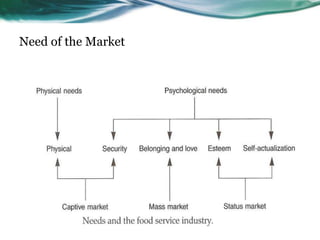
MARKET CATEGORIES

•   Captive Market
•   Mass Market
•   Status Market
Captive Market

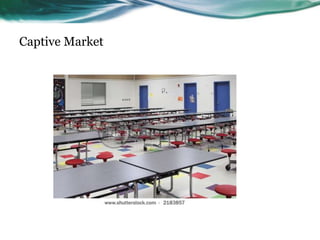
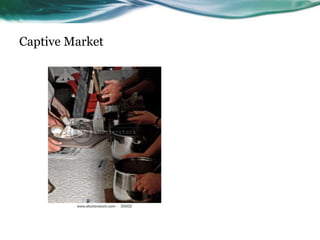
        •   Institutions,
        •   Industrial
        •   School settings
Captive Market
Captive Market
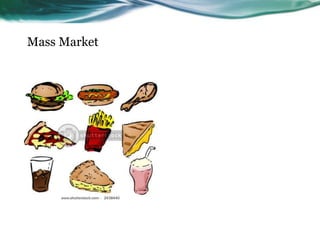
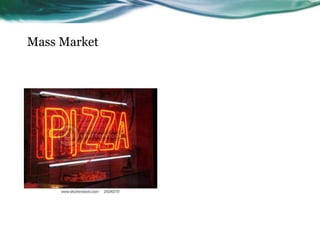
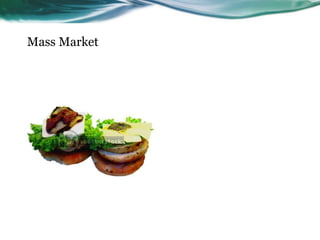
Mass Market

•   The mass market looks for food in a larger social
    setting:
    o   everyone from teenagers grabbing a burger in the company of
        friends
    o   families eating out together
    o   to special dates and anniversary dinners
Mass Market
Mass Market
Mass Market
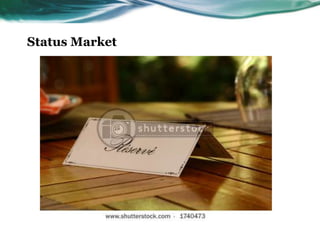
Status Market


•   The status market    is   more concerned
    with where we eat.
• To see and be seen is           more important
    than what is on the menu.
Status Market
Types of Customers

• Repeat Customers
• Baby Boomers
• Multi-check
  Households
• Families with Children
• Takeout and Delivery
• Seniors
Repeat Customers
•   Repeat business accounts for anywhere from 60 percent to 80
    percent of total revenue for restaurants.
•   Frequent diners have two major characteristics.
    o   They eat dinners out at least seven times a month;
    o   They have distinct behavior patterns in their din-ing habits.
Frequent Diners
•   "Too Tired to Cook”
•   "Busy Parents”
•   "Urban Sophisticates”
•   "Flavor Savorers”
Boomers
• The Baby-boomers were those who born
 be-tween 1946 and 1964 spend more when they
 dine out.
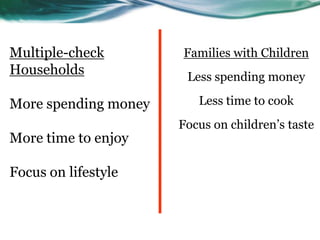
Multiple-check        Families with Children
Households             Less spending money

More spending money      Less time to cook
                      Focus on children’s taste
More time to enjoy

Focus on lifestyle
Takeout and Delivery
•   Fast food restaurants account for over 40 percent of takeout
    meals.
Seniors
•   Senior citizens are regarded as a frequent dinner customer. As
    noted above, this "care-seekers" category includes older adults.


•   To appeal to this group operators offer things such as smaller
    portions at lower prices, special services, such as a shuttle to the
    restau-rant, and early-bird specials.
Need of the Market

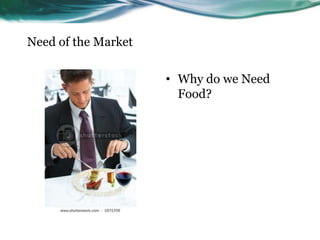
                     • Why do we Need
                       Food?
Need of the Market
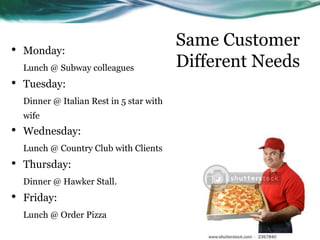
•   Monday:
                                           Same Customer
    Lunch @ Subway colleagues              Different Needs
•   Tuesday:
    Dinner @ Italian Rest in 5 star with
    wife
•   Wednesday:
    Lunch @ Country Club with Clients
•   Thursday:
    Dinner @ Hawker Stall.
•   Friday:
    Lunch @ Order Pizza
Reasons for eating out

•   Convenience
•   Variety
•   Labour
•   Status
•   Culture / tradition
•   Impulse
•   No choice
Meal experience factors


• What do you Expect?
  o   Food and drink on offer
  o   Level of service
  o   Level of cleanliness and hygiene
  o   Perceived value for money and price
  o   Atmosphere of the establishment
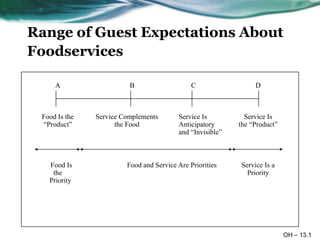
Range of Guest Expectations About
Foodservices

     A                   B                    C                 D


 Food Is the   Service Complements       Service Is          Service Is
 “Product”           the Food            Anticipatory      the “Product”
                                         and “Invisible”


   Food Is              Food and Service Are Priorities    Service Is a
    the                                                      Priority
   Priority


                                                                           OH – 13.1
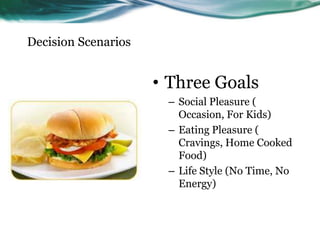
Decision Scenarios


                     • Three Goals
                      – Social Pleasure (
                        Occasion, For Kids)
                      – Eating Pleasure (
                        Cravings, Home Cooked
                        Food)
                      – Life Style (No Time, No
                        Energy)
•   Choose a Leader
Project Status
                 •   Divide into 2 Groups
                 •   Select the Theme for your
                     Event.
                 •   Wine or Cocktails
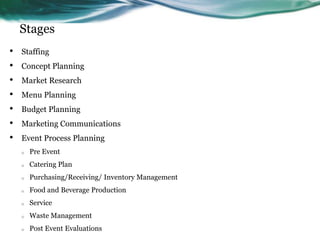
Stages
•   Staffing
•   Concept Planning
•   Market Research
•   Menu Planning
•   Budget Planning
•   Marketing Communications
•   Event Process Planning
    o   Pre Event
    o   Catering Plan
    o   Purchasing/Receiving/ Inventory Management
    o   Food and Beverage Production
    o   Service
    o   Waste Management
    o   Post Event Evaluations

Food and beverage management 2

  • 1.
  • 2.
    Learning Objectives: • How does the customer choose What to eat and Where to eat? • Customer Behavior and Buying Process
  • 3.
    MARKET CATEGORIES • Captive Market • Mass Market • Status Market
  • 4.
    Captive Market • Institutions, • Industrial • School settings
  • 5.
  • 6.
  • 7.
    Mass Market • The mass market looks for food in a larger social setting: o everyone from teenagers grabbing a burger in the company of friends o families eating out together o to special dates and anniversary dinners
  • 8.
  • 9.
  • 10.
  • 11.
    Status Market • The status market is more concerned with where we eat. • To see and be seen is more important than what is on the menu.
  • 12.
  • 13.
    Types of Customers •Repeat Customers • Baby Boomers • Multi-check Households • Families with Children • Takeout and Delivery • Seniors
  • 14.
    Repeat Customers • Repeat business accounts for anywhere from 60 percent to 80 percent of total revenue for restaurants. • Frequent diners have two major characteristics. o They eat dinners out at least seven times a month; o They have distinct behavior patterns in their din-ing habits.
  • 15.
    Frequent Diners • "Too Tired to Cook” • "Busy Parents” • "Urban Sophisticates” • "Flavor Savorers”
  • 16.
    Boomers • The Baby-boomerswere those who born be-tween 1946 and 1964 spend more when they dine out.
  • 17.
    Multiple-check Families with Children Households Less spending money More spending money Less time to cook Focus on children’s taste More time to enjoy Focus on lifestyle
  • 18.
    Takeout and Delivery • Fast food restaurants account for over 40 percent of takeout meals.
  • 19.
    Seniors • Senior citizens are regarded as a frequent dinner customer. As noted above, this "care-seekers" category includes older adults. • To appeal to this group operators offer things such as smaller portions at lower prices, special services, such as a shuttle to the restau-rant, and early-bird specials.
  • 20.
    Need of theMarket • Why do we Need Food?
  • 21.
  • 22.
    Monday: Same Customer Lunch @ Subway colleagues Different Needs • Tuesday: Dinner @ Italian Rest in 5 star with wife • Wednesday: Lunch @ Country Club with Clients • Thursday: Dinner @ Hawker Stall. • Friday: Lunch @ Order Pizza
  • 23.
    Reasons for eatingout • Convenience • Variety • Labour • Status • Culture / tradition • Impulse • No choice
  • 24.
    Meal experience factors •What do you Expect? o Food and drink on offer o Level of service o Level of cleanliness and hygiene o Perceived value for money and price o Atmosphere of the establishment
  • 25.
    Range of GuestExpectations About Foodservices A B C D Food Is the Service Complements Service Is Service Is “Product” the Food Anticipatory the “Product” and “Invisible” Food Is Food and Service Are Priorities Service Is a the Priority Priority OH – 13.1
  • 26.
    Decision Scenarios • Three Goals – Social Pleasure ( Occasion, For Kids) – Eating Pleasure ( Cravings, Home Cooked Food) – Life Style (No Time, No Energy)
  • 27.
    Choose a Leader Project Status • Divide into 2 Groups • Select the Theme for your Event. • Wine or Cocktails
  • 28.
    Stages • Staffing • Concept Planning • Market Research • Menu Planning • Budget Planning • Marketing Communications • Event Process Planning o Pre Event o Catering Plan o Purchasing/Receiving/ Inventory Management o Food and Beverage Production o Service o Waste Management o Post Event Evaluations

Editor's Notes

  • #28 This template can be used as a starter file to give updates for project milestones.SectionsRight-click on a slide to add sections. Sections can help to organize your slides or facilitate collaboration between multiple authors.NotesUse the Notes section for delivery notes or to provide additional details for the audience. View these notes in Presentation View during your presentation. Keep in mind the font size (important for accessibility, visibility, videotaping, and online production)Coordinated colors Pay particular attention to the graphs, charts, and text boxes.Consider that attendees will print in black and white or grayscale. Run a test print to make sure your colors work when printed in pure black and white and grayscale.Graphics, tables, and graphsKeep it simple: If possible, use consistent, non-distracting styles and colors.Label all graphs and tables.