Flutter
Build beautiful native apps
in record time
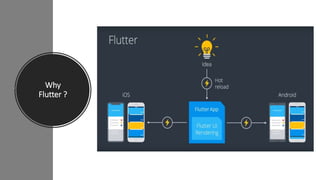
OEM SDKsWhy
Flutter ?
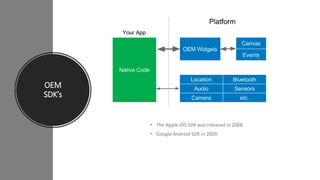
OEM SDKs
• The Apple iOS SDK was released in 2008
• Google Android SDK in 2009.
OEM
SDK’s
OEM SDKsCross
Platform
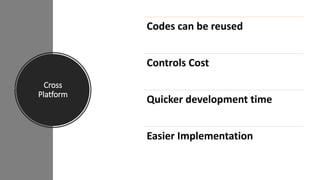
Codes can be reused
Controls Cost
Quicker development time
Easier Implementation
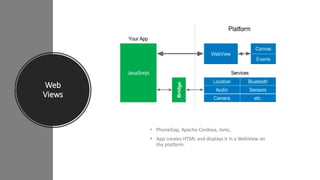
Web Views
• PhoneGap, Apache Cordova, Ionic,
• App creates HTML and displays it in a WebView on
the platform.
Web
Views
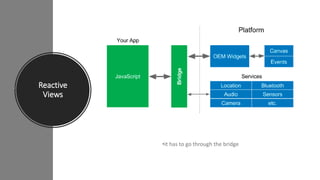
Reactive
Views
•it has to go through the bridge
Flutter
•using a compiled programming language, namely Dart.
Flutter
Flutter
Why
Dart ?
Dart is AOT (Ahead Of Time) compiled to fast,
predictable, native code
It can also be JIT (Just In Time) compiled for
exceptionally fast development cycles and game-
changing workflow ( hot reload)
Makes it easier to create smooth animations and
transitions that run at 60fps.
Allows Flutter to avoid the need for a separate
declarative layout language like JSX or XML, or
separate visual interface builders
Easy to learn
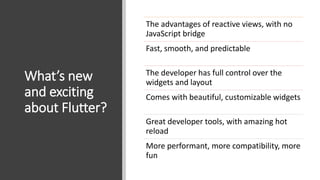
What’s new
and exciting
about Flutter?
The advantages of reactive views, with no
JavaScript bridge
Fast, smooth, and predictable
The developer has full control over the
widgets and layout
Comes with beautiful, customizable widgets
Great developer tools, with amazing hot
reload
More performant, more compatibility, more
fun
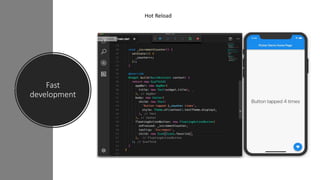
Fast
development
Hot Reload
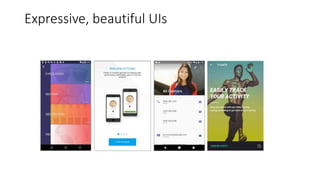
Expressive, beautiful UIs
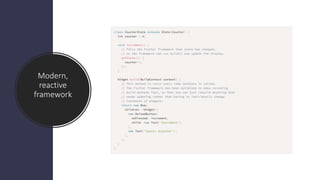
Modern,
reactive
framework
Access
native
features and
SDKs
HTML/CSS Analogs in Flutter
var container = new Container( // grey box
child: new Text(
"Lorem ipsum",
style: new TextStyle(
fontSize: 24.0
fontWeight: FontWeight.w900,
fontFamily: "Georgia",
),
),
width: 320.0,
height: 240.0,
color: Colors.grey[300],
);
<div class="greybox">
Lorem ipsum
</div>
.greybox {
background-color: #e0e0e0; /* grey 300 */
width: 320px;
height: 240px;
font: 900 24px Georgia;
}
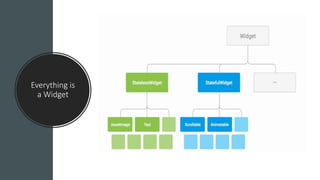
Everything is
a Widget
Thank You..

Flutter

Editor's Notes

  • #7 Reactive web frameworks like ReactJS (and others) have become popular, mainly because they simplify the creation of web views through the use of programming patterns borrowed from reactive programming. In 2015, React Native was created to bring the many benefits of reactive-style views to mobile apps. https://medium.com/@talkol/performance-limitations-of-react-native-and-how-to-overcome-them-947630d7f440
  • #11 Flutter's hot reload helps you quickly and easily experiment, build UIs, add features, and fix bugs faster. Experience sub-second reload times, without losing state, on emulators, simulators, and hardware for iOS and Android. Injecting updated source code files into the running Dart VM Stateful: App state is retained after a reload. Quickly iterate on a screen deeply nested in your app
  • #12 Delight your users with Flutter's built-in beautiful Material Design and Cupertino (iOS-flavor) widgets, rich motion APIs, smooth natural scrolling, and platform awareness.
  • #13 Easily compose your UI with Flutter's modern reactive framework and rich set of platform, layout, and foundation widgets. Solve your tough UI challenges with powerful and flexible APIs for 2D, animation, gestures, effects, and more.