1
Fluency
Fluency
From
From
Building Fluency: Lessons and Strategies for Reading Success
By Wiley Blevins
By Wiley Blevins
2
A Definition
• Fluency is the ability to read
smoothly, easily, and readily with
freedom from word recognition
problems
• A lack of fluency is characterized by
a slow, halting pace; frequent
mistakes; poor phrasing; and
inadequate intonation.
3
Fluent reading is a major
goal of reading instruction
because decoding print
accurately and effortlessly
enables students to read
for meaning.
4
A fluent reader can:
1. Read at a rapid rate
(pace—the speed at which oral or silent reading
occurs)
2. Automatically recognize words
(smoothness/accuracy—efficient decoding skills)
3. Phrase correctly
(prosody—the ability to read a text orally using
appropriate pitch, stress, and phrasing)
5
Automaticity
Refers to knowing how to do something so
well you don’t have to think about it.
For reading, refers to the ability to
accurately and quickly recognize many
words as whole units.
Advantage—recognizing a word as a whole
unit is that words have meaning.
6
Exposure
To recognize a word automatically:
• The average child
– 4-14 exposures
• Struggling reader
– 40 or more exposures
Students need a great deal of practice
reading stories at their independent reading
level to develop automaticity.
7
Why do children fail to
read fluently?
1. Lack of exposure
2. The good-reader syndrome
3. Lack of practice time
4. Frustration
5. Missing the “why” of reading
8
Ways to teach fluency
1. Model fluent reading
9
2. Provide direct instruction
and feedback
Teach sight words and phonics
Practice reading prior to reading a text
scan a text, preteach vocabulary
Time students’ reading
Include oral recitation lessons
Teach “smooshing” words together
Explain return-sweep eye movement
10
Teach about the eye-voice span
eyes are 1 to 3 words ahead of oral reading
Find alternatives to round-robin reading
Teach phrasing and intonation
11
Activity
Recite the alphabet/numbers as a
conversation.
ABCD? EFG! HI? JKL. MN?
OPQ. RST! UVWX. YZ!
123. 4! 567? 89. 10!
12
Recite the same sentence using
different punctuation.
Dogs bark? Cows moo.
Dogs bark! Cows moo?
Dogs bark. Cows moo!
13
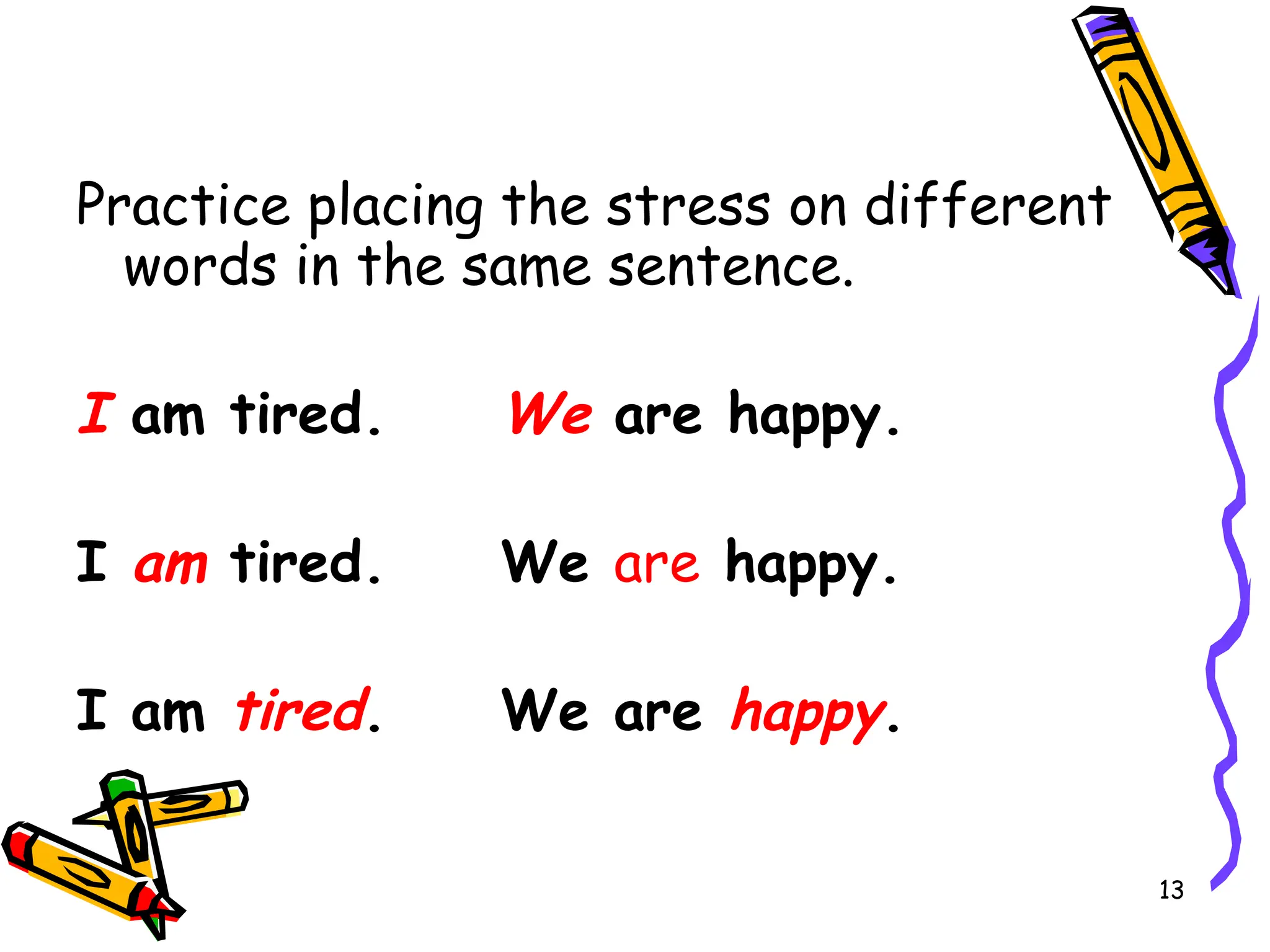
Practice placing the stress on different
words in the same sentence.
I am tired. We are happy.
14
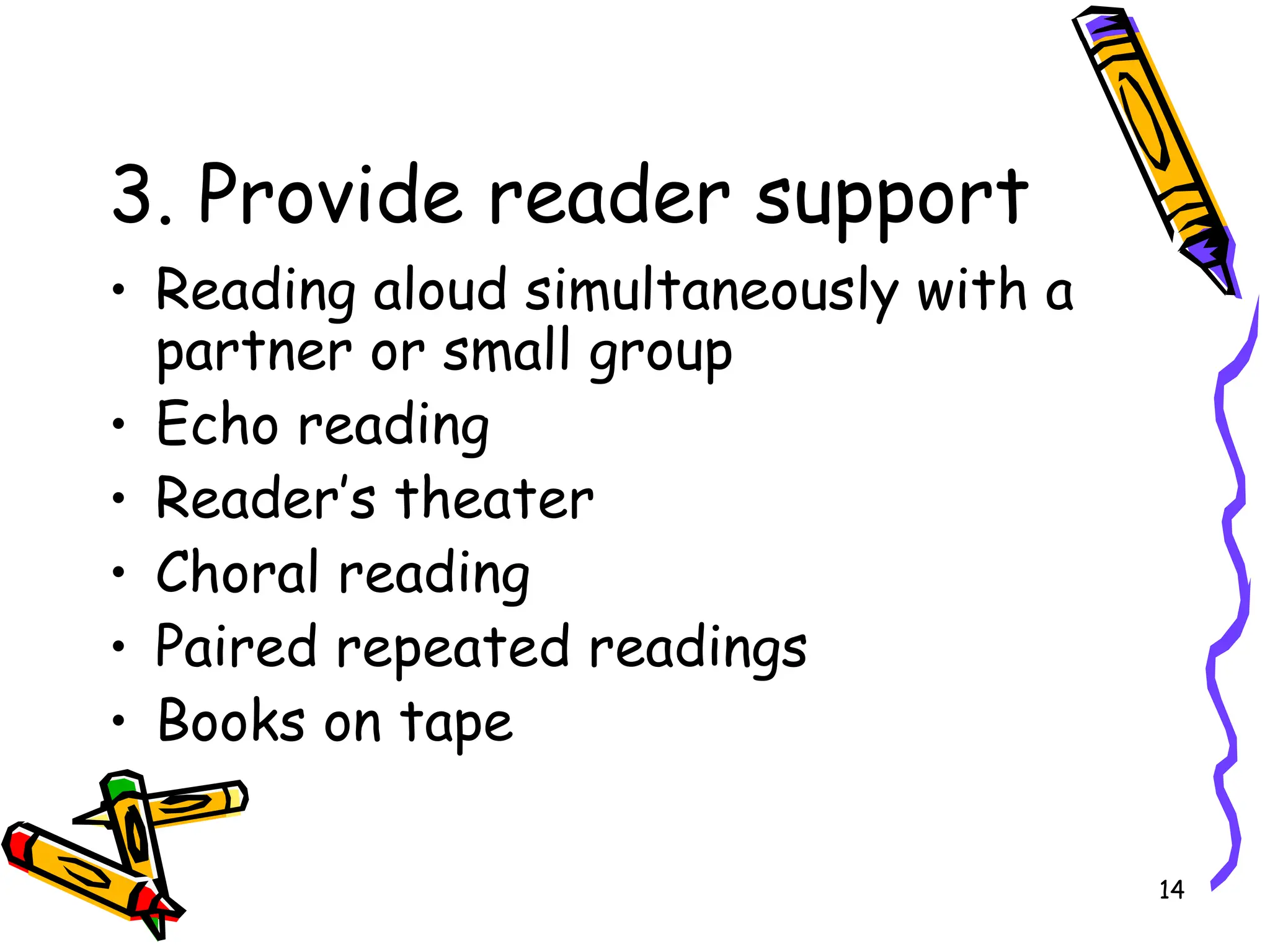
3. Provide reader support
• Reading aloud simultaneously with a
partner or small group
• Echo reading
• Reader’s theater
• Choral reading
• Paired repeated readings
• Books on tape
15
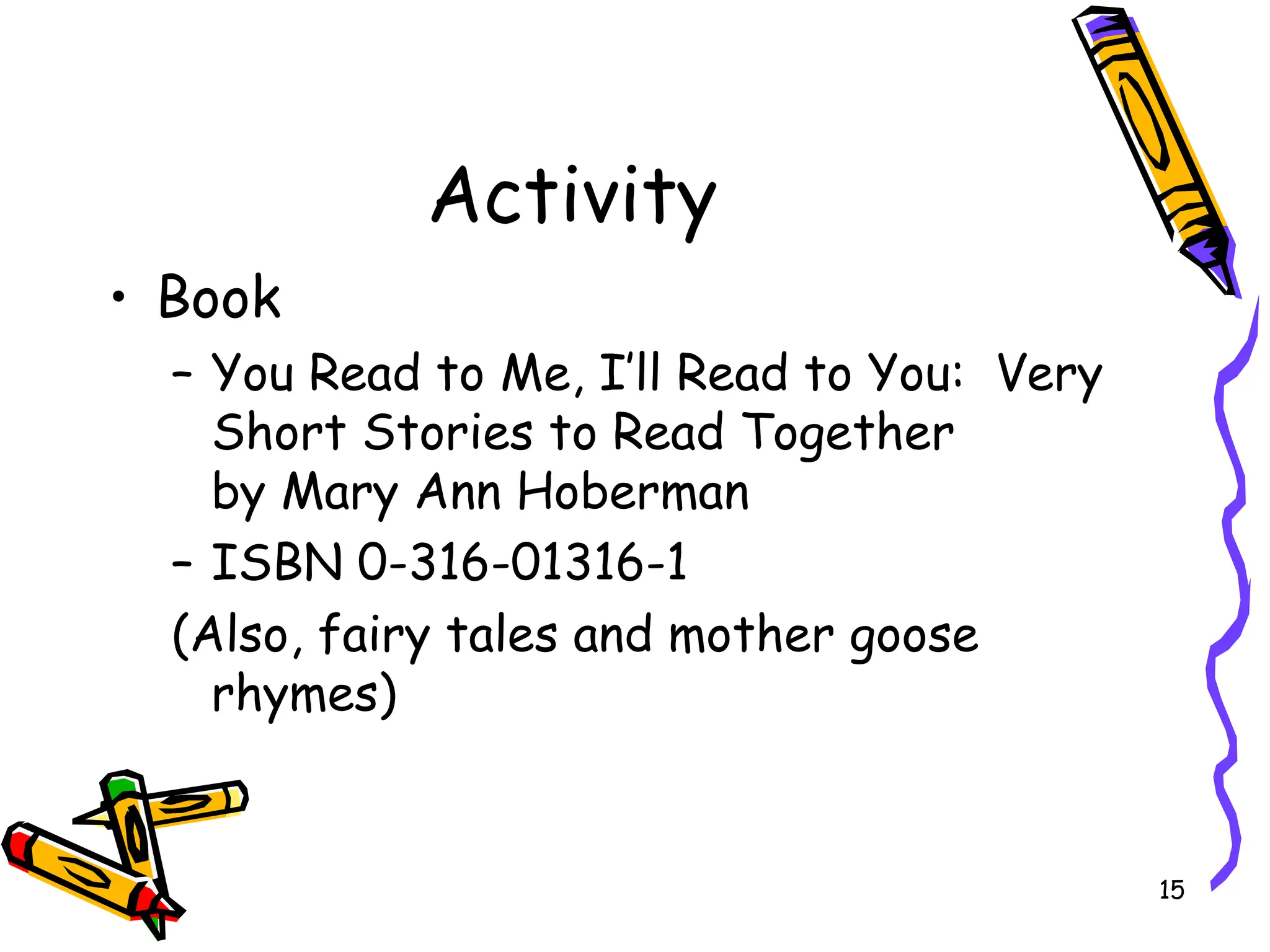
Activity
• Book
– You Read to Me, I’ll Read to You: Very
Short Stories to Read Together
by Mary Ann Hoberman
– ISBN 0-316-01316-1
(Also, fairy tales and mother goose
rhymes)
16
4. Use repeated readings
of one text.
• Child reads at his instructional level
• Teacher times the reading
• Feedback is given on word recognition
errors and the number of words per
minute
17
6. Provide easy reading
materials.
• Enormous amounts of individualized
reading material
• At least 30 minutes per day
• Must be independent or instructional
level

fluency_powerpoint on reading slides.ppt

  • 1.
    1 Fluency Fluency From From Building Fluency: Lessonsand Strategies for Reading Success Building Fluency: Lessons and Strategies for Reading Success By Wiley Blevins By Wiley Blevins
  • 2.
    2 A Definition • Fluencyis the ability to read smoothly, easily, and readily with freedom from word recognition problems • A lack of fluency is characterized by a slow, halting pace; frequent mistakes; poor phrasing; and inadequate intonation.
  • 3.
    3 Fluent reading isa major goal of reading instruction because decoding print accurately and effortlessly enables students to read for meaning.
  • 4.
    4 A fluent readercan: 1. Read at a rapid rate (pace—the speed at which oral or silent reading occurs) 2. Automatically recognize words (smoothness/accuracy—efficient decoding skills) 3. Phrase correctly (prosody—the ability to read a text orally using appropriate pitch, stress, and phrasing)
  • 5.
    5 Automaticity Refers to knowinghow to do something so well you don’t have to think about it. For reading, refers to the ability to accurately and quickly recognize many words as whole units. Advantage—recognizing a word as a whole unit is that words have meaning.
  • 6.
    6 Exposure To recognize aword automatically: • The average child – 4-14 exposures • Struggling reader – 40 or more exposures Students need a great deal of practice reading stories at their independent reading level to develop automaticity.
  • 7.
    7 Why do childrenfail to read fluently? 1. Lack of exposure 2. The good-reader syndrome 3. Lack of practice time 4. Frustration 5. Missing the “why” of reading
  • 8.
    8 Ways to teachfluency 1. Model fluent reading
  • 9.
    9 2. Provide directinstruction and feedback Teach sight words and phonics Practice reading prior to reading a text scan a text, preteach vocabulary Time students’ reading Include oral recitation lessons Teach “smooshing” words together Explain return-sweep eye movement
  • 10.
    10 Teach about theeye-voice span eyes are 1 to 3 words ahead of oral reading Find alternatives to round-robin reading Teach phrasing and intonation
  • 11.
    11 Activity Recite the alphabet/numbersas a conversation. ABCD? EFG! HI? JKL. MN? OPQ. RST! UVWX. YZ! 123. 4! 567? 89. 10!
  • 12.
    12 Recite the samesentence using different punctuation. Dogs bark? Cows moo. Dogs bark! Cows moo? Dogs bark. Cows moo!
  • 13.
    13 Practice placing thestress on different words in the same sentence. I am tired. We are happy. I am tired. We are happy. I am tired. We are happy.
  • 14.
    14 3. Provide readersupport • Reading aloud simultaneously with a partner or small group • Echo reading • Reader’s theater • Choral reading • Paired repeated readings • Books on tape
  • 15.
    15 Activity • Book – YouRead to Me, I’ll Read to You: Very Short Stories to Read Together by Mary Ann Hoberman – ISBN 0-316-01316-1 (Also, fairy tales and mother goose rhymes)
  • 16.
    16 4. Use repeatedreadings of one text. • Child reads at his instructional level • Teacher times the reading • Feedback is given on word recognition errors and the number of words per minute
  • 17.
    17 6. Provide easyreading materials. • Enormous amounts of individualized reading material • At least 30 minutes per day • Must be independent or instructional level