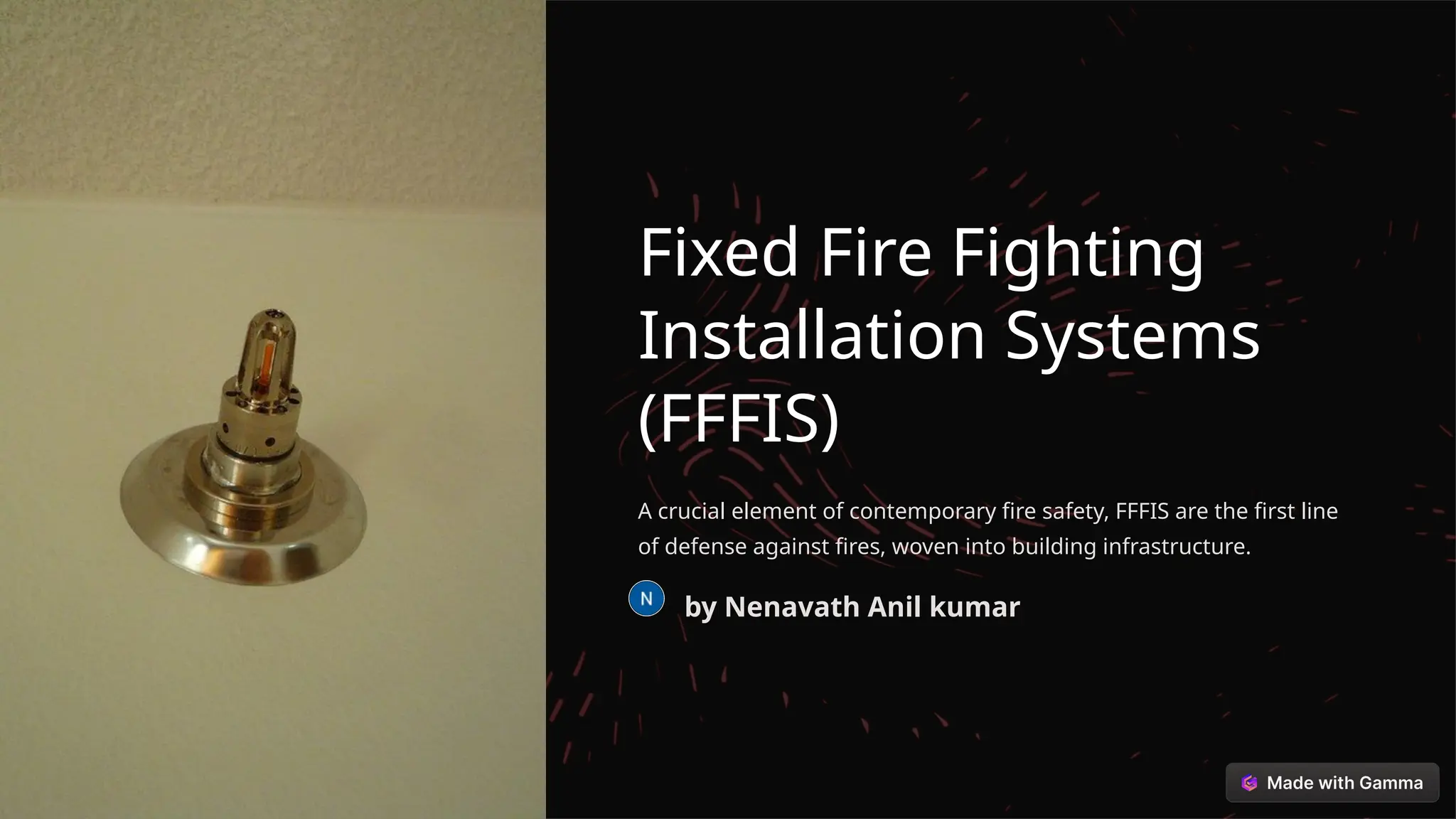
Fixed Fire Fighting
Installation Systems
(FFFIS)
A crucial element of contemporary fire safety, FFFIS are the first line
of defense against fires, woven into building infrastructure.
by Nenavath Anil kumar
FFFIS Components
Water Supply
Reservoirs, fire pumps,
pipes, and control valves
form the foundation of
FFFIS.
Sprinkler Heads
Target fires in their early
stages, containing or
putting them out.
Fire and Smoke
Detector
Triggers the FFFIS,
consisting of heat and
smoke detectors.
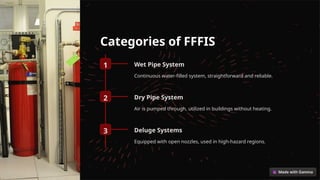
Categories of FFFIS
1 Wet Pipe System
Continuous water-filled system, straightforward and reliable.
2 Dry Pipe System
Air is pumped through, utilized in buildings without heating.
3 Deluge Systems
Equipped with open nozzles, used in high-hazard regions.
FFFIS Procedure
1 Detection
System comes on
when it detects
smoke or extreme
heat.
2 Transmission
of Signals
Control panel
receives a signal
from the detecting
system.
3 Discharge
System's specific
kind determines
whether to release
gas, foam, or water.
Benefits and Significance
Life Safety
Protects human life by
facilitating safe
evacuation and quickly
putting out fires.
Protection of
Property
Minimizes damage to
the structure and its
contents.
Business Continuity
Reduces financial
losses by enabling
businesses to operate
normally sooner.
Problems and Considerations
Design and Installation
Upkeep
Employee Education
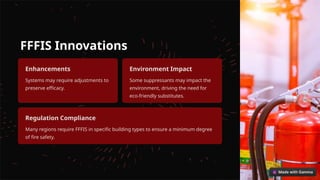
FFFIS Innovations
Enhancements
Systems may require adjustments to
preserve efficacy.
Environment Impact
Some suppressants may impact the
environment, driving the need for
eco-friendly substitutes.
Regulation Compliance
Many regions require FFFIS in specific building types to ensure a minimum degree
of fire safety.
Future of FFFIS
Advancements Continuous innovation and development
Technology Adopting more effective and eco-
friendly fire suppression agents
Education Promoting a culture of safety and
readiness through training

Fixed-Fire-Fighting-Installation-Systems-FFFIS.pptx

  • 1.
    Fixed Fire Fighting InstallationSystems (FFFIS) A crucial element of contemporary fire safety, FFFIS are the first line of defense against fires, woven into building infrastructure. by Nenavath Anil kumar
  • 2.
    FFFIS Components Water Supply Reservoirs,fire pumps, pipes, and control valves form the foundation of FFFIS. Sprinkler Heads Target fires in their early stages, containing or putting them out. Fire and Smoke Detector Triggers the FFFIS, consisting of heat and smoke detectors.
  • 3.
    Categories of FFFIS 1Wet Pipe System Continuous water-filled system, straightforward and reliable. 2 Dry Pipe System Air is pumped through, utilized in buildings without heating. 3 Deluge Systems Equipped with open nozzles, used in high-hazard regions.
  • 4.
    FFFIS Procedure 1 Detection Systemcomes on when it detects smoke or extreme heat. 2 Transmission of Signals Control panel receives a signal from the detecting system. 3 Discharge System's specific kind determines whether to release gas, foam, or water.
  • 5.
    Benefits and Significance LifeSafety Protects human life by facilitating safe evacuation and quickly putting out fires. Protection of Property Minimizes damage to the structure and its contents. Business Continuity Reduces financial losses by enabling businesses to operate normally sooner.
  • 6.
    Problems and Considerations Designand Installation Upkeep Employee Education
  • 7.
    FFFIS Innovations Enhancements Systems mayrequire adjustments to preserve efficacy. Environment Impact Some suppressants may impact the environment, driving the need for eco-friendly substitutes. Regulation Compliance Many regions require FFFIS in specific building types to ensure a minimum degree of fire safety.
  • 8.
    Future of FFFIS AdvancementsContinuous innovation and development Technology Adopting more effective and eco- friendly fire suppression agents Education Promoting a culture of safety and readiness through training