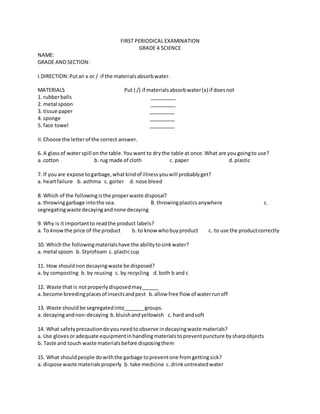
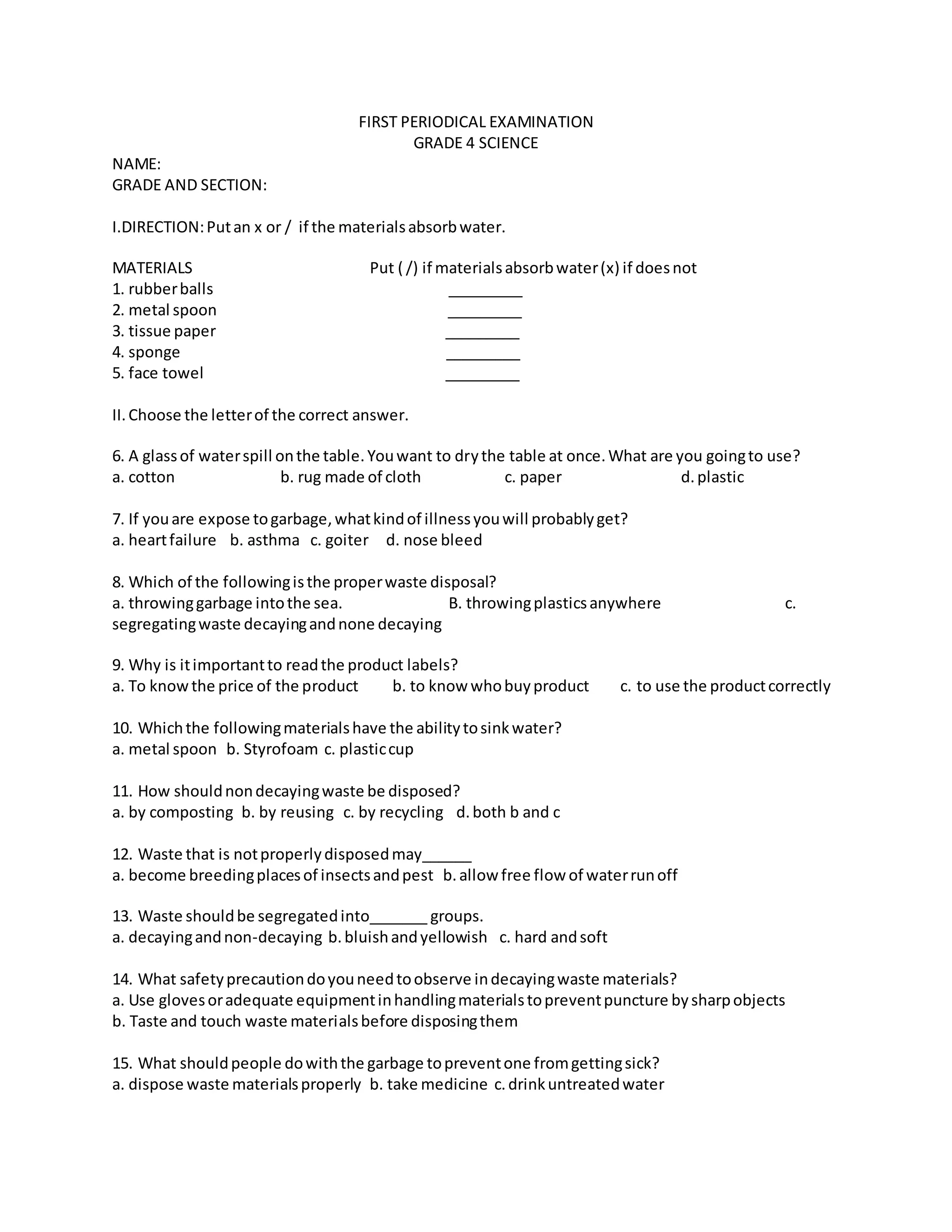
FIRST PERIODICAL EXAMINATION
GRADE 4 SCIENCE
NAME:
GRADE AND SECTION:
I.DIRECTION:Putan x or / if the materialsabsorbwater.
MATERIALS Put ( /) if materialsabsorbwater(x) if doesnot
1. rubberballs _________
2. metal spoon _________
3. tissue paper _________
4. sponge _________
5. face towel _________
II.Choose the letterof the correct answer.
6. A glassof waterspill onthe table.Youwant to drythe table at once.What are you goingto use?
a. cotton b. rug made of cloth c. paper d.plastic
7. If youare expose togarbage,whatkindof illnessyouwill probablyget?
a. heartfailure b. asthma c. goiter d. nose bleed
8. Which of the followingisthe properwaste disposal?
a. throwinggarbage intothe sea. B. throwingplasticsanywhere c.
segregatingwaste decayingandnone decaying
9. Why is itimportantto readthe product labels?
a. To knowthe price of the product b. to know whobuyproduct c. to use the productcorrectly
10. Whichthe followingmaterialshave the abilitytosinkwater?
a. metal spoon b. Styrofoam c. plasticcup
11. How shouldnondecayingwaste be disposed?
a. by composting b. by reusing c. by recycling d.both b and c
12. Waste that is notproperlydisposedmay______
a. become breedingplacesof insectsandpest b.allow free flow of waterrunoff
13. Waste shouldbe segregatedinto_______ groups.
a. decayingandnon-decaying b.bluishandyellowish c. hard andsoft
14. What safetyprecautiondoyouneedtoobserve indecayingwaste materials?
a. Use glovesoradequate equipmentinhandlingmaterialstopreventpuncture bysharpobjects
b. Taste and touch waste materialsbefore disposingthem
15. What shouldpeople dowiththe garbage topreventone fromgettingsick?
a. dispose waste materialsproperly b. take medicine c.drinkuntreatedwater
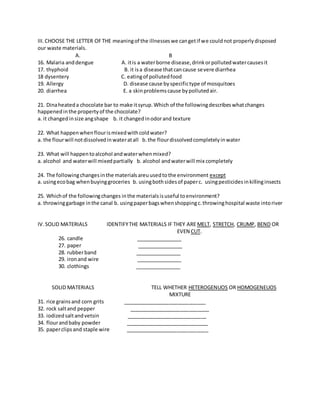
III.CHOOSE THE LETTER OFTHE meaningof the illnesseswe cangetif we couldnot properlydisposed
our waste materials.
A. B
16. Malaria anddengue A. itis a waterborne disease,drinkorpollutedwatercausesit
17. thyphoid B. it isa disease thatcancause severe diarrhea
18 dysentery C. eatingof pollutedfood
19. Allergy D. disease cause byspecifictype of mosquitoes
20. diarrhea E. a skinproblemscause bypollutedair.
21. Dinaheateda chocolate bar to make itsyrup.Which of the followingdescribeswhatchanges
happenedinthe propertyof the chocolate?
a. it changedinsize angshape b. it changedinodorand texture
22. What happenwhenflourismixedwithcoldwater?
a. the flourwill notdissolvedinwateratall b.the flourdissolvedcompletelyinwater
23. What will happentoalcohol andwaterwhenmixed?
a. alcohol and waterwill mixedpartially b. alcohol andwaterwill mix completely
24. The followingchangesinthe materialsareuusedtothe environment except
a. usingecobag whenbuyinggroceries b. usingbothsidesof paperc. usingpesticidesinkillinginsects
25. Whichof the followingchanges inthe materialsisuseful toenvironment?
a. throwinggarbage inthe canal b. usingpaperbagswhenshoppingc.throwinghospital waste intoriver
IV.SOLID MATERIALS IDENTIFYTHE MATERIALS IF THEY ARE MELT, STRETCH, CRUMP, BEND OR
EVEN CUT.
26. candle ________________
27. paper ________________
28. rubberband ________________
29. ironand wire ________________
30. clothings ________________
SOLID MATERIALS TELL WHETHER HETEROGENUOS OR HOMOGENEUOS
MIXTURE
31. rice grainsand corn grits _____________________________
32. rock saltand pepper ____________________________
33. iodizedsaltandvetsin ____________________________
34. flourandbaby powder _____________________________
35. paperclipsand staple wire _____________________________
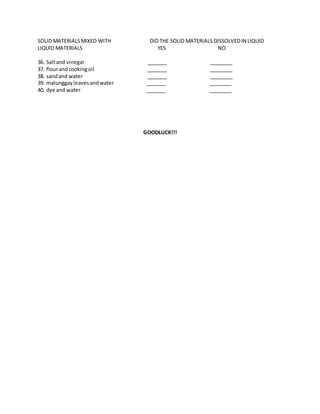
SOLID MATERIALSMIXED WITH DID THE SOLID MATERIALS DISSOLVEDIN LIQUID
LIQUID MATERIALS YES NO
36. Saltand vinegar _______ ________
37. flourandcookingoil _______ ________
38. sandand water _______ ________
39. malunggayleavesandwater _______ ________
40. dye and water _______ ________
GOODLUCK!!!
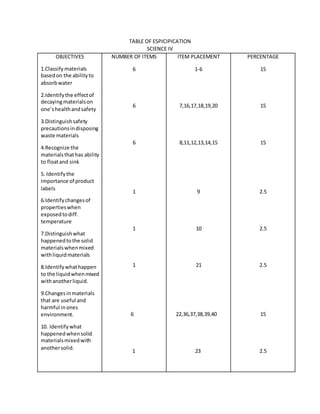
TABLE OF ESPICIPICATION
SCIENCE IV
OBJECTIVES
1.Classifymaterials
basedon the abilityto
absorbwater
2.Identifythe effectof
decayingmaterialson
one’shealthandsafety
3.Distinguishsafety
precautionsindisposing
waste materials
4.Recognize the
materialsthathas ability
to floatand sink
5. Identifythe
importance of product
labels
6.Identifychangesof
propertieswhen
exposedtodiff.
temperature
7.Distinguishwhat
happenedtothe solid
materialswhenmixed
withliquidmaterials
8.Identifywhathappen
to the liquidwhenmixed
withanotherliquid.
9.Changesinmaterials
that are useful and
harmful inones
environment.
10. Identifywhat
happenedwhensolid
materialsmixedwith
anothersolid.
NUMBER OF ITEMS
6
6
6
1
1
1
6
1
ITEM PLACEMENT
1-6
7,16,17,18,19,20
8,11,12,13,14,15
9
10
21
22,36,37,38,39,40
23
PERCENTAGE
15
15
15
2.5
2.5
2.5
15
2.5
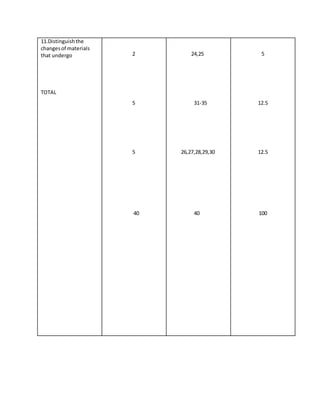
11.Distinguishthe
changesof materials
that undergo
TOTAL
2
5
5
40
24,25
31-35
26,27,28,29,30
40
5
12.5
12.5
100
K-12 First Quarter test in science 4

K-12 First Quarter test in science 4

  • 1.
    FIRST PERIODICAL EXAMINATION GRADE4 SCIENCE NAME: GRADE AND SECTION: I.DIRECTION:Putan x or / if the materialsabsorbwater. MATERIALS Put ( /) if materialsabsorbwater(x) if doesnot 1. rubberballs _________ 2. metal spoon _________ 3. tissue paper _________ 4. sponge _________ 5. face towel _________ II.Choose the letterof the correct answer. 6. A glassof waterspill onthe table.Youwant to drythe table at once.What are you goingto use? a. cotton b. rug made of cloth c. paper d.plastic 7. If youare expose togarbage,whatkindof illnessyouwill probablyget? a. heartfailure b. asthma c. goiter d. nose bleed 8. Which of the followingisthe properwaste disposal? a. throwinggarbage intothe sea. B. throwingplasticsanywhere c. segregatingwaste decayingandnone decaying 9. Why is itimportantto readthe product labels? a. To knowthe price of the product b. to know whobuyproduct c. to use the productcorrectly 10. Whichthe followingmaterialshave the abilitytosinkwater? a. metal spoon b. Styrofoam c. plasticcup 11. How shouldnondecayingwaste be disposed? a. by composting b. by reusing c. by recycling d.both b and c 12. Waste that is notproperlydisposedmay______ a. become breedingplacesof insectsandpest b.allow free flow of waterrunoff 13. Waste shouldbe segregatedinto_______ groups. a. decayingandnon-decaying b.bluishandyellowish c. hard andsoft 14. What safetyprecautiondoyouneedtoobserve indecayingwaste materials? a. Use glovesoradequate equipmentinhandlingmaterialstopreventpuncture bysharpobjects b. Taste and touch waste materialsbefore disposingthem 15. What shouldpeople dowiththe garbage topreventone fromgettingsick? a. dispose waste materialsproperly b. take medicine c.drinkuntreatedwater
  • 2.
    III.CHOOSE THE LETTEROFTHE meaningof the illnesseswe cangetif we couldnot properlydisposed our waste materials. A. B 16. Malaria anddengue A. itis a waterborne disease,drinkorpollutedwatercausesit 17. thyphoid B. it isa disease thatcancause severe diarrhea 18 dysentery C. eatingof pollutedfood 19. Allergy D. disease cause byspecifictype of mosquitoes 20. diarrhea E. a skinproblemscause bypollutedair. 21. Dinaheateda chocolate bar to make itsyrup.Which of the followingdescribeswhatchanges happenedinthe propertyof the chocolate? a. it changedinsize angshape b. it changedinodorand texture 22. What happenwhenflourismixedwithcoldwater? a. the flourwill notdissolvedinwateratall b.the flourdissolvedcompletelyinwater 23. What will happentoalcohol andwaterwhenmixed? a. alcohol and waterwill mixedpartially b. alcohol andwaterwill mix completely 24. The followingchangesinthe materialsareuusedtothe environment except a. usingecobag whenbuyinggroceries b. usingbothsidesof paperc. usingpesticidesinkillinginsects 25. Whichof the followingchanges inthe materialsisuseful toenvironment? a. throwinggarbage inthe canal b. usingpaperbagswhenshoppingc.throwinghospital waste intoriver IV.SOLID MATERIALS IDENTIFYTHE MATERIALS IF THEY ARE MELT, STRETCH, CRUMP, BEND OR EVEN CUT. 26. candle ________________ 27. paper ________________ 28. rubberband ________________ 29. ironand wire ________________ 30. clothings ________________ SOLID MATERIALS TELL WHETHER HETEROGENUOS OR HOMOGENEUOS MIXTURE 31. rice grainsand corn grits _____________________________ 32. rock saltand pepper ____________________________ 33. iodizedsaltandvetsin ____________________________ 34. flourandbaby powder _____________________________ 35. paperclipsand staple wire _____________________________
  • 3.
    SOLID MATERIALSMIXED WITHDID THE SOLID MATERIALS DISSOLVEDIN LIQUID LIQUID MATERIALS YES NO 36. Saltand vinegar _______ ________ 37. flourandcookingoil _______ ________ 38. sandand water _______ ________ 39. malunggayleavesandwater _______ ________ 40. dye and water _______ ________ GOODLUCK!!!
  • 4.
    TABLE OF ESPICIPICATION SCIENCEIV OBJECTIVES 1.Classifymaterials basedon the abilityto absorbwater 2.Identifythe effectof decayingmaterialson one’shealthandsafety 3.Distinguishsafety precautionsindisposing waste materials 4.Recognize the materialsthathas ability to floatand sink 5. Identifythe importance of product labels 6.Identifychangesof propertieswhen exposedtodiff. temperature 7.Distinguishwhat happenedtothe solid materialswhenmixed withliquidmaterials 8.Identifywhathappen to the liquidwhenmixed withanotherliquid. 9.Changesinmaterials that are useful and harmful inones environment. 10. Identifywhat happenedwhensolid materialsmixedwith anothersolid. NUMBER OF ITEMS 6 6 6 1 1 1 6 1 ITEM PLACEMENT 1-6 7,16,17,18,19,20 8,11,12,13,14,15 9 10 21 22,36,37,38,39,40 23 PERCENTAGE 15 15 15 2.5 2.5 2.5 15 2.5
  • 5.