FIRE SAFETY


    1

              1
What produces a fire?
Four things must be present to produce fire:
   1.Enough oxygen to sustain combustion,
   2.Enough heat to raise the material to its ignition
   temperature,
   3.Some sort of fuel or combustible material, and
   4.The chemical exothermic reaction that is fire.

Take away any one of these four things, and you will not have a
fire or the fire will be extinguished!

                          2
putting out a fire
 Fires can be extinguished by eliminating any one of the
  four conditions necessary to produce fire.
       oxygen
       heat
       fuel
       reaction

 Basically, Fire safety, is about keeping fuel sources and
  ignition sources separate.


                             3

                                                              3
fire extinguishers
Employees who are expected or anticipated to use fire
  extinguishers on small incipient fires will be instructed on the
  hazards of fighting fires, how to properly operate the fire
  extinguishers available, and what procedures to follow in
  alerting others to the fire emergency.

If a fire cannot be immediately and easily extinguished with a fire
    extinguisher, all employees should evacuate the building.


                            4

                                                                      4
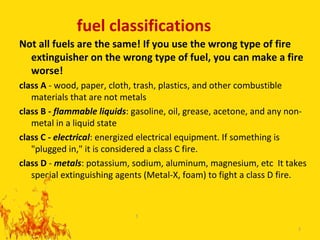
fuel classifications
Not all fuels are the same! If you use the wrong type of fire
  extinguisher on the wrong type of fuel, you can make a fire
  worse!
class A - wood, paper, cloth, trash, plastics, and other combustible
   materials that are not metals
class B - flammable liquids: gasoline, oil, grease, acetone, and any non-
   metal in a liquid state
class C - electrical: energized electrical equipment. If something is
   "plugged in," it is considered a class C fire.
class D - metals: potassium, sodium, aluminum, magnesium, etc It takes
   special extinguishing agents (Metal-X, foam) to fight a class D fire.


                             5

                                                                      5
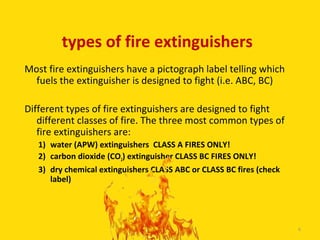
types of fire extinguishers
Most fire extinguishers have a pictograph label telling which
  fuels the extinguisher is designed to fight (i.e. ABC, BC)

Different types of fire extinguishers are designed to fight
   different classes of fire. The three most common types of
   fire extinguishers are:
   1) water (APW) extinguishers CLASS A FIRES ONLY!
   2) carbon dioxide (CO2) extinguisher CLASS BC FIRES ONLY!
   3) dry chemical extinguishers CLASS ABC or CLASS BC fires (check
      label)


                            6

                                                                      6
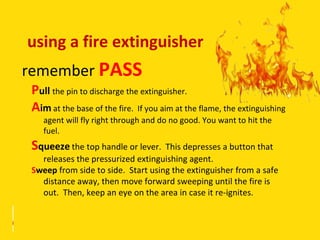
using a fire extinguisher
remember PASS
 Pull the pin to discharge the extinguisher.
 Aim at the base of the fire. If you aim at the flame, the extinguishing
    agent will fly right through and do no good. You want to hit the
    fuel.
 Squeeze the top handle or lever. This depresses a button that
   releases the pressurized extinguishing agent.
 Sweep from side to side. Start using the extinguisher from a safe
   distance away, then move forward sweeping until the fire is
   out. Then, keep an eye on the area in case it re-ignites.
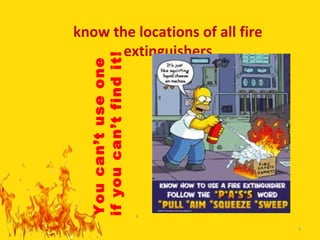
know the locations of all fire
       extinguishers


  if you can’t find it!
  You can’t use one


                          8

                                 8
fighting a fire
Position yourself with an exit or means of escape at your back You may need to
   be able to get out quickly, so, always keep an exit at your back.
If a fire is discovered
     1) Assist any person in immediate danger to safety, if it can be accomplished
          without risk to yourself.
     2) Activate the building fire alarm system or notify the fire department by
          dialing 911.
     3) If the fire is small, you may then attempt to use an extinguisher to put it
          out.


                                  9

                                                                                      9
never fight a fire if…
You don't know what is burning. If you don't know what is
burning, you don't know what type of extinguisher to use.

The fire is spreading rapidly beyond the spot where it started.
The time to use an extinguisher is in the incipient, or beginning,
stages. If the fire is already spreading, it is best to evacuate the
building, closing doors/ windows behind you.

You don’t have adequate/ appropriate equipment.

The fire is producing lots of smoke. It may be toxic.


                             10

                                                                       10
fire hazards
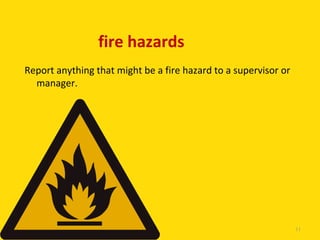
Report anything that might be a fire hazard to a supervisor or
  manager.


                         11

                                                                 11
fire hazards
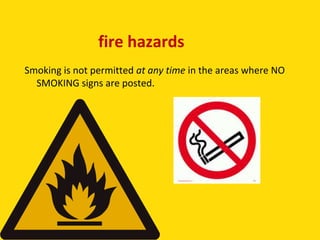
Smoking is not permitted at any time in the areas where NO
  SMOKING signs are posted.


                        12
fire hazards

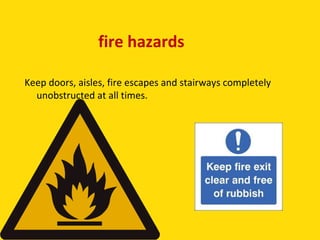
Keep doors, aisles, fire escapes and stairways completely
  unobstructed at all times.
finally…
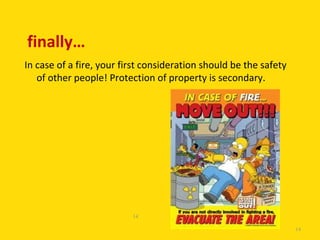
In case of a fire, your first consideration should be the safety
   of other people! Protection of property is secondary.


                          14

                                                                   14

Fire safety

  • 1.
  • 2.
    What produces afire? Four things must be present to produce fire: 1.Enough oxygen to sustain combustion, 2.Enough heat to raise the material to its ignition temperature, 3.Some sort of fuel or combustible material, and 4.The chemical exothermic reaction that is fire. Take away any one of these four things, and you will not have a fire or the fire will be extinguished! 2
  • 3.
    putting out afire  Fires can be extinguished by eliminating any one of the four conditions necessary to produce fire. oxygen heat fuel reaction  Basically, Fire safety, is about keeping fuel sources and ignition sources separate. 3 3
  • 4.
    fire extinguishers Employees whoare expected or anticipated to use fire extinguishers on small incipient fires will be instructed on the hazards of fighting fires, how to properly operate the fire extinguishers available, and what procedures to follow in alerting others to the fire emergency. If a fire cannot be immediately and easily extinguished with a fire extinguisher, all employees should evacuate the building. 4 4
  • 5.
    fuel classifications Not allfuels are the same! If you use the wrong type of fire extinguisher on the wrong type of fuel, you can make a fire worse! class A - wood, paper, cloth, trash, plastics, and other combustible materials that are not metals class B - flammable liquids: gasoline, oil, grease, acetone, and any non- metal in a liquid state class C - electrical: energized electrical equipment. If something is "plugged in," it is considered a class C fire. class D - metals: potassium, sodium, aluminum, magnesium, etc It takes special extinguishing agents (Metal-X, foam) to fight a class D fire. 5 5
  • 6.
    types of fireextinguishers Most fire extinguishers have a pictograph label telling which fuels the extinguisher is designed to fight (i.e. ABC, BC) Different types of fire extinguishers are designed to fight different classes of fire. The three most common types of fire extinguishers are: 1) water (APW) extinguishers CLASS A FIRES ONLY! 2) carbon dioxide (CO2) extinguisher CLASS BC FIRES ONLY! 3) dry chemical extinguishers CLASS ABC or CLASS BC fires (check label) 6 6
  • 7.
    using a fireextinguisher remember PASS Pull the pin to discharge the extinguisher. Aim at the base of the fire. If you aim at the flame, the extinguishing agent will fly right through and do no good. You want to hit the fuel. Squeeze the top handle or lever. This depresses a button that releases the pressurized extinguishing agent. Sweep from side to side. Start using the extinguisher from a safe distance away, then move forward sweeping until the fire is out. Then, keep an eye on the area in case it re-ignites.
  • 8.
    know the locationsof all fire extinguishers if you can’t find it! You can’t use one 8 8
  • 9.
    fighting a fire Positionyourself with an exit or means of escape at your back You may need to be able to get out quickly, so, always keep an exit at your back. If a fire is discovered 1) Assist any person in immediate danger to safety, if it can be accomplished without risk to yourself. 2) Activate the building fire alarm system or notify the fire department by dialing 911. 3) If the fire is small, you may then attempt to use an extinguisher to put it out. 9 9
  • 10.
    never fight afire if… You don't know what is burning. If you don't know what is burning, you don't know what type of extinguisher to use. The fire is spreading rapidly beyond the spot where it started. The time to use an extinguisher is in the incipient, or beginning, stages. If the fire is already spreading, it is best to evacuate the building, closing doors/ windows behind you. You don’t have adequate/ appropriate equipment. The fire is producing lots of smoke. It may be toxic. 10 10
  • 11.
    fire hazards Report anythingthat might be a fire hazard to a supervisor or manager. 11 11
  • 12.
    fire hazards Smoking isnot permitted at any time in the areas where NO SMOKING signs are posted. 12
  • 13.
    fire hazards Keep doors,aisles, fire escapes and stairways completely unobstructed at all times.
  • 14.
    finally… In case ofa fire, your first consideration should be the safety of other people! Protection of property is secondary. 14 14