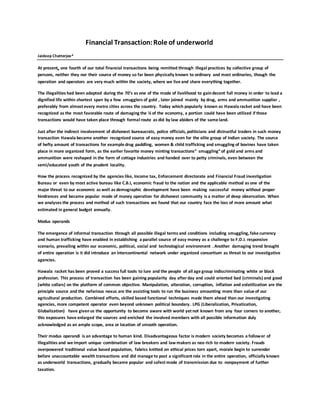
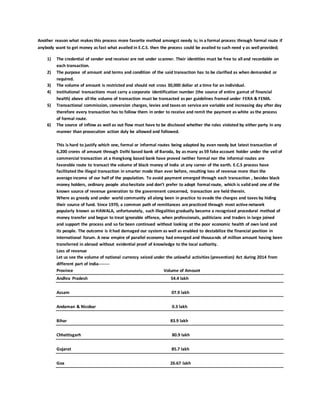
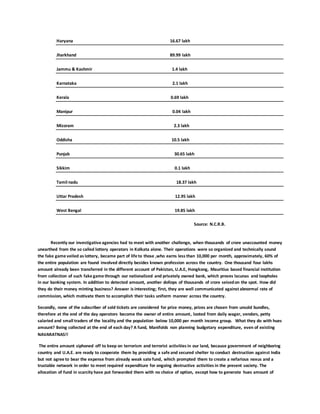
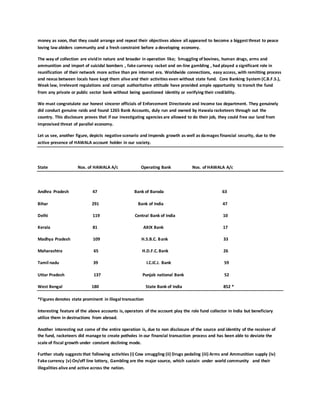
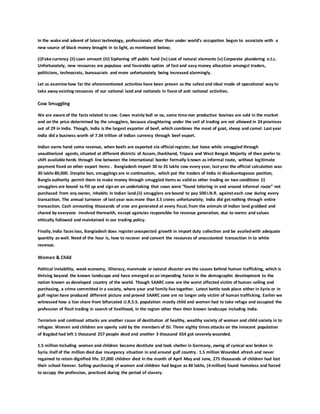
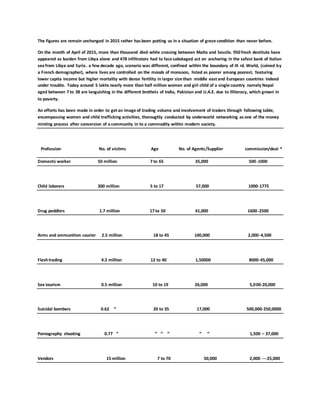
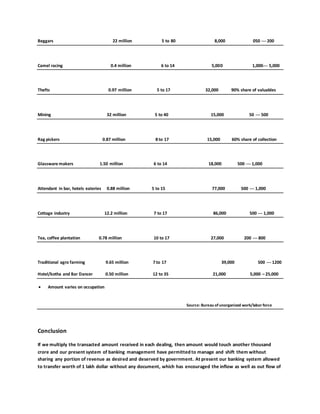
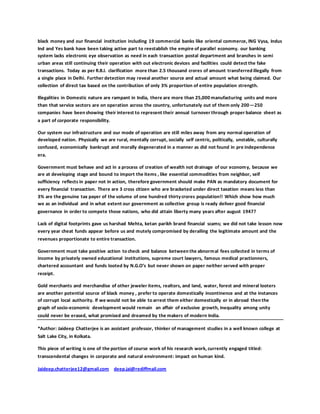
The document discusses the role of the underground economy in financial transactions in India. It states that approximately one-fourth of all financial transactions in India are conducted through illegal means. These illegal transactions began in the 1970s and expanded over time, now known as the hawala system. It has become a popular route for money laundering and damaging the economy. When politicians, bureaucrats, and traders became involved, it became an easy source of money even for elites. Billions of rupees are siphoned out of the country through these illegal networks, resulting in significant losses of tax revenue for the government. Various methods like smuggling, fake currency, and human trafficking have enabled a parallel underground economy that poses challenges for


![Echo National Sales Meeting 2016 [Day 1]](https://cdn.slidesharecdn.com/ss_thumbnails/day1-160225173953-thumbnail.jpg?width=640&height=640&fit=bounds)


