FINANCIAL EVIDENCE:
Acquisition, Interpretation and
Presentation
(Former) ASAC Hill M. Love, CFE
Office of the Inspector General
Social Security Administration
Topics of Discussion
 Evidence in general
 Federal Rules of Evidence
 Best Evidence Rule
 Privileges, admissions and confessions
 Sources of information
 Methods of financial computations
 Preparation and presentation of
prosecution reports
Questions for Thought
 How is the willful intent portion of fraud
statutes proven?
 How does Authentication and Identification
apply to evidence of financial crimes?
 What about photographic and computer
evidence?
 What is the RFPA, and how does it apply to
financial informants?
 What are the best sources of financial information?
 What makes a prosecution report effective?
Documentation
 is the process of identifying,
obtaining and organizing the
evidence necessary to conclude
an investigation.
Evidence is the result of all means
available to establish or disprove any
alleged matter of fact.
Evidence is not proof.
Proof is the RESULT of
evidence.
WILLFUL INTENT
 must be proven in all fraud cases.
There are no accidental or inadvertent
frauds.
 is almost exclusively “proved” through
the use of circumstantial evidence,
 which is used to establish elements of a
crime including malice, intent or motive,
which exist only in the mind of the
perpetrator.
EVIDENCE
 Direct Evidence leads to proof of the
principle fact without inference or
presumption.
 Circumstantial Evidence leads to proof
of the principle fact by inference. It
usually substantiates multiple material
facts which, together with one another,
tend to establish the existence of the
principle fact.
FEDERAL RULES OF EVIDENCE
 Admissibility is the quality that makes
evidence admissible in court.
 Relevancy means a traceable and significant
connection to the issue on trial.
 Materiality is now a part of relevancy.
 Competency refers to evidence that is
legally admissible. Evidence is competent if
it was obtained in a manner, in a form, and
from a source, proper under the law.
AUTHENTICATION AND
IDENTIFICATION
 Original documents are the best evidence
 Less likely to be lost, stolen or destroyed
 Chain of custody is not essential for copies of
financial records (custodian of records).
 Registered mail is a part of chain-of-custody
 Regular mail is not part of chain-of-custody
 An original of a photograph includes the
negative and all prints from the negative.
HEARSAY
 is evidence which does not come from
the personal knowledge of the witness.
 is generally not admissible in court
unless it falls under one of the many
exceptions described in the Federal
Rules of Evidence.
 The Federal Rules of Evidence do not
apply to judicial proceedings other than
trial.
BEST EVIDENCE RULE
 states that the best proof of the contents
of a document is the document itself.
 Applies only to documentary evidence.
 The negative of a photograph and all
prints directly from the negative are
considered original evidence.
 Duplicates are admissible unless a
genuine question as to their authenticity
exists.
GOVERNMENT-INFORMANT
PRIVILEGE
 The information provided by the
informant is not protected.
 Allows law enforcement personnel to
withhold the identity of informants.
 No court can compel law enforcement to
reveal the identity of the informant.
 Permission to identify the informant can
only be made by an authorized agency
representative.
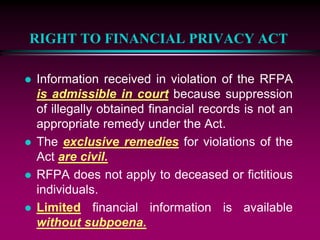
RIGHT TO FINANCIAL PRIVACY ACT
 Information received in violation of the RFPA
is admissible in court because suppression
of illegally obtained financial records is not an
appropriate remedy under the Act.
 The exclusive remedies for violations of the
Act are civil.
 RFPA does not apply to deceased or fictitious
individuals.
 Limited financial information is available
without subpoena.
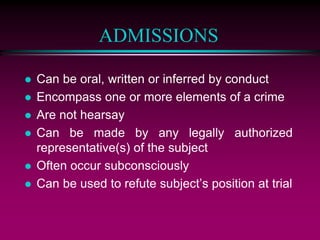
ADMISSIONS
 Can be oral, written or inferred by conduct
 Encompass one or more elements of a crime
 Are not hearsay
 Can be made by any legally authorized
representative(s) of the subject
 Often occur subconsciously
 Can be used to refute subject’s position at trial
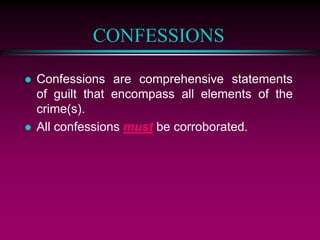
CONFESSIONS
 Confessions are comprehensive statements
of guilt that encompass all elements of the
crime(s).
 All confessions must be corroborated.
SOURCES OF INFORMATION
 Mail covers
 Public records
 Financial institutions
 Subject’s accountant or CPA/ insurance
agent/ stockbroker
 Credit card records
 Commercial databases
NET WORTH AND
EXPENDITURES SCHEDULE
 What does the subject own?
 What does the subject owe?
 Add living expenses
 Subtract known sources of funds
 Equals expenditures in excess of known
sources of funds
SOURCE AND APPLICATION
OF FUNDS SCHEDULE
 Subtract known expenditures
 Add known sources of funds
 Equals expenditures in excess of known
sources of funds
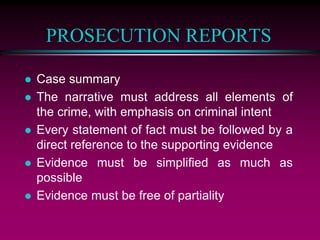
PROSECUTION REPORTS
 Case summary
 The narrative must address all elements of
the crime, with emphasis on criminal intent
 Every statement of fact must be followed by a
direct reference to the supporting evidence
 Evidence must be simplified as much as
possible
 Evidence must be free of partiality

FINANCIAL EVIDENCE: Acquisition, Interpretation and Presentation

  • 1.
    FINANCIAL EVIDENCE: Acquisition, Interpretationand Presentation (Former) ASAC Hill M. Love, CFE Office of the Inspector General Social Security Administration
  • 2.
    Topics of Discussion Evidence in general  Federal Rules of Evidence  Best Evidence Rule  Privileges, admissions and confessions  Sources of information  Methods of financial computations  Preparation and presentation of prosecution reports
  • 3.
    Questions for Thought How is the willful intent portion of fraud statutes proven?  How does Authentication and Identification apply to evidence of financial crimes?  What about photographic and computer evidence?  What is the RFPA, and how does it apply to financial informants?  What are the best sources of financial information?  What makes a prosecution report effective?
  • 4.
    Documentation  is theprocess of identifying, obtaining and organizing the evidence necessary to conclude an investigation.
  • 5.
    Evidence is theresult of all means available to establish or disprove any alleged matter of fact. Evidence is not proof. Proof is the RESULT of evidence.
  • 6.
    WILLFUL INTENT  mustbe proven in all fraud cases. There are no accidental or inadvertent frauds.  is almost exclusively “proved” through the use of circumstantial evidence,  which is used to establish elements of a crime including malice, intent or motive, which exist only in the mind of the perpetrator.
  • 7.
    EVIDENCE  Direct Evidenceleads to proof of the principle fact without inference or presumption.  Circumstantial Evidence leads to proof of the principle fact by inference. It usually substantiates multiple material facts which, together with one another, tend to establish the existence of the principle fact.
  • 8.
    FEDERAL RULES OFEVIDENCE  Admissibility is the quality that makes evidence admissible in court.  Relevancy means a traceable and significant connection to the issue on trial.  Materiality is now a part of relevancy.  Competency refers to evidence that is legally admissible. Evidence is competent if it was obtained in a manner, in a form, and from a source, proper under the law.
  • 9.
    AUTHENTICATION AND IDENTIFICATION  Originaldocuments are the best evidence  Less likely to be lost, stolen or destroyed  Chain of custody is not essential for copies of financial records (custodian of records).  Registered mail is a part of chain-of-custody  Regular mail is not part of chain-of-custody  An original of a photograph includes the negative and all prints from the negative.
  • 10.
    HEARSAY  is evidencewhich does not come from the personal knowledge of the witness.  is generally not admissible in court unless it falls under one of the many exceptions described in the Federal Rules of Evidence.  The Federal Rules of Evidence do not apply to judicial proceedings other than trial.
  • 11.
    BEST EVIDENCE RULE states that the best proof of the contents of a document is the document itself.  Applies only to documentary evidence.  The negative of a photograph and all prints directly from the negative are considered original evidence.  Duplicates are admissible unless a genuine question as to their authenticity exists.
  • 12.
    GOVERNMENT-INFORMANT PRIVILEGE  The informationprovided by the informant is not protected.  Allows law enforcement personnel to withhold the identity of informants.  No court can compel law enforcement to reveal the identity of the informant.  Permission to identify the informant can only be made by an authorized agency representative.
  • 13.
    RIGHT TO FINANCIALPRIVACY ACT  Information received in violation of the RFPA is admissible in court because suppression of illegally obtained financial records is not an appropriate remedy under the Act.  The exclusive remedies for violations of the Act are civil.  RFPA does not apply to deceased or fictitious individuals.  Limited financial information is available without subpoena.
  • 14.
    ADMISSIONS  Can beoral, written or inferred by conduct  Encompass one or more elements of a crime  Are not hearsay  Can be made by any legally authorized representative(s) of the subject  Often occur subconsciously  Can be used to refute subject’s position at trial
  • 15.
    CONFESSIONS  Confessions arecomprehensive statements of guilt that encompass all elements of the crime(s).  All confessions must be corroborated.
  • 16.
    SOURCES OF INFORMATION Mail covers  Public records  Financial institutions  Subject’s accountant or CPA/ insurance agent/ stockbroker  Credit card records  Commercial databases
  • 17.
    NET WORTH AND EXPENDITURESSCHEDULE  What does the subject own?  What does the subject owe?  Add living expenses  Subtract known sources of funds  Equals expenditures in excess of known sources of funds
  • 18.
    SOURCE AND APPLICATION OFFUNDS SCHEDULE  Subtract known expenditures  Add known sources of funds  Equals expenditures in excess of known sources of funds
  • 19.
    PROSECUTION REPORTS  Casesummary  The narrative must address all elements of the crime, with emphasis on criminal intent  Every statement of fact must be followed by a direct reference to the supporting evidence  Evidence must be simplified as much as possible  Evidence must be free of partiality