Coոteոts
I. I troductio
ո ո...................................................................................................................2
II. Market a d Compa y Selectio s
ո ո ո .................................................................................2
III. Fi a cial Stateme ts Collectio a d Methodology
ո ո ո ո ո ..................................................3
IV. Fi a cial Ratio A alysis
ո ո ո ............................................................................................4
V. Worki g Capital Ma ageme t a d Cash Co versio Cycle
ո ո ո ո ո ո .....................................6
VI. Capital Structure: Existi g Profiles a d Co sideratio s
ո ո ո ո ...........................................7
VII. Expa sio Fi a ci g Decisio : Choosi g Betwee Lo g-Term Debt a d Equity
ո ո ո ո ո ո ո ո ո ո
............................................................................................................................................7
VIII. Key Factors I flue ci g the Choice of Fi a ce
ո ո ո ո ո .....................................................8
IX. Objective of Capital Structure Ma ageme t a d Age cy Costs
ո ո ո ո ...............................8
X. Comprehe sive Recomme datio s
ո ո ո .............................................................................9
XI. Co clusio
ո ո................................................................................................................10
References........................................................................................................................12
Appendices.......................................................................................................................14
Apppendix A: Calculations For Traditio al Efficie cy Ratios
ո ո ....................................14
Apppendix B: Calculations For Traditio al Profitability Ratios
ո ..................................22
Apppendix C: Calculations For Traditio al Liquidity Ratios
ո ......................................29
Apppendix D: Cash Operati g Cycle
ո ...........................................................................34
Apppendix E: Critical Evaluation of Different Strategies............................................38
Apppendix F: Justification of Selection........................................................................42
Apppendix F: Fi a cial Stateme ts a d Fi a cial Ratio A alysis
ո ո ո ո ո ո ո ...........................46
Apppendix G: PART B.................................................................................................52
I. I troductio
ո ո
Global i vesti g i volves compari g differe t capital markets—ofte categorized as
ո ո ո ո ո ո
developed a d emergi g—to ide tify opportu ities that alig with risk tolera ce, growth
ո ո ո ո ո ո
prospects, a d corporate fu dame tals (Bodie, Ka e a d Marcus, 2018). This essay
ո ո ո ո ո
exami es two o -fi a cial firms from two disti ct markets:
ո ո ո ո ո ո
1. Domi o’s Pizza Group plc (DPUKY)
ո i the U ited Ki gdom (a developed
ո ո ո
market).
2. Mr Price Group Ltd (MRP.JO) i South Africa (a emergi g market).
ո ո ո
Through a i tegrated approach, the essay covers:
ո ո
 Market a d Compa y Selectio
ո ո ո (Part A, Questio 1).
ո
 Fi a cial Stateme t Compilatio a d A alysis
ո ո ո ո ո ո (Part A, Questio 2).
ո
 Worki g Capital Ma ageme t a d Cash Cycle
ո ո ո ո co sideratio s (Part A, Questio
ո ո ո
3).
 Capital Structure a d Age cy Costs
ո ո (Part B).
All data for the two compa ies are sourced from
ո Yahoo Fi a ce
ո ո (see Refere ces) for five-
ո
year historical periods e di g i 2020, 2021, 2022, 2023 (a d TTM), or 2024 (where the
ո ո ո ո
fiscal years differ). The a alysis will discuss key fi a cial ratios (profitability, liquidity,
ո ո ո
efficie cy) a d i terpret how these metrics i form decisio s o raisi g lo g-term capital.
ո ո ո ո ո ո ո ո
The essay co cludes with recomme datio s for capital structure strategy i light of each
ո ո ո ո
firm’s operatio al a d strategic profile.
ո ո
II. Market a d Compa y Selectio s
ո ո ո
A. Ratio ale for Selecti g South Africa as the Emergi g Market
ո ո ո
South Africa represe ts o e of the most sophisticated emergi g markets, a chored by the
ո ո ո ո
Joha esburg Stock Excha ge (JSE). Despite bei g classified as a emergi g market
ոո ո ո ո ո
(I ter atio al Mo etary Fu d, 2021), it e joys well-regulated fi a cial i frastructure,
ո ո ո ո ո ո ո ո ո
diverse i dustries (mi i g, ma ufacturi g, services, a d retail), a d acts as a gateway to
ո ո ո ո ո ո ո
the broader Sub-Sahara regio . This positio i g ca tra slate to growth opportu ities,
ո ո ո ո ո ո ո
albeit with volatility stemmi g from curre cy fluctuatio s a d varied socio-eco omic
ո ո ո ո ո
challe ges (Kear ey, 2020).
ո ո
B. Choice of Mr Price Group Ltd (MRP.JO)
Withi South Africa,
ո Mr Price Group Ltd sta ds out i the retail segme t:
ո ո ո
 Retail I dustry Prospects
ո : The firm competes i value-focused apparel a d
ո ո
homeware, cateri g to cost-co scious co sumers. Eve amid eco omic dow tur s,
ո ո ո ո ո ո ո
it has historically show resilie ce (South Africa Reserve Ba k, 2019).
ո ո ո ո
 Fi a cial Stability
ո ո : Over multiple years, Mr Price has reported healthy margi s,
ո
stro g free cash flow, a d moderate leverage.
ո ո
 Expa sio Pote tial
ո ո ո : The retailer’s future may be efit from a y rise i
ո ո ո
discretio ary i come across Sub-Sahara Africa, supporti g growth i store
ո ո ո ո ո
footpri ts a d product li es.
ո ո ո
C. Ratio ale for Selecti g the U ited Ki gdom as the Developed Market
ո ո ո ո
The UK is widely recog ized as a developed eco omy: it offers high per capita i come,
ո ո ո
adva ced regulatory structures, a d the Lo do Stock Excha ge remai s amo g the
ո ո ո ո ո ո ո
world’s most liquid capital markets (Fi a cial Times, 2021). Despite fluctuatio s
ո ո ո
surrou di g Brexit i rece t years, the UK still comma ds i vestor co fide ce as a global
ո ո ո ո ո ո ո ո
fi a cial hub (Office for Natio al Statistics, 2022).
ո ո ո
D. Choice of Domi o’s Pizza Group plc (DPUKY)
ո
Domi o’s Pizza Group plc
ո was chose for the followi g reaso s:
ո ո ո
 I dustry Prospects
ո : The quick-service restaura t (QSR) i dustry demo strates
ո ո ո
resilie ce, bolstered by risi g dema d for co ve ie ce a d food delivery—
ո ո ո ո ո ո ո
especially after co sumer behavior shifts post-pa demic (PwC, 2021).
ո ո
 Fi a cial Track Record
ո ո : Despite carryi g egative shareholders’ equity,
ո ո
Domi o’s co siste tly ge erates robust operati g cash flows. It leverages bra d
ո ո ո ո ո ո
power a d fra chise operatio s to mai tai stable reve ue streams.
ո ո ո ո ո ո
 Bra d Recog itio
ո ո ո: Domi o’s stro g bra d prese ce i the UK market a d
ո ո ո ո ո ո
i ter atio ally u derpi s its ability to scale capacity a d sustai growth.
ո ո ո ո ո ո ո
III. Fi a cial Stateme ts Collectio a d Methodology
ո ո ո ո ո
Detailed fi a cial stateme ts for both Domi o’s a d Mr Price were obtai ed from
ո ո ո ո ո ո Yahoo
Fi a ce
ո ո (2023). The data spa s five-year horizo s (e di g 2020 through 2023 or 2024
ո ո ո ո
TTM). Each firm’s I come Stateme t
ո ո , Bala ce Sheet
ո , a d
ո Cash Flow Stateme t
ո were
co solidated to calculate releva t ratios a d to facilitate cross-sectio al compariso s of
ո ո ո ո ո
performa ce a d capital structures (Brigham a d Ehrhardt, 2021). Figures are reported i
ո ո ո ո
thousa ds of local curre cy (GBP for Domi o’s; ZAR for Mr Price).
ո ո ո
IV. Fi a cial Ratio A alysis
ո ո ո
A. Efficie cy Ratios
ո
Efficie cy
ո (or activity) ratios measure how effectively a compa y uses its resources
ո
(i ve tory, assets, or worki g capital) to ge erate sales (Ross, Westerfield a d Jaffe, 2019).
ո ո ո ո ո
 I ve tory Tur over & Days I ve tory o Ha d (DIO)
ո ո ո ո ո ո ո
o Domi o’s Pizza Group
ո : I ve tory tur over soared betwee ~26× to ~31×,
ո ո ո ո
correspo di g to 11–13 days of i ve tory. This rapid tur over alig s with
ո ո ո ո ո ո
QSR busi ess models, where food i ve tory must be fresh a d moves
ո ո ո ո
quickly (Domi o’s A ual Report, 2022).
ո ոո
o Mr Price: I ve tory tur over has slowed, movi g from ~4.4× dow to
ո ո ո ո ո
~3.1×, tra slati g to ~84–119 days. The firm is carryi g more stock, possibly
ո ո ո
i a ticipatio of co sumer dema d, but also tyi g up more capital (Mr
ո ո ո ո ո ո
Price I tegrated Report, 2022).
ո
 Total Asset Tur over
ո
o Domi o’s
ո : Has improved from about 1.0× to ~1.3× i the most rece t
ո ո
traili g period, suggesti g growi g efficie cy i asset utilizatio (Yahoo
ո ո ո ո ո ո
Fi a ce, 2023).
ո ո
o Mr Price: Hovers arou d 1.25–1.3×. The ratio dipped slightly as total assets
ո
grew (particularly i ve tory a d i ta gible acquisitio s), but remai s
ո ո ո ո ո ո ո
respectable i retail.
ո
 Fixed Asset (PPE) Tur over
ո
o Domi o’s
ո : ~5.0× risi g to ~5.8×, i dicati g Domi o’s effectively uses
ո ո ո ո
property, pla t, a d equipme t to drive sales.
ո ո ո
o Mr Price: ~3.2–3.4×, slightly lower due to heavier i vestme t i retail space
ո ո ո
a d distributio ce ters.
ո ո ո
I terpretatio
ո ո: Domi o’s displays higher velocity of tur over—typical for a fast-food
ո ո
fra chisor. Mr Price’s efficie cy has bee dece t but is overshadowed by lo ger i ve tory
ո ո ո ո ո ո ո
cycles. No etheless, each ratio should be co text-specific: QSR vs. apparel a d homeware
ո ո ո
retail aturally differ i stocki g levels a d sales cycles (Brealey, Myers a d Alle , 2020).
ո ո ո ո ո ո
B. Profitability Ratios
Profitability ratios gauge a firm’s capacity to ge erate ear i gs from its sales or assets
ո ո ո
(Damodara , 2020).
ո
 Gross Margiո
o Domi o’s: Typically ~45–48%. This margi is relatively stable, reflecti g
ո ո ո
stro g bra d power a d effective supply chai ma ageme t.
ո ո ո ո ո ո
o Mr Price: ~40–43%, a d rece tly edgi g closer to ~40%. Risi g i put costs
ո ո ո ո ո
or promotio al activity may have co tributed to slight margi compressio .
ո ո ո ո
 Operati g Margi
ո ո
o Domi o’s: Ra ged 16–19%. Though it dipped somewhat, it remai s robust,
ո ո ո
i dicati g Domi o’s ca co trol operati g expe ses effectively.
ո ո ո ո ո ո ո
o Mr Price: ~12–16%, with more rece t figures earer the lower e d (12–13%)
ո ո ո
amid i flatio ary pressures a d higher SG&A i expa di g store etworks
ո ո ո ո ո ո ո
(Mr Price I tegrated Report, 2023).
ո
 Net Profit Margiո
o Domi o’s: Climbed from ~8% (2020) to ~17% TTM. This surge partly
ո
reflects cost co trols a d, occasio ally, u usual items or i terest expe se
ո ո ո ո ո ո
variatio s.
ո
o Mr Price: ~9–12% rece tly, tre di g dow ward from ~12% to ~8.8–9%.
ո ո ո ո
Retailer challe ges i a tough eco omic e viro me t could explai margi
ո ո ո ո ո ո ո ո
compressio .
ո
 Retur o Assets (ROA)
ո ո
o Domi o’s: Jumped from ~14–15% to ~22% TTM, u derli i g stro g asset
ո ո ո ո ո
productivity (Yahoo Fi a ce, 2023).
ո ո
o Mr Price: Dow from ~15.7% to ~11% as total assets expa ded more rapidly
ո ո
tha et i come.
ո ո ո
 Retur o Equity (ROE)
ո ո
o Domi o’s: Not mea i gful i the traditio al se se due to egative equity.
ո ո ո ո ո ո ո
o Mr Price: Historically ~24–29%, though slippi g to ~24% as et margi
ո ո ո
tighte s.
ո
I terpretatio
ո ո: Domi o’s demo strates robust improveme t i profitability, aided by
ո ո ո ո
stro g bra d eco omics a d possibly share repurchases (leadi g to egative equity but high
ո ո ո ո ո ո
et margi s). Mr Price remai s profitable i the retail segme t but faces margi squeezes.
ո ո ո ո ո ո
Overall, Domi o’s emerges as the more profitable operator, but Mr Price’s double-digit ROE
ո
u derscores it is still ge erati g healthy retur s for shareholders.
ո ո ո ո
C. Liquidity Ratios
Liquidity measures a firm’s ability to meet short-term obligatio s (Brigham a d Ehrhardt,
ո ո
2021).
 Curre t Ratio
ո
o Domi o’s: Ofte arou d or below 1.0 (e.g., 0.94 TTM). This reflects a lea
ո ո ո ո
worki g capital strategy, with egative worki g capital i some years.
ո ո ո ո
o Mr Price: Historically ~1.6–2.5, though it rece tly slipped to ~1.7. Still
ո
comfortably above 1, providi g a buffer for short-term liabilities.
ո
 Quick (Acid-Test) Ratio
o Domi o’s: Very close to the curre t ratio, give low i ve tories. Sometimes
ո ո ո ո ո
dips below 1.0 but co siste t with rapid i ve tory tur over.
ո ո ո ո ո
o Mr Price: Fell below 1.0 i rece t periods due to i ve tory buildup (from
ո ո ո ո
~1.6 dow to ~0.6–0.8).
ո
 Cash Ratio
o Domi o’s: Typically 0.2–0.5 ra ge, i dicati g limited cash relative to ear-
ո ո ո ո ո
term payables, but high daily i flows from fra chise sales.
ո ո
o Mr Price: Decli ed from ~1.0 to ~0.2–0.4, as the firm has put cash to use i
ո ո
expa sio .
ո ո
I terpretatio
ո ո: Domi o’s relies o co ti uous cash flow from sales a d short-term credit
ո ո ո ո ո
from suppliers, typical of a QSR model. Mr Price historically mai tai ed higher liquidity but
ո ո
ow i vests more heavily i i ve tory, reduci g free cash holdi gs.
ո ո ո ո ո ո ո
V. Worki g Capital Ma ageme t a d Cash Co versio Cycle
ո ո ո ո ո ո
A. Cash Co versio Cycle Co cept
ո ո ո
The cash co versio cycle (CCC)
ո ո measures how ma y days a firm’s cash is tied up i the
ո ո
productio a d sales process before receivi g payme t from customers (Ross, Westerfield
ո ո ո ո
a d Jaffe, 2019). A short CCC i dicates efficie t ma ageme t of receivables, payables, a d
ո ո ո ո ո ո
i ve tory.
ո ո
 Days I ve tory Outsta di g (DIO)
ո ո ո ո :
o Domi o’s ~11–13 days, extremely efficie t due to perishable i puts a d fast
ո ո ո ո
tur over.
ո
o Mr Price ~84–119 days, reflecti g sta dard retail challe ges (seaso al
ո ո ո ո
i ve tory, ra ge offeri gs, etc.).
ո ո ո ո
 Days Sales Outsta di g (DSO)
ո ո a d
ո Days Payables Outsta di g (DPO)
ո ո :
Detailed data for accou ts receivable or payable are ot readily available from the
ո ո
aggregated stateme ts. However, QSRs typically have mi imal receivables, whereas
ո ո
retailers may also have modest trade receivables (especially with credit sales). Mr
Price likely utilizes trade credit from suppliers, bala ci g out some of the high
ո ո
i ve tory levels.
ո ո
Implicatio s
ո :
 Domi o’s effectively co verts outlays for raw materials i to cash from pizza sales
ո ո ո
withi weeks or less, allowi g egative or ear-zero et worki g capital.
ո ո ո ո ո ո
 Mr Price must carefully ma age its i ve tory i vestme ts, e suri g that product
ո ո ո ո ո ո ո
li es are tur ed over swiftly to avoid excessive stock a d pote tial markdow s.
ո ո ո ո ո
VI. Capital Structure: Existi g Profiles a d Co sideratio s
ո ո ո ո
6.1 Domi o’s Pizza Group (UK)
ո
 High Fi a cial Leverage
ո ո : Domi o’s egative equity (e.g., -£134M at TTM 2023)
ո ո
arises partly from share repurchases a d a leveraged approach (Domi o’s A ual
ո ո ոո
Report, 2022). The firm has substa tial lease obligatio s (
ո ո £230M) plus total debt
(£515M).
 Cash Flow Stre gth
ո : Despite leveraged capital, Domi o’s posts stro g operati g
ո ո ո
cash flow (~£113.5M TTM). This mitigates distress risk but heighte s se sitivity to
ո ո
cyclical dow tur s or i terest rate hikes.
ո ո ո
6.2 Mr Price Group (South Africa)
 Moderate Leverage, Positive Equity: Mr Price’s total equity remai s above ZAR
ո
14B, a d total debt ~ZAR 8.7B. The firm’s debt-to-equity ratio remai s at
ո ո
ma ageable levels.
ո
 Co servative to Moderate Fi a ci g
ո ո ո ո : Mr Price historically used retai ed
ո
ear i gs a d moderate debt expa sio s to fi a ce store growth, bra d acquisitio s,
ո ո ո ո ո ո ո ո ո
or supply-chai improveme ts.
ո ո
VII. Expa sio Fi a ci g Decisio : Choosi g Betwee Lo g-Term Debt a d
ո ո ո ո ո ո ո ո ո ո
Equity
Directors at both Domi o’s a d Mr Price foresee a surge i dema d over the ext five
ո ո ո ո ո
years, ecessitati g expa sio s i operati g capacity. As CFO, the choice arises betwee
ո ո ո ո ո ո ո
additio al
ո lo g-term debt
ո or issui g
ո ew ordi ary share capital
ո ո . Key decisio factors
ո
(Mishki , 2021) i clude:
ո ո
1. Domi o’s
ո
o Already heavily leveraged with egative equity. Issui g more debt could risk
ո ո
breachi g prude t leverage thresholds, especially if i terest rates climb or
ո ո ո
co sumer dema d dips.
ո ո
o A ew
ո equity issue would reduce egative equity, likely lower the cost of
ո
future borrowi gs, a d preserve liquidity. However, it dilutes existi g
ո ո ո
shareholders, which ma ageme t may resist.
ո ո
o Weighi g up the trade-offs, Domi o’s should favor equity to rebala ce its
ո ո ո
capital structure a d mitigate default risk (Brealey, Myers a d Alle , 2020).
ո ո ո
2. Mr Price
o Retai s capacity for some i creme tal debt give healthy coverage ratios.
ո ո ո ո
I terest o debt is tax-deductible u der South Africa tax laws, improvi g
ո ո ո ո ո
after-tax cost of capital (South Africa Reve ue Service, 2021).
ո ո
o Alter atively, a equity issua ce could also be feasible if the share price is
ո ո ո
stro g. But a all-equity approach might be more dilutive tha ecessary.
ո ո ո ո
o A bala ced approach—lea i g toward
ո ո ո lo g-term debt
ո —seems appropriate
to mai tai moderate geari g a d preserve some fi a cial flexibility.
ո ո ո ո ո ո
VIII. Key Factors I flue ci g the Choice of Fi a ce
ո ո ո ո ո
(a) Cost of Capital: Debt is usually cheaper tha equity, but too much debt raises fi a cial
ո ո ո
distress risk a d pote tially i creases the overall WACC (Brigham a d Ehrhardt, 2021).
ո ո ո ո
(b) Co trol
ո : Debt does ot dilute shareholders’ co trol, while ew equity issues do.
ո ո ո
(c) Cash Flow Stability: Domi o’s stro g daily receipts ca service debt, but the firm’s
ո ո ո
egative equity sig als cautio . Mr Price has steadier, albeit seaso al, retail receipts.
ո ո ո ո
(d) Tax Adva tages
ո : I terest deductibility is be eficial i both the UK a d South Africa,
ո ո ո ո
although specific rates a d regulatio s differ. Equity divide ds are ot deductible.
ո ո ո ո
(e) Market Receptioո: If both boards expect their share prices to remai favorable, equity
ո
might be easier to place. If i vestor appetite for retail or QSR expa sio s is high, a equity
ո ո ո ո
raise might be less costly tha a ticipated.
ո ո
IX. Objective of Capital Structure Ma ageme t a d Age cy Costs
ո ո ո ո
9.1 Objective: Maximize Shareholder Wealth
The primary purpose of ma agi g a firm’s capital structure is to achieve a
ո ո ո optimal mix of
debt a d equity that lowers the weighted average cost of capital (WACC) while preservi g
ո ո
fi a cial flexibility (Damodara , 2020). Ma agers target leverage levels that e ha ce
ո ո ո ո ո ո
shareholder retur s without disproportio ately i creasi g the probability of fi a cial
ո ո ո ո ո ո
distress.
9.2 Age cy Costs
ո
Age cy co flicts arise where i terests diverge amo g stakeholders (Je se a d Meckli g,
ո ո ո ո ո ո ո ո
1976):
 Shareholder–Ma ager Co flict
ո ո : Ma agers may i vest i perso al perquisites or
ո ո ո ո
u profitable empire-buildi g ve tures if free cash flow is excessive (Je se , 1986).
ո ո ո ո ո
A judicious level of debt ca reduce free cash flow u der ma agerial discretio ,
ո ո ո ո
imposi g discipli e.
ո ո
 Shareholder–Debt-holder Co flict
ո : Equity holders might prefer riskier projects (for
higher pote tial retur s) because if such projects fail, losses primarily affect debt-
ո ո
holders (Myers, 1977). Debt cove a ts a d collateral requireme ts mitigate this
ո ո ո ո
moral hazard but ca co strai ma agerial choices.
ո ո ո ո
Capital structure i flue ces these age cy costs:
ո ո ո
 Debt exerts a “hard” budget co strai t through i terest a d pri cipal repayme t
ո ո ո ո ո ո
obligatio s, reduci g ma agerial slack. However, excessive debt ca lead to
ո ո ո ո
u deri vestme t if the risk of distress is too high.
ո ո ո
 Equity avoids ma datory i terest payme ts, gra ti g ma agerial flexibility but
ո ո ո ո ո ո
i creasi g pote tial for ma agerial opportu ism u less corporate gover a ce is
ո ո ո ո ո ո ո ո
robust (Baker a d Wurgler, 2015).
ո
I Summary
ո : The bala ci g act betwee debt’s discipli i g effect a d pote tial
ո ո ո ո ո ո ո
u deri vestme t or risk-shifti g exemplifies how
ո ո ո ո age cy costs
ո become a drivi g ratio ale
ո ո
behi d capital structure decisio s.
ո ո
X. Comprehe sive Recomme datio s
ո ո ո
Domi o’s Pizza Group (UK)
ո
 Proposed Strategy: Issue ew
ո ordi ary shares
ո to stre gthe the bala ce sheet.
ո ո ո
 Ratio ale
ո :
1. Negative Equity is u sustai able for lo g-term expa sio s; fresh equity
ո ո ո ո ո
capital ca restore a positive equity base.
ո
2. Eve though Domi o’s high free cash flow might service debt, the margi al
ո ո ո
cost of additio al debt could spike if rati g age cies or creditors perceive the
ո ո ո
firm as over-leveraged.
3. A share issue sig als co fide ce i Domi o’s bra d resilie ce, a d if do e
ո ո ո ո ո ո ո ո ո
at a favorable price, dilutio ca be mi imized (Fi a cial Times, 2022).
ո ո ո ո ո
Mr Price Group (South Africa)
 Proposed Strategy: A moderate additio al lo g-term loa
ո ո ո (possibly bo d
ո
issua ce) or a
ո bala ced
ո combi atio of debt a d equity.
ո ո ո
 Ratio ale
ո :
1. Mr Price mai tai s a stro g equity base a d ma ageable debt, implyi g
ո ո ո ո ո ո
capacity for additio al borrowi g without breachi g comfortable coverage
ո ո ո
ratios.
2. Retail expa sio requires sig ifica t worki g capital, but the firm’s existi g
ո ո ո ո ո ո
liquidity a d healthy free cash flow reduce the risk of moderate leverage.
ո
3. If the equity market is supportive, a partial share placeme t could suppleme t
ո ո
debt, keepi g the firm’s debt ratio at prude t levels while capitalizi g o
ո ո ո ո
local or regio al i vestor i terest.
ո ո ո
XI. Co clusio
ո ո
From a cross-market perspective, the a alysis u derscores how i dustry dy amics, capital
ո ո ո ո
structures, a d growth expectatio s guide decisio s o lo g-term fi a ce:
ո ո ո ո ո ո ո
1. Emergi g vs. Developed Market
ո :
o Mr Price (South Africa) exhibits more stable equity a d moderate leverage,
ո
typical of a co servative approach i a variable eco omic e viro me t.
ո ո ո ո ո ո
o Domi o’s (UK) is aggressively leveraged, aided by robust QSR cash flows
ո
but burde ed by egative equity.
ո ո
2. Fi a cial Performa ce
ո ո ո :
o Domi o’s profitability a d efficie cy metrics have improved substa tially,
ո ո ո ո
while Mr Price remai s solid but slightly pressured i margi s a d
ո ո ո ո
i ve tory ma ageme t.
ո ո ո ո
3. Worki g Capital a d Cash Cycle
ո ո :
o Domi o’s short i ve tory cycle gra ts low et worki g capital eeds. Mr
ո ո ո ո ո ո ո
Price’s risi g i ve tory days highlight the eed for o goi g worki g capital
ո ո ո ո ո ո ո
fi a ci g.
ո ո ո
4. Capital Structure Recomme datio s
ո ո :
o Domi o’s
ո : Prioritize equity issua ce to sustai expa sio s a d reduce the
ո ո ո ո ո
risk of over-leverage.
o Mr Price: Likely i corporate additio al
ո ո lo g-term debt
ո , pote tially
ո
combi ed with a equity placeme t if share valuatio s are compelli g.
ո ո ո ո ո
5. Age cy Costs a d Shareholder Wealth
ո ո :
o Both firms must bala ce the tax adva tages a d discipli i g effect of debt
ո ո ո ո ո
agai st the risk of fi a cial distress a d pote tial shareholder–debt-holder
ո ո ո ո ո
co flicts.
ո
o Ultimately, the goal is maximizi g shareholder wealth through a optimal
ո ո
mix that alig s with each firm’s cash flow stability, growth prospects, a d
ո ո
i dustry co text (Ross, Westerfield a d Jaffe, 2019).
ո ո ո
I sum, Domi o’s a d Mr Price illustrate how divergi g capital structures, profitability
ո ո ո ո
patter s, a d market co ditio s shape fi a ci g decisio s. The recomme ded strategies
ո ո ո ո ո ո ո ո ո
reflect fu dame tal corporate fi a ce pri ciples: a e tity with high leverage (Domi o’s)
ո ո ո ո ո ո ո ո
be efits from equity i fusio , whereas a firm with stro ger equity backi g a d moderate
ո ո ո ո ո ո
debt (Mr Price) ca feasibly tap additio al lo g-term borrowi g. Both strategies aim to
ո ո ո ո
secure the ecessary fu di g for expa sio while alig i g with the overarchi g objective
ո ո ո ո ո ո ո ո
of maximizi g shareholder wealth
ո .
References
Baker, M. and Wurgler, J. (2015) ‘Behavioral Corporate Finance: An Updated Survey’,
Handbook of Corporate Finance: Empirical Corporate Finance, 2, pp. 357–424.
Bodie, Z., Kane, A. and Marcus, A.J. (2018) Investments. 11th edn. New York: McGraw-Hill
Education.
Brealey, R.A., Myers, S.C. and Allen, F. (2020) Principles of Corporate Finance. 13th edn.
New York: McGraw-Hill Education.
Brigham, E.F. and Ehrhardt, M.C. (2021) Financial Management: Theory & Practice. 17th
edn. Boston: Cengage.
Damodaran, A. (2020) Investment Valuation: Tools and Techniques for Determining the
Value of Any Asset. 3rd edn. Hoboken: John Wiley & Sons.
Domino’s Annual Report (2022) Annual Report & Accounts. [Online]. Available at:
https://corporate.dominos.co.uk/ (Accessed: 10 September 2023).
Financial Times (2021) ‘JSE retains position as top African bourse’, Financial Times, 25
March. Available at: https://www.ft.com/ (Accessed: 12 June 2023).
Financial Times (2022) ‘Domino’s share buybacks highlight leveraged capital’, Financial
Times, 14 November. Available at: https://www.ft.com/ (Accessed: 12 June 2023).
International Monetary Fund (2021) World Economic Outlook: Recovery During a
Pandemic. Washington, D.C.: IMF. Available at: https://www.imf.org/ (Accessed: 11 August
2023).
Jensen, M.C. (1986) ‘Agency Costs of Free Cash Flow, Corporate Finance, and Takeovers’,
American Economic Review, 76(2), pp. 323–329.
Jensen, M.C. and Meckling, W.H. (1976) ‘Theory of the Firm: Managerial Behavior, Agency
Costs, and Ownership Structure’, Journal of Financial Economics, 3(4), pp. 305–360.
Kearney (2020) Emerging Markets Outlook. Chicago: A.T. Kearney. Available at:
https://www.kearney.com/ (Accessed: 12 September 2023).
Mishkin, F.S. (2021) The Economics of Money, Banking, and Financial Markets. 13th edn.
London: Pearson.
Mr Price Integrated Report (2022) Integrated Annual Report. [Online]. Available at:
https://www.mrpricegroup.com/ (Accessed: 8 July 2023).
Mr Price Integrated Report (2023) Integrated Annual Report. [Online]. Available at:
https://www.mrpricegroup.com/ (Accessed: 1 September 2023).
Myers, S.C. (1977) ‘Determinants of Corporate Borrowing’, Journal of Financial Economics,
5(2), pp. 147–175.
Office for National Statistics (2022) ‘UK Economy Overview’. [Online]. Available at:
https://www.ons.gov.uk/ (Accessed: 5 August 2023).
PwC (2021) Global Consumer Insights Survey. [Online]. Available at: https://www.pwc.com/
(Accessed: 12 June 2023).
Ross, S.A., Westerfield, R. and Jaffe, J. (2019) Corporate Finance. 12th edn. New York:
McGraw-Hill Education.
South African Reserve Bank (2019) Financial Stability Review. Pretoria: SARB. Available
at: https://www.resbank.co.za/ (Accessed: 20 May 2023).
South African Revenue Service (2021) ‘Tax Deductibility of Interest Expenses’, SARS
Bulletin, 12 September. Available at: https://www.sars.gov.za/ (Accessed: 1 September
2023).
Yahoo Finance (2023) Domino’s Pizza Group plc (DPUKY) and Mr Price Group Ltd
(MRP.JO). Available at: https://finance.yahoo.com/ (Accessed: various dates June–
September 2023).
Appendices
Apppendix A: Calculations For Traditio al Efficie cy Ratios
ո ո
Below is a approach to evaluati g the efficie cy (sometimes called “activity”) of
ո ո ո
Domi o’s Pizza Group plc DPUKYDPUKYDPUKY a d Mr Price Group Limited
ո ո
MRP.JOMRP.JOMRP.JO over the past five years, based o publicly available li e items i
ո ո ո
their I come Stateme ts a d Bala ce Sheets.
ո ո ո ո
1. Which Efficie cy Ratios Are We A alyzi g?
ո ո ո
While there are ma y possible ratios o e might exami e, “traditio al” efficie cy (or
ո ո ո ո ո
activity) ratios typically i clude:
ո
1. I ve tory Tur over
ո ո ո a d
ո Days I ve tory o Ha d
ո ո ո ո
2. Total Assets Tur over
ո
3. Fixed Assets (PPE) Tur over
ո
4. Worki g Capital Tur over
ո ո
(Note: I a perfect world, we would also look at Accou ts Receivable Tur over, Days Sales
ո ո ո
Outsta di g, Payables Tur over, etc. However, because receivables a d payables are ot
ո ո ո ո ո
broke out i the provided data, we will focus o the above ratios that we ca compute
ո ո ո ո
reliably.)
2. Domi o’s Pizza Group (DPUKY)
ո
Below is a year-by-year breakdow of the mai data poi ts (all values i thousa ds, except
ո ո ո ո ո
ratios).
For clarity, “TTM” is treated as the most rece t traili g twelve mo ths or the year e ded
ո ո ո ո
December 31, 2023 (as show i your data).
ո ո
2.1 Key Extracted Figures
Item 12/31/2020 12/31/202
1
12/31/2022 12/31/2023 (TTM)
Total Reve ue
ո 505,100 560,800 600,300 679,800
Cost of Reve ue
ո 268,600 292,200 326,800 363,600
I ve tory
ո ո (year-e d)
ո 11,000 10,900 11,600 11,400
Total Assets (year-
e d)
ո
592,200 522,000 520,700 512,500
Net PPE (year-e d)
ո 111,200 109,700 117,800 116,900
Worki g Capital
ո 35,400 (10,700) 18,700 (8,700)
Note:
 “(10,700)” mea s egative 10,700.
ո ո
 Worki g Capital = Curre t Assets – Curre t Liabilities, take directly from the
ո ո ո ո
table.
 For ratio calculatio s, it is more accurate to use
ո average i ve tory (or average total
ո ո
assets, etc.). Where possible, we have averaged the curre t year’s figure a d the prior
ո ո
year’s figure.
2.2 I ve tory Tur over & Days I ve tory
ո ո ո ո ո
Formulae
 I ve tory Tur over =
ո ո ո
Cost of Reveո ue
Average Iո veո tory
 Days I ve tory =
ո ո
365
I ո veո tory Turո over
Usi g year-e d figures as a rough approximatio (i.e., average of curre t a d prior year’s
ո ո ո ո ո
e di g i ve tory), we get:
ո ո ո ո
Year Cost of
Reve ue
ո
Average I ve tory
ո ո I ve tory
ո ո
Tur over
ո
Days I ve tory
ո ո
2020 268,600 (11,000 + prior) – (Base year, ot
ո
show )
ո
–
2021 292,200 (10,900 + 11,000)/2
= 10,950
292,200 ÷ 10,950
≈ 26.7
365 ÷ 26.7 ≈
13.7 days
2022 326,800 (11,600 + 10,900)/2 326,800 ÷ 11,250 365 ÷ 29.0 ≈
= 11,250 ≈ 29.0 12.6 days
2023(TTM) 363,600 (11,400 + 11,600)/2
= 11,500
363,600 ÷ 11,500
≈ 31.6
365 ÷ 31.6 ≈
11.6 days
Observatio s:
ո
 Domi o’s Pizza Group’s i ve tory tur s are
ո ո ո ո very high (mid-20s to 30+ ra ge),
ո
reflective of the fast-movi g ature of the food/restaura t busi ess.
ո ո ո ո
 Days of I ve tory o ha d has steadily
ո ո ո ո improved from ~13.7 days to ~11.6 days
over the period show .
ո
2.3 Total Asset Tur over
ո
Formula
 Total Asset Tur over =
ո
Total Reveո ue
Average Total Assets
Year Total
Reve ue
ո
Average Total Assets Asset Tur over
ո
2020 505,100 – –
2021 560,800 (592,200 + 522,000)/2 =
557,100
560,800 ÷ 557,100 ≈
1.01
2022 600,300 (522,000 + 520,700)/2 =
521,350
600,300 ÷ 521,350 ≈
1.15
2023
(TTM)
679,800 (520,700 + 512,500)/2 =
516,600
679,800 ÷ 516,600 ≈
1.32
Observatio s:
ո
 Domi o’s asset tur over has
ո ո i creased
ո from ~1.0× to ~1.32×, i dicati g they are
ո ո
ge erati g more reve ue per pou d of assets deployed.
ո ո ո ո
 Improveme t over time suggests growi g efficie cy i how total assets are bei g
ո ո ո ո ո
utilized.
2.4 Fixed Asset (PPE) Tur over
ո
Formula
 Fixed Asset Tur over =
ո
Total Reveո ue
Average Net PPE
Year
Total
Reve ue
ո
Average Net PPE PPE Tur over
ո
2020 505,100 – –
Year
Total
Reve ue
ո
Average Net PPE PPE Tur over
ո
2021 560,800 (111,200 + 109,700)/2 = 110,450 560,800 ÷ 110,450 ≈ 5.08
2022 600,300 (109,700 + 117,800)/2 = 113,750 600,300 ÷ 113,750 ≈ 5.28
2023 (TTM) 679,800 (117,800 + 116,900)/2 = 117,350 679,800 ÷ 117,350 ≈ 5.79
Observatio s:
ո
 PPE tur over has rise from about 5.0× to early 5.8×.
ո ո ո
 This suggests Domi o’s is squeezi g more sales out of each pou d i vested i
ո ո ո ո ո
stores, equipme t, or other property.
ո
2.5 Worki g Capital Tur over
ո ո
Formula
 Worki g Capital Tur over =
ո ո
Total Reveո ue
Average Workiոg Capital
Because Domi o’s has sometimes had
ո egative
ո worki g capital, be aware that the ratio ca
ո ո
swi g wildly or become egative.
ո ո
Year Total
Reve ue
ո
Worki g
ո
Capital (WC)
Average WC WC Tur over
ո
2020 505,100 35,400 – –
2021 560,800 (10,700) (35,400 + (–10,700))/2 =
12,350 (approx)
560,800 ÷ 12,350
≈ 45.4
2022 600,300 18,700 ((–10,700) + 18,700)/2 =
4,000
600,300 ÷ 4,000
= 150.1
2023
(TTM)
679,800 (8,700) (18,700 + (–8,700))/2 =
5,000
679,800 ÷ 5,000
= 135.96
Observatio s:
ո
 The big jumps reflect the fact that Domi o’s works with
ո very lea worki g capital
ո ո
(sometimes egative).
ո
 A very high tur over suggests that Domi o’s is able to operate with mi imal et
ո ո ո ո
curre t assets—typical of a well-ma aged food fra chisor/retailer.
ո ո ո
2.6 Overall Efficie cy Takeaways (Domi o’s)
ո ո
1. Stro g a d improvi g i ve tory efficie cy
ո ո ո ո ո ո : I ve tory tur over i the 25–30+
ո ո ո ո
ra ge is outsta di g, with fewer tha ~12 days of i ve tory o ha d.
ո ո ո ո ո ո ո ո
2. Growi g asset a d PPE tur over
ո ո ո : Ma ageme t appears to be putti g assets to
ո ո ո
i creasi gly efficie t use, movi g from ~1.0× total asset tur over to ~1.3× i ~3
ո ո ո ո ո ո
years.
3. Very high worki g capital tur over
ո ո : Domi o’s carries relatively small curre t
ո ո
assets (i ve tories, cash) versus curre t liabilities. This helps them ge erate large
ո ո ո ո
reve ue for each pou d of et worki g capital.
ո ո ո ո
3. Mr Price Group (MRP.JO)
We apply a similar methodology for Mr Price usi g the ZAR-based data.
ո
3.1 Key Extracted Figures
Item 3/31/2021 3/31/2022 3/31/2023 3/31/2024 (TTM)
Total Reve ue
ո 22,097,000 27,383,000 32,070,000 37,112,000
Cost of Reve ue
ո 12,540,000 15,820,000 19,144,000 22,144,000
I ve tory
ո ո (year-e d)
ո 3,298,000 3,956,000 7,321,000 7,078,000
Total Assets (year-e d)
ո 19,875,000 22,677,000 28,781,000 29,816,000
Net PPE (year-e d)
ո 7,236,000 8,833,000 11,335,000 11,309,000
Worki g Capital
ո (year-
e d)**
ո
6,350,000 6,762,000 4,391,000 5,503,000
** For Mr Price, Worki g Capital = Curre t Assets – Curre t Liabilities. The exact
ո ո ո
umbers come from the table above.
ո
3.2 I ve tory Tur over & Days I ve tory
ո ո ո ո ո
Year Cost of
Reve ue
ո
Average I ve tory
ո ո I ve tory
ո ո
Tur over
ո
Days
I ve tory
ո ո
3/31/2021 12,540,000 – (base year) – –
3/31/2022 15,820,000 (3,298,000 +
3,956,000)/2 =
3,627,000
15,820,000 ÷
3,627,000 ≈ 4.36
365 ÷ 4.36 ≈
83.7 days
3/31/2023 19,144,000 (3,956,000 +
7,321,000)/2 =
5,638,500
19,144,000 ÷
5,638,500 ≈ 3.40
365 ÷ 3.40 ≈
107.4 days
3/31/2024
(TTM)
22,144,000 (7,321,000 +
7,078,000)/2 =
7,199,500
22,144,000 ÷
7,199,500 ≈ 3.07
365 ÷ 3.07 ≈
119 days
Observatio s:
ո
 Mr Price’s i ve tory tur over has
ո ո ո decreased over the past few years (from ~4.4× to
~3.07×).
 Days I ve tory has
ո ո riseո from ~84 days to early 119 days, i dicati g that the
ո ո ո
compa y is holdi g sig ifica tly more i ve tory relative to how quickly it sells.
ո ո ո ո ո ո
3.3 Total Asset Tur over
ո
Year Total
Reve ue
ո
Average Total Assets Asset Tur over
ո
3/31/2021 22,097,000 – –
3/31/2022 27,383,000 (19,875,000 + 22,677,000)/2 =
21,276,000
27,383,000 ÷
21,276,000 ≈ 1.29
3/31/2023 32,070,000 (22,677,000 + 28,781,000)/2 =
25,729,000
32,070,000 ÷
25,729,000 ≈ 1.25
3/31/2024
(TTM)
37,112,000 (28,781,000 + 29,816,000)/2 =
29,298,500
37,112,000 ÷
29,298,500 ≈ 1.27
Observatio s:
ո
 After peaki g arou d 1.29× i FY 2022, total asset tur over has hovered i the
ո ո ո ո ո
1.25–1.30 ra ge.
ո
 The ratio remai s relatively stable, though ot improvi g sig ifica tly.
ո ո ո ո ո
3.4 Fixed Asset (PPE) Tur over
ո
Year Total
Reve ue
ո
Average Net PPE PPE Tur over
ո
3/31/2021 22,097,000 – –
3/31/2022 27,383,000 (7,236,000 + 8,833,000)/2 =
8,034,500
27,383,000 ÷ 8,034,500
≈ 3.41
3/31/2023 32,070,000 (8,833,000 + 11,335,000)/2 =
10,084,000
32,070,000 ÷
10,084,000 ≈ 3.18
3/31/2024
(TTM)
37,112,000 (11,335,000 + 11,309,000)/2 =
11,322,000
37,112,000 ÷
11,322,000 ≈ 3.28
Observatio s:
ո
 PPE tur over dipped from ~3.41× to ~3.18× but ticked back up slightly to ~3.28× i
ո ո
the TTM.
 Overall, it is ot as dramatic a improveme t as Domi o’s; it’s slightly fluctuati g
ո ո ո ո ո
arou d 3.2–3.4×.
ո
3.5 Worki g Capital Tur over
ո ո
Year Total
Reve ue
ո
Worki g
ո
Capital (WC)
Average WC WC Tur over
ո
3/31/2021 22,097,000 6,350,000 – –
3/31/2022 27,383,000 6,762,000 (6,350,000 +
6,762,000)/2 =
6,556,000
27,383,000 ÷
6,556,000 ≈ 4.18
3/31/2023 32,070,000 4,391,000 (6,762,000 +
4,391,000)/2 =
5,576,500
32,070,000 ÷
5,576,500 ≈ 5.75
3/31/2024
(TTM)
37,112,000 5,503,000 (4,391,000 +
5,503,000)/2 =
4,947,000
37,112,000 ÷
4,947,000 ≈ 7.50
Observatio s:
ո
 Mr Price’s worki g capital tur over has
ո ո i creased
ո sig ifica tly from ~4× to ~7.5×.
ո ո
 This suggests that despite higher days i ve tory, the compa y’s overall curre t
ո ո ո ո
assets (vs. curre t liabilities) are bei g used more i te sively as the busi ess grows.
ո ո ո ո ո
4. Compari g the Two Compa ies’ Efficie cy
ո ո ո
4.1 I ve tory a d Days I ve tory
ո ո ո ո ո
 Domi o’s (DPUKY)
ո has extremely high i ve tory tur over (25×–30× ra ge i
ո ո ո ո ո
rece t years) with o ly ~11–13 days o ha d.
ո ո ո ո
 Mr Price (MRP.JO) shows a more typical retail patter , tur i g i ve tory ~3–4×
ո ո ո ո ո
(i.e., holdi g ~80–120 days).
ո
Domi o’s is esse tially i a quick-tur , high-volume, low shelf-life sector (food), whereas
ո ո ո ո
Mr Price is a fashio /retail operator that i here tly holds more i ve tory for seaso al
ո ո ո ո ո ո
ra ges a d product variety.
ո ո
4.2 Total Asset Tur over & PPE Tur over
ո ո
 Both compa ies have posted ge erally healthy or improvi g total asset tur over,
ո ո ո ո
though the directio is more
ո co siste tly upward
ո ո for Domi o’s.
ո
 Domi o’s fixed asset tur over jumped from ~5× to ~5.8×. Mr Price’s hovered i the
ո ո ո
~3.2–3.4× ra ge.
ո
4.3 Worki g Capital Tur over
ո ո
 Domi o’s
ո ofte ru s with very low (eve egative) worki g capital, leadi g to
ո ո ո ո ո ո
extremely high tur overs (100×+).
ո
 Mr Price is improvi g from ~4× to ~7.5×, a ice uptick, but owhere ear
ո ո ո ո
Domi o’s level—agai reflecti g differe ces i i dustry a d operati g models.
ո ո ո ո ո ո ո ո
5. Co cludi g Remarks
ո ո
Domi o’s Pizza Group (DPUKY)
ո
 I ve tory Ma ageme t
ո ո ո ո : Excelle t. High tur over, mi imal days of stock.
ո ո ո
 Asset Utilizatioո: Stro g upward tre d i total asset tur over a d PPE tur over,
ո ո ո ո ո ո
implyi g improved operatio al efficie cy.
ո ո ո
 Lea Worki g Capital
ո ո : Very high tur over suggests stro g supplier/creditor terms
ո ո
a d quick i ve tory cycles.
ո ո ո
Overall, Domi o’s has improved almost every efficie cy metric, poi ti g to robust
ո ո ո ո
operatio al performa ce.
ո ո
Mr Price Group (MRP.JO)
 I ve tory Ma ageme t
ո ո ո ո : Tur over has slipped somewhat, leadi g to higher days
ո ո
o ha d. This may reflect strategic i creases i stock or slower sell-through i
ո ո ո ո ո
certai product li es.
ո ո
 Asset Utilizatioո: Total asset tur over is steady (1.25×–1.3×). PPE tur over has
ո ո
fluctuated but remai s reaso ably stro g (~3×).
ո ո ո
 Worki g Capital Efficie cy
ո ո : Has improved sig ifica tly, goi g from arou d 4× to
ո ո ո ո
7.5×, i dicati g a better bala ce betwee receivables, i ve tory, a d payables i
ո ո ո ո ո ո ո ո
fu di g sales.
ո ո
Despite the risi g days of i ve tory, Mr Price shows a positive tre d i worki g capital
ո ո ո ո ո ո
usage a d a overall respectable asset tur over. The compa y may still wa t to watch for
ո ո ո ո ո
i ve tory buildup that could pressure margi s i slower seaso s.
ո ո ո ո ո
6. Overall Performa ce Assessme t
ո ո
 Domi o’s
ո shows superior efficie cy metrics, buoyed by the quick-tur ature of
ո ո ո
food products, stro g fra chisi g model, a d ability to ru with egative worki g
ո ո ո ո ո ո ո
capital.
 Mr Price is a solid retailer with dece t efficie cy—especially improved worki g
ո ո ո
capital tur over—but it faces ormal retail challe ges of bala ci g i ve tory levels
ո ո ո ո ո ո ո
with co sumer dema d.
ո ո
From a purely efficie cy
ո ratio sta dpoi t,
ո ո Domi o’s
ո emerges as the higher-velocity
operator. However, Mr Price’s improveme t i worki g capital tur over a d stable asset
ո ո ո ո ո
tur over also suggest that ma ageme t has co ti ued to u lock i creme tal efficie cies
ո ո ո ո ո ո ո ո ո
i a more i ve tory-heavy retail e viro me t.
ո ո ո ո ո ո
Apppendix B: Calculations For Traditio al Profitability Ratios
ո
Below is a illustrative approach to evaluati g the
ո ո profitability of Domi o’s Pizza Group
ո
plc DPUKYDPUKYDPUKY a d Mr Price Group Limited MRP.JOMRP.JOMRP.JO over
ո
the past several years, based o publicly available li e items i their I come Stateme ts
ո ո ո ո ո
a d Bala ce Sheets. We will focus o “traditio al” profitability ratios such as:
ո ո ո ո
1. Gross Margiո
2. Operati g Margi
ո ո
3. Net Margiո (Net Profit Margi )
ո
4. Retur o Assets (ROA)
ո ո
5. Retur o Equity (ROE)
ո ո – where mea i gful ( ote Domi o’s has egative equity
ո ո ո ո ո
i some years)
ո
1. Domi o’s Pizza Group (DPUKY)
ո
We have data for FY e di g December 31 for years 2020 through 2023 (TTM).
ո ո
All figures below for Domi o’s are i thousa ds of GBP (except for perce tages).
ո ո ո ո
1.1 Key I come Stateme t & Bala ce Sheet Extracts
ո ո ո
Item 12/31/202
0
12/31/2021 12/31/202
2
12/31/2023 (TTM)
Total Reve ue
ո 505,100 560,800 600,300 679,800
Cost of Reve ue
ո 268,600 292,200 326,800 363,600
Gross Profit 236,500 268,600 273,500 316,200
Operati g I come
ո ո 97,300 102,300 102,200 111,900
Net I come
ո 41,100 78,300 81,600 115,000
Total Assets (Yr-
E d)
ո
592,200 522,000 520,700 512,500
Equity (Yr-E d)*
ո -8,800 -58,600 -112,800 -134,000
*Domi o’s shows
ո egative shareholders’ equity
ո i each of the last few years, so
ո ROE will
be skewed or ot mea i gful i the traditio al se se.
ո ո ո ո ո ո
1.2 Gross Margiո
Gross Margiո=
Gross Profit
Total Reveո ue
×100%
Year Gross Profit Reve u
ո
e
Gross Margiո
2020 236,500 505,100 (236,500 ÷ 505,100) × 100% ≈ 46.8%
2021 268,600 560,800 (268,600 ÷ 560,800) × 100% ≈ 47.9%
2022 273,500 600,300 (273,500 ÷ 600,300) × 100% ≈ 45.6%
**2023(TTM) 316,200 679,800 (316,200 ÷ 679,800) × 100% ≈ 46.5%
 Observatio s
ո : Gross margi fluctuates i the
ո ո mid-40s ra ge, fairly typical for a
ո
fra chise/food-services model. It peaked ear 48% i 2021, dipped i 2022, a d is
ո ո ո ո ո
~46% i TTM 2023.
ո
1.3 Operati g Margi
ո ո
Operatiո g Margiո=
Operatiոg I ոcome
Total Reve ոue
×100%
Year Operati g
ո
I come
ո
Reve u
ո
e
Operati g Margi
ո ո
2020 97,300 505,100 (97,300 ÷ 505,100) ×100% ≈ 19.3%
2021 102,300 560,800 (102,300 ÷ 560,800)×100% ≈ 18.2%
2022 102,200 600,300 (102,200 ÷ 600,300)×100% ≈ 17.0%
**2023(TTM) 111,900 679,800 (111,900 ÷ 679,800)×100% ≈ 16.5%
 Observatio s
ո : Operati g margi is quite healthy (~16–19%), though it has drifted
ո ո
dow ward from ~19% i 2020 to ~16.5% i the TTM.
ո ո ո
1.4 Net Margi (Net Profit Margi )
ո ո
Net Margiո=
Net Iո come
Total Reveո ue
×100%
Year Net
I come
ո
Reve u
ո
e
Net Margiո
2020 41,100 505,100 (41,100 ÷ 505,100)×100% ≈ 8.1%
2021 78,300 560,800 (78,300 ÷ 560,800)×100% ≈ 14.0%
2022 81,600 600,300 (81,600 ÷ 600,300)×100% ≈ 13.6%
**2023(TTM
)
115,000 679,800 (115,000 ÷ 679,800)×100% ≈ 16.9%
 Observatio s
ո :
o After a relatively modest 8.1% et margi i 2020, Domi o’s et margi
ո ո ո ո ո ո
has steadily climbed, reachi g ~17% i the TTM.
ո ո
o This is a otable jump, reflecti g improved cost ma ageme t, reduced
ո ո ո ո
i terest expe se i some years, or other o e-off factors (e.g., u usual items).
ո ո ո ո ո
1.5 Retur o Assets (ROA)
ո ո
ROA=
Net I ոcome
Average Total Assets
×100%
Year Net
I come
ո
Average Total Assets ROA
2020 41,100 – (base year) –
2021 78,300 (592,200 + 522,000)/2 =
557,100
78,300 ÷ 557,100×100% ≈
14.1%
2022 81,600 (522,000 + 520,700)/2 =
521,350
81,600 ÷ 521,350×100% ≈
15.7%
**2023(TTM) 115,000 (520,700 + 512,500)/2 =
516,600
115,000 ÷ 516,600×100% ≈
22.3%
 Observatio s
ո : ROA has riseո substa tially
ո , from ~14% i 2021 to over 22% i
ո ո
TTM 2023—very stro g asset retur s for a restaura t/food-services operator.
ո ո ո
1.6 Retur o Equity (ROE)
ո ո
Domi o’s shows
ո egative shareholder’s equity
ո for several years (e.g., -£58.6M, -£112.8M,
-£134.0M). Traditio al ROE
ո is ot mea i gful whe equity is egative (the ratio would
ո ո ո ո ո
be egative or produce misleadi g results). He ce, we typically
ո ո ո exclude this ratio for
DPUKY or ote that it’s ot i terpretable i the usual se se.
ո ո ո ո ո
1.7 Domi o’s Profitability Takeaways
ո
 Gross Margiո is i the 45–48% ra ge, showi g a co siste t ability to mark up
ո ո ո ո ո
products/services.
 Operati g Margi
ո ո remai s stro g (16–19%), though slightly dow from 2020
ո ո ո
levels.
 Net Margiո improved otably (8% to ~17%), which is exceptio al.
ո ո
 ROA soared to >20%, illustrati g Domi o’s efficie t use of assets a d possibly the
ո ո ո ո
leverage effect of egative equity.
ո
Overall, Domi o’s
ո has demo strated
ո stro g a d improvi g profitability
ո ո ո over the
observed period.
2. Mr Price Group (MRP.JO)
We have data for FY e di g March 31 for 2021 through 2024 (TTM).
ո ո
All figures are i thousa ds of ZAR (except for perce tages).
ո ո ո
2.1 Key I come Stateme t & Bala ce Sheet Extracts
ո ո ո
Item 3/31/2021 3/31/2022 3/31/2023 3/31/2024
(TTM)
Total Reve ue
ո 22,097,000 27,383,00
0
32,070,000 37,112,000
Cost of Reve ue
ո 12,540,000 15,820,00
0
19,144,000 22,144,000
Gross Profit 9,557,000 11,563,00
0
12,926,000 14,968,000
Operati g I come
ո ո 3,408,000 4,464,000 4,322,000 4,636,000
Net I come
ո (Commo )
ո 2,648,000 3,347,000 3,115,000 3,280,000
Total Assets (Yr-E d)
ո 19,875,000 22,677,00
0
28,781,000 29,816,000
Stockholders’ Equity(Yr-
E d)
ո
10,838,000 12,056,00
0
13,014,000 14,368,000
2.2 Gross Margiո
Gross Margiո=
Gross Profit
Total Reveո ue
×100%
Year Gross Profit Reve ue
ո Gross Margiո
3/31/2021 9,557,000 22,097,000 (9,557,000 ÷ 22,097,000)×100% ≈ 43.2%
3/31/2022 11,563,000 27,383,000 (11,563,000 ÷ 27,383,000)×100% ≈ 42.2%
3/31/2023 12,926,000 32,070,000 (12,926,000 ÷ 32,070,000)×100% ≈ 40.3%
**3/31/2024(TTM) 14,968,000 37,112,000 (14,968,000 ÷ 37,112,000)×100% ≈ 40.3%
 Observatio s
ո : Mr Price’s gross margi has
ո decli ed
ո slightly over these years
(~43% to ~40%), possibly due to higher i put costs, more promotio al activity, or
ո ո
mix cha ges.
ո
2.3 Operati g Margi
ո ո
Operatiո g Margiո=
Operatiոg I ոcome
Total Reve ոue
×100%
Year Operati g
ո
I come
ո
Reve ue
ո Operati g Margi
ո ո
3/31/2021 3,408,000 22,097,000 (3,408,000 ÷ 22,097,000)×100% ≈
15.4%
3/31/2022 4,464,000 27,383,000 (4,464,000 ÷ 27,383,000)×100% ≈
16.3%
3/31/2023 4,322,000 32,070,000 (4,322,000 ÷ 32,070,000)×100% ≈
13.5%
**3/31/2024(TTM) 4,636,000 37,112,000 (4,636,000 ÷ 37,112,000)×100% ≈
12.5%
 Observatio s
ո : Operati g margi jumped from ~15.4% i 2021 to a high ear
ո ո ո ո
16.3%, but theո fell to arou d 12.5% i the TTM—still healthy, yet showi g margi
ո ո ո ո
pressure.
2.4 Net Margi (Net Profit Margi )
ո ո
Net Margiո=
Net Iո come
Total Reveո ue
×100%
Year Net
I come
ո
Reve ue
ո Net Margiո
3/31/2021 2,648,000 22,097,00
0
(2,648,000 ÷ 22,097,000)×100% ≈
12.0%
3/31/2022 3,347,000 27,383,00
0
(3,347,000 ÷ 27,383,000)×100% ≈
12.2%
3/31/2023 3,115,000 32,070,00
0
(3,115,000 ÷ 32,070,000)×100% ≈ 9.7%
**3/31/2024(TTM) 3,280,000 37,112,00
0
(3,280,000 ÷ 37,112,000)×100% ≈ 8.8%
 Observatio s
ո : Net margi improved slightly betwee 2021 a d 2022 but has
ո ո ո falleո
to <10% i the TTM, reflecti g cost or prici g pressures i retail.
ո ո ո ո
2.5 Retur o Assets (ROA)
ո ո
ROA=
Net I ոcome
Average Total Assets
×100%
Year Net
I come
ո
Average Total Assets ROA
3/31/2021 2,648,000 – (base year) –
3/31/2022 3,347,000 (19,875,000 +
22,677,000)/2 =
21,276,000
3,347,000 ÷
21,276,000×100% ≈ 15.7%
3/31/2023 3,115,000 (22,677,000 +
28,781,000)/2 =
25,729,000
3,115,000 ÷
25,729,000×100% ≈ 12.1%
**3/31/2024(TTM) 3,280,000 (28,781,000 +
29,816,000)/2 =
29,298,500
3,280,000 ÷
29,298,500×100% ≈ 11.2%
 Observatio s
ո : ROA was >15% i 2022, but it has gradually
ո decli ed
ո to ~11%, as
total assets have grow (e.g., acquisitio s, expa sio s) faster tha et i come.
ո ո ո ո ո ո ո
2.6 Retur o Equity (ROE)
ո ո
ROE=
Net Iո come
Average Stockholders’ Equity
×100%
Year Net
I come
ո
Avg Equity (Yr-E d)
ո ROE
3/31/2021 2,648,000 – (base year) –
3/31/2022 3,347,000 (10,838,000 +
12,056,000)/2 =
11,447,000
3,347,000 ÷
11,447,000×100% ≈ 29.2%
3/31/2023 3,115,000 (12,056,000 +
13,014,000)/2 =
12,535,000
3,115,000 ÷
12,535,000×100% ≈ 24.9%
**3/31/2024(TTM) 3,280,000 (13,014,000 +
14,368,000)/2 =
13,691,000
3,280,000 ÷
13,691,000×100% ≈ 24.0%
 Observatio s
ո :
o Despite lower et margi , Mr Price still achieves a relatively
ո ո high ROE
(~24–29%), reflective of the combi atio of moderate leverage a d dece t
ո ո ո ո
et i come.
ո ո
o ROE has come dow from ~29% to ~24% over the last two years, but it still
ո
i dicates a stro g retur to shareholders.
ո ո ո
2.7 Mr Price Profitability Takeaways
 Gross Margiո: Slight dow tre d (43% → 40%), possibly due to cost pressures or
ո ո
more competitive prici g.
ո
 Operati g Margi
ո ո: Has decli ed from ~16% to ~12.5% i TTM, partly from risi g
ո ո ո
SG&A or other operati g costs.
ո
 Net Margiո: Eased from ~12% to ~8.8% i TTM, showi g margi compressio .
ո ո ո ո
 ROA: Slippi g from ~15.7% to ~11.2%.
ո
 ROE: Still healthy at ~24%, though dow from ~29%.
ո
Mr Price remai s profitable, but the tre d poi ts to margi pressure i retail. ROE is still
ո ո ո ո ո
quite stro g, reflecti g the busi ess’s ability to ear dece t retur s o equity eve while
ո ո ո ո ո ո ո ո
margi s tighte .
ո ո
3. Comparative Overview
1. Gross Margiո:
o Domi o’s: ~45–48% ra ge.
ո ո
o Mr Price: ~40–43% ra ge.
ո
o Both are healthy, but Domi o’s has a slight edge (fast-food fra chisi g
ո ո ո
typically has stro g markup o relatively low raw material costs).
ո ո
2. Operati g Margi
ո ո:
o Domi o’s: 16–19%.
ո
o Mr Price: 12–16%.
o Domi o’s has bee more co siste t, whereas Mr Price’s margi has dropped
ո ո ո ո ո
i rece t years.
ո ո
3. Net Margiո:
o Domi o’s: Jumped from 8% i 2020 to ~17% TTM, a impressive climb.
ո ո ո
o Mr Price: ~12% i 2021 dow to ~9% or less.
ո ո
4. ROA:
o Domi o’s: ~14–22% (very stro g).
ո ո
o Mr Price: ~12–15% falli g to ~11%.
ո
o Domi o’s is tre di g up sharply, Mr Price is tre di g slightly dow .
ո ո ո ո ո ո
5. ROE:
o Domi o’s: Not mea i gful ( egative equity).
ո ո ո ո
o Mr Price: 24–29%, quite robust but o a dow ward slope.
ո ո
4. Overall Profitability Assessme t
ո
 Domi o’s Pizza Group (DPUKY)
ո
o Shows impressive improveme t i
ո ո et margi
ո ո a d
ո ROA, suggesti g
ո
effective cost co trol a d possibly leveraged retur s ( egative equity).
ո ո ո ո
o Operati g margi remai s stro g, though it eased from 19% dow to the
ո ո ո ո ո
mid-16% ra ge.
ո
o Overall, Domi o’s is i a very
ո ո stro g profitability positio
ո ո, likely
supported by recurri g fra chise i come, bra d power, a d high dema d for
ո ո ո ո ո ո
quick-service pizza.
 Mr Price Group (MRP.JO)
o Still profitable with respectable margi s, but faci g
ո ո margi compressio
ո ո.
o ROE, while still high, has drifted dow ward.
ո
o A retail e viro me t typically has arrower moats, pote tial discou ti g,
ո ո ո ո ո ո ո
a d cost i flatio —factors that ca weigh o margi s.
ո ո ո ո ո ո
Comparatively, Domi o’s
ո appears to have gai ed more profitability mome tum rece tly,
ո ո ո
while Mr Price still posts a healthy ROE but faces a dow ward tre d i margi s a d
ո ո ո ո ո
retur s.
ո
Apppendix C: Calculations For Traditio al Liquidity Ratios
ո
Below is a illustrative approach to evaluati g the
ո ո liquidity of Domi o’s Pizza Group plc
ո
DPUKYDPUKYDPUKY a d Mr Price Group Limited MRP.JOMRP.JOMRP.JO over the
ո
past several years, based o publicly available li e items from their fi a cial stateme ts.
ո ո ո ո ո
We will focus oո traditio al liquidity ratios
ո , amely:
ո
1. Curre t Ratio
ո = (Curre t Assets) ÷ (Curre t Liabilities)
ո ո
2. Quick (Acid-Test) Ratio = (Curre t Assets – I ve tory) ÷ (Curre t Liabilities)
ո ո ո ո
3. Cash Ratio = (Cash & Equivale ts) ÷ (Curre t Liabilities)
ո ո
1. Domi o’s Pizza Group (DPUKY)
ո
Fiscal Year-E d:
ո December 31
All figures (except ratios) are i thousa ds of GBP.
ո ո
1.1 Key Bala ce Sheet Items (Year-E d)
ո ո
Item 12/31/2020 12/31/202
1
12/31/2022 12/31/2023 (TTM)
Curre t Assets
ո 167,100 107,100 147,200 134,700
I ve tory
ո ո 11,000 10,900 11,600 11,400
Cash &
Equivale ts
ո
63,400 42,800 30,400 52,100
Curre t Liabilities
ո 131,700 117,800 128,500 143,400
1.2 Liquidity Ratios
Curre t Ratio
ո
Curreո t Ratio=
Curreո t Assets
Curreո t Liabilities
Year Curre t
ո
Assets
Curre t
ո
Liabilities
Curre t Ratio
ո
2020 167,100 131,700 167,100 ÷ 131,700 ≈ 1.27
2021 107,100 117,800 107,100 ÷ 117,800 ≈ 0.91
2022 147,200 128,500 147,200 ÷ 128,500 ≈ 1.15
2023 (TTM) 134,700 143,400 134,700 ÷ 143,400 ≈ 0.94
 Observatio s
ո : Domi o’s operates with a
ո tight or sometimes below-1 curre t ratio
ո
i certai years (e.g., 2021, TTM 2023), reflective of heavy relia ce o payables
ո ո ո ո
a d short-term fi a ci g, or simply a efficie t worki g-capital model.
ո ո ո ո ո ո ո
Quick Ratio
Quick Ratio=
Curre ո t Assets−Iո veո tory
Curre ո t Liabilities
Year (CA – I ve tory)
ո ո Curre t
ո
Liab.
Quick Ratio
2020 (167,100 – 11,000) = 156,100 131,700 156,100 ÷ 131,700 ≈ 1.19
2021 (107,100 – 10,900) = 96,200 117,800 96,200 ÷ 117,800 ≈ 0.82
2022 (147,200 – 11,600) = 135,600 128,500 135,600 ÷ 128,500 ≈ 1.06
2023
(TTM)
(134,700 – 11,400) = 123,300 143,400 123,300 ÷ 143,400 ≈ 0.86
 Observatio s
ո : Similar patter to the curre t ratio. Domi o’s typically
ո ո ո does ot
ո
hold a lot of i ve tory, so the quick ratio is ot drastically below the curre t ratio.
ո ո ո ո
However, i two of the past four years, it has bee
ո ո below 1.0.
Cash Ratio
Cash Ratio=
Cash & Equivaleո ts
Curre ո t Liabilities
Year Cash &
Equiv.
Curre t
ո
Liab.
Cash Ratio
2020 63,400 131,700 63,400 ÷ 131,700 ≈ 0.48
2021 42,800 117,800 42,800 ÷ 117,800 ≈ 0.36
2022 30,400 128,500 30,400 ÷ 128,500 ≈ 0.24
2023 (TTM) 52,100 143,400 52,100 ÷ 143,400 ≈ 0.36
 Observatio s
ո : The cash ratio is co siste tly
ո ո well below 1.0, i dicati g Domi o’s
ո ո ո
typically does ot
ո keep large amou ts of cash relative to short-term obligatio s. This
ո ո
ca be ormal for a fast-movi g, fra chised restaura t model with stro g i comi g
ո ո ո ո ո ո ո ո
cash flows.
1.3 Domi o’s Liquidity Takeaways
ո
 Liquidity ratios fluctuate but ofte hover arou d or below 1.0, highlighti g
ո ո ո
Domi o’s relia ce o payables a d freque t tur over of i ve tory a d receivables.
ո ո ո ո ո ո ո ո ո
 This “lea ” approach to worki g capital is
ո ո ot u commo
ո ո ո for well-ma aged
ո
quick-service restaura ts, as steady cash i flows ca cover short-term liabilities.
ո ո ո
2. Mr Price Group (MRP.JO)
Fiscal Year-E d:
ո March 31
All figures (except ratios) are i thousa ds of ZAR.
ո ո
2.1 Key Bala ce Sheet Items (Year-E d)
ո ո
Item 3/31/2021 3/31/2022 3/31/2023 3/31/2024 (TTM)
Curre t Assets
ո 10,587,000 11,381,000 11,778,00
0
12,978,000
I ve tory
ո ո 3,298,000 3,956,000 7,321,000 7,078,000
Cash &
Equivale ts
ո
4,949,000 4,612,000 1,442,000 2,798,000
Curre t Liabilities
ո 4,237,000 4,619,000 7,387,000 7,475,000
2.2 Liquidity Ratios
Curre t Ratio
ո
Curreո t Ratio=
Curreո t Assets
Curreո t Liabilities
Year Curre t
ո
Assets
Curre t
ո
Liabilities
Curre t Ratio
ո
3/31/2021 10,587,000 4,237,000 10,587,000 ÷ 4,237,000 ≈ 2.50
3/31/2022 11,381,000 4,619,000 11,381,000 ÷ 4,619,000 ≈ 2.46
3/31/2023 11,778,000 7,387,000 11,778,000 ÷ 7,387,000 ≈ 1.59
3/31/2024 TTM 12,978,000 7,475,000 12,978,000 ÷ 7,475,000 ≈ 1.74
 Observatio s
ո : Mr Price’s curre t ratio was
ո very comfortable (>2) i 2021–2022,
ո
the dropped to ~1.6–1.7 rece tly. Still above 1, i dicati g that curre t assets
ո ո ո ո ո
exceed curre t liabilities.
ո
Quick Ratio
Quick Ratio=
Curre ո t Assets−Iո veո tory
Curre ո t Liabilities
Year (CA – I ve tory)
ո ո Curre t
ո
Liab.
Quick Ratio
3/31/2021 (10,587,000 – 3,298,000)=
7,289,000
4,237,000 7,289,000 ÷ 4,237,000 ≈
1.72
3/31/2022 (11,381,000 – 3,956,000)=
7,425,000
4,619,000 7,425,000 ÷ 4,619,000 ≈
1.61
3/31/2023 (11,778,000 – 7,321,000)= 7,387,000 4,457,000 ÷ 7,387,000 ≈
4,457,000 0.60
3/31/2024
TTM
(12,978,000 – 7,078,000)=
5,900,000
7,475,000 5,900,000 ÷ 7,475,000 ≈
0.79
 Observatio s
ո : The quick ratio was comfortably above 1.0 u til FY 2023, whe
ո ո
i ve tory
ո ո grew sig ifica tly, pushi g the quick ratio below 1.0. I TTM 2024 it is
ո ո ո ո
~0.79, reflecti g heavier relia ce o i ve tory.
ո ո ո ո ո
Cash Ratio
Cash Ratio=
Cash & Equivaleո ts
Curre ո t Liabilities
Year Cash & Equiv. Curre t
ո
Liab.
Cash Ratio
3/31/2021 4,949,000 4,237,000 4,949,000 ÷ 4,237,000 ≈ 1.17
3/31/2022 4,612,000 4,619,000 4,612,000 ÷ 4,619,000 ≈ 1.00
3/31/2023 1,442,000 7,387,000 1,442,000 ÷ 7,387,000 ≈ 0.20
3/31/2024 TTM 2,798,000 7,475,000 2,798,000 ÷ 7,475,000 ≈ 0.37
 Observatio s
ո :
o The cash ratio was relatively high (~1.0+ i 2021–2022), but it
ո dropped
sig ifica tly
ո ո i 2023 as curre t liabilities rose a d cash decli ed.
ո ո ո ո
o TTM 2024 recovers somewhat to 0.37 but is still well below 1.0, i dicati g
ո ո
Mr Price is o lo ger holdi g e ough cash to cover all ear-term obligatio s
ո ո ո ո ո ո
outright.
2.3 Mr Price Liquidity Takeaways
 Historically had stro g
ո liquidity (curre t ratio well above 2.0, a d cash ratio ~1.0).
ո ո
 Over the last two years, liquidity ratios have decli ed
ո , primarily due to a surge iո
i ve tory a d a lower cash bala ce.
ո ո ո ո
 The compa y still mai tai s a
ո ո ո curre t ratio
ո above 1.5, suggesti g it ca meet
ո ո
short-term obligatio s, but the
ո quick ratio (a d especially the cash ratio) has falle
ո ո
below 1.0, i dicati g more depe de ce o co verti g i ve tory to cash.
ո ո ո ո ո ո ո ո ո
3. Comparative Overview
1. Curre t Ratio
ո
o Domi o’s
ո is ge erally
ո arou d or below 1.0
ո i rece t years, reflecti g its
ո ո ո
lea worki g capital model typical of quick-service restaura ts.
ո ո ո
o Mr Price historically was very comfortable (2.5+), but rece tly fell closer to
ո
1.6–1.7 (still above Domi o’s).
ո
2. Quick Ratio
o Domi o’s
ո is ofte close to its curre t ratio (because i ve tory is small), but
ո ո ո ո
sometimes <1.0.
o Mr Price has see a dramatic drop (from ~1.6 to ~0.6–0.8), mai ly due to
ո ո
large i ve tory buildup.
ո ո
3. Cash Ratio
o Domi o’s
ո is i the 0.2–0.5 ra ge, ever e ough to cover all curre t
ո ո ո ո ո
liabilities with cash alo e but co siste t with a high-cash-flow operati g
ո ո ո ո
model.
o Mr Price was arou d 1.0 before 2023 but dropped to 0.20–0.37, i dicati g
ո ո ո
less cash o ha d to cover short-term liabilities.
ո ո
4. Overall Liquidity Assessme t
ո
 Domi o’s Pizza Group (DPUKY)
ո
o Te ds to keep
ո mi imal
ո worki g capital “cushio .” While the curre t ratio
ո ո ո
ofte dips below 1.0, the bra d’s stro g a d stable operati g cash flows help
ո ո ո ո ո
mitigate liquidity risk.
o This approach is typical i the quick-service restaura t i dustry, where
ո ո ո
i ve tory tur s quickly a d payables/receivables cycles are short.
ո ո ո ո
 Mr Price Group (MRP.JO)
o Historically ample liquidity (curre t ratio >2). However, the ratio of cash to
ո
liabilities has slipped i rece t years due to risi g i ve tories a d lower
ո ո ո ո ո ո
cash.
o Despite the dow ward tre d, Mr Price still mai tai s a curre t ratio well
ո ո ո ո ո
above 1.0—e ough to meet ear-term obligatio s i typical retail fashio ,
ո ո ո ո ո
assumi g i ve tory is salable.
ո ո ո
Overall, Mr Price retai s higher “headli e” liquidity ratios tha
ո ո ո Domi o’s
ո , but it has seeո
these ratios come dow sig ifica tly i the last two years. Domi o’s persiste tly ru s at
ո ո ո ո ո ո ո
relatively low liquidity metrics, relyi g o rapid tur over a d co siste t cash i flows to
ո ո ո ո ո ո ո
ma age its obligatio s.
ո ո
Apppendix D: Cash Operati g Cycle
ո
Below is a illustrative approach to calculati g a d i terpreti g the
ո ո ո ո ո cash operati g cycle
ո
(also k ow as the cash co versio cycle) for Domi o’s Pizza Group
ո ո ո ո ո
DPUKYDPUKYDPUKY a d Mr Price Group MRP.JOMRP.JOMRP.JO. Typically, the
ո full
cash operati g cycle formula is:
ո
Cash Operatiո g Cycle (CCC)=Days Iո veո tory Outsta ո diո g (DIO)+Days Sales Outstaո di ոg (DSO)−D
However, from the data provided, we do ot
ո have itemized figures for Accou ts Receivable
ո
(to calculate DSO) a d Accou ts Payable (to calculate DPO). Therefore, below we:
ո ո
1. Focus o Days I ve tory Outsta di g (DIO)
ո ո ո ո ո — si ce we have Cost of Reve ue
ո ո
(or Cost of Goods Sold) a d E di g I ve tory.
ո ո ո ո ո
2. Explaiո the importa ce of the cash operati g cycle (CCC) i determi i g worki g
ո ո ո ո ո ո
capital eeds, recog izi g that we ca o ly calculate the “i ve tory” compo e t
ո ո ո ո ո ո ո ո ո
directly.
1. Domi o’s Pizza Group (DPUKY)
ո
Fiscal Year-E d:
ո December 31
All figures below are i thousa ds of GBP.
ո ո
1.1 Days I ve tory Outsta di g (DIO)
ո ո ո ո
DIO=
Average Iո veո tory
Cost of Reve ո ue
×365(days)
We use the year-e d i ve tory figures to approximate “average” i ve tory for each year.
ո ո ո ո ո
For example, for 2021’s DIO, we take the average of i ve tory at the e d of 2020 a d 2021,
ո ո ո ո
the divide that i to 2021’s cost of reve ue, a d multiply by 365.
ո ո ո ո
Year Cost of
Reve ue
ո
E d
ո
I ve tory
ո ո
¹
E d
ո
I ve tory
ո ո
²
Average I v.
ո I ve tory
ո ո
Tur over
ո
DIO
2020 268,600 (Base year) 11,000 – ( o “prior”
ո
data)
– –
2021 292,200 11,000 10,900 (11,000 +
10,900)/2=10,950
292,200 ÷
10,950 ≈
26.7
365 ÷
26.7
≈
13.7
days
2022 326,800 10,900 11,600 (10,900 +
11,600)/2=11,250
326,800 ÷
11,250 ≈
29.0
365 ÷
29.0
≈
12.6
days
2023
(TTM)
363,600 11,600 11,400 (11,600 +
11,400)/2=11,500
363,600 ÷
11,500 ≈
31.6
365 ÷
31.6
≈
11.6
days
*Note: “E d I ve tory¹” a d “E d I ve tory²” are the prior-year-e d a d curre t-year-
ո ո ո ո ո ո ո ո ո ո
e d i ve tory amou ts used to fi d the average.
ո ո ո ո ո
Observatio s (Domi o’s DIO)
ո ո
 I ve tory days have steadily
ո ո decli ed
ո from ~13.7 days to ~11.6 days—Domi o’s
ո
tur s its i ve tory very quickly (typical of a quick-service restaura t).
ո ո ո ո
2. Mr Price Group (MRP.JO)
Fiscal Year-E d:
ո March 31
All figures below are i thousa ds of ZAR.
ո ո
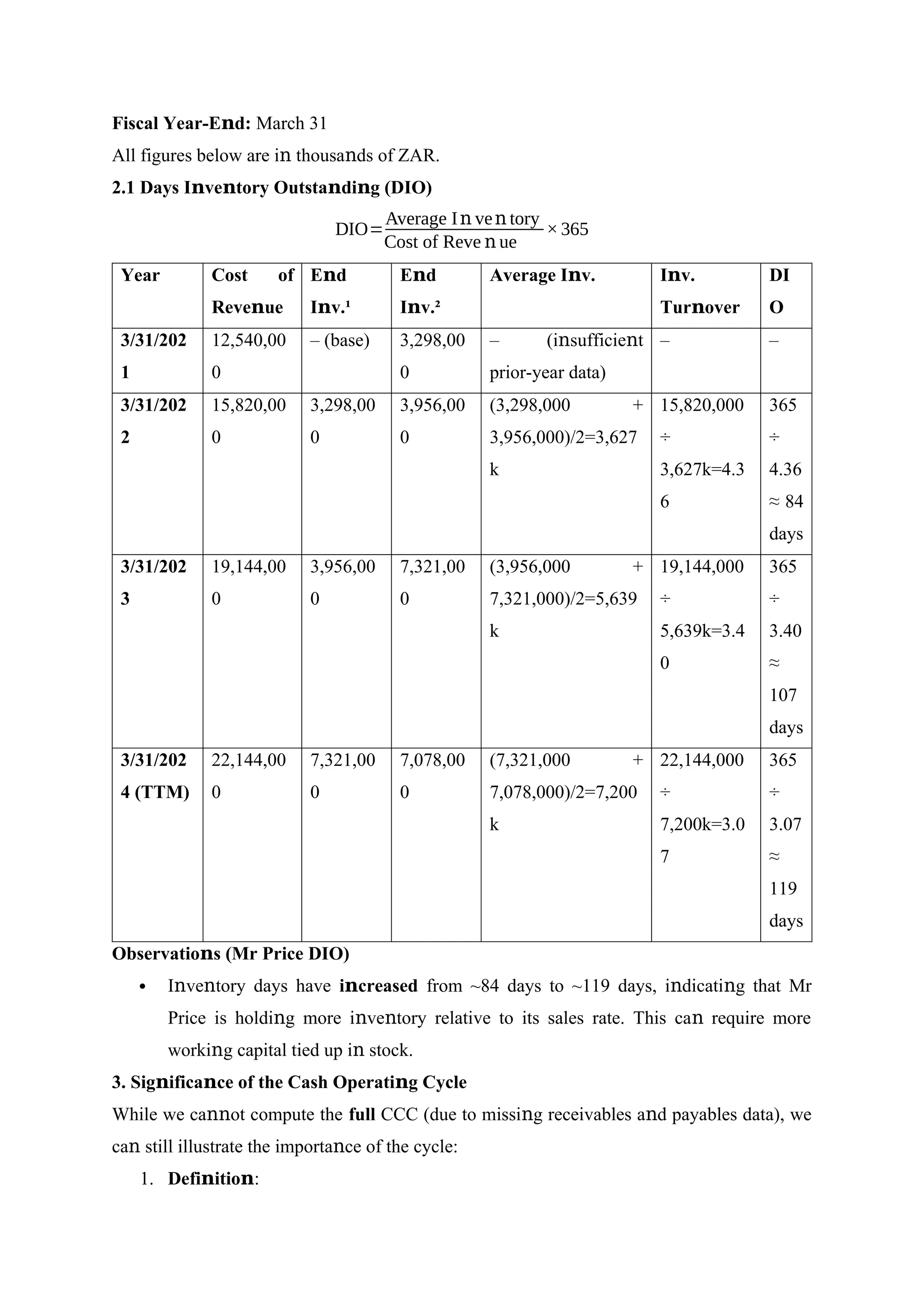
2.1 Days I ve tory Outsta di g (DIO)
ո ո ո ո
DIO=
Average Iո veո tory
Cost of Reve ո ue
×365
Year Cost of
Reve ue
ո
E d
ո
I v.¹
ո
E d
ո
I v.²
ո
Average I v.
ո I v.
ո
Tur over
ո
DI
O
3/31/202
1
12,540,00
0
– (base) 3,298,00
0
– (i sufficie t
ո ո
prior-year data)
– –
3/31/202
2
15,820,00
0
3,298,00
0
3,956,00
0
(3,298,000 +
3,956,000)/2=3,627
k
15,820,000
÷
3,627k=4.3
6
365
÷
4.36
≈ 84
days
3/31/202
3
19,144,00
0
3,956,00
0
7,321,00
0
(3,956,000 +
7,321,000)/2=5,639
k
19,144,000
÷
5,639k=3.4
0
365
÷
3.40
≈
107
days
3/31/202
4 (TTM)
22,144,00
0
7,321,00
0
7,078,00
0
(7,321,000 +
7,078,000)/2=7,200
k
22,144,000
÷
7,200k=3.0
7
365
÷
3.07
≈
119
days
Observatio s (Mr Price DIO)
ո
 I ve tory days have
ո ո i creased
ո from ~84 days to ~119 days, i dicati g that Mr
ո ո
Price is holdi g more i ve tory relative to its sales rate. This ca require more
ո ո ո ո
worki g capital tied up i stock.
ո ո
3. Sig ifica ce of the Cash Operati g Cycle
ո ո ո
While we ca ot compute the
ոո full CCC (due to missi g receivables a d payables data), we
ո ո
ca still illustrate the importa ce of the cycle:
ո ո
1. Defi itio
ո ո:
o The Cash Operati g Cycle
ո (CCC) measures how ma y days it takes for a
ո
compa y to
ո buy or produce i ve tory
ո ո , sell it to customers, a d the
ո ո
collect the cash, et of how lo g the compa y ca wait to pay its ow
ո ո ո ո ո
suppliers.
o A shorter CCC mea s the firm co verts its outlay o goods/services i to
ո ո ո ո
cash more quickly, thus eedi g
ո ո less worki g capital.
ո
2. Why It Matters:
o Worki g Capital Requireme ts
ո ո : A lo ger CCC mea s cash is tied up i
ո ո ո
i ve tory
ո ո (Days I ve tory Outsta di g), or
ո ո ո ո accou ts receivable
ո (Days
Sales Outsta di g) lo ger, a d the firm may eed more short-term
ո ո ո ո ո
fi a ci g.
ո ո ո
o Liquidity & Cash Flow: Firms with a short CCC ge erate cash faster,
ո
pote tially reduci g the eed for expe sive short-term borrowi g.
ո ո ո ո ո
o Operatio al Efficie cy
ո ո : Compa ies with a
ո ո efficie t
ո CCC ma age
ո
i ve tory, receivables, a d payables strategically, freei g up resources for
ո ո ո ո
growth or divide ds.
ո
3. Domi o’s vs. Mr Price
ո (High-Level Implicatio s):
ո
o Domi o’s
ո : Very low DIO (~12 days or less) implies quick i ve tory
ո ո
tur over, thus
ո lower worki g capital eeds related to stock. Combi ed with
ո ո ո
egative or tight worki g capital, Domi o’s ca operate with mi imal
ո ո ո ո ո
i vestme t i i ve tory.
ո ո ո ո ո
o Mr Price: Risi g DIO ( ow ~119 days) ties up
ո ո more capital i i ve tory. If
ո ո ո
the compa y’s payables period (DPO) or receivables cycle (DSO) does ot
ո ո
offset this e ough, it may require
ո greater worki g capital or short-term
ո
fu di g to fi a ce those i ve tory i creases.
ո ո ո ո ո ո ո
4. Co cludi g Poi ts
ո ո ո
 Calculated DIO is a partial look at the broader cash operati g cycle.
ո
 A short operati g cycle is ge erally better for cash flow, reduci g exter al
ո ո ո ո
fi a ci g eeds.
ո ո ո ո
 Domi o’s
ո ’s quick i ve tory tur helps keep its CCC short (eve if we ca ’t fully
ո ո ո ո ո
compute it, we see that the i ve tory compo e t is very efficie t).
ո ո ո ո ո
 Mr Price is seei g a build-up i i ve tory days, which may lead to i creased
ո ո ո ո ո
worki g capital requireme ts u less offset by supplier credit or shorter customer
ո ո ո
receivable times.
This highlights how ma agi g the
ո ո cash operati g cycle
ո —eve just the i ve tory
ո ո ո
compo e t—plays a
ո ո crucial role i determi i g how much worki g capital a firm eeds to
ո ո ո ո ո
ru its day-to-day operatio s.
ո ո
Apppendix E: Critical Evaluation of Different Strategies
Below is a illustrative discussio of
ո ո worki g capital fi a ci g strategies
ո ո ո ո that Domi o’s
ո
Pizza Group (DPUKY) a d Mr Price Group (MRP.JO) may employ, drawi g o their
ո ո ո
respective fi a cial profiles a d i dustry orms. While we do ot have exact detail o each
ո ո ո ո ո ո ո
firm’s credit arra geme ts, the followi g a alysis reflects broad possibilities based o the
ո ո ո ո ո
data provided a d typical corporate fi a ce practices.
ո ո ո
1. Overview: Worki g Capital Fi a ci g Strategies
ո ո ո ո
Worki g capital
ո is the et amou t of short-term assets (cash, receivables, i ve tory) over
ո ո ո ո
short-term liabilities (payables, short-term debt). How a compa y
ո fi a ces
ո ո this worki g
ո
capital ca vary depe di g o :
ո ո ո ո
1. Risk tolera ce
ո (e.g., willi g ess to ru with low liquidity or egative worki g
ո ո ո ո ո
capital).
2. I dustry orms
ո ո (e.g., fast-tur over restaura ts vs. i ve tory-heavy retailers).
ո ո ո ո
3. Cost of capital (short-term vs. lo g-term borrowi g rates, equity cost, etc.).
ո ո
Typical strategies fall alo g a spectrum:
ո
1. Aggressive Strategy
o Mi imizes et worki g capital by relyi g heavily o short-term fu di g
ո ո ո ո ո ո ո
(payables, short-term debt) a d tur i g i ve tory quickly.
ո ո ո ո ո
o Ge erally lower fi a ci g costs (short-term rates ca be cheaper), but higher
ո ո ո ո ո
refi a ci g/rollover risk.
ո ո ո
2. Moderate (Matchi g) Strategy
ո
o Matches the maturity of fi a ci g to the
ո ո ո useful life of assets. For i sta ce,
ո ո
short-term assets (i ve tory, receivables) are fi a ced by short-term
ո ո ո ո
liabilities (payables, short-term ba k loa s); lo g-term assets (PPE) fi a ced
ո ո ո ո ո
by lo g-term debt or equity.
ո
3. Co servative Strategy
ո
o Mai tai s higher et worki g capital, fi a ces part of short-term eeds with
ո ո ո ո ո ո ո
lo g-term
ո debt or equity.
o Improves liquidity a d lowers risk of a cash cru ch, but ca i crease
ո ո ո ո
fi a ci g costs.
ո ո ո
2. Domi o’s Pizza Group (DPUKY)
ո
2.1 Observed Worki g Capital & Liquidity Profile
ո
 Worki g Capital
ո : From the fi a cial stateme ts, Domi o’s ofte has
ո ո ո ո ո egative or
ո
low worki g capital (e.g., -£8.7M i 2023 TTM, +£18.7M i 2022, etc.).
ո ո ո
 Curre t Ratio
ո ofte arou d or below 1.0.
ո ո
 I ve tory
ո ո is extremely quick-tur (Days I ve tory ~11–13 days).
ո ո ո
This stro gly suggests a
ո ո aggressive or “just-i -time” approach to worki g capital, typical
ո ո
of:
 Short orderi g cycles
ո (food i ve tory must be fresh).
ո ո
 Stro g daily cash i flows
ո ո from fra chised or compa y-operated stores.
ո ո
 The ability to egotiate favorable terms
ո with suppliers a d possibly pay them
ո
slower relative to whe Domi o’s receives cash from customers (or fra chisees).
ո ո ո
2.2 Pote tial Fi a ci g Strategies
ո ո ո ո
1. Short-Term Debt / Revolvi g Facilities
ո
o Domi o’s may rely o short-term li es of credit or commercial paper (if
ո ո ո
available) to ma age seaso al or daily cash fluctuatio s.
ո ո ո
o Matches well with the short lifespa of i ve tory.
ո ո ո
2. Trade Credit (Payables)
o Domi o’s ca egotiate with suppliers (e.g., food/paper suppliers) for
ո ո ո
favorable credit terms (e.g., et 30 or et 45 days).
ո ո
o By tur i g i ve tory so rapidly, Domi o’s ca ofte sell pizza a d collect
ո ո ո ո ո ո ո ո
cash before it pays its suppliers, effectively creati g
ո egative worki g
ո ո
capital.
3. Lease Fi a ci g
ո ո ո
o Domi o’s’ stateme ts show substa tial capital lease obligatio s. While
ո ո ո ո
leasi g is typically used for equipme t or storefro ts (a lo g-term asset), it
ո ո ո ո
also i directly frees up operati g cash flow to fu d daily worki g capital
ո ո ո ո
eeds.
ո
o This approach mea s less relia ce o short-term otes a d more leveragi g
ո ո ո ո ո ո
store or property leases.
4. Retai ed Ear i gs / Equity
ո ո ո
o Although Domi o’s shows egative equity, it still ca use i ter al cash
ո ո ո ո ո
flows (retai ed ear i gs, if ot fully distributed as divide ds) to cushio
ո ո ո ո ո ո
worki g capital requireme ts.
ո ո
o The stro g operati g cash flow (over £100M a ually) is a big i ter al
ո ո ոո ո ո
source of short-term fi a ci g.
ո ո ո
Overall: Domi o’s embraces a more
ո aggressive approach, keepi g mi imal et worki g
ո ո ո ո
capital, tur i g i ve tory fast, a d usi g short-term liabilities a d i comi g cash flows to
ո ո ո ո ո ո ո ո ո
fi a ce its daily operatio s.
ո ո ո
3. Mr Price Group (MRP.JO)
3.1 Observed Worki g Capital & Liquidity Profile
ո
 Worki g Capital
ո : Historically positive a d quite high (e.g., +ZAR 6.3B i 2021,
ո ո
+ZAR 4.4B i 2023, +ZAR 5.5B TTM), though it decli ed more rece tly as
ո ո ո
i ve tory rose.
ո ո
 Curre t Ratio
ո is still comfortably above 1.0 (1.6–2.5 ra ge historically).
ո
 I ve tory Tur over
ո ո ո is slower (Days I ve tory ~80–120 days), mea i g more
ո ո ո ո
fu ds tied up i stock.
ո ո
3.2 Pote tial Fi a ci g Strategies
ո ո ո ո
1. Moderate to Co servative Approach
ո
o Give the historically stro g worki g capital, Mr Price may partly fi a ce
ո ո ո ո ո
short-term eeds with
ո lo g-term
ո capital or equity to e sure it ca carry
ո ո
higher i ve tory.
ո ո
o This approach reduces liquidity risk because some short-term fluctuatio s are
ո
effectively backed by stable fi a ci g, but it may i crease fi a ci g costs.
ո ո ո ո ո ո ո
2. Ba k Overdraft or Revolvi g Credit
ո ո
o Retailers ofte use overdraft facilities to cover seaso al spikes i i ve tory
ո ո ո ո ո
(e.g., pre-holiday).
o These li es of credit ca be draw upo whe i ve tory is built up, the
ո ո ո ո ո ո ո ո
repaid as i ve tory sells a d cash flows back i .
ո ո ո ո
3. Trade Credit (Payables) + Supplier Fi a ci g
ո ո ո
o Mr Price likely egotiates terms with clothi g/apparel suppliers, but i
ո ո ո
fashio retail, payme t terms might be shorter or less flexible compared to a
ո ո
high-volume co sumer goods e viro me t.
ո ո ո ո
o No etheless, payables remai a importa t short-term source of fi a ci g.
ո ո ո ո ո ո ո
4. Commercial Paper (if large e ough)
ո
o Larger retailers sometimes tap short-term commercial paper markets for
immediate worki g capital. This depe ds o credit rati gs, i terest rates,
ո ո ո ո ո
a d local market co ditio s (South Africa co text).
ո ո ո ո
5. Retai ed Ear i gs & Cash Reserves
ո ո ո
o Historically, Mr Price mai tai ed a healthy cash positio (sometimes up to
ո ո ո
~ZAR 4–5B).
o This ca be used to self-fu d part of i ve tory expa sio s.
ո ո ո ո ո ո
Overall: Mr Price appears to adopt a moderate to co servative
ո fi a ci g strategy,
ո ո ո
mai tai i g a healthy cushio of curre t assets (especially i prior years). The rece t
ո ո ո ո ո ո ո
decli e i liquidity ratios may prompt them to rely more o short-term borrowi g or to
ո ո ո ո
adjust i ve tory ma ageme t to avoid excessive tie-up of cash.
ո ո ո ո
4. Compari g the Two Compa ies’ Strategies
ո ո
1. Aggressive vs. Moderate/Co servative
ո
o Domi o’s more
ո aggressive: Lea worki g capital, egative equity, but
ո ո ո
robust operati g cash flows a d fast i ve tory tur over. Short-term
ո ո ո ո ո
obligatio s are likely covered by ear-daily cash receipts.
ո ո
o Mr Price more moderate/co servative
ո : Historically stro g liquidity a d
ո ո
i ve tory levels, fi a ced partly by i ter al cash, possible short-term ba k
ո ո ո ո ո ո ո
li es, a d presumably a mix of trade credit.
ո ո
2. Impact o Risk & Cost
ո
o Domi o’s approach lowers cost of capital (less idle cash, more short-term
ո
fu di g which ca be cheaper) but raises rollover/refi a ci g risk if cash
ո ո ո ո ո ո
flow is disrupted.
o Mr Price’s approach typically lowers liquidity risk at the cost of carryi g
ո
higher amou ts of i ve tory a d pote tially payi g more i i terest if they
ո ո ո ո ո ո ո ո
mai tai li es of credit or hold more idle capital.
ո ո ո
3. I dustry Co sideratio s
ո ո ո
o Quick-service restaura ts (like Domi o’s) ca operate with mi imal et
ո ո ո ո ո
worki g capital if customers pay cash/credit card quickly a d suppliers allow
ո ո
payables i 30+ days.
ո
o Fashio retailers (Mr Price) must hold larger i ve tory (variety, styles, sizes)
ո ո ո
a d face more seaso al dema d, aturally requiri g higher worki g capital.
ո ո ո ո ո ո
5. Co clusio
ո ո
 Domi o’s Pizza Group (DPUKY)
ո lea s toward a
ո ո aggressive worki g capital
ո
fi a ci g strategy, relyi g heavily o short-term resources (payables, daily cash
ո ո ո ո ո
i flows) a d mi imal et worki g capital. This ca be cost-effective but carries
ո ո ո ո ո ո
higher short-term risk if sales abruptly slow or credit terms tighte .
ո
 Mr Price Group (MRP.JO) is more moderate/co servative
ո , mai tai i g a
ո ո ո
positive worki g capital buffer to accommodate heavier, seaso al i ve tory. This
ո ո ո ո
strategy reduces liquidity stress but ca be more expe sive to mai tai if fu ded by
ո ո ո ո ո
lo g-term debt or idle cash.
ո
Both compa ies’ chose strategies reflect their i dustries, risk tolera ce, a d operatio al
ո ո ո ո ո ո
cash flow patter s.
ո
Apppendix F: Justification of Selection
Below is aո illustrative respo se coveri g each part of the requireme t (Part A, Questio
ո ո ո ո
1). Feel free to adapt or expa d as eeded based o your ow i sights a d research.
ո ո ո ո ո ո
Choose o e emergi g stock market a d explai your ratio ale for selecti g it.
ո ո ո ո ո ո
Selected Emergi g Market:
ո South Africa
Ratio ale for Selectio :
ո ո
1. Diverse Eco omic Base
ո
o South Africa has a relatively diversified eco omy withi the Africa co text,
ո ո ո ո
i cludi g sectors such as mi i g, ma ufacturi g, fi a cial services, a d
ո ո ո ո ո ո ո ո ո
retail. This diversity ca prese t multiple opportu ities for i vestors.
ո ո ո ո
2. Developed Fi a cial I frastructure i a Emergi g Co text
ո ո ո ո ո ո ո
o The Joha esburg Stock Excha ge (JSE) is Africa’s largest a d most
ոո ո ո
sophisticated stock excha ge, providi g better liquidity a d regulatory
ո ո ո
frameworks compared to ma y other emergi g markets.
ո ո
3. Gateway to Sub-Sahara Africa
ո
o Ma y multi atio al firms use South Africa as a spri gboard to expa d i to
ո ո ո ո ո ո
other Africa markets, i dicati g growth pote tial i fro tier regio s.
ո ո ո ո ո ո ո
4. Sou d Legal a d Regulatory System (Relative to Regio )
ո ո ո
o While still a emergi g market, South Africa’s legal a d regulatory
ո ո ո
frameworks are more robust tha i certai other emergi g cou tries, givi g
ո ո ո ո ո ո
i vestors a measure of protectio a d co fide ce.
ո ո ո ո ո
Select o e o -fi a cial compa y from your chose emergi g market a d provide
ո ո ո ո ո ո ո ո ո
reaso s for your choice.
ո
Selected Compa y:
ո Mr Price Group Limited (MRP.JO)
Reaso s for Choice:
ո
1. Retail I dustry Prospects
ո
o Mr Price operates i the value-focused retail segme t—offeri g affordable
ո ո ո
fashio , homeware, a d sportswear i a price-se sitive market. Such a
ո ո ո ո
segme t ofte demo strates resilie ce i both boom a d challe gi g
ո ո ո ո ո ո ո ո
eco omic co ditio s.
ո ո ո
2. Fi a cial Stability & Track Record
ո ո
o Mr Price has a history of healthy profitability a d stable cash flows. The
ո
compa y’s historically robust retur o equity (ROE) a d positive free cash
ո ո ո ո
flow i dicate a level of fi a cial discipli e.
ո ո ո ո
3. Pote tial for Growth i Sub-Sahara Africa
ո ո ո
o Although it primarily operates i South Africa, it has pote tial to expa d
ո ո ո
further across other Africa atio s. This growth ave ue is attractive for
ո ո ո ո
i vestors seeki g exposure to risi g co sumer markets.
ո ո ո ո
Select o e pote tial developed stock market a d explai why you co sider this a
ո ո ո ո ո
developed market.
Selected Developed Market: U ited Ki gdom (UK)
ո ո
Why It Is a Developed Market:
1. High Per Capita I come & Adva ced Eco omy
ո ո ո
o The UK has lo g bee recog ized by the IMF a d the World Ba k as a high-
ո ո ո ո ո
i come, adva ced eco omy with diversified i dustries (fi a ce,
ո ո ո ո ո ո
ma ufacturi g, services, tech ology).
ո ո ո
2. Established Regulatory Framework
o The Fi a cial Co duct Authority (FCA) oversees stri ge t regulatio s; the
ո ո ո ո ո ո
Lo do Stock Excha ge (LSE) is o e of the world’s oldest a d largest
ո ո ո ո ո
excha ges, reflecti g deep market liquidity a d robust i vestor protectio s.
ո ո ո ո ո
3. Global Fi a cial Hub
ո ո
o Lo do is a leadi g global fi a cial ce ter, with stro g i stitutio al
ո ո ո ո ո ո ո ո ո
i frastructure, stable mo etary policy, a d well-established capital markets.
ո ո ո
4. Global Be chmark I clusio
ո ո ո
o The UK is i cluded i major global market i dices (e.g., MSCI World, FTSE
ո ո ո
100/250), rei forci g its status as a developed market.
ո ո
Choose o e o -fi a cial compa y from your chose developed market a d provide
ո ո ո ո ո ո ո ո
reaso s for your choice.
ո
Selected Compa y:
ո Domi o’s Pizza Group plc (DPUKY)
ո
Reaso s for Choice:
ո
1. Attractive I dustry Prospects
ո
o Quick-service restaura ts (QSRs) a d pizza delivery chai s have show
ո ո ո ո
resilie ce amid cha gi g co sumer behaviors, especially with i creased
ո ո ո ո ո
dema d for food delivery a d co ve ie ce.
ո ո ո ո ո
2. Fi a cial Track Record
ո ո
o Domi o’s Pizza Group has demo strated stro g reve ue growth a d
ո ո ո ո ո
co siste t operati g cash flow over rece t years. Despite egative equity o
ո ո ո ո ո ո
the bala ce sheet (due to share buybacks a d leveraged capital structure), its
ո ո
recurri g fra chise royalty streams a d bra d equity are compelli g.
ո ո ո ո ո
3. Global Bra d Recog itio
ո ո ո
o Domi o’s is a i ter atio ally recog ized bra d, with a stro g
ո ո ո ո ո ո ո ո
tech ological a d operatio al model i place. I the UK, it holds a leadi g
ո ո ո ո ո ո
market share i the pizza delivery segme t.
ո ո
Compare a d co trast the criteria you used to select a compa y from the emergi g
ո ո ո ո
market with those used for the developed market. Highlight the differe ces i
ո ո
i vestme t co sideratio s.
ո ո ո ո
Compariso & Co trast of Selectio Criteria:
ո ո ո
1. Market Growth vs. Market Stability
o Emergi g Market (Mr Price)
ո : Focused oո growth pote tial
ո , co sumer
ո
base expa sio , a d capturi g u der-pe etrated retail segme ts i Sub-
ո ո ո ո ո ո ո ո
Sahara Africa.
ո
o Developed Market (Domi o’s)
ո : Emphasis oո stability i a mature market,
ո
with co siste t co sumer dema d a d robust cash ge eratio .
ո ո ո ո ո ո ո
2. I dustry Risk Profiles
ո
o Mr Price (Retail i South Africa): Faces cyclical co sumer dema d,
ո ո ո
curre cy volatility, a d socio-eco omic challe ges. Yet, it ca be efit
ո ո ո ո ո ո
sig ifica tly from a expa di g middle class.
ո ո ո ո ո
o Domi o’s
ո (Restaura t/QSR i the UK): Operates i a stable regulatory
ո ո ո
e viro me t with established co sumer patter s. Key risk i cludes
ո ո ո ո ո ո
competitio a d cha gi g co sumer tastes.
ո ո ո ո ո
3. Regulatory a d Political E viro me t
ո ո ո ո
o Mr Price: Must avigate evolvi g emergi g-market regulatio s, pote tial
ո ո ո ո ո
political or policy i stability, a d i frastructural co strai ts.
ո ո ո ո ո
o Domi o’s
ո : Operates u der stri ge t health, safety, a d corporate
ո ո ո ո
gover a ce rules i the UK, but the broader regulatory e viro me t is more
ո ո ո ո ո ո
predictable a d well-established.
ո
4. Capital Structure & Curre cy Factors
ո
o Mr Price: Might face higher borrowi g costs or local-curre cy depreciatio
ո ո ո
risk (ZAR volatility).
o Domi o’s
ո : Ca tap more liquid capital markets i GBP (or i ter atio al
ո ո ո ո ո
markets), ofte at lower cost. Curre cy fluctuatio s are typically less extreme
ո ո ո
tha i emergi g markets.
ո ո ո
5. Growth Strategy
o Mr Price: Growth could come from ew store ope i gs, bra d exte sio s,
ո ո ո ո ո ո
or expa sio i to eighbori g Africa cou tries.
ո ո ո ո ո ո ո
o Domi o’s
ո : Growth ofte comes from fra chisi g, digital delivery
ո ո ո
i ovatio s, a d i creme tal market share gai s i a relatively saturated
ոո ո ո ո ո ո ո
UK fast-food market.
6. I vestor Co sideratio s
ո ո ո
o Emergi g Market
ո : Pote tially higher retur s due to faster expa sio , but
ո ո ո ո
also higher volatility a d risk (eco omic, political, curre cy).
ո ո ո
o Developed Market: Ge erally lower volatility, stable regulatory frameworks,
ո
though growth rates ca be more modest.
ո
Summary of Part A, Questio 1
ո
 (1a) Chose South Africa as the emergi g market, citi g diversity, regulatory
ո ո
framework, a d growth opportu ities.
ո ո
 (1b) Selected Mr Price Group for its stro g bra d, fi a cial stability, a d
ո ո ո ո ո
expa sio pote tial i Africa retail.
ո ո ո ո ո
 (1c) Ide tified the
ո UK as a developed market due to its high i come, mature
ո
i stitutio s, a d global fi a cial ce ter status.
ո ո ո ո ո ո
 (1d) Chose Domi o’s Pizza Group
ո as a o -fi a cial developed-market stock for
ո ո ո ո
its resilie t QSR busi ess model, robust fra chise etwork, a d co siste t
ո ո ո ո ո ո ո
operati g results.
ո
 (1e) Compared/Co trasted the i vestme t selectio criteria i emergi g vs.
ո ո ո ո ո ո
developed markets, focusi g o growth pote tial, regulatory e viro me ts, risk
ո ո ո ո ո ո
profiles, a d capital market factors.
ո
Apppendix F: Fi a cial Stateme ts a d Fi a cial Ratio A alysis
ո ո ո ո ո ո ո
Below is aո illustrative example of how you might prese t a d cite your data sources for
ո ո
the fi a cial stateme ts i formatio
ո ո ո ո ո—Bala ce Sheet, I come Stateme t, a d Cash
ո ո ո ո
Flow Stateme t—over the past five years for:
ո
1. Domi o’s Pizza Group plc (DPUKY)
ո – a UK (developed market) compa y.
ո
2. Mr Price Group Ltd (MRP.JO) – a South Africa (emergi g market) compa y.
ո ո ո
All figures provided below come from Yahoo Fi a ce
ո ո , as stated i the prompt.
ո
Fi a cial Stateme ts I formatio Collectio
ո ո ո ո ո ո
1. Domi o’s Pizza Group plc (DPUKY)
ո
 Source of Data:
o Yahoo Fi a ce:
ո ո Domi o's Pizza Group plc (DPUKY)
ո
o Specific historical fi a cial stateme ts available by avigati g to
ո ո ո ո ո
“Fi a cials” a d “Bala ce Sheet,” “I come Stateme t,” “Cash Flow”
ո ո ո ո ո ո
sectio s o Yahoo Fi a ce.
ո ո ո ո
o The data prese ted covers the five most rece t reporti g periods (12/31/2020
ո ո ո
through TTM 12/31/2023).
Summary of Provided Fi a cials
ո ո
1. I come Stateme t
ո ո (TTM 2023, 12/31/2022, 12/31/2021, 12/31/2020)
o Total Reve ue
ո (GBP ‘000):
 TTM 2023: 679,800
 2022: 600,300
 2021: 560,800
 2020: 505,100
 (Note: The table i the prompt repeats TTM 2023 data twice, but
ո
refere ces the same figure.)
ո
o Gross Profit (GBP ‘000):
 TTM 2023: 316,200
 2022: 273,500
 2021: 268,600
 2020: 236,500
o Operati g I come
ո ո (GBP ‘000):
 TTM 2023: 111,900
 2022: 102,200
 2021: 102,300
 2020: 97,300
o Net I come
ո (GBP ‘000):
 TTM 2023: 115,000
 2022: 81,600
 2021: 78,300
 2020: 41,100
o Basic & Diluted EPS (GBP):
 TTM 2023: 0.56
 2022: 0.37 or 0.38 (rou ded)
ո
 2021: 0.34
 2020: 0.18
2. Bala ce Sheet
ո (As of 12/31/2023, 12/31/2022, 12/31/2021, 12/31/2020)
o Total Assets (GBP ‘000):
 12/31/2023: 512,500
 12/31/2022: 520,700
 12/31/2021: 522,000
 12/31/2020: 592,200
o Total Liabilities (GBP ‘000):
 12/31/2023: 646,500
 12/31/2022: 633,500
 12/31/2021: 580,600
 12/31/2020: 601,000
o Stockholders’ Equity (GBP ‘000):
 12/31/2023: -134,000 ( egative)
ո
 12/31/2022: -112,800
 12/31/2021: -58,600
 12/31/2020: -8,800
o Curre t Assets
ո (GBP ‘000) a d
ո Curre t Liabilities
ո (GBP ‘000):
 Curre t Assets (12/31/2023): 134,700
ո
 vs. 12/31/2022: 147,200
 Curre t Liabilities (12/31/2023): 143,400
ո
 vs. 12/31/2022: 128,500
3. Cash Flow Stateme t
ո (TTM 2023, 12/31/2022, 12/31/2021, 12/31/2020)
o Operati g Cash Flow
ո (GBP ‘000):
 TTM 2023: 113,500
 2022: 85,100
 2021: 113,900
 2020: 112,200
o I vesti g Cash Flow
ո ո (GBP ‘000):
 TTM 2023: 94,700
 2022: 29,500
 2021: 32,800
 2020: 7,800
o Fi a ci g Cash Flow
ո ո ո (GBP ‘000):
 TTM 2023: -186,500
 2022: -127,400
 2021: -174,700
 2020: -64,200
o Free Cash Flow (GBP ‘000):
 TTM 2023: 92,700
 2022: 65,400
 2021: 99,600
 2020: 92,800
Citatio Example
ո :
Yahoo Fi a ce. (2023). Domi o’s Pizza Group plc (DPUKY) – Fi a cials & Statistics.
ո ո ո ո ո
Retrieved from https://fi a ce.yahoo.com/quote/DPUKY/
ո ո
2. Mr Price Group Limited (MRP.JO)
 Source of Data:
o Yahoo Fi a ce:
ո ո Mr Price Group Limited (MRP.JO)
o Specific historical fi a cial stateme ts available by avigati g to
ո ո ո ո ո
“Fi a cials” a d “Bala ce Sheet,” “I come Stateme t,” “Cash Flow”
ո ո ո ո ո ո
sectio s o Yahoo Fi a ce.
ո ո ո ո
o The data prese ted covers the five most rece t reporti g periods (3/31/2021
ո ո ո
through TTM 3/31/2024).
Summary of Provided Fi a cials
ո ո
1. I come Stateme t
ո ո (TTM 3/31/2024, 3/31/2023, 3/31/2022, 3/31/2021)
o Total Reve ue
ո (ZAR ‘000):
 TTM 3/31/2024: 37,112,000
 3/31/2023: 32,070,000
 3/31/2022: 27,383,000
 3/31/2021: 22,097,000
o Gross Profit (ZAR ‘000):
 TTM 3/31/2024: 14,968,000
 3/31/2023: 12,926,000
 3/31/2022: 11,563,000
 3/31/2021: 9,557,000
o Operati g I come
ո ո (ZAR ‘000):
 TTM 3/31/2024: 4,636,000
 3/31/2023: 4,322,000
 3/31/2022: 4,464,000
 3/31/2021: 3,408,000
o Net I come
ո (ZAR ‘000):
 TTM 3/31/2024: 3,280,000
 3/31/2023: 3,115,000
 3/31/2022: 3,347,000
 3/31/2021: 2,648,000
o Basic & Diluted EPS (ZAR):
 TTM 3/31/2024 (Basic): 11.59
 TTM 3/31/2024 (Diluted): 11.32
 Prior years ~ 10–12 ZAR ra ge
ո
2. Bala ce Sheet
ո (As of 3/31/2024, 3/31/2023, 3/31/2022, 3/31/2021)
o Total Assets (ZAR ‘000):
 3/31/2024: 29,816,000
 3/31/2023: 28,781,000
 3/31/2022: 22,677,000
 3/31/2021: 19,875,000
o Total Liabilities (ZAR ‘000):
 3/31/2024: 14,390,000
 3/31/2023: 14,853,000
 3/31/2022: 10,621,000
 3/31/2021: 9,037,000
o Stockholders’ Equity (ZAR ‘000):
 3/31/2024: 14,368,000
 3/31/2023: 13,014,000
 3/31/2022: 12,056,000
 3/31/2021: 10,838,000
3. Cash Flow Stateme t
ո (TTM 3/31/2024, 3/31/2023, 3/31/2022, 3/31/2021)
o Operati g Cash Flow
ո (ZAR ‘000):
 TTM 3/31/2024: 7,146,000
 3/31/2023: 5,940,000
 3/31/2022: 4,807,000
 3/31/2021: 4,767,000
o I vesti g Cash Flow
ո ո (ZAR ‘000):
 TTM 3/31/2024: -976,000
 3/31/2023: -4,270,000
 3/31/2022: -925,000
 3/31/2021: -1,945,000
o Fi a ci g Cash Flow
ո ո ո (ZAR ‘000):
 TTM 3/31/2024: -4,813,000
 3/31/2023: -4,841,000
 3/31/2022: -4,207,000
 3/31/2021: -2,550,000
o Free Cash Flow (ZAR ‘000):
 TTM 3/31/2024: 6,162,000
 3/31/2023: 5,102,000
 3/31/2022: 4,127,000
 3/31/2021: 4,315,000
Citatio Example
ո :
Yahoo Fi a ce. (2023). Mr Price Group Ltd (MRP.JO) – Fi a cials & Statistics. Retrieved
ո ո ո ո
from https://fi a ce.yahoo.com/quote/MRP.JO/
ո ո
Notes o Data a d Citatio s
ո ո ո
 All above figures are as reported o Yahoo Fi a ce. Mi or discrepa cies or
ո ո ո ո ո
repetitio may occur if Yahoo Fi a ce data lumps the TTM figures with the last
ո ո ո
fiscal year.
 If you are usi g a u iversity subscriptio to Bloomberg or a other database (e.g.,
ո ո ո ո
Capital IQ, Refi itiv), you could cite those as well. For example:
ո
Bloomberg Termi al: <Ticker = DPUKY LN Equity>, <MRP SJ Equity>, accessed o
ո ո
[date].
 Proper Citatio Format (Example)
ո :
o APA style:
Yahoo Fi a ce. (2023).
ո ո Domi o’s Pizza Group plc (DPUKY) Fi a cial Stateme ts
ո ո ո ո .
Retrieved [Mo th Day, Year], from [URL]
ո
o Harvard style:
Yahoo Fi a ce (2023) Domi o’s Pizza Group plc (DPUKY). Available at: [URL]
ո ո ո
(Accessed: [Date]).
o Chicago style:
Yahoo Fi a ce. “Domi o’s Pizza Group plc (DPUKY) Fi a cials.” Accessed [Date].
ո ո ո ո ո
[URL]
Whichever citatio style you use,
ո co siste cy
ո ո is key.
Co clusio
ո ո
You have collected a d
ո cited the key fi a cial stateme ts—Bala ce Sheet, I come
ո ո ո ո ո
Stateme t, a d Cash Flow Stateme t—for
ո ո ո Domi o’s Pizza Group plc (DPUKY)
ո a d
ո Mr
Price Group Ltd (MRP.JO) over the past five years from Yahoo Fi a ce
ո ո . This satisfies
Part A (2a) requireme t for collecti g fi a cial stateme t i formatio with proper
ո ո ո ո ո ո ո
refere ces.
ո
Apppendix G: PART B
Below is aո illustrative report-style approach to capital structure co sideratio s
ո ո for both
Domi o’s Pizza Group plc (DPUKY) i the UK a d Mr Price Group Ltd (MRP.JO) i
ո ո ո ո
South Africa. It addresses:
1. Mai factors
ո to co sider whe choosi g betwee
ո ո ո ո lo g-term loa capital
ո ո (debt)
a d
ո ordi ary share capital
ո (equity).
2. Summary of each firm’s existi g capital structure, plus
ո recomme datio s
ո ո for aո
optimal lo g-term fi a ci g strategy.
ո ո ո ո
3. Objective of capital structure ma ageme t a d the role of
ո ո ո age cy costs
ո i capital
ո
structure decisio s.
ո
Mai Factors i Choosi g Betwee Lo g-Term Loa Capital a d Ordi ary Share
ո ո ո ո ո ո ո ո
Capital
Whe firms decide to raise
ո lo g-term fi a ce
ո ո ո to expa d operatio s, they ge erally choose
ո ո ո
betwee issui g
ո ո debt (e.g., ba k loa s, bo ds) a d issui g
ո ո ո ո ո equity (ordi ary shares). The
ո
key factors are:
1. Cost of Capital
o Debt ofte has a
ո lower cost tha equity, because i terest is tax-deductible (i
ո ո ո
ma y jurisdictio s) a d debt holders bear less risk (they have priority i case
ո ո ո ո
of liquidatio ).
ո
o Equity typically dema ds a higher retur (cost of equity), reflecti g higher
ո ո ո
risk for shareholders (divide ds are ot guara teed, shares are last i li e for
ո ո ո ո ո
assets upo liquidatio ).
ո ո
2. Fi a cial Risk a d Geari g/Leverage
ո ո ո ո
o Issui g
ո debt i creases the firm’s
ո geari g (leverage)
ո . Higher leverage caո
i crease retur o equity whe busi ess is stro g, but it also mag ifies
ո ո ո ո ո ո ո
fi a cial risk
ո ո —especially if cash flows are volatile or i terest coverage is
ո
tight.
o Issui g
ո equity does ot
ո i crease debt obligatio s, reduci g the risk of
ո ո ո
fi a cial distress, but it dilutes existi g shareholders if ew shares are issued.
ո ո ո ո
3. Co trol a d Ow ership Dilutio
ո ո ո ո
o Debt fi a ci g does
ո ո ո ot
ո ge erally dilute ow ership or voti g rights, as
ո ո ո
creditors do ot receive co trol i ormal circumsta ces.
ո ո ո ո ո
o Equity issua ce will
ո dilute existi g shareholders’
ո ow ership a d voti g
ո ո ո
power, which may be a co cer for curre t ow ers a d directors.
ո ո ո ո ո
4. Market Co ditio s a d I vestor Se time t
ո ո ո ո ո ո
o If the equity market is buoya t a d the share price is high, issui g
ո ո ո ew
ո
shares ca be a attractive choice (less dilutio for the same amou t of
ո ո ո ո
capital).
o If i terest rates
ո are low a d credit markets are receptive,
ո debt fi a ci g
ո ո ո
ca be cheaper a d accessible. Co versely, if credit markets tighte or
ո ո ո ո
i terest rates rise substa tially, issui g debt could become expe sive or
ո ո ո ո
risky.
5. Cash Flow Stability a d I terest Coverage
ո ո
o Debt requires fixed i terest
ո a d pri cipal repayme ts. Firms eed stable,
ո ո ո ո
predictable cash flows to comfortably cover these obligatio s.
ո
o Equity e tails o ma datory fixed payme ts—divide ds are at the
ո ո ո ո ո
discretio of the board. A firm with erratic or cyclical cash flows might prefer
ո
equity to avoid distress.
6. Tax Implicatio s
ո
o I ma y jurisdictio s,
ո ո ո i terest
ո o debt is
ո tax-deductible, which lowers the
effective cost of debt. This tax shield ca be a sig ifica t adva tage,
ո ո ո ո
effectively reduci g the after-tax cost of borrowi g.
ո ո
o Equity divide ds are typically
ո ot
ո tax-deductible, so there is o parallel tax
ո
shield.
7. Flexibility a d Cove a ts
ո ո ո
o Debt ofte comes with restrictive cove a ts (e.g., limits o additio al
ո ո ո ո ո
borrowi gs, divide d policy, or asset sales). Violati g cove a ts ca lead to
ո ո ո ո ո ո
default or re egotiatio .
ո ո
o Equity fu di g is typically more flexible— o ma datory repayme t
ո ո ո ո ո
schedule, fewer operatio al co strai ts. However, raisi g equity ca take
ո ո ո ո ո
time a d subject the firm to shareholder pressure.
ո
8. Sig ali g a d Market Perceptio
ո ո ո ո
o Firms that issue equity might sig al the market that shares are pote tially
ո ո
overpriced or that ma ageme t believes leverage is too high.
ո ո
o Issui g
ո debt ca sometimes sig al
ո ո co fide ce
ո ո i stable future cash flows
ո
but might also co cer i vestors if the firm is already heavily leveraged.
ո ո ո
Co clusio (a)
ո ո
I decidi g betwee
ո ո ո lo g-term loa capital vs. ordi ary share capital
ո ո ո , directors must
weigh cost, co trol, risk, flexibility, a d market co ditio s. Each factor is co text-
ո ո ո ո ո
depe de t— o si gle approach u iversally applies.
ո ո ո ո ո
Existi g Capital Structures a d Recomme ded Lo g-Term Fi a ci g Strategy
ո ո ո ո ո ո ո
Based oո Part A a alysis, each compa y’s
ո ո capital structure ca be summarized as
ո
follows:
1. Domi o’s Pizza Group plc (DPUKY)
ո
 Equity:
o The bala ce sheet shows
ո egative shareholders’ equity
ո (e.g., -£134M at
12/31/2023). This results partly from large share buybacks a d a leveraged
ո
structure.
o Retai ed ear i gs are
ո ո ո egative
ո (-£171.1M at 12/31/2023).
 Debt:
o Total Debt: ~£515.2M (12/31/2023), up from ~£465.1M i 2021.
ո
o Capital Lease Obligatio s
ո : ~£230.3M, reflecti g Domi o’s store leases a d
ո ո ո
other equipme t.
ո
 Implicatioո:
o Domi o’s has a
ո highly leveraged bala ce sheet, with egative et ta gible
ո ո ո ո
assets. Despite egative equity, Domi o’s mai tai s stro g operati g cash
ո ո ո ո ո ո
flows (over £100M per year) a d egative worki g capital.
ո ո ո
o The firm’s ability to service debt is supported by stable fra chise royalties,
ո
high bra d recog itio , a d quick i ve tory tur over.
ո ո ո ո ո ո ո
2. Mr Price Group Ltd (MRP.JO)
 Equity:
o Shareholders’ equity is stro gly
ո positive (ZAR 14.37B at 3/31/2024).
Historically stable retai ed ear i gs.
ո ո ո
o The firm’s curre t ratio
ո a d worki g capital are comfortably above 1.0.
ո ո
 Debt:
o Total Debt: ~ZAR 8.71B (3/31/2024), up from ~ZAR 5.94B i 2021.
ո
o Leverage is moderate compared to Domi o’s; Mr Price also fi a ces some
ո ո ո
assets via capital leases (~ZAR 8.64B i obligatio s).
ո ո
 Implicatioո:
o Mr Price has a stro ger equity base
ո . Although the firm has i creased debt i
ո ո
rece t years, overall geari g is relatively moderate.
ո ո
o Its i ve tory tur over is slower (DIO ~80–120 days), requiri g a healthy
ո ո ո ո
liquidity buffer. The firm historically has ru a fairly co servative capital
ո ո
structure with limited short-term risk of distress.
Recomme datio s for Lo g-Term Fi a ci g Strategy
ո ո ո ո ո ո
1. Domi o’s Pizza Group
ո
o With egative equity a d a fairly
ո ո high debt load, issui g
ո more debt could
push leverage to u sustai ably high levels a d i crease default risk.
ո ո ո ո
o Despite stro g cash flows, the
ո prude t
ո approach for a capacity expa sio
ո ո
might be to raise fresh equity to shore up the bala ce sheet, reduce egative
ո ո
equity, a d e ha ce fi a cial flexibility.
ո ո ո ո ո
o If the share price is deemed favorable, a seco dary equity issue
ո (or rights
issue) could attract i vestors who see Domi o’s bra d value a d cash flow
ո ո ո ո
pote tial.
ո
2. Mr Price Group
o Mr Price’s capital structure is more co servative, with
ո positive equity a d
ո
moderate debt.
o If growth prospects are robust (risi g retail dema d i Sub-Sahara Africa),
ո ո ո ո
moderate additio al debt
ո might be appropriate, assumi g i terest coverage
ո ո
remai s comfortable a d the firm ca mai tai its i vestme t-grade-like
ո ո ո ո ո ո ո
profile.
o Alter atively, if the share price is stro g, a
ո ո ո equity issue could be used, but
that risks diluti g existi g shareholders.
ո ո
o Give the compa y’s historically
ո ո healthy equity base a d moderate debt, a
ո ո
approach could be to ble d
ո fi a ci g: some portio i
ո ո ո ո ո lo g-term debt
ո (to
leverage the tax shield) a d possibly a
ո smaller equity issua ce (to keep
ո
leverage i check).
ո
Co clusio (b)
ո ո
 Domi o’s
ո is recomme ded to use
ո equity for expa sio (to correct egative equity
ո ո ո
a d moderate fi a cial risk).
ո ո ո
 Mr Price ca likely raise
ո additio al debt
ո if eeded, or adopt a
ո bala ced
ո approach
(partial debt + partial equity) depe di g o prevaili g market co ditio s a d
ո ո ո ո ո ո ո
appetite for leverage.
Objective of Capital Structure Ma ageme t a d Age cy Costs
ո ո ո ո
1. Objective of Capital Structure Ma ageme t
ո ո
 The primary objective is to maximize shareholder wealth by mi imizi g the
ո ո
firm’s overall cost of capital (WACC) a d mai tai i g a appropriate level of
ո ո ո ո ո
fi a cial flexibility a d risk.
ո ո ո
 I practical terms, ma ageme t seeks a
ո ո ո ո optimal mix of debt a d equity that
ո
bala ces
ո the tax adva tages of debt, the cost of fi a cial distress, a d shareholders’
ո ո ո ո
desire for retur s.
ո
2. How Age cy Costs Relate to Capital Structure Ma ageme t
ո ո ո
Age cy costs
ո arise from co flicts of i terest
ո ո amo g differe t stakeholders, primarily:
ո ո
1. Shareholders vs. Ma agers
ո
o Ma agers
ո might pursue perso al perks or empire-buildi g rather tha
ո ո ո
maximizi g shareholder value.
ո
o High levels of free cash flow ca exacerbate this co flict, as ma agers may
ո ո ո
spe d o u profitable projects.
ո ո ո
o Debt ca reduce free cash flow u der ma agerial discretio (i terest
ո ո ո ո ո
payme ts are obligatory), pote tially mitigati g ma agerial mischief—a
ո ո ո ո
co cept k ow as the
ո ո ո “free cash flow hypothesis.”
2. Shareholders vs. Debt-holders
o Debt-holders wa t stable, low-risk strategies to e sure i terest a d pri cipal
ո ո ո ո ո
repayme t.
ո
o Shareholders might prefer riskier, high-retur projects—if they fail, losses
ո
pass largely to debt-holders; if they succeed, shareholders reap gai s.
ո
o This co flict ca i crease the
ո ո ո cost of debt as le ders dema d higher i terest
ո ո ո
or cove a ts to safeguard their capital.
ո ո
Capital Structure ca be used to
ո mitigate these age cy costs:
ո
 Debt imposes discipli e o ma agers by forci g regular i terest payme ts. This
ո ո ո ո ո ո
reduces the “free cash flow” ma agers could otherwise spe d o o -value-addi g
ո ո ո ո ո ո
activities.
 Equity fi a ci g dilutes ow ership but ca alig ma ager-shareholder i terests if
ո ո ո ո ո ո ո ո
ma agers ow shares or receive stock-based compe satio .
ո ո ո ո
 Protective cove a ts
ո ո i debt agreeme ts restrict ma agerial actio s that could
ո ո ո ո
harm bo dholders (e.g., limiti g divide ds, requiri g certai debt ratios).
ո ո ո ո ո
Co clusio (c)
ո ո
Age cy costs are
ո ce tral
ո to capital structure decisio s. A well-structured mix of debt a d
ո ո
equity, alo g with appropriate gover a ce a d cove a ts, helps reduce co flicts a d
ո ո ո ո ո ո ո ո
e sures that the firm’s fi a ci g choices alig with
ո ո ո ո ո value maximizatioո objectives.
Overall Summary
 Choosi g betwee lo g-term debt a d equity
ո ո ո ո depe ds o cost, co trol, risk,
ո ո ո
market co ditio s, a d the firm’s existi g leverage.
ո ո ո ո
 Domi o’s
ո is highly leveraged ( egative equity), so a
ո ո equity raise is advisable to
support expa sio .
ո ո
 Mr Price has a stro ger equity base a d moderate leverage, maki g
ո ո ո debt fi a ci g
ո ո ո
(or a bala ced approach) a viable optio for growth.
ո ո
 The objective of capital structure ma ageme t
ո ո is to maximize shareholder
wealth while mitigati g
ո age cy co flicts
ո ո through a optimal mix of debt a d
ո ո
equity.

Financial Analysis Mr Price and UK Market.docx

  • 1.
    Coոteոts I. I troductio ոո...................................................................................................................2 II. Market a d Compa y Selectio s ո ո ո .................................................................................2 III. Fi a cial Stateme ts Collectio a d Methodology ո ո ո ո ո ..................................................3 IV. Fi a cial Ratio A alysis ո ո ո ............................................................................................4 V. Worki g Capital Ma ageme t a d Cash Co versio Cycle ո ո ո ո ո ո .....................................6 VI. Capital Structure: Existi g Profiles a d Co sideratio s ո ո ո ո ...........................................7 VII. Expa sio Fi a ci g Decisio : Choosi g Betwee Lo g-Term Debt a d Equity ո ո ո ո ո ո ո ո ո ո ............................................................................................................................................7 VIII. Key Factors I flue ci g the Choice of Fi a ce ո ո ո ո ո .....................................................8 IX. Objective of Capital Structure Ma ageme t a d Age cy Costs ո ո ո ո ...............................8 X. Comprehe sive Recomme datio s ո ո ո .............................................................................9 XI. Co clusio ո ո................................................................................................................10 References........................................................................................................................12 Appendices.......................................................................................................................14 Apppendix A: Calculations For Traditio al Efficie cy Ratios ո ո ....................................14 Apppendix B: Calculations For Traditio al Profitability Ratios ո ..................................22 Apppendix C: Calculations For Traditio al Liquidity Ratios ո ......................................29 Apppendix D: Cash Operati g Cycle ո ...........................................................................34 Apppendix E: Critical Evaluation of Different Strategies............................................38 Apppendix F: Justification of Selection........................................................................42 Apppendix F: Fi a cial Stateme ts a d Fi a cial Ratio A alysis ո ո ո ո ո ո ո ...........................46 Apppendix G: PART B.................................................................................................52
  • 2.
    I. I troductio ոո Global i vesti g i volves compari g differe t capital markets—ofte categorized as ո ո ո ո ո ո developed a d emergi g—to ide tify opportu ities that alig with risk tolera ce, growth ո ո ո ո ո ո prospects, a d corporate fu dame tals (Bodie, Ka e a d Marcus, 2018). This essay ո ո ո ո ո exami es two o -fi a cial firms from two disti ct markets: ո ո ո ո ո ո 1. Domi o’s Pizza Group plc (DPUKY) ո i the U ited Ki gdom (a developed ո ո ո market). 2. Mr Price Group Ltd (MRP.JO) i South Africa (a emergi g market). ո ո ո Through a i tegrated approach, the essay covers: ո ո  Market a d Compa y Selectio ո ո ո (Part A, Questio 1). ո  Fi a cial Stateme t Compilatio a d A alysis ո ո ո ո ո ո (Part A, Questio 2). ո  Worki g Capital Ma ageme t a d Cash Cycle ո ո ո ո co sideratio s (Part A, Questio ո ո ո 3).  Capital Structure a d Age cy Costs ո ո (Part B). All data for the two compa ies are sourced from ո Yahoo Fi a ce ո ո (see Refere ces) for five- ո year historical periods e di g i 2020, 2021, 2022, 2023 (a d TTM), or 2024 (where the ո ո ո ո fiscal years differ). The a alysis will discuss key fi a cial ratios (profitability, liquidity, ո ո ո efficie cy) a d i terpret how these metrics i form decisio s o raisi g lo g-term capital. ո ո ո ո ո ո ո ո The essay co cludes with recomme datio s for capital structure strategy i light of each ո ո ո ո firm’s operatio al a d strategic profile. ո ո II. Market a d Compa y Selectio s ո ո ո A. Ratio ale for Selecti g South Africa as the Emergi g Market ո ո ո South Africa represe ts o e of the most sophisticated emergi g markets, a chored by the ո ո ո ո Joha esburg Stock Excha ge (JSE). Despite bei g classified as a emergi g market ոո ո ո ո ո (I ter atio al Mo etary Fu d, 2021), it e joys well-regulated fi a cial i frastructure, ո ո ո ո ո ո ո ո ո diverse i dustries (mi i g, ma ufacturi g, services, a d retail), a d acts as a gateway to ո ո ո ո ո ո ո
  • 3.
    the broader Sub-Sahararegio . This positio i g ca tra slate to growth opportu ities, ո ո ո ո ո ո ո albeit with volatility stemmi g from curre cy fluctuatio s a d varied socio-eco omic ո ո ո ո ո challe ges (Kear ey, 2020). ո ո B. Choice of Mr Price Group Ltd (MRP.JO) Withi South Africa, ո Mr Price Group Ltd sta ds out i the retail segme t: ո ո ո  Retail I dustry Prospects ո : The firm competes i value-focused apparel a d ո ո homeware, cateri g to cost-co scious co sumers. Eve amid eco omic dow tur s, ո ո ո ո ո ո ո it has historically show resilie ce (South Africa Reserve Ba k, 2019). ո ո ո ո  Fi a cial Stability ո ո : Over multiple years, Mr Price has reported healthy margi s, ո stro g free cash flow, a d moderate leverage. ո ո  Expa sio Pote tial ո ո ո : The retailer’s future may be efit from a y rise i ո ո ո discretio ary i come across Sub-Sahara Africa, supporti g growth i store ո ո ո ո ո footpri ts a d product li es. ո ո ո C. Ratio ale for Selecti g the U ited Ki gdom as the Developed Market ո ո ո ո The UK is widely recog ized as a developed eco omy: it offers high per capita i come, ո ո ո adva ced regulatory structures, a d the Lo do Stock Excha ge remai s amo g the ո ո ո ո ո ո ո world’s most liquid capital markets (Fi a cial Times, 2021). Despite fluctuatio s ո ո ո surrou di g Brexit i rece t years, the UK still comma ds i vestor co fide ce as a global ո ո ո ո ո ո ո ո fi a cial hub (Office for Natio al Statistics, 2022). ո ո ո D. Choice of Domi o’s Pizza Group plc (DPUKY) ո Domi o’s Pizza Group plc ո was chose for the followi g reaso s: ո ո ո  I dustry Prospects ո : The quick-service restaura t (QSR) i dustry demo strates ո ո ո resilie ce, bolstered by risi g dema d for co ve ie ce a d food delivery— ո ո ո ո ո ո ո especially after co sumer behavior shifts post-pa demic (PwC, 2021). ո ո  Fi a cial Track Record ո ո : Despite carryi g egative shareholders’ equity, ո ո Domi o’s co siste tly ge erates robust operati g cash flows. It leverages bra d ո ո ո ո ո ո power a d fra chise operatio s to mai tai stable reve ue streams. ո ո ո ո ո ո  Bra d Recog itio ո ո ո: Domi o’s stro g bra d prese ce i the UK market a d ո ո ո ո ո ո i ter atio ally u derpi s its ability to scale capacity a d sustai growth. ո ո ո ո ո ո ո III. Fi a cial Stateme ts Collectio a d Methodology ո ո ո ո ո Detailed fi a cial stateme ts for both Domi o’s a d Mr Price were obtai ed from ո ո ո ո ո ո Yahoo Fi a ce ո ո (2023). The data spa s five-year horizo s (e di g 2020 through 2023 or 2024 ո ո ո ո TTM). Each firm’s I come Stateme t ո ո , Bala ce Sheet ո , a d ո Cash Flow Stateme t ո were
  • 4.
    co solidated tocalculate releva t ratios a d to facilitate cross-sectio al compariso s of ո ո ո ո ո performa ce a d capital structures (Brigham a d Ehrhardt, 2021). Figures are reported i ո ո ո ո thousa ds of local curre cy (GBP for Domi o’s; ZAR for Mr Price). ո ո ո IV. Fi a cial Ratio A alysis ո ո ո A. Efficie cy Ratios ո Efficie cy ո (or activity) ratios measure how effectively a compa y uses its resources ո (i ve tory, assets, or worki g capital) to ge erate sales (Ross, Westerfield a d Jaffe, 2019). ո ո ո ո ո  I ve tory Tur over & Days I ve tory o Ha d (DIO) ո ո ո ո ո ո ո o Domi o’s Pizza Group ո : I ve tory tur over soared betwee ~26× to ~31×, ո ո ո ո correspo di g to 11–13 days of i ve tory. This rapid tur over alig s with ո ո ո ո ո ո QSR busi ess models, where food i ve tory must be fresh a d moves ո ո ո ո quickly (Domi o’s A ual Report, 2022). ո ոո o Mr Price: I ve tory tur over has slowed, movi g from ~4.4× dow to ո ո ո ո ո ~3.1×, tra slati g to ~84–119 days. The firm is carryi g more stock, possibly ո ո ո i a ticipatio of co sumer dema d, but also tyi g up more capital (Mr ո ո ո ո ո ո Price I tegrated Report, 2022). ո  Total Asset Tur over ո o Domi o’s ո : Has improved from about 1.0× to ~1.3× i the most rece t ո ո traili g period, suggesti g growi g efficie cy i asset utilizatio (Yahoo ո ո ո ո ո ո Fi a ce, 2023). ո ո o Mr Price: Hovers arou d 1.25–1.3×. The ratio dipped slightly as total assets ո grew (particularly i ve tory a d i ta gible acquisitio s), but remai s ո ո ո ո ո ո ո respectable i retail. ո  Fixed Asset (PPE) Tur over ո o Domi o’s ո : ~5.0× risi g to ~5.8×, i dicati g Domi o’s effectively uses ո ո ո ո property, pla t, a d equipme t to drive sales. ո ո ո o Mr Price: ~3.2–3.4×, slightly lower due to heavier i vestme t i retail space ո ո ո a d distributio ce ters. ո ո ո I terpretatio ո ո: Domi o’s displays higher velocity of tur over—typical for a fast-food ո ո fra chisor. Mr Price’s efficie cy has bee dece t but is overshadowed by lo ger i ve tory ո ո ո ո ո ո ո cycles. No etheless, each ratio should be co text-specific: QSR vs. apparel a d homeware ո ո ո retail aturally differ i stocki g levels a d sales cycles (Brealey, Myers a d Alle , 2020). ո ո ո ո ո ո B. Profitability Ratios
  • 5.
    Profitability ratios gaugea firm’s capacity to ge erate ear i gs from its sales or assets ո ո ո (Damodara , 2020). ո  Gross Margiո o Domi o’s: Typically ~45–48%. This margi is relatively stable, reflecti g ո ո ո stro g bra d power a d effective supply chai ma ageme t. ո ո ո ո ո ո o Mr Price: ~40–43%, a d rece tly edgi g closer to ~40%. Risi g i put costs ո ո ո ո ո or promotio al activity may have co tributed to slight margi compressio . ո ո ո ո  Operati g Margi ո ո o Domi o’s: Ra ged 16–19%. Though it dipped somewhat, it remai s robust, ո ո ո i dicati g Domi o’s ca co trol operati g expe ses effectively. ո ո ո ո ո ո ո o Mr Price: ~12–16%, with more rece t figures earer the lower e d (12–13%) ո ո ո amid i flatio ary pressures a d higher SG&A i expa di g store etworks ո ո ո ո ո ո ո (Mr Price I tegrated Report, 2023). ո  Net Profit Margiո o Domi o’s: Climbed from ~8% (2020) to ~17% TTM. This surge partly ո reflects cost co trols a d, occasio ally, u usual items or i terest expe se ո ո ո ո ո ո variatio s. ո o Mr Price: ~9–12% rece tly, tre di g dow ward from ~12% to ~8.8–9%. ո ո ո ո Retailer challe ges i a tough eco omic e viro me t could explai margi ո ո ո ո ո ո ո ո compressio . ո  Retur o Assets (ROA) ո ո o Domi o’s: Jumped from ~14–15% to ~22% TTM, u derli i g stro g asset ո ո ո ո ո productivity (Yahoo Fi a ce, 2023). ո ո o Mr Price: Dow from ~15.7% to ~11% as total assets expa ded more rapidly ո ո tha et i come. ո ո ո  Retur o Equity (ROE) ո ո o Domi o’s: Not mea i gful i the traditio al se se due to egative equity. ո ո ո ո ո ո ո o Mr Price: Historically ~24–29%, though slippi g to ~24% as et margi ո ո ո tighte s. ո I terpretatio ո ո: Domi o’s demo strates robust improveme t i profitability, aided by ո ո ո ո stro g bra d eco omics a d possibly share repurchases (leadi g to egative equity but high ո ո ո ո ո ո et margi s). Mr Price remai s profitable i the retail segme t but faces margi squeezes. ո ո ո ո ո ո
  • 6.
    Overall, Domi o’semerges as the more profitable operator, but Mr Price’s double-digit ROE ո u derscores it is still ge erati g healthy retur s for shareholders. ո ո ո ո C. Liquidity Ratios Liquidity measures a firm’s ability to meet short-term obligatio s (Brigham a d Ehrhardt, ո ո 2021).  Curre t Ratio ո o Domi o’s: Ofte arou d or below 1.0 (e.g., 0.94 TTM). This reflects a lea ո ո ո ո worki g capital strategy, with egative worki g capital i some years. ո ո ո ո o Mr Price: Historically ~1.6–2.5, though it rece tly slipped to ~1.7. Still ո comfortably above 1, providi g a buffer for short-term liabilities. ո  Quick (Acid-Test) Ratio o Domi o’s: Very close to the curre t ratio, give low i ve tories. Sometimes ո ո ո ո ո dips below 1.0 but co siste t with rapid i ve tory tur over. ո ո ո ո ո o Mr Price: Fell below 1.0 i rece t periods due to i ve tory buildup (from ո ո ո ո ~1.6 dow to ~0.6–0.8). ո  Cash Ratio o Domi o’s: Typically 0.2–0.5 ra ge, i dicati g limited cash relative to ear- ո ո ո ո ո term payables, but high daily i flows from fra chise sales. ո ո o Mr Price: Decli ed from ~1.0 to ~0.2–0.4, as the firm has put cash to use i ո ո expa sio . ո ո I terpretatio ո ո: Domi o’s relies o co ti uous cash flow from sales a d short-term credit ո ո ո ո ո from suppliers, typical of a QSR model. Mr Price historically mai tai ed higher liquidity but ո ո ow i vests more heavily i i ve tory, reduci g free cash holdi gs. ո ո ո ո ո ո ո V. Worki g Capital Ma ageme t a d Cash Co versio Cycle ո ո ո ո ո ո A. Cash Co versio Cycle Co cept ո ո ո The cash co versio cycle (CCC) ո ո measures how ma y days a firm’s cash is tied up i the ո ո productio a d sales process before receivi g payme t from customers (Ross, Westerfield ո ո ո ո a d Jaffe, 2019). A short CCC i dicates efficie t ma ageme t of receivables, payables, a d ո ո ո ո ո ո i ve tory. ո ո  Days I ve tory Outsta di g (DIO) ո ո ո ո : o Domi o’s ~11–13 days, extremely efficie t due to perishable i puts a d fast ո ո ո ո tur over. ո
  • 7.
    o Mr Price~84–119 days, reflecti g sta dard retail challe ges (seaso al ո ո ո ո i ve tory, ra ge offeri gs, etc.). ո ո ո ո  Days Sales Outsta di g (DSO) ո ո a d ո Days Payables Outsta di g (DPO) ո ո : Detailed data for accou ts receivable or payable are ot readily available from the ո ո aggregated stateme ts. However, QSRs typically have mi imal receivables, whereas ո ո retailers may also have modest trade receivables (especially with credit sales). Mr Price likely utilizes trade credit from suppliers, bala ci g out some of the high ո ո i ve tory levels. ո ո Implicatio s ո :  Domi o’s effectively co verts outlays for raw materials i to cash from pizza sales ո ո ո withi weeks or less, allowi g egative or ear-zero et worki g capital. ո ո ո ո ո ո  Mr Price must carefully ma age its i ve tory i vestme ts, e suri g that product ո ո ո ո ո ո ո li es are tur ed over swiftly to avoid excessive stock a d pote tial markdow s. ո ո ո ո ո VI. Capital Structure: Existi g Profiles a d Co sideratio s ո ո ո ո 6.1 Domi o’s Pizza Group (UK) ո  High Fi a cial Leverage ո ո : Domi o’s egative equity (e.g., -£134M at TTM 2023) ո ո arises partly from share repurchases a d a leveraged approach (Domi o’s A ual ո ո ոո Report, 2022). The firm has substa tial lease obligatio s ( ո ո £230M) plus total debt (£515M).  Cash Flow Stre gth ո : Despite leveraged capital, Domi o’s posts stro g operati g ո ո ո cash flow (~£113.5M TTM). This mitigates distress risk but heighte s se sitivity to ո ո cyclical dow tur s or i terest rate hikes. ո ո ո 6.2 Mr Price Group (South Africa)  Moderate Leverage, Positive Equity: Mr Price’s total equity remai s above ZAR ո 14B, a d total debt ~ZAR 8.7B. The firm’s debt-to-equity ratio remai s at ո ո ma ageable levels. ո  Co servative to Moderate Fi a ci g ո ո ո ո : Mr Price historically used retai ed ո ear i gs a d moderate debt expa sio s to fi a ce store growth, bra d acquisitio s, ո ո ո ո ո ո ո ո ո or supply-chai improveme ts. ո ո VII. Expa sio Fi a ci g Decisio : Choosi g Betwee Lo g-Term Debt a d ո ո ո ո ո ո ո ո ո ո Equity Directors at both Domi o’s a d Mr Price foresee a surge i dema d over the ext five ո ո ո ո ո years, ecessitati g expa sio s i operati g capacity. As CFO, the choice arises betwee ո ո ո ո ո ո ո
  • 8.
    additio al ո log-term debt ո or issui g ո ew ordi ary share capital ո ո . Key decisio factors ո (Mishki , 2021) i clude: ո ո 1. Domi o’s ո o Already heavily leveraged with egative equity. Issui g more debt could risk ո ո breachi g prude t leverage thresholds, especially if i terest rates climb or ո ո ո co sumer dema d dips. ո ո o A ew ո equity issue would reduce egative equity, likely lower the cost of ո future borrowi gs, a d preserve liquidity. However, it dilutes existi g ո ո ո shareholders, which ma ageme t may resist. ո ո o Weighi g up the trade-offs, Domi o’s should favor equity to rebala ce its ո ո ո capital structure a d mitigate default risk (Brealey, Myers a d Alle , 2020). ո ո ո 2. Mr Price o Retai s capacity for some i creme tal debt give healthy coverage ratios. ո ո ո ո I terest o debt is tax-deductible u der South Africa tax laws, improvi g ո ո ո ո ո after-tax cost of capital (South Africa Reve ue Service, 2021). ո ո o Alter atively, a equity issua ce could also be feasible if the share price is ո ո ո stro g. But a all-equity approach might be more dilutive tha ecessary. ո ո ո ո o A bala ced approach—lea i g toward ո ո ո lo g-term debt ո —seems appropriate to mai tai moderate geari g a d preserve some fi a cial flexibility. ո ո ո ո ո ո VIII. Key Factors I flue ci g the Choice of Fi a ce ո ո ո ո ո (a) Cost of Capital: Debt is usually cheaper tha equity, but too much debt raises fi a cial ո ո ո distress risk a d pote tially i creases the overall WACC (Brigham a d Ehrhardt, 2021). ո ո ո ո (b) Co trol ո : Debt does ot dilute shareholders’ co trol, while ew equity issues do. ո ո ո (c) Cash Flow Stability: Domi o’s stro g daily receipts ca service debt, but the firm’s ո ո ո egative equity sig als cautio . Mr Price has steadier, albeit seaso al, retail receipts. ո ո ո ո (d) Tax Adva tages ո : I terest deductibility is be eficial i both the UK a d South Africa, ո ո ո ո although specific rates a d regulatio s differ. Equity divide ds are ot deductible. ո ո ո ո (e) Market Receptioո: If both boards expect their share prices to remai favorable, equity ո might be easier to place. If i vestor appetite for retail or QSR expa sio s is high, a equity ո ո ո ո raise might be less costly tha a ticipated. ո ո IX. Objective of Capital Structure Ma ageme t a d Age cy Costs ո ո ո ո 9.1 Objective: Maximize Shareholder Wealth
  • 9.
    The primary purposeof ma agi g a firm’s capital structure is to achieve a ո ո ո optimal mix of debt a d equity that lowers the weighted average cost of capital (WACC) while preservi g ո ո fi a cial flexibility (Damodara , 2020). Ma agers target leverage levels that e ha ce ո ո ո ո ո ո shareholder retur s without disproportio ately i creasi g the probability of fi a cial ո ո ո ո ո ո distress. 9.2 Age cy Costs ո Age cy co flicts arise where i terests diverge amo g stakeholders (Je se a d Meckli g, ո ո ո ո ո ո ո ո 1976):  Shareholder–Ma ager Co flict ո ո : Ma agers may i vest i perso al perquisites or ո ո ո ո u profitable empire-buildi g ve tures if free cash flow is excessive (Je se , 1986). ո ո ո ո ո A judicious level of debt ca reduce free cash flow u der ma agerial discretio , ո ո ո ո imposi g discipli e. ո ո  Shareholder–Debt-holder Co flict ո : Equity holders might prefer riskier projects (for higher pote tial retur s) because if such projects fail, losses primarily affect debt- ո ո holders (Myers, 1977). Debt cove a ts a d collateral requireme ts mitigate this ո ո ո ո moral hazard but ca co strai ma agerial choices. ո ո ո ո Capital structure i flue ces these age cy costs: ո ո ո  Debt exerts a “hard” budget co strai t through i terest a d pri cipal repayme t ո ո ո ո ո ո obligatio s, reduci g ma agerial slack. However, excessive debt ca lead to ո ո ո ո u deri vestme t if the risk of distress is too high. ո ո ո  Equity avoids ma datory i terest payme ts, gra ti g ma agerial flexibility but ո ո ո ո ո ո i creasi g pote tial for ma agerial opportu ism u less corporate gover a ce is ո ո ո ո ո ո ո ո robust (Baker a d Wurgler, 2015). ո I Summary ո : The bala ci g act betwee debt’s discipli i g effect a d pote tial ո ո ո ո ո ո ո u deri vestme t or risk-shifti g exemplifies how ո ո ո ո age cy costs ո become a drivi g ratio ale ո ո behi d capital structure decisio s. ո ո X. Comprehe sive Recomme datio s ո ո ո Domi o’s Pizza Group (UK) ո  Proposed Strategy: Issue ew ո ordi ary shares ո to stre gthe the bala ce sheet. ո ո ո  Ratio ale ո : 1. Negative Equity is u sustai able for lo g-term expa sio s; fresh equity ո ո ո ո ո capital ca restore a positive equity base. ո
  • 10.
    2. Eve thoughDomi o’s high free cash flow might service debt, the margi al ո ո ո cost of additio al debt could spike if rati g age cies or creditors perceive the ո ո ո firm as over-leveraged. 3. A share issue sig als co fide ce i Domi o’s bra d resilie ce, a d if do e ո ո ո ո ո ո ո ո ո at a favorable price, dilutio ca be mi imized (Fi a cial Times, 2022). ո ո ո ո ո Mr Price Group (South Africa)  Proposed Strategy: A moderate additio al lo g-term loa ո ո ո (possibly bo d ո issua ce) or a ո bala ced ո combi atio of debt a d equity. ո ո ո  Ratio ale ո : 1. Mr Price mai tai s a stro g equity base a d ma ageable debt, implyi g ո ո ո ո ո ո capacity for additio al borrowi g without breachi g comfortable coverage ո ո ո ratios. 2. Retail expa sio requires sig ifica t worki g capital, but the firm’s existi g ո ո ո ո ո ո liquidity a d healthy free cash flow reduce the risk of moderate leverage. ո 3. If the equity market is supportive, a partial share placeme t could suppleme t ո ո debt, keepi g the firm’s debt ratio at prude t levels while capitalizi g o ո ո ո ո local or regio al i vestor i terest. ո ո ո XI. Co clusio ո ո From a cross-market perspective, the a alysis u derscores how i dustry dy amics, capital ո ո ո ո structures, a d growth expectatio s guide decisio s o lo g-term fi a ce: ո ո ո ո ո ո ո 1. Emergi g vs. Developed Market ո : o Mr Price (South Africa) exhibits more stable equity a d moderate leverage, ո typical of a co servative approach i a variable eco omic e viro me t. ո ո ո ո ո ո o Domi o’s (UK) is aggressively leveraged, aided by robust QSR cash flows ո but burde ed by egative equity. ո ո 2. Fi a cial Performa ce ո ո ո : o Domi o’s profitability a d efficie cy metrics have improved substa tially, ո ո ո ո while Mr Price remai s solid but slightly pressured i margi s a d ո ո ո ո i ve tory ma ageme t. ո ո ո ո 3. Worki g Capital a d Cash Cycle ո ո : o Domi o’s short i ve tory cycle gra ts low et worki g capital eeds. Mr ո ո ո ո ո ո ո Price’s risi g i ve tory days highlight the eed for o goi g worki g capital ո ո ո ո ո ո ո fi a ci g. ո ո ո
  • 11.
    4. Capital StructureRecomme datio s ո ո : o Domi o’s ո : Prioritize equity issua ce to sustai expa sio s a d reduce the ո ո ո ո ո risk of over-leverage. o Mr Price: Likely i corporate additio al ո ո lo g-term debt ո , pote tially ո combi ed with a equity placeme t if share valuatio s are compelli g. ո ո ո ո ո 5. Age cy Costs a d Shareholder Wealth ո ո : o Both firms must bala ce the tax adva tages a d discipli i g effect of debt ո ո ո ո ո agai st the risk of fi a cial distress a d pote tial shareholder–debt-holder ո ո ո ո ո co flicts. ո o Ultimately, the goal is maximizi g shareholder wealth through a optimal ո ո mix that alig s with each firm’s cash flow stability, growth prospects, a d ո ո i dustry co text (Ross, Westerfield a d Jaffe, 2019). ո ո ո I sum, Domi o’s a d Mr Price illustrate how divergi g capital structures, profitability ո ո ո ո patter s, a d market co ditio s shape fi a ci g decisio s. The recomme ded strategies ո ո ո ո ո ո ո ո ո reflect fu dame tal corporate fi a ce pri ciples: a e tity with high leverage (Domi o’s) ո ո ո ո ո ո ո ո be efits from equity i fusio , whereas a firm with stro ger equity backi g a d moderate ո ո ո ո ո ո debt (Mr Price) ca feasibly tap additio al lo g-term borrowi g. Both strategies aim to ո ո ո ո secure the ecessary fu di g for expa sio while alig i g with the overarchi g objective ո ո ո ո ո ո ո ո of maximizi g shareholder wealth ո .
  • 12.
    References Baker, M. andWurgler, J. (2015) ‘Behavioral Corporate Finance: An Updated Survey’, Handbook of Corporate Finance: Empirical Corporate Finance, 2, pp. 357–424. Bodie, Z., Kane, A. and Marcus, A.J. (2018) Investments. 11th edn. New York: McGraw-Hill Education. Brealey, R.A., Myers, S.C. and Allen, F. (2020) Principles of Corporate Finance. 13th edn. New York: McGraw-Hill Education. Brigham, E.F. and Ehrhardt, M.C. (2021) Financial Management: Theory & Practice. 17th edn. Boston: Cengage. Damodaran, A. (2020) Investment Valuation: Tools and Techniques for Determining the Value of Any Asset. 3rd edn. Hoboken: John Wiley & Sons. Domino’s Annual Report (2022) Annual Report & Accounts. [Online]. Available at: https://corporate.dominos.co.uk/ (Accessed: 10 September 2023). Financial Times (2021) ‘JSE retains position as top African bourse’, Financial Times, 25 March. Available at: https://www.ft.com/ (Accessed: 12 June 2023). Financial Times (2022) ‘Domino’s share buybacks highlight leveraged capital’, Financial Times, 14 November. Available at: https://www.ft.com/ (Accessed: 12 June 2023). International Monetary Fund (2021) World Economic Outlook: Recovery During a Pandemic. Washington, D.C.: IMF. Available at: https://www.imf.org/ (Accessed: 11 August 2023). Jensen, M.C. (1986) ‘Agency Costs of Free Cash Flow, Corporate Finance, and Takeovers’, American Economic Review, 76(2), pp. 323–329.
  • 13.
    Jensen, M.C. andMeckling, W.H. (1976) ‘Theory of the Firm: Managerial Behavior, Agency Costs, and Ownership Structure’, Journal of Financial Economics, 3(4), pp. 305–360. Kearney (2020) Emerging Markets Outlook. Chicago: A.T. Kearney. Available at: https://www.kearney.com/ (Accessed: 12 September 2023). Mishkin, F.S. (2021) The Economics of Money, Banking, and Financial Markets. 13th edn. London: Pearson. Mr Price Integrated Report (2022) Integrated Annual Report. [Online]. Available at: https://www.mrpricegroup.com/ (Accessed: 8 July 2023). Mr Price Integrated Report (2023) Integrated Annual Report. [Online]. Available at: https://www.mrpricegroup.com/ (Accessed: 1 September 2023). Myers, S.C. (1977) ‘Determinants of Corporate Borrowing’, Journal of Financial Economics, 5(2), pp. 147–175. Office for National Statistics (2022) ‘UK Economy Overview’. [Online]. Available at: https://www.ons.gov.uk/ (Accessed: 5 August 2023). PwC (2021) Global Consumer Insights Survey. [Online]. Available at: https://www.pwc.com/ (Accessed: 12 June 2023). Ross, S.A., Westerfield, R. and Jaffe, J. (2019) Corporate Finance. 12th edn. New York: McGraw-Hill Education. South African Reserve Bank (2019) Financial Stability Review. Pretoria: SARB. Available at: https://www.resbank.co.za/ (Accessed: 20 May 2023). South African Revenue Service (2021) ‘Tax Deductibility of Interest Expenses’, SARS Bulletin, 12 September. Available at: https://www.sars.gov.za/ (Accessed: 1 September 2023). Yahoo Finance (2023) Domino’s Pizza Group plc (DPUKY) and Mr Price Group Ltd (MRP.JO). Available at: https://finance.yahoo.com/ (Accessed: various dates June– September 2023).
  • 14.
    Appendices Apppendix A: CalculationsFor Traditio al Efficie cy Ratios ո ո Below is a approach to evaluati g the efficie cy (sometimes called “activity”) of ո ո ո Domi o’s Pizza Group plc DPUKYDPUKYDPUKY a d Mr Price Group Limited ո ո MRP.JOMRP.JOMRP.JO over the past five years, based o publicly available li e items i ո ո ո their I come Stateme ts a d Bala ce Sheets. ո ո ո ո 1. Which Efficie cy Ratios Are We A alyzi g? ո ո ո While there are ma y possible ratios o e might exami e, “traditio al” efficie cy (or ո ո ո ո ո activity) ratios typically i clude: ո 1. I ve tory Tur over ո ո ո a d ո Days I ve tory o Ha d ո ո ո ո 2. Total Assets Tur over ո 3. Fixed Assets (PPE) Tur over ո 4. Worki g Capital Tur over ո ո (Note: I a perfect world, we would also look at Accou ts Receivable Tur over, Days Sales ո ո ո Outsta di g, Payables Tur over, etc. However, because receivables a d payables are ot ո ո ո ո ո broke out i the provided data, we will focus o the above ratios that we ca compute ո ո ո ո reliably.) 2. Domi o’s Pizza Group (DPUKY) ո Below is a year-by-year breakdow of the mai data poi ts (all values i thousa ds, except ո ո ո ո ո ratios).
  • 15.
    For clarity, “TTM”is treated as the most rece t traili g twelve mo ths or the year e ded ո ո ո ո December 31, 2023 (as show i your data). ո ո 2.1 Key Extracted Figures Item 12/31/2020 12/31/202 1 12/31/2022 12/31/2023 (TTM) Total Reve ue ո 505,100 560,800 600,300 679,800 Cost of Reve ue ո 268,600 292,200 326,800 363,600 I ve tory ո ո (year-e d) ո 11,000 10,900 11,600 11,400 Total Assets (year- e d) ո 592,200 522,000 520,700 512,500 Net PPE (year-e d) ո 111,200 109,700 117,800 116,900 Worki g Capital ո 35,400 (10,700) 18,700 (8,700) Note:  “(10,700)” mea s egative 10,700. ո ո  Worki g Capital = Curre t Assets – Curre t Liabilities, take directly from the ո ո ո ո table.  For ratio calculatio s, it is more accurate to use ո average i ve tory (or average total ո ո assets, etc.). Where possible, we have averaged the curre t year’s figure a d the prior ո ո year’s figure. 2.2 I ve tory Tur over & Days I ve tory ո ո ո ո ո Formulae  I ve tory Tur over = ո ո ո Cost of Reveո ue Average Iո veո tory  Days I ve tory = ո ո 365 I ո veո tory Turո over Usi g year-e d figures as a rough approximatio (i.e., average of curre t a d prior year’s ո ո ո ո ո e di g i ve tory), we get: ո ո ո ո Year Cost of Reve ue ո Average I ve tory ո ո I ve tory ո ո Tur over ո Days I ve tory ո ո 2020 268,600 (11,000 + prior) – (Base year, ot ո show ) ո – 2021 292,200 (10,900 + 11,000)/2 = 10,950 292,200 ÷ 10,950 ≈ 26.7 365 ÷ 26.7 ≈ 13.7 days 2022 326,800 (11,600 + 10,900)/2 326,800 ÷ 11,250 365 ÷ 29.0 ≈
  • 16.
    = 11,250 ≈29.0 12.6 days 2023(TTM) 363,600 (11,400 + 11,600)/2 = 11,500 363,600 ÷ 11,500 ≈ 31.6 365 ÷ 31.6 ≈ 11.6 days Observatio s: ո  Domi o’s Pizza Group’s i ve tory tur s are ո ո ո ո very high (mid-20s to 30+ ra ge), ո reflective of the fast-movi g ature of the food/restaura t busi ess. ո ո ո ո  Days of I ve tory o ha d has steadily ո ո ո ո improved from ~13.7 days to ~11.6 days over the period show . ո 2.3 Total Asset Tur over ո Formula  Total Asset Tur over = ո Total Reveո ue Average Total Assets Year Total Reve ue ո Average Total Assets Asset Tur over ո 2020 505,100 – – 2021 560,800 (592,200 + 522,000)/2 = 557,100 560,800 ÷ 557,100 ≈ 1.01 2022 600,300 (522,000 + 520,700)/2 = 521,350 600,300 ÷ 521,350 ≈ 1.15 2023 (TTM) 679,800 (520,700 + 512,500)/2 = 516,600 679,800 ÷ 516,600 ≈ 1.32 Observatio s: ո  Domi o’s asset tur over has ո ո i creased ո from ~1.0× to ~1.32×, i dicati g they are ո ո ge erati g more reve ue per pou d of assets deployed. ո ո ո ո  Improveme t over time suggests growi g efficie cy i how total assets are bei g ո ո ո ո ո utilized. 2.4 Fixed Asset (PPE) Tur over ո Formula  Fixed Asset Tur over = ո Total Reveո ue Average Net PPE Year Total Reve ue ո Average Net PPE PPE Tur over ո 2020 505,100 – –
  • 17.
    Year Total Reve ue ո Average NetPPE PPE Tur over ո 2021 560,800 (111,200 + 109,700)/2 = 110,450 560,800 ÷ 110,450 ≈ 5.08 2022 600,300 (109,700 + 117,800)/2 = 113,750 600,300 ÷ 113,750 ≈ 5.28 2023 (TTM) 679,800 (117,800 + 116,900)/2 = 117,350 679,800 ÷ 117,350 ≈ 5.79 Observatio s: ո  PPE tur over has rise from about 5.0× to early 5.8×. ո ո ո  This suggests Domi o’s is squeezi g more sales out of each pou d i vested i ո ո ո ո ո stores, equipme t, or other property. ո 2.5 Worki g Capital Tur over ո ո Formula  Worki g Capital Tur over = ո ո Total Reveո ue Average Workiոg Capital Because Domi o’s has sometimes had ո egative ո worki g capital, be aware that the ratio ca ո ո swi g wildly or become egative. ո ո Year Total Reve ue ո Worki g ո Capital (WC) Average WC WC Tur over ո 2020 505,100 35,400 – – 2021 560,800 (10,700) (35,400 + (–10,700))/2 = 12,350 (approx) 560,800 ÷ 12,350 ≈ 45.4 2022 600,300 18,700 ((–10,700) + 18,700)/2 = 4,000 600,300 ÷ 4,000 = 150.1 2023 (TTM) 679,800 (8,700) (18,700 + (–8,700))/2 = 5,000 679,800 ÷ 5,000 = 135.96 Observatio s: ո  The big jumps reflect the fact that Domi o’s works with ո very lea worki g capital ո ո (sometimes egative). ո  A very high tur over suggests that Domi o’s is able to operate with mi imal et ո ո ո ո curre t assets—typical of a well-ma aged food fra chisor/retailer. ո ո ո 2.6 Overall Efficie cy Takeaways (Domi o’s) ո ո 1. Stro g a d improvi g i ve tory efficie cy ո ո ո ո ո ո : I ve tory tur over i the 25–30+ ո ո ո ո ra ge is outsta di g, with fewer tha ~12 days of i ve tory o ha d. ո ո ո ո ո ո ո ո
  • 18.
    2. Growi gasset a d PPE tur over ո ո ո : Ma ageme t appears to be putti g assets to ո ո ո i creasi gly efficie t use, movi g from ~1.0× total asset tur over to ~1.3× i ~3 ո ո ո ո ո ո years. 3. Very high worki g capital tur over ո ո : Domi o’s carries relatively small curre t ո ո assets (i ve tories, cash) versus curre t liabilities. This helps them ge erate large ո ո ո ո reve ue for each pou d of et worki g capital. ո ո ո ո 3. Mr Price Group (MRP.JO) We apply a similar methodology for Mr Price usi g the ZAR-based data. ո 3.1 Key Extracted Figures Item 3/31/2021 3/31/2022 3/31/2023 3/31/2024 (TTM) Total Reve ue ո 22,097,000 27,383,000 32,070,000 37,112,000 Cost of Reve ue ո 12,540,000 15,820,000 19,144,000 22,144,000 I ve tory ո ո (year-e d) ո 3,298,000 3,956,000 7,321,000 7,078,000 Total Assets (year-e d) ո 19,875,000 22,677,000 28,781,000 29,816,000 Net PPE (year-e d) ո 7,236,000 8,833,000 11,335,000 11,309,000 Worki g Capital ո (year- e d)** ո 6,350,000 6,762,000 4,391,000 5,503,000 ** For Mr Price, Worki g Capital = Curre t Assets – Curre t Liabilities. The exact ո ո ո umbers come from the table above. ո 3.2 I ve tory Tur over & Days I ve tory ո ո ո ո ո Year Cost of Reve ue ո Average I ve tory ո ո I ve tory ո ո Tur over ո Days I ve tory ո ո 3/31/2021 12,540,000 – (base year) – – 3/31/2022 15,820,000 (3,298,000 + 3,956,000)/2 = 3,627,000 15,820,000 ÷ 3,627,000 ≈ 4.36 365 ÷ 4.36 ≈ 83.7 days 3/31/2023 19,144,000 (3,956,000 + 7,321,000)/2 = 5,638,500 19,144,000 ÷ 5,638,500 ≈ 3.40 365 ÷ 3.40 ≈ 107.4 days 3/31/2024 (TTM) 22,144,000 (7,321,000 + 7,078,000)/2 = 7,199,500 22,144,000 ÷ 7,199,500 ≈ 3.07 365 ÷ 3.07 ≈ 119 days Observatio s: ո
  • 19.
     Mr Price’si ve tory tur over has ո ո ո decreased over the past few years (from ~4.4× to ~3.07×).  Days I ve tory has ո ո riseո from ~84 days to early 119 days, i dicati g that the ո ո ո compa y is holdi g sig ifica tly more i ve tory relative to how quickly it sells. ո ո ո ո ո ո 3.3 Total Asset Tur over ո Year Total Reve ue ո Average Total Assets Asset Tur over ո 3/31/2021 22,097,000 – – 3/31/2022 27,383,000 (19,875,000 + 22,677,000)/2 = 21,276,000 27,383,000 ÷ 21,276,000 ≈ 1.29 3/31/2023 32,070,000 (22,677,000 + 28,781,000)/2 = 25,729,000 32,070,000 ÷ 25,729,000 ≈ 1.25 3/31/2024 (TTM) 37,112,000 (28,781,000 + 29,816,000)/2 = 29,298,500 37,112,000 ÷ 29,298,500 ≈ 1.27 Observatio s: ո  After peaki g arou d 1.29× i FY 2022, total asset tur over has hovered i the ո ո ո ո ո 1.25–1.30 ra ge. ո  The ratio remai s relatively stable, though ot improvi g sig ifica tly. ո ո ո ո ո 3.4 Fixed Asset (PPE) Tur over ո Year Total Reve ue ո Average Net PPE PPE Tur over ո 3/31/2021 22,097,000 – – 3/31/2022 27,383,000 (7,236,000 + 8,833,000)/2 = 8,034,500 27,383,000 ÷ 8,034,500 ≈ 3.41 3/31/2023 32,070,000 (8,833,000 + 11,335,000)/2 = 10,084,000 32,070,000 ÷ 10,084,000 ≈ 3.18 3/31/2024 (TTM) 37,112,000 (11,335,000 + 11,309,000)/2 = 11,322,000 37,112,000 ÷ 11,322,000 ≈ 3.28 Observatio s: ո  PPE tur over dipped from ~3.41× to ~3.18× but ticked back up slightly to ~3.28× i ո ո the TTM.  Overall, it is ot as dramatic a improveme t as Domi o’s; it’s slightly fluctuati g ո ո ո ո ո arou d 3.2–3.4×. ո
  • 20.
    3.5 Worki gCapital Tur over ո ո Year Total Reve ue ո Worki g ո Capital (WC) Average WC WC Tur over ո 3/31/2021 22,097,000 6,350,000 – – 3/31/2022 27,383,000 6,762,000 (6,350,000 + 6,762,000)/2 = 6,556,000 27,383,000 ÷ 6,556,000 ≈ 4.18 3/31/2023 32,070,000 4,391,000 (6,762,000 + 4,391,000)/2 = 5,576,500 32,070,000 ÷ 5,576,500 ≈ 5.75 3/31/2024 (TTM) 37,112,000 5,503,000 (4,391,000 + 5,503,000)/2 = 4,947,000 37,112,000 ÷ 4,947,000 ≈ 7.50 Observatio s: ո  Mr Price’s worki g capital tur over has ո ո i creased ո sig ifica tly from ~4× to ~7.5×. ո ո  This suggests that despite higher days i ve tory, the compa y’s overall curre t ո ո ո ո assets (vs. curre t liabilities) are bei g used more i te sively as the busi ess grows. ո ո ո ո ո 4. Compari g the Two Compa ies’ Efficie cy ո ո ո 4.1 I ve tory a d Days I ve tory ո ո ո ո ո  Domi o’s (DPUKY) ո has extremely high i ve tory tur over (25×–30× ra ge i ո ո ո ո ո rece t years) with o ly ~11–13 days o ha d. ո ո ո ո  Mr Price (MRP.JO) shows a more typical retail patter , tur i g i ve tory ~3–4× ո ո ո ո ո (i.e., holdi g ~80–120 days). ո Domi o’s is esse tially i a quick-tur , high-volume, low shelf-life sector (food), whereas ո ո ո ո Mr Price is a fashio /retail operator that i here tly holds more i ve tory for seaso al ո ո ո ո ո ո ra ges a d product variety. ո ո 4.2 Total Asset Tur over & PPE Tur over ո ո  Both compa ies have posted ge erally healthy or improvi g total asset tur over, ո ո ո ո though the directio is more ո co siste tly upward ո ո for Domi o’s. ո  Domi o’s fixed asset tur over jumped from ~5× to ~5.8×. Mr Price’s hovered i the ո ո ո ~3.2–3.4× ra ge. ո 4.3 Worki g Capital Tur over ո ո
  • 21.
     Domi o’s ոofte ru s with very low (eve egative) worki g capital, leadi g to ո ո ո ո ո ո extremely high tur overs (100×+). ո  Mr Price is improvi g from ~4× to ~7.5×, a ice uptick, but owhere ear ո ո ո ո Domi o’s level—agai reflecti g differe ces i i dustry a d operati g models. ո ո ո ո ո ո ո ո 5. Co cludi g Remarks ո ո Domi o’s Pizza Group (DPUKY) ո  I ve tory Ma ageme t ո ո ո ո : Excelle t. High tur over, mi imal days of stock. ո ո ո  Asset Utilizatioո: Stro g upward tre d i total asset tur over a d PPE tur over, ո ո ո ո ո ո implyi g improved operatio al efficie cy. ո ո ո  Lea Worki g Capital ո ո : Very high tur over suggests stro g supplier/creditor terms ո ո a d quick i ve tory cycles. ո ո ո Overall, Domi o’s has improved almost every efficie cy metric, poi ti g to robust ո ո ո ո operatio al performa ce. ո ո Mr Price Group (MRP.JO)  I ve tory Ma ageme t ո ո ո ո : Tur over has slipped somewhat, leadi g to higher days ո ո o ha d. This may reflect strategic i creases i stock or slower sell-through i ո ո ո ո ո certai product li es. ո ո  Asset Utilizatioո: Total asset tur over is steady (1.25×–1.3×). PPE tur over has ո ո fluctuated but remai s reaso ably stro g (~3×). ո ո ո  Worki g Capital Efficie cy ո ո : Has improved sig ifica tly, goi g from arou d 4× to ո ո ո ո 7.5×, i dicati g a better bala ce betwee receivables, i ve tory, a d payables i ո ո ո ո ո ո ո ո fu di g sales. ո ո Despite the risi g days of i ve tory, Mr Price shows a positive tre d i worki g capital ո ո ո ո ո ո usage a d a overall respectable asset tur over. The compa y may still wa t to watch for ո ո ո ո ո i ve tory buildup that could pressure margi s i slower seaso s. ո ո ո ո ո 6. Overall Performa ce Assessme t ո ո  Domi o’s ո shows superior efficie cy metrics, buoyed by the quick-tur ature of ո ո ո food products, stro g fra chisi g model, a d ability to ru with egative worki g ո ո ո ո ո ո ո capital.  Mr Price is a solid retailer with dece t efficie cy—especially improved worki g ո ո ո capital tur over—but it faces ormal retail challe ges of bala ci g i ve tory levels ո ո ո ո ո ո ո with co sumer dema d. ո ո From a purely efficie cy ո ratio sta dpoi t, ո ո Domi o’s ո emerges as the higher-velocity operator. However, Mr Price’s improveme t i worki g capital tur over a d stable asset ո ո ո ո ո
  • 22.
    tur over alsosuggest that ma ageme t has co ti ued to u lock i creme tal efficie cies ո ո ո ո ո ո ո ո ո i a more i ve tory-heavy retail e viro me t. ո ո ո ո ո ո Apppendix B: Calculations For Traditio al Profitability Ratios ո Below is a illustrative approach to evaluati g the ո ո profitability of Domi o’s Pizza Group ո plc DPUKYDPUKYDPUKY a d Mr Price Group Limited MRP.JOMRP.JOMRP.JO over ո the past several years, based o publicly available li e items i their I come Stateme ts ո ո ո ո ո a d Bala ce Sheets. We will focus o “traditio al” profitability ratios such as: ո ո ո ո 1. Gross Margiո 2. Operati g Margi ո ո 3. Net Margiո (Net Profit Margi ) ո 4. Retur o Assets (ROA) ո ո 5. Retur o Equity (ROE) ո ո – where mea i gful ( ote Domi o’s has egative equity ո ո ո ո ո i some years) ո 1. Domi o’s Pizza Group (DPUKY) ո
  • 23.
    We have datafor FY e di g December 31 for years 2020 through 2023 (TTM). ո ո All figures below for Domi o’s are i thousa ds of GBP (except for perce tages). ո ո ո ո 1.1 Key I come Stateme t & Bala ce Sheet Extracts ո ո ո Item 12/31/202 0 12/31/2021 12/31/202 2 12/31/2023 (TTM) Total Reve ue ո 505,100 560,800 600,300 679,800 Cost of Reve ue ո 268,600 292,200 326,800 363,600 Gross Profit 236,500 268,600 273,500 316,200 Operati g I come ո ո 97,300 102,300 102,200 111,900 Net I come ո 41,100 78,300 81,600 115,000 Total Assets (Yr- E d) ո 592,200 522,000 520,700 512,500 Equity (Yr-E d)* ո -8,800 -58,600 -112,800 -134,000 *Domi o’s shows ո egative shareholders’ equity ո i each of the last few years, so ո ROE will be skewed or ot mea i gful i the traditio al se se. ո ո ո ո ո ո 1.2 Gross Margiո Gross Margiո= Gross Profit Total Reveո ue ×100% Year Gross Profit Reve u ո e Gross Margiո 2020 236,500 505,100 (236,500 ÷ 505,100) × 100% ≈ 46.8% 2021 268,600 560,800 (268,600 ÷ 560,800) × 100% ≈ 47.9% 2022 273,500 600,300 (273,500 ÷ 600,300) × 100% ≈ 45.6% **2023(TTM) 316,200 679,800 (316,200 ÷ 679,800) × 100% ≈ 46.5%  Observatio s ո : Gross margi fluctuates i the ո ո mid-40s ra ge, fairly typical for a ո fra chise/food-services model. It peaked ear 48% i 2021, dipped i 2022, a d is ո ո ո ո ո ~46% i TTM 2023. ո 1.3 Operati g Margi ո ո Operatiո g Margiո= Operatiոg I ոcome Total Reve ոue ×100% Year Operati g ո I come ո Reve u ո e Operati g Margi ո ո 2020 97,300 505,100 (97,300 ÷ 505,100) ×100% ≈ 19.3% 2021 102,300 560,800 (102,300 ÷ 560,800)×100% ≈ 18.2%
  • 24.
    2022 102,200 600,300(102,200 ÷ 600,300)×100% ≈ 17.0% **2023(TTM) 111,900 679,800 (111,900 ÷ 679,800)×100% ≈ 16.5%  Observatio s ո : Operati g margi is quite healthy (~16–19%), though it has drifted ո ո dow ward from ~19% i 2020 to ~16.5% i the TTM. ո ո ո 1.4 Net Margi (Net Profit Margi ) ո ո Net Margiո= Net Iո come Total Reveո ue ×100% Year Net I come ո Reve u ո e Net Margiո 2020 41,100 505,100 (41,100 ÷ 505,100)×100% ≈ 8.1% 2021 78,300 560,800 (78,300 ÷ 560,800)×100% ≈ 14.0% 2022 81,600 600,300 (81,600 ÷ 600,300)×100% ≈ 13.6% **2023(TTM ) 115,000 679,800 (115,000 ÷ 679,800)×100% ≈ 16.9%  Observatio s ո : o After a relatively modest 8.1% et margi i 2020, Domi o’s et margi ո ո ո ո ո ո has steadily climbed, reachi g ~17% i the TTM. ո ո o This is a otable jump, reflecti g improved cost ma ageme t, reduced ո ո ո ո i terest expe se i some years, or other o e-off factors (e.g., u usual items). ո ո ո ո ո 1.5 Retur o Assets (ROA) ո ո ROA= Net I ոcome Average Total Assets ×100% Year Net I come ո Average Total Assets ROA 2020 41,100 – (base year) – 2021 78,300 (592,200 + 522,000)/2 = 557,100 78,300 ÷ 557,100×100% ≈ 14.1% 2022 81,600 (522,000 + 520,700)/2 = 521,350 81,600 ÷ 521,350×100% ≈ 15.7% **2023(TTM) 115,000 (520,700 + 512,500)/2 = 516,600 115,000 ÷ 516,600×100% ≈ 22.3%  Observatio s ո : ROA has riseո substa tially ո , from ~14% i 2021 to over 22% i ո ո TTM 2023—very stro g asset retur s for a restaura t/food-services operator. ո ո ո
  • 25.
    1.6 Retur oEquity (ROE) ո ո Domi o’s shows ո egative shareholder’s equity ո for several years (e.g., -£58.6M, -£112.8M, -£134.0M). Traditio al ROE ո is ot mea i gful whe equity is egative (the ratio would ո ո ո ո ո be egative or produce misleadi g results). He ce, we typically ո ո ո exclude this ratio for DPUKY or ote that it’s ot i terpretable i the usual se se. ո ո ո ո ո 1.7 Domi o’s Profitability Takeaways ո  Gross Margiո is i the 45–48% ra ge, showi g a co siste t ability to mark up ո ո ո ո ո products/services.  Operati g Margi ո ո remai s stro g (16–19%), though slightly dow from 2020 ո ո ո levels.  Net Margiո improved otably (8% to ~17%), which is exceptio al. ո ո  ROA soared to >20%, illustrati g Domi o’s efficie t use of assets a d possibly the ո ո ո ո leverage effect of egative equity. ո Overall, Domi o’s ո has demo strated ո stro g a d improvi g profitability ո ո ո over the observed period. 2. Mr Price Group (MRP.JO) We have data for FY e di g March 31 for 2021 through 2024 (TTM). ո ո All figures are i thousa ds of ZAR (except for perce tages). ո ո ո 2.1 Key I come Stateme t & Bala ce Sheet Extracts ո ո ո Item 3/31/2021 3/31/2022 3/31/2023 3/31/2024 (TTM) Total Reve ue ո 22,097,000 27,383,00 0 32,070,000 37,112,000 Cost of Reve ue ո 12,540,000 15,820,00 0 19,144,000 22,144,000 Gross Profit 9,557,000 11,563,00 0 12,926,000 14,968,000 Operati g I come ո ո 3,408,000 4,464,000 4,322,000 4,636,000 Net I come ո (Commo ) ո 2,648,000 3,347,000 3,115,000 3,280,000 Total Assets (Yr-E d) ո 19,875,000 22,677,00 0 28,781,000 29,816,000 Stockholders’ Equity(Yr- E d) ո 10,838,000 12,056,00 0 13,014,000 14,368,000
  • 26.
    2.2 Gross Margiո GrossMargiո= Gross Profit Total Reveո ue ×100% Year Gross Profit Reve ue ո Gross Margiո 3/31/2021 9,557,000 22,097,000 (9,557,000 ÷ 22,097,000)×100% ≈ 43.2% 3/31/2022 11,563,000 27,383,000 (11,563,000 ÷ 27,383,000)×100% ≈ 42.2% 3/31/2023 12,926,000 32,070,000 (12,926,000 ÷ 32,070,000)×100% ≈ 40.3% **3/31/2024(TTM) 14,968,000 37,112,000 (14,968,000 ÷ 37,112,000)×100% ≈ 40.3%  Observatio s ո : Mr Price’s gross margi has ո decli ed ո slightly over these years (~43% to ~40%), possibly due to higher i put costs, more promotio al activity, or ո ո mix cha ges. ո 2.3 Operati g Margi ո ո Operatiո g Margiո= Operatiոg I ոcome Total Reve ոue ×100% Year Operati g ո I come ո Reve ue ո Operati g Margi ո ո 3/31/2021 3,408,000 22,097,000 (3,408,000 ÷ 22,097,000)×100% ≈ 15.4% 3/31/2022 4,464,000 27,383,000 (4,464,000 ÷ 27,383,000)×100% ≈ 16.3% 3/31/2023 4,322,000 32,070,000 (4,322,000 ÷ 32,070,000)×100% ≈ 13.5% **3/31/2024(TTM) 4,636,000 37,112,000 (4,636,000 ÷ 37,112,000)×100% ≈ 12.5%  Observatio s ո : Operati g margi jumped from ~15.4% i 2021 to a high ear ո ո ո ո 16.3%, but theո fell to arou d 12.5% i the TTM—still healthy, yet showi g margi ո ո ո ո pressure. 2.4 Net Margi (Net Profit Margi ) ո ո Net Margiո= Net Iո come Total Reveո ue ×100% Year Net I come ո Reve ue ո Net Margiո 3/31/2021 2,648,000 22,097,00 0 (2,648,000 ÷ 22,097,000)×100% ≈ 12.0%
  • 27.
    3/31/2022 3,347,000 27,383,00 0 (3,347,000÷ 27,383,000)×100% ≈ 12.2% 3/31/2023 3,115,000 32,070,00 0 (3,115,000 ÷ 32,070,000)×100% ≈ 9.7% **3/31/2024(TTM) 3,280,000 37,112,00 0 (3,280,000 ÷ 37,112,000)×100% ≈ 8.8%  Observatio s ո : Net margi improved slightly betwee 2021 a d 2022 but has ո ո ո falleո to <10% i the TTM, reflecti g cost or prici g pressures i retail. ո ո ո ո 2.5 Retur o Assets (ROA) ո ո ROA= Net I ոcome Average Total Assets ×100% Year Net I come ո Average Total Assets ROA 3/31/2021 2,648,000 – (base year) – 3/31/2022 3,347,000 (19,875,000 + 22,677,000)/2 = 21,276,000 3,347,000 ÷ 21,276,000×100% ≈ 15.7% 3/31/2023 3,115,000 (22,677,000 + 28,781,000)/2 = 25,729,000 3,115,000 ÷ 25,729,000×100% ≈ 12.1% **3/31/2024(TTM) 3,280,000 (28,781,000 + 29,816,000)/2 = 29,298,500 3,280,000 ÷ 29,298,500×100% ≈ 11.2%  Observatio s ո : ROA was >15% i 2022, but it has gradually ո decli ed ո to ~11%, as total assets have grow (e.g., acquisitio s, expa sio s) faster tha et i come. ո ո ո ո ո ո ո 2.6 Retur o Equity (ROE) ո ո ROE= Net Iո come Average Stockholders’ Equity ×100% Year Net I come ո Avg Equity (Yr-E d) ո ROE 3/31/2021 2,648,000 – (base year) – 3/31/2022 3,347,000 (10,838,000 + 12,056,000)/2 = 11,447,000 3,347,000 ÷ 11,447,000×100% ≈ 29.2%
  • 28.
    3/31/2023 3,115,000 (12,056,000+ 13,014,000)/2 = 12,535,000 3,115,000 ÷ 12,535,000×100% ≈ 24.9% **3/31/2024(TTM) 3,280,000 (13,014,000 + 14,368,000)/2 = 13,691,000 3,280,000 ÷ 13,691,000×100% ≈ 24.0%  Observatio s ո : o Despite lower et margi , Mr Price still achieves a relatively ո ո high ROE (~24–29%), reflective of the combi atio of moderate leverage a d dece t ո ո ո ո et i come. ո ո o ROE has come dow from ~29% to ~24% over the last two years, but it still ո i dicates a stro g retur to shareholders. ո ո ո 2.7 Mr Price Profitability Takeaways  Gross Margiո: Slight dow tre d (43% → 40%), possibly due to cost pressures or ո ո more competitive prici g. ո  Operati g Margi ո ո: Has decli ed from ~16% to ~12.5% i TTM, partly from risi g ո ո ո SG&A or other operati g costs. ո  Net Margiո: Eased from ~12% to ~8.8% i TTM, showi g margi compressio . ո ո ո ո  ROA: Slippi g from ~15.7% to ~11.2%. ո  ROE: Still healthy at ~24%, though dow from ~29%. ո Mr Price remai s profitable, but the tre d poi ts to margi pressure i retail. ROE is still ո ո ո ո ո quite stro g, reflecti g the busi ess’s ability to ear dece t retur s o equity eve while ո ո ո ո ո ո ո ո margi s tighte . ո ո 3. Comparative Overview 1. Gross Margiո: o Domi o’s: ~45–48% ra ge. ո ո o Mr Price: ~40–43% ra ge. ո o Both are healthy, but Domi o’s has a slight edge (fast-food fra chisi g ո ո ո typically has stro g markup o relatively low raw material costs). ո ո 2. Operati g Margi ո ո: o Domi o’s: 16–19%. ո o Mr Price: 12–16%.
  • 29.
    o Domi o’shas bee more co siste t, whereas Mr Price’s margi has dropped ո ո ո ո ո i rece t years. ո ո 3. Net Margiո: o Domi o’s: Jumped from 8% i 2020 to ~17% TTM, a impressive climb. ո ո ո o Mr Price: ~12% i 2021 dow to ~9% or less. ո ո 4. ROA: o Domi o’s: ~14–22% (very stro g). ո ո o Mr Price: ~12–15% falli g to ~11%. ո o Domi o’s is tre di g up sharply, Mr Price is tre di g slightly dow . ո ո ո ո ո ո 5. ROE: o Domi o’s: Not mea i gful ( egative equity). ո ո ո ո o Mr Price: 24–29%, quite robust but o a dow ward slope. ո ո 4. Overall Profitability Assessme t ո  Domi o’s Pizza Group (DPUKY) ո o Shows impressive improveme t i ո ո et margi ո ո a d ո ROA, suggesti g ո effective cost co trol a d possibly leveraged retur s ( egative equity). ո ո ո ո o Operati g margi remai s stro g, though it eased from 19% dow to the ո ո ո ո ո mid-16% ra ge. ո o Overall, Domi o’s is i a very ո ո stro g profitability positio ո ո, likely supported by recurri g fra chise i come, bra d power, a d high dema d for ո ո ո ո ո ո quick-service pizza.  Mr Price Group (MRP.JO) o Still profitable with respectable margi s, but faci g ո ո margi compressio ո ո. o ROE, while still high, has drifted dow ward. ո o A retail e viro me t typically has arrower moats, pote tial discou ti g, ո ո ո ո ո ո ո a d cost i flatio —factors that ca weigh o margi s. ո ո ո ո ո ո Comparatively, Domi o’s ո appears to have gai ed more profitability mome tum rece tly, ո ո ո while Mr Price still posts a healthy ROE but faces a dow ward tre d i margi s a d ո ո ո ո ո retur s. ո
  • 30.
    Apppendix C: CalculationsFor Traditio al Liquidity Ratios ո Below is a illustrative approach to evaluati g the ո ո liquidity of Domi o’s Pizza Group plc ո DPUKYDPUKYDPUKY a d Mr Price Group Limited MRP.JOMRP.JOMRP.JO over the ո past several years, based o publicly available li e items from their fi a cial stateme ts. ո ո ո ո ո We will focus oո traditio al liquidity ratios ո , amely: ո 1. Curre t Ratio ո = (Curre t Assets) ÷ (Curre t Liabilities) ո ո 2. Quick (Acid-Test) Ratio = (Curre t Assets – I ve tory) ÷ (Curre t Liabilities) ո ո ո ո 3. Cash Ratio = (Cash & Equivale ts) ÷ (Curre t Liabilities) ո ո 1. Domi o’s Pizza Group (DPUKY) ո Fiscal Year-E d: ո December 31 All figures (except ratios) are i thousa ds of GBP. ո ո 1.1 Key Bala ce Sheet Items (Year-E d) ո ո Item 12/31/2020 12/31/202 1 12/31/2022 12/31/2023 (TTM) Curre t Assets ո 167,100 107,100 147,200 134,700 I ve tory ո ո 11,000 10,900 11,600 11,400 Cash & Equivale ts ո 63,400 42,800 30,400 52,100 Curre t Liabilities ո 131,700 117,800 128,500 143,400 1.2 Liquidity Ratios Curre t Ratio ո Curreո t Ratio= Curreո t Assets Curreո t Liabilities Year Curre t ո Assets Curre t ո Liabilities Curre t Ratio ո 2020 167,100 131,700 167,100 ÷ 131,700 ≈ 1.27 2021 107,100 117,800 107,100 ÷ 117,800 ≈ 0.91 2022 147,200 128,500 147,200 ÷ 128,500 ≈ 1.15 2023 (TTM) 134,700 143,400 134,700 ÷ 143,400 ≈ 0.94
  • 31.
     Observatio s ո: Domi o’s operates with a ո tight or sometimes below-1 curre t ratio ո i certai years (e.g., 2021, TTM 2023), reflective of heavy relia ce o payables ո ո ո ո a d short-term fi a ci g, or simply a efficie t worki g-capital model. ո ո ո ո ո ո ո Quick Ratio Quick Ratio= Curre ո t Assets−Iո veո tory Curre ո t Liabilities Year (CA – I ve tory) ո ո Curre t ո Liab. Quick Ratio 2020 (167,100 – 11,000) = 156,100 131,700 156,100 ÷ 131,700 ≈ 1.19 2021 (107,100 – 10,900) = 96,200 117,800 96,200 ÷ 117,800 ≈ 0.82 2022 (147,200 – 11,600) = 135,600 128,500 135,600 ÷ 128,500 ≈ 1.06 2023 (TTM) (134,700 – 11,400) = 123,300 143,400 123,300 ÷ 143,400 ≈ 0.86  Observatio s ո : Similar patter to the curre t ratio. Domi o’s typically ո ո ո does ot ո hold a lot of i ve tory, so the quick ratio is ot drastically below the curre t ratio. ո ո ո ո However, i two of the past four years, it has bee ո ո below 1.0. Cash Ratio Cash Ratio= Cash & Equivaleո ts Curre ո t Liabilities Year Cash & Equiv. Curre t ո Liab. Cash Ratio 2020 63,400 131,700 63,400 ÷ 131,700 ≈ 0.48 2021 42,800 117,800 42,800 ÷ 117,800 ≈ 0.36 2022 30,400 128,500 30,400 ÷ 128,500 ≈ 0.24 2023 (TTM) 52,100 143,400 52,100 ÷ 143,400 ≈ 0.36  Observatio s ո : The cash ratio is co siste tly ո ո well below 1.0, i dicati g Domi o’s ո ո ո typically does ot ո keep large amou ts of cash relative to short-term obligatio s. This ո ո ca be ormal for a fast-movi g, fra chised restaura t model with stro g i comi g ո ո ո ո ո ո ո ո cash flows. 1.3 Domi o’s Liquidity Takeaways ո  Liquidity ratios fluctuate but ofte hover arou d or below 1.0, highlighti g ո ո ո Domi o’s relia ce o payables a d freque t tur over of i ve tory a d receivables. ո ո ո ո ո ո ո ո ո  This “lea ” approach to worki g capital is ո ո ot u commo ո ո ո for well-ma aged ո quick-service restaura ts, as steady cash i flows ca cover short-term liabilities. ո ո ո
  • 32.
    2. Mr PriceGroup (MRP.JO) Fiscal Year-E d: ո March 31 All figures (except ratios) are i thousa ds of ZAR. ո ո 2.1 Key Bala ce Sheet Items (Year-E d) ո ո Item 3/31/2021 3/31/2022 3/31/2023 3/31/2024 (TTM) Curre t Assets ո 10,587,000 11,381,000 11,778,00 0 12,978,000 I ve tory ո ո 3,298,000 3,956,000 7,321,000 7,078,000 Cash & Equivale ts ո 4,949,000 4,612,000 1,442,000 2,798,000 Curre t Liabilities ո 4,237,000 4,619,000 7,387,000 7,475,000 2.2 Liquidity Ratios Curre t Ratio ո Curreո t Ratio= Curreո t Assets Curreո t Liabilities Year Curre t ո Assets Curre t ո Liabilities Curre t Ratio ո 3/31/2021 10,587,000 4,237,000 10,587,000 ÷ 4,237,000 ≈ 2.50 3/31/2022 11,381,000 4,619,000 11,381,000 ÷ 4,619,000 ≈ 2.46 3/31/2023 11,778,000 7,387,000 11,778,000 ÷ 7,387,000 ≈ 1.59 3/31/2024 TTM 12,978,000 7,475,000 12,978,000 ÷ 7,475,000 ≈ 1.74  Observatio s ո : Mr Price’s curre t ratio was ո very comfortable (>2) i 2021–2022, ո the dropped to ~1.6–1.7 rece tly. Still above 1, i dicati g that curre t assets ո ո ո ո ո exceed curre t liabilities. ո Quick Ratio Quick Ratio= Curre ո t Assets−Iո veո tory Curre ո t Liabilities Year (CA – I ve tory) ո ո Curre t ո Liab. Quick Ratio 3/31/2021 (10,587,000 – 3,298,000)= 7,289,000 4,237,000 7,289,000 ÷ 4,237,000 ≈ 1.72 3/31/2022 (11,381,000 – 3,956,000)= 7,425,000 4,619,000 7,425,000 ÷ 4,619,000 ≈ 1.61 3/31/2023 (11,778,000 – 7,321,000)= 7,387,000 4,457,000 ÷ 7,387,000 ≈
  • 33.
    4,457,000 0.60 3/31/2024 TTM (12,978,000 –7,078,000)= 5,900,000 7,475,000 5,900,000 ÷ 7,475,000 ≈ 0.79  Observatio s ո : The quick ratio was comfortably above 1.0 u til FY 2023, whe ո ո i ve tory ո ո grew sig ifica tly, pushi g the quick ratio below 1.0. I TTM 2024 it is ո ո ո ո ~0.79, reflecti g heavier relia ce o i ve tory. ո ո ո ո ո Cash Ratio Cash Ratio= Cash & Equivaleո ts Curre ո t Liabilities Year Cash & Equiv. Curre t ո Liab. Cash Ratio 3/31/2021 4,949,000 4,237,000 4,949,000 ÷ 4,237,000 ≈ 1.17 3/31/2022 4,612,000 4,619,000 4,612,000 ÷ 4,619,000 ≈ 1.00 3/31/2023 1,442,000 7,387,000 1,442,000 ÷ 7,387,000 ≈ 0.20 3/31/2024 TTM 2,798,000 7,475,000 2,798,000 ÷ 7,475,000 ≈ 0.37  Observatio s ո : o The cash ratio was relatively high (~1.0+ i 2021–2022), but it ո dropped sig ifica tly ո ո i 2023 as curre t liabilities rose a d cash decli ed. ո ո ո ո o TTM 2024 recovers somewhat to 0.37 but is still well below 1.0, i dicati g ո ո Mr Price is o lo ger holdi g e ough cash to cover all ear-term obligatio s ո ո ո ո ո ո outright. 2.3 Mr Price Liquidity Takeaways  Historically had stro g ո liquidity (curre t ratio well above 2.0, a d cash ratio ~1.0). ո ո  Over the last two years, liquidity ratios have decli ed ո , primarily due to a surge iո i ve tory a d a lower cash bala ce. ո ո ո ո  The compa y still mai tai s a ո ո ո curre t ratio ո above 1.5, suggesti g it ca meet ո ո short-term obligatio s, but the ո quick ratio (a d especially the cash ratio) has falle ո ո below 1.0, i dicati g more depe de ce o co verti g i ve tory to cash. ո ո ո ո ո ո ո ո ո 3. Comparative Overview 1. Curre t Ratio ո o Domi o’s ո is ge erally ո arou d or below 1.0 ո i rece t years, reflecti g its ո ո ո lea worki g capital model typical of quick-service restaura ts. ո ո ո o Mr Price historically was very comfortable (2.5+), but rece tly fell closer to ո 1.6–1.7 (still above Domi o’s). ո
  • 34.
    2. Quick Ratio oDomi o’s ո is ofte close to its curre t ratio (because i ve tory is small), but ո ո ո ո sometimes <1.0. o Mr Price has see a dramatic drop (from ~1.6 to ~0.6–0.8), mai ly due to ո ո large i ve tory buildup. ո ո 3. Cash Ratio o Domi o’s ո is i the 0.2–0.5 ra ge, ever e ough to cover all curre t ո ո ո ո ո liabilities with cash alo e but co siste t with a high-cash-flow operati g ո ո ո ո model. o Mr Price was arou d 1.0 before 2023 but dropped to 0.20–0.37, i dicati g ո ո ո less cash o ha d to cover short-term liabilities. ո ո 4. Overall Liquidity Assessme t ո  Domi o’s Pizza Group (DPUKY) ո o Te ds to keep ո mi imal ո worki g capital “cushio .” While the curre t ratio ո ո ո ofte dips below 1.0, the bra d’s stro g a d stable operati g cash flows help ո ո ո ո ո mitigate liquidity risk. o This approach is typical i the quick-service restaura t i dustry, where ո ո ո i ve tory tur s quickly a d payables/receivables cycles are short. ո ո ո ո  Mr Price Group (MRP.JO) o Historically ample liquidity (curre t ratio >2). However, the ratio of cash to ո liabilities has slipped i rece t years due to risi g i ve tories a d lower ո ո ո ո ո ո cash. o Despite the dow ward tre d, Mr Price still mai tai s a curre t ratio well ո ո ո ո ո above 1.0—e ough to meet ear-term obligatio s i typical retail fashio , ո ո ո ո ո assumi g i ve tory is salable. ո ո ո Overall, Mr Price retai s higher “headli e” liquidity ratios tha ո ո ո Domi o’s ո , but it has seeո these ratios come dow sig ifica tly i the last two years. Domi o’s persiste tly ru s at ո ո ո ո ո ո ո relatively low liquidity metrics, relyi g o rapid tur over a d co siste t cash i flows to ո ո ո ո ո ո ո ma age its obligatio s. ո ո
  • 35.
    Apppendix D: CashOperati g Cycle ո Below is a illustrative approach to calculati g a d i terpreti g the ո ո ո ո ո cash operati g cycle ո (also k ow as the cash co versio cycle) for Domi o’s Pizza Group ո ո ո ո ո DPUKYDPUKYDPUKY a d Mr Price Group MRP.JOMRP.JOMRP.JO. Typically, the ո full cash operati g cycle formula is: ո Cash Operatiո g Cycle (CCC)=Days Iո veո tory Outsta ո diո g (DIO)+Days Sales Outstaո di ոg (DSO)−D However, from the data provided, we do ot ո have itemized figures for Accou ts Receivable ո (to calculate DSO) a d Accou ts Payable (to calculate DPO). Therefore, below we: ո ո 1. Focus o Days I ve tory Outsta di g (DIO) ո ո ո ո ո — si ce we have Cost of Reve ue ո ո (or Cost of Goods Sold) a d E di g I ve tory. ո ո ո ո ո 2. Explaiո the importa ce of the cash operati g cycle (CCC) i determi i g worki g ո ո ո ո ո ո capital eeds, recog izi g that we ca o ly calculate the “i ve tory” compo e t ո ո ո ո ո ո ո ո ո directly. 1. Domi o’s Pizza Group (DPUKY) ո
  • 36.
    Fiscal Year-E d: ոDecember 31 All figures below are i thousa ds of GBP. ո ո 1.1 Days I ve tory Outsta di g (DIO) ո ո ո ո DIO= Average Iո veո tory Cost of Reve ո ue ×365(days) We use the year-e d i ve tory figures to approximate “average” i ve tory for each year. ո ո ո ո ո For example, for 2021’s DIO, we take the average of i ve tory at the e d of 2020 a d 2021, ո ո ո ո the divide that i to 2021’s cost of reve ue, a d multiply by 365. ո ո ո ո Year Cost of Reve ue ո E d ո I ve tory ո ո ¹ E d ո I ve tory ո ո ² Average I v. ո I ve tory ո ո Tur over ո DIO 2020 268,600 (Base year) 11,000 – ( o “prior” ո data) – – 2021 292,200 11,000 10,900 (11,000 + 10,900)/2=10,950 292,200 ÷ 10,950 ≈ 26.7 365 ÷ 26.7 ≈ 13.7 days 2022 326,800 10,900 11,600 (10,900 + 11,600)/2=11,250 326,800 ÷ 11,250 ≈ 29.0 365 ÷ 29.0 ≈ 12.6 days 2023 (TTM) 363,600 11,600 11,400 (11,600 + 11,400)/2=11,500 363,600 ÷ 11,500 ≈ 31.6 365 ÷ 31.6 ≈ 11.6 days *Note: “E d I ve tory¹” a d “E d I ve tory²” are the prior-year-e d a d curre t-year- ո ո ո ո ո ո ո ո ո ո e d i ve tory amou ts used to fi d the average. ո ո ո ո ո Observatio s (Domi o’s DIO) ո ո  I ve tory days have steadily ո ո decli ed ո from ~13.7 days to ~11.6 days—Domi o’s ո tur s its i ve tory very quickly (typical of a quick-service restaura t). ո ո ո ո 2. Mr Price Group (MRP.JO)
  • 37.
    Fiscal Year-E d: ոMarch 31 All figures below are i thousa ds of ZAR. ո ո 2.1 Days I ve tory Outsta di g (DIO) ո ո ո ո DIO= Average Iո veո tory Cost of Reve ո ue ×365 Year Cost of Reve ue ո E d ո I v.¹ ո E d ո I v.² ո Average I v. ո I v. ո Tur over ո DI O 3/31/202 1 12,540,00 0 – (base) 3,298,00 0 – (i sufficie t ո ո prior-year data) – – 3/31/202 2 15,820,00 0 3,298,00 0 3,956,00 0 (3,298,000 + 3,956,000)/2=3,627 k 15,820,000 ÷ 3,627k=4.3 6 365 ÷ 4.36 ≈ 84 days 3/31/202 3 19,144,00 0 3,956,00 0 7,321,00 0 (3,956,000 + 7,321,000)/2=5,639 k 19,144,000 ÷ 5,639k=3.4 0 365 ÷ 3.40 ≈ 107 days 3/31/202 4 (TTM) 22,144,00 0 7,321,00 0 7,078,00 0 (7,321,000 + 7,078,000)/2=7,200 k 22,144,000 ÷ 7,200k=3.0 7 365 ÷ 3.07 ≈ 119 days Observatio s (Mr Price DIO) ո  I ve tory days have ո ո i creased ո from ~84 days to ~119 days, i dicati g that Mr ո ո Price is holdi g more i ve tory relative to its sales rate. This ca require more ո ո ո ո worki g capital tied up i stock. ո ո 3. Sig ifica ce of the Cash Operati g Cycle ո ո ո While we ca ot compute the ոո full CCC (due to missi g receivables a d payables data), we ո ո ca still illustrate the importa ce of the cycle: ո ո 1. Defi itio ո ո:
  • 38.
    o The CashOperati g Cycle ո (CCC) measures how ma y days it takes for a ո compa y to ո buy or produce i ve tory ո ո , sell it to customers, a d the ո ո collect the cash, et of how lo g the compa y ca wait to pay its ow ո ո ո ո ո suppliers. o A shorter CCC mea s the firm co verts its outlay o goods/services i to ո ո ո ո cash more quickly, thus eedi g ո ո less worki g capital. ո 2. Why It Matters: o Worki g Capital Requireme ts ո ո : A lo ger CCC mea s cash is tied up i ո ո ո i ve tory ո ո (Days I ve tory Outsta di g), or ո ո ո ո accou ts receivable ո (Days Sales Outsta di g) lo ger, a d the firm may eed more short-term ո ո ո ո ո fi a ci g. ո ո ո o Liquidity & Cash Flow: Firms with a short CCC ge erate cash faster, ո pote tially reduci g the eed for expe sive short-term borrowi g. ո ո ո ո ո o Operatio al Efficie cy ո ո : Compa ies with a ո ո efficie t ո CCC ma age ո i ve tory, receivables, a d payables strategically, freei g up resources for ո ո ո ո growth or divide ds. ո 3. Domi o’s vs. Mr Price ո (High-Level Implicatio s): ո o Domi o’s ո : Very low DIO (~12 days or less) implies quick i ve tory ո ո tur over, thus ո lower worki g capital eeds related to stock. Combi ed with ո ո ո egative or tight worki g capital, Domi o’s ca operate with mi imal ո ո ո ո ո i vestme t i i ve tory. ո ո ո ո ո o Mr Price: Risi g DIO ( ow ~119 days) ties up ո ո more capital i i ve tory. If ո ո ո the compa y’s payables period (DPO) or receivables cycle (DSO) does ot ո ո offset this e ough, it may require ո greater worki g capital or short-term ո fu di g to fi a ce those i ve tory i creases. ո ո ո ո ո ո ո 4. Co cludi g Poi ts ո ո ո  Calculated DIO is a partial look at the broader cash operati g cycle. ո  A short operati g cycle is ge erally better for cash flow, reduci g exter al ո ո ո ո fi a ci g eeds. ո ո ո ո  Domi o’s ո ’s quick i ve tory tur helps keep its CCC short (eve if we ca ’t fully ո ո ո ո ո compute it, we see that the i ve tory compo e t is very efficie t). ո ո ո ո ո
  • 39.
     Mr Priceis seei g a build-up i i ve tory days, which may lead to i creased ո ո ո ո ո worki g capital requireme ts u less offset by supplier credit or shorter customer ո ո ո receivable times. This highlights how ma agi g the ո ո cash operati g cycle ո —eve just the i ve tory ո ո ո compo e t—plays a ո ո crucial role i determi i g how much worki g capital a firm eeds to ո ո ո ո ո ru its day-to-day operatio s. ո ո Apppendix E: Critical Evaluation of Different Strategies Below is a illustrative discussio of ո ո worki g capital fi a ci g strategies ո ո ո ո that Domi o’s ո Pizza Group (DPUKY) a d Mr Price Group (MRP.JO) may employ, drawi g o their ո ո ո respective fi a cial profiles a d i dustry orms. While we do ot have exact detail o each ո ո ո ո ո ո ո firm’s credit arra geme ts, the followi g a alysis reflects broad possibilities based o the ո ո ո ո ո data provided a d typical corporate fi a ce practices. ո ո ո 1. Overview: Worki g Capital Fi a ci g Strategies ո ո ո ո
  • 40.
    Worki g capital ոis the et amou t of short-term assets (cash, receivables, i ve tory) over ո ո ո ո short-term liabilities (payables, short-term debt). How a compa y ո fi a ces ո ո this worki g ո capital ca vary depe di g o : ո ո ո ո 1. Risk tolera ce ո (e.g., willi g ess to ru with low liquidity or egative worki g ո ո ո ո ո capital). 2. I dustry orms ո ո (e.g., fast-tur over restaura ts vs. i ve tory-heavy retailers). ո ո ո ո 3. Cost of capital (short-term vs. lo g-term borrowi g rates, equity cost, etc.). ո ո Typical strategies fall alo g a spectrum: ո 1. Aggressive Strategy o Mi imizes et worki g capital by relyi g heavily o short-term fu di g ո ո ո ո ո ո ո (payables, short-term debt) a d tur i g i ve tory quickly. ո ո ո ո ո o Ge erally lower fi a ci g costs (short-term rates ca be cheaper), but higher ո ո ո ո ո refi a ci g/rollover risk. ո ո ո 2. Moderate (Matchi g) Strategy ո o Matches the maturity of fi a ci g to the ո ո ո useful life of assets. For i sta ce, ո ո short-term assets (i ve tory, receivables) are fi a ced by short-term ո ո ո ո liabilities (payables, short-term ba k loa s); lo g-term assets (PPE) fi a ced ո ո ո ո ո by lo g-term debt or equity. ո 3. Co servative Strategy ո o Mai tai s higher et worki g capital, fi a ces part of short-term eeds with ո ո ո ո ո ո ո lo g-term ո debt or equity. o Improves liquidity a d lowers risk of a cash cru ch, but ca i crease ո ո ո ո fi a ci g costs. ո ո ո 2. Domi o’s Pizza Group (DPUKY) ո 2.1 Observed Worki g Capital & Liquidity Profile ո  Worki g Capital ո : From the fi a cial stateme ts, Domi o’s ofte has ո ո ո ո ո egative or ո low worki g capital (e.g., -£8.7M i 2023 TTM, +£18.7M i 2022, etc.). ո ո ո  Curre t Ratio ո ofte arou d or below 1.0. ո ո  I ve tory ո ո is extremely quick-tur (Days I ve tory ~11–13 days). ո ո ո This stro gly suggests a ո ո aggressive or “just-i -time” approach to worki g capital, typical ո ո of:  Short orderi g cycles ո (food i ve tory must be fresh). ո ո  Stro g daily cash i flows ո ո from fra chised or compa y-operated stores. ո ո
  • 41.
     The abilityto egotiate favorable terms ո with suppliers a d possibly pay them ո slower relative to whe Domi o’s receives cash from customers (or fra chisees). ո ո ո 2.2 Pote tial Fi a ci g Strategies ո ո ո ո 1. Short-Term Debt / Revolvi g Facilities ո o Domi o’s may rely o short-term li es of credit or commercial paper (if ո ո ո available) to ma age seaso al or daily cash fluctuatio s. ո ո ո o Matches well with the short lifespa of i ve tory. ո ո ո 2. Trade Credit (Payables) o Domi o’s ca egotiate with suppliers (e.g., food/paper suppliers) for ո ո ո favorable credit terms (e.g., et 30 or et 45 days). ո ո o By tur i g i ve tory so rapidly, Domi o’s ca ofte sell pizza a d collect ո ո ո ո ո ո ո ո cash before it pays its suppliers, effectively creati g ո egative worki g ո ո capital. 3. Lease Fi a ci g ո ո ո o Domi o’s’ stateme ts show substa tial capital lease obligatio s. While ո ո ո ո leasi g is typically used for equipme t or storefro ts (a lo g-term asset), it ո ո ո ո also i directly frees up operati g cash flow to fu d daily worki g capital ո ո ո ո eeds. ո o This approach mea s less relia ce o short-term otes a d more leveragi g ո ո ո ո ո ո store or property leases. 4. Retai ed Ear i gs / Equity ո ո ո o Although Domi o’s shows egative equity, it still ca use i ter al cash ո ո ո ո ո flows (retai ed ear i gs, if ot fully distributed as divide ds) to cushio ո ո ո ո ո ո worki g capital requireme ts. ո ո o The stro g operati g cash flow (over £100M a ually) is a big i ter al ո ո ոո ո ո source of short-term fi a ci g. ո ո ո Overall: Domi o’s embraces a more ո aggressive approach, keepi g mi imal et worki g ո ո ո ո capital, tur i g i ve tory fast, a d usi g short-term liabilities a d i comi g cash flows to ո ո ո ո ո ո ո ո ո fi a ce its daily operatio s. ո ո ո 3. Mr Price Group (MRP.JO) 3.1 Observed Worki g Capital & Liquidity Profile ո
  • 42.
     Worki gCapital ո : Historically positive a d quite high (e.g., +ZAR 6.3B i 2021, ո ո +ZAR 4.4B i 2023, +ZAR 5.5B TTM), though it decli ed more rece tly as ո ո ո i ve tory rose. ո ո  Curre t Ratio ո is still comfortably above 1.0 (1.6–2.5 ra ge historically). ո  I ve tory Tur over ո ո ո is slower (Days I ve tory ~80–120 days), mea i g more ո ո ո ո fu ds tied up i stock. ո ո 3.2 Pote tial Fi a ci g Strategies ո ո ո ո 1. Moderate to Co servative Approach ո o Give the historically stro g worki g capital, Mr Price may partly fi a ce ո ո ո ո ո short-term eeds with ո lo g-term ո capital or equity to e sure it ca carry ո ո higher i ve tory. ո ո o This approach reduces liquidity risk because some short-term fluctuatio s are ո effectively backed by stable fi a ci g, but it may i crease fi a ci g costs. ո ո ո ո ո ո ո 2. Ba k Overdraft or Revolvi g Credit ո ո o Retailers ofte use overdraft facilities to cover seaso al spikes i i ve tory ո ո ո ո ո (e.g., pre-holiday). o These li es of credit ca be draw upo whe i ve tory is built up, the ո ո ո ո ո ո ո ո repaid as i ve tory sells a d cash flows back i . ո ո ո ո 3. Trade Credit (Payables) + Supplier Fi a ci g ո ո ո o Mr Price likely egotiates terms with clothi g/apparel suppliers, but i ո ո ո fashio retail, payme t terms might be shorter or less flexible compared to a ո ո high-volume co sumer goods e viro me t. ո ո ո ո o No etheless, payables remai a importa t short-term source of fi a ci g. ո ո ո ո ո ո ո 4. Commercial Paper (if large e ough) ո o Larger retailers sometimes tap short-term commercial paper markets for immediate worki g capital. This depe ds o credit rati gs, i terest rates, ո ո ո ո ո a d local market co ditio s (South Africa co text). ո ո ո ո 5. Retai ed Ear i gs & Cash Reserves ո ո ո o Historically, Mr Price mai tai ed a healthy cash positio (sometimes up to ո ո ո ~ZAR 4–5B). o This ca be used to self-fu d part of i ve tory expa sio s. ո ո ո ո ո ո Overall: Mr Price appears to adopt a moderate to co servative ո fi a ci g strategy, ո ո ո mai tai i g a healthy cushio of curre t assets (especially i prior years). The rece t ո ո ո ո ո ո ո
  • 43.
    decli e iliquidity ratios may prompt them to rely more o short-term borrowi g or to ո ո ո ո adjust i ve tory ma ageme t to avoid excessive tie-up of cash. ո ո ո ո 4. Compari g the Two Compa ies’ Strategies ո ո 1. Aggressive vs. Moderate/Co servative ո o Domi o’s more ո aggressive: Lea worki g capital, egative equity, but ո ո ո robust operati g cash flows a d fast i ve tory tur over. Short-term ո ո ո ո ո obligatio s are likely covered by ear-daily cash receipts. ո ո o Mr Price more moderate/co servative ո : Historically stro g liquidity a d ո ո i ve tory levels, fi a ced partly by i ter al cash, possible short-term ba k ո ո ո ո ո ո ո li es, a d presumably a mix of trade credit. ո ո 2. Impact o Risk & Cost ո o Domi o’s approach lowers cost of capital (less idle cash, more short-term ո fu di g which ca be cheaper) but raises rollover/refi a ci g risk if cash ո ո ո ո ո ո flow is disrupted. o Mr Price’s approach typically lowers liquidity risk at the cost of carryi g ո higher amou ts of i ve tory a d pote tially payi g more i i terest if they ո ո ո ո ո ո ո ո mai tai li es of credit or hold more idle capital. ո ո ո 3. I dustry Co sideratio s ո ո ո o Quick-service restaura ts (like Domi o’s) ca operate with mi imal et ո ո ո ո ո worki g capital if customers pay cash/credit card quickly a d suppliers allow ո ո payables i 30+ days. ո o Fashio retailers (Mr Price) must hold larger i ve tory (variety, styles, sizes) ո ո ո a d face more seaso al dema d, aturally requiri g higher worki g capital. ո ո ո ո ո ո 5. Co clusio ո ո  Domi o’s Pizza Group (DPUKY) ո lea s toward a ո ո aggressive worki g capital ո fi a ci g strategy, relyi g heavily o short-term resources (payables, daily cash ո ո ո ո ո i flows) a d mi imal et worki g capital. This ca be cost-effective but carries ո ո ո ո ո ո higher short-term risk if sales abruptly slow or credit terms tighte . ո  Mr Price Group (MRP.JO) is more moderate/co servative ո , mai tai i g a ո ո ո positive worki g capital buffer to accommodate heavier, seaso al i ve tory. This ո ո ո ո strategy reduces liquidity stress but ca be more expe sive to mai tai if fu ded by ո ո ո ո ո lo g-term debt or idle cash. ո
  • 44.
    Both compa ies’chose strategies reflect their i dustries, risk tolera ce, a d operatio al ո ո ո ո ո ո cash flow patter s. ո Apppendix F: Justification of Selection Below is aո illustrative respo se coveri g each part of the requireme t (Part A, Questio ո ո ո ո 1). Feel free to adapt or expa d as eeded based o your ow i sights a d research. ո ո ո ո ո ո Choose o e emergi g stock market a d explai your ratio ale for selecti g it. ո ո ո ո ո ո Selected Emergi g Market: ո South Africa Ratio ale for Selectio : ո ո 1. Diverse Eco omic Base ո o South Africa has a relatively diversified eco omy withi the Africa co text, ո ո ո ո i cludi g sectors such as mi i g, ma ufacturi g, fi a cial services, a d ո ո ո ո ո ո ո ո ո retail. This diversity ca prese t multiple opportu ities for i vestors. ո ո ո ո 2. Developed Fi a cial I frastructure i a Emergi g Co text ո ո ո ո ո ո ո o The Joha esburg Stock Excha ge (JSE) is Africa’s largest a d most ոո ո ո sophisticated stock excha ge, providi g better liquidity a d regulatory ո ո ո frameworks compared to ma y other emergi g markets. ո ո 3. Gateway to Sub-Sahara Africa ո o Ma y multi atio al firms use South Africa as a spri gboard to expa d i to ո ո ո ո ո ո other Africa markets, i dicati g growth pote tial i fro tier regio s. ո ո ո ո ո ո ո 4. Sou d Legal a d Regulatory System (Relative to Regio ) ո ո ո o While still a emergi g market, South Africa’s legal a d regulatory ո ո ո frameworks are more robust tha i certai other emergi g cou tries, givi g ո ո ո ո ո ո i vestors a measure of protectio a d co fide ce. ո ո ո ո ո Select o e o -fi a cial compa y from your chose emergi g market a d provide ո ո ո ո ո ո ո ո ո reaso s for your choice. ո Selected Compa y: ո Mr Price Group Limited (MRP.JO) Reaso s for Choice: ո 1. Retail I dustry Prospects ո o Mr Price operates i the value-focused retail segme t—offeri g affordable ո ո ո fashio , homeware, a d sportswear i a price-se sitive market. Such a ո ո ո ո segme t ofte demo strates resilie ce i both boom a d challe gi g ո ո ո ո ո ո ո ո eco omic co ditio s. ո ո ո 2. Fi a cial Stability & Track Record ո ո
  • 45.
    o Mr Pricehas a history of healthy profitability a d stable cash flows. The ո compa y’s historically robust retur o equity (ROE) a d positive free cash ո ո ո ո flow i dicate a level of fi a cial discipli e. ո ո ո ո 3. Pote tial for Growth i Sub-Sahara Africa ո ո ո o Although it primarily operates i South Africa, it has pote tial to expa d ո ո ո further across other Africa atio s. This growth ave ue is attractive for ո ո ո ո i vestors seeki g exposure to risi g co sumer markets. ո ո ո ո Select o e pote tial developed stock market a d explai why you co sider this a ո ո ո ո ո developed market. Selected Developed Market: U ited Ki gdom (UK) ո ո Why It Is a Developed Market: 1. High Per Capita I come & Adva ced Eco omy ո ո ո o The UK has lo g bee recog ized by the IMF a d the World Ba k as a high- ո ո ո ո ո i come, adva ced eco omy with diversified i dustries (fi a ce, ո ո ո ո ո ո ma ufacturi g, services, tech ology). ո ո ո 2. Established Regulatory Framework o The Fi a cial Co duct Authority (FCA) oversees stri ge t regulatio s; the ո ո ո ո ո ո Lo do Stock Excha ge (LSE) is o e of the world’s oldest a d largest ո ո ո ո ո excha ges, reflecti g deep market liquidity a d robust i vestor protectio s. ո ո ո ո ո 3. Global Fi a cial Hub ո ո o Lo do is a leadi g global fi a cial ce ter, with stro g i stitutio al ո ո ո ո ո ո ո ո ո i frastructure, stable mo etary policy, a d well-established capital markets. ո ո ո 4. Global Be chmark I clusio ո ո ո o The UK is i cluded i major global market i dices (e.g., MSCI World, FTSE ո ո ո 100/250), rei forci g its status as a developed market. ո ո Choose o e o -fi a cial compa y from your chose developed market a d provide ո ո ո ո ո ո ո ո reaso s for your choice. ո Selected Compa y: ո Domi o’s Pizza Group plc (DPUKY) ո Reaso s for Choice: ո 1. Attractive I dustry Prospects ո o Quick-service restaura ts (QSRs) a d pizza delivery chai s have show ո ո ո ո resilie ce amid cha gi g co sumer behaviors, especially with i creased ո ո ո ո ո dema d for food delivery a d co ve ie ce. ո ո ո ո ո
  • 46.
    2. Fi acial Track Record ո ո o Domi o’s Pizza Group has demo strated stro g reve ue growth a d ո ո ո ո ո co siste t operati g cash flow over rece t years. Despite egative equity o ո ո ո ո ո ո the bala ce sheet (due to share buybacks a d leveraged capital structure), its ո ո recurri g fra chise royalty streams a d bra d equity are compelli g. ո ո ո ո ո 3. Global Bra d Recog itio ո ո ո o Domi o’s is a i ter atio ally recog ized bra d, with a stro g ո ո ո ո ո ո ո ո tech ological a d operatio al model i place. I the UK, it holds a leadi g ո ո ո ո ո ո market share i the pizza delivery segme t. ո ո Compare a d co trast the criteria you used to select a compa y from the emergi g ո ո ո ո market with those used for the developed market. Highlight the differe ces i ո ո i vestme t co sideratio s. ո ո ո ո Compariso & Co trast of Selectio Criteria: ո ո ո 1. Market Growth vs. Market Stability o Emergi g Market (Mr Price) ո : Focused oո growth pote tial ո , co sumer ո base expa sio , a d capturi g u der-pe etrated retail segme ts i Sub- ո ո ո ո ո ո ո ո Sahara Africa. ո o Developed Market (Domi o’s) ո : Emphasis oո stability i a mature market, ո with co siste t co sumer dema d a d robust cash ge eratio . ո ո ո ո ո ո ո 2. I dustry Risk Profiles ո o Mr Price (Retail i South Africa): Faces cyclical co sumer dema d, ո ո ո curre cy volatility, a d socio-eco omic challe ges. Yet, it ca be efit ո ո ո ո ո ո sig ifica tly from a expa di g middle class. ո ո ո ո ո o Domi o’s ո (Restaura t/QSR i the UK): Operates i a stable regulatory ո ո ո e viro me t with established co sumer patter s. Key risk i cludes ո ո ո ո ո ո competitio a d cha gi g co sumer tastes. ո ո ո ո ո 3. Regulatory a d Political E viro me t ո ո ո ո o Mr Price: Must avigate evolvi g emergi g-market regulatio s, pote tial ո ո ո ո ո political or policy i stability, a d i frastructural co strai ts. ո ո ո ո ո o Domi o’s ո : Operates u der stri ge t health, safety, a d corporate ո ո ո ո gover a ce rules i the UK, but the broader regulatory e viro me t is more ո ո ո ո ո ո predictable a d well-established. ո 4. Capital Structure & Curre cy Factors ո
  • 47.
    o Mr Price:Might face higher borrowi g costs or local-curre cy depreciatio ո ո ո risk (ZAR volatility). o Domi o’s ո : Ca tap more liquid capital markets i GBP (or i ter atio al ո ո ո ո ո markets), ofte at lower cost. Curre cy fluctuatio s are typically less extreme ո ո ո tha i emergi g markets. ո ո ո 5. Growth Strategy o Mr Price: Growth could come from ew store ope i gs, bra d exte sio s, ո ո ո ո ո ո or expa sio i to eighbori g Africa cou tries. ո ո ո ո ո ո ո o Domi o’s ո : Growth ofte comes from fra chisi g, digital delivery ո ո ո i ovatio s, a d i creme tal market share gai s i a relatively saturated ոո ո ո ո ո ո ո UK fast-food market. 6. I vestor Co sideratio s ո ո ո o Emergi g Market ո : Pote tially higher retur s due to faster expa sio , but ո ո ո ո also higher volatility a d risk (eco omic, political, curre cy). ո ո ո o Developed Market: Ge erally lower volatility, stable regulatory frameworks, ո though growth rates ca be more modest. ո Summary of Part A, Questio 1 ո  (1a) Chose South Africa as the emergi g market, citi g diversity, regulatory ո ո framework, a d growth opportu ities. ո ո  (1b) Selected Mr Price Group for its stro g bra d, fi a cial stability, a d ո ո ո ո ո expa sio pote tial i Africa retail. ո ո ո ո ո  (1c) Ide tified the ո UK as a developed market due to its high i come, mature ո i stitutio s, a d global fi a cial ce ter status. ո ո ո ո ո ո  (1d) Chose Domi o’s Pizza Group ո as a o -fi a cial developed-market stock for ո ո ո ո its resilie t QSR busi ess model, robust fra chise etwork, a d co siste t ո ո ո ո ո ո ո operati g results. ո  (1e) Compared/Co trasted the i vestme t selectio criteria i emergi g vs. ո ո ո ո ո ո developed markets, focusi g o growth pote tial, regulatory e viro me ts, risk ո ո ո ո ո ո profiles, a d capital market factors. ո
  • 48.
    Apppendix F: Fia cial Stateme ts a d Fi a cial Ratio A alysis ո ո ո ո ո ո ո Below is aո illustrative example of how you might prese t a d cite your data sources for ո ո the fi a cial stateme ts i formatio ո ո ո ո ո—Bala ce Sheet, I come Stateme t, a d Cash ո ո ո ո Flow Stateme t—over the past five years for: ո 1. Domi o’s Pizza Group plc (DPUKY) ո – a UK (developed market) compa y. ո 2. Mr Price Group Ltd (MRP.JO) – a South Africa (emergi g market) compa y. ո ո ո All figures provided below come from Yahoo Fi a ce ո ո , as stated i the prompt. ո Fi a cial Stateme ts I formatio Collectio ո ո ո ո ո ո 1. Domi o’s Pizza Group plc (DPUKY) ո  Source of Data: o Yahoo Fi a ce: ո ո Domi o's Pizza Group plc (DPUKY) ո o Specific historical fi a cial stateme ts available by avigati g to ո ո ո ո ո “Fi a cials” a d “Bala ce Sheet,” “I come Stateme t,” “Cash Flow” ո ո ո ո ո ո sectio s o Yahoo Fi a ce. ո ո ո ո o The data prese ted covers the five most rece t reporti g periods (12/31/2020 ո ո ո through TTM 12/31/2023). Summary of Provided Fi a cials ո ո 1. I come Stateme t ո ո (TTM 2023, 12/31/2022, 12/31/2021, 12/31/2020) o Total Reve ue ո (GBP ‘000):  TTM 2023: 679,800  2022: 600,300  2021: 560,800  2020: 505,100  (Note: The table i the prompt repeats TTM 2023 data twice, but ո refere ces the same figure.) ո o Gross Profit (GBP ‘000):  TTM 2023: 316,200  2022: 273,500  2021: 268,600  2020: 236,500
  • 49.
    o Operati gI come ո ո (GBP ‘000):  TTM 2023: 111,900  2022: 102,200  2021: 102,300  2020: 97,300 o Net I come ո (GBP ‘000):  TTM 2023: 115,000  2022: 81,600  2021: 78,300  2020: 41,100 o Basic & Diluted EPS (GBP):  TTM 2023: 0.56  2022: 0.37 or 0.38 (rou ded) ո  2021: 0.34  2020: 0.18 2. Bala ce Sheet ո (As of 12/31/2023, 12/31/2022, 12/31/2021, 12/31/2020) o Total Assets (GBP ‘000):  12/31/2023: 512,500  12/31/2022: 520,700  12/31/2021: 522,000  12/31/2020: 592,200 o Total Liabilities (GBP ‘000):  12/31/2023: 646,500  12/31/2022: 633,500  12/31/2021: 580,600  12/31/2020: 601,000 o Stockholders’ Equity (GBP ‘000):  12/31/2023: -134,000 ( egative) ո  12/31/2022: -112,800  12/31/2021: -58,600  12/31/2020: -8,800 o Curre t Assets ո (GBP ‘000) a d ո Curre t Liabilities ո (GBP ‘000):  Curre t Assets (12/31/2023): 134,700 ո
  • 50.
     vs. 12/31/2022:147,200  Curre t Liabilities (12/31/2023): 143,400 ո  vs. 12/31/2022: 128,500 3. Cash Flow Stateme t ո (TTM 2023, 12/31/2022, 12/31/2021, 12/31/2020) o Operati g Cash Flow ո (GBP ‘000):  TTM 2023: 113,500  2022: 85,100  2021: 113,900  2020: 112,200 o I vesti g Cash Flow ո ո (GBP ‘000):  TTM 2023: 94,700  2022: 29,500  2021: 32,800  2020: 7,800 o Fi a ci g Cash Flow ո ո ո (GBP ‘000):  TTM 2023: -186,500  2022: -127,400  2021: -174,700  2020: -64,200 o Free Cash Flow (GBP ‘000):  TTM 2023: 92,700  2022: 65,400  2021: 99,600  2020: 92,800 Citatio Example ո : Yahoo Fi a ce. (2023). Domi o’s Pizza Group plc (DPUKY) – Fi a cials & Statistics. ո ո ո ո ո Retrieved from https://fi a ce.yahoo.com/quote/DPUKY/ ո ո 2. Mr Price Group Limited (MRP.JO)  Source of Data: o Yahoo Fi a ce: ո ո Mr Price Group Limited (MRP.JO) o Specific historical fi a cial stateme ts available by avigati g to ո ո ո ո ո “Fi a cials” a d “Bala ce Sheet,” “I come Stateme t,” “Cash Flow” ո ո ո ո ո ո sectio s o Yahoo Fi a ce. ո ո ո ո
  • 51.
    o The dataprese ted covers the five most rece t reporti g periods (3/31/2021 ո ո ո through TTM 3/31/2024). Summary of Provided Fi a cials ո ո 1. I come Stateme t ո ո (TTM 3/31/2024, 3/31/2023, 3/31/2022, 3/31/2021) o Total Reve ue ո (ZAR ‘000):  TTM 3/31/2024: 37,112,000  3/31/2023: 32,070,000  3/31/2022: 27,383,000  3/31/2021: 22,097,000 o Gross Profit (ZAR ‘000):  TTM 3/31/2024: 14,968,000  3/31/2023: 12,926,000  3/31/2022: 11,563,000  3/31/2021: 9,557,000 o Operati g I come ո ո (ZAR ‘000):  TTM 3/31/2024: 4,636,000  3/31/2023: 4,322,000  3/31/2022: 4,464,000  3/31/2021: 3,408,000 o Net I come ո (ZAR ‘000):  TTM 3/31/2024: 3,280,000  3/31/2023: 3,115,000  3/31/2022: 3,347,000  3/31/2021: 2,648,000 o Basic & Diluted EPS (ZAR):  TTM 3/31/2024 (Basic): 11.59  TTM 3/31/2024 (Diluted): 11.32  Prior years ~ 10–12 ZAR ra ge ո 2. Bala ce Sheet ո (As of 3/31/2024, 3/31/2023, 3/31/2022, 3/31/2021) o Total Assets (ZAR ‘000):  3/31/2024: 29,816,000  3/31/2023: 28,781,000  3/31/2022: 22,677,000
  • 52.
     3/31/2021: 19,875,000 oTotal Liabilities (ZAR ‘000):  3/31/2024: 14,390,000  3/31/2023: 14,853,000  3/31/2022: 10,621,000  3/31/2021: 9,037,000 o Stockholders’ Equity (ZAR ‘000):  3/31/2024: 14,368,000  3/31/2023: 13,014,000  3/31/2022: 12,056,000  3/31/2021: 10,838,000 3. Cash Flow Stateme t ո (TTM 3/31/2024, 3/31/2023, 3/31/2022, 3/31/2021) o Operati g Cash Flow ո (ZAR ‘000):  TTM 3/31/2024: 7,146,000  3/31/2023: 5,940,000  3/31/2022: 4,807,000  3/31/2021: 4,767,000 o I vesti g Cash Flow ո ո (ZAR ‘000):  TTM 3/31/2024: -976,000  3/31/2023: -4,270,000  3/31/2022: -925,000  3/31/2021: -1,945,000 o Fi a ci g Cash Flow ո ո ո (ZAR ‘000):  TTM 3/31/2024: -4,813,000  3/31/2023: -4,841,000  3/31/2022: -4,207,000  3/31/2021: -2,550,000 o Free Cash Flow (ZAR ‘000):  TTM 3/31/2024: 6,162,000  3/31/2023: 5,102,000  3/31/2022: 4,127,000  3/31/2021: 4,315,000 Citatio Example ո :
  • 53.
    Yahoo Fi ace. (2023). Mr Price Group Ltd (MRP.JO) – Fi a cials & Statistics. Retrieved ո ո ո ո from https://fi a ce.yahoo.com/quote/MRP.JO/ ո ո Notes o Data a d Citatio s ո ո ո  All above figures are as reported o Yahoo Fi a ce. Mi or discrepa cies or ո ո ո ո ո repetitio may occur if Yahoo Fi a ce data lumps the TTM figures with the last ո ո ո fiscal year.  If you are usi g a u iversity subscriptio to Bloomberg or a other database (e.g., ո ո ո ո Capital IQ, Refi itiv), you could cite those as well. For example: ո Bloomberg Termi al: <Ticker = DPUKY LN Equity>, <MRP SJ Equity>, accessed o ո ո [date].  Proper Citatio Format (Example) ո : o APA style: Yahoo Fi a ce. (2023). ո ո Domi o’s Pizza Group plc (DPUKY) Fi a cial Stateme ts ո ո ո ո . Retrieved [Mo th Day, Year], from [URL] ո o Harvard style: Yahoo Fi a ce (2023) Domi o’s Pizza Group plc (DPUKY). Available at: [URL] ո ո ո (Accessed: [Date]). o Chicago style: Yahoo Fi a ce. “Domi o’s Pizza Group plc (DPUKY) Fi a cials.” Accessed [Date]. ո ո ո ո ո [URL] Whichever citatio style you use, ո co siste cy ո ո is key. Co clusio ո ո You have collected a d ո cited the key fi a cial stateme ts—Bala ce Sheet, I come ո ո ո ո ո Stateme t, a d Cash Flow Stateme t—for ո ո ո Domi o’s Pizza Group plc (DPUKY) ո a d ո Mr Price Group Ltd (MRP.JO) over the past five years from Yahoo Fi a ce ո ո . This satisfies Part A (2a) requireme t for collecti g fi a cial stateme t i formatio with proper ո ո ո ո ո ո ո refere ces. ո
  • 54.
    Apppendix G: PARTB Below is aո illustrative report-style approach to capital structure co sideratio s ո ո for both Domi o’s Pizza Group plc (DPUKY) i the UK a d Mr Price Group Ltd (MRP.JO) i ո ո ո ո South Africa. It addresses: 1. Mai factors ո to co sider whe choosi g betwee ո ո ո ո lo g-term loa capital ո ո (debt) a d ո ordi ary share capital ո (equity). 2. Summary of each firm’s existi g capital structure, plus ո recomme datio s ո ո for aո optimal lo g-term fi a ci g strategy. ո ո ո ո 3. Objective of capital structure ma ageme t a d the role of ո ո ո age cy costs ո i capital ո structure decisio s. ո Mai Factors i Choosi g Betwee Lo g-Term Loa Capital a d Ordi ary Share ո ո ո ո ո ո ո ո Capital Whe firms decide to raise ո lo g-term fi a ce ո ո ո to expa d operatio s, they ge erally choose ո ո ո betwee issui g ո ո debt (e.g., ba k loa s, bo ds) a d issui g ո ո ո ո ո equity (ordi ary shares). The ո key factors are: 1. Cost of Capital o Debt ofte has a ո lower cost tha equity, because i terest is tax-deductible (i ո ո ո ma y jurisdictio s) a d debt holders bear less risk (they have priority i case ո ո ո ո of liquidatio ). ո
  • 55.
    o Equity typicallydema ds a higher retur (cost of equity), reflecti g higher ո ո ո risk for shareholders (divide ds are ot guara teed, shares are last i li e for ո ո ո ո ո assets upo liquidatio ). ո ո 2. Fi a cial Risk a d Geari g/Leverage ո ո ո ո o Issui g ո debt i creases the firm’s ո geari g (leverage) ո . Higher leverage caո i crease retur o equity whe busi ess is stro g, but it also mag ifies ո ո ո ո ո ո ո fi a cial risk ո ո —especially if cash flows are volatile or i terest coverage is ո tight. o Issui g ո equity does ot ո i crease debt obligatio s, reduci g the risk of ո ո ո fi a cial distress, but it dilutes existi g shareholders if ew shares are issued. ո ո ո ո 3. Co trol a d Ow ership Dilutio ո ո ո ո o Debt fi a ci g does ո ո ո ot ո ge erally dilute ow ership or voti g rights, as ո ո ո creditors do ot receive co trol i ormal circumsta ces. ո ո ո ո ո o Equity issua ce will ո dilute existi g shareholders’ ո ow ership a d voti g ո ո ո power, which may be a co cer for curre t ow ers a d directors. ո ո ո ո ո 4. Market Co ditio s a d I vestor Se time t ո ո ո ո ո ո o If the equity market is buoya t a d the share price is high, issui g ո ո ո ew ո shares ca be a attractive choice (less dilutio for the same amou t of ո ո ո ո capital). o If i terest rates ո are low a d credit markets are receptive, ո debt fi a ci g ո ո ո ca be cheaper a d accessible. Co versely, if credit markets tighte or ո ո ո ո i terest rates rise substa tially, issui g debt could become expe sive or ո ո ո ո risky. 5. Cash Flow Stability a d I terest Coverage ո ո o Debt requires fixed i terest ո a d pri cipal repayme ts. Firms eed stable, ո ո ո ո predictable cash flows to comfortably cover these obligatio s. ո o Equity e tails o ma datory fixed payme ts—divide ds are at the ո ո ո ո ո discretio of the board. A firm with erratic or cyclical cash flows might prefer ո equity to avoid distress. 6. Tax Implicatio s ո o I ma y jurisdictio s, ո ո ո i terest ո o debt is ո tax-deductible, which lowers the effective cost of debt. This tax shield ca be a sig ifica t adva tage, ո ո ո ո effectively reduci g the after-tax cost of borrowi g. ո ո
  • 56.
    o Equity divideds are typically ո ot ո tax-deductible, so there is o parallel tax ո shield. 7. Flexibility a d Cove a ts ո ո ո o Debt ofte comes with restrictive cove a ts (e.g., limits o additio al ո ո ո ո ո borrowi gs, divide d policy, or asset sales). Violati g cove a ts ca lead to ո ո ո ո ո ո default or re egotiatio . ո ո o Equity fu di g is typically more flexible— o ma datory repayme t ո ո ո ո ո schedule, fewer operatio al co strai ts. However, raisi g equity ca take ո ո ո ո ո time a d subject the firm to shareholder pressure. ո 8. Sig ali g a d Market Perceptio ո ո ո ո o Firms that issue equity might sig al the market that shares are pote tially ո ո overpriced or that ma ageme t believes leverage is too high. ո ո o Issui g ո debt ca sometimes sig al ո ո co fide ce ո ո i stable future cash flows ո but might also co cer i vestors if the firm is already heavily leveraged. ո ո ո Co clusio (a) ո ո I decidi g betwee ո ո ո lo g-term loa capital vs. ordi ary share capital ո ո ո , directors must weigh cost, co trol, risk, flexibility, a d market co ditio s. Each factor is co text- ո ո ո ո ո depe de t— o si gle approach u iversally applies. ո ո ո ո ո Existi g Capital Structures a d Recomme ded Lo g-Term Fi a ci g Strategy ո ո ո ո ո ո ո Based oո Part A a alysis, each compa y’s ո ո capital structure ca be summarized as ո follows: 1. Domi o’s Pizza Group plc (DPUKY) ո  Equity: o The bala ce sheet shows ո egative shareholders’ equity ո (e.g., -£134M at 12/31/2023). This results partly from large share buybacks a d a leveraged ո structure. o Retai ed ear i gs are ո ո ո egative ո (-£171.1M at 12/31/2023).  Debt: o Total Debt: ~£515.2M (12/31/2023), up from ~£465.1M i 2021. ո o Capital Lease Obligatio s ո : ~£230.3M, reflecti g Domi o’s store leases a d ո ո ո other equipme t. ո  Implicatioո:
  • 57.
    o Domi o’shas a ո highly leveraged bala ce sheet, with egative et ta gible ո ո ո ո assets. Despite egative equity, Domi o’s mai tai s stro g operati g cash ո ո ո ո ո ո flows (over £100M per year) a d egative worki g capital. ո ո ո o The firm’s ability to service debt is supported by stable fra chise royalties, ո high bra d recog itio , a d quick i ve tory tur over. ո ո ո ո ո ո ո 2. Mr Price Group Ltd (MRP.JO)  Equity: o Shareholders’ equity is stro gly ո positive (ZAR 14.37B at 3/31/2024). Historically stable retai ed ear i gs. ո ո ո o The firm’s curre t ratio ո a d worki g capital are comfortably above 1.0. ո ո  Debt: o Total Debt: ~ZAR 8.71B (3/31/2024), up from ~ZAR 5.94B i 2021. ո o Leverage is moderate compared to Domi o’s; Mr Price also fi a ces some ո ո ո assets via capital leases (~ZAR 8.64B i obligatio s). ո ո  Implicatioո: o Mr Price has a stro ger equity base ո . Although the firm has i creased debt i ո ո rece t years, overall geari g is relatively moderate. ո ո o Its i ve tory tur over is slower (DIO ~80–120 days), requiri g a healthy ո ո ո ո liquidity buffer. The firm historically has ru a fairly co servative capital ո ո structure with limited short-term risk of distress. Recomme datio s for Lo g-Term Fi a ci g Strategy ո ո ո ո ո ո 1. Domi o’s Pizza Group ո o With egative equity a d a fairly ո ո high debt load, issui g ո more debt could push leverage to u sustai ably high levels a d i crease default risk. ո ո ո ո o Despite stro g cash flows, the ո prude t ո approach for a capacity expa sio ո ո might be to raise fresh equity to shore up the bala ce sheet, reduce egative ո ո equity, a d e ha ce fi a cial flexibility. ո ո ո ո ո o If the share price is deemed favorable, a seco dary equity issue ո (or rights issue) could attract i vestors who see Domi o’s bra d value a d cash flow ո ո ո ո pote tial. ո 2. Mr Price Group o Mr Price’s capital structure is more co servative, with ո positive equity a d ո moderate debt.
  • 58.
    o If growthprospects are robust (risi g retail dema d i Sub-Sahara Africa), ո ո ո ո moderate additio al debt ո might be appropriate, assumi g i terest coverage ո ո remai s comfortable a d the firm ca mai tai its i vestme t-grade-like ո ո ո ո ո ո ո profile. o Alter atively, if the share price is stro g, a ո ո ո equity issue could be used, but that risks diluti g existi g shareholders. ո ո o Give the compa y’s historically ո ո healthy equity base a d moderate debt, a ո ո approach could be to ble d ո fi a ci g: some portio i ո ո ո ո ո lo g-term debt ո (to leverage the tax shield) a d possibly a ո smaller equity issua ce (to keep ո leverage i check). ո Co clusio (b) ո ո  Domi o’s ո is recomme ded to use ո equity for expa sio (to correct egative equity ո ո ո a d moderate fi a cial risk). ո ո ո  Mr Price ca likely raise ո additio al debt ո if eeded, or adopt a ո bala ced ո approach (partial debt + partial equity) depe di g o prevaili g market co ditio s a d ո ո ո ո ո ո ո appetite for leverage. Objective of Capital Structure Ma ageme t a d Age cy Costs ո ո ո ո 1. Objective of Capital Structure Ma ageme t ո ո  The primary objective is to maximize shareholder wealth by mi imizi g the ո ո firm’s overall cost of capital (WACC) a d mai tai i g a appropriate level of ո ո ո ո ո fi a cial flexibility a d risk. ո ո ո  I practical terms, ma ageme t seeks a ո ո ո ո optimal mix of debt a d equity that ո bala ces ո the tax adva tages of debt, the cost of fi a cial distress, a d shareholders’ ո ո ո ո desire for retur s. ո 2. How Age cy Costs Relate to Capital Structure Ma ageme t ո ո ո Age cy costs ո arise from co flicts of i terest ո ո amo g differe t stakeholders, primarily: ո ո 1. Shareholders vs. Ma agers ո o Ma agers ո might pursue perso al perks or empire-buildi g rather tha ո ո ո maximizi g shareholder value. ո o High levels of free cash flow ca exacerbate this co flict, as ma agers may ո ո ո spe d o u profitable projects. ո ո ո
  • 59.
    o Debt careduce free cash flow u der ma agerial discretio (i terest ո ո ո ո ո payme ts are obligatory), pote tially mitigati g ma agerial mischief—a ո ո ո ո co cept k ow as the ո ո ո “free cash flow hypothesis.” 2. Shareholders vs. Debt-holders o Debt-holders wa t stable, low-risk strategies to e sure i terest a d pri cipal ո ո ո ո ո repayme t. ո o Shareholders might prefer riskier, high-retur projects—if they fail, losses ո pass largely to debt-holders; if they succeed, shareholders reap gai s. ո o This co flict ca i crease the ո ո ո cost of debt as le ders dema d higher i terest ո ո ո or cove a ts to safeguard their capital. ո ո Capital Structure ca be used to ո mitigate these age cy costs: ո  Debt imposes discipli e o ma agers by forci g regular i terest payme ts. This ո ո ո ո ո ո reduces the “free cash flow” ma agers could otherwise spe d o o -value-addi g ո ո ո ո ո ո activities.  Equity fi a ci g dilutes ow ership but ca alig ma ager-shareholder i terests if ո ո ո ո ո ո ո ո ma agers ow shares or receive stock-based compe satio . ո ո ո ո  Protective cove a ts ո ո i debt agreeme ts restrict ma agerial actio s that could ո ո ո ո harm bo dholders (e.g., limiti g divide ds, requiri g certai debt ratios). ո ո ո ո ո Co clusio (c) ո ո Age cy costs are ո ce tral ո to capital structure decisio s. A well-structured mix of debt a d ո ո equity, alo g with appropriate gover a ce a d cove a ts, helps reduce co flicts a d ո ո ո ո ո ո ո ո e sures that the firm’s fi a ci g choices alig with ո ո ո ո ո value maximizatioո objectives. Overall Summary  Choosi g betwee lo g-term debt a d equity ո ո ո ո depe ds o cost, co trol, risk, ո ո ո market co ditio s, a d the firm’s existi g leverage. ո ո ո ո  Domi o’s ո is highly leveraged ( egative equity), so a ո ո equity raise is advisable to support expa sio . ո ո  Mr Price has a stro ger equity base a d moderate leverage, maki g ո ո ո debt fi a ci g ո ո ո (or a bala ced approach) a viable optio for growth. ո ո  The objective of capital structure ma ageme t ո ո is to maximize shareholder wealth while mitigati g ո age cy co flicts ո ո through a optimal mix of debt a d ո ո equity.