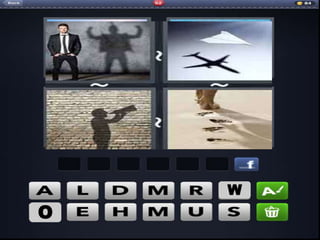
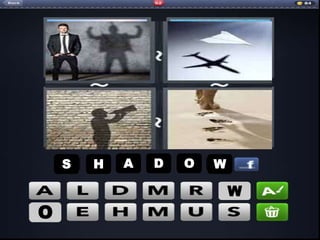
O
W
O
W
O
D
A
H
S W
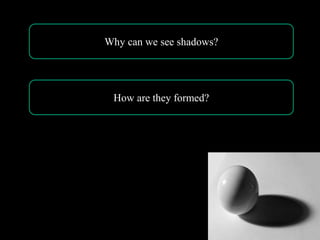
Why can we see shadows?
How are they formed?
Shadow: The making
The Shadows Beyond
• What is formed on the surface of the Earth?
• What is the effect of the shadow of the
Earth on the Moon?
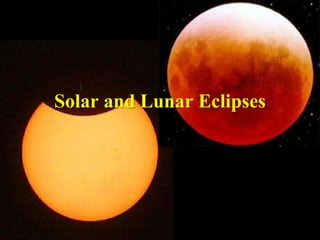
Solar and Lunar Eclipses
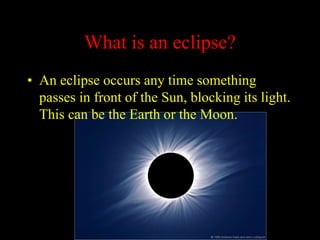
What is an eclipse?
• An eclipse occurs any time something
passes in front of the Sun, blocking its light.
This can be the Earth or the Moon.
Types of eclipses
• Lunar Eclipse- When the Earth casts a shadow
on the moon, causing the moon to go dark.
Earth comes between the Sun and the Moon
and casts a shadow on the Moon (Full Moon)
• Solar Eclipse- When the Moon casts a shadow
on the Earth, causing the sun to go dark.
The Moon comes between the Sun and Earth and
casts a shadow on part of Earth (New Moon)
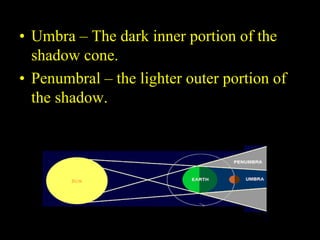
• Umbra – The dark inner portion of the
shadow cone.
• Penumbral – the lighter outer portion of
the shadow.
Types of Solar Eclipses
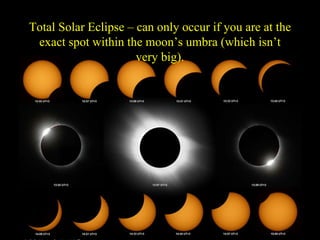
Total Solar Eclipse – can only occur if you are at the
exact spot within the moon’s umbra (which isn’t
very big).
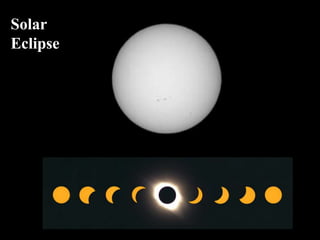
Solar
Eclipse
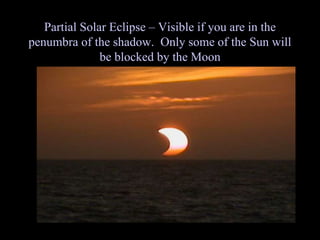
Partial Solar Eclipse – Visible if you are in the
penumbra of the shadow. Only some of the Sun will
be blocked by the Moon
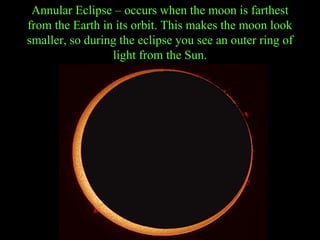
Annular Eclipse – occurs when the moon is farthest
from the Earth in its orbit. This makes the moon look
smaller, so during the eclipse you see an outer ring of
light from the Sun.
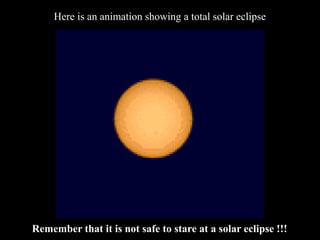
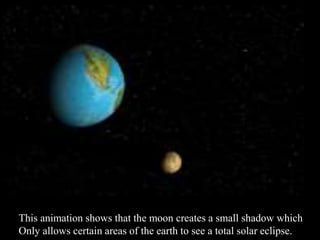
Here is an animation showing a total solar eclipse
Remember that it is not safe to stare at a solar eclipse !!!
This animation shows that the moon creates a small shadow which
Only allows certain areas of the earth to see a total solar eclipse.
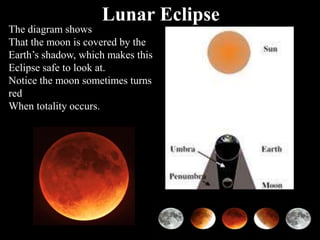
Lunar Eclipse
The diagram shows
That the moon is covered by the
Earth’s shadow, which makes this
Eclipse safe to look at.
Notice the moon sometimes turns
red
When totality occurs.
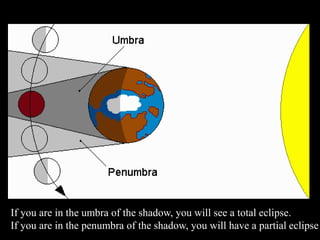
If you are in the umbra of the shadow, you will see a total eclipse.
If you are in the penumbra of the shadow, you will have a partial eclipse
Types of Lunar Eclipses
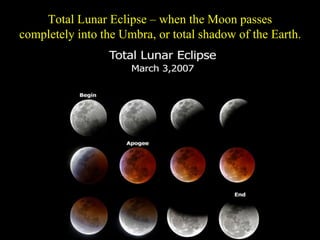
Total Lunar Eclipse – when the Moon passes
completely into the Umbra, or total shadow of the Earth.
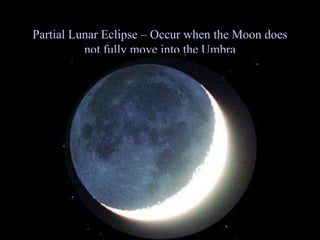
Partial Lunar Eclipse – Occur when the Moon does
not fully move into the Umbra
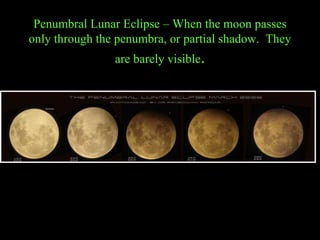
Penumbral Lunar Eclipse – When the moon passes
only through the penumbra, or partial shadow. They
are barely visible.
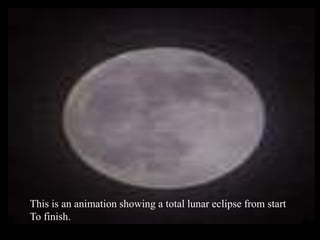
This is an animation showing a total lunar eclipse from start
To finish.
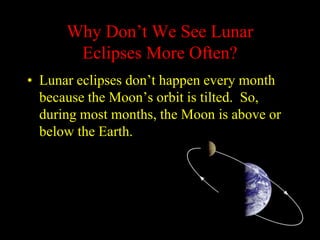
Why Don’t We See Lunar
Eclipses More Often?
• Lunar eclipses don’t happen every month
because the Moon’s orbit is tilted. So,
during most months, the Moon is above or
below the Earth.
Let’s Answer!
• How does solar eclipse happen?
• What are the different types of solar
eclipse?
• In what phase of the moon does a solar
eclipse occur?
• In what time of the day does solar eclipse
occur?
Let’s Answer!
• How does lunar eclipse happen?
• What are the different types of lunar
eclipse?
• In what phase of the moon does a lunar
eclipse occur?
• In what time of the day does lunar eclipse
occur?
Group Presentation
• Criteria
Presentation: 15 points
Correctness: 15 points
Group Presentation: 12 points
Time Bound: 8 points
Total Points: 50 points
Assignment

Final PPT_eclipse.ppt

  • 2.
  • 3.
  • 4.
    Why can wesee shadows? How are they formed?
  • 5.
  • 6.
  • 7.
    • What isformed on the surface of the Earth? • What is the effect of the shadow of the Earth on the Moon?
  • 8.
  • 9.
    What is aneclipse? • An eclipse occurs any time something passes in front of the Sun, blocking its light. This can be the Earth or the Moon.
  • 10.
    Types of eclipses •Lunar Eclipse- When the Earth casts a shadow on the moon, causing the moon to go dark. Earth comes between the Sun and the Moon and casts a shadow on the Moon (Full Moon) • Solar Eclipse- When the Moon casts a shadow on the Earth, causing the sun to go dark. The Moon comes between the Sun and Earth and casts a shadow on part of Earth (New Moon)
  • 11.
    • Umbra –The dark inner portion of the shadow cone. • Penumbral – the lighter outer portion of the shadow.
  • 12.
  • 13.
    Total Solar Eclipse– can only occur if you are at the exact spot within the moon’s umbra (which isn’t very big).
  • 14.
  • 15.
    Partial Solar Eclipse– Visible if you are in the penumbra of the shadow. Only some of the Sun will be blocked by the Moon
  • 16.
    Annular Eclipse –occurs when the moon is farthest from the Earth in its orbit. This makes the moon look smaller, so during the eclipse you see an outer ring of light from the Sun.
  • 17.
    Here is ananimation showing a total solar eclipse Remember that it is not safe to stare at a solar eclipse !!!
  • 18.
    This animation showsthat the moon creates a small shadow which Only allows certain areas of the earth to see a total solar eclipse.
  • 19.
    Lunar Eclipse The diagramshows That the moon is covered by the Earth’s shadow, which makes this Eclipse safe to look at. Notice the moon sometimes turns red When totality occurs.
  • 20.
    If you arein the umbra of the shadow, you will see a total eclipse. If you are in the penumbra of the shadow, you will have a partial eclipse
  • 21.
  • 22.
    Total Lunar Eclipse– when the Moon passes completely into the Umbra, or total shadow of the Earth.
  • 23.
    Partial Lunar Eclipse– Occur when the Moon does not fully move into the Umbra
  • 24.
    Penumbral Lunar Eclipse– When the moon passes only through the penumbra, or partial shadow. They are barely visible.
  • 25.
    This is ananimation showing a total lunar eclipse from start To finish.
  • 26.
    Why Don’t WeSee Lunar Eclipses More Often? • Lunar eclipses don’t happen every month because the Moon’s orbit is tilted. So, during most months, the Moon is above or below the Earth.
  • 27.
    Let’s Answer! • Howdoes solar eclipse happen? • What are the different types of solar eclipse? • In what phase of the moon does a solar eclipse occur? • In what time of the day does solar eclipse occur?
  • 28.
    Let’s Answer! • Howdoes lunar eclipse happen? • What are the different types of lunar eclipse? • In what phase of the moon does a lunar eclipse occur? • In what time of the day does lunar eclipse occur?
  • 29.
    Group Presentation • Criteria Presentation:15 points Correctness: 15 points Group Presentation: 12 points Time Bound: 8 points Total Points: 50 points
  • 30.