H.R. & Social Media: Insights & Advice April 27, 2010
Agenda Legal Risks Associated with Social Media Managing the Legal Risks
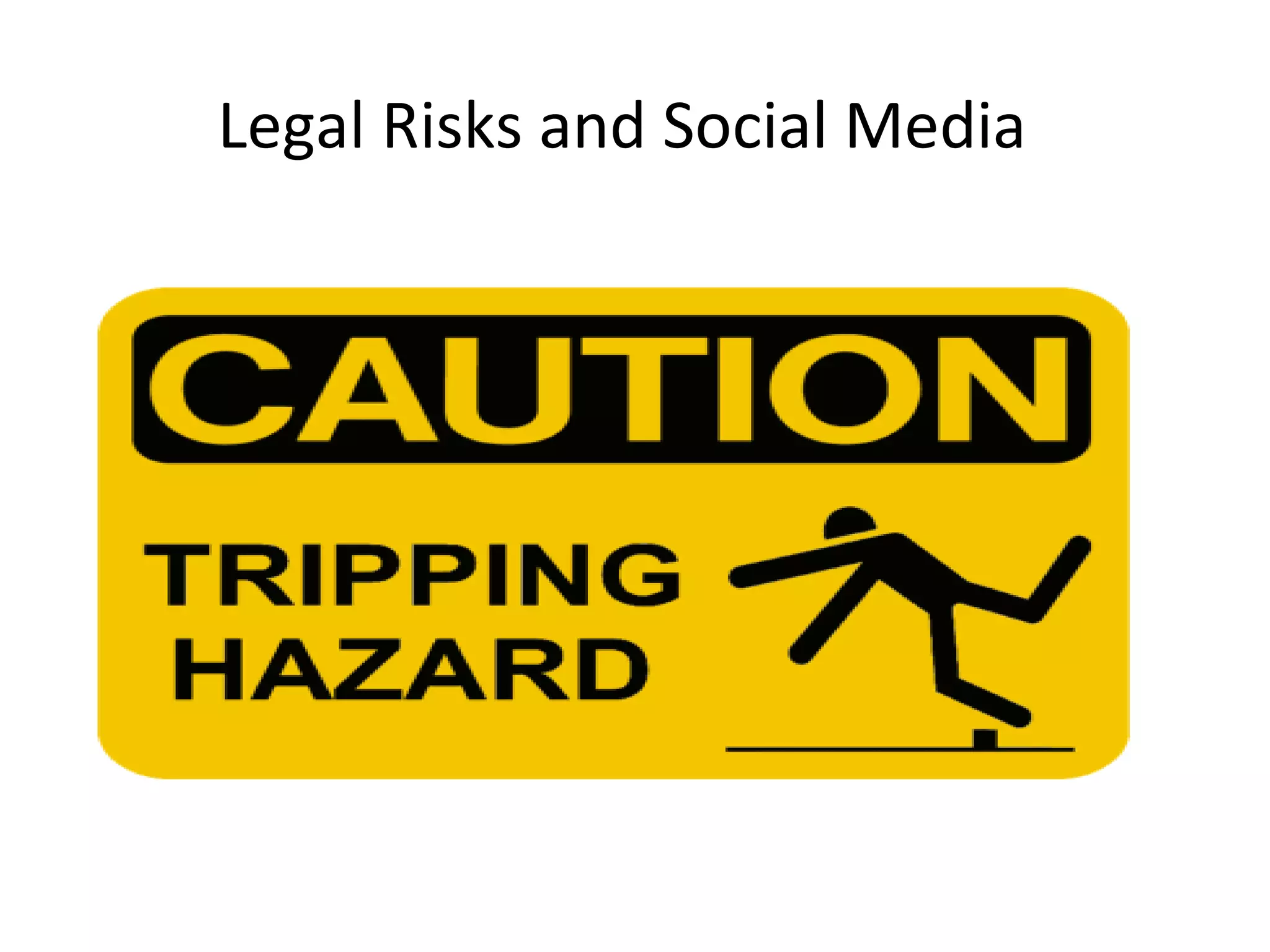
Legal Risks and Social Media
Key Legal Risks for Businesses   Hiring Employee Privacy Discrimination/Harassment Wrongful Termination Defamation Disclosure of Trade Secrets, Proprietary or Confidential Information Unauthorized Use of Copyrighted Material/Trademarks
Employee Privacy  While several cases have held that employees do not have a reasonable expectation of privacy in email or other content sent or received from the employer’s computer system,  Courts are increasingly taking into account whether an employer has a policy  that specifically warns employees that their electronic communications and internet activity will be monitored.
Stengart v. Loving Care Agency,  2010 N.J. LEXIS 241 (N.J. Mar. 30, 2010)   The New Jersey Supreme Court  found that despite the employer's written policy that stated the “company reserves and will exercise the right to review, audit, intercept, access, and disclose all matters on the company's media systems and services at any time, with or without notice” the Plaintiff had a reasonable exception of privacy in emails exchanged  with her attorney  from her password protected Yahoo account from her work issued laptop.  However, the Court also held, “ Companies  can adopt lawful policies relating to computer use to protect the assets, reputation, and productivity of a business and to ensure compliance with legitimate corporate polices…. [and] may discipline employees and, when appropriate, terminate them, for violating proper workplace rules.”
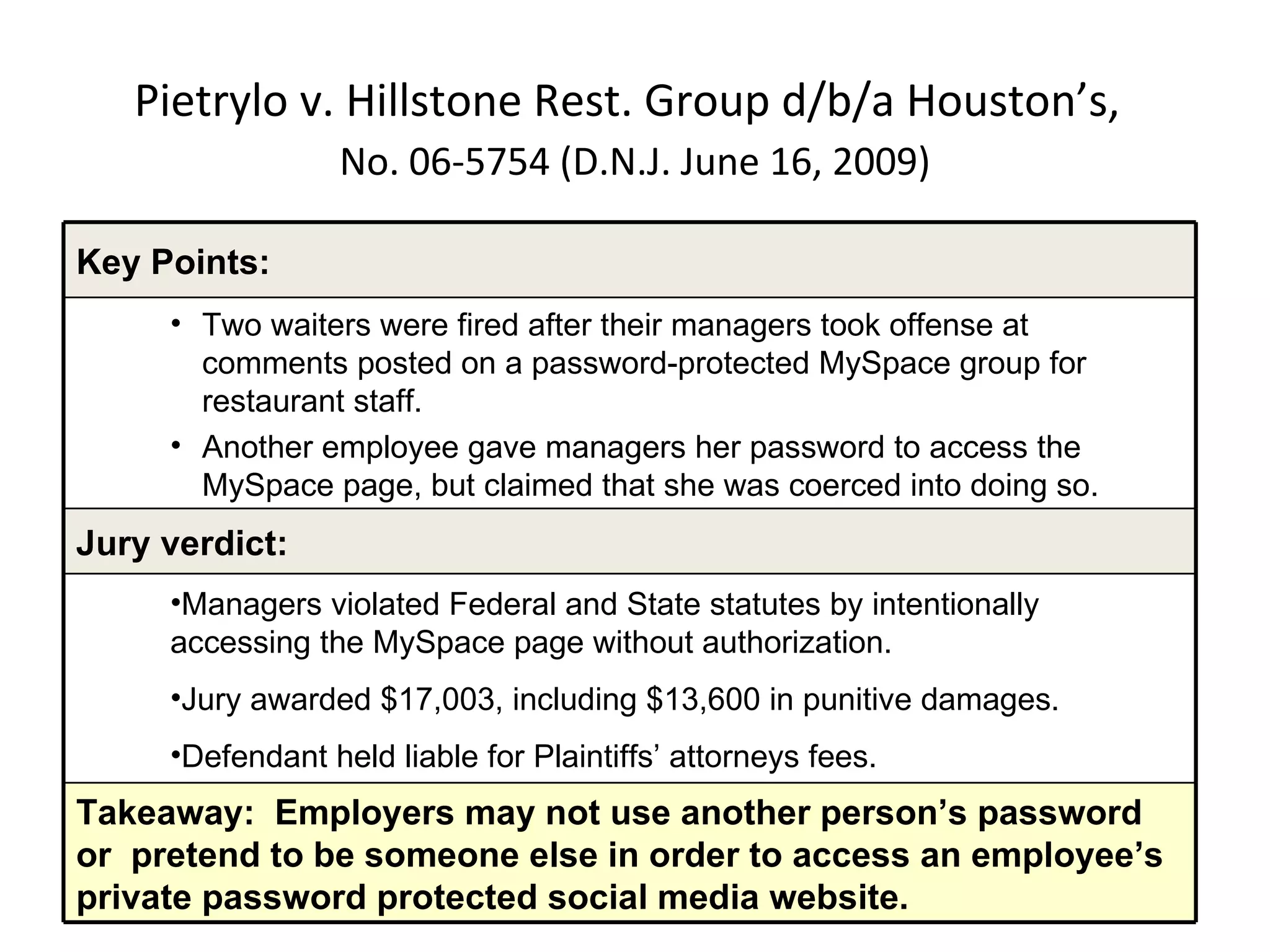
Pietrylo v. Hillstone Rest. Group d/b/a Houston’s,   No. 06-5754 (D.N.J. June 16, 2009) Takeaway:  Employers may not use another person’s password or  pretend to be someone else in order to access an employee’s private password protected social media website. Managers violated Federal and State statutes by intentionally accessing the MySpace page without authorization. Jury awarded $17,003, including $13,600 in punitive damages. Defendant held liable for Plaintiffs’ attorneys fees. Jury verdict: Two waiters were fired after their managers took offense at comments posted on a password-protected MySpace group for restaurant staff. Another employee gave managers her password to access the MySpace page, but claimed that she was coerced into doing so. Key Points:
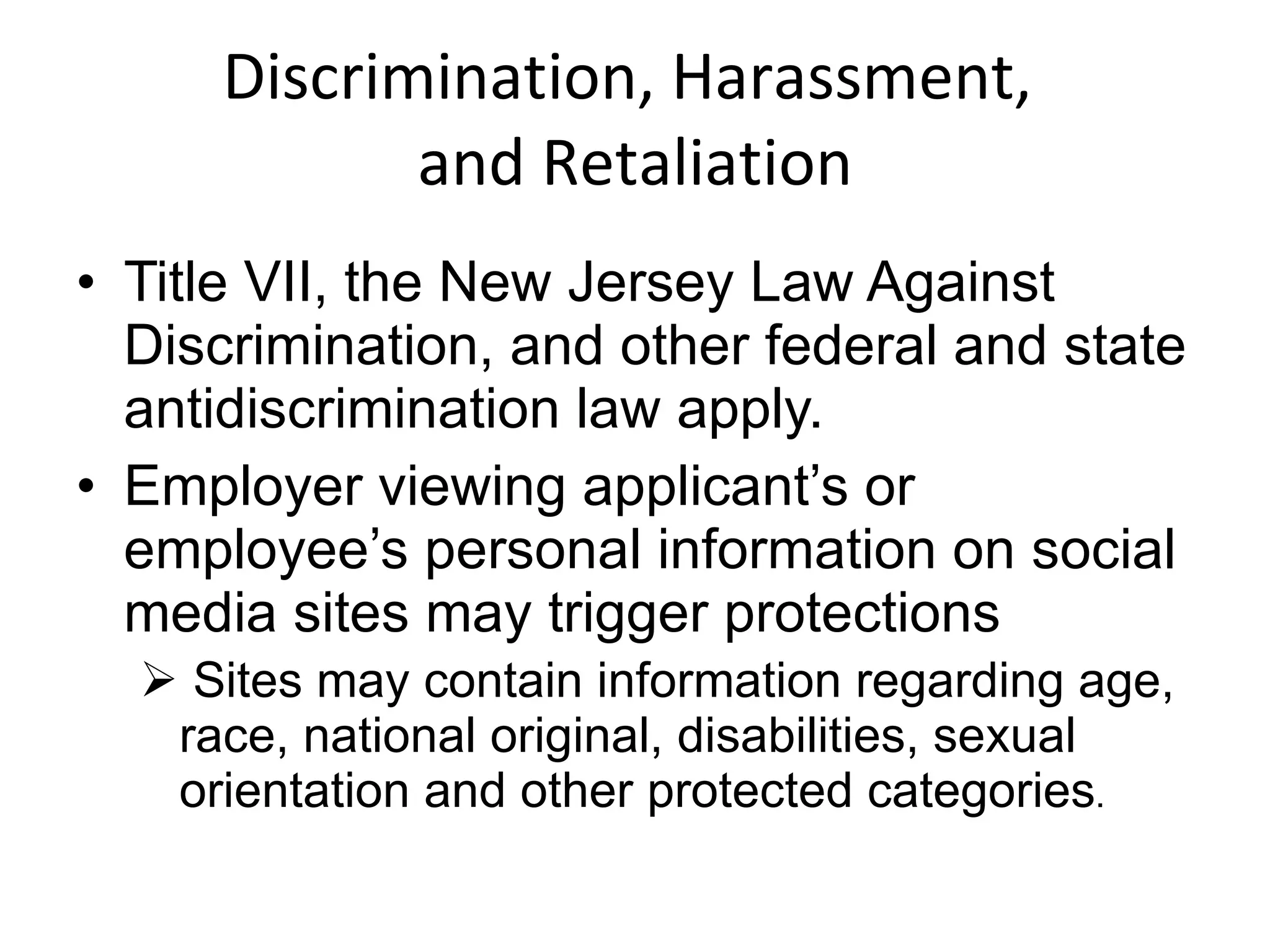
Discrimination, Harassment,  and Retaliation Title VII, the New Jersey Law Against Discrimination, and other federal and state antidiscrimination law apply.  Employer viewing applicant’s or employee’s personal information on social media sites may trigger protections Sites may contain information regarding age, race, national original, disabilities, sexual orientation and other protected categories .
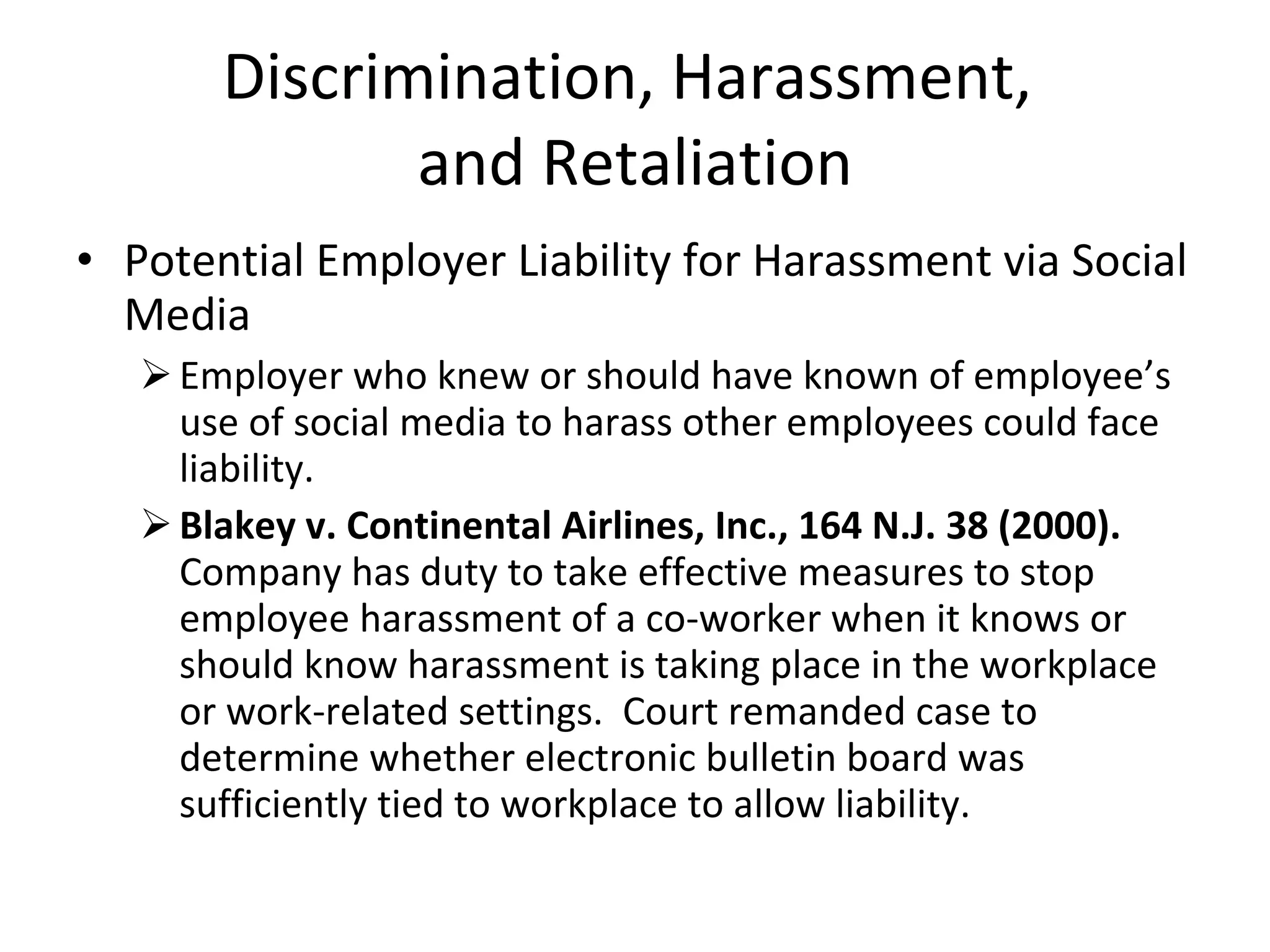
Discrimination, Harassment,  and Retaliation Potential Employer Liability for Harassment via Social Media Employer who knew or should have known of employee’s use of social media to harass other employees could face liability. Blakey v. Continental Airlines, Inc., 164 N.J. 38 (2000).   Company has duty to take effective measures to stop employee harassment of a co-worker when it knows or should know harassment is taking place in the workplace or work-related settings.  Court remanded case to determine whether electronic bulletin board was sufficiently tied to workplace to allow liability.
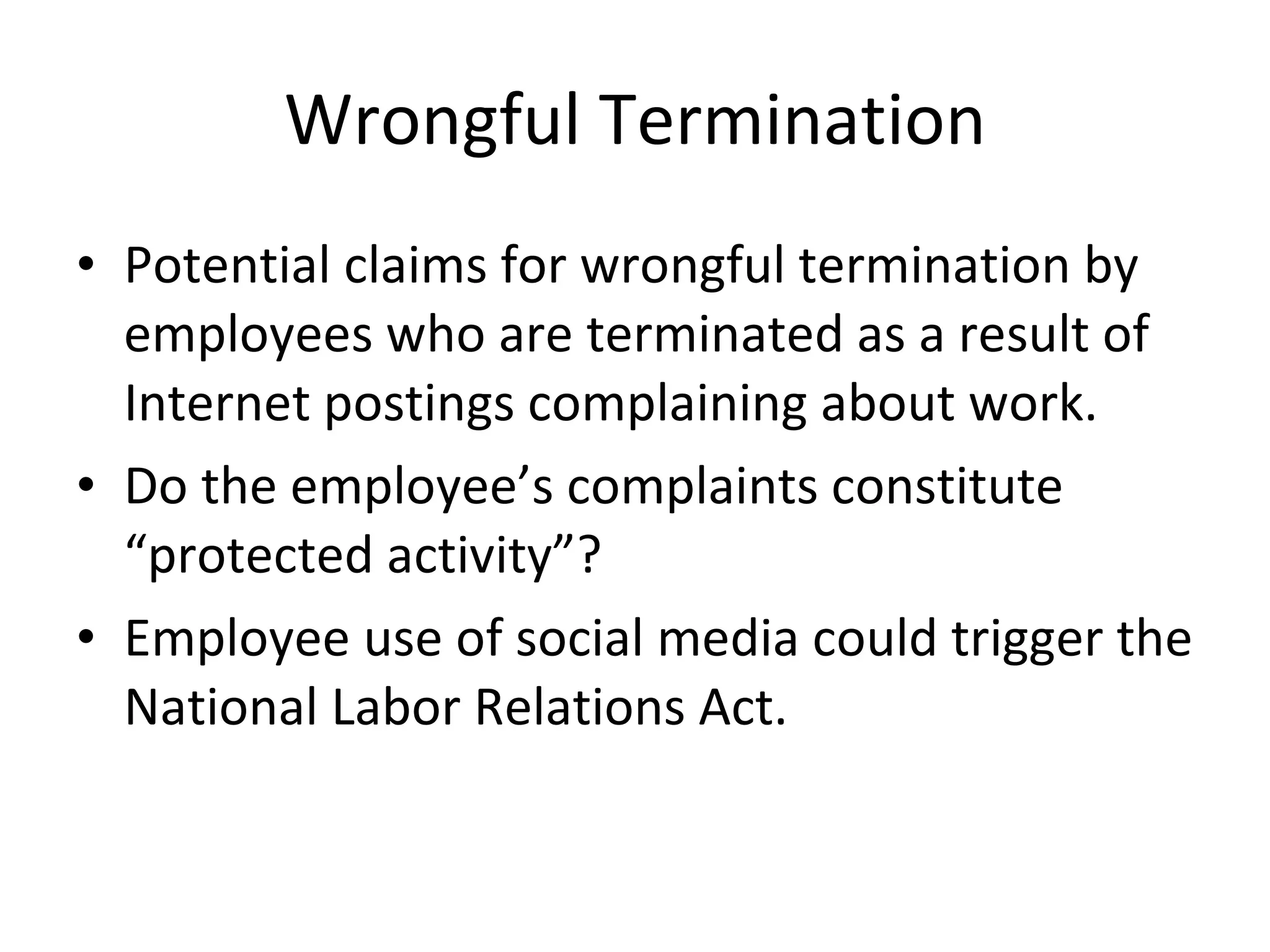
Wrongful Termination Potential claims for wrongful termination by employees who are terminated as a result of Internet postings complaining about work. Do the employee’s complaints constitute “protected activity”?  Employee use of social media could trigger the National Labor Relations Act.
Managing the Legal Risks
 
 
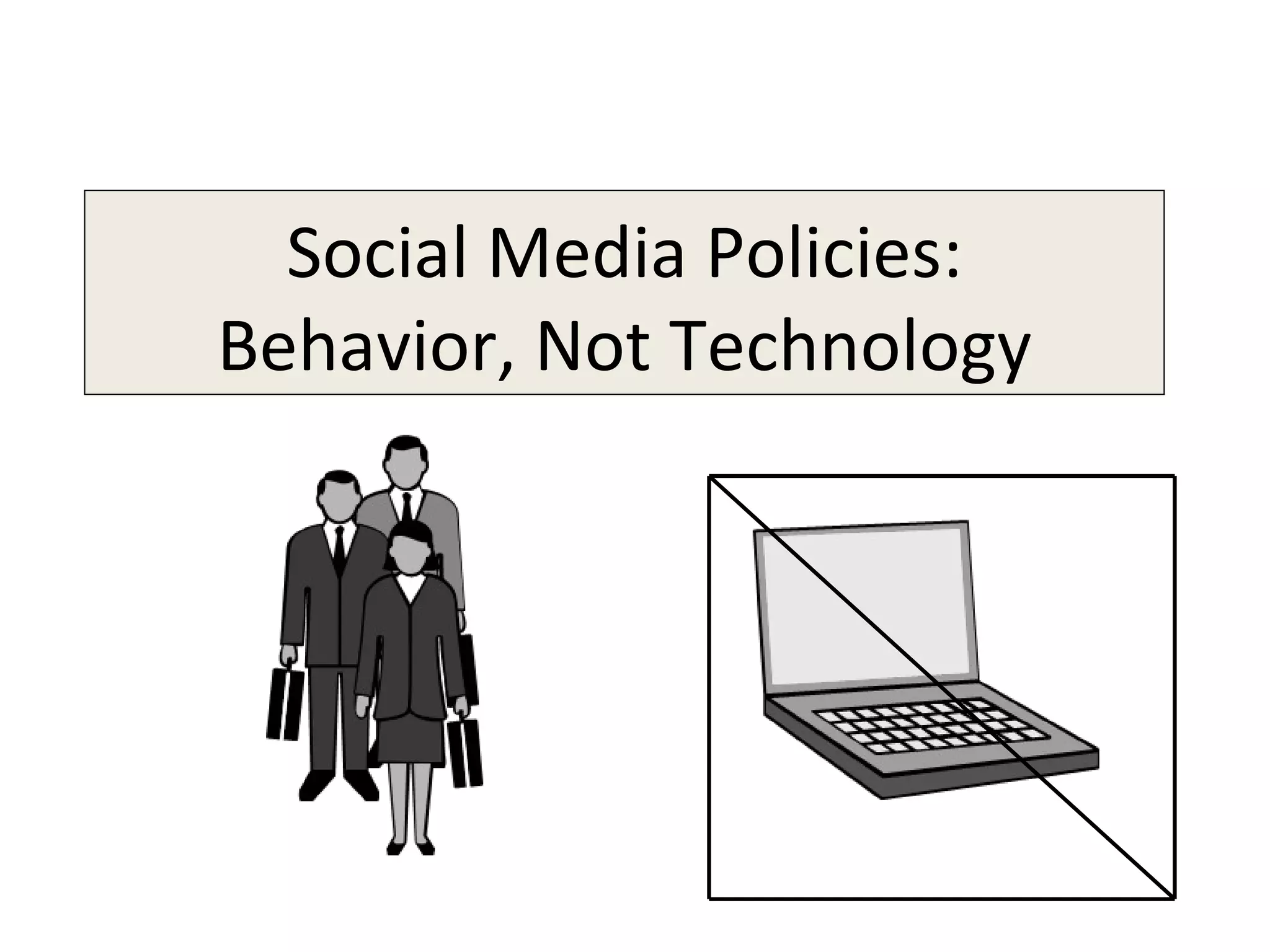
Social Media Policies: Behavior, Not Technology
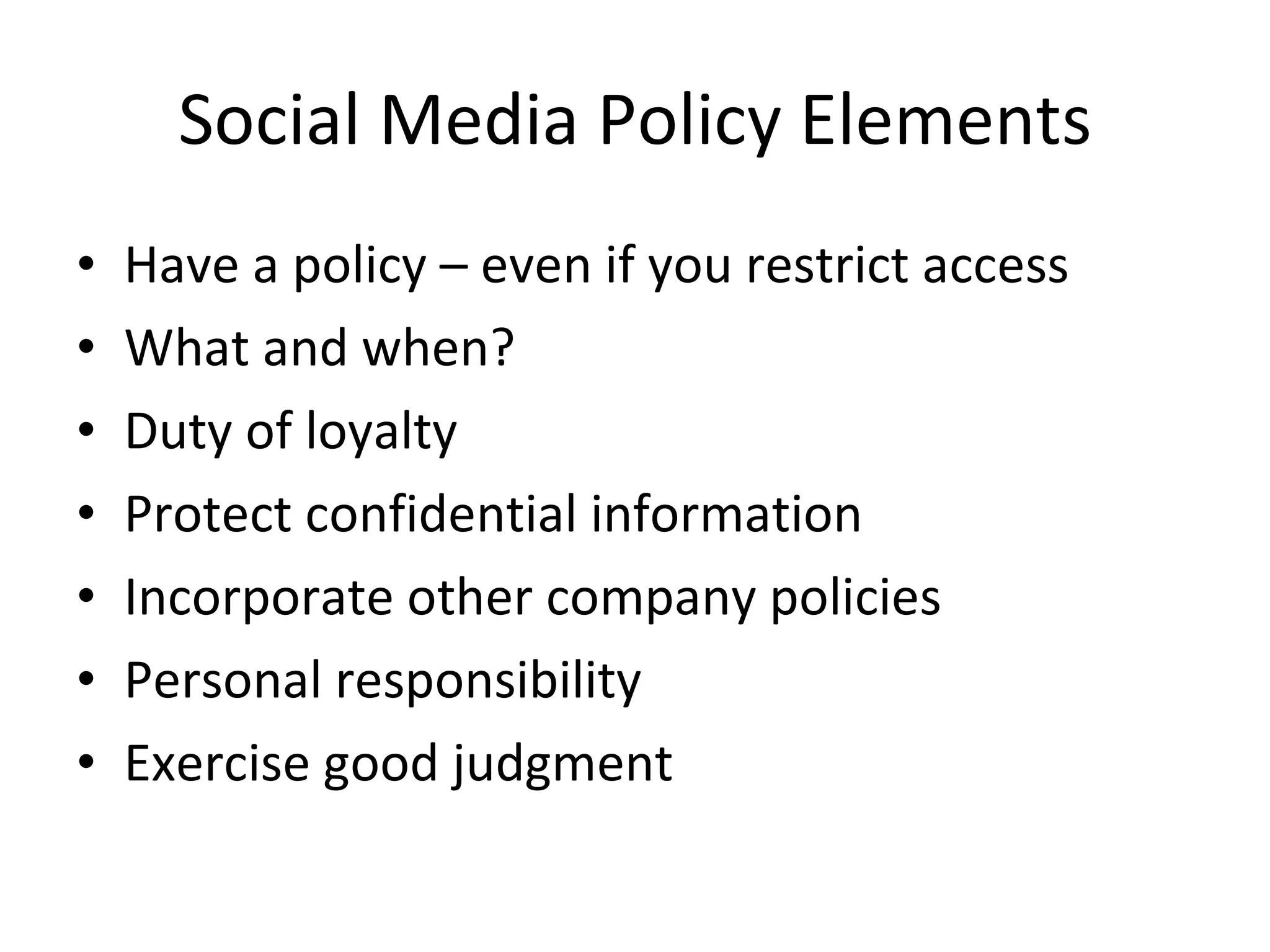
Social Media Policy Elements Have a policy – even if you restrict access What and when? Duty of loyalty Protect confidential information  Incorporate other company policies Personal responsibility Exercise good judgment
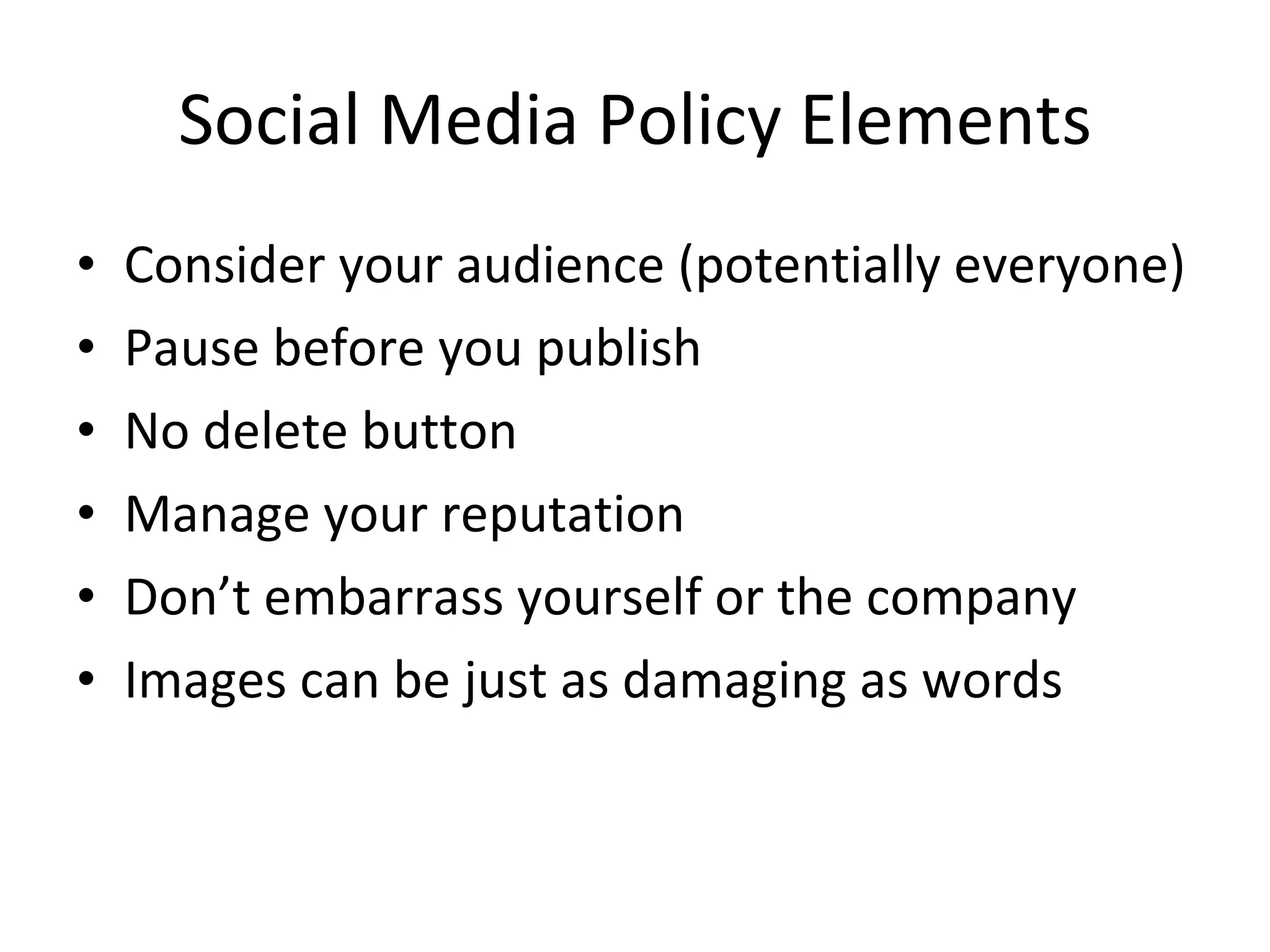
Social Media Policy Elements Consider your audience (potentially everyone) Pause before you publish No delete button Manage your reputation  Don’t embarrass yourself or the company Images can be just as damaging as words
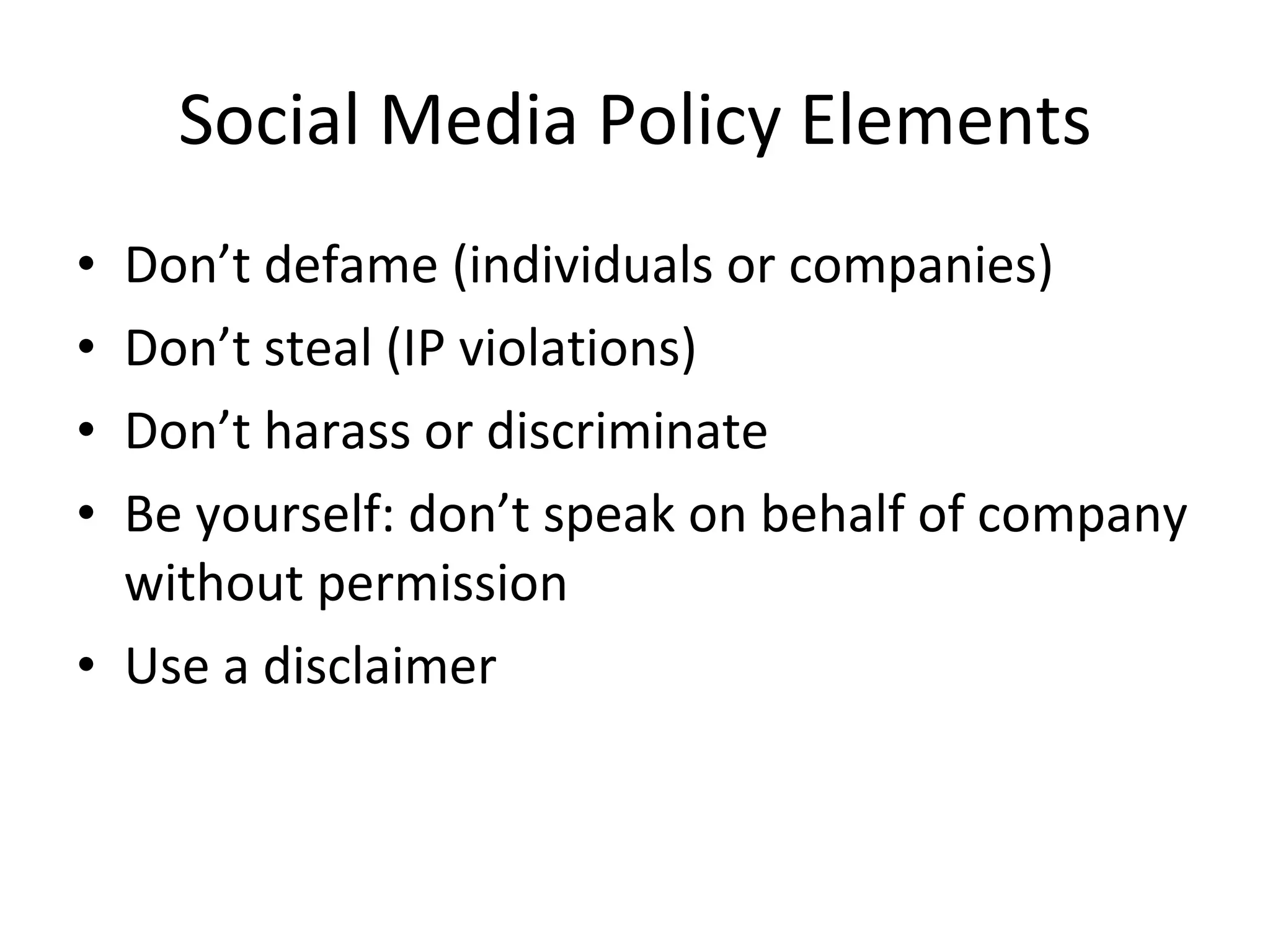
Social Media Policy Elements Don’t defame (individuals or companies) Don’t steal (IP violations) Don’t harass or discriminate  Be yourself: don’t speak on behalf of company without permission Use a disclaimer
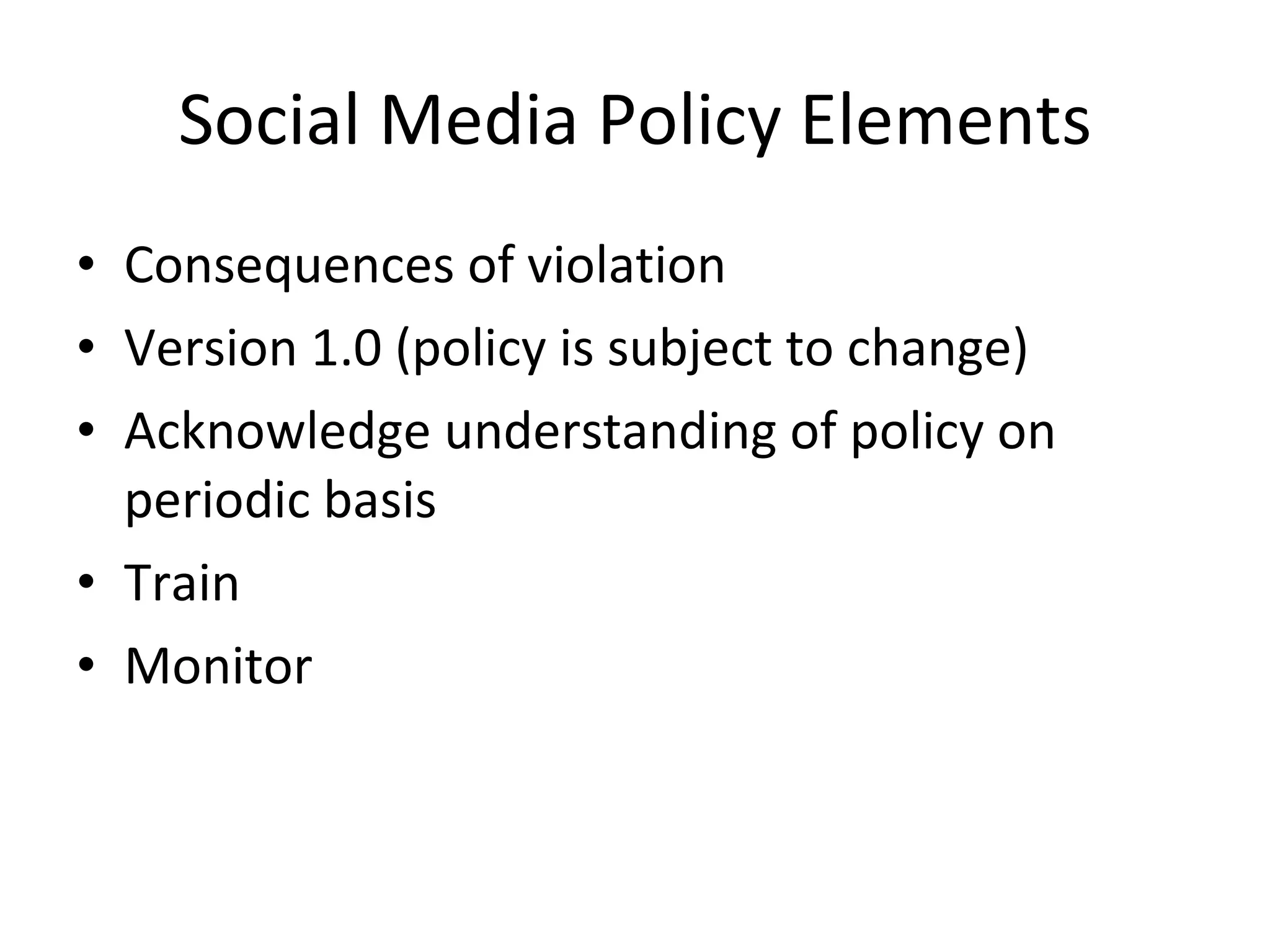
Social Media Policy Elements Consequences of violation Version 1.0 (policy is subject to change) Acknowledge understanding of policy on periodic basis Train Monitor
ADDITIONAL INFORMATION   Why Companies Should Consider Adopting a Social Media Policy  http://www.gibbonslaw.com/news_publications/articles.php?action=display_publication&publication_id=2869&practice_id=33 Practice Tips for a Clear and Understandable Electronic Systems Policy in the Workplace  http://www.gibbonslaw.com/files/1270755932.pdf

Final powerpoint for social media club program

  • 1.
    H.R. & SocialMedia: Insights & Advice April 27, 2010
  • 2.
    Agenda Legal RisksAssociated with Social Media Managing the Legal Risks
  • 3.
    Legal Risks andSocial Media
  • 4.
    Key Legal Risksfor Businesses Hiring Employee Privacy Discrimination/Harassment Wrongful Termination Defamation Disclosure of Trade Secrets, Proprietary or Confidential Information Unauthorized Use of Copyrighted Material/Trademarks
  • 5.
    Employee Privacy While several cases have held that employees do not have a reasonable expectation of privacy in email or other content sent or received from the employer’s computer system, Courts are increasingly taking into account whether an employer has a policy that specifically warns employees that their electronic communications and internet activity will be monitored.
  • 6.
    Stengart v. LovingCare Agency, 2010 N.J. LEXIS 241 (N.J. Mar. 30, 2010) The New Jersey Supreme Court found that despite the employer's written policy that stated the “company reserves and will exercise the right to review, audit, intercept, access, and disclose all matters on the company's media systems and services at any time, with or without notice” the Plaintiff had a reasonable exception of privacy in emails exchanged with her attorney from her password protected Yahoo account from her work issued laptop. However, the Court also held, “ Companies can adopt lawful policies relating to computer use to protect the assets, reputation, and productivity of a business and to ensure compliance with legitimate corporate polices…. [and] may discipline employees and, when appropriate, terminate them, for violating proper workplace rules.”
  • 7.
    Pietrylo v. HillstoneRest. Group d/b/a Houston’s, No. 06-5754 (D.N.J. June 16, 2009) Takeaway: Employers may not use another person’s password or pretend to be someone else in order to access an employee’s private password protected social media website. Managers violated Federal and State statutes by intentionally accessing the MySpace page without authorization. Jury awarded $17,003, including $13,600 in punitive damages. Defendant held liable for Plaintiffs’ attorneys fees. Jury verdict: Two waiters were fired after their managers took offense at comments posted on a password-protected MySpace group for restaurant staff. Another employee gave managers her password to access the MySpace page, but claimed that she was coerced into doing so. Key Points:
  • 8.
    Discrimination, Harassment, and Retaliation Title VII, the New Jersey Law Against Discrimination, and other federal and state antidiscrimination law apply. Employer viewing applicant’s or employee’s personal information on social media sites may trigger protections Sites may contain information regarding age, race, national original, disabilities, sexual orientation and other protected categories .
  • 9.
    Discrimination, Harassment, and Retaliation Potential Employer Liability for Harassment via Social Media Employer who knew or should have known of employee’s use of social media to harass other employees could face liability. Blakey v. Continental Airlines, Inc., 164 N.J. 38 (2000). Company has duty to take effective measures to stop employee harassment of a co-worker when it knows or should know harassment is taking place in the workplace or work-related settings. Court remanded case to determine whether electronic bulletin board was sufficiently tied to workplace to allow liability.
  • 10.
    Wrongful Termination Potentialclaims for wrongful termination by employees who are terminated as a result of Internet postings complaining about work. Do the employee’s complaints constitute “protected activity”? Employee use of social media could trigger the National Labor Relations Act.
  • 11.
  • 12.
  • 13.
  • 14.
    Social Media Policies:Behavior, Not Technology
  • 15.
    Social Media PolicyElements Have a policy – even if you restrict access What and when? Duty of loyalty Protect confidential information Incorporate other company policies Personal responsibility Exercise good judgment
  • 16.
    Social Media PolicyElements Consider your audience (potentially everyone) Pause before you publish No delete button Manage your reputation Don’t embarrass yourself or the company Images can be just as damaging as words
  • 17.
    Social Media PolicyElements Don’t defame (individuals or companies) Don’t steal (IP violations) Don’t harass or discriminate Be yourself: don’t speak on behalf of company without permission Use a disclaimer
  • 18.
    Social Media PolicyElements Consequences of violation Version 1.0 (policy is subject to change) Acknowledge understanding of policy on periodic basis Train Monitor
  • 19.
    ADDITIONAL INFORMATION Why Companies Should Consider Adopting a Social Media Policy http://www.gibbonslaw.com/news_publications/articles.php?action=display_publication&publication_id=2869&practice_id=33 Practice Tips for a Clear and Understandable Electronic Systems Policy in the Workplace http://www.gibbonslaw.com/files/1270755932.pdf