Submarine
Communications
with Fiber Optic
Cables
Connecting the World Under the Sea
Introduction
● Submarine communications, utilizing underwater
cables, are vital for global connectivity, enabling
seamless international data transmission. These
cables ensure reliable and high-capacity
communication channels, essential for sustaining the
interconnected nature of our modern digital
infrastructure.
1. **High Data Transfer Rates:** Fiber optics enable faster data
transmission than traditional cables, supporting higher bandwidths.
2. **Low Latency:** With the speed of light transmission, fiber optic
cables offer minimal delay, crucial for real-time applications.
3. **Reliability:** Fiber optics are resistant to electromagnetic
interference, ensuring reliable and consistent connectivity.
Contrast with Other Technologies:
Compared to copper cables, fiber optics provide faster speeds and
better reliability. Unlike wireless technologies, they are not
susceptible to signal interference and maintain consistent
performance over longer distances..
Advantages of Fiber optics
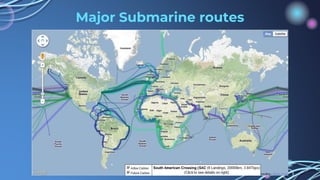
Major Submarine routes
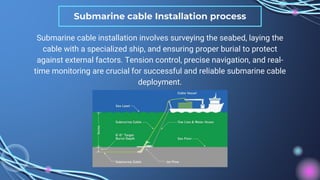
Submarine cable installation involves surveying the seabed, laying the
cable with a specialized ship, and ensuring proper burial to protect
against external factors. Tension control, precise navigation, and real-
time monitoring are crucial for successful and reliable submarine cable
deployment.
Submarine cable Installation process
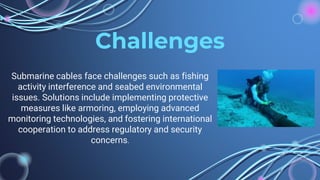
Challenges
Submarine cables face challenges such as fishing
activity interference and seabed environmental
issues. Solutions include implementing protective
measures like armoring, employing advanced
monitoring technologies, and fostering international
cooperation to address regulatory and security
concerns.
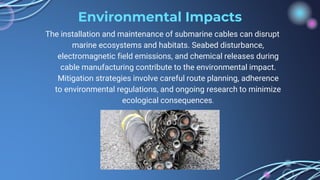
Environmental Impacts
The installation and maintenance of submarine cables can disrupt
marine ecosystems and habitats. Seabed disturbance,
electromagnetic field emissions, and chemical releases during
cable manufacturing contribute to the environmental impact.
Mitigation strategies involve careful route planning, adherence
to environmental regulations, and ongoing research to minimize
ecological consequences.
fiber optic cables in submarine communications.pptx

fiber optic cables in submarine communications.pptx

  • 1.
  • 2.
    Introduction ● Submarine communications,utilizing underwater cables, are vital for global connectivity, enabling seamless international data transmission. These cables ensure reliable and high-capacity communication channels, essential for sustaining the interconnected nature of our modern digital infrastructure.
  • 3.
    1. **High DataTransfer Rates:** Fiber optics enable faster data transmission than traditional cables, supporting higher bandwidths. 2. **Low Latency:** With the speed of light transmission, fiber optic cables offer minimal delay, crucial for real-time applications. 3. **Reliability:** Fiber optics are resistant to electromagnetic interference, ensuring reliable and consistent connectivity. Contrast with Other Technologies: Compared to copper cables, fiber optics provide faster speeds and better reliability. Unlike wireless technologies, they are not susceptible to signal interference and maintain consistent performance over longer distances.. Advantages of Fiber optics
  • 4.
  • 5.
    Submarine cable installationinvolves surveying the seabed, laying the cable with a specialized ship, and ensuring proper burial to protect against external factors. Tension control, precise navigation, and real- time monitoring are crucial for successful and reliable submarine cable deployment. Submarine cable Installation process
  • 6.
    Challenges Submarine cables facechallenges such as fishing activity interference and seabed environmental issues. Solutions include implementing protective measures like armoring, employing advanced monitoring technologies, and fostering international cooperation to address regulatory and security concerns.
  • 7.
    Environmental Impacts The installationand maintenance of submarine cables can disrupt marine ecosystems and habitats. Seabed disturbance, electromagnetic field emissions, and chemical releases during cable manufacturing contribute to the environmental impact. Mitigation strategies involve careful route planning, adherence to environmental regulations, and ongoing research to minimize ecological consequences.