GRACE COLLEGE OF
EDUCATION
PADANTHALUMOODU
ASSESSMENT FOR LEARNING
SEMINAR
TOPIC: Feedback Through Marking , Peer And
Self Assessment
Submitted By,
Tresa Mary Augustine
Dept. of English
Content
 Introduction
 Feedback through Marking
 Principles of Good Feedback Practices
 Peer Assessment
 Self-Assessment
 Uses of Peer and Self-Assessment
 Conclusion
 References
INTRODUCTION
 Feedback is a powerful tool in the educational process. It
informs students about their progress, guides them toward
improvement, and motivates them to achieve better
outcomes.
 Effective feedback helps bridge the gap between current
performance and desired goals.
 Feedback can take multiple forms, including marking,
peer assessment, and self-assessment. Each form plays a
unique role in developing students’ learning and self-
regulation skills.
Feedback through Marking
 Marking is the process of evaluating students' work and assigning
scores or grades. However, it is more than just assigning numbers; it
serves as a form of feedback that provides learners with meaningful
information about their performance.
 Characteristics of Feedback through Marking:
 Provides specific, detailed information about performance.
 Identifies strengths and weaknesses.
 Offers guidance for improvement.
 Delivered in a timely manner.
 Encourages student engagement and reflection.
 Purpose:
 To inform students of their progress.
 To highlight learning gaps.
 To motivate continuous improvement.
 To provide teachers with insights into student learning.
Principles Of Good Feedback
Practices
Effective feedback should enhance student learning and
development. Certain principles ensure that feedback is meaningful
and productive.
 PRINCIPLES:
1. Clarity: Feedback should be simple,
understandable, and free of ambiguity.
2. Timeliness: Given promptly to allow immediate
application of suggestions.
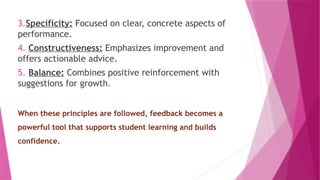
3.Specificity: Focused on clear, concrete aspects of
performance.
4. Constructiveness: Emphasizes improvement and
offers actionable advice.
5. Balance: Combines positive reinforcement with
suggestions for growth.
When these principles are followed, feedback becomes a
powerful tool that supports student learning and builds
confidence.
Peer Assessment
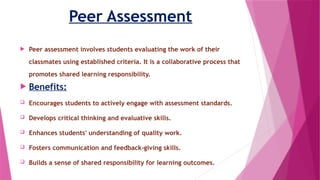
 Peer assessment involves students evaluating the work of their
classmates using established criteria. It is a collaborative process that
promotes shared learning responsibility.
 Benefits:
 Encourages students to actively engage with assessment standards.
 Develops critical thinking and evaluative skills.
 Enhances students' understanding of quality work.
 Fosters communication and feedback-giving skills.
 Builds a sense of shared responsibility for learning outcomes.
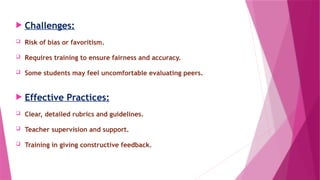
 Challenges:
 Risk of bias or favoritism.
 Requires training to ensure fairness and accuracy.
 Some students may feel uncomfortable evaluating peers.
 Effective Practices:
 Clear, detailed rubrics and guidelines.
 Teacher supervision and support.
 Training in giving constructive feedback.
Self-Assessment
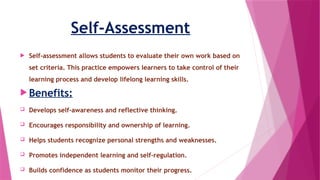
 Self-assessment allows students to evaluate their own work based on
set criteria. This practice empowers learners to take control of their
learning process and develop lifelong learning skills.
 Benefits:
 Develops self-awareness and reflective thinking.
 Encourages responsibility and ownership of learning.
 Helps students recognize personal strengths and weaknesses.
 Promotes independent learning and self-regulation.
 Builds confidence as students monitor their progress.
 Challenges:
 Students may struggle with objectivity.
 Requires honesty and self-discipline.
 Needs proper training and scaffolding.
 Effective Practices:
 Use of structured rubrics.
 Reflective questions and prompts.
 Ongoing teacher support and guidance.
Uses of Peer and Self-Assessment
A. Uses of Peer Assessment:
1. Promotes Active Engagement : Students actively participate
in learning by evaluating peers’ work.
2. Develops Critical Thinking : Encourages analysis, evaluation,
and reasoning as students assess others .
3. Enhances Understanding of Assessment Criteria :
Deepens students' comprehension of what constitutes quality
work.
4. Builds Responsibility and Accountability : Encourages
students to take responsibility for their learning community.
5. Supports Collaborative Learning : Fosters teamwork,
communication, and mutual learning.
B. Uses of Self-Assessment:
1. Develops Self-Regulation and Metacognition : Helps
students reflect on their learning strategies and outcomes.
2. Promotes Lifelong Learning Skills : Builds independence
and the habit of continual self-improvement.
3. Encourages Goal Setting : Helps students set specific
learning goals based on self-reflection.
4. Fosters Motivation and Engagement : Motivates students
through recognition of personal progress.
5. Provides Insight for Teachers : Gives teachers valuable
information about students’ self-perceived learning progress.
Conclusion
 Feedback is central to effective teaching and learning. Through
marking, students receive formal evaluations of their work.
 Peer and self-assessment further empower students by involving
them actively in the assessment process, fostering responsibility,
reflection, and self-regulation. When guided properly, these
assessment methods encourage students to engage deeply with
their learning, understand expectations, and work towards
continuous improvement.
 Educators must ensure that feedback is clear, constructive, and
supportive to maximize its positive impact on student growth.
References
 Books:
 Black, P., & Wiliam, D. (1998). Inside the Black Box: Raising Standards
through Classroom Assessment. Phi Delta Kappan.
 Brookhart, S. M. (2017). How to Give Effective Feedback to Your Students
(2nd ed.). ASCD.
 Website:
 University of Reading. (n.d.). Feedback and Assessment. Retrieved from:
https://www.reading.ac.uk/feedback-assessment

THANK YOU

Feedback Through Marking,Peer and Self Assessment.pptx

  • 1.
    GRACE COLLEGE OF EDUCATION PADANTHALUMOODU ASSESSMENTFOR LEARNING SEMINAR TOPIC: Feedback Through Marking , Peer And Self Assessment Submitted By, Tresa Mary Augustine Dept. of English
  • 2.
    Content  Introduction  Feedbackthrough Marking  Principles of Good Feedback Practices  Peer Assessment  Self-Assessment  Uses of Peer and Self-Assessment  Conclusion  References
  • 3.
    INTRODUCTION  Feedback isa powerful tool in the educational process. It informs students about their progress, guides them toward improvement, and motivates them to achieve better outcomes.  Effective feedback helps bridge the gap between current performance and desired goals.  Feedback can take multiple forms, including marking, peer assessment, and self-assessment. Each form plays a unique role in developing students’ learning and self- regulation skills.
  • 4.
    Feedback through Marking Marking is the process of evaluating students' work and assigning scores or grades. However, it is more than just assigning numbers; it serves as a form of feedback that provides learners with meaningful information about their performance.  Characteristics of Feedback through Marking:  Provides specific, detailed information about performance.  Identifies strengths and weaknesses.  Offers guidance for improvement.  Delivered in a timely manner.  Encourages student engagement and reflection.
  • 5.
     Purpose:  Toinform students of their progress.  To highlight learning gaps.  To motivate continuous improvement.  To provide teachers with insights into student learning.
  • 6.
    Principles Of GoodFeedback Practices Effective feedback should enhance student learning and development. Certain principles ensure that feedback is meaningful and productive.  PRINCIPLES: 1. Clarity: Feedback should be simple, understandable, and free of ambiguity. 2. Timeliness: Given promptly to allow immediate application of suggestions.
  • 7.
    3.Specificity: Focused onclear, concrete aspects of performance. 4. Constructiveness: Emphasizes improvement and offers actionable advice. 5. Balance: Combines positive reinforcement with suggestions for growth. When these principles are followed, feedback becomes a powerful tool that supports student learning and builds confidence.
  • 8.
    Peer Assessment  Peerassessment involves students evaluating the work of their classmates using established criteria. It is a collaborative process that promotes shared learning responsibility.  Benefits:  Encourages students to actively engage with assessment standards.  Develops critical thinking and evaluative skills.  Enhances students' understanding of quality work.  Fosters communication and feedback-giving skills.  Builds a sense of shared responsibility for learning outcomes.
  • 9.
     Challenges:  Riskof bias or favoritism.  Requires training to ensure fairness and accuracy.  Some students may feel uncomfortable evaluating peers.  Effective Practices:  Clear, detailed rubrics and guidelines.  Teacher supervision and support.  Training in giving constructive feedback.
  • 10.
    Self-Assessment  Self-assessment allowsstudents to evaluate their own work based on set criteria. This practice empowers learners to take control of their learning process and develop lifelong learning skills.  Benefits:  Develops self-awareness and reflective thinking.  Encourages responsibility and ownership of learning.  Helps students recognize personal strengths and weaknesses.  Promotes independent learning and self-regulation.  Builds confidence as students monitor their progress.
  • 11.
     Challenges:  Studentsmay struggle with objectivity.  Requires honesty and self-discipline.  Needs proper training and scaffolding.  Effective Practices:  Use of structured rubrics.  Reflective questions and prompts.  Ongoing teacher support and guidance.
  • 12.
    Uses of Peerand Self-Assessment A. Uses of Peer Assessment: 1. Promotes Active Engagement : Students actively participate in learning by evaluating peers’ work. 2. Develops Critical Thinking : Encourages analysis, evaluation, and reasoning as students assess others . 3. Enhances Understanding of Assessment Criteria : Deepens students' comprehension of what constitutes quality work. 4. Builds Responsibility and Accountability : Encourages students to take responsibility for their learning community. 5. Supports Collaborative Learning : Fosters teamwork, communication, and mutual learning.
  • 13.
    B. Uses ofSelf-Assessment: 1. Develops Self-Regulation and Metacognition : Helps students reflect on their learning strategies and outcomes. 2. Promotes Lifelong Learning Skills : Builds independence and the habit of continual self-improvement. 3. Encourages Goal Setting : Helps students set specific learning goals based on self-reflection. 4. Fosters Motivation and Engagement : Motivates students through recognition of personal progress. 5. Provides Insight for Teachers : Gives teachers valuable information about students’ self-perceived learning progress.
  • 14.
    Conclusion  Feedback iscentral to effective teaching and learning. Through marking, students receive formal evaluations of their work.  Peer and self-assessment further empower students by involving them actively in the assessment process, fostering responsibility, reflection, and self-regulation. When guided properly, these assessment methods encourage students to engage deeply with their learning, understand expectations, and work towards continuous improvement.  Educators must ensure that feedback is clear, constructive, and supportive to maximize its positive impact on student growth.
  • 15.
    References  Books:  Black,P., & Wiliam, D. (1998). Inside the Black Box: Raising Standards through Classroom Assessment. Phi Delta Kappan.  Brookhart, S. M. (2017). How to Give Effective Feedback to Your Students (2nd ed.). ASCD.  Website:  University of Reading. (n.d.). Feedback and Assessment. Retrieved from: https://www.reading.ac.uk/feedback-assessment
  • 16.