FEBRILE CONVULSION
PRESENTER: UNISAA. KANU
FINAL YEAR CLINICAL PEDIATERIC
STUDENT.
- Introduction
- Classification
- Risk factors
- Aetiology
- Pathophysiology
- Clinical presentation
- Differential diagnoses
- Diagnoses
- Management
- Summary
Outline
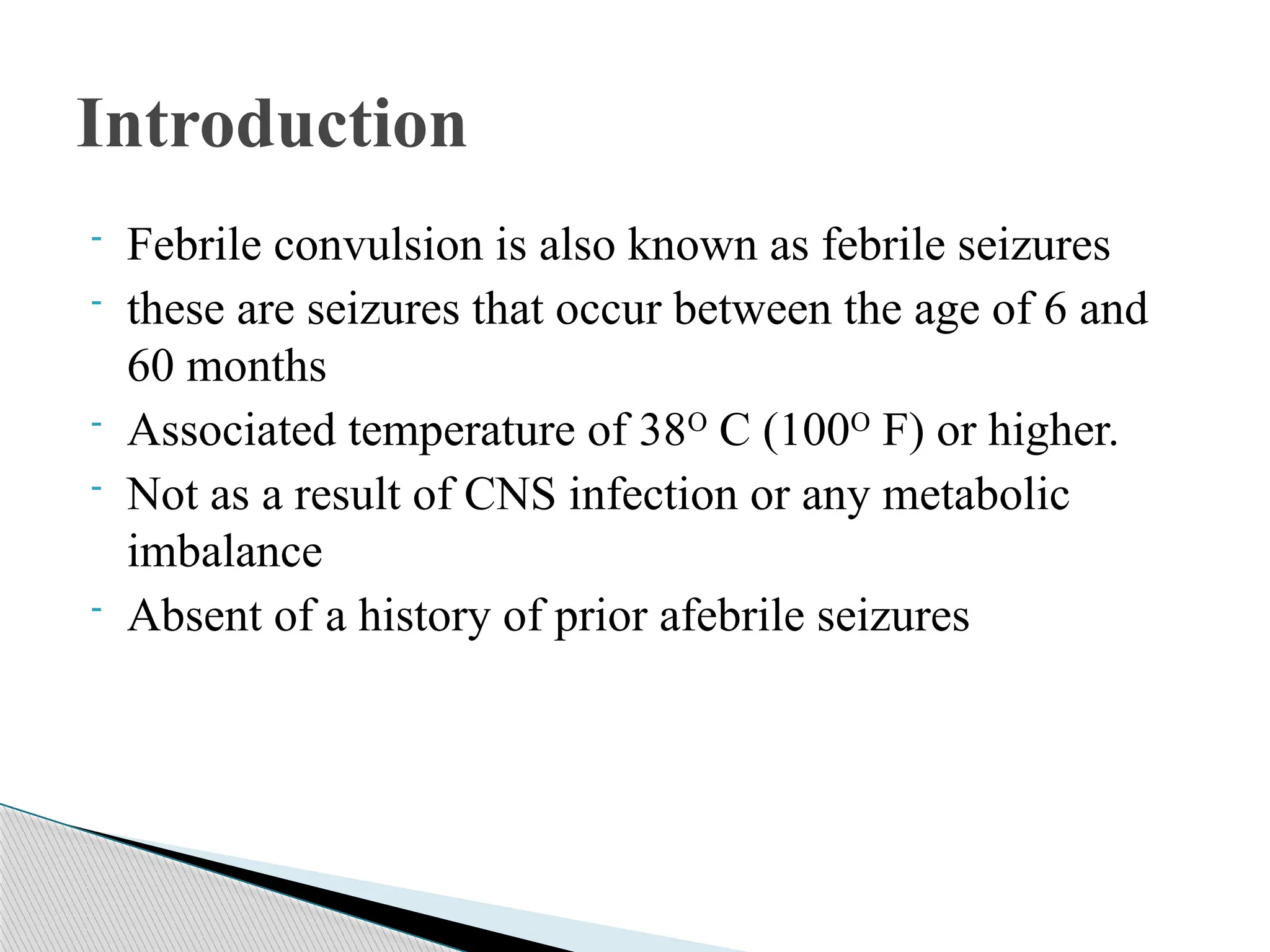
- Febrile convulsion is also known as febrile seizures
- these are seizures that occur between the age of 6 and
60 months
- Associated temperature of 38O
C (100O
F) or higher.
- Not as a result of CNS infection or any metabolic
imbalance
- Absent of a history of prior afebrile seizures
Introduction
Febrile convulsion is classified into simple and complex
seizures.
Simple seizure:
- It is the most common type of febrile seizure
- They are characterize by seizure associated with fever
that is generalize.
- Usually tonic – clonic, last for <15 minutes
- It rare to reoccur within a 24 hours period
- Very short post - ictal phase
Classification
Complex febrile convulsion:
- These seizures associated with fever that are
characterized by more than one episodes
- It has a focal onset ( e.g. shaking limited to one limb
or one side of the body)
- Last longer than 15 minutes
- It can reoccurs more than once in 24 hours.
- Can be long and associated with deficits (Todds
palsy)
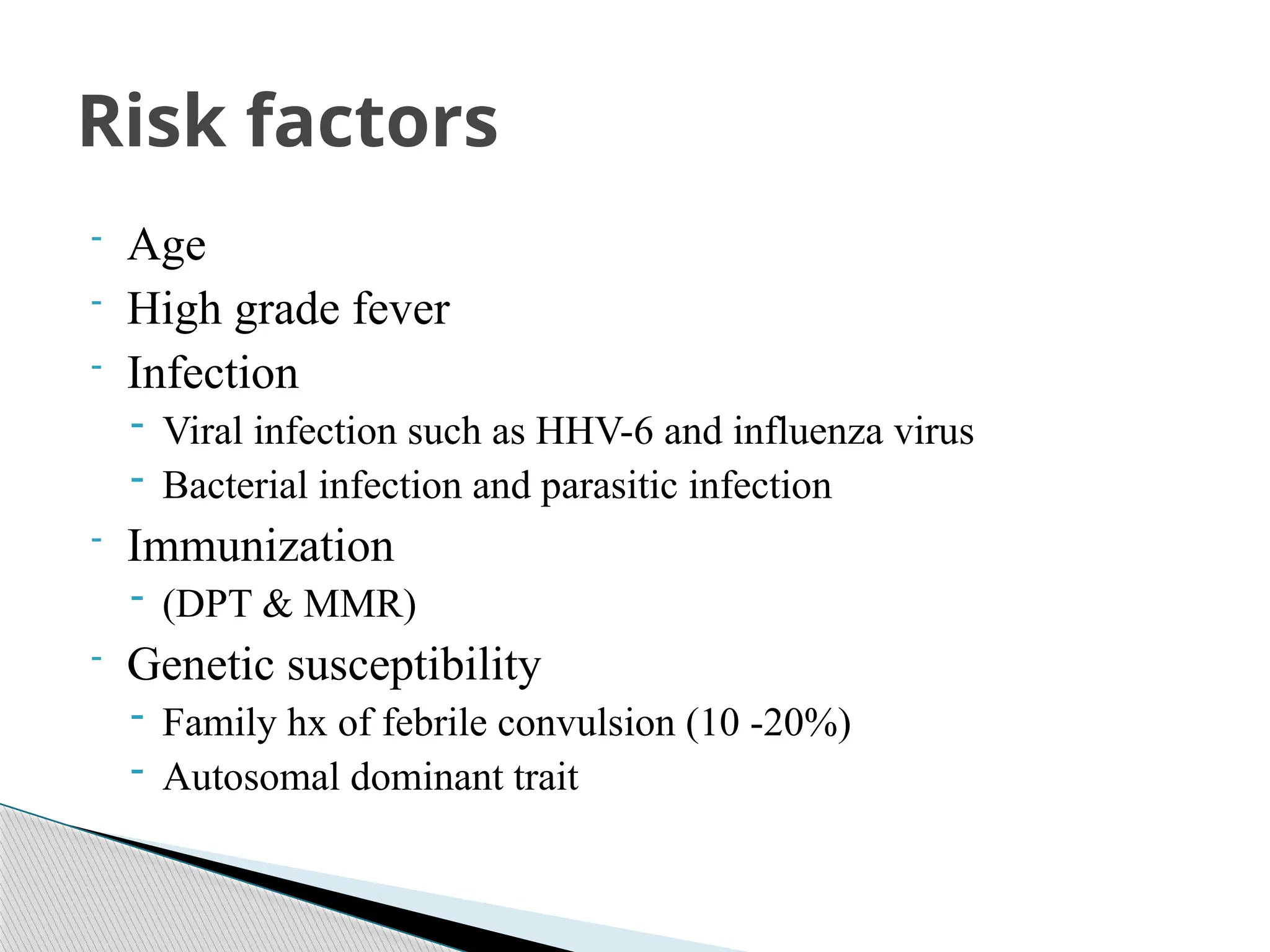
- Age
- High grade fever
- Infection
- Viral infection such as HHV-6 and influenza virus
- Bacterial infection and parasitic infection
- Immunization
- (DPT & MMR)
- Genetic susceptibility
- Family hx of febrile convulsion (10 -20%)
- Autosomal dominant trait
Risk factors
Major
- Age <1yrs
- Duration of fever <24hr
- Fever 38O
to 39O
(100.4 - 102O
F)
Minor
- Family history of febrile seizures
- Family history of epilepsy
- Complex febrile seizures
- Day care
- Male gender
- Lower serum sodium
Risk factors for recurrence of febrile
seizures
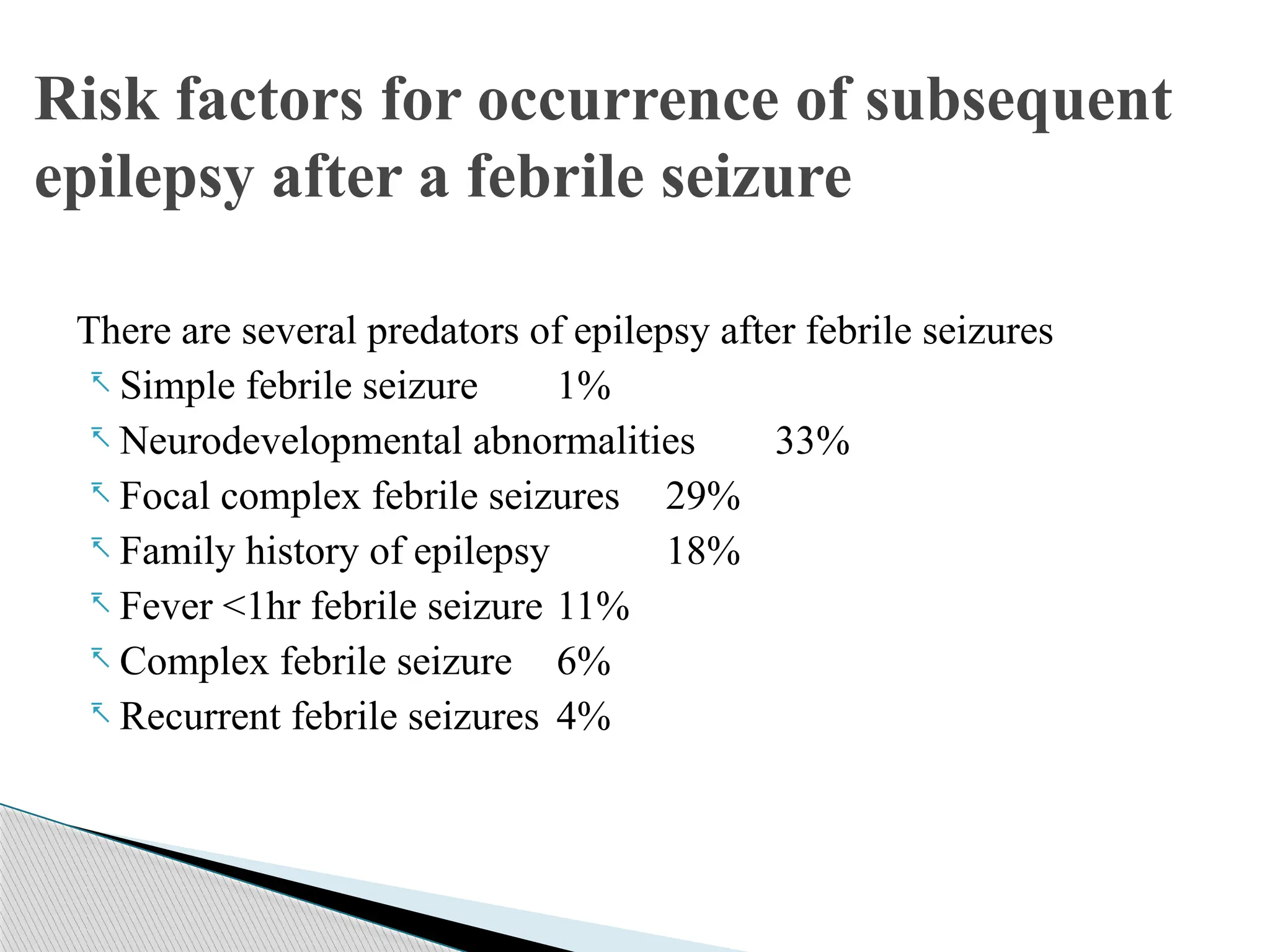
There are several predators of epilepsy after febrile seizures
- Simple febrile seizure 1%
- Neurodevelopmental abnormalities 33%
- Focal complex febrile seizures 29%
- Family history of epilepsy 18%
- Fever <1hr febrile seizure 11%
- Complex febrile seizure 6%
- Recurrent febrile seizures 4%
Risk factors for occurrence of subsequent
epilepsy after a febrile seizure
 Viral infections (most common) e.g. HHV-6, Influenza
 Bactria infections e.g. shigella, salmonella
 Vaccines: DPT (in the same day), MMR (in 8-14 days)
 Meningitis
 Cerebral malaria
 Lower and upper respiratory tract infections
 UTI
Aetiology
- When the body immune system exposed to a pathogen or
vaccine
- Macrophages will recognize and engulf the pathogen on the
reaction mhc2 ( major histocompatibility complex, class ii)
- Which they present it to T - cells preferably T - helper cells.
- T - cells will interact with that antigen via T - cells receptor,
also interact with mhc2 complex via cd4 positive proteins
- Once this reaction occurs it triggers the release of cytokines
such as IL-1 beta, IL-6, TNF-alpha,
- This cytokines will combat the pathogen or infection in the
localized area ultimately spilling over into circulation
resulting into elevated cytokine level.
- Cytokines will act on the hypothalamus and the NMDA-
receptor (N- methyl D- aspartate)
Pathophysiology
 High grade fever
 Loss of consciousness
 Jerky movements of the arms, leg, body or head
 Stiffening of the arms, leg or whole body
 Fainting
 Eye rolling
 Going pale or bluish in skin colour
 Difficulty breathing
Clinical presentation
- CNS infection
- Electrolyte disturbance
- Inborn error of metabolism
- Intracranial mass
- Diagnosis by hx and exclusion
Differential diagnoses
- Complete and proper history taking
- Complete physical examination
- Investigation
 Typical not required
Atypical
 EEG
 Toxicology screening
 Assessment of electrolyte
 CT or MRI
 Lumber puncture
Diagnoses
- Initial assessment
- 4S ( Safety, Stimulation, Sitting, Shout for help)
- Airway
- Breathing
- Circulation
- O2 support
Management
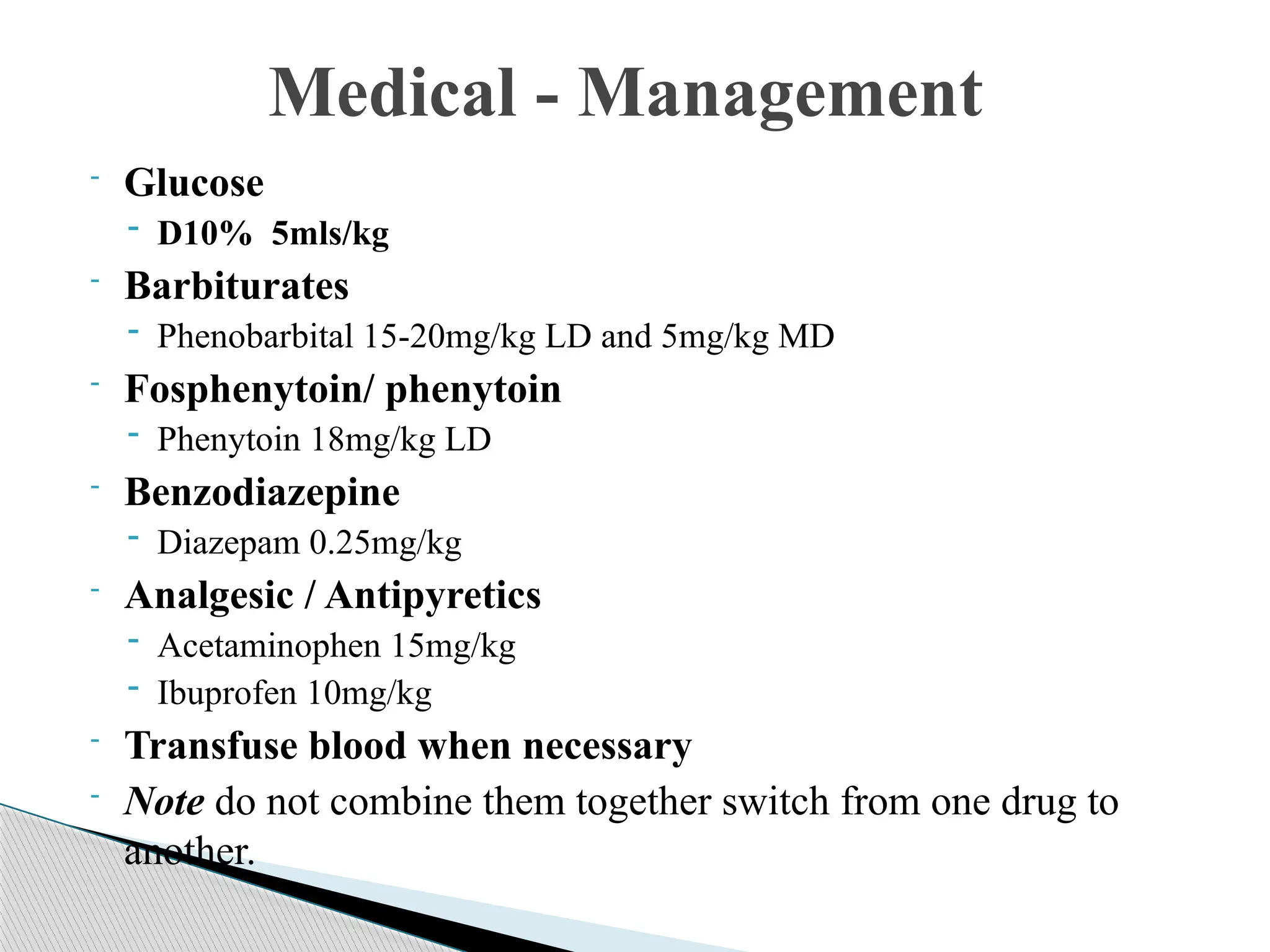
- Glucose
- D10% 5mls/kg
- Barbiturates
- Phenobarbital 15-20mg/kg LD and 5mg/kg MD
- Fosphenytoin/ phenytoin
- Phenytoin 18mg/kg LD
- Benzodiazepine
- Diazepam 0.25mg/kg
- Analgesic / Antipyretics
- Acetaminophen 15mg/kg
- Ibuprofen 10mg/kg
- Transfuse blood when necessary
- Note do not combine them together switch from one drug to
another.
Medical - Management
Any question
 Febrile seizures occurs between age 6 months to 5 years
with an associated temperature of 38^C or grater.
 Classified as simple and complex seizures.
 Most commonly caused by viral infections e.g. HHV-6,
influenza,
 It is the most common neurological disorder in infants and
young children with a peak incidence of 12-18 months.
 Release of cytokines from a trigger of pathogen can
increase the sensitivity of NMDA receptor.
 Increase in body’s temperature leading to fever increases
the basal metabolic rate of neurons increases the firing of
them.
Summary
THANK YOU

febrile convulsion.pptxt777777frxvkfyruxzsb

  • 1.
    FEBRILE CONVULSION PRESENTER: UNISAA.KANU FINAL YEAR CLINICAL PEDIATERIC STUDENT.
  • 2.
    - Introduction - Classification -Risk factors - Aetiology - Pathophysiology - Clinical presentation - Differential diagnoses - Diagnoses - Management - Summary Outline
  • 3.
    - Febrile convulsionis also known as febrile seizures - these are seizures that occur between the age of 6 and 60 months - Associated temperature of 38O C (100O F) or higher. - Not as a result of CNS infection or any metabolic imbalance - Absent of a history of prior afebrile seizures Introduction
  • 4.
    Febrile convulsion isclassified into simple and complex seizures. Simple seizure: - It is the most common type of febrile seizure - They are characterize by seizure associated with fever that is generalize. - Usually tonic – clonic, last for <15 minutes - It rare to reoccur within a 24 hours period - Very short post - ictal phase Classification
  • 5.
    Complex febrile convulsion: -These seizures associated with fever that are characterized by more than one episodes - It has a focal onset ( e.g. shaking limited to one limb or one side of the body) - Last longer than 15 minutes - It can reoccurs more than once in 24 hours. - Can be long and associated with deficits (Todds palsy)
  • 6.
    - Age - Highgrade fever - Infection - Viral infection such as HHV-6 and influenza virus - Bacterial infection and parasitic infection - Immunization - (DPT & MMR) - Genetic susceptibility - Family hx of febrile convulsion (10 -20%) - Autosomal dominant trait Risk factors
  • 7.
    Major - Age <1yrs -Duration of fever <24hr - Fever 38O to 39O (100.4 - 102O F) Minor - Family history of febrile seizures - Family history of epilepsy - Complex febrile seizures - Day care - Male gender - Lower serum sodium Risk factors for recurrence of febrile seizures
  • 8.
    There are severalpredators of epilepsy after febrile seizures - Simple febrile seizure 1% - Neurodevelopmental abnormalities 33% - Focal complex febrile seizures 29% - Family history of epilepsy 18% - Fever <1hr febrile seizure 11% - Complex febrile seizure 6% - Recurrent febrile seizures 4% Risk factors for occurrence of subsequent epilepsy after a febrile seizure
  • 9.
     Viral infections(most common) e.g. HHV-6, Influenza  Bactria infections e.g. shigella, salmonella  Vaccines: DPT (in the same day), MMR (in 8-14 days)  Meningitis  Cerebral malaria  Lower and upper respiratory tract infections  UTI Aetiology
  • 10.
    - When thebody immune system exposed to a pathogen or vaccine - Macrophages will recognize and engulf the pathogen on the reaction mhc2 ( major histocompatibility complex, class ii) - Which they present it to T - cells preferably T - helper cells. - T - cells will interact with that antigen via T - cells receptor, also interact with mhc2 complex via cd4 positive proteins - Once this reaction occurs it triggers the release of cytokines such as IL-1 beta, IL-6, TNF-alpha, - This cytokines will combat the pathogen or infection in the localized area ultimately spilling over into circulation resulting into elevated cytokine level. - Cytokines will act on the hypothalamus and the NMDA- receptor (N- methyl D- aspartate) Pathophysiology
  • 11.
     High gradefever  Loss of consciousness  Jerky movements of the arms, leg, body or head  Stiffening of the arms, leg or whole body  Fainting  Eye rolling  Going pale or bluish in skin colour  Difficulty breathing Clinical presentation
  • 12.
    - CNS infection -Electrolyte disturbance - Inborn error of metabolism - Intracranial mass - Diagnosis by hx and exclusion Differential diagnoses
  • 13.
    - Complete andproper history taking - Complete physical examination - Investigation  Typical not required Atypical  EEG  Toxicology screening  Assessment of electrolyte  CT or MRI  Lumber puncture Diagnoses
  • 14.
    - Initial assessment -4S ( Safety, Stimulation, Sitting, Shout for help) - Airway - Breathing - Circulation - O2 support Management
  • 15.
    - Glucose - D10%5mls/kg - Barbiturates - Phenobarbital 15-20mg/kg LD and 5mg/kg MD - Fosphenytoin/ phenytoin - Phenytoin 18mg/kg LD - Benzodiazepine - Diazepam 0.25mg/kg - Analgesic / Antipyretics - Acetaminophen 15mg/kg - Ibuprofen 10mg/kg - Transfuse blood when necessary - Note do not combine them together switch from one drug to another. Medical - Management
  • 16.
  • 17.
     Febrile seizuresoccurs between age 6 months to 5 years with an associated temperature of 38^C or grater.  Classified as simple and complex seizures.  Most commonly caused by viral infections e.g. HHV-6, influenza,  It is the most common neurological disorder in infants and young children with a peak incidence of 12-18 months.  Release of cytokines from a trigger of pathogen can increase the sensitivity of NMDA receptor.  Increase in body’s temperature leading to fever increases the basal metabolic rate of neurons increases the firing of them. Summary
  • 18.