

Fearless HTTP
 requests abuse


Luís Cipriani
@lfcipriani (twitter, linkedin, github, ...)
20o. GURU (2011-11-26) - Sao Paulo/Brazil
ME
Motivation


                                   http://www.youtube.com/watch?v=8FpigqfcvlM


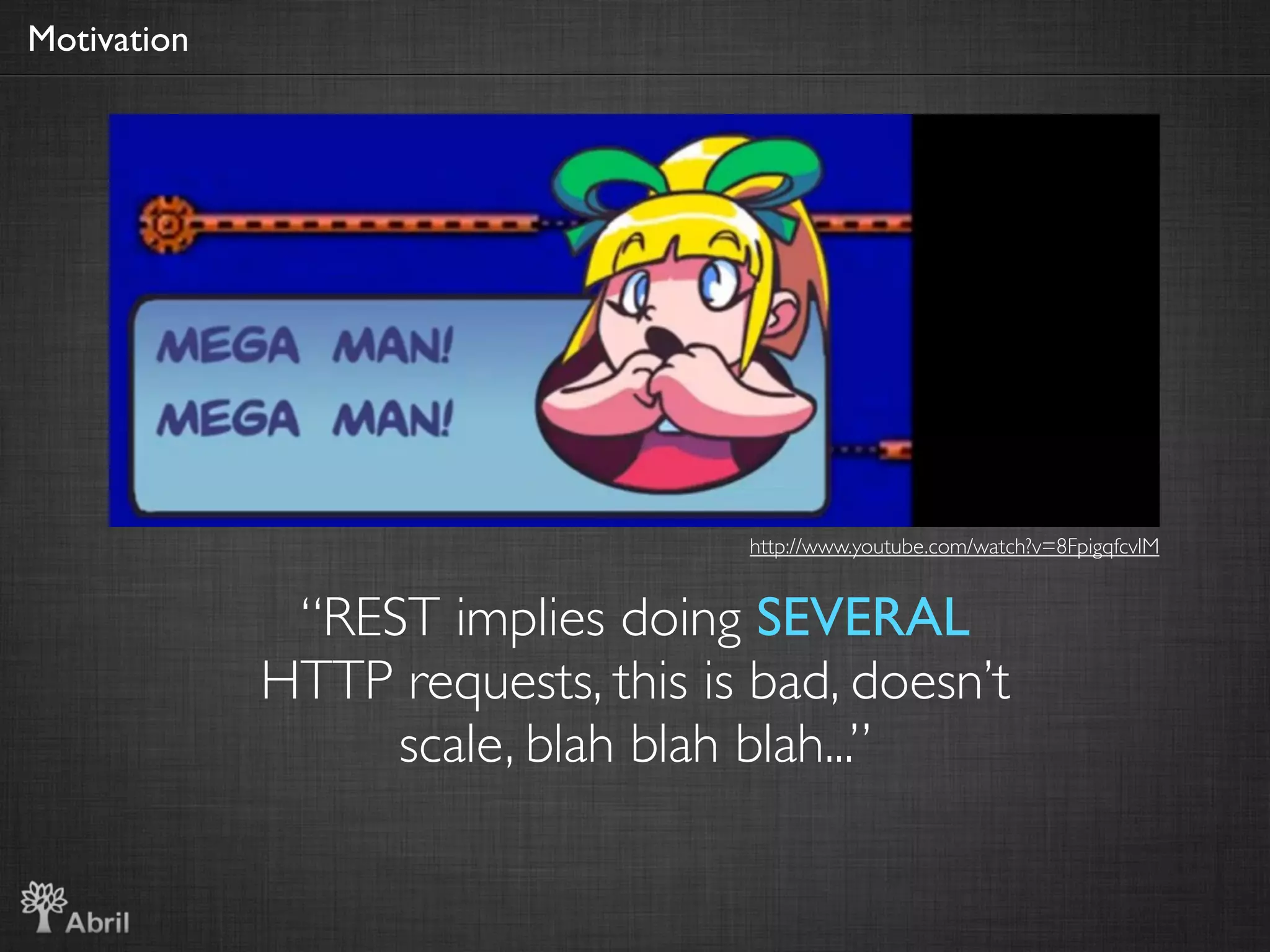
              “REST implies doing SEVERAL
             HTTP requests, this is bad, doesn’t
                  scale, blah blah blah...”
Motivation


                                   http://www.youtube.com/watch?v=8FpigqfcvlM


                Shut UP! Don’t think like that!
             SEVERAL people already solved this
                  problem SEVERAL ways.
Motivation


                                http://www.youtube.com/watch?v=8FpigqfcvlM


             One of the ways is HTTP cache
http cache BENEFITS


    • reduce bandwidth
    • reduce latency
    • reduce server load
    • hide network failures
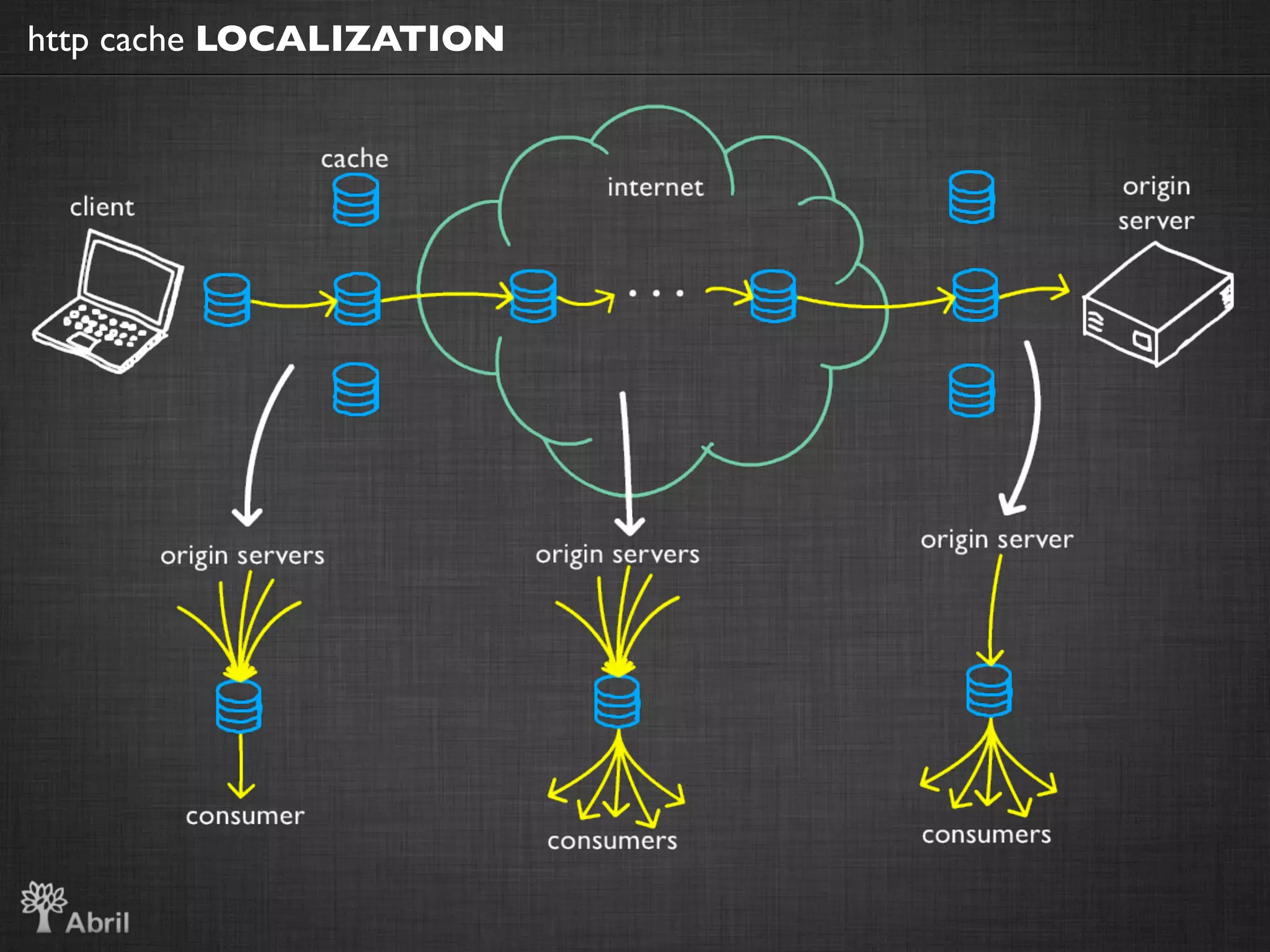
http cache LOCALIZATION
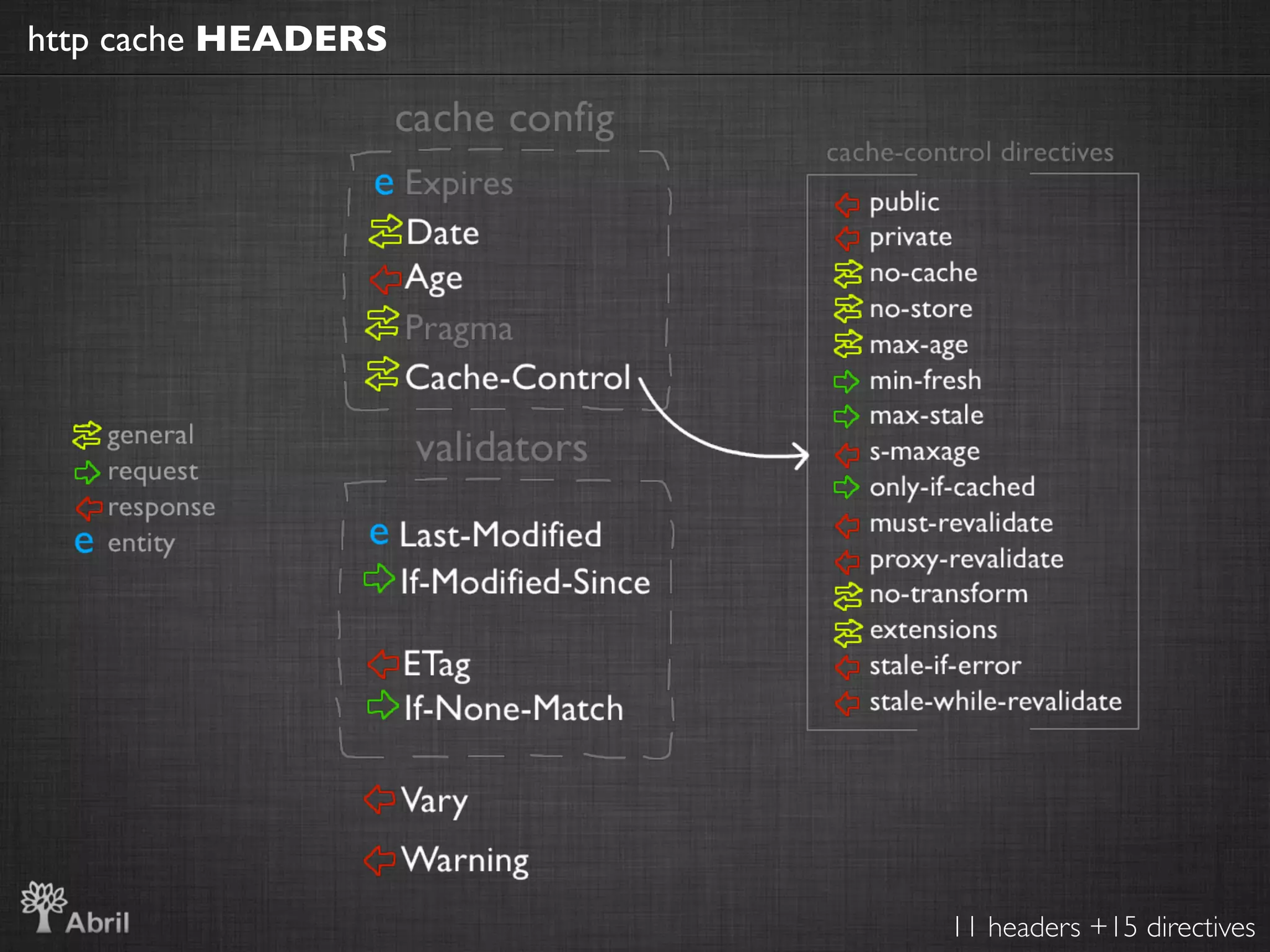
http cache HEADERS


                     11 headers +15 directives
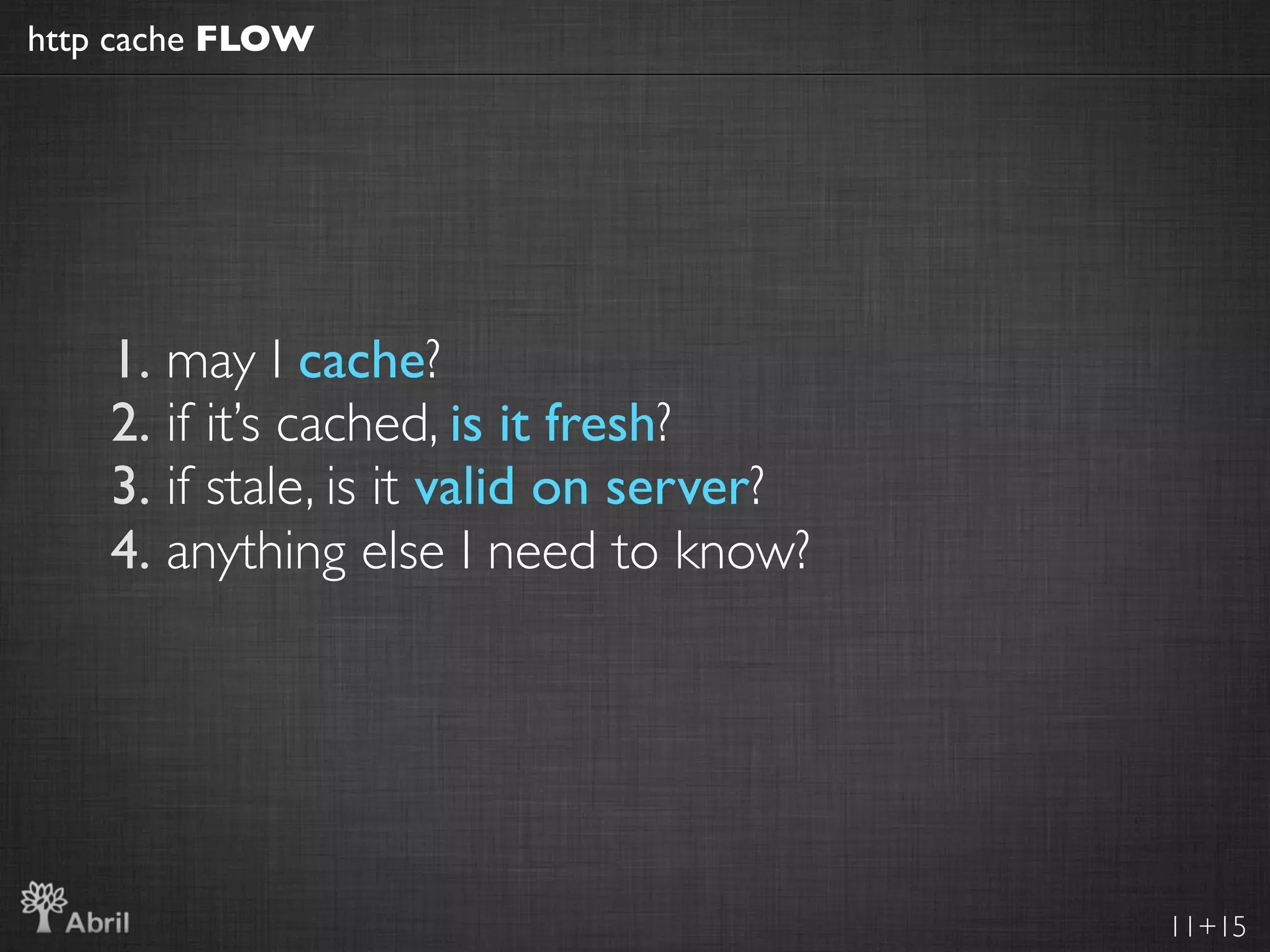
http cache FLOW


    1. may I cache?
    2. if it’s cached, is it fresh?
    3. if stale, is it valid on server?
    4. anything else I need to know?


                                          11+15
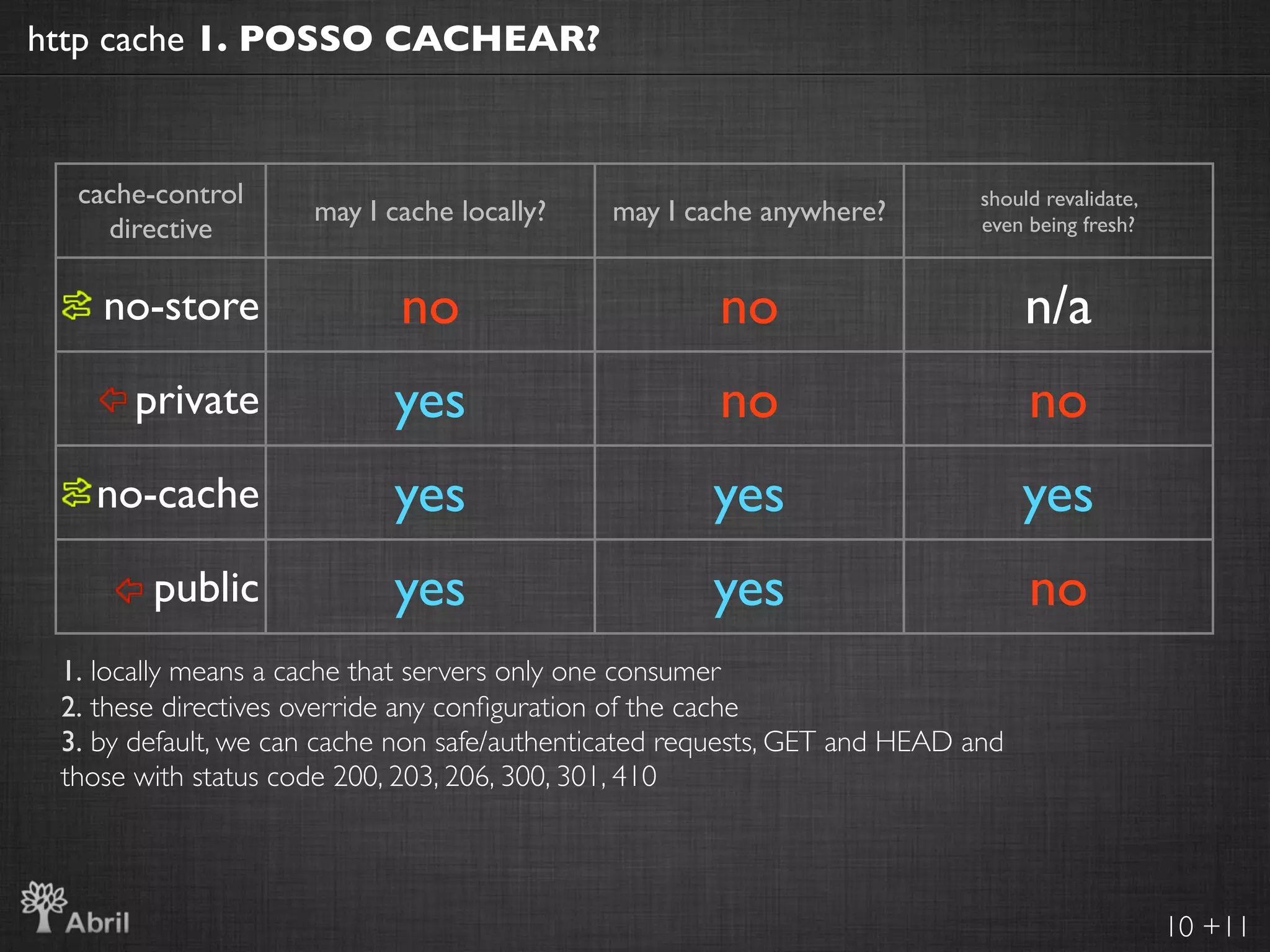
http cache 1. POSSO CACHEAR?


  cache-control                                                             should revalidate,
                     may I cache locally?     may I cache anywhere?
    directive                                                               even being fresh?


    no-store                no                        no                         n/a
       private              yes                       no                         no
   no-cache                 yes                       yes                        yes
        public              yes                       yes                        no
 1. locally means a cache that servers only one consumer
 2. these directives override any configuration of the cache
 3. by default, we can cache non safe/authenticated requests, GET and HEAD and
 those with status code 200, 203, 206, 300, 301, 410


                                                                                                 10 +11
http cache 2. IF IT IS CACHED, IS IT FRESH?


    the server should send the expiration time of
    an answer

        Expires: [RFC 1123 date]
        Cache-Control: max-age=600


    but if the server didn’t do this, cache may
    assign heuristically the expiration time.


                                                    9 +10
http cache 2. IF IT IS CACHED, IS IT FRESH?


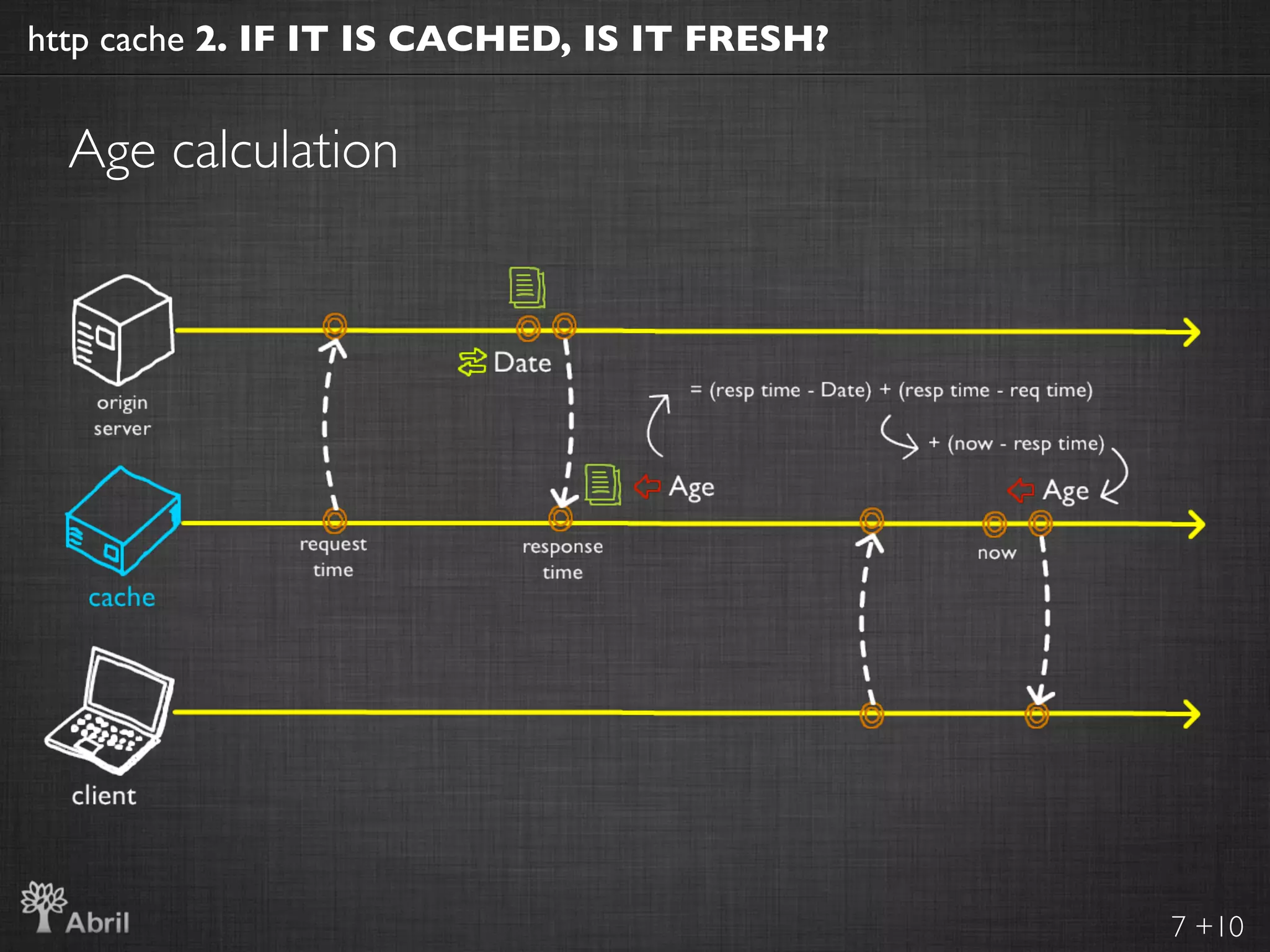
  Age calculation


                                              7 +10
http cache 2. IF IT IS CACHED, IS IT FRESH?

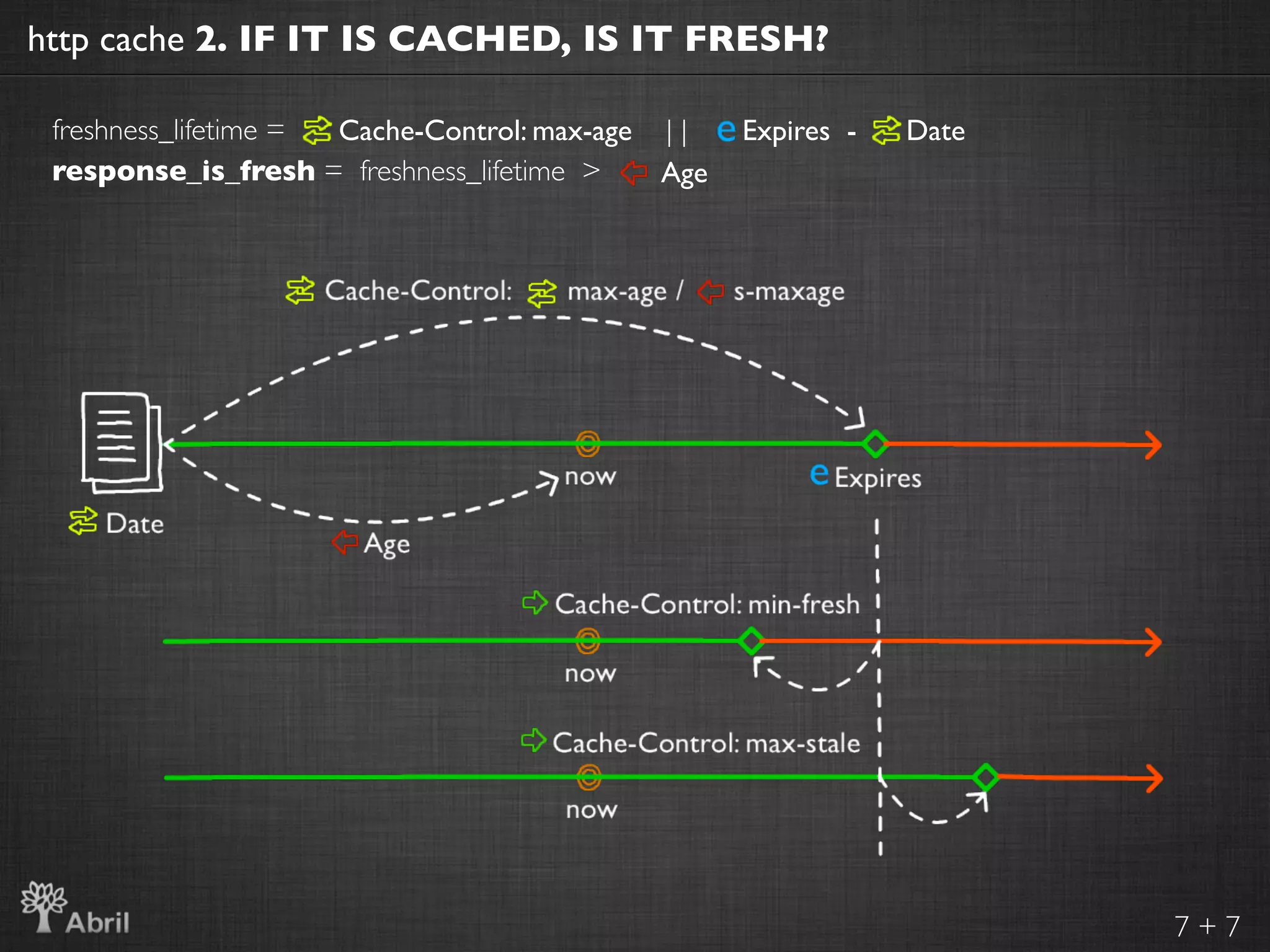
 freshness_lifetime = Cache-Control: max-age | |   Expires -   Date
 response_is_fresh = freshness_lifetime >    Age


                                                                      7+7
http cache 3. IF STALE, REVALIDATE


    Validators
              Last-Modified                                                    ETag

    Conditionals
             If-Modified-Since                                          If-None-Match

                                     if conditional request == false


                                      304 Not Modified

         “... only return me a new resource if [conditional] applies on [validator] ...”

                                                                                           3+7
http cache 3.1. CONTROLLING REVALIDATION


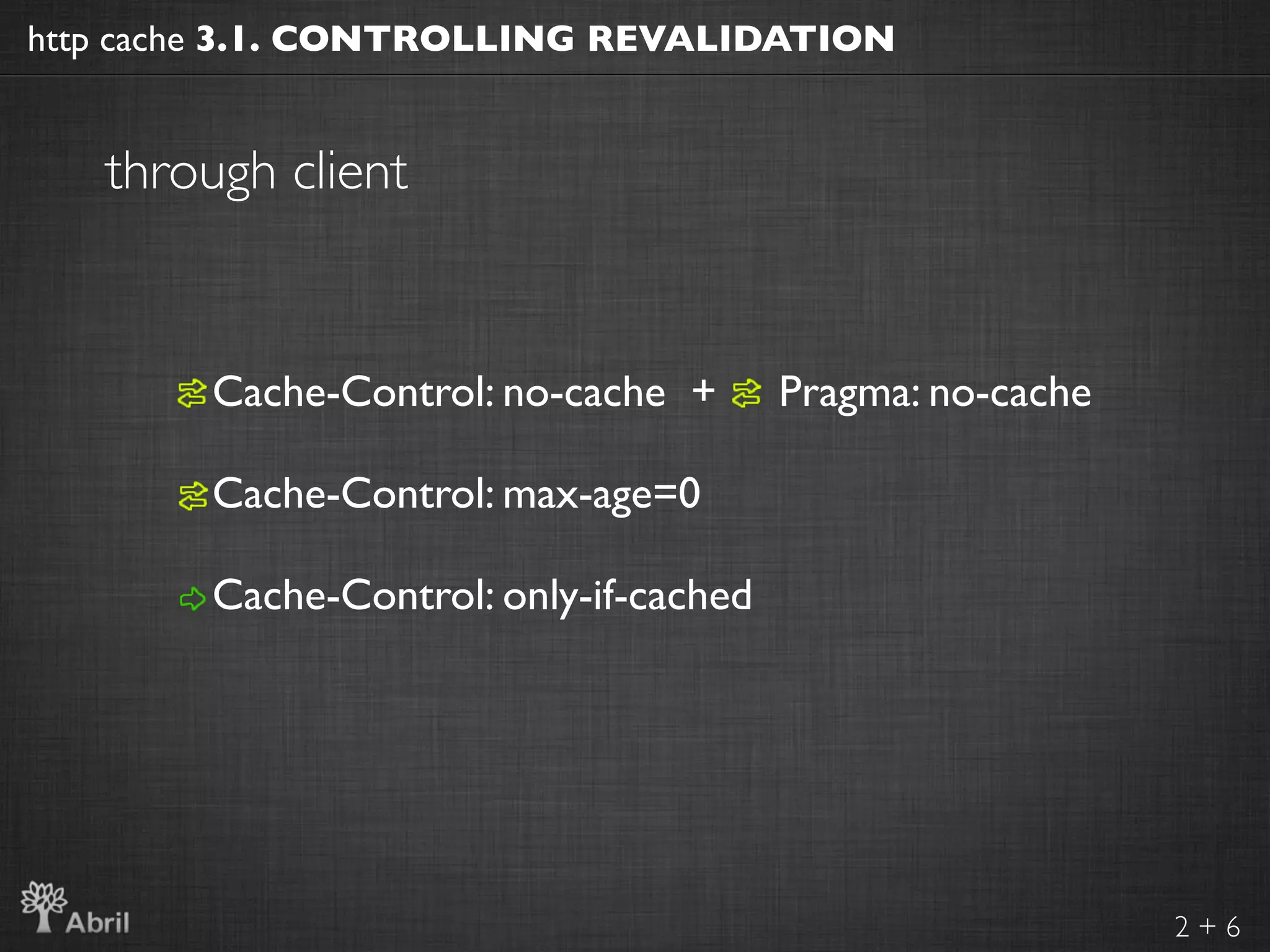
   through client


        Cache-Control: no-cache +       Pragma: no-cache

        Cache-Control: max-age=0

        Cache-Control: only-if-cached


                                                           2+6
http cache 3.1. CONTROLLING REVALIDATION


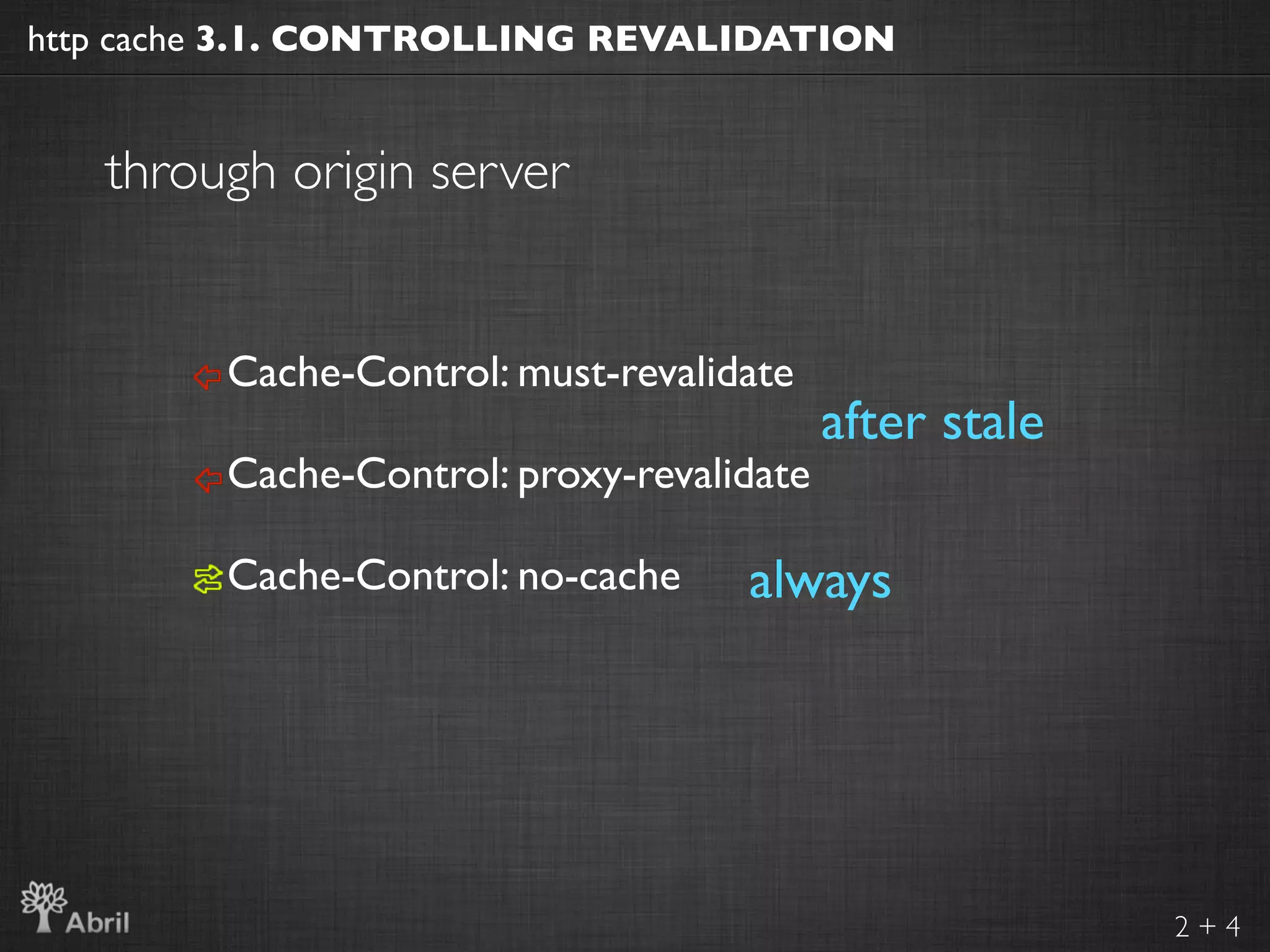
   through origin server


         Cache-Control: must-revalidate
                                           after stale
         Cache-Control: proxy-revalidate

         Cache-Control: no-cache    always


                                                         2+4
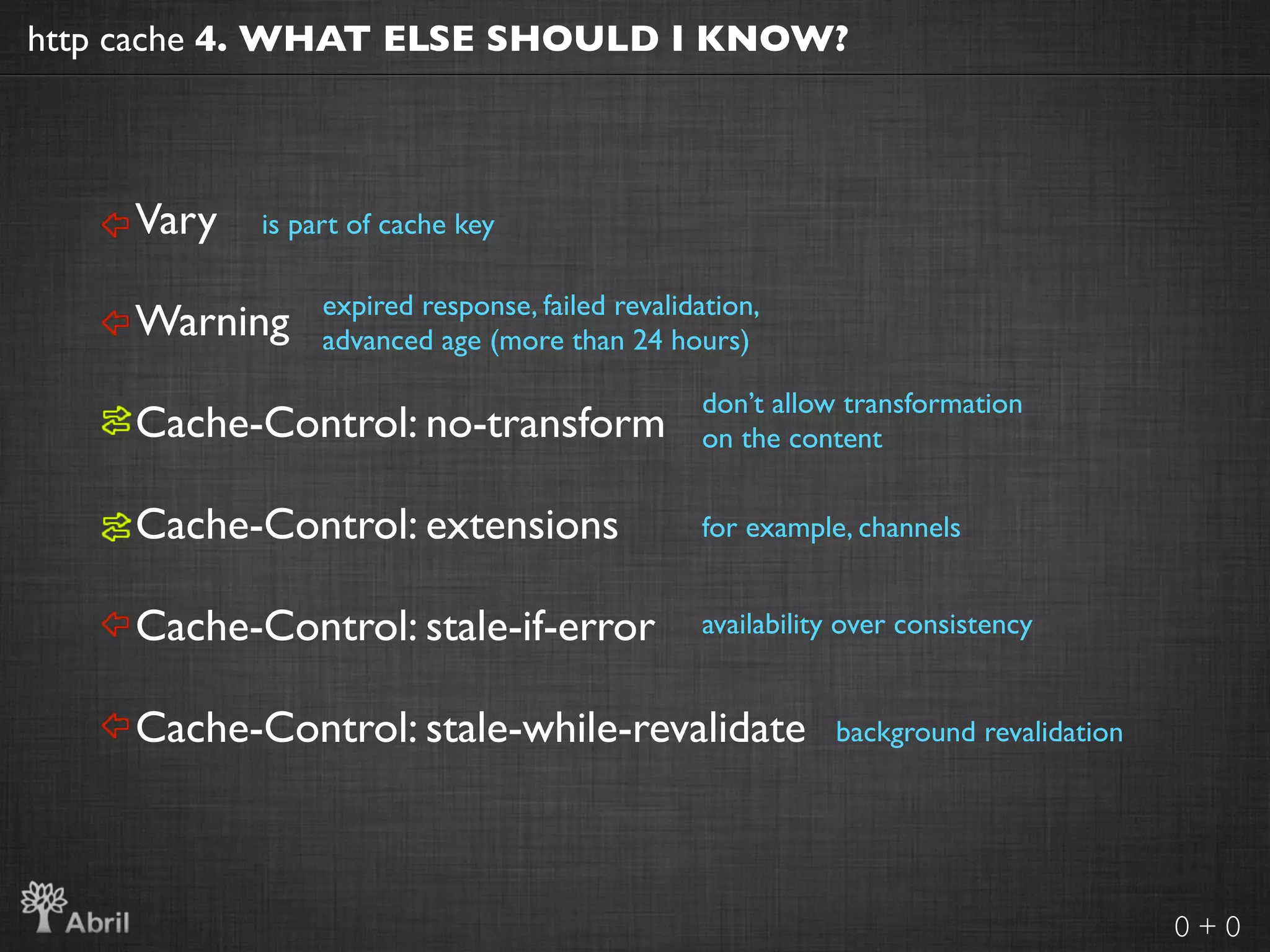
http cache 4. WHAT ELSE SHOULD I KNOW?


    Vary   is part of cache key

                expired response, failed revalidation,
    Warning     advanced age (more than 24 hours)

                                                don’t allow transformation
    Cache-Control: no-transform                 on the content


    Cache-Control: extensions                   for example, channels


    Cache-Control: stale-if-error               availability over consistency


    Cache-Control: stale-while-revalidate                  background revalidation


                                                                                     0+0
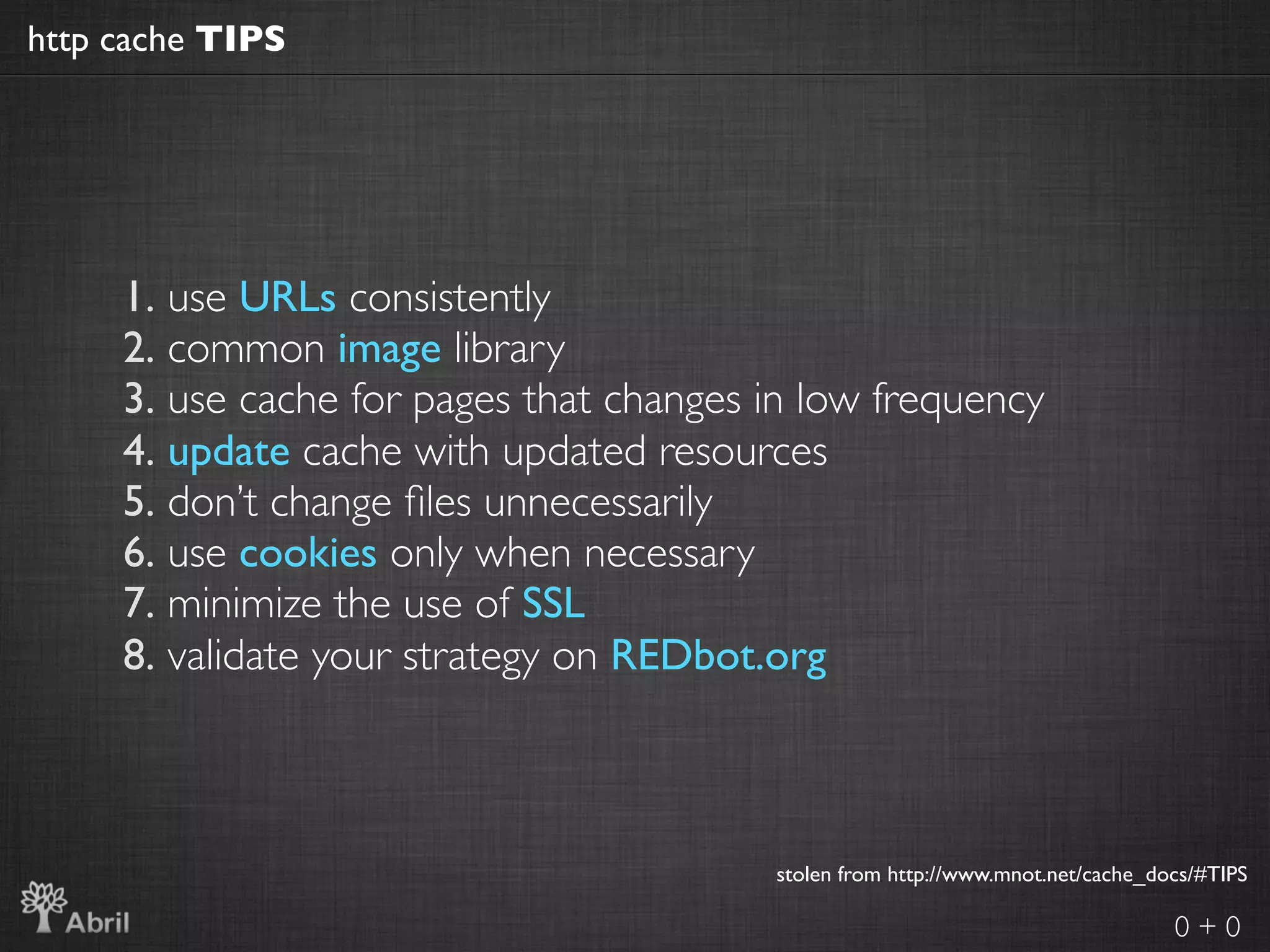
http cache TIPS


     1. use URLs consistently
     2. common image library
     3. use cache for pages that changes in low frequency
     4. update cache with updated resources
     5. don’t change files unnecessarily
     6. use cookies only when necessary
     7. minimize the use of SSL
     8. validate your strategy on REDbot.org


                                         stolen from http://www.mnot.net/cache_docs/#TIPS

                                                                                 0+0
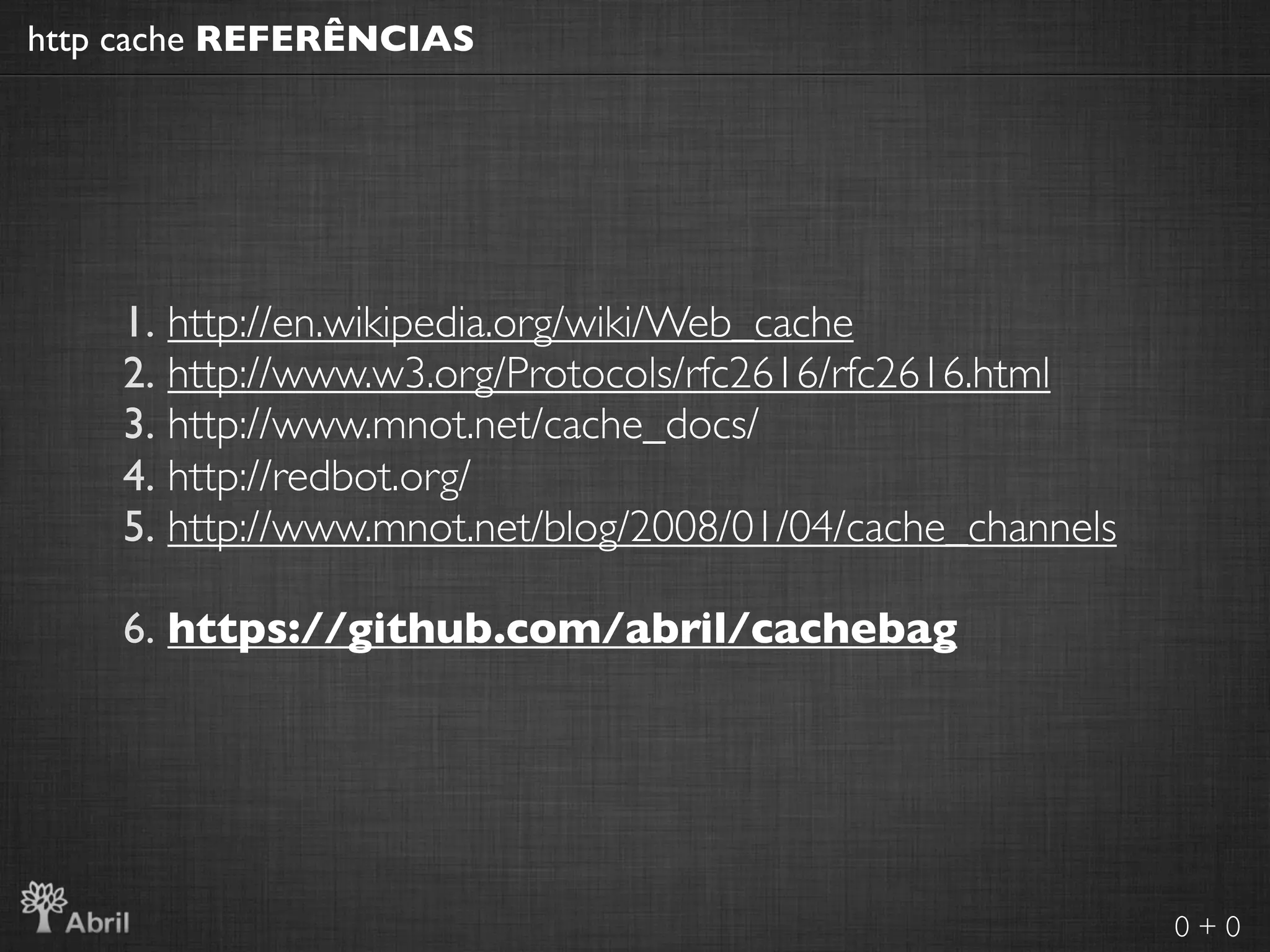
http cache REFERÊNCIAS


    1. http://en.wikipedia.org/wiki/Web_cache
    2. http://www.w3.org/Protocols/rfc2616/rfc2616.html
    3. http://www.mnot.net/cache_docs/
    4. http://redbot.org/
    5. http://www.mnot.net/blog/2008/01/04/cache_channels

    6. https://github.com/abril/cachebag


                                                            0+0
Reformulação Box de Login                            Abril ID

           http://abril-engineering-en.tumblr.com/


          FIM

Fearless HTTP requests abuse

  • 1.
    Fearless HTTP requestsabuse Luís Cipriani @lfcipriani (twitter, linkedin, github, ...) 20o. GURU (2011-11-26) - Sao Paulo/Brazil
  • 2.
  • 3.
    Motivation http://www.youtube.com/watch?v=8FpigqfcvlM “REST implies doing SEVERAL HTTP requests, this is bad, doesn’t scale, blah blah blah...”
  • 4.
    Motivation http://www.youtube.com/watch?v=8FpigqfcvlM Shut UP! Don’t think like that! SEVERAL people already solved this problem SEVERAL ways.
  • 5.
    Motivation http://www.youtube.com/watch?v=8FpigqfcvlM One of the ways is HTTP cache
  • 6.
    http cache BENEFITS • reduce bandwidth • reduce latency • reduce server load • hide network failures
  • 7.
  • 8.
    http cache HEADERS 11 headers +15 directives
  • 9.
    http cache FLOW 1. may I cache? 2. if it’s cached, is it fresh? 3. if stale, is it valid on server? 4. anything else I need to know? 11+15
  • 10.
    http cache 1.POSSO CACHEAR? cache-control should revalidate, may I cache locally? may I cache anywhere? directive even being fresh? no-store no no n/a private yes no no no-cache yes yes yes public yes yes no 1. locally means a cache that servers only one consumer 2. these directives override any configuration of the cache 3. by default, we can cache non safe/authenticated requests, GET and HEAD and those with status code 200, 203, 206, 300, 301, 410 10 +11
  • 11.
    http cache 2.IF IT IS CACHED, IS IT FRESH? the server should send the expiration time of an answer Expires: [RFC 1123 date] Cache-Control: max-age=600 but if the server didn’t do this, cache may assign heuristically the expiration time. 9 +10
  • 12.
    http cache 2.IF IT IS CACHED, IS IT FRESH? Age calculation 7 +10
  • 13.
    http cache 2.IF IT IS CACHED, IS IT FRESH? freshness_lifetime = Cache-Control: max-age | | Expires - Date response_is_fresh = freshness_lifetime > Age 7+7
  • 14.
    http cache 3.IF STALE, REVALIDATE Validators Last-Modified ETag Conditionals If-Modified-Since If-None-Match if conditional request == false 304 Not Modified “... only return me a new resource if [conditional] applies on [validator] ...” 3+7
  • 15.
    http cache 3.1.CONTROLLING REVALIDATION through client Cache-Control: no-cache + Pragma: no-cache Cache-Control: max-age=0 Cache-Control: only-if-cached 2+6
  • 16.
    http cache 3.1.CONTROLLING REVALIDATION through origin server Cache-Control: must-revalidate after stale Cache-Control: proxy-revalidate Cache-Control: no-cache always 2+4
  • 17.
    http cache 4.WHAT ELSE SHOULD I KNOW? Vary is part of cache key expired response, failed revalidation, Warning advanced age (more than 24 hours) don’t allow transformation Cache-Control: no-transform on the content Cache-Control: extensions for example, channels Cache-Control: stale-if-error availability over consistency Cache-Control: stale-while-revalidate background revalidation 0+0
  • 18.
    http cache TIPS 1. use URLs consistently 2. common image library 3. use cache for pages that changes in low frequency 4. update cache with updated resources 5. don’t change files unnecessarily 6. use cookies only when necessary 7. minimize the use of SSL 8. validate your strategy on REDbot.org stolen from http://www.mnot.net/cache_docs/#TIPS 0+0
  • 19.
    http cache REFERÊNCIAS 1. http://en.wikipedia.org/wiki/Web_cache 2. http://www.w3.org/Protocols/rfc2616/rfc2616.html 3. http://www.mnot.net/cache_docs/ 4. http://redbot.org/ 5. http://www.mnot.net/blog/2008/01/04/cache_channels 6. https://github.com/abril/cachebag 0+0
  • 20.
    Reformulação Box deLogin Abril ID http://abril-engineering-en.tumblr.com/ FIM