PRESENTED BY
NEHA CHAUHAN
&
BUNTY SEHDEV
The Foreign Direct Investment means “cross border investment
made by a resident in one economy in an enterprise in another
economy, with the objective of establishing a lasting
interest in the investee economy.
FDI is also described as
“investment into the business of a
country by a company in another country”.
Mostly the
investment is into production by either buying a company in
the target country or by expanding operations of an
existing business in that country”. Such investments can take
place for many reasons, including to take advantage of cheaper
wages, special investment privileges (e.g. tax exemptions)
offered by the country.






Domestic capital is inadequate for purpose
of economic growth;
Foreign capital is usually essential, at least as
a temporary measure, during the period when
the capital market is in the process of
development;
Foreign capital usually brings it with other
scarce productive factors like technical know
how, business expertise and knowledge
(a) Improves forex position of the country;
(b) Employment generation and increase in
production ;
(c)
Help in capital formation by bringing fresh
capital;
(d)
Helps in transfer of new technologies,
management skills, intellectual property
(e) Increases competition within the local market
and this brings higher efficiencies
(f) Helps in increasing exports;
(g) Increases tax revenues










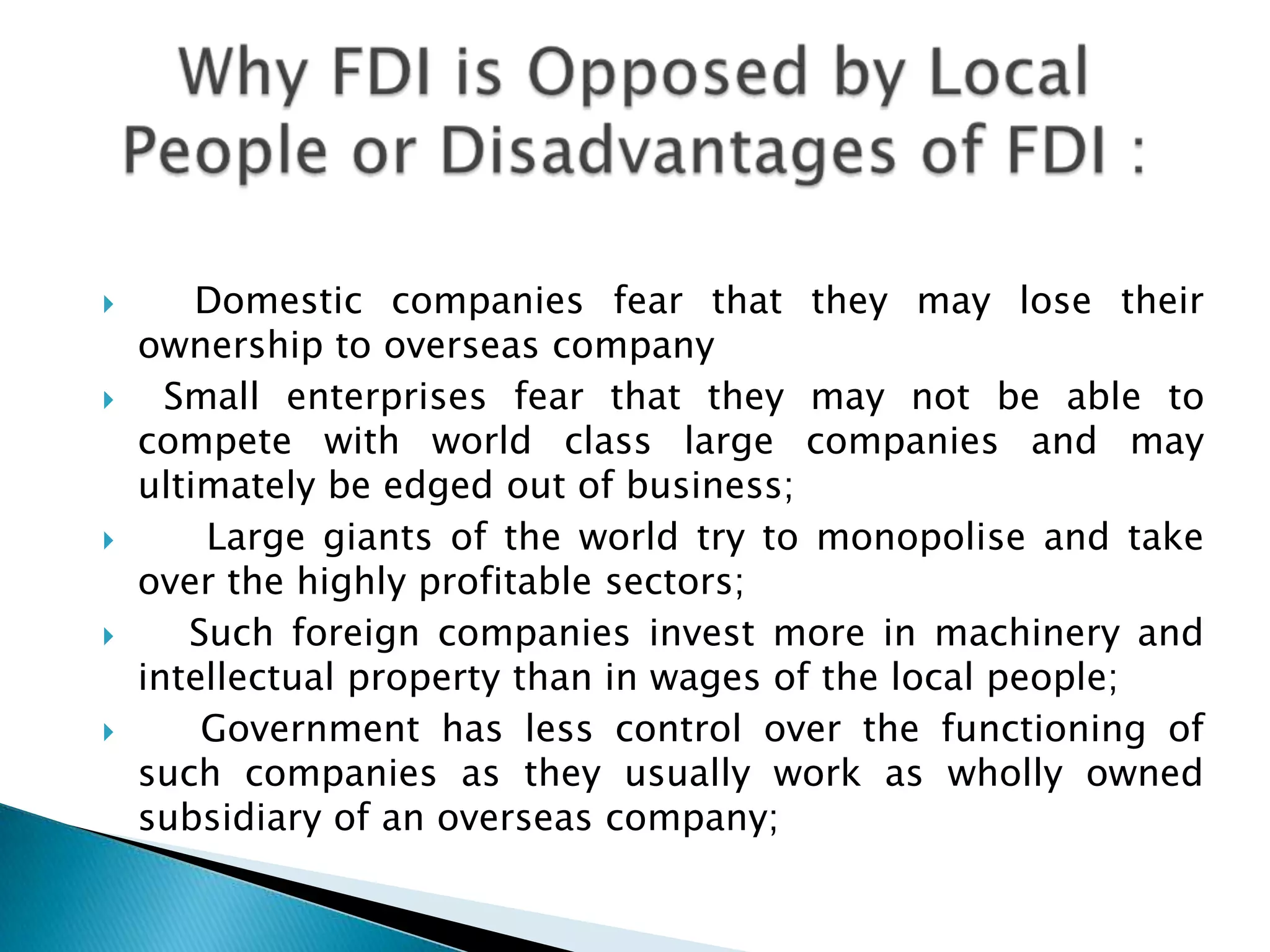
Domestic companies fear that they may lose their
ownership to overseas company
Small enterprises fear that they may not be able to
compete with world class large companies and may
ultimately be edged out of business;
Large giants of the world try to monopolise and take
over the highly profitable sectors;
Such foreign companies invest more in machinery and
intellectual property than in wages of the local people;
Government has less control over the functioning of
such companies as they usually work as wholly owned
subsidiary of an overseas company;










India is the 3rd largest economy of the world in
terms of purchasing power parity and thus looks
attractive to the world for FDI.
Some of the major economic sectors where India
can attract investment are as follows:Telecommunications
Apparels
Information Technology
Pharmacy
Auto parts
Jewellery
Chemicals


Automatic Route
FDI is allowed under
the automatic route
without prior approval
either
of
the
Government or the
Reserve Bank of India
in all activities/sectors
as specified in the
consolidated
FDI
Policy, issued by the
Government of India
from time to time.



Government Route
FDI in activities not
covered
under
the
automatic
route
requires prior approval
of the Government
which are considered
by
the
Foreign
Investment Promotion
Board
(FIPB),
Department
of Economic Affairs, Mi
nistry of Finance.










Foreign Investment Promotion Board (popularly known as FIPB) : The
Board is responsible for expeditious clearance of FDI proposals and
review of the implementation of cleared proposals. It also undertake
investment promotion activities and issue and review general and
sectoral policy guidelines;
Secretariat for Industrial Assistance (SIA) : It acts as a gateway to
industrial investment in India and assists the entrepreneurs and
investors in setting up projects. SIA also liaison with other
government bodies to ensure necessary clearances;
Foreign Investment Implementation Authority (FIIA) : The authority
works for quick implementation of FDI approvals and resolution of
operational difficulties faced by foreign investors;
Investment Commission
Project Approval Board
Reserve Bank of India
• FDI cap in telecom raised to 100 percent from 74 percent; up
to 49 percent through automatic route and beyond via FIPB.
• No change in 49 percent FDI limit in civil aviation.
• FDI cap in defence production to stay at 26 percent, higher
investment may be considered in state-of-the-art technology
production by Cabinet Committee on Security (CCS).
• 100 percent FDI allowed in single brand retail; 49 percent
through automatic, 49-100 percent through FIPB.
• FDI limit in insurance sector raised to 49 percent from
present 26 percent, subject to Parliament approval.
• FDI up to 49 percent in petroleum refining allowed under
automatic route, from earlier approval route.
• In power exchanges 49 percent FDI allowed through
automatic
route,
from
earlier
FIPB
route.
• Raised FDI in asset reconstruction companies to 100
percent from 74 percent; of this up to 49 percent will
be under automatic route.
• FDI limit increased in credit information companies to
74 percent from 49 percent.
• FDI up to 49 percent in stock exchanges, depositories
allowed under automatic route.
• FDI up to 100 percent through automatic route allowed
in courier services.
• FDI in tea plantation up to 49 percent through
automatic route; 49-100 percent through FIPB route.
• No decision taken on FDI cap in airports, media, brown
field
pharmacy
and
multi-brand
retail.












Atomic Energy
Lottery Business
Gambling and Betting
Business of Chit Fund
Agricultural (excluding Floriculture, Horticulture, Development of
seeds, Animal Husbandry, Pisciculture and cultivation of
vegetables, mushrooms, etc. under controlled conditions and
services related to agro and allied sectors) and Plantations activities
(other than Tea Plantations)
Housing and Real Estate business (except development of
townships, construction of residen-tial/commercial premises, roads
or bridges to the extent specified in notification
Trading in Transferable Development Rights (TDRs).
Manufacture of cigars , cheroots, cigarillos and cigarettes , of
tobacco or of tobacco substitutes.
TOP INVESTING COUNTRIES FDI EQUITY
INFLOWS (Financial years)
Amount Rupees in crores (US$ in million)
Ranks

Country

2008-09 (April- 2009-10(April- 2010-11 ( April- Cumulative
%age to total
March)
March)
March)
Inflows (April ’00 Inflows (in terms
- March ‘11)
of US $)

1

MAURITIUS

50,899(11,229) 49,633 (10,376) 31,855 (6,987)

2

SINGAPORE

15,727 (3,454)

11,295 (2,379)

3

U.S.A.

8,002 (1,802)

4

U.K.

5

42 %

7,730 (1,705)

242,761
(54,227)
52,876 (11,895)

9,230 (1,943)

5,353 (1,170)

42,542 (9,449)

7%

3,840 (864)

3,094 (657)

3,434 (755)

29,433 (6,639)

5%

NETHERLANDS

3,922 (883)

4,283 (899)

5,501 (1,213)

25,627 (5,700)

4%

6

JAPAN

1,889 (405)

5,670 (1,183)

7,063 (1,562)

23,958 (5,276)

4%

7

CYPRUS

5,983 (1,287)

7,728 (1,627)

4,171 (913)

21,948 (4,812)

4%

8

GERMANY

2,750 (629)

2,980 (626)

908 (200)

13,376 (2,999)

2%

9

FRANCE

2,098 (467)

1,437 (303)

3,349 (734)

10,267 (2,264)

2%

10

U.A.E.

1,133 (257)

3,017 (629)

1,569 (341)

8,592 (1,890)

1%

123,025
(27,331)

123,120
(25,834)

88,520 (19,427)

580,722
(129,716)

-

TOTAL FDI INFLOWS *

9%
SECTORS ATTRACTING HIGHEST FDI EQUITY
INFLOWS
Amount in Rs. crores (US$ in million)
Ranks

Sector

2008-09 (AprilMarch)

2009-10(AprilMarch)

2010-11 ( AprilMarch)

1

SERVICES
SECTOR(financial &
non-financial)

28,516 (6,138)

20,776 (4,353)

15,539 (3,403)

2

COMPUTER
SOFTWARE &
HARDWARE
TELECOMMUNICAT
IONS (radio paging,
cellular mobile,
basic telephone
services)

7,329 (1,677)

4,351 (919)

3,571 (784)

47,700 (10,723)

8%

11,727 (2,558)

12,338 (2,554)

7,546 (1,665)

48,220 (10,589)

8%

HOUSING & REAL
ESTATE
CONSTRUCTION
ACTIVITIES
(including roads &
highways)
AUTOMOBILE
INDUSTRY
POWER
METALLURGICAL
INDUSTRIES

12,621 (2,801)

13,586 (2,844)

5,149 (1,127)

43,192 (9,632)

7%

8,792 (2,028

13,516 (2,862)

5,077 (1,125)

40,770 (9,178)

7%

5,212 (1,152)

5,754 (1,208)

6,008 (1,331)

26,831 (5,927)

5%

4,382 (985)
4,157 (961)

6,908 (1,437)
1,935 (407)

5,709 (1,252)
5,055 (1,105)

26,712 (5,900)
18,495 (4,235)

5%
3%

PETROLEUM &
NATURAL GAS
CHEMICALS(other
than fertilizers)

1,931(412)

1,328 (272)

2,621 (574)

13,735 (3,153)

2%

3,427(749)

1,707 (362)

1,810 (398)

13,078 (2,892)

3

4
5

6
7
8
9
10

Cumulative Inflows
%age to total
(April ’00 - March Inflows (in terms of
‘11)
US $)
120,771 (27,007)
21 %

2%
Total FDI in 2012: $26 billion
Rank in FDI inflow (2011): 14
Rank in FDI inflow (2012): 15
India, which has a per capita income of
$3,991, attracted $26 billion in FDI in
2012.
FDI in India

FDI in India

  • 2.
  • 3.
    The Foreign DirectInvestment means “cross border investment made by a resident in one economy in an enterprise in another economy, with the objective of establishing a lasting interest in the investee economy. FDI is also described as “investment into the business of a country by a company in another country”. Mostly the investment is into production by either buying a company in the target country or by expanding operations of an existing business in that country”. Such investments can take place for many reasons, including to take advantage of cheaper wages, special investment privileges (e.g. tax exemptions) offered by the country.
  • 4.
       Domestic capital isinadequate for purpose of economic growth; Foreign capital is usually essential, at least as a temporary measure, during the period when the capital market is in the process of development; Foreign capital usually brings it with other scarce productive factors like technical know how, business expertise and knowledge
  • 5.
    (a) Improves forexposition of the country; (b) Employment generation and increase in production ; (c) Help in capital formation by bringing fresh capital; (d) Helps in transfer of new technologies, management skills, intellectual property (e) Increases competition within the local market and this brings higher efficiencies (f) Helps in increasing exports; (g) Increases tax revenues
  • 6.
         Domestic companies fearthat they may lose their ownership to overseas company Small enterprises fear that they may not be able to compete with world class large companies and may ultimately be edged out of business; Large giants of the world try to monopolise and take over the highly profitable sectors; Such foreign companies invest more in machinery and intellectual property than in wages of the local people; Government has less control over the functioning of such companies as they usually work as wholly owned subsidiary of an overseas company;
  • 7.
           India is the3rd largest economy of the world in terms of purchasing power parity and thus looks attractive to the world for FDI. Some of the major economic sectors where India can attract investment are as follows:Telecommunications Apparels Information Technology Pharmacy Auto parts Jewellery Chemicals
  • 8.
     Automatic Route FDI isallowed under the automatic route without prior approval either of the Government or the Reserve Bank of India in all activities/sectors as specified in the consolidated FDI Policy, issued by the Government of India from time to time.  Government Route FDI in activities not covered under the automatic route requires prior approval of the Government which are considered by the Foreign Investment Promotion Board (FIPB), Department of Economic Affairs, Mi nistry of Finance.
  • 9.
          Foreign Investment PromotionBoard (popularly known as FIPB) : The Board is responsible for expeditious clearance of FDI proposals and review of the implementation of cleared proposals. It also undertake investment promotion activities and issue and review general and sectoral policy guidelines; Secretariat for Industrial Assistance (SIA) : It acts as a gateway to industrial investment in India and assists the entrepreneurs and investors in setting up projects. SIA also liaison with other government bodies to ensure necessary clearances; Foreign Investment Implementation Authority (FIIA) : The authority works for quick implementation of FDI approvals and resolution of operational difficulties faced by foreign investors; Investment Commission Project Approval Board Reserve Bank of India
  • 10.
    • FDI capin telecom raised to 100 percent from 74 percent; up to 49 percent through automatic route and beyond via FIPB. • No change in 49 percent FDI limit in civil aviation. • FDI cap in defence production to stay at 26 percent, higher investment may be considered in state-of-the-art technology production by Cabinet Committee on Security (CCS). • 100 percent FDI allowed in single brand retail; 49 percent through automatic, 49-100 percent through FIPB. • FDI limit in insurance sector raised to 49 percent from present 26 percent, subject to Parliament approval. • FDI up to 49 percent in petroleum refining allowed under automatic route, from earlier approval route. • In power exchanges 49 percent FDI allowed through automatic route, from earlier FIPB route.
  • 11.
    • Raised FDIin asset reconstruction companies to 100 percent from 74 percent; of this up to 49 percent will be under automatic route. • FDI limit increased in credit information companies to 74 percent from 49 percent. • FDI up to 49 percent in stock exchanges, depositories allowed under automatic route. • FDI up to 100 percent through automatic route allowed in courier services. • FDI in tea plantation up to 49 percent through automatic route; 49-100 percent through FIPB route. • No decision taken on FDI cap in airports, media, brown field pharmacy and multi-brand retail.
  • 12.
            Atomic Energy Lottery Business Gamblingand Betting Business of Chit Fund Agricultural (excluding Floriculture, Horticulture, Development of seeds, Animal Husbandry, Pisciculture and cultivation of vegetables, mushrooms, etc. under controlled conditions and services related to agro and allied sectors) and Plantations activities (other than Tea Plantations) Housing and Real Estate business (except development of townships, construction of residen-tial/commercial premises, roads or bridges to the extent specified in notification Trading in Transferable Development Rights (TDRs). Manufacture of cigars , cheroots, cigarillos and cigarettes , of tobacco or of tobacco substitutes.
  • 13.
    TOP INVESTING COUNTRIESFDI EQUITY INFLOWS (Financial years) Amount Rupees in crores (US$ in million) Ranks Country 2008-09 (April- 2009-10(April- 2010-11 ( April- Cumulative %age to total March) March) March) Inflows (April ’00 Inflows (in terms - March ‘11) of US $) 1 MAURITIUS 50,899(11,229) 49,633 (10,376) 31,855 (6,987) 2 SINGAPORE 15,727 (3,454) 11,295 (2,379) 3 U.S.A. 8,002 (1,802) 4 U.K. 5 42 % 7,730 (1,705) 242,761 (54,227) 52,876 (11,895) 9,230 (1,943) 5,353 (1,170) 42,542 (9,449) 7% 3,840 (864) 3,094 (657) 3,434 (755) 29,433 (6,639) 5% NETHERLANDS 3,922 (883) 4,283 (899) 5,501 (1,213) 25,627 (5,700) 4% 6 JAPAN 1,889 (405) 5,670 (1,183) 7,063 (1,562) 23,958 (5,276) 4% 7 CYPRUS 5,983 (1,287) 7,728 (1,627) 4,171 (913) 21,948 (4,812) 4% 8 GERMANY 2,750 (629) 2,980 (626) 908 (200) 13,376 (2,999) 2% 9 FRANCE 2,098 (467) 1,437 (303) 3,349 (734) 10,267 (2,264) 2% 10 U.A.E. 1,133 (257) 3,017 (629) 1,569 (341) 8,592 (1,890) 1% 123,025 (27,331) 123,120 (25,834) 88,520 (19,427) 580,722 (129,716) - TOTAL FDI INFLOWS * 9%
  • 14.
    SECTORS ATTRACTING HIGHESTFDI EQUITY INFLOWS Amount in Rs. crores (US$ in million) Ranks Sector 2008-09 (AprilMarch) 2009-10(AprilMarch) 2010-11 ( AprilMarch) 1 SERVICES SECTOR(financial & non-financial) 28,516 (6,138) 20,776 (4,353) 15,539 (3,403) 2 COMPUTER SOFTWARE & HARDWARE TELECOMMUNICAT IONS (radio paging, cellular mobile, basic telephone services) 7,329 (1,677) 4,351 (919) 3,571 (784) 47,700 (10,723) 8% 11,727 (2,558) 12,338 (2,554) 7,546 (1,665) 48,220 (10,589) 8% HOUSING & REAL ESTATE CONSTRUCTION ACTIVITIES (including roads & highways) AUTOMOBILE INDUSTRY POWER METALLURGICAL INDUSTRIES 12,621 (2,801) 13,586 (2,844) 5,149 (1,127) 43,192 (9,632) 7% 8,792 (2,028 13,516 (2,862) 5,077 (1,125) 40,770 (9,178) 7% 5,212 (1,152) 5,754 (1,208) 6,008 (1,331) 26,831 (5,927) 5% 4,382 (985) 4,157 (961) 6,908 (1,437) 1,935 (407) 5,709 (1,252) 5,055 (1,105) 26,712 (5,900) 18,495 (4,235) 5% 3% PETROLEUM & NATURAL GAS CHEMICALS(other than fertilizers) 1,931(412) 1,328 (272) 2,621 (574) 13,735 (3,153) 2% 3,427(749) 1,707 (362) 1,810 (398) 13,078 (2,892) 3 4 5 6 7 8 9 10 Cumulative Inflows %age to total (April ’00 - March Inflows (in terms of ‘11) US $) 120,771 (27,007) 21 % 2%
  • 15.
    Total FDI in2012: $26 billion Rank in FDI inflow (2011): 14 Rank in FDI inflow (2012): 15 India, which has a per capita income of $3,991, attracted $26 billion in FDI in 2012.