FAST FOOD ADVERTISING 
JOSH PAXSON, LUKE HALL, BRYSON HALL, TIM ROBINSON, 
CHRISTIAN GONZALEZ
SPORTING EVENTS 
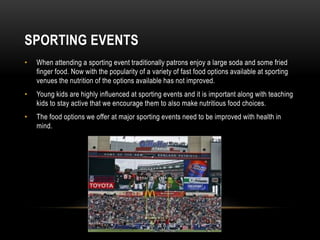
• When attending a sporting event traditionally patrons enjoy a large soda and some fried 
finger food. Now with the popularity of a variety of fast food options available at sporting 
venues the nutrition of the options available has not improved. 
• Young kids are highly influenced at sporting events and it is important along with teaching 
kids to stay active that we encourage them to also make nutritious food choices. 
• The food options we offer at major sporting events need to be improved with health in 
mind.
SOCIAL MEDIA 
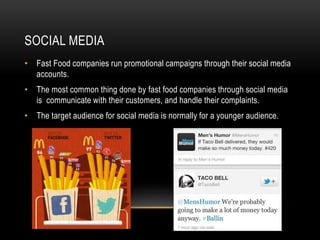
• Fast Food companies run promotional campaigns through their social media 
accounts. 
• The most common thing done by fast food companies through social media 
is communicate with their customers, and handle their complaints. 
• The target audience for social media is normally for a younger audience.
MOBILE APPLICATIONS 
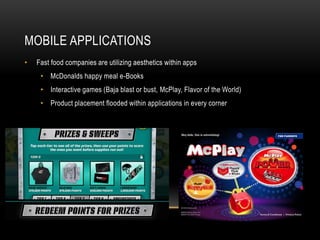
• Fast food companies are utilizing aesthetics within apps 
• McDonalds happy meal e-Books 
• Interactive games (Baja blast or bust, McPlay, Flavor of the World) 
• Product placement flooded within applications in every corner
COMMERCIALS 
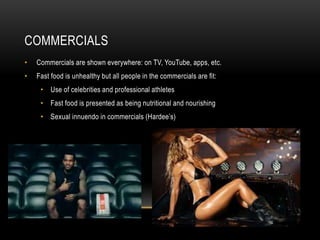
• Commercials are shown everywhere: on TV, YouTube, apps, etc. 
• Fast food is unhealthy but all people in the commercials are fit: 
• Use of celebrities and professional athletes 
• Fast food is presented as being nutritional and nourishing 
• Sexual innuendo in commercials (Hardee’s)
BILLBOARDS 
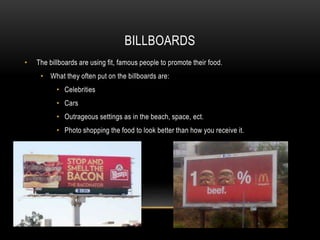
• The billboards are using fit, famous people to promote their food. 
• What they often put on the billboards are: 
• Celebrities 
• Cars 
• Outrageous settings as in the beach, space, ect. 
• Photo shopping the food to look better than how you receive it.
REALITY CHECK 
• “20% of all American Meals are had in the car.” 
• “Americans spend 10% of their disposable income on fast 
food every year.”
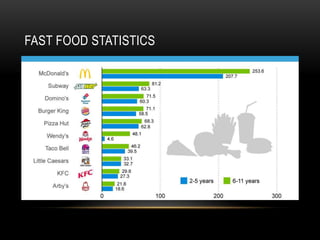
FAST FOOD STATISTICS
WHY IS IT SO CONCERNING? 
Fast food companies will continue to advertise in these ways 
because it is proven to be effective. 
Fast food consumers often do not have easy access or neglect 
to take into account the Nutritional Facts of the fast food items 
they are consuming. It is crucial that consumers monitor their 
intake of the following: 
• Trans Fats (IP-TFA) 
• Calories 
• Grams of Fat 
• Sugars
TAKING ACTION 
• All we can do to combat these advertisements is gain an awareness of them and become 
more media literate 
• Strategies to become media literate: 
• Become more skilled at designing messages 
• Take personal responsibility 
• Examine your mental codes 
• Strengthen your personal locus
TAKING ACTION (CONT.) 
• Social Media sites like twitter and Facebook offer you ability to customize the 
messages you see by the pages you like or follow. 
• We need to restrain from blame others and recognize the problem is fueled 
by ourselves as well. 
• Program our habits to serve our values and needs. 
• After analyzing goals the next step is finding the initiative and energy 
necessary to succeed your goals.
MEASUREABLE RESULTS 
• Our goal is to make average American children conscious of the 
messages they see 
• Broaden exposure (examine healthier alternatives/take a harder 
look at what we buy) 
• Periodically examine goals 
• Distinguish the reality from the fantasy 
• We would like to see the American education system 
incorporate media literacy into public schools

Fast food advertising ppt final

  • 1.
    FAST FOOD ADVERTISING JOSH PAXSON, LUKE HALL, BRYSON HALL, TIM ROBINSON, CHRISTIAN GONZALEZ
  • 2.
    SPORTING EVENTS •When attending a sporting event traditionally patrons enjoy a large soda and some fried finger food. Now with the popularity of a variety of fast food options available at sporting venues the nutrition of the options available has not improved. • Young kids are highly influenced at sporting events and it is important along with teaching kids to stay active that we encourage them to also make nutritious food choices. • The food options we offer at major sporting events need to be improved with health in mind.
  • 3.
    SOCIAL MEDIA •Fast Food companies run promotional campaigns through their social media accounts. • The most common thing done by fast food companies through social media is communicate with their customers, and handle their complaints. • The target audience for social media is normally for a younger audience.
  • 4.
    MOBILE APPLICATIONS •Fast food companies are utilizing aesthetics within apps • McDonalds happy meal e-Books • Interactive games (Baja blast or bust, McPlay, Flavor of the World) • Product placement flooded within applications in every corner
  • 5.
    COMMERCIALS • Commercialsare shown everywhere: on TV, YouTube, apps, etc. • Fast food is unhealthy but all people in the commercials are fit: • Use of celebrities and professional athletes • Fast food is presented as being nutritional and nourishing • Sexual innuendo in commercials (Hardee’s)
  • 6.
    BILLBOARDS • Thebillboards are using fit, famous people to promote their food. • What they often put on the billboards are: • Celebrities • Cars • Outrageous settings as in the beach, space, ect. • Photo shopping the food to look better than how you receive it.
  • 7.
    REALITY CHECK •“20% of all American Meals are had in the car.” • “Americans spend 10% of their disposable income on fast food every year.”
  • 8.
  • 9.
    WHY IS ITSO CONCERNING? Fast food companies will continue to advertise in these ways because it is proven to be effective. Fast food consumers often do not have easy access or neglect to take into account the Nutritional Facts of the fast food items they are consuming. It is crucial that consumers monitor their intake of the following: • Trans Fats (IP-TFA) • Calories • Grams of Fat • Sugars
  • 10.
    TAKING ACTION •All we can do to combat these advertisements is gain an awareness of them and become more media literate • Strategies to become media literate: • Become more skilled at designing messages • Take personal responsibility • Examine your mental codes • Strengthen your personal locus
  • 11.
    TAKING ACTION (CONT.) • Social Media sites like twitter and Facebook offer you ability to customize the messages you see by the pages you like or follow. • We need to restrain from blame others and recognize the problem is fueled by ourselves as well. • Program our habits to serve our values and needs. • After analyzing goals the next step is finding the initiative and energy necessary to succeed your goals.
  • 12.
    MEASUREABLE RESULTS •Our goal is to make average American children conscious of the messages they see • Broaden exposure (examine healthier alternatives/take a harder look at what we buy) • Periodically examine goals • Distinguish the reality from the fantasy • We would like to see the American education system incorporate media literacy into public schools