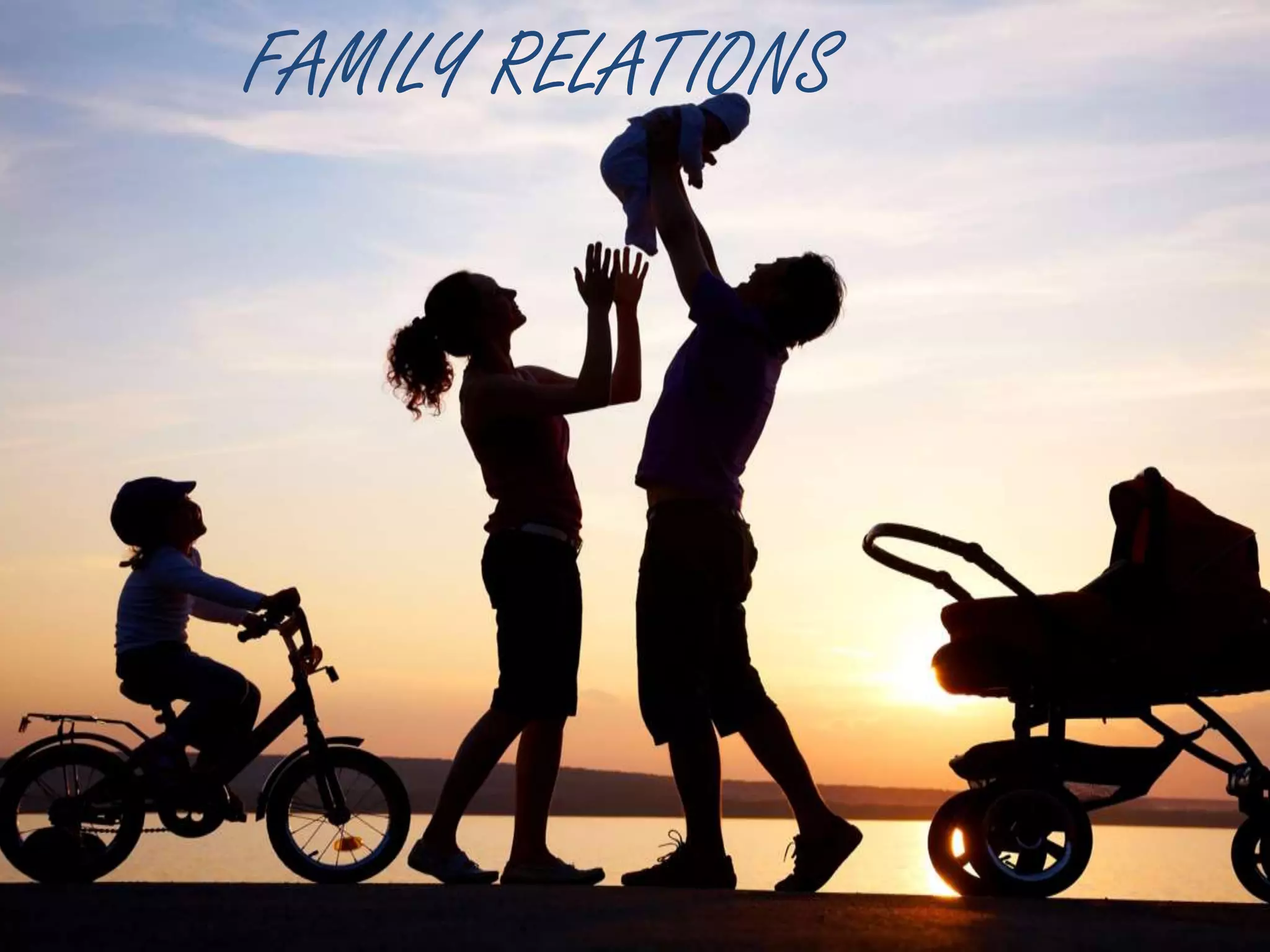

FAMILY RELATIONS
At every stage of life, our relationships and
families present us with both joys and
challenges.
Learning to manage stress, to understand our
own emotions and behaviors can help
strengthen our connections to the important
people in our lives.
Types of Families
• Simple Family
• Joint Family
• Extended Family
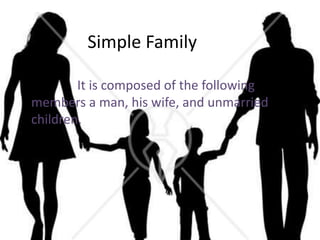
Simple Family
It is composed of the following
members a man, his wife, and unmarried
children.
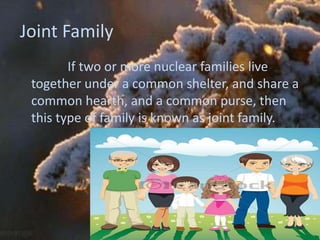
Joint Family
If two or more nuclear families live
together under a common shelter, and share a
common hearth, and a common purse, then
this type of family is known as joint family.
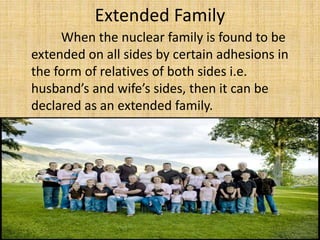
Extended Family
When the nuclear family is found to be
extended on all sides by certain adhesions in
the form of relatives of both sides i.e.
husband’s and wife’s sides, then it can be
declared as an extended family.
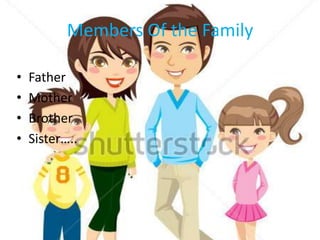
Members Of the Family
• Father
• Mother
• Brother
• Sister…..
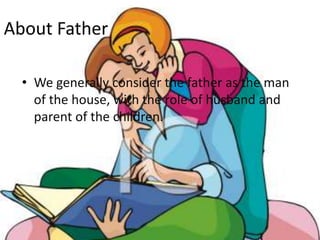
About Father
• We generally consider the father as the man
of the house, with the role of husband and
parent of the children.
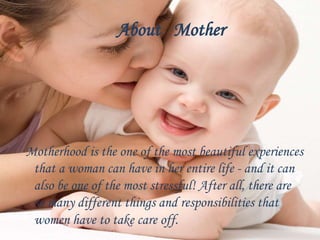
About Mother
Motherhood is the one of the most beautiful experiences
that a woman can have in her entire life - and it can
also be one of the most stressful! After all, there are
so many different things and responsibilities that
women have to take care off.
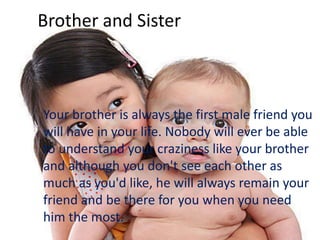
Brother and Sister
Your brother is always the first male friend you
will have in your life. Nobody will ever be able
to understand your craziness like your brother
and although you don't see each other as
much as you'd like, he will always remain your
friend and be there for you when you need
him the most.
Importance of FAMILY
• Family relationships provide children with a
critical sense of being valued and with a vital
network of historical linkages and social support.
• The family instructs children and gives guidance
about personal values and social behavior.
• Every parent knows it takes hard work to keep
the family going as an effective, adaptive, and
functional unit.
Conclusion
• Once a relationship becomes a commitment,
your reluctance to risk emotional pain has to
be put aside….!
Thank You

Family Relations

  • 1.
  • 2.
    At every stageof life, our relationships and families present us with both joys and challenges. Learning to manage stress, to understand our own emotions and behaviors can help strengthen our connections to the important people in our lives.
  • 3.
    Types of Families •Simple Family • Joint Family • Extended Family
  • 4.
    Simple Family It iscomposed of the following members a man, his wife, and unmarried children.
  • 5.
    Joint Family If twoor more nuclear families live together under a common shelter, and share a common hearth, and a common purse, then this type of family is known as joint family.
  • 6.
    Extended Family When thenuclear family is found to be extended on all sides by certain adhesions in the form of relatives of both sides i.e. husband’s and wife’s sides, then it can be declared as an extended family.
  • 7.
    Members Of theFamily • Father • Mother • Brother • Sister…..
  • 8.
    About Father • Wegenerally consider the father as the man of the house, with the role of husband and parent of the children.
  • 9.
    About Mother Motherhood isthe one of the most beautiful experiences that a woman can have in her entire life - and it can also be one of the most stressful! After all, there are so many different things and responsibilities that women have to take care off.
  • 10.
    Brother and Sister Yourbrother is always the first male friend you will have in your life. Nobody will ever be able to understand your craziness like your brother and although you don't see each other as much as you'd like, he will always remain your friend and be there for you when you need him the most.
  • 11.
    Importance of FAMILY •Family relationships provide children with a critical sense of being valued and with a vital network of historical linkages and social support. • The family instructs children and gives guidance about personal values and social behavior. • Every parent knows it takes hard work to keep the family going as an effective, adaptive, and functional unit.
  • 12.
    Conclusion • Once arelationship becomes a commitment, your reluctance to risk emotional pain has to be put aside….!
  • 13.