Fall Protection and
Prevention
2
Falls are the leading cause of
deaths in the construction industry.
Most fatalities occur when
employees fall from open-sided
floors and through floor openings.
Falls from as little as 1.2 to 1.8
meters can cause serious lost-
time accidents and sometimes
death.
Falls in Construction
3
Working at Height means:
• Working on temporary or permanent
structures that are greater than 1.8 meters
above the ground or floor level
What is Fall Protection
Procedure, equipment, plans, work method
put in place to protect people working at
height from falling.
• Guard rails
• Hole covers
• Warning lines
• Lifelines
• Harness
4
Hazards when Working at Heights
Working at a significant
elevation above the
ground or floor level can
result in:
• a person falling to the
ground, or
• dropping an object which
could strike another
worker
5
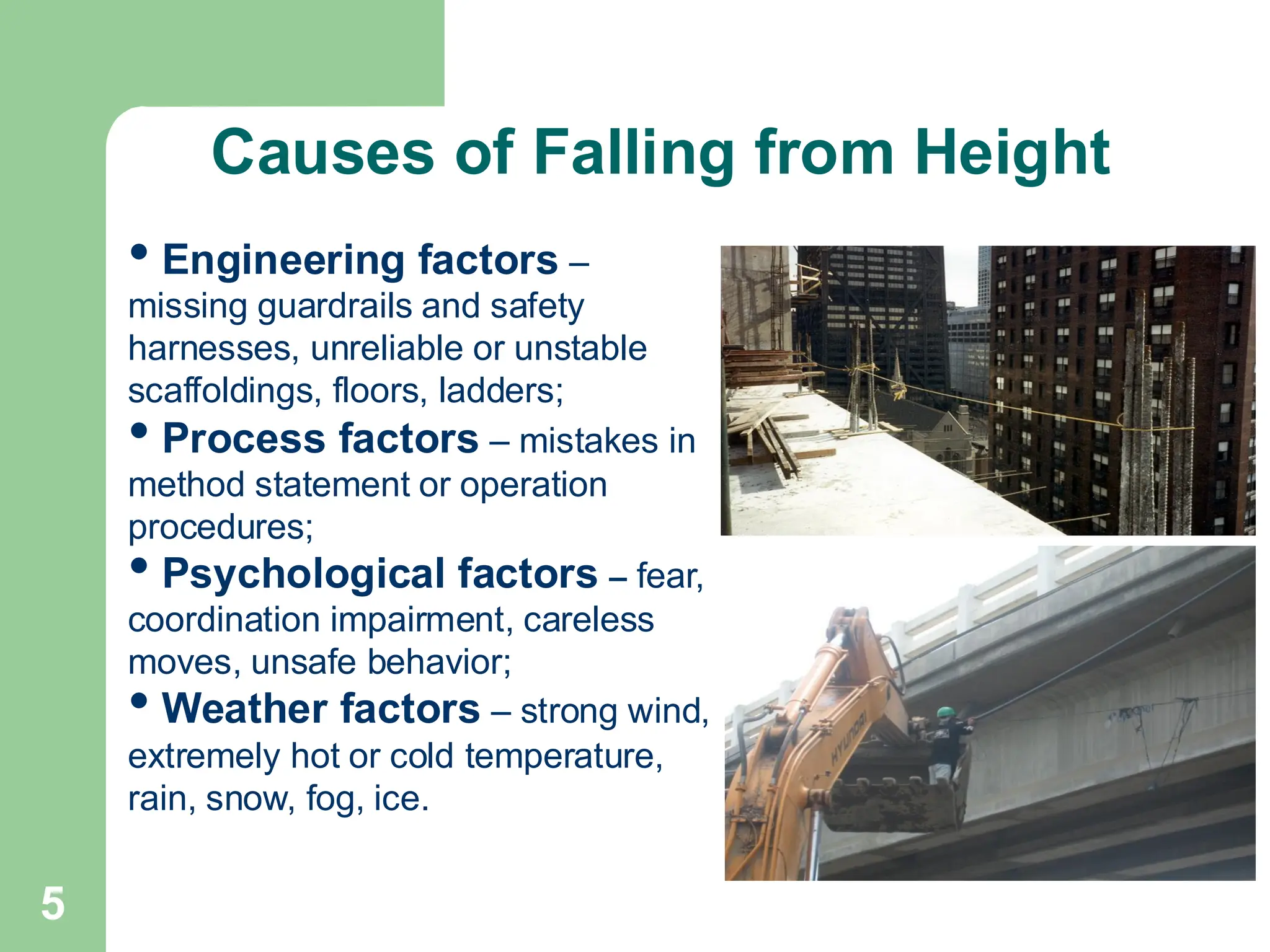
• Engineering factors –
missing guardrails and safety
harnesses, unreliable or unstable
scaffoldings, floors, ladders;
• Process factors – mistakes in
method statement or operation
procedures;
• Psychological factors – fear,
coordination impairment, careless
moves, unsafe behavior;
• Weather factors – strong wind,
extremely hot or cold temperature,
rain, snow, fog, ice.
Causes of Falling from Height
6
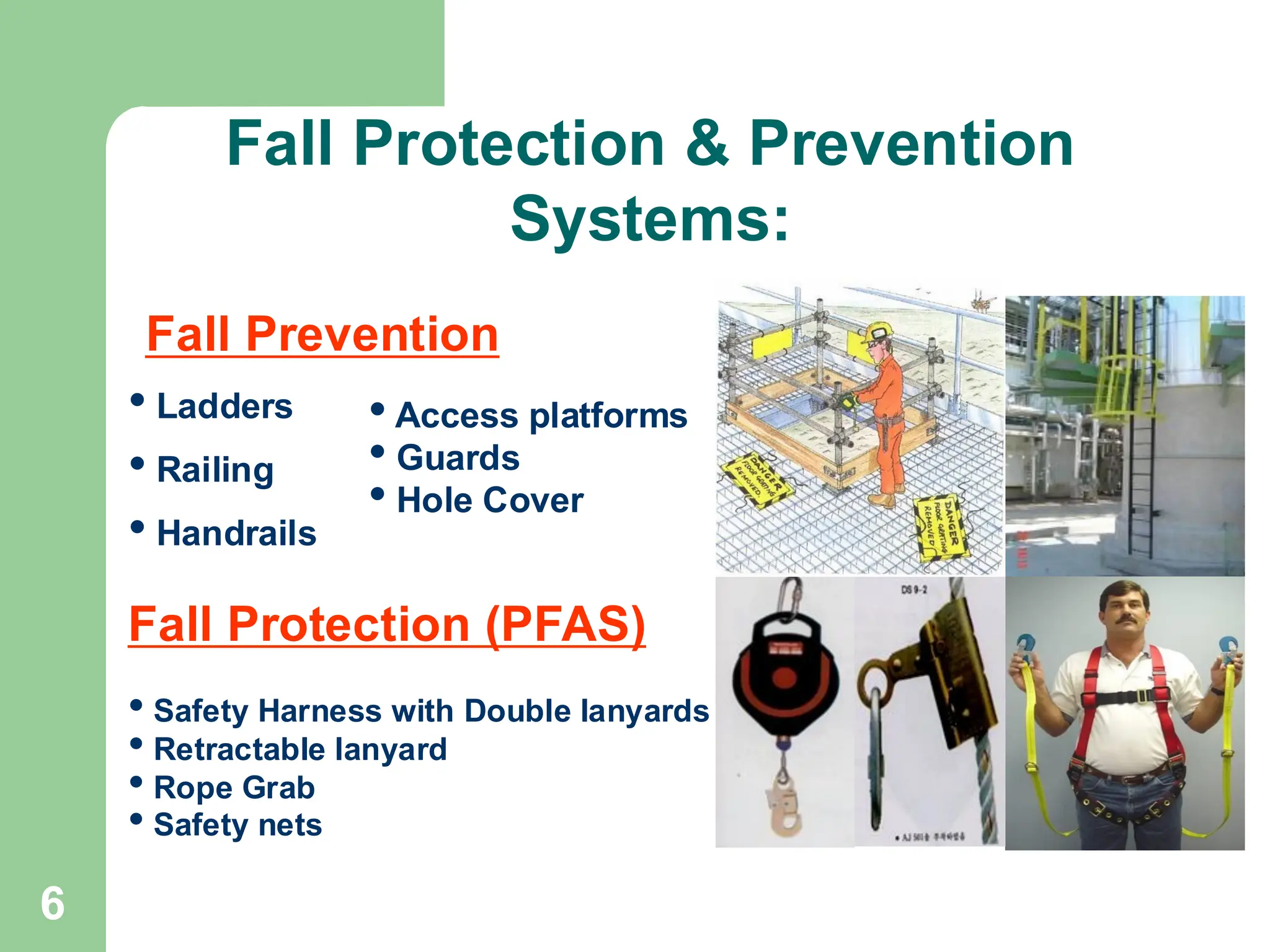
Fall Protection & Prevention
Systems:
Fall Protection (PFAS)
• Safety Harness with Double lanyards
• Retractable lanyard
• Rope Grab
• Safety nets
Fall Prevention
• Ladders
• Railing
• Handrails
• Access platforms
• Guards
• Hole Cover
7
Scaffolding/Temporary Platform
⚫ All temporary platform are to
be equipped with standard
guardrails system and a
solid decking free from
openings
⚫ Personnel traveling or
working on incomplete
structure shall wear and
secure their lanyards to an
anchorage point capable of
supporting 2,500kg
⚫ Every temporary platform
shall be provided with a safe
of access/egress
8
Temporary Hole Cover
To make hole safe it can
be covered by steel plates
or wooden planks to get
suitable strength and
support.
The fixed support must not
be easily removable.
A TRIP HAZARD sign
board must be posted
9
Guardrail Systems
⚫ Top rail must be 1.1 meters
above the walking/working
platform
⚫ Midrails must be installed in
between top rail and the
working level
⚫ Top rail must be capable of
withstanding without failure a
force of at least 91kg
⚫ If the top rail is wire rope, it
must be flagged with high
visibility material at intervals
10
Ladders
⚫ Temporary ladders shall extend at
least 1 meters or 3 rungs above
the landing platform and be
properly secured
⚫ Ladder extending above 3.7m
must be equipped with a
retractable lifeline
⚫ Personnel using these ladder
must secure their retractable
lifeline to the harness
⚫ Personnel using a ladder not yet
secured at the top must have
another person to hold the ladder
at the bottom
11
Full Body Harness with Two lanyard
Used during works performed on an
unprotected work location at
elevations higher than 1.8 meters
above the ground
Lanyard must be secured to a
suitable anchorage point that is
capable of supporting an impact load of
2,500Kg
Prior to use, make sure that fall
protection equipment is in good
operating condition
Personal Fall Arrest System (PFAS)
12
Retractable Lanyard / Rope Grab
"Deceleration device" - Any
mechanism, such as a rope
grab, rip-stitch lanyard,
specially-woven lanyard,
tearing or deforming lanyards,
automatic self-retracting
lifelines/lanyards, etc., which
serves to dissipate a
substantial amount of energy
during a fall arrest, or
otherwise limit the energy
imposed on an employee
during fall arrest.
13
Retractable Lanyard / Rope Grab
14
Lifelines
Lifelines shall be secured above the
point of operation to an anchorage
or structural
member capable of supporting a
minimum dead weight of 2,500 Kg.
Lifelines shall be used only for
employee safeguarding. Any lifeline
actually subjected to in-service
loading, as distinguished from static
load testing, shall be immediately
removed from service and shall not
be used again for employee
safeguarding
15
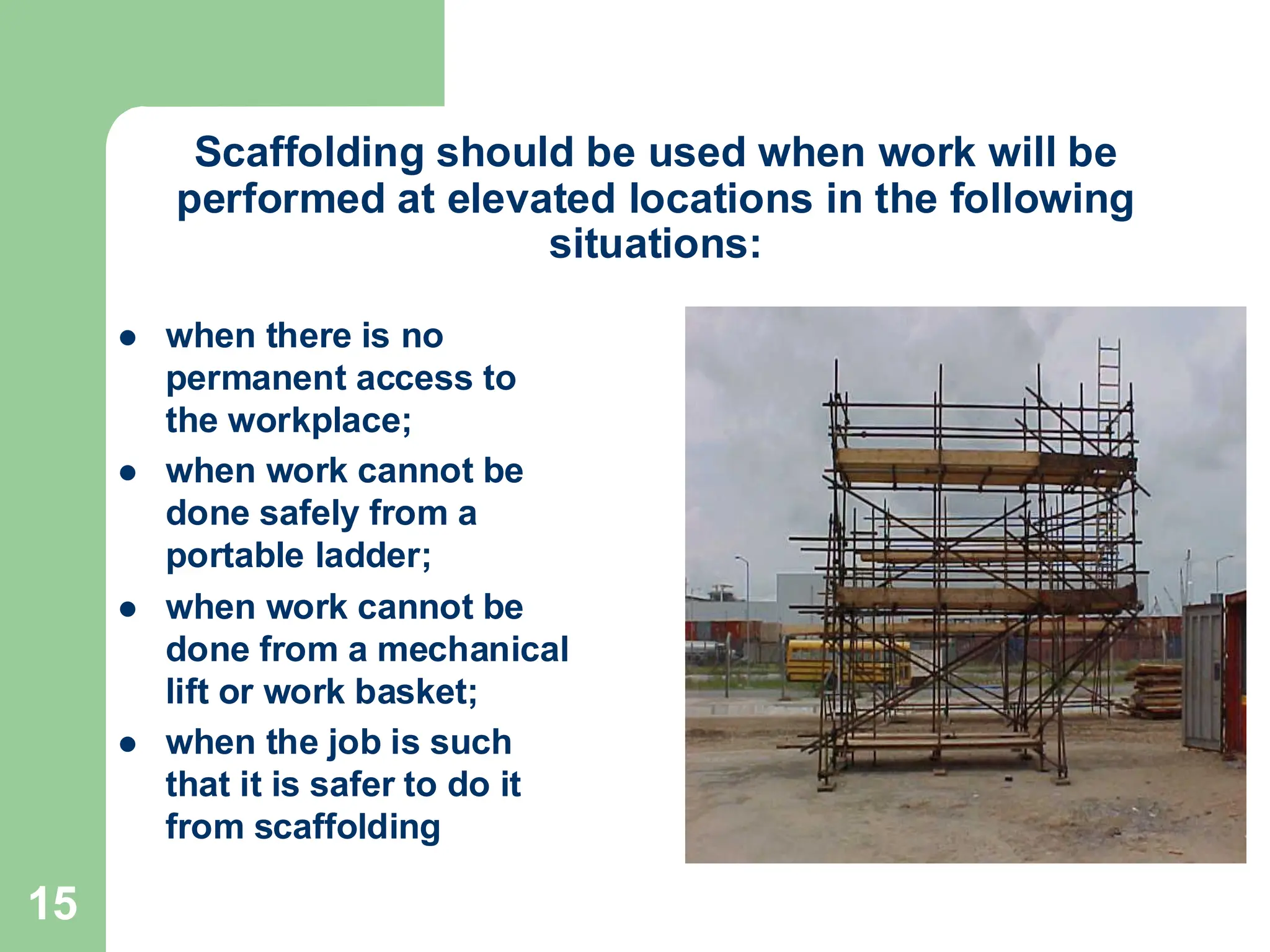
Scaffolding should be used when work will be
performed at elevated locations in the following
situations:
⚫ when there is no
permanent access to
the workplace;
⚫ when work cannot be
done safely from a
portable ladder;
⚫ when work cannot be
done from a mechanical
lift or work basket;
⚫ when the job is such
that it is safer to do it
from scaffolding
16
Personnel shall not work at height:
⚫ When feeling fatigue or
dizziness
⚫ If fall protection
equipment is defective or
damaged
⚫ During high winds (speed
of approximately 32 km/s
or greater)
⚫ If scaffolds are covered
with ice or snow
⚫ When visibility is poor
17
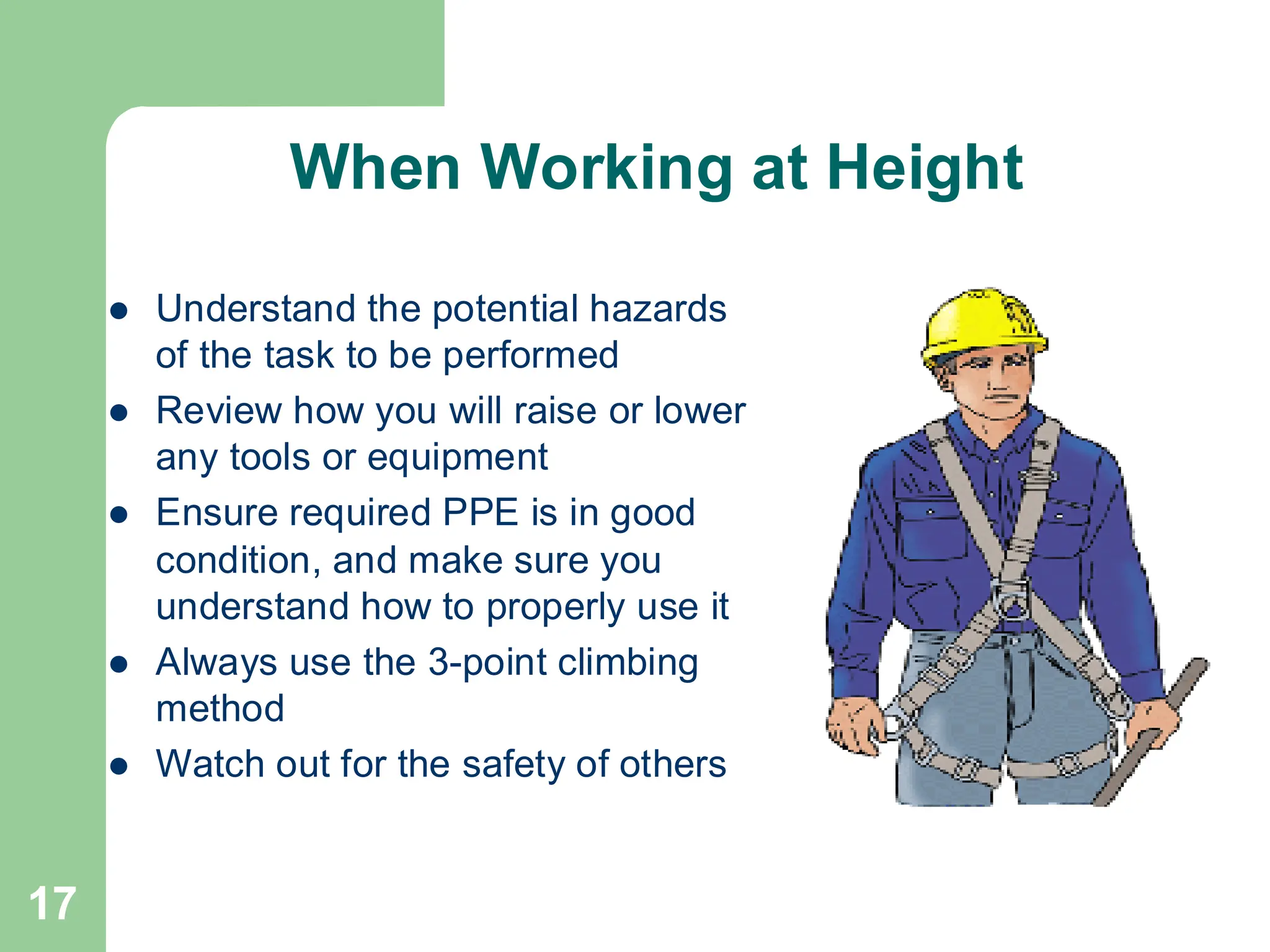
⚫ Understand the potential hazards
of the task to be performed
⚫ Review how you will raise or lower
any tools or equipment
⚫ Ensure required PPE is in good
condition, and make sure you
understand how to properly use it
⚫ Always use the 3-point climbing
method
⚫ Watch out for the safety of others
When Working at Height
18
If you are
connected –
you are
protected!
REMEMBER!!!!

Fall Protection & Prevention hsedocspro.com.pdf

  • 1.
  • 2.
    2 Falls are theleading cause of deaths in the construction industry. Most fatalities occur when employees fall from open-sided floors and through floor openings. Falls from as little as 1.2 to 1.8 meters can cause serious lost- time accidents and sometimes death. Falls in Construction
  • 3.
    3 Working at Heightmeans: • Working on temporary or permanent structures that are greater than 1.8 meters above the ground or floor level What is Fall Protection Procedure, equipment, plans, work method put in place to protect people working at height from falling. • Guard rails • Hole covers • Warning lines • Lifelines • Harness
  • 4.
    4 Hazards when Workingat Heights Working at a significant elevation above the ground or floor level can result in: • a person falling to the ground, or • dropping an object which could strike another worker
  • 5.
    5 • Engineering factors– missing guardrails and safety harnesses, unreliable or unstable scaffoldings, floors, ladders; • Process factors – mistakes in method statement or operation procedures; • Psychological factors – fear, coordination impairment, careless moves, unsafe behavior; • Weather factors – strong wind, extremely hot or cold temperature, rain, snow, fog, ice. Causes of Falling from Height
  • 6.
    6 Fall Protection &Prevention Systems: Fall Protection (PFAS) • Safety Harness with Double lanyards • Retractable lanyard • Rope Grab • Safety nets Fall Prevention • Ladders • Railing • Handrails • Access platforms • Guards • Hole Cover
  • 7.
    7 Scaffolding/Temporary Platform ⚫ Alltemporary platform are to be equipped with standard guardrails system and a solid decking free from openings ⚫ Personnel traveling or working on incomplete structure shall wear and secure their lanyards to an anchorage point capable of supporting 2,500kg ⚫ Every temporary platform shall be provided with a safe of access/egress
  • 8.
    8 Temporary Hole Cover Tomake hole safe it can be covered by steel plates or wooden planks to get suitable strength and support. The fixed support must not be easily removable. A TRIP HAZARD sign board must be posted
  • 9.
    9 Guardrail Systems ⚫ Toprail must be 1.1 meters above the walking/working platform ⚫ Midrails must be installed in between top rail and the working level ⚫ Top rail must be capable of withstanding without failure a force of at least 91kg ⚫ If the top rail is wire rope, it must be flagged with high visibility material at intervals
  • 10.
    10 Ladders ⚫ Temporary laddersshall extend at least 1 meters or 3 rungs above the landing platform and be properly secured ⚫ Ladder extending above 3.7m must be equipped with a retractable lifeline ⚫ Personnel using these ladder must secure their retractable lifeline to the harness ⚫ Personnel using a ladder not yet secured at the top must have another person to hold the ladder at the bottom
  • 11.
    11 Full Body Harnesswith Two lanyard Used during works performed on an unprotected work location at elevations higher than 1.8 meters above the ground Lanyard must be secured to a suitable anchorage point that is capable of supporting an impact load of 2,500Kg Prior to use, make sure that fall protection equipment is in good operating condition Personal Fall Arrest System (PFAS)
  • 12.
    12 Retractable Lanyard /Rope Grab "Deceleration device" - Any mechanism, such as a rope grab, rip-stitch lanyard, specially-woven lanyard, tearing or deforming lanyards, automatic self-retracting lifelines/lanyards, etc., which serves to dissipate a substantial amount of energy during a fall arrest, or otherwise limit the energy imposed on an employee during fall arrest.
  • 13.
  • 14.
    14 Lifelines Lifelines shall besecured above the point of operation to an anchorage or structural member capable of supporting a minimum dead weight of 2,500 Kg. Lifelines shall be used only for employee safeguarding. Any lifeline actually subjected to in-service loading, as distinguished from static load testing, shall be immediately removed from service and shall not be used again for employee safeguarding
  • 15.
    15 Scaffolding should beused when work will be performed at elevated locations in the following situations: ⚫ when there is no permanent access to the workplace; ⚫ when work cannot be done safely from a portable ladder; ⚫ when work cannot be done from a mechanical lift or work basket; ⚫ when the job is such that it is safer to do it from scaffolding
  • 16.
    16 Personnel shall notwork at height: ⚫ When feeling fatigue or dizziness ⚫ If fall protection equipment is defective or damaged ⚫ During high winds (speed of approximately 32 km/s or greater) ⚫ If scaffolds are covered with ice or snow ⚫ When visibility is poor
  • 17.
    17 ⚫ Understand thepotential hazards of the task to be performed ⚫ Review how you will raise or lower any tools or equipment ⚫ Ensure required PPE is in good condition, and make sure you understand how to properly use it ⚫ Always use the 3-point climbing method ⚫ Watch out for the safety of others When Working at Height
  • 18.
    18 If you are connected– you are protected! REMEMBER!!!!