Extinct BirdsHaast’s Eagle, The Huia, And The Bush Wren
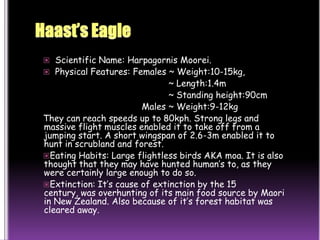
Haast’s EagleScientific Name: Harpagornis Moorei.Physical Features: Females ~ Weight:10-15kg,                                                ~ Length:1.4m                                               ~ Standing height:90cm                                     Males ~ Weight:9-12kgThey can reach speeds up to 80kph. Strong legs and massive flight muscles enabled it to take off from a jumping start. A short wingspan of 2.6-3m enabled it to hunt in scrubland and forest.Eating Habits: Large flightless birds AKA moa. It is also thought that they may have hunted human’s to, as they were certainly large enough to do so.Extinction: It’s cause of extinction by the 15 century, was overhunting of its main food source by Maori in New Zealand. Also because of it’s forest habitat was cleared away.
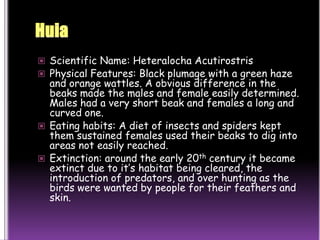
HuiaScientific Name: Heteralocha AcutirostrisPhysical Features: Black plumage with a green haze and orange wattles. A obvious difference in the beaks made the males and female easily determined. Males had a very short beak and females a long and curved one.Eating habits: A diet of insects and spiders kept them sustained females used their beaks to dig into areas not easily reached.Extinction: around the early 20th century it became extinct due to it’s habitat being cleared, the introduction of predators, and over hunting as the birds were wanted by people for their feathers and skin.
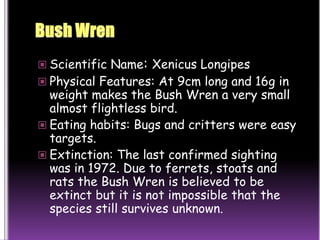
Bush WrenScientific Name: Xenicus LongipesPhysical Features: At 9cm long and 16g in weight makes the Bush Wren a very small almost flightless bird.Eating habits: Bugs and critters were easy targets.Extinction: The last confirmed sighting was in 1972. Due to ferrets, stoats and rats the Bush Wren is believed to be extinct but it is not impossible that the species still survives unknown.

Extinct Birds

  • 1.
    Extinct BirdsHaast’s Eagle,The Huia, And The Bush Wren
  • 2.
    Haast’s EagleScientific Name:Harpagornis Moorei.Physical Features: Females ~ Weight:10-15kg, ~ Length:1.4m ~ Standing height:90cm Males ~ Weight:9-12kgThey can reach speeds up to 80kph. Strong legs and massive flight muscles enabled it to take off from a jumping start. A short wingspan of 2.6-3m enabled it to hunt in scrubland and forest.Eating Habits: Large flightless birds AKA moa. It is also thought that they may have hunted human’s to, as they were certainly large enough to do so.Extinction: It’s cause of extinction by the 15 century, was overhunting of its main food source by Maori in New Zealand. Also because of it’s forest habitat was cleared away.
  • 3.
    HuiaScientific Name: HeteralochaAcutirostrisPhysical Features: Black plumage with a green haze and orange wattles. A obvious difference in the beaks made the males and female easily determined. Males had a very short beak and females a long and curved one.Eating habits: A diet of insects and spiders kept them sustained females used their beaks to dig into areas not easily reached.Extinction: around the early 20th century it became extinct due to it’s habitat being cleared, the introduction of predators, and over hunting as the birds were wanted by people for their feathers and skin.
  • 4.
    Bush WrenScientific Name:Xenicus LongipesPhysical Features: At 9cm long and 16g in weight makes the Bush Wren a very small almost flightless bird.Eating habits: Bugs and critters were easy targets.Extinction: The last confirmed sighting was in 1972. Due to ferrets, stoats and rats the Bush Wren is believed to be extinct but it is not impossible that the species still survives unknown.