Importance of Analyzingthe External Environment
• Managers can mitigate threats.
• Managers can leverage opportunities.
• Gain understanding of potential impacts.
• Understand the source / proximity of factors.
3.
The PESTEL Model
•Groups environmental factors into six segments:
– Political
– Economic
– Sociocultural
– Technological
– Ecological
– Legal
• These factors can create:
– Opportunities
– Threats
4.
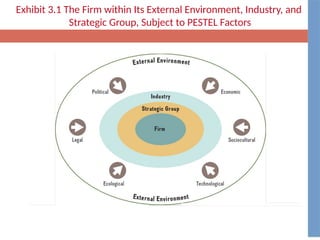
Exhibit 3.1 TheFirm within Its External Environment, Industry, and
Strategic Group, Subject to PESTEL Factors
5.
Political Factors
• Processes& actions of government bodies
• Firms can shape this factor through:
– Lobbying
– Public Relations
– Contributions
– Litigation
• Example: Tesla
– Has a build-to-order sales model
– Cuts out dealers
– Dealers are lobbying for new legislation
In Periods ofEconomic Expansion…
• Growth rates:
– Businesses expand, are more profitable.
• Levels of employment
– Unemployment is low.
• Interest rates
– Credit is cheap because interest rates are low.
• Price stability
– Rising prices result in inflation.
• Currency exchange rates
– The dollar can appreciate.
8.
In Periods ofEconomic Contraction…
• Growth rates:
– Businesses retract, are less profitable.
• Levels of employment
– Unemployment is high.
• Interest rates
– Credit is expensive because interest rates are high.
• Price stability
– Falling prices result in deflation.
• Currency exchange rates
– The dollar can depreciate.
9.
Sociocultural Factors
• Society’scultures, norms, and values
– Are constantly in flux
– Differ across groups
• Demographic trends
– Present opportunities and threats
– Population characteristics related to age, gender, family
size, ethnicity, sexual orientation, religion, and
socioeconomic class
10.
Technological Factors
• Applicationof knowledge
– To create new processes
– To create new products
• Innovations in process technology:
– Lean manufacturing, Six Sigma quality, and biotechnology
• Innovations in product technology:
– Smartphones, computer tablets, and high-performing
electric cars such as the Tesla Model S
11.
Ecological Factors
• Involveenvironmental issues, such as:
– Natural environment
– Global warming
– Sustainable economic growth
• Also provide business opportunities
12.
Legal Factors
• Officialoutcomes of political processes:
– Laws
– Mandates
– Regulations
– Court decisions
• Industry deregulations affect multiple industries:
– Airlines, telecom, energy, and trucking
• Governments can achieve desired outcomes:
– To buy zero-emission vehicles, the U.S. government offers
a $7,500 federal tax credit
13.
Strategy Highlight 3.1(1 of 2)
• Blackberry
– Pioneer in smartphones
– Increased productivity
– A status symbol
• Market cap of Blackberry:
– In 2008: $75 Billion
– In 2015: $8 Billion
14.
Strategy Highlight 3.1(2 of 2)
• Lacked awareness of Sociocultural Factors
– People began to use their own phones at work for
communication.
– IT departments had to incorporate other devices.
• Lacked awareness of Technological Factors
– Apple’s release in ‘07 included a camera, touch-screen,
and had Wi-Fi.
– Was dismissed as a toy with low security features
Editor's Notes
#5 Traditional car dealers have been challenging Tesla’s build-to-order sales model that allows customers to purchase a Tesla vehicle online and have it delivered to their home anywhere in the United States. Traditional car dealers, which often benefit from geographic monopolies, are not so much concerned about Tesla Motors as they are that their own brand names, such as GM or Ford, will also adopt an online, direct-to-consumer sales model, thus cutting out the dealers. Auto dealers and their associations are powerful lobbying forces that are influencing the political process to invoke decade-old laws and regulations or to craft new legislation in most states to prevent Tesla from selling directly to consumers. Ramsey, M. “Tesla closer to being able to have New Jersey dealerships,” The Wall Street Journal, March 17, 2015.
#9 Example: growing health consciousness
Boom for Chipotle, Subway, and Whole Foods
McDonalds and Burger King had to adjust.
#11 Negative examples come readily to mind, as many business organizations have contributed to the pollution of air, water, and land, as well as depletion of the world’s natural resources. BP’s infamous oil spill in the Gulf of Mexico destroyed fauna and flora along the U.S. shoreline from Texas to Florida. This disaster led to a decrease in fish and wildlife populations, triggered a decline in the fishery and tourism industries, and threatened the livelihood of thousands of people. It also cost BP more than $40 billion and one-half of its market value (see Strategy Highlight 1.2).






![PESTEL_Analysis_Presentation_2[1].pptx for student](https://cdn.slidesharecdn.com/ss_thumbnails/pestelanalysispresentation21-260103090332-9af7bef0-thumbnail.jpg?width=640&height=640&fit=bounds)


