Definition
•
Any interference ormeans aimed at providing immunity
and preemptive protection from the risks of contracting
diseases and the resulting symptoms and complications
that may lead to disability or death
.
3.
•
Vaccination: It isthe process of creating direct contact
between the immune system of the vaccinated person
and the weakened or killed microorganism, or its harmless
toxins (toxoid), in a way that does not cause any disease
or complications. It is sufficient to stimulate the immune
memory to protect the vaccinated person when the actual
pathogen enters their body, enabling an effective
response against its harmful effects and toxins, thereby
preventing the development of the disease or any
subsequent complications
.
4.
•
Vaccine: A substancegiven to a person with the aim of
stimulating the immune system to confront and eliminate
the disease-causing agent or its toxins upon entering the
human body
.
5.
GOAL
•
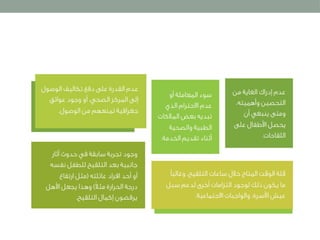
The general goalis to reduce mortality, disability, and
morbidity rates among children caused by diseases that
can be prevented by vaccines
.
6.
• The expandedimmunization program targets:
• - Children under five years old
• .- Pregnant women and women of reproductive age (15-
49 years).
• - High-risk groups exposed to vaccine-preventable
diseases.
7.
TYPES OF VACCINE
•
Bacterialvaccines such as the BCG vaccine, the
pertussis vaccine, the Haemophilus influenzae type B
(Hib) vaccine, and the pneumococcal vaccine (PCV).
Toxoid vaccines (inactivated bacterial toxins), which
include vaccines for diphtheria and tetanus
.
•
Viral vaccines, including the measles, mumps, and
rubella vaccine, the poliovirus vaccine (oral and
inactivated), the hepatitis B vaccine, and the rotavirus
vaccine
.
8.
• LIQUID Ready-to-usevaccines such as the oral polio
vaccine, pneumococcal vaccine, and the pentavalent
vaccine (which includes vaccines for diphtheria, tetanus,
acellular pertussis, hepatitis B, and Haemophilus
influenzae type b (Hib)) and the tetanus toxoid vaccine
(TT);
• or freeze-dried (lyophilized) vaccines such as BCG
vaccine, measles vaccine, and combined measles
vaccine, which require reconstitution with a specific
solvent before administration.
9.
TYPES OF ROUTINEVACCINES
•
Routine vaccines are those vaccines that are given to
children and women of childbearing age according to a
national schedule
.
•
Non-routine vaccines are those given to high-risk groups
exposed to diseases
.
10.
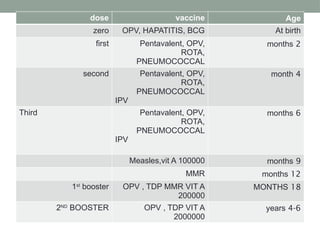
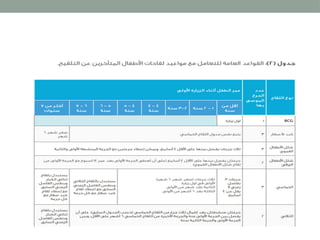
dose vaccine Age
zeroOPV, HAPATITIS, BCG At birth
first Pentavalent, OPV,
ROTA,
PNEUMOCOCCAL
2
months
second Pentavalent, OPV,
ROTA,
PNEUMOCOCCAL
IPV
4
month
Third Pentavalent, OPV,
ROTA,
PNEUMOCOCCAL
IPV
6
months
Measles,vit A 100000 9
months
MMR 12
months
1st
booster OPV , TDP MMR VIT A
200000
18
MONTHS
2ND
BOOSTER OPV , TDP VIT A
2000000
4-6
years
11.
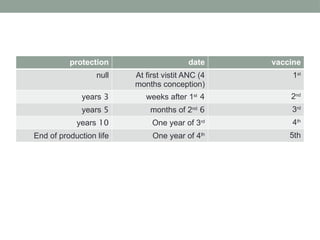
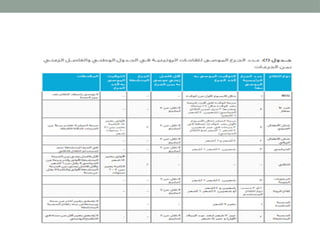
protection date vaccine
nullAt first vistit ANC (4
months conception)
1st
3
years 4
weeks after 1st 2nd
5
years 6
months of 2nd 3rd
10
years One year of 3rd 4th
End of production life One year of 4th 5th
12.
•
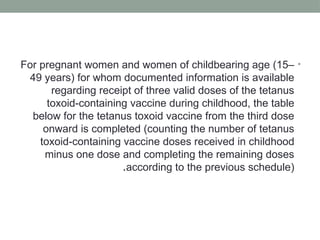
For pregnant womenand women of childbearing age (15–
49 years) for whom documented information is available
regarding receipt of three valid doses of the tetanus
toxoid-containing vaccine during childhood, the table
below for the tetanus toxoid vaccine from the third dose
onward is completed (counting the number of tetanus
toxoid-containing vaccine doses received in childhood
minus one dose and completing the remaining doses
according to the previous schedule)
.
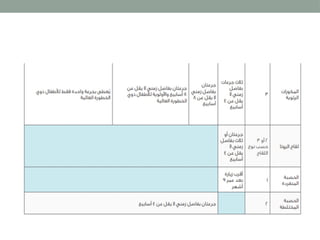
13.
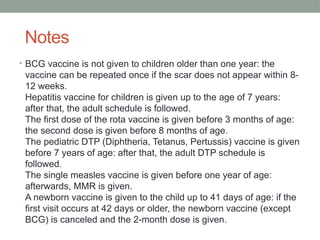
Notes
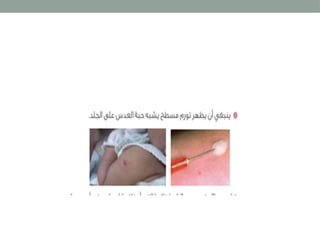
• BCG vaccineis not given to children older than one year: the
vaccine can be repeated once if the scar does not appear within 8-
12 weeks.
Hepatitis vaccine for children is given up to the age of 7 years:
after that, the adult schedule is followed.
The first dose of the rota vaccine is given before 3 months of age:
the second dose is given before 8 months of age.
The pediatric DTP (Diphtheria, Tetanus, Pertussis) vaccine is given
before 7 years of age: after that, the adult DTP schedule is
followed.
The single measles vaccine is given before one year of age:
afterwards, MMR is given.
A newborn vaccine is given to the child up to 41 days of age: if the
first visit occurs at 42 days or older, the newborn vaccine (except
BCG) is canceled and the 2-month dose is given.
14.
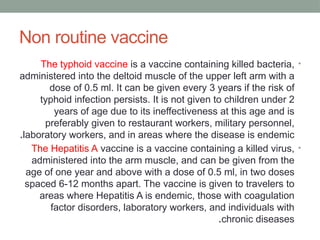
Non routine vaccine
•
Thetyphoid vaccine is a vaccine containing killed bacteria,
administered into the deltoid muscle of the upper left arm with a
dose of 0.5 ml. It can be given every 3 years if the risk of
typhoid infection persists. It is not given to children under 2
years of age due to its ineffectiveness at this age and is
preferably given to restaurant workers, military personnel,
laboratory workers, and in areas where the disease is endemic
.
•
The Hepatitis A vaccine is a vaccine containing a killed virus,
administered into the arm muscle, and can be given from the
age of one year and above with a dose of 0.5 ml, in two doses
spaced 6-12 months apart. The vaccine is given to travelers to
areas where Hepatitis A is endemic, those with coagulation
factor disorders, laboratory workers, and individuals with
chronic diseases
.
15.
Non routine vaccine
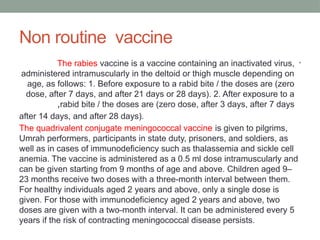
•
Therabies vaccine is a vaccine containing an inactivated virus,
administered intramuscularly in the deltoid or thigh muscle depending on
age, as follows: 1. Before exposure to a rabid bite / the doses are (zero
dose, after 7 days, and after 21 days or 28 days). 2. After exposure to a
rabid bite / the doses are (zero dose, after 3 days, after 7 days
,
after 14 days, and after 28 days).
The quadrivalent conjugate meningococcal vaccine is given to pilgrims,
Umrah performers, participants in state duty, prisoners, and soldiers, as
well as in cases of immunodeficiency such as thalassemia and sickle cell
anemia. The vaccine is administered as a 0.5 ml dose intramuscularly and
can be given starting from 9 months of age and above. Children aged 9–
23 months receive two doses with a three-month interval between them.
For healthy individuals aged 2 years and above, only a single dose is
given. For those with immunodeficiency aged 2 years and above, two
doses are given with a two-month interval. It can be administered every 5
years if the risk of contracting meningococcal disease persists.
16.
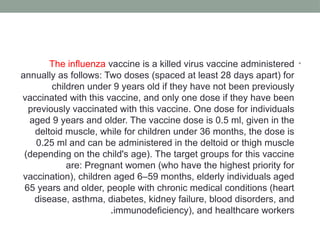
•
The influenza vaccineis a killed virus vaccine administered
annually as follows: Two doses (spaced at least 28 days apart) for
children under 9 years old if they have not been previously
vaccinated with this vaccine, and only one dose if they have been
previously vaccinated with this vaccine. One dose for individuals
aged 9 years and older. The vaccine dose is 0.5 ml, given in the
deltoid muscle, while for children under 36 months, the dose is
0.25 ml and can be administered in the deltoid or thigh muscle
(depending on the child's age). The target groups for this vaccine
are: Pregnant women (who have the highest priority for
vaccination), children aged 6–59 months, elderly individuals aged
65 years and older, people with chronic medical conditions (heart
disease, asthma, diabetes, kidney failure, blood disorders, and
immunodeficiency), and healthcare workers
.
17.
•
The yellow fevervaccine is a live attenuated vaccine
given as a single dose of 0.5 ml intramuscularly or
subcutaneously for individuals over 9 months old. It is
preferably administered to travelers to regions endemic
for yellow fever, such as Africa and South America
.
18.
Cooling chain
•
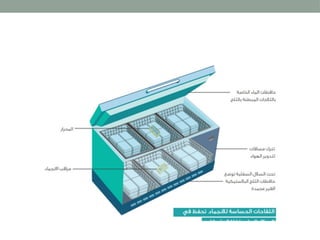
The coldchain system is the system that ensures the
vaccines remain safe and effective from the moment of
manufacture until their use through a series of storage
and transportation links designed to maintain the vaccines
within the recommended temperature range until they
reach the final beneficiary
.
Monitoring and recordingtemperatures
•
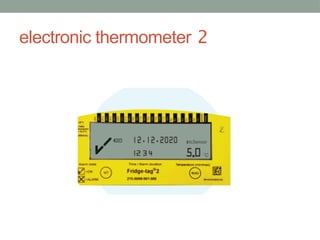
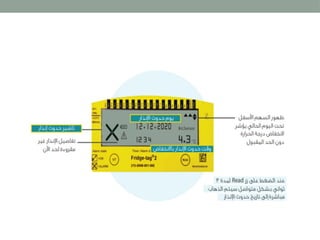
Temperature is monitored by reading the electronic
thermometer in the refrigerator twice daily (at the
beginning and end of the shift) and tracking it on Fridays
and official holidays. Document the temperature according
to the day, date, and time in the monthly temperature
monitoring form using the approved measurement
template for that form
.
24.
•
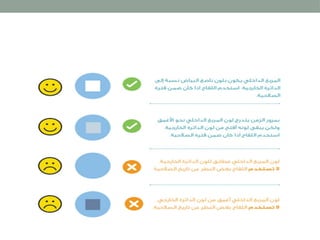
Temperature monitoring tools1. Vaccine Vial Monitor
(VVM), which is a sticker (indicator) placed on the vaccine
vial containing a heat-sensitive material, aimed at
indicating the cumulative temperature exposure over time
.
•
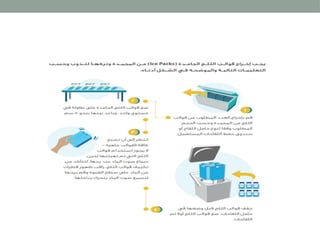
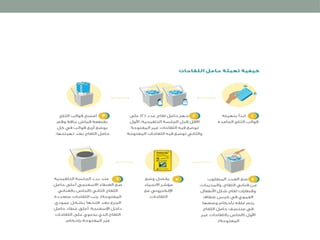
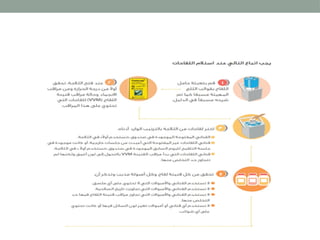
Remember: Vaccines shouldnot be stored in carriers for more
than 12 hours. This means that the vaccines must be taken from
the insulated cooler (ice box) and placed in the vaccine carriers
on the day of the vaccination session, and any unused vials
must be returned to the cooler at the end of the session. Hard
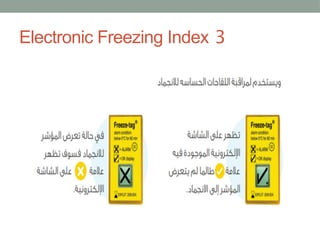
ice packs may expose sensitive vaccines to freezing damage,
including (BCG, pneumococcal, hepatitis B, tetanus toxoid,
measles, pentavalent, quadrivalent, DTP, and smaller vaccines).
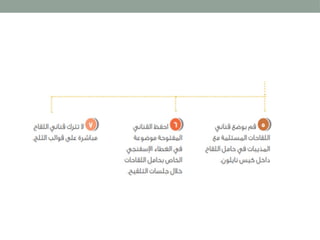
The foam cover is a thin piece of sponge placed at the top of the
vaccine carrier above the ice packs. The foam piece has holes
specifically for inserting the vaccine vials. The benefit of using
the foam cover is that it keeps the vaccines cold, prevents
contamination by storing the open vials vertically, and protects
them from light exposure. The foam cover must be clean
.
32.
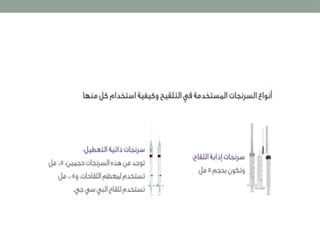
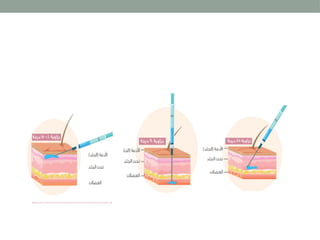
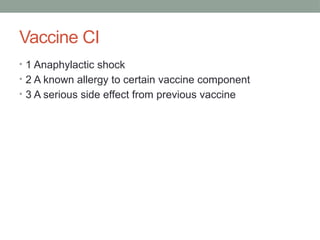
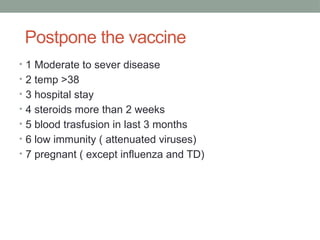
Safety of vaccines
•
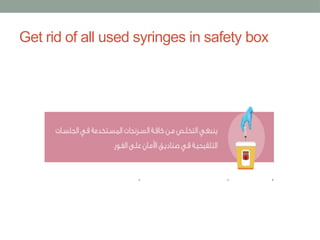
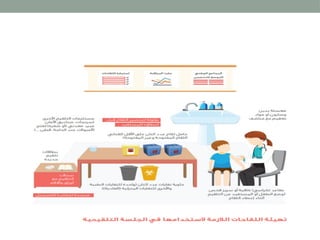
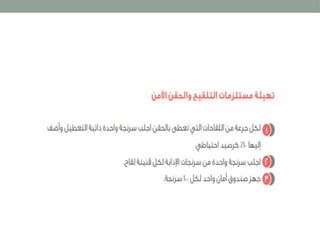
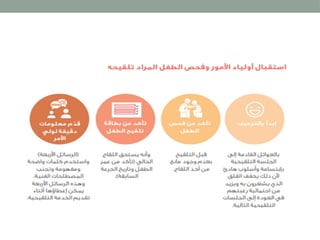
Safefor the vaccinated person (by following safe injection
steps and proper disposal of vaccination waste). Safe for
the beneficiary by ensuring the minimization of side
effects from the vaccination and being fully prepared to
intervene in case of any severe side effects by providing
emergency medications. Safe for the community by
following ideal safe steps for the disposal of vaccination
waste without harming the community and the
environment
.


![APPROACH TO FEVER IN PEDIATRICS[1].pptTT](https://cdn.slidesharecdn.com/ss_thumbnails/approachtofeverinpediatrics1-260125081456-d559e079-thumbnail.jpg?width=640&height=640&fit=bounds)


