HOW TO MAKE A HEAVY
BALLOON
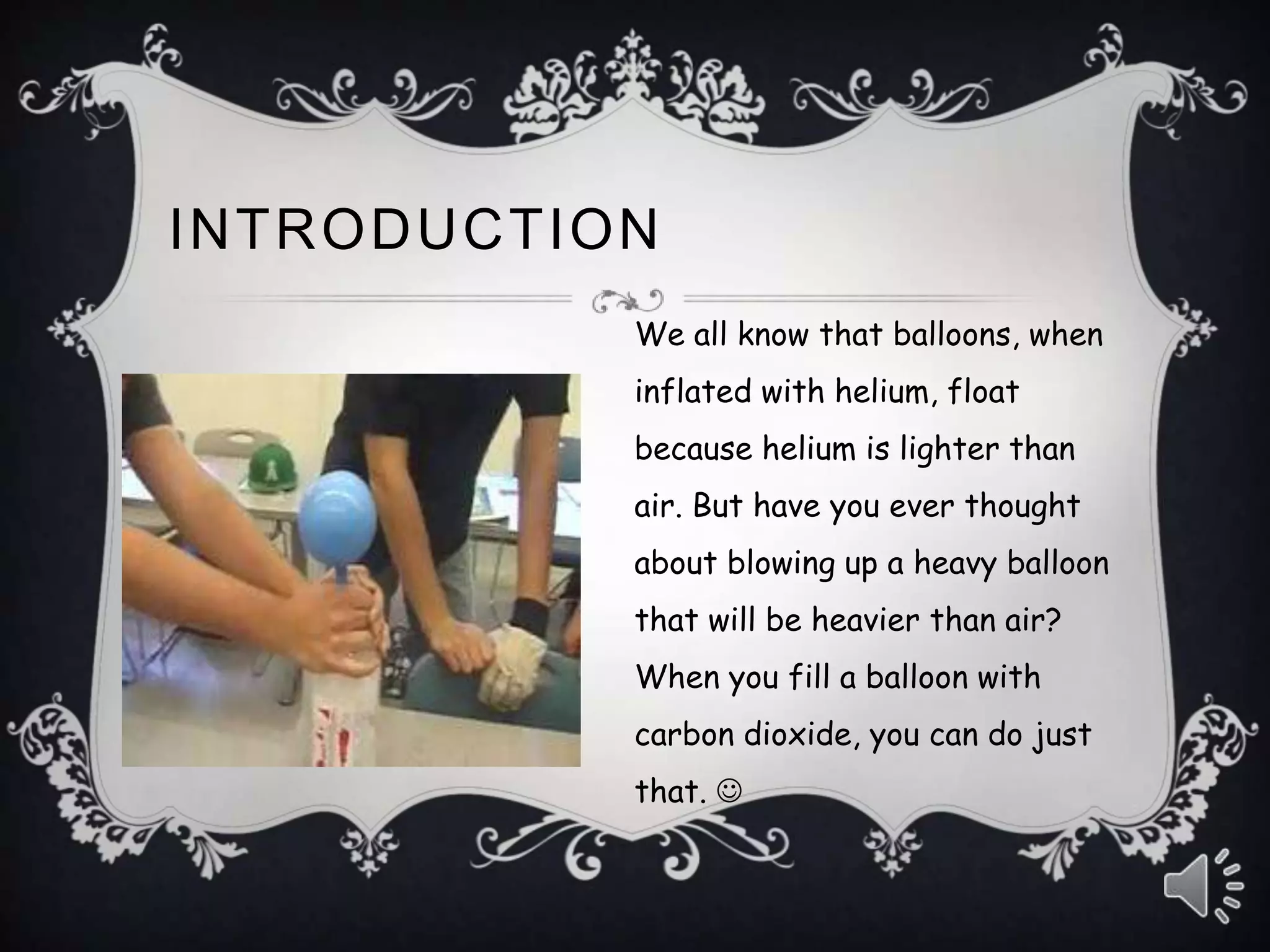
We all know that balloons, when
inflated with helium, float
because helium is lighter than
air. But have you ever thought
about blowing up a heavy balloon
that will be heavier than air?
When you fill a balloon with
carbon dioxide, you can do just
that. 
INTRODUCTION
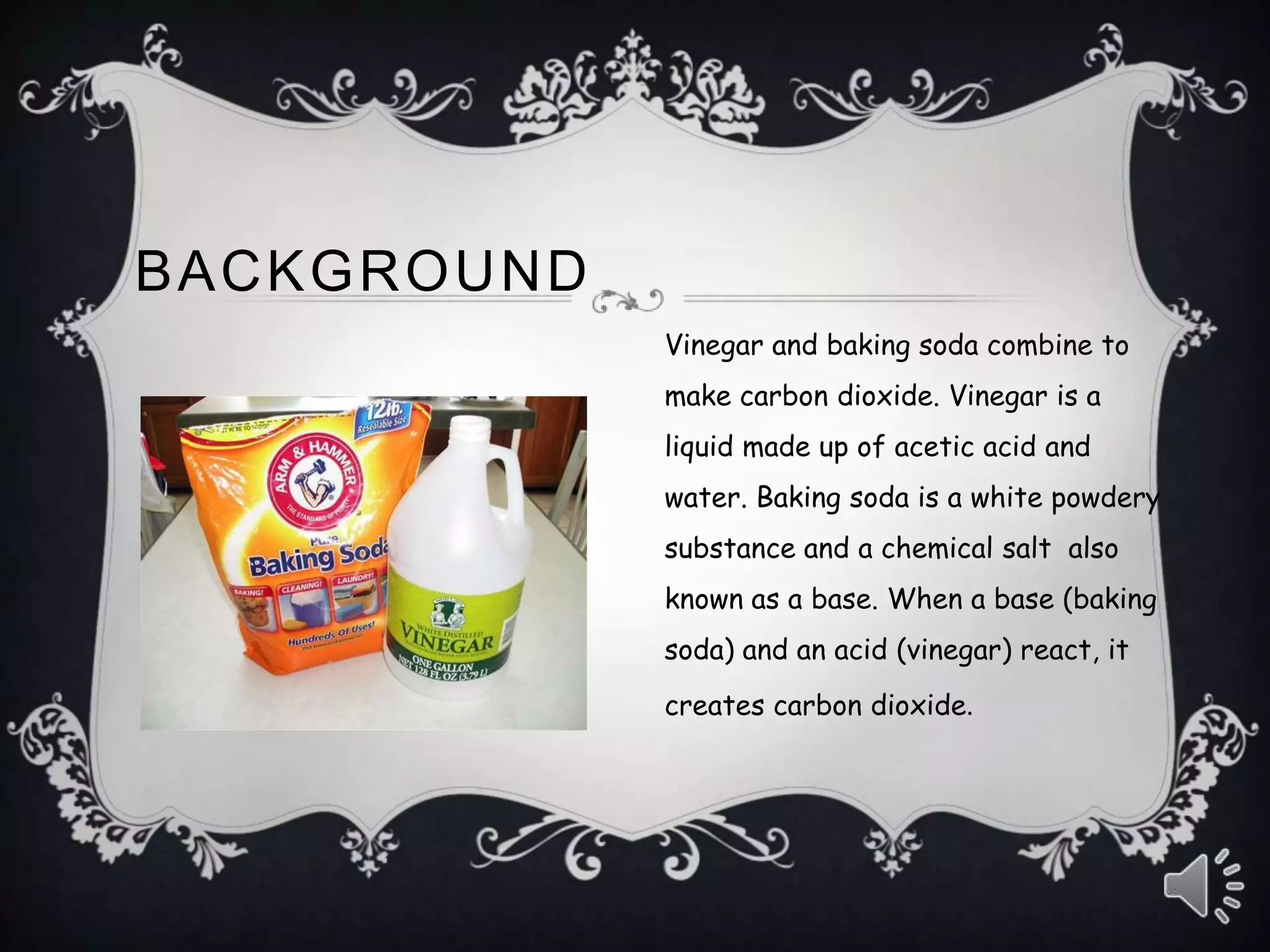
Vinegar and baking soda combine to
make carbon dioxide. Vinegar is a
liquid made up of acetic acid and
water. Baking soda is a white powdery
substance and a chemical salt also
known as a base. When a base (baking
soda) and an acid (vinegar) react, it
creates carbon dioxide.
BACKGROUND
We think that the balloon we
filled with carbon dioxide will
be heavier than the balloon we
filled with air. When both
balloons are dropped from a
height of about six feet, the
carbon dioxide balloon will
drop faster because of its
weight.
HYPOTHESIS
MATERIALS
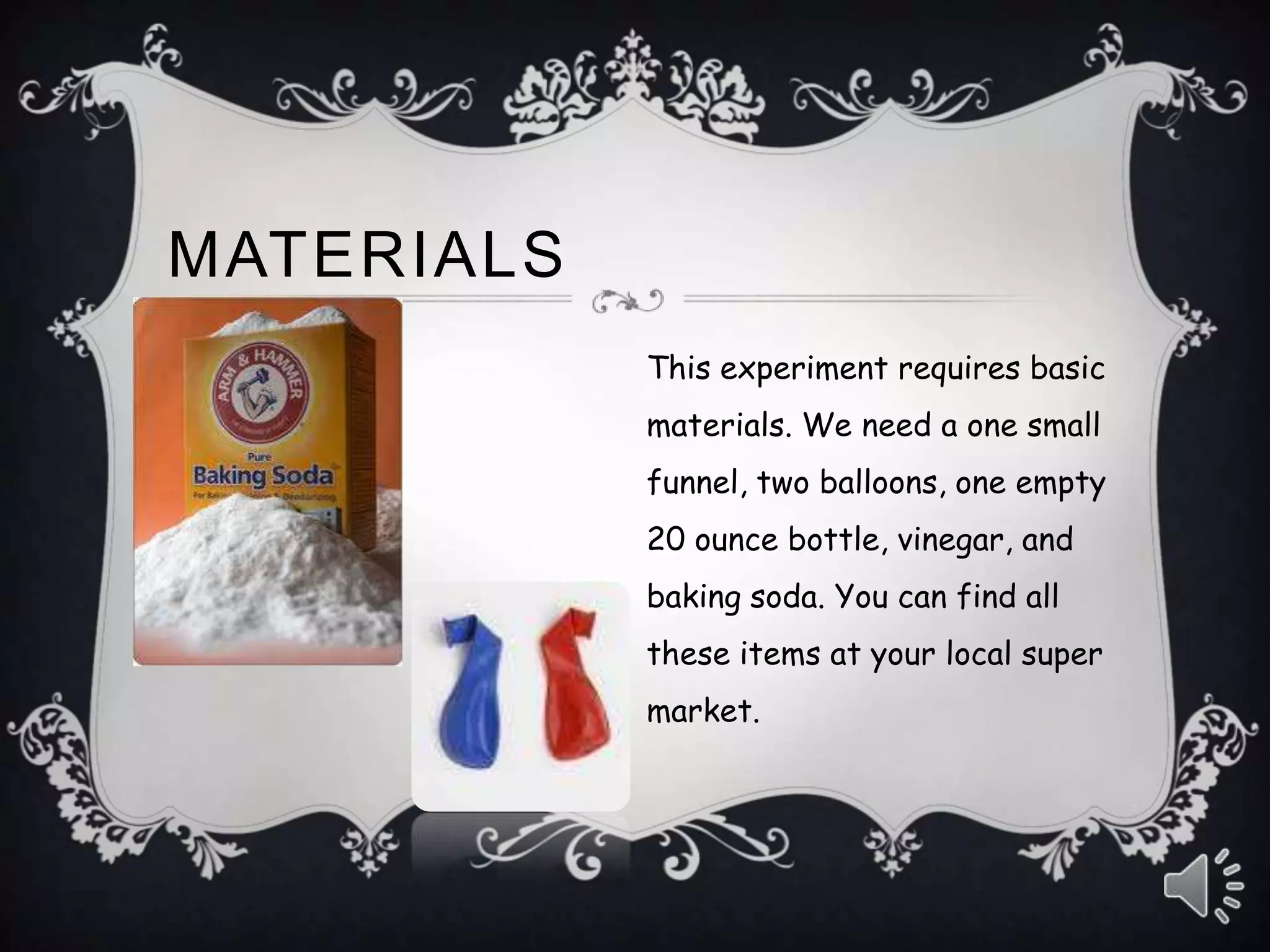
This experiment requires basic
materials. We need a one small
funnel, two balloons, one empty
20 ounce bottle, vinegar, and
baking soda. You can find all
these items at your local super
market.
PROCEDURE
S
The first step to this experiment is
to put three tsp. of baking soda in an
empty 20 oz. bottle, then using a
funnel, fill a balloon with vinegar till it
is nearly full. Next stretch the
opening of the balloon over the
bottles opening, then let the vinegar
escape into the bottle. When the
balloon starts to expand take it off
and tie it. Blow up another balloon the
same size using your air then drop the
two balloons from the same height.
Baking soda and vinegar react,
creating a chemical reaction
which can expand and overflow.
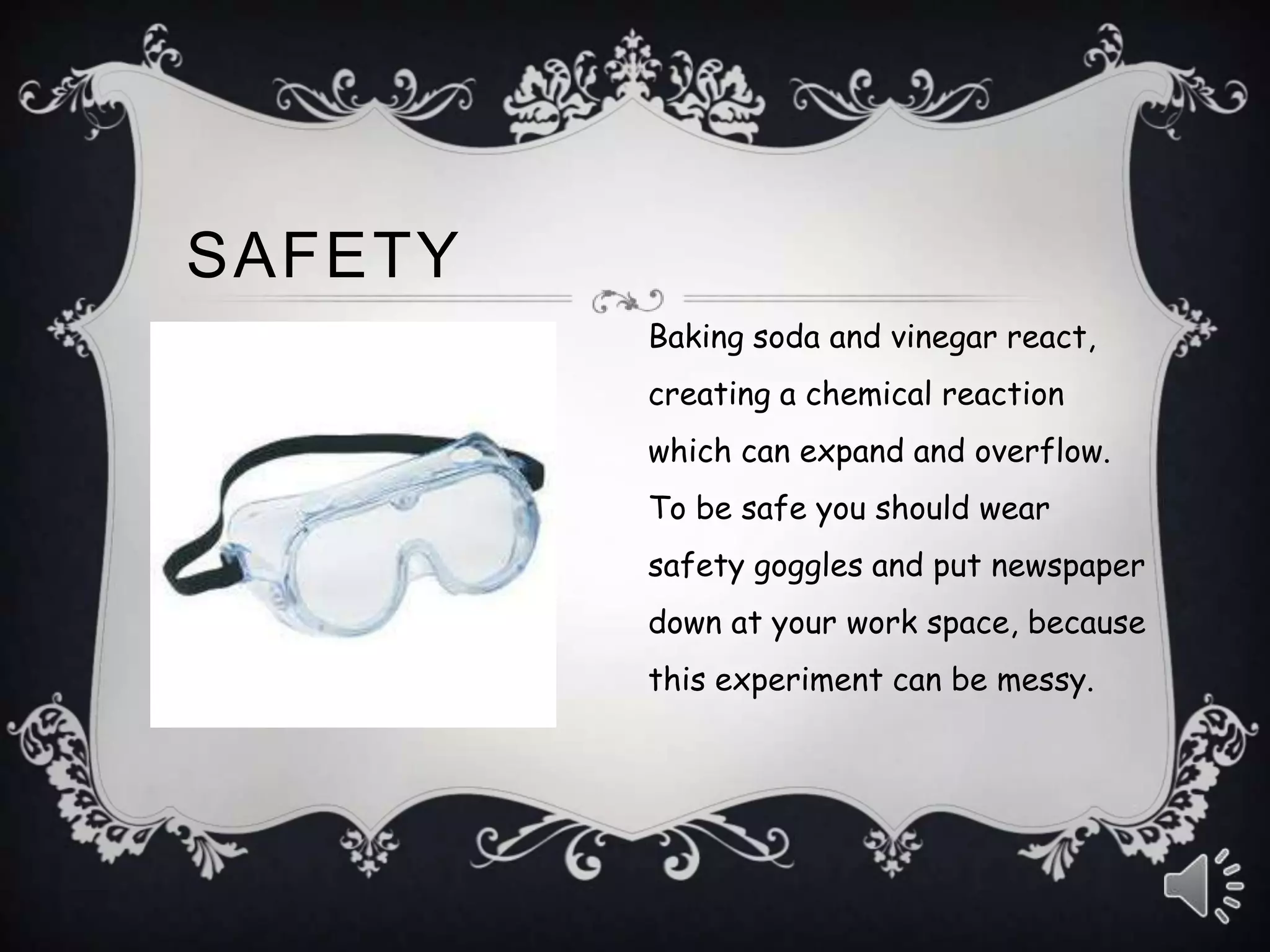
To be safe you should wear
safety goggles and put newspaper
down at your work space, because
this experiment can be messy.
SAFETY
OBSERVATION As we did our experiment we noticed
that when the vinegar started to mix
with the baking soda, the sound it
made sounded like “fizz”. It also
looked liked a sprite juice. The
balloon filled up fast, but only to a
small size. It smelt like vinegar.
When we dropped the two balloons
the CO2 filled balloon would always
be the first one to hit the ground. It
even felt heavy too!
EXPLANATION
The reason why this balloon is heavier
is because the baking soda and vinegar
react to form carbon dioxide gas,
which will fill the balloon. Carbon
dioxide weighs three times more than
air so the CO2-filled balloon will fall
much faster that the air-filled balloon.
The chemical equation for this
experiment is
HC2HO2+NaHCO3 NaC2H3O2+H2O+CO2
vinegar baking soda sodium acetate water carbon dioxide
CONCLUSION
In conclusion, we hope you
learned something new about
what happens when baking soda
and vinegar is combined to form
carbon dioxide. This experiment
is very easy and we encourage
that you try this too. Thank you!

Experimental report heavy balloons

  • 1.
    HOW TO MAKEA HEAVY BALLOON
  • 2.
    We all knowthat balloons, when inflated with helium, float because helium is lighter than air. But have you ever thought about blowing up a heavy balloon that will be heavier than air? When you fill a balloon with carbon dioxide, you can do just that.  INTRODUCTION
  • 3.
    Vinegar and bakingsoda combine to make carbon dioxide. Vinegar is a liquid made up of acetic acid and water. Baking soda is a white powdery substance and a chemical salt also known as a base. When a base (baking soda) and an acid (vinegar) react, it creates carbon dioxide. BACKGROUND
  • 4.
    We think thatthe balloon we filled with carbon dioxide will be heavier than the balloon we filled with air. When both balloons are dropped from a height of about six feet, the carbon dioxide balloon will drop faster because of its weight. HYPOTHESIS
  • 5.
    MATERIALS This experiment requiresbasic materials. We need a one small funnel, two balloons, one empty 20 ounce bottle, vinegar, and baking soda. You can find all these items at your local super market.
  • 6.
    PROCEDURE S The first stepto this experiment is to put three tsp. of baking soda in an empty 20 oz. bottle, then using a funnel, fill a balloon with vinegar till it is nearly full. Next stretch the opening of the balloon over the bottles opening, then let the vinegar escape into the bottle. When the balloon starts to expand take it off and tie it. Blow up another balloon the same size using your air then drop the two balloons from the same height.
  • 7.
    Baking soda andvinegar react, creating a chemical reaction which can expand and overflow. To be safe you should wear safety goggles and put newspaper down at your work space, because this experiment can be messy. SAFETY
  • 8.
    OBSERVATION As wedid our experiment we noticed that when the vinegar started to mix with the baking soda, the sound it made sounded like “fizz”. It also looked liked a sprite juice. The balloon filled up fast, but only to a small size. It smelt like vinegar. When we dropped the two balloons the CO2 filled balloon would always be the first one to hit the ground. It even felt heavy too!
  • 9.
    EXPLANATION The reason whythis balloon is heavier is because the baking soda and vinegar react to form carbon dioxide gas, which will fill the balloon. Carbon dioxide weighs three times more than air so the CO2-filled balloon will fall much faster that the air-filled balloon. The chemical equation for this experiment is HC2HO2+NaHCO3 NaC2H3O2+H2O+CO2 vinegar baking soda sodium acetate water carbon dioxide
  • 10.
    CONCLUSION In conclusion, wehope you learned something new about what happens when baking soda and vinegar is combined to form carbon dioxide. This experiment is very easy and we encourage that you try this too. Thank you!