XW
1. The new millennium has ushered the simple word of "wayfinding"
from old language (signage) into exciting new territories (literally),
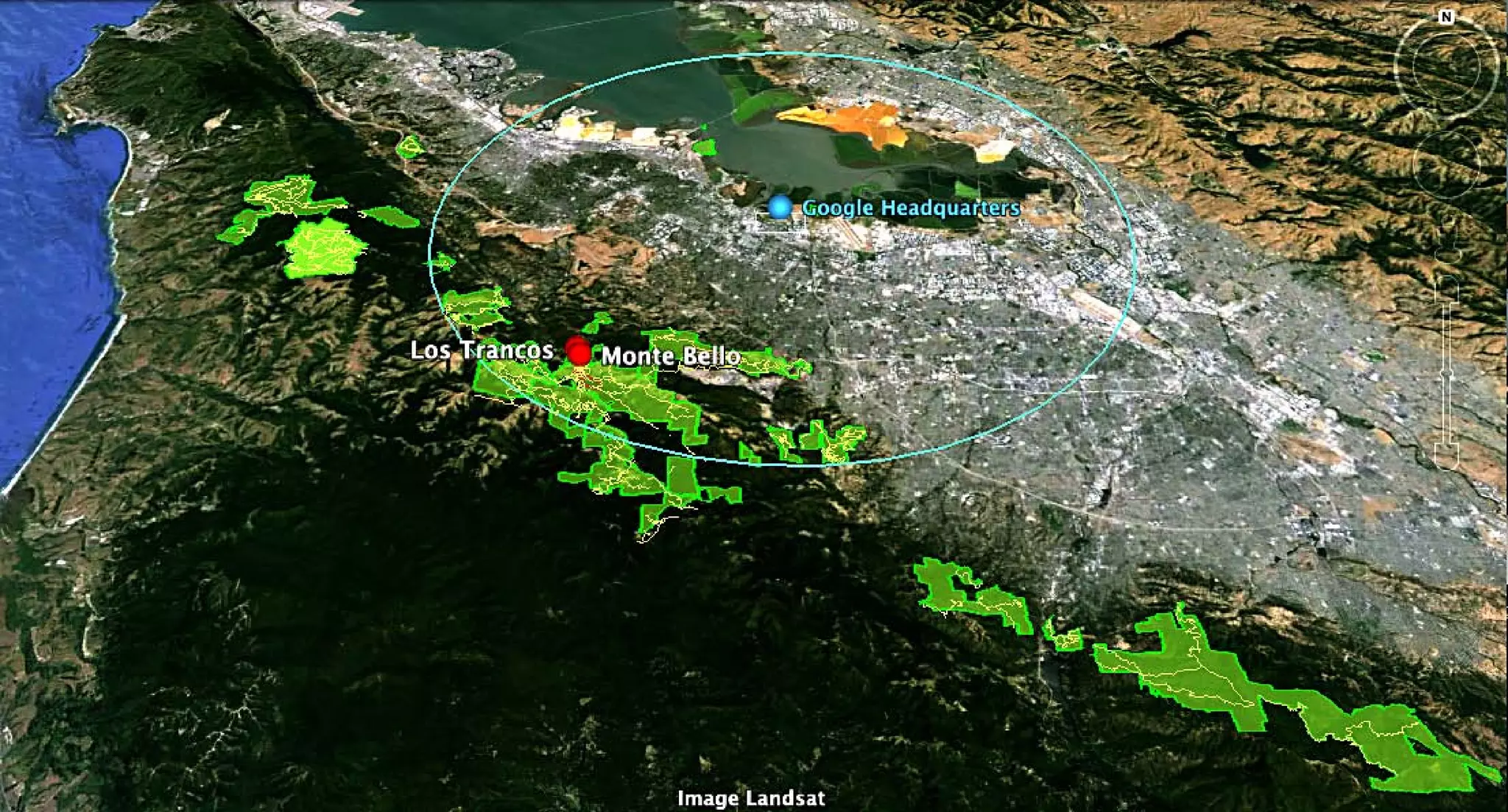
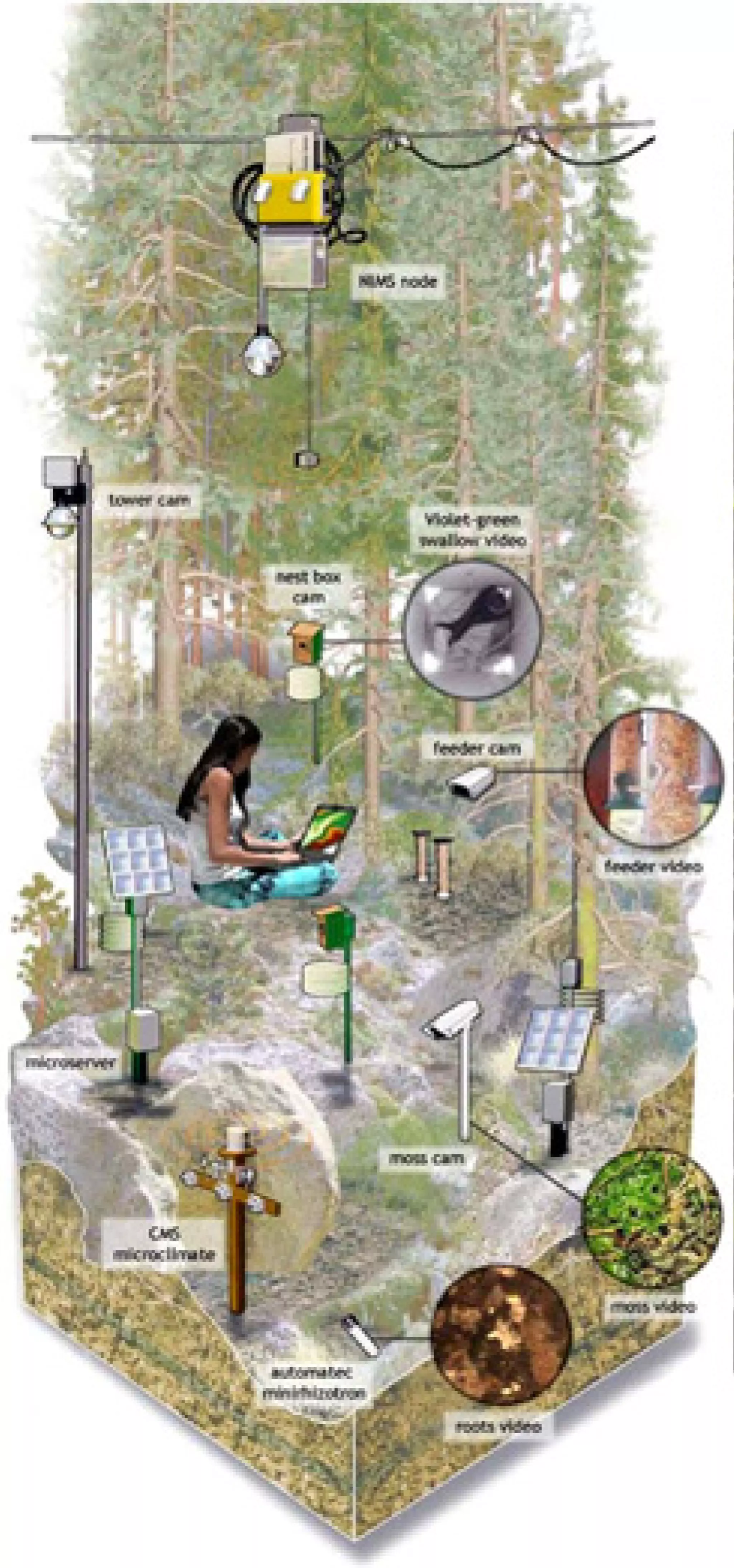
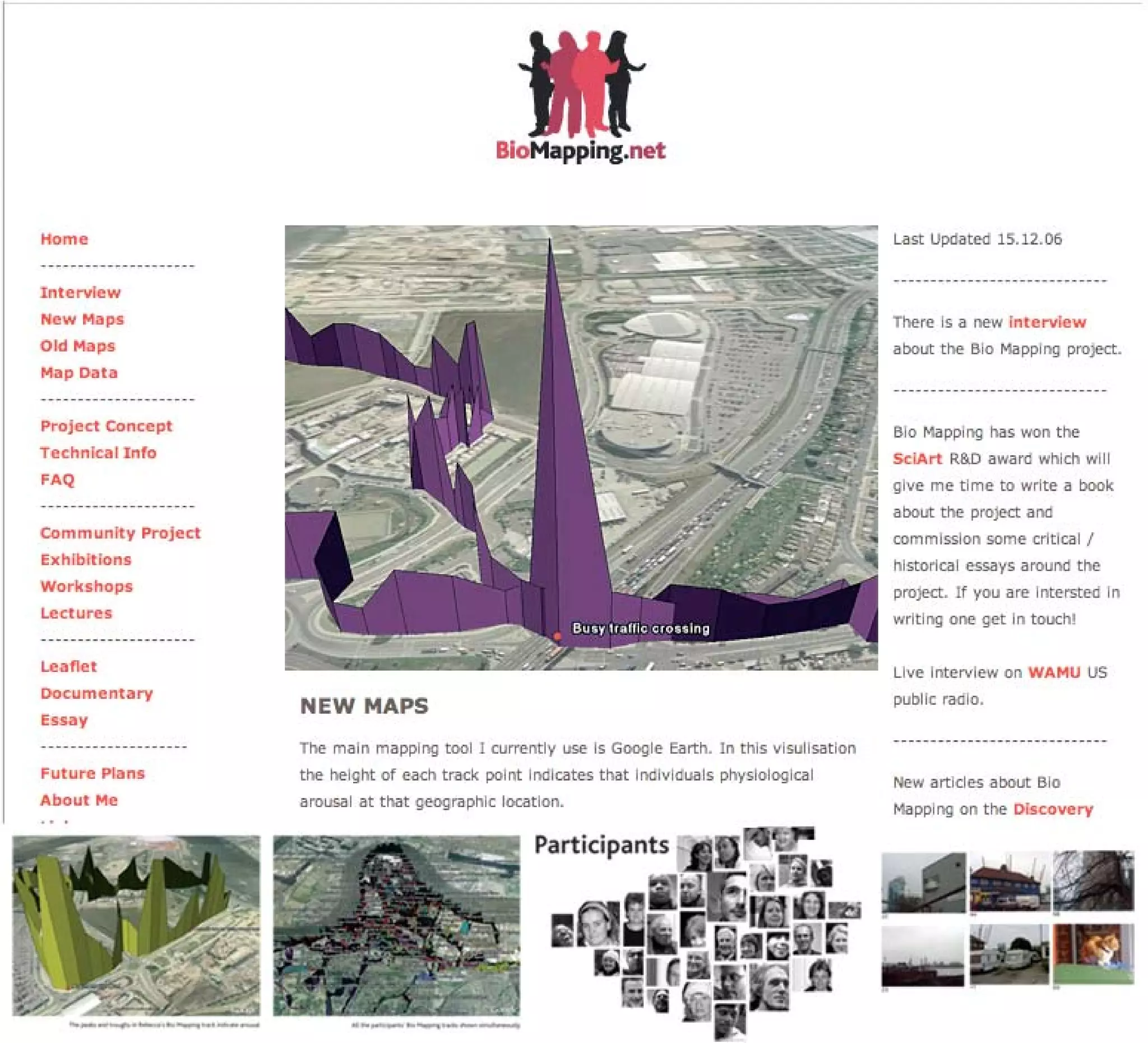
such as smart cities, sensor networks, volunteered geography, GPS,
and Google Earth (to name a few).
2. You will get skilled with principles, methods, and new tools that help
people find their way through a wide range and level of settings, e.g.,
museum paintings, websites, zoos (and other edutainment landscapes), and various information-environments (of interest to you).
3. You will read about, research, and propose various navigation
structures to address (or redress) societal problems via maps or
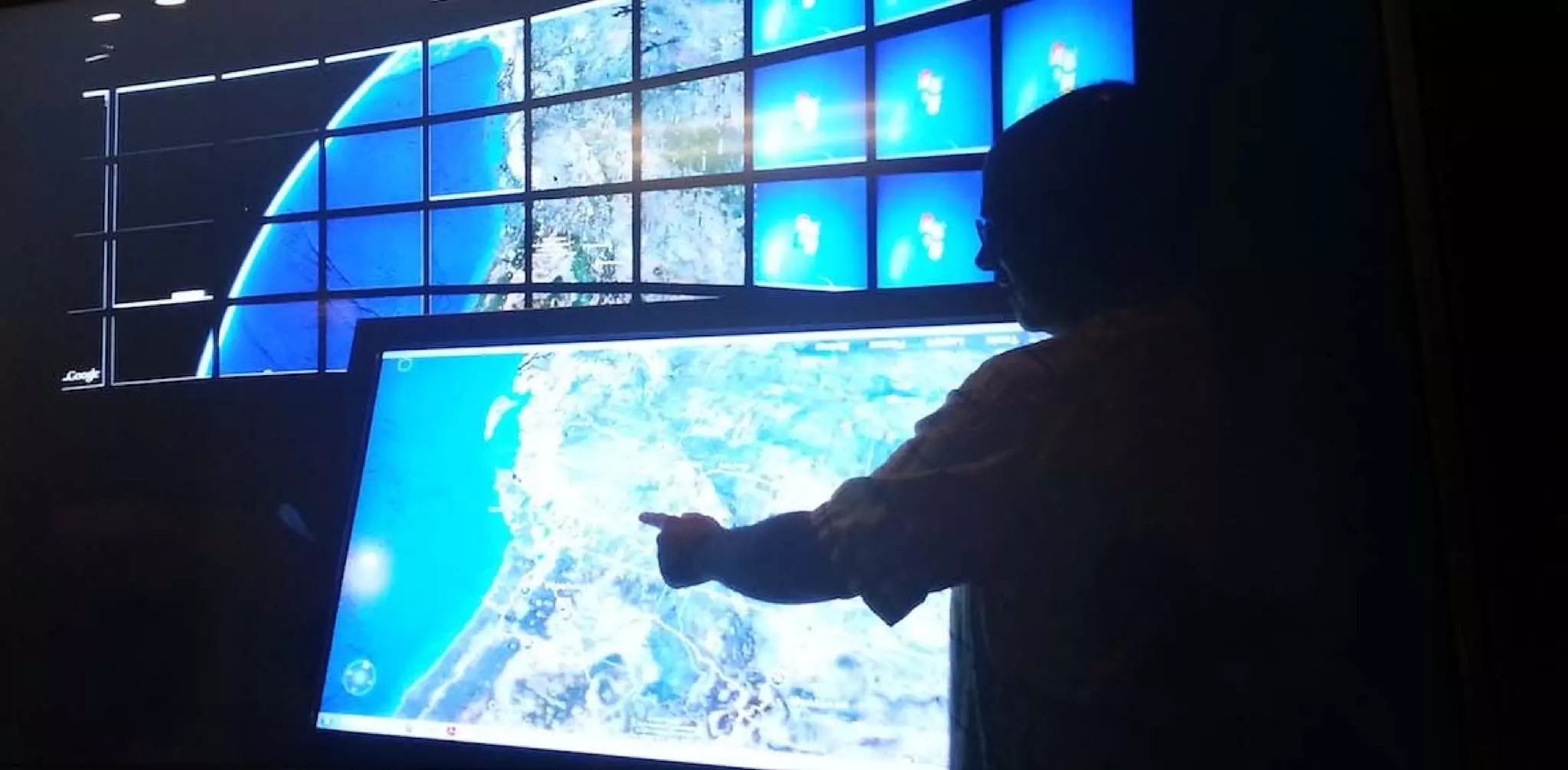
other experience-design narratives using artistic maps, Google Earth
Pro, Google Tour Builder, and/or your preferred digital media.
Calendar
1/19 	

Scale, mobility, and spatial intelligence

1/26		

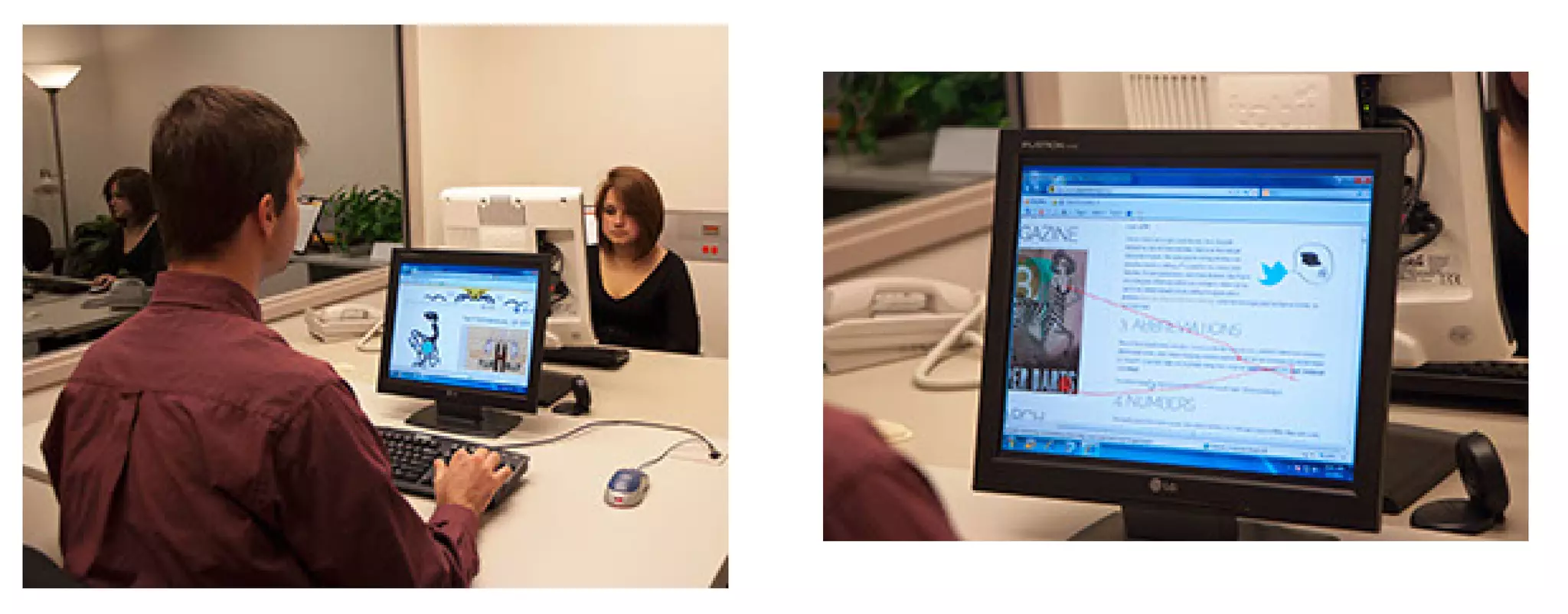
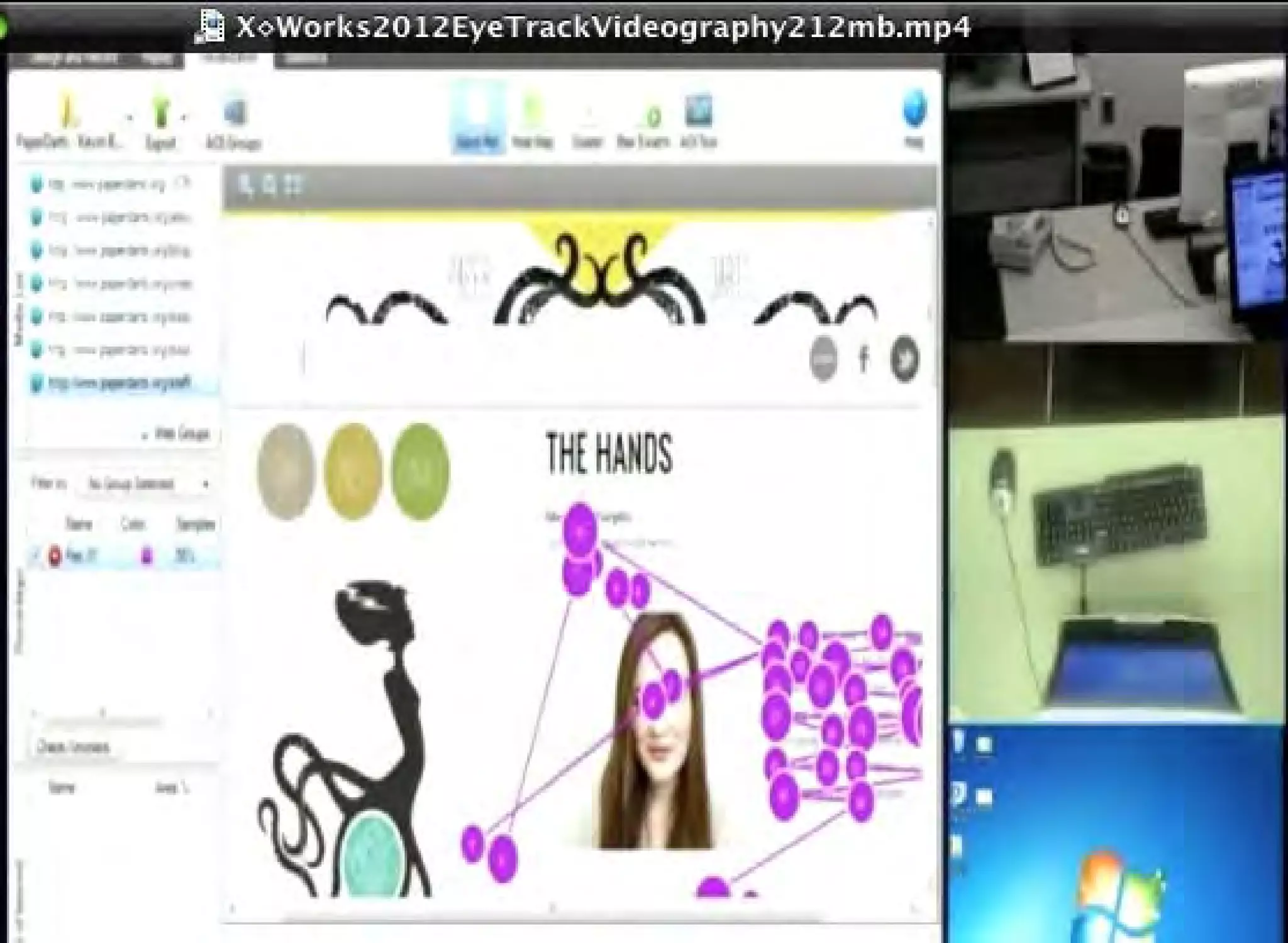
Eye glance theory and methods

2/2		

Technology-supported capture of glance paths

2/9		

Website navigation; history of navigation

2/16		

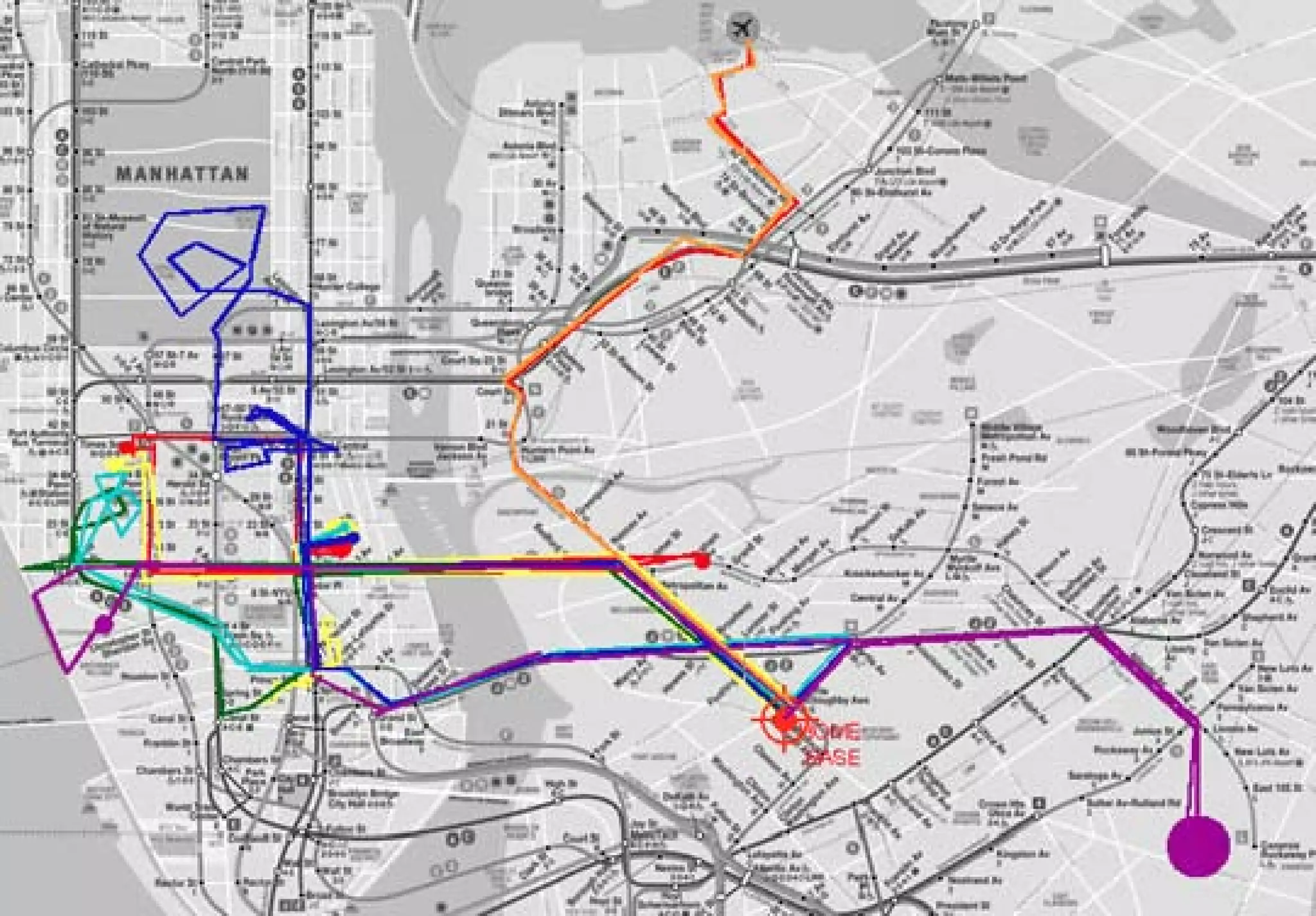
User trips

2/23	 	

Framing a field study, data gathering methods

3/1		

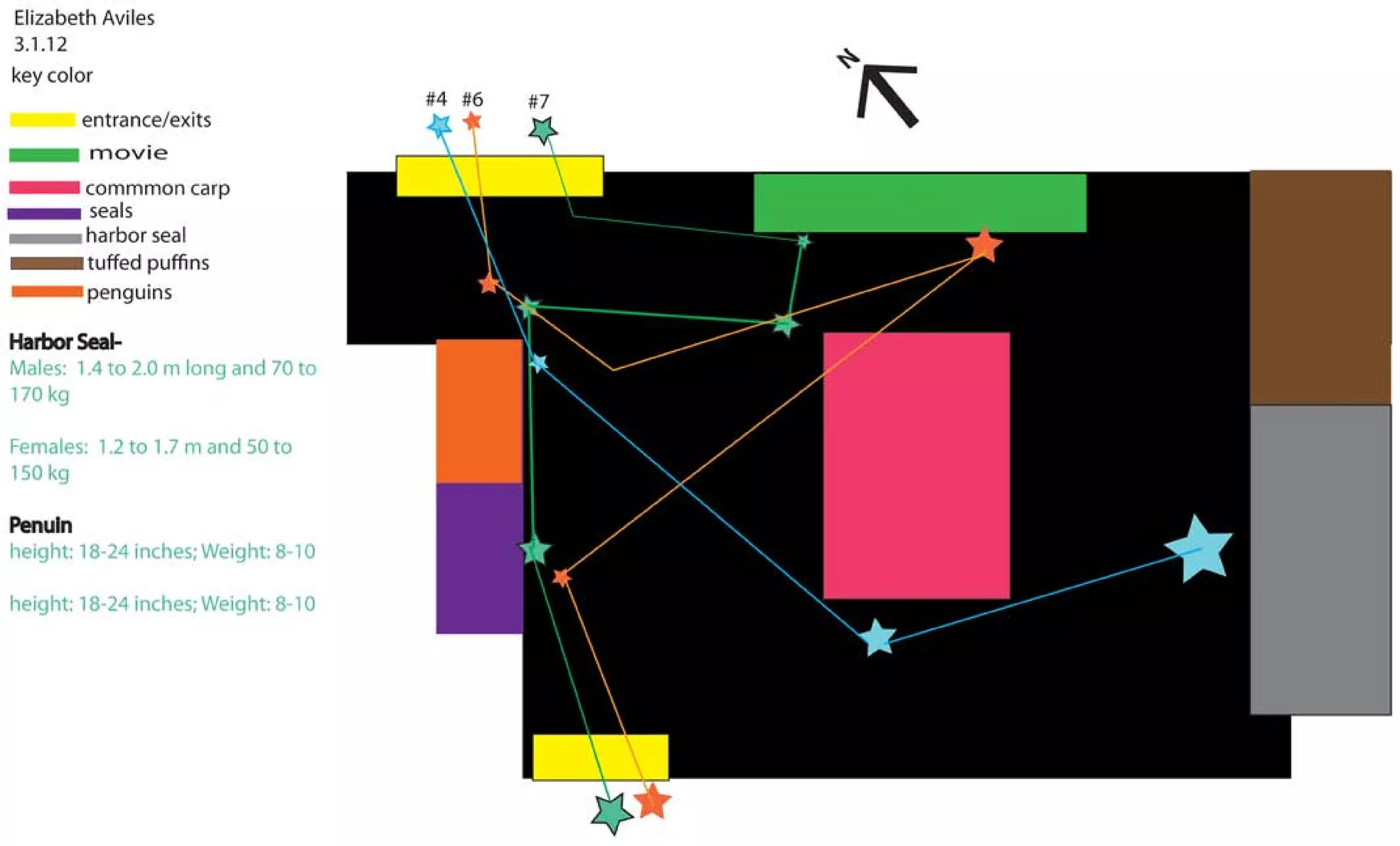
Field work at Como Park Zoo

3/8		

Proxemics

3/15		

Smartphone navigation apps and other software

3/22	 	

Wayfinding as a profession
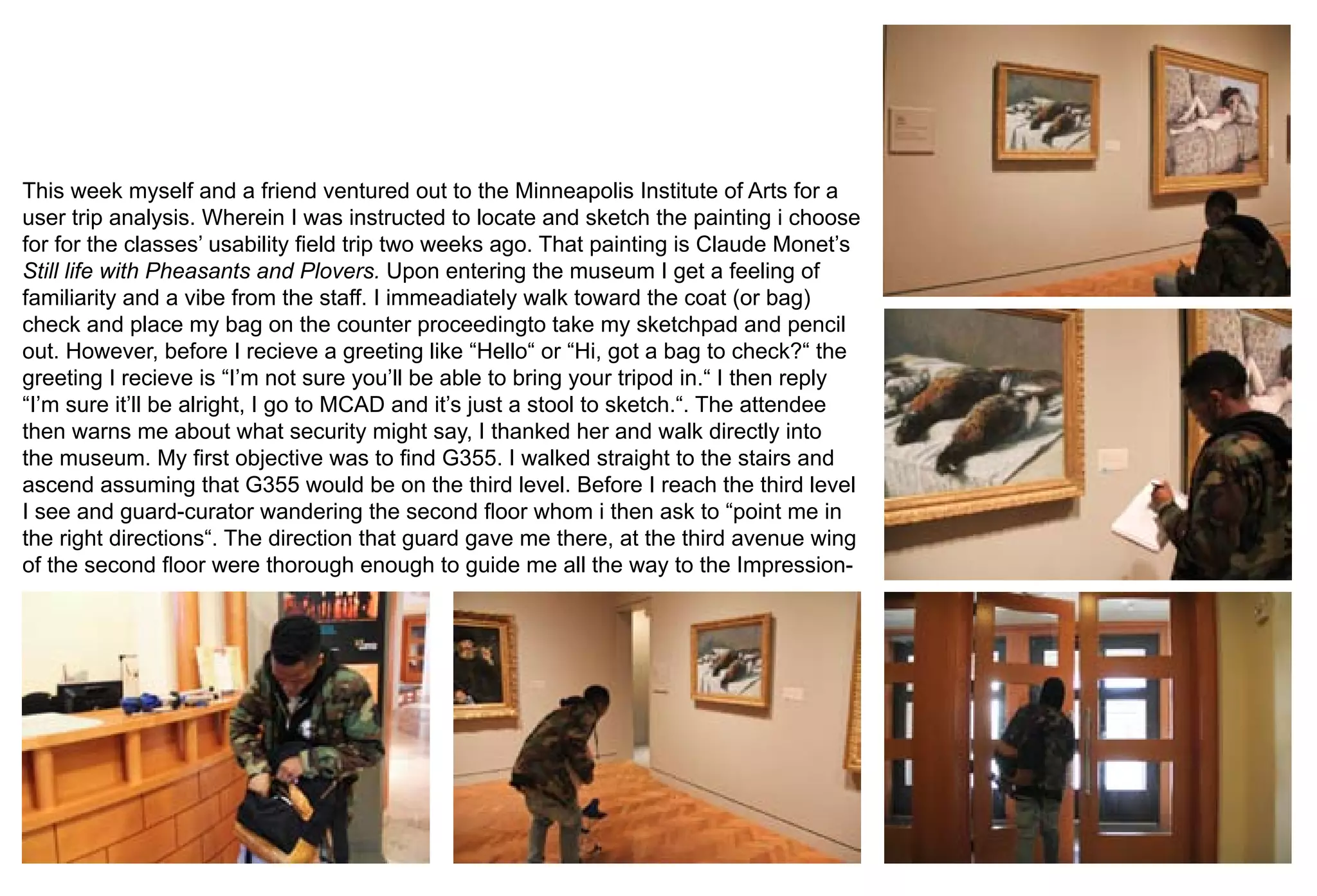
Still life with Pheasants and Plovers.
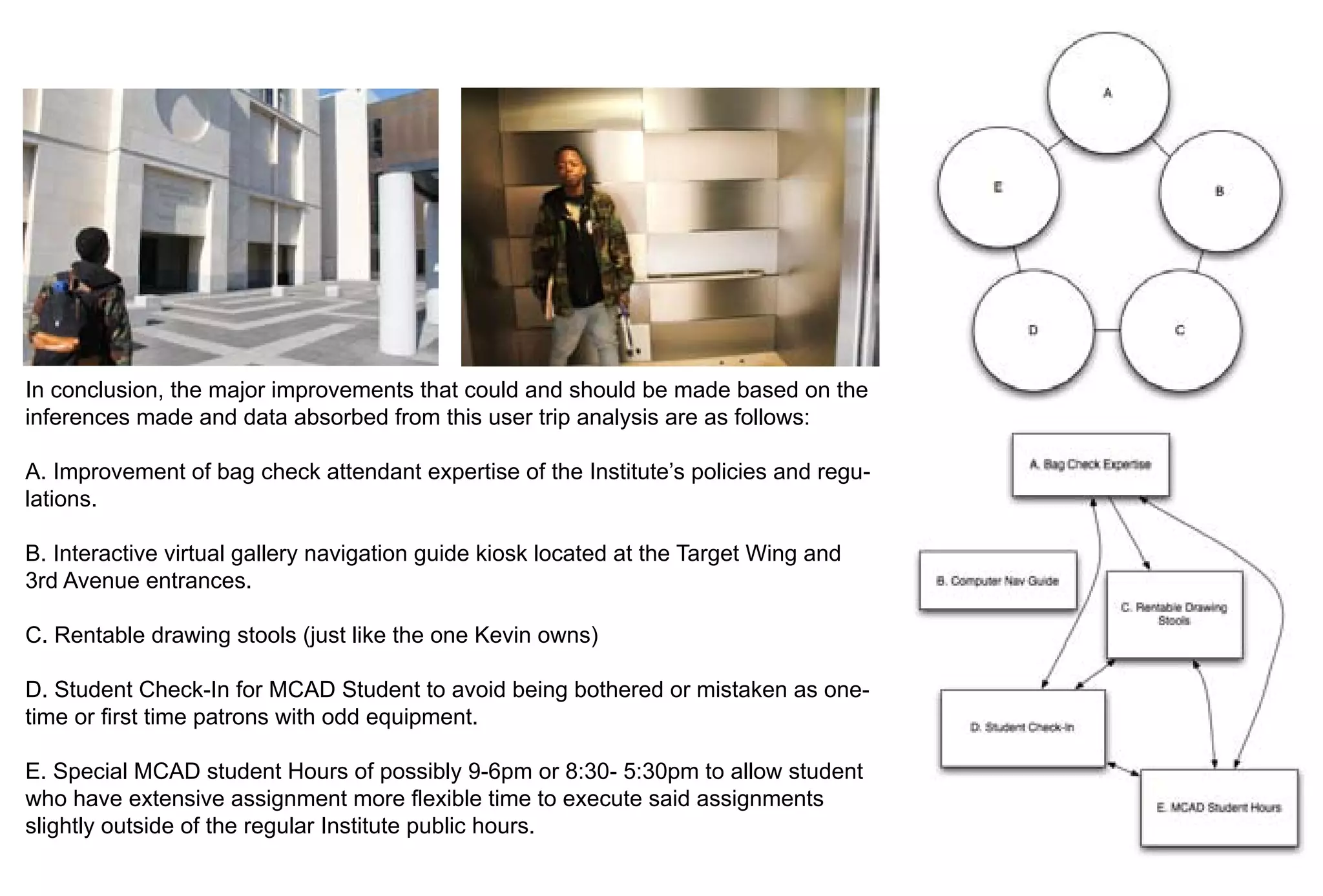
lations.
3rd Avenue entrances.
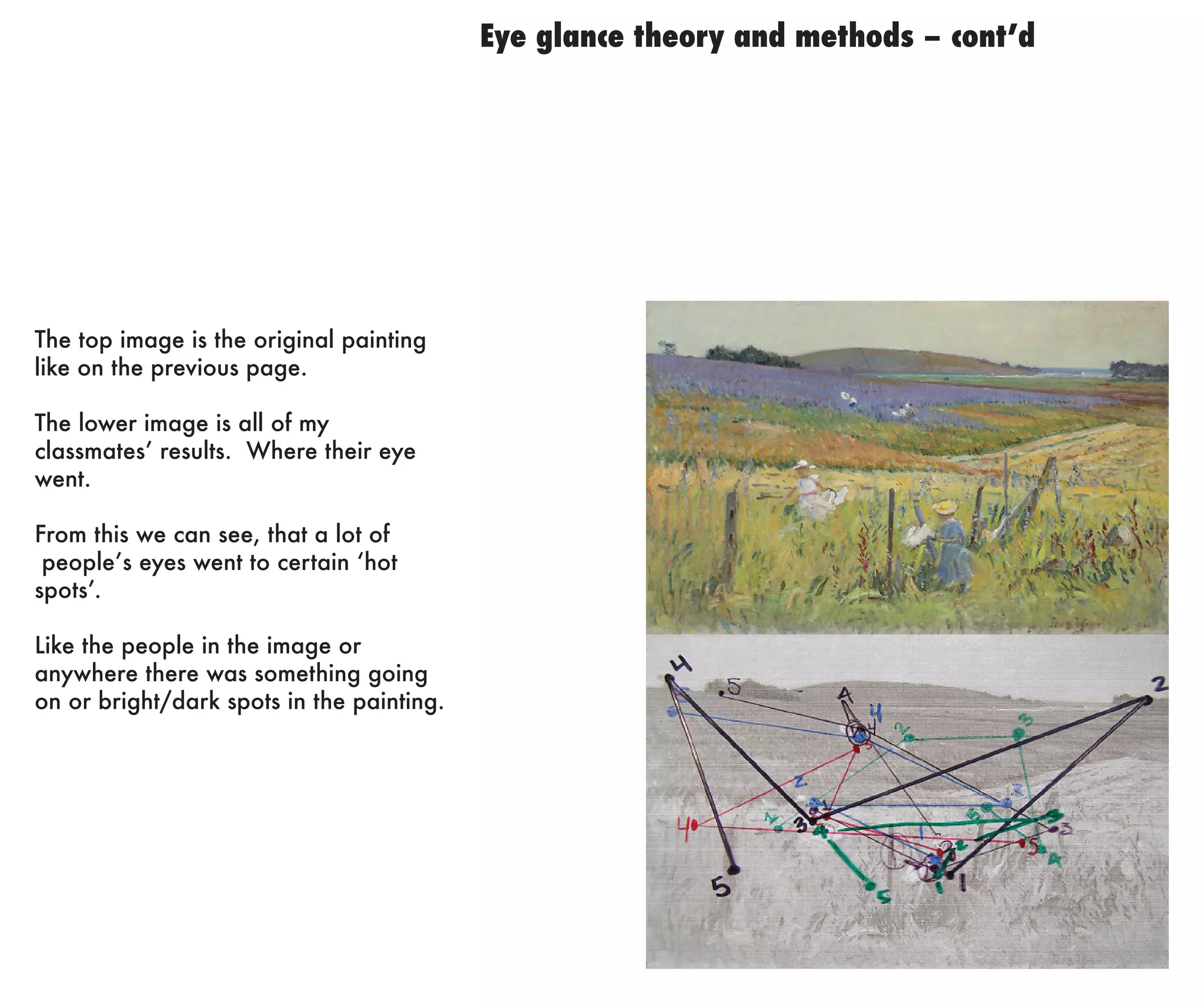
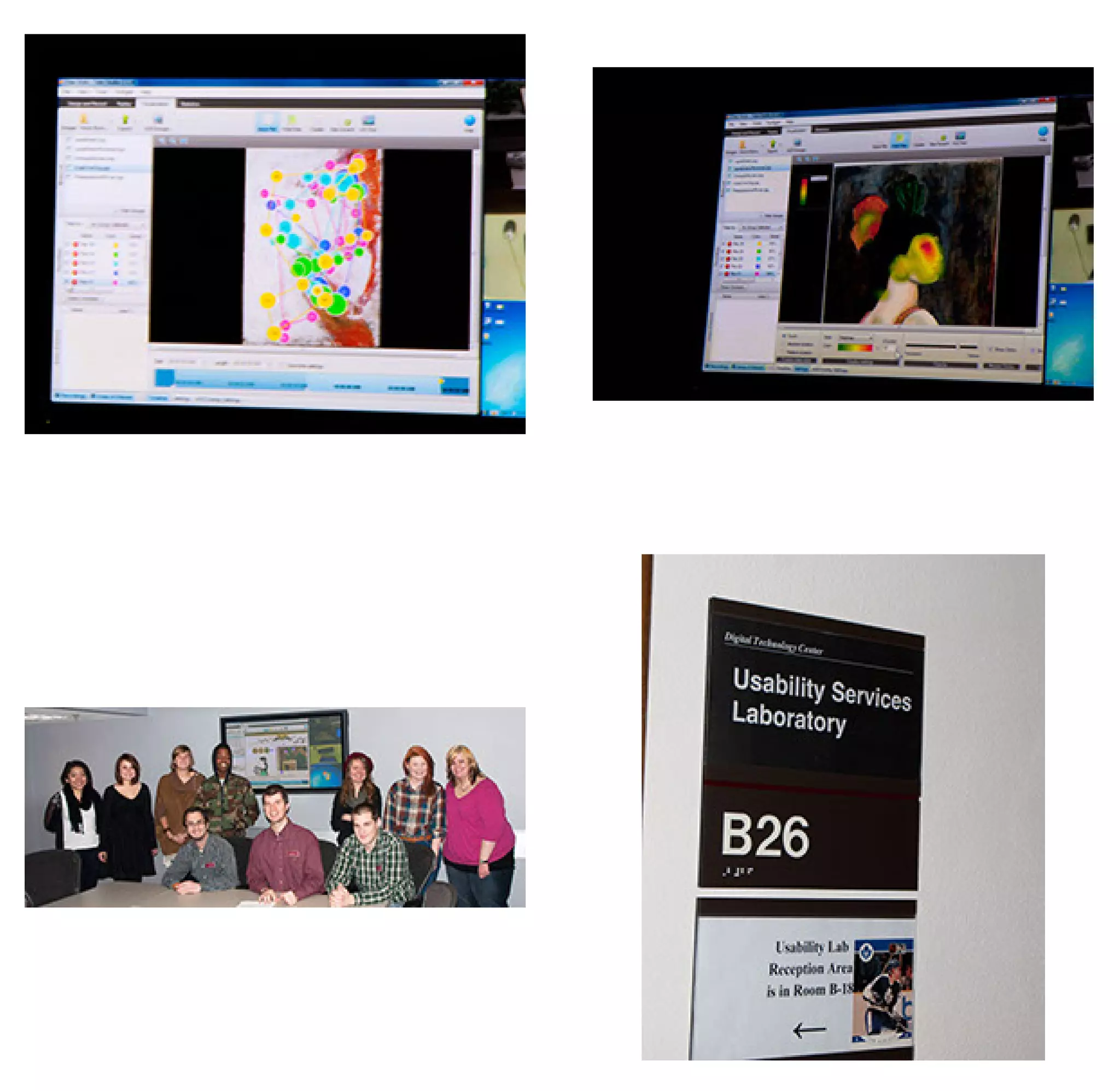
Eye glance theory and methods – cont’d

The top image is the original painting
like on the previous page.
The lower image is all of my
classmates’ results. Where their eye
went.
From this we can see, that a lot of
people’s eyes went to certain ‘hot
spots’.
Like the people in the image or
anywhere there was something going
on or bright/dark spots in the painting.
species
#-anim
activity
brown bear
3
caribou
3
zebra
2
bison
3
lemur
2
spider monkey
4.33
arctic fox
2

3
1
3
2
2
3
1

visitor-age
v-constellation cum-min
anim-height
31.11
2.44
1.89
6
32
3.33
2.33
5.5
41.43
2.43
1.59
5.5
40
3.33
1.17
5.5
45
1
3
3
36.3
2.6
3.46
1.5
32.5
3.5
4
0.9
cum-min to height correlation
-0.93
visitor-age to v-constell. corr.
-0.65

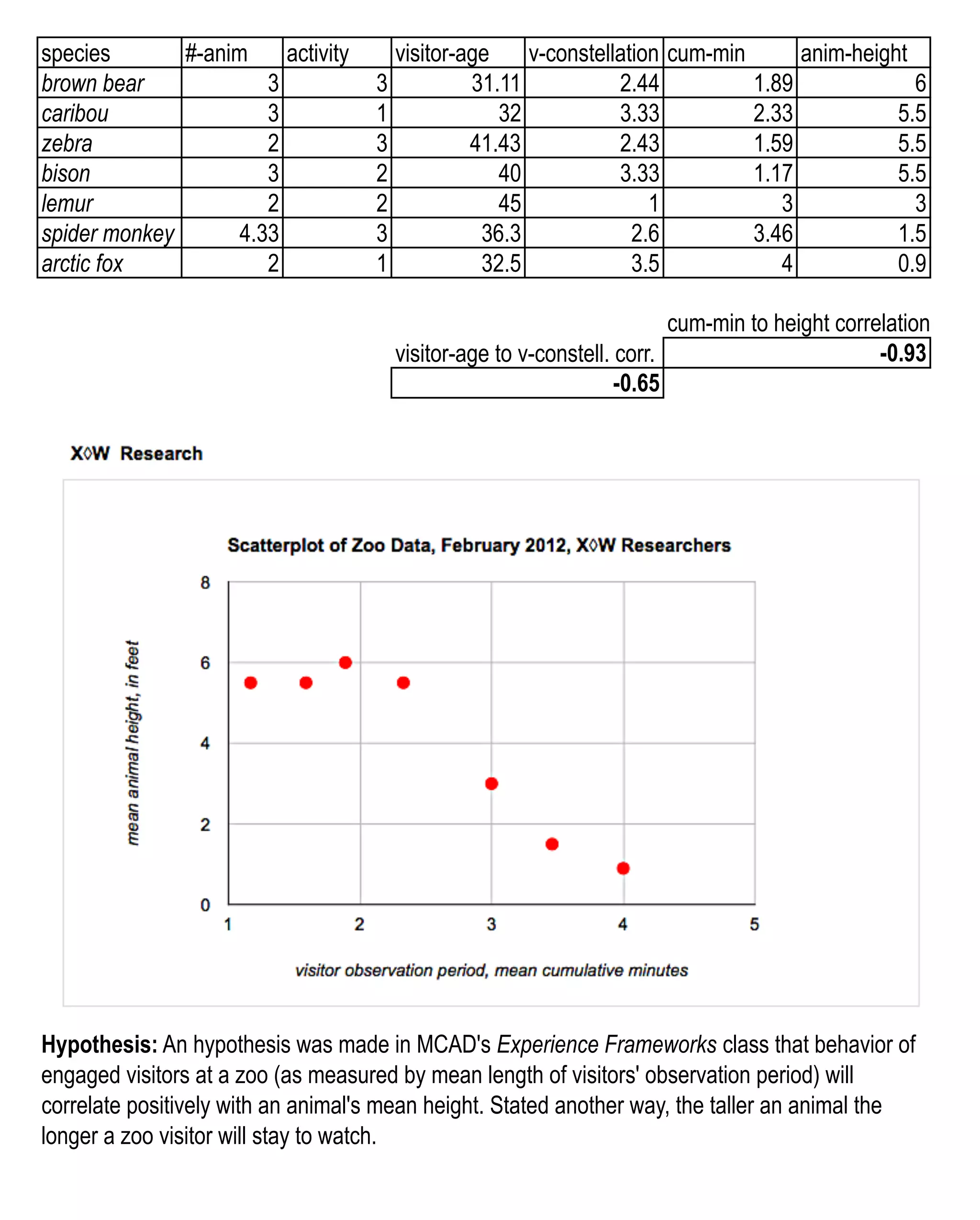
Hypothesis: An hypothesis was made in MCAD's Experience Frameworks class that behavior of
engaged visitors at a zoo (as measured by mean length of visitors' observation period) will
correlate positively with an animal's mean height. Stated another way, the taller an animal the
longer a zoo visitor will stay to watch.
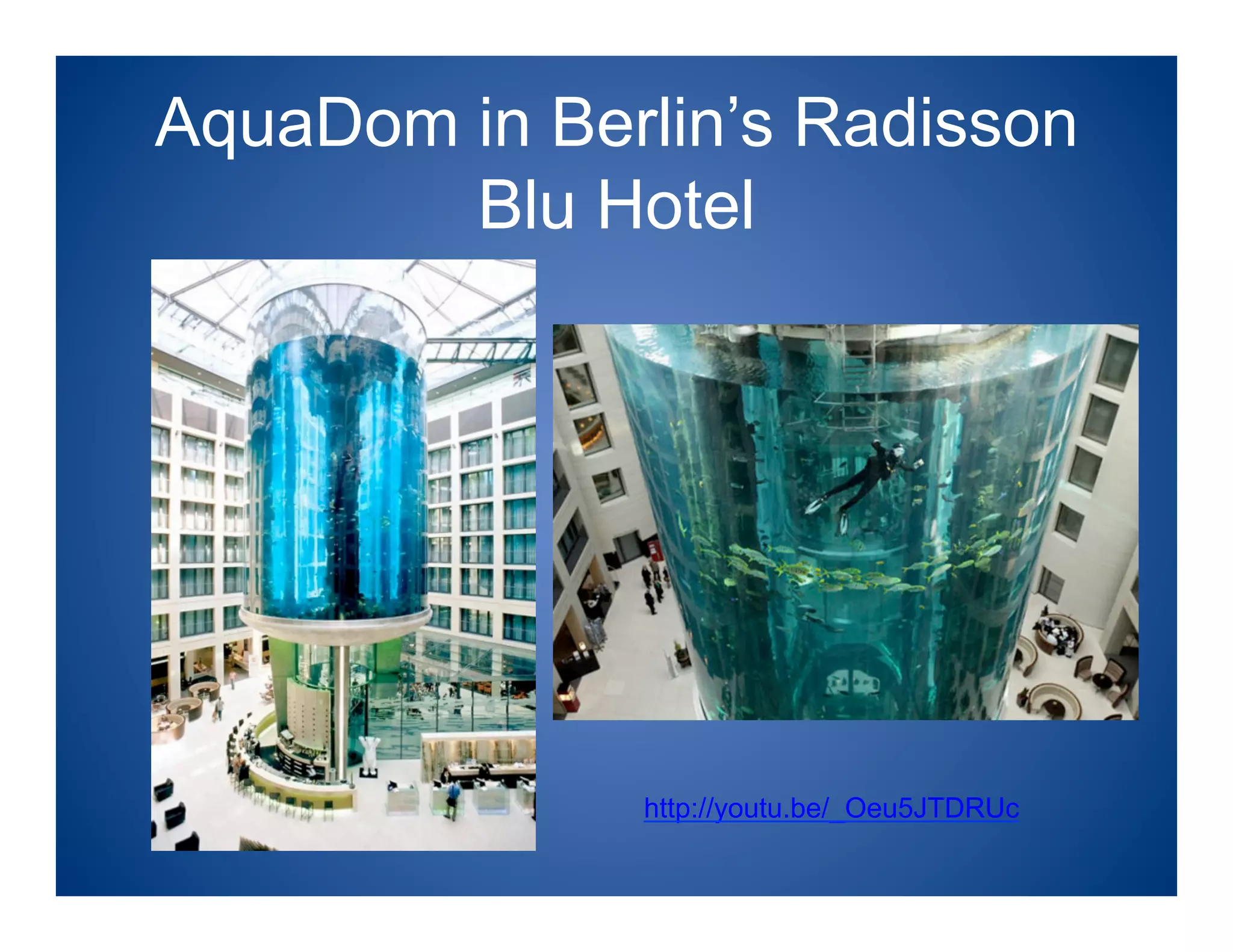
AquaDom in Berlin’s Radisson
Blu Hotel

http://youtu.be/_Oeu5JTDRUc
EXPERIENCE FRAMEWORKS 2014

EXPERIENCE FRAMEWORKS 2014

  • 1.
  • 2.
    1. The newmillennium has ushered the simple word of "wayfinding" from old language (signage) into exciting new territories (literally), such as smart cities, sensor networks, volunteered geography, GPS, and Google Earth (to name a few). 2. You will get skilled with principles, methods, and new tools that help people find their way through a wide range and level of settings, e.g., museum paintings, websites, zoos (and other edutainment landscapes), and various information-environments (of interest to you). 3. You will read about, research, and propose various navigation structures to address (or redress) societal problems via maps or other experience-design narratives using artistic maps, Google Earth Pro, Google Tour Builder, and/or your preferred digital media.
  • 3.
    Calendar 1/19 Scale, mobility,and spatial intelligence 1/26 Eye glance theory and methods 2/2 Technology-supported capture of glance paths 2/9 Website navigation; history of navigation 2/16 User trips 2/23 Framing a field study, data gathering methods 3/1 Field work at Como Park Zoo 3/8 Proxemics 3/15 Smartphone navigation apps and other software 3/22 Wayfinding as a profession
  • 6.
    Still life withPheasants and Plovers.
  • 7.
  • 11.
    Eye glance theoryand methods – cont’d The top image is the original painting like on the previous page. The lower image is all of my classmates’ results. Where their eye went. From this we can see, that a lot of people’s eyes went to certain ‘hot spots’. Like the people in the image or anywhere there was something going on or bright/dark spots in the painting.
  • 16.
    species #-anim activity brown bear 3 caribou 3 zebra 2 bison 3 lemur 2 spider monkey 4.33 arcticfox 2 3 1 3 2 2 3 1 visitor-age v-constellation cum-min anim-height 31.11 2.44 1.89 6 32 3.33 2.33 5.5 41.43 2.43 1.59 5.5 40 3.33 1.17 5.5 45 1 3 3 36.3 2.6 3.46 1.5 32.5 3.5 4 0.9 cum-min to height correlation -0.93 visitor-age to v-constell. corr. -0.65 Hypothesis: An hypothesis was made in MCAD's Experience Frameworks class that behavior of engaged visitors at a zoo (as measured by mean length of visitors' observation period) will correlate positively with an animal's mean height. Stated another way, the taller an animal the longer a zoo visitor will stay to watch.
  • 23.
    AquaDom in Berlin’sRadisson Blu Hotel http://youtu.be/_Oeu5JTDRUc