Expanded Program On
Immunization
EXPANDED PROGRAM ON
IMMUNIZATION
-established in 1976
-ensure that infants/children and
mothers have access to routinely
recommended infant/childhood
vaccines.
Six vaccine-preventable diseases
1. Tuberculosis
2. Poliomyelitis
3. Diphtheria
4. Tetanus
5. Pertussis
6. Measles
Over-all Goal
To reduce the morbidity and
mortality among children
against the most common
vaccine-preventable diseases.
Specific Goals
1. To immunize all infants/children against
the most common vaccine-preventable
diseases.
2. To sustain the polio-free status of the
Philippines.
3. To eliminate measles infection.
4. To eliminate maternal and neonatal
tetanus
5. To control diphtheria, pertussis,
hepatitis b and German measles.
6. To prevent extra pulmonary
tuberculosis among children.
Republic Act No. 10152
-“Mandatory Infants and Children Health
Immunization Act of 2011”
-President Benigno Aquino III
-July 26, 2010
-Basic immunization for children under 5
including other types that will be determined
by the Secretary of Health.
STRATEGIES
1. Conduct of Routine Immunization for
Infants/Children/Women through the Reaching
Every Barangay (REB) strategy
2. Supplemental Immunization Activity (SIA)
3. Strengthening Vaccine-Preventable Diseases
Surveillance
4. Procurement of adequate and potent vaccines
and needles and syringes to all health facilities
nationwide
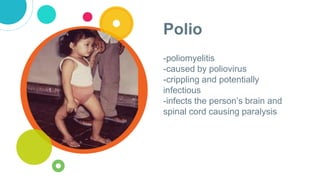
Polio
-poliomyelitis
-caused by poliovirus
-crippling and potentially
infectious
-infects the person’s brain and
spinal cord causing paralysis
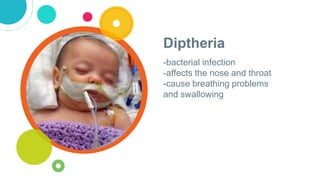
Diptheria
-bacterial infection
-affects the nose and throat
-cause breathing problems
and swallowing
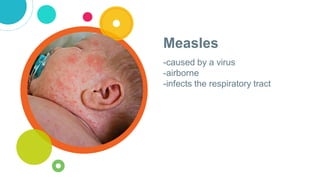
Measles
-caused by a virus
-airborne
-infects the respiratory tract
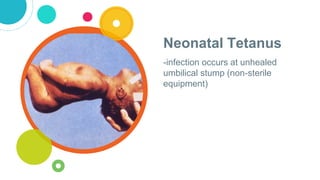
Neonatal Tetanus
-infection occurs at unhealed
umbilical stump (non-sterile
equipment)
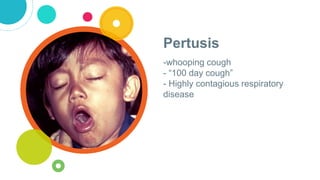
Pertusis
-whooping cough
- “100 day cough”
- Highly contagious respiratory
disease
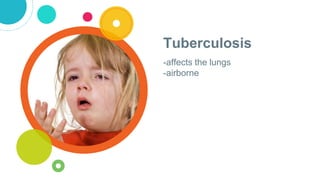
Tuberculosis
-affects the lungs
-airborne
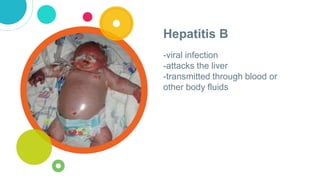
Hepatitis B
-viral infection
-attacks the liver
-transmitted through blood or
other body fluids
Poliomyelitis
-OPV (Oral Polio Vaccination)
-6 weeks old
-3 doses (2-3 drops)
-4 weeks
- Oral
- The extent of protection against
polio is increased the earlier the OPV
is given
Measles
-MCV
-Measles-Containing Vaccine
-9 months old
-2 dose (0.5 mL)
- Subcutaneous
- Upper outer portion of the arms
- At least 85% of measles can be
prevented by immunization at this
age
Hepatitis B
-HEPATITIS
- At birth
-3 doses (3 doses)
-4 weeks interval
- Intramuscular
- Upper outer portion of the thigh
- Prevents liver cirrhosis and liver
cancer
Diphtheria-Pertusis-Tetanus
-DPT
-6 weeks old
-3 doses (0.5 mL)
-6 weeks(DPT 1), 10 weeks (DPT 2),
14 weeks (DPT 3)
- Intramuscular
- Upper outer portion of the thigh
- An early start with DPT reduces the
chance of severe pertussis
Tuberculosis
-BCG (Bacillus Calmette-Guérin)
-at birth
-1 dose (0.05 mL)
- none
- Intradermal
- Right deltoid region of the arm
- BCG given at earliest possible age
protects the possibility of TB
meningitis and other TB infections in
which infants are prone
Vaccine
Minimum
Age/Interval
Percent
Protected
Duration of Protection
TT1 At 20th weeks AOG 0%
 protection for the mother for
the first delivery
TT2 At least 4 weeks later 80%
 infants born to the mother
will be protected from
neonatal tetanus
 gives 3 years protection for
the mother
TT3 At least 6 months later 95%
 infants born to the mother
will be protected from
neonatal tetanus
 gives 5 years protection for
the mother
TT4 At least 1 year later 99%
 infants born to the mother
will be protected from
neonatal tetanus
 gives 10 years protection for
the mother
TT5 At least 1 year later 99%
 gives lifetime protection for
the mother
 all infants born to that mother
will be protected

Expanded program on immunization

  • 1.
  • 2.
    EXPANDED PROGRAM ON IMMUNIZATION -establishedin 1976 -ensure that infants/children and mothers have access to routinely recommended infant/childhood vaccines.
  • 3.
    Six vaccine-preventable diseases 1.Tuberculosis 2. Poliomyelitis 3. Diphtheria 4. Tetanus 5. Pertussis 6. Measles
  • 4.
    Over-all Goal To reducethe morbidity and mortality among children against the most common vaccine-preventable diseases.
  • 5.
    Specific Goals 1. Toimmunize all infants/children against the most common vaccine-preventable diseases. 2. To sustain the polio-free status of the Philippines. 3. To eliminate measles infection.
  • 6.
    4. To eliminatematernal and neonatal tetanus 5. To control diphtheria, pertussis, hepatitis b and German measles. 6. To prevent extra pulmonary tuberculosis among children.
  • 7.
    Republic Act No.10152 -“Mandatory Infants and Children Health Immunization Act of 2011” -President Benigno Aquino III -July 26, 2010 -Basic immunization for children under 5 including other types that will be determined by the Secretary of Health.
  • 8.
    STRATEGIES 1. Conduct ofRoutine Immunization for Infants/Children/Women through the Reaching Every Barangay (REB) strategy 2. Supplemental Immunization Activity (SIA) 3. Strengthening Vaccine-Preventable Diseases Surveillance 4. Procurement of adequate and potent vaccines and needles and syringes to all health facilities nationwide
  • 9.
    Polio -poliomyelitis -caused by poliovirus -cripplingand potentially infectious -infects the person’s brain and spinal cord causing paralysis
  • 10.
    Diptheria -bacterial infection -affects thenose and throat -cause breathing problems and swallowing
  • 11.
    Measles -caused by avirus -airborne -infects the respiratory tract
  • 12.
    Neonatal Tetanus -infection occursat unhealed umbilical stump (non-sterile equipment)
  • 13.
    Pertusis -whooping cough - “100day cough” - Highly contagious respiratory disease
  • 14.
  • 15.
    Hepatitis B -viral infection -attacksthe liver -transmitted through blood or other body fluids
  • 16.
    Poliomyelitis -OPV (Oral PolioVaccination) -6 weeks old -3 doses (2-3 drops) -4 weeks - Oral - The extent of protection against polio is increased the earlier the OPV is given
  • 17.
    Measles -MCV -Measles-Containing Vaccine -9 monthsold -2 dose (0.5 mL) - Subcutaneous - Upper outer portion of the arms - At least 85% of measles can be prevented by immunization at this age
  • 18.
    Hepatitis B -HEPATITIS - Atbirth -3 doses (3 doses) -4 weeks interval - Intramuscular - Upper outer portion of the thigh - Prevents liver cirrhosis and liver cancer
  • 19.
    Diphtheria-Pertusis-Tetanus -DPT -6 weeks old -3doses (0.5 mL) -6 weeks(DPT 1), 10 weeks (DPT 2), 14 weeks (DPT 3) - Intramuscular - Upper outer portion of the thigh - An early start with DPT reduces the chance of severe pertussis
  • 20.
    Tuberculosis -BCG (Bacillus Calmette-Guérin) -atbirth -1 dose (0.05 mL) - none - Intradermal - Right deltoid region of the arm - BCG given at earliest possible age protects the possibility of TB meningitis and other TB infections in which infants are prone
  • 21.
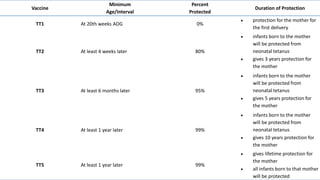
    Vaccine Minimum Age/Interval Percent Protected Duration of Protection TT1At 20th weeks AOG 0%  protection for the mother for the first delivery TT2 At least 4 weeks later 80%  infants born to the mother will be protected from neonatal tetanus  gives 3 years protection for the mother TT3 At least 6 months later 95%  infants born to the mother will be protected from neonatal tetanus  gives 5 years protection for the mother TT4 At least 1 year later 99%  infants born to the mother will be protected from neonatal tetanus  gives 10 years protection for the mother TT5 At least 1 year later 99%  gives lifetime protection for the mother  all infants born to that mother will be protected