1
 The goal of exercise prescription should be the
successful integration of exercise principles and
behavioral techniques that motivate the participant
to be compliant and thus achieve their goals
 Exercise prescription commonly refers to the specific
plan of fitness-related activities that are designed for
a specific purpose, which is often developed by the
specialist for the client or patient.
Introduction
Exercise as a Prescriptive
Medicine in Diseases of
Civilization
Tinuade Olarewaju (MSc, B.Physio, PMP)
Physiotherapy Department,
Physical Medicine Centre,
General Hospital Lagos
 Background and Data
 Diseases of civilization
 Mechanism of Exercise in specific conditions
 Prescription
 Contraindications
 Going forward
4
Today we’re going to discuss…
5
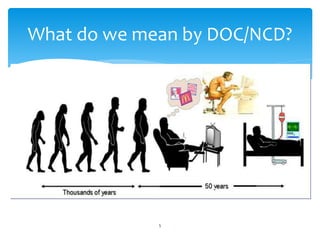
What do we mean by DOC/NCD?
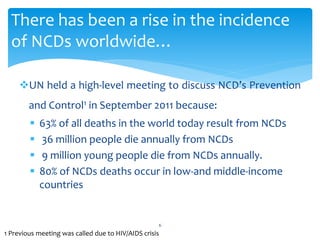
UN held a high-level meeting to discuss NCD’s Prevention
and Control1 in September 2011 because:
 63% of all deaths in the world today result from NCDs
 36 million people die annually from NCDs
 9 million young people die from NCDs annually.
 80% of NCDs deaths occur in low-and middle-income
countries
6
There has been a rise in the incidence
of NCDs worldwide…
1 Previous meeting was called due to HIV/AIDS crisis
7
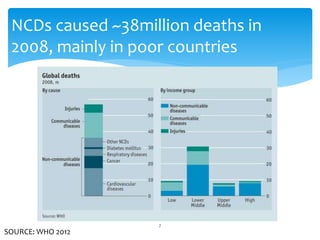
NCDs caused ~38million deaths in
2008, mainly in poor countries
SOURCE: WHO 2012
…with similar trends observed in
Nigeria
8
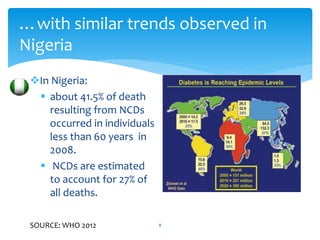
In Nigeria:
 about 41.5% of death
resulting from NCDs
occurred in individuals
less than 60 years in
2008.
 NCDs are estimated
to account for 27% of
all deaths.
SOURCE: WHO 2012
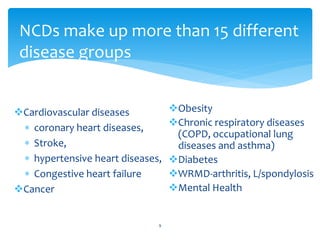
Cardiovascular diseases
 coronary heart diseases,
 Stroke,
 hypertensive heart diseases,
 Congestive heart failure
Cancer
9
NCDs make up more than 15 different
disease groups
Obesity
Chronic respiratory diseases
(COPD, occupational lung
diseases and asthma)
Diabetes
WRMD-arthritis, L/spondylosis
Mental Health
10
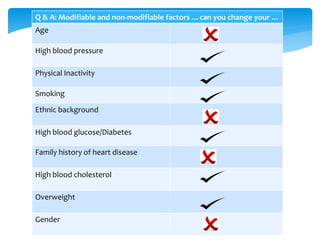
Q & A: Modifiable and non-modifiable factors …can you change your …
Age
High blood pressure
Physical Inactivity
Smoking
Ethnic background
High blood glucose/Diabetes
Family history of heart disease
High blood cholesterol
Overweight
Gender
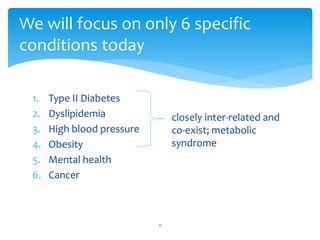
1. Type II Diabetes
2. Dyslipidemia
3. High blood pressure
4. Obesity
5. Mental health
6. Cancer
11
We will focus on only 6 specific
conditions today
closely inter-related and
co-exist; metabolic
syndrome
12
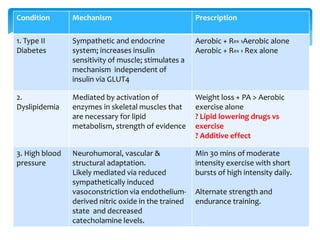
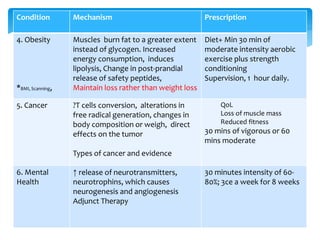
Condition Mechanism Prescription
1. Type II
Diabetes
Sympathetic and endocrine
system; increases insulin
sensitivity of muscle; stimulates a
mechanism independent of
insulin via GLUT4
Aerobic + Rex ›Aerobic alone
Aerobic + Rex › Rex alone
2.
Dyslipidemia
Mediated by activation of
enzymes in skeletal muscles that
are necessary for lipid
metabolism, strength of evidence
Weight loss + PA > Aerobic
exercise alone
? Lipid lowering drugs vs
exercise
? Additive effect
3. High blood
pressure
Neurohumoral, vascular &
structural adaptation.
Likely mediated via reduced
sympathetically induced
vasoconstriction via endothelium-
derived nitric oxide in the trained
state and decreased
catecholamine levels.
Min 30 mins of moderate
intensity exercise with short
bursts of high intensity daily.
Alternate strength and
endurance training.
13
Condition Mechanism Prescription
4. Obesity
*BMI, Scanning,
Muscles burn fat to a greater extent
instead of glycogen. Increased
energy consumption, induces
lipolysis, Change in post-prandial
release of safety peptides,
Maintain loss rather than weight loss
Diet+ Min 30 min of
moderate intensity aerobic
exercise plus strength
conditioning
Supervision, 1 hour daily.
5. Cancer ?T cells conversion, alterations in
free radical generation, changes in
body composition or weigh, direct
effects on the tumor
Types of cancer and evidence
QoL
Loss of muscle mass
Reduced fitness
30 mins of vigorous or 60
mins moderate
6. Mental
Health
↑ release of neurotransmitters,
neurotrophins, which causes
neurogenesis and angiogenesis
Adjunct Therapy
30 minutes intensity of 60-
80%; 3ce a week for 8 weeks
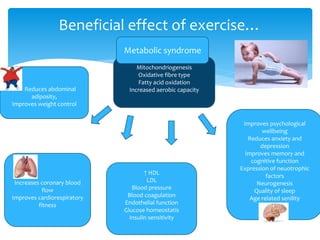
Beneficial effect of exercise…
14
Mitochondriogenesis
Oxidative fibre type
Fatty acid oxidation
Increased aerobic capacity
Improves psychological
wellbeing
Reduces anxiety and
depression
Improves memory and
cognitive function
Expression of neuotrophic
factors
Neurogenesis
Quality of sleep
Age related senility
Increases coronary blood
flow
Improves cardiorespiratory
fitness
↑ HDL
LDL
Blood pressure
Blood coagulation
Endothelial function
Glucose homeostatis
Insulin sensitivity
Reduces abdominal
adiposity,
Improves weight control
Metabolic syndrome
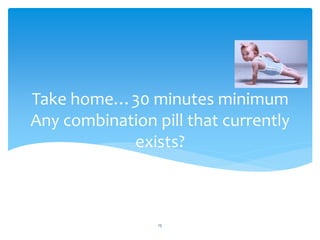
Take home…30 minutes minimum
Any combination pill that currently
exists?
15
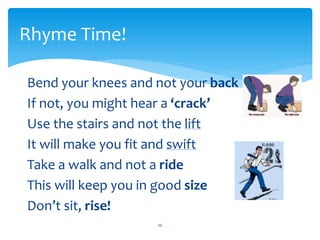
Bend your knees and not your back
If not, you might hear a ‘crack’
Use the stairs and not the lift
It will make you fit and swift
Take a walk and not a ride
This will keep you in good size
Don’t sit, rise!
16
Rhyme Time!
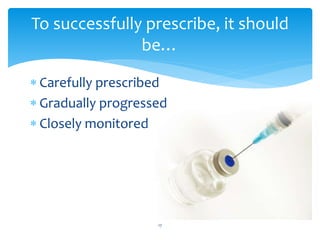
 Carefully prescribed
 Gradually progressed
 Closely monitored
17
To successfully prescribe, it should
be…
But first, let’s discuss
cardiorespiratory fitness
18
 Ability of the cardiovascular,
respiratory and muscular
systems to supply oxygen
during prolonged physical
activity
 Measured by expired gas
analysis or submaximal
exercise tests in METS or
VO2max
 1MET=3.5ml/O2/kg/min
3 Health factors:
untreated total choelsterol,
200mg/dL,
untreated blood pressure
120/80mmHg,
fasting blood glucose
100mg/dL
4 health behaviours:
Non smoking,
BMI <25kg/m2,
PA levels,
Diet
Lower CR F implicated in insulin
resistance
1MET=7cm,5mmhg,1mmol/L
(88mg/dL),
Carefully prescribed
 Baseline screening
 THR=(HRmax-HRrest)
%intensity + HRrest
 HRmax=208- (0.38XHRrest)
 VO2Max=15.3X HRmax/HRrest
 Goal-weight loss?
 Tone
 Glucose control
 Cardio
 Motivation –adherence,
progression
Fitness
 Muscular strength
 Muscular endurance
 Flexibility
 Body Composition
 Cardiorespiratory fitness
VO2 max
HRmax
19
Individual
Carefully prescribed
20
 ACSM
 FIIT principle
 F 3-5d/wk
 I 20-60mins
 T large muscle groups
 I 55/65%-90% HRmax
 40/50-85% VO2R
 40-49 VO2R
 55-64% HRmax
 Environment
 Body composition
 regional fat
distribution
 Fat free mass
 Fat mass
 Adaptive response
 Peripheral
 Central
 Structural
 Functional
21
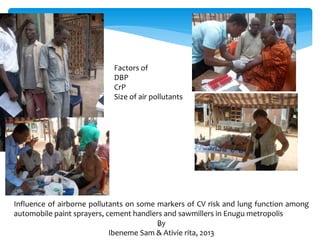
Factors of
DBP
CrP
Size of air pollutants
Influence of airborne pollutants on some markers of CV risk and lung function among
automobile paint sprayers, cement handlers and sawmillers in Enugu metropolis
By
Ibeneme Sam & Ativie rita, 2013
 Lower initial V·O2max= larger percentage of improvement
found;
 Higher Fat Mass (FM) = greater ↓ in total body mass and
FM.
 Unfit people can get significant improvements in physical
fitness with a low training intensity, while those with a
higher fitness level need a greater level of exercise intensity
to achieve further improvements in fitness
 Increasing parameters/goals
22
Gradually progressed…to a goal
23
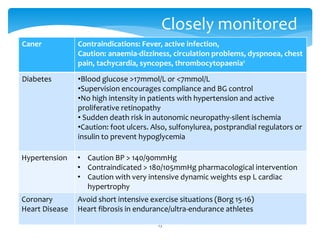
Caner Contraindications: Fever, active infection,
Caution: anaemia-dizziness, circulation problems, dyspnoea, chest
pain, tachycardia, syncopes, thrombocytopaenia1
Diabetes •Blood glucose >17mmol/L or <7mmol/L
•Supervision encourages compliance and BG control
•No high intensity in patients with hypertension and active
proliferative retinopathy
• Sudden death risk in autonomic neuropathy-silent ischemia
•Caution: foot ulcers. Also, sulfonylurea, postprandial regulators or
insulin to prevent hypoglycemia
Hypertension • Caution BP > 140/90mmHg
• Contraindicated > 180/105mmHg pharmacological intervention
• Caution with very intensive dynamic weights esp L cardiac
hypertrophy
Coronary
Heart Disease
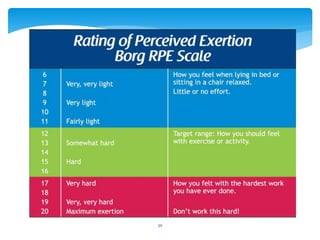
Avoid short intensive exercise situations (Borg 15-16)
Heart fibrosis in endurance/ultra-endurance athletes
Closely monitored
 Waist-hip ratio
 BMI
 Male and Female
24
Finally…Physiotherapy Department
study
Conclusion…Learning points
25
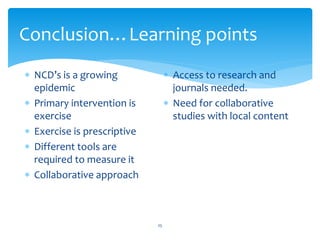
 NCD’s is a growing
epidemic
 Primary intervention is
exercise
 Exercise is prescriptive
 Different tools are
required to measure it
 Collaborative approach
 Access to research and
journals needed.
 Need for collaborative
studies with local content
Thank you
26
 Pedersen & Saltin 2006. Evidence for prescribing exercise as therapy in chronic disease. Scand J Med Sci Sports:
16 (Suppl. 1): 3–63
 Taylor RS, Brown A, Ebrahim S. Exercise-based rehabilitation for patients with coronary heart disease:
systematic review and meta-analysis of randomized controlled trials. American Journal of Medicine. 2004.
116(10) pg 682-692
 Thune I, Fuberg AS. Physical activity and cancer risk: dose-response and cancer, all sites and site-specific. Med
Sci Sports Exerc 2001:33:S530-S550
 Westerlind KC. Physical Activity and Cancer Prevention-mechanisms Med Sci Sports Exerc 2003.35(11)pp1835-
1840
 Furberg, A.-S. and Thune, I. (2003), Metabolic abnormalities (hypertension, hyperglycemia and overweight),
lifestyle (high energy intake and physical inactivity) and endometrial cancer risk in a Norwegian cohort. Int. J.
Cancer, 104: 669–676. doi: 10.1002/ijc.10974
 1. http://www.fims.org/files/3514/2056/0346/FIMS-Position-Statement-2014-Physical-activity-and-Cancer.pdf
 2. http://www.cancercouncil.com.au/wp-content/uploads/2010/09/Physical-Activity-and-Cancer-Position-
Statement.pdf
 4. https://www.essa.org.au/wp/wp-content/uploads/Exercise-and-Mental-Health-An-Exercise-and-Sports-
Science-Australia-Commissioned-Review.pdf
 5 Ridker PM. High-Sensitivity C-Reactive Protein. Potential Adjunct for Global Risk Assessment in the Primary
Prevention of Cardiovascular Disease. Circulation. 2001; 103: 1813-1818. doi: 10.1161/01.CIR.103.13.1813
 Leon AS, Sanchez OA. Response of blood lipids to exercise training alone or combined with dietary
intervention. Med Sci Sports Exerc 2001: 33: S502–S515
 Beck-Nielsen H, Henriksen JE, Hermansen K, Madsen LD, Olivarius NF, Mandrup-Poulsen TR, Pedersen OB,
Richelsen B, Schmitz OE. Type 2 diabetes and the metabolic syndrome – diagnosis and treatment. 2000: 6: 1–36.
Copenhagen, Lægeforeningens forlag
 Saltin B, Helge JW. Metabolic Capacity of skeletal muscles and health. Ugeskr Laeger 2000:162:2159-2164
27
References
 http://atvb.ahajournals.org/content/23/8/1319.full.pdf
 http://www.ncbi.nlm.nih.gov/pmc/articles/PMC3568069/pd
f/pone.0056415.pdf
 http://www.ncbi.nlm.nih.gov/pubmed/16629874
 http://www.ncbi.nlm.nih.gov/pmc/articles/PMC3568069/
 http://www.ncbi.nlm.nih.gov/pmc/articles/PMC3861908/
 http://www.ncbi.nlm.nih.gov/pubmed/16996860
 http://www.ncbi.nlm.nih.gov/pmc/articles/PMC3718592/
28
6. Pescatello LS, Franklin BA, Fagard R, Farquhar WB, Kelley GA, Ray CA. American College of Sports
Medicine position stand. Exercise and hypertension. Med Sci Sports Exerc 2004: 36: 533–553.
7. Gueyffier F, Boutitie F, Boissel JP, Pocock S, Coope J, Cutler J, Ekbom T, Fagard R, Friedman L, Perry M,
Prineas R, Schron E. Effect of antihypertensive drug treatment on cardiovascular outcomes in women
and men. A meta-analysis of individual patient data from randomized, controlled trials. The INDANA
Investigators. Ann Intern Med 1997: 126: 761–767.
8. Esler M, Rumantir M, Kaye D, Lambert G. The sympathetic neurobiology of essential hypertension:
disparate influences of obesity, stress, and noradrenaline transporter dysfunction? Am J Hypertens
2001: 14: 139S–146S.
9. Takenaka K, Sakamoto T, Amano K, Oku J, Fujinami K, Murakami T, Toda I, Kawakubo K, Sugimoto T. Left
ventricular filling determined by Doppler echocardiography in diabetes
mellitus. Am J Cardiol 1988: 61: 1140–1143.
10. Robillon JF, Sadoul JL, Jullien D, Morand P, Freychet P. Abnormalities suggestive of cardiomyopathy in
patients with type 2 diabetes of relatively short duration. Diabetes Metab 1994: 20: 473–480.
11 Pradhan AD, Manson JE, Rifai N, Buring JE, Ridker PM. C-reactive protein, interleukin 6, and risk of
developing type 2 diabetes mellitus. JAMA 2001: 286: 327–334.
12. Febbraio MA, Pedersen BK. Musclederived interleukin-6: mechanisms for activation and possible
biological roles. FASEB J 2002: 16: 1335–1347
13. Higashi Y, Sasaki S, Kurisu S, Yoshimizu A, Sasaki N, Matsuura H, Kajiyama G, Oshima T. Regular aerobic
exercise augments endothelium-dependent vascular relaxation in normotensive as well as hypertensive
subjects: role of endothelium-derived nitric oxide. Circulation 1999a: 100: 1194–1202.
14 Shephard RJ (2001). Absolute versus relative intensity of physical activity in a dose-response context.
Med Sci Sports Exerc 33 (6 Suppl.): S400–S418. Discussion S419–S420
29
References contd
30
31
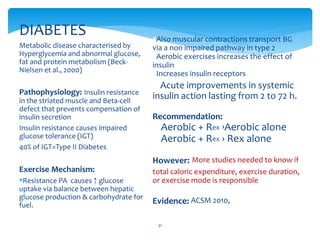
Metabolic disease characterised by
Hyperglycemia and abnormal glucose,
fat and protein metabolism (Beck-
Nielsen et al., 2000)
Pathophysiology: Insulin resistance
in the striated muscle and Beta-cell
defect that prevents compensation of
insulin secretion
Insulin resistance causes impaired
glucose tolerance (IGT)
40% of IGT=Type II Diabetes
Exercise Mechanism:
Resistance PA causes ↑ glucose
uptake via balance between hepatic
glucose production & carbohydrate for
fuel.
DIABETES Also muscular contractions transport BG
via a non impaired pathway in type 2
Aerobic exercises increases the effect of
insulin
Increases insulin receptors
Acute improvements in systemic
insulin action lasting from 2 to 72 h.
Recommendation:
Aerobic + Rex ›Aerobic alone
Aerobic + Rex › Rex alone
However: More studies needed to know if
total caloric expenditure, exercise duration,
or exercise mode is responsible
Evidence: ACSM 2010,
32
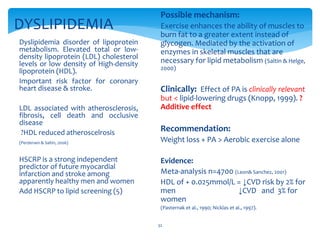
Dyslipidemia disorder of lipoprotein
metabolism. Elevated total or low-
density lipoprotein (LDL) cholesterol
levels or low density of High-density
lipoprotein (HDL).
Important risk factor for coronary
heart disease & stroke.
LDL associated with atherosclerosis,
fibrosis, cell death and occlusive
disease
?HDL reduced atheroscelrosis
(Perdersen & Saltin, 2006)
HSCRP is a strong independent
predictor of future myocardial
infarction and stroke among
apparently healthy men and women
Add HSCRP to lipid screening (5)
DYSLIPIDEMIA
Possible mechanism:
Exercise enhances the ability of muscles to
burn fat to a greater extent instead of
glycogen. Mediated by the activation of
enzymes in skeletal muscles that are
necessary for lipid metabolism (Saltin & Helge,
2000)
Clinically: Effect of PA is clinically relevant
but < lipid-lowering drugs (Knopp, 1999). ?
Additive effect
Recommendation:
Weight loss + PA > Aerobic exercise alone
Evidence:
Meta-analysis n=4700 (Leon& Sanchez, 2001)
HDL of + 0.025mmol/L = ↓CVD risk by 2% for
men ↓CVD and 3% for
women
(Pasternak et al., 1990; Nicklas et al., 1997).
33
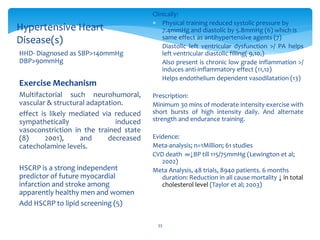
HHD- Diagnosed as SBP>140mmHg
DBP>90mmHg
Exercise Mechanism
Multifactorial such neurohumoral,
vascular & structural adaptation.
effect is likely mediated via reduced
sympathetically induced
vasoconstriction in the trained state
(8) 2001), and decreased
catecholamine levels.
HSCRP is a strong independent
predictor of future myocardial
infarction and stroke among
apparently healthy men and women
Add HSCRP to lipid screening (5)
Hypertensive Heart
Disease(s)
Clinically:
 Physical training reduced systolic pressure by
7.4mmHg and diastolic by 5.8mmHg (6) which is
same effect as antihypertensive agents (7)
 Diastolic left ventricular dysfunction >/ PA helps
left ventricular diastolic filling( 9,10,)
 Also present is chronic low grade inflammation >/
induces anti-inflammatory effect (11,12)
 Helps endothelium dependent vasodilatation (13)
Prescription:
Minimum 30 mins of moderate intensity exercise with
short bursts of high intensity daily. And alternate
strength and endurance training.
Evidence:
Meta-analysis; n=1Million; 61 studies
CVD death ∞↓BP till 115/75mmHg (Lewington et al;
2002)
Meta Analysis, 48 trials, 8940 patients. 6 months
duration: Reduction in all cause mortality ↓ in total
cholesterol level (Taylor et al; 2003)
34
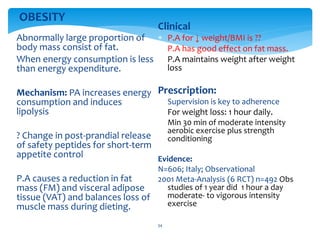
Abnormally large proportion of
body mass consist of fat.
When energy consumption is less
than energy expenditure.
Mechanism: PA increases energy
consumption and induces
lipolysis
? Change in post-prandial release
of safety peptides for short-term
appetite control
P.A causes a reduction in fat
mass (FM) and visceral adipose
tissue (VAT) and balances loss of
muscle mass during dieting.
OBESITY
Clinical
 P.A for ↓ weight/BMI is ??
 P.A has good effect on fat mass.
 P.A maintains weight after weight
loss
Prescription:
 Supervision is key to adherence
 For weight loss: 1 hour daily.
 Min 30 min of moderate intensity
aerobic exercise plus strength
conditioning
Evidence:
N=606; Italy; Observational
2001 Meta-Analysis (6 RCT) n=492 Obs
studies of 1 year did 1 hour a day
moderate- to vigorous intensity
exercise
35
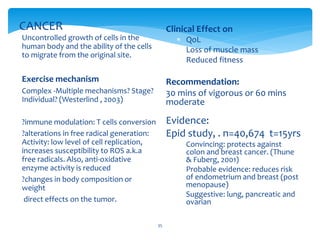
Uncontrolled growth of cells in the
human body and the ability of the cells
to migrate from the original site.
Exercise mechanism
Complex -Multiple mechanisms? Stage?
Individual? (Westerlind , 2003)
?immune modulation: T cells conversion
?alterations in free radical generation:
Activity: low level of cell replication,
increases susceptibility to ROS a.k.a
free radicals. Also, anti-oxidative
enzyme activity is reduced
?changes in body composition or
weight
direct effects on the tumor.
CANCER Clinical Effect on
 QoL
 Loss of muscle mass
 Reduced fitness
Recommendation:
30 mins of vigorous or 60 mins
moderate
Evidence:
Epid study, . n=40,674 t=15yrs
 Convincing: protects against
colon and breast cancer. (Thune
& Fuberg, 2001)
 Probable evidence: reduces risk
of endometrium and breast (post
menopause)
 Suggestive: lung, pancreatic and
ovarian
36
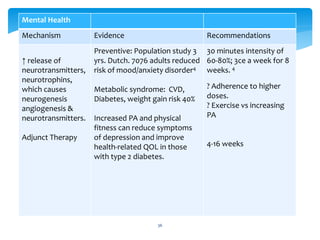
Mental Health
Mechanism Evidence Recommendations
↑ release of
neurotransmitters,
neurotrophins,
which causes
neurogenesis
angiogenesis &
neurotransmitters.
Adjunct Therapy
Preventive: Population study 3
yrs. Dutch. 7076 adults reduced
risk of mood/anxiety disorder4
Metabolic syndrome: CVD,
Diabetes, weight gain risk 40%
Increased PA and physical
fitness can reduce symptoms
of depression and improve
health-related QOL in those
with type 2 diabetes.
30 minutes intensity of
60-80%; 3ce a week for 8
weeks. 4
? Adherence to higher
doses.
? Exercise vs increasing
PA
4-16 weeks
37
Mental acuity…
 RCT, Sept 2014.
 P-Population 221 aged 7-9 kids.
 I-Intervention 9 months after school PA program
 C-Comparison/control- wait-list control
 O-Outcome- (maximal oxygen consumption), electrical activity in the brain (P3-ERP) and
behavioral measures (accuracy, reaction time) of executive control using tasks that
modulated attentional inhibition and cognitive flexibility
 RESULTS: Improved Fitness improved in intervention group; (1.3 mL/kg per minute, 95%
confidence interval [CI]: 0.3 to 2.4; d = 0.34 for group difference in pre-to-post change
score).
 Intervention participants exhibited greater improvements from pretest to posttest in inhibition
(3.2%, 95% CI: 0.0 to 6.5; d = 0.27)
 and cognitive flexibility (4.8%, 95% CI: 1.1 to 8.4; d = 0.35 for group difference in pre-to-post change
score)
 Increased inhibition i.e. attentional resources (1.4 µV, 95% CI: 0.3 to 2.6; d = 0.34) and cognitive
flexibility (1.5 µV, 95% CI: 0.6 to 2.5; d = 0.43
 CONCLUSIONS: The intervention enhanced cognitive performance and brain function
during tasks requiring greater executive control. These findings demonstrate a causal
effect of a PA program on executive control, and provide support for PA for improving
childhood cognition and brain health

Exercise as a prescriptive medicine in Non Communicable Diseases

  • 1.
  • 2.
     The goalof exercise prescription should be the successful integration of exercise principles and behavioral techniques that motivate the participant to be compliant and thus achieve their goals  Exercise prescription commonly refers to the specific plan of fitness-related activities that are designed for a specific purpose, which is often developed by the specialist for the client or patient. Introduction
  • 3.
    Exercise as aPrescriptive Medicine in Diseases of Civilization Tinuade Olarewaju (MSc, B.Physio, PMP) Physiotherapy Department, Physical Medicine Centre, General Hospital Lagos
  • 4.
     Background andData  Diseases of civilization  Mechanism of Exercise in specific conditions  Prescription  Contraindications  Going forward 4 Today we’re going to discuss…
  • 5.
    5 What do wemean by DOC/NCD?
  • 6.
    UN held ahigh-level meeting to discuss NCD’s Prevention and Control1 in September 2011 because:  63% of all deaths in the world today result from NCDs  36 million people die annually from NCDs  9 million young people die from NCDs annually.  80% of NCDs deaths occur in low-and middle-income countries 6 There has been a rise in the incidence of NCDs worldwide… 1 Previous meeting was called due to HIV/AIDS crisis
  • 7.
    7 NCDs caused ~38milliondeaths in 2008, mainly in poor countries SOURCE: WHO 2012
  • 8.
    …with similar trendsobserved in Nigeria 8 In Nigeria:  about 41.5% of death resulting from NCDs occurred in individuals less than 60 years in 2008.  NCDs are estimated to account for 27% of all deaths. SOURCE: WHO 2012
  • 9.
    Cardiovascular diseases  coronaryheart diseases,  Stroke,  hypertensive heart diseases,  Congestive heart failure Cancer 9 NCDs make up more than 15 different disease groups Obesity Chronic respiratory diseases (COPD, occupational lung diseases and asthma) Diabetes WRMD-arthritis, L/spondylosis Mental Health
  • 10.
    10 Q & A:Modifiable and non-modifiable factors …can you change your … Age High blood pressure Physical Inactivity Smoking Ethnic background High blood glucose/Diabetes Family history of heart disease High blood cholesterol Overweight Gender
  • 11.
    1. Type IIDiabetes 2. Dyslipidemia 3. High blood pressure 4. Obesity 5. Mental health 6. Cancer 11 We will focus on only 6 specific conditions today closely inter-related and co-exist; metabolic syndrome
  • 12.
    12 Condition Mechanism Prescription 1.Type II Diabetes Sympathetic and endocrine system; increases insulin sensitivity of muscle; stimulates a mechanism independent of insulin via GLUT4 Aerobic + Rex ›Aerobic alone Aerobic + Rex › Rex alone 2. Dyslipidemia Mediated by activation of enzymes in skeletal muscles that are necessary for lipid metabolism, strength of evidence Weight loss + PA > Aerobic exercise alone ? Lipid lowering drugs vs exercise ? Additive effect 3. High blood pressure Neurohumoral, vascular & structural adaptation. Likely mediated via reduced sympathetically induced vasoconstriction via endothelium- derived nitric oxide in the trained state and decreased catecholamine levels. Min 30 mins of moderate intensity exercise with short bursts of high intensity daily. Alternate strength and endurance training.
  • 13.
    13 Condition Mechanism Prescription 4.Obesity *BMI, Scanning, Muscles burn fat to a greater extent instead of glycogen. Increased energy consumption, induces lipolysis, Change in post-prandial release of safety peptides, Maintain loss rather than weight loss Diet+ Min 30 min of moderate intensity aerobic exercise plus strength conditioning Supervision, 1 hour daily. 5. Cancer ?T cells conversion, alterations in free radical generation, changes in body composition or weigh, direct effects on the tumor Types of cancer and evidence QoL Loss of muscle mass Reduced fitness 30 mins of vigorous or 60 mins moderate 6. Mental Health ↑ release of neurotransmitters, neurotrophins, which causes neurogenesis and angiogenesis Adjunct Therapy 30 minutes intensity of 60- 80%; 3ce a week for 8 weeks
  • 14.
    Beneficial effect ofexercise… 14 Mitochondriogenesis Oxidative fibre type Fatty acid oxidation Increased aerobic capacity Improves psychological wellbeing Reduces anxiety and depression Improves memory and cognitive function Expression of neuotrophic factors Neurogenesis Quality of sleep Age related senility Increases coronary blood flow Improves cardiorespiratory fitness ↑ HDL LDL Blood pressure Blood coagulation Endothelial function Glucose homeostatis Insulin sensitivity Reduces abdominal adiposity, Improves weight control Metabolic syndrome
  • 15.
    Take home…30 minutesminimum Any combination pill that currently exists? 15
  • 16.
    Bend your kneesand not your back If not, you might hear a ‘crack’ Use the stairs and not the lift It will make you fit and swift Take a walk and not a ride This will keep you in good size Don’t sit, rise! 16 Rhyme Time!
  • 17.
     Carefully prescribed Gradually progressed  Closely monitored 17 To successfully prescribe, it should be…
  • 18.
    But first, let’sdiscuss cardiorespiratory fitness 18  Ability of the cardiovascular, respiratory and muscular systems to supply oxygen during prolonged physical activity  Measured by expired gas analysis or submaximal exercise tests in METS or VO2max  1MET=3.5ml/O2/kg/min 3 Health factors: untreated total choelsterol, 200mg/dL, untreated blood pressure 120/80mmHg, fasting blood glucose 100mg/dL 4 health behaviours: Non smoking, BMI <25kg/m2, PA levels, Diet Lower CR F implicated in insulin resistance 1MET=7cm,5mmhg,1mmol/L (88mg/dL),
  • 19.
    Carefully prescribed  Baselinescreening  THR=(HRmax-HRrest) %intensity + HRrest  HRmax=208- (0.38XHRrest)  VO2Max=15.3X HRmax/HRrest  Goal-weight loss?  Tone  Glucose control  Cardio  Motivation –adherence, progression Fitness  Muscular strength  Muscular endurance  Flexibility  Body Composition  Cardiorespiratory fitness VO2 max HRmax 19 Individual
  • 20.
    Carefully prescribed 20  ACSM FIIT principle  F 3-5d/wk  I 20-60mins  T large muscle groups  I 55/65%-90% HRmax  40/50-85% VO2R  40-49 VO2R  55-64% HRmax  Environment  Body composition  regional fat distribution  Fat free mass  Fat mass  Adaptive response  Peripheral  Central  Structural  Functional
  • 21.
    21 Factors of DBP CrP Size ofair pollutants Influence of airborne pollutants on some markers of CV risk and lung function among automobile paint sprayers, cement handlers and sawmillers in Enugu metropolis By Ibeneme Sam & Ativie rita, 2013
  • 22.
     Lower initialV·O2max= larger percentage of improvement found;  Higher Fat Mass (FM) = greater ↓ in total body mass and FM.  Unfit people can get significant improvements in physical fitness with a low training intensity, while those with a higher fitness level need a greater level of exercise intensity to achieve further improvements in fitness  Increasing parameters/goals 22 Gradually progressed…to a goal
  • 23.
    23 Caner Contraindications: Fever,active infection, Caution: anaemia-dizziness, circulation problems, dyspnoea, chest pain, tachycardia, syncopes, thrombocytopaenia1 Diabetes •Blood glucose >17mmol/L or <7mmol/L •Supervision encourages compliance and BG control •No high intensity in patients with hypertension and active proliferative retinopathy • Sudden death risk in autonomic neuropathy-silent ischemia •Caution: foot ulcers. Also, sulfonylurea, postprandial regulators or insulin to prevent hypoglycemia Hypertension • Caution BP > 140/90mmHg • Contraindicated > 180/105mmHg pharmacological intervention • Caution with very intensive dynamic weights esp L cardiac hypertrophy Coronary Heart Disease Avoid short intensive exercise situations (Borg 15-16) Heart fibrosis in endurance/ultra-endurance athletes Closely monitored
  • 24.
     Waist-hip ratio BMI  Male and Female 24 Finally…Physiotherapy Department study
  • 25.
    Conclusion…Learning points 25  NCD’sis a growing epidemic  Primary intervention is exercise  Exercise is prescriptive  Different tools are required to measure it  Collaborative approach  Access to research and journals needed.  Need for collaborative studies with local content
  • 26.
  • 27.
     Pedersen &Saltin 2006. Evidence for prescribing exercise as therapy in chronic disease. Scand J Med Sci Sports: 16 (Suppl. 1): 3–63  Taylor RS, Brown A, Ebrahim S. Exercise-based rehabilitation for patients with coronary heart disease: systematic review and meta-analysis of randomized controlled trials. American Journal of Medicine. 2004. 116(10) pg 682-692  Thune I, Fuberg AS. Physical activity and cancer risk: dose-response and cancer, all sites and site-specific. Med Sci Sports Exerc 2001:33:S530-S550  Westerlind KC. Physical Activity and Cancer Prevention-mechanisms Med Sci Sports Exerc 2003.35(11)pp1835- 1840  Furberg, A.-S. and Thune, I. (2003), Metabolic abnormalities (hypertension, hyperglycemia and overweight), lifestyle (high energy intake and physical inactivity) and endometrial cancer risk in a Norwegian cohort. Int. J. Cancer, 104: 669–676. doi: 10.1002/ijc.10974  1. http://www.fims.org/files/3514/2056/0346/FIMS-Position-Statement-2014-Physical-activity-and-Cancer.pdf  2. http://www.cancercouncil.com.au/wp-content/uploads/2010/09/Physical-Activity-and-Cancer-Position- Statement.pdf  4. https://www.essa.org.au/wp/wp-content/uploads/Exercise-and-Mental-Health-An-Exercise-and-Sports- Science-Australia-Commissioned-Review.pdf  5 Ridker PM. High-Sensitivity C-Reactive Protein. Potential Adjunct for Global Risk Assessment in the Primary Prevention of Cardiovascular Disease. Circulation. 2001; 103: 1813-1818. doi: 10.1161/01.CIR.103.13.1813  Leon AS, Sanchez OA. Response of blood lipids to exercise training alone or combined with dietary intervention. Med Sci Sports Exerc 2001: 33: S502–S515  Beck-Nielsen H, Henriksen JE, Hermansen K, Madsen LD, Olivarius NF, Mandrup-Poulsen TR, Pedersen OB, Richelsen B, Schmitz OE. Type 2 diabetes and the metabolic syndrome – diagnosis and treatment. 2000: 6: 1–36. Copenhagen, Lægeforeningens forlag  Saltin B, Helge JW. Metabolic Capacity of skeletal muscles and health. Ugeskr Laeger 2000:162:2159-2164 27 References
  • 28.
     http://atvb.ahajournals.org/content/23/8/1319.full.pdf  http://www.ncbi.nlm.nih.gov/pmc/articles/PMC3568069/pd f/pone.0056415.pdf http://www.ncbi.nlm.nih.gov/pubmed/16629874  http://www.ncbi.nlm.nih.gov/pmc/articles/PMC3568069/  http://www.ncbi.nlm.nih.gov/pmc/articles/PMC3861908/  http://www.ncbi.nlm.nih.gov/pubmed/16996860  http://www.ncbi.nlm.nih.gov/pmc/articles/PMC3718592/ 28
  • 29.
    6. Pescatello LS,Franklin BA, Fagard R, Farquhar WB, Kelley GA, Ray CA. American College of Sports Medicine position stand. Exercise and hypertension. Med Sci Sports Exerc 2004: 36: 533–553. 7. Gueyffier F, Boutitie F, Boissel JP, Pocock S, Coope J, Cutler J, Ekbom T, Fagard R, Friedman L, Perry M, Prineas R, Schron E. Effect of antihypertensive drug treatment on cardiovascular outcomes in women and men. A meta-analysis of individual patient data from randomized, controlled trials. The INDANA Investigators. Ann Intern Med 1997: 126: 761–767. 8. Esler M, Rumantir M, Kaye D, Lambert G. The sympathetic neurobiology of essential hypertension: disparate influences of obesity, stress, and noradrenaline transporter dysfunction? Am J Hypertens 2001: 14: 139S–146S. 9. Takenaka K, Sakamoto T, Amano K, Oku J, Fujinami K, Murakami T, Toda I, Kawakubo K, Sugimoto T. Left ventricular filling determined by Doppler echocardiography in diabetes mellitus. Am J Cardiol 1988: 61: 1140–1143. 10. Robillon JF, Sadoul JL, Jullien D, Morand P, Freychet P. Abnormalities suggestive of cardiomyopathy in patients with type 2 diabetes of relatively short duration. Diabetes Metab 1994: 20: 473–480. 11 Pradhan AD, Manson JE, Rifai N, Buring JE, Ridker PM. C-reactive protein, interleukin 6, and risk of developing type 2 diabetes mellitus. JAMA 2001: 286: 327–334. 12. Febbraio MA, Pedersen BK. Musclederived interleukin-6: mechanisms for activation and possible biological roles. FASEB J 2002: 16: 1335–1347 13. Higashi Y, Sasaki S, Kurisu S, Yoshimizu A, Sasaki N, Matsuura H, Kajiyama G, Oshima T. Regular aerobic exercise augments endothelium-dependent vascular relaxation in normotensive as well as hypertensive subjects: role of endothelium-derived nitric oxide. Circulation 1999a: 100: 1194–1202. 14 Shephard RJ (2001). Absolute versus relative intensity of physical activity in a dose-response context. Med Sci Sports Exerc 33 (6 Suppl.): S400–S418. Discussion S419–S420 29 References contd
  • 30.
  • 31.
    31 Metabolic disease characterisedby Hyperglycemia and abnormal glucose, fat and protein metabolism (Beck- Nielsen et al., 2000) Pathophysiology: Insulin resistance in the striated muscle and Beta-cell defect that prevents compensation of insulin secretion Insulin resistance causes impaired glucose tolerance (IGT) 40% of IGT=Type II Diabetes Exercise Mechanism: Resistance PA causes ↑ glucose uptake via balance between hepatic glucose production & carbohydrate for fuel. DIABETES Also muscular contractions transport BG via a non impaired pathway in type 2 Aerobic exercises increases the effect of insulin Increases insulin receptors Acute improvements in systemic insulin action lasting from 2 to 72 h. Recommendation: Aerobic + Rex ›Aerobic alone Aerobic + Rex › Rex alone However: More studies needed to know if total caloric expenditure, exercise duration, or exercise mode is responsible Evidence: ACSM 2010,
  • 32.
    32 Dyslipidemia disorder oflipoprotein metabolism. Elevated total or low- density lipoprotein (LDL) cholesterol levels or low density of High-density lipoprotein (HDL). Important risk factor for coronary heart disease & stroke. LDL associated with atherosclerosis, fibrosis, cell death and occlusive disease ?HDL reduced atheroscelrosis (Perdersen & Saltin, 2006) HSCRP is a strong independent predictor of future myocardial infarction and stroke among apparently healthy men and women Add HSCRP to lipid screening (5) DYSLIPIDEMIA Possible mechanism: Exercise enhances the ability of muscles to burn fat to a greater extent instead of glycogen. Mediated by the activation of enzymes in skeletal muscles that are necessary for lipid metabolism (Saltin & Helge, 2000) Clinically: Effect of PA is clinically relevant but < lipid-lowering drugs (Knopp, 1999). ? Additive effect Recommendation: Weight loss + PA > Aerobic exercise alone Evidence: Meta-analysis n=4700 (Leon& Sanchez, 2001) HDL of + 0.025mmol/L = ↓CVD risk by 2% for men ↓CVD and 3% for women (Pasternak et al., 1990; Nicklas et al., 1997).
  • 33.
    33 HHD- Diagnosed asSBP>140mmHg DBP>90mmHg Exercise Mechanism Multifactorial such neurohumoral, vascular & structural adaptation. effect is likely mediated via reduced sympathetically induced vasoconstriction in the trained state (8) 2001), and decreased catecholamine levels. HSCRP is a strong independent predictor of future myocardial infarction and stroke among apparently healthy men and women Add HSCRP to lipid screening (5) Hypertensive Heart Disease(s) Clinically:  Physical training reduced systolic pressure by 7.4mmHg and diastolic by 5.8mmHg (6) which is same effect as antihypertensive agents (7)  Diastolic left ventricular dysfunction >/ PA helps left ventricular diastolic filling( 9,10,)  Also present is chronic low grade inflammation >/ induces anti-inflammatory effect (11,12)  Helps endothelium dependent vasodilatation (13) Prescription: Minimum 30 mins of moderate intensity exercise with short bursts of high intensity daily. And alternate strength and endurance training. Evidence: Meta-analysis; n=1Million; 61 studies CVD death ∞↓BP till 115/75mmHg (Lewington et al; 2002) Meta Analysis, 48 trials, 8940 patients. 6 months duration: Reduction in all cause mortality ↓ in total cholesterol level (Taylor et al; 2003)
  • 34.
    34 Abnormally large proportionof body mass consist of fat. When energy consumption is less than energy expenditure. Mechanism: PA increases energy consumption and induces lipolysis ? Change in post-prandial release of safety peptides for short-term appetite control P.A causes a reduction in fat mass (FM) and visceral adipose tissue (VAT) and balances loss of muscle mass during dieting. OBESITY Clinical  P.A for ↓ weight/BMI is ??  P.A has good effect on fat mass.  P.A maintains weight after weight loss Prescription:  Supervision is key to adherence  For weight loss: 1 hour daily.  Min 30 min of moderate intensity aerobic exercise plus strength conditioning Evidence: N=606; Italy; Observational 2001 Meta-Analysis (6 RCT) n=492 Obs studies of 1 year did 1 hour a day moderate- to vigorous intensity exercise
  • 35.
    35 Uncontrolled growth ofcells in the human body and the ability of the cells to migrate from the original site. Exercise mechanism Complex -Multiple mechanisms? Stage? Individual? (Westerlind , 2003) ?immune modulation: T cells conversion ?alterations in free radical generation: Activity: low level of cell replication, increases susceptibility to ROS a.k.a free radicals. Also, anti-oxidative enzyme activity is reduced ?changes in body composition or weight direct effects on the tumor. CANCER Clinical Effect on  QoL  Loss of muscle mass  Reduced fitness Recommendation: 30 mins of vigorous or 60 mins moderate Evidence: Epid study, . n=40,674 t=15yrs  Convincing: protects against colon and breast cancer. (Thune & Fuberg, 2001)  Probable evidence: reduces risk of endometrium and breast (post menopause)  Suggestive: lung, pancreatic and ovarian
  • 36.
    36 Mental Health Mechanism EvidenceRecommendations ↑ release of neurotransmitters, neurotrophins, which causes neurogenesis angiogenesis & neurotransmitters. Adjunct Therapy Preventive: Population study 3 yrs. Dutch. 7076 adults reduced risk of mood/anxiety disorder4 Metabolic syndrome: CVD, Diabetes, weight gain risk 40% Increased PA and physical fitness can reduce symptoms of depression and improve health-related QOL in those with type 2 diabetes. 30 minutes intensity of 60-80%; 3ce a week for 8 weeks. 4 ? Adherence to higher doses. ? Exercise vs increasing PA 4-16 weeks
  • 37.
    37 Mental acuity…  RCT,Sept 2014.  P-Population 221 aged 7-9 kids.  I-Intervention 9 months after school PA program  C-Comparison/control- wait-list control  O-Outcome- (maximal oxygen consumption), electrical activity in the brain (P3-ERP) and behavioral measures (accuracy, reaction time) of executive control using tasks that modulated attentional inhibition and cognitive flexibility  RESULTS: Improved Fitness improved in intervention group; (1.3 mL/kg per minute, 95% confidence interval [CI]: 0.3 to 2.4; d = 0.34 for group difference in pre-to-post change score).  Intervention participants exhibited greater improvements from pretest to posttest in inhibition (3.2%, 95% CI: 0.0 to 6.5; d = 0.27)  and cognitive flexibility (4.8%, 95% CI: 1.1 to 8.4; d = 0.35 for group difference in pre-to-post change score)  Increased inhibition i.e. attentional resources (1.4 µV, 95% CI: 0.3 to 2.6; d = 0.34) and cognitive flexibility (1.5 µV, 95% CI: 0.6 to 2.5; d = 0.43  CONCLUSIONS: The intervention enhanced cognitive performance and brain function during tasks requiring greater executive control. These findings demonstrate a causal effect of a PA program on executive control, and provide support for PA for improving childhood cognition and brain health

Editor's Notes

  • #5 What we mean by diseases of civilization?
  • #10 Effects are closely inter-related and co-exist. Diabetes, metabolic syndrome, syndrome x etc
  • #12 Metabolic syndrome is a disorder of energy utilization and storage, diagnosed by a co-occurrence of three out of five of the following medical conditions: abdominal (central) obesity, elevated blood pressure, elevated fasting plasma glucose, high serum triglycerides, and low high-density cholesterol (HDL) levels. Metabolic syndrome increases the risk of developing cardiovascular disease and diabetes.[1]
  • #13 shifts prod of carbohydrate from hepatic glycogenolysis to glucogeoneis. The mechanisms include increased postreceptor insulin signalling GLUT4 mRNA and protein, increased glycogen synthase activity, increased hexokinase Activity, decreased release and enhanced clearance of free fatty acids and enhanced influx of glucose to the muscles due to enhanced muscle capillarization and blood flow Dyslipidemia disorders of lipoprotein metabolism entailing elevated blood levels of certain forms of cholesterol and triglyceride; Pathophysiology: ↑ LDL, the particles are pressed into the intima, oxidation takes place and then taken up by macrophages. This leads to formation of fat lesions, aterosclerosis, fibrosis, cell death and occlusion. and subsequently to atherosclerosis with intra- and extracellular cholesterol deposition, fibrosis, cell death and actual occlusive disease. Exercise can lead to about 5% reduction in LDL and this reduces risk of CVD by about 2/3 % in men and women respectively Hypertension: patients have diastolic left ventricular and chronic low-grade inflammation with raised levels of C-reactive protein, Exercise augments left ventricular diastolic filling, augments endothelium-dependent vasodilatation, and induces antiinflammatory Effects stimulus for, endothelium-derived nitric oxide, which induces smooth muscle relaxation and vasodilatation. catecholamines are epinephrine (adrenaline), norepinephrine (noradrenaline), and dopamine. Norepinephrine causes increased HR, vasoconstriction in systemic arteries and veins with overall cardiovascular response being increased cardiac output and systemic vascular resistance, which results in an elevation in arterial blood pressure.
  • #14 Cancer: Convincing: protects against colon and breast cancer. Probable evidence: reduces risk of endometrium and breast, Suggestive: lung, pancreatic and ovarian Obesity: BMI as an indicator.
  • #19 CRF is recognized as a stronger predictor of mortality than established risk factors such as hypertension, smoking, and diabetes in both healthy individuals and those with CVD (Myers et al., 2002). In addition, each 1 MET increase in CRF change was associated with a reduction of approximately 16% in mortality risk (Blair et al., 1995). We believe clinicians should also use CRF from routine exercise test to stratify risk, classify patients, and make clinical recommendations providing important additional information.
  • #21 Metabolic fitness introduced by Després et al. Describes the state of metabolic systems and variables predictive of the risk of diabetes and cardiovascular disease which can be favorably altered by increased physical activity or regular endurance exercise without the requirement of a training-related increase in VO2max In this context, fitness is defined as the ability to perform moderate-to-vigorous levels of physical activity without undue fatigue and the capability of maintaining this capacity throughout life
  • #24  sudden death risk in autonomic neuropathy-silent ischemia (resting tachycardia, orthopnea, poor thermoregulation)
  • #32 At rest, Insulin uptake is impaired in type 2 diabetes. However, muscular contractions stimulate BG transport via a separate mechanism not impaired by insulin resistance or type 2 diabetes
  • #33 Pathophysiology: ↑ LDL, the particles are pressed into the intima, oxidation takes place and then taken up by macrophages. This leads to formation of fat lesions, aterosclerosis, fibrosis, cell death and occlusion. and subsequently to atherosclerosis with intra- and extracellular cholesterol deposition, fibrosis, cell death and actual occlusive disease.
  • #34 CAD-Characterised by atherosclerosis in the epicardial coronary arteries. Plaques progressively narrow the coronary artery lumen and impair antegrade myocardial blood flow. (cleavelandclinicmeded.com)
  • #35 Training has minimal effect on weight loss measured by weight but has good effect on fat mass and also helps maintain weight loss